

The DOI matches its Crossref record; 62 of the 69 references it cites were found in a registry or an index.
Prevalence of hospital-acquired malnutrition and modifiable determinants of nutritional deterioration during inpatient admissions: a systematic review of the evidence
Open accessAbstract
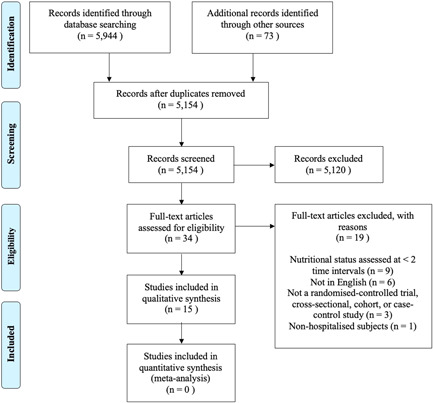
Background: Malnutrition affects between 20% and 50% of hospital inpatients on admission, with further declines expected during hospitalisation. This review summarises the existing literature on hospital‐acquired malnutrition that examines the magnitude of nutritional deterioration amongst adult inpatients and identifies preventable barriers to optimising nutrition support during episodes of care. Methods: A systematic review was conducted to answer the question: Among adult hospital inpatients, the presence of which modifiable factors contribute to hospital‐acquired malnutrition? A database search was conducted between the 24 April and 30 June 2020 using CINAHL, MEDLINE, Scopus and PubMed databases according to a protocol registered with PROSPERO (CD42020182728). In addition, issues of the 10 top clinical nutrition journals published during the period of from 1 April 2015 to 30 March 2020 were hand‐searched. Results: Fifteen articles were eligible for inclusion from a total of 5944 retrieved abstracts. A narrative synthesis of evidence was completed because of the high level of heterogeneity in methodologies. Nutritional deterioration is common among previously well‐nourished and nutritionally compromised patients, with studies reporting that 10%–65% of patients experienced nutritional decline. Frequently reported barriers were mealtime interruptions, meal dissatisfaction, procedure‐related fasting, effects of illness or treatment, chewing difficulties, poor appetite and malnutrition as a low clinical priority. Conclusions: The findings of this review support the need for routine nutritional risk screening throughout each hospital admission with hospital‐acquired malnutrition affecting up to 65% of inpatients. Clear establishment of the roles and responsibilities of each member within multidisciplinary healthcare teams in the provision of nutrition care and cost–benefit analyses are recommended to demonstrate the effectiveness of changes to models of care.
Overview
The claims and statistics of this paper haven’t been checked yet.
Run the check — free, no account needed. It reads the open-access text and checks the sources it cites.
Integrity signals
Registry
Cites
Statistics
Figures
Verification
Claims the paper makes
The claims and statistics of this paper haven’t been checked yet.
Run the check — free, no account needed. It reads the open-access text and checks the sources it cites.
Claims other papers make about this one
Each is checked against this paper’s own text: does it say what the citing paper says it does?
The source backs part of the claim, not all of it — or backs it for a different population, condition or comparison.
In the citing paper
“Malnutrition prevalence estimates range from 20% to 60% for hospitalized patients.”
From Malnutrition and Cachexia in Inpatients With Acute Cardiac Conditions: A Scientific Statement From the American Heart Association (2026) · cites this paper as [8]
Experimental — accuracy not yet measuredThe source backs part of the claim, not all of it — or backs it for a different population, condition or comparison.
In the citing paper
“The malnutrition prevalence estimates ranging from 20% to 60% for hospitalized patients are probably underestimates resulting from limitations in documentation, coding, and diagnostic criteria.8”
From Malnutrition and Cachexia in Inpatients With Acute Cardiac Conditions: A Scientific Statement From the American Heart Association (2026) · cites this paper as [8]
Experimental — accuracy not yet measured
Self-check
Percentages, sums and reported differences re-computed from the paper’s own numbers.
The self-check needs the paper’s full text.
Citations
Cites
Preferred Reporting Items for Systematic Reviews and Meta-Analyses: The PRISMA Statement
Moher, D., Liberati, A., Tetzlaff, J., Altman, D. G., & The PRISMA Group (2009) · PLoS Medicine · doi:10.1371/journal.pmed.1000097 · Cited by 64,042
Incidence and recognition of malnutrition in hospital
McWhirter, J. P., & Pennington, C. R. (1994) · BMJ · doi:10.1136/bmj.308.6934.945 · Cited by 1,504 · cited 3×
“First, in some studies, the researchers were unable to follow‐up with all patients and were subsequently excluded from analyses.(27,34,37,38) This was a result of having been discharged prior to the predetermined follow‐up time intervals or because of death or transfers to other hospitals.”
BackgroundResultTaylor, B. E., McClave, S. A., Martindale, R. G., Warren, M. M., Johnson, D. R., Braunschweig, C., McCarthy, M. S., Davanos, E., Rice, T. W., Cresci, G. A., et al. (2016) · Critical Care Medicine · doi:10.1097/ccm.0000000000001525 · Cited by 1,476 · cited 2×
“This association was weakened by higher levels of healthcare assistant staffing which suggests a potential approach to address such staffing challenges by enabling nursing staff to direct their time to other patient‐related activities.(61) Nurses consistently self‐report that nutrition‐related responsibilities are lik…”
BackgroundResultPrognostic impact of disease-related malnutrition.
Norman, K., Pichard, C., Lochs, H., & Pirlich, M. (2008) · Clinical Nutrition · doi:10.1016/j.clnu.2007.10.007 · Cited by 1,460
White, J. V., Guenter, P., Jensen, G., Malone, A., Schofield, M., Academy Malnutrition Work Group, A.S.P.E.N. Malnutrition Task Force, & and the A.S.P.E.N. Board of Directors (2012) · Journal of Parenteral and Enteral Nutrition · doi:10.1177/0148607112440285 · Cited by 1,284
Hospital Malnutrition: Prevalence, Identification and Impact on Patients and the Healthcare System
Barker, L. A., Gout, B. S., & Crowe, T. C. (2011) · International Journal of Environmental Research and Public Health · doi:10.3390/ijerph8020514 · Cited by 985 · cited 1×
“Hospital malnutrition is a predictor of increased length of stay, impaired wound healing, increased risk of infections and complications, and increased morbidity and mortality.(1,4) Thus, malnourished patients have more substantial care needs with a greater reliance on hospital resources resulting in higher healthcare…”
BackgroundLim, S., Ong, K., Chan, Y., Wai, C.-L.-K., Ferguson, M., & Daniels, L. (2011) · Clinical Nutrition · doi:10.1016/j.clnu.2011.11.001 · Cited by 865
Persistent Risk of Severe Covid-19 in Heart Transplant Recipients: A National Cohort Study
Legeai, C., Abdoul, N., Jasseron, C., Battistella, P., Nubret, K., Kerbaul, F., & Dorent, R. (2023) · The Journal of Heart and Lung Transplantation · doi:10.1016/j.healun.2023.02.427 · Cited by 609
The association between nurse staffing and omissions in nursing care: A systematic review
Griffiths, P., Recio-Saucedo, A., Dall'ora, C., Briggs, J. S., Maruotti, A., Meredith, P., Smith, G. B., & Ball, J. (2018) · Journal of Advanced Nursing · doi:10.1111/jan.13564 · Cited by 545 · cited 1×
“These findings are consistent with earlier research suggesting that patient care suffers during periods of inadequate staffing.(67) This association was weakened by higher levels of healthcare assistant staffing which suggests a potential approach to address such staffing challenges by enabling nursing staff to direct…”
ResultNutritional Risk Screening and Assessment
Reber, E., Gomes, F., Vasiloglou, M. F., Schuetz, P., & Stanga, Z. (2019) · Journal of Clinical Medicine · doi:10.3390/jcm8071065 · Cited by 485
Nutrition in medical education: a systematic review
Crowley, J., Ball, L., & Hiddink, G. J. (2019) · The Lancet Planetary Health · doi:10.1016/s2542-5196(19)30171-8 · Cited by 481 · cited 1×
“This may partly be a consequence of limited provision of formal nutrition education by medical schools.(64) Although a consensus exists amongst nursing staff regarding the high level of importance of patient nutrition, a lack of clarity regarding nurses' involvement and responsibilities, limited flexibility in food se…”
BackgroundESPEN guideline on ethical aspects of artificial nutrition and hydration
Druml, C., Ballmer, P. E., Druml, W., Oehmichen, F., Shenkin, A., Singer, P., Soeters, P., Weimann, A., & Bischoff, S. C. (2016) · Clinical Nutrition · doi:10.1016/j.clnu.2016.02.006 · Cited by 401
Tappenden, K., Quatrara, B. D., Parkhurst, M., Malone, A., Fanjiang, G., & Ziegler, T. (2013) · Journal of the Academy of Nutrition and Dietetics · doi:10.1016/j.jand.2013.05.015 · Cited by 350 · cited 10×
“The Alliance recommends ensuring malnourished or at‐risk patients are fed within 24 h, making every effort to ensure all EN or PN is administered as prescribed, promoting supportive meal environments, flagging when meal consumption is poor, adopting procedures to ensure meal provision when meals are missed, and avoidi…”
BackgroundMethodResultInfluentialPrevalence and costs of malnutrition in hospitalized patients; the PREDyCES Study.
Álvarez-Hernández, J., Vilà, M. P., León-Sanz, M., de Lorenzo, A. G., Celaya-Pérez, S., García‐Lorda, P., Araujo, K., & Guerri, B. S. (2012) · PubMed · doi:10.3305/nh.2012.27.4.5986 · Cited by 304 · cited 2×
“Ten of the 15 studies used validated tools,; however, three relied on screening tools.(29,40,41) The remaining seven studies used three different nutritional assessment tools (MNA, SGA and AND/ASPEN).”
BackgroundMethodPrevalence of hospital malnutrition in cancer patients: a sub-analysis of the PREDyCES® study
Planas, M., Hernández, J. Á., Léon-Sanz, M., Celaya-Pérez, S., Araújo, K., & de Lorenzo, A. (2015) · Supportive Care in Cancer · doi:10.1007/s00520-015-2813-7 · Cited by 263 · cited 2×
“Ten of the 15 studies used validated tools,; however, three relied on screening tools.(29,40,41) The remaining seven studies used three different nutritional assessment tools (MNA, SGA and AND/ASPEN).”
BackgroundMethodCosts of hospital malnutrition.
Curtis, L. J., Bernier, P., Jeejeebhoy, K., Allard, J., Duerksen, D., Gramlich, L., Laporte, M., & Keller, H. (2017) · Clinical Nutrition · doi:10.1016/j.clnu.2016.09.009 · Cited by 223
Mudge, A. M., Ross, L. J., Young, A. M., Isenring, E. A., & Banks, M. D. (2011) · Clinical Nutrition · doi:10.1016/j.clnu.2010.12.007 · Cited by 186
Jensen, G., Compher, C., Sullivan, D., & Mullin, G. (2013) · JPEN - Journal of Parenteral and Enteral Nutrition · doi:10.1177/0148607113492338 · Cited by 167
Osteosarcopenic Obesity: Current Knowledge, Revised Identification Criteria and Treatment Principles
Kelly, O. J., Gilman, J. C., Boschiero, D., & Ilich, J. Z. (2019) · Nutrients · doi:10.3390/nu11040747 · Cited by 131
Malnutrition in hospital: the clinical and economic implications.
Löser, C. (2010) · Deutsches Ärzteblatt International · doi:10.3238/arztebl.2010.0911 · Cited by 128 · cited 1×
“In some cases of disease‐ related malnutrition, nutrition support alone may be inadequate to prevent further nutritional decline despite energy provision corresponding with measured energy expenditures.(5,8) Hospital malnutrition is a predictor of increased length of stay, impaired wound healing, increased risk of inf…”
BackgroundBarriers to nutritional care for the undernourished hospitalised elderly: perspectives of nurses
Eide, H., Halvorsen, K., & Almendingen, K. (2014) · Journal of Clinical Nursing · doi:10.1111/jocn.12562 · Cited by 124
Nutrition Screening vs Nutrition Assessment: What’s the Difference?
Correia, M. I. T. D. (2017) · Nutrition in Clinical Practice · doi:10.1177/0884533617719669 · Cited by 120 · cited 1×
“This is because BMI cannot delineate between body fat and fat‐free mass, particularly relevant to the sarcopaenic population,(49) nor accommodate changes in fluid resulting from oedema and/or ascites, thereby masking weight loss.(50) Notably, the lowest rates of deterioration were reported by studies that relied on BM…”
ResultBarriers to food intake in acute care hospitals: a report of the Canadian Malnutrition Task Force.
Keller, H., Allard, J., Vesnaver, E., Laporte, M., Gramlich, L., Bernier, P., Davidson, B., Duerksen, D., Jeejeebhoy, K., & Payette, H. (2015) · Journal of human nutrition and dietetics (Print) · doi:10.1111/jhn.12314 · Cited by 113
Nutritional parameters associated with prolonged hospital stay among ambulatory adult patients
Caccialanza, R., Klersy, C., Cereda, E., Cameletti, B., Bonoldi, A., Bonardi, C., Marinelli, M., & Dionigi, P. (2010) · Canadian Medical Association Journal · doi:10.1503/cmaj.091977 · Cited by 113
Energy intake and in-hospital starvation. A clinically relevant relationship.
Incalzi, R., Gemma, A., Capparella, O., Cipriani, L., Landi, F., & Carbonin, P. (1996) · Archives of Internal Medicine · doi:10.1001/archinte.1996.00440040101011 · Cited by 88 · cited 10×
“General medicine and surgery patients showed considerable heterogeneity in rates of deterioration across studies, ranging from 2% to 27%.(27,28,36) In a Canadian study, 37% of medical and surgical patients experienced a change in nutritional status from admission to discharge; 19.”
BackgroundInfluentialHamirudin, A. H., Charlton, K. E., & Walton, K. L. (2015) · Archives of Gerontology and Geriatrics · doi:10.1016/j.archger.2015.09.007 · Cited by 85
Self-citationBell, J., Bauer, J., Capra, S., & Pulle, C. (2013) · Canadian Journal of Physiology and Pharmacology · doi:10.1139/cjpp-2012-0301 · Cited by 82 · cited 10×
“Forty‐three per cent of orthogeriatric hip fracture patients reported mealtime interruptions as the most common barrier to intake.(30) NBM orders and procedure‐related fasting were also frequently reported by Australian inpatients across specialties.”
BackgroundInfluentialWhy don't elderly hospital inpatients eat adequately?
Patel, M., & Martin, F. C. (2008) · The journal of nutrition health & aging · doi:10.1007/bf02982626 · Cited by 76 · cited 2×
“Three studies used BMI(33,35,37) as a measure of nutritional status, and a fourth study used a modified BMI score.(39) BMI is often a useful component of more comprehensive nutritional assessments; however, based on current cut‐off points, BMI alone is not adequately sensitive to identify malnourished hospitalised pat…”
BackgroundMethodProviding quality nutrition care in acute care hospitals: perspectives of nutrition care personnel.
Keller, H., Vesnaver, E., Davidson, B., Allard, J. P., Laporte, M., Bernier, P., Payette, H., Jeejeebhoy, K., Duerksen, D., & Gramlich, L. (2014) · Journal of human nutrition and dietetics (Print) · doi:10.1111/jhn.12170 · Cited by 72 · cited 7×
“Patient food services directly impact on nutritional status and should prioritise flexibility within the system to better meet patient needs.(15) The importance of hospital food service quality may not be recognised at times of budget cuts; however, the cost‐ savings associated with shorter lengths of stay and reduced…”
BackgroundMethodInfluentialMalnutrition and Risk of Malnutrition in Patients With Stroke: Prevalence During Hospital Stay
Mosselman, M. J., Kruitwagen, C., Schuurmans, M., & Hafsteinsdóttir, T. (2013) · Journal of Neuroscience Nursing · doi:10.1097/jnn.0b013e31829863cb · Cited by 70 · cited 4×
“First, in some studies, the researchers were unable to follow‐up with all patients and were subsequently excluded from analyses.(27,34,37,38) This was a result of having been discharged prior to the predetermined follow‐up time intervals or because of death or transfers to other hospitals.”
BackgroundMethodResultInfluentialPrescription and administration of opioids to hospital in-patients, and barriers to effective use.
Murnion, B., Gnjidic, D., & Hilmer, S. (2010) · Pain medicine (Malden, Mass.) · doi:10.1111/j.1526-4637.2009.00747.x · Cited by 63 · cited 1×
“As a result of the busy nature of hospital wards, patients often feel uncomfortable making requests to nursing staff because they fear being a burden and interfering with nurses' abilities to complete other tasks that are perceived to be of higher importance.(53,54,55) Over 40% of patients in Canadian hospitals report…”
BackgroundMcCray, S. J., Maunder, K., Barsha, L., & MacKenzie-Shalders, K. (2018) · Journal of human nutrition and dietetics (Print) · doi:10.1111/jhn.12580 · Cited by 63 · cited 2×
“Both studies demonstrated reductions in plate waste and food costs.(59,60) Patient food services directly impact on nutritional status and should prioritise flexibility within the system to better meet patient needs.”
BackgroundChanging nutrition care practices in hospital: a thematic analysis of hospital staff perspectives
Laur, C. V., Valaitis, R. F., Bell, J., & Keller, H. (2017) · BMC Health Services Research · doi:10.1186/s12913-017-2409-7 · Cited by 62 · cited 1×
“Given that one‐third of well‐nourished patients are expected to become malnourished, and two‐ thirds of patients who present as malnourished on admission are expected to deteriorate,(4) hospitals seeking to mitigate the consequences of hospital‐acquired malnutrition must establish policies that ensure regular rescreen…”
BackgroundImplementation of dietitian recommendations for enteral nutrition results in improved outcomes.
Braga, J. M., Hunt, A., Pope, J., & Molaison, E. (2006) · Journal of the American Dietetic Association · doi:10.1016/j.jada.2005.10.039 · Cited by 60
Process‐Related Barriers to Optimizing Enteral Nutrition in a Tertiary Medical Intensive Care Unit
Kozeniecki, M., McAndrew, N. S., & Patel, J. J. (2015) · Nutrition in Clinical Practice · doi:10.1177/0884533615611845 · Cited by 59 · cited 1×
“As a result of the busy nature of hospital wards, patients often feel uncomfortable making requests to nursing staff because they fear being a burden and interfering with nurses' abilities to complete other tasks that are perceived to be of higher importance.(53,54,55) Over 40% of patients in Canadian hospitals report…”
BackgroundAllard, J., Keller, H., Teterina, A., Jeejeebhoy, K., Laporte, M., Duerksen, D., Gramlich, L., Payette, H., Bernier, P., Davidson, B., et al. (2015) · British Journal of Nutrition · doi:10.1017/s0007114515003244 · Cited by 58 · cited 10×
“0% showed an improvement in nutritional status.(28) Similarly, 3%–27% of acute geriatric patients were observed to decline.”
BackgroundInfluentialYinusa, G., Scammell, J. M. E., Murphy, J. L., Ford, G., & Baron, S. (2021) · Journal of Multidisciplinary Healthcare · doi:10.2147/jmdh.s255256 · Cited by 52
Recognition and Prevention of Nosocomial Malnutrition: A Review and A Call to Action!
Kirkland, L. L., & Shaughnessy, E. E. (2017) · The American Journal of Medicine · doi:10.1016/j.amjmed.2017.07.034 · Cited by 47 · cited 2×
“In some cases of disease‐ related malnutrition, nutrition support alone may be inadequate to prevent further nutritional decline despite energy provision corresponding with measured energy expenditures.(5,8) Hospital malnutrition is a predictor of increased length of stay, impaired wound healing, increased risk of inf…”
BackgroundNg, W., Collins, P., Hickling, D., & Bell, J. J. (2019) · Clinical Nutrition · doi:10.1016/j.clnu.2018.10.025 · Cited by 41 · cited 1×
“BMI is often a useful component of more comprehensive nutritional assessments; however, based on current cut‐off points, BMI alone is not adequately sensitive to identify malnourished hospitalised patients.(48) This is because BMI cannot delineate between body fat and fat‐free mass, particularly relevant to the sarcop…”
BackgroundHealth practitioner practices and their influence on nutritional intake of hospitalised patients
Marshall, A., Takefala, T. G., Williams, L., Spencer, A., Grealish, L., & Roberts, S. (2019) · International Journal of Nursing Science · doi:10.1016/j.ijnss.2019.03.008 · Cited by 40 · cited 1×
“Given that one‐third of well‐nourished patients are expected to become malnourished, and two‐ thirds of patients who present as malnourished on admission are expected to deteriorate,(4) hospitals seeking to mitigate the consequences of hospital‐acquired malnutrition must establish policies that ensure regular rescreen…”
BackgroundNutrition status of patients during hospitalization, Tehran, Iran.
Hosseini, S., Amirkalali, B., Nayebi, N., Heshmat, R., & Larijani, B. (2006) · Nutrition in clinical practice · doi:10.1177/0115426506021005518 · Cited by 40 · cited 1×
“9%.(29,31,35,37) Amongst studies that included patients from only one or two clinical areas, sub‐acute rehab and geriatric patients had the most favourable outcomes with 62.”
BackgroundPatient Safety and Pro Re Nata Prescription and Administration: A Systematic Review
Vaismoradi, M., Amaniyan, S., & Jordan, S. (2018) · Pharmacy · doi:10.3390/pharmacy6030095 · Cited by 38 · cited 1×
“As a result of the busy nature of hospital wards, patients often feel uncomfortable making requests to nursing staff because they fear being a burden and interfering with nurses' abilities to complete other tasks that are perceived to be of higher importance.(53,54,55) Over 40% of patients in Canadian hospitals report…”
BackgroundLaur, C., McCullough, J., Davidson, B., & Keller, H. (2015) · Healthcare · doi:10.3390/healthcare3020393 · Cited by 38
McCray, S. J., Maunder, K., Norris, R., Moir, J., & MacKenzie-Shalders, K. (2018) · Clinical Nutrition ESPEN · doi:10.1016/j.clnesp.2018.04.012 · Cited by 36 · cited 2×
“Both studies demonstrated reductions in plate waste and food costs.(59,60) Patient food services directly impact on nutritional status and should prioritise flexibility within the system to better meet patient needs.”
BackgroundResultLow food intake in hospital: patient, institutional, and clinical factors.
Curtis, L. J., Valaitis, R., Laur, C., McNicholl, T., Nasser, R., & Keller, H. (2018) · Applied physiology, nutrition, and metabolism = Physiologie appliquee, nutrition et metabolisme · doi:10.1139/apnm-2018-0064 · Cited by 28 · cited 1×
“should be avoided to prevent further nutritional deterioration and delayed convalescence.(61,62,63) Despite it being widely accepted that early initiation of nutrition support remains imperative to preventing nutritional decline, recent findings indicate that more than half of patients with hospital‐acquired malnutrit…”
ResultHafsteinsdóttir, T., Mosselman, M. J., Schoneveld, C., Riedstra, Y. D., & Kruitwagen, C. (2010) · Journal of Clinical Nursing · doi:10.1111/j.1365-2702.2009.03142.x · Cited by 27 · cited 3×
“First, in some studies, the researchers were unable to follow‐up with all patients and were subsequently excluded from analyses.(27,34,37,38) This was a result of having been discharged prior to the predetermined follow‐up time intervals or because of death or transfers to other hospitals.”
BackgroundMethodResultDiendéré, J., Millogo, A., Preux, P., Jésus, P., & Desport, J. (2017) · Nutrition · doi:10.1016/j.nut.2017.10.022 · Cited by 22
Cheng, J., Witney-Cochrane, K., Cunich, M., Ferrie, S., & Carey, S. (2019) · Nutrition & Dietetics · doi:10.1111/1747-0080.12553 · Cited by 21 · cited 11×
“Although all studies evaluated patients' nutritional evolution over the course of hospital admissions, only four described barriers to optimising nutritional status.(28,30,31,36) Furthermore, only one study delineated cases of preventable hospital‐acquired malnutrition that may have been mitigated with timely and appr…”
BackgroundInfluentialA systematized interdisciplinary nutritional care plan results in improved clinical outcomes.
Lee, C., Rucinski, J., & Bernstein, L. (2012) · Clinical Biochemistry · doi:10.1016/j.clinbiochem.2012.05.018 · Cited by 21
Collins, J., Porter, J., Truby, H., & Huggins, C. E. (2016) · European Journal of Clinical Nutrition · doi:10.1038/ejcn.2016.2 · Cited by 20 · cited 1×
“7% had improved since their baseline assessments.(32) Neurology and stroke patients experienced the highest rates of nutritional deterioration ranging from 38% to 65% when malnutrition was assessed using a validated screening tool.”
MethodWoodward, T., Josephson, C., Ross, L., Hill, J., Hosking, B., Naumann, F., Stoney, R. M., & Palmer, M. (2020) · European Journal of Clinical Nutrition · doi:10.1038/s41430-020-0648-x · Cited by 19 · cited 3×
“Notably, the lowest rates of deterioration were reported by studies that relied on BMI or demiquet/ mindex exclusively as a measure of nutritional status,(33,35,39) suggesting that BMI or similar measures in isolation may not be adequately sensitive to detect clinically relevant nutritional decline in hospitalised pat…”
BackgroundResultInfluentialNurse's perceptions of barriers to optimal nutritional therapy for hospitalized patients.
Papier, I., Lachter, J., Hyams, G., & Chermesh, I. (2017) · Clinical Nutrition ESPEN · doi:10.1016/j.clnesp.2017.08.002 · Cited by 18
Raupp, D., da Silva, F. M. S., Marcadenti, A., Rabito, E. I., Fink, J. D. S., Becher, P., & Gottschall, C. (2018) · Public Health · doi:10.1016/j.puhe.2018.07.005 · Cited by 17
Nutrition screening tools: Still no consensus 40 years on
Langley‐Evans, S. C. (2021) · Journal of Human Nutrition and Dietetics · doi:10.1111/jhn.12952 · Cited by 15 · cited 5×
“Furthermore, despite greater financial capacities and funding within healthcare systems of developed countries, routine nutritional screening using validated tools is not always performed, and often nutrition intervention is more reactive rather than proactive.(15,16) A recent study of patients with hospital acquired…”
BackgroundResultInfluentialMalnutrition in Acute Care Surgery Patients in Rwanda
Abahuje, E., Niyongombwa, I., Karenzi, D., Bisimwa, J., Tuyishime, E., Ntirenganya, F., & Rickard, J. (2020) · World Journal of Surgery · doi:10.1007/s00268-019-05355-7 · Cited by 14 · cited 4×
“First, in some studies, the researchers were unable to follow‐up with all patients and were subsequently excluded from analyses.(27,34,37,38) This was a result of having been discharged prior to the predetermined follow‐up time intervals or because of death or transfers to other hospitals.”
BackgroundResultInfluentialAllen, T. I., Rieck, T., & Salsbury, S. (2016) · Patient Experience Journal · doi:10.35680/2372-0247.1115 · Cited by 14 · cited 1×
“Protected mealtimes have been adopted by some hospitals; however, the results of studies examining the efficacy of these interventions have been inconsistent.(57,58) Patient meal satisfaction remains low,(56) although some studies have seen improvements in oral intake with greater attention to the quality and personal…”
ResultImpact of gaps in care for malnourished patients on length of stay and hospital readmission
Ringel, J., Jannat-Khah, D., Chambers, R., Russo, E., Merriman, L., & Gupta, R. (2019) · BMC Health Services Research · doi:10.1186/s12913-019-3918-3 · Cited by 12 · cited 1×
“NBM is often prescribed inappropriately as a result of updated clinical practice guidelines not being widely adopted.(19,20) Evidence suggests a strong association between any care‐related gap and increased length of hospital stay.”
BackgroundEvaluating Gaps in Care of Malnourished Patients on General Medicine Floors in an Acute Care Setting
Chambers, R., Bryan, J., Jannat-Khah, D., Russo, E., Merriman, L., & Gupta, R. (2019) · Nutrition in clinical practice · doi:10.1002/ncp.10097 · Cited by 11 · cited 1×
“In one study, 76% of malnourished patients experienced at least one institution‐ level care gap including poor dietitian–physician communication, inappropriate nil‐by‐mouth (NBM) orders or inaccurate dietetic discharge instructions.(18) NBM is often prescribed inappropriately as a result of updated clinical practice g…”
BackgroundEvidence-Based Analysis of Protected Mealtime Policies on Patient Nutrition and Care
Porter, J., & Hanna, L. (2020) · Risk Management and Healthcare Policy · doi:10.2147/rmhp.s224901 · Cited by 8 · cited 1×
“Protected mealtimes have been adopted by some hospitals; however, the results of studies examining the efficacy of these interventions have been inconsistent.(57,58) Patient meal satisfaction remains low,(56) although some studies have seen improvements in oral intake with greater attention to the quality and personal…”
ResultRamos-Martínez, T., Villar-Taibo, R., Vidal-Casariego, A., de la Maza, B. P., Alejo-ramos, M., García-Pérez, M., Álvarez-Del-Campo, C., Cano-rodríguez, I., & Ballesteros-Pomar, M. (2019) · Nutrición Hospitalaria · doi:10.20960/nh.2226 · Cited by 8 · cited 3×
“All but one study was observational in design, with the remaining study being quasi experimental.(41) Eight studies were prospective cohorts, four were prospective cross‐ sectional studies,(29,32,35,40) one was a retrospective cohort study(31) and one was a sequential explanatory mixed‐methods study.”
BackgroundMethodRecio-Saucedo, A., Smith, G. B., Redfern, O., Maruotti, A., & Griffiths, P. (2021) · Journal of human nutrition and dietetics (Print) · doi:10.1111/jhn.12847 · Cited by 7
Palmer, M., Hill, J., Hosking, B., Naumann, F., Stoney, R. M., Ross, L., Woodward, T., & Josephson, C. (2021) · Journal of human nutrition and dietetics (Print) · doi:10.1111/jhn.12876 · Cited by 6 · cited 5×
“Furthermore, patients with extended lengths of stay were less frequently screened relative to those who had shorter admissions.(51) Although all studies evaluated patients' nutritional evolution over the course of hospital admissions, only four described barriers to optimising nutritional status.”
BackgroundResultInfluential
Research works printed but not linked: 12
- 10.1177/0148607113484066 · DOI
- Laur C, 2015, Healthcare, 393
- 10.1016/j.jand.2012.03.012 · DOI
- Independent Hospital Pricing Authority, 2017, Risk adjustment model for hospital acquired complications – Technical specifications, 66
- Kyriakos G, 2013, Prolonged fasting with fluid therapy is related to poorer outcomes in medical patients, Nutr Hosp, 28, 1710
- 10.7326/0003-4819-151-4-200908180-00135 · DOI · Paper page
- National Institute of Clinical Studies, 2009, Levels of evidence and grades for recommendations for developers of guidelines, 24
- 10.1001/archinte.156.4.425 · DOI
- National Institute of Clinical Studies, 2009, Emergency department stroke and transint ischaemic attack care bundle: information and implementation guide, 2
- Centers for Disease Control and Prevention, 2012, Anthropometric reference data for children and adults: United States, 2007‐2010, 15
- 10.1016/j.jand.2017.05.014 · DOI
- 10.1177/0148607115621863 · DOI · Paper page
Cited by
Sorted by citations
Cruz-Jentoft, A., & Volkert, D. (2025) · New England Journal of Medicine · doi:10.1056/nejmra2412275 · Cited by 394
Dent, E., Wright, O. R. L., Woo, J., & Hoogendijk, E. O. (2023) · The Lancet · doi:10.1016/s0140-6736(22)02612-5 · Cited by 549
Stoian, M., Andone, A., Bândilă, S. R., Onișor, D. M., Babă, D.-F., Niculescu, R., Stoian, A., & Azamfirei, L. (2025) · Nutrients · doi:10.3390/nu17101659 · Cited by 52
“Even well-nourished patients can become malnourished due to complex metabolic changes occurring in the context of acute inflammation that promote catabolism and disrupt normal nutrient utilization [1].”
Durán-Poveda, M., Suárez-de-la-Rica, A., Minchot, E. C., Bretón, J. O., Pernaute, A. S., & Caravaca, G. R. (2023) · Nutrients · doi:10.3390/nu15143283 · Cited by 35
The ILC Maine statement: Time for the fundamental care [r]evolution
Kitson, A. L., Carr, D., Feo, R., Conroy, T., & Jeffs, L. (2024) · Journal of Advanced Nursing · doi:10.1111/jan.16108 · Cited by 30
Metadata
- Authors
- Cass, A. R., & Charlton, K. E.
- Affiliations
- University of Wollongong (AU)
- Corresponding author
- Charlton, Karen E.
- ORCID
- Charlton, Karen E.
- Venue
- Journal of Human Nutrition and Dietetics
- Publisher
- Wiley
- Published
- 2022-04-26
- Volume
- 35
- Issue
- 6
- Pages
- 1043-1058
- ISSN
- 0952-3871 (ISSN-L)
- 1365-277X
- PMC
- PMC9790482
- OpenAlex
- W4224979341
- Cited by
- 177
- References
- 69
- Citations by year
- 2026: 40 · 2025: 70 · 2024: 38 · 2023: 21 · 2022: 8
- FWCI
- 4.71
- Type
- journal article
- Language
- en
- Open access
- hybrid
- doi.org
- Licence
- Locations
- Journal of Human Nutrition and Dietetics (publishedVersion, cc-by)
- PubMed Central (publishedVersion, cc-by)
- PubMed (publishedVersion)
- Research Online (University of Wollongong) (submittedVersion)
- Funders
- University of Wollongong
- Topics
- Health Sciences › Medicine › Physiology (medical) › Nutrition and Health in Aging
- Health Sciences › Nursing › Nutrition and Dietetics › Clinical Nutrition and Gastroenterology
- Health Sciences › Nursing › Nutrition and Dietetics › Dietetics, Nutrition, and Education
- Keywords
- hospital-acquired malnutrition, nutritional deterioration, inpatient nutrition, nutritional risk screening, modifiable risk factors, chewing difficulty, appetite loss
- MeSH terms
- Adult, Hospitalization, Hospitals, Humans, Inpatients, Nutritional Status, Nutrition Assessment, Prevalence, Malnutrition
About these checks
Registry, retraction, Cites and statistics results are computed, not judged, with one exception: a printed reference that no index lists is read once by a model before it counts as a citation error. Claims are extracted by a model and kept only when their quote appears verbatim in the text; each cited source is then checked, with a model’s help, for whether it says what the claim relies on. Those verdicts can be wrong — read the claim’s quote and the cited source before relying on one.
Statistics and arithmetic are recomputed, not judged.
Confidence bands are shown only for fields calibrated on our annotated test set. None is calibrated yet, so no band is shown.
What counts as a claim ›How we measure confidence ›How we check this ›
Are you an author, or do you see a problem with this page? Request a review
