

The DOI matches its Crossref record; 62 of the 69 references it cites were found in a registry or an index.
Prevalence of hospital-acquired malnutrition and modifiable determinants of nutritional deterioration during inpatient admissions: a systematic review of the evidence
Open accessAbstract
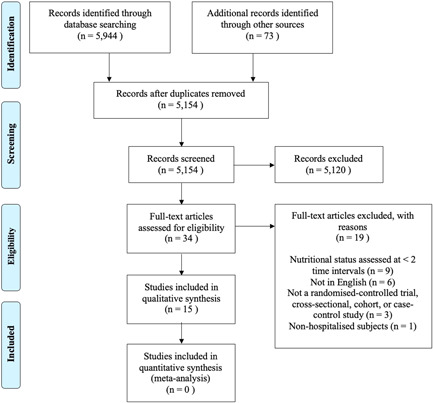
Background: Malnutrition affects between 20% and 50% of hospital inpatients on admission, with further declines expected during hospitalisation. This review summarises the existing literature on hospital‐acquired malnutrition that examines the magnitude of nutritional deterioration amongst adult inpatients and identifies preventable barriers to optimising nutrition support during episodes of care. Methods: A systematic review was conducted to answer the question: Among adult hospital inpatients, the presence of which modifiable factors contribute to hospital‐acquired malnutrition? A database search was conducted between the 24 April and 30 June 2020 using CINAHL, MEDLINE, Scopus and PubMed databases according to a protocol registered with PROSPERO (CD42020182728). In addition, issues of the 10 top clinical nutrition journals published during the period of from 1 April 2015 to 30 March 2020 were hand‐searched. Results: Fifteen articles were eligible for inclusion from a total of 5944 retrieved abstracts. A narrative synthesis of evidence was completed because of the high level of heterogeneity in methodologies. Nutritional deterioration is common among previously well‐nourished and nutritionally compromised patients, with studies reporting that 10%–65% of patients experienced nutritional decline. Frequently reported barriers were mealtime interruptions, meal dissatisfaction, procedure‐related fasting, effects of illness or treatment, chewing difficulties, poor appetite and malnutrition as a low clinical priority. Conclusions: The findings of this review support the need for routine nutritional risk screening throughout each hospital admission with hospital‐acquired malnutrition affecting up to 65% of inpatients. Clear establishment of the roles and responsibilities of each member within multidisciplinary healthcare teams in the provision of nutrition care and cost–benefit analyses are recommended to demonstrate the effectiveness of changes to models of care.
Overview
The claims and statistics of this paper haven’t been checked yet.
Run the check — free, no account needed. It reads the open-access text and checks the sources it cites.
Integrity signals
Registry
Cites
Statistics
Figures
Verification
Claims the paper makes
The claims and statistics of this paper haven’t been checked yet.
Run the check — free, no account needed. It reads the open-access text and checks the sources it cites.
Claims other papers make about this one
Each is checked against this paper’s own text: does it say what the citing paper says it does?
The source backs part of the claim, not all of it — or backs it for a different population, condition or comparison.
In the citing paper
“Malnutrition prevalence estimates range from 20% to 60% for hospitalized patients.”
From Malnutrition and Cachexia in Inpatients With Acute Cardiac Conditions: A Scientific Statement From the American Heart Association (2026) · cites this paper as [8]
Experimental — accuracy not yet measuredThe source backs part of the claim, not all of it — or backs it for a different population, condition or comparison.
In the citing paper
“The malnutrition prevalence estimates ranging from 20% to 60% for hospitalized patients are probably underestimates resulting from limitations in documentation, coding, and diagnostic criteria.8”
From Malnutrition and Cachexia in Inpatients With Acute Cardiac Conditions: A Scientific Statement From the American Heart Association (2026) · cites this paper as [8]
Experimental — accuracy not yet measured
Self-check
Percentages, sums and reported differences re-computed from the paper’s own numbers.
The self-check needs the paper’s full text.
Citations
Cites
Preferred Reporting Items for Systematic Reviews and Meta-Analyses: The PRISMA Statement
Moher, D., Liberati, A., Tetzlaff, J., Altman, D. G., & The PRISMA Group (2009) · PLoS Medicine · doi:10.1371/journal.pmed.1000097 · Cited by 64,042
Incidence and recognition of malnutrition in hospital
McWhirter, J. P., & Pennington, C. R. (1994) · BMJ · doi:10.1136/bmj.308.6934.945 · Cited by 1,504 · cited 3×
“First, in some studies, the researchers were unable to follow‐up with all patients and were subsequently excluded from analyses.(27,34,37,38) This was a result of having been discharged prior to the predetermined follow‐up time intervals or because of death or transfers to other hospitals.”
BackgroundResultTaylor, B. E., McClave, S. A., Martindale, R. G., Warren, M. M., Johnson, D. R., Braunschweig, C., McCarthy, M. S., Davanos, E., Rice, T. W., Cresci, G. A., et al. (2016) · Critical Care Medicine · doi:10.1097/ccm.0000000000001525 · Cited by 1,476 · cited 2×
“This association was weakened by higher levels of healthcare assistant staffing which suggests a potential approach to address such staffing challenges by enabling nursing staff to direct their time to other patient‐related activities.(61) Nurses consistently self‐report that nutrition‐related responsibilities are lik…”
BackgroundResultPrognostic impact of disease-related malnutrition.
Norman, K., Pichard, C., Lochs, H., & Pirlich, M. (2008) · Clinical Nutrition · doi:10.1016/j.clnu.2007.10.007 · Cited by 1,460
White, J. V., Guenter, P., Jensen, G., Malone, A., Schofield, M., Academy Malnutrition Work Group, A.S.P.E.N. Malnutrition Task Force, & and the A.S.P.E.N. Board of Directors (2012) · Journal of Parenteral and Enteral Nutrition · doi:10.1177/0148607112440285 · Cited by 1,284
Hospital Malnutrition: Prevalence, Identification and Impact on Patients and the Healthcare System
Barker, L. A., Gout, B. S., & Crowe, T. C. (2011) · International Journal of Environmental Research and Public Health · doi:10.3390/ijerph8020514 · Cited by 985 · cited 1×
“Hospital malnutrition is a predictor of increased length of stay, impaired wound healing, increased risk of infections and complications, and increased morbidity and mortality.(1,4) Thus, malnourished patients have more substantial care needs with a greater reliance on hospital resources resulting in higher healthcare…”
BackgroundLim, S., Ong, K., Chan, Y., Wai, C.-L.-K., Ferguson, M., & Daniels, L. (2011) · Clinical Nutrition · doi:10.1016/j.clnu.2011.11.001 · Cited by 865
Persistent Risk of Severe Covid-19 in Heart Transplant Recipients: A National Cohort Study
Legeai, C., Abdoul, N., Jasseron, C., Battistella, P., Nubret, K., Kerbaul, F., & Dorent, R. (2023) · The Journal of Heart and Lung Transplantation · doi:10.1016/j.healun.2023.02.427 · Cited by 609
The association between nurse staffing and omissions in nursing care: A systematic review
Griffiths, P., Recio-Saucedo, A., Dall'ora, C., Briggs, J. S., Maruotti, A., Meredith, P., Smith, G. B., & Ball, J. (2018) · Journal of Advanced Nursing · doi:10.1111/jan.13564 · Cited by 545 · cited 1×
“These findings are consistent with earlier research suggesting that patient care suffers during periods of inadequate staffing.(67) This association was weakened by higher levels of healthcare assistant staffing which suggests a potential approach to address such staffing challenges by enabling nursing staff to direct…”
ResultNutritional Risk Screening and Assessment
Reber, E., Gomes, F., Vasiloglou, M. F., Schuetz, P., & Stanga, Z. (2019) · Journal of Clinical Medicine · doi:10.3390/jcm8071065 · Cited by 485
Research works printed but not linked: 12
- 10.1177/0148607113484066 · DOI
- Laur C, 2015, Healthcare, 393
- 10.1016/j.jand.2012.03.012 · DOI
- Independent Hospital Pricing Authority, 2017, Risk adjustment model for hospital acquired complications – Technical specifications, 66
- Kyriakos G, 2013, Prolonged fasting with fluid therapy is related to poorer outcomes in medical patients, Nutr Hosp, 28, 1710
- 10.7326/0003-4819-151-4-200908180-00135 · DOI · Paper page
- National Institute of Clinical Studies, 2009, Levels of evidence and grades for recommendations for developers of guidelines, 24
- 10.1001/archinte.156.4.425 · DOI
- National Institute of Clinical Studies, 2009, Emergency department stroke and transint ischaemic attack care bundle: information and implementation guide, 2
- Centers for Disease Control and Prevention, 2012, Anthropometric reference data for children and adults: United States, 2007‐2010, 15
- 10.1016/j.jand.2017.05.014 · DOI
- 10.1177/0148607115621863 · DOI · Paper page
Cited by
Sorted by citations
Cruz-Jentoft, A., & Volkert, D. (2025) · New England Journal of Medicine · doi:10.1056/nejmra2412275 · Cited by 394
Dent, E., Wright, O. R. L., Woo, J., & Hoogendijk, E. O. (2023) · The Lancet · doi:10.1016/s0140-6736(22)02612-5 · Cited by 549
Stoian, M., Andone, A., Bândilă, S. R., Onișor, D. M., Babă, D.-F., Niculescu, R., Stoian, A., & Azamfirei, L. (2025) · Nutrients · doi:10.3390/nu17101659 · Cited by 52
“Even well-nourished patients can become malnourished due to complex metabolic changes occurring in the context of acute inflammation that promote catabolism and disrupt normal nutrient utilization [1].”
Durán-Poveda, M., Suárez-de-la-Rica, A., Minchot, E. C., Bretón, J. O., Pernaute, A. S., & Caravaca, G. R. (2023) · Nutrients · doi:10.3390/nu15143283 · Cited by 35
The ILC Maine statement: Time for the fundamental care [r]evolution
Kitson, A. L., Carr, D., Feo, R., Conroy, T., & Jeffs, L. (2024) · Journal of Advanced Nursing · doi:10.1111/jan.16108 · Cited by 30
Golder, J. E., Bauer, J. D., Barker, L. A., Lemoh, C. N., Gibson, S., & Davidson, Z. E. (2023) · Nutrition Reviews · doi:10.1093/nutrit/nuad157 · Cited by 22
Micek, A., Błaszczyk-Bębenek, E., Cebula, A., Godos, J., Konopka, K. W., Wąż, A., & Grosso, G. (2025) · Aging Clinical and Experimental Research · doi:10.1007/s40520-025-03071-y · Cited by 20
Evaluation of different screening tools for detection of malnutrition in hospitalised patients
Cortes, R., Yáñez, A. M., Capitán-Moyano, L., Millán-Pons, A., & Bennasar-Veny, M. (2024) · Journal of Clinical Nursing · doi:10.1111/jocn.17170 · Cited by 18
“Malnutrition is a modifiable condition that has a high prevalence in”
InfluentialHospital Malnutrition in the Medicine and Neurology Departments: A Complex Challenge
Starace, E., de Pasquale, G., Morenghi, E., Crippa, C., Matteucci, S., Pieri, G., Soekeland, F., Gibbi, S. M., Cricchio, G. L., Reggiani, F., et al. (2023) · Nutrients · doi:10.3390/nu15245061 · Cited by 16
Vest, A. R., DiDomenico, R. J., Lichtenstein, L., Slater, T., Ekpo, E., Damluji, A. A., Bohula, E., Alviar, C. L., on behalf of the American Heart Association Acute Cardiac Care and General Cardiology Committee of the Council on Clinical Cardiology, & Council on Cardiovascular and Stroke Nursing (2026) · Circulation · doi:10.1161/cir.0000000000001405 · Cited by 15
Nil per os in the management of oropharyngeal dysphagia—exploring the unintended consequences
Cimoli, M., Gibney, J. M., Lim, M. A. W. T., Castles, J., & Dammert, P. (2024) · Frontiers in Rehabilitation Sciences · doi:10.3389/fresc.2024.1410023 · Cited by 13
Nutritional Status Assessment Tools in Cardiovascular Patients
Jarosz, I., Górecki, K., Kalisz, G., & Popiołek-Kalisz, J. (2025) · Nutrients · doi:10.3390/nu17162703 · Cited by 14
“Nutritional status is often not systematically assessed, despite evidence that malnutrition can occur even in overweight or obese individuals with CVD [102,103].”
Ang, W. L. S., Zhang, D., Cai, H., & Chew, H. S. J. (2025) · Journal of Clinical Nursing · doi:10.1111/jocn.17629 · Cited by 11
Exploring Overnutrition, Overweight, and Obesity in the Hospital Setting—A Point Prevalence Study
Elliott, A., Gibson, S. J., Bauer, J., Cardamis, A., & Davidson, Z. (2023) · Nutrients · doi:10.3390/nu15102315 · Cited by 13
“…underweight and undernutrition in adults and dietetic care concentrated on nutrition deterioration to prevent hospital-acquired malnutrition [4], dietitians do not consistently identify overweight and obesity as a nutrition problem in the acute setting; patients in obese weight…”
BackgroundLaura, T., Melvin, C., & Yoong, D. Y. (2022) · BMC Geriatrics · doi:10.1186/s12877-022-03343-6 · Cited by 13
Prevalence, incidence, and complications of malnutrition in severely injured patients
Verheul, E. A. H., Dijkink, S., Krijnen, P., Hoogendoorn, J. M., Arbous, M. S., Peters, R., Velmahos, G. C., Salim, A., Yeh, D. D., & Schipper, I. B. (2025) · European Journal of Trauma and Emergency Surgery · doi:10.1007/s00068-024-02711-8 · Cited by 13
Nutrition Care after Hospital Discharge in Singapore: Evidence-Based Best-Practice Recommendations
Ng, D. H. L., Koh, F. H.-X., Yeong, H. E. L., Huey, T. C. W., Chue, K. M., Foo, F. J., & Chew, S. T. H. (2023) · Nutrients · doi:10.3390/nu15214492 · Cited by 10
“Nutritional status often declines during hospitalisation [20–23], and it predicts a longer length of stay and hospital readmission within 6 months of discharge [24].”
BackgroundPörtner, L. M., Schlenger, L., Gabrysch, S., & Lambrecht, N. (2025) · The Lancet Planetary Health · doi:10.1016/j.lanplh.2025.05.004 · Cited by 15
Patient-Led, Technology-Assisted Malnutrition Risk Screening in Hospital: A Feasibility Study
Roberts, S., Marshall, A. P., Bromiley, L., Hopper, Z., Byrnes, J., Ball, L., Collins, P., & Kelly, J. (2024) · Nutrients · doi:10.3390/nu16081139 · Cited by 11
“Malnutrition is highly prevalent in hospitals, affecting 30–50% of inpatients [1].”
BackgroundAlito, A., Portaro, S., Leonardi, G., Ventimiglia, C., Bonanno, F., Fenga, D., Sconza, C., & Tisano, A. (2023) · Diagnostics · doi:10.3390/diagnostics13203213 · Cited by 11
Polański, J., Tański, W., Dudek, K., & Jankowska-Polańska, B. (2024) · Nutrients · doi:10.3390/nu16142193 · Cited by 10
“It is indicated that malnutrition is associated with a worse response to treatment, poorer absorption of drugs, a higher risk of complications, an unfavorable prognosis, an increased frequency of hospitalizations, and a high risk of death [5].”
BackgroundAssociations between malnutrition and physical performance, sarcopenia, and frailty in older adults
Coelho‐Júnior, H. J., Álvarez‐Bustos, A., Russo, A., Rodríguez‐Mañas, L., Landi, F., & Marzetti, E. (2025) · BMC Geriatrics · doi:10.1186/s12877-025-06274-0 · Cited by 13
“Economic status, marital condition, educational levels, and hospital stay might affect some variables present in the diagnostic of malnutrition [31, 32], as well as indirectly impact physical performance, sarcopenia, and frailty [33–35].”
Sadıç, A., Şahiner, Z., Eşme, M., Balcı, C., Doğu, B. B., Cankurtaran, M., & Halil, M. G. (2025) · Medicina · doi:10.3390/medicina61081354 · Cited by 9
“Depending on the assessment method used, the prevalence of malnutrition in hospitalized patients ranges from 20% to 50%, but it often remains underrecognized and insufficiently addressed during inpatient care [4].”
Digital Twins: The Future of Personalized Nutrition and Health?
Abrahams, M. (2025) · Lifestyle Genomics · doi:10.1159/000543483 · Cited by 9
“Malnutrition is a common problem in healthcare, with an estimated 20 – 50% of elderly patients admitted to hospital already being mal-nourished [17, 18].”
Tang, Y., Wen, X.-M., Tang, X.-L., Li, X., Zhang, L., Duan, S., Long, P., & Zhou, Z.-X. (2024) · Frontiers in Nutrition · doi:10.3389/fnut.2024.1449271 · Cited by 8
Ellick, J., McCoy, S. M., Olufson, H. T., Adams, A., Banks, M., & Young, A. (2024) · Nutrition & Dietetics · doi:10.1111/1747-0080.12913 · Cited by 10
“2,3 Traditionally, the prevention and treatment of malnutrition have been the core responsibility of dietitians in inpatient hospital settings through individualised nutrition care plans 4,5 and recent surveys of dietitian managers supports that this remains the predominant approach in clinical…”
Malnutrition in hospitalized adults in the United States, 2016–2019
Bhasin, A., Huang, L., Shieh, M., Pekow, P. S., Lindenauer, P. K., & Lagu, T. C. (2024) · Journal of Hospital Medicine · doi:10.1002/jhm.13456 · Cited by 9
Health policy to address disease-related malnutrition: a scoping review
Ford, K., Basualdo-Hammond, C., Nasser, R., Avdagovska, M., Keller, H., Malone, A., Bauer, J. D., Correia, M. T., Cárdenas, D., & Gramlich, L. (2024) · BMJ Nutrition, Prevention & Health · doi:10.1136/bmjnph-2024-000975 · Cited by 7
The SIMPLER Nutrition Pathway for Fragility Fractures: A Quality Improvement Initiative
Bell, J., Geirsdóttir, Ó. G., Johansen, A., Santy‐Tomlinson, J., Frihagen, F., McGlasson, R. A., Sutton, E., & Hertz, K. (2025) · Nutrients · doi:10.3390/nu17121987 · Cited by 4
Bell, J., Turabi, R. Y., Olsen, S. U., Sheehan, K. J., & Geirsdóttir, Ó. G. (2025) · Nutrients · doi:10.3390/nu17020240 · Cited by 6
Golder, J. E., Bauer, J. D., Barker, L. A., Lemoh, C. N., Gibson, S., & Davidson, Z. E. (2024) · Nutrition & Dietetics · doi:10.1111/1747-0080.12918 · Cited by 8
Physician Perspectives on Malnutrition Screening, Diagnosis, and Management: A Qualitative Analysis
van Zanten, D. V., Vantomme, E., Ford, K. L., Cahill, L. E., Jin, J., Keller, H., Nasser, R., Lagendyk, L., Strickland, T. N., MacDonald, B. L., et al. (2024) · Nutrients · doi:10.3390/nu16142215 · Cited by 8
Consequences of Anorexia of Aging in Hospital Settings: An Updated Review
Cox, N. J. (2024) · Clinical Interventions in Aging · doi:10.2147/cia.s431547 · Cited by 6
“…there were differences depending on the method of appetite assessment between ESAS and SNAQ on comparing changes in mean concentration with appetite level, with changes to IL-6 and IL-18 associated with change in ESAS-appetite and IL-10 and IL-33 associated with changes in SNAQ-appetite level.”
BackgroundMethodIacono, I. D., Piroscia, R., Colelli, E., Tomasin, R. P., Fiorini, J., Foglietti, F., Buglione, D., Cangelosi, G., Petrelli, F., Vanzi, V., et al. (2025) · Nutrition (Burbank, Los Angeles County, Calif.) · doi:10.1016/j.nut.2025.112890 · Cited by 5
Golder, J. E., Bauer, J. D., Barker, L. A., Lemoh, C. N., Gibson, S., & Davidson, Z. E. (2025) · Nutrients · doi:10.3390/nu17071131 · Cited by 5
“…that vitamin C status is influenced by multiple factors associated with acute illness and hospitalisation itself which impact vitamin C intake [30–32], absorption [33–36], losses [37], or requirements [1], and contribute to the decline in vitamin C status observed prior to and during…”
Fisher, E., Brown, L., & Duncanson, K. (2025) · Nutrition & Dietetics · doi:10.1111/1747-0080.70007 · Cited by 5
Carnevale, S., Vitale, A., Razzi, M., Onori, C., Cornacchia, G., Grispo, O., Corsinovi, E., Rossl, L., Spinetti, E., Tosi, M., et al. (2024) · Dietetics · doi:10.3390/dietetics3040039 · Cited by 5
Palmer, M. A., Hosking, B., Naumann, F., Courtice, S., Henderson, A., Stoney, R. M., Ross, L., & Vivanti, A. (2024) · Journal of human nutrition and dietetics (Print) · doi:10.1111/jhn.13376 · Cited by 5
Evaluating physiological barriers to oral intake in hospitalized patients: A secondary analysis.
Smith, E. V., Kouw, I., Summers, M., Louis, R., Chapman, M., & Chapple, L. (2024) · JPEN - Journal of Parenteral and Enteral Nutrition · doi:10.1002/jpen.2675 · Cited by 5
Gvozdenović, N., Šarac, I., Ćorić, A., Saša, K., Nikolić, S., Ždrale, I., & Milešević, J. (2024) · Nutrients · doi:10.3390/nu16162702 · Cited by 5
Roberts, S., Nucera, R., Dowd, T., Turner, K., Langston, K., Keller, H. H., Bell, J., & Angus, R. (2024) · Nutrition in clinical practice · doi:10.1002/ncp.11156 · Cited by 5
Nutritional considerations for people living with a Fontan circulation: a narrative review
Clode, M., Tran, D., Majumdar, A., Ayer, J. G., Ferrie, S., & Cordina, R. (2024) · Cardiology in the Young · doi:10.1017/s1047951123004389 · Cited by 6
Sharma, Y., Horwood, C., Shahi, R., Hakendorf, P., & Thompson, C. (2022) · Heart, Lung and Circulation · doi:10.1016/j.hlc.2022.10.011 · Cited by 5
Chang, H., Koo, F.-K., Hui, J. (., Tang, H.-S., & You, W.-P. (2025) · Nursing Reports · doi:10.3390/nursrep16010006 · Cited by 4
Wan, C. S., Musgrave‐Takeda, M., Gillespie, B. M., Tobiano, G., & McInnes, E. (2025) · Journal of Advanced Nursing · doi:10.1111/jan.16820 · Cited by 6
“Early identification of malnutrition risk and timely nutritional intervention are critical to preventing hospital-acquired malnutrition and improving patient outcomes (Cass and Charlton 2022).”
Elliott, A., Bauer, J. D., McDonald, C. E., & Gibson, S. (2024) · International Journal of Obesity · doi:10.1038/s41366-024-01697-y · Cited by 4
Meza-Valderrama, D., Sánchez‐Rodríguez, D., Curbelo, Y. G., Ramírez-Fuentes, C., Muñoz-Redondo, E., Morgado-Pérez, A., Agurto, N. O., Paola, F. G., & Marco, E. (2024) · Nutrients · doi:10.3390/nu16183053 · Cited by 5
García-Alfaro, P., Pérez-López, F. R., Süle, M., García, S., & Rodríguez, I. (2026) · Menopause The Journal of The North American Menopause Society · doi:10.1097/gme.0000000000002769 · Cited by 1
Krobot, M., Jančeková, K., Hawk, V., Zelenková, V., & Kapounová, Z. (2025) · BMJ Open · doi:10.1136/bmjopen-2025-101787 · Cited by 4
Sarier, C., Walsh, S., Bowers, S., O'Connor, M., Mohamed, A., Keller, H. H., Ford, K., Galvin, R., & Griffin, A. (2025) · Nutrients · doi:10.3390/nu17193181 · Cited by 3
“Depending on the assessment method used, the prevalence of malnutrition in hospitalised patients ranges from 20% to 50%, but it often remains under recognised and insufficiently addressed during inpatient care [8].”
Undernourished and Undertreated: The Role of Nutritional Care in Geriatric Hospital Outcomes
Orlandoni, P., Peladic, N. J., Rosa, M. D., Venturini, C., & Lattanzio, F. (2025) · Nutrients · doi:10.3390/nu17183021 · Cited by 3
Khan, Z. U., Hamza, M., Rashid, K., Rajput, H. A. S., Inam, A., Anwar, T., Mehmood, S., Khan, A., & Muttahir, M. (2025) · Cureus · doi:10.7759/cureus.89214 · Cited by 3
“Institutional barriers such as delayed nutritional screening, limited dietetic support, and lack of awareness among healthcare providers exacerbate the problem [5].”
Hill, L. T., Abdoola, F., Adu-Amoah, H. G., Akinyemi, I., Ali, R., Anku, E., Hamoonga, B. M., Katundu, K., & Sinkala, R. (2025) · Nutrition (Burbank, Los Angeles County, Calif.) · doi:10.1016/j.nut.2025.112713 · Cited by 3
Moti, B. K., Atomsa, G. E., & Tesso, D. W. (2025) · BMC Nutrition · doi:10.1186/s40795-025-01000-w · Cited by 3
“Despite the scale of this problem, it remains under-detected, under-treated/unrecognized, under resourced, underre-ported problem and often overlooked by those involved in the care of at risk individuals [4, 9, 15, 22].”
Hansen, M. C., Uhrenfeldt, L., Ingstad, K., & Pedersen, P. U. (2024) · Trials · doi:10.1186/s13063-024-08096-8 · Cited by 4
Zhou, B., Zhang, Y.-P., Hiesmayr, M., Gao, X.-J., Huang, Y.-C., Liu, S.-T., Shen, R., Zhao, Y., Cui, Y., Zhang, L., et al. (2024) · Nutrients · doi:10.3390/nu16040569 · Cited by 3
Li, S., Lio, K. U., Ho, T., Wang, Y., & Rali, P. (2023) · BMJ Nutrition, Prevention & Health · doi:10.1136/bmjnph-2023-000705 · Cited by 3
“⇒ It is well established that malnutrition can exacerbate other cardiovascular diseases; however, the prognostic significance of nutritional status in acute pulmonary embolism (PE) has not been examined.”
BackgroundTóth, B., Dénes, Z., Németh, M., & Fazekas, G. (2023) · International journal of rehabilitation research. Internationale Zeitschrift fur Rehabilitationsforschung. Revue internationale de recherches de readaptation · doi:10.1097/mrr.0000000000000587 · Cited by 3
Patients’ Experiences with Nutritional Care during Hospitalization and Proposals for Improvement
Mikkelsen, S. L. (2022) · International Journal of Nursing and Health Care Research · doi:10.29011/2688-9501.101337 · Cited by 1
“Besides lack of sufficient attention to malnutrition, nurses perceive reasons for nutritional deterioration during hospitalization to include interruptions during meals, fasting due to procedures, problems with chewing and lack of appetite due to the disease and treatment, lack of information about the individual nutr…”
BackgroundPatterns of parenteral nutrition use in the inpatient setting: A retrospective cohort study
Romain, M., Weissman, C., Abu-Tair, K., Aldin, A. A., Harari, R., Bitner, O., Furmanov, A., & Ya'ari, S. (2025) · Nutrition in clinical practice · doi:10.1002/ncp.70079 · Cited by 2
Cheung, V. H. I., & Wan, C. S. (2025) · Nutrients · doi:10.3390/nu17182970 · Cited by 3
“Inadequate nutritional intake or insufficient nutritional support are predominant barriers to meeting nutritional requirements during episodes of acute illness that require hospitalisation [1,3].”
InfluentialPanchal, M., Saseedharan, S., Navade, J., & Gada, M. (2025) · Nutrition and Health · doi:10.1177/02601060251332990 · Cited by 2
“It is associated with signi fi cant adverse outcomes, including increased morbidity and mortality rates, extended hospital stays, and higher healthcare costs, making it one of the most prevalent clinical disorders in hospitalized adults (Cass and Charlton, 2022).”
Lam, L., Ussher, H., Trakman, G., Daglas, A., Hamilton, E., Ballantyne, L., Fox, V., & Furness, K. (2025) · Journal of human nutrition and dietetics (Print) · doi:10.1111/jhn.70068 · Cited by 2
Abel, L., & Tandoh, M. (2025) · Health Science Reports · doi:10.1002/hsr2.70594 · Cited by 2
“However, it is worth noting that poor communication between these fields can lead to delays in dietary therapy, un-derscoring the need for enhanced coordination [32].”
Hosking, B., ROSS, L. J., Vivanti, A., Courtice, S., Henderson, A. J., Naumann, F., Stoney, R. M., & PALMER, M. A. (2025) · Healthcare · doi:10.3390/healthcare13040364 · Cited by 2
“Hospital inpatients also face individual and operational barriers that contribute to reduced nutritional intake and malnutrition development, such as mealtime interruptions, dissatisfaction with hospital food service, prolonged fasting periods, treatment effects and chewing difficulties [4].”
Suganuma, S., Kanda, N., Yoshida, M., Miyagi, T., & Nakamura, K. (2025) · Nutrients · doi:10.3390/nu17040705 · Cited by 3
“It is estimated to affect approximately 20% to 50% of hospitalized patients [1], with the highest prevalence observed among those individuals admitted to medical units, particularly elderly patients [2], surgical patients [3], and oncology patients [4], who are at an elevated risk due to their…”
Cuartero, N., Aranaga, F. M.-L., Gómez-Ramos, M. J., Gómez‐Sánchez, M. B., Avilés-Plaza, F. V., Núñez‐Sánchez, M. Á., & Morillas-Ruiz, J. M. (2024) · International Journal of Molecular Sciences · doi:10.3390/ijms252111739 · Cited by 5
“It is estimated that it affects between 20% and 50% of total hospitalized patients [1] and it could affect up to 78% of intensive care unit (ICU) patients [2].”
BackgroundPraneetvatakul, Y., Larpjit, S., Jongcherdchootrakul, K., & Lertwanichwattana, T. (2023) · Journal of Southeast Asian Medical Research · doi:10.55374/jseamed.v7.167 · Cited by 1
Nutrition therapy during noninvasive ventilation: oral or enteral?
Smith, E. V., D'Cruz, R., & Chapple, L.-A. S. (2023) · Current Opinion in Critical Care · doi:10.1097/mcc.0000000000001053 · Cited by 2
The vital role of nutrition and dietetics in the clinical management of disease and injury.
Corish, C. (2022) · Nutrition & Dietetics · doi:10.1111/1747-0080.12787 · Cited by 2
Fasting before elective abdominal ultrasound: a systematic review and meta-analysis
Braasch, T., Hoffmann, I., Deckert, A., Horstick, O., & Siegmund, B. (2026) · Internal and Emergency Medicine · doi:10.1007/s11739-026-04511-x · Cited by 1
The gut microbiota in malnutrition
Littlejohn, P. T., Holani, R., Vallance, B. A., & Finlay, B. B. (2026) · Nature Reviews Microbiology · doi:10.1038/s41579-026-01359-y · Cited by 1
Hutter, A., Brunner, S., Gattinger, H., & Künzler-Heule, P. (2026) · Journal of Clinical Nursing · doi:10.1111/jocn.70327 · Cited by 1
Favaretto, S., Ocagli, H., Shasivari, G., Rold, P. D., Zobec, F., Baldas, S., Giarracca, C., Donnarumma, G., Lorenzoni, G., Lanera, C., et al. (2026) · Nutrients · doi:10.3390/nu18081234 · Cited by 1
“Barriers such as insufficient time, high workloads, inadequate staff training, reduced patient appetite, and limited awareness of nutritional risk contribute to poor and inconsistent monitoring [1].”
InfluentialAddressing Malnutrition in Australian Hospitals: A Scoping Review to Inform Systems Thinking
Baird, J., Desneves, K., Chapman, B., Hughes, R., & Tuck, C. J. (2026) · Journal of Human Nutrition and Dietetics · doi:10.1111/jhn.70230 · Cited by 1
de Jesus, R. D., de Oliveira, L. P. M., Cunha, C. D. M., Boulhosa, R. S. D. S. B., Ricci, A. C. B. P., Arruda, M. R., Batista, A., Santos, K. M. S., Pereira, K. G., Romeiro, F., et al. (2026) · Journal of human nutrition and dietetics (Print) · doi:10.1111/jhn.70235 · Cited by 1
Weight estimation in people aged 65 years and over admitted to hospitalisations units
Moncho, J., Trescastro-López, E. M., Navarro-Llopes, P., Carretero-Randez, C., Camacho-Bejarano, R., Castillo-García, M. T., & Orts-Cortés, M. I. (2026) · Frontiers in Nutrition · doi:10.3389/fnut.2026.1756595 · Cited by 1
Smalley, R., Nichols, E., Caruana, L., Scott, M., Jochinke, E., Tregea, T., & Franklin, N. (2026) · Nutrition & Dietetics · doi:10.1111/1747-0080.70073 · Cited by 1
Dudzik, J., Linskens, S., & Balk, E. K. (2026) · Journal of human nutrition and dietetics (Print) · doi:10.1111/jhn.70194 · Cited by 1
Hansen, M. C., Uhrenfeldt, L., Ingstad, K., & Pedersen, P. U. (2025) · Pilot and Feasibility Studies · doi:10.1186/s40814-025-01745-y
“The prevalence of malnourished hospitalised older adults is estimated to be 20–50%, with further declines expected during hospitalisation [1, 2].”
Banck, M. A., Bernhart, S., Müller, L., Baber, R., Zeynalova, S., Engel, C., Scholz, M., Wirkner, K., Eichelmann, F., Vente, Z., et al. (2025) · Scientific Reports · doi:10.1038/s41598-025-29282-x · Cited by 1
Duran, H. T., & Kılınç, O. Ö. (2025) · Medicine · doi:10.1097/md.0000000000045645 · Cited by 1
“[1] Patients in the intensive care unit (ICU) often have nutritional difficulties due to hypermetabolism and problems with the absorption of nutrients that occur outside of normal physiology.”
Golder, J. E., Bauer, J. D., Barker, L. A., Lemoh, C. N., Foster, A. M., Breik, L., Ng, M. Y., Gibson, S., & Davidson, Z. E. (2025) · Nutrition in Clinical Practice · doi:10.1002/ncp.70054 · Cited by 1
Dunthorne, S., Kirsanovs, S., Wilson-Beddoe, N., Campbell, M., Dowling, S., Green, M., Chapple, L. S., & Wicks, P. (2025) · Injury · doi:10.1016/j.injury.2025.112844 · Cited by 1
Pertel, D., Ojeda, T., Ashafa, M., McCauley, S. M., & Coltman, A. (2025) · Journal of the Academy of Nutrition and Dietetics · doi:10.1016/j.jand.2025.05.015 · Cited by 1
Olsen, J., Chew, M., Fawcett, J., & Badaracco, C. (2025) · Clinical Nutrition ESPEN · doi:10.1016/j.clnesp.2025.07.1135 · Cited by 1
Physicians’ Perceptions Toward the Roles of Clinical Dietitians in Health Care Teams
Alkhaldy, A., & Alothman, A. (2025) · Topics in Clinical Nutrition · doi:10.1097/tin.0000000000000414 · Cited by 1
Uršulin-Trstenjak, N., Poljak, D., Šarkanj, B., Sajko, M., & Šarkanj, I. D. (2025) · Nutrients · doi:10.3390/nu17050889 · Cited by 2
“The early identification and management of malnutrition is crucial, as it can lead to improved patient outcomes and a reduced length of hospital stay [6].”
Rodríguez‐Fanjul, J., Ortí, C. S., Romero, A. R., Monton, A. S., Rodrigo, C., Hernández, M. J. M., Ricart, P., Jordán, I., Jordan, I., & Balaguer, M. (2025) · Hospital Pediatrics · doi:10.1542/hpeds.2024-007810 · Cited by 1
Conceptual Approach to the Design of Enteral Nutrition Products
Agarkova, E. Y., Kondratenko, V. V., & Pryanichnikova, N. (2024) · FOOD METAENGINEERING · doi:10.37442/fme.2024.4.74 · Cited by 1
Jabbari, M., & Haghighian-Roudsari, A. (2024) · Journal of Qualitative Research in Health Sciences · doi:10.34172/jqr.2024.26 · Cited by 1
Malone, A. M. (2024) · Nutrition in Clinical Practice · doi:10.1002/ncp.11226 · Cited by 1
Fulbrook, P., Lovegrove, J., Ven, S., Schnaak, S., & Nowicki, T. (2024) · Journal of Advanced Nursing · doi:10.1111/jan.16309 · Cited by 1
“This is of concern because nutritional decline is experienced in up to 65% of hospitalized patients (Cass & Charlton, 2022 ).”
Visualization of nutrition research in 2022: a bibliometric analysis
Wu, T.-T., Zhou, M., & Song, C.-H. (2023) · doi:10.1097/pn9.0000000000000049 · Cited by 1
“[2] Besides, malnutrition affected between 20% and 50% of hospital inpatients,[3] and was a predictor of increased length of stay, impaired wound healing, increased risk of infections and complications, and increased morbidity and mortality.”
BackgroundSpeedy, A. P., & Wall, C. (2023) · Alimentary Pharmacology and Therapeutics · doi:10.1111/apt.17413 · Cited by 1
Malnutrition severity and nutrition care in hospitalized adults: A descriptive cohort study.
Rozga, M., Oblein, J., Leger, G., Janowski, M., Papoutsakis, C., Steiber, A., & Handu, D. (2026) · JPEN - Journal of Parenteral and Enteral Nutrition · doi:10.1002/jpen.70164
Qi, Y., Li, X., Wen, S., Hu, W., Chen, N., Mu, D., Yuan, L., Yu, F., Jing, X., Cheng, Y., et al. (2026) · Journal of Parenteral and Enteral Nutrition · doi:10.1002/jpen.70157
Prevalence of Malnutrition in Slovak Hospitals Based on Mini Nutritional Assessment Questionnaire
Lecký, P., Krivuš, J., Miertová, Z., Chlebo, P., Juríček, R., Slezáková, J., Francisty, T., Sluková, M., Szépeová, R., Koudelková, A., et al. (2026) · Bratislavské lekárske listy/Bratislava medical journal · doi:10.1007/s44411-026-00864-z
Shilov, M. A., Рунихина, Н. К., Сергеевна, О. В., Bondarenko, T. A., Lysenkov, S. N., Dudinskaya, Е. N., & Вячеславовна, Л. А. (2026) · Russian Journal of Geriatric Medicine · doi:10.37586/2686-8636-3-2026-260-269
Campolina, B. G., Silva, L. D. A., Bordenski, G. H., Machado, A. M., & Duarte, C. K. (2026) · Nutrition · doi:10.1016/j.nut.2026.113424
Metadata
- Authors
- Cass, A. R., & Charlton, K. E.
- Affiliations
- University of Wollongong (AU)
- Corresponding author
- Charlton, Karen E.
- ORCID
- Charlton, Karen E.
- Venue
- Journal of Human Nutrition and Dietetics
- Publisher
- Wiley
- Published
- 2022-04-26
- Volume
- 35
- Issue
- 6
- Pages
- 1043-1058
- ISSN
- 0952-3871 (ISSN-L)
- 1365-277X
- PMC
- PMC9790482
- OpenAlex
- W4224979341
- Cited by
- 177
- References
- 69
- Citations by year
- 2026: 40 · 2025: 70 · 2024: 38 · 2023: 21 · 2022: 8
- FWCI
- 4.71
- Type
- journal article
- Language
- en
- Open access
- hybrid
- doi.org
- Licence
- Locations
- Journal of Human Nutrition and Dietetics (publishedVersion, cc-by)
- PubMed Central (publishedVersion, cc-by)
- PubMed (publishedVersion)
- Research Online (University of Wollongong) (submittedVersion)
- Funders
- University of Wollongong
- Topics
- Health Sciences › Medicine › Physiology (medical) › Nutrition and Health in Aging
- Health Sciences › Nursing › Nutrition and Dietetics › Clinical Nutrition and Gastroenterology
- Health Sciences › Nursing › Nutrition and Dietetics › Dietetics, Nutrition, and Education
- Keywords
- hospital-acquired malnutrition, nutritional deterioration, inpatient nutrition, nutritional risk screening, modifiable risk factors, chewing difficulty, appetite loss
- MeSH terms
- Adult, Hospitalization, Hospitals, Humans, Inpatients, Nutritional Status, Nutrition Assessment, Prevalence, Malnutrition
About these checks
Registry, retraction, Cites and statistics results are computed, not judged, with one exception: a printed reference that no index lists is read once by a model before it counts as a citation error. Claims are extracted by a model and kept only when their quote appears verbatim in the text; each cited source is then checked, with a model’s help, for whether it says what the claim relies on. Those verdicts can be wrong — read the claim’s quote and the cited source before relying on one.
Statistics and arithmetic are recomputed, not judged.
Confidence bands are shown only for fields calibrated on our annotated test set. None is calibrated yet, so no band is shown.
What counts as a claim ›How we measure confidence ›How we check this ›
Are you an author, or do you see a problem with this page? Request a review
