

The DOI matches its Crossref record; 277 of the 283 references it cites were found in a registry or an index.
REBUS and the Anarchic Brain: Toward a Unified Model of the Brain Action of Psychedelics
Open accessAbstract
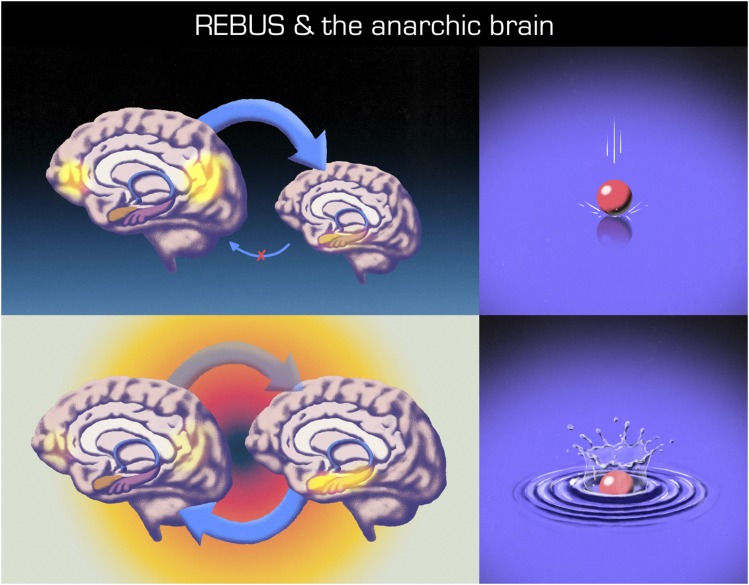
This paper formulates the action of psychedelics by integrating the free-energy principle and entropic brain hypothesis. We call this formulation relaxed beliefs under psychedelics (REBUS) and the anarchic brain, founded on the principle that—via their entropic effect on spontaneous cortical activity—psychedelics work to relax the precision of high-level priors or beliefs, thereby liberating bottom-up information flow, particularly via intrinsic sources such as the limbic system. We assemble evidence for this model and show how it can explain a broad range of phenomena associated with the psychedelic experience. With regard to their potential therapeutic use, we propose that psychedelics work to relax the precision weighting of pathologically overweighted priors underpinning various expressions of mental illness. We propose that this process entails an increased sensitization of high-level priors to bottom-up signaling (stemming from intrinsic sources), and that this heightened sensitivity enables the potential revision and deweighting of overweighted priors. We end by discussing further implications of the model, such as that psychedelics can bring about the revision of other heavily weighted high-level priors, not directly related to mental health, such as those underlying partisan and/or overly-confident political, religious, and/or philosophical perspectives. Significance Statement Psychedelics are capturing interest, with efforts underway to bring psilocybin therapy to marketing authorisation and legal access within a decade, spearheaded by the findings of a series of phase 2 trials. In this climate, a compelling unified model of how psychedelics alter brain function to alter consciousness would have appeal. Towards this end, we have sought to integrate a leading model of global brain function, hierarchical predictive coding, with an often-cited model of the acute action of psychedelics, the entropic brain hypothesis. The resulting synthesis states that psychedelics work to relax high-level priors, sensitising them to liberated bottom-up information flow, which, with the right intention, care provision and context, can help guide and cultivate the revision of entrenched pathological priors.
Overview
The claims and statistics of this paper haven’t been checked yet.
Run the check — free, no account needed. It reads the open-access text and checks the sources it cites.
Integrity signals
Registry
Cites
Statistics
Figures
Verification
Claims the paper makes
The claims and statistics of this paper haven’t been checked yet.
Run the check — free, no account needed. It reads the open-access text and checks the sources it cites.
Claims other papers make about this one
Each is checked against this paper’s own text: does it say what the citing paper says it does?
The source backs part of the claim, not all of it — or backs it for a different population, condition or comparison.
In the citing paper
“Another model of psychedelic actions on brain-wide circuits is the”
From Psychedelics and Neural Plasticity: Therapeutic Implications (2022) · cites this paper as Carhart-Harris and Friston, 2019
Experimental — accuracy not yet measuredThe source backs part of the claim, not all of it — or backs it for a different population, condition or comparison.
In the citing paper
“Carhart-Harris and Friston (2020) distinguish between ‘complete ego-dissolution’—a state of ‘complete surrender, associated bliss, and union with all things’ (Carhart-Harris and Friston 2019, 321); and ‘incomplete’ ego-dissolution—a state characterized by intense fear, anxiety and distress.”
From Consciousness in active inference: Deep self-models, other minds, and the challenge of psychedelic-induced ego-dissolution (2021) · cites this paper as Carhart-Harris and Friston 2019
Experimental — accuracy not yet measuredThe source backs part of the claim, not all of it — or backs it for a different population, condition or comparison.
In the citing paper
“It suggests that psychedelics “relax” high-level cortical cognitive structures, or “priors” - deep-seated beliefs and assumptions that shape how individuals perceive and interpret the world.”
From Psychoanalytically informed MDMA-assisted therapy for pathological narcissism: a novel theoretical approach (2025) · cites this paper as [101]
Experimental — accuracy not yet measuredThe source backs part of the claim, not all of it — or backs it for a different population, condition or comparison.
In the citing paper
“The altered state of consciousness induced by psychedelics is characterized by high sensitivity to the immediate and previous context, which can help actualize of the person’s belief system with bottom-up information (56).”
From Ayahuasca-assisted meaning reconstruction therapy for grief: a non-randomized clinical trial protocol (2025) · cites this paper as [56]
Experimental — accuracy not yet measuredThe source backs part of the claim, not all of it — or backs it for a different population, condition or comparison.
In the citing paper
“The ayahuasca experience, therefore, could bring new information to the foreground to enrich the therapeutic process, providing an opportunity to transform maladaptive narratives about oneself, other people (including the deceased) or the world (56, 57).”
From Ayahuasca-assisted meaning reconstruction therapy for grief: a non-randomized clinical trial protocol (2025) · cites this paper as [56]
Experimental — accuracy not yet measured
The source backs part of the claim, not all of it — or backs it for a different population, condition or comparison.
In the citing paper
“Thus, increased long-ranging cortical connexions and harmony between mutually exclusive brain networks may underlie the beneficial effects elicited by mindfulness meditation and psychedelic-assisted therapy, in isolation as well as in combination (102).”
From Examining the Potential Synergistic Effects Between Mindfulness Training and Psychedelic-Assisted Therapy (2021) · cites this paper as [102]
Experimental — accuracy not yet measuredThe cited source says what the claim attributes to it.
In the citing paper
“This notion is supported by Carhart-Harris and Friston’s (2019) relaxed beliefs under psychedelics model, which proposes that psychedelics precipitate a freer and less constrained states of consciousness.”
From Prospective examination of the therapeutic role of psychological flexibility and cognitive reappraisal in the ceremonial use of ayahuasca (2022) · cites this paper as Carhart-Harris and Friston, 2019
The cited source says what the claim attributes to it.
In the citing paper
“At lower doses, this manifests as the phenomenological effects of psychedelics—e.g. walls may have the appearance of ‘breathing’ (Carhart-Harris and Friston 2019).”
From Consciousness in active inference: Deep self-models, other minds, and the challenge of psychedelic-induced ego-dissolution (2021) · cites this paper as Carhart-Harris and Friston 2019
The cited source says what the claim attributes to it.
In the citing paper
“Specifically, relaxed beliefs under psychedelics (the REBUS model) [115] states that psychedelics serve to relax prior beliefs.”
From Mindfulness meditation and psychedelics: potential synergies and commonalities (2023) · cites this paper as [115]
The cited source says what the claim attributes to it.
In the citing paper
“Such “tightening of beliefs” functions as a defensive response to intolerable stress and uncertainty and may affect mental health in a transdiagnostic manner [160].”
From Impact of Media-Induced Uncertainty on Mental Health: Narrative-Based Perspective. (2025) · cites this paper as [160]
Self-check
Percentages, sums and reported differences re-computed from the paper’s own numbers.
The self-check needs the paper’s full text.
Citations
Cites
Information theory and statistical mechanics
Jaynes, E. T. (1957) · Physical Review · doi:10.1103/physrev.106.620 · Cited by 12,931
The free-energy principle: a unified brain theory?
Friston, K. (2010) · Nature Reviews Neuroscience · doi:10.1038/nrn2787 · Cited by 8,120 · cited 7×
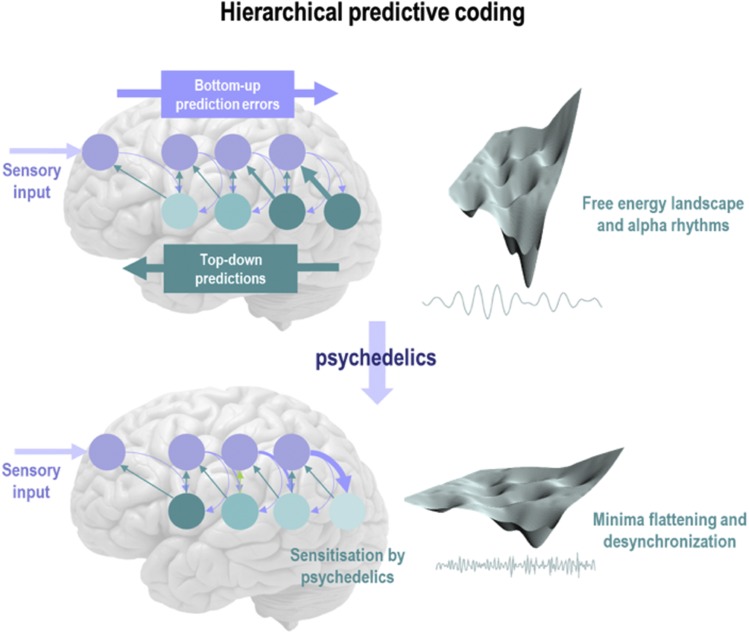
“The model takes inspiration from two formulations of brain function, namely: 1) the free-energy principle(2) (Friston, 2010) and 2) the entropic brain hypothesis(3) (Carhart-Harris, 2018a).”
BackgroundMethodInfluentialRao, R. P. N., & Ballard, D. H. (1999) · Nature Neuroscience · doi:10.1038/4580 · Cited by 5,483 · cited 2×
“…perspectives on brain and mind function maintain that the brain instantiates, within its hierarchical architecture, best-guess statistical approximations (generative models) of the causes of its sensorium based on Bayesian principles of empirically informed belief updating (Rao and Ballard, 1999).”
BackgroundMapping the structural core of human cerebral cortex
Hagmann, P., Cammoun, L., Gigandet, X., Meuli, R., Honey, C. J., Wedeen, V. J., & Sporns, O. (2008) · PLoS Biology · doi:10.1371/journal.pbio.0060159 · Cited by 4,173
The brain's default mode network
Raichle, M. E. (2015) · Annual Review of Neuroscience · doi:10.1146/annurev-neuro-071013-014030 · Cited by 3,904
EEG alpha oscillations: The inhibition–timing hypothesis
Klimesch, W., Sauseng, P., & Hanslmayr, S. (2006) · Brain Research Reviews · doi:10.1016/j.brainresrev.2006.06.003 · Cited by 3,890
Depression: Causes and treatment
Beck, A. T. (1973) · Behavior Therapy · doi:10.1016/s0005-7894(73)80054-1 · Cited by 3,163
Kapur, S. (2003) · American Journal of Psychiatry · doi:10.1176/appi.ajp.160.1.13 · Cited by 2,813
Rhythms for cognition: communication through coherence
Fries, P. (2015) · Neuron · doi:10.1016/j.neuron.2015.09.034 · Cited by 2,725
Canonical Microcircuits for Predictive Coding
Bastos, A. M., Usrey, W. M., Adams, R. A., Mangun, G. R., Fries, P., & Friston, K. J. (2012) · Neuron · doi:10.1016/j.neuron.2012.10.038 · Cited by 2,421 · cited 1×
“This schematic uses the format in Bastos et al. (2012), to which the reader is referred for details.”
Method
Cited by
Sorted by citations
Items 301–400 of 999
Frustration in physiology and molecular medicine
Parra, R. G., Komives, E. A., Wolynes, P. G., & Ferreiro, D. U. (2025) · Molecular Aspects of Medicine · doi:10.1016/j.mam.2025.101362 · Cited by 18
Complex slow waves in the human brain under 5-MeO-DMT
Blackburne, G., McAlpine, R. G., Fabus, M. S., Liardi, A., Kamboj, S. K., Mediano, P. A. M., & Skipper, J. I. (2025) · Cell Reports · doi:10.1016/j.celrep.2025.116040 · Cited by 27
How Psychedelic-Assisted Treatment Works in the Bayesian Brain
Villiger, D. (2022) · Frontiers in Psychiatry · doi:10.3389/fpsyt.2022.812180 · Cited by 21
Resilience and active inference
Miller, M. M., Albarracin, M., Pitliya, R. J., Kiefer, A. B., Mago, J., Gorman, C., Friston, K. J., & Ramstead, M. J. D. (2022) · Frontiers in Psychology · doi:10.3389/fpsyg.2022.1059117 · Cited by 20
Eckernäs, E., Timmermann, C., Carhart-Harris, R. L., Röshammar, D., & Ashton, M. (2023) · CPT Pharmacometrics & Systems Pharmacology · doi:10.1002/psp4.12933 · Cited by 15
Pizzi, S. D., Chiacchiaretta, P., Sestieri, C., Ferretti, A., ONOFRJ, M. C., Penna, S. D., Roseman, L., Timmermann, C., Nutt, D. J., Carhart-Harris, R. L., et al. (2023) · Biological Psychiatry Cognitive Neuroscience and Neuroimaging · doi:10.1016/j.bpsc.2023.03.009 · Cited by 19
Symmetry Perception and Psychedelic Experience
Makin, A. D. J., Roccato, M., Karakashevska, E., Tyson‐Carr, J., & Bertamini, M. (2023) · Symmetry · doi:10.3390/sym15071340 · Cited by 20
Shared functional connectome fingerprints following ritualistic ayahuasca intake
Mallaroni, P., Mason, N. L., Kloft, L., Reckweg, J. T., van Oorsouw, K. I. M., Toennes, S. W., Tolle, H. M., Amico, E., & Ramaekers, J. G. (2023) · NeuroImage · doi:10.1016/j.neuroimage.2023.120480 · Cited by 20
Neural Geometrodynamics, Complexity, and Plasticity: A Psychedelics Perspective
Ruffini, G., Lopez-Sola, E., Vohryzek, J., & Sanchez-Todo, R. (2024) · Entropy · doi:10.3390/e26010090 · Cited by 17
Sjöström, D. K., Claesdotter‐Knutsson, E., & Kajonius, P. (2024) · Scientific Reports · doi:10.1038/s41598-024-60890-1 · Cited by 18
How Do Psychedelics Reduce Fear of Death?
Letheby, C. (2024) · Neuroethics · doi:10.1007/s12152-024-09564-3 · Cited by 19
Exploring psilocybin-assisted psychotherapy in the treatment of methamphetamine use disorder
Brett, J., Knock, E., Korthuis, P. T., Liknaitzky, P., Murnane, K. S., Nicholas, C. R., Patterson, J. C., & Stauffer, C. S. (2023) · Frontiers in Psychiatry · doi:10.3389/fpsyt.2023.1123424 · Cited by 16
Uncovering psychedelics: from neural circuits to therapeutic applications
Melani, A., Bonaso, M., Biso, L., Zucchini, B., Conversano, C., & Scarselli, M. (2025) · Pharmaceuticals · doi:10.3390/ph18010130 · Cited by 17
Active Inference in Psychology and Psychiatry: Progress to Date?
Badcock, P. B., & Davey, C. G. (2024) · Entropy · doi:10.3390/e26100833 · Cited by 23
Artru, E., & Rabeyron, T. (2021) · L Évolution Psychiatrique · doi:10.1016/j.evopsy.2021.03.013 · Cited by 20
fMRI Evidence for Default Mode Network Deactivation Associated with Rapid Eye Movements in Sleep
Hong, C. C.-H., Fallon, J., & Friston, K. J. (2021) · Brain Sciences · doi:10.3390/brainsci11111528 · Cited by 20
Spee, B. T. M., Sladky, R., Fingerhut, J., Laciny, A., Kraus, C., Carls‐Diamante, S., Brücke, C., Pelowski, M. J., & Treven, M. (2022) · Frontiers in Psychology · doi:10.3389/fpsyg.2022.930293 · Cited by 18
Psychedelic Science of Spirituality and Religion: An Attachment-Informed Agenda Proposal
Cherniak, A. D., Brulin, J. G., Mikulincer, M., Östlind, S., Carhart-Harris, R. L., & Granqvist, P. (2022) · International Journal for the Psychology of Religion · doi:10.1080/10508619.2022.2148061 · Cited by 25
Tap, S. C. (2024) · Addiction Biology · doi:10.1111/adb.13386 · Cited by 16
Psychedelics and disorders of consciousness: the current landscape and the path forward
Cardone, P., Alnagger, N., Annen, J., Bicego, A., Gosseries, O., & Martial, C. (2024) · Neuroscience of Consciousness · doi:10.1093/nc/niae025 · Cited by 18
Mind over matter: the microbial mindscapes of psychedelics and the gut-brain axis
Caspani, G., Ruffell, S., Tsang, W., Netzband, N., Rohani-Shukla, C., Swann, J. R., & Jefferies, W. A. (2024) · Pharmacological Research · doi:10.1016/j.phrs.2024.107338 · Cited by 18
Walther, R. F. E., & van Schie, H. T. (2024) · Psychoactives · doi:10.3390/psychoactives3030026 · Cited by 20
Neural network models for DMT-induced visual hallucinations
Schartner, M. M., & Timmermann, C. (2020) · Neuroscience of Consciousness · doi:10.1093/nc/niaa024 · Cited by 18
Neural and subjective effects of inhaled DMT in natural settingsPreprint
Pallavicini, C., Cavanna, F., Zamberlán, F., de la Fuente, L. A., Perl, Y. S., Arias, M., Romero, C., Carhart-Harris, R. L., Timmermann, C., & Tagliazucchi, E. (2020) · bioRxiv (Cold Spring Harbor Laboratory) · doi:10.1101/2020.08.19.258145 · Cited by 17
Cellular rules underlying psychedelic control of prefrontal pyramidal neuronsPreprint
Ekins, T. G., Brooks, I. A. W., Kailasa, S., Rybicki-Kler, C., Jedrasiak‐Cape, I., Donoho, E., Mashour, G. A., Rech, J. C., & Ahmed, O. J. (2023) · bioRxiv (Cold Spring Harbor Laboratory) · doi:10.1101/2023.10.20.563334 · Cited by 19
The entropic heart: Tracking the psychedelic state via heart rate dynamicsPreprint
Rosas, F. E., Mediano, P. A. M., Timmermann, C., Luppi, A. I., Candia‐Rivera, D., Abbasi-Asl, R., Gazzaley, A. H., Kringelbach, M. L., Muthukumaraswamy, S. D., Bor, D., et al. (2023) · bioRxiv (Cold Spring Harbor Laboratory) · doi:10.1101/2023.11.07.566008 · Cited by 19
Munk, A., Reme, S. E., & Jacobsen, H. B. (2021) · Frontiers in Psychology · doi:10.3389/fpsyg.2021.630422 · Cited by 16
Armstrong, M., Castellanos, J. P., & Christie, D. (2024) · Frontiers in Pain Research · doi:10.3389/fpain.2024.1346053 · Cited by 19
Psilocybin in the treatment of anorexia nervosa: The English transition of a French 1959 case study
Verroust, V., Zafar, R. R., & Spriggs, M. J. (2021) · Annales Médico-psychologiques revue psychiatrique · doi:10.1016/j.amp.2021.08.004 · Cited by 16
Psychedelics and environmental virtues
Kirkham, N., & Letheby, C. (2022) · Philosophical Psychology · doi:10.1080/09515089.2022.2057290 · Cited by 20
Psychoanalytic psychotherapies and the free energy principle
Rabeyron, T. (2022) · Frontiers in Human Neuroscience · doi:10.3389/fnhum.2022.929940 · Cited by 16
Converging theories on dreaming: Between Freud, predictive processing, and psychedelic research
Koslowski, M., Haas, M.-P. D., & Fischmann, T. (2023) · Frontiers in Human Neuroscience · doi:10.3389/fnhum.2023.1080177 · Cited by 23
Synthetic surprise as the foundation of the psychedelic experience
Filippo, R. D., & Schmitz, D. (2024) · Neuroscience & Biobehavioral Reviews · doi:10.1016/j.neubiorev.2024.105538 · Cited by 17
Acevedo, E. C., Uhler, S., White, K. P., & Al-Shawaf, L. (2024) · Journal of Psychoactive Drugs · doi:10.1080/02791072.2024.2314729 · Cited by 16
Psilocybin: From Psychiatric Pariah to Perceived Panacea
Fonzo, G. A., Wolfgang, A. S., Barksdale, B. R., Krystal, J. H., Carpenter, L. L., Kraguljac, N. V., Grzenda, A. L., McDonald, W. M., Widge, A. S., Rodríguez, C. I., et al. (2025) · American Journal of Psychiatry · doi:10.1176/appi.ajp.20230682 · Cited by 20
Psychedelic science in post-COVID-19 psychiatry
Kelly, J. R., Crockett, M. T., Alexander, L., Haran, M., Baker, A., Burke, L., Brennan, C., & O’Keane, V. (2020) · Irish Journal of Psychological Medicine · doi:10.1017/ipm.2020.94 · Cited by 16
Psilocybin for the Treatment of Depression: A Promising New Pharmacotherapy Approach
Agin-Liebes, G., & Davis, A. K. (2021) · Current topics in behavioral neurosciences · doi:10.1007/7854_2021_282 · Cited by 20
Lyon, A. (2023) · doi:10.1093/oso/9780198843757.001.0001 · Cited by 20
Kurzbaum, E., Páleníček, T., Sharchaton, A., Azerrad, S., & Dekel, Y. (2025) · Journal of Fungi · doi:10.3390/jof11020099 · Cited by 15
Utilizing Psychedelics to Enhance Well-Being: A Systematic Review
Thomson, S., & Thomacos, N. (2025) · Journal of Psychoactive Drugs · doi:10.1080/02791072.2025.2484380 · Cited by 16
Berkovitch, L., Fauvel, B., Preller, K. H., & Gaillard, R. (2025) · Neuroscience & Biobehavioral Reviews · doi:10.1016/j.neubiorev.2025.106239 · Cited by 16
Females in Psychedelic Research: A Perspective for Advancing Research and Practice
Cohen, Z. Z., & Blest‐Hopley, G. (2025) · ACS Pharmacology & Translational Science · doi:10.1021/acsptsci.5c00255 · Cited by 16
Kelly, D. F., Heinzerling, K. G., Sharma, A., Gowrinathan, S., Sergi, K., & Mallari, R. J. (2022) · Neurosurgery · doi:10.1227/neu.0000000000002275 · Cited by 16
Ramaekers, J. G., Mallaroni, P., Kloft, L., Reckweg, J. T., Toennes, S. W., van Oorsouw, K. I. M., & Mason, N. L. (2023) · Journal of Cognitive Neuroscience · doi:10.1162/jocn_a_02003 · Cited by 16
Avram, M., Müller, F., Preller, K. H., Razi, A., Rogg, H. V., Korda, A. I., Holze, F., Vizeli, P., Ley, L., Liechti, M. E., et al. (2023) · Biological Psychiatry Cognitive Neuroscience and Neuroimaging · doi:10.1016/j.bpsc.2023.07.010 · Cited by 17
Muthukumaraswamy, S. D. (2023) · Expert Review of Clinical Pharmacology · doi:10.1080/17512433.2023.2279736 · Cited by 16
Weiss, B., Sleep, C. E., Beller, N. M., Erritzøe, D., & Campbell, W. K. (2023) · Journal of Psychedelic Studies · doi:10.1556/2054.2023.00291 · Cited by 15
Keeping the promise: a critique of the current state of microdosing research
Petranker, R., Anderson, T., Fewster, E. C., Aberman, Y., Hazan, M., Gaffrey, M. S., & Seli, P. (2024) · Frontiers in Psychiatry · doi:10.3389/fpsyt.2024.1217102 · Cited by 19
Herzog, R. A., Barbey, F. M., Islam, M. N., Rueda‐Delgado, L. M., Nolan, H., Prado, P., Krylova, M., Izyurov, I., Javaheripour, N., Danyeli, L. V., et al. (2024) · Translational Psychiatry · doi:10.1038/s41398-024-03029-0 · Cited by 17
Exploring the Embodied Mind: Functional Connectome Fingerprinting of Meditation Expertise
Czajko, S., Zorn, J. V., Daumail, L., Chételat, G., Margulies, D. S., & Antoine Lutz, A. (2024) · Biological Psychiatry Global Open Science · doi:10.1016/j.bpsgos.2024.100372 · Cited by 15
Psychedelics and schizophrenia: a double-edged sword
Sapienza, J., Martini, F., Comai, S., Cavallaro, R., Spangaro, M., Gregorio, D. D., & Bosia, M. (2024) · Molecular Psychiatry · doi:10.1038/s41380-024-02743-x · Cited by 20
Ruffini, G., Castaldo, F., Lopez-Sola, E., Sanchez-Todo, R., & Vohryzek, J. (2024) · Entropy · doi:10.3390/e26110953 · Cited by 20
Psilocybin for Depression: From Credibility to Feasibility, What’s Missing?
Munafò, A., Arillotta, D., Mannaioni, G., Schifano, F., Bernardini, R., & Cantarella, G. (2022) · Pharmaceuticals · doi:10.3390/ph16010068 · Cited by 15
Recalled childhood trauma and post-psychedelic trajectories of change in a mixed-methods study
Simon, G., Tadmor, N., Skragge, M., Evans, J., & Robinson, O. C. (2025) · Scientific Reports · doi:10.1038/s41598-025-26198-4 · Cited by 16
van den Berg, M., Magaraggia, I., Schreiber, R., Hillhouse, T. M., & Porter, J. H. (2022) · Psychopharmacology · doi:10.1007/s00213-022-06106-8 · Cited by 13
Bronkhorst, J. (2022) · Religions · doi:10.3390/rel13070589 · Cited by 17
Vohryzek, J., Cabral, J., Timmermann, C., Atasoy, S., Roseman, L., Nutt, D. J., Carhart-Harris, R. L., Deco, G., & Kringelbach, M. L. (2024) · National Science Review · doi:10.1093/nsr/nwae124 · Cited by 15
Psychedelic-assisted therapy among sexual and gender minority communities
Hanshaw, B. D., Fusunyan, M. A., Anderson, C. T. M., & Turban, J. L. (2024) · Nature Mental Health · doi:10.1038/s44220-024-00252-y · Cited by 15
Brain Networks, Neurotransmitters and Psychedelics: Towards a Neurochemistry of Self-Awareness
Mograbi, D. C., Rodrigues, R. F. S., Bienemann, B., & Huntley, J. D. (2024) · Current Neurology and Neuroscience Reports · doi:10.1007/s11910-024-01353-y · Cited by 17
LSD flattens the hierarchy of directed information flow in fast whole-brain dynamics
Shinozuka, K., Tewarie, P. K. B., Luppi, A. I., Lynn, C. W., Roseman, L., Muthukumaraswamy, S. D., Nutt, D. J., Carhart-Harris, R. L., Deco, G., & Kringelbach, M. L. (2024) · Imaging Neuroscience · doi:10.1162/imag_a_00420 · Cited by 16
Peck, S. K., Brewerton, T. D., Fisher, H., Trim, J., Shao, S., Modlin, N. L., Kim, J., Finn, D. M., & Kaye, W. H. (2025) · Journal of Eating Disorders · doi:10.1186/s40337-025-01274-2 · Cited by 15
Vendrell-Serres, J., Soto-Angona, Ó., Rodríguez‐Urrutia, A., Arteaga-Henríquez, G., & Ramos‐Quiroga, J. A. (2021) · Therapeutic Advances in Psychopharmacology · doi:10.1177/20451253211022187 · Cited by 14
Stewart, B., Dean, J. G., Koek, A. Y., Chua, J. P., Wabl, R., Martin, K., Davoodian, N., Becker, C. J., Himedan, M., Kim, A., et al. (2020) · Pharmacology Research & Perspectives · doi:10.1002/prp2.688 · Cited by 14
Dream to Explore: 5-HT2a as Adaptive Temperature Parameter for Sophisticated Affective Inference
Safron, A., & Sheikhbahaee, Z. (2021) · Communications in computer and information science · doi:10.1007/978-3-030-93736-2_56 · Cited by 13
Global Drug SurveyPreprint
Petranker, R., Anderson, T., Maier, L. J., Barratt, M. J., Ferris, J., & WINSTOCK, A. R. (2020) · PsyArXiv (OSF Preprints) · doi:10.31234/osf.io/xb8ve · Cited by 14
McCulloch, D., Knudsen, G., Barrett, F., Doss, M. K., Carhart-Harris, R. L., Rosas, F., Deco, G., Kringelbach, M., Preller, K., Ramaekers, J., et al. (2021) · Neuroscience and Biobehavioral Reviews · doi:10.31234/osf.io/64kyg · Cited by 106
Key competencies for psychedelic treatment in real-world mental health care settings
Wolff, M., Rutrecht, H. M., Gründer, G., Jungaberle, A., & Jungaberle, H. (2025) · General Hospital Psychiatry · doi:10.1016/j.genhosppsych.2025.09.003 · Cited by 15
What good are psychedelic humanities?
Langlitz, N. (2023) · Frontiers in Psychology · doi:10.3389/fpsyg.2023.1082933 · Cited by 13
Glowacki, D. R. (2024) · Frontiers in Virtual Reality · doi:10.3389/frvir.2023.1286950 · Cited by 15
Study protocol for “Psilocybin in patients with fibromyalgia: brain biomarkers of action”
Bornemann, J., Close, J. B., Ahmad, K., Barba, T., Godfrey, K., Macdonald, L., Erritzøe, D., Nutt, D., & Carhart-Harris, R. L. (2024) · Frontiers in Psychiatry · doi:10.3389/fpsyt.2024.1320780 · Cited by 15
Endorsement of metaphysical idealism mediates a link between past use of psychedelics and wellbeing
Jylkkä, J., Krabbe, A., & Jern, P. (2024) · Scientific Reports · doi:10.1038/s41598-024-63687-4 · Cited by 15
Nicholas, C. R. N., Banks, M. I., Lennertz, R. C., Wenthur, C. J., Krause, B. M., Riedner, B. A., Smith, R., Hutson, P. R., Sauder, C. J., Dunne, J. D., et al. (2024) · Translational Psychiatry · doi:10.1038/s41398-024-03059-8 · Cited by 13
Psychedelics and the treatment of eating disorders: considerations for future research and practice
Lacroix, E., Fatur, K., Hay, P., Touyz, S. W., & Keshen, A. R. (2024) · Journal of Eating Disorders · doi:10.1186/s40337-024-01125-6 · Cited by 13
How to Make Psychedelic-Assisted Therapy Safer
Villiger, D. (2024) · Cambridge Quarterly of Healthcare Ethics · doi:10.1017/s0963180124000604 · Cited by 13
Potash, R. M., Yang, W. F. Z., Winston, B., Atasoy, S., Kringelbach, M. L., Sparby, T., & Sacchet, M. D. (2025) · Cerebral Cortex · doi:10.1093/cercor/bhaf039 · Cited by 13
Elfrink, S., & Bergin, L. (2025) · Frontiers in Psychology · doi:10.3389/fpsyg.2025.1528253 · Cited by 16
Silverstein, B. H., Kolbman, N., Nelson, A., Liu, T., Guzzo, P. R., Gilligan, J., Lee, U., Mashour, G. A., Vanini, G., & Pal, D. (2025) · Translational Psychiatry · doi:10.1038/s41398-025-03308-4 · Cited by 18
A potential role for psilocybin in the treatment of obsessive-compulsive disorder
Jacobs, E. (2020) · Journal of Psychedelic Studies · doi:10.1556/2054.2020.00128 · Cited by 17
Meijer, D. K. F., Jerman, I., Melkikh, A. V., & Sbitnev, V. I. (2020) · Studies in Rhythm Engineering · doi:10.1007/978-981-15-7253-1_8 · Cited by 17
Four individuals' experiences during and following a psilocybin truffle retreat in the Netherlands
Lutkajtis, A. (2021) · Journal of Psychedelic Studies · doi:10.1556/2054.2021.00162 · Cited by 15
Psychedelic Psychodynamics: Relational Knowing and the Unthought Known
Barrett, K. (2022) · Psychoanalytic Dialogues · doi:10.1080/10481885.2022.2106141 · Cited by 15
Topographic-dynamic reorganisation model of dreams (TRoD) – A spatiotemporal approach
Northoff, G., Scalabrini, A., & Fogel, S. M. (2023) · Neuroscience & Biobehavioral Reviews · doi:10.1016/j.neubiorev.2023.105117 · Cited by 17
Koning, E., & Brietzke, E. M. (2023) · Trends in Psychiatry and Psychotherapy · doi:10.47626/2237-6089-2022-0597 · Cited by 15
A mechanistic model of the neural entropy increase elicited by psychedelic drugsPreprint
Herzog, R. A., Mediano, P. A. M., Rosas, F. E., Carhart-Harris, R. L., Perl, Y. S., Tagliazucchi, E., & Cofré, R. (2020) · bioRxiv (Cold Spring Harbor Laboratory) · doi:10.1101/2020.05.13.093732 · Cited by 13
Leptourgos, P., Bouttier, V., Denève, S., & Jardri, R. (2021) · PsyArXiv (OSF Preprints) · doi:10.1016/j.neubiorev.2022.104593 · Cited by 16
Pattern Breaking: A Complex Systems Approach to Psychedelic MedicinePreprint
Hipólito, I., Mago, J., Rosas, F. E., & Carhart-Harris, R. L. (2022) · doi:10.31234/osf.io/ydu3h · Cited by 13
Psychedelic medicines for mood disorders: current evidence and clinical considerations.
Sarris, J. J., Rubiano, D. P., Day, K., Coelho, N. L. G., & Perkins, D. (2022) · PubMed · doi:10.1097/yco.0000000000000759 · Cited by 12
Reframing psychedelic regulation: Tools, not treatments
Wolff, M., Gukasyan, N., Roseman, L., & Liknaitzky, P. (2025) · Drug Science Policy and Law · doi:10.1177/20503245251348272 · Cited by 12
The temporal context in bayesian models of interval timing: Recent advances and future directions.
Sadibolova, R., & Terhune, D. B. (2022) · Behavioral Neuroscience · doi:10.1037/bne0000513 · Cited by 15
The, J. T., Ansermet, J., Magistretti, P. J., & Ansermet, F. (2022) · Frontiers in Human Neuroscience · doi:10.3389/fnhum.2022.956831 · Cited by 15
Psychedelic therapy as reality transformation: A phenomenological approach
Petrement, M. S. (2023) · Journal of Psychedelic Studies · doi:10.1556/2054.2023.00231 · Cited by 12
Carlisle, N. A., Dourron, H. M., MacCarthy, S., Zarrabi, A. J., & Hendricks, P. S. (2023) · Psychedelic Medicine · doi:10.1089/psymed.2022.0018 · Cited by 15
Szafoni, S., Gręblowski, P., Grabowska, K., & Więckiewicz, G. (2024) · Frontiers in Psychiatry · doi:10.3389/fpsyt.2024.1406888 · Cited by 16
Psychedelics and Consciousness: Expanding the Horizons of Mind and Therapy
Zhang, M., Wang, Y., Gao, T., & Wang, X. (2024) · Research · doi:10.34133/research.0495 · Cited by 16
Catalyst for change: Psilocybin’s antidepressant mechanisms—A systematic review
Liebnau, J., Betzler, F., & Kerber, A. (2025) · Journal of Psychopharmacology · doi:10.1177/02698811241312866 · Cited by 13
Altered Medial Prefrontal Connectivity in Parkinson's Disease Patients with Somatic Symptoms
Pizzi, S. D., Franciotti, R., Chiacchiaretta, P., Ferretti, A., Edden, R. A. E., Sestieri, C., Russo, M., Sensi, S. L., & ONOFRJ, M. C. (2022) · Movement Disorders · doi:10.1002/mds.29187 · Cited by 12
Deep CANALs: a deep learning approach to refining the canalization theory of psychopathology
Juliani, A., Safron, A., & Kanai, R. (2024) · Neuroscience of Consciousness · doi:10.1093/nc/niae005 · Cited by 12
Zeifman, R. J., Spriggs, M. J., Kettner, H., Lyons, T., Rosas, F. E., Mediano, P. A. M., Erritzøe, D., & Carhart-Harris, R. L. (2022) · doi:10.31234/osf.io/w8j6t · Cited by 12
Gao, B., Qu, Y.-C., Cai, M., Zhang, Y.-Y., Lu, H., Li, H.-X., Tang, Y., & Shen, H. (2023) · Journal of Chinese Integrative Medicine · doi:10.1016/j.joim.2023.06.006 · Cited by 12
Recreational use of psychedelics at music festivals: Motivation, nature of experiences and learnings
Mosina, I., & Michael, P. (2024) · Journal of Psychedelic Studies · doi:10.1556/2054.2023.00282 · Cited by 10
Metadata
- Authors
- Carhart-Harris, R. L., & Friston, K. J.
- Affiliations
- Wellcome Centre for Human Neuroimaging (GB)
- Corresponding author
- Carhart-Harris, R.L.
- Venue
- Pharmacological Reviews
- Publisher
- Elsevier BV
- Published
- 2019-07
- Volume
- 71
- Issue
- 3
- Pages
- 316-344
- ISSN
- 0031-6997 (ISSN-L)
- PMC
- PMC6588209
- OpenAlex
- W2949457836
- Cited by
- 1,180
- References
- 283
- Citations by year
- 2026: 262 · 2025: 245 · 2024: 210 · 2023: 176 · 2022: 135 · 2021: 86 · 2020: 51 · 2019: 12
- FWCI
- 11.28
- Type
- journal article
- Language
- en
- Open access
- hybrid
- doi.org
- Licence
- Locations
- Pharmacological Reviews (publishedVersion, cc-by)
- PubMed Central (publishedVersion, cc-by)
- PubMed (publishedVersion)
- UCL Discovery (University College London) (submittedVersion)
- eScholarship (California Digital Library) (submittedVersion, cc-by)
- Topics
- Social Sciences › Psychology › Clinical Psychology › Psychedelics and Drug Studies
- Social Sciences › Psychology › Social Psychology › Paranormal Experiences and Beliefs
- Life Sciences › Neuroscience › Cognitive Neuroscience › Embodied and Extended Cognition
- Keywords
- psychedelics, rebus, free energy principle, hierarchical predictive coding, prior distributions, belief updating, spontaneous cortical activity, limbic system, mental illness, consciousness
- MeSH terms
- Animals, Brain, Culture, Hallucinogens, Humans, Models, Neurological
About these checks
Registry, retraction, Cites and statistics results are computed, not judged, with one exception: a printed reference that no index lists is read once by a model before it counts as a citation error. Claims are extracted by a model and kept only when their quote appears verbatim in the text; each cited source is then checked, with a model’s help, for whether it says what the claim relies on. Those verdicts can be wrong — read the claim’s quote and the cited source before relying on one.
Statistics and arithmetic are recomputed, not judged.
Confidence bands are shown only for fields calibrated on our annotated test set. None is calibrated yet, so no band is shown.
What counts as a claim ›How we measure confidence ›How we check this ›
Are you an author, or do you see a problem with this page? Request a review
