

The DOI matches its Crossref record; 34 of the 36 references it cites were found in a registry or an index.
Programming a crystalline shape memory polymer network with thermo- and photo-reversible bonds toward a single-component soft robot
Open accessAbstract
Programming a shape memory polymer network with thermo- and photo-reversible bonds toward a single-component soft robot.
Overview
The claims and statistics of this paper haven’t been checked yet.
Run the check — free, no account needed. It reads the open-access text and checks the sources it cites.
Integrity signals
Registry
Cites
Statistics
Figures
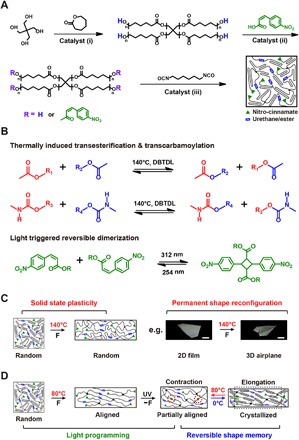
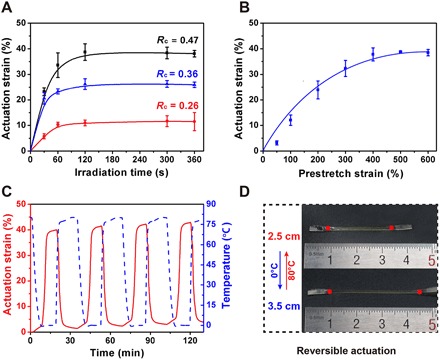
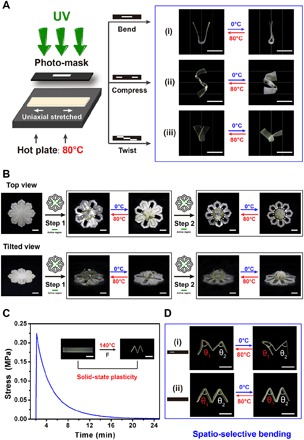
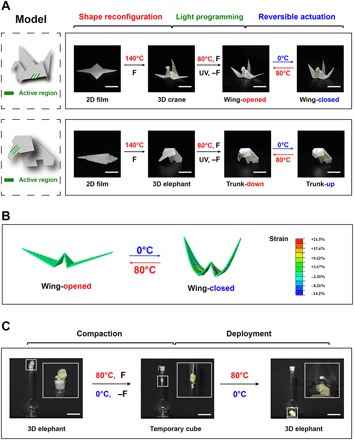
Verification
Claims the paper makes
The claims and statistics of this paper haven’t been checked yet.
Run the check — free, no account needed. It reads the open-access text and checks the sources it cites.
Claims other papers make about this one
Each is checked against this paper’s own text: does it say what the citing paper says it does?
The source backs part of the claim, not all of it — or backs it for a different population, condition or comparison.
In the citing paper
“two-stage polymerization typically leads to higher crosslinking densities, without significant other changes.”
From On demand shape memory polymer via light regulated topological defects in a dynamic covalent network (2020) · cites this paper as [4]
Experimental — accuracy not yet measured
Self-check
Percentages, sums and reported differences re-computed from the paper’s own numbers.
The self-check needs the paper’s full text.
Citations
Cites
Design, fabrication and control of soft robots
Rus, D., & Tolley, M. T. (2015) · Nature · doi:10.1038/nature14543 · Cited by 5,825
An integrated design and fabrication strategy for entirely soft, autonomous robots
Wehner, M. F., Truby, R. L., Fitzgerald, D. J., Mosadegh, B., Whitesides, G. M., Lewis, J. A., & Wood, R. J. (2016) · Nature · doi:10.1038/nature19100 · Cited by 2,139
Soft robotics: a bioinspired evolution in robotics
Kim, S., Laschi, C., & Trimmer, B. (2013) · Trends in Biotechnology · doi:10.1016/j.tibtech.2013.03.002 · Cited by 2,092
Light-induced shape-memory polymers
Lendlein, A., Jiang, H., Jünger, O., & Langer, R. (2005) · Nature · doi:10.1038/nature03496 · Cited by 2,006
Soft Robotics: Biological Inspiration, State of the Art, and Future Research
Trivedi, D., Rahn, C. D., Kier, W. M., & Walker, I. D. (2008) · Applied Bionics and Biomechanics · doi:10.1080/11762320802557865 · Cited by 1,764
Zhao, Q., Qi, H. J., & Xie, T. (2015) · Progress in Polymer Science · doi:10.1016/j.progpolymsci.2015.04.001 · Cited by 1,409
Self-citationVoxelated liquid crystal elastomers
Ware, T. H., McConney, M. E., Wie, J. J., Tondiglia, V. P., & White, T. J. (2015) · Science · doi:10.1126/science.1261019 · Cited by 1,161
A Resilient, Untethered Soft Robot
Tolley, M. T., Shepherd, R. F., Mosadegh, B., Galloway, K. C., Wehner, M. F., Karpelson, M., Wood, R. J., & Whitesides, G. M. (2014) · Soft Robotics · doi:10.1089/soro.2014.0008 · Cited by 1,093
A 3D-printed, functionally graded soft robot powered by combustion
Bartlett, N. W., Tolley, M. T., Overvelde, J. T. B., Weaver, J. C., Mosadegh, B., Bertoldi, K., Whitesides, G. M., & Wood, R. J. (2015) · Science · doi:10.1126/science.aab0129 · Cited by 1,056
A method for building self-folding machines
Felton, S. M., Tolley, M. T., Demaine, E. D., Rus, D. L., & Wood, R. J. (2014) · Science · doi:10.1126/science.1252610 · Cited by 980
Research works printed but not linked: 1
- 10.1155/2008/520417 · DOI
Cited by
Sorted by citations
Zheng, N., Xu, Y., Zhao, Q., & Xie, T. (2021) · Chemical Reviews · doi:10.1021/acs.chemrev.0c00938 · Cited by 1,438
Self-citationSoft actuators for real-world applications
Li, M., Pal, A., Aghakhani, A., Pena‐Francesch, A., & Sitti, M. (2021) · Nature Reviews Materials · doi:10.1038/s41578-021-00389-7 · Cited by 968
Reprogrammable recovery and actuation behaviour of shape-memory polymers
Lendlein, A., & Gould, O. E. C. (2019) · Nature Reviews Materials · doi:10.1038/s41578-018-0078-8 · Cited by 723
Podgórski, M., Fairbanks, B. D., Kirkpatrick, B. E., McBride, M. K., Martinez, A. M., Dobson, A. L., Bongiardina, N. J., & Bowman, C. N. (2020) · Advanced Materials · doi:10.1002/adma.201906876 · Cited by 535
Mimicking Human and Biological Skins for Multifunctional Skin Electronics
Lee, Y., Park, J., Choe, A., Cho, S., Kim, J., & Ko, H. (2019) · Advanced Functional Materials · doi:10.1002/adfm.201904523 · Cited by 470
New Advances in Covalent Network Polymers via Dynamic Covalent Chemistry
Lei, Z., Chen, H., Huang, S., Wayment, L. J., Xu, Q., & Zhang, W. (2024) · Chemical Reviews · doi:10.1021/acs.chemrev.3c00926 · Cited by 388
Materials for Smart Soft Actuator Systems
Apsite, I., Salehi, S., & Ionov, L. (2021) · Chemical Reviews · doi:10.1021/acs.chemrev.1c00453 · Cited by 373
3D Printing Materials for Soft Robotics
Keneth, E. S., Kamyshny, A. L., Totaro, M., Beccai, L., & Magdassi, S. (2020) · Advanced Materials · doi:10.1002/adma.202003387 · Cited by 356
Ryan, K. R., Down, M. P., & Banks, C. E. (2020) · Chemical Engineering Journal · doi:10.1016/j.cej.2020.126162 · Cited by 349
Responsive materials architected in space and time
Xia, X., Spadaccini, C. M., & Greer, J. R. (2022) · Nature Reviews Materials · doi:10.1038/s41578-022-00450-z · Cited by 317
4D printing of materials for the future: Opportunities and challenges
Joshi, S., Rawat, K., Karunakaran, C., Rajamohan, V., Mathew, A. T., Koziol, K. K., Thakur, V. K., & Balan, A. S. S. (2019) · Applied Materials Today · doi:10.1016/j.apmt.2019.100490 · Cited by 301
Cao, J., Zhou, Z., Song, Q., Chen, K., Su, G., Zhou, T., Zheng, Z. Q., Lu, C., & Zhang, X. (2020) · ACS Nano · doi:10.1021/acsnano.0c01779 · Cited by 280
Soft Sensors and Actuators for Wearable Human–Machine Interfaces
Park, J., Lee, Y., Cho, S., Choe, A., Yeom, J., Ro, Y. G., Kim, J., Kang, D., Lee, S., & Ko, H. (2024) · Chemical Reviews · doi:10.1021/acs.chemrev.3c00356 · Cited by 291
Stimuli-responsive functional materials for soft robotics
Shen, Z., Chen, F., Zhu, X., Yong, K., & Gu, G. (2020) · Journal of Materials Chemistry B · doi:10.1039/d0tb01585g · Cited by 260
Song, F., Li, Z., Jia, P., Zhang, M., Bo, C., Feng, G., Hu, L., & Zhou, Y. (2019) · Journal of Materials Chemistry A · doi:10.1039/c9ta03872h · Cited by 253
Shape memory effects in self-healing polymers
Hornat, C. C., & Urban, M. W. (2020) · Progress in Polymer Science · doi:10.1016/j.progpolymsci.2020.101208 · Cited by 250
Advanced functional polymer materials
Wang, K., Amin, K., An, Z., Cai, Z., Chen, H., Chen, H., Dong, Y., Feng, X., Fu, W., Gu, J., et al. (2020) · Materials Chemistry Frontiers · doi:10.1039/d0qm00025f · Cited by 248
Self-citationEnvironmentally Adaptive Shape-Morphing Microrobots for Localized Cancer Cell Treatment
Chen, X., Jin, D., Hu, Y., Yang, L., Li, R., Wang, L., Ren, Z., Wang, D., Ji, S., Hu, K., et al. (2021) · ACS Nano · doi:10.1021/acsnano.1c06651 · Cited by 237
Recent Progress in Active Mechanical Metamaterials and Construction Principles
Qi, J., Chen, Z., Jiang, P., Hu, W., Wang, Y., Zhao, Z., Cao, X., Zhang, S., Tao, R., Li, Y., et al. (2021) · Advanced Science · doi:10.1002/advs.202102662 · Cited by 233
Towards enduring autonomous robots via embodied energy
Aubin, C. A., Gorissen, B., Milana, E., Buskohl, P. R., Lazarus, N. S., Slipher, G. A., Keplinger, C., Bongard, J., Fumiya Iida, A., Lewis, J. A., et al. (2022) · Nature · doi:10.1038/s41586-021-04138-2 · Cited by 233
Spiegel, C. A., Hippler, M., Münchinger, A., Bastmeyer, M., Barner‐Kowollik, C., Wegener, M., & Blasco, E. (2019) · Advanced Functional Materials · doi:10.1002/adfm.201907615 · Cited by 217
Magnetic Dynamic Polymers for Modular Assembling and Reconfigurable Morphing Architectures
Kuang, X., Wu, S., Ze, Q., Yue, L., Jin, Y., Montgomery, S. M., Yang, F., Qi, H. J., & Zhao, R. R. (2021) · Advanced Materials · doi:10.1002/adma.202102113 · Cited by 215
Li, S., Bai, H., Shepherd, R. F., & Zhao, H. (2019) · Angewandte Chemie International Edition · doi:10.1002/anie.201813402 · Cited by 212
Multiple and two-way reversible shape memory polymers: Design strategies and applications
Wang, K., Jia, Y.-G., Zhao, C., & Zhu, X. X. (2019) · Progress in Materials Science · doi:10.1016/j.pmatsci.2019.100572 · Cited by 208
Two-Way and Multiple-Way Shape Memory Polymers for Soft Robotics: An Overview
Scalet, G. (2020) · Actuators · doi:10.3390/act9010010 · Cited by 209
Bifurcation-based embodied logic and autonomous actuation
Jiang, Y., Korpas, L. M., & Raney, J. R. (2019) · Nature Communications · doi:10.1038/s41467-018-08055-3 · Cited by 205
The research status and challenges of shape memory polymer-based flexible electronics
Gao, H. T., Li, J., Zhang, F., Liu, Y., & Leng, J. (2019) · Materials Horizons · doi:10.1039/c8mh01070f · Cited by 198
4D printing soft robotics for biomedical applications
Hann, S.-Y., Cui, H., Nowicki, M. A., & Zhang, L. G. (2020) · Additive manufacturing · doi:10.1016/j.addma.2020.101567 · Cited by 206
Wang, S., Gao, Y., Wei, A., Xiao, P., Liang, Y., Lü, W., Chen, C.-Y., Zhang, C., Yang, G., Yao, H., et al. (2020) · Nature Communications · doi:10.1038/s41467-020-18214-0 · Cited by 195
Untethered Recyclable Tubular Actuators with Versatile Locomotion for Soft Continuum Robots
Qian, X., Chen, Q., Yang, Y., Xu, Y., Li, Z., Wang, Z., Wu, Y., Wei, Y., & Ji, Y. J. (2018) · Advanced Materials · doi:10.1002/adma.201801103 · Cited by 193
Preparation, characterization and properties of intrinsic self-healing elastomers
Wang, Z., Lu, X., Sun, S., Yu, C., & Xia, H. (2019) · Journal of Materials Chemistry B · doi:10.1039/c9tb00831d · Cited by 187
Ling, Y., Pang, W., Li, X., Goswami, S., Xu, Z., Stroman, D., Liu, Y., Fei, Q., Xu, Y., Zhao, G., et al. (2020) · Advanced Materials · doi:10.1002/adma.201908475 · Cited by 182
Magnetically Induced Low Adhesive Direction of Nano/Micropillar Arrays for Microdroplet Transport
Lin, Y., Hu, Z., Zhang, M., Xu, T., Feng, S., Jiang, L., & Zheng, Y. (2018) · Advanced Functional Materials · doi:10.1002/adfm.201800163 · Cited by 177
Inchworm Inspired Multimodal Soft Robots With Crawling, Climbing, and Transitioning Locomotion
Zhang, Y., Yang, D., Yan, P., Zhou, P., Zou, J., & Gu, G. (2021) · IEEE Transactions on Robotics · doi:10.1109/tro.2021.3115257 · Cited by 177
Rapid Open‐Air Digital Light 3D Printing of Thermoplastic Polymer
Deng, S., Wu, J., Dickey, M. D., Zhao, Q., & Xie, T. (2019) · Advanced Materials · doi:10.1002/adma.201903970 · Cited by 175
Self-citationHierarchically Structured Self‐Healing Actuators with Superfast Light‐ and Magnetic‐Response
Wang, Y., Guo, Q., Su, G., Cao, J., Liu, J., & Zhang, X. (2019) · Advanced Functional Materials · doi:10.1002/adfm.201906198 · Cited by 176
Inverse Vulcanized Polymers with Shape Memory, Enhanced Mechanical Properties, and Vitrimer Behavior
Yan, P., Zhao, W. J., Zhang, B., Jiang, L., Petcher, S., Smith, J. A., Parker, D. J., Cooper, A. I., Lei, J., & Hasell, T. (2020) · Angewandte Chemie International Edition · doi:10.1002/anie.202004311 · Cited by 172
Active Materials for Functional Origami
Leanza, S., Wu, S., Sun, X., Qi, H. J., & Zhao, R. R. (2023) · Advanced Materials · doi:10.1002/adma.202302066 · Cited by 171
Strong, Self‐Healable, and Recyclable Visible‐Light‐Responsive Hydrogel Actuators
Jiang, Z., Tan, M. L., Taheri, M., Yan, Q., Tsuzuki, T., Gardiner, M. G., Diggle, B., & Connal, L. A. (2020) · Angewandte Chemie International Edition · doi:10.1002/anie.201916058 · Cited by 169
Liquid‐Crystalline Soft Actuators with Switchable Thermal Reprogrammability
Wu, Y., Yang, Y., Qian, X., Chen, Q., Wei, Y., & Ji, Y. J. (2020) · Angewandte Chemie International Edition · doi:10.1002/anie.201915694 · Cited by 163
Dually Crosslinked Polymer Networks Incorporating Dynamic Covalent Bonds
Hammer, L., Zee, N. J. V., & Nicolaÿ, R. (2021) · Polymers · doi:10.3390/polym13030396 · Cited by 175
Photo-cross-linking: A powerful and versatile strategy to develop shape-memory polymers
Xie, H. Q., Yang, K., & Wang, Y. (2019) · Progress in Polymer Science · doi:10.1016/j.progpolymsci.2019.05.001 · Cited by 165
Rapidly and Repeatedly Reprogrammable Liquid Crystalline Elastomer via a Shape Memory Mechanism
Chen, G., Jin, B., Shi, Y., Zhao, Q., Shen, Y., & Xie, T. (2022) · Advanced Materials · doi:10.1002/adma.202201679 · Cited by 158
Self-citationOn demand shape memory polymer via light regulated topological defects in a dynamic covalent network
Miao, W., Zou, W., Jin, B., Ni, C., Zheng, N., Zhao, Q., & Xie, T. (2020) · Nature Communications · doi:10.1038/s41467-020-18116-1 · Cited by 152
Self-citationLiu, C., Fan, Z., Tan, Y., Fan, F., & Xu, H. (2020) · Advanced Materials · doi:10.1002/adma.201907569 · Cited by 148
Programmable Reversible Shape Transformation of Hydrogels Based on Transient Structural Anisotropy
Liu, K., Zhang, Y., Cao, H., Liu, H., Geng, Y., Yuan, W., Zhou, J., Wu, Z. L., Shan, G., Bao, Y., et al. (2020) · Advanced Materials · doi:10.1002/adma.202001693 · Cited by 149
Self-citationDynamic Covalent Hydrogels: Strong yet Dynamic
Han, Y., Cao, Y., & Lei, H. (2022) · Gels · doi:10.3390/gels8090577 · Cited by 158
Foundations for Soft, Smart Matter by Active Mechanical Metamaterials
Pishvar, M., & Harne, R. L. (2020) · Advanced Science · doi:10.1002/advs.202001384 · Cited by 146
Light-triggered topological programmability in a dynamic covalent polymer network
Zou, W., Jin, B., Wu, Y., Song, H., Luo, Y., Huang, F., Qian, J., Zhao, Q., & Xie, T. (2020) · Science Advances · doi:10.1126/sciadv.aaz2362 · Cited by 143
Self-citationBio-inspired sensing and actuating materials
Zhao, Q., Wang, Y., Cui, H., & Du, X. (2019) · Journal of Materials Chemistry C · doi:10.1039/c9tc01483g · Cited by 144
Self-citationReprocessable Cross-Linked Polyurethane with Dynamic and Tunable Phenol–Carbamate Network
Shi, J., Zheng, T., Zhang, Y., Guo, B., & Xu, J. (2019) · ACS Sustainable Chemistry & Engineering · doi:10.1021/acssuschemeng.9b06435 · Cited by 143
4D Printing of a Digital Shape Memory Polymer with Tunable High Performance
Zhang, Y., Huang, L., Song, H., Ni, C., Wu, J., Zhao, Q., & Xie, T. (2019) · ACS Applied Materials & Interfaces · doi:10.1021/acsami.9b11062 · Cited by 141
Self-citationWang, X., He, Y., Liu, Y., & Leng, J. (2022) · Materials Science and Engineering R Reports · doi:10.1016/j.mser.2022.100702 · Cited by 138
Chen, J., Wang, Z., Yao, B., Geng, Y., Wang, C., Xu, J., Chen, T., Jing, J., & Fu, J. (2024) · Advanced Materials · doi:10.1002/adma.202401178 · Cited by 142
Fan, L. F., Rong, M. Z., Zhang, M. Q., & Chen, X. (2018) · ACS Applied Materials & Interfaces · doi:10.1021/acsami.8b15636 · Cited by 138
Liquid Crystal Networks on Thermoplastics: Reprogrammable Photo‐Responsive Actuators
Verpaalen, R. C. P., da Cunha, M. P., Engels, T. A. P., Debije, M. G., & Schenning, A. P. H. J. (2020) · Angewandte Chemie International Edition · doi:10.1002/anie.201915147 · Cited by 139
Ceamanos, L., Kahveci, Z., López‐Valdeolivas, M., Liu, D., Broer, D. J., & Sánchez‐Somolinos, C. (2020) · ACS Applied Materials & Interfaces · doi:10.1021/acsami.0c13341 · Cited by 138
Mahmood, A., Akram, T., Shenggui, C., & Chen, H. (2023) · Composites Part B Engineering · doi:10.1016/j.compositesb.2023.110952 · Cited by 136
Review on recent advances in 4D printing of shape memory polymers
Alshebly, Y. S., Marwan Nafea, M., Ali, M. S. M., & Almurib, H. A. F. (2021) · European Polymer Journal · doi:10.1016/j.eurpolymj.2021.110708 · Cited by 138
Wen, Z., McBride, M. K., Zhang, X., Han, X., Martinez, A. M., Shao, R., Zhu, C., Visvanathan, R., Clark, N. A., Wang, Y., et al. (2018) · Macromolecules · doi:10.1021/acs.macromol.8b01315 · Cited by 133
Dually cross-linked single networks: structures and applications
Rodin, M., Li, J., & Kuckling, D. (2021) · Chemical Society Reviews · doi:10.1039/d0cs01585g · Cited by 133
Recyclable thermoset shape memory polymers with high stress and energy output via facile UV-curing
Li, A., Fan, J., & Li, G. (2018) · Journal of Materials Chemistry A · doi:10.1039/c8ta02644k · Cited by 133
Using Synergistic Multiple Dynamic Bonds to Construct Polymers with Engineered Properties
Jiang, Z., Bhaskaran, A., Aitken, H. M., Shackleford, I. C. G., & Connal, L. A. (2019) · Macromolecular Rapid Communications · doi:10.1002/marc.201900038 · Cited by 133
4D printing in biomedical applications: emerging trends and technologies
Agarwal, T., Hann, S.-Y., Chiesa, I., Cui, H., Celikkin, N., Micalizzi, S., Barbetta, A., Costantini, M., Esworthy, T. J., Zhang, L. G., et al. (2021) · Journal of Materials Chemistry B · doi:10.1039/d1tb01335a · Cited by 133
Stimuli-responsive engineered living materials
Rivera‐Tarazona, L. K., Campbell, Z. T., & Ware, T. H. (2020) · Soft Matter · doi:10.1039/d0sm01905d · Cited by 132
Magnetically Actuated Fiber‐Based Soft Robots
Lee, Y., Koehler, F., Dillon, T., Loke, G. Z. J., Kim, Y., Marion, J., Antonini, M., Garwood, I. C., Sahasrabudhe, A., Nagao, K., et al. (2023) · Advanced Materials · doi:10.1002/adma.202301916 · Cited by 124
You, D., Chen, G., Liu, C., Ye, X., Wang, S., Dong, M., Sun, M., He, J., Yu, X., Ye, G., et al. (2021) · Advanced Functional Materials · doi:10.1002/adfm.202103920 · Cited by 118
Self-citationA reconfigurable, self-healing and near infrared light responsive thermoset shape memory polymer
Bai, Y., Zhang, J., Wen, D., Gong, P., Liu, J., Ju, J., & Chen, X. (2019) · Composites Science and Technology · doi:10.1016/j.compscitech.2019.107940 · Cited by 117
Xiao, R., & Huang, W. (2020) · Macromolecular Bioscience · doi:10.1002/mabi.202000108 · Cited by 116
An elegant coupling: Freeze-casting and versatile polymer composites
Yang, J., Yang, W. M., Chen, W., & Tao, X. (2020) · Progress in Polymer Science · doi:10.1016/j.progpolymsci.2020.101289 · Cited by 114
Yan, T., Balzer, A. H., Herbert, K. M., Epps, T. H. I., & Korley, L. T. J. (2023) · Chemical Science · doi:10.1039/d3sc00551h · Cited by 118
Yang, Y., Ru, Y., Zhao, T., & Liu, M. (2023) · Chem · doi:10.1016/j.chempr.2023.08.012 · Cited by 111
Roadmap on soft robotics: multifunctionality, adaptability and growth without borders
Mazzolai, B., Mondini, A., Dottore, E. D., Margheri, L., Carpi, F., Suzumori, K., Cianchetti, M., Speck, T., Smoukov, S. K., Burgert, I., et al. (2022) · Multifunctional Materials · doi:10.1088/2399-7532/ac4c95 · Cited by 119
Soft shape-programmable surfaces by fast electromagnetic actuation of liquid metal networks
Ni, X., Luan, H., Kim, J.-T., Rogge, S. I., Bai, Y., Kwak, J. W., Liu, S., Yang, D. S., Li, S., Li, S., et al. (2022) · Nature Communications · doi:10.1038/s41467-022-31092-y · Cited by 110
Stimuli-responsive composite biopolymer actuators with selective spatial deformation behavior
Wang, Y., Huang, W., Wang, Y., Mu, X., Ling, S., Yu, H., Chen, W., Guo, C., Watson, M. C., Yu, Y., et al. (2020) · Proceedings of the National Academy of Sciences · doi:10.1073/pnas.2002996117 · Cited by 109
High speed underwater hydrogel robots with programmable motions powered by light
Ni, C., Chen, D., Wen, X. L., Jin, B., He, Y., Xie, T., & Zhao, Q. (2023) · Nature Communications · doi:10.1038/s41467-023-43576-6 · Cited by 112
Self-citationHigh Energy Density Shape Memory Polymers Using Strain-Induced Supramolecular Nanostructures
Cooper, C. B., Nikzad, S., Yan, H., Ochiai, Y., Lai, J., Yu, Z., Chen, G., Kang, J., & Bao, Z. (2021) · ACS Central Science · doi:10.1021/acscentsci.1c00829 · Cited by 109
Dynamic polymeric materials via hydrogen-bond cross-linking: Effect of multiple network topologies
Ren, Y., & Dong, X. (2024) · Progress in Polymer Science · doi:10.1016/j.progpolymsci.2024.101890 · Cited by 108
Liang, R., Yu, H., Wang, L., Amin, B. U., Wang, N., Fu, J., Xing, Y., Shen, D., & Ni, Z. (2021) · Chemistry of Materials · doi:10.1021/acs.chemmater.0c03860 · Cited by 102
Human‐Like Electronic Skin‐Integrated Soft Robotic Hand
Yamaguchi, T., Kashiwagi, T., Arie, T., Akita, S., & Takei, K. (2019) · Advanced Intelligent Systems · doi:10.1002/aisy.201900018 · Cited by 102
Reconfigurable Magnetic Origami Actuators with On‐Board Sensing for Guided Assembly
Ha, M., Bermúdez, G. S. C., Liu, J. A. ‐., Mata, E. S. O., Evans, E. E., Tracy, J. B., & Makarov, D. (2021) · Advanced Materials · doi:10.1002/adma.202008751 · Cited by 103
Thiol–Anhydride Dynamic Reversible Networks
Podgórski, M., Mavila, S., Huang, S., Spurgin, N., Sinha, J., & Bowman, C. N. (2020) · Angewandte Chemie International Edition · doi:10.1002/anie.202001388 · Cited by 99
Liu, Y., Hou, J., Li, C., & Wang, X. (2023) · Advanced Intelligent Systems · doi:10.1002/aisy.202300233 · Cited by 119
Photo‐Regulated Supramolecular Polymers: Shining Beyond Disassembly and Reassembly
Zhang, Q., Qu, D., & Tian, H. (2019) · Advanced Optical Materials · doi:10.1002/adom.201900033 · Cited by 99
Reconfigurable 4D printing via mechanically robust covalent adaptable network shape memory polymer
Li, H., Zhang, B., Ye, H., Jian, B., He, X., Cheng, J., Sun, Z., Wang, R., Chen, Z., Lin, J., et al. (2024) · Science Advances · doi:10.1126/sciadv.adl4387 · Cited by 99
Autonomous Off‐Equilibrium Morphing Pathways of a Supramolecular Shape‐Memory Polymer
Peng, W., Zhang, G., Zhao, Q., & Xie, T. (2021) · Advanced Materials · doi:10.1002/adma.202102473 · Cited by 98
Self-citationToncheva, A., Khelifa, F., Paint, Y., Voué, M., Lambert, P., Dúbois, P., & Raquez, J. (2018) · ACS Applied Materials & Interfaces · doi:10.1021/acsami.8b10159 · Cited by 99
Shape-Memory Polymeric Artificial Muscles: Mechanisms, Applications and Challenges
Chen, Y., Chen, C., Rehman, H. U., Xu, Z., Li, H., Liu, H., & Hedenqvist, M. S. (2020) · Molecules · doi:10.3390/molecules25184246 · Cited by 100
Li, J., Zhang, Y., Shang, R., Cheng, C., Cheng, Y. F., Xing, J., Wei, Z., & Zhao, Y. J. (2021) · Energy storage materials · doi:10.1016/j.ensm.2021.08.046 · Cited by 96
Fan, L. F., Rong, M. Z., Zhang, M. Q., & Chen, X. (2018) · Journal of Materials Chemistry A · doi:10.1039/c8ta05751f · Cited by 95
Gao, Y., Liu, W., & Zhu, S. (2018) · Macromolecules · doi:10.1021/acs.macromol.8b01724 · Cited by 94
Huang, J., Cao, L., Yuan, D., & Chen, Y. (2018) · ACS Sustainable Chemistry & Engineering · doi:10.1021/acssuschemeng.8b05025 · Cited by 95
Wu, J., Yin, K., Li, M., Wu, Z., Xiao, S., Wang, H., Duan, J., & He, J. (2020) · Nanoscale · doi:10.1039/c9nr09902f · Cited by 94
Light-responsive shape memory polymer composites
Wang, Y., Wang, Y., Wei, Q., & Zhang, J. (2022) · European Polymer Journal · doi:10.1016/j.eurpolymj.2022.111314 · Cited by 93
Wang, K., & Zhu, X. X. (2018) · ACS Biomaterials Science & Engineering · doi:10.1021/acsbiomaterials.8b00671 · Cited by 93
Song, H., Fang, Z., Jin, B., Pan, P., Zhao, Q., & Xie, T. (2019) · ACS Macro Letters · doi:10.1021/acsmacrolett.9b00291 · Cited by 91
Self-citationXiang, Z., Chu, C., Xie, H. Q., Xiang, T., & Zhou, S. (2020) · ACS Applied Materials & Interfaces · doi:10.1021/acsami.0c18396 · Cited by 89
A Data‐Driven Review of Soft Robotics
Jumet, B., Bell, M. D., Sanchez, V., & Preston, D. J. (2021) · Advanced Intelligent Systems · doi:10.1002/aisy.202100163 · Cited by 92
Dong, X., Luo, X., Zhao, H., Qiao, C., Li, J., Yi, J., Yang, L., Oropeza, F. J., Hu, T. S., Xu, Q., et al. (2022) · Soft Matter · doi:10.1039/d2sm01067d · Cited by 94
Peng, W., Zhang, G., Liu, J., Nie, S., Wu, Y., Deng, S., Fang, G., Zhou, J., Song, J., Qian, J. W., et al. (2020) · Advanced Functional Materials · doi:10.1002/adfm.202000522 · Cited by 88
Self-citation
Metadata
- Authors
- Jin, B., Song, H., Jiang, R., Song, J., Zhao, Q., & Xie, T.
- Affiliations
- State Key Laboratory of Chemical Engineering (CN)
- Zhejiang University (CN)
- Corresponding author
- Zhao, Qian
- Xie, Tao
- Venue
- Science Advances
- Published
- 2018-01-05
- Volume
- 4
- Issue
- 1
- Pages
- eaao3865-eaao3865
- ISSN
- 2375-2548 (ISSN-L)
- PMC
- PMC5787381
- OpenAlex
- W2793227423
- Cited by
- 497
- References
- 36
- Citations by year
- 2026: 27 · 2025: 61 · 2024: 47 · 2023: 63 · 2022: 57 · 2021: 72 · 2020: 76 · 2019: 70 · 2018: 24
- FWCI
- 38.66
- Type
- journal article
- Language
- en
- Open access
- gold
- doi.org
- Licence
- cc-by-nc
- Locations
- Science Advances (publishedVersion, cc-by-nc)
- PubMed Central (publishedVersion, cc-by-nc)
- PubMed (publishedVersion)
- Funders
- National Natural Science Foundation of China (award339339, 21625402, award339340, 21474084, award339341, 51673169)
- National Key Basic Research Program of China (award339338, 2015CB351903)
- Chinese central government’s Recruitment Program of Global Experts. (award339342)
- Topics
- Physical Sciences › Engineering › Mechanical Engineering › Advanced Materials and Mechanics
- Physical Sciences › Engineering › Biomedical Engineering › Soft Robotics and Applications
- Physical Sciences › Materials Science › Polymers and Plastics › Polymer composites and self-healing
- Keywords
- shape memory polymers, polymer thin films
About these checks
Registry, retraction, Cites and statistics results are computed, not judged, with one exception: a printed reference that no index lists is read once by a model before it counts as a citation error. Claims are extracted by a model and kept only when their quote appears verbatim in the text; each cited source is then checked, with a model’s help, for whether it says what the claim relies on. Those verdicts can be wrong — read the claim’s quote and the cited source before relying on one.
Statistics and arithmetic are recomputed, not judged.
Confidence bands are shown only for fields calibrated on our annotated test set. None is calibrated yet, so no band is shown.
What counts as a claim ›How we measure confidence ›How we check this ›
Are you an author, or do you see a problem with this page? Request a review
