

Microfibers in oceanic surface waters: A global characterization
Open accessThe DOI matches its Crossref record; 57 of the 57 references it cites were found in a registry or an index.
Abstract
Contrary to global production, most fibers floating in the ocean are not synthetic but natural fibers of animal or plant origin.
Overview
The claims and statistics of this paper haven’t been checked yet.
Free: it reads the open-access text and checks the first 5 claims that cite a source we can check. Create a free account to check every claim.
Integrity signals
Registry
Cites
Statistics
Figures



Verification
Claims the paper makes
The claims and statistics of this paper haven’t been checked yet.
Free: it reads the open-access text and checks the first 5 claims that cite a source we can check. Create a free account to check every claim.
Self-check
Percentages, sums and reported differences re-computed from the paper’s own numbers.
The self-check needs the paper’s full text.
Citations
Cites
Production, use, and fate of all plastics ever made
Geyer, R., Jambeck, J. R., & Law, K. L. (2017) · Science Advances · doi:10.1126/sciadv.1700782 · Cited by 18,606
Human Consumption of Microplastics
Cox, K. D., Covernton, G. A., Davies, H. L., Dower, J. F., Juanes, F., & Dudas, S. E. (2019) · Environmental Science & Technology · doi:10.1021/acs.est.9b01517 · Cited by 2,745 · cited 2×
“Given their abundance, it is not surprising that fibers have been detected in food (18), drinking water (28), and human lungs (29), as well as in the digestive tracts of many aquatic (30, 31) and terrestrial organisms (32).”
BackgroundAtmospheric transport and deposition of microplastics in a remote mountain catchment
Allen, S., Allen, D., Phoenix, V. R., Le Roux, G., Durántez Jiménez, P., Simonneau, A., Binet, S., & Galop, D. (2019) · Nature Geoscience · doi:10.1038/s41561-019-0335-5 · Cited by 2,319 · cited 5×
“Alternatively, smaller fibers may be most easily advected by long-range aerial transport, thus reaching the most remote areas of the planet (15).”
BackgroundResultInfluentialThe deep sea is a major sink for microplastic debris
Woodall, L. C., Sanchez-Vidal, A., Canals, M., Paterson, G. L. J., Coppock, R., Sleight, V., Calafat, A., Rogers, A. D., Narayanaswamy, B. E., & Thompson, R. C. (2014) · Royal Society Open Science · doi:10.1098/rsos.140317 · Cited by 1,946 · cited 4×
“This is in agreement with recent studies showing that cellulosic fibers account for more than 60–80% of all fibers in seafloor sediments (23, 24), marine organisms (30, 31), wastewater (38), fresh water (26, 27), ice cores (22), and airborne fiber populations (14, 39).”
BackgroundResultInfluentialA global inventory of small floating plastic debris
van Sebille, E., Wilcox, C., Lebreton, L., Maximenko, N., Hardesty, B. D., van Franeker, J. A., Eriksen, M., Siegel, D., Galgani, F., & Law, K. L. (2015) · Environmental Research Letters · doi:10.1088/1748-9326/10/12/124006 · Cited by 1,713
Napper, I. E., & Thompson, R. C. (2016) · Marine Pollution Bulletin · doi:10.1016/j.marpolbul.2016.09.025 · Cited by 1,679 · cited 3×
“Nevertheless, the longest fibers were found in the Mediterranean Sea, probably indicating recent inputs into the basin, being closer to pollution sources and more similar to the length of cotton and rayon fibers freshly released by laundering (10, 11).”
BackgroundResultA first overview of textile fibers, including microplastics, in indoor and outdoor environments
Dris, R., Gasperi, J., Mirande, C., Mandin, C., Guerrouache, M., Langlois, V., & Tassin, B. (2017) · Environmental Pollution · doi:10.1016/j.envpol.2016.12.013 · Cited by 1,604
Anthropogenic contamination of tap water, beer, and sea salt
Kosuth, M., Mason, S. A., & Wattenberg, E. V. (2018) · PLOS ONE · doi:10.1371/journal.pone.0194970 · Cited by 1,244 · cited 1×
“Given their abundance, it is not surprising that fibers have been detected in food (18), drinking water (28), and human lungs (29), as well as in the digestive tracts of many aquatic (30, 31) and terrestrial organisms (32).”
BackgroundGlobal warming releases microplastic legacy frozen in Arctic Sea ice
Obbard, R. W., Sadri, S., Wong, Y. Q., Khitun, A. A., Baker, I., & Thompson, R. C. (2014) · Earth's Future · doi:10.1002/2014ef000240 · Cited by 1,092 · cited 3×
“This is in agreement with recent studies showing that cellulosic fibers account for more than 60–80% of all fibers in seafloor sediments (23, 24), marine organisms (30, 31), wastewater (38), fresh water (26, 27), ice cores (22), and airborne fiber populations (14, 39).”
BackgroundResultPrimary microplastics in the oceans: A global evaluation of sources
Boucher, J., & Friot, D. (2017) · doi:10.2305/iucn.ch.2017.01.en · Cited by 1,023 · cited 3×
“Synthetic fibers, however, are generally smoother and brighter than cellulosic ones (55), and therefore, the bias should have been directed toward a preferential selection of synthetic fibers, rather than cellulosic ones.”
BackgroundThe contribution of washing processes of synthetic clothes to microplastic pollution
De Falco, F., Di Pace, E., Cocca, M., & Avella, M. (2019) · Scientific Reports · doi:10.1038/s41598-019-43023-x · Cited by 825 · cited 2×
“The diameters of our fibers closely matched those of commonly manufactured textile fibers (10, 12).”
BackgroundResultMicroplastics in the Antarctic marine system: An emerging area of research
Waller, C. L., Griffiths, H. J., Waluda, C. M., Thorpe, S. E., Loaiza, I., Moreno, B., Pacherres, C. O., & Hughes, K. A. (2017) · Science of The Total Environment · doi:10.1016/j.scitotenv.2017.03.283 · Cited by 795
The mediterranean plastic soup: synthetic polymers in mediterranean surface waters
Suaria, G., Avio, C. G., Mineo, A., Lattin, G. L., Magaldi, M. G., Belmonte, G., Moore, C. J., Regoli, F., & Aliani, S. (2016) · Scientific Reports · doi:10.1038/srep37551 · Cited by 791 · cited 2×
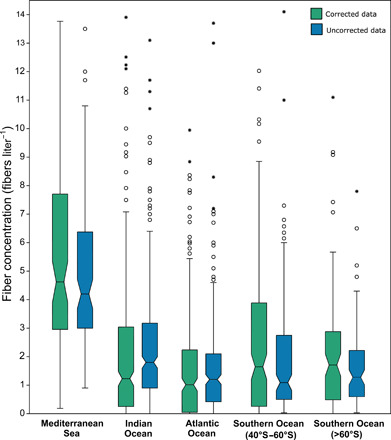
“Being a densely populated, enclosed basin, it is not surprising that the highest fiber concentrations were found in the Mediterranean Sea, which has some of the highest microplastic densities in the world (48).”
BackgroundSelf-citationSalvador Cesa, F., Turra, A., & Baruque-Ramos, J. (2017) · Science of The Total Environment · doi:10.1016/j.scitotenv.2017.04.172 · Cited by 787 · cited 4×
“Before these studies, cellulosic fibers (natural and regenerated) have been likely included in the synthetic realm by hundreds of studies, inflating “microplastic” counts in both environmental matrices and organisms (7, 40).”
BackgroundInfluentialSynthetic fibers as an indicator of land application of sludge
Zubris, K. A. V., & Richards, B. K. (2005) · Environmental Pollution · doi:10.1016/j.envpol.2005.04.013 · Cited by 723 · cited 1×
“Large numbers of fibers are discharged into wastewater from washing clothes (7–9), with each garment releasing up to 107 fibers per wash (10–12), and enter the environment through wastewater effluent (13), aerial deposition (14, 15), or through the application of contaminated sludge on agricultural soils (16).”
BackgroundHenry, B., Laitala, K., & Klepp, I. G. (2019) · Science of The Total Environment · doi:10.1016/j.scitotenv.2018.10.166 · Cited by 661
Uptake and effects of microplastic textile fibers on freshwater crustacean Daphnia magna
Jemec, A., Horvat, P., Kunej, U., Bele, M., & Kržan, A. (2016) · Environmental Pollution · doi:10.1016/j.envpol.2016.10.037 · Cited by 619
Watts, A. J. R., Urbina, M. A., Corr, S., Lewis, C., & Galloway, T. S. (2015) · Environmental Science & Technology · doi:10.1021/acs.est.5b04026 · Cited by 534 · cited 1×
“Under laboratory conditions, adverse health effects due to ingestion of microfibers have been observed in marine (33), freshwater (34), and terrestrial (35) invertebrates, but no proof of harm is currently available for wild organisms exposed to environmentally relevant fiber concentrations.”
BackgroundBarrows, A. P. W., Cathey, S. E., & Petersen, C. W. (2018) · Environmental Pollution · doi:10.1016/j.envpol.2018.02.062 · Cited by 518 · cited 13×
“At sea, fibers will be progressively broken down, which might explain the shorter and thinner fibers found in the Southern Ocean, relatively far from main sources.”
BackgroundInfluentialGago, J., Carretero, O., Filgueiras, A. V., & Viñas, L. (2018) · Marine Pollution Bulletin · doi:10.1016/j.marpolbul.2017.11.070 · Cited by 503 · cited 2×
“As a consequence, fibers are now the most prevalent type of anthropogenic particle found by microplastic pollution surveys around the world (17), including human exposure studies (18).”
BackgroundPlastic microfibre ingestion by deep-sea organisms
Taylor, M. L., Gwinnett, C., Robinson, L. F., & Woodall, L. C. (2016) · Scientific Reports · doi:10.1038/srep33997 · Cited by 498 · cited 3×
“Given their abundance, it is not surprising that fibers have been detected in food (18), drinking water (28), and human lungs (29), as well as in the digestive tracts of many aquatic (30, 31) and terrestrial organisms (32).”
BackgroundResultEnvironmental contamination in Antarctic ecosystems
Bargagli, R. (2008) · Science of The Total Environment · doi:10.1016/j.scitotenv.2008.06.062 · Cited by 452
Song, Y., Cao, C., Qiu, R., Hu, J., Liu, M., Lu, S., Shi, H., Raley-Susman, K. M., & He, D. (2019) · Environmental Pollution · doi:10.1016/j.envpol.2019.04.066 · Cited by 444
Zambrano, M. C., Pawlak, J. J., Daystar, J., Ankeny, M., Cheng, J. J., & Venditti, R. A. (2019) · Marine Pollution Bulletin · doi:10.1016/j.marpolbul.2019.02.062 · Cited by 414 · cited 5×
“Visual and chemometric methods are being developed (43, 44), but the presence of dyes (30), oxidation, and microbial degradation can alter cellulose absorption bands (11, 45), making it very difficult to distinguish natural and man-made cellulose, especially when dealing with environmentally degraded polymers (46).”
BackgroundMethodResultInfluentialStanton, T., Johnson, M., Nathanail, P., MacNaughtan, W., & Gomes, R. L. (2019) · Science of The Total Environment · doi:10.1016/j.scitotenv.2019.02.278 · Cited by 383 · cited 3×
“This is in agreement with recent studies showing that cellulosic fibers account for more than 60–80% of all fibers in seafloor sediments (23, 24), marine organisms (30, 31), wastewater (38), fresh water (26, 27), ice cores (22), and airborne fiber populations (14, 39).”
BackgroundResultRemy, F., Collard, F., Gilbert, B., Compère, P., Eppe, G., & Lepoint, G. (2015) · Environmental Science & Technology · doi:10.1021/acs.est.5b02005 · Cited by 378 · cited 4×
“Given their abundance, it is not surprising that fibers have been detected in food (18), drinking water (28), and human lungs (29), as well as in the digestive tracts of many aquatic (30, 31) and terrestrial organisms (32).”
BackgroundMethodResultInfluentialZhao, S., Zhu, L., & Li, D. (2016) · Science of The Total Environment · doi:10.1016/j.scitotenv.2016.01.112 · Cited by 360
Horizontal and Vertical Distribution of Microplastics in Korean Coastal Waters
Song, Y. K., Hong, S. H., Eo, S., Jang, M., Han, G. M., Isobe, A., & Shim, W. J. (2018) · Environmental Science & Technology · doi:10.1021/acs.est.8b04032 · Cited by 345 · cited 1×
“5 of 8 exported to the seafloor (23, 24), suspended in the water column (19, 20), or ingested by biota (31).”
BackgroundInhaled cellulosic and plastic fibers found in human lung tissue.
Pauly, J. L., Stegmeier, S. J., Allaart, H. A., Cheney, R. T., Zhang, P. J., Mayer, A. G., & Streck, R. J. (1998) · PubMed · Cited by 344
Woodall, L. C., Gwinnett, C., Packer, M., Thompson, R. C., Robinson, L. F., & Paterson, G. L. J. (2015) · Marine Pollution Bulletin · doi:10.1016/j.marpolbul.2015.04.044 · Cited by 320 · cited 2×
“Because of the risk of external contamination (36), fibers were initially excluded from microplastic surveys (37).”
BackgroundMethodDris, R., Gasperi, J., Rocher, V., & Tassin, B. (2018) · Science of The Total Environment · doi:10.1016/j.scitotenv.2017.11.009 · Cited by 306 · cited 2×
“This is in agreement with recent studies showing that cellulosic fibers account for more than 60–80% of all fibers in seafloor sediments (23, 24), marine organisms (30, 31), wastewater (38), fresh water (26, 27), ice cores (22), and airborne fiber populations (14, 39).”
BackgroundResultKäppler, A., Fischer, M., Scholz-Böttcher, B. M., Oberbeckmann, S., Labrenz, M., Fischer, D., Eichhorn, K.-J., & Voit, B. (2018) · Analytical and Bioanalytical Chemistry · doi:10.1007/s00216-018-1185-5 · Cited by 302 · cited 2×
“4 of 8 classified man-made cellulosics in the synthetic category, although it is extremely challenging to distinguish between natural and regenerated cellulose by FTIR techniques (41, 42).”
BackgroundMiller, R. Z., Watts, A. J. R., Winslow, B. O., Galloway, T. S., & Barrows, A. P. W. (2017) · Marine Pollution Bulletin · doi:10.1016/j.marpolbul.2017.07.028 · Cited by 301
Microplastics' emissions: Microfibers’ detachment from textile garments
Belzagui, F., Crespi, M., Álvarez, A., Gutiérrez-Bouzán, C., & Vilaseca, M. (2019) · Environmental Pollution · doi:10.1016/j.envpol.2019.02.059 · Cited by 282
Sources and dispersive modes of micro-fibers in the environment
Carr, S. A. (2017) · Integrated Environmental Assessment and Management · doi:10.1002/ieam.1916 · Cited by 275 · cited 1×
“Shedding of fabric materials, wear and tear, and increased consumption have led to the accumulation of these fibers in the natural environment (5, 6).”
BackgroundRelease of polyester and cotton fibers from textiles in machine washings
Sillanpää, M., & Sainio, P. (2017) · Environmental Science and Pollution Research · doi:10.1007/s11356-017-9621-1 · Cited by 254 · cited 1×
“One plausible explanation is that wool, cotton, and rayon fabrics shed and release more fibers than polyester during laundering (8, 9, 11, 12).”
BackgroundBiodegradability of cellulose fabrics
Park, C. H., Kang, Y. K., & Im, S. S. (2004) · Journal of Applied Polymer Science · doi:10.1002/app.20879 · Cited by 228 · cited 1×
““Semi-synthetic” cellulosics are a readily available source of carbon for microorganisms (11), and their biodegradability seems to be similar to (11), if not faster than, cotton yarns (47), and considerably faster than synthetic polymers such as polyester (45).”
BackgroundThe imprint of microfibres in southern European deep seas
Sanchez-Vidal, A., Thompson, R. C., Canals, M., & de Haan, W. P. (2018) · PLOS ONE · doi:10.1371/journal.pone.0207033 · Cited by 211 · cited 3×
“This is in agreement with recent studies showing that cellulosic fibers account for more than 60–80% of all fibers in seafloor sediments (23, 24), marine organisms (30, 31), wastewater (38), fresh water (26, 27), ice cores (22), and airborne fiber populations (14, 39).”
BackgroundResultLaundering and textile parameters influence fibers release in household washings
Cesa, F. S., Turra, A., Checon, H. H., Leonardi, B., & Baruque-Ramos, J. (2020) · Environmental Pollution · doi:10.1016/j.envpol.2019.113553 · Cited by 205
Bagaev, A., Mizyuk, A., Khatmullina, L., Isachenko, I., & Chubarenko, I. (2017) · Science of The Total Environment · doi:10.1016/j.scitotenv.2017.04.185 · Cited by 204
Comnea-Stancu, I. R., Wieland, K., Ramer, G., Schwaighofer, A., & Lendl, B. (2017) · Applied Spectroscopy · doi:10.1177/0003702816660725 · Cited by 201
Biodegradability Study on Cotton and Polyester Fabrics
Li, L., Frey, M., & Browning, K. J. (2010) · Journal of Engineered Fibers and Fabrics · doi:10.1177/155892501000500406 · Cited by 177 · cited 3×
“Rayon and cotton yarns are often processed, finished, dyed, and coated with a wide range of chemicals including resins, softeners, and flame retardants, which may considerably slow their remineralization (45), to the extent that a dyed cotton waistcoat recovered from a deep-ocean shipwreck showed almost no sign of deg…”
BackgroundMethodPeets, P., Leito, I., Pelt, J., & Vahur, S. (2017) · Spectrochimica Acta Part A: Molecular and Biomolecular Spectroscopy · doi:10.1016/j.saa.2016.09.007 · Cited by 177
Torre, M., Digka, N., Anastasopoulou, A., Tsangaris, C., & Mytilineou, C. (2016) · Marine Pollution Bulletin · doi:10.1016/j.marpolbul.2016.07.050 · Cited by 173
Microfibers: a preliminary discussion on their definition and sources
Liu, J., Yun-fei, Y., Ding, J., Zhu, B., & Gao, W. (2019) · Environmental Science and Pollution Research · doi:10.1007/s11356-019-06265-w · Cited by 169 · cited 1×
“Shedding of fabric materials, wear and tear, and increased consumption have led to the accumulation of these fibers in the natural environment (5, 6).”
BackgroundAutomated identification and quantification of microfibres and microplastics
Primpke, S., A. Dias, P., & Gerdts, G. (2019) · Analytical Methods · doi:10.1039/c9ay00126c · Cited by 168 · cited 4×
“Additional funding was provided by the JPI Oceans project BASEMAN (defining the baselines and standards for microplastics analyses in European waters).”
MethodResultInfluentialCai, H., Du, F., Li, L., Li, B., Li, J., & Shi, H. (2019) · The Science of The Total Environment · doi:10.1016/j.scitotenv.2019.03.124 · Cited by 157 · cited 3×
“Although some methods are being developed to distinguish between natural and man-made cellulosic fibers (43, 44), this is extremely challenging because these two polymers have”
MethodResultXu, X., Hou, Q., Xue, Y., Jian, Y., & Wang, L. (2018) · Water Science & Technology · doi:10.2166/wst.2018.476 · Cited by 146 · cited 1×
“Large numbers of fibers are discharged into wastewater from washing clothes (7–9), with each garment releasing up to 107 fibers per wash (10–12), and enter the environment through wastewater effluent (13), aerial deposition (14, 15), or through the application of contaminated sludge on agricultural soils (16).”
BackgroundSampling microfibres at the sea surface: The effects of mesh size, sample volume and water depth
Ryan, P. G., Suaria, G., Perold, V., Pierucci, A., Bornman, T. G., & Aliani, S. (2019) · Environmental Pollution · doi:10.1016/j.envpol.2019.113413 · Cited by 134
Self-citationThe Chemistry of Textile Fibres
Mather, R. R., & Wardman, R. H. (2015) · Royal Society of Chemistry eBooks · doi:10.1039/9781782626534 · Cited by 115
Wesch, C., Barthel, A.-K., Braun, U., Klein, R., & Paulus, M. (2016) · Environmental Research · doi:10.1016/j.envres.2016.03.017 · Cited by 108
Biodegradation of Natural Textile Materials in Soil
Arshad, K., Skrifvars, M., Vivod, V., Valh, J. V., & Vončina, B. (2014) · Tekstilec · doi:10.14502/tekstilec2014.57.118-132 · Cited by 98
Identification of Microfibers in the Environment Using Multiple Lines of Evidence
Zhu, X., Nguyen, B., You, J. B., Karakolis, E. G., Sinton, D. A., & Rochman, C. M. (2019) · Environmental Science & Technology · doi:10.1021/acs.est.9b05262 · Cited by 86
de Villiers, S. (2018) · Marine Pollution Bulletin · doi:10.1016/j.marpolbul.2018.07.058 · Cited by 61
Stark, M. M. (2019) · Environmental Science & Technology · doi:10.1021/acs.est.9b01360 · Cited by 46 · cited 3×
“7 of 8 almost identical FTIR spectra (41), so we made no attempt to distinguish between them (46).”
BackgroundMethodCellulolytic Biodegradation of Cotton Fibers from A Deep-Ocean Environment
Chen, R., & Jakes, K. A. (2001) · Journal of the American Institute for Conservation · doi:10.1179/019713601806113076 · Cited by 42 · cited 2×
“Rayon and cotton yarns are often processed, finished, dyed, and coated with a wide range of chemicals including resins, softeners, and flame retardants, which may considerably slow their remineralization (45), to the extent that a dyed cotton waistcoat recovered from a deep-ocean shipwreck showed almost no sign of deg…”
BackgroundMather, R. R. (2014) · Elsevier eBooks · doi:10.1016/b978-1-84569-931-4.00006-4 · Cited by 21
Cited by
Risk assessment of microplastic particles
Koelmans, A. A., Redondo-Hasselerharm, P. E., Nor, N. H. M., de Ruijter, V. N., Mintenig, S. M., & Kooi, M. (2022) · Nature Reviews Materials · doi:10.1038/s41578-021-00411-y · Cited by 1,140
Constraining the atmospheric limb of the plastic cycle
Brahney, J., Mahowald, N., Prank, M., Cornwell, G., Klimont, Z., Matsui, H., & Prather, K. A. (2021) · Proceedings of the National Academy of Sciences · doi:10.1073/pnas.2020719118 · Cited by 575
Andrady, A. L., Barnes, P. W., Bornman, J. F., Gouin, T., Madronich, S., White, C. C., Zepp, R. G., & Jansen, M. A. K. (2022) · Science of The Total Environment · doi:10.1016/j.scitotenv.2022.158022 · Cited by 422
“%) of these fibers are cellulosic (Suaria et al., 2020).”
A review on microplastic emission from textile materials and its reduction techniques
Periyasamy, A. P., & Tehrani-Bagha, A. (2022) · Polymer Degradation and Stability · doi:10.1016/j.polymdegradstab.2022.109901 · Cited by 346
Li, H.-Z., Zhu, D., Lindhardt, J. H., Lin, S.-M., Ke, X., & Cui, L. (2021) · Environmental Science & Technology · doi:10.1021/acs.est.0c04849 · Cited by 315
Metadata
- Authors
- Suaria, G., Achtypi, A., Perold, V., Lee, J. R., Pierucci, A., Bornman, T. G., Aliani, S., & Ryan, P. G.
- Affiliations
- Istituto di Scienze Marine del Consiglio Nazionale delle Ricerche (IT)
- University of Cape Town (ZA)
- Monash University (AU)
- University of Cagliari (IT)
- South African Environmental Observation Network (ZA)
- Corresponding author
- Suaria, Giuseppe
- ORCID
- Venue
- Science Advances
- Published
- 2020-06-05
- Volume
- 6
- Issue
- 23
- Pages
- eaay8493-eaay8493
- ISSN
- 2375-2548 (ISSN-L)
- PMC
- PMC7274779
- OpenAlex
- W3033279253
- Cited by
- 528
- References
- 57
- Citations by year
- 2026: 79 · 2025: 100 · 2024: 101 · 2023: 79 · 2022: 83 · 2021: 74 · 2020: 12
- FWCI
- 15.32
- Type
- journal article
- Language
- en
- Open access
- gold
- doi.org
- Licence
- cc-by-nc
- Locations
- Science Advances (publishedVersion, cc-by-nc)
- PubMed Central (publishedVersion, cc-by-nc)
- PubMed (publishedVersion)
- Nelson Mandela University Research Repository (submittedVersion, cc-by-nc)
- HAL (submittedVersion)
- Funders
- Swiss Polar Institute
- Topics
- Physical Sciences › Environmental Science › Pollution › Microplastics and Plastic Pollution
- Physical Sciences › Environmental Science › Pollution › Pharmaceutical and Antibiotic Environmental Impacts
- Physical Sciences › Environmental Science › Pollution › Oil Spill Detection and Mitigation
- Keywords
- microfibers, marine surface waters, natural polymers, cellulose fibers, synthetic fibers, microplastics, fiber composition, marine plastic pollution
About these checks
Registry, retraction, Cites and statistics results are computed, not judged, with one exception: a printed reference that no index lists is read once by a model before it counts as a citation error. Claims are extracted by a model and kept only when their quote appears verbatim in the text; each cited source is then checked, with a model’s help, for whether it says what the claim relies on. Those verdicts can be wrong — read the claim’s quote and the cited source before relying on one.
Statistics and arithmetic are recomputed, not judged.
Confidence bands are shown only for fields calibrated on our annotated test set. None is calibrated yet, so no band is shown.
What counts as a claim ›How we measure confidence ›How we check this ›
Are you an author, or do you see a problem with this page? Request a review
Data sources
Bibliographic data: Semantic Scholar, OpenAlex, Crossref.
Contains information from the Semantic Scholar Academic Graph Datasets, made available under the ODC Attribution License (ODC-BY 1.0).
Semantic Scholar’s data is described in: Kinney, R., et al. (2023). The Semantic Scholar Open Data Platform. arXiv:2301.10140.
