

Microfibers in oceanic surface waters: A global characterization
Open accessThe DOI matches its Crossref record; 57 of the 57 references it cites were found in a registry or an index.
Abstract
Contrary to global production, most fibers floating in the ocean are not synthetic but natural fibers of animal or plant origin.
Overview
The claims and statistics of this paper haven’t been checked yet.
Free: it reads the open-access text and checks the first 5 claims that cite a source we can check. Create a free account to check every claim.
Integrity signals
Registry
Cites
Statistics
Figures



Verification
Claims the paper makes
The claims and statistics of this paper haven’t been checked yet.
Free: it reads the open-access text and checks the first 5 claims that cite a source we can check. Create a free account to check every claim.
Self-check
Percentages, sums and reported differences re-computed from the paper’s own numbers.
The self-check needs the paper’s full text.
Citations
Cites
Production, use, and fate of all plastics ever made
Geyer, R., Jambeck, J. R., & Law, K. L. (2017) · Science Advances · doi:10.1126/sciadv.1700782 · Cited by 18,606
Human Consumption of Microplastics
Cox, K. D., Covernton, G. A., Davies, H. L., Dower, J. F., Juanes, F., & Dudas, S. E. (2019) · Environmental Science & Technology · doi:10.1021/acs.est.9b01517 · Cited by 2,745 · cited 2×
“Given their abundance, it is not surprising that fibers have been detected in food (18), drinking water (28), and human lungs (29), as well as in the digestive tracts of many aquatic (30, 31) and terrestrial organisms (32).”
BackgroundAtmospheric transport and deposition of microplastics in a remote mountain catchment
Allen, S., Allen, D., Phoenix, V. R., Le Roux, G., Durántez Jiménez, P., Simonneau, A., Binet, S., & Galop, D. (2019) · Nature Geoscience · doi:10.1038/s41561-019-0335-5 · Cited by 2,319 · cited 5×
“Alternatively, smaller fibers may be most easily advected by long-range aerial transport, thus reaching the most remote areas of the planet (15).”
BackgroundResultInfluentialThe deep sea is a major sink for microplastic debris
Woodall, L. C., Sanchez-Vidal, A., Canals, M., Paterson, G. L. J., Coppock, R., Sleight, V., Calafat, A., Rogers, A. D., Narayanaswamy, B. E., & Thompson, R. C. (2014) · Royal Society Open Science · doi:10.1098/rsos.140317 · Cited by 1,946 · cited 4×
“This is in agreement with recent studies showing that cellulosic fibers account for more than 60–80% of all fibers in seafloor sediments (23, 24), marine organisms (30, 31), wastewater (38), fresh water (26, 27), ice cores (22), and airborne fiber populations (14, 39).”
BackgroundResultInfluentialA global inventory of small floating plastic debris
van Sebille, E., Wilcox, C., Lebreton, L., Maximenko, N., Hardesty, B. D., van Franeker, J. A., Eriksen, M., Siegel, D., Galgani, F., & Law, K. L. (2015) · Environmental Research Letters · doi:10.1088/1748-9326/10/12/124006 · Cited by 1,713
Napper, I. E., & Thompson, R. C. (2016) · Marine Pollution Bulletin · doi:10.1016/j.marpolbul.2016.09.025 · Cited by 1,679 · cited 3×
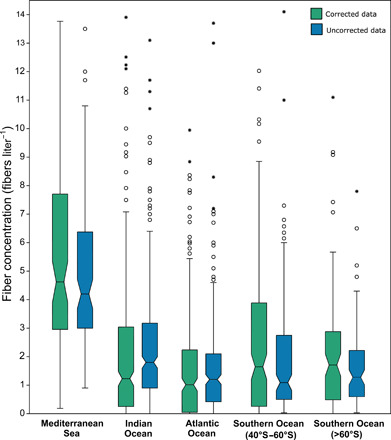
“Nevertheless, the longest fibers were found in the Mediterranean Sea, probably indicating recent inputs into the basin, being closer to pollution sources and more similar to the length of cotton and rayon fibers freshly released by laundering (10, 11).”
BackgroundResultA first overview of textile fibers, including microplastics, in indoor and outdoor environments
Dris, R., Gasperi, J., Mirande, C., Mandin, C., Guerrouache, M., Langlois, V., & Tassin, B. (2017) · Environmental Pollution · doi:10.1016/j.envpol.2016.12.013 · Cited by 1,604
Anthropogenic contamination of tap water, beer, and sea salt
Kosuth, M., Mason, S. A., & Wattenberg, E. V. (2018) · PLOS ONE · doi:10.1371/journal.pone.0194970 · Cited by 1,244 · cited 1×
“Given their abundance, it is not surprising that fibers have been detected in food (18), drinking water (28), and human lungs (29), as well as in the digestive tracts of many aquatic (30, 31) and terrestrial organisms (32).”
BackgroundGlobal warming releases microplastic legacy frozen in Arctic Sea ice
Obbard, R. W., Sadri, S., Wong, Y. Q., Khitun, A. A., Baker, I., & Thompson, R. C. (2014) · Earth's Future · doi:10.1002/2014ef000240 · Cited by 1,092 · cited 3×
“This is in agreement with recent studies showing that cellulosic fibers account for more than 60–80% of all fibers in seafloor sediments (23, 24), marine organisms (30, 31), wastewater (38), fresh water (26, 27), ice cores (22), and airborne fiber populations (14, 39).”
BackgroundResultPrimary microplastics in the oceans: A global evaluation of sources
Boucher, J., & Friot, D. (2017) · doi:10.2305/iucn.ch.2017.01.en · Cited by 1,023 · cited 3×
“Synthetic fibers, however, are generally smoother and brighter than cellulosic ones (55), and therefore, the bias should have been directed toward a preferential selection of synthetic fibers, rather than cellulosic ones.”
Background
Cited by
Risk assessment of microplastic particles
Koelmans, A. A., Redondo-Hasselerharm, P. E., Nor, N. H. M., de Ruijter, V. N., Mintenig, S. M., & Kooi, M. (2022) · Nature Reviews Materials · doi:10.1038/s41578-021-00411-y · Cited by 1,140
Constraining the atmospheric limb of the plastic cycle
Brahney, J., Mahowald, N., Prank, M., Cornwell, G., Klimont, Z., Matsui, H., & Prather, K. A. (2021) · Proceedings of the National Academy of Sciences · doi:10.1073/pnas.2020719118 · Cited by 575
Andrady, A. L., Barnes, P. W., Bornman, J. F., Gouin, T., Madronich, S., White, C. C., Zepp, R. G., & Jansen, M. A. K. (2022) · Science of The Total Environment · doi:10.1016/j.scitotenv.2022.158022 · Cited by 422
“%) of these fibers are cellulosic (Suaria et al., 2020).”
A review on microplastic emission from textile materials and its reduction techniques
Periyasamy, A. P., & Tehrani-Bagha, A. (2022) · Polymer Degradation and Stability · doi:10.1016/j.polymdegradstab.2022.109901 · Cited by 346
Li, H.-Z., Zhu, D., Lindhardt, J. H., Lin, S.-M., Ke, X., & Cui, L. (2021) · Environmental Science & Technology · doi:10.1021/acs.est.0c04849 · Cited by 315
Detection and removal of microplastics in wastewater: evolution and impact
Dey, T. K., Uddin, M. E., & Jamal, M. (2021) · Environmental Science and Pollution Research · doi:10.1007/s11356-021-12943-5 · Cited by 284
“The average concentrations and size range of microfibers in water are 0.02–25.8 fibers/L and 0.09– 27.06 mm, respectively (Suaria et al. 2020).”
BackgroundInfluentialDegradation of Cellulose Derivatives in Laboratory, Man-Made, and Natural Environments
Erdal, N. B., & Hakkarainen, M. (2022) · Biomacromolecules · doi:10.1021/acs.biomac.2c00336 · Cited by 271
Athey, S. N., & Erdle, L. M. (2022) · Environmental Toxicology and Chemistry · doi:10.1002/etc.5173 · Cited by 289
“However, many recent studies report semisynthetic and anthropogenically modified natural fibers in a range of environmental compartments (Grbić et al., 2020; Sanchez‐Vidal et al., 2018; Stanton, Johnson, Nathanail, MacNaughtan, et al., 2019; Suaria et al., 2020), including biota and human tissues (Athey et al.”
BackgroundMechanism-Based Design of Efficient PET Hydrolases
Wei, R., von Haugwitz, G., Pfaff, L., Mican, J., Badenhorst, C. P. S., Liu, W., Weber, G., Austin, H. P., Bednar, D., Damborsky, J., et al. (2022) · ACS Catalysis · doi:10.1021/acscatal.1c05856 · Cited by 284
Evidence of free tropospheric and long-range transport of microplastic at Pic du Midi Observatory
Allen, S., Allen, D., Baladima, F., Phoenix, V. R., Thomas, J. L., Le Roux, G., & Sonke, J. E. (2021) · Nature Communications · doi:10.1038/s41467-021-27454-7 · Cited by 261
Jiang, Y., Yang, F., Hassan Kazmi, S. S. U., Zhao, Y., Chen, M., & Wang, J. (2022) · Chemosphere · doi:10.1016/j.chemosphere.2021.131677 · Cited by 225
Isobe, A., Azuma, T., Cordova, M. R., Cózar, A., Galgani, F., Hagita, R., Kanhai, L. D., Imai, K., Iwasaki, S., Kako, S., et al. (2021) · Microplastics and Nanoplastics · doi:10.1186/s43591-021-00013-z · Cited by 203
Strategies and progress in synthetic textile fiber biodegradability
Egan, J., & Salmon, S. (2022) · SN Applied Sciences · doi:10.1007/s42452-021-04851-7 · Cited by 178
Plastic microfibre pollution: how important is clothes’ laundering?
Gaylarde, C., Baptista-Neto, J. A., & da Fonseca, E. M. (2021) · Heliyon · doi:10.1016/j.heliyon.2021.e07105 · Cited by 166
“Microplastic pollution caused by washing of synthetic textiles has recently been incriminated in the press (XerosTech, 2020; Vogue, 2020), as well as in the scientific literature (e.g., De Falco et al., 2019A; Suaria et al., 2020; Acharya et al., 2021; Liu et al., 2021), as the main source of primary microplastics in…”
BackgroundPlastics in biosolids from 1950 to 2016: A function of global plastic production and consumption
Okoffo, E. D., Donner, E., McGrath, S. P., Tscharke, B. J., O'Brien, J. W., O'Brien, S., Ribeiro, F., Burrows, S. D., Toapanta, T., Rauert, C., et al. (2021) · Water Research · doi:10.1016/j.watres.2021.117367 · Cited by 174
Atmospheric microplastics in the Northwestern Pacific Ocean: Distribution, source, and deposition
Ding, J., Sun, C., He, C., Zheng, L., Dai, D., & Li, F. (2022) · Science of The Total Environment · doi:10.1016/j.scitotenv.2022.154337 · Cited by 173
Airborne microplastics: A review of current perspectives and environmental implications
Shao, L., Li, Y., Jones, T. P., Santosh, M., Liu, P., Zhang, M., Xu, L., Li, W., Lu, J., Yang, C., et al. (2022) · Journal of Cleaner Production · doi:10.1016/j.jclepro.2022.131048 · Cited by 182
Hu, J., He, D., Zhang, X., Li, X., Chen, Y., Wei, G., Zhang, Y., Ok, Y. S., & Luo, Y. (2022) · Journal of Hazardous Materials · doi:10.1016/j.jhazmat.2021.127283 · Cited by 165
Sadia, M., Mahmood, A., Ibrahim, M., Irshad, M. K., Quddusi, A. H. A., Bokhari, A., Mubashir, M., Chuah, L. F., & Show, P. L. (2022) · Environmental Technology & Innovation · doi:10.1016/j.eti.2022.102946 · Cited by 166
Overview of analytical methods for the determination of microplastics: Current status and trends
Dong, H., Wang, X., Niu, X., Zeng, J., Zhou, Y., Zhuoga, S., Yuan, Y., & Chen, X. (2023) · TrAC Trends in Analytical Chemistry · doi:10.1016/j.trac.2023.117261 · Cited by 163
Release of microplastic fibers from synthetic textiles during household washing
Akyıldız, S. H., Fiore, S., Bruno, M., Sezgin, H., Yalçın-Eniş, İ., Yalçın, B., & Bellopede, R. (2024) · Environmental Pollution · doi:10.1016/j.envpol.2024.124455 · Cited by 154
“Synthetic fibers are main sources of primary MPFs released in the oceans (Mishra et al., 2020; IUCN, 2017; De Falco et al., 2019; Suaria et al., 2020; Acharya et al., 2021), and there is urgent need to explore what happens during their washing (Salvador Cesa et al., 2017).”
Huang, Y., Xiao, X., Effiong, K. S., Xu, C., Su, Z., Hu, J., Jiao, S., & Holmer, M. (2021) · Environmental Science & Technology · doi:10.1021/acs.est.0c07289 · Cited by 152
Microplastic characteristic in the soil across the Tibetan Plateau
Yang, L., Kang, S., Wang, Z., Luo, X., Guo, J., Gao, T., Chen, P., Yang, C., & Zhang, Y. (2022) · The Science of The Total Environment · doi:10.1016/j.scitotenv.2022.154518 · Cited by 141
Field measurements reveal exposure risk to microplastic ingestion by filter-feeding megafauna
Kahane‐Rapport, S. R., Czapanskiy, M. F., Fahlbusch, J. A., Friedlaender, A. S., Calambokidis, J., Hazen, E. L., Goldbogen, J. A., & Savoca, M. S. (2022) · Nature Communications · doi:10.1038/s41467-022-33334-5 · Cited by 153
Sun, Y., Ji, J., Tao, J., Yang, Y., Wu, D., Han, L., Li, S., & Wang, J. (2022) · TrAC Trends in Analytical Chemistry · doi:10.1016/j.trac.2022.116882 · Cited by 142
Pérez-Reverón, R., González‐Sálamo, J., Hernández-Sánchez, C., González-Pleiter, M., Hernández‐Borges, J., & Díaz-Peña, F. J. (2022) · The Science of The Total Environment · doi:10.1016/j.scitotenv.2021.152830 · Cited by 141
Current status and future perspectives of microplastic pollution in typical cryospheric regions
Zhang, Y., Gao, T., Kang, S., Shi, H., Mai, L., Allen, D., & Allen, S. (2022) · Earth-Science Reviews · doi:10.1016/j.earscirev.2022.103924 · Cited by 138
Microplastics and other anthropogenic particles in Antarctica: Using penguins as biological samplers
Fragão, J., Bessa, F., Otero, V., Barbosa, A., Sobral, P., Waluda, C. M., Guímaro, H. R., & Xavier, J. C. (2021) · The Science of The Total Environment · doi:10.1016/j.scitotenv.2021.147698 · Cited by 140
Microplastic pollution in Chinese urban rivers: The influence of urban factors
Xu, Y., Chan, F. K. S., Johnson, M. F., Stanton, T. H., He, J. Y., Jia, T., Wang, J., Wang, Z., Yao, Y., Yang, J., et al. (2021) · Resources Conservation and Recycling · doi:10.1016/j.resconrec.2021.105686 · Cited by 131
Habitat-forming species trap microplastics into coastal sediment sinks
de Smit, J. C., Antón, A., Martin, C., Rossbach, S., Bouma, T. J., & Duarte, C. M. (2021) · The Science of The Total Environment · doi:10.1016/j.scitotenv.2021.145520 · Cited by 125
Barnes, P. W., Robson, T. M., Neale, P. J., Williamson, C. E., Zepp, R. G., Madronich, S., Wilson, S. R., Andrady, A. L., Heikkilä, A. M., Bernhard, G. H., et al. (2022) · Photochemical & Photobiological Sciences · doi:10.1007/s43630-022-00176-5 · Cited by 121
“By contrast, microfibres sampled in industrial wastewater [186], in organisms [187, 188], algal biomass [189] or in the bottom sediment [190, 191], in both freshwater [187, 189–191] and marine environments [185, 188], show a high load of microfibres made of synthetic polymers.”
Micro(nano)plastic contaminations from soils to plants: human food risks
He, D., Zhang, Y., & Gao, W. (2021) · Current Opinion in Food Science · doi:10.1016/j.cofs.2021.04.001 · Cited by 126
Microplastic ingestion and egestion by copepods in the Black Sea
Aytan, Ü., Esensoy, F. B., & Şentürk, Y. (2021) · The Science of The Total Environment · doi:10.1016/j.scitotenv.2021.150921 · Cited by 120
Microparticles and microplastics contamination in African table salts
Fadare, O. O., Okoffo, E. D., & Olasehinde, E. F. (2021) · Marine Pollution Bulletin · doi:10.1016/j.marpolbul.2021.112006 · Cited by 118
Microplastics in global bivalve mollusks: A call for protocol standardization
Ding, J., Sun, C., Li, J., Shi, H., Xu, X., Ju, P., Jiang, F., & Li, F. (2022) · Journal of Hazardous Materials · doi:10.1016/j.jhazmat.2022.129490 · Cited by 124
Arias, A. H., Alfonso, M. B., Gironés, L., Píccolo, M. C., & Marcovecchio, J. E. (2021) · Environmental Pollution · doi:10.1016/j.envpol.2021.118607 · Cited by 125
Plastic occurrence, sources, and impacts in Antarctic environment and biota
Caruso, G., Bergami, E., Singh, N., & Corsi, I. (2022) · Water Biology and Security · doi:10.1016/j.watbs.2022.100034 · Cited by 127
Detection and characterization of microplastics and nanoplastics in biological samples
Zhao, J. L., Lan, R., Tan, H., Wang, J., Ma, Y., Chen, Q., Jiang, F., Wang, Z., & Xing, B. (2025) · Nature Reviews Bioengineering · doi:10.1038/s44222-025-00335-0 · Cited by 119
“…reduce the labour time and cost of MNP identification and characterization; however, complex and unknown environmental samples, such as natural polymers 167 , require an even more abundant set of feature or unsupervised algorithms to further distinguish MNPs from natural biological matrices.”
Settling Velocities of Small Microplastic Fragments and Fibers
Dittmar, S., Ruhl, A., Altmann, K., & Jekel, M. (2024) · Environmental Science and Technology · doi:10.1021/acs.est.3c09602 · Cited by 100
Royer, S., Greco, F., Kogler, M., & Deheyn, D. D. (2023) · PLoS ONE · doi:10.1371/journal.pone.0284681 · Cited by 116
“Despite the isolating circumpolar frontal systems, floating macro- and micro-plastics are now reported even in the Antarctic region [9].”
BackgroundRibeiro, V. V., Nobre, C. R., Moreno, B. B., Semensatto, D., Sanz‐Lázaro, C., Moreira, L. B., & Castro, Í. B. (2023) · The Science of The Total Environment · doi:10.1016/j.scitotenv.2023.162468 · Cited by 111
Behera, S., & Das, S. (2023) · Chemosphere · doi:10.1016/j.chemosphere.2023.138928 · Cited by 114
Multidecadal records of microplastic accumulation in the coastal sediments of the East China Sea
Lin, J., Xu, X., Yue, B.-Y., Xu, X.-P., Liu, J., Zhu, Q., & Wang, J. (2020) · Chemosphere · doi:10.1016/j.chemosphere.2020.128658 · Cited by 102
Sol, D., Laca, A., Laca, A., & Díaz, M. (2021) · Applied Sciences · doi:10.3390/app112110109 · Cited by 112
Improved Settling Velocity for Microplastic Fibers: A New Shape-Dependent Drag Model
Zhang, J., & Choi, C. E. (2021) · Environmental Science & Technology · doi:10.1021/acs.est.1c06188 · Cited by 100
Finnegan, A. M. D., Süsserott, R., Gabbott, S. E., & Gouramanis, C. (2022) · Environmental Pollution · doi:10.1016/j.envpol.2022.119808 · Cited by 109
Macro- and Microplastics in the Antarctic Environment: Ongoing Assessment and Perspectives
Rota, E., Bergami, E., Corsi, I., & Bargagli, R. (2022) · Environments · doi:10.3390/environments9070093 · Cited by 104
Removal of polyester fibre microplastics from wastewater using a UV/H2O2 oxidation process
Easton, T., Koutsos, V., & Chatzisymeon, E. (2022) · Journal of environmental chemical engineering · doi:10.1016/j.jece.2022.109057 · Cited by 95
Li, H.-X., Shi, M., Tian, F., Lin, L., Liu, S., Hou, R., Peng, J.-P., & Xu, X.-R. (2022) · Science of The Total Environment · doi:10.1016/j.scitotenv.2022.156749 · Cited by 91
Shruti, V. C., Pérez‐Guevara, F., Elizalde, I., & Kutralam-Muniasamy, G. (2020) · Marine Pollution Bulletin · doi:10.1016/j.marpolbul.2020.111777 · Cited by 89
Coffin, S., Wyer, H., & Leapman, J. C. (2021) · PLoS Biology · doi:10.1371/journal.pbio.3000932 · Cited by 91
“Microplastics (typically defined as plastic particles smaller than 5 mm [4]) are found virtually everywhere, including in aquatic and terrestrial ecosystems [5,6], air [7], drinking water [8], food [9], and even remote alpine and polar settings [10,11].”
BackgroundKim, S., Kim, J., Kim, S. Y., Song, N.-S., La, H. S., & Yang, E. J. (2023) · Science Advances · doi:10.1126/sciadv.add2348 · Cited by 100
Gao, F., Li, J., Hu, J., Sui, B., Wang, C., Sun, C., Li, X., & Ju, P. (2021) · The Science of The Total Environment · doi:10.1016/j.scitotenv.2021.146969 · Cited by 94
Macieira, R. M., Oliveira, L. A. S., Cardozo-Ferreira, G. C., Pimentel, C. R., de Andrades, R. C., Gasparini, J. L. R., Sarti, F., Chelazzi, D., Cincinelli, A., Gomes, L. C., et al. (2021) · Marine Pollution Bulletin · doi:10.1016/j.marpolbul.2021.112371 · Cited by 94
Microfiber Pollution in the Earth System
Liu, J., Liu, Q., An, L., Wang, M., Yang, Q., Zhu, B., Ding, J., Ye, C., & Xu, Y. (2022) · Reviews of Environmental Contamination and Toxicology · doi:10.1007/s44169-022-00015-9 · Cited by 102
“Microfibers are the most common types of microplastics identified in the ocean (Belzagui et al. 2019; Mishra et al. 2019; Salvador Cesa et al. 2017; Suaria et al. 2020).”
BackgroundAdamopoulou, A., Zeri, C., Garaventa, F., Gambardella, C., Ioakeimidis, C., & Pitta, E. (2021) · Frontiers in Marine Science · doi:10.3389/fmars.2021.699000 · Cited by 89
Yang, T., Gao, M., & Nowack, B. (2022) · The Science of The Total Environment · doi:10.1016/j.scitotenv.2022.160758 · Cited by 93
Impact of dyes and finishes on the microfibers released on the laundering of cotton knitted fabrics
Zambrano, M. C., Pawlak, J. J., Daystar, J., Ankeny, M., & Venditti, R. A. (2020) · Environmental Pollution · doi:10.1016/j.envpol.2020.115998 · Cited by 83
Kim, S., Lee, H.-J., Kim, J., Kang, S., Yang, E. J., Cho, K., Tian, Z., & Andrady, A. L. (2021) · Journal of Hazardous Materials · doi:10.1016/j.jhazmat.2021.125971 · Cited by 90
Li, Y., Lu, Q., Xing, Y., Liu, K., Ling, W., Yang, J., Yang, Q., Wu, T., Zhang, J., Pei, Z., et al. (2022) · The Science of The Total Environment · doi:10.1016/j.scitotenv.2022.158922 · Cited by 89
Velásquez, S. T. R., Hu, Q., Kramm, J., Santin, V. C., Völker, C., & Wurm, F. R. (2025) · Angewandte Chemie International Edition · doi:10.1002/anie.202423406 · Cited by 94
Pedrotti, M. L., Petit, S., Eyheraguibel, B., Kerros, M., Elineau, A., Ghiglione, J. F., Loret, J.-F., Rostan, A., & Gorsky, G. (2020) · The Science of The Total Environment · doi:10.1016/j.scitotenv.2020.144195 · Cited by 86
Simon-Sánchez, L., Grelaud, M., Franci, M., & Ziveri, P. (2021) · Environmental Pollution · doi:10.1016/j.envpol.2021.118275 · Cited by 85
Vogel, K., Wei, R., Pfaff, L., Breite, D., Al‐Fathi, H., Ortmann, C., Estrela‐Lopis, I., Venus, T., Schulze, A., Harms, H., et al. (2021) · The Science of The Total Environment · doi:10.1016/j.scitotenv.2021.145111 · Cited by 80
“In addition to the large quantity of PET found in the mixed plastic waste streams, its contribution to nanoplastic pollutant, usually in the form of microfibers derived from textile ‘polyester’, is remarkable in various aquatic systems (Deng et al., 2020; Suaria et al., 2020).”
BackgroundA Meta-Analysis of the Characterisations of Plastic Ingested by Fish Globally
Lim, K. P., Lim, P., Yusoff, S. B., Sun, C., Ding, J., & Loh, K. (2022) · Toxics · doi:10.3390/toxics10040186 · Cited by 87
“For studies that included fibre plastic, the predominant colours of the fibre were blue, black, transparent, and white [170]; black, grey, blue, and red [180]; transparent, blue, black, and red [181]; and transparent, white, blue, and red [182], respectively.”
BackgroundCritical review of environmental impacts of microfibers in different environmental matrices
Kwak, J. I., Liu, H., Wang, D., Lee, Y. H., Lee, J., & An, Y. (2021) · Comparative Biochemistry and Physiology Part C Toxicology & Pharmacology · doi:10.1016/j.cbpc.2021.109196 · Cited by 91
Self-citationChallenges and Recent Analytical Advances in Micro/Nanoplastic Detection
Choi, S., Lee, S., Kim, M., Yu, E., & Ryu, Y. (2024) · Analytical Chemistry · doi:10.1021/acs.analchem.3c05948 · Cited by 80
Herzke, D., Ghaffari, P., Sundet, J. H., Tranang, C. A., & Halsband, C. (2021) · Frontiers in Environmental Science · doi:10.3389/fenvs.2021.662168 · Cited by 80
“Fibers from industrially processed cellulose, containing dyes and other man-made chemicals, may also fall into this category (Suaria et al., 2020).”
BackgroundMicrofiber pollution and its microbial mitigation: A review on current trends and future prospects
Das, A. P., Dutta, K., Khatun, R., Behera, I. D., Singh, S., & Mishra, S. (2023) · Journal of the Taiwan Institute of Chemical Engineers · doi:10.1016/j.jtice.2023.105104 · Cited by 80
Innovative technologies for removal of micro plastic: A review of recent advances
Nasir, M. S., Tahir, I., Ali, A., Ayub, I., Nasir, A., Abbas, N., Sajjad, U., & Hamid, K. (2024) · Heliyon · doi:10.1016/j.heliyon.2024.e25883 · Cited by 79
“Some cellulose fibers that have gone through industrial processing and may contain dyes or other synthetic chemicals could also be included here [27].”
BackgroundHuang, L., Li, Q., Li, H., Lin, L., Xu, X., Yuan, X., Koongolla, J. B., & Li, H. (2022) · Marine Pollution Bulletin · doi:10.1016/j.marpolbul.2022.114399 · Cited by 76
Ryan, P. G., Weideman, E. A., Perold, V., & Moloney, C. L. (2020) · Frontiers in Marine Science · doi:10.3389/fmars.2020.575395 · Cited by 79
“…presumably reflects their small size relative to the pore size in sandy beaches, allowing them to infiltrate into beaches (Chubarenko et al., 2020b) and provides another example of how microfibers behave differently in the environment from larger micro-plastic fragments (Suaria et al., 2020).”
BackgroundMethodSelf-citationMicroplastics in Commercially Important Small Pelagic Fish Species From South Africa
Bakir, A., van der Lingen, C. D., Preston-Whyte, F., Bali, A., Geja, Y., Barry, J., Mdazuka, Y., Mooi, G., Doran, D., Tooley, F., et al. (2020) · Frontiers in Marine Science · doi:10.3389/fmars.2020.574663 · Cited by 78
Controlling factors of microplastic fibre settling through a water column
Nguyen, T. H., Kieu-Le, T.-C., Tang, F. H. M., & Maggi, F. (2022) · The Science of The Total Environment · doi:10.1016/j.scitotenv.2022.156011 · Cited by 85
Occurrence of Natural and Synthetic Micro-Fibers in the Mediterranean Sea: A Review
Santini, S., Beni, E. D., Martellini, T., Sarti, C., Randazzo, D., Ciraolo, R., Scopetani, C., & Cincinelli, A. (2022) · Toxics · doi:10.3390/toxics10070391 · Cited by 75
Massarelli, C., Campanale, C., & Uricchio, V. F. (2021) · Water · doi:10.3390/w13152104 · Cited by 80
Trans-polar drift-pathways of riverine European microplastic
Huserbräten, M., Hattermann, T., Broms, C. T., & Albretsen, J. (2022) · Scientific Reports · doi:10.1038/s41598-022-07080-z · Cited by 71
Polydimethylsiloxane-coated textiles with minimized microplastic pollution
Lahiri, S. K., Dijvejin, Z. A., & Golovin, K. B. (2023) · Nature Sustainability · doi:10.1038/s41893-022-01059-4 · Cited by 75
Surana, D., Vinay, V., Patel, P., Ghosh, P., Sharma, S., Kumar, V., & Kumar, S. (2024) · Journal of environmental chemical engineering · doi:10.1016/j.jece.2024.112333 · Cited by 73
Canopy Accumulation: Are Seagrass Meadows a Sink of Microplastics?
Unsworth, R. K. F., Higgs, A., Walter, B., Cullen-Unsworth, L. C., Inman, I., & Jones, B. L. (2021) · Oceans · doi:10.3390/oceans2010010 · Cited by 76
“Whilst this method does not guarantee that all items were microplastics (e.g., see Suaria et al. 2020 [41]), care was taken to rigorously follow such classification throughout and we expect that classification errors were minimal if not non-existent.”
MethodEstimating global marine surface microplastic abundance: systematic literature review
Bohdan, K. (2022) · The Science of The Total Environment · doi:10.1016/j.scitotenv.2022.155064 · Cited by 70
Siddiqui, S., Hutton, S. J., Dickens, J. M., Pedersen, E. I., Harper, S. L., & Brander, S. M. (2023) · Frontiers in Marine Science · doi:10.3389/fmars.2022.991650 · Cited by 75
“The ubiquity of microfibers in the environment ranges from the atmosphere to the deepest parts of the ocean (Krüger et al., 2020; Mishra et al., 2020; Reineccius et al., 2020; Suaria et al., 2020; Acharya et al., 2021; Brahney et al., 2021, Caldwell et al., 2022).”
BackgroundSavoca, S., Matanović, K., D’Angelo, G., Vetri, V., Anselmo, S., Bottari, T., Mancuso, M., Kužir, S., Spanò, N., Capillo, G., et al. (2021) · The Science of The Total Environment · doi:10.1016/j.scitotenv.2021.146851 · Cited by 74
Burgada, F., Fages, E., Quiles‐Carrillo, L., Lascano, D., Martínez, J. I., Arrieta, M. P., & Fenollar, O. (2021) · Polymers · doi:10.3390/polym13081248 · Cited by 69
“For this reason, part of this plastic waste comes from the textile industry where the production of synthetic fiber increased by 15% between 2017 and 2018 [18].”
BackgroundNew insights into urethane alcoholysis enable chemical full recycling of blended fabric waste
Xu, W., Chen, L., Zhang, S., Du, R., Liu, X., Xu, S., & Wang, Y. (2022) · Green Chemistry · doi:10.1039/d2gc03663k · Cited by 69
Hildebrandt, L., Gareb, F. E., Zimmermann, T., Klein, O., Kerstan, A., Emeis, K., & Pröfrock, D. (2022) · Environmental Pollution · doi:10.1016/j.envpol.2022.119547 · Cited by 69
“Fibers can finally reach the marine environment through rivers or as airborne inputs (Suaria et al., 2020).”
Microfibers: Environmental Problems and Textile Solutions
Weis, J. S., & Falco, F. D. (2022) · Microplastics · doi:10.3390/microplastics1040043 · Cited by 69
Hansen, J., Hildebrandt, L., Zimmermann, T., Gareb, F. E., Fischer, E. K., & Pröfrock, D. (2023) · Marine Pollution Bulletin · doi:10.1016/j.marpolbul.2023.114880 · Cited by 71
Impact of Fibrous Microplastic Pollution on Commercial Seafood and Consumer Health: A Review
Santonicola, S., Volgare, M., Cocca, M., Dorigato, G., Giaccone, V., & Colavita, G. (2023) · Animals · doi:10.3390/ani13111736 · Cited by 71
“Microfiber pollution was recognized in all major ocean basins [8,18,33] as well as within the marine trophic web [11,27,34–38].”
BackgroundPrimpke, S., Booth, A. M., Gerdts, G., Gomiero, A., Kögel, T., Lusher, A., Strand, J., Scholz‐Böttcher, B. M., Galgani, F., Provencher, J. F., et al. (2022) · Arctic Science · doi:10.1139/as-2022-0006 · Cited by 67
Self-citationDistribution and risk assessment of microplastics in typical ecosystems in the South China Sea
Zheng, X., Sun, R., Dai, Z., He, L., & Li, C. (2023) · The Science of The Total Environment · doi:10.1016/j.scitotenv.2023.163678 · Cited by 66
Trapping of Microplastics in Halocline and Turbidity Layers of the Semi-enclosed Baltic Sea
Zhou, Q., Tu, C., Yang, J., Fu, C., Li, Y., & Waniek, J. J. (2021) · Frontiers in Marine Science · doi:10.3389/fmars.2021.761566 · Cited by 65
Gao, Z., Cizdziel, J. V., Wontor, K., & Olubusoye, B. S. (2023) · Environmental Pollution · doi:10.1016/j.envpol.2023.122621 · Cited by 66
Li, W., Pan, Z., Xu, J., Liu, Q., Zou, Q., Lin, H., Wu, L., & Huang, H. (2021) · The Science of The Total Environment · doi:10.1016/j.scitotenv.2021.151126 · Cited by 64
Plastic Occurrence in Commercial Fish Species of the Black Sea
Aytan, Ü., Esensoy, F. B., Şentürk, Y., Arifoğlu, E., Karaoğlu, K., Ceylan, Y., & Valente, A. (2021) · Turkish Journal of Fisheries and Aquatic Sciences · doi:10.4194/trjfas20504 · Cited by 65
“In the recent study by Suaria et al. (2020), µFTIR characterization of ~2000 fibres from 962 seawater samples collected in six ocean basins showed that 79.5% of oceanic fibres were composed of dyed cellulose.”
BackgroundInfluentialKhan, F. R., Catarino, A. I., & Clark, N. J. (2022) · Emerging Topics in Life Sciences · doi:10.1042/etls20220014 · Cited by 72
Derkani, M. H., Alberello, A., Nelli, F., Bennetts, L. G., Hessner, K. G., MacHutchon, K. R., Reichert, K., Aouf, L., Khan, S. S., & Toffoli, A. (2021) · Earth system science data · doi:10.5194/essd-13-1189-2021 · Cited by 65
Microplastics and anthropogenic fibre concentrations in lakes reflect surrounding land use
Tanentzap, A. J., Cottingham, S., Fonvielle, J., Riley, I., Walker, L. M., Woodman, S. G., Kontou, D., Pichler, C. M., Reisner, E., & Lebreton, L. (2021) · PLoS Biology · doi:10.1371/journal.pbio.3001389 · Cited by 66
“, synthetic cellulose or textile fibres) as microplastics, but this information cannot be deduced retrospectively [51,52].”
BackgroundAigars, J., Barone, M., Suhareva, N., Putna-Nīmane, I., & Dimante‐Deimantovica, I. (2021) · Marine Pollution Bulletin · doi:10.1016/j.marpolbul.2021.112860 · Cited by 58
Gurumoorthi, K., & Luis, A. J. (2023) · Environmental Pollution · doi:10.1016/j.envpol.2023.121385 · Cited by 65
Metadata
- Authors
- Suaria, G., Achtypi, A., Perold, V., Lee, J. R., Pierucci, A., Bornman, T. G., Aliani, S., & Ryan, P. G.
- Affiliations
- Istituto di Scienze Marine del Consiglio Nazionale delle Ricerche (IT)
- University of Cape Town (ZA)
- Monash University (AU)
- University of Cagliari (IT)
- South African Environmental Observation Network (ZA)
- Corresponding author
- Suaria, Giuseppe
- ORCID
- Venue
- Science Advances
- Published
- 2020-06-05
- Volume
- 6
- Issue
- 23
- Pages
- eaay8493-eaay8493
- ISSN
- 2375-2548 (ISSN-L)
- PMC
- PMC7274779
- OpenAlex
- W3033279253
- Cited by
- 528
- References
- 57
- Citations by year
- 2026: 79 · 2025: 100 · 2024: 101 · 2023: 79 · 2022: 83 · 2021: 74 · 2020: 12
- FWCI
- 15.32
- Type
- journal article
- Language
- en
- Open access
- gold
- doi.org
- Licence
- cc-by-nc
- Locations
- Science Advances (publishedVersion, cc-by-nc)
- PubMed Central (publishedVersion, cc-by-nc)
- PubMed (publishedVersion)
- Nelson Mandela University Research Repository (submittedVersion, cc-by-nc)
- HAL (submittedVersion)
- Funders
- Swiss Polar Institute
- Topics
- Physical Sciences › Environmental Science › Pollution › Microplastics and Plastic Pollution
- Physical Sciences › Environmental Science › Pollution › Pharmaceutical and Antibiotic Environmental Impacts
- Physical Sciences › Environmental Science › Pollution › Oil Spill Detection and Mitigation
- Keywords
- microfibers, marine surface waters, natural polymers, cellulose fibers, synthetic fibers, microplastics, fiber composition, marine plastic pollution
About these checks
Registry, retraction, Cites and statistics results are computed, not judged, with one exception: a printed reference that no index lists is read once by a model before it counts as a citation error. Claims are extracted by a model and kept only when their quote appears verbatim in the text; each cited source is then checked, with a model’s help, for whether it says what the claim relies on. Those verdicts can be wrong — read the claim’s quote and the cited source before relying on one.
Statistics and arithmetic are recomputed, not judged.
Confidence bands are shown only for fields calibrated on our annotated test set. None is calibrated yet, so no band is shown.
What counts as a claim ›How we measure confidence ›How we check this ›
Are you an author, or do you see a problem with this page? Request a review
Data sources
Bibliographic data: Semantic Scholar, OpenAlex, Crossref.
Contains information from the Semantic Scholar Academic Graph Datasets, made available under the ODC Attribution License (ODC-BY 1.0).
Semantic Scholar’s data is described in: Kinney, R., et al. (2023). The Semantic Scholar Open Data Platform. arXiv:2301.10140.
