

Two-level systems in superconducting quantum devices due to trapped quasiparticles
Open accessThe DOI matches its Crossref record; 62 of the 62 references it cites were found in a registry or an index.
Abstract
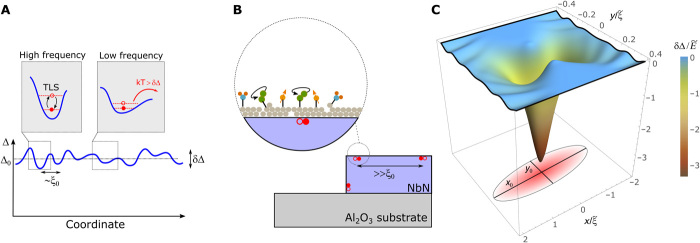
Spurious two-level systems observed in quantum devices are attributed to long-lived quasiparticles trapped in gap inhomogeneities.
Overview
The claims and statistics of this paper haven’t been checked yet.
Free: it reads the open-access text and checks the first 5 claims that cite a source we can check. Create a free account to check every claim.
Integrity signals
Registry
Cites
Statistics
Figures
Verification
Claims the paper makes
The claims and statistics of this paper haven’t been checked yet.
Free: it reads the open-access text and checks the first 5 claims that cite a source we can check. Create a free account to check every claim.
Claims other papers make about this one
Each is checked against this paper’s own text: does it say what the citing paper says it does?
The cited source says what the claim attributes to it.
In the citing paper
“The absence of a concurrent jump in indicates that the most plausible explanation is the vanishing of a coupled TLF (and not a near-resonant TLS), possibly due to a defect rearrangement from an impinging high-energy radiation event40 or due to a trapped quasiparticle escaping from a shallow, local well in the superconducting gap41.”
From Advanced CMOS manufacturing of superconducting qubits on 300 mm wafers (2024) · cites this paper as [41]
Self-check
Percentages, sums and reported differences re-computed from the paper’s own numbers.
The self-check needs the paper’s full text.
Citations
Cites
Quantum supremacy using a programmable superconducting processor
Arute, F., Arya, K., Babbush, R., Bacon, D., Bardin, J. C., Barends, R., Biswas, R., Boixo, S., Brandao, F. G. S. L., Buell, D. A., et al. (2019) · Nature · doi:10.1038/s41586-019-1666-5 · Cited by 7,720
Phillips, W. A. (1987) · Reports on Progress in Physics · doi:10.1088/0034-4885/50/12/003 · Cited by 885
Impurity-Band Tails in the High-Density Limit. I. Minimum Counting Methods
Halperin, B. I., & Lax, M. (1966) · Physical Review · doi:10.1103/physrev.148.722 · Cited by 744
Electron–Electron Interaction In Disordered Conductors
ALTSHULER, B. L., & ARONOV, A. G. (1985) · Modern Problems in Condensed Matter Sciences · doi:10.1016/b978-0-444-86916-6.50007-7 · Cited by 636
1/fnoise: Implications for solid-state quantum information
Paladino, E., Galperin, Y. M., Falci, G., & Altshuler, B. L. (2014) · Reviews of Modern Physics · doi:10.1103/revmodphys.86.361 · Cited by 609
The flux qubit revisited to enhance coherence and reproducibility
Yan, F., Gustavsson, S., Kamal, A., Birenbaum, J., Sears, A. P., Hover, D., Gudmundsen, T. J., Rosenberg, D., Samach, G., Weber, S., et al. (2016) · Nature Communications · doi:10.1038/ncomms12964 · Cited by 587
Towards understanding two-level-systems in amorphous solids: insights from quantum circuits
Müller, C., Cole, J. H., & Lisenfeld, J. (2019) · Reports on Progress in Physics · doi:10.1088/1361-6633/ab3a7e · Cited by 508
Decoherence benchmarking of superconducting qubits
Burnett, J. J., Bengtsson, A., Scigliuzzo, M., Niepce, D., Kudra, M., Delsing, P., & Bylander, J. (2019) · npj Quantum Information · doi:10.1038/s41534-019-0168-5 · Cited by 384 · cited 1×
“It is becoming increasingly evident that the most coherence-limiting two-level systems (TLS) reside outside the qubit junctions on the surface of metals and dielectrics surrounding them ( 1 – 5 ) and their slowly fluctuating dynamics poses a serious challenge for quantum computation ( 1 , 5 – 8 ).”
BackgroundSelf-citationFluctuations of Energy-Relaxation Times in Superconducting Qubits
Klimov, P. V., Kelly, J., Chen, Z., Neeley, M., Megrant, A., Burkett, B., Barends, R., Arya, K., Chiaro, B., Chen, Y., et al. (2018) · Physical Review Letters · doi:10.1103/physrevlett.121.090502 · Cited by 328
High-Coherence Fluxonium Qubit
Nguyen, L. B., Lin, Y.-H., Somoroff, A., Mencia, R., Grabon, N., & Manucharyan, V. E. (2019) · Physical Review X · doi:10.1103/physrevx.9.041041 · Cited by 261 · cited 1×
“Below 3 GHz, the qubit performance in other studies was limited by other loss mechanisms or the statistics was insufficient to demonstrate the presence of individual, strongly coupled TLS ( 31 , 51 , 52 ).”
Background
Cited by
Place, A. P. M., Rodgers, L. V. H., Mundada, P., Smitham, B. M., Fitzpatrick, M., Leng, Z., Premkumar, A., Bryon, J., Vrajitoarea, A., Sussman, S., et al. (2021) · Nature Communications · doi:10.1038/s41467-021-22030-5 · Cited by 563
Engineering high-coherence superconducting qubits
Siddiqi, I. (2021) · Nature Reviews Materials · doi:10.1038/s41578-021-00370-4 · Cited by 311
Resolving catastrophic error bursts from cosmic rays in large arrays of superconducting qubits
McEwen, M., Faoro, L., Arya, K., Dunsworth, A., Huang, T., Kim, S., Burkett, B., Fowler, A., Arute, F., Bardin, J. C., et al. (2022) · Nature Physics · doi:10.1038/s41567-021-01432-8 · Cited by 193
Self-citationMartinis, J. M. (2021) · npj Quantum Information · doi:10.1038/s41534-021-00431-0 · Cited by 133
Noisy intermediate-scale quantum computers
Cheng, B., Deng, X., Gu, X. Q., He, Y., Hu, G., Huang, P., Li, J., Lin, B., Lu, D., Lu, Y., et al. (2023) · Frontiers of Physics · doi:10.1007/s11467-022-1249-z · Cited by 182
Localization and Mitigation of Loss in Niobium Superconducting Circuits
Altoé, M. V. P., Banerjee, A., Berk, C., Hajr, A., Schwartzberg, A., Song, C., Alghadeer, M., Aloni, S., Elowson, M. J., Kreikebaum, J. M., et al. (2022) · PRX Quantum · doi:10.1103/prxquantum.3.020312 · Cited by 119
Microscopic relaxation channels in materials for superconducting qubits
Premkumar, A., Weiland, C. R., Hwang, S., Jäck, B., Place, A. P. M., Waluyo, I., Hunt, A. H., Bisogni, V., Pelliciari, J., Barbour, A., et al. (2021) · Communications Materials · doi:10.1038/s43246-021-00174-7 · Cited by 125
Practical Introduction to Benchmarking and Characterization of Quantum Computers
Hashim, A., Nguyen, L. B., Goss, N., Marinelli, B., Naik, R., Chistolini, T., Hines, J., Marceaux, J. P., Kim, Y., Gokhale, P., et al. (2025) · PRX Quantum · doi:10.1103/prxquantum.6.030202 · Cited by 133
Two-Level-System Dynamics in a Superconducting Qubit Due to Background Ionizing Radiation
Thorbeck, T., Eddins, A., Lauer, I., McClure, D. T., & Carroll, M. (2023) · PRX Quantum · doi:10.1103/prxquantum.4.020356 · Cited by 70
Advanced CMOS manufacturing of superconducting qubits on 300 mm wafers
Van Damme, J., Massar, S., Acharya, R., Ivanov, T., Perez Lozano, D., Canvel, Y., Demarets, M., Vangoidsenhoven, D., Hermans, Y., Lai, J. G., et al. (2024) · Nature · doi:10.1038/s41586-024-07941-9 · Cited by 63
“…that the most plausible explanation is the vanishing of a coupled TLF (and not a near-resonant TLS), possibly due to a defect rearrangement from an impinging high-energy radiation event 40 or due to a trapped quasiparticle escaping from a shallow, local well in the superconducting gap 41 .”
BackgroundMurthy, A. A., Das, P. M., Ribet, S. M., Kopas, C., Lee, J., Reagor, M. J., Zhou, L. W., Kramer, M. J., Hersam, M. C., Checchin, M., et al. (2022) · ACS Nano · doi:10.1021/acsnano.2c07913 · Cited by 58
Evolution of 1/f Flux Noise in Superconducting Qubits with Weak Magnetic Fields
Rower, D. A., Ateshian, L., Li, L. H., Hays, M., Bluvstein, D., Ding, L., Kannan, B., Almanakly, A., Braumüller, J., Kim, D. K., et al. (2023) · Physical Review Letters · doi:10.1103/physrevlett.130.220602 · Cited by 75
Superconducting granular aluminum resonators resilient to magnetic fields up to 1 Tesla
Borisov, K., Rieger, D., Winkel, P., Henriques, F., Valenti, F., Ionita, A., Weßbecher, M., Spiecker, M., Gusenkova, D., Pop, I. M., et al. (2020) · Applied Physics Letters · doi:10.1063/5.0018012 · Cited by 62
Improving qubit coherence using closed-loop feedback
Vepsäläinen, A. P., Winik, R., Karamlou, A. H., Braumüller, J., Paolo, A. D., Sung, Y., Kannan, B., Kjærgaard, M., Kim, D. K., Melville, A. J., et al. (2022) · Nature Communications · doi:10.1038/s41467-022-29287-4 · Cited by 73
Two-level system hyperpolarization using a quantum Szilard engine
Spiecker, M., Paluch, P., Gosling, N., Drucker, N., Matityahu, S., Gusenkova, D., Günzler, S., Rieger, D., Takmakov, I., Valenti, F., et al. (2023) · Nature Physics · doi:10.1038/s41567-023-02082-8 · Cited by 72
“The error bars show the 1 σ confidence intervals of the binomial distribution with 2,500 repetitions. b , Measured relaxation of the qubit after polarization to |g 〉 followed by an initialization in either |g 〉 or |e 〉 .”
BackgroundSynchronous detection of cosmic rays and correlated errors in superconducting qubit arrays
Harrington, P. M., Li, M., Hays, M., Pontseele, W. V. D., Mayer, D., Pinckney, H. D., Contipelli, F., Gingras, M., Niedzielski, B. M., Stickler, H., et al. (2025) · Nature Communications · doi:10.1038/s41467-025-61385-x · Cited by 85
Effects of laser-annealing on fixed-frequency superconducting qubits
Kim, H. L., Jünger, C., Morvan, A., Barnard, E. S., Livingston, W. P., Altoé, M. V. P., Kim, Y., Song, C., Chen, L., Kreikebaum, J. M., et al. (2022) · Applied Physics Letters · doi:10.1063/5.0102092 · Cited by 42
Using materials for quasiparticle engineering
Catelani, G., & Pekola, J. P. (2022) · Materials for Quantum Technology · doi:10.1088/2633-4356/ac4a75 · Cited by 41
Bafia, D., Murthy, A. A., Grassellino, A., & Romanenko, A. (2024) · Physical Review Applied · doi:10.1103/physrevapplied.22.024035 · Cited by 35
“Current decoherence candidates include quasi-particles [2, 3], radiation-induced losses [4, 5], and dielectric losses such as two-level systems (TLS) [6], to name a few.”
BackgroundTennant, D., Martinez, L. A., Beck, K. M., O’Kelley, S. R., Wilen, C. D., McDermott, R., DuBois, J. L., & Rosen, Y. J. (2022) · PRX Quantum · doi:10.1103/prxquantum.3.030307 · Cited by 43
Quantum bath suppression in a superconducting circuit by immersion cooling
Lucas, M., Danilov, A. V., Levitin, L. V., Jayaraman, A., Casey, A. J., Faoro, L., Tzalenchuk, A. Y., Kubatkin, S., Saunders, J., & de Graaf, S. E. (2023) · Nature Communications · doi:10.1038/s41467-023-39249-z · Cited by 46
“Similar to many previous experiments 10,11,34 – 36 , in vacuum the noise increases on cooling according to a power law T − 1.5 followed by saturation to a constant level below~80mK due to insuf fi cient thermalisation.”
InfluentialSelf-citationSearch for QCD axion dark matter with transmon qubits and quantum circuit
Chen, S., Fukuda, H., Inada, T., Moroi, T., Nitta, T., & Sichanugrist, T. (2024) · Physical review. D/Physical review. D. · doi:10.1103/physrevd.110.115021 · Cited by 38
“Combining these two enhancement mechanisms, one can reach the parameter region suggested by QCD axion models such as that of KSVZ [19, 20] or DFSZ [21, 22] models.”
Error mitigation with stabilized noise in superconducting quantum processors
Kim, Y., Govia, L. C. G., Dane, A. E., van den Berg, E., Zajac, D. M., Mitchell, B., Liu, Y., Balakrishnan, K., Keefe, G., Stabile, A., et al. (2025) · Nature Communications · doi:10.1038/s41467-025-62820-9 · Cited by 45
Modelling non-Markovian noise in driven superconducting qubits
Agarwal, A., Lindoy, L. P., Lall, D., Jamet, F., & Rungger, I. (2024) · Quantum Science and Technology · doi:10.1088/2058-9565/ad3d7e · Cited by 44
Niepce, D., Burnett, J., Kudra, M., Cole, J. H., & Bylander, J. (2021) · Science Advances · doi:10.1126/sciadv.abh0462 · Cited by 34
Self-citationBaity, P., Maclean, C., Seferai, V., Bronstein, J., Shu, Y., Hemakumara, T., & Weides, M. P. (2024) · Physical Review Research · doi:10.1103/physrevresearch.6.013329 · Cited by 33
Tuning microwave losses in superconducting resonators
Gurevich, A. (2023) · Superconductor Science and Technology · doi:10.1088/1361-6668/acc214 · Cited by 32
Low-loss lumped-element inductors made from granular aluminum
Gupta, V., Winkel, P., Thakur, N., van Vlaanderen, P., Wang, Y., Ganjam, S., Frunzio, L., & Schoelkopf, R. J. (2025) · Physical Review Applied · doi:10.1103/physrevapplied.23.054067 · Cited by 28
Probing Hundreds of Individual Quantum Defects in Polycrystalline and Amorphous Alumina
Hung, C.-C., Yu, L., Foroozani, N., Fritz, S., Gerthsen, D., & Osborn, K. D. (2022) · Physical Review Applied · doi:10.1103/physrevapplied.17.034025 · Cited by 31
“[41] SE de Graaf, L Faoro, LB Ioffe, S Mahashabde, JJ Burnett, T Lindström, SE Kubatkin, AV Danilov, and A Ya Tzalenchuk.”
BackgroundLu, Y., Lambert, N., Kockum, A. F., Funo, K., Bengtsson, A., Gasparinetti, S., Nori, F., & Delsing, P. (2022) · PRX Quantum · doi:10.1103/prxquantum.3.020305 · Cited by 26
Linehan, R., Hernandez, I., Temples, D. J., Dang, S. Q., Baxter, D., Hsu, L., Figueroa-Feliciano, E., Khatiwada, R., Anyang, K., Bowring, D., et al. (2025) · Physical review. D/Physical review. D. · doi:10.1103/physrevd.111.063047 · Cited by 21
Correlated Quasiparticle Poisoning from Phonon-Only Events in Superconducting Qubits
Yelton, E., Larson, C. P., Dodge, K., Okubo, K., & Plourde, B. L. T. (2025) · Physical Review Letters · doi:10.1103/h65v-ttbw · Cited by 28
Benchmarking quantum logic operations relative to thresholds for fault tolerance
Hashim, A., Seritan, S., Proctor, T. J., Rudinger, K., Goss, N., Naik, R., Kreikebaum, J. M., Santiago, D., & Siddiqi, I. A. (2023) · npj Quantum Information · doi:10.1038/s41534-023-00764-y · Cited by 38
Giant Two-Level Systems in a Granular Superconductor
Kristen, M. D., Voss, J. N., Wildermuth, M., Bilmes, A., Lisenfeld, J., Rotzinger, H., & Ustinov, A. V. (2024) · Physical Review Letters · doi:10.1103/physrevlett.132.217002 · Cited by 23
Oh, J., Kopas, C., Marshall, J., Fang, X., Joshi, K. R., Datta, A., Ghimire, S., Park, J., Kim, R. H. J., Setiawan, D., et al. (2024) · Acta Materialia · doi:10.1016/j.actamat.2024.120153 · Cited by 28
Tantalum airbridges for scalable superconducting quantum processors
Bu, K., Huai, S., Zhang, Z., Li, D., Li, Y., Hu, J., Yang, X., Dai, M., Cai, T., Zheng, Y.-C., et al. (2025) · npj Quantum Information · doi:10.1038/s41534-025-00972-8 · Cited by 29
Kowsari, D., Zheng, K., Monroe, J., Thobaben, N. J., Du, X., Harrington, P. M., Henriksen, E. A., Wisbey, D., & Murch, K. W. (2021) · Applied Physics Letters · doi:10.1063/5.0066441 · Cited by 23
Fermion-Parity-Based Computation and Its Majorana-Zero-Mode Implementation
McLauchlan, C., & Béri, B. (2022) · Physical Review Letters · doi:10.1103/physrevlett.128.180504 · Cited by 21
Markovian noise modelling and parameter extraction framework for quantum devices
Brand, D., Sinayskiy, I., & Petruccione, F. (2024) · Scientific Reports · doi:10.1038/s41598-024-54598-5 · Cited by 22
Universal bound on microwave dissipation in superconducting circuits
Charpentier, T., Khvalyuk, A. V., Ioffe, L. B., Feigel’man, M. V., Roch, N., & Sacépé, B. (2026) · Science Advances · doi:10.1126/sciadv.aed3922 · Cited by 16
“[86] is obtained as the mean of the different measurement runs for the same device reported in Table II”
InfluentialSelf-citationArgon-Milling-Induced Decoherence Mechanisms in Superconducting Quantum Circuits
Van Damme, J., Ivanov, T., Favia, P., Conard, T., Verjauw, J., Acharya, R., Perez Lozano, D., Raes, B., Van de Vondel, J., Vadiraj, A. M., et al. (2023) · Physical Review Applied · doi:10.1103/physrevapplied.20.014034 · Cited by 14
The effects of disorder in superconducting materials on qubit coherence
Gao, R., Wu, F., Sun, H., Chen, J., Deng, H., Ma, X., Miao, X., Song, Z., Wan, X., Wang, F., et al. (2025) · Nature Communications · doi:10.1038/s41467-025-58745-y · Cited by 14
de Graaf, S. E., Mahashabde, S., Kubatkin, S., Tzalenchuk, A. Y., & Danilov, A. V. (2021) · Physical review. B./Physical review. B · doi:10.1103/physrevb.103.174103 · Cited by 20
Self-citationUltrahigh Kinetic Inductance Superconducting Materials from Spinodal Decomposition
Gao, R., Ku, H., Deng, H., Yu, W., Xia, T., Wu, F., Song, Z., Wang, M., Miao, X., Zhang, C., et al. (2022) · Advanced Materials · doi:10.1002/adma.202201268 · Cited by 14
Cho, Y., Jasrasaria, D., Ray, K. G., Tennant, D., Lordi, V., DuBois, J. L., & Rosen, Y. J. (2023) · Quantum Science and Technology · doi:10.1088/2058-9565/acf685 · Cited by 16
Pritchard, P. G., & Rondinelli, J. M. (2025) · Physical Review Applied · doi:10.1103/6wyt-fxjg · Cited by 16
Spin environment of a superconducting qubit in high magnetic fields
Günzler, S., Beck, J., Rieger, D., Gosling, N., Zapata, N., Field, M. E., Geisert, S., Bacher, A., Hohmann, J., Spiecker, M., et al. (2025) · Nature Communications · doi:10.1038/s41467-025-65528-y · Cited by 20
Scanning tunneling microscopy and spectroscopy characterization of Nb films for quantum applications
Berti, G., Torres‐Castanedo, C. G., Goronzy, D. P., Bedzyk, M. J., Hersam, M. C., Kopas, C., Marshall, J., & Iavarone, M. (2023) · Applied Physics Letters · doi:10.1063/5.0145090 · Cited by 13
Hegedüs, M., Banerjee, R., Hutcheson, A., Barker, T., Mahashabde, S., Danilov, A. V., Kubatkin, S., Antonov, V. N., & de Graaf, S. E. (2025) · Science Advances · doi:10.1126/sciadv.adt8586 · Cited by 16
Self-citationTominaga, Y., Shirai, S., Hishida, Y., Terai, H., & Noguchi, A. (2025) · EPJ Quantum Technology · doi:10.1140/epjqt/s40507-025-00367-w · Cited by 18
Zhao, P., Ma, T., Jin, Y., & Yu, H. (2022) · Physical Review A · doi:10.1103/physreva.105.062605 · Cited by 17
Mitigating Errors on Superconducting Quantum Processors Through Fuzzy Clustering
Ahmad, H. G., Schiattarella, R., Mastrovito, P., Chiatto, A., Levochkina, A., Esposito, M., Montemurro, D., Pepe, G. P., Bruno, A., Tafuri, F., et al. (2024) · Advanced Quantum Technologies · doi:10.1002/qute.202300400 · Cited by 13
Wang, Z., Yu, C. C., & Wu, R. (2025) · Physical Review Applied · doi:10.1103/physrevapplied.23.024017 · Cited by 17
Khvalyuk, A. V., Charpentier, T., Roch, N., Sacépé, B., & Feigel’man, M. V. (2024) · Physical review. B./Physical review. B · doi:10.1103/physrevb.109.144501 · Cited by 11
“(F26) and (F27) to be consistent then delivers the plasmonic spectrum: ´ w/ 2 − w/ 2 dy ′ V k ( y − y ′ ) ρ 0 ( y ′ ) ´ w/ 2 − w/ 2 dy ρ 0 ( y ) , (F29)”
Advances in Josephson Junction Materials and Processes Toward Practical Quantum Computing
Kim, H. L., Jang, G., Jin, S., An, J., Shin, H., Shin, H., Luo, J., Hashim, A., Siddiqi, I. A., Kim, Y., et al. (2026) · Advanced Science · doi:10.1002/advs.78427 · Cited by 12
Fingerprints of Qubit Noise in Transient Cavity Transmission
Mutter, P. M., & Burkard, G. (2022) · Physical Review Letters · doi:10.1103/physrevlett.128.236801 · Cited by 15
Detection of temporal fluctuation in superconducting qubits for quantum error mitigation
Hirasaki, Y., Daimon, S., Itoko, T., Kanazawa, N., & Saitoh, E. (2023) · Applied Physics Letters · doi:10.1063/5.0166739 · Cited by 13
Analogue Quantum Simulation with Fixed-Frequency Transmon Qubits
Greenaway, S., Smith, A., Mintert, F., & Malz, D. (2024) · Quantum · doi:10.22331/q-2024-02-22-1263 · Cited by 11
Scaffold-assisted window junctions for superconducting qubit fabrication
Ke, C.-T., Tsai, J.-Y., Chen, Y.-C., Xu, Z., Blackwell, E. J., Snyder, M. A., Weeden, S., Chen, P.-S., Lai, C., Sheu, S.-S., et al. (2026) · npj Quantum Information · doi:10.1038/s41534-026-01249-4 · Cited by 12
High-Performance Cryogen-Free Platform for Microkelvin-Range Refrigeration
Nyéki, J., Lucas, M., Knappová, P., Levitin, L. V., Casey, A. J., Saunders, J., van der Vliet, H., & Matthews, A. J. (2022) · Physical Review Applied · doi:10.1103/physrevapplied.18.l041002 · Cited by 9
Hardware-efficient random circuits to classify noise in a multiqubit system
Kim, J.-S., Bishop, L. S., Corcoles, A. D., Merkel, S., Smolin, J. A., & Sheldon, S. (2021) · Physical Review A · doi:10.1103/physreva.104.022609 · Cited by 18
Superconducting microwave resonators with non-centrosymmetric nonlinearity
Khabipov, M., Gaydamachenko, V., Kissling, C., Dolata, R., & Zorin, A. B. (2022) · Superconductor Science and Technology · doi:10.1088/1361-6668/ac6989 · Cited by 10
Resolving Fock states near the Kerr-free point of a superconducting resonator
Lu, Y., Kudra, M., Hillmann, T., Yang, J., Li, H.-X., Quijandría, F., & Delsing, P. (2023) · npj Quantum Information · doi:10.1038/s41534-023-00782-w · Cited by 16
Sparse non-Markovian Noise Modeling of Transmon-Based Multi-Qubit Operations
Oda, Y., Schultz, K., Norris, L., Shehab, O., & Quiroz, G. (2026) · PRX Quantum · doi:10.1103/lx8x-z29x · Cited by 12
Specific heat of a driven lattice gas
Dolai, P., & Maes, C. (2023) · Annals of Physics · doi:10.1016/j.aop.2023.169546 · Cited by 8
“Coupling two-level systems in an array has obviously a great number of applications, e.g. , in heat engines [17] and quantum devices [18, 19].”
BackgroundNatural width of the superconducting transition in epitaxial TiN films
Baeva, E. M., Kolbatova, A. I., Titova, N. A., Saha, S., Boltasseva, A. E., Bogdanov, S., Shalaev, V. M., Semenov, A. V., Gol'tsman, G. N., & Khrapai, V. S. (2024) · Superconductor Science and Technology · doi:10.1088/1361-6668/ad74a1 · Cited by 8
1/f noise in quantum nanoscience
Falci, G., Hakonen, P. J., & Paladino, E. (2023) · Elsevier eBooks · doi:10.1016/b978-0-323-90800-9.00250-x · Cited by 16
Measurement of Quasiparticle Diffusion in a Superconducting Transmon Qubit
Dong, Y., Li, Y., Zheng, W., Zhang, Y., Ma, Z., Tan, X., & Yu, Y. (2022) · Applied Sciences · doi:10.3390/app12178461 · Cited by 7
Random telegraph fluctuations in granular microwave resonators
Kristen, M. D., Voss, J. N., Wildermuth, M., Rotzinger, H., & Ustinov, A. V. (2023) · Applied Physics Letters · doi:10.1063/5.0147430 · Cited by 8
Robust Lindbladian Estimation for Quantum DynamicsPreprint
Liu, Y., Seddon, J. R., Kohler, T., Onorati, E., & Cubitt, T. S. (2025) · arXiv (Cornell University) · doi:10.48550/arxiv.2507.07912 · Cited by 10
Excess quasiparticles and their dynamics in the presence of subgap states
Fischer, P. B., & Catelani, G. (2025) · Physical review. B./Physical review. B · doi:10.1103/jj9b-27qs · Cited by 6
Krasnikova, Y. V., Murthy, A. A., Bafia, D., Crisa, F., Clairmont, A., Sung, Z., Lee, J. Y., van Zanten, D. M. T., Bal, M., Romanenko, A., et al. (2026) · Physical review. B./Physical review. B · doi:10.1103/b9yk-drfs · Cited by 6
Anomalous Loss Reduction Below Two‐Level System Saturation in Aluminum Superconducting Resonators
Tai, T., Cai, J., & Anlage, S. M. (2023) · Advanced Quantum Technologies · doi:10.1002/qute.202200145 · Cited by 10
Loss and decoherence in superconducting circuits on silicon: Insights from electron spin resonance
Jayaraman, A., Danilov, A. V., Bylander, J., & Kubatkin, S. (2024) · Physical Review Applied · doi:10.1103/physrevapplied.22.014030 · Cited by 6
Self-citationStasino, V., Mastrovito, P., Cosenza, C., Levochkina, A., Esposito, M., Montemurro, D., Pepe, G. P., Bruno, A., Tafuri, F., Massarotti, D., et al. (2025) · Journal of Superconductivity and Novel Magnetism · doi:10.1007/s10948-025-06968-x · Cited by 8
“This allows the definition of the count vectors n ij , from which one can calculate the readout probability p ij = n ij / N shot to measure an assigned state while preparing the qubit on the computational basis.”
Metamaterials in superconducting and cryogenic quantum technologies
Krasnok, A. (2026) · Applied Physics Reviews · doi:10.1063/5.0282013 · Cited by 5
Correlated frequency noise in a multimode acoustic resonator
Tubsrinuan, N., Cole, J. H., Delsing, P., & Andersson, G. (2024) · Physical review. B./Physical review. B · doi:10.1103/physrevb.109.l241301 · Cited by 5
Wang, J., Park, J., Chong, Z. X., Kim, R. H. J., Haeuser, S., Chan, R. K., Murthy, A. A., Grassellino, A., Romanenko, A., Kopas, C., et al. (2025) · Materials · doi:10.3390/ma18030569 · Cited by 5
“Shorter-than-expected T 1 and T 2 times are often attributed to two-level system (TLS) losses below 1 K and non-equilibrium quasiparticle (QP) generation above 1 K, stemming from factors such as nonuniform surface morphology, defects, native Nb oxide, and ionizing radiation [15–18].”
Quantifying trapped magnetic vortex losses in niobium resonators at mK temperatures
Bafia, D., Abdisatarov, B., Pilipenko, R., Lu, Y., Eremeev, G., Romanenko, A., & Grassellino, A. (2025) · Applied Physics Letters · doi:10.1063/5.0282159 · Cited by 6
Quantum defects from a single surface exhibit strong mutual interactions
Hung, C.-C., Kohler, T., & Osborn, K. D. (2024) · Physical Review Applied · doi:10.1103/physrevapplied.21.044021 · Cited by 6
Chen, C., Tran, J., McFadden, A., Simmonds, R. W., Saito, K., Chu, E.-D., Morales, D., Suezaki, V., Hou, Y., Aumentado, J., et al. (2024) · Science Advances · doi:10.1126/sciadv.ado4875 · Cited by 6
Microwave response of superconductors with paramagnetic impurities
Zarea, M., & Sauls, J. A. (2026) · Physical review. B./Physical review. B · doi:10.1103/tkw2-2njr · Cited by 5
“…leading to decoherence in superconducting devices range from high current densities and multi-photon pair breaking [2, 3], energy deposition from background radiation and cosmic rays [4, 5], to sub-gap of Andreev bound states generated by surface defects [6] or pair-breaking by TLS impurities [7].”
Jesus, J. D. D. C., Li, B., Gao, Y., Barends, R., Cárdenas-López, F. A., & Motzoi, F. (2026) · PRX Quantum · doi:10.1103/sdxb-v39h · Cited by 5
Quantum 1 / f η noise induced relaxation in the spin-boson model
Otterpohl, F., Nalbach, P., Paladino, E., Falci, G., & Thorwart, M. (2025) · Physical Review Research · doi:10.1103/t87m-7pwn · Cited by 4
Transmission-based noise spectroscopy for quadratic qubit-resonator interactions
Mutter, P. M., & Burkard, G. (2023) · Physical Review A · doi:10.1103/physreva.107.052603 · Cited by 4
Scalable Quantum Processor Based on Superconducting Fluxonium Qubits
Mazhorin, G. S., Kazmina, A. S., Chudakova, T. A., Simakov, I. A., Maleeva, N., Moskalenko, I. N., & Ryazanov, V. V. (2024) · Radiophysics and Quantum Electronics · doi:10.1007/s11141-024-10341-8 · Cited by 4
A three-dimensional scanning trapped-ion probe
Sägesser, T., Jain, S., Hrmo, P., Ferk, A., Simoni, M., Cui, Y., Mordini, C., Kienzler, D., & Home, J. (2026) · Science Advances · doi:10.1126/sciadv.aec0794 · Cited by 8
“…of sensing for Casimir ( 2 , 3 ) or gravitational forces ( 4 , 5 ), the resulting noise limits sensitivity, while quantum devices ranging from trapped ions ( 6 , 7 ) and Rydberg atoms ( 8 , 9 ) to superconducting circuits ( 10 ) and spin defects ( 11 ) find limits in coherence due to these effects.”
Theory of qubit noise characterization using the long-time cavity transmission
Mutter, P. M., & Burkard, G. (2023) · Physical Review A · doi:10.1103/physreva.107.022601 · Cited by 5
1/f frequency fluctuations in high kinetic inductance CoSi2 microwave cavities
Zeng, W., Lilja, I., Mukhanova, E., Heredia, E. A., Wu, C.-W., Elalaily, T., Lin, J., Yeh, S.-S., & Hakonen, P. J. (2025) · APL Quantum · doi:10.1063/5.0251425 · Cited by 3
Gurra, E., Bennett, D. A., Duff, S. M., Vissers, M. R., & Ullom, J. N. (2026) · Physical Review Research · doi:10.1103/v181-yd74 · Cited by 4
Magnetic Fluctuations in Niobium PentoxidePreprint
Krasnikova, Y. V., Murthy, A. A., Crisa, F., Bal, M., Sung, Z., Lee, J., Cano, A., van Zanten, D. M. T., Romanenko, A., Grassellino, A., et al. (2023) · arXiv (Cornell University) · doi:10.48550/arxiv.2312.10697 · Cited by 3
“Another one reason the magnetic footprint in niobium pentoxide is worth exploring is the surface spin model, which was actively discussed for Nb-based SQUID magnetometers [9] and lately for frequency tunable resonators [10].”
BackgroundDimensionality reduction for closed-loop quantum gate calibration
Berger, E., Maurya, V., McIntyre, Z. M., Wei, K. X., Haas, H., & Puzzuoli, D. (2026) · Physical Review Applied · doi:10.1103/w2v4-7pvc · Cited by 5
Belliardo, F., Gauger, E. M., Abobeih, M. H., Taminiau, T. H., Altmann, Y., & Bonato, C. (2026) · PRX Quantum · doi:10.1103/6yhz-9vr6 · Cited by 9
“…of other electronic and nuclear spins [14, 127, 140, 144], a superconducting qubit coupling to an unknown number of two-level fluctuators [114, 115], the explainable identification of the processes governing the dynamics of an unknown quantum system [32, 49], and generally multi-qubit systems…”
Frequency-Noise-Insensitive Universal Control of Kerr-Cat Qubits
Seifert, L. M., Hann, C. T., & Noh, K. (2025) · Physical Review Letters · doi:10.1103/fyft-6kqg · Cited by 2
“In particular, TLSs often move close to a subset of qubits in an unpredictable manner and significantly degrade the performance of the affected qubits (e.g., substantially reducing qubit lifetimes) [7–11].”
Udupa, A., Hillmann, T., Ahmed, R. G., Smirne, A., & Ferrini, G. (2026) · Physical Review Research · doi:10.1103/xfv4-8dq7 · Cited by 5
Dynamics of measurement-induced state transitions in superconducting qubits
Hirasaki, Y., Daimon, S., Kanazawa, N., Itoko, T., Tokunari, M., & Saitoh, E. (2024) · Journal of Applied Physics · doi:10.1063/5.0226517 · Cited by 3
Localized Josephson hot spots due to two-level systems
Heath, J. T., Tyner, A. C., Thann, T. C., Michal, V. P., Krogstrup, P., Svendsen, M. K., & Balatsky, A. V. (2025) · Physical Review Applied · doi:10.1103/ncn4-m48z · Cited by 3
Lang, S., Eisele, I., Weber, J., Schewski, A., Music, E., Maiwald, A., Hahn, M., Zahn, D., Luo, Z., Nebrich, L., et al. (2026) · Nanomaterials · doi:10.3390/nano16100569 · Cited by 3
Nonadiabatic transition at a band-touching point
Vaezi, M.-S., & Esfahani, D. N. (2022) · Physical Review Research · doi:10.1103/physrevresearch.4.013224 · Cited by 2
“Two-level systems (TLSs) are among the simplest quantum models due to their two-dimensional Hilbertex-cited space and manifest in a variety of physical phenomena [1–4], some of which intrinsically have only two levels (e.g., spin half systems).”
Properties of two-level systems in current-carrying superconductors
Liu, T., Andreev, A. V., & Spivak, B. Z. (2025) · Physical review. B./Physical review. B · doi:10.1103/physrevb.111.l180502 · Cited by 2
Metadata
- Authors
- de Graaf, S. E., Faoro, L., Ioffe, L. B., Mahashabde, S., Burnett, J. J., Lindström, T., Kubatkin, S. E., Danilov, A. V., & Tzalenchuk, A. Y.
- Affiliations
- National Physical Laboratory, Hampton Road, Teddington TW11 0LW, UK.
- Centre National de la Recherche Scientifique (FR)
- Google (United States) (US)
- Chalmers University of Technology (SE)
- National Physical Laboratory (GB)
- ORCID
- Venue
- Science Advances
- Published
- 2020-12-18
- Volume
- 6
- Issue
- 51
- ISSN
- 2375-2548 (ISSN-L)
- PMC
- PMC11206451
- OpenAlex
- W3015021690
- Cited by
- 108
- References
- 62
- Citations by year
- 2026: 18 · 2025: 29 · 2024: 19 · 2023: 18 · 2022: 16 · 2021: 8
- FWCI
- 4.13
- Type
- journal article
- Language
- en
- Open access
- gold
- doi.org
- Licence
- Locations
- Science Advances (publishedVersion, cc-by-nc)
- PubMed Central (publishedVersion, cc-by-nc)
- PubMed (publishedVersion)
- arXiv (Cornell University) (submittedVersion)
- HAL (submittedVersion)
- Chalmers Research (Chalmers University of Technology) (submittedVersion)
- arXiv (Cornell University)
- Funders
- Horizon 2020 Framework Programme (766714, 824109)
- Department for Business, Energy and Industrial Strategy (Metrology Fellowship, NA)
- Vetenskapsrådet (2016-04828, 2019-05480)
- Nanoscience and Nanotechnology Area of Advance, Chalmers Tekniska Högskola (nano/2018)
- Topics
- Physical Sciences › Physics and Astronomy › Atomic and Molecular Physics, and Optics › Quantum Information and Cryptography
- Physical Sciences › Engineering › Electrical and Electronic Engineering › Superconducting and THz Device Technology
- Physical Sciences › Physics and Astronomy › Condensed Matter Physics › Physics of Superconductivity and Magnetism
- Keywords
- two-level system, superconducting quantum circuits, qubit relaxation, decoherence, nonequilibrium quasiparticles, order parameter fluctuations, dephasing
About these checks
Registry, retraction, Cites and statistics results are computed, not judged, with one exception: a printed reference that no index lists is read once by a model before it counts as a citation error. Claims are extracted by a model and kept only when their quote appears verbatim in the text; each cited source is then checked, with a model’s help, for whether it says what the claim relies on. Those verdicts can be wrong — read the claim’s quote and the cited source before relying on one.
Statistics and arithmetic are recomputed, not judged.
Confidence bands are shown only for fields calibrated on our annotated test set. None is calibrated yet, so no band is shown.
What counts as a claim ›How we measure confidence ›How we check this ›
Are you an author, or do you see a problem with this page? Request a review
Data sources
Bibliographic data: Semantic Scholar, OpenAlex, Crossref.
Contains information from the Semantic Scholar Academic Graph Datasets, made available under the ODC Attribution License (ODC-BY 1.0).
Semantic Scholar’s data is described in: Kinney, R., et al. (2023). The Semantic Scholar Open Data Platform. arXiv:2301.10140.
