

Two-level systems in superconducting quantum devices due to trapped quasiparticles
Open accessThe DOI matches its Crossref record; 62 of the 62 references it cites were found in a registry or an index.
Abstract
Spurious two-level systems observed in quantum devices are attributed to long-lived quasiparticles trapped in gap inhomogeneities.
Overview
The claims and statistics of this paper haven’t been checked yet.
Free: it reads the open-access text and checks the first 5 claims that cite a source we can check. Create a free account to check every claim.
Integrity signals
Registry
Cites
Statistics
Figures
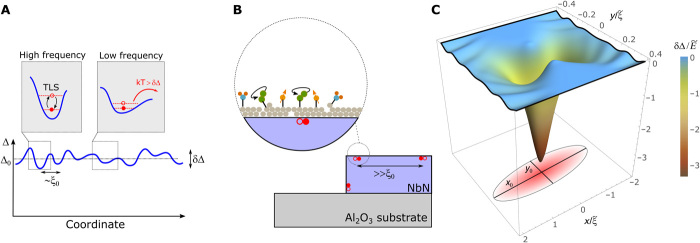
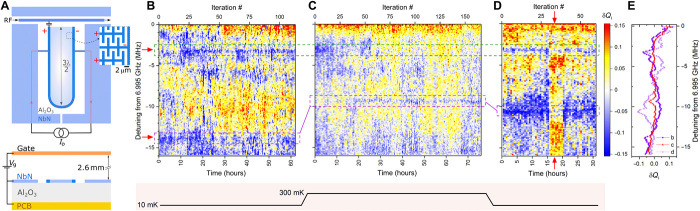
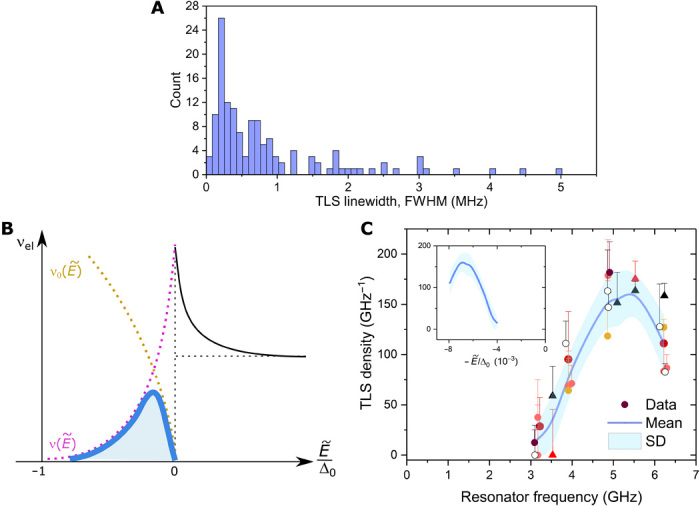
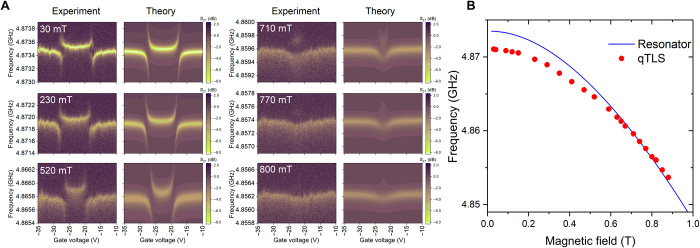
Verification
Claims the paper makes
The claims and statistics of this paper haven’t been checked yet.
Free: it reads the open-access text and checks the first 5 claims that cite a source we can check. Create a free account to check every claim.
Claims other papers make about this one
Each is checked against this paper’s own text: does it say what the citing paper says it does?
The cited source says what the claim attributes to it.
In the citing paper
“The absence of a concurrent jump in indicates that the most plausible explanation is the vanishing of a coupled TLF (and not a near-resonant TLS), possibly due to a defect rearrangement from an impinging high-energy radiation event40 or due to a trapped quasiparticle escaping from a shallow, local well in the superconducting gap41.”
From Advanced CMOS manufacturing of superconducting qubits on 300 mm wafers (2024) · cites this paper as [41]
Self-check
Percentages, sums and reported differences re-computed from the paper’s own numbers.
The self-check needs the paper’s full text.
Citations
Cites
Quantum supremacy using a programmable superconducting processor
Arute, F., Arya, K., Babbush, R., Bacon, D., Bardin, J. C., Barends, R., Biswas, R., Boixo, S., Brandao, F. G. S. L., Buell, D. A., et al. (2019) · Nature · doi:10.1038/s41586-019-1666-5 · Cited by 7,720
Phillips, W. A. (1987) · Reports on Progress in Physics · doi:10.1088/0034-4885/50/12/003 · Cited by 885
Impurity-Band Tails in the High-Density Limit. I. Minimum Counting Methods
Halperin, B. I., & Lax, M. (1966) · Physical Review · doi:10.1103/physrev.148.722 · Cited by 744
Electron–Electron Interaction In Disordered Conductors
ALTSHULER, B. L., & ARONOV, A. G. (1985) · Modern Problems in Condensed Matter Sciences · doi:10.1016/b978-0-444-86916-6.50007-7 · Cited by 636
1/fnoise: Implications for solid-state quantum information
Paladino, E., Galperin, Y. M., Falci, G., & Altshuler, B. L. (2014) · Reviews of Modern Physics · doi:10.1103/revmodphys.86.361 · Cited by 609
The flux qubit revisited to enhance coherence and reproducibility
Yan, F., Gustavsson, S., Kamal, A., Birenbaum, J., Sears, A. P., Hover, D., Gudmundsen, T. J., Rosenberg, D., Samach, G., Weber, S., et al. (2016) · Nature Communications · doi:10.1038/ncomms12964 · Cited by 587
Towards understanding two-level-systems in amorphous solids: insights from quantum circuits
Müller, C., Cole, J. H., & Lisenfeld, J. (2019) · Reports on Progress in Physics · doi:10.1088/1361-6633/ab3a7e · Cited by 508
Decoherence benchmarking of superconducting qubits
Burnett, J. J., Bengtsson, A., Scigliuzzo, M., Niepce, D., Kudra, M., Delsing, P., & Bylander, J. (2019) · npj Quantum Information · doi:10.1038/s41534-019-0168-5 · Cited by 384 · cited 1×
“It is becoming increasingly evident that the most coherence-limiting two-level systems (TLS) reside outside the qubit junctions on the surface of metals and dielectrics surrounding them ( 1 – 5 ) and their slowly fluctuating dynamics poses a serious challenge for quantum computation ( 1 , 5 – 8 ).”
BackgroundSelf-citationFluctuations of Energy-Relaxation Times in Superconducting Qubits
Klimov, P. V., Kelly, J., Chen, Z., Neeley, M., Megrant, A., Burkett, B., Barends, R., Arya, K., Chiaro, B., Chen, Y., et al. (2018) · Physical Review Letters · doi:10.1103/physrevlett.121.090502 · Cited by 328
High-Coherence Fluxonium Qubit
Nguyen, L. B., Lin, Y.-H., Somoroff, A., Mencia, R., Grabon, N., & Manucharyan, V. E. (2019) · Physical Review X · doi:10.1103/physrevx.9.041041 · Cited by 261 · cited 1×
“Below 3 GHz, the qubit performance in other studies was limited by other loss mechanisms or the statistics was insufficient to demonstrate the presence of individual, strongly coupled TLS ( 31 , 51 , 52 ).”
Background
Cited by
Items 101–127 of 127
Reiss, Y., & Schechter, M. (2025) · Physical review. B./Physical review. B · doi:10.1103/physrevb.111.l201403 · Cited by 3
“3K [51].”
Low-temperature electron dephasing rates indicate magnetic disorder in superconducting TiN films
Lomakin, A. I., Baeva, E. M., Titova, N. A., Semenov, A. V., Лубенченко, А. В., Kirsanova, M. A., Evlashin, S. A., Saha, S., Bogdanov, S., Kolbatova, A. I., et al. (2025) · Applied Physics Letters · doi:10.1063/5.0286394 · Cited by 1
Fast recovery of niobium-based superconducting resonators after laser illumination
Li, C., Xu, Y., Wu, Y., Pace, M. C. C., LaHaye, M., Senatore, M., & Tang, H. X. (2025) · Communications Physics · doi:10.1038/s42005-025-02407-4 · Cited by 1
Wang, Q., Salcedo-Gallo, J. S., Bedkihal, S., Xia, T., Olszewski, M. W., Fatemi, V., & Fitzpatrick, M. (2025) · Materials for Quantum Technology · doi:10.1088/2633-4356/ae2b43 · Cited by 1
The Coherence Challenge: Foundations and Advancements in Superconducting Quantum Circuits
Rao, S. G. (2026) · Arabian Journal for Science and Engineering · doi:10.1007/s13369-025-10979-0 · Cited by 1
Scanning Tunneling Spectroscopy of Superconducting Nitridized Aluminum Thin Films
Moreno, J. A., Talavera, P. G., Torras-Coloma, A., Rius, G., Forn-Díaz, P., Herrera, E., Guillamón, I., & Suderow, H. (2026) · Journal of Low Temperature Physics · doi:10.1007/s10909-026-03390-y · Cited by 1
Multiple quasiparticle bound states in a local superconducting gap variation
Morin, R., Basko, D. M., Houzet, M., & Meyer, J. S. (2026) · Physical review. B./Physical review. B · doi:10.1103/xfd7-yl65 · Cited by 2
Anonymous (2026) · APS Open Science · doi:10.1103/b11b-3hm4 · Cited by 2
“These include local defects originating from substrates, interfaces, and fabrication residues, as well as nonlocal excitations such as phonons and quasiparticles [3–7].”
Huang, Z.-Q., Ye, S.-K., Xu, Y.-Q., Jiang, T.-Y., Hao, T., Wang, B., Song, X., Li, H., Guo, G., Cao, G., et al. (2025) · Physical Review Applied · doi:10.1103/5k9f-7gc7 · Cited by 3
Dissipation in superconducting quantum circuits
Bharadwaj, K. S. (2021) · theses.fr (ABES) · doi:10.70675/ddcf68a5z5ed4z4a91z8227z04bad212275d · Cited by 2
Bogolyubov excitons as a microscopic origin of two-level systemsPreprint
Grankin, A., & Galitski, V. M. (2026) · arXiv (Cornell University) · doi:10.48550/arxiv.2607.07812 · Cited by 1
Banerjee, R., Lindoy, L. P., Hegedus, M., Hutcheson, A., Hawkins, T., Daghigh-Ahmadi, E., Samaddar, S., Barker, T., Goff, J. P., Tzalenchuk, A. Y., et al. (2026) · arXiv (Cornell University) · doi:10.48550/arxiv.2607.15252 · Cited by 1
Self-citationDissipative phase transition and duality of the Josephson junction
Bourlet, N. (2020) · theses.fr (ABES) · doi:10.70675/639dcea8z16f8z4d6dzb15fza6dc3af05f25
Decoherence-Free Subspaces Cannot Prevent the Collapse of Wave FunctionsPreprint
Li, A., RABITZ, H. A., & Lienhard, B. (2024) · arXiv (Cornell University) · doi:10.48550/arxiv.2402.00112
Poster, M., Sethi, S., & Baker, J. M. (2024) · IEEE International Conference on Quantum Computing and Engineering (QCE) · doi:10.1109/qce60285.2024.00125 · Cited by 1
“Error rates may drift slowly or experience transient burst errors [26], [21] in part due to the presence of two-level systems (TLS) defects [15], [4].”
Liu, J., Li, Y., Qiu, J., Feng, X., & Fan, K. (2025) · Advanced Theory and Simulations · doi:10.1002/adts.202401315
Transition behavior in extended two-level systems with a band-touching point
Amirreza, H., Esfahani, D. N., & Vaezi, M. S. (2025) · Scientific Reports · doi:10.1038/s41598-025-19420-w
Noise and dissipation in superconducting granular aluminum circuits
Kristen, M. D. (2023) · Repository KITopen (Karlsruhe Institute of Technology) · doi:10.5445/ir/1000163867 · Cited by 1
Kvanttibittien defektispektroskopia spin-lukinta pulssisekvensseillä
Förbom, C. (2023) · Aaltodoc (Aalto University)
Systematic Characterization of Transmon Qubit Stability with Thermal Cycling
Li, C., Yang, Z., Zhang, X., Wu, Z., Xue, S., & Deng, M. (2026) · Entropy · doi:10.3390/e28030296 · Cited by 1
“Such changes may arise from interactions among TLSs [31, 32], drifting quasiparticle traps [33], or ionisation-induced TLS reconfiguration [15].”
Quantum circuits and the superconductor-insulator transition in a disordered superconductor
Charpentier, T. (2023) · theses.fr (ABES) · doi:10.70675/0bb60c01z35b8z4102z94b9zb2ade73370a5 · Cited by 2
Entanglement dynamics of multi-fluxonium-qubits under non-Markovian TLS noise
Ji, C., & Zhao, C. (2026) · Applied Physics Letters · doi:10.1063/5.0322109
Tunable Resonator Integrated MagnetometryPreprint
Stack, C., Sears, B., Ramanayaka, A., Ferguson, D., Sochnikov, I., & Zhou, T. X. (2026) · arXiv (Cornell University) · doi:10.48550/arxiv.2606.04914
Effects of decoherence on Fermi's golden rule
Zheng, C., & Zheng, F. (2026) · Physical review. B./Physical review. B · doi:10.1103/z1f4-zgxp
Thermometry with multilevel transmon probesPreprint
Mandarino, A., Paris, M. G. A., & Benedetti, C. (2026) · arXiv (Cornell University) · doi:10.48550/arxiv.2606.30302
“In contemporary superconducting devices, these reservoirs may comprise engineered transmission lines, lossy resonators, spurious two-level defects, nonthermal quasiparticles, or driven nonequilibrium baths generated by control and readout circuitry 9–12 .”
Advances in Quantum Materials for Therapeutic Applications
Mahata, A. (2026) · Springer eBooks · doi:10.1007/978-3-032-19536-4_12
Readout-induced heating of defects as a source of mechanical nonlinearity
Metzger, C., Emser, A. L., Rose, B. C., & Lehnert, K. W. (2026) · Physical Review Applied · doi:10.1103/q9g9-xbh2
Metadata
- Authors
- de Graaf, S. E., Faoro, L., Ioffe, L. B., Mahashabde, S., Burnett, J. J., Lindström, T., Kubatkin, S. E., Danilov, A. V., & Tzalenchuk, A. Y.
- Affiliations
- National Physical Laboratory, Hampton Road, Teddington TW11 0LW, UK.
- Centre National de la Recherche Scientifique (FR)
- Google (United States) (US)
- Chalmers University of Technology (SE)
- National Physical Laboratory (GB)
- ORCID
- Venue
- Science Advances
- Published
- 2020-12-18
- Volume
- 6
- Issue
- 51
- ISSN
- 2375-2548 (ISSN-L)
- PMC
- PMC11206451
- OpenAlex
- W3015021690
- Cited by
- 108
- References
- 62
- Citations by year
- 2026: 18 · 2025: 29 · 2024: 19 · 2023: 18 · 2022: 16 · 2021: 8
- FWCI
- 4.13
- Type
- journal article
- Language
- en
- Open access
- gold
- doi.org
- Licence
- Locations
- Science Advances (publishedVersion, cc-by-nc)
- PubMed Central (publishedVersion, cc-by-nc)
- PubMed (publishedVersion)
- arXiv (Cornell University) (submittedVersion)
- HAL (submittedVersion)
- Chalmers Research (Chalmers University of Technology) (submittedVersion)
- arXiv (Cornell University)
- Funders
- Horizon 2020 Framework Programme (766714, 824109)
- Department for Business, Energy and Industrial Strategy (Metrology Fellowship, NA)
- Vetenskapsrådet (2016-04828, 2019-05480)
- Nanoscience and Nanotechnology Area of Advance, Chalmers Tekniska Högskola (nano/2018)
- Topics
- Physical Sciences › Physics and Astronomy › Atomic and Molecular Physics, and Optics › Quantum Information and Cryptography
- Physical Sciences › Engineering › Electrical and Electronic Engineering › Superconducting and THz Device Technology
- Physical Sciences › Physics and Astronomy › Condensed Matter Physics › Physics of Superconductivity and Magnetism
- Keywords
- two-level system, superconducting quantum circuits, qubit relaxation, decoherence, nonequilibrium quasiparticles, order parameter fluctuations, dephasing
About these checks
Registry, retraction, Cites and statistics results are computed, not judged, with one exception: a printed reference that no index lists is read once by a model before it counts as a citation error. Claims are extracted by a model and kept only when their quote appears verbatim in the text; each cited source is then checked, with a model’s help, for whether it says what the claim relies on. Those verdicts can be wrong — read the claim’s quote and the cited source before relying on one.
Statistics and arithmetic are recomputed, not judged.
Confidence bands are shown only for fields calibrated on our annotated test set. None is calibrated yet, so no band is shown.
What counts as a claim ›How we measure confidence ›How we check this ›
Are you an author, or do you see a problem with this page? Request a review
Data sources
Bibliographic data: Semantic Scholar, OpenAlex, Crossref.
Contains information from the Semantic Scholar Academic Graph Datasets, made available under the ODC Attribution License (ODC-BY 1.0).
Semantic Scholar’s data is described in: Kinney, R., et al. (2023). The Semantic Scholar Open Data Platform. arXiv:2301.10140.
