

A fully hardware-based memristive multilayer neural network
Open accessThe DOI matches its Crossref record; 49 of the 49 references it cites were found in a registry or an index.
Abstract
A fully hardware-based memristive neural network is capable of delivering high computing throughput and power efficiency.
Overview
The claims and statistics of this paper haven’t been checked yet.
Free: it reads the open-access text and checks the first 5 claims that cite a source we can check. Create a free account to check every claim.
Integrity signals
Registry
Cites
Statistics
Figures
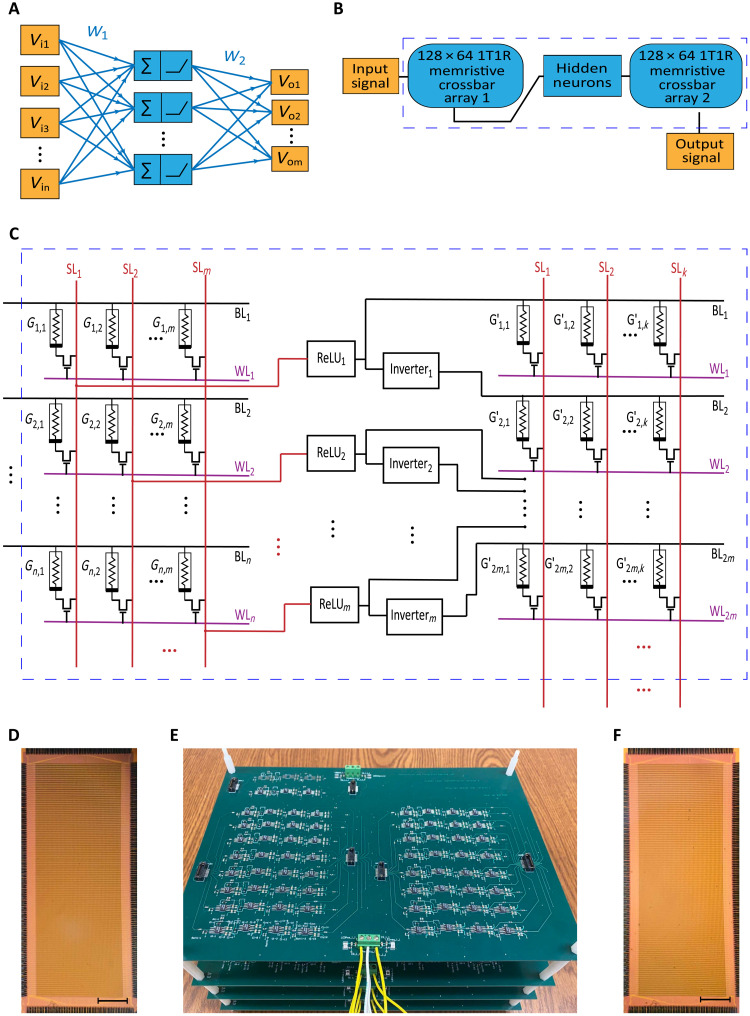


Verification
Claims the paper makes
The claims and statistics of this paper haven’t been checked yet.
Free: it reads the open-access text and checks the first 5 claims that cite a source we can check. Create a free account to check every claim.
Claims other papers make about this one
Each is checked against this paper’s own text: does it say what the citing paper says it does?
The source backs part of the claim, not all of it — or backs it for a different population, condition or comparison.
In the citing paper
“Some groups prefer to incorporate a transistor in series to each MIM cell to obtain a better control over the currents through the device (i.e., improve conductance controllability and minimize sneak path currents)53–55,60,61,102,113,167,194,218–222,).”
From Hardware implementation of memristor-based artificial neural networks (2024) · cites this paper as [102]
Experimental — accuracy not yet measuredThe source backs part of the claim, not all of it — or backs it for a different population, condition or comparison.
In the citing paper
“The most common approach in this contest is the use of an Off-the-shelf, external DAC to drive the analogue inputs54,55,102,222, which are integrated with the rest of the circuit (i.e. the memristor crossbar) in printed circuit boards.”
From Hardware implementation of memristor-based artificial neural networks (2024) · cites this paper as [102]
Experimental — accuracy not yet measuredThe cited source says what the claim attributes to it.
In the citing paper
“Even though such designs cannot be reconfigured when fabricated, this weakness is compensated by a much reduced power consumption (estimated in ref. 102 for a 65 nm CMOS node to be roughly 30 times lower).”
From Hardware implementation of memristor-based artificial neural networks (2024) · cites this paper as [102]
Self-check
Percentages, sums and reported differences re-computed from the paper’s own numbers.
The self-check needs the paper’s full text.
Citations
Cites
1 retracted
Notice of Retraction: Perceptron Linear Activation Function Design with CMOS-Memristive Circuits
Nursultan, B., & Krestinskaya, O. (2018) · International Conference on Computing and Network Communications · doi:10.1109/coconet.2018.8476812 · Cited by 1 · cited 1×
“Nevertheless, compared with the prior art ( 22 , 23 ), our hardware ReLU is stable for both positive and negative values of input current.”
RetractedAdam: A Method for Stochastic Optimization
Kingma, D. P., & Ba, J. (2014) · arXiv · doi:10.48550/arxiv.1412.6980 · Cited by 98,946
Gradient-based learning applied to document recognition
Lecun, Y., Bottou, L., Bengio, Y., & Haffner, P. (1998) · Proceedings of the IEEE · doi:10.1109/5.726791 · Cited by 58,805 · cited 2×
“To calculate the required amount of weight updating, we used the root mean square propagation (RMSProp) optimizer because of its faster convergence over the stochastic gradient descent (SGD) ( 24 , 32 , 37 – 43 ).”
InfluentialLearning representations by back-propagating errors
Rumelhart, D. E., Hinton, G. E., & Williams, R. J. (1986) · Nature · doi:10.1038/323533a0 · Cited by 31,892 · cited 1×
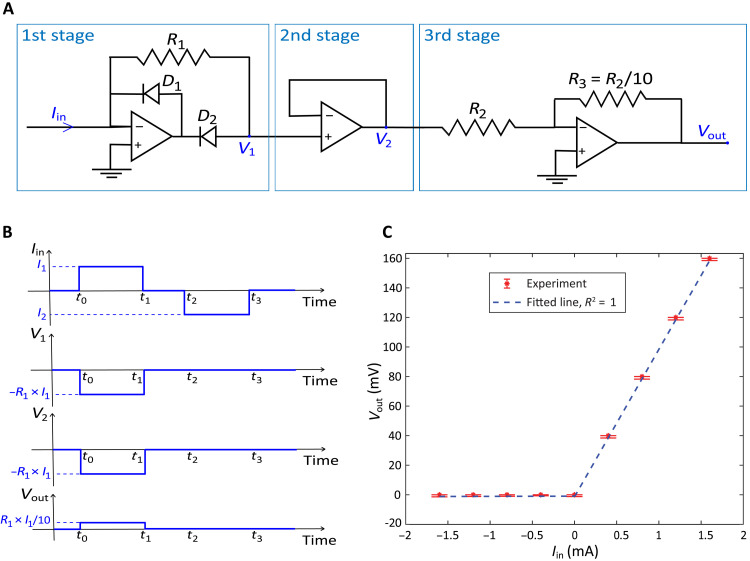
“To backpropagate the errors from the output to the input ( 33 , 34 ), we used cross-entropy ) is duplicated to the output of the second stage ( V 2 ) using the voltage follower and then inverted and scaled in the last stage ( V out ) by multiplying with − R 3 / R 2 (−0.1 in this design).”
InfluentialDraper, N. R., & Smith, H. (1998) · Wiley Series in Probability and Statistics · doi:10.1002/9781118625590 · Cited by 5,024
An overview of gradient descent optimization algorithms
Ruder, S. (2016) · arXiv · doi:10.48550/arxiv.1609.04747 · Cited by 4,962 · cited 1×
“To calculate the required amount of weight updating, we used the root mean square propagation (RMSProp) optimizer because of its faster convergence over the stochastic gradient descent (SGD) ( 24 , 32 , 37 – 43 ).”
Fully hardware-implemented memristor convolutional neural network
Yao, P., Wu, H., Gao, B., Tang, J., Zhang, Q., Zhang, W., Yang, J. J., & Qian, H. (2020) · Nature · doi:10.1038/s41586-020-1942-4 · Cited by 2,179 · cited 2×
“The VMM is achieved by analog computing using physical laws, such as Ohm’s law for multiplications and Kirchhoff’s current law for sum-mations ( 5 – 7 , 17 ) While the analog multilevel resistance of a memristive device has been successfully used as the synaptic weights in a neural network, most…”
Self-citationThe future of electronics based on memristive systems
Zidan, M. A., Strachan, J. P., & Lu, W. D. (2018) · Nature Electronics · doi:10.1038/s41928-017-0006-8 · Cited by 2,138
Analogue signal and image processing with large memristor crossbars
Li, C., Hu, M., Li, Y., Jiang, H., Ge, N., Montgomery, E., Zhang, J., Song, W., Dávila, N., Graves, C. E., et al. (2017) · Nature Electronics · doi:10.1038/s41928-017-0002-z · Cited by 1,292
Self-citationUltrafast machine vision with 2D material neural network image sensors
Mennel, L., Symonowicz, J., Wachter, S., Polyushkin, D. K., Molina-Mendoza, A. J., & Mueller, T. (2020) · Nature · doi:10.1038/s41586-020-2038-x · Cited by 1,167
Near-sensor and in-sensor computing
Zhou, F., & Chai, Y. (2020) · Nature Electronics · doi:10.1038/s41928-020-00501-9 · Cited by 1,090 · cited 1×
“Our fully analog-based perceptron is suited for in-sensor computing ( 52 , 53 ) that can further reduce the power consumption by processing the sensory data on-site.”
Efficient and self-adaptive in-situ learning in multilayer memristor neural networks
Li, C., Belkin, D., Li, Y., Yan, P., Hu, M., Ge, N., Jiang, H., Montgomery, E., Lin, P., Wang, Z., et al. (2018) · Nature Communications · doi:10.1038/s41467-018-04484-2 · Cited by 931
Self-citationNeuro-inspired computing chips
Zhang, W., Gao, B., Tang, J., Yao, P., Yu, S., Chang, M.-F., Yoo, H.-J., Qian, H., & Wu, H. (2020) · Nature Electronics · doi:10.1038/s41928-020-0435-7 · Cited by 892
Memristor‐Based Analog Computation and Neural Network Classification with a Dot Product Engine
Hu, M., Graves, C. E., Li, C., Li, Y., Ge, N., Montgomery, E., Davila, N., Jiang, H., Williams, R. S., Yang, J. J., et al. (2018) · Advanced Materials · doi:10.1002/adma.201705914 · Cited by 751
Self-citationA fully integrated reprogrammable memristor–CMOS system for efficient multiply–accumulate operations
Cai, F., Correll, J. M., Lee, S. H., Lim, Y., Bothra, V., Zhang, Z., Flynn, M. P., & Lu, W. D. (2019) · Nature Electronics · doi:10.1038/s41928-019-0270-x · Cited by 728
Sparse coding with memristor networks
Sheridan, P. M., Cai, F., Du, C., Ma, W., Zhang, Z., & Lu, W. D. (2017) · Nature Nanotechnology · doi:10.1038/nnano.2017.83 · Cited by 619
A Sufficient Condition for Convergences of Adam and RMSProp
Zou, F., Shen, L., Jie, Z., Zhang, W., & Liu, W. (2019) · 2019 IEEE/CVF Conference on Computer Vision and Pattern Recognition (CVPR) · doi:10.1109/cvpr.2019.01138 · Cited by 419
Bayat, F. M., Prezioso, M., Chakrabarti, B., Nili, H., Kataeva, I., & Strukov, D. (2018) · Nature Communications · doi:10.1038/s41467-018-04482-4 · Cited by 377
Variants of RMSProp and Adagrad with Logarithmic Regret BoundsPreprint
Mukkamala, M. C., & Hein, M. (2017) · arXiv (Cornell University) · doi:10.48550/arxiv.1706.05507 · Cited by 310
Liu, Q., Gao, B., Yao, P., Wu, D., Chen, J., Pang, Y., Zhang, W., Liao, Y., Xue, C.-X., Chen, W.-H., et al. (2020) · 2020 IEEE International Solid- State Circuits Conference - (ISSCC) · doi:10.1109/isscc19947.2020.9062953 · Cited by 308
In situ training of feed-forward and recurrent convolutional memristor networks
Wang, Z., Li, C., Lin, P., Rao, M., Nie, Y., Song, W., Qiu, Q., Li, Y., Yan, P., Strachan, J. P., et al. (2019) · Nature Machine Intelligence · doi:10.1038/s42256-019-0089-1 · Cited by 307
Self-citationCMOS-integrated memristive non-volatile computing-in-memory for AI edge processors
Chen, W.-H., Dou, C., Li, K.-X., Lin, W.-Y., Li, P.-Y., Huang, J.-H., Wang, J.-H., Wei, W.-C., Xue, C.-X., Chiu, Y.-C., et al. (2019) · Nature Electronics · doi:10.1038/s41928-019-0288-0 · Cited by 276 · cited 1×
“…for sum-mations ( 5 – 7 , 17 ) While the analog multilevel resistance of a memristive device has been successfully used as the synaptic weights in a neural network, most previous work still relied on, at least partially, software or digital processors to implement the hidden neurons ( 5 – 7 , 14 ).”
Self-citationCross-entropy vs. squared error training: a theoretical and experimental comparison
Golik, P., Doetsch, P., & Ney, H. (2013) · Interspeech 2013 · doi:10.21437/interspeech.2013-436 · Cited by 220 · cited 1×
“SoftMax as the loss function, which leads to faster convergence and lower error rates over the mean square error function in the classification applications ( 32 , 35 , 36 ).”
A Methodology to Improve Linearity of Analog RRAM for Neuromorphic Computing
Wu, W., Wu, H., Gao, B., Yao, P., Zhang, X., Peng, X., Yu, S., & Qian, H. (2018) · 2018 IEEE Symposium on VLSI Technology · doi:10.1109/vlsit.2018.8510690 · Cited by 197
Roadmap on emerging hardware and technology for machine learning
Berggren, K., Xia, Q., Likharev, K. K., Strukov, D. B., Jiang, H., Mikolajick, T., Querlioz, D., Salinga, M., Erickson, J. R., Pi, S., et al. (2021) · Nanotechnology · doi:10.1088/1361-6528/aba70f · Cited by 190
Self-citationGraphene memristive synapses for high precision neuromorphic computing
Schranghamer, T. F., Oberoi, A., & Das, S. (2020) · Nature Communications · doi:10.1038/s41467-020-19203-z · Cited by 190
Xue, C.-X., Chiu, Y.-C., Liu, T.-W., Huang, T.-Y., Liu, J.-S., Chang, T.-W., Kao, H.-Y., Wang, J.-H., Wei, S.-Y., Lee, C.-Y., et al. (2020) · Nature Electronics · doi:10.1038/s41928-020-00505-5 · Cited by 181
Adaptive Gradient Methods with Dynamic Bound of Learning Rate
Luo, L., Xiong, Y., Liu, Y., & Sun, X. (2019) · arXiv (Cornell University) · doi:10.48550/arxiv.1902.09843 · Cited by 170 · cited 1×
“SoftMax as the loss function, which leads to faster convergence and lower error rates over the mean square error function in the classification applications ( 32 , 35 , 36 ).”
Learning in Memristive Neural Network Architectures Using Analog Backpropagation Circuits
Krestinskaya, O., Salama, K. N., & James, A. P. (2019) · IEEE Transactions on Circuits and Systems I: Regular Papers · doi:10.1109/tcsi.2018.2866510 · Cited by 167 · cited 1×
“Nevertheless, compared with the prior art ( 22 , 23 ), our hardware ReLU is stable for both positive and negative values of input current.”
Xue, C.-X., Chen, W.-H., Liu, J.-S., Li, J.-F., Lin, W.-Y., Lin, W.-E., Wang, J.-H., Wei, W.-C., Huang, T.-Y., Chang, T.-W., et al. (2020) · IEEE Journal of Solid-State Circuits · doi:10.1109/jssc.2019.2951363 · Cited by 113
K-means Data Clustering with Memristor Networks
Jeong, Y., Lee, J., Moon, J., Shin, J. H., & Lu, W. D. (2018) · Nano Letters · doi:10.1021/acs.nanolett.8b01526 · Cited by 103
Yan, B., Li, B., Qiao, X., Xue, C.-X., Chang, M., Chen, Y., & Li, H. (. (2019) · Advanced Intelligent Systems · doi:10.1002/aisy.201900068 · Cited by 95 · cited 2×
“Organized into a crossbar array, these devices implement vector matrix multiplication (VMM), a computationally expensive operation within one step regardless of the array size, resulting in orders of magnitude higher computing throughput ( 16 , 17 ).”
Chiu, Y.-C., Zhang, Z., Chen, J., Si, X., Liu, R., Tu, Y.-N., Su, J.-W., Huang, W.-H., Wang, J., Wei, W.-C., et al. (2020) · IEEE Journal of Solid-State Circuits · doi:10.1109/jssc.2020.3005754 · Cited by 95
In-Memory Computing with Memristor Arrays
Li, C., Belkin, D., Li, Y., Yan, P., Hu, M., Ge, N., Jiang, H., Montgomery, E., Lin, P., Wang, Z., et al. (2018) · IEEE International Memory Workshop (IMW) · doi:10.1109/imw.2018.8388838 · Cited by 63 · cited 1×
“Nonvolatile emerging memory devices such as memristors have been successfully adopted in hardware accelerators for machine learning ( 1 – 15 ).”
Self-citationKim, J., Lee, H., & Kim, J. (2005) · IEEE Transactions on Advanced Packaging · doi:10.1109/tadvp.2005.850503 · Cited by 57 · cited 1×
“We connected these copper layers to GND, resulting in high signal integrity and noise reduction ( 56 , 57 ).”
Hung, J.-M., Li, X., Wu, J., & Chang, M. (2020) · IEEE Transactions on Electron Devices · doi:10.1109/ted.2020.2976115 · Cited by 56
A 1.4-mW 10-Bit 150-MS/s SAR ADC With Nonbinary Split Capacitive DAC in 65-nm CMOS
Li, D., Zhu, Z., Ding, R., & Yang, Y. (2017) · IEEE Transactions on Circuits & Systems II Express Briefs · doi:10.1109/tcsii.2017.2756036 · Cited by 47
The influence and modeling of process variation and device mismatch for analog/rf circuit design
Cheng, Y. (2003) · IEEE International Caracas Conference on Devices, Circuits and Systems · doi:10.1109/iccdcs.2002.1004068 · Cited by 34
Hybrid crossbar architecture for a memristor based memory
Yakopcic, C., Taha, T. M., & Hasan, R. (2014) · IEEE National Aerospace and Electronics Conference (NAECON) · doi:10.1109/naecon.2014.7045809 · Cited by 33
The coefficient of determination for regression without a constant term
Barten, A. P. (1987) · International studies in economics and econometrics · doi:10.1007/978-94-009-3591-4_12 · Cited by 28
A Sufficient Condition for Convergences of Adam and RMSPropPreprint
Zou, F., Shen, L., Jie, Z., et al. (2018) · arXiv (Cornell University) · doi:10.48550/arxiv.1811.09358 · Cited by 28
Towards memristor based accelerator for sparse matrix vector multiplication
Cui, J., & Qiu, Q. (2016) · IEEE International Symposium on Circuits and Systems proceedings · doi:10.1109/iscas.2016.7527185 · Cited by 26
An 8-GS/s 200-MHz Bandwidth 68-mW $\Delta\Sigma$ DAC in 65-nm CMOS
Bhide, A., Najari, O. E., Mesgarzadeh, B., et al. (2013) · IEEE Transactions on Circuits & Systems II Express Briefs · doi:10.1109/tcsii.2013.2258272 · Cited by 24
Performance and energy models for memristor-based 1T1R RRAM cell
Zangeneh, M., & Joshi, A. (2012) · ACM Great Lakes Symposium on VLSI (GLSVLSI) · doi:10.1145/2206781.2206786 · Cited by 21
Wei, W.-C., Jhang, C.-J., Chen, Y., Xue, C.-X., Sie, S.-H., Lee, J.-L., Kuo, H.-W., Lu, C.-C., Chang, M., & Tang, K. (2020) · IEEE Journal on Exploratory Solid-State Computational Devices and Circuits · doi:10.1109/jxcdc.2020.2992306 · Cited by 14 · cited 1×
“Organized into a crossbar array, these devices implement vector matrix multiplication (VMM), a computationally expensive operation within one step regardless of the array size, resulting in orders of magnitude higher computing throughput ( 16 , 17 ).”
Thibieroz, H., Shaner, P., & Butler, Z. C. (2002) · IEEE International Conference on Microelectronic Test Structures (ICMTS) · doi:10.1109/icmts.2001.928663 · Cited by 11 · cited 1×
“In the integrated design, it is feasible to fabricate resistors with 10 to 30% of error compared to the resistor nominal value ( 46 ) and less than 1.5% mismatch with an optimum layout configuration ( 46 – 48 ).”
InfluentialA low-voltage low-power fully differential rail-to-rail input/output opamp in 65-nm CMOS
Yan, W., Kolm, R., & Zimmermann, H. (2008) · IEEE International Symposium on Circuits and Systems proceedings · doi:10.1109/iscas.2008.4541907 · Cited by 11
Mismatch characterization of a high precision resistor array test structure
Tian, W., Steinmann, P., Beach, E., et al. (2008) · IEEE International Conference on Microelectronic Test Structures (ICMTS) · doi:10.1109/icmts.2008.4509307 · Cited by 10
Bioengineering signals and systems
Semmlow, J. L. (2005) · Elsevier eBooks · doi:10.1016/b978-012088493-3/50001-4 · Cited by 3
Research works printed but not linked: 8
- B. Razavi Fundamentals of Microelectronics (Wiley 2013).
- R. G. D. Steel J. H. Torrie Principles and Procedures of Statistics (McGraw-Hill Book Company 1960).
- I. Goodfellow Y. Bengio A. Courville Y. Bengio Deep Learning (The MIT Press 2016).
- Y. LeCun D. Touresky G. Hinton T. Sejnowski A theoretical framework for back-propagation in Proceedings of the 1988 Connectionist Models Summer School (1988) vol. 1 pp. 21–28.
- C. Igel M. Hüsken Improving the Rprop learning algorithm in Proceedings of the Second International ICSC Symposium on Neural Computation (ICSC Academic Press 2000) vol. 2000 pp. 115–121.
- R. V. K. OReddy B. S. Rao K. P. Raju Handwritten hindi digits recognition using convolutional neural network with rmsprop optimization in Second International Conference on Intelligent Computing and Control Systems (ICICCS) (IEEE 2018) pp. 45–51.
- T. Tieleman, G. Hinton, Lecture 6.5-rmsprop: Divide the gradient by a running average of its recent magnitude. COURSERA: Neural networks for machine learning 4, 26–31 (2012).
- H. Hung V. Adzic Monte carlo simulation of device variations and mismatch in analog intregrated circuits in Proceedings of the National Conference on Undergraduate Research (NCUR) (2006) pp. 1–8.
Cited by
Hardware implementation of memristor-based artificial neural networks
Aguirre, F., Sebastian, A., Le Gallo, M., Song, W., Wang, T., Yang, J. J., Lu, W., Chang, M.-F., Ielmini, D., Yang, Y., et al. (2024) · Nature Communications · doi:10.1038/s41467-024-45670-9 · Cited by 564
“This scheme is used in various papers 54,102 .”
Self-citationFerroelectric-defined reconfigurable homojunctions for in-memory sensing and computing
Wu, G., Zhang, X., Feng, G., Wang, J., Zhou, K., Zeng, J., Dong, D., Zhu, F., Yang, C., Zhao, X., et al. (2023) · Nature Materials · doi:10.1038/s41563-023-01676-0 · Cited by 294
“11).”
Memristor-based hardware accelerators for artificial intelligence
Huang, Y., Ando, T., Sebastian, A., Chang, M., Yang, J. J., & Xia, Q. (2024) · Nature Reviews Electrical Engineering · doi:10.1038/s44287-024-00037-6 · Cited by 192
“In the early research of memristor-based hardware accelerators, off-chip peripherals are primarily used to programme the memristive devices to target conductance values, and selecting and writing circuits are designed to interface with off-chip training platforms 37,56,82,83 .”
Self-citationRoadmap to neuromorphic computing with emerging technologies
Mehonić, A., Ielmini, D., Roy, K., Mutlu, O., Kvatinsky, S., Serrano‐Gotarredona, T., Linares-Barranco, B., Spiga, S., Savel'ev, S. E., Balanov, A. G., et al. (2024) · APL Materials · doi:10.1063/5.0179424 · Cited by 199
Self-citationSelf‐Rectifying Memristors for Three‐Dimensional In‐Memory Computing
Ren, S., Dong, A., Yang, L., Xue, Y., Li, J., Yu, Y., Zhou, H., Zuo, W., Li, Y., Cheng, W., et al. (2024) · Advanced Materials · doi:10.1002/adma.202307218 · Cited by 96
Metadata
- Authors
- Kiani, F., Yin, J., Wang, Z., Yang, J. J., & Xia, Q.
- Affiliations
- University of Massachusetts Amherst (US)
- Corresponding author
- Xia, Qiangfei
- Venue
- Science Advances
- Published
- 2021-11-26
- Volume
- 7
- Issue
- 48
- Pages
- eabj4801-eabj4801
- ISSN
- 2375-2548 (ISSN-L)
- PMC
- PMC11559551
- OpenAlex
- W3217269745
- Semantic Scholar
- 58068f93c4ce64e5c557b416b4319589a6f74e2c
- Cited by
- 97
- References
- 45
- Citations by year
- 2026: 20 · 2025: 21 · 2024: 24 · 2023: 23 · 2022: 9
- FWCI
- 4.11
- Type
- journal article
- Language
- en
- Open access
- gold
- doi.org
- Licence
- cc-by-nc
- Locations
- Science Advances (publishedVersion, cc-by-nc)
- PubMed Central (publishedVersion, cc-by-nc)
- PubMed (publishedVersion)
- ScholarWorks@UMassAmherst (University of Massachusetts Amherst) (submittedVersion, cc-by-nc)
- Topics
- Physical Sciences › Engineering › Electrical and Electronic Engineering › Advanced Memory and Neural Computing
- Physical Sciences › Computer Science › Artificial Intelligence › Neural Networks and Applications
- Physical Sciences › Computer Science › Artificial Intelligence › Neural Networks and Reservoir Computing
- Keywords
- memristor crossbar, in-memory computing, analog neural networks, rectified linear units, multilayer perceptron, handwritten digit recognition, MNIST, energy efficiency, analog signal transmission
About these checks
Registry, retraction, Cites and statistics results are computed, not judged, with one exception: a printed reference that no index lists is read once by a model before it counts as a citation error. Claims are extracted by a model and kept only when their quote appears verbatim in the text; each cited source is then checked, with a model’s help, for whether it says what the claim relies on. Those verdicts can be wrong — read the claim’s quote and the cited source before relying on one.
Statistics and arithmetic are recomputed, not judged.
Confidence bands are shown only for fields calibrated on our annotated test set. None is calibrated yet, so no band is shown.
What counts as a claim ›How we measure confidence ›How we check this ›
Are you an author, or do you see a problem with this page? Request a review
Data sources
Bibliographic data: Semantic Scholar, OpenAlex, Crossref.
Contains information from the Semantic Scholar Academic Graph Datasets, made available under the ODC Attribution License (ODC-BY 1.0).
Semantic Scholar’s data is described in: Kinney, R., et al. (2023). The Semantic Scholar Open Data Platform. arXiv:2301.10140.
