

Two-qubit silicon quantum processor with operation fidelity exceeding 99%
Open accessThe DOI matches its Crossref record; 37 of the 37 references it cites were found in a registry or an index.
Abstract
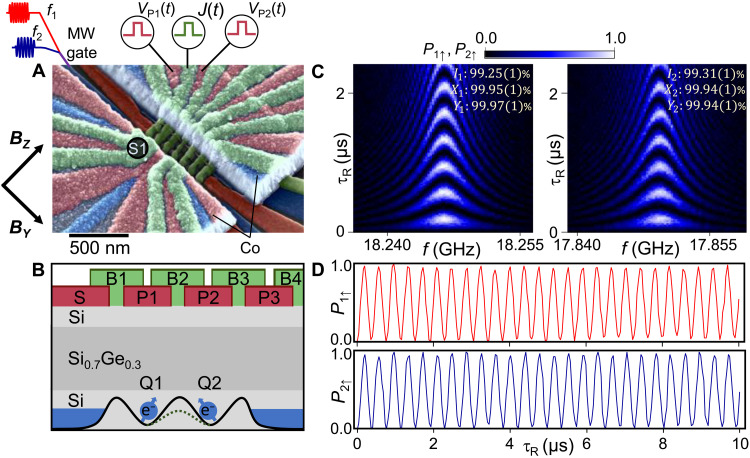
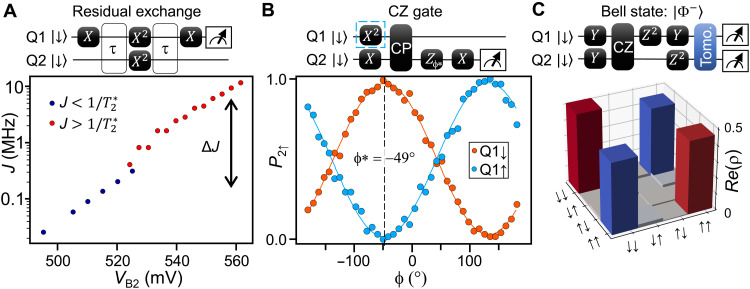
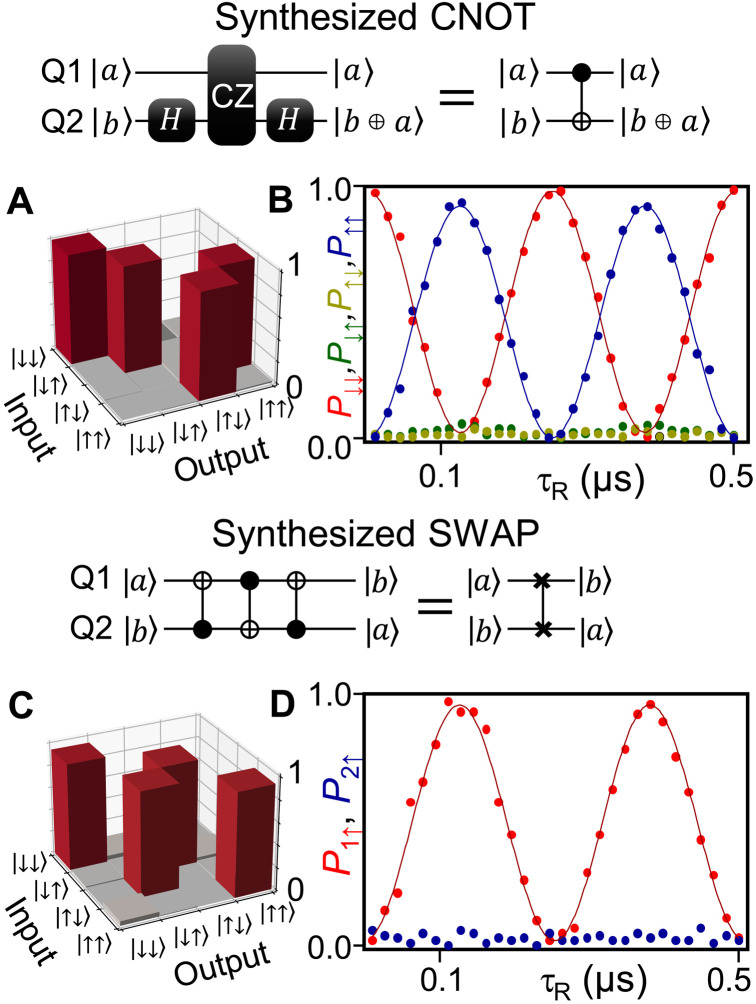
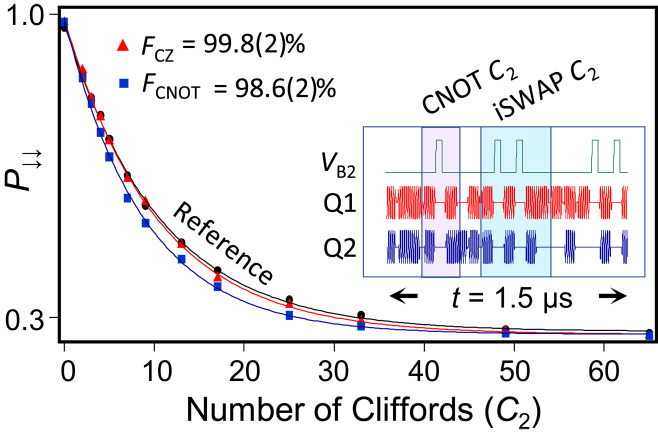
Silicon spin qubits satisfy the necessary criteria for quantum information processing. However, a demonstration of high-fidelity state preparation and readout combined with high-fidelity single- and two-qubit gates, all of which must be present for quantum error correction, has been lacking. We use a two-qubit Si/SiGe quantum processor to demonstrate state preparation and readout with fidelity greater than 97%, combined with both single- and two-qubit control fidelities exceeding 99%. The operation of the quantum processor is quantitatively characterized using gate set tomography and randomized benchmarking. Our results highlight the potential of silicon spin qubits to become a dominant technology in the development of intermediate-scale quantum processors.
Overview
The claims and statistics of this paper haven’t been checked yet.
Free: it reads the open-access text and checks the first 5 claims that cite a source we can check. Create a free account to check every claim.
Integrity signals
Registry
Cites
Statistics
Figures
Verification
Claims the paper makes
The claims and statistics of this paper haven’t been checked yet.
Free: it reads the open-access text and checks the first 5 claims that cite a source we can check. Create a free account to check every claim.
Self-check
Percentages, sums and reported differences re-computed from the paper’s own numbers.
The self-check needs the paper’s full text.
Citations
Cites
Quantum computation with quantum dots
Loss, D., & DiVincenzo, D. P. (1998) · Physical Review A · doi:10.1103/physreva.57.120 · Cited by 6,840
Coherent Manipulation of Coupled Electron Spins in Semiconductor Quantum Dots
Petta, J. R., Johnson, A. C., Taylor, J. M., Laird, E. A., Yacoby, A., Lukin, M. D., Marcus, C. M., Hanson, M. P., & Gossard, A. C. (2005) · Science · doi:10.1126/science.1116955 · Cited by 3,183
Self-citationSurface codes: Towards practical large-scale quantum computation
Fowler, A. G., Mariantoni, M., Martinis, J. M., & Cleland, A. N. (2012) · Physical Review A · doi:10.1103/physreva.86.032324 · Cited by 3,059 · cited 1×
“Our demonstration represents the highest total operation fidelity in a two-qubit processor realized in silicon quantum dots, with performance capable of fault tolerant operation (32).”
BackgroundSpins in few-electron quantum dots
Hanson, R., Kouwenhoven, L. P., Petta, J. R., Tarucha, S., & Vandersypen, L. M. K. (2007) · Reviews of Modern Physics · doi:10.1103/revmodphys.79.1217 · Cited by 2,665
Self-citationSuperconducting quantum circuits at the surface code threshold for fault tolerance
Barends, R., Kelly, J., Megrant, A., Veitia, A., Sank, D., Jeffrey, E., White, T. C., Mutus, J., Fowler, A. G., Campbell, B., et al. (2014) · Nature · doi:10.1038/nature13171 · Cited by 1,733
Single-shot read-out of an individual electron spin in a quantum dot
Elzerman, J. M., Hanson, R., Willems van Beveren, L. H., Witkamp, B., Vandersypen, L. M. K., & Kouwenhoven, L. P. (2004) · Nature · doi:10.1038/nature02693 · Cited by 1,679
Trapped-ion quantum computing: Progress and challenges
Bruzewicz, C. D., Chiaverini, J., McConnell, R., & Sage, J. M. (2019) · Applied Physics Reviews · doi:10.1063/1.5088164 · Cited by 1,483
Driven coherent oscillations of a single electron spin in a quantum dot
Koppens, F. H. L., Buizert, C., Tielrooij, K. J., Vink, I. T., Nowack, K. C., Meunier, T., Kouwenhoven, L. P., & Vandersypen, L. M. K. (2006) · Nature · doi:10.1038/nature05065 · Cited by 1,359
Coherent Control of a Single Electron Spin with Electric Fields
Nowack, K. C., Koppens, F. H. L., Nazarov, Y. V., & Vandersypen, L. M. K. (2007) · Science · doi:10.1126/science.1148092 · Cited by 1,001
A two-qubit logic gate in silicon
Veldhorst, M., Yang, C. H., Hwang, J. C. C., Huang, W., Dehollain, J. P., Muhonen, J. T., Simmons, S., Laucht, A., Hudson, F. E., Itoh, K. M., et al. (2015) · Nature · doi:10.1038/nature15263 · Cited by 919
Research works printed but not linked: 1
- X. Xue, T. F. Watson, J. Helsen, D. R. Ward, D. E. Savage, M. G. Lagally, S. N. Coppersmith, M. A. Eriksson, S. Wehner, L. M. K. Vandersypen, Benchmarking gate fidelities in a Si/SiGe two-qubit device. Phys. Rev. X 9, 021011 (2019).
Cited by
Items 101–200 of 328
Hamiltonian phase error in resonantly driven CNOT gate above the fault-tolerant threshold
Wu, Y.-H., Camenzind, L. C., Noiri, A., Takeda, K., Nakajima, T., Kobayashi, T., Chang, C. Y., Sammak, A., Scappucci, G., Goan, H., et al. (2024) · npj Quantum Information · doi:10.1038/s41534-023-00802-9 · Cited by 16
Analysis and mitigation of residual exchange coupling in linear spin-qubit arrays
Heinz, I., Mills, A., Petta, J. R., & Burkard, G. (2024) · Physical Review Research · doi:10.1103/physrevresearch.6.013153 · Cited by 14
“Spin qubits [1, 2] have emerged as a promising platform for quantum information processing due to their long coherence times and gate performance [3–5].”
BackgroundSelf-citationHybrid Quantum Systems with Artificial Atoms in Solid State
Chia, C., Huang, D., Leong, V., Kong, J. F., & Goh, K. E. J. (2024) · Advanced Quantum Technologies · doi:10.1002/qute.202300461 · Cited by 17
Impact of electrostatic crosstalk on spin qubits in dense CMOS quantum dot arrays
Cifuentes, J. D., Tanttu, T., Steinacker, P., Serrano, S., Hansen, I., Slack-Smith, J., Gilbert, W., Huang, J. Y., Vahapoglu, E., Leon, R. C. C., et al. (2024) · Physical review. B./Physical review. B · doi:10.1103/physrevb.110.125414 · Cited by 17
Flopping-mode electron dipole spin resonance in the strong-driving regime
Teske, J. D., Butt, F., Cerfontaine, P., Burkard, G., & Bluhm, H. (2023) · Physical review. B./Physical review. B · doi:10.1103/physrevb.107.035302 · Cited by 15
Interacting random-field dipole defect model for heating in semiconductor-based qubit devices
Choi, Y., & Joynt, R. (2024) · Physical Review Research · doi:10.1103/physrevresearch.6.013168 · Cited by 12
“There has been considerable progress in semiconductor quantum computing, with significant strides in scaling up and in gate fidelities [1, 2].”
BackgroundSingle-Step High-Fidelity Three-Qubit Gates by Anisotropic Chiral Interactions
Nguyen, M. T. P., Rimbach-Russ, M., Vandersypen, L. M. K., & Bosco, S. (2025) · PRX Quantum · doi:10.1103/kp8s-py9m · Cited by 19
Optimal Control of a Cavity-Mediated i SWAP Gate between Silicon Spin Qubits
Young, S. M., Jacobson, N. T., & Petta, J. R. (2022) · Physical Review Applied · doi:10.1103/physrevapplied.18.064082 · Cited by 13
Self-citationKępa, M., Cywiński, Ł., & Krzywda, J. A. (2023) · Applied Physics Letters · doi:10.1063/5.0156358 · Cited by 12
Robustness of variational quantum algorithms against stochastic parameter perturbation
Rabinovich, D., Campos, E., Adhikary, S., Pankovets, E., Vinichenko, D., & Biamonte, J. (2024) · Physical Review A · doi:10.1103/physreva.109.042426 · Cited by 17
“Noisy Intermediate Scale Quantum (NISQ) computing [1] is constrained by limited coherence times and operation precision [2–5], which restrict the number of qubits and circuit depths that can be implemented with reasonable fidelity.”
BackgroundDevitalizing noise-driven instability of entangling logic in silicon devices with bias controls
Ryu, H., & Kang, J.-H. (2022) · Scientific Reports · doi:10.1038/s41598-022-19404-0 · Cited by 10
Installing Quaternary Germanium Centers in Sila-Diamondoid Cores via Skeletal Isomerization
Cardenas, M. I. A., Siu, T. C., Pimentel, A. E., Hight, M. O., Shimono, M. G., Thai, S., Carta, V., & Su, T. A. (2023) · Journal of the American Chemical Society · doi:10.1021/jacs.3c07290 · Cited by 9
Effective out-of-plane g factor in strained-Ge/SiGe quantum dots
Miller, A. J., Hardy, W., Luhman, D., Brickson, M. I., Baczewski, A., Liu, C.-Y., Li, J., Lilly, M. P., & Lu, T. (2022) · Physical review. B./Physical review. B · doi:10.1103/physrevb.106.l121402 · Cited by 20
Exploring ab initio machine synthesis of quantum circuits
Meister, R., Gustiani, C., & Benjamin, S. C. (2023) · New Journal of Physics · doi:10.1088/1367-2630/ace077 · Cited by 14
Collective Microwave Response for Multiple Gate-Defined Double Quantum Dots
Lin, T. C., Gu, S., Xu, Y.-Q., Jiang, S.-L., Ye, S.-K., Wang, B., Li, H.-O., Guo, G., Zou, C., Hu, X., et al. (2023) · Nano Letters · doi:10.1021/acs.nanolett.3c00036 · Cited by 9
Electric Dipole Coupling of a Bilayer Graphene Quantum Dot to a High-Impedance Microwave Resonator
Ruckriegel, M. J., Gächter, L. M., Kealhofer, D., Panah, M. B., Tong, C., Adam, C., Masseroni, M., Duprez, H., Garreis, R., Watanabe, K., et al. (2024) · Nano Letters · doi:10.1021/acs.nanolett.4c01791 · Cited by 12
“The spin lifetime of up to 50 ms in these systems [32] is comparable to that of semi-conductor QD systems such as III-V [33–35], silicon-[36– 39] and germanium-[40] based heterostructures.”
Thermodynamic limit in the two-qubit quantum Rabi model with spin-spin coupling
Grimaudo, R., Falci, G., MESSINA, A., Paladino, E., Sergi, A., Solano, E., & Valenti, D. (2024) · Physical Review Research · doi:10.1103/physrevresearch.6.043298 · Cited by 12
Aldeghi, M., Allenspach, R., Vervelaki, A., Jetter, D., Bagani, K., Braakman, F., Poggio, M., & Salis, G. (2025) · Nano Letters · doi:10.1021/acs.nanolett.4c05037 · Cited by 12
Dephasing and error dynamics affecting a singlet-triplet qubit during coherent spin shuttling
Foster, N., Henshaw, J., Rudolph, M., Luhman, D. R., & Jock, R. (2025) · npj Quantum Information · doi:10.1038/s41534-025-00996-0 · Cited by 13
“By reducing the spinful 29 Si nuclear background in silicon, isotopic enrichment enables coherent spin qubits to be hosted in foundry-compatible gate-de fi ned quantum dots (QDs) 5 – 7 , streamlining integration withexistingandrapidlyadvancingindustrialsilicontechnology.”
Engineering Ge Profiles in Si/SiGe Heterostructures for Increased Valley Splitting
Stehouwer, L. E. A., Losert, M. P., Rigot, M., Esposti, D. D., Martí‐Sánchez, S., Rimbach-Russ, M., Arbiol, J., Friesen, M. G., & Scappucci, G. (2025) · Nano Letters · doi:10.1021/acs.nanolett.5c02848 · Cited by 17
“S pin qubit devices in gate-defined Si/SiGe quantum dots have advanced in terms of performance, qubit count, and connectivity.”
Guo, L.-J., Xu, H. L., Fang, Z.-Y., Chen, T., Wei, K., & Zhang, C. (2023) · Physical Review A · doi:10.1103/physreva.107.012604 · Cited by 9
Resonant direct cnot in remote double quantum dot spin qubits
McMillan, S. R., & Burkard, G. (2023) · Physical review. B./Physical review. B · doi:10.1103/physrevb.108.125414 · Cited by 8
Progress of Gate‐Defined Semiconductor Spin Qubit: Host Materials and Device Geometries
Liu, Y., Guan, S., Luo, J., & Li, S. (2024) · Advanced Functional Materials · doi:10.1002/adfm.202304725 · Cited by 13
Compressed Gate Characterization for Quantum Devices with Time-Correlated Noise
Gullans, M. J., Caranti, M., Mills, A., & Petta, J. R. (2024) · PRX Quantum · doi:10.1103/prxquantum.5.010306 · Cited by 11
Self-citationHigh temperature spin selectivity in a quantum dot qubit using reservoir spin accumulation
Jansen, R., & Yuasa, S. (2024) · npj Quantum Information · doi:10.1038/s41534-024-00815-y · Cited by 9
“Fidelities exceeding the fault-tolerance threshold have recently been reported 27–29 , but only at temperatures below 100 mK.”
BackgroundCoherence limit due to hyperfine interaction with nuclei in the barrier material of Si spin qubits
Cvitkovich, L., Stano, P., Wilhelmer, C., Waldhoer, D., Loss, D., Niquet, Y., & Grasser, T. (2024) · Physical Review Applied · doi:10.1103/physrevapplied.22.064089 · Cited by 20
Sensing dot with high output swing for scalable baseband readout of spin qubits
Kammerloher, E., Schmidbauer, A., Diebel, L. K., Seidler, I., Neul, M., Künne, M., Ludwig, A., Ritzmann, J., Wieck, A. D., Bougeard, D., et al. (2024) · Physical Review Applied · doi:10.1103/physrevapplied.22.024044 · Cited by 7
Kanaar, D. W., Güngördü, U., & Kestner, J. P. (2022) · Physical review. B./Physical review. B · doi:10.1103/physrevb.105.245308 · Cited by 9
FastHare: Fast Hamiltonian Reduction for Large-scale Quantum Annealing
Thai, P. D., Thai, M. T., Vu, T. N., & Dinh, T. N. (2022) · IEEE International Conference on Quantum Computing and Engineering (QCE) · doi:10.1109/qce53715.2022.00030 · Cited by 13
“The last few years has witnessed an exponential growth in quantum and quantum-inspired computing (QC) with a record number of breakthroughs [1], [2], [3], [4], [5].”
Improved Single-Shot Qubit Readout Using Twin rf-SET Charge Correlations
Serrano, S., Feng, M., Lim, W. H., Seedhouse, A. E., Tanttu, T., Gilbert, W., Escott, C. C., Abrosimov, N. V., Pohl, H.-J., Thewalt, M. L. W., et al. (2024) · PRX Quantum · doi:10.1103/prxquantum.5.010301 · Cited by 9
Challenges in advancing our understanding of atomic-like quantum systems: Theory and experiment
Gali, Á., Schleife, A., Heinrich, A. J., Laucht, A., Schuler, B., Chakraborty, C., Anderson, C. P., Déprez, C., McCallum, J. C., Bassett, L. C., et al. (2024) · MRS Bulletin · doi:10.1557/s43577-023-00659-5 · Cited by 9
High-fidelity sub-microsecond single-shot electron spin readout above 3.5 K
Geng, H., Kiczynski, M., Timofeev, A., Osika, E. N., Keith, D., Rowlands, J., Kranz, L., Rahman, R., Chung, Y., Keizer, J. G., et al. (2025) · Nature Communications · doi:10.1038/s41467-025-58279-3 · Cited by 9
Geometric two-qubit gates in silicon-based double quantum dots
Lu, Y.-Y., Wei, K., & Zhang, C. (2025) · Physical Review A · doi:10.1103/physreva.111.042609 · Cited by 8
Tracking spin qubit frequency variations over 912 days
Capannelli, K., Undseth, B., de Fuentes, I. F., Raymenants, E., Unseld, F. K., Pietx-Casas, O., Philips, S. G. J., Mądzik, M. T., Amitonov, S. V., Tryputen, L., et al. (2025) · npj Quantum Information · doi:10.1038/s41534-025-01134-6 · Cited by 14
“High-fidelity single [1–5] and two-qubit gates [5–8] have been demonstrated in semiconductor spin qubit platforms, motivating efforts towards large-scale quantum computing.”
Quantum error detection in a silicon quantum processor
Zhang, C., Li, C., Tian, Z., Jiang, Y., Xu, F., Zhang, S., Wang, H., Zhang, Y.-N., Bai, X., Zhao, B., et al. (2026) · Nature Electronics · doi:10.1038/s41928-025-01557-1 · Cited by 20
Singlet-triplet-state readout in silicon metal-oxide-semiconductor double quantum dots
Ma, R.-L., Zhu, S.-K., Kong, Z., Sun, T., Ni, M., Zhou, Y.-C., Zhou, Y. L., Luo, G., Cao, G., Wang, G., et al. (2024) · Physical Review Applied · doi:10.1103/physrevapplied.21.034022 · Cited by 8
Measurement of cryoelectronics heating using a local quantum dot thermometer in silicon
de Kruijf, M., Noah, G. M., Gomez-Saiz, A., Morton, J. J. L., & González-Zalba, M. F. (2024) · Chip · doi:10.1016/j.chip.2024.100097 · Cited by 17
“One-and two-qubit gates have been shown to perform above fault-tolerant thresholds for electron spins [2–4], simple instances of quantum error correction have been performed [5] and a 6-qubit quantum processor has been demonstrated [6].”
BackgroundYun, J., Park, J., Jang, H., Kim, J., Jang, W., Song, Y., Cho, M.-K., Sohn, H., Jung, H., Umansky, V., et al. (2023) · npj Quantum Information · doi:10.1038/s41534-023-00699-4 · Cited by 10
Toward Low‐Power Cryogenic Metal‐Oxide Semiconductor Field‐Effect Transistors
Knoch, J., Richstein, B., Han, Y., Frentzen, M., Schreiber, L. R., Klos, J., Raffauf, L., Wilck, N., König, D., & Zhao, Q. (2023) · physica status solidi (a) · doi:10.1002/pssa.202300069 · Cited by 9
Photo-assisted spin transport in double quantum dots with spin–orbit interaction
Fernández-Fernández, D., Picó-Cortés, J., Liñán, S. V., & Platero, G. (2023) · Journal of Physics Materials · doi:10.1088/2515-7639/acd1b7 · Cited by 10
Optimizing multi-tone microwave pulses via phase selection for quantum computing applications
Ohira, R., Matsuda, R., Shiomi, H., Ogawa, K., & Negoro, M. (2024) · Journal of Applied Physics · doi:10.1063/5.0222724 · Cited by 7
Application of zero-noise-extrapolation-based quantum error mitigation to a silicon spin qubit
Sohn, H., Jung, J., Park, J., Jang, H., Stehouwer, L. E. A., Esposti, D. D., Scappucci, G., & Kim, D. (2025) · Physical Review A · doi:10.1103/925y-b4s1 · Cited by 7
Analysis and 3D TCAD simulations of single-qubit control in an industrially-compatible FD-SOI device
Philippopoulos, P., Beaudoin, F., & Galy, P. (2024) · Solid-State Electronics · doi:10.1016/j.sse.2024.108883 · Cited by 12
Neural-network-designed three-qubit gates robust against charge noise and crosstalk in silicon
Kanaar, D. W., & Kestner, J. P. (2024) · Quantum Science and Technology · doi:10.1088/2058-9565/ad3d06 · Cited by 8
Auxiliary Task-Based Deep Reinforcement Learning for Quantum Control
Zhou, S., Ma, H., Kuang, S., & Dong, D. (2025) · IEEE Transactions on Cybernetics · doi:10.1109/tcyb.2024.3521300 · Cited by 9
“In quantum information processing, fidelity is used to describe the similarity between two quantum states, and it can serve as a significant metric to evaluate quantum tasks [29].”
Growth of 28Si Quantum Well Layers for Qubits by a Hybrid MBE/CVD Technique
Liu, Y., Gradwohl, K., Lu, C.-H., Yamamoto, Y., Remmele, T., Corley-Wiciak, C. X., Teubner, T., Richter, C., Albrecht, M., & Boeck, T. (2023) · ECS Journal of Solid State Science and Technology · doi:10.1149/2162-8777/acb734 · Cited by 6
A compact and versatile cryogenic probe station for quantum device testing
de Kruijf, M., Geyer, S., Berger, T., Mergenthaler, M., Braakman, F., Warburton, R. J., & Kuhlmann, A. V. (2023) · Review of Scientific Instruments · doi:10.1063/5.0139825 · Cited by 9
Path-integral simulation of exchange interactions in CMOS spin qubits
Cifuentes, J. D., Mai, P. Y., Schlattner, F., Ercan, H. E., Feng, M., Escott, C. C., Dzurak, A. S., & Saraiva, A. (2023) · Physical review. B./Physical review. B · doi:10.1103/physrevb.108.155413 · Cited by 9
Theory of silicon spin qubit relaxation in a synthetic spin-orbit field
Hosseinkhani, A., & Burkard, G. (2022) · Physical review. B./Physical review. B · doi:10.1103/physrevb.106.075415 · Cited by 6
Scalable parity architecture with a shuttling-based spin qubit processor
Ginzel, F., Fellner, M., Ertler, C., Schreiber, L. R., Bluhm, H., & Lechner, W. (2024) · Physical review. B./Physical review. B · doi:10.1103/physrevb.110.075302 · Cited by 17
“…by a sequence of three CNOTs: These composite gates can reliably be performed with a high fidelity in Si/SiGe quantum dots with micromag-nets [6, 7], although we expect that it is possible to engineer a more efficient version of the SWAP gate realized by the exchange coupling or by including a…”
BackgroundMethodOperating two exchange-only qubits in parallel
Mądzik, M. T., Luthi, F., Guerreschi, G. G., Mohiyaddin, F. A., Borjans, F., Chadwick, J. D., Curry, M., Ziegler, J., Atanasov, S. E., Bavdaz, P. L., et al. (2025) · Nature · doi:10.1038/s41586-025-09767-5 · Cited by 39
Quantum Snakes on a Plane: Mobile, Low-Dimensional Logical Qubits on a 2D Surface
Siegel, A., Cai, Z., Jnane, H., Koczor, B., Pexton, S., Strikis, A., & Benjamin, S. C. (2026) · PRX Quantum · doi:10.1103/494s-jd8h · Cited by 32
“1 µ s [21–23, 30 ] ),”
Highly Tunable 2D Silicon Quantum Dot Array with Coupling beyond Nearest Neighbors
Wang, N., Kang, J., Lu, W.-L., Wang, S., Wang, Y.-J., Li, H.-O., Cao, G., Wang, B., & Guo, G. (2024) · Nano Letters · doi:10.1021/acs.nanolett.4c02345 · Cited by 10
A 2 × 2 Quantum Dot Array in Silicon with Fully Tunable Pairwise Interdot Coupling
Lim, W. H., Tanttu, T., Youn, T., Huang, J. Y., Serrano, S., Dickie, A., Yianni, S. A., Hudson, F. E., Escott, C. C., Yang, C. H., et al. (2025) · Nano Letters · doi:10.1021/acs.nanolett.4c06264 · Cited by 9
“High-fidelity two-qubit gates were achieved shortly after integrating these gates into the devices [24, 25] and their implementation in 2D arrays have led to the first demonstrations of 2D spin qubit quantum processors [22].”
Ultrafast switchable spin-orbit coupling for silicon spin qubits via spin valves
Cai, R., Li, F.-G., Wang, B., Li, H.-O., Cao, G., & Guo, G. (2025) · Physical Review Applied · doi:10.1103/physrevapplied.23.024048 · Cited by 4
Superconducting and Silicon-Based Semiconductor Quantum Computers: A review
Jia, Z.-L., Fu, Y., Cao, Z. X., Cheng, W., Zhao, Y., Dou, M., Duan, P., Kong, W., Cao, G., Li, H.-O., et al. (2022) · IEEE Nanotechnology Magazine · doi:10.1109/mnano.2022.3175394 · Cited by 5
Elongated quantum dot as a distributed charge sensor
Patomäki, S. M., Williams, J., Berritta, F., Lainé, C., Fogarty, M. A., Leon, R. C. C., Jussot, J., Kubicek, S., Chatterjee, A., Govoreanu, B., et al. (2024) · Physical Review Applied · doi:10.1103/physrevapplied.21.054042 · Cited by 10
“These include the demonstration of high-fidelity one-and two-qubit gates on the same device [2–4], high-fidelity readout using rf single-electron transistors (SETs) [5], the demonstration of simple instances of quantum error correction [6] and the scale up to six-qubit devices in a linear arrangement…”
Estakhri, N. M., Warren, A., Economou, S. E., & Barnes, E. (2024) · Physical Review Research · doi:10.1103/physrevresearch.6.043029 · Cited by 7
“Also, two-qubit gates with fidelities higher than the 99% threshold for certain quantum error correcting codes [15] have been experimentally realized across different silicon-based QD platforms [9, 13, 14, 16], with state preparation and measurement (SPAM) fidelities exceeding 97% [7, 13].”
BackgroundMethodInfluentialTheory of charge stability diagrams in coupled quantum dot qubits
Foulk, N. L., & Sarma, S. D. (2024) · Physical review. B./Physical review. B · doi:10.1103/physrevb.110.205428 · Cited by 6
Varsha, Lakaal, K., Kria, M., Hamdaoui, J. E., Prasad, V., Feddi, E., Laroze, D., Pérez, L. M., & Ramos, M. E. M. (2022) · The European Physical Journal Plus · doi:10.1140/epjp/s13360-022-03530-9 · Cited by 5
New progress of silicon-based semiconductor quantum computation
Wang, N., Wang, B., & Guo, G. (2022) · Acta Physica Sinica · doi:10.7498/aps.71.20221900 · Cited by 6
Full Tunability and Quantum Coherent Dynamics of a Driven Multilevel System
Zhou, Y. L., Gu, S., Wang, K., Cao, G., Hu, X., Gong, M., Li, H.-O., & Guo, G. (2023) · Physical Review Applied · doi:10.1103/physrevapplied.19.044053 · Cited by 7
Experimental Online Quantum Dots Charge Autotuning Using Neural Networks
Yon, V., Galaup, B., Rohrbacher, C., Rivard, J., Morel, A., Leclerc, D., Godfrin, C., Li, R., Kubicek, S., Greve, K. D., et al. (2025) · Nano Letters · doi:10.1021/acs.nanolett.4c04889 · Cited by 12
Coupling between a Si/SiGe Resonant Exchange Qubit and a High-Impedance Microwave Resonator
Jiang, S.-L., Jiang, T.-Y., Ye, S.-K., Cai, R., Hao, T.-Y., Xu, Y.-Q., Li, Z.-H., Kang, Y., Wang, B., Li, H.-O., et al. (2025) · Physical Review Letters · doi:10.1103/31wk-5yqp · Cited by 8
Universal logical operations in a silicon quantum processor
Zhang, C., Xu, F., Zhang, S., Duan, M., Zhong, D., Bai, X., Wang, H., Huang, C., Deng, Y., Gao, M., et al. (2026) · Nature Nanotechnology · doi:10.1038/s41565-026-02140-1 · Cited by 12
“Recent advances highlight the potential of silicon qubit platforms for scalable quantum processors, including quantum gate fidelities above the fault-tolerance threshold 3–6 , seminal attempts at quantum error correction 7,8 and early-stage multi-qubit integration 9–12 .”
A digitally controlled silicon quantum processing unit
Members of the HRL Quantum Team and Collaborators, Abraham, M., Acuna, E., Adams, T. S., Akmal, M., Alfaro, M. R., Alvarado, I., Amontree, J., Andrews, C., Andrews, R. W., et al. (2026) · Nature · doi:10.1038/s41586-026-10754-7 · Cited by 64
“…be-tween placing control signal hardware at room temperature (burdened by the complexity of routing numerous high-fidelity analog links) [10–12, 26, 27, 30, 31], co-locating it with the mK qubits (with tyrannical cooling requirements) [18, 32], or using an intermediate temperature [13–17, 33, 34].”
Weight-four parity checks in a spin-shuttling architecture
Undseth, B., Meggiato, N., Wu, Y.-H., Katiraee-Far, S. R., Tryputen, L., de Snoo, S. L., Esposti, D. D., Scappucci, G., Greplová, E., & Vandersypen, L. M. K. (2026) · Nature · doi:10.1038/s41586-026-10766-3 · Cited by 33
“35–37,45,46).”
Theory of superconducting proximity effect in hole-based hybrid semiconductor-superconductor devices
Pino, D. M., Souto, R. S., Calderón, M. J., Aguado, R., & Abadillo-Uriel, J. C. (2025) · Physical review. B./Physical review. B · doi:10.1103/mmsd-wfnf · Cited by 6
Shortcuts to adiabatic transducers in a hybrid spin-superconducting system
Zhu, X., Zhu, L.-T., Guo, G., Tu, T., & Li, C.-F. (2025) · Physical Review A · doi:10.1103/physreva.111.012621 · Cited by 6
Parametric longitudinal coupling of a semiconductor charge qubit and an rf resonator
Champain, V., Zihlmann, S., Chessari, A., Bertrand, B., Niebojewski, H., Dumur, É., Jehl, X., Schmitt, V., Brun, B., Winkelmann, C. B., et al. (2025) · Physical Review Applied · doi:10.1103/physrevapplied.23.034067 · Cited by 5
“While fideli-ties above 99 % have been demonstrated for single and two qubit gates 1–3 , state preparation and measurement (SPAM) errors are still generally around 10 %.”
Quantum computation by spin-parity measurements with encoded spin qubits
Brooks, M., & Tahan, C. (2023) · Physical review. B./Physical review. B · doi:10.1103/physrevb.108.035206 · Cited by 5
Pursuing high-fidelity control of spin qubits in natural Si/SiGe quantum dot
Wang, N., Wang, S., Zhang, R.-Z., Kang, J., Lu, W.-L., Li, H.-O., Cao, G., Wang, B., & Guo, G. (2024) · Applied Physics Letters · doi:10.1063/5.0230605 · Cited by 10
“Recent progress with isotopic purification to reduce non-zero nuclear spins and the optimization of qubit control methods has resulted in two-qubit gate fidelities exceeding 99% 16–18 and universal control of up to six qubits.”
BackgroundCharge-induced energy shift of a single-spin qubit under a magnetic field gradient
Kobayashi, T., Noiri, A., Nakajima, T., Takeda, K., Camenzind, L. C., Jin, I. K., Scappucci, G., & Tarucha, S. (2025) · Physical Review Applied · doi:10.1103/physrevapplied.23.054078 · Cited by 6
Short two-qubit pulse sequences for exchange-only spin qubits in two-dimensional layouts
Chadwick, J. D., Guerreschi, G. G., Luthi, F., Mądzik, M. T., Mohiyaddin, F. A., Prabhu, P., Schmitz, A. T., Litteken, A., Premaratne, S., Bishop, N. C., et al. (2025) · Physical Review A · doi:10.1103/physreva.111.052616 · Cited by 8
Chan, G. X., & Wang, X. (2022) · Physical review. B./Physical review. B · doi:10.1103/physrevb.105.245409 · Cited by 6
About electron transport and spin control in semiconductor devices
Selberherr, S., & Sverdlov, V. A. (2022) · Solid-State Electronics · doi:10.1016/j.sse.2022.108443 · Cited by 4
Dispersive cavity-mediated quantum gate between driven dot-donor nuclear spins
Mielke, J., & Burkard, G. (2023) · Physical review. B./Physical review. B · doi:10.1103/physrevb.107.155302 · Cited by 5
Dispersive readout of a silicon quantum device using an atomic force microscope-based rf gate sensor
Denisov, A. O., Fuchs, G., Oh, S. W., & Petta, J. R. (2023) · Applied Physics Letters · doi:10.1063/5.0158196 · Cited by 7
Self-citationQuantum estimation and remote charge sensing with a hole-spin qubit in silicon
Forghieri, G., Secchi, A., Bertoni, A., Bordone, P., & Troiani, F. (2023) · Physical Review Research · doi:10.1103/physrevresearch.5.043159 · Cited by 6
“In recent years, high fidelities have been achieved in all fundamental primitive operations, including single-[5–7] and two-qubit gates [8, 9], state preparation [10] and readout [11–13].”
BackgroundNumerical Circuit Synthesis and Compilation for Multi-State Preparation
Szasz, A., Younis, E., & de Jong, W. A. (2023) · International Conference on Quantum Computing and Engineering · doi:10.1109/qce57702.2023.00092 · Cited by 6
“1% to 1% for quantum computing architectures including trapped ions [3], [4], neutral atoms [5]– [7], silicon quantum dots [8], and superconducting qubits [9]– [12].”
BackgroundPeri, L., Oakes, G. A., Cochrane, L., Ford, C. J. B., & González-Zalba, M. F. (2024) · Quantum · doi:10.22331/q-2024-03-21-1294 · Cited by 16
“In conjunction, demonstrations of qubit control at the threshold for fault-tolerant computing [4–6], advanced manufacturing [7, 8], and integration with classical semiconductor electronics [9, 10] indicate that QDs are a compelling platform for quantum computation.”
BackgroundWavelet correlation noise analysis for qubit operation variable time series
Seedhouse, A. E., Stuyck, N. D., Serrano, S., Gilbert, W., Huang, J. Y., Hudson, F. E., Itoh, K. M., Laucht, A., Lim, W. H., Yang, C. H., et al. (2025) · Scientific Reports · doi:10.1038/s41598-024-79553-2 · Cited by 8
“Spin qubits in silicon-based systems have achieved two-qubit gate fidelities above 99% 23–27 , but there remains unexplained noise that presents itself within the 1% infidelity.”
Surface code for low-density qubit array
Tomaru, T., Yoshimura, C., & Mizuno, H. (2022) · Scientific Reports · doi:10.1038/s41598-022-17090-6 · Cited by 6
Efficient characterization of a double quantum dot using the Hubbard model
Wang, W., Rooney, J., & Jiang, H. W. (2024) · Journal of Applied Physics · doi:10.1063/5.0215622 · Cited by 11
Wen, C., Takahashi, H., Ibad, S. I., Nishiyama, S., Kato, K., Liu, Y., Murakami, S., Mori, T., Mizokuchi, R., Yoneda, J., et al. (2025) · Applied Physics Express · doi:10.35848/1882-0786/ad9af8 · Cited by 4
Phonon-induced exchange gate infidelities in semiconducting Si-SiGe spin qubits
Brooks, M., Lundgren, R., & Tahan, C. (2024) · Physical review. B./Physical review. B · doi:10.1103/physrevb.110.235204 · Cited by 3
“…with the following parameters is considered: l z = 6 nm , inter-dot distance of L = 150 nm , confinement length of l c = 30 nm , external global magnetic field of B = 20 mT and magnetic field gradient δb z = 5 mT along the direction of the applied external field[9, 10, 38–40], i.e the z -direction.”
Limitations of the g -tensor formalism of semiconductor spin qubits
György, Z., Pályi, A., & Széchenyi, G. (2025) · Physical review. B./Physical review. B · doi:10.1103/gq3h-76mx · Cited by 4
Interplay of Zeeman splitting and tunnel coupling in coherent spin-qubit shuttling
Lin, S.-C., Steinacker, P., Feng, M., Dash, A., Serrano, S., Lim, W. H., Itoh, K. M., Hudson, F. E., Tanttu, T., Saraiva, A., et al. (2026) · Physical Review Applied · doi:10.1103/3d1t-pr7m · Cited by 5
Selective excitation of superconducting qubits with a shared control line through pulse shaping
Matsuda, R., Ohira, R., Sumida, T., Shiomi, H., Machino, A., Morisaka, S., Koike, K., Miyoshi, T., Kurimoto, Y., Sugita, Y., et al. (2026) · Physical Review Research · doi:10.1103/xw1s-dt16 · Cited by 13
“1(b), by allocating qubit frequencies to ensure sufficient detuning relative to achievable Rabi frequencies [7, 10, 11], it is possible to suppress unwanted excitations.”
Large spin-shuttling oscillations enabling high-fidelity single-qubit gates
Pazhedath, A. M., David, A., Oberländer, M., Müller, M. M., Calarco, T., Bluhm, H., & Motzoi, F. (2025) · Physical Review Applied · doi:10.1103/4lky-413f · Cited by 7
Measurement-based entanglement of semiconductor spin qubits
Delva, R. L., Mielke, J., Burkard, G., & Petta, J. R. (2024) · Physical review. B./Physical review. B · doi:10.1103/physrevb.110.035304 · Cited by 3
Self-citationElectrical spin manipulation in SrTiO3 / LaAlO3 double quantum dots
Szafran, B., Wójcik, P., Zegrodnik, M., Nowak, M. P., & Citro, R. (2024) · Physical Review Applied · doi:10.1103/physrevapplied.22.044012 · Cited by 3
Robust quantum dots charge autotuning using neural network uncertainty
Yon, V., Galaup, B., Rohrbacher, C., Rivard, J., Godfrin, C., Li, R., Kubicek, S., Greve, K. D., Gaudreau, L., Dupont-Ferrier, E., et al. (2024) · Machine Learning Science and Technology · doi:10.1088/2632-2153/ad88d5 · Cited by 8
SiGe semiconductor electronic component: a review on fundamentals and applications
de Azevedo, A. M., Lopes, T. J., Cardoso, D. D., Monterio, S. N., Silveira, P. C. R., & Figueiredo, A. B. D. S. (2024) · OBSERVATÓRIO DE LA ECONOMÍA LATINOAMERICANA · doi:10.55905/oelv22n12-219 · Cited by 3
Diverse set of two-qubit gates for spin qubits in semiconductor quantum dots
Ni, M., Ma, R.-L., Kong, Z., Chu, N., Zhu, S.-K., Wang, C., Li, A.-R., Liao, W.-Z., Cao, G., Wang, G., et al. (2025) · Physical Review Applied · doi:10.1103/physrevapplied.23.024065 · Cited by 5
Ryu, H., Cho, K. W., & Ryu, J. (2025) · RSC Advances · doi:10.1039/d5ra01109d · Cited by 3
Minimal state-preparation times for silicon spin qubits
Long, C. K., Mayhall, N. J., Economou, S. E., Barnes, E., Barnes, C. H. W., Martins, F., Arvidsson-Shukur, D. R. M., & Mertig, N. (2025) · npj Quantum Information · doi:10.1038/s41534-025-01027-8 · Cited by 10
“In addition, we calculate the METs for molecular ground-state preparation (dashed black line in center panels) for J max ¼ 10MHz — a commonvalueforrealizingCZ 28,30,32,35 orCNOT 47 gates.”
Single shot latched readout of a quantum dot qubit using barrier gate pulsing
Park, S., Benson, J., Corrigan, J., Dodson, J. P., Coppersmith, S. N., Friesen, M. G., & Eriksson, M. A. (2025) · npj Quantum Information · doi:10.1038/s41534-025-01094-x · Cited by 5
Jnane, H., & Benjamin, S. C. (2025) · Physical Review Applied · doi:10.1103/rm43-nh9b · Cited by 14
“Electron spins in gate-defined semiconductor quantum dots [1] are a strong candidate for qubit implementation [2–4].”
Fast high-fidelity parity measurement of spin qubits in quantum dots using modulated pulses
Zhu, X., Tu, T., Guo, G., & Li, C. (2023) · Physical Review A · doi:10.1103/physreva.107.033708 · Cited by 3
Metadata
- Authors
- Mills, A. R., Guinn, C. R., Gullans, M. J., Sigillito, A. J., Feldman, M. M., Nielsen, E., & Petta, J. R.
- Affiliations
- Princeton University (US)
- Sandia National Laboratories (US)
- Corresponding author
- Petta, Jason R.
- ORCID
- Venue
- Science Advances
- Published
- 2022-04-08
- Volume
- 8
- Issue
- 14
- Pages
- eabn5130-eabn5130
- ISSN
- 2375-2548 (ISSN-L)
- PMC
- PMC8986105
- OpenAlex
- W3217600686
- Cited by
- 329
- References
- 37
- Citations by year
- 2026: 48 · 2025: 86 · 2024: 91 · 2023: 72 · 2022: 32
- FWCI
- 28.63
- Type
- journal article
- Language
- en
- Open access
- gold
- doi.org
- Licence
- cc-by-nc
- Locations
- Science Advances (publishedVersion, cc-by-nc)
- PubMed Central (publishedVersion, cc-by-nc)
- PubMed (publishedVersion)
- arXiv (Cornell University) (submittedVersion)
- OSTI OAI (U.S. Department of Energy Office of Scientific and Technical Information) (submittedVersion)
- arXiv (Cornell University)
- Funders
- National Science Foundation (NA0003525, DE‐NA0003525, 2011750)
- U.S. Department of Energy (DENA0003525, NA0003525)
- Princeton University (DMR-2011750)
- Princeton Center for Complex Materials (DMR-2011750)
- Defense Advanced Research Projects Agency (NA0003525, DENA0003525, D18AC0025)
- Office of Science (DE-NA0003525, NA0003525)
- National Nuclear Security Administration (NA0003525, DENA-0003525)
- Intelligence Advanced Research Projects Activity
- Materials Research Science and Engineering Center, Harvard University (DMR2011750)
- Division of Materials Research (DMR2011750, 2011750)
- Advanced Scientific Computing Research (DE-NA-0003525)
- Army Research Office (W911NF-15-1-, DE-NA0003525, W911NF, W911NF-15-1-0149, W911NF-15)
- Sandia National Laboratories (NA0003525, DE‐NA,0003525)
- Topics
- Physical Sciences › Physics and Astronomy › Condensed Matter Physics › Quantum and electron transport phenomena
- Physical Sciences › Materials Science › Materials Chemistry › Diamond and Carbon-based Materials Research
- Physical Sciences › Computer Science › Artificial Intelligence › Quantum Computing Algorithms and Architecture
- Keywords
- silicon spin qubits, two-qubit gates, single-qubit gates, gate fidelity, gate set tomography, randomized benchmarking, quantum error correction
About these checks
Registry, retraction, Cites and statistics results are computed, not judged, with one exception: a printed reference that no index lists is read once by a model before it counts as a citation error. Claims are extracted by a model and kept only when their quote appears verbatim in the text; each cited source is then checked, with a model’s help, for whether it says what the claim relies on. Those verdicts can be wrong — read the claim’s quote and the cited source before relying on one.
Statistics and arithmetic are recomputed, not judged.
Confidence bands are shown only for fields calibrated on our annotated test set. None is calibrated yet, so no band is shown.
What counts as a claim ›How we measure confidence ›How we check this ›
Are you an author, or do you see a problem with this page? Request a review
Data sources
Bibliographic data: Semantic Scholar, OpenAlex, Crossref.
Contains information from the Semantic Scholar Academic Graph Datasets, made available under the ODC Attribution License (ODC-BY 1.0).
Semantic Scholar’s data is described in: Kinney, R., et al. (2023). The Semantic Scholar Open Data Platform. arXiv:2301.10140.
