

Two-qubit silicon quantum processor with operation fidelity exceeding 99%
Open accessThe DOI matches its Crossref record; 37 of the 37 references it cites were found in a registry or an index.
Abstract
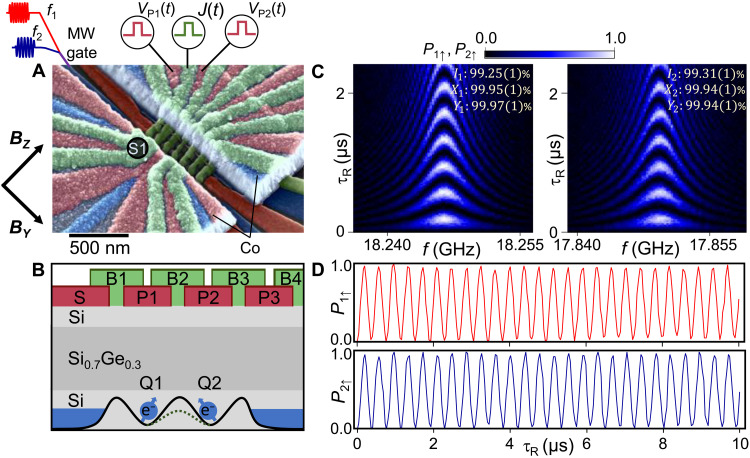
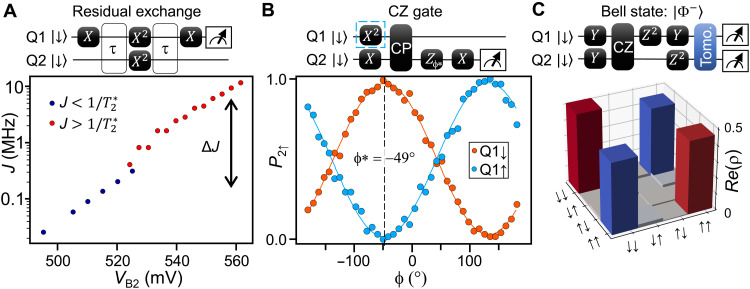
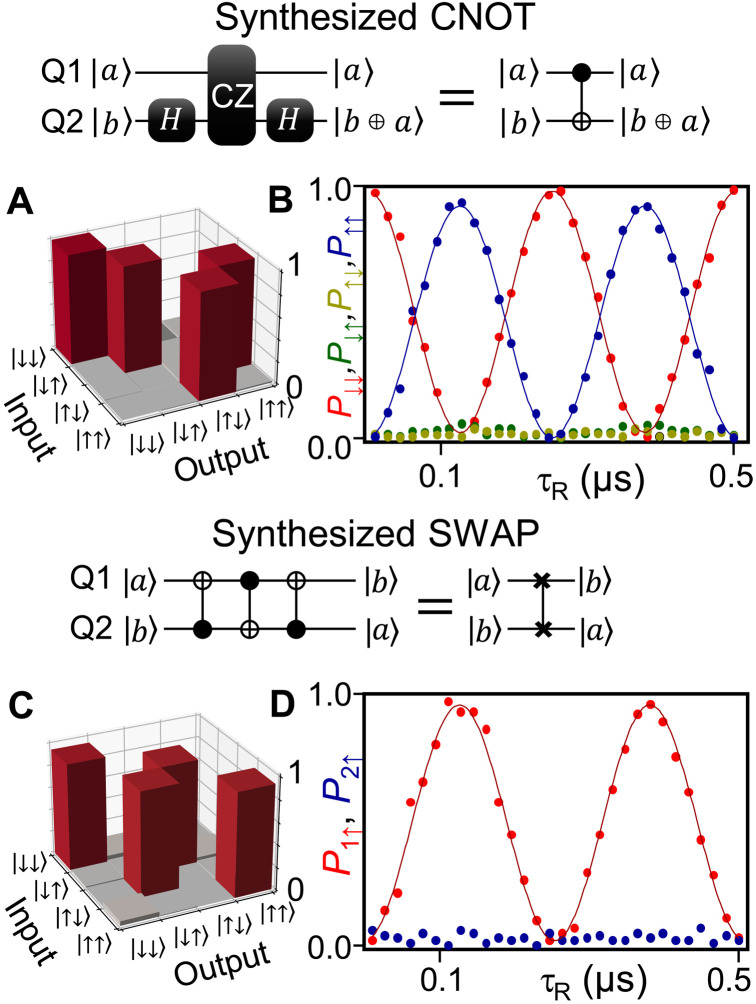
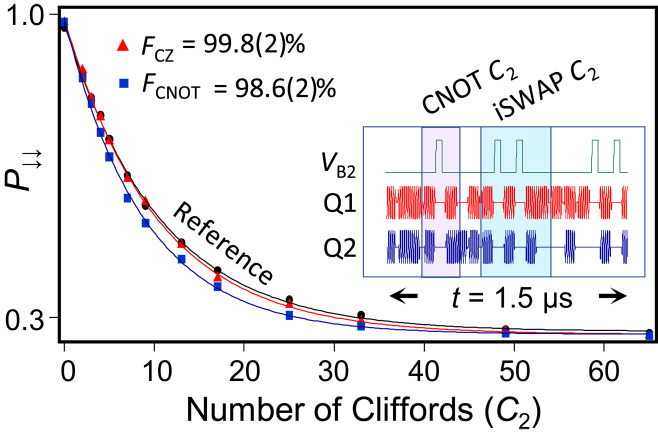
Silicon spin qubits satisfy the necessary criteria for quantum information processing. However, a demonstration of high-fidelity state preparation and readout combined with high-fidelity single- and two-qubit gates, all of which must be present for quantum error correction, has been lacking. We use a two-qubit Si/SiGe quantum processor to demonstrate state preparation and readout with fidelity greater than 97%, combined with both single- and two-qubit control fidelities exceeding 99%. The operation of the quantum processor is quantitatively characterized using gate set tomography and randomized benchmarking. Our results highlight the potential of silicon spin qubits to become a dominant technology in the development of intermediate-scale quantum processors.
Overview
The claims and statistics of this paper haven’t been checked yet.
Free: it reads the open-access text and checks the first 5 claims that cite a source we can check. Create a free account to check every claim.
Integrity signals
Registry
Cites
Statistics
Figures
Verification
Claims the paper makes
The claims and statistics of this paper haven’t been checked yet.
Free: it reads the open-access text and checks the first 5 claims that cite a source we can check. Create a free account to check every claim.
Self-check
Percentages, sums and reported differences re-computed from the paper’s own numbers.
The self-check needs the paper’s full text.
Citations
Cites
Quantum computation with quantum dots
Loss, D., & DiVincenzo, D. P. (1998) · Physical Review A · doi:10.1103/physreva.57.120 · Cited by 6,840
Coherent Manipulation of Coupled Electron Spins in Semiconductor Quantum Dots
Petta, J. R., Johnson, A. C., Taylor, J. M., Laird, E. A., Yacoby, A., Lukin, M. D., Marcus, C. M., Hanson, M. P., & Gossard, A. C. (2005) · Science · doi:10.1126/science.1116955 · Cited by 3,183
Self-citationSurface codes: Towards practical large-scale quantum computation
Fowler, A. G., Mariantoni, M., Martinis, J. M., & Cleland, A. N. (2012) · Physical Review A · doi:10.1103/physreva.86.032324 · Cited by 3,059 · cited 1×
“Our demonstration represents the highest total operation fidelity in a two-qubit processor realized in silicon quantum dots, with performance capable of fault tolerant operation (32).”
BackgroundSpins in few-electron quantum dots
Hanson, R., Kouwenhoven, L. P., Petta, J. R., Tarucha, S., & Vandersypen, L. M. K. (2007) · Reviews of Modern Physics · doi:10.1103/revmodphys.79.1217 · Cited by 2,665
Self-citationSuperconducting quantum circuits at the surface code threshold for fault tolerance
Barends, R., Kelly, J., Megrant, A., Veitia, A., Sank, D., Jeffrey, E., White, T. C., Mutus, J., Fowler, A. G., Campbell, B., et al. (2014) · Nature · doi:10.1038/nature13171 · Cited by 1,733
Single-shot read-out of an individual electron spin in a quantum dot
Elzerman, J. M., Hanson, R., Willems van Beveren, L. H., Witkamp, B., Vandersypen, L. M. K., & Kouwenhoven, L. P. (2004) · Nature · doi:10.1038/nature02693 · Cited by 1,679
Trapped-ion quantum computing: Progress and challenges
Bruzewicz, C. D., Chiaverini, J., McConnell, R., & Sage, J. M. (2019) · Applied Physics Reviews · doi:10.1063/1.5088164 · Cited by 1,483
Driven coherent oscillations of a single electron spin in a quantum dot
Koppens, F. H. L., Buizert, C., Tielrooij, K. J., Vink, I. T., Nowack, K. C., Meunier, T., Kouwenhoven, L. P., & Vandersypen, L. M. K. (2006) · Nature · doi:10.1038/nature05065 · Cited by 1,359
Coherent Control of a Single Electron Spin with Electric Fields
Nowack, K. C., Koppens, F. H. L., Nazarov, Y. V., & Vandersypen, L. M. K. (2007) · Science · doi:10.1126/science.1148092 · Cited by 1,001
A two-qubit logic gate in silicon
Veldhorst, M., Yang, C. H., Hwang, J. C. C., Huang, W., Dehollain, J. P., Muhonen, J. T., Simmons, S., Laucht, A., Hudson, F. E., Itoh, K. M., et al. (2015) · Nature · doi:10.1038/nature15263 · Cited by 919
Research works printed but not linked: 1
- X. Xue, T. F. Watson, J. Helsen, D. R. Ward, D. E. Savage, M. G. Lagally, S. N. Coppersmith, M. A. Eriksson, S. Wehner, L. M. K. Vandersypen, Benchmarking gate fidelities in a Si/SiGe two-qubit device. Phys. Rev. X 9, 021011 (2019).
Cited by
Items 201–300 of 328
An Assessment of U.S.-Allied Nations' Industrial Bases in Quantum Technology
Parker, E., Silberglitt, R., Gonzales, D., Sanchez, N., Lee, J. W., Rand, L., Schmid, J., Dortmans, P., & Eusebi, C. A. (2023) · RAND Corporation eBooks · doi:10.7249/rra2055-1 · Cited by 5
Room Temperature Quantum Control of N‐Donor Electrons at Si/SiO 2 Interface
Chakraborty, S., & Samanta, A. (2024) · Advanced Quantum Technologies · doi:10.1002/qute.202300349 · Cited by 4
Kang, J.-H., Yoon, T., Lee, C., Lim, S., & Ryu, H. (2024) · Scientific Reports · doi:10.1038/s41598-024-60478-9 · Cited by 3
“…x = [ E ZL , E ZR , J ] T ∈ X where X = [ 15, 24 ] × [ 15, 24 ] × [ 0.3, 100 ] , i . e ., the range of E ZL , E ZR , J are set to [15, 24]GHz, [15, 24]GHz and , Zeeman-splitting energies ( E ZL , E ZR ) and exchange interaction ( J ), where the target output to be optimized ( y ) is the CNOT…”
InfluentialJansen, R., & Yuasa, S. (2024) · Physical Review Applied · doi:10.1103/physrevapplied.22.054049 · Cited by 4
Bounds to electron spin qubit variability for scalable CMOS architecturesPreprint
Cifuentes, J. D., Tanttu, T., Gilbert, W., Huang, J. Y., Vahapoglu, E., Leon, R. C. C., Serrano, S., Otter, D., Dunmore, D., Mai, P. Y., et al. (2023) · arXiv (Cornell University) · doi:10.3929/ethz-b-000675400 · Cited by 3
The SpinBus Architecture: Scaling Spin Qubits with Electron ShuttlingPreprint
Künne, M., Willmes, A., Oberländer, M., Gorjaew, C., Teske, J. D., Bhardwaj, H., Beer, M., Kammerloher, E., Otten, R., Seidler, I., et al. (2023) · arXiv (Cornell University) · doi:10.48550/arxiv.2306.16348 · Cited by 3
Quantum information processing in electrically defined Silicon triple quantum dot systems
Kang, J.-H., & Ryu, H. (2024) · Solid-State Electronics · doi:10.1016/j.sse.2024.108863 · Cited by 2
Fu, Q., Wu, J., & Wang, X. (2024) · Physical Review A · doi:10.1103/physreva.109.052628 · Cited by 4
Coupling and characterization of a Si/SiGe triple quantum dot array with a microwave resonator
Jiang, S.-L., Jiang, T.-Y., Xu, Y.-Q., 吴, R. 睿. W., Hao, T.-Y., Ye, S.-K., 蔡, R.-R. 冉. C., Wang, B., Li, H.-O., Cao, G., et al. (2024) · Chinese Physics B · doi:10.1088/1674-1056/ad711d · Cited by 2
Khromets, B., & Baugh, J. (2024) · Physical Review A · doi:10.1103/physreva.110.l040602 · Cited by 2
“While ongoing improvements in material growth and device fabrication [5, 9, 16] allow for the mitigation of decoherence, charge noise cannot be completely eliminated, even in the best-quality devices [7, 17, 18].”
BackgroundHole spin splitting in a Ge quantum dot with finite barriers
Wang, J., Hu, X., & Fotso, H. F. (2025) · Physical review. B./Physical review. B · doi:10.1103/xrqt-xrnm · Cited by 2
Fabrication, characterization, and mechanical loading of Si/Si-Ge membranes for spin-qubit devices
Marcogliese, L., Sabapathy, O., Richter, R., Tu, J., Bougeard, D., & Schreiber, L. R. (2025) · Physical Review Applied · doi:10.1103/rw7k-pcvw · Cited by 3
“…heterostructures satisfy many of the important requirements to build a quantum computer [1, 2] such as long coherence times [3], high gate fidelities [4–7], compatibility with established industrial processes [8–10], potential for scalability [11] and operation at relatively high-temperatures [12].”
Electrical interconnects for silicon spin qubits
White, C. D., Sigillito, A. J., & Gullans, M. J. (2026) · Physical review. B./Physical review. B · doi:10.1103/tmpl-pjvw · Cited by 5
“Recent experiments have demonstrated high-fidelity state preparation, readout, and single-and two-qubit gates [4–8].”
Self-citationLow-Crosstalk, Silicon-Fabricated Optical Waveguides for Laser Delivery to Matter Qubits
Craft, C. L., Barton, N. J., Klug, A., Scalzi, K., Wildemann, I., Asagodu, P., Broz, J. D., Porto, N. L., Macalík, M., Rizzo, A. J., et al. (2024) · Physical Review Applied · doi:10.1103/jgks-dss2 · Cited by 5
“…information because these quantum memories (e.g., trapped ions [1–3], neutral atoms [4–6], nitrogen-vacancy centers [7,8], and quantum dots [9]) can possess long coherence times [10–12], have high-fidelity single-qubit control and two-qubit gates [13–16], and can be networked to increase their…”
Valley splitting in Si/SiGe heterostructures from first principles
Cvitkovich, L., Salamone, T., Wilhelmer, C., Martínez, B., Grasser, T., & Niquet, Y. (2026) · Physical review. B./Physical review. B · doi:10.1103/frx3-41bz · Cited by 4
Exact multivalley envelope function theory of valley splitting in Si/SiGe nanostructures
Ermoneit, L., Thayil, A., Koprucki, T., & Kantner, M. (2026) · Physical review. B./Physical review. B · doi:10.1103/md2x-s44y · Cited by 3
“Silicon-based spin qubits in strained Si/SiGe quantum dots (QDs) [1, 2] are a promising platform for scalable quantum processors, owing to their long coherence times [3, 4], compatibility with industrial fabrication [5–7], and potential for high-fidelity gate operations and readout [8–10].”
Highly tunable ultrafast control of a spin qubit
Hu, X. (2023) · Nature Nanotechnology · doi:10.1038/s41565-022-01298-8 · Cited by 3
Assessing quantum dot SWAP gate fidelity using tensor network methods
Taylor, J. R., Foulk, N. L., & Sarma, S. D. (2024) · Physical review. B./Physical review. B · doi:10.1103/physrevb.109.165403 · Cited by 4
SI/GE Quantum Dot Channel FETs for Multi-Bit Computing
Jain, F., Gudlavalleti, R. H., Chandy, J. A., & Heller, E. K. (2024) · International Journal of High Speed Electronics and Systems · doi:10.1142/s0129156424400767 · Cited by 2
Correcting on-chip distortion of control pulses with silicon spin qubits
Ni, M., Ma, R.-L., Kong, Z., 楚, N. 凝. C., Liao, W.-Z., Zhu, S.-K., Wang, C., 罗, G. 刚. L., Liu, D., 曹, G. 刚. C., et al. (2024) · Chinese Physics B · doi:10.1088/1674-1056/ad8db1 · Cited by 3
Engineering Si-Qubit MOSFET: Quantum-Electrostatic Integration at Cryogenic Temperatures
Pandey, N., Basu, D., Chauhan, Y. S., Register, L. F., & Banerjee, S. K. (2025) · IEEE Transactions on Electron Devices · doi:10.1109/ted.2025.3570285 · Cited by 4
Jain, F., Gudlavalleti, R. H., Chandy, J. A., & Heller, E. K. (2025) · International Journal of High Speed Electronics and Systems · doi:10.1142/s0129156426400239 · Cited by 2
Mistroni, A., Lisker, M., Yamamoto, Y., Wen, W.-C., Fidorra, F., Tetzner, H., Diebel, L. K., Visser, L., Anupam, S., Mourik, V., et al. (2025) · Applied Physics Letters · doi:10.1063/5.0285958 · Cited by 2
Denisov, A. O., Fuchs, G., Oh, S. W., & Petta, J. R. (2023) · PRX Quantum · doi:10.1103/prxquantum.4.030309 · Cited by 2
Self-citationPerformance of entanglement purification including maximally entangled mixed states
Torres, J. M., Bernád, J. Z., & Gómez-Rosas, R. (2024) · Journal of Physics A Mathematical and Theoretical · doi:10.1088/1751-8121/ad5f6a · Cited by 4
How quantum computing contributes to achieving sustainable IT
Gloukhovtsev, M. (2024) · Elsevier eBooks · doi:10.1016/b978-0-443-13597-2.00014-5 · Cited by 2
Simulated Charge Stability in a MOSFET Linear Quantum Dot Array
Merino, Z. D., Khromets, B., & Baugh, J. (2025) · Springer proceedings in mathematics & statistics · doi:10.1007/978-3-031-84869-8_15 · Cited by 2
Partial randomized benchmarking
Dubovitskii, K., & Makhlin, Y. (2022) · Scientific Reports · doi:10.1038/s41598-022-13813-x · Cited by 1
Long-range entanglement between spin qubits in quantum dots by virtual photon process
Hu, Y.-B., Chen, R., Yan, G., & Zhu, X. (2023) · Modern Physics Letters A · doi:10.1142/s0217732323500530 · Cited by 1
Throckmorton, R. E., & Sarma, S. D. (2024) · Physical review. B./Physical review. B · doi:10.1103/physrevb.109.075304 · Cited by 3
“Some of these experiments in particular have demonstrated two-qubit gate fidelities at or above 99%[10– 12], putting error correction techniques within reach in semiconductor-based electron spin qubits.”
BackgroundWang, Y., Wang, T., & Zhu, X. (2024) · Entropy · doi:10.3390/e26050379 · Cited by 2
“Recently, there have been significant advancements in high-fidelity single-qubit and two-qubit gate operations [3–5], as well as in the universal control of multiple-qubit processors [6–8].”
BackgroundEffect of interface trap charge on Coulomb oscillation in MOS-type quantum dots
Asai, H., Iizuka, S., Hattori, J., Fukuda, K., Ikegami, T., Oka, H., Inaba, T., Shitakata, S., Kato, K., Nakayama, T., et al. (2025) · Japanese Journal of Applied Physics · doi:10.35848/1347-4065/adabee · Cited by 2
Resonator-activated entangling gates for spin qubits in quantum dots
He, W.-Q., Liu, J.-R., & Zhu, X. (2025) · Physical Review A · doi:10.1103/xx7c-36f5 · Cited by 1
Liu, J., Liu, X., Lu, W., Li, Z., Zhang, Y., Wang, X., Zhao, C., Cao, G., Li, H., Guo, G., et al. (2025) · Physical review. B./Physical review. B · doi:10.1103/4vzf-c3vm · Cited by 1
Minimum synthesis cost of CNOT circuits
Bu, A., Fan, E., & Joo, R. S. (2025) · Quantum Information Processing · doi:10.1007/s11128-025-04831-5 · Cited by 8
“92% in trapped-ion, superconducting, and spin qubit settings [12–15].”
Chen, K., Godfrin, C., Simion, G., Fattal, I., Jussot, J., Kubicek, S., Beyne, S., Raes, B., Loenders, A., Kao, K.-H., et al. (2025) · Physical review. B./Physical review. B · doi:10.1103/physrevb.111.125301 · Cited by 3
Spin-qubit readout analysis based on a hidden Markov model
Spethmann, M., Stano, P., & Loss, D. (2025) · Physical review. B./Physical review. B · doi:10.1103/x8yx-5111 · Cited by 1
Readout Sweet Spots for Spin Qubits with Strong Spin-Orbit Interaction
Svastits, D., Hetényi, B., Széchenyi, G., Wootton, J. R., Loss, D., Bosco, S., & Pályi, A. (2026) · Physical Review Letters · doi:10.1103/4x97-np1f · Cited by 7
Tsuzuki, T., Yuta, H., Muto, Y., Ludwig, A., Wieck, A. D., Oiwa, A., & Fujita, T. (2026) · Japanese Journal of Applied Physics · doi:10.35848/1347-4065/ae2b7a · Cited by 2
Improved readout accuracy of a silicon spin qubit via log-likelihood ratio
Mizokuchi, R., Wada, R., Matsuoka, R., Ota, S., Yanagi, I., Mine, T., Tsuchiya, R., Hisamoto, D., Mizuno, H., & Kodera, T. (2025) · Japanese Journal of Applied Physics · doi:10.35848/1347-4065/ae2d60 · Cited by 1
Lai, W.-Y., Yang, H., & Tang, Y. (2026) · IEEE Electron Device Letters · doi:10.1109/led.2025.3648448 · Cited by 1
Spin qubit shuttling between coupled quantum dots with inhomogeneous Landé g tensors
Liu, Z.-H., Liu, X., & Xu, H. Q. (2026) · Physical review. B./Physical review. B · doi:10.1103/2yvw-xdy3 · Cited by 1
Extending qubit coherence time via hybrid dynamical decoupling
Yao, Q., Zhang, J., Zhang, W., & Lee, C. (2026) · Physical Review A · doi:10.1103/rj8c-tv95 · Cited by 1
Sarkar, A., & Loss, D. (2026) · Physical Review Research · doi:10.1103/rsnv-mnlw · Cited by 3
Effects of alloy disorder on strongly driven flopping mode qubits in Si/SiGe
Losert, M. P., Güngördü, U., Coppersmith, S. N., Friesen, M. G., & Tahan, C. (2026) · Physical review. B./Physical review. B · doi:10.1103/dv6w-fn24 · Cited by 3
“These fluctuating fields are thought to arise from the motion of charges, primarily in the oxide layers of the heterostructure [12], and they are the dominant source of infidelity in many state-of-the-art spin qubits [4–7, 13, 14].”
Park, J., Jang, H., Sohn, H., Song, Y., Stehouwer, L. E. A., Esposti, D. D., Scappucci, G., & Kim, D. (2026) · Nano Letters · doi:10.1021/acs.nanolett.6c00044 · Cited by 3
Modeling the Impact of Device Imperfections on Electron Shuttling in SiMOS devices
Anonymous, Binder, C. W., Burkard, G., & Fisher, A. J. (2026) · PRX Quantum · doi:10.1103/hyfp-rmrr · Cited by 3
“High fidelity single-qubit [6, 7] and two-qubit gates [8– 10] — realised by electron spin resonance (ESR) or electric dipole spin resonance (EDSR) and the electron exchange interaction [11] — as well as initialisation [12, 13] and fast, compact read-out [14, 15] have been demonstrated.”
Threshold-independent method for single-shot readout of spin qubits in semiconductor quantum dots
Hu, R.-Z., Zhu, S.-K., Zhang, X., Zhou, Y. L., Ni, M., Ma, R.-L., Luo, G., Kong, Z., Wang, G., Cao, G., et al. (2023) · Chinese Physics B · doi:10.1088/1674-1056/ace3a9 · Cited by 1
Break-even point of the phase-flip error correcting code
Rozgonyi, Á., & Széchenyi, G. (2023) · New Journal of Physics · doi:10.1088/1367-2630/acfba5 · Cited by 2
Semiconductor quantum computing
ZHANG, J., Li, H.-O., & Guo, G. (2023) · Scientia Sinica Informationis · doi:10.1360/ssi-2023-0333 · Cited by 1
Electric field dependence of spin qubit in a Si-MOS quantum dot
Ma, R.-L., 倪, M. 铭. N., 周, Y.-C. 雨. Z., 孔, Z.-Z. 真. K., 王, G.-L. 桂. W., 刘, D. 頔. L., 罗, G. 刚. L., Cao, G., Li, H.-O., & Guo, G. (2024) · Chinese Physics B · doi:10.1088/1674-1056/ad3812 · Cited by 3
Epitaxy and characterization of undoped Si/SiGe heterojunctions
Geng, X., Zhang, J., Lu, W., Ming, M., Liu, F., Fu, B.-X., Chu, Y.-X., Yan, M.-H., Wang, B., Zhang, X.-D., et al. (2024) · Acta Physica Sinica · doi:10.7498/aps.73.20240310 · Cited by 1
SU(2)-Symmetric Exactly Solvable Models of Two Interacting Qubits
Grimaudo, R. (2024) · Physics · doi:10.3390/physics6030069 · Cited by 1
Cakar, E., Ercan, H. E., Fuchs, G., Denisov, A. O., Anderson, C. R., Gyure, M. F., & Petta, J. R. (2024) · Applied Physics Letters · doi:10.1063/5.0217704 · Cited by 3
“Semiconductor spin qubits have emerged as top contenders for quantum computation [1], owing to their long coherence times [2], high single-and two-qubit control fidelities [3–5], and scalability [6].”
BackgroundSelf-citationFast Virtual Gate Extraction For Silicon Quantum Dot Devices
Che, S., Oh, S., Qin, H., Liu, Y., Sigillito, A. J., & Li, G. (2024) · ACM/IEEE Design Automation Conference (DAC) · doi:10.1145/3649329.3655923 · Cited by 4
Self-citationRF detection of split-gate modes in Si-MOS quantum dots
楚, N. 凝. C., Zhu, S.-K., Li, A.-R., Wang, C., Liao, W.-Z., 曹, G. 刚. C., Li, H.-O., & Guo, G. (2025) · Chinese Physics B · doi:10.1088/1674-1056/adb68b · Cited by 2
Complete switching of transverse and longitudinal spin-photon coupling in silicon
Li, F.-G., Cai, R., Wei, Z.-C., Wang, B., Li, H.-O., Cao, G., & Guo, G. (2025) · Science China Physics Mechanics and Astronomy · doi:10.1007/s11433-025-2695-7 · Cited by 2
Dressed basis sets for the modeling of exchange interactions in double quantum dots
Rodríguez, M. J., Rodríguez-Mena, E. A., Kalo, A. F., & Niquet, Y. (2025) · Physical review. B./Physical review. B · doi:10.1103/fc5b-5xbx · Cited by 6
Energy shift and subharmonics induced by nonlinearity in a quantum dot system
Zhou, Y. L., Cao, G., Li, H.-O., & Guo, G. (2023) · Chinese Physics B · doi:10.1088/1674-1056/acc521 · Cited by 1
Electrically driven spin resonance with bichromatic driving
György, Z., Pályi, A., & Széchenyi, G. (2022) · Physical review. B./Physical review. B · doi:10.1103/physrevb.106.155412 · Cited by 11
Emerging qubit systems: Guest editorial
Sigillito, A. J., Covey, J. P., Fink, J. M., Petersson, K. D., & Preble, S. F. (2022) · Applied Physics Letters · doi:10.1063/5.0097339
Self-citationInterplay of Pauli blockade with electron-photon coupling in quantum dots
Ginzel, F., & Burkard, G. (2023) · Physical review. B./Physical review. B · doi:10.1103/physrevb.107.115302 · Cited by 1
Realizable time crystal of four silicon quantum dot qubits
Foulk, N. L., & Sarma, S. D. (2023) · Physical review. B./Physical review. B · doi:10.1103/physrevb.107.125420 · Cited by 1
Fayyaz, A., & Kestner, J. P. (2023) · arXiv (Cornell University) · doi:10.13016/m25att-vmsz
High-fidelity single-qubit gates of a strong driven singlet-triplet qubit
Liu, Q.-P., Zhang, C.-X., & Xue, Z. (2023) · Acta Physica Sinica · doi:10.7498/aps.72.20230906
Peri, L., Oakes, G. A., Cochrane, L., Ford, C. J. B., & González-Zalba, M. F. (2023) · arXiv (Cornell University) · doi:10.17863/cam.106951
Fayyaz, A., & Kestner, J. P. (2023) · Physical review. B./Physical review. B · doi:10.1103/physrevb.108.l081303 · Cited by 4
“An indicator of the success of the spin qubit approach is the demonstration of high-fidelity single-qubit [12–16] and two-qubit [15, 17, 18] gates in silicon quantum devices with fidelities above the surface code error-correction threshold [19].”
BackgroundCharge and Spin Transport in Semiconductor Devices
Sverdlov, V. A., & Selberherr, S. (2023) · IEEE International Conference on ASIC (ASICON) · doi:10.1109/asicon58565.2023.10396645
“An unprecedented progress was recently achieved as two-qubit quantum gates [10] and a quantum processor with a fidelity exceeding 99% [11] have been demonstrated.”
BackgroundKanaar, D. W., & Kestner, J. P. (2024) · Physical Review A · doi:10.1103/physreva.109.032605 · Cited by 4
Haplotype Inference with Pure Parsimony: A Quantum Computing Approach
Nghiem, N.-V.-D., Le, S. V., Nguyen, T. N., & Dinh, T. N. (2024) · International Conference on Communications · doi:10.1109/icc51166.2024.10622443 · Cited by 1
Li, Y.-C., Chang, C.-H., Wu, Y.-J., Liao, C.-Y., & Li, J. (2025) · Applied Physics Letters · doi:10.1063/5.0245929
Origin of Long-Period Electrical Instability in Silicon Fin-Type Quantum Dots
Oka, H., Asai, H., Kato, K., Inaba, T., Shitakata, S., Iizuka, S., Chiashi, Y., Kobayashi, Y., Yui, H., Nagano, S., et al. (2024) · Technical digest - International Electron Devices Meeting/Technical digest · doi:10.1109/iedm50854.2024.10873374
An on-chip compact Chebyshev filter for semiconductor quantum dots in cQED architecture
Wei, Z.-C., Deng, S.-Y., Huang, Z.-Q., Kang, Y., Li, Z.-H., Xu, Y.-Q., Cai, R., Wang, B., Li, H.-O., Cao, G., et al. (2025) · Applied Physics Letters · doi:10.1063/5.0256274
Fault-tolerant Quantum Error Correction Using a Linear Array of Emitters
Kim, J., Han, J. H., & Kim, I. H. (2025) · Quantum · doi:10.22331/q-2025-03-26-1676 · Cited by 2
“Experimentally, two-qubit gate fidelities exceeding 99% have been demonstrated in systems with a small number of gate-defined quantum dots [40, 42, 46, 80].”
Ballast Charges for Semiconductor Spin Qubits
Choi, Y., Nichol, J. M., & Barnes, E. (2025) · Physical Review Letters · doi:10.1103/81qt-48bl · Cited by 2
Sequential information-theoretic protocols in continuous-variable systems
Das, S., Patra, A., Gupta, R., Sen, A., & Dhar, H. S. (2025) · Physical Review A · doi:10.1103/physreva.111.052427 · Cited by 1
An SOT-switchable micromagnet scheme of adiabatic geometric gates for silicon spin qubits
李, F.-G. 方. L., 蔡, R.-R. 冉. C., Wang, B., Li, H.-O., Cao, G., & Guo, G. (2025) · Chinese Physics B · doi:10.1088/1674-1056/addcd3
Silicon spin qubits: A scalable solution for quantum computing
Kriekouki, I., Power, C., Bashir, I., & Blokhina, E. (2025) · IEEE International Symposium on Circuits and Systems proceedings · doi:10.1109/iscas56072.2025.11043641 · Cited by 1
Quantum algorithm compiler for architectures with semiconductor spin qubits
Tadokoro, M., Matsuoka, R., & Kodera, T. (2025) · EPJ Quantum Technology · doi:10.1140/epjqt/s40507-025-00384-9
Mostafavi, M., Shalchian, M., & Jazaeri, F. (2025) · Semiconductor Science and Technology · doi:10.1088/1361-6641/adfe12
Tunable spin-electric-field coupling for spin qubit control
Hu, X. (2025) · Science China Physics Mechanics and Astronomy · doi:10.1007/s11433-025-2762-7
Addressable and tunable module for donor-based scalable silicon quantum computing
Zhang, S., He, Y., & Huang, P. (2025) · Physical review. B./Physical review. B · doi:10.1103/tfnf-b78h · Cited by 1
Negative exchange interaction in Si quantum dot arrays via valley-phase induced Z 2 gauge field
Woods, B. D. (2025) · Physical review. B./Physical review. B · doi:10.1103/x2jk-714n · Cited by 1
“Gate-defined semiconductor quantum dots represent a promising platform for quantum computation [1–4] and quantum simulation [5–8], where recent experiments [9–11] have demonstrated single and two-qubit gates exceeding the error correction threshold [12].”
Hole Spin Resilient to Dipole-Induced Thermal Effects
Champain, V., Boschetto, G., Niebojewski, H., Bertrand, B., Mauro, L., Haab, C., Bassi, M., Schmitt, V., Jehl, X., Zihlmann, S., et al. (2026) · PRX Quantum · doi:10.1103/py6k-k5zr · Cited by 4
“In parallel, single-and two-qubit gate fideli-ties have largely overcome the fault-tolerance threshold for quantum error correction 3–7 .”
Robust iswap gates for semiconductor spin qubits with local driving
Liu, Q.-P., & Xue, Z. (2025) · Physical Review A · doi:10.1103/68m1-mjzy
“5 MHz, with J 0 / 2 π = 10 kHz [9].”
InfluentialPulse-Driven Spin Paradigm for Noise-Aware Quantum Classification
Riascos-Moreno, C., Álvarez-Meza, A. M., & Castellanos-Dominguez, G. (2025) · Computers · doi:10.3390/computers14110475
“…the quantum dot spin qubit [26], realized by controlling the spin of a confined electron with external magnetic fields, supports high-fidelity single-and two-qubit gate operations [27], with initialization and readout fidelities exceeding 99% [28] and coherence times approaching ∼ 120 µ s [29].”
Quantum entanglement response to pulsed gate modulation
Fernandes, E. M., Sanz, L., & de Souza, F. M. (2025) · Physical Review A · doi:10.1103/sjjp-syxx
“On one hand, spin-based quantum computing with quantum dots has garnered significant attention since the pioneering work of Loss and DiVincenzo 26 , which is favored by relatively long decoherence times 13 , also both one-and two-qubit gates with fidelity exceeding 99% have been demonstrated 27,28 .”
Long-distance interaction of gate-defined quantum dots under Floquet driving
Liu, X.-F., Liu, Z.-H., Wang, T.-J., Wang, C., & Xu, H. Q. (2025) · Physical Review Applied · doi:10.1103/zbcs-jdq2
Quantum Computing with Semiconductor Spin
Ramanandan, S. P., & Morral, A. F. I. (2025) · Springer eBooks · doi:10.1007/978-3-031-90727-2_4
Real-Time DCZ Gate Control by Bayesian Optimization with Forgetting
Sato, Y., & Kawahara, T. (2025) · IEEE International Conference on Quantum Computing and Engineering (QCE) · doi:10.1109/qce65121.2025.00151
“For instance, Mills et al. [5] achieved two-qubit control fidelities exceeding 99% by applying binomial smoothing to shape the pulse on the barrier gate, which controls the exchange interaction.”
Digitally controlled conveyor-belt spin shuttling in silicon for large-scale quantum computation
Nagai, R., Takemoto, T., Wachi, Y., & Mizuno, H. (2025) · Physical Review Applied · doi:10.1103/ng22-2cgg · Cited by 8
Radio-Frequency Charge Detection on Graphene Electron–Hole Double Quantum Dots
Hecker, K., Möller, S., Dulisch, H., Duman, Ş., Stecher, L., Valerius, L., Deußen, T., Ravuri, S., Watanabe, K., Taniguchi, T., et al. (2025) · Nano Letters · doi:10.1021/acs.nanolett.5c04648 · Cited by 2
Comparison of spin-qubit architectures for quantum error-correcting codes
Gutiérrez, M., Rojas-Arias, J. S., Obando, D., & Chang, C. Y. (2026) · Physical Review A · doi:10.1103/qlw3-xk2f · Cited by 5
“For LD qubits, pulsing the tunnel barrier between singly occupied QDs enables a controllable exchange coupling that allows the implementation of entangling gates such as √ SWAP or controlled-phase operations [17].”
Phonon-induced frequency shift in semiconductor spin qubits
Heinz, I., Danon, J., & Burkard, G. (2026) · Physical review. B./Physical review. B · doi:10.1103/7wp1-zgs7 · Cited by 1
“Compared to superconducting platforms, spin qubits can operate at higher temperatures, from tens of mil-likelvin to a few kelvin [2, 10–13].”
Double Quantum Dots with Quenched Charging Energy in PbTe Nanowires
Byard, S. A., Gomanko, M., Raynolds, A., Tan, S., Zhang, T., Zhang, S., & Frolov, S. (2026) · Nano Letters · doi:10.1021/acs.nanolett.5c04976
Fu, Q., Liu, J., Wang, X., & Xiong, R. (2026) · Entropy · doi:10.3390/e28010089
Diverse methods and practical aspects in controlling single semiconductor qubits: a review
Peng, J.-A., Qiu, C.-D., Ma, W.-L., & Luo, J. (2026) · Journal of Semiconductors · doi:10.1088/1674-4926/24120040 · Cited by 1
Hyperfine Dependence of Nuclear-Spin Rabi Frequencies in Silicon Donors
Li, C., Zhang, S., Wang, H., Gao, M., Deng, Y., Zhang, Y.-N., Bai, X., Yin, C., Huan, S., Liu, J., et al. (2026) · Nano Letters · doi:10.1021/acs.nanolett.5c05023
Geometric protected quantum bus in a hybrid superconducting-spin architecture
Zhu, X., Yue, Z.-C., Guo, G., Tu, T., & Li, C.-F. (2026) · Physical Review Applied · doi:10.1103/dftf-g4kc · Cited by 1
Site-controlled Ge hut wire-based multiple quantum dots with integrated charge sensing capability
Leng, J., Gao, F., Zhou, Y.-C., Wang, C., Jiang, H.-T., Wu, Z., Cao, G., Zhang, J., Li, H.-O., & guo, G. (2026) · Nanoscale · doi:10.1039/d5nr04259c
Metadata
- Authors
- Mills, A. R., Guinn, C. R., Gullans, M. J., Sigillito, A. J., Feldman, M. M., Nielsen, E., & Petta, J. R.
- Affiliations
- Princeton University (US)
- Sandia National Laboratories (US)
- Corresponding author
- Petta, Jason R.
- ORCID
- Venue
- Science Advances
- Published
- 2022-04-08
- Volume
- 8
- Issue
- 14
- Pages
- eabn5130-eabn5130
- ISSN
- 2375-2548 (ISSN-L)
- PMC
- PMC8986105
- OpenAlex
- W3217600686
- Cited by
- 329
- References
- 37
- Citations by year
- 2026: 48 · 2025: 86 · 2024: 91 · 2023: 72 · 2022: 32
- FWCI
- 28.63
- Type
- journal article
- Language
- en
- Open access
- gold
- doi.org
- Licence
- cc-by-nc
- Locations
- Science Advances (publishedVersion, cc-by-nc)
- PubMed Central (publishedVersion, cc-by-nc)
- PubMed (publishedVersion)
- arXiv (Cornell University) (submittedVersion)
- OSTI OAI (U.S. Department of Energy Office of Scientific and Technical Information) (submittedVersion)
- arXiv (Cornell University)
- Funders
- National Science Foundation (NA0003525, DE‐NA0003525, 2011750)
- U.S. Department of Energy (DENA0003525, NA0003525)
- Princeton University (DMR-2011750)
- Princeton Center for Complex Materials (DMR-2011750)
- Defense Advanced Research Projects Agency (NA0003525, DENA0003525, D18AC0025)
- Office of Science (DE-NA0003525, NA0003525)
- National Nuclear Security Administration (NA0003525, DENA-0003525)
- Intelligence Advanced Research Projects Activity
- Materials Research Science and Engineering Center, Harvard University (DMR2011750)
- Division of Materials Research (DMR2011750, 2011750)
- Advanced Scientific Computing Research (DE-NA-0003525)
- Army Research Office (W911NF-15-1-, DE-NA0003525, W911NF, W911NF-15-1-0149, W911NF-15)
- Sandia National Laboratories (NA0003525, DE‐NA,0003525)
- Topics
- Physical Sciences › Physics and Astronomy › Condensed Matter Physics › Quantum and electron transport phenomena
- Physical Sciences › Materials Science › Materials Chemistry › Diamond and Carbon-based Materials Research
- Physical Sciences › Computer Science › Artificial Intelligence › Quantum Computing Algorithms and Architecture
- Keywords
- silicon spin qubits, two-qubit gates, single-qubit gates, gate fidelity, gate set tomography, randomized benchmarking, quantum error correction
About these checks
Registry, retraction, Cites and statistics results are computed, not judged, with one exception: a printed reference that no index lists is read once by a model before it counts as a citation error. Claims are extracted by a model and kept only when their quote appears verbatim in the text; each cited source is then checked, with a model’s help, for whether it says what the claim relies on. Those verdicts can be wrong — read the claim’s quote and the cited source before relying on one.
Statistics and arithmetic are recomputed, not judged.
Confidence bands are shown only for fields calibrated on our annotated test set. None is calibrated yet, so no band is shown.
What counts as a claim ›How we measure confidence ›How we check this ›
Are you an author, or do you see a problem with this page? Request a review
Data sources
Bibliographic data: Semantic Scholar, OpenAlex, Crossref.
Contains information from the Semantic Scholar Academic Graph Datasets, made available under the ODC Attribution License (ODC-BY 1.0).
Semantic Scholar’s data is described in: Kinney, R., et al. (2023). The Semantic Scholar Open Data Platform. arXiv:2301.10140.
