

Brain neural patterns and the memory function of sleep
Open accessThe DOI matches its Crossref record; 48 of the 48 references it cites were found in a registry or an index.
Abstract
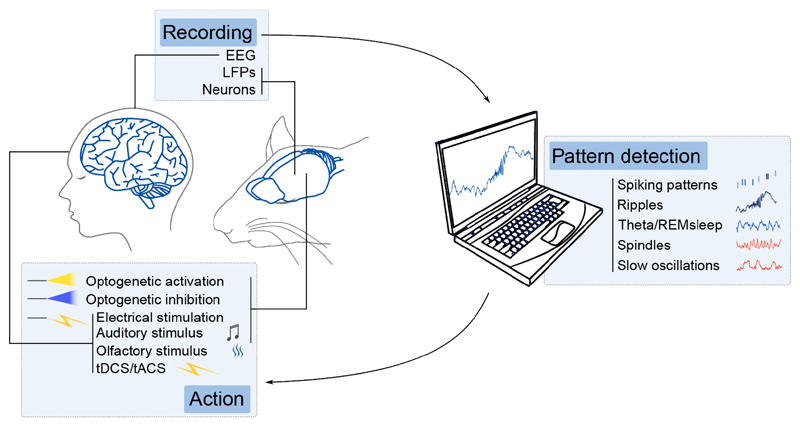
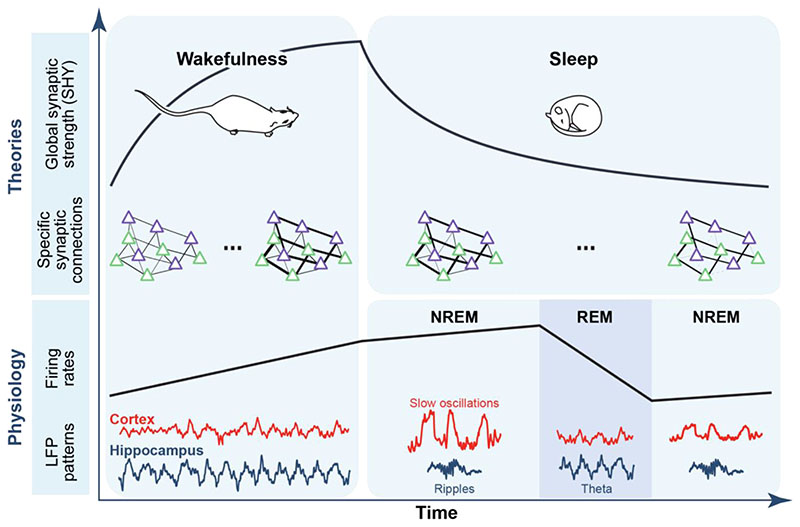
Sleep is crucial for healthy cognition, including memory. The two main phases of sleep, REM (rapid eye movement) and non-REM sleep, are associated with characteristic electrophysiological patterns that are recorded using surface and intracranial electrodes. These patterns include sharp-wave ripples, cortical slow oscillations, delta waves, and spindles during non-REM sleep and theta oscillations during REM sleep. They reflect the precisely timed activity of underlying neural circuits. Here, we review how these electrical signatures have been guiding our understanding of the circuits and processes sustaining memory consolidation during sleep, focusing on hippocampal theta oscillations and sharp-wave ripples and how they coordinate with cortical patterns. Finally, we highlight how these brain patterns could also sustain sleep-dependent homeostatic processes and evoke several potential future directions for research on the memory function of sleep.
Overview
The claims and statistics of this paper haven’t been checked yet.
Free: it reads the open-access text and checks the first 5 claims that cite a source we can check. Create a free account to check every claim.
Integrity signals
Registry
Cites
Statistics
Figures

Verification
Claims the paper makes
The claims and statistics of this paper haven’t been checked yet.
Free: it reads the open-access text and checks the first 5 claims that cite a source we can check. Create a free account to check every claim.
Self-check
Percentages, sums and reported differences re-computed from the paper’s own numbers.
The self-check needs the paper’s full text.
Citations
Cites
Reactivation of hippocampal ensemble memories during sleep
Wilson, M. A., & McNaughton, B. L. (1994) · Science · doi:10.1126/science.8036517 · Cited by 3,118
Boosting slow oscillations during sleep potentiates memory
Marshall, L., Helgadóttir, H., Mölle, M., & Born, J. (2006) · Nature · doi:10.1038/nature05278 · Cited by 1,792
Hippocampal sharp wave-ripple: A cognitive biomarker for episodic memory and planning
Buzsáki, G. (2015) · Hippocampus · doi:10.1002/hipo.22488 · Cited by 1,759
Two-stage model of memory trace formation: A role for “noisy” brain states
Buzsáki, G. (1989) · Neuroscience · doi:10.1016/0306-4522(89)90423-5 · Cited by 1,709
Selective suppression of hippocampal ripples impairs spatial memory
Girardeau, G., Benchenane, K., Wiener, S. I., Buzsáki, G., & Zugaro, M. B. (2009) · Nature Neuroscience · doi:10.1038/nn.2384 · Cited by 1,560
Self-citationMechanisms of systems memory consolidation during sleep
Klinzing, J. G., Niethard, N., & Born, J. (2019) · Nature Neuroscience · doi:10.1038/s41593-019-0467-3 · Cited by 1,176
Temporally structured replay of awake hippocampal ensemble activity during rapid eye movement sleep
Louie, K., & Wilson, M. A. (2001) · Neuron · doi:10.1016/s0896-6273(01)00186-6 · Cited by 1,148
Disruption of ripple‐associated hippocampal activity during rest impairs spatial learning in the rat
Ego‐Stengel, V., & Wilson, M. A. (2010) · Hippocampus · doi:10.1002/hipo.20707 · Cited by 842
Cortical firing and sleep homeostasis
Vyazovskiy, V. V., Olcese, U., Lazimy, Y. M., Faraguna, U., Esser, S. K., Williams, J. C., Cirelli, C., & Tononi, G. (2009) · Neuron · doi:10.1016/j.neuron.2009.08.024 · Cited by 740
Causal evidence for the role of REM sleep theta rhythm in contextual memory consolidation
Boyce, R., Glasgow, S. D., Williams, S., & Adamantidis, A. (2016) · Science · doi:10.1126/science.aad5252 · Cited by 696
Cited by
Items 101–200 of 292
Mullins, A. E., Parekh, A., Kam, K., Valencia, D. I., Schoenholz, R., Fakhoury, A., Castillo, B., Roberts, Z. J., Wickramaratne, S., Tolbert, T. M., et al. (2025) · SLEEP · doi:10.1093/sleep/zsaf046 · Cited by 9
Rutkowska, M., Bieńko, M., Król, T., Toborek, M., Marchaj, M., Korta, K., Putra, A., Niedziela, N., Margas, M., & Bednarz, K. (2024) · Quality in Sport · doi:10.12775/qs.2024.18.53393 · Cited by 12
Li, Z., Wang, J., Tang, C., Wang, P., Ren, P., Li, S., Yi, L., Liu, Q., Sun, L., Li, K. X., et al. (2024) · Communications Biology · doi:10.1038/s42003-024-06941-9 · Cited by 8
“Thirdly, although earlier researchonthehippocampusasawholeidenti fi edprominentdelta-spindle-Fig ripple trifecta coordination during NREM sleep 21,60,78 , our current data suggested that this classic spindle-mediated coupling pattern was only evident in the CA1 and SUB regions but not in the DG/CA3…”
Lu, F., Wang, J., Qin, X., Chen, X., Liu, T., Li, X., Guo, X., Lan, Y., & Liang, Z. (2025) · Communications Biology · doi:10.1038/s42003-025-09205-2 · Cited by 10
“(Remarks to the Author) I thanks to the author for there detailed response to my comments and improving there manuscript including providing the data and code used here.”
Wilckens, K. A., Habte, R. F., Dong, Y., Stepan, M. E., Dessa, K. M., Whitehead, A. B., Peng, C. W., Fletcher, M. E., & Buysse, D. J. (2024) · Frontiers in Sleep · doi:10.3389/frsle.2023.1265006 · Cited by 9
Xia, J., Zhang, F., Zhang, L., Cao, Z., Dong, S., Zhang, S., Luo, J., & Zhou, G. (2024) · Nanomaterials · doi:10.3390/nano14030240 · Cited by 9
“Brain electrophysiology serves as a pivotal tool for investigating the functionality and activity of the nervous system [1], playing a crucial role in advancing the fields of neuroscience [2], brain–computer interface technology [3], and the diagnosis and treatment of neurological disorders [4],…”
MethodSouza, A. C., Souza, B. C., França, A. S. C., Moradi, M., Souza, N. C., Leão, K. E., Tort, A. B. L., Leão, R. N., Lopes‐dos‐Santos, V., & Ribeiro, S. T. G. (2024) · Scientific Reports · doi:10.1038/s41598-024-61474-9 · Cited by 11
“Furthermore, the complex electrophysiological dynamics of the hippocampus have been thoroughly investigated in freely moving rodents during both waking and sleep 36,41,52,72–76 .”
BackgroundSelf-citationOkada, R., Ikegaya, Y., & Matsumoto, N. (2024) · Biological and Pharmaceutical Bulletin · doi:10.1248/bpb.b24-00118 · Cited by 8
Hyperpolarization-activated currents drive neuronal activation sequences in sleep
Mehrotra, D., Levenstein, D., Duszkiewicz, A. J., Carrasco, S. S., Booker, S. A., Kwiatkowska, A., & Peyrache, A. (2024) · Current Biology · doi:10.1016/j.cub.2024.05.048 · Cited by 9
Ohki, T., Kunii, N., & Chao, Z. C. (2023) · Reviews in the Neurosciences · doi:10.1515/revneuro-2022-0137 · Cited by 8
Human REM sleep controls neural excitability in support of memory formationPreprint
Lendner, J. D., Mander, B. A., Schuh‐Hofer, S., Schmidt, H., Knight, R. T., Walker, M. P., Lin, J. J., & Helfrich, R. F. (2022) · bioRxiv (Cold Spring Harbor Laboratory) · doi:10.1101/2022.05.13.491801 · Cited by 9
“Numerous behavioral studies support a key role of sleep for stabilization of recently acquired memoires and restoring processing capacities for next day learning (Girardeau and Lopes-dos-Santos, 2021; Klinzing et al., 2019; Walker and Stickgold, 2006).”
BackgroundThe Role of Sleep in Memory Consolidation and Reading in Dyslexia
Solbi, A., & Earle, F. S. (2025) · Journal of Cognitive Neuroscience · doi:10.1162/jocn_a_02282 · Cited by 8
The cost of remembering: engram competition as a flexible mechanism of forgetting
Autore, L., Drew, M. R., & Ryan, T. J. (2025) · Trends in Neurosciences · doi:10.1016/j.tins.2025.07.011 · Cited by 7
“However, in contemporary neuroscience it is also believed that the replay of memory-associated physiological activity patterns during sleep plays a role in memory consolidation [21,22].”
Vasopressin as a Possible Link between Sleep-Disturbances and Memory Problems
Török, B., Varga, J., & Zelena, D. (2022) · International Journal of Molecular Sciences · doi:10.3390/ijms232415467 · Cited by 6
Sleep-dependent decorrelation of hippocampal spatial representations
Valdivia, G. G., Espinosa, N., Lara-Vásquez, A., Caneo, M., Inostroza, M., Born, J., & Fuentealba, P. (2024) · iScience · doi:10.1016/j.isci.2024.110076 · Cited by 7
“65,66 Indeed, communication between the hippocampus and neocortical circuits is regulated by sleep cardinal oscillations, 14,18,67 and their temporalcoordination enablesthe consolidationof labile memory traces.”
Unlearning regularization for Boltzmann machines
Ventura, E., Cocco, S., Monasson, R., & Zamponi, F. (2024) · Machine Learning Science and Technology · doi:10.1088/2632-2153/ad5a5f · Cited by 9
“The effectiveness of a two-step training for a Boltzmann Machine encourages a biological interpretation of this kind of training, in agreement with the hypothesis that synapses in the brain could be fine tuned through the alternation of daily online experience and offline sleep [39, 40].”
The Problem-Ladenness of Theory
Levenstein, D., Santo, A. D., Heijnen, S., Narayan, M., Maatman, F. O., Rawski, J., & Wright, C. (2024) · Computational Brain & Behavior · doi:10.1007/s42113-024-00219-3 · Cited by 7
“…lesions (Lashley, 1950), the presence and spatiotemporal coupling of replay and reactivation in hippocampal and cortical circuits during sleep (Girardeau & Lopes-dos-Santos, 2021; Ji & Wilson, 2007; Wilson & McNaughton, 1994), the effects of targeted perturbations during sleep and learning…”
Pre-sleep experiences shape neural activity and dream content in the sleeping brain
Kumral, D., Palmieri, J., Gais, S., & Schönauer, M. (2025) · iScience · doi:10.1016/j.isci.2025.113032 · Cited by 8
Selective Modulation of Fear Memory in Non‐Rapid Eye Movement Sleep
Zheng, Q., Huang, Y., Mu, C., Hu, X., & Lai, C. S. W. (2024) · Advanced Science · doi:10.1002/advs.202400662 · Cited by 8
Research advances in children's sleep and vitamin D levels
Zhu, L., & Yao, D. (2025) · Annals of Pediatric Endocrinology & Metabolism · doi:10.6065/apem.2448076.038 · Cited by 5
“Sleep plays a crucial role in the process of brain development in children and is essential for physical growth, memory consolidation, executive function, and the immune system [1-5].”
Multi-region processing during sleep for memory and cognition
Said, S. E., & Miyamoto, D. (2025) · Proceedings of the Japan Academy Series B · doi:10.2183/pjab.101.008 · Cited by 6
Zhang, J., Liu, Y., Sun, Q., Shi, J., Ni, J., Li, T., Long, Z., Wei, M., & Tian, J. (2024) · Frontiers in Neurology · doi:10.3389/fneur.2024.1300459 · Cited by 6
Luo, X., Zhou, B., Shi, J., Li, G., & Zhu, Y. (2024) · Frontiers in Psychiatry · doi:10.3389/fpsyt.2024.1433316 · Cited by 7
Jiang, M., Liu, Y., Wang, X., Liu, Y., Deng, X., Zhang, X., & Wang, B. (2024) · Frontiers in Aging Neuroscience · doi:10.3389/fnagi.2024.1417349 · Cited by 10
“…is associated with cognitive decline, memory loss, and poor concentration, and the mechanism involves that nighttime sleep is an important time for memory consolidation and neuronal repair, and affects the balance of multiple neurotransmitters in the brain (Girardeau and Lopes-Dos-Santos, 2021).”
BackgroundImpaired sleep-dependent memory consolidation in pediatric narcolepsy type 1
Maski, K. P., Heckler, G. K., Worhach, J., Mylonas, D., Wang, G., Szilagyi, K., Zhang, B., Behn, C. D., Scammell, T. E., & Stickgold, R. (2024) · SLEEP · doi:10.1093/sleep/zsae238 · Cited by 5
Tarasova, I. V., Trubnikova, O. A., Николаевна, К. И., Kupriyanova, D. S., & Sosnina, A. S. (2024) · Applied Sciences · doi:10.3390/app142310893 · Cited by 5
Watanabe, K., Takeda, K., Nagahiro, T., Iijima, S., Ikegaya, Y., & Matsumoto, N. (2025) · Journal of Pharmacological Sciences · doi:10.1016/j.jphs.2025.08.002 · Cited by 6
Du, H., Lin, R., Xiao, S., Zhao, Y., Wu, M., Chen, W., Cai, W., Wei, N., Gong, G., Huang, K., et al. (2023) · Digestive Diseases · doi:10.1159/000531748 · Cited by 6
“Recent studies have found that good sleep accelerates cerebrospinal fl uid fl ow and renewal [31], has the ability to clear metabolites and repair neural DNA [32], and contributes to the regulation of synaptic homeostasis [33].”
BackgroundKoketsu, S., Matsubara, K., Ueki, Y., Shinohara, Y., Inoue, K., Murakami, S., & Ueki, T. (2024) · Heliyon · doi:10.1016/j.heliyon.2023.e23738 · Cited by 5
Seenivasan, P., Basak, R., & Narayanan, R. (2024) · The Journal of Physiology · doi:10.1113/jp284629 · Cited by 6
Slow wave activity disruptions and memory impairments in a mouse model of aging
Lu, Y., Russ, A., Algamal, M., Abedin, M. J., Zhao, Q., Miller, M. R., Perle, S. J., & Kastanenka, K. V. (2024) · Neurobiology of Aging · doi:10.1016/j.neurobiolaging.2024.04.006 · Cited by 6
The impact of sleep quality on visual working memory varied with the duration of maintenance
Gong, L., Wang, M., Ye, C., & Liu, Q. (2024) · Frontiers in Psychology · doi:10.3389/fpsyg.2024.1404989 · Cited by 9
Hahn, M. A., Lendner, J. D., Anwander, M., Slama, S. J. K., Knight, R. T., Lin, J. J., & Helfrich, R. F. (2024) · Progress in Neurobiology · doi:10.1016/j.pneurobio.2024.102672 · Cited by 6
“This is exemplified by a process termed replay, which involves the periodic recurrence of neural firing patterns that were first present during encoding of new information (Foster, 2017; ´ ´ et al., 2018).”
Exercise enhances hippocampal-cortical ripple interactions in the human brain
Cardenas, A. R., Ramírez-Villegas, J. F., Kovach, C. K., Gander, P. E., Cole, R. C., Grossbach, A. J., Kawasaki, H., Greenlee, J. D. W., Howard, M. A., Nourski, K. V., et al. (2026) · Brain Communications · doi:10.1093/braincomms/fcag041 · Cited by 5
Privação crônica do sono e desempenho escolar-acadêmico: uma revisão sistemática
Barros, J. P., & de Sousa, C. E. B. (2022) · Revista Neurociências · doi:10.34024/rnc.2022.v30.13010 · Cited by 8
Serotonin modulates infraslow oscillation in the dentate gyrus during non-REM sleep
Turi, G. F., Teng, S., Chen, X., Lim, E. C., Dias, C., Hu, R., Wang, R., Zhen, F., & Peng, Y. (2025) · eLife · doi:10.7554/elife.100196.4 · Cited by 26
Interpreting Sleep Activity Through Neural Contrastive LearningPreprint
Chen, Z., Zheng, H., Zhou, J., Zheng, L., Lin, P., Wang, H., Busche, M. A., Behrens, T. E. J., Dolan, R. J., & Liu, Y. (2024) · bioRxiv (Cold Spring Harbor Laboratory) · doi:10.1101/2024.09.25.615100 · Cited by 5
“This replay is particularly active during non-rapid eye movement (NREM) sleep, where the brain shifts into slower, more synchronised activity patterns 6,7 .”
BackgroundKajiya, R., Miyawaki, H., Nakahara, H., & Mizuseki, K. (2025) · eneuro · doi:10.1523/eneuro.0575-24.2025 · Cited by 4
Smolensky, M. H., Hermida, R. C., Castriotta, R. J., & Geng, Y. (2025) · Journal of Cardiovascular Development and Disease · doi:10.3390/jcdd12030095 · Cited by 5
Chen, T., Jia, J., Gao, C., Zhong, Q., Tang, L., Sui, X., Li, S., Chen, C., & Zhang, Z. (2025) · Brain Research Bulletin · doi:10.1016/j.brainresbull.2025.111397 · Cited by 4
del Giudice, R., Stefanelli, R., Donati, F. L., Nisticò, V., Casetta, C., Castelnovo, A., Zangani, C., Sanguineti, C., Sala, M., Zambrelli, E., et al. (2025) · Journal of Affective Disorders · doi:10.1016/j.jad.2025.120517 · Cited by 5
Cracking the complexity of REM sleep
Dong, Y., & Liu, D. (2025) · Trends in Neurosciences · doi:10.1016/j.tins.2025.10.008 · Cited by 6
Sulaman, B. A., Chen, E., Crane, A. M., Lee, S.-J., Rothschild, G., & Eban-Rothschild, A. (2025) · Science Advances · doi:10.1126/sciadv.adw7427 · Cited by 5
Wang, R., Zhang, L., Wang, X., Li, W., Jian, T., Yin, P., Wang, X., Chen, Q., Chen, X., & Qin, H. (2024) · Frontiers in Cellular Neuroscience · doi:10.3389/fncel.2024.1392498 · Cited by 6
Closed-Loop Therapy and Sleep in Young People Newly Diagnosed With Type 1 Diabetes and Their Parents
Madrid‐Valero, J. J., SCOTT, E. M., Boughton, C. K., Allen, J. M., Ware, J., Wilinska, M. E., Hartnell, S., Thankamony, A., Randell, T. L., Ghatak, A., et al. (2024) · Journal of Diabetes Science and Technology · doi:10.1177/19322968241286816 · Cited by 4
“(with 5 response options from very poor [1] to very good [5]); and (9) times you took off the actiwatch.”
Fan, X., Mao, X., Yu, P., Han, D., Chen, C., Wang, H., Zhang, X., Liu, S., Chen, W., Chen, Z., et al. (2024) · Journal of Alzheimer s Disease · doi:10.1177/13872877241295401 · Cited by 7
“56,57 Previous research has suggested that the infusion of a GABAAR agonist in the thalamus impairs fear extinction learning, indirectly supporting the notion that disrupted GABA in the thalamus could regulate cognitive functions through memory consolidation.”
Sleep pressure causes birds to trade asymmetric sleep for symmetric sleep
van Hasselt, S. J., Martínez-González, D., Mekenkamp, G.-J., Vyssotski, A. L., Verhulst, S., Beckers, G. J. L., Rattenborg, N. C., & Meerlo, P. (2025) · Current Biology · doi:10.1016/j.cub.2025.03.008 · Cited by 6
“50,51 Despite the different sleep states and brain regions involved, 7-Hz oscillations might serve a similar function in jackdaw brains.”
Yamada, H., Mizuno, H., Ikegaya, Y., & Matsumoto, N. (2025) · Biochemical and Biophysical Research Communications · doi:10.1016/j.bbrc.2025.152775 · Cited by 4
MLS-Net: An Automatic Sleep Stage Classifier Utilizing Multimodal Physiological Signals in Mice
Jiang, C., Xie, W., Zheng, J., Yan, B., Luo, J., & Zhang, J. (2024) · Biosensors · doi:10.3390/bios14080406 · Cited by 5
“These processes include cognition, learning and memory, brain homeostasis, and various diseases [1,2].”
BackgroundImamura, T., Wasilczuk, A. Z., Reitz, S. L., Lian, J., Imamura, M., Keenan, B. T., Shimizu, N., Pack, A. I., & Kelz, M. B. (2025) · British Journal of Anaesthesia · doi:10.1016/j.bja.2025.02.035 · Cited by 5
“Sleep plays a critical role in memory consolidation and retrieval, 11 whereas anaesthesia can impair memory formation.”
Liu, S., Lei, Q., Liu, Y., Zhang, X., & Li, Z. (2022) · Brain Sciences · doi:10.3390/brainsci12111509 · Cited by 4
Rapid Eye Movement Sleep Consolidates Social Memory
Fan, J., Zhou, F., Zheng, J., & Xu, H. (2023) · Neuroscience Bulletin · doi:10.1007/s12264-023-01080-3 · Cited by 6
“Rapid eye movement (REM) sleep has been suggested to contribute to social memory consolidation by up-regulating synaptic plasticity, local field potentials, and dendritic activity [2].”
BackgroundSadoc, M., Clairembault, T., Coron, E., Berthomier, C., Dily, S. L., Vavasseur, F., Pavageau, A., Louis, E. K. S., Péréon, Y., Neunlist, M., et al. (2023) · SLEEP · doi:10.1093/sleep/zsad310 · Cited by 5
Wu, P., Fu, C., Chen, M., Wu, F., He, W., Luo, Q., Wang, H., & Li, Y. (2025) · ACS Chemical Neuroscience · doi:10.1021/acschemneuro.5c00214 · Cited by 3
The epigenetic mechanism of sleep disorders related cognitive impairment
Guo, M., Liu, Y., Zhou, J., & Yu, L. (2025) · Neurochemistry International · doi:10.1016/j.neuint.2025.106079 · Cited by 3
Di, T., Liu, J., Liu, W., Guo, Y., Zheng, E., Yu, Z., Shi, L., Jia, T., Lü, L., Sun, Y., et al. (2025) · BMC Medicine · doi:10.1186/s12916-025-04411-5 · Cited by 4
Interpreting human sleep activity through neural contrastive learning
Chen, Z., Zheng, H., Zhou, J., Zheng, L., Lin, P., Wang, H., Busche, M. A., Behrens, T. E. J., Dolan, R. J., & Liu, Y. (2026) · Neuron · doi:10.1016/j.neuron.2026.03.028 · Cited by 8
Ruelas, M., Medina‐Ceja, L., & Fuentes-Aguilar, R. Q. (2023) · European Journal of Neuroscience · doi:10.1111/ejn.16168 · Cited by 3
“Short-term memory is converted into long-term memory by a process called memory consolidation, which is enhanced by repetition and by adding several sensory modalities or adding emotional context (Girardeau & Lopes-Dos-Santos, 2021; Klinzing et al., 2019; Tonegawa et al., 2018).”
BackgroundMethodMu, X., Qu, L., Yin, L., Wang, L., Liu, X., & Liu, D. (2024) · Frontiers in Pharmacology · doi:10.3389/fphar.2024.1439536 · Cited by 3
Neuroregulation of histamine of circadian rhythm disorder induced by chronic intermittent hypoxia
Xie, L., Wu, Q., Huang, H., Wang, K., Ying, K., Liu, Z., & Li, S. (2025) · European Journal of Pharmacology · doi:10.1016/j.ejphar.2025.177662 · Cited by 3
Ríos, A., Minori, U., & Isomura, Y. (2025) · eNeuro · doi:10.1523/eneuro.0012-25.2025 · Cited by 5
The impacts of sleep disturbance on birds: a review of the knowledge gaps
Patel, K., Mussoi, J. G., Stanley, M. C., & Cain, K. E. (2025) · Journal of Avian Biology · doi:10.1002/jav.03454 · Cited by 4
Mir, F. A., & Jha, S. K. (2024) · Scientific Reports · doi:10.1038/s41598-024-71818-0 · Cited by 3
Cheng, C., Jia, M., Peng, X., Sun, Y., Jiao, Y., Zhang, M., Song, X., Chu, Z., Zeng, X., Sun, J., et al. (2024) · Sleep Medicine · doi:10.1016/j.sleep.2024.11.007 · Cited by 3
Balsamo, F., Meneo, D., Berretta, E., Baglioni, C., & Gelfo, F. (2025) · Neuroscience & Biobehavioral Reviews · doi:10.1016/j.neubiorev.2025.106015 · Cited by 3
CB-1 receptor agonist drastically changes oscillatory activity, defining active sleep
Topchiy, I., & Kocsis, B. (2025) · Proceedings of the National Academy of Sciences · doi:10.1073/pnas.2411063122 · Cited by 6
Respiration shapes sleep-oscillations and memory reactivation in humansPreprint
Schreiner, T., Petzka, M., Staudigl, T., & Staresina, B. P. (2023) · bioRxiv (Cold Spring Harbor Laboratory) · doi:10.1101/2023.03.16.532910 · Cited by 3
Evaluation of Candidemia in Solid-Organ Transplant Recipients.
Sarı, N., Yalçın, T. Y., Erol, Ç., Azap, Ö. K., Arslan, H., Karakaya, E., Sezgin, A., & Haberal, M. A. (2024) · Experimental and Clinical Transplantation · doi:10.6002/ect.mesot2023.o39 · Cited by 6
Replay of Interictal Sequential Activity Shapes the Epileptic Network DynamicsPreprint
Wang, K., Wang, H., Yan, Y., Li, W., Cai, F., Zhou, W., & Hong, B. (2024) · medRxiv · doi:10.1101/2024.03.28.24304879 · Cited by 4
Climate Change, Sleep, and Mental Health
Wallace, D. A., & Johnson, D. A. (2024) · Springer eBooks · doi:10.1007/978-3-031-56736-0_7 · Cited by 3
Ognjanovski, N., Kim, D., Charlett‐Green, E., Goldiez, E., van Koppen, S., Aton, S. J., & Watson, B. O. (2024) · European Journal of Neuroscience · doi:10.1111/ejn.16619 · Cited by 2
“These oscillations play a role in coordinating neurons within each state and are critical for the hippocampus ’ s role in information acquisition and consolidation (Girardeau & Lopes-Dos-Santos, 2021; Ognjanovski et al., 2017).”
Martínez-Moreno, A., Terán-Pérez, G., Arana-Lechuga, Y., Velázquez‐Moctezuma, J., Sánchez-Escandón, Ó., Roniger, D. D. G., & Mercadillo, R. E. (2025) · Behavioral Sciences · doi:10.3390/bs15040530 · Cited by 2
Fabbri, M., & Martoni, M. (2025) · Frontiers in Cognition · doi:10.3389/fcogn.2025.1683207 · Cited by 2
D’Agostino, A., Castelnovo, A., Tononi, G., & Ferrarelli, F. (2025) · Biological Psychiatry · doi:10.1016/j.biopsych.2025.08.007 · Cited by 2
Wu, Y., Chen, X., Liu, F., Feng, Y., Liao, Z., Bu, X., Fu, W., Gao, J., Wu, L., Fan, L., et al. (2025) · Frontiers in Neurology · doi:10.3389/fneur.2025.1680606 · Cited by 2
Brain Extracellular Space: From an Overlooked Dimension to Catalyst of a Novel Neuroscience Paradigm
Han, H., Dai, H., Lopes, L. S., Ni, R., Combes, B. F., Song, Y., Tan, H., Xu, M., Li, H., Lv, S., et al. (2026) · Cyborg and Bionic Systems · doi:10.34133/cbsystems.0529 · Cited by 3
“These endeavors have yielded milestone advances that have fundamentally rede-fined our understanding of brain function [ 1 , 2 ].”
Roehe, M. A., Trost, C., Grundnig, J. S., Anvari‐Pirsch, A., & Holzinger, A. (2026) · Academic Medicine · doi:10.1093/acamed/wvag043 · Cited by 2
Hippocampo–supramammillary coupling across sleep and wake
Caneo, M., Espinosa, N., Lazcano, G., Aguilera, A., Lara-Vásquez, A., & Fuentealba, P. (2026) · Scientific Reports · doi:10.1038/s41598-026-37066-0 · Cited by 2
Exercise modulates novelty-related behavior and hippocampal calcium activity after sleep deprivation
You, Y., Ablitip, A., Wang, D., Ding, H., Cui, Y., Zheng, K., Liu, J., & Ma, X. (2026) · SLEEP · doi:10.1093/sleep/zsag104 · Cited by 2
Luo, X., Zhao, X., Liu, Y., Ma, Y., Ren, Y., Wei, Z., Tang, Z., Guo, K., Luo, J., & Yang, J. (2026) · Psychological Medicine · doi:10.1017/s0033291726104206 · Cited by 2
“Adequate and effective sleep plays a critical role in maintaining the normal functioning of the neuroendocrine systems, thereby enabling individuals to respond effectively to stressful situations (Girardeau & Lopes-dos-Santos, 2021; Van Dalfsen & Markus, 2018).”
MEDi-SOL: Multi Ensemble Distribution Model for Estimating Sleep Onset Latency
Oh, S., Kweon, Y.-S., Shin, G.-H., & Lee, S. (2024) · IEEE Journal of Biomedical and Health Informatics · doi:10.1109/jbhi.2024.3386885 · Cited by 3
Delta-band Activity Underlies Referential Meaning Representation during Pronoun Resolution
Ding, R., ten Oever, S., & Martin, A. E. (2024) · Journal of Cognitive Neuroscience · doi:10.1162/jocn_a_02163 · Cited by 4
“…there is as of yet little empirical evidence showing the involvement of delta activity in memory replay during the awakening state (see, e.g., Girardeau & Lopes-Dos-Santos, 2021, for a review on delta replay during sleep), slower oscillations such as theta in the hippocampus have long been…”
BackgroundSkipping Breakfast is Associated with Shorter Sleep Duration in Medical Students
Bhoopatkar, H., Sharma, S., Moir, F., Nakatsuji, M., Wearn, A., & Falloon, K. (2024) · International Journal of Medical Students · doi:10.5195/ijms.2024.2062 · Cited by 2
“6 Good sleep quality and adequate sleep duration are important for the health of medical students as they impact memory, 7, 8 problem-solving, 9 motor skills, 10 emotional regulation, 11 psychological wellbeing, 12, 13 and decrease the risk of adverse outcomes such as accidents.”
BackgroundInsônia e depressão: confluências neurobiológicas e tratamento
Zanini, M. A., Pinna, C. M. D. S., Lourenço, R. B., dos Reis, F. Z., Borges, D. G. S., Santana, G., Margis, R., & Júnior, A. R. T. (2025) · Debates em Psiquiatria · doi:10.25118/2763-9037.2025.v15.1332 · Cited by 4
Closed-Loop Stimulation Approaches and Memory Consolidation in Animals
Reith, T., Zhang, S., & Marshall, L. (2025) · Current Sleep Medicine Reports · doi:10.1007/s40675-025-00324-0 · Cited by 2
Fang, L., Wang, P., Xie, T., Ding, S., Wang, T., Zhang, J., Zhang, A., Zhu, P., & Zhu, D. (2025) · Frontiers in Psychiatry · doi:10.3389/fpsyt.2025.1574864 · Cited by 3
“Sleep is often particularly associated with cognitive health, such as slow-wave sleep de fi cits that can impair cognitive function through the mechanisms that may be relevant to SE, and sleep is increasingly recognized as a modi fi able risk factor for cognitive decline (4 – 6).”
Effects of sleep deprivation on functional connectivity of olfactory related brain regions
Han, Q., Zhang, P., Wen, K., Yang, J., Zhang, Y., Cao, Q., Zhang, T., Liu, F., Weng, X., & Xu, F. (2025) · Cognitive Neurodynamics · doi:10.1007/s11571-025-10299-x · Cited by 2
“Electrophysiological recordings and lesion studies have provided foundational insights into the olfactory system ((Boyce et al. 2017; Girardeau and Lopes-Dos-Santos 2021).”
Zhou, J. C., Jiang, J.-B., Guo, H., Yang, S. R., Liu, C., Qu, W., Huang, Z. L., & Ding, F. (2022) · Neuropharmacology · doi:10.1016/j.neuropharm.2022.109217 · Cited by 2
The Effect of One Night of Sleep on Mnemonic Discrimination of Emotional Information
Cellini, N. (2023) · Brain Sciences · doi:10.3390/brainsci13030434 · Cited by 4
“Based on the literature showing a generally beneficial role of sleep in memory consolidation [27], and two studies showing a protective role of nocturnal sleep on mnemonic discrimination ability [6,7] for neutral stimuli, I expected to observe a greater mnemonic discrimination and recognition memory 12 h after encodin…”
Spindle-locked ripples mediate memory reactivation during human NREM sleepPreprint
Schreiner, T., Griffiths, B. J., Kutlu, M., Vollmar, C., Kaufmann, E., Quach, S., Rémi, J., Noachtar, S., & Staudigl, T. (2023) · bioRxiv (Cold Spring Harbor Laboratory) · doi:10.1101/2023.01.27.525854 · Cited by 2
Memory reactivations during sleep: a neural basis of dream experiences?Preprint
Picard‐Deland, C., Bernardi, G., Genzel, L., Dresler, M., & Schoch, S. F. (2023) · doi:10.31234/osf.io/yncxe · Cited by 2
Serotonin modulates infraslow oscillation in the dentate gyrus during Non-REM sleepPreprint
Turi, G. F., Teng, S., Chen, X., Lim, E. C., Dias, C., Hu, R., Wang, R., Zhen, F., & Peng, Y. (2024) · eLife · doi:10.7554/elife.100196.1 · Cited by 4
Missey, F., Jouval-Missey, E., Silva, M. D. A. E., Arantes, A., Lubrano, C., Trajlínek, J., Klus, S., Studnička, O., Violante, I. R., Boly, M., et al. (2025) · bioRxiv (Cold Spring Harbor Laboratory) · doi:10.1101/2025.09.22.677714 · Cited by 5
Tian, T., Cai, Y., Qin, X. Y., Wang, J., Wang, Y., & Yang, X. (2023) · Frontiers in Cellular Neuroscience · doi:10.3389/fncel.2023.1114037 · Cited by 1
“In an ever-changing world, experiences regulate E-I homeostatic balance, and rebalanced E-I networks are often thought to optimize learning and memory (Mizumori and Jo, 2013; Huber, 2018; Girardeau and Lopes-dos-Santos, 2021).”
BackgroundAbnormal brain-heart electrophysiology in mild and severe orthostatic hypotension
Cheng, Y., Huang, P., Lin, L., Zhang, J., Cheng, Y., Zheng, J., Wang, Y., & Pan, X. (2024) · Journal of Hypertension · doi:10.1097/hjh.0000000000003838 · Cited by 1
Ventura, E. (2024) · Complexity in Engineering (COMPENG) · doi:10.1109/compeng60905.2024.10741409 · Cited by 1
“Eventually, the more recent Synaptic Homeostasis Hypothesis (SHY) [33], [34] in neuroscience supports initial Crick and Mitchison’s ideas that learning might be composed of a Hebbian learning phase during wakefulness, and a subsequent offline phase of pruning and regularization of the synapses…”
BackgroundLi, G., Liu, Q., & Cheng, Z.-J. (2025) · Current Psychology · doi:10.1007/s12144-025-07485-9 · Cited by 1
“A good night’s sleep not only aids in self-recovery, but also plays an integral role in maintaining and enhancing cognitive functions, especially attention and memory (Girardeau & Lopes-Dos-Santos, 2021; Yang et al., 2022).”
Dynamics of hippocampal reactivation for temporal association memory in mice
Chen, H., Wang, B., Zhan, Y., Liu, J., Yang, S., Tan, X., Zhang, W., Zhang, J., Ye, Y., Liu, Y., et al. (2025) · Progress in Neurobiology · doi:10.1016/j.pneurobio.2025.102729 · Cited by 1
Neurodynamic behavior of hippocampal CA1 neuron model driven by external current stimulation
Guo, L., Liu, H., Wu, Y., & Song, Y. (2025) · Chinese Journal of Physics · doi:10.1016/j.cjph.2025.03.002 · Cited by 1
Experience reorganizes content-specific memory traces in macaques
Abbaspoor, S., Aljishi, A., & Hoffman, K. L. (2026) · Nature Neuroscience · doi:10.1038/s41593-026-02357-2 · Cited by 2
“Replay—the reinstatement of coordinated cell assembly patterns that were originally expressed during waking experience—is widely regarded as a key systems-level mechanism for memory consolidation, particularly during offline states such as sleep 50–52 .”
Metadata
- Authors
- Girardeau, G., & Lopes-dos-Santos, V.
- Affiliations
- Inserm (FR)
- Medical Research Council Brain Network Dynamics Unit, Nuffield Department of Clinical Neurosciences, University of Oxford, Oxford OX1 3TH, UK.
- Corresponding author
- Girardeau, Gabrielle
- ORCID
- Girardeau, Gabrielle
- Venue
- Science
- Published
- 2021-10-29
- Volume
- 374
- Issue
- 6567
- Pages
- 560-564
- ISSN
- 0036-8075 (ISSN-L)
- 1095-9203
- PMC
- PMC7611961
- OpenAlex
- W3201690972
- Cited by
- 293
- References
- 48
- Citations by year
- 2026: 45 · 2025: 79 · 2024: 83 · 2023: 58 · 2022: 27 · 2021: 1
- FWCI
- 6.24
- Type
- journal article
- Language
- en
- Open access
- hybrid
- doi.org
- Licence
- cc-by
- Locations
- Science (publishedVersion, cc-by)
- PubMed (publishedVersion)
- Europe PMC (PubMed Central) (acceptedVersion, cc-by)
- PubMed Central (acceptedVersion, cc-by)
- HAL (submittedVersion, other-oa)
- Funders
- Schlumberger Foundation
- National Alliance for Research on Schizophrenia and Depression
- Fondation Fyssen
- Medical Research Council (MC_UU_00003, MC_UU_00003/4)
- Topics
- Life Sciences › Neuroscience › Cognitive Neuroscience › Sleep and Wakefulness Research
- Life Sciences › Neuroscience › Cognitive Neuroscience › Memory and Neural Mechanisms
- Life Sciences › Neuroscience › Cognitive Neuroscience › Neural dynamics and brain function
- Keywords
- sleep and memory, memory consolidation, REM sleep, NREM sleep, hippocampal theta oscillations, sharp-wave ripples, sleep spindles, delta oscillations, neural circuits, sleep homeostasis
- MeSH terms
- Memory Consolidation, Animals, Cerebral Cortex, Hippocampus, Homeostasis, Humans, Neural Pathways, Sleep Stages, Sleep, REM, Theta Rhythm, Brain Waves
About these checks
Registry, retraction, Cites and statistics results are computed, not judged, with one exception: a printed reference that no index lists is read once by a model before it counts as a citation error. Claims are extracted by a model and kept only when their quote appears verbatim in the text; each cited source is then checked, with a model’s help, for whether it says what the claim relies on. Those verdicts can be wrong — read the claim’s quote and the cited source before relying on one.
Statistics and arithmetic are recomputed, not judged.
Confidence bands are shown only for fields calibrated on our annotated test set. None is calibrated yet, so no band is shown.
What counts as a claim ›How we measure confidence ›How we check this ›
Are you an author, or do you see a problem with this page? Request a review
Data sources
Bibliographic data: Semantic Scholar, OpenAlex, Crossref.
Contains information from the Semantic Scholar Academic Graph Datasets, made available under the ODC Attribution License (ODC-BY 1.0).
Semantic Scholar’s data is described in: Kinney, R., et al. (2023). The Semantic Scholar Open Data Platform. arXiv:2301.10140.
