

Brain neural patterns and the memory function of sleep
Open accessThe DOI matches its Crossref record; 48 of the 48 references it cites were found in a registry or an index.
Abstract
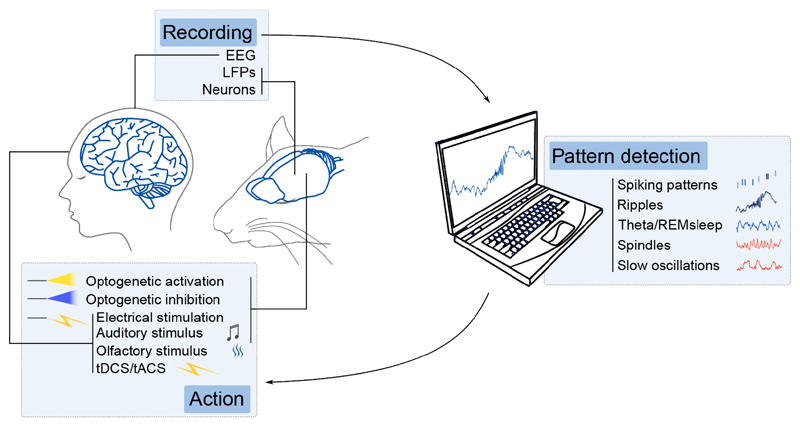
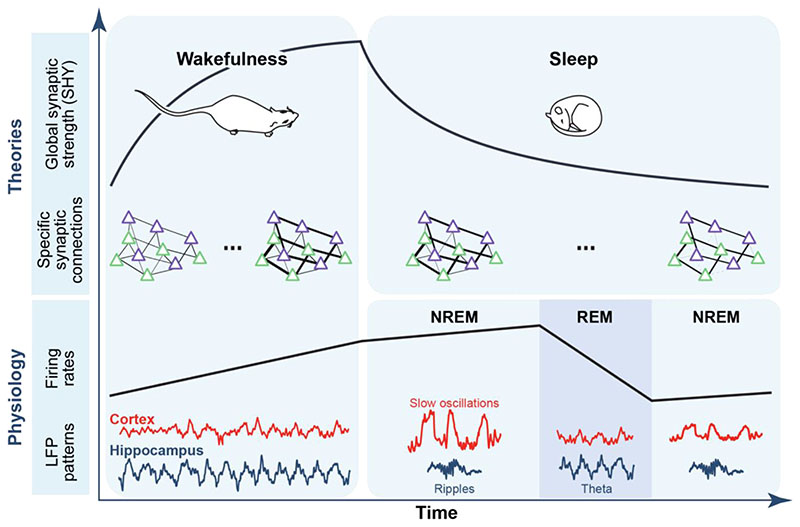
Sleep is crucial for healthy cognition, including memory. The two main phases of sleep, REM (rapid eye movement) and non-REM sleep, are associated with characteristic electrophysiological patterns that are recorded using surface and intracranial electrodes. These patterns include sharp-wave ripples, cortical slow oscillations, delta waves, and spindles during non-REM sleep and theta oscillations during REM sleep. They reflect the precisely timed activity of underlying neural circuits. Here, we review how these electrical signatures have been guiding our understanding of the circuits and processes sustaining memory consolidation during sleep, focusing on hippocampal theta oscillations and sharp-wave ripples and how they coordinate with cortical patterns. Finally, we highlight how these brain patterns could also sustain sleep-dependent homeostatic processes and evoke several potential future directions for research on the memory function of sleep.
Overview
The claims and statistics of this paper haven’t been checked yet.
Free: it reads the open-access text and checks the first 5 claims that cite a source we can check. Create a free account to check every claim.
Integrity signals
Registry
Cites
Statistics
Figures

Verification
Claims the paper makes
The claims and statistics of this paper haven’t been checked yet.
Free: it reads the open-access text and checks the first 5 claims that cite a source we can check. Create a free account to check every claim.
Self-check
Percentages, sums and reported differences re-computed from the paper’s own numbers.
The self-check needs the paper’s full text.
Citations
Cites
Reactivation of hippocampal ensemble memories during sleep
Wilson, M. A., & McNaughton, B. L. (1994) · Science · doi:10.1126/science.8036517 · Cited by 3,118
Boosting slow oscillations during sleep potentiates memory
Marshall, L., Helgadóttir, H., Mölle, M., & Born, J. (2006) · Nature · doi:10.1038/nature05278 · Cited by 1,792
Hippocampal sharp wave-ripple: A cognitive biomarker for episodic memory and planning
Buzsáki, G. (2015) · Hippocampus · doi:10.1002/hipo.22488 · Cited by 1,759
Two-stage model of memory trace formation: A role for “noisy” brain states
Buzsáki, G. (1989) · Neuroscience · doi:10.1016/0306-4522(89)90423-5 · Cited by 1,709
Selective suppression of hippocampal ripples impairs spatial memory
Girardeau, G., Benchenane, K., Wiener, S. I., Buzsáki, G., & Zugaro, M. B. (2009) · Nature Neuroscience · doi:10.1038/nn.2384 · Cited by 1,560
Self-citationMechanisms of systems memory consolidation during sleep
Klinzing, J. G., Niethard, N., & Born, J. (2019) · Nature Neuroscience · doi:10.1038/s41593-019-0467-3 · Cited by 1,176
Temporally structured replay of awake hippocampal ensemble activity during rapid eye movement sleep
Louie, K., & Wilson, M. A. (2001) · Neuron · doi:10.1016/s0896-6273(01)00186-6 · Cited by 1,148
Disruption of ripple‐associated hippocampal activity during rest impairs spatial learning in the rat
Ego‐Stengel, V., & Wilson, M. A. (2010) · Hippocampus · doi:10.1002/hipo.20707 · Cited by 842
Cortical firing and sleep homeostasis
Vyazovskiy, V. V., Olcese, U., Lazimy, Y. M., Faraguna, U., Esser, S. K., Williams, J. C., Cirelli, C., & Tononi, G. (2009) · Neuron · doi:10.1016/j.neuron.2009.08.024 · Cited by 740
Causal evidence for the role of REM sleep theta rhythm in contextual memory consolidation
Boyce, R., Glasgow, S. D., Williams, S., & Adamantidis, A. (2016) · Science · doi:10.1126/science.aad5252 · Cited by 696
Cited by
Items 201–292 of 292
Echoes in the night: How sleep quality influences auditory health
Zhang, P., An, X., Yang, R., Qi, M., Gao, Z., Zhang, X., Wu, Z., Zheng, Z., Dong, X., Wang, W., et al. (2025) · Neuroscience · doi:10.1016/j.neuroscience.2025.04.039 · Cited by 1
Neuronal synchronization in Drosophila
Fernández-Chiappe, F., Wappner, M., Morelli, L. G., & Muraro, N. I. (2025) · iScience · doi:10.1016/j.isci.2025.112942 · Cited by 1
“12,13 In the fly, neuronal oscillatory activity gives rise to brain rhythms as well, and these rhythms have been associated with different behavioral states.”
Lin, C.-W., Lee, J.-T., Chu, Y., Chen, C.-W., Wu, C.-H., She, S.-C., Kuo, T. B. J., Huang, S., & Yang, C. C. H. (2025) · Sleep Medicine · doi:10.1016/j.sleep.2025.106676 · Cited by 1
Sirpal, P., & Refai, H. H. (2025) · Array · doi:10.1016/j.array.2025.100549 · Cited by 2
Effects of Electroacupuncture on p-Chlorophenylalanine-Induced Insomnia Mice
Du, F., Cao, S., Guo, S., Hou, G., Li, K., Zhao, C., Zhang, S., Zhao, L., Yue, Q., & Su, L. (2025) · Innovations in Acupuncture and Medicine · doi:10.1186/s44424-025-00026-y · Cited by 3
“Its synaptic plasticity plays an essential role in sleep-dependent memory consolidation [38, 39].”
Dreaming reflects neural resynchronization after sleep-dependent neuroplastic adaptations.
Schulze, H. G. (2023) · Dreaming · doi:10.1037/drm0000250 · Cited by 1
Wu, S., Peng, H., Deng, H., Guo, Z., Jiang, Z., & Mu, Q. (2024) · Sleep And Breathing · doi:10.1007/s11325-024-03018-z · Cited by 1
“Human sleep is associated with characteristic electro-physiological patterns that reflect the precisely timed activity of underlying neural circuits [15], and insomnia-related symptoms are correlated with resting-state fMRI-based brain network aberrations [16, 17].”
Waking Up Brain with Electrical Stimulation to Boost Memory in Sleep: A Neuroscience Exploration
Zhong, Z., Yan, F., & Xie, C. (2024) · Neuroscience Bulletin · doi:10.1007/s12264-024-01200-7 · Cited by 4
“Sleep is widely recognized as a crucial factor for long-term memory consolidation, but the exact mechanisms by which the brain coordinates neural activity across different regions during sleep to reorganize and integrate memories are unknown [1, 2].”
Preoptic area influences sleep-related seizures in a genetic epilepsy mouse model
Potesta, C. V., Cargile, M., Yan, A., Xiong, S., Macdonald, R. L., Gallagher, M. J., & Zhou, C. (2025) · Cerebral Cortex · doi:10.1093/cercor/bhaf187 · Cited by 1
“…(Contreras and Steriade 1995, Steriade and Contreras 1995, Contreras et al. 1996 , McCormick and Contreras 2001), which favors either sleep spindle incidence within cortex of the wt mice (Kandel and Buzsaki 1997, Andrillon et al. 2011, Girardeau and Lopes-Dos-Santos 2021) ( Supplemental Fig.”
Yuan, X., Zheng, H., Xu, X., Deng, H., Yang, X., & Xi, Y. (2022) · bioRxiv (Cold Spring Harbor Laboratory) · doi:10.1101/2022.09.26.509486 · Cited by 1
“Previous studies have reported that morning activity bouts are mainly controlled by PDF+ LNvs (Chatterjee and Rouyer, 2016; Grima et al., 2004).”
BackgroundOrtega, R. S., Simor, P., & Peigneux, P. (2023) · bioRxiv (Cold Spring Harbor Laboratory) · doi:10.1101/2023.05.08.539563 · Cited by 1
Xu, X., Gong, Z., Jin, K., Huang, P., Zhou, C. Y., Zeng, Q., Teng, J., Liu, Z., Zhang, H., Qian, X., et al. (2023) · medRxiv · doi:10.1101/2023.05.22.23290180 · Cited by 1
Emotional association enhances perceptual memory through amygdalo-cortical inputs during NREM sleepPreprint
Saito, Y., Osako, Y., Odagawa, M., Oisi, Y., Matsubara, C., Kato, S., Kobayashi, K., Morita, M., Johansen, J. P., & Murayama, M. (2023) · bioRxiv (Cold Spring Harbor Laboratory) · doi:10.1101/2023.05.23.541852 · Cited by 1
Serotonin modulates infraslow oscillation in the dentate gyrus during Non-REM sleepPreprint
Turi, G. F., Teng, S., Chen, X., Lim, E. C., Dias, C., Hu, R., Wang, R., Zhen, F., & Peng, Y. (2025) · eLife · doi:10.7554/elife.100196.2 · Cited by 3
Lin, Y., Wu, L., Wiggin, T. D., Su, X., Yan, W., Li, H., Li, L., Lu, Z., Li, Y., Meng, Z., et al. (2025) · eLife · doi:10.7554/elife.104862.1 · Cited by 1
Brain Connectivity: When too much of a good thing is not so good
Holmes, G. L. (2022) · Clinical Neurophysiology · doi:10.1016/j.clinph.2022.09.016
Curia, G., Estrada-Camarena, E. M., Manjarrez, E., & Mizuno, H. (2022) · Frontiers in Neuroscience · doi:10.3389/fnins.2022.1052089
“Analysis of the waveforms can increase knowledge about brain functionality, providing suitable electrical biomarkers to detect a disorder or to follow its progression (Levenstein et al., 2017; Trenado et al., 2019; Girardeau and Lopes-dos-Santos, 2021; Speers and Bilkey, 2021).”
BackgroundRuelas, M., Fuentes-Aguilar, R. Q., & Medina‐Ceja, L. (2023) · doi:10.22541/au.168511864.47722631/v1
Sleep-Dependent Memory Replay Enables Brain-Like Robustness in Neural Networks
Xie, S., Tang, T., Feng, L., Lin, F., & Wei, Y. (2023) · Lecture notes in computer science · doi:10.1007/978-981-99-6483-3_19
Lin, Y., Wu, L., Wiggin, T. D., Su, X., Yan, W., Li, H., Li, L., Lu, Z., Guo, F., Meng, Z., et al. (2023) · bioRxiv (Cold Spring Harbor Laboratory) · doi:10.1101/2023.10.23.563499 · Cited by 1
Finan, P. H., Colloca, L., Iacovides, S., & Lavigne, G. J. (2023) · Oxford University Press eBooks · doi:10.1093/med/9780197645444.003.0009
Correlation Between Sleep Duration and Visual Acuity: A Single Center Study
Arianto, H. F., Pasaribu, I. A., & Artati, I. R. (2023) · Vision Science and Eye Health Journal · doi:10.20473/vsehj.v3i1.2023.1-7
Ahmad, M., Kim, J., Dwyer, B. E., Sokoloff, G., & BLUMBERG, M. S. (2023) · bioRxiv (Cold Spring Harbor Laboratory) · doi:10.1101/2023.12.16.572000
Matsumoto, N. (2023) · YAKUGAKU ZASSHI · doi:10.1248/yakushi.23-00169
Liu, Y., Lin, W. C., Liu, J., & Zhu, H. (2024) · Heliyon · doi:10.1016/j.heliyon.2024.e24649
Research Progress on the Effect of Vitamin D on Sleep and Its Potential Mechanisms
孜拉来古丽, ·. (2024) · Advances in Clinical Medicine · doi:10.12677/acm.2024.142472
Clinical Study on the Application of Sleep Health Management System in Insomnia Problem populationPreprint
Meng, Y., Hu, L., Zhang, Y., & ZHANG, L. (2024) · Research Square · doi:10.21203/rs.3.rs-3958153/v1
Grove, D. M., & McConnell, B. V. (2024) · Elsevier eBooks · doi:10.1016/b978-0-323-95702-1.00157-3
The Connection Between Mental Performance and Sleep
Özkan, E. B., & Gürsul, C. (2024) · New Trends in Medicine Sciences · doi:10.56766/ntms.1451473
Python/NEURON code for simulating biophysically realistic thalamocortical dynamics during sleep
Fink, C. G., Šanda, P., Bayer, L., Abeysinghe, E., Bazhenov, M., & Krishnan, G. P. (2024) · Software Impacts · doi:10.1016/j.simpa.2024.100667
“Many clues have surfaced over the past few decades, with neural activity during mammalian sleep exhibiting a rich repertoire of rhythms associated with memory consolidation [1,2], toxin clearance [3], and regulation of synaptic strength [4].”
BackgroundIjaz, B., Bukhari, M. H., & Kareem, O. (2024) · Annals of King Edward Medical University · doi:10.21649/akemu.v30i2.5474 · Cited by 3
Rina, A. S., Moniruzzaman, M., & Muzammil, M. A. (2024) · Journal of Clinical Neuroscience · doi:10.1016/j.jocn.2024.110842
The posterior hypothalamic area as an independent generator of rhythmic theta oscillatory activity
Pszczółkowska, K., & Kowalczyk, T. (2024) · Acta Universitatis Lodziensis Folia Biologica et Oecologica · doi:10.18778/1730-2366.18.07
“…many physiological processes, such as spatial navigation (Caplan et al ., 2003; Chrastil et al ., 2022), paradoxical sleep (Cantero et al ., 2003; Girardeau and Lopes-Dos-Santos, 2021), language processes (Cross et al ., 2022; Mitchell et al ., 2008), or performing arithmetic operations and…”
BackgroundNeuronal synchronization in DrosophilaPreprint
Fernández-Chiappe, F., Wappner, M., Morelli, L. G., & Muraro, N. I. (2024) · bioRxiv (Cold Spring Harbor Laboratory) · doi:10.1101/2024.09.19.613913
An Explanation for Dreaming Based on Neuronal MaintenancePreprint
Grinde, B. (2026) · Qeios · doi:10.32388/drh3h4.3
Zhang, R., Rana, M. S., Huang, L., & Qian, K. (2024) · Research Square · doi:10.21203/rs.3.rs-5424697/v1
Qi, H.-Z., Han, Y., Zhao, B.-H., & Lin, Q. (2024) · International Conference on Information Science and Technology · doi:10.1109/icist63249.2024.10805431
Torres-Platas, S. G., Yamazaki, E. M., Paller, K. A., Stickgold, R., & Schechtman, E. (2025) · Elsevier eBooks · doi:10.1016/b978-0-443-15754-7.00077-8
Lin, Y., Wu, L., Wiggin, T. D., Su, X., Yan, W., Li, H., Li, L., Lu, Z., Guo, F., Meng, Z., et al. (2026) · eLife · doi:10.7554/elife.104862 · Cited by 2
Serotonin modulates infraslow oscillation in the dentate gyrus during Non-REM sleepPreprint
Turi, G. F., Teng, S., Chen, X., Lim, E. C., Dias, C., Hu, R., Wang, R., Zhen, F., & Peng, Y. (2025) · eLife · doi:10.7554/elife.100196.3 · Cited by 4
Silva, A., & Girardeau, G. (2025) · Neuron · doi:10.1016/j.neuron.2025.02.024
Self-citationWang, X., & Tang, B. (2024) · doi:10.1145/3722237.3722323
“Lack of sleep quality was potentially the most significant variable, as it plays an important role in the recovery and integration of all brain functions [23].”
An Explanation for Dreaming Based on Neuronal MaintenancePreprint
Grinde, B. (2025) · Qeios · doi:10.32388/drh3h4
Ono, A., Iwatani, Y., Yoshizaki, A., Nishimura, T., Mohri, I., Kagitani‐Shimono, K., & Taniike, M. (2025) · Clocks & Sleep · doi:10.3390/clockssleep7020025
“Sleep is essential for various brain functions, including memory, learning, and emotional regulation [1–3].”
Hu, J., Bai, D., & Lei, X. (2025) · Advances in Psychological Science · doi:10.3724/sp.j.1042.2025.1321
Brain Regions Associated with Long-Term Memory
Slotnick, S. D. (2025) · Cambridge University Press eBooks · doi:10.1017/9781009322386.004
Role of the Hippocampus in Time and Memory
Aslan, B. (2025) · Springer eBooks · doi:10.1007/978-3-031-88907-3_16
Li, Z., Zhang, F., Zhou, Y., Lin, M., Zhang, B., Wu, X., Qiao, Q., & Gan, W. (2025) · Sleep research. · doi:10.1002/slp2.70008
An Explanation for Dreaming Based on Neuronal MaintenancePreprint
Grinde, B. (2025) · Qeios · doi:10.32388/drh3h4.2
Lv, X., Liu, J., Ma, S., Wang, Y., Pan, Y., Qiu, X., Cao, Y., Sun, B., & Zhan, S. (2025) · Journal of Zhejiang University SCIENCE B · doi:10.1631/jzus.b2400048
“In the absence of abnormalities, SO-spindle nest ‐ ing is a factor in maintaining sleep stability (Malkani and Zee, 2020; Girardeau and Lopes-Dos-Santos, 2021).”
Effects of Improved Sleep and Gastric Vagotomy on Serum Inflammatory Mediators in Peptic Ulcer Rats
Du, H., Peng, L., Gong, G., Xiao, S., Lin, R., Huang, K., Wu, M., Wei, N., Cai, W., & Chen, H. (2025) · Neurogastroenterology & Motility · doi:10.1111/nmo.70136
“…research on sleep has found that good sleep can accelerate cerebrospinal fluid flow and renewal [19], which helps in clearing metabolic products and repairing neuronal DNA [20], contributes to the regulation of synaptic homeostasis [21], and sleep deprivation may affect inflammatory responses.”
Early Sleep-Dependent Sensory Gating in the Olfactory SystemPreprint
Serantes, D., Gallo, D., García, A., González, J., Mendoza, M., Lagos, P., Torterolo, P., & Cavelli, M. (2025) · bioRxiv (Cold Spring Harbor Laboratory) · doi:10.1101/2025.11.04.686664
“Despite the high cost of sensory disconnection, the brain willingly enters this state daily — implying that this isolation serves a vital function, such as supporting synaptic homeostasis or offline neural processing (Girardeau and Lopes-Dos-Santos, 2021; Tononi and Cirelli, 2014).”
Yang, X., Wu, Z., Wang, Z., Wang, L., Xia, S., Li, W., & He, G. (2025) · Biology · doi:10.3390/biology14111560
The Performance Differences between CWT-CNN and STFT-CNN Under Different Sleep Classification Modes
Ran, G., Luo, R., Chen, W., & Lai, D. (2025) · International Conference on Biomedical Signal and Image Processing (ICBIP) · doi:10.1109/icbip66535.2025.11284492
Multi-scale disruption of sleep-related cortical activity following ischemic lesionsPreprint
Cota, V. R., Corso, S. D., Barban, F., Carè, M., & Chiappalone, M. (2025) · bioRxiv (Cold Spring Harbor Laboratory) · doi:10.64898/2025.12.19.695488
“…hippocampal ripples supports the reverberation of memory traces-related activity (Ribeiro et al. 2004; Born and Wilhelm 2012; Girardeau et al. 2009; Girardeau and Lopes-Dos-Santos 2021; Diekelmann and Born 2010), which then guides neurochemical cascades for due plastic changes (Ribeiro et al.…”
Coria-Lucero, C. D., Lopez, M., Gomez-Mejiba, S., Ramírez, D. C., Delsouc, M. B., CASAIS, M. A. R. I. L. I. N. A., Alba, R., Leporatti, J., Delgado, S. M., Anzulovich, A. C., et al. (2025) · Brain Research · doi:10.1016/j.brainres.2025.150135
Neurodynamic-constrained psychophysical modelling for vehicle noise-induced sportiness perception
Ni, K., & Huang, Y. (2026) · The Journal of the Acoustical Society of America · doi:10.1121/10.0042192
Li, J., Yang, B., Gao, P., Feng, D., Shao, X., Cai, X., Huang, S., Huang, Y., Wa, Q., & Zhou, J. (2026) · JMIR Formative Research · doi:10.2196/79008
“It is essential for key functions, such as memory consolidation, emotional processing, and neural recovery, helping to maintain neurotransmitter balance [49].”
Tian, L., Chen, Y., Meiling, L. I. N., Dong, C. H. E. N., & Wang, L. (2026) · Advances in Psychological Science · doi:10.3724/sp.j.1042.2026.0191
They Only Come Out at Night: The Brain’s Role in Nighttime Hallucinations
Maffeo, M. L. (2026) · Cambridge University Press eBooks · doi:10.1017/9781009322348.005
Chen, X., Gong, W., Lyu, X., Shi, H., Li, X., Zhu, Q., Zheng, C., & Fu, C. (2026) · Frontiers in Neuroscience · doi:10.3389/fnins.2026.1719666
Oscillatory network synergy across brain regions and states orchestrating memory consolidation
Wu, J., Feng, Z., Xu, Z., Wang, G., & Zhang, M. (2026) · Neuroscience · doi:10.1016/j.neuroscience.2026.03.021 · Cited by 1
Early Sleep-Dependent Sensory Gating in the Olfactory SystemPreprint
Serantes, D., Gallo, D., García, A., González, J., Mendoza, M., Lagos, P., Torterolo, P., & Cavelli, M. (2026) · eLife · doi:10.7554/elife.110120.1
Early Sleep-Dependent Sensory Gating in the Olfactory SystemPreprint
Serantes, D., Gallo, D., García, A., González, J., Mendoza, M., Lagos, P., Torterolo, P., & Cavelli, M. (2026) · eLife · doi:10.7554/elife.110120
Rethinking how memories are retrieved
Pizzarelli, R., & Griguoli, M. (2026) · eLife · doi:10.7554/elife.111126
Neuronal mechanisms underlying contextual fear memory discrimination
Kim, H.-R. (2022) · theses.fr (ABES) · doi:10.70675/b6bffbc6zd1e1z4025za332za1476940d5da
Zheng, W., & Geng, D. (2026) · iScience · doi:10.1016/j.isci.2026.115683
“4,7,48 From a translational perspective, impaired hippocampal-pre-frontal communication may represent a common mechanism linking sleep disturbances to psychiatric and neurodegenerative disorders, including depression, Alzheimer’s disease, and schizophrenia.”
Zhang, X., Wang, Z., Sun, M., Bao, Q., Chen, Z., Liu, Y., Wang, Z., Ye, F., Yang, Z., Du, X., et al. (2026) · PLoS ONE · doi:10.1371/journal.pone.0346717
“Furthermore, sleep plays a critical role in healthy cognition, including memory formation [64].”
Zhang, R., Sun, H., Di, Y., Cao, H., Zhang, C., Yao, H., Yan, H., Ding, D., He, Q., & Wu, T. (2026) · Frontiers in Psychiatry · doi:10.3389/fpsyt.2026.1727576
Rodrigues, H. C., Belal, R., Joshi, G., Rathore, T., Joshi, K., & Verma, K. (2026) · Sleep Medicine · doi:10.1016/j.sleep.2026.108998
Uslu, S., & Kantar, D. (2026) · Cognitive Neurodynamics · doi:10.1007/s11571-026-10457-9
“…and socioeconomic conditions—promoting healthy aging has become a critical further understanding of age-related cognitive decline, as sleep plays a crucial role in memory consolidation and neural restoration (Borbély et al. 1981, Girardeau and Lopes-Dos-Santos 2021, Klinzing et al. 2019).”
George, M., & Andrillon, T. (2026) · Elsevier eBooks · doi:10.1016/b978-0-443-33651-5.00024-0
Homeostatic Coupling of Cortical and Brainstem Delta Rhythms in Sleeping Infant Rats
Ahmad, M., Sokoloff, G., & BLUMBERG, M. S. (2026) · Journal of Neuroscience · doi:10.1523/jneurosci.0802-26.2026
The impact of sleep on memory consolidation
Alves, T. H., & Rosler, J. R. (2025) · International Journal of Neurology · doi:10.62486/ijn2025106
“(2,12,13) For example, sleep improves the retention of new words, which enhances both the ability to recall them and the ability to recognize them.”
Jaeger, C. (2026) · Springer eBooks · doi:10.1007/978-3-032-20450-9_6
Peng, C., Yang, F., Li, F., Zhu, R., Li, L., Zhang, Z., You, J., Wang, R., Qin, Y., & Xu, S. (2026) · Brain and Behavior · doi:10.1002/brb3.71514
“Sleep plays a critical role in brain development, and is essential for human cognitive function (Girardeau and Lopes-Dos-Santos 2021 ; Mason et al. 2021 ).”
Shuster, A. E., McDevitt, E. A., & Mednick, S. C. (2026) · Journal of Sleep Research · doi:10.1111/jsr.70362
Brain oscillations and sleep microarchitecture: From EEG to fMRI
Kumar, A. A., Trasorras, E. C., Haitham, N., Qatanany, B., Sharafkhaneh, A., Rao, K. S. J., & Nami, M. (2026) · Progress in brain research · doi:10.1016/bs.pbr.2026.07.003
Neural mechanisms and architecture of sleep
Salim, M., Qatanany, B., Sharafkhaneh, A., Rao, K. S. J., & Nami, M. (2026) · Progress in brain research · doi:10.1016/bs.pbr.2026.07.006
Cui, D., Wang, X., Ai, R., Gao, F., Sun, H., Zhang, Y., Lyu, Y., Zhang, Z., Li, W., Qin, Y., et al. (2026) · Nature Communications · doi:10.1038/s41467-026-75162-x
“NREM and REM sleep play crucial and complementary roles in social memory consolidation 13 .”
The impact of sleep on resident clinical reasoning: a scoping review
Capaldi, V. F., Aidara, Y., Flores, B., Dupont, J., Kim, E., Simonelli, G., Durning, S. J., & Jung, E. (2026) · Diagnosis · doi:10.1515/dx-2026-0024
“Medical residents, above all, are medical learners, and over the last 20 years, it has been established that sleep is essential for learning and memory consolidation [10].”
Key circuits through which sleep affects memory and their role in Alzheimer's disease
Shen, B., Zhu, Z., Qing, H., & Quan, Z. (2026) · Journal of Alzheimer s Disease · doi:10.1177/13872877261479999 · Cited by 2
“57 61 Sleep can be divided into different stages based on the distinct characteristics of neural activity during sleep, and different sleep stages play different roles in memory consolidation.”
The DYNAM-O Toolbox: Characterizing Individualized Neural Signatures in Sleep EEGPreprint
He, M., Saremsky, S. R., Noamany, H., Chen, S., & Prerau, M. J. (2026) · bioRxiv (Cold Spring Harbor Laboratory) · doi:10.64898/2026.08.26.747401
The use of Drosophila to study sleep impairments in stimulant use disorder
Miles, M., Karatas, M., & Rothenfluh, A. (2026) · Frontiers in Cell and Developmental Biology · doi:10.3389/fcell.2026.1913395
Dopamine modulation of motor and implicit learning contributions to auditory temporal attention
Zalta, A., Spitz, L.-F., Schnitzler, A., Morillon, B., & Florin, E. (2026) · iScience · doi:10.1016/j.isci.2026.117541
“Since sleep can also positively influence learning, 78,79 further investigation is needed to clarify whether the observed learning effect stems from dopaminergic modulation, sleep-related consolidation, or both—especially given that our results are consistent with all these explanations.”
Sleep-dependent microglial functions in Alzheimer’s disease
Calafate, S., & Mancuso, R. (2026) · Trends in Neurosciences · doi:10.1016/j.tins.2026.09.005
Lin, Y., Wu, L., Wiggin, T. D., Su, X., Yan, W., Li, H., Li, L., Lu, Z., Guo, F., Meng, Z., et al. (2026) · eLife · doi:10.7554/elife.104862.4
Sleep disorders among patients with chronic pancreatitis: A review
Jia-xin, J., Wang, D., & Hu, L.-H. (2026) · World Chinese Journal of Digestology · doi:10.11569/wcjd.v34.i9.728
An explanation for dreaming based on neuronal maintenance
Grinde, B. (2026) · Heliyon · doi:10.1016/j.heliyon.2026.e45550
Sleep EEG oscillations and synaptic plasticity in memory consolidation across NREM and REM sleep
Chen, Y., Zhao, M., Cao, X., Zhou, G., & Zhang, Y. (2026) · Dialogues in Clinical Neuroscience · doi:10.1080/19585969.2026.2744744
“…during SwRs, with cortical activity both triggering hippocampal ripples and being reshaped by ripple-linked replay (Adamantidis et al. 2019; Girardeau and lopes-dos-Santos 2021). causal manipulations high-light that it is not simply the occurrence, but the context and patterning of SwRs…”
An acetylcholine-inhibited sleep-active hippocampal interneuron orchestrates memory consolidation
Feng, Y., Dai, Q., Fei, X., Yang, H., Jiang, T., Liu, Z., Ye, L., Lin, Z., Gao, S., Hu, R., et al. (2026) · Neuron · doi:10.1016/j.neuron.2026.09.031 · Cited by 1
Liu, Y., Huang, J., Tang, N., Wang, M., Song, L., Deng, Q., Yuan, X., Che, J., Li, W., Xiao, C., et al. (2026) · Neurobiology of Disease · doi:10.1016/j.nbd.2026.107668
Metadata
- Authors
- Girardeau, G., & Lopes-dos-Santos, V.
- Affiliations
- Inserm (FR)
- Medical Research Council Brain Network Dynamics Unit, Nuffield Department of Clinical Neurosciences, University of Oxford, Oxford OX1 3TH, UK.
- Corresponding author
- Girardeau, Gabrielle
- ORCID
- Girardeau, Gabrielle
- Venue
- Science
- Published
- 2021-10-29
- Volume
- 374
- Issue
- 6567
- Pages
- 560-564
- ISSN
- 0036-8075 (ISSN-L)
- 1095-9203
- PMC
- PMC7611961
- OpenAlex
- W3201690972
- Cited by
- 293
- References
- 48
- Citations by year
- 2026: 45 · 2025: 79 · 2024: 83 · 2023: 58 · 2022: 27 · 2021: 1
- FWCI
- 6.24
- Type
- journal article
- Language
- en
- Open access
- hybrid
- doi.org
- Licence
- cc-by
- Locations
- Science (publishedVersion, cc-by)
- PubMed (publishedVersion)
- Europe PMC (PubMed Central) (acceptedVersion, cc-by)
- PubMed Central (acceptedVersion, cc-by)
- HAL (submittedVersion, other-oa)
- Funders
- Schlumberger Foundation
- National Alliance for Research on Schizophrenia and Depression
- Fondation Fyssen
- Medical Research Council (MC_UU_00003, MC_UU_00003/4)
- Topics
- Life Sciences › Neuroscience › Cognitive Neuroscience › Sleep and Wakefulness Research
- Life Sciences › Neuroscience › Cognitive Neuroscience › Memory and Neural Mechanisms
- Life Sciences › Neuroscience › Cognitive Neuroscience › Neural dynamics and brain function
- Keywords
- sleep and memory, memory consolidation, REM sleep, NREM sleep, hippocampal theta oscillations, sharp-wave ripples, sleep spindles, delta oscillations, neural circuits, sleep homeostasis
- MeSH terms
- Memory Consolidation, Animals, Cerebral Cortex, Hippocampus, Homeostasis, Humans, Neural Pathways, Sleep Stages, Sleep, REM, Theta Rhythm, Brain Waves
About these checks
Registry, retraction, Cites and statistics results are computed, not judged, with one exception: a printed reference that no index lists is read once by a model before it counts as a citation error. Claims are extracted by a model and kept only when their quote appears verbatim in the text; each cited source is then checked, with a model’s help, for whether it says what the claim relies on. Those verdicts can be wrong — read the claim’s quote and the cited source before relying on one.
Statistics and arithmetic are recomputed, not judged.
Confidence bands are shown only for fields calibrated on our annotated test set. None is calibrated yet, so no band is shown.
What counts as a claim ›How we measure confidence ›How we check this ›
Are you an author, or do you see a problem with this page? Request a review
Data sources
Bibliographic data: Semantic Scholar, OpenAlex, Crossref.
Contains information from the Semantic Scholar Academic Graph Datasets, made available under the ODC Attribution License (ODC-BY 1.0).
Semantic Scholar’s data is described in: Kinney, R., et al. (2023). The Semantic Scholar Open Data Platform. arXiv:2301.10140.
