

Emergence of Echinocandin Resistance Due to a Point Mutation in the fks1 Gene of Aspergillus fumigatus in a Patient with Chronic Pulmonary Aspergillosis
Open accessThe DOI matches its Crossref record; 16 of the 16 references it cites were found in a registry or an index.
Abstract
We have identified the first case of an fks1 hot spot 1 point mutation causing echinocandin resistance in a clinical Aspergillus fumigatus isolate recovered from a chronic pulmonary aspergillosis patient with an aspergilloma who first failed azole and polyene therapy and subsequently failed micafungin treatment.
Overview
The claims and statistics of this paper haven’t been checked yet.
Free: it reads the open-access text and checks the first 5 claims that cite a source we can check. Create a free account to check every claim.
Integrity signals
Registry
Cites
Statistics
Figures
Verification
Claims the paper makes
The claims and statistics of this paper haven’t been checked yet.
Free: it reads the open-access text and checks the first 5 claims that cite a source we can check. Create a free account to check every claim.
Claims other papers make about this one
Each is checked against this paper’s own text: does it say what the citing paper says it does?
The source backs part of the claim, not all of it — or backs it for a different population, condition or comparison.
In the citing paper
“echinocandin-resistant mutants can be induced easily in vitro (630, 631), and hot spots for point mutations inducing the resistance to amphotericin were identified in A. fumigatus after use of natamycin (632–634) and are starting to be seen in laboratories (635, 636).”
From Aspergillus fumigatus and Aspergillosis in 2019 (2019) · cites this paper as [631]
Experimental — accuracy not yet measured
Self-check
Percentages, sums and reported differences re-computed from the paper’s own numbers.
The self-check needs the paper’s full text.
Citations
Cites
Antifungal drug resistance: mechanisms, epidemiology, and consequences for treatment
Pfaller, M. A. (2012) · The American Journal of Medicine · doi:10.1016/j.amjmed.2011.11.001 · Cited by 903
Prospective Multicenter International Surveillance of Azole Resistance in Aspergillus fumigatus
van der Linden, J. W. M., Arendrup, M. C., Warris, A., Lagrou, K., Pelloux, H., Hauser, P. M., Chryssanthou, E., Mellado, E., Kidd, S. E., Tortorano, A. M., et al. (2015) · Emerging Infectious Diseases · doi:10.3201/eid2106.140717 · Cited by 371 · cited 9×
“has been linked to mutations in the FKS genes, which encode the -(1,3)-glucan synthase enzymes (9–11).”
BackgroundMethodResultSelf-citationGarcia-Effron, G., Katiyar, S. K., Park, S., Edlind, T. D., & Perlin, D. S. (2008) · Antimicrobial Agents and Chemotherapy · doi:10.1128/aac.00262-08 · Cited by 323
Self-citationGarcia-Effron, G., Lee, S., Park, S., Cleary, J. D., & Perlin, D. S. (2009) · Antimicrobial Agents and Chemotherapy · doi:10.1128/aac.00443-09 · Cited by 323
Self-citationAzole-resistance in Aspergillus: Proposed nomenclature and breakpoints
Verweij, P. E., Howard, S. J., Melchers, W. J. G., & Denning, D. W. (2009) · Drug Resistance Updates · doi:10.1016/j.drup.2009.09.002 · Cited by 260
Self-citationGarcia-Effron, G., Park, S., & Perlin, D. S. (2009) · Antimicrobial Agents and Chemotherapy · doi:10.1128/aac.01162-08 · Cited by 256 · cited 1×
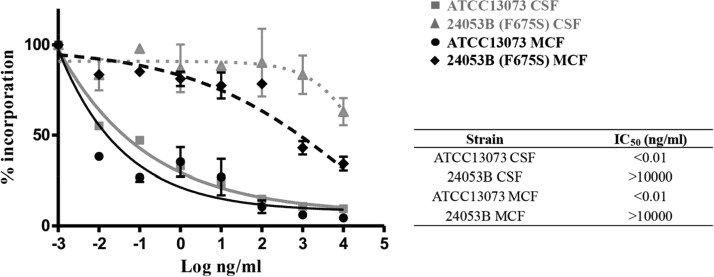
“Product-entrapped -(1,3)-glucan synthase complexes were extracted from the prototype WT strain ATCC 13073 and the 24053B clinical isolate, as previously described (10, 11), and the echinocandin inhibition parameter 50% inhibitory concentration (IC50) was determined.”
MethodSelf-citationTherapeutic Drug Monitoring of Posaconazole: an Update
Dekkers, B. G. J., Bakker, M., van der Elst, K. C. M., Sturkenboom, M. G. G., Veringa, A., Span, L. F. R., & Alffenaar, J.-W. C. (2016) · Current Fungal Infection Reports · doi:10.1007/s12281-016-0255-4 · Cited by 177
Multilocus Sequence Typing of the Pathogenic Fungus Aspergillus fumigatus
Bain, J. M., Tavanti, A., Davidson, A. D., Jacobsen, M. D., Shaw, D., Gow, N. A. R., & Odds, F. C. (2007) · Journal of Clinical Microbiology · doi:10.1128/jcm.00064-07 · Cited by 143
A Ser678Pro Substitution in Fks1p Confers Resistance to Echinocandin Drugs in Aspergillus fumigatus
Rocha, E. M. F., Garcia-Effron, G., Park, S., & Perlin, D. S. (2007) · Antimicrobial Agents and Chemotherapy · doi:10.1128/aac.00917-07 · Cited by 141
Self-citationChowdhary, A., Sharma, C., Hagen, F., & Meis, J. F. (2014) · Future Microbiology · doi:10.2217/fmb.14.27 · Cited by 130
Research works printed but not linked: 2
- Clinical and Laboratory Standards Institute. 2008 Reference method for broth dilution antifungal susceptibility testing of filamentous fungi; approved standard, vol 28 CLSI document M38-A2. Clinical and Laboratory Standards Institute, Wayne, PA.
- Clinical and Laboratory Standards Institute. 2016 Epidemiological cut off values for antifungal susceptibility testing, 1st ed CLSI document M59. Clinical and Laboratory Standards Institute, Wayne, PA.
Cited by
Aspergillus fumigatus and Aspergillosis in 2019
Latgé, J.-P., & Chamilos, G. (2019) · Clinical Microbiology Reviews · doi:10.1128/cmr.00140-18 · Cited by 1,400
The Antifungal Pipeline: Fosmanogepix, Ibrexafungerp, Olorofim, Opelconazole, and Rezafungin
Hoenigl, M., Sprute, R., Egger, M., Arastehfar, A., Cornely, O. A., Krause, R., Lass-Flörl, C., Prattes, J., Spec, A., Thompson, G. R., et al. (2021) · Drugs · doi:10.1007/s40265-021-01611-0 · Cited by 467
Drug-Resistant Fungi: An Emerging Challenge Threatening Our Limited Antifungal Armamentarium
Arastehfar, A., Gabaldón, T., Garcia-Rubio, R., Jenks, J. D., Hoenigl, M., Salzer, H. J. F., Ilkit, M., Lass-Flörl, C., & Perlin, D. S. (2020) · Antibiotics · doi:10.3390/antibiotics9120877 · Cited by 292
“Unlike complicated resistance mechanisms for azoles involving numerous components, echinocandin resistance is dominated by a single mechanism of action involving mutations in hotspots (HS) regions of FKS genes encoding amino acid substitutions within the catalytic subunits of β-1,3-D-glucan synthase [152,153].”
BackgroundSelf-citationGenomic epidemiology of the UK outbreak of the emerging human fungal pathogen Candida auris
Rhodes, J., Abdolrasouli, A., Farrer, R. A., Cuomo, C. A., Aanensen, D. M., Armstrong-James, D., Fisher, M. C., & Schelenz, S. (2018) · Emerging Microbes & Infections · doi:10.1038/s41426-018-0045-x · Cited by 246
Aspergillus fumigatus and aspergillosis: From basics to clinics
Arastehfar, A., Carvalho, A., Houbraken, J., Lombardi, L., Garcia-Rubio, R., Jenks, J. D., Rivero-Menendez, O., Aljohani, R., Jacobsen, I. D., Berman, J., et al. (2021) · Studies in Mycology · doi:10.1016/j.simyco.2021.100115 · Cited by 241
Self-citationCarolus, H., Pierson, S., Muñoz, J. F., Subotić, A., Cruz, R. B., Cuomo, C. A., & Van Dijck, P. (2021) · mBio · doi:10.1128/mbio.03333-20 · Cited by 211
The Quiet and Underappreciated Rise of Drug-Resistant Invasive Fungal Pathogens
Arastehfar, A., Lass-Flörl, C., Garcia-Rubio, R., Daneshnia, F., Ilkit, M., Boekhout, T., Gabaldon, T., & Perlin, D. S. (2020) · Journal of Fungi · doi:10.3390/jof6030138 · Cited by 145
“fumigatus F675S 2 2 ND NF NA/WT NA/WT NA/WT F675S [135]”
Self-citationPulmonary aspergillosis: diagnosis and treatment
Lamoth, F., & Calandra, T. (2022) · European Respiratory Review · doi:10.1183/16000617.0114-2022 · Cited by 181
Echinocandins for the treatment of invasive aspergillosis: from laboratory to bedside
Aruanno, M., Glampedakis, E., & Lamoth, F. (2019) · Antimicrobial Agents and Chemotherapy · doi:10.1128/aac.00399-19 · Cited by 136
“To date, only one clinical strain harboring an fks1 mutation (F675S) has been identified in a patient with chronic pulmonary aspergillosis with substantially elevated echinocandin MICs compared with the wild type after prolonged micafungin therapy (42).”
BackgroundBeardsley, J., Halliday, C. L., Chen, S. C.-A., & Sorrell, T. C. (2018) · Future Microbiology · doi:10.2217/fmb-2018-0059 · Cited by 124
Fungal Drug Response and Antimicrobial Resistance
Osset-Trénor, P., Pascual‐Ahuir, A., & Proft, M. (2023) · Journal of Fungi · doi:10.3390/jof9050565 · Cited by 119
Rogers, T. R., Verweij, P. E., Castanheira, M., Dannaoui, E., White, P. L., Arendrup, M. C., Subcommittee on Antifungal Susceptibility Testing (AFST) of the ESCMID European Committee for Antimicrobial Susceptibility Testing (EUCAST), Arendrup, M. C., Arikan-Akdagli, S., Barchiesi, F., et al. (2022) · Journal of Antimicrobial Chemotherapy · doi:10.1093/jac/dkac161 · Cited by 82
Self-citationChronic pulmonary aspergillosis update: A year in review
Barac, A. M., Kosmidis, C., Alastruey‐Izquierdo, A., Salzer, H. J. F., & CPAnet (2019) · Medical Mycology · doi:10.1093/mmy/myy070 · Cited by 80
Dickwella Widanage, M. C., Gautam, I., Sarkar, D., Mentink-Vigier, F., Vermaas, J. V., Ding, S.-Y., Lipton, A. S., Fontaine, T., Latgé, J.-P., Wang, P., et al. (2024) · Nature Communications · doi:10.1038/s41467-024-50799-8 · Cited by 70
“Mutations in the fks1 genes preventing the binding of echino-candins to the catalytic subunit FKS1 of β -1,3-glucan synthase 62,63 have been identi fi ed as responsible for the drug ’ s limited ef fi cacy.”
Lamoth, F., Lewis, R. E., & Kontoyiannis, D. P. (2020) · Journal of Fungi · doi:10.3390/jof7010017 · Cited by 70
Satish, S., Jiménez-Ortigosa, C., Zhao, Y., Lee, M. H., Dolgov, E., Krüger, T., Park, S., Denning, D. W., Kniemeyer, O., Brakhage, A. A., et al. (2019) · mBio · doi:10.1128/mbio.00779-19 · Cited by 64
“While fks1 mutations have also been linked to resistance to echinocandins in Aspergillus fumigatus (6, 7), high-minimum-effectiveconcentration (MEC) echinocandin-resistant clinical strains of A.”
BackgroundInfluentialSelf-citationFrancesco, M. A. D. (2023) · Pathogens · doi:10.3390/pathogens12111305 · Cited by 81
“Some studies have reported mutations in FSK genes [143] and changes in the lipid pro fi le around the enzyme [144] as possible mechanisms of echinocandin resistance (Figure 4).”
BackgroundSantos, R., Steenwyk, J. L., Rivero-Menéndez, O., Mead, M. E., Silva, L. P., Bastos, R. W., Alastruey‐Izquierdo, A., Goldman, G. H., & Rokas, A. (2020) · Frontiers in Genetics · doi:10.3389/fgene.2020.00459 · Cited by 65
Susceptibility testing of fungi to antifungal drugs
Sanguinetti, M., & Posteraro, B. (2018) · Journal of Fungi · doi:10.3390/jof4030110 · Cited by 55
“Reduced susceptibility of Aspergillus fumigatus isolates to echinocandins in vitro can develop via FKS-dependent and FKS-independent mechanisms [40,41].”
BackgroundThe Emerging Threat of Antifungal Resistance in Transplant Infectious Diseases
Schwartz, I. S., & Patterson, T. F. (2018) · Current Infectious Disease Reports · doi:10.1007/s11908-018-0608-y · Cited by 57
Can We Improve Antifungal Susceptibility Testing?
Durand, C., Maubon, D., Cornet, M., Wang, Y., Aldebert, D., & Garnaud, C. (2021) · Frontiers in Cellular and Infection Microbiology · doi:10.3389/fcimb.2021.720609 · Cited by 52
“fumigatus has been reported in only one clinical isolate from a patient with aspergilloma treated by azole and polyene therapy and then micafungin (Jiménez-Ortigosa et al., 2017).”
BackgroundThe pathogenicity of Aspergillus fumigatus, drug resistance, and nanoparticle delivery
Szalewski, D. A., Hinrichs, V. S., Zinniel, D. K., & Barletta, R. G. (2018) · Canadian Journal of Microbiology · doi:10.1139/cjm-2017-0749 · Cited by 54
“There has been a reported case of echinocandin resistance in an isolate recovered from a patient receiving therapy for CPA due to A. fumigatus (Jiménez-Ortigosa et al. 2017).”
BackgroundNovel Antifungal Agents and Their Activity against Aspergillus Species
Vahedi‐Shahandashti, R., & Lass‐Flörl, C. (2020) · Journal of Fungi · doi:10.3390/jof6040213 · Cited by 51
Molecular Diagnostics for Invasive Fungal Diseases: Current and Future Approaches
Pham, D., Sivalingam, V., Tang, H. M., Montgomery, J. M., Chen, S. C. ‐., & Halliday, C. L. (2024) · Journal of Fungi · doi:10.3390/jof10070447 · Cited by 60
How urgent is the need for new antifungals?
Stewart, A. G., & Paterson, D. L. (2021) · Expert Opinion on Pharmacotherapy · doi:10.1080/14656566.2021.1935868 · Cited by 36
Aspergillus fumigatus Transcription Factors Involved in the Caspofungin Paradoxical Effect
Valero, C., Colabardini, A. C., Chiaratto, J., Pardeshi, L. A., de Castro, P. A., Filho, J. A. F., Silva, L. P., Rocha, M. C., Malavazi, I., Costa, J. H., et al. (2020) · mBio · doi:10.1128/mbio.00816-20 · Cited by 40
“fumigatus has been linked to mutations in the fksA gene (coding for 1,3- -D-glucan synthase, the drug-target), representing a well-documented mechanism in Candida species (12, 13).”
BackgroundPlant as an Alternative Source of Antifungals against Aspergillus Infections: A Review
Tan, L. F., Yap, V. L., Rajagopal, M. S., Wiart, C., Selvaraja, M., Leong, M. Y., & Tan, P. L. (2022) · Plants · doi:10.3390/plants11223009 · Cited by 49
“fumigatus caused by the point mutation in the fks1 gene has been reported, causing treatment failure [45].”
BackgroundBeyond Conventional Antifungals: Combating Resistance Through Novel Therapeutic Pathways
Hetta, H. F., Melhem, T., Aljohani, H. M., Salama, A., Ahmed, R., Elfadil, H., Alanazi, F. E., Ramadan, Y. N., Battah, B., Rottura, M., et al. (2025) · Pharmaceuticals · doi:10.3390/ph18030364 · Cited by 35
Salah, H., Lackner, M., Houbraken, J. A. M. P., Theelen, B., Lass‐Flörl, C., Boekhout, T., Almaslamani, M., & Taj‐Aldeen, S. J. (2019) · Frontiers in Microbiology · doi:10.3389/fmicb.2019.01677 · Cited by 32
Arastehfar, A. A., de Almeida, J. N., Perlin, D. S., İlkit, M., Boekhout, T., & Colombo, A. L. (2021) · Critical Reviews in Microbiology · doi:10.1080/1040841x.2021.1921695 · Cited by 35
“D glucan synthase catalytic subunit have been shown to underlie echinocandin resistance in Candida (Pham et al. 2014; Arastehfar et al. 2020) and Aspergillus (Jim enez-Ortigosa et al. 2017).”
BackgroundSelf-citationRole of FKS Gene in the Susceptibility of Pathogenic Fungi to Echinocandins
Hori, Y., & Shibuya, K. (2018) · Medical Mycology Journal · doi:10.3314/mmj.18.004 · Cited by 30
The Microevolution of Antifungal Drug Resistance in Pathogenic Fungi
Boyce, K. J. (2023) · Microorganisms · doi:10.3390/microorganisms11112757 · Cited by 29
Satish, S., & Perlin, D. S. (2019) · Microbiology Insights · doi:10.1177/1178636119897034 · Cited by 25
“ABSTRACT: Echinocandin drugs target the fungal enzyme β-(1,3)-glucan synthase (GS), which is required for the synthesis of cell wall com-”
BackgroundSelf-citationValero, C., Colabardini, A. C., de Castro, P. A., Amich, J., Bromley, M. J., & Goldman, G. H. (2022) · mBio · doi:10.1128/mbio.00447-22 · Cited by 23
“fumigatus CAS resistance from patients with chronic aspergillosis (11, 12).”
BackgroundHsu, T.-H., Huang, P., Fan, Y., & Sun, P. (2022) · Journal of Fungi · doi:10.3390/jof8090908 · Cited by 23
“fumigatus related to anidulafungin exposure was reported recently [31,32].”
BackgroundDeveloping novel antifungals: lessons from G protein-coupled receptors
Velazhahan, V., McCann, B. L., Bignell, E., & Tate, C. G. (2023) · Trends in Pharmacological Sciences · doi:10.1016/j.tips.2022.12.002 · Cited by 23
Silva, A. P., Miranda, I. M., Branco, J., Oliveira, P., Faria‐Ramos, I., Silva, R. M., Rodrigues, A. G., & Costa‐de‐Oliveira, S. (2020) · Scientific Reports · doi:10.1038/s41598-020-68706-8 · Cited by 21
Meletiadis, J., Siopi, M., Kanioura, L., Jørgensen, K. M., Perlin, D. S., Mouton, J. W., & Arendrup, M. C. (2020) · Journal of Antimicrobial Chemotherapy · doi:10.1093/jac/dkaa102 · Cited by 20
Self-citationYan, K., Stanley, M., Kowalski, B., Raimi, O. G., Ferenbach, A. T., Wei, P., Fang, W., & van Aalten, D. M. F. (2022) · Journal of Biological Chemistry · doi:10.1016/j.jbc.2022.102003 · Cited by 20
Hartmann, D. O., Shimizu, K., Rothkegel, M., Petković, M., Ferraz, R., Petrovski, Ž., Branco, L. C., Lopes, J. N. C., & Pereira, C. S. (2021) · RSC Advances · doi:10.1039/d1ra00234a · Cited by 19
Meletiadis, J., Siopi, M., Kanioura, L., Jørgensen, K. M., Perlin, D. S., Mouton, J. W., & Arendrup, M. C. (2019) · Journal of Antimicrobial Chemotherapy · doi:10.1093/jac/dkz154 · Cited by 17
Self-citationBhakt, P., Raney, M., & Kaur, R. (2022) · Journal of Biological Chemistry · doi:10.1016/j.jbc.2022.102485 · Cited by 17
“Importantly, owing to a general repressive effect of CSP on ERG gene expression, our data underscore the need to revisit the combinatorial therapeutic regimen, which involves treatment of fungal infections with echinocandins along with other ergosterol-targeting drugs, polyenes (bind to ergosterol in the cell membrane…”
BackgroundAnalysis of putative quadruplex-forming sequences in fungal genomes: novel antifungal targets?
Warner, E. F., Bohálová, N., Brázda, V., Waller, Z. A. E., & Bidula, S. M. (2021) · Microbial Genomics · doi:10.1099/mgen.0.000570 · Cited by 18
Intravenous therapy for chronic pulmonary aspergillosis: A systematic review and meta‐analysis
Bongomin, F., Asio, L. G., Olum, R., & Denning, D. W. (2020) · Mycoses · doi:10.1111/myc.13131 · Cited by 17
Self-citationParanos, P., Espinel‐Ingroff, A., & Meletiadis, J. (2024) · Journal of Fungi · doi:10.3390/jof10030214 · Cited by 14
British Thoracic Society Clinical Statement on Aspergillus -related chronic lung disease
Brown, J., Armstrong-James, D. P. H., Ayling-Smith, J., Backx, M., Coleman, M., Connell, D. W., Dennison, P., Downey, D. G., Lynch, F., Lim, W. S., et al. (2025) · Thorax · doi:10.1136/thorax-2024-222567 · Cited by 15
Lysine acetylation as drug target in fungi: an underexplored potential in Aspergillus spp.
Wassano, N. S., Leite, A. B., Reichert‐Lima, F., Schreiber, A. Z., Moretti, N. S., & Damásio, A. (2020) · Brazilian Journal of Microbiology · doi:10.1007/s42770-020-00253-w · Cited by 12
“fumigatus due to a mutation in the FKS genes, which encode the β-(1,3)-glucan synthase enzymes [51, 52].”
BackgroundSpagnolo, A. M. (2025) · Hygiene · doi:10.3390/hygiene5010003 · Cited by 9
Shwab, E. K., Juvvadi, P. R., Waitt, G. M., Shaheen, S. K., Allen, J., Soderblom, E. J., Bobay, B. G., Asfaw, Y. G., Moseley, M. A., & Steinbach, W. J. (2020) · mBio · doi:10.1128/mbio.02880-20 · Cited by 11
“The effects of Atg24 PKA phosphosite mutations on the response to the antifungal caspofungin are of broad clinical relevance given the treatment resistance challenges of invasive fungal infections (48 – 51).”
Treviño‐Rangel, R. D. J., Villanueva‐Lozano, H., Bonifáz, A., Castañón-Olivares, L. R., Andrade, Á., Becerril-García, M. A., Martínez‐Reséndez, M. F., Ayala-Gaytán, J., Montoya, A. M., & González, G. M. (2021) · Medical Mycology · doi:10.1093/mmy/myab031 · Cited by 8
Examining Signatures of Natural Selection in Antifungal Resistance Genes Across Aspergillus Fungi
Santos, R., Mead, M. E., Steenwyk, J. L., Rivero-Menéndez, O., Alastruey‐Izquierdo, A., Goldman, G. H., & Rokas, A. (2021) · Frontiers in Fungal Biology · doi:10.3389/ffunb.2021.723051 · Cited by 7
“To our knowledge, literature-based evidence of point mutations among our eleven genes is only available for fks1 (Jiménez-Ortigosa et al., 2017; e Silva et al., 2020).”
BackgroundPost-transcriptional control of antifungal resistance in human fungal pathogens
Sharma, C., & Kadosh, D. (2023) · Critical Reviews in Microbiology · doi:10.1080/1040841x.2022.2080527 · Cited by 6
Signaling Pathways Governing the Caspofungin Paradoxical Effect in Aspergillus fumigatus
Papon, N., Morio, F., & Sanglard, D. (2020) · mBio · doi:10.1128/mbio.01816-20 · Cited by 5
“, the A subunit of the multimeric 1,3- -D-glucan synthase, but seems rather uncommon (4).”
BackgroundSiopi, M., Georgiou, P., Pournaras, S., & Meletiadis, J. (2023) · Journal of Antimicrobial Chemotherapy · doi:10.1093/jac/dkad306 · Cited by 4
Romero, O., Galarneau, M., Pladwig, S., Liu, B., Cox, S. L., & Geddes‐McAlister, J. (2025) · Fungal Genetics and Biology · doi:10.1016/j.fgb.2025.104016 · Cited by 2
Mechanisms of Resistance to Antifungal Agents
Perlin, D. S. (2023) · Wiley eBooks · doi:10.1002/9781683670438.mcm0134 · Cited by 2
Self-citationFactors Affecting Drug Resistance and Virulence in Fungal Pathogen
Sharma, P., Kumari, D., Kumari, P., Kumar, A., & Pasrija, R. (2024) · Springer eBooks · doi:10.1007/978-981-97-4909-6_7 · Cited by 2
Antifungal Agents and Their Role in the Management of Pulmonary Aspergillosis
Henig, O., & Ben‐Ami, R. (2024) · Springer eBooks · doi:10.1007/978-3-031-76524-7_8 · Cited by 1
Susceptibility Test Methods: Yeasts and Filamentous Fungi
Johnson, E. M., & Arendrup, M. C. (2023) · Wiley eBooks · doi:10.1002/9781683674849.mcm0135 · Cited by 3
Mechanisms of Resistance to Antifungal Agents
Perlin, D. S. (2023) · Wiley eBooks · doi:10.1002/9781683674849.mcm0134 · Cited by 1
Self-citationSusceptibility Test Methods: Yeasts and Filamentous Fungi
Johnson, E. M., & Arendrup, M. C. (2023) · Wiley eBooks · doi:10.1002/9781683670438.mcm0135 · Cited by 1
Lepak, A. J., & Andes, D. R. (2020) · Elsevier eBooks · doi:10.1016/b978-0-12-819990-9.00018-4 · Cited by 2
Epidemiology and mechanisms of antifungal resistance in Aspergillus : а review
Avtonomova, A. V., & Валерьевна, К. О. (2025) · Russian Medicine · doi:10.17816/medjrf685079
Three decades of pneumocandin research: Derivatives, structural insights, and strain engineering
Baldia, A., Rajput, D., & Dubey, K. K. (2026) · Bioresource Technology Reports · doi:10.1016/j.biteb.2026.102575
Salehi, Z., Seyedjavadi, S. S., Hasannejad-Asl, B., Sharifynia, S., Shams‐Ghahfarokhi, M., Esfahani, A., Poorabdollah, M., Eslamifar, A., Marjani, M., Jamzivar, F., et al. (2026) · Diagnostic Microbiology and Infectious Disease · doi:10.1016/j.diagmicrobio.2026.117310
Lee, Y. H., An, Y.-W., Lee, Y. J., Lee, J., Kim, S. Y., & Kang, B. (2026) · Journal of Fungi · doi:10.3390/jof12050302
Meletiadis, J., Siopi, M., Jørgensen, K. M., Escribano, P., Guinea, J., & Arendrup, M. C. (2026) · Journal of Clinical Microbiology · doi:10.1128/jcm.01763-25
Azole-resistant Aspergillus fumigatus and related species in Japan
Tashiro, M., Shirahige, T., Takazono, T., & Izumikawa, K. (2026) · Respiratory Investigation · doi:10.1016/j.resinv.2026.101458
Chen, Y., Zhou, J., Yuan, L., Xie, M., Wang, J., Zheng, J., Zhou, L., Zhang, D., & Han, D. (2026) · Mycopathologia · doi:10.1007/s11046-026-01108-y
“In A. fumigatus , reduced echinocandin susceptibility has been linked to hotspot 1 substitutions in Fks1, including S678P [25, 26], F675S [26], and E671Q [27].”
Prajapati, A., Parmar, P., Chavan, M., Chandra, V., Shekh, S., Patel, A., Sabara, P., Kanani, A., Bagatharia, S., & Jha, C. K. (2026) · Frontiers in Microbiology · doi:10.3389/fmicb.2026.1928624
Metadata
- Authors
- Jiménez-Ortigosa, C., Moore, C., Denning, D. W., & Perlin, D. S.
- Affiliations
- Public Health Research Institute-New Jersey Medical School-Rutgers Biomedical Health Sciences, Newark, New Jersey, USA
- University of Manchester (GB)
- Rutgers, The State University of New Jersey (US)
- Venue
- Antimicrobial Agents and Chemotherapy
- Publisher
- American Society for Microbiology
- Published
- 2017-12
- Volume
- 61
- Issue
- 12
- ISSN
- 0066-4804 (ISSN-L)
- 1098-6596
- PMC
- PMC5700295
- OpenAlex
- W2755840805
- Cited by
- 72
- References
- 16
- Citations by year
- 2026: 7 · 2025: 5 · 2024: 5 · 2023: 9 · 2022: 8 · 2021: 11 · 2020: 13 · 2019: 6 · 2018: 8
- FWCI
- 5.68
- Type
- journal article
- Language
- en
- Open access
- hybrid
- doi.org
- Licence
- cc-by
- creativecommons.org/licenses/by/4.0/ (vor)
- journals.asm.org/non-commercial-tdm-license (tdm)
- Locations
- Antimicrobial Agents and Chemotherapy (publishedVersion, cc-by)
- PubMed Central (publishedVersion, cc-by)
- PubMed (publishedVersion)
- Research Explorer (The University of Manchester) (submittedVersion, cc-by)
- Funders
- Astellas Pharma US (813386)
- Topics
- Health Sciences › Medicine › Infectious Diseases › Antifungal resistance and susceptibility
- Life Sciences › Biochemistry, Genetics and Molecular Biology › Molecular Biology › Fungal and yeast genetics research
- Health Sciences › Medicine › Microbiology (medical) › Antibiotic Resistance in Bacteria
- Keywords
- echinocandin resistance, Aspergillus fumigatus, point mutations, chronic pulmonary aspergillosis, aspergilloma, micafungin, antifungal resistance
- MeSH terms
- Aged, Antifungal Agents, Aspergillus fumigatus, Chronic Disease, Female, Fungal Proteins, Genes, Fungal, Glucosyltransferases, Hemoptysis, Humans, Point Mutation, Drug Resistance, Fungal, Echinocandins, Pulmonary Aspergillosis
About these checks
Registry, retraction, Cites and statistics results are computed, not judged, with one exception: a printed reference that no index lists is read once by a model before it counts as a citation error. Claims are extracted by a model and kept only when their quote appears verbatim in the text; each cited source is then checked, with a model’s help, for whether it says what the claim relies on. Those verdicts can be wrong — read the claim’s quote and the cited source before relying on one.
Statistics and arithmetic are recomputed, not judged.
Confidence bands are shown only for fields calibrated on our annotated test set. None is calibrated yet, so no band is shown.
What counts as a claim ›How we measure confidence ›How we check this ›
Are you an author, or do you see a problem with this page? Request a review
Data sources
Bibliographic data: Semantic Scholar, OpenAlex, Crossref.
Contains information from the Semantic Scholar Academic Graph Datasets, made available under the ODC Attribution License (ODC-BY 1.0).
Semantic Scholar’s data is described in: Kinney, R., et al. (2023). The Semantic Scholar Open Data Platform. arXiv:2301.10140.
