

Surface Structure Characterization of Aspergillus fumigatus Conidia Mutated in the Melanin Synthesis Pathway and Their Human Cellular Immune Response
Open accessThe DOI matches its Crossref record; 52 of the 52 references it cites were found in a registry or an index.
Abstract
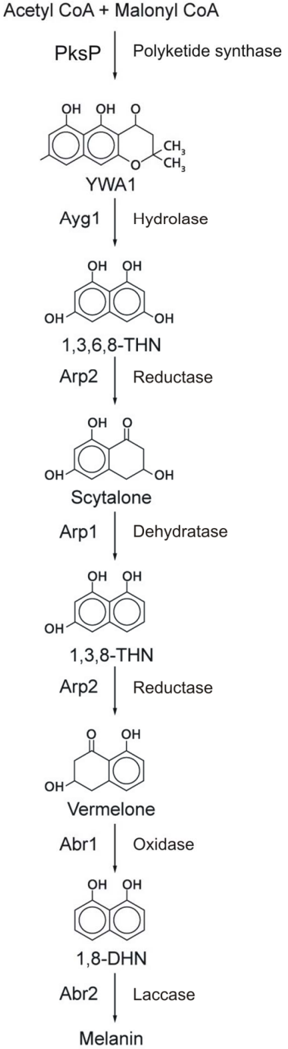
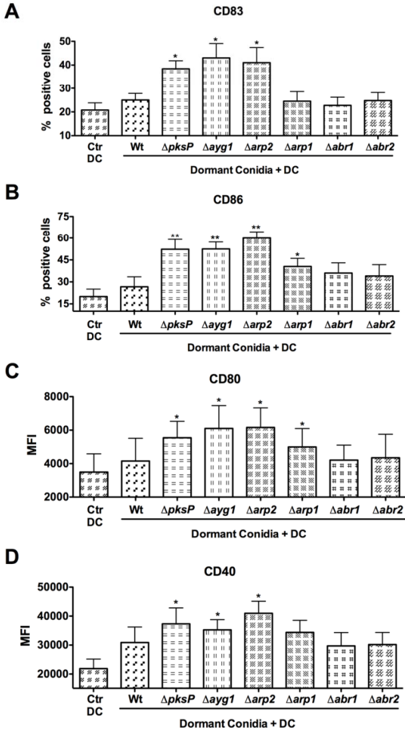
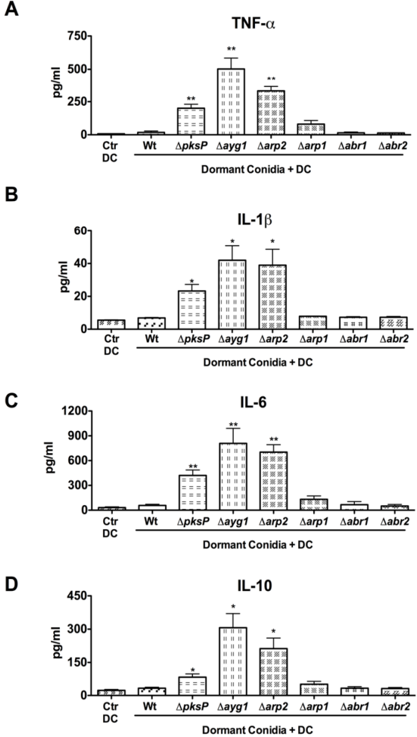
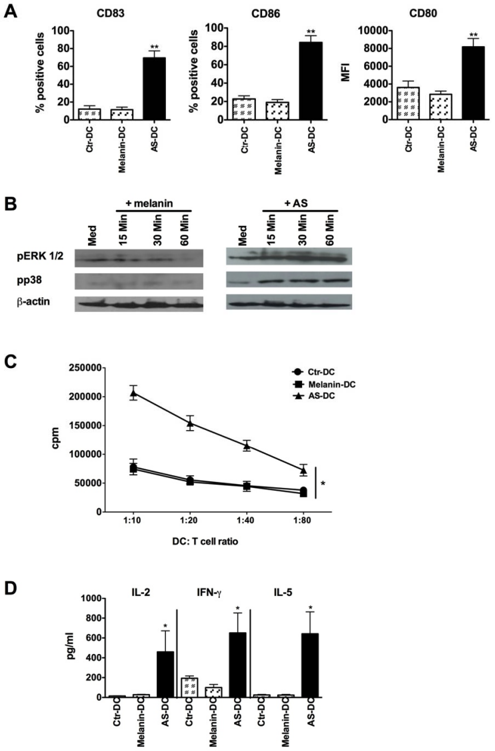
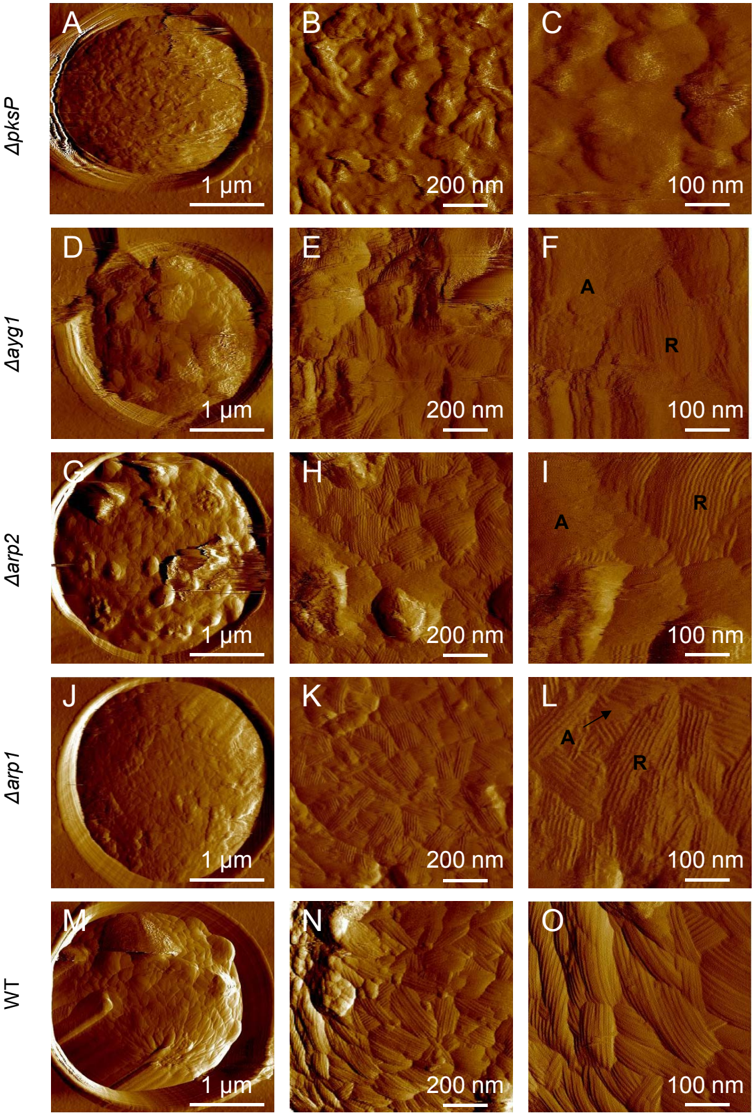
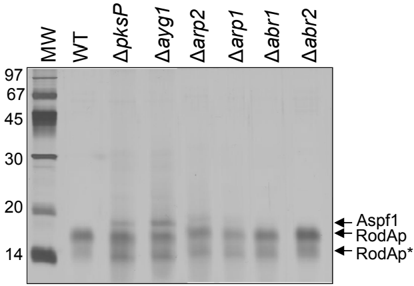
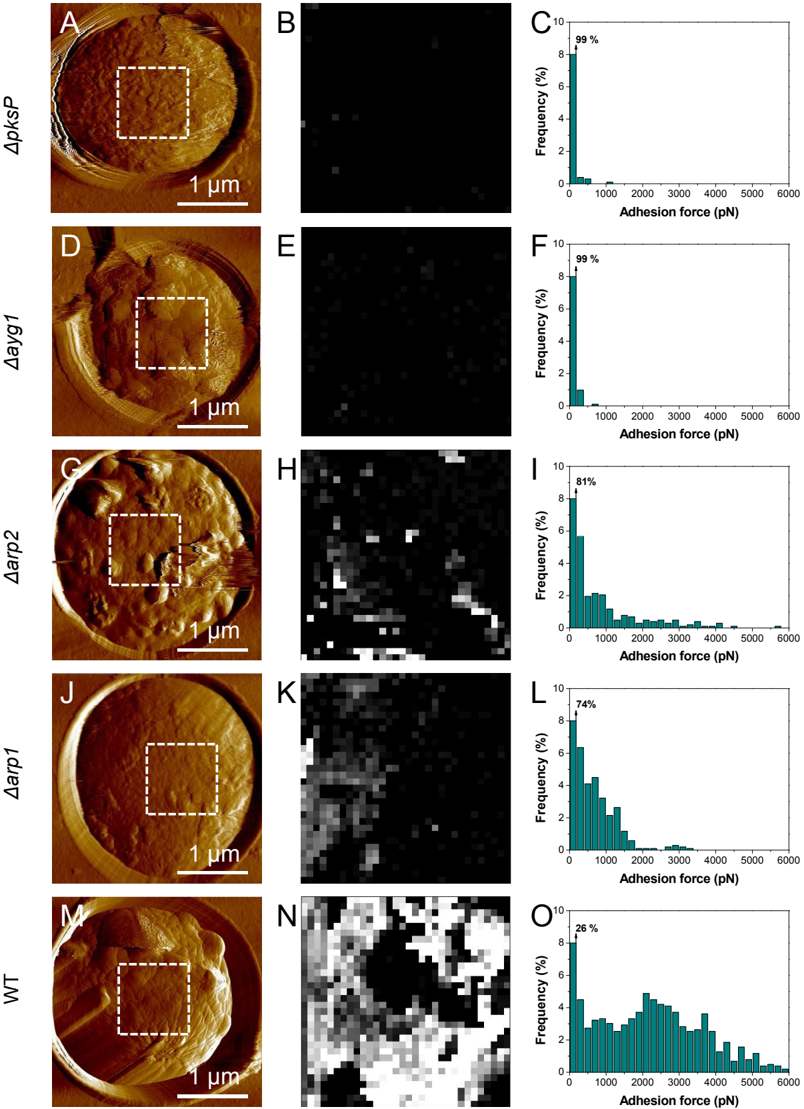
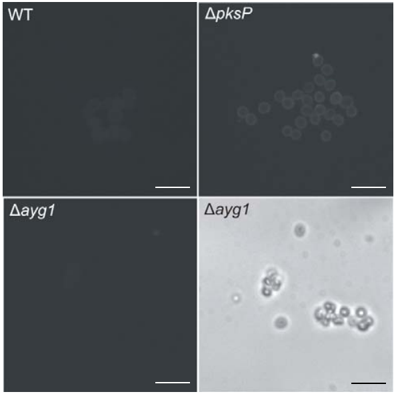
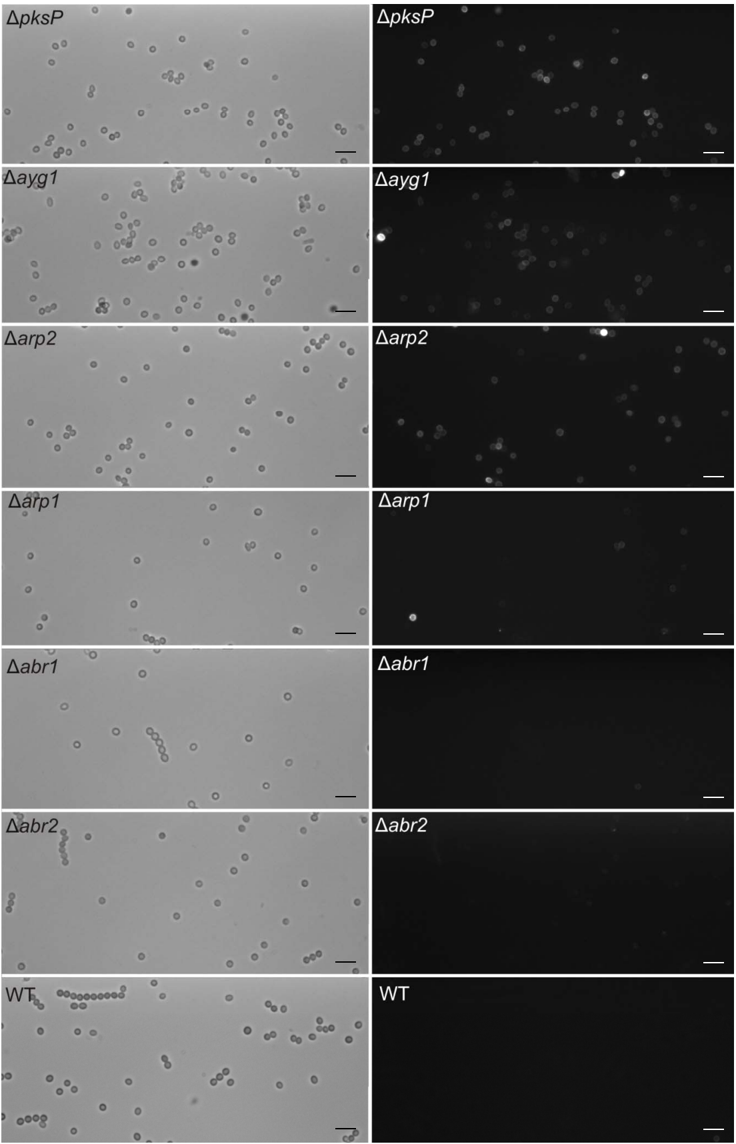
In Aspergillus fumigatus , the conidial surface contains dihydroxynaphthalene (DHN)-melanin. Six-clustered gene products have been identified that mediate sequential catalysis of DHN-melanin biosynthesis. Melanin thus produced is known to be a virulence factor, protecting the fungus from the host defense mechanisms. In the present study, individual deletion of the genes involved in the initial three steps of melanin biosynthesis resulted in an altered conidial surface with masked surface rodlet layer, leaky cell wall allowing the deposition of proteins on the cell surface and exposing the otherwise-masked cell wall polysaccharides at the surface. Melanin as such was immunologically inert; however, deletion mutant conidia with modified surfaces could activate human dendritic cells and the subsequent cytokine production in contrast to the wild-type conidia. Cell surface defects were rectified in the conidia mutated in downstream melanin biosynthetic pathway, and maximum immune inertness was observed upon synthesis of vermelone onward. These observations suggest that although melanin as such is an immunologically inert material, it confers virulence by facilitating proper formation of the A. fumigatus conidial surface.
Overview
The claims and statistics of this paper haven’t been checked yet.
Free: it reads the open-access text and checks the first 5 claims that cite a source we can check. Create a free account to check every claim.
Integrity signals
Registry
Cites
Statistics
Figures
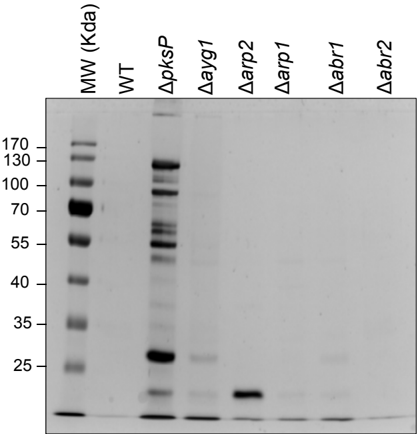
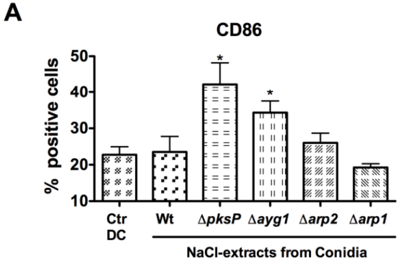
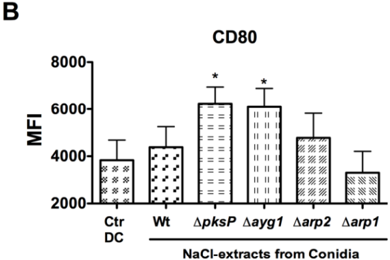
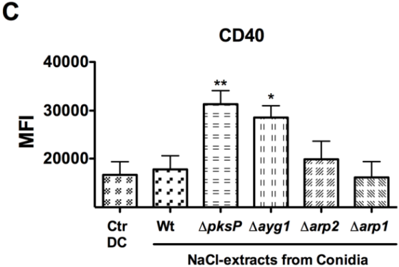
Verification
Claims the paper makes
The claims and statistics of this paper haven’t been checked yet.
Free: it reads the open-access text and checks the first 5 claims that cite a source we can check. Create a free account to check every claim.
Claims other papers make about this one
Each is checked against this paper’s own text: does it say what the citing paper says it does?
The source backs part of the claim, not all of it — or backs it for a different population, condition or comparison.
In the citing paper
“All of these single and multiple mutants are characterized by the emergence on the conidial surface of a layer of (glyco)proteins covering the rodlets, which is responsible for conidial hydrophilicity, even though the rodlets are present.”
From Aspergillus fumigatus and Aspergillosis in 2019 (2019) · cites this paper as [477]
Experimental — accuracy not yet measuredThe cited source says what the claim attributes to it.
In the citing paper
“The presence of these molecules on the conidial surface also is responsible for stimulation of the immune response (241, 477, 478).”
From Aspergillus fumigatus and Aspergillosis in 2019 (2019) · cites this paper as [477]
The cited source says what the claim attributes to it.
In the citing paper
“Loss of melanin in the pksP mutant results in the production of hydrophilic white conidia accompanied by the deposition of glycoproteins on the rodlet surface (477).”
From Aspergillus fumigatus and Aspergillosis in 2019 (2019) · cites this paper as [477]
In the citing paper
“Loss of melanin in the pksP mutant results in the production of hydrophilic white conidia accompanied by the deposition of glycoproteins on the rodlet surface (477).”
From Aspergillus fumigatus and Aspergillosis in 2019 (2019) · cites this paper as [477]
Self-check
Percentages, sums and reported differences re-computed from the paper’s own numbers.
The self-check needs the paper’s full text.
Citations
Cites
Dendritic cells and the control of immunity
Banchereau, J., & Steinman, R. M. (1998) · Nature · doi:10.1038/32588 · Cited by 14,336
Cella, M., Scheidegger, D., Palmer-Lehmann, K., Lane, P., Lanzavecchia, A., & Alber, G. (1996) · The Journal of experimental medicine · doi:10.1084/jem.184.2.747 · Cited by 1,983
Surface hydrophobin prevents immune recognition of airborne fungal spores
Aimanianda, V., Bayry, J., Bozza, S., Kniemeyer, O., Perruccio, K., Elluru, S. R., Clavaud, C., Paris, S., Brakhage, A. A., Kaveri, S. V., et al. (2009) · Nature · doi:10.1038/nature08264 · Cited by 792 · cited 4×
“6) showed that two bands of RodAp 274 classically seen in the HF extracts of conidia were present in all the melanin pathway mutants and 275 WT conidia (30).”
BackgroundMethodInfluentialSelf-citationSynthesis and assembly of fungal melanin
Eisenman, H. C., & Casadevall, A. (2012) · Applied Microbiology and Biotechnology · doi:10.1007/s00253-011-3777-2 · Cited by 711 · cited 4×
“DOPA-melanin contributes to host death, fungal burden and dissemination 56 (8).”
BackgroundInfluentialLuther, K., Torosantucci, A., Brakhage, A. A., Heesemann, J., & Ebel, F. (2007) · Cellular Microbiology · doi:10.1111/j.1462-5822.2006.00796.x · Cited by 582
Self-citationThe Beta-Glucan Receptor Dectin-1 Recognizes Specific Morphologies of Aspergillus fumigatus
Steele, C., Rapaka, R. R., Metz, A., Pop, S. M., Williams, D. L., Gordon, S., Kolls, J. K., & Brown, G. D. (2005) · PLoS Pathogens · doi:10.1371/journal.ppat.0010042 · Cited by 509 · cited 2×
“For immunolabeling, PFA-fixed conidia were 152 incubated with different antibodies as described previously (27). β-(1,3)-glucan was labeled with153 Dectin-1 (Fc-dectin1 6 µg/ml) followed by FITC conjugated GaHu-Fab2-human IgG (15 µg/ml, 154 a kind gift from G. Brown, University of Aberdeen, Aberdeen, UK) (28).”
Tsai, H.-F., Wheeler, M. H., Chang, Y. C., & Kwon-Chung, K. J. (1999) · Journal of Bacteriology · doi:10.1128/jb.181.20.6469-6477.1999 · Cited by 385 · cited 4×
“553 Cell wall beta-(1,6)-glucan of Saccharomyces cerevisiae: structural characterization and 554 in situ synthesis.”
BackgroundInfluentialSelf-citationLangfelder, K., Jahn, B., Gehringer, H., Schmidt, A., Wanner, G., & Brakhage, A. A. (1998) · Medical Microbiology and Immunology · doi:10.1007/s004300050077 · Cited by 290 · cited 1×
“4 in the first step of melanin biosynthesis, has been deleted (4, 9, 16-19), These reports 72 demonstrated that melanin protects the conidia against reactive oxygen species (ROS), masks the 73 recognition of various A.”
BackgroundSelf-citationUsing nanotechniques to explore microbial surfaces
Dufrêne, Y. F. (2004) · Nature Reviews Microbiology · doi:10.1038/nrmicro905 · Cited by 263 · cited 1×
“Rather than using an incident beam as in classical microscopy, 255 AFM probes the small forces acting on the sample surface (37).”
MethodSelf-citationPihet, M., Vandeputte, P., Tronchin, G., Renier, G., Saulnier, P., Georgeault, S., Mallet, R., Chabasse, D., Symoens, F., & Bouchara, J.-P. (2009) · BMC Microbiology · doi:10.1186/1471-2180-9-177 · Cited by 253 · cited 2×
“Previous studies demonstrated that deletion of PKSP 388 and ARP2 correlated with a decreased ability to bind laminin on the conidial surface (10).”
Background
Cited by
Aspergillus fumigatus and Aspergillosis in 2019
Latgé, J.-P., & Chamilos, G. (2019) · Clinical Microbiology Reviews · doi:10.1128/cmr.00140-18 · Cited by 1,400
Self-citationThe Fungal Cell Wall: Candida, Cryptococcus, and Aspergillus Species
Garcia-Rubio, R., de Oliveira, H. C., Rivera, J., & Trevijano-Contador, N. (2020) · Frontiers in Microbiology · doi:10.3389/fmicb.2019.02993 · Cited by 917
Functions of fungal melanin beyond virulence
Cordero, R. J. B., & Casadevall, A. (2017) · Fungal Biology Reviews · doi:10.1016/j.fbr.2016.12.003 · Cited by 416
“…analysis has produced patterns consistent with a stacked planar sheet structure with inter-sheet distances of approximately 0.4 nanometers (Bayry et al., 2014; Casadevall et al., 2012; Franzen et al., 2008b; Franzen et al., 1999; Gomez et al., 2001; Morris-Jones et al., 2005; Morris-Jones…”
BackgroundInfluentialFungal Melanin: What do We Know About Structure?
Nosanchuk, J. D., Stark, R. E., & Casadevall, A. (2015) · Frontiers in Microbiology · doi:10.3389/fmicb.2015.01463 · Cited by 310
“…several other pathogenic fungi, including Candida albicans (Morris-Jones et al., 2005; Walker et al., 2010), Aspergillus sp. (Rosas et al., 2000b; Bayry et al., 2014), Sporothrix schenckii (Morris-Jones et al., 2003), Fonsecaea pedrosoi (Franzen et al., 1999, 2006), Paracoccidioides brasiliensis…”
BackgroundAspergillus Cell Wall Melanin Blocks LC3-Associated Phagocytosis to Promote Pathogenicity
Akoumianaki, T., Kyrmizi, I., Valsecchi, I., Gresnigt, M. S., Samonis, G., Drakos, E., Boumpas, D., Muszkieta, L., Prevost, M.-C., Kontoyiannis, D. P., et al. (2016) · Cell Host & Microbe · doi:10.1016/j.chom.2015.12.002 · Cited by 218
“The isolation of melanin from wild-type (Ku80) conidia was performed as previously described (Bayry et al., 2014).”
MethodSelf-citation
Metadata
- Authors
- Bayry, J., Beaussart, A., Dufrêne, Y. F., Sharma, M., Bansal, K., Kniemeyer, O., Aimanianda, V., Brakhage, A. A., Kaveri, S. V., Kwon-Chung, K. J., Latgé, J.-P., & Beauvais, A.
- Affiliations
- Inserm (FR)
- UCLouvain (BE)
- Jena University Hospital (DE)
- Institut Pasteur (FR)
- Leibniz-Institut für Naturstoff-Forschung und Infektionsbiologie e. V. - Hans-Knöll-Institut (HKI) (DE)
- National Institutes of Health (US)
- ORCID
- Venue
- Infection and Immunity
- Publisher
- American Society for Microbiology
- Published
- 2014-08
- Volume
- 82
- Issue
- 8
- Pages
- 3141-3153
- ISSN
- 0019-9567 (ISSN-L)
- 1098-5522
- PMC
- PMC4136205
- OpenAlex
- W2171445127
- Cited by
- 137
- References
- 52
- Citations by year
- 2026: 8 · 2025: 8 · 2024: 8 · 2023: 12 · 2022: 10 · 2021: 10 · 2020: 20 · 2019: 11 · 2018: 19 · 2017: 16 · 2016: 7 · 2015: 6 · 2014: 2
- FWCI
- 4.24
- Type
- journal article
- Language
- en
- Open access
- green
- www.ncbi.nlm.nih.gov
- Licence
- journals.asm.org/non-commercial-tdm-license (tdm)
- Locations
- Infection and Immunity (publishedVersion)
- PubMed Central (publishedVersion)
- PubMed (publishedVersion)
- HAL (submittedVersion, cc-by-nc)
- Digital Access to Libraries (submittedVersion, other-oa)
- Funders
- Agence Nationale de la Recherche (ANR-10-BLAN-1309, ANR-10)
- Institut National de la Santé et de la Recherche Médicale
- Topics
- Life Sciences › Biochemistry, Genetics and Molecular Biology › Molecular Biology › Fungal and yeast genetics research
- Health Sciences › Medicine › Infectious Diseases › Antifungal resistance and susceptibility
- Health Sciences › Medicine › Infectious Diseases › Fungal Infections and Studies
- Keywords
- Aspergillus fumigatus, conidia, melanogenesis, dihydroxynaphthalene, virulence factors, cell wall polysaccharides, dendritic cell activation, cytokine production, deletion mutants, fungal immunology
- MeSH terms
- Aspergillus fumigatus, Dendritic Cells, Humans, Immunity, Cellular, Melanins, Spores, Fungal, Surface Properties, Cytokines, Gene Deletion, Biosynthetic Pathways
About these checks
Registry, retraction, Cites and statistics results are computed, not judged, with one exception: a printed reference that no index lists is read once by a model before it counts as a citation error. Claims are extracted by a model and kept only when their quote appears verbatim in the text; each cited source is then checked, with a model’s help, for whether it says what the claim relies on. Those verdicts can be wrong — read the claim’s quote and the cited source before relying on one.
Statistics and arithmetic are recomputed, not judged.
Confidence bands are shown only for fields calibrated on our annotated test set. None is calibrated yet, so no band is shown.
What counts as a claim ›How we measure confidence ›How we check this ›
Are you an author, or do you see a problem with this page? Request a review
How to cite
Cite CoChat for the checks on this page, and the paper for its own findings.
- This page
- CoChat. (2026). Citation check: Surface Structure Characterization of Aspergillus fumigatus Conidia Mutated in the Melanin Synthesis Pathway and Their Human Cellular Immune Response. https://app.cochat.ai/papers/10.1128/iai.01726-14
- The paper
- Bayry, J., Beaussart, A., Dufrêne, Y. F., Sharma, M., Bansal, K., Kniemeyer, O., Aimanianda, V., Brakhage, A. A., Kaveri, S. V., Kwon-Chung, K. J., Latgé, J.-P., & Beauvais, A. (2014). Surface Structure Characterization of Aspergillus fumigatus Conidia Mutated in the Melanin Synthesis Pathway and Their Human Cellular Immune Response. Infection and Immunity. https://doi.org/10.1128/iai.01726-14
Data sources
Bibliographic data: Semantic Scholar, OpenAlex, Crossref.
Contains information from the Semantic Scholar Academic Graph Datasets, made available under the ODC Attribution License (ODC-BY 1.0).
Semantic Scholar’s data is described in: Kinney, R., et al. (2023). The Semantic Scholar Open Data Platform. arXiv:2301.10140.
