

The Fungal Pathogen Aspergillus fumigatus Regulates Growth, Metabolism, and Stress Resistance in Response to Light
Open accessThe DOI matches its Crossref record; 64 of the 64 references it cites were found in a registry or an index.
Abstract
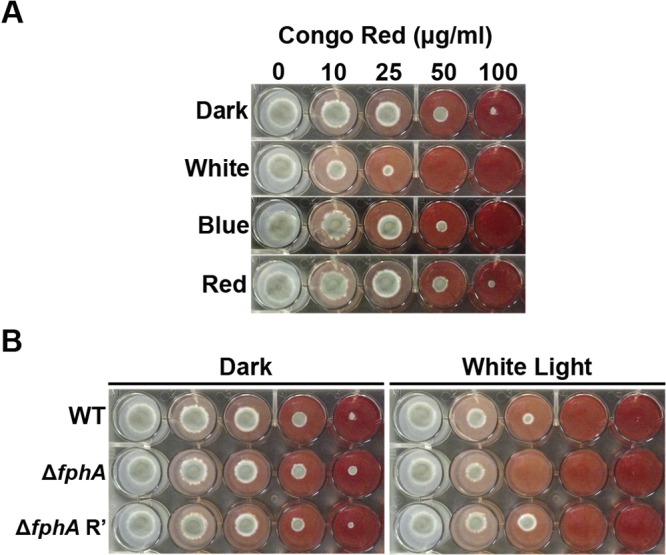
Light is a pervasive environmental factor that regulates development, stress resistance, and even virulence in numerous fungal species. Though much research has focused on signaling pathways in Aspergillus fumigatus , an understanding of how this pathogen responds to light is lacking. In this report, we demonstrate that the fungus does indeed respond to both blue and red portions of the visible spectrum. Included in the A. fumigatus light response is a reduction in conidial germination rates, increased hyphal pigmentation, enhanced resistance to acute ultraviolet and oxidative stresses, and an increased susceptibility to cell wall perturbation. By performing gene deletion analyses, we have found that the predicted blue light receptor LreA and red light receptor FphA play unique and overlapping roles in regulating the described photoresponsive behaviors of A. fumigatus . However, our data also indicate that the photobiology of this fungus is complex and likely involves input from additional photosensory pathways beyond those analyzed here. Finally, whole-genome microarray analysis has revealed that A. fumigatus broadly regulates a variety of metabolic genes in response to light, including those involved in respiration, amino acid metabolism, and metal homeostasis. Together, these data demonstrate the importance of the photic environment on the physiology of A. fumigatus and provide a basis for future studies into this unexplored area of its biology. IMPORTANCE Considerable effort has been taken to understand how the mold pathogen Aspergillus fumigatus senses its environment to facilitate growth within the immunocompromised host. Interestingly, it was shown that the deletion of a blue light photoreceptor in two divergent fungal pathogens, Cryptococcus neoformans and Fusarium oxysporum , leads to an attenuation of virulence in their respective animal infection models. This suggests that light signaling pathways are conservatively involved in the regulation of fungal pathogenesis. However, an understanding of whether and how A. fumigatus responds to light is lacking. Here we demonstrate that this organism coordinates broad aspects of its physiology with the photic environment, including pathways known to be involved in virulence, such as carbohydrate metabolism and oxidative stress resistance. Moreover, the photoresponse of A. fumigatus differs in notable ways from the well-studied model Aspergillus nidulans . Therefore, this work should represent a general advancement in both photobiology and A. fumigatus research communities.
Overview
The claims and statistics of this paper haven’t been checked yet.
Free: it reads the open-access text and checks the first 5 claims that cite a source we can check. Create a free account to check every claim.
Integrity signals
Registry
Cites
Statistics
Figures
Verification
Claims the paper makes
The claims and statistics of this paper haven’t been checked yet.
Free: it reads the open-access text and checks the first 5 claims that cite a source we can check. Create a free account to check every claim.
Claims other papers make about this one
Each is checked against this paper’s own text: does it say what the citing paper says it does?
The source backs part of the claim, not all of it — or backs it for a different population, condition or comparison.
In the citing paper
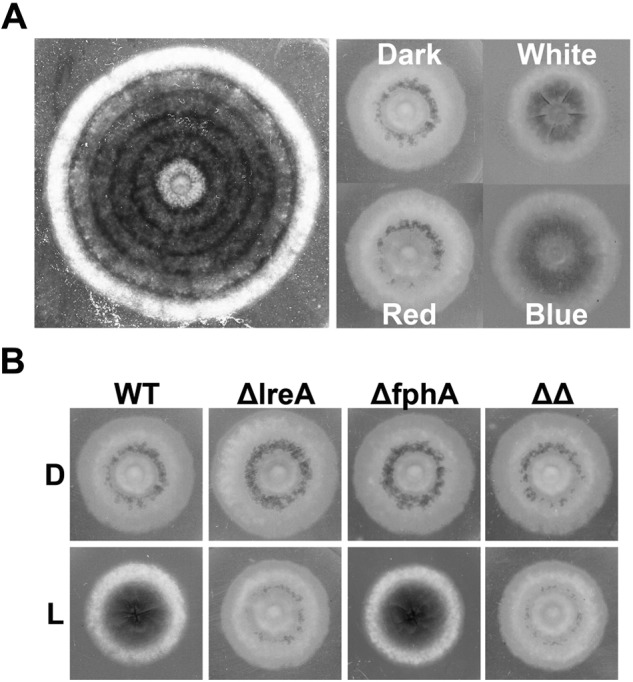
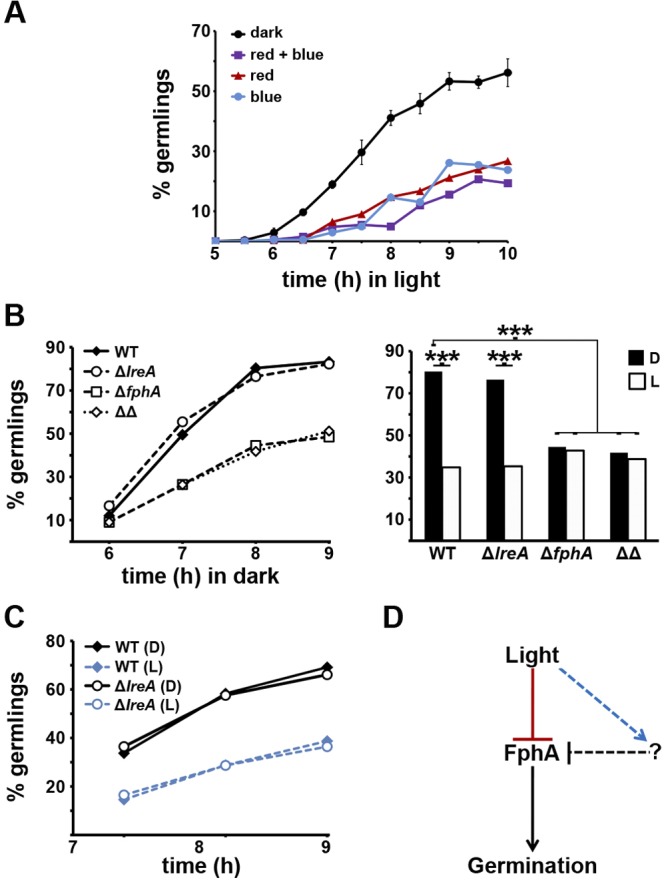
“Instead, LreA drove the synthesis of mycelial pigmentation, and FphA was required for germination, suggesting that light served as a stress signaling mechanism in A. fumigatus rather than having a developmental role.”
From Aspergillus fumigatus and Aspergillosis in 2019 (2019) · cites this paper as [448]
Experimental — accuracy not yet measuredThe cited source says what the claim attributes to it.
In the citing paper
“Light-induced and -repressed genes have been identified by transcriptome analysis, and the photoadaptation of this species to constant or short light stimuli has begun to be analyzed (448, 449).”
From Aspergillus fumigatus and Aspergillosis in 2019 (2019) · cites this paper as [448]
In the citing paper
“In contrast to that in A. nidulans, the asexual sporulation process was not regulated by light in A. fumigatus despite the presence of both LreA and FphA orthologs in the genome (448).”
From Aspergillus fumigatus and Aspergillosis in 2019 (2019) · cites this paper as [448]
Self-check
Percentages, sums and reported differences re-computed from the paper’s own numbers.
The self-check needs the paper’s full text.
Citations
Cites
Metals, Toxicity and Oxidative Stress
Valko, M., Morris, H., & Cronin, M. (2005) · Current Medicinal Chemistry · doi:10.2174/0929867053764635 · Cited by 5,018 · cited 1×
“As both the redox activity of the mitochondria and iron-mediated Fenton chemistry are major sources of endogenous oxidative stress for the cell (57), the downregulation of these gene categories may provide an oxidant-protected cellular state in A.”
Background[4] Genetic and microbiological research techniques for Neurospora crassa
Davis, R. H., & de Serres, F. J. (1970) · Methods in Enzymology · doi:10.1016/0076-6879(71)17168-6 · Cited by 1,104 · cited 1×
“ulated onto a minimal medium slant (64) and incubated for 1 week at”
BackgroundThe induction and repression of nitrate reductase in the fungus Aspergillus nidulans
Cove, D. J. (1966) · Biochimica et Biophysica Acta (BBA) - Enzymology and Biological Oxidation · doi:10.1016/s0926-6593(66)80120-0 · Cited by 1,038
Segal, B. H. (2009) · New England Journal of Medicine · doi:10.1056/nejmra0808853 · Cited by 661
Biosynthesis of fungal melanins and their importance for human pathogenic fungi
Langfelder, K., Streibel, M., Jahn, B., Haase, G., & Brakhage, A. A. (2003) · Fungal Genetics and Biology · doi:10.1016/s1087-1845(02)00526-1 · Cited by 634 · cited 2×
“As examples, loss of hyphal pigmentation, reduced germination kinetics, and defects in cell wall homeostasis are all associated with attenuated virulence phenotypes in murine models of invasive aspergillosis (49, 56).”
BackgroundWhite Collar-1, a Circadian Blue Light Photoreceptor, Binding to the frequency Promoter
Froehlich, A. C., Liu, Y., Loros, J. J., & Dunlap, J. C. (2002) · Science · doi:10.1126/science.1073681 · Cited by 520 · cited 1×
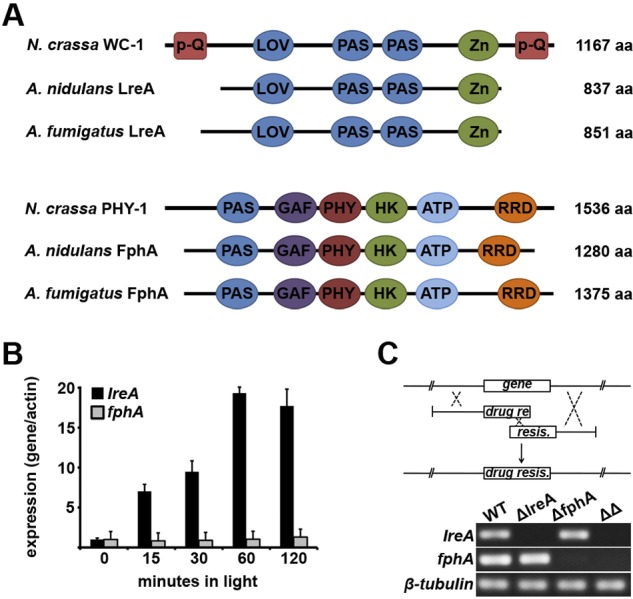
“WC-1 is a Zn finger transcription factor that contains a specialized PAS (PerAnt-Sim) domain, called the LOV domain (light-oxygenvoltage), which binds flavin adenine dinucleotide (FAD) as the photon-absorbing chromophore (9, 10).”
BackgroundSelf-citationUpton, A., Kirby, K. A., Carpenter, P., Boeckh, M., & Marr, K. A. (2007) · Clinical Infectious Diseases · doi:10.1086/510592 · Cited by 514 · cited 1×
“Even with the use of antifungal agents, the mortality rates associated with invasive aspergillosis remain around 50%, thus making the development of novel treatment strategies imperative (23, 24).”
BackgroundSplit-Marker Recombination for Efficient Targeted Deletion of Fungal Genes
Catlett, N. L., Lee, B.-N., Yoder, O. C., & Turgeon, B. G. (2003) · Fungal Genetics Reports · doi:10.4148/1941-4765.1150 · Cited by 488 · cited 1×
“tions were accomplished using the split-marker method (63), as depicted”
MethodWhite collar-1, a central regulator of blue light responses in Neurospora, is a zinc finger protein.
Ballario, P., Vittorioso, P., Magrelli, A., Talora, C., Cabibbo, A., & Macino, G. (1996) · The EMBO Journal · doi:10.1002/j.1460-2075.1996.tb00510.x · Cited by 453 · cited 1×
“crassa, the wc-1 message is increased upon exposure to light (35).”
BackgroundWhite Collar-1, a DNA Binding Transcription Factor and a Light Sensor
He, Q., Cheng, P., Yang, Y., Wang, L., Gardner, K. H., & Liu, Y. (2002) · Science · doi:10.1126/science.1072795 · Cited by 419
Cited by
Aspergillus fumigatus and Aspergillosis in 2019
Latgé, J.-P., & Chamilos, G. (2019) · Clinical Microbiology Reviews · doi:10.1128/cmr.00140-18 · Cited by 1,400
Light sensing and responses in fungi
Yu, Z., & Fischer, R. (2019) · Nature Reviews Microbiology · doi:10.1038/s41579-018-0109-x · Cited by 285
Molecular and physiological effects of environmental UV radiation on fungal conidia
Braga, G. U. L., Rangel, D. E. N., Fernandes, É. K. K., Flint, S. D., & Roberts, D. W. (2015) · Current Genetics · doi:10.1007/s00294-015-0483-0 · Cited by 226
“Exposure to moderate irradiances of visible light (400–700 nm) and near-UV radiation stimulates conidial production, synthesis of photoprotective pigments, and secondary metabolites in several fungal species (Leach and Tulloch 1972; Alves et al. 1984; Mooney and Yager 1990; Fourtouni et al. 1998; Zhang et al. 2009; Av…”
BackgroundInfluentialRangel, D. E. N., Braga, G. U. L., Fernandes, É. K. K., Keyser, C. A., Hallsworth, J. E., & Roberts, D. W. (2015) · Current Genetics · doi:10.1007/s00294-015-0477-y · Cited by 190
Schumacher, J., Simon, A., Cohrs, K. C., Viaud, M., & Tudzynski, P. (2014) · PLoS Genetics · doi:10.1371/journal.pgen.1004040 · Cited by 163
“fumigatus, respectively [37,64–65].”
Canessa, P., Schumacher, J., Hevia, M. A., Tudzynski, P., & Larrondo, L. F. (2013) · PLoS ONE · doi:10.1371/journal.pone.0084223 · Cited by 160
“fumigatus [24], while it represses this process in A.”
BackgroundHow light affects the life of Botrytis
Schumacher, J. (2017) · Fungal Genetics and Biology · doi:10.1016/j.fgb.2017.06.002 · Cited by 162
Fungal photobiology: visible light as a signal for stress, space and time
Fuller, K. K., Loros, J., & Dunlap, J. (2014) · Current Genetics · doi:10.1007/s00294-014-0451-0 · Cited by 178
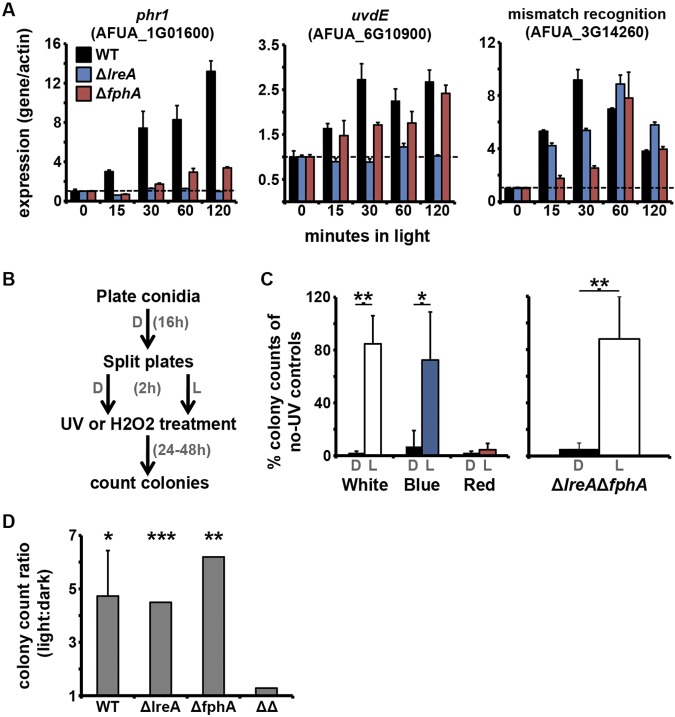
“In A. fumigatus, for example, exposure of dark-grown fungus to blue light leads to resistance to subsequent exposure to either UV or hydrogen peroxide, relative to samples kept in the dark prior to exposure (Fuller et al. 2013).”
InfluentialSelf-citationLight in the Fungal World: From Photoreception to Gene Transcription and Beyond
Corrochano, L. M. (2019) · Annual Review of Genetics · doi:10.1146/annurev-genet-120417-031415 · Cited by 167
Fungi use the SakA (HogA) pathway for phytochrome-dependent light signalling
Yu, Z., Armant, O., & Fischer, R. (2016) · Nature Microbiology · doi:10.1038/nmicrobiol.2016.19 · Cited by 119
Yang, T., Guo, M., Yang, H., Guo, S., & Dong, C. (2015) · Applied Microbiology and Biotechnology · doi:10.1007/s00253-015-7047-6 · Cited by 116
Spore Germination of Pathogenic Filamentous Fungi
Sephton-Clark, P., & Voelz, K. (2017) · Advances in applied microbiology · doi:10.1016/bs.aambs.2017.10.002 · Cited by 122
Igbalajobi, O. A., Yu, Z., & Fischer, R. (2019) · mBio · doi:10.1128/mbio.00371-19 · Cited by 87
“This behavior is similar to other fungi (50, 51).”
BackgroundResultThe high osmolarity glycerol (HOG) pathway in fungi †
Yaakoub, H., Sanchez, N. S., Ongay-Larios, L., Courdavault, V., Calenda, A., Bouchara, J.-P., Coria, R., & Papon, N. (2021) · Critical Reviews in Microbiology · doi:10.1080/1040841x.2021.2011834 · Cited by 82
“Among the group VIII HKs (FphA and FphB) renowned for the phytochrome domain, only FphA has been characterized as a photosensory pathway (Fuller et al. 2013).”
BackgroundCai, F. M., Gao, R., Zhao, Z., Ding, M., Jiang, S., Yagtu, C., Zhu, H. M., Zhang, J., Ebner, T., Mayrhofer-Reinhartshuber, M., et al. (2020) · The ISME Journal · doi:10.1038/s41396-020-0709-0 · Cited by 87
“resistance to adverse environmental factors such as drought, freezing temperatures, and UV radiation [12, 13, 56, 57].”
BackgroundSeeing the world differently: variability in the photosensory mechanisms of two model fungi
Dasgupta, A., Fuller, K. K., Dunlap, J., & Loros, J. (2015) · Environmental Microbiology · doi:10.1111/1462-2920.13055 · Cited by 78
“Moreover, the effect of fphA (phytochrome) deletion in both species with respect to germination is conserved (Fuller et al., 2013).”
Self-citationSchmidt‐Heydt, M., Stoll, D., Schütz, P., & Geisen, R. M. (2014) · International Journal of Food Microbiology · doi:10.1016/j.ijfoodmicro.2014.09.008 · Cited by 70
“Blue light does not have this direct activity on biological components, but can induce oxidative stress reactions (Friedl et al., 2008; Fuller et al., 2013).”
BackgroundStress-Activated Protein Kinases in Human Fungal Pathogens
Day, A. M., & Quinn, J. (2019) · Frontiers in Cellular and Infection Microbiology · doi:10.3389/fcimb.2019.00261 · Cited by 73
“fumigatus (Fuller et al., 2013), which raises the possibility that some of these responses may be mediated through SakA.”
BackgroundA T richoderma atroviride stress‐activated MAPK pathway integrates stress and light signals
Naranjo, E. U. E., García‐Esquivel, M., Medina‐Castellanos, E., Correa‐Pérez, V. A., Parra‐Arriaga, J. L., Landeros, F., Chávez, J. A. C., & Herrera‐Estrella, A. (2016) · Molecular Microbiology · doi:10.1111/mmi.13355 · Cited by 71
“fumigatus but in that case, cell wall homeostasis was regulated by the phytochrome FphA even though it was found to be white and blue light dependent (Fuller et al., 2013).”
BackgroundResultInfluentialWhite collar 1‐induced photolyase expression contributes to UV ‐tolerance of Ustilago maydis
Brych, A., Mascarenhas, J., Jaeger, E., Charkiewicz, E., Pokorny, R., Bölker, M., Doehlemann, G., & Batschauer, A. (2015) · MicrobiologyOpen · doi:10.1002/mbo3.322 · Cited by 64
“Moreover, induction of DNA repair enzymes by visible light has been shown for other fungal species such as the ascomycetes N. crassa, A. fulmigatus (Fuller et al. 2013), A. nidulans, (Ruger- Herreros et al. 2011), F. oxysporum (Ruiz- Roldan et al. 2008), and C. zea-maydis (Yu et al. 2013).”
BackgroundThe Complexity of Fungal Vision
Fischer, R., Aguirre, J., Herrera‐Estrella, A., & Corrochano, L. M. (2016) · Microbiology Spectrum · doi:10.1128/microbiolspec.funk-0020-2016 · Cited by 66
“In A. fumigatus and A. nidulans light inhibits spore germination (41, 42), whereas it promotes hyphal branching in N. crassa , Tuber borchii , T. atroviride , and the plant pathogen Colletotrichum trifolii .”
BackgroundEffects of light on secondary metabolism and fungal development of Fusarium graminearum
Kim, H., Son, H., & Lee, Y.-W. (2013) · Journal of Applied Microbiology · doi:10.1111/jam.12381 · Cited by 72
“Various aspects of fungal responses to light have been studied extensively, including circadian rhythm, morphogenesis, reproduction, secondary metabolism and phototropism (Loros and Dunlap 2006; Corrochano 2007; Avalos and Estrada 2010; Bayram et al. 2010; Kim et al. 2011a; Fuller et al. 2013).”
BackgroundAspergillus fumigatus Photobiology Illuminates the Marked Heterogeneity between Isolates
Fuller, K. K., Cramer, R. A., Zegans, M. E., Dunlap, J. C., & Loros, J. J. (2016) · mBio · doi:10.1128/mbio.01517-16 · Cited by 55
“To this end, we opted to use light as our behavioral cue since it can be easily applied and the photoresponse of Af293 is both well characterized and robust (20).”
BackgroundMethodSelf-citationGarcía‐Esquivel, M., Naranjo, E. U. E., Hernández‐Oñate, M. Á., Ibarra‐Laclette, E., & Herrera‐Estrella, A. (2016) · Fungal Biology · doi:10.1016/j.funbio.2016.01.007 · Cited by 54
Seeing the Light: The Roles of Red- and Blue-Light Sensing in Plant Microbes
Beattie, G. A., Hatfield, B. M., Dong, H., & McGrane, R. S. (2018) · Annual Review of Phytopathology · doi:10.1146/annurev-phyto-080417-045931 · Cited by 51
“nidulans is currently the most developed fungal model of the molecular pathways involved in red- and blue-light signaling (33; 35).”
BackgroundCircadian clocks and the regulation of virulence in fungi: Getting up to speed
Hevia, M. A., Canessa, P., & Larrondo, L. F. (2016) · Seminars in Cell and Developmental Biology · doi:10.1016/j.semcdb.2016.03.021 · Cited by 58
Heterogeneity Confounds Establishment of “a” Model Microbial Strain
Keller, N. P. (2017) · mBio · doi:10.1128/mbio.00135-17 · Cited by 46
Oliveira, A. S., Braga, G. Ú. L., & Rangel, D. E. N. (2017) · Fungal Biology · doi:10.1016/j.funbio.2017.12.009 · Cited by 46
Photobiology of the keystone genus Metarhizium
Brancini, G. T. P., Hallsworth, J. E., Corrochano, L. M., & Braga, G. Ú. L. (2021) · Journal of Photochemistry and Photobiology B Biology · doi:10.1016/j.jphotobiol.2021.112374 · Cited by 46
Nakpan, W., Yermakov, M. V., Indugula, R., Reponen, T. A., & Grinshpun, S. A. (2019) · The Science of The Total Environment · doi:10.1016/j.scitotenv.2019.03.310 · Cited by 44
Yu, Z., Streng, C., Seibeld, R. F., Igbalajobi, O. A., Leister, K., Ingelfinger, J., & Fischer, R. (2021) · PLoS Genetics · doi:10.1371/journal.pgen.1009845 · Cited by 45
Wang, Z., Li, N., Li, J., Dunlap, J., Trail, F., & Townsend, J. P. (2016) · mBio · doi:10.1128/mbio.02148-15 · Cited by 43
Self-citationFungal Light Sensing at the Bench and Beyond
Fuller, K. K., Dunlap, J., & Loros, J. (2016) · Advances in genetics · doi:10.1016/bs.adgen.2016.08.002 · Cited by 46
Self-citationPennisi, G., Orsini, F., Castillejo, N., Gómez, P. A., Crepaldi, A., Fernández, J. A., Egea‐Gilabert, C., Artés‐Hernández, F., & Gianquinto, G. P. (2021) · Postharvest Biology and Technology · doi:10.1016/j.postharvbio.2021.111500 · Cited by 44
Dias, L. P., Souza, R. K. F., Pupin, B., & Rangel, D. E. N. (2021) · Fungal Biology · doi:10.1016/j.funbio.2021.06.003 · Cited by 40
Effects of Light on the Ochratoxigenic Fungi Aspergillus ochraceus and A. carbonarius
Zhang, H., Wang, G., Yang, Q., Xu, Y., Zheng, Y., Liu, Y., & Xing, F. (2021) · Toxins · doi:10.3390/toxins13040251 · Cited by 42
Zhang, C., Huang, H., Deng, W.-Q., & Li, T. (2019) · Genes · doi:10.3390/genes10030179 · Cited by 37
Du, Y., Sun, J., Tian, Z., Cheng, Y., & Long, C.-A. (2022) · Food Control · doi:10.1016/j.foodcont.2022.109468 · Cited by 36
Genetic Control of Asexual Development in Aspergillus fumigatus
Alkhayyat, F., Kim, S. C., & Yu, J. (2014) · Advances in applied microbiology · doi:10.1016/bs.aambs.2014.09.004 · Cited by 38
Light sensing in plant- and rock-associated black fungi
Schumacher, J., & Gorbushina, A. A. (2020) · Fungal Biology · doi:10.1016/j.funbio.2020.01.004 · Cited by 35
Kovač, T., Šarkanj, B., Klapec, T., Borišev, I. Đ., Kovač, M., Nevistić, A., & Strelec, I. (2017) · Environmental Science and Pollution Research · doi:10.1007/s11356-017-9214-z · Cited by 31
“Two classes of SOD are present in fungal cells: Cu,Zn-SOD, mainly located in the cell cytoplasm, and Mn-SOD, almost exclusively located in the mitochondria (Fridovich 1998; Angelova et al. 2005; Li et al. 2009; Fuller et al. 2013).”
BackgroundCetz-Chel, J. E., Balcázar‐López, E., Naranjo, E. U. E., & Herrera‐Estrella, A. (2016) · BMC Genomics · doi:10.1186/s12864-016-2639-9 · Cited by 30
Exposure ofMetarhizium acridummycelium to light induces tolerance to UV-B radiation
Brancini, G. T. P., Rangel, D. E. N., & Braga, G. Ú. L. (2016) · FEMS Microbiology Letters · doi:10.1093/femsle/fnw036 · Cited by 34
Moreno-Ruiz, D., Fuchs, A., Missbach, K., Schuhmacher, R., & Zeilinger, S. (2020) · Pathogens · doi:10.3390/pathogens9100860 · Cited by 32
“The exposure of dark-grown Aspergillus fumigatus to blue light, for example, resulted in enhanced resistance to UV or hydrogen peroxide mediated stress [10], and growth of Metarhizium robertsii in the presence of visible light led to conidia that had higher UV tolerance than that of conidia from dark-grown cultures [5…”
Background11 Photomorphogenesis and Gravitropism in Fungi
Corrochano, L. M., & Galland, P. (2016) · The mycota · doi:10.1007/978-3-319-25844-7_11 · Cited by 30
Qi, Y., Sun, X., Ma, L., Wen, Q., Qiu, L., & Shen, J. (2019) · Fungal Biology · doi:10.1016/j.funbio.2019.10.004 · Cited by 27
Chen, D., Chen, M., Wu, S., Li, Z., Yang, H., & Wang, C. (2017) · Scientific Reports · doi:10.1038/s41598-017-05990-x · Cited by 26
The White Collar Complex Is Involved in Sexual Development of Fusarium graminearum
Kim, H., Kim, H.-K., Lee, S.-H., & Yun, S. (2015) · PLoS ONE · doi:10.1371/journal.pone.0120293 · Cited by 25
Brancini, G. T. P., Bachmann, L., Ferreira, M. E. D. S., Rangel, D. E. N., & Braga, G. Ú. L. (2018) · Journal of Invertebrate Pathology · doi:10.1016/j.jip.2018.01.007 · Cited by 24
Larrondo, L. F., & Canessa, P. (2018) · Current topics in microbiology and immunology · doi:10.1007/82_2018_143 · Cited by 25
Blue Light-Dependent Pre-mRNA Splicing Controls Pigment Biosynthesis in the Mushroom Terana caerulea
Lawrinowitz, S., Wurlitzer, J. M., Weiss, D. G., Arndt, H., Kothe, E., Gressler, M., & Hoffmeister, D. (2022) · Microbiology Spectrum · doi:10.1128/spectrum.01065-22 · Cited by 25
“, Aspergillus fumigatus, whose light regulator gene lreA is induced after 15 min of exposure to light, reaches its maximum after 60 min, and nearly remains there for another hour (45).”
BackgroundColabardini, A. C., Wang, F., Dong, Z., Pardeshi, L. A., Rocha, M. C., Costa, J. H., dos Reis, T. F., Brown, A. C., Jaber, Q. Z., Fridman, M., et al. (2021) · Genetics · doi:10.1093/genetics/iyab183 · Cited by 25
Photoprotective compounds and radioresistance in pigmented and non-pigmented yeasts
Kreusch, M., & Duarte, R. T. D. (2021) · Applied Microbiology and Biotechnology · doi:10.1007/s00253-021-11271-5 · Cited by 23
“This pattern has also been reported for some fungal species (Libkind et al. 2004, 2005; Avalos and Estrada 2010; Fuller et al. 2013), therefore regarded as a typical response of radioresistant microorganisms.”
BackgroundCozmuța, A. M., Cozmuța, L. M., Peter, A., Nicula, C., Voșgan, Z., Giurgiulescu, L., Vulpoi, A., & Baia, M. (2016) · Scientia Horticulturae · doi:10.1016/j.scienta.2016.08.031 · Cited by 24
Costa, T. P. C., Rodrigues, E. M., Dias, L. P., Pupin, B., Ferreira, P. C., & Rangel, D. E. N. (2020) · European Journal of Plant Pathology · doi:10.1007/s10658-020-02146-y · Cited by 22
“…et al. 2011; Fuller et al. 2013; Aver'yanov et al. 2014; de Menezes et al. 2015; Rangel et al. 2015; Dias et al. 2020), conidial pigmentation (Fuller et al. 2013; Yu et al. 2013), virulence (Yu et al. 2013; Aver'yanov et al. 2014; Oliveira et al. 2018), germination speed (Fuller et al. 2013;…”
BackgroundInfluentialLight-Irradiation Wavelength and Intensity Changes Influence Aflatoxin Synthesis in Fungi
Suzuki, T. (2018) · Toxins · doi:10.3390/toxins10010031 · Cited by 22
“In addition, species with red-light receptors have been reported [11,13].”
BackgroundThe Third International Symposium on Fungal Stress – ISFUS
Alder-Rangel, A., Idnurm, A., Brand, A., Brown, A. J. P., Gorbushina, A. A., Kelliher, C., de Campos, C. B. L., Levin, D. E., Bell‐Pedersen, D., Dadachova, E., et al. (2020) · Fungal Biology · doi:10.1016/j.funbio.2020.02.007 · Cited by 21
Influences of light on growth, reproduction and hypocrellin production by Shiraia sp. SUPER-H168
Gao, R., Xu, Z., Deng, H., Guan, Z.-B., Liao, X., Zhao, Y., Zheng, X., & Cai, Y. (2018) · Archives of Microbiology · doi:10.1007/s00203-018-1529-8 · Cited by 20
Brancini, G. T. P., Ferreira, M. E. S., Rangel, D. E. N., & Braga, G. Ú. L. (2019) · G3 Genes Genomes Genetics · doi:10.1534/g3.119.400430 · Cited by 23
Jiang, C., Lv, G., Ge, J., He, B., Zhang, Z., Hu, Z., & Zeng, B. (2021) · AMB Express · doi:10.1186/s13568-021-01212-w · Cited by 18
“Few fungal GATA TFs, such as the SreA, SreB, LreA, LreB, GLN3, and GAT1, also participate in response to abiotic stresses, (Chung et al. 2020; Crespo et al. 2001; Purschwitz et al. 2008; Fuller et al. 2013; Marty et al. 2015).”
BackgroundThe second International Symposium on Fungal Stress: ISFUS
Alder-Rangel, A., Bailão, A. M., da Cunha, A. F., Soares, C. M. A., Wang, C., Bonatto, D., Dadachova, E., Hakalehto, E., Eleuthério, E. C. A., Fernandes, É. K. K., et al. (2017) · Fungal Biology · doi:10.1016/j.funbio.2017.10.011 · Cited by 18
“…Fuller explained that for the saprophyte and opportunistic pathogen Aspergillus fumigatus, visible light leads to conspicuous effects on colonial growth, e.g. the induction of mycelial pigments or asexual spores, as well as an induction of genes involved in DNA repair (Fuller et al., 2013, 2016).”
BackgroundSelf-citationPardo-Medina, J., Limón, M. C., & Ávalos, J. (2023) · Journal of Fungi · doi:10.3390/jof9030319 · Cited by 18
Chapeland‐Leclerc, F., Dilmaghani, A., Ez-Zaki, L., Boisnard, S., da Silva, B., Gaslonde, T., Porée, F., & Ruprich‐Robert, G. (2015) · Fungal Genetics and Biology · doi:10.1016/j.fgb.2015.09.005 · Cited by 21
Light-regulated promoters for tunable, temporal, and affordable control of fungal gene expression
Fuller, K. K., Dunlap, J., & Loros, J. (2018) · Applied Microbiology and Biotechnology · doi:10.1007/s00253-018-8887-7 · Cited by 17
“…a 4–5 min white light pulse (RosalesSaavedra et al. 2006; García-Esquivel et al. 2016); A. nidulans microarray, comparing dark against 30 min white light illumination (Ruger-Herreros 2011); and A. fumigatus microarray, comparing dark against several timepoints in white light (Fuller et al. 2013).”
BackgroundInfluentialSelf-citationLin, S., Qin, H., Zhang, X., Li, W., & Liu, M. (2021) · Microbiology Spectrum · doi:10.1128/spectrum.00213-21 · Cited by 17
Dias, L. P., Pupin, B., Roberts, D. W., & Rangel, D. E. N. (2021) · Archives of Microbiology · doi:10.1007/s00203-021-02730-8 · Cited by 15
Production and Activity of Cristazarin in the Lichen-Forming Fungus Cladonia metacorallifera
Jeong, M., Park, C., Kim, J. A., Choi, E. D., Kim, S., Hur, J., & Park, S. (2021) · Journal of Fungi · doi:10.3390/jof7080601 · Cited by 15
The wheat pathogen Zymoseptoria tritici senses and responds to different wavelengths of light
McCorison, C. B., & Goodwin, S. B. (2020) · BMC Genomics · doi:10.1186/s12864-020-06899-y · Cited by 16
Xiong, X., Liu, Y., Zhang, J., Wang, S., Li, L., & Gao, M. (2021) · Journal of Photochemistry and Photobiology B Biology · doi:10.1016/j.jphotobiol.2021.112164 · Cited by 15
Röhrig, J., Yu, Z., Chae, K., Kim, J., Han, K., & Fischer, R. (2017) · Molecular Microbiology · doi:10.1111/mmi.13739 · Cited by 18
“In the latter case, light is a reliable physical parameter to alert the fungus before stresses like high temperature or osmotic stress become established (Bayram et al., 2010; Rodriguez-Romero et al., 2010; Dasgupta et al., 2015; Fuller et al., 2015, 2016).”
BackgroundLam, M. I., Vojnits, K., Zhao, M., MacNaughton, P., & Pakpour, S. (2022) · Indoor Air · doi:10.1111/ina.13076 · Cited by 14
Idnurm, A. (2013) · mBio · doi:10.1128/mbio.00260-13 · Cited by 17
“fumigatus indicates that light and two putative photosensors have many effects on the fungus (8).”
BackgroundImpact of the White Collar Photoreceptor WcoA on the Fusarium fujikuroi Transcriptome
Pardo-Medina, J., Gutiérrez, G., Limón, M. C., & Ávalos, J. (2021) · Frontiers in Microbiology · doi:10.3389/fmicb.2020.619474 · Cited by 14
Gihaz, S., Gareiss, P. C., Choi, J., Renard, I., Pal, A. C., Surovsteva, Y., Chiu, J. E., Thekkiniath, J., Plummer, M. S., Hungerford, W. M., et al. (2022) · Structure · doi:10.1016/j.str.2022.09.001 · Cited by 13
Self-citationLi, Y., Li, Y., Lu, H., Sun, T., Gao, J., Zhang, J., Shen, Q., & Yu, Z. (2023) · mLife · doi:10.1002/mlf2.12089 · Cited by 11
Regulation of the Erythrobacter litoralis DSM 8509 general stress response by visible light
Fiebig, A., Varesio, L. M., Alejandro‐Navarreto, X., & Crosson, S. (2019) · Molecular Microbiology · doi:10.1111/mmi.14310 · Cited by 12
“Unlike the fungus Aspergillus fumigatus, where TspO/MBR expression is strongly induced by light exposure (Fuller et al., 2013), expression of E.”
BackgroundPeng, L., Wei, H. R., Tian, L., Xu, J., Li, M., & Yu, Q. (2020) · Science China Materials · doi:10.1007/s40843-020-1457-1 · Cited by 11
Relevance of Signal Transduction Pathways for Efficient Gene Expression in Fungi
Stappler, E., Rodriguez-Iglesias, A., Bazafkan, H., Li, G., & Schmoll, M. (2016) · Fungal biology · doi:10.1007/978-3-319-27951-0_14 · Cited by 11
3 The Bright and Dark Sides of Fungal Life
Casas‐Flores, S., & Herrera‐Estrella, A. (2016) · Springer eBooks · doi:10.1007/978-3-319-29532-9_3 · Cited by 11
Sánchez-Arreguín, J. A., Cabrera‐Ponce, J. L., León-Ramírez, C. G., Camargo-Escalante, M. O., & Ruíz-Herrera, J. (2019) · Archives of Microbiology · doi:10.1007/s00203-019-01725-w · Cited by 12
Choi, J., Gihaz, S., Munshi, M., Singh, P., Vydyam, P., Hamel, P. P., Adams, E. M., Sun, X., Khalimonchuk, O., Fuller, K. K., et al. (2024) · Communications Biology · doi:10.1038/s42003-024-06595-7 · Cited by 12
Self-citationZhu, P., Li, Q., Azad, S. M., Qi, Y., Wang, Y., Jiang, Y., & Xu, L. (2018) · Frontiers in Microbiology · doi:10.3389/fmicb.2018.01141 · Cited by 11
“Photoreactivating enzymes such as photolyases are induced by light via WCC homologues in the ascomycetes Neurospora crassa, Aspergillus fumigatus (Fuller et al., 2013), Aspergillus nidulans (Ruger-Herreros et al.”
BackgroundRecent Advances in Research on Molecular Mechanisms of Fungal Signaling
Jacob, S., Bühring, S., & Bersching, K. (2022) · Encyclopedia · doi:10.3390/encyclopedia2020055 · Cited by 12
Chen, Y., Ju, H., Li, H., Xu, C., Jia, H., Xian, L., Yuan, C., Guo, Z., Zhang, X., Yu, Y., et al. (2024) · Journal of Photochemistry and Photobiology B Biology · doi:10.1016/j.jphotobiol.2024.113051 · Cited by 8
History of the International Symposium on Fungal Stress – ISFUS, a dream come true!
Rangel, D. E. N., & Alder-Rangel, A. (2020) · Fungal Biology · doi:10.1016/j.funbio.2020.02.004 · Cited by 8
Koch, A., Schanne, D. H., Günther, G., Aebersold, D. M., & Eliçin, O. (2022) · Strahlentherapie und Onkologie · doi:10.1007/s00066-022-02013-1 · Cited by 8
“Aspergillus species can be inactivated by ultraviolet light and visible light irradiation of certain wavelengths can alter their metabolism, growth, and toxin production [25, 26].”
BackgroundEffect of initial darkness duration on the pathogenicity of Calonectria pseudonaviculata on boxwood
Marine, S. C., Baudoin, A., & Hong, C. (2017) · Plant Pathology · doi:10.1111/ppa.12754 · Cited by 8
“For example, Fuller et al. (2013) found that significantly more Aspergillus fumigatus conidia germinated after exposure to a 10 h dark period than under continuous light, while Suthaparan et al. (2010) found that significantly more Podosphaera pannosa conidia germinated after exposure to a 6 or 12…”
BackgroundZheng, Y., Xie, Y., Xie, Y., & Yu, S. (2021) · Ecology and Evolution · doi:10.1002/ece3.7856 · Cited by 7
UV-C treatment has a higher efficacy on reducing germination of spores rather than mycelium growth
Hahlbohm, A., Struck, C., de Mol, F., & Strehlow, B. (2025) · European Journal of Plant Pathology · doi:10.1007/s10658-025-03037-w · Cited by 11
“Aspergillus fumigatus showed delayed germination when exposed to light rather than in the dark (Fuller et al., 2013).”
How fungi see the world: fungal photoreceptors and their role in the regulation of fungal biology
Corrochano, L. M., Gutiérrez, G., Corrochano-Luque, M., Franco‐Cano, A., & Cánovas, D. (2025) · Microbiology and Molecular Biology Reviews · doi:10.1128/mmbr.00149-22 · Cited by 9
“Phytochrome genes have not only been described in A. nidulans and related species, such as the human pathogen A. fumigatus (24), but also in fungi from all major groups, suggesting that it was present in the ancestor of all fungi (19).”
Fungal physiology: Red light plugs into MAPK pathway
Idnurm, A., & Bahn, Y. (2016) · Nature Microbiology · doi:10.1038/nmicrobiol.2016.52 · Cited by 7
Liversage, J., Coetzee, M. P. A., Bluhm, B. H., Berger, D. K., & Crampton, B. G. (2017) · Fungal Biology Reviews · doi:10.1016/j.fbr.2017.11.003 · Cited by 6
Hu, D., Zhao, R., Lin, Y., & Jiang, C. (2025) · Microbiology Research · doi:10.3390/microbiolres16060120 · Cited by 9
Wong, H. J., Mohamad‐Fauzi, N., Rizman‐Idid, M., Convey, P., Smykla, J., & Alias, S. A. (2022) · Environmental Microbiology · doi:10.1111/1462-2920.16073 · Cited by 6
Nmom, F. W., Amadi, L. O., & Ngerebara, N. N. (2021) · Asian Journal of Biology · doi:10.9734/ajob/2021/v11i330144 · Cited by 6
“BLR1 and receptors are also Aspergillus [23,24,25,26].”
BackgroundInfluentialExpanding the Repertoire of Selectable Markers for Aspergillus Transformation
Dave, K. K., Prabha, V. L., Ahuja, M., Dave, K., Tejaswini, S. S. N., & Punekar, N. S. (2014) · Fungal biology · doi:10.1007/978-3-319-10503-1_11 · Cited by 6
Li, G., Lu, S., Liu, Y., Zhou, Y., Deng, J., Li, B., Tian, S., & Zhang, Z. (2024) · Postharvest Biology and Technology · doi:10.1016/j.postharvbio.2024.113149 · Cited by 3
Jia, K., Jia, Y., Zeng, Q., Yan, Z., & Wang, S. (2024) · Journal of Fungi · doi:10.3390/jof10090650 · Cited by 3
“1 was identified as a blue light sensor LreA in A. flavus , which has 63% similarity with LreA of A. nidulans and contains typical domains, such as PAS and ZnF, conserved in blue light receptors [20].”
BackgroundUse of red, far-red, and near-infrared light in imaging of yeasts and filamentous fungi
Pócsi, I., Szigeti, Z. M., Emri, T., Boczonádi, I., Vereb, G., & Szöllõsi, J. (2022) · Applied Microbiology and Biotechnology · doi:10.1007/s00253-022-11967-2 · Cited by 3
Current Trends of Bacterial and Fungal Optoproteins for Novel Optical Applications
Martínez, C. R., Gómez-Pérez, L. S., Ordaz, A., Torres‐Huerta, A. L., & Pérez, A. A. (2023) · International Journal of Molecular Sciences · doi:10.3390/ijms241914741 · Cited by 3
Metadata
- Authors
- Fuller, K. K., Ringelberg, C. S., Loros, J. J., & Dunlap, J. C.
- Affiliations
- Dartmouth College (US)
- Venue
- mBio
- Publisher
- American Society for Microbiology
- Published
- 2013-05
- Volume
- 4
- Issue
- 2
- ISSN
- 2150-7511 (ISSN-L)
- 2161-2129
- PMC
- PMC3604765
- OpenAlex
- W2123110434
- Cited by
- 136
- References
- 64
- Citations by year
- 2026: 6 · 2025: 7 · 2024: 6 · 2023: 5 · 2022: 9 · 2021: 24 · 2020: 13 · 2019: 11 · 2018: 10 · 2017: 11 · 2016: 16 · 2015: 7 · 2014: 7 · 2013: 3
- FWCI
- 4.93
- Type
- journal article
- Language
- en
- Open access
- gold
- doi.org
- Licence
- cc-by-nc-sa
- creativecommons.org/licenses/by-nc-sa/3.0/ (vor)
- journals.asm.org/non-commercial-tdm-license (tdm)
- Locations
- mBio (publishedVersion, cc-by-nc-sa)
- Europe PMC (PubMed Central) (publishedVersion, cc-by-nc-sa)
- PubMed Central (publishedVersion, cc-by-nc-sa)
- PubMed (publishedVersion)
- DOAJ (DOAJ: Directory of Open Access Journals) (submittedVersion, cc-by-sa)
- Funders
- University of Missouri
- University of Cincinnati
- Dartmouth College
- National Institutes of Health (P01 GM68087)
- National Institute of General Medical Sciences (P01GM068087, R01GM083336, P01 GM68087, R01 GM34985, R01GM034985, GM083336)
- Topics
- Life Sciences › Biochemistry, Genetics and Molecular Biology › Molecular Biology › Fungal and yeast genetics research
- Health Sciences › Medicine › Infectious Diseases › Antifungal resistance and susceptibility
- Life Sciences › Agricultural and Biological Sciences › Plant Science › Light effects on plants
- Keywords
- Aspergillus fumigatus, light signaling, photoreceptors, blue light, red light, conidial germination, oxidative stress resistance, fungal virulence, metabolic regulation, metal homeostasis
- MeSH terms
- Aspergillus fumigatus, Cell Wall, Light, Pigments, Biological, Spores, Fungal, Stress, Physiological, Ultraviolet Rays, Signal Transduction, Gene Expression Regulation, Fungal, Gene Deletion, Oxidative Stress, Hyphae
About these checks
Registry, retraction, Cites and statistics results are computed, not judged, with one exception: a printed reference that no index lists is read once by a model before it counts as a citation error. Claims are extracted by a model and kept only when their quote appears verbatim in the text; each cited source is then checked, with a model’s help, for whether it says what the claim relies on. Those verdicts can be wrong — read the claim’s quote and the cited source before relying on one.
Statistics and arithmetic are recomputed, not judged.
Confidence bands are shown only for fields calibrated on our annotated test set. None is calibrated yet, so no band is shown.
What counts as a claim ›How we measure confidence ›How we check this ›
Are you an author, or do you see a problem with this page? Request a review
Data sources
Bibliographic data: Semantic Scholar, OpenAlex, Crossref.
Contains information from the Semantic Scholar Academic Graph Datasets, made available under the ODC Attribution License (ODC-BY 1.0).
Semantic Scholar’s data is described in: Kinney, R., et al. (2023). The Semantic Scholar Open Data Platform. arXiv:2301.10140.
