

The Fungal Pathogen Aspergillus fumigatus Regulates Growth, Metabolism, and Stress Resistance in Response to Light
Open accessThe DOI matches its Crossref record; 64 of the 64 references it cites were found in a registry or an index.
Abstract
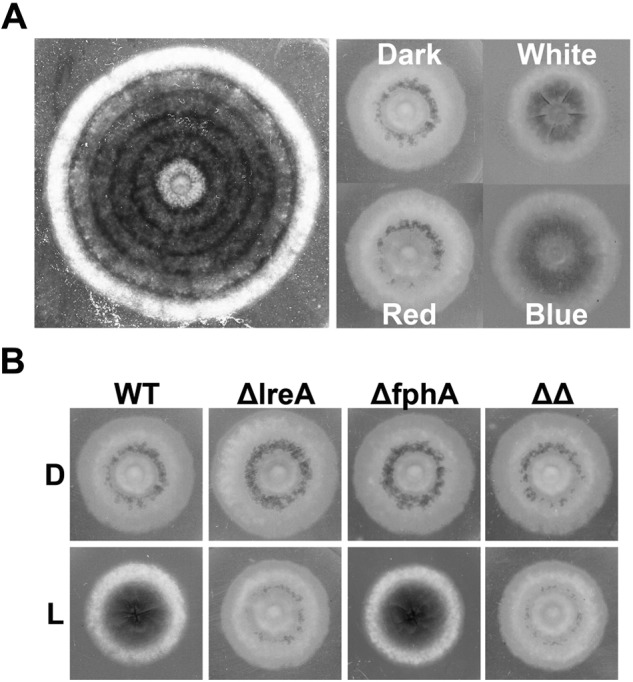
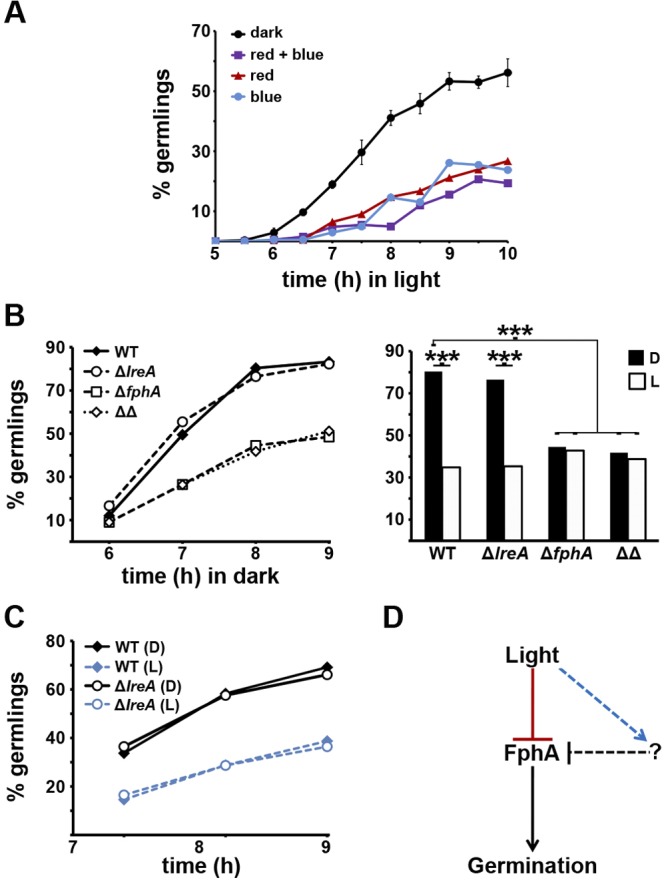
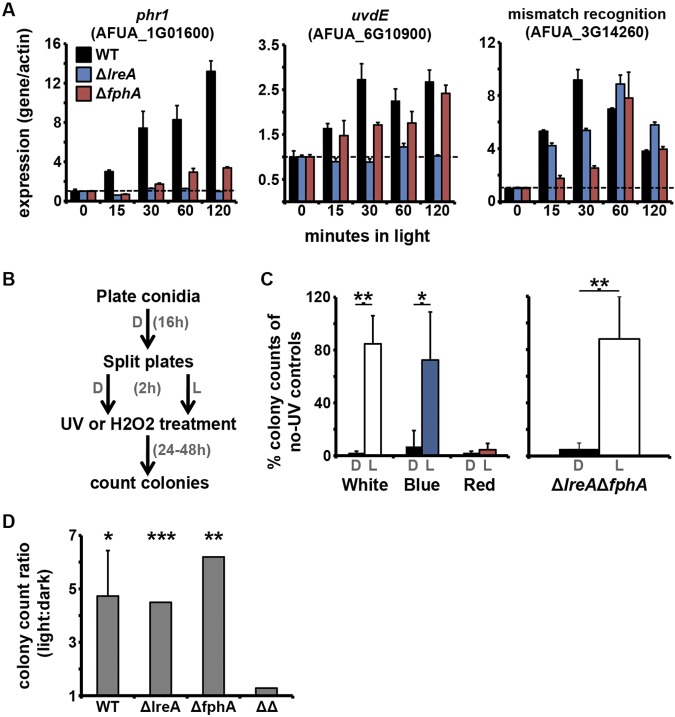
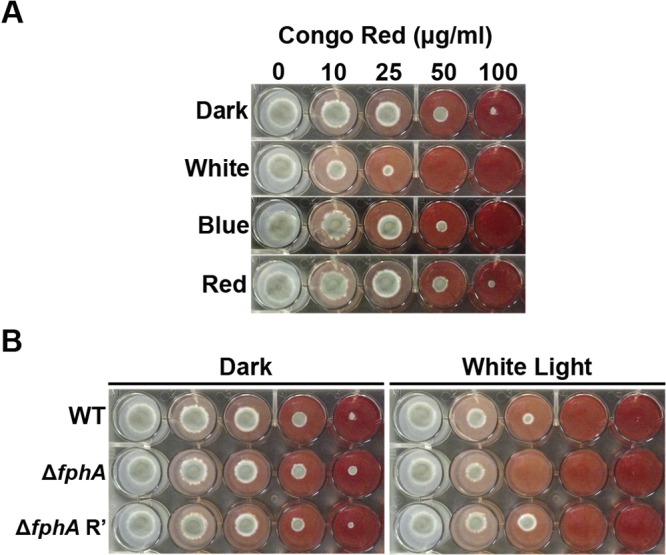
Light is a pervasive environmental factor that regulates development, stress resistance, and even virulence in numerous fungal species. Though much research has focused on signaling pathways in Aspergillus fumigatus , an understanding of how this pathogen responds to light is lacking. In this report, we demonstrate that the fungus does indeed respond to both blue and red portions of the visible spectrum. Included in the A. fumigatus light response is a reduction in conidial germination rates, increased hyphal pigmentation, enhanced resistance to acute ultraviolet and oxidative stresses, and an increased susceptibility to cell wall perturbation. By performing gene deletion analyses, we have found that the predicted blue light receptor LreA and red light receptor FphA play unique and overlapping roles in regulating the described photoresponsive behaviors of A. fumigatus . However, our data also indicate that the photobiology of this fungus is complex and likely involves input from additional photosensory pathways beyond those analyzed here. Finally, whole-genome microarray analysis has revealed that A. fumigatus broadly regulates a variety of metabolic genes in response to light, including those involved in respiration, amino acid metabolism, and metal homeostasis. Together, these data demonstrate the importance of the photic environment on the physiology of A. fumigatus and provide a basis for future studies into this unexplored area of its biology. IMPORTANCE Considerable effort has been taken to understand how the mold pathogen Aspergillus fumigatus senses its environment to facilitate growth within the immunocompromised host. Interestingly, it was shown that the deletion of a blue light photoreceptor in two divergent fungal pathogens, Cryptococcus neoformans and Fusarium oxysporum , leads to an attenuation of virulence in their respective animal infection models. This suggests that light signaling pathways are conservatively involved in the regulation of fungal pathogenesis. However, an understanding of whether and how A. fumigatus responds to light is lacking. Here we demonstrate that this organism coordinates broad aspects of its physiology with the photic environment, including pathways known to be involved in virulence, such as carbohydrate metabolism and oxidative stress resistance. Moreover, the photoresponse of A. fumigatus differs in notable ways from the well-studied model Aspergillus nidulans . Therefore, this work should represent a general advancement in both photobiology and A. fumigatus research communities.
Overview
The claims and statistics of this paper haven’t been checked yet.
Free: it reads the open-access text and checks the first 5 claims that cite a source we can check. Create a free account to check every claim.
Integrity signals
Registry
Cites
Statistics
Figures
Verification
Claims the paper makes
The claims and statistics of this paper haven’t been checked yet.
Free: it reads the open-access text and checks the first 5 claims that cite a source we can check. Create a free account to check every claim.
Claims other papers make about this one
Each is checked against this paper’s own text: does it say what the citing paper says it does?
The source backs part of the claim, not all of it — or backs it for a different population, condition or comparison.
In the citing paper
“Instead, LreA drove the synthesis of mycelial pigmentation, and FphA was required for germination, suggesting that light served as a stress signaling mechanism in A. fumigatus rather than having a developmental role.”
From Aspergillus fumigatus and Aspergillosis in 2019 (2019) · cites this paper as [448]
Experimental — accuracy not yet measuredThe cited source says what the claim attributes to it.
In the citing paper
“Light-induced and -repressed genes have been identified by transcriptome analysis, and the photoadaptation of this species to constant or short light stimuli has begun to be analyzed (448, 449).”
From Aspergillus fumigatus and Aspergillosis in 2019 (2019) · cites this paper as [448]
In the citing paper
“In contrast to that in A. nidulans, the asexual sporulation process was not regulated by light in A. fumigatus despite the presence of both LreA and FphA orthologs in the genome (448).”
From Aspergillus fumigatus and Aspergillosis in 2019 (2019) · cites this paper as [448]
Self-check
Percentages, sums and reported differences re-computed from the paper’s own numbers.
The self-check needs the paper’s full text.
Citations
Cites
Metals, Toxicity and Oxidative Stress
Valko, M., Morris, H., & Cronin, M. (2005) · Current Medicinal Chemistry · doi:10.2174/0929867053764635 · Cited by 5,018 · cited 1×
“As both the redox activity of the mitochondria and iron-mediated Fenton chemistry are major sources of endogenous oxidative stress for the cell (57), the downregulation of these gene categories may provide an oxidant-protected cellular state in A.”
Background[4] Genetic and microbiological research techniques for Neurospora crassa
Davis, R. H., & de Serres, F. J. (1970) · Methods in Enzymology · doi:10.1016/0076-6879(71)17168-6 · Cited by 1,104 · cited 1×
“ulated onto a minimal medium slant (64) and incubated for 1 week at”
BackgroundThe induction and repression of nitrate reductase in the fungus Aspergillus nidulans
Cove, D. J. (1966) · Biochimica et Biophysica Acta (BBA) - Enzymology and Biological Oxidation · doi:10.1016/s0926-6593(66)80120-0 · Cited by 1,038
Segal, B. H. (2009) · New England Journal of Medicine · doi:10.1056/nejmra0808853 · Cited by 661
Biosynthesis of fungal melanins and their importance for human pathogenic fungi
Langfelder, K., Streibel, M., Jahn, B., Haase, G., & Brakhage, A. A. (2003) · Fungal Genetics and Biology · doi:10.1016/s1087-1845(02)00526-1 · Cited by 634 · cited 2×
“As examples, loss of hyphal pigmentation, reduced germination kinetics, and defects in cell wall homeostasis are all associated with attenuated virulence phenotypes in murine models of invasive aspergillosis (49, 56).”
BackgroundWhite Collar-1, a Circadian Blue Light Photoreceptor, Binding to the frequency Promoter
Froehlich, A. C., Liu, Y., Loros, J. J., & Dunlap, J. C. (2002) · Science · doi:10.1126/science.1073681 · Cited by 520 · cited 1×
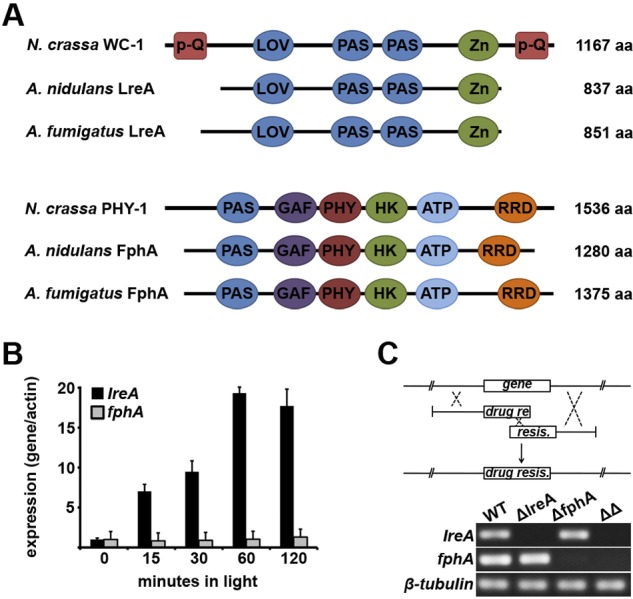
“WC-1 is a Zn finger transcription factor that contains a specialized PAS (PerAnt-Sim) domain, called the LOV domain (light-oxygenvoltage), which binds flavin adenine dinucleotide (FAD) as the photon-absorbing chromophore (9, 10).”
BackgroundSelf-citationUpton, A., Kirby, K. A., Carpenter, P., Boeckh, M., & Marr, K. A. (2007) · Clinical Infectious Diseases · doi:10.1086/510592 · Cited by 514 · cited 1×
“Even with the use of antifungal agents, the mortality rates associated with invasive aspergillosis remain around 50%, thus making the development of novel treatment strategies imperative (23, 24).”
BackgroundSplit-Marker Recombination for Efficient Targeted Deletion of Fungal Genes
Catlett, N. L., Lee, B.-N., Yoder, O. C., & Turgeon, B. G. (2003) · Fungal Genetics Reports · doi:10.4148/1941-4765.1150 · Cited by 488 · cited 1×
“tions were accomplished using the split-marker method (63), as depicted”
MethodWhite collar-1, a central regulator of blue light responses in Neurospora, is a zinc finger protein.
Ballario, P., Vittorioso, P., Magrelli, A., Talora, C., Cabibbo, A., & Macino, G. (1996) · The EMBO Journal · doi:10.1002/j.1460-2075.1996.tb00510.x · Cited by 453 · cited 1×
“crassa, the wc-1 message is increased upon exposure to light (35).”
BackgroundWhite Collar-1, a DNA Binding Transcription Factor and a Light Sensor
He, Q., Cheng, P., Yang, Y., Wang, L., Gardner, K. H., & Liu, Y. (2002) · Science · doi:10.1126/science.1072795 · Cited by 419
The Aspergillus nidulans Phytochrome FphA Represses Sexual Development in Red Light
Blumenstein, A., Vienken, K., Tasler, R., Purschwitz, J., Veith, D., Frankenberg-Dinkel, N., & Fischer, R. (2005) · Current Biology · doi:10.1016/j.cub.2005.08.061 · Cited by 357 · cited 1×
“nidulans has been shown to function in a fungal biological response to red light (30, 34).”
BackgroundFunctional and Physical Interaction of Blue- and Red-Light Sensors in Aspergillus nidulans
Purschwitz, J., Müller, S., Kastner, C., Schöser, M., Haas, H., Espeso, E. A., Atoui, A., Calvo, A. M., & Fischer, R. (2008) · Current Biology · doi:10.1016/j.cub.2008.01.061 · Cited by 311 · cited 1×
“crassa WC-2) and the developmental regulator Velvet A (VeA) (31, 32).”
BackgroundHeintzen, C., Loros, J. J., & Dunlap, J. C. (2001) · Cell · doi:10.1016/s0092-8674(01)00232-x · Cited by 311
Self-citationLight Controls Growth and Development via a Conserved Pathway in the Fungal Kingdom
Idnurm, A., & Heitman, J. (2005) · PLoS Biology · doi:10.1371/journal.pbio.0030095 · Cited by 306 · cited 2×
“Deletion of the wc-1 ortholog in both the basidiomycete yeast Cryptococcus neoformans and the ascomycete mold Fusarium oxysporum results in an attenuation of virulence in their respective murine infection models (21, 22).”
BackgroundLight is required for conidiation in Aspergillus nidulans.
Mooney, J. L., & Yager, L. N. (1990) · Genes & Development · doi:10.1101/gad.4.9.1473 · Cited by 287 · cited 1×
“nidulans, which requires light to induce conidiation (37), A.”
BackgroundChen, C., Ringelberg, C. S., Gross, R. H., Dunlap, J. C., & Loros, J. J. (2009) · The EMBO Journal · doi:10.1038/emboj.2009.54 · Cited by 264 · cited 1×
“nidulans, and Trichoderma atroviride (12, 36, 41), we identified more lightrepressed genes in A.”
BackgroundSelf-citationFungi, Hidden in Soil or Up in the Air: Light Makes a Difference
Rodriguez-Romero, J., Hedtke, M., Kastner, C., Müller, S., & Fischer, R. (2010) · Annual Review of Microbiology · doi:10.1146/annurev.micro.112408.134000 · Cited by 255 · cited 1×
“In fungi, for example, the presence of light may signal the soil/air interface for optimal spore dispersal, high temperature, and the presence of genotoxic ultraviolet (UV) radiation (1, 2).”
BackgroundThe circadian clock of Neurospora crassa
Baker, C. L., Loros, J. J., & Dunlap, J. C. (2012) · FEMS Microbiology Reviews · doi:10.1111/j.1574-6976.2011.00288.x · Cited by 230
Self-citationd'Enfert, C. (1997) · Fungal Genetics and Biology · doi:10.1006/fgbi.1997.0975 · Cited by 222 · cited 1×
“Germination involves the irreversible activation of respiratory metabolism and the polarization machinery, thereby breaking metabolic dormancy and committing the fungus to vegetative growth (47).”
BackgroundFungal photoreceptors: sensory molecules for fungal development and behaviour
Corrochano, L. M. (2007) · Photochemical & Photobiological Sciences · doi:10.1039/b702155k · Cited by 217 · cited 1×
“In fungi, for example, the presence of light may signal the soil/air interface for optimal spore dispersal, high temperature, and the presence of genotoxic ultraviolet (UV) radiation (1, 2).”
BackgroundBieszke, J. A., Braun, E. L., Bean, L. E., Kang, S., Natvig, D. O., & Borkovich, K. A. (1999) · Proceedings of the National Academy of Sciences · doi:10.1073/pnas.96.14.8034 · Cited by 202
Spotlight on Aspergillus nidulans photosensory systems
Bayram, Ö., Braus, G. H., Fischer, R., & Rodriguez-Romero, J. (2010) · Fungal Genetics and Biology · doi:10.1016/j.fgb.2010.05.008 · Cited by 177 · cited 1×
“nidulans, light induces asexual sporulation while concurrently downregulating sexual development and secondary metabolism (28).”
BackgroundA glimpse into the basis of vision in the kingdom Mycota
Idnurm, A., Verma, S., & Corrochano, L. M. (2010) · Fungal Genetics and Biology · doi:10.1016/j.fgb.2010.04.009 · Cited by 169 · cited 2×
“With orthologs found in all major fungal divisions, including the Chytridiomycetes, the white collar proteins are the most evolutionarily conserved photoreceptors in the Mycota (19, 20).”
BackgroundGenetic and Molecular Analysis of Phytochromes from the Filamentous Fungus Neurospora crassa
Froehlich, A. C., Noh, B., Vierstra, R. D., Loros, J., & Dunlap, J. (2005) · Eukaryotic Cell · doi:10.1128/ec.4.12.2140-2152.2005 · Cited by 165 · cited 1×
“crassa phy-1 phy-2 deletion mutant (15) demonstrated no germination defect compared to the WT, indicating that the influences of light and phytochromes on conidiospore germination are not conserved in A.”
BackgroundSelf-citationPhotoadaptation in Neurospora by Competitive Interaction of Activating and Inhibitory LOV Domains
Malzahn, E., Ciprianidis, S., Káldi, K., Schafmeier, T., & Brunner, M. (2010) · Cell · doi:10.1016/j.cell.2010.08.010 · Cited by 161
How fungi keep time: circadian system in Neurospora and other fungi
Dunlap, J., & Loros, J. (2006) · Current Opinion in Microbiology · doi:10.1016/j.mib.2006.10.008 · Cited by 159 · cited 1×
“With orthologs found in all major fungal divisions, including the Chytridiomycetes, the white collar proteins are the most evolutionarily conserved photoreceptors in the Mycota (19, 20).”
BackgroundSelf-citationPhysical interaction between VIVID and white collar complex regulates photoadaptation in Neurospora
Chen, C., DeMay, B. S., Gladfelter, A. S., Dunlap, J., & Loros, J. (2010) · Proceedings of the National Academy of Sciences · doi:10.1073/pnas.1011190107 · Cited by 154 · cited 1×
“fumigatus may undergo photoadaptation, a negativefeedback response in which light ultimately leads to the repression of light-induced genes (38, 39).”
BackgroundSelf-citationRegulation of Conidiation by Light in Aspergillus nidulans
Ruger-Herreros, C., Rodríguez-Romero, J., Fernández-Barranco, R., Olmedo, M., Fischer, R., Corrochano, L. M., & Canovas, D. (2011) · Genetics · doi:10.1534/genetics.111.130096 · Cited by 151 · cited 2×
“nidulans has not been specifically reported, and neither one of these two genes were among the light-induced genes detected by microarray (36).”
BackgroundGrant, C. M., MacIver, F. H., & Dawes, I. W. (1997) · FEBS Letters · doi:10.1016/s0014-5793(97)00592-9 · Cited by 151 · cited 1×
“, petite cells) display enhanced sensitivity to oxidative stress (60).”
BackgroundMicrobial, chemical and physical aspects of citrus waste composting
Heerden, I. V., Cronje, C., Swart, S. H., & Kotzé, J. M. (2002) · Bioresource Technology · doi:10.1016/s0960-8524(01)00058-x · Cited by 141
Iron homeostasis—Achilles’ heel of Aspergillus fumigatus?
Schrettl, M., & Haas, H. (2011) · Current Opinion in Microbiology · doi:10.1016/j.mib.2011.06.002 · Cited by 139 · cited 1×
“shown here to be light-regulated processes, are also known virulence determinants in this fungus (26, 61).”
BackgroundBayram, Ö., Biesemann, C., Krappmann, S., Galland, P., & Braus, G. H. (2008) · Molecular Biology of the Cell · doi:10.1091/mbc.e08-01-0061 · Cited by 138 · cited 4×
“WC-1 is a Zn finger transcription factor that contains a specialized PAS (PerAnt-Sim) domain, called the LOV domain (light-oxygenvoltage), which binds flavin adenine dinucleotide (FAD) as the photon-absorbing chromophore (9, 10).”
BackgroundInfluentialCheng, P., Yang, Y., Wang, L., He, Q., & Liu, Y. (2003) · Journal of Biological Chemistry · doi:10.1074/jbc.m209592200 · Cited by 136
Light regulation of asexual development in the rice blast fungus, Magnaporthe oryzae
Lee, K., Singh, P., Chung, W.-C., Ash, J. S., Kim, T. S., Hang, L. E., & Park, S. (2006) · Fungal Genetics and Biology · doi:10.1016/j.fgb.2006.04.005 · Cited by 135
Phycomyces and the biology of light and color
Cerdá-Olmedo, E. (2001) · FEMS Microbiology Reviews · doi:10.1016/s0168-6445(01)00064-x · Cited by 129
Yeliseev, A. A., & Kaplan, S. (1995) · Journal of Biological Chemistry · doi:10.1074/jbc.270.36.21167 · Cited by 121 · cited 1×
“While not functionally characterized in fungi, in bacteria, these proteins are proposed light/oxygenregulated porphyrin efflux pumps involved in negatively regulating carotenogenesis and photosynthesis (40).”
BackgroundAspergillus fumigatus: Growth and virulence
Rhodes, J. C. (2006) · Medical Mycology · doi:10.1080/13693780600779419 · Cited by 120 · cited 1×
“shown here to be light-regulated processes, are also known virulence determinants in this fungus (26, 61).”
BackgroundPuttikamonkul, S., Willger, S. D., Grahl, N., Perfect, J. R., Movahed, N., Bothner, B., Park, S., Paderu, P., Perlin, D. S., & Cramer Jr, R. A. (2010) · Molecular Microbiology · doi:10.1111/j.1365-2958.2010.07254.x · Cited by 119
Regulation by light in Fusarium
Ávalos, J., & Estrada, A. F. (2010) · Fungal Genetics and Biology · doi:10.1016/j.fgb.2010.05.001 · Cited by 119
Estrada, A. F., & Ávalos, J. (2008) · Fungal Genetics and Biology · doi:10.1016/j.fgb.2007.12.003 · Cited by 115
Roles for WHITE COLLAR-1 in Circadian and General Photoperception in Neurospora crassa
Lee, K., Dunlap, J. C., & Loros, J. J. (2003) · Genetics · doi:10.1093/genetics/163.1.103 · Cited by 111
Self-citationBrown, L. S. (2004) · Photochemical & Photobiological Sciences · doi:10.1039/b315527g · Cited by 110 · cited 1×
“However, the proteins encoded by these genes are not conventional rhodopsins, as they lack a crucial lysine residue required for retinal binding (54).”
BackgroundPhotoreception in Neurospora : a tale of two White Collar proteins
Liu, Y., He, Q., & Cheng, P. (2003) · Cellular and Molecular Life Sciences · doi:10.1007/s00018-003-3109-5 · Cited by 109 · cited 1×
“In this mold, light promotes asexual development (conidiation), protoperithecial formation, the direction of ascospore release, and carotenoid pigment production (7, 8).”
BackgroundLewis, Z., Correa, A., Schwerdtfeger, C., Link, K., Xie, X., Gomer, R. H., Thomas, T., Ebbole, D. J., & Bell‐Pedersen, D. (2002) · Molecular Microbiology · doi:10.1046/j.1365-2958.2002.03074.x · Cited by 107
Ruiz‐Roldán, C., Garre, V., Guarro, J., Mariné, M., & Roncero, M. I. G. (2008) · Eukaryotic Cell · doi:10.1128/ec.00072-08 · Cited by 107
Aspergillus fumigatus: virulence genes in a street-smart mold
Askew, D. S. (2008) · Current Opinion in Microbiology · doi:10.1016/j.mib.2008.05.009 · Cited by 105
Photobiology in the Zygomycota: Multiple photoreceptor genes for complex responses to light
Corrochano, L. M., & Garre, V. (2010) · Fungal Genetics and Biology · doi:10.1016/j.fgb.2010.04.007 · Cited by 103
Purschwitz, J., Müller, S., & Fischer, R. (2008) · Molecular Genetics and Genomics · doi:10.1007/s00438-008-0390-x · Cited by 100
Nitric Oxide Evokes an Adaptive Response to Oxidative Stress by Arresting Respiration
Husain, M., Bourret, T. J., McCollister, B. D., Jones-Carson, J., Laughlin, J., & Vázquez-Torres, A. (2008) · Journal of Biological Chemistry · doi:10.1074/jbc.m708845200 · Cited by 90 · cited 1×
“Indeed, the downregulation of these pathways has been associated with oxidative stress resistance in several bacterial species (58, 59).”
BackgroundA Circadian Oscillator in Aspergillus spp . Regulates Daily Development and Gene Expression
Greene, A. V., Keller, N. P., Haas, H., & Bell‐Pedersen, D. (2003) · Eukaryotic Cell · doi:10.1128/ec.2.2.231-237.2003 · Cited by 86
Novel light-regulated genes in Trichoderma atroviride: a dissection by cDNA microarrays
Rosales-Saavedra, T., Naranjo, E. U. E., Casas‐Flores, S., Martínez-Hernández, P., Ibarra‐Laclette, E., CORTÉS-PENAGOS, C. D. J., & Herrera‐Estrella, A. (2006) · Microbiology · doi:10.1099/mic.0.29000-0 · Cited by 84 · cited 1×
“nidulans, and Trichoderma atroviride (12, 36, 41), we identified more lightrepressed genes in A.”
BackgroundLight inhibits spore germination through phytochrome in Aspergillus nidulans
Röhrig, J., Kästner, C., & Fischer, R. (2013) · Current Genetics · doi:10.1007/s00294-013-0387-9 · Cited by 81
Collett, M. A., Garceau, N., Dunlap, J. C., & Loros, J. J. (2002) · Genetics · doi:10.1093/genetics/160.1.149 · Cited by 81
Self-citationFroehlich, A. C., Chen, C.-H., Belden, W. J., Madeti, C., Roenneberg, T., Merrow, M., Loros, J. J., & Dunlap, J. C. (2010) · Eukaryotic Cell · doi:10.1128/ec.00380-09 · Cited by 75
Self-citationCarbon Source Dependence and Photostimulation of Conidiation in Hypocrea atroviridis
Friedl, M. A., Kubicek, C. P., & Druzhinina, I. S. (2007) · Applied and Environmental Microbiology · doi:10.1128/aem.02068-07 · Cited by 75
Photosensing Fungi: Phytochrome in the Spotlight
Idnurm, A., & Heitman, J. (2005) · Current Biology · doi:10.1016/j.cub.2005.10.001 · Cited by 60 · cited 2×
“nidulans has been shown to function in a fungal biological response to red light (30, 34).”
Fuller, K. K., Richie, D. L., Feng, X., Krishnan, K., Stephens, T. J., Wikenheiser‐Brokamp, K. A., Askew, D. S., & Rhodes, J. C. (2011) · Molecular Microbiology · doi:10.1111/j.1365-2958.2010.07509.x · Cited by 53 · cited 2×
“As examples, loss of hyphal pigmentation, reduced germination kinetics, and defects in cell wall homeostasis are all associated with attenuated virulence phenotypes in murine models of invasive aspergillosis (49, 56).”
BackgroundSelf-citationCircadian rhythms in Neurospora crassa: Clock gene homologues in fungi
Lombardi, L. M., & Brody, S. (2005) · Fungal Genetics and Biology · doi:10.1016/j.fgb.2005.06.005 · Cited by 41
Photoinduction of carotenoid biosynthesis inGibberella fujikuroi
Ávalos, J., & Schrott, E. L. (1990) · FEMS Microbiology Letters · doi:10.1111/j.1574-6968.1990.tb04014.x · Cited by 36
Porphyromonas gingivalis Ferrous Iron Transporter FeoB1 Influences Sensitivity to Oxidative Stress
Anaya-Bergman, C., He, J., Jones, K., Miyazaki, H., Yeudall, W. A., & Lewis, J. P. (2009) · Infection and Immunity · doi:10.1128/iai.00108-09 · Cited by 31 · cited 1×
“Indeed, the downregulation of these pathways has been associated with oxidative stress resistance in several bacterial species (58, 59).”
BackgroundA circadian rhythm regulating hyphal melanization inCercospora kikuchii
Bluhm, B. H., Burnham, A. M., & Dunkle, L. D. (2010) · Mycologia · doi:10.3852/09-041 · Cited by 31
Light Represses Conidiation in Koji MoldAspergillus oryzae
Hatakeyama, R., Nakahama, T., Higuchi, Y., & Kitamoto, K. (2007) · Bioscience Biotechnology and Biochemistry · doi:10.1271/bbb.60713 · Cited by 30
[25] Photoinduction of carotenoid biosynthesis
Ávalos, J., Bejarano, E. R., & Cerdá‐Olmedo, E. (1993) · Methods in enzymology on CD-ROM/Methods in enzymology · doi:10.1016/0076-6879(93)14072-q · Cited by 23
Characterization of a 5-azacytidine-induced developmental Aspergillus fumigatus variant
Ben‐Ami, R., Varga, V., Lewis, R. E., May, G. S., Nierman, W. C., & Kontoyiannis, D. P. (2010) · Virulence · doi:10.4161/viru.1.3.11750 · Cited by 19
Cited by
Aspergillus fumigatus and Aspergillosis in 2019
Latgé, J.-P., & Chamilos, G. (2019) · Clinical Microbiology Reviews · doi:10.1128/cmr.00140-18 · Cited by 1,400
Light sensing and responses in fungi
Yu, Z., & Fischer, R. (2019) · Nature Reviews Microbiology · doi:10.1038/s41579-018-0109-x · Cited by 285
Molecular and physiological effects of environmental UV radiation on fungal conidia
Braga, G. U. L., Rangel, D. E. N., Fernandes, É. K. K., Flint, S. D., & Roberts, D. W. (2015) · Current Genetics · doi:10.1007/s00294-015-0483-0 · Cited by 226
“Exposure to moderate irradiances of visible light (400–700 nm) and near-UV radiation stimulates conidial production, synthesis of photoprotective pigments, and secondary metabolites in several fungal species (Leach and Tulloch 1972; Alves et al. 1984; Mooney and Yager 1990; Fourtouni et al. 1998; Zhang et al. 2009; Av…”
BackgroundInfluentialRangel, D. E. N., Braga, G. U. L., Fernandes, É. K. K., Keyser, C. A., Hallsworth, J. E., & Roberts, D. W. (2015) · Current Genetics · doi:10.1007/s00294-015-0477-y · Cited by 190
Schumacher, J., Simon, A., Cohrs, K. C., Viaud, M., & Tudzynski, P. (2014) · PLoS Genetics · doi:10.1371/journal.pgen.1004040 · Cited by 163
“fumigatus, respectively [37,64–65].”
Metadata
- Authors
- Fuller, K. K., Ringelberg, C. S., Loros, J. J., & Dunlap, J. C.
- Affiliations
- Dartmouth College (US)
- Venue
- mBio
- Publisher
- American Society for Microbiology
- Published
- 2013-05
- Volume
- 4
- Issue
- 2
- ISSN
- 2150-7511 (ISSN-L)
- 2161-2129
- PMC
- PMC3604765
- OpenAlex
- W2123110434
- Cited by
- 136
- References
- 64
- Citations by year
- 2026: 6 · 2025: 7 · 2024: 6 · 2023: 5 · 2022: 9 · 2021: 24 · 2020: 13 · 2019: 11 · 2018: 10 · 2017: 11 · 2016: 16 · 2015: 7 · 2014: 7 · 2013: 3
- FWCI
- 4.93
- Type
- journal article
- Language
- en
- Open access
- gold
- doi.org
- Licence
- cc-by-nc-sa
- creativecommons.org/licenses/by-nc-sa/3.0/ (vor)
- journals.asm.org/non-commercial-tdm-license (tdm)
- Locations
- mBio (publishedVersion, cc-by-nc-sa)
- Europe PMC (PubMed Central) (publishedVersion, cc-by-nc-sa)
- PubMed Central (publishedVersion, cc-by-nc-sa)
- PubMed (publishedVersion)
- DOAJ (DOAJ: Directory of Open Access Journals) (submittedVersion, cc-by-sa)
- Funders
- University of Missouri
- University of Cincinnati
- Dartmouth College
- National Institutes of Health (P01 GM68087)
- National Institute of General Medical Sciences (P01GM068087, R01GM083336, P01 GM68087, R01 GM34985, R01GM034985, GM083336)
- Topics
- Life Sciences › Biochemistry, Genetics and Molecular Biology › Molecular Biology › Fungal and yeast genetics research
- Health Sciences › Medicine › Infectious Diseases › Antifungal resistance and susceptibility
- Life Sciences › Agricultural and Biological Sciences › Plant Science › Light effects on plants
- Keywords
- Aspergillus fumigatus, light signaling, photoreceptors, blue light, red light, conidial germination, oxidative stress resistance, fungal virulence, metabolic regulation, metal homeostasis
- MeSH terms
- Aspergillus fumigatus, Cell Wall, Light, Pigments, Biological, Spores, Fungal, Stress, Physiological, Ultraviolet Rays, Signal Transduction, Gene Expression Regulation, Fungal, Gene Deletion, Oxidative Stress, Hyphae
About these checks
Registry, retraction, Cites and statistics results are computed, not judged, with one exception: a printed reference that no index lists is read once by a model before it counts as a citation error. Claims are extracted by a model and kept only when their quote appears verbatim in the text; each cited source is then checked, with a model’s help, for whether it says what the claim relies on. Those verdicts can be wrong — read the claim’s quote and the cited source before relying on one.
Statistics and arithmetic are recomputed, not judged.
Confidence bands are shown only for fields calibrated on our annotated test set. None is calibrated yet, so no band is shown.
What counts as a claim ›How we measure confidence ›How we check this ›
Are you an author, or do you see a problem with this page? Request a review
Data sources
Bibliographic data: Semantic Scholar, OpenAlex, Crossref.
Contains information from the Semantic Scholar Academic Graph Datasets, made available under the ODC Attribution License (ODC-BY 1.0).
Semantic Scholar’s data is described in: Kinney, R., et al. (2023). The Semantic Scholar Open Data Platform. arXiv:2301.10140.
