

Factors Required for Activation of Urease as a Virulence Determinant in Cryptococcus neoformans
Open accessThe DOI matches its Crossref record; 53 of the 53 references it cites were found in a registry or an index.
Abstract
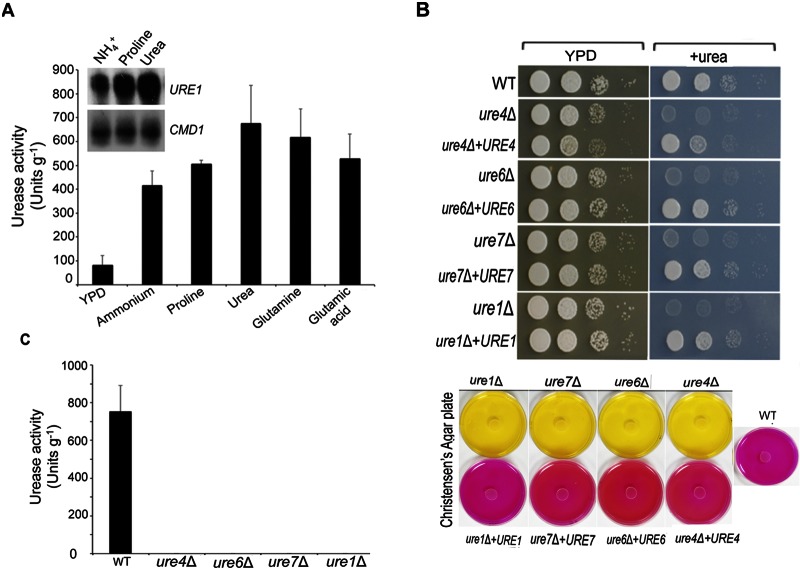
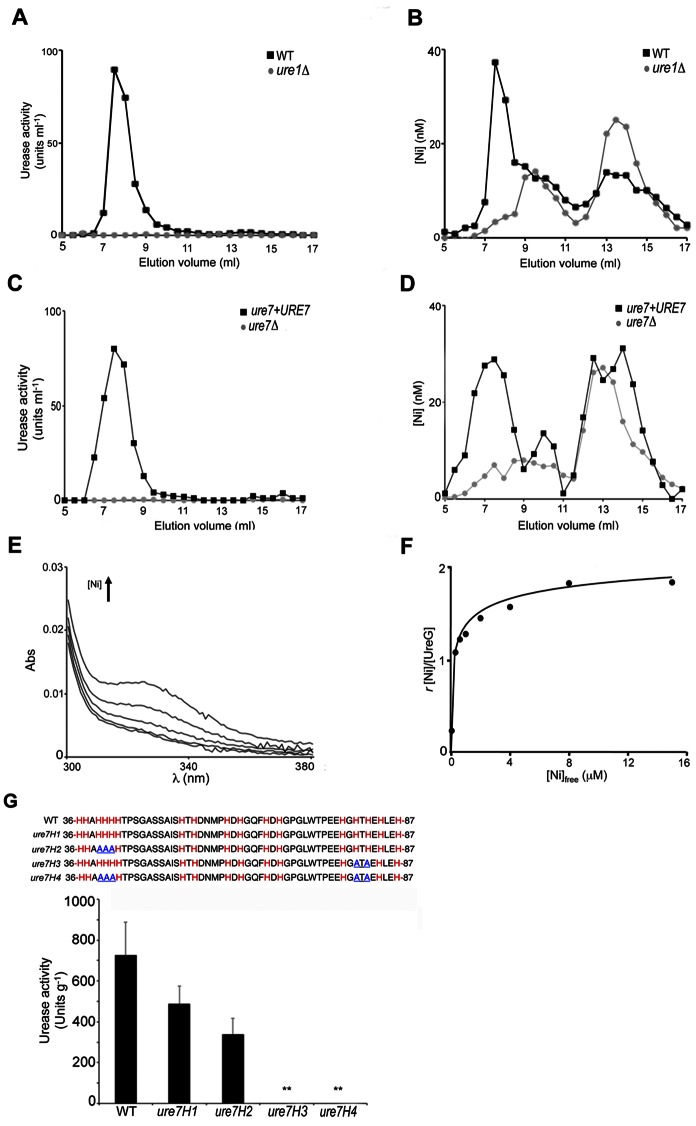
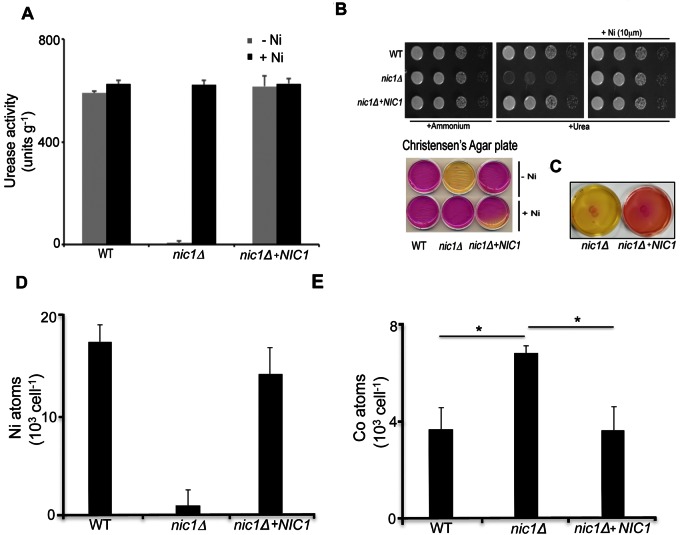
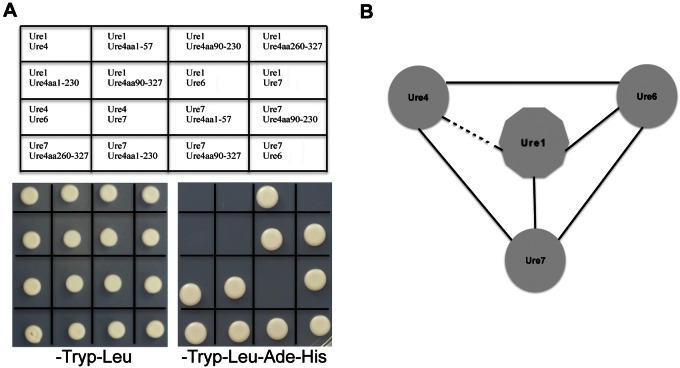
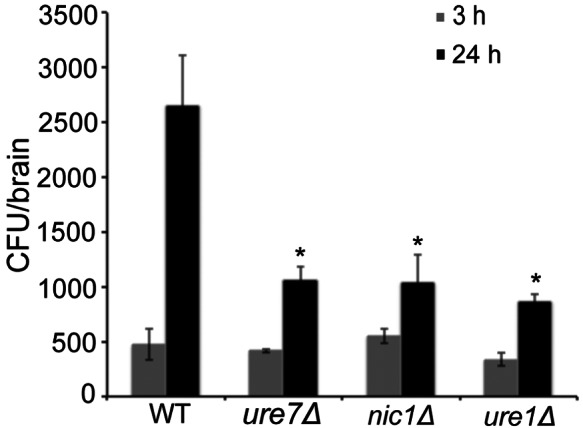
Urease in Cryptococcus neoformans plays an important role in fungal dissemination to the brain and causing meningoencephalitis. Although urea is not required for synthesis of apourease encoded by URE1 , the available nitrogen source affected the expression of URE1 as well as the level of the enzyme activity. Activation of the apoenzyme requires three accessory proteins, Ure4, Ure6, and Ure7, which are homologs of the bacterial urease accessory proteins UreD, UreF, and UreG, respectively. A yeast two-hybrid assay showed positive interaction of Ure1 with the three accessory proteins encoded by URE4 , URE6 , and URE7 . Metalloproteomic analysis of cryptococcal lysates using inductively coupled plasma mass spectrometry (ICP-MS) and a biochemical assay of urease activity showed that, as in many other organisms, urease is a metallocentric enzyme that requires nickel transported by Nic1 for its catalytic activity. The Ure7 accessory protein (bacterial UreG homolog) binds nickel likely via its conserved histidine-rich domain and appears to be responsible for the incorporation of Ni 2+ into the apourease. Although the cryptococcal genome lacks the bacterial UreE homolog, Ure7 appears to combine the functions of bacterial UreE and UreG, thus making this pathogen more similar to that seen with the plant system. Brain invasion by the ure1 , ure7 , and nic1 mutant strains that lack urease activity was significantly less effective in a mouse model. This indicated that an activated urease and not the Ure1 protein was responsible for enhancement of brain invasion and that the factors required for urease activation in C. neoformans resemble those of plants more than those of bacteria. IMPORTANCE Cryptococcus neoformans is the major fungal agent of meningoencephalitis in humans. Although urease is an important factor for cryptococcal brain invasion, the enzyme activation system has not been studied. We show that urease is a nickel-requiring enzyme whose activity level is influenced by the type of available nitrogen source. C. neoformans contains all the bacterial urease accessory protein homologs and nickel transporters except UreE, a nickel chaperone. Cryptococcal Ure7 (a homolog of UreG) apparently functions as both the bacterial UreG and UreE in activating the Ure1 apoenzyme. The cryptococcal urease accessory proteins Ure4, Ure6, and Ure7 interacted with Ure1 in a yeast two-hybrid assay, and deletion of any one of these not only inactivated the enzyme but also reduced the efficacy of brain invasion. This is the first study showing a holistic picture of urease in fungi, clarifying that urease activity, and not Ure1 protein, contributes to pathogenesis in C. neoformans
Overview
The claims and statistics of this paper haven’t been checked yet.
Free: it reads the open-access text and checks the first 5 claims that cite a source we can check. Create a free account to check every claim.
Integrity signals
Registry
Cites
Statistics
Figures
Verification
Claims the paper makes
The claims and statistics of this paper haven’t been checked yet.
Free: it reads the open-access text and checks the first 5 claims that cite a source we can check. Create a free account to check every claim.
Claims other papers make about this one
Each is checked against this paper’s own text: does it say what the citing paper says it does?
In the citing paper
“This is supported by the fact that urease-positive cryptococcal strains cause a reduction in levels of the tight junction protein ZO1 in HBMECs, while urease-deficient strains have no effect on monolayer integrity [156].”
From Mechanisms of fungal dissemination (2021) · cites this paper as [156]
Self-check
Percentages, sums and reported differences re-computed from the paper’s own numbers.
The self-check needs the paper’s full text.
Citations
Cites
A novel genetic system to detect protein–protein interactions
Fields, S., & Song, O.-K. (1989) · Nature · doi:10.1038/340245a0 · Cited by 6,114 · cited 1×
“We systematically studied pairwise interactions where a single “bait” test protein was individually assayed in a Y2H system against a “prey” test protein (33, 34).”
MethodMolecular biology of microbial ureases
Mobley, H. L. T., Island, M. D., & Hausinger, R. P. (1995) · Microbiological Reviews · doi:10.1128/mmbr.59.3.451-480.1995 · Cited by 1,469 · cited 3×
“To determine if C. neoformans cells affected the integrity of HBMEC tight junctions at all, we prolonged the incubation period to 24 h. Due to the absence of a true positive control, a pathogenic E. coli strain E44 (5) which is known to be an effective disrupter of the tight junctions was used as the positive control.”
BackgroundMethodInfluentialTHE ISOLATION AND CRYSTALLIZATION OF THE ENZYME UREASE
Sumner, J. B. (1926) · Journal of Biological Chemistry · doi:10.1016/s0021-9258(18)84560-4 · Cited by 898
The crystal structure of urease from Klebsiella aerogenes
Jabri, E., Carr, M., Hausinger, R., & Karplus, P. (1995) · Science · doi:10.1126/science.7754395 · Cited by 830 · cited 1×
“These form a trimer (UreAUreB-UreC)3 that contains a binuclear nickel (Ni) metallocenter per UreC (13, 14).”
BackgroundGenetic regulation of nitrogen metabolism in the fungi.
Marzluf, G. A. (1997) · Microbiology and molecular biology reviews : MMBR · doi:10.1128/.61.1.17-32.1997 · Cited by 720
Urease as a Virulence Factor in Experimental Cryptococcosis
Cox, G. M., Mukherjee, J., Cole, G. T., Casadevall, A., & Perfect, J. R. (2000) · Infection and Immunity · doi:10.1128/iai.68.2.443-448.2000 · Cited by 522 · cited 1×
“neoformans, the URE1 gene (CNAG_05540) encodes the urease apoenzyme, which has been deleted and studied for its role in virulence (2, 18).”
BackgroundGene transfer in Cryptococcus neoformans by use of biolistic delivery of DNA
Toffaletti, D. L., Rude, T. H., Johnston, S. A., Durack, D. T., & Perfect, J. R. (1993) · Journal of Bacteriology · doi:10.1128/jb.175.5.1405-1411.1993 · Cited by 488 · cited 1×
“transformed into the H99 cells as previously described (52).”
MethodAnderson, J. M., Stevenson, B. R., Jesaitis, L. A., Goodenough, D. A., & Mooseker, M. S. (1988) · The Journal of cell biology · doi:10.1083/jcb.106.4.1141 · Cited by 368 · cited 1×
“The protein is located on the cytoplasmic membrane surface of intercellular tight junctions (36).”
BackgroundEvidence of a Role for Monocytes in Dissemination and Brain Invasion by Cryptococcus neoformans
Charlier, C., Nielsen, K., Daou, S., Brigitte, M., Chretien, F., & Dromer, F. (2009) · Infection and Immunity · doi:10.1128/iai.01065-08 · Cited by 362
Protein-folding location can regulate manganese-binding versus copper- or zinc-binding
Tottey, S., Waldron, K. J., Firbank, S. J., Reale, B., Bessant, C., Sato, K., Cheek, T. R., Gray, J., Banfield, M. J., Dennison, C., et al. (2008) · Nature · doi:10.1038/nature07340 · Cited by 314
Self-citation
Cited by
Cryptococcus neoformans and Cryptococcus gattii, the etiologic agents of cryptococcosis
Kwon-Chung, K. J., Fraser, J. A., Doering, T. L., Wang, Z. A., Janbon, G., Idnurm, A., & Bahn, Y.-S. (2014) · Cold Spring Harbor Perspectives in Medicine · doi:10.1101/cshperspect.a019760 · Cited by 531
“Like urease deficient strains, those impaired in nickel homeostasis have defects in dissemination after pulmonary infection (Olszewski et al. 2004; Singh et al. 2013).”
BackgroundInfluentialSelf-citationHeavy Metal Removal by Bioaccumulation Using Genetically Engineered Microorganisms
Diep, P., Mahadevan, R., & Yakunin, A. F. (2018) · Frontiers in Bioengineering and Biotechnology · doi:10.3389/fbioe.2018.00157 · Cited by 344
Gerwien, F., Skrahina, V., Kasper, L., Hube, B., & Brunke, S. (2018) · FEMS Microbiology Reviews · doi:10.1093/femsre/fux050 · Cited by 250
“For pathogens, ureases (and with them, most likely dedicated nickel permeases) often play important roles as virulence factors, for example, in Coccidioides immitis and in Cr. neoformans (Singh et al. 2013).”
BackgroundBasic principles of the virulence of Cryptococcus
Zaragoza, O. (2019) · Virulence · doi:10.1080/21505594.2019.1614383 · Cited by 249
Trojan Horse Transit Contributes to Blood-Brain Barrier Crossing of a Eukaryotic Pathogen
Santiago-Tirado, F. H., Onken, M. D., Cooper, J. A., Klein, R. S., & Doering, T. L. (2017) · mBio · doi:10.1128/mbio.02183-16 · Cited by 238
“4C), although only at late time points, consistent with previous in vivo results (39).”
ResultThe Emerging Role of Urease as a General Microbial Virulence Factor
Rutherford, J. C. (2014) · PLoS Pathogens · doi:10.1371/journal.ppat.1004062 · Cited by 206
“neoformans and are essential for full urease activity [22].”
InfluentialSelf-citationSystematic functional profiling of transcription factor networks in Cryptococcus neoformans
Jung, K.-W., Yang, D.-H., Maeng, S., Lee, K.-T., So, Y.-S., Hong, J., Choi, J., Byun, H.-J., Kim, H., Bang, S., et al. (2015) · Nature Communications · doi:10.1038/ncomms7757 · Cited by 203
“Urease is necessary for sequestration of the pathogen in brain microcapillary beds and crossing the blood-brain-barrier through the disruption of tight junctions 23,24 .”
Ureases as multifunctional toxic proteins: A review
Carlini, C. R., & Ligabue‐Braun, R. (2015) · Toxicon · doi:10.1016/j.toxicon.2015.11.020 · Cited by 175
Tugume, L., Ssebambulidde, K., Kasibante, J., Ellis, J. P., Wake, R. M., Gakuru, J., Lawrence, D. S., Abassi, M., Rajasingham, R., Meya, D. B., et al. (2023) · Nature Reviews Disease Primers · doi:10.1038/s41572-023-00472-z · Cited by 155
“Finally, ureases, which promote nitrogen acquisition from the environment, help increase the pH in phagolysosomes 105,106 .”
BackgroundFu, M. S., Coelho, C., De Leon-Rodriguez, C. M., Rossi, D. C. P., Camacho, E., Jung, E. H., Kulkarni, M., & Casadevall, A. (2018) · PLOS Pathogens · doi:10.1371/journal.ppat.1007144 · Cited by 138
The Tools for Virulence of Cryptococcus neoformans
Coelho, C., Bocca, A. L., & Casadevall, A. (2014) · Advances in applied microbiology · doi:10.1016/b978-0-12-800261-2.00001-3 · Cited by 138
Mechanisms of fungal dissemination
Strickland, A. B., & Shi, M. (2021) · Cellular and Molecular Life Sciences · doi:10.1007/s00018-020-03736-z · Cited by 127
Smith, L. M., Dixon, E. F., & May, R. C. (2015) · Cellular Microbiology · doi:10.1111/cmi.12394 · Cited by 99
“We also tested mutants lacking functional urease expression (Δure1 and Δure7) (Cox et al., 2000; Singh et al., 2013) as urease is thought to play an important role in intracellular parasitism (Rutherford, 2014).”
BackgroundMethodChen, Y., Shi, Z. W., Strickland, A. B., & Shi, M. (2022) · Journal of Fungi · doi:10.3390/jof8101069 · Cited by 123
“The published work suggests that urease activity promotes cryptococcal brain invasion [29,65,66].”
BackgroundSorrell, T. C., Juillard, P.-G., Djordjevic, J. T., Kaufman-Francis, K., Dietmann, A., Milonig, A., Combes, V., & Grau, G. E. R. (2016) · Microbes and Infection · doi:10.1016/j.micinf.2015.08.017 · Cited by 113
Opportunistic yeast pathogens: reservoirs, virulence mechanisms, and therapeutic strategies
Polvi, E. J., Li, X., O’Meara, T. R., Leach, M. D., & Cowen, L. E. (2015) · Cellular and Molecular Life Sciences · doi:10.1007/s00018-015-1860-z · Cited by 106
“Urease is considered a cryptococcal virulence factor as urease expression is linked with increased invasion across the blood–brain barrier [285], increased fungal burden, and altered host immune responses [286–288].”
BackgroundHost Cell Invasion by Medically Important Fungi
Sheppard, D. C., & Filler, S. G. (2015) · Cold Spring Harbor Perspectives in Medicine · doi:10.1101/cshperspect.a019687 · Cited by 89
“neoformans, but not the ure1D mutant, induces degradation of the ZO-1 junctional protein in vitro (Singh et al. 2013).”
BackgroundInfluentialGauthier, G. M. (2017) · Mediators of Inflammation · doi:10.1155/2017/8491383 · Cited by 90
“Deletion of either gene results in decreased ability for NIC1Δ and URE1Δ yeast cells to penetrate the central nervous system [82].”
BackgroundMuñoz, J. F., Gauthier, G. M., Desjardins, C. A., Gallo, J. E., Holder, J. W., Sullivan, T. D., Marty, A. J., Carmen, J. C., Chen, Z., Ding, L., et al. (2015) · PLoS Genetics · doi:10.1371/journal.pgen.1005493 · Cited by 82
“neoformans invasion of the central nervous system [72].”
Feder, V., Kmetzsch, L., Staats, C. C., Vidal‐Figueiredo, N., Ligabue‐Braun, R., Carlini, C. R., & Vainstein, M. H. (2015) · FEBS Journal · doi:10.1111/febs.13229 · Cited by 79
Boral, H., Metin, B., Döğen, A., Seyedmousavi, S., & İlkit, M. (2017) · Fungal Genetics and Biology · doi:10.1016/j.fgb.2017.10.008 · Cited by 79
“Murine experiments have demonstrated that urease triggers a Th2 immune response rather than the more effective Th1 response to cryptococcal infections (Singh et al., 2013).”
BackgroundRole of Nickel in Microbial Pathogenesis
Maier, R. J., & Benoit, S. L. (2019) · Inorganics · doi:10.3390/inorganics7070080 · Cited by 72
Santiago-Tirado, F. H., Peng, T., Yang, M., Hang, H. C., & Doering, T. L. (2015) · PLOS Pathogens · doi:10.1371/journal.ppat.1004908 · Cited by 66
“These include a putative carbohydrate transporter, a phosphate transporter, and NIC1 and SIT1, which transport nickel and siderophore-iron complexes, respectively [58, 59].”
BackgroundSynergistic and antagonistic drug interactions in the treatment of systemic fungal infections
Wambaugh, M. A., Denham, S. T., Ayala, M., Brammer, B., Stonhill, M. A., & Brown, J. C. (2020) · eLife · doi:10.7554/elife.54160 · Cited by 65
“, 2014), CNAG 03664 encodes NIC1, a high-affinity nickel-transporter (Singh et al., 2013), and CNAG 03917 encodes a nuclear pore complex protein homologous to B.”
BackgroundNutrient and Stress Sensing in Pathogenic Yeasts
Rutherford, J. C., Bahn, Y., van den Berg, B., Heitman, J., & Xue, C. (2019) · Frontiers in Microbiology · doi:10.3389/fmicb.2019.00442 · Cited by 64
“neoformans to cross the host blood brain barrier possibly by disrupting the integrity of the junctions between microvascular endothelial cells in the brain (Shi et al., 2010; Singh et al., 2013).”
BackgroundSelf-citationA critical review on microbes-based treatment strategies for mitigation of toxic pollutants
Sharma, P., Parakh, S. K., Singh, S. P., Parra‐Saldívar, R., Kim, S., Varjani, S., & Tong, Y. W. (2022) · The Science of The Total Environment · doi:10.1016/j.scitotenv.2022.155444 · Cited by 63
Histone deacetylases inhibitors effects on Cryptococcus neoformans major virulence phenotypes
Brandão, F. A., Derengowski, L. S., Albuquerque, P., Nicola, A. M., Silva-Pereira, I., & Poças-Fonseca, M. J. (2015) · Virulence · doi:10.1080/21505594.2015.1038014 · Cited by 51
“Urease function is required for efficient brain invasion in a cryptococcosis mouse model.(20) NaBut and TSA, at the concentrations we tested, did not affect C.”
BackgroundNutritional Requirements and Their Importance for Virulence of Pathogenic Cryptococcus Species
Watkins, R. A., King, J., & Johnston, S. A. (2017) · Microorganisms · doi:10.3390/microorganisms5040065 · Cited by 53
“As with urease-deficient strains, cryptococci with deficient nickel homeostasis show impaired dissemination following pulmonary infection [131,141].”
BackgroundYang, D.-H., England, M. R., Salvator, H., Anjum, S. H., Park, Y., Marr, K. A., Chu, L. A., Govender, N. P., Lockhart, S. R., Desnos‐Ollivier, M., et al. (2021) · mBio · doi:10.1128/mbio.02708-21 · Cited by 53
“The species identity of each strain was confirmed by culturing on CGB media (43) in addition to testing for urease production (44), melanin production (45), and growth at 37°C.”
MethodSelf-citationAl-Huthaifi, A. M., Radman, B. A., Al-Alawi, A. A., Mahmood, F., & Liu, T. (2024) · Journal of Fungi · doi:10.3390/jof10080586 · Cited by 46
“The involvement of the urease enzyme of C. neoformans in the virulence of the fungus during infection in humans is well recognized [171].”
BackgroundReuwsaat, J. C. V., Agustinho, D. P., Motta, H., Brown, H., Chang, A. L., Brent, M. R., Kmetzsch, L., & Doering, T. L. (2021) · mBio · doi:10.1128/mbio.03457-20 · Cited by 41
“neoformans to survive and proliferate in the lung, and subsequently disseminate to the brain, depends on viability at mammalian body temperature and the expression of multiple virulence traits; these include secreted factors (16, 17), a polysaccharide capsule that surrounds the cell wall (18), and the production of gi…”
McBride, J. A., Gauthier, G. M., & Klein, B. S. (2018) · Virulence · doi:10.1080/21505594.2018.1449506 · Cited by 41
“ability of yeast cells to enter the central nervous system [44].”
BackgroundThe virulence factor urease and its unexplored role in the metabolism of Cryptococcus neoformans
Toplis, B., Bosch, C., Schwartz, I. S., Kenyon, C. R., Boekhout, T., Perfect, J. R., & Botha, A. (2020) · FEMS Yeast Research · doi:10.1093/femsyr/foaa031 · Cited by 40
Fungal factors involved in host immune evasion, modulation and exploitation during infection
König, A., Müller, R., Mogavero, S., & Hube, B. (2020) · Cellular Microbiology · doi:10.1111/cmi.13272 · Cited by 40
Yu, C.-H. A., Chen, Y., Desjardins, C. A., Tenor, J. L., Toffaletti, D. L., Giamberardino, C. D., Litvintseva, A. P., Perfect, J. R., & Cuomo, C. A. (2019) · Microbial Genomics · doi:10.1099/mgen.0.000319 · Cited by 37
“URE1 encodes the urease apoenzyme, which has been shown to have a role in virulence, especially during brain invasion [25, 26].”
BackgroundNi 2+ chemistry in pathogens – a possible target for eradication
Rowińska‐Żyrek, M., Zakrzewska‐Czerwińska, J., Zawilak-Pawlik, A. M., & Kozłowski, H. (2014) · Dalton Transactions · doi:10.1039/c4dt00421c · Cited by 34
Squizani, E. D., Oliveira, N. K., Reuwsaat, J. C. V., Marques, B. M., Lopes, W., Gerber, A. L., de Vasconcelos, A. T. R., Lev, S., Djordjevic, J. T., Schrank, A., et al. (2017) · Cellular Microbiology · doi:10.1111/cmi.12803 · Cited by 33
“It is not only the urease protein that promotes transmigration but also the activity of all accessory proteins in the nickel‐dependent protein complex, including nickel transporter, which converts urea to ammonia, leading to BBB damage (Singh et al., 2013).”
BackgroundMethodInfluentialUrease of Aspergillus fumigatus Is Required for Survival in Macrophages and Virulence
Xiong, Z., Zhang, N., Xu, L., Deng, Z., Limwachiranon, J., Guo, Y., Han, Y., Yang, W., & Scharf, D. H. (2023) · Microbiology Spectrum · doi:10.1128/spectrum.03508-22 · Cited by 33
“However, fungal urease systems have not been noticed for a long time; however, recently, the factors required for urease activation in Cryptococcus neoformans, which is a yeast pathogen that causes meningoencephalitis, were described (30).”
BackgroundInfluentialBaker, P. G., & Haig, G. (1981) · PubMed · Cited by 32
Yang, C., Wang, J., & Zou, L. (2017) · Experimental and Therapeutic Medicine · doi:10.3892/etm.2017.5220 · Cited by 31
“C . neofor mans may utilize urease to invade the CNS via the BBB and cause life-threatening meningoencephalitis (43,44).”
Expression of an Acid Urease with Urethanase Activity in E. coli and Analysis of Urease Gene
Liu, X., Zhang, Q., Zhou, N., & Tian, Y. (2017) · Molecular Biotechnology · doi:10.1007/s12033-017-9994-x · Cited by 30
Helicobacter pyloriimpedes acid-induced tightening of gastric epithelial junctions
Marcus, E. A., Vagin, O., Tokhtaeva, E., Sachs, G. M., & Scott, D. R. (2013) · American Journal of Physiology-Gastrointestinal and Liver Physiology · doi:10.1152/ajpgi.00209.2013 · Cited by 28
“In further support of this mechanism, recent work on Cryptococcus neoformans revealed that urease activity plays a role in disruption of the blood-brain barrier, leading to invasive disease (62).”
ResultGenomic Understanding of an Infectious Brain Disease from the Desert
Moreno, L. F., Ahmed, A., Brankovics, B., Cuomo, C. A., Menken, S. B. J., Taj‐Aldeen, S. J., Faidah, H. S., Stielow, J. B., Teixeira, M. D. M., Prenafeta-Boldú, F. X., et al. (2018) · G3 Genes Genomes Genetics · doi:10.1534/g3.117.300421 · Cited by 27
“…strains, 11,382 proteins of the type strain R. mackenziei CBS 650.93 (JYBU00000000) were aligned to the genome of the strains IHM 22877 and dH24460 using the homology-based predictor Exonerate v. 2.2.0 (Slater and Birney 2005) with the parameters–model protein2genome–percentage 90.”
BackgroundMethodInfluentialBarcellos, V. A., Martins, L. M. S., Fontes, A. C. L., Reuwsaat, J. C. V., Squizani, E. D., Araújo, G. R. D. S., Frasés, S., Staats, C. C., Schrank, A., Kmetzsch, L., et al. (2018) · Frontiers in Microbiology · doi:10.3389/fmicb.2018.00132 · Cited by 25
“Urease activity was evaluated according as previously (Singh et al., 2013).”
MethodMomin, M., & Webb, G. (2021) · International Journal of Molecular Sciences · doi:10.3390/ijms22126302 · Cited by 25
“Urease expression was shown to be regulated by the nitrogen availability in the cells’ environment [32].”
BackgroundElalouf, A., Elalouf, H., & Rosenfeld, A. (2023) · Frontiers in Immunology · doi:10.3389/fimmu.2023.1292625 · Cited by 24
“Another modulatory mechanism for dissemination is the use of urease by C. neoformans ; the endothelial barrier is compromised by fl uctuating ZO-1 protein balance that invades the brain tissue of the host (271).”
BackgroundSamie, S., Trollope, K. M., Joubert, L., Makunga, N. P., & Volschenk, H. (2019) · Journal of Ethnopharmacology · doi:10.1016/j.jep.2019.02.008 · Cited by 24
Host immune responses in the central nervous system during fungal infections
Reyes, E. Y., & Shinohara, M. L. (2022) · Immunological Reviews · doi:10.1111/imr.13101 · Cited by 23
“Ureases, cryptococcal virulence factors 46 , compromises barrier cell tight junction integrity 47 .”
The Dynamics of Cryptococcus neoformans Cell and Transcriptional Remodeling during Infection
de Freitas, G. J. C., Gouveia‐Eufrásio, L., Emídio, E. C. P., Carneiro, H. C. S., Baltazar, L. D. M., da Costa, M. C., Frasés, S., Araújo, G. R. D. S., da Paixão, T. A., Sossai, B. G., et al. (2022) · Cells · doi:10.3390/cells11233896 · Cited by 23
Fungal mechanisms of intracellular survival: what can we learn from bacterial pathogens?
Stuckey, P. V., & Santiago-Tirado, F. H. (2023) · Infection and Immunity · doi:10.1128/iai.00434-22 · Cited by 22
“neoformans infection, secreted ureases can interfere with endothelial tight junctions between cells in vitro (80), explaining why in vivo production of urease helps facilitate fungal crossing of the blood-brain barrier (81).”
BackgroundElements of dissemination in cryptococcosis
Bednarek, J. M., & Brown, J. C. S. (2024) · mBio · doi:10.1128/mbio.02155-23 · Cited by 22
“Singh et al. reported that urease compromises the integrity of endothelial barriers by reducing the expression of host tight junction protein, ZO1 (126).”
A potential of propolis on major virulence factors of Cryptococcus neoformans
Thammasit, P., Iadnut, A., Mamoon, K., Khacha-ananda, S., Chupradit, K., Tayapiwatana, C., Kasinrerk, W., Tragoolpua, Y., & Tragoolpua, K. (2018) · Microbial Pathogenesis · doi:10.1016/j.micpath.2018.07.028 · Cited by 20
Muselius, B., Roux‐Dalvai, F., Droit, A., & Geddes‐McAlister, J. (2023) · Journal of the American Society for Mass Spectrometry · doi:10.1021/jasms.3c00114 · Cited by 19
Is the Nickel-Dependent Urease Complex of Cryptococcus the Pathogen’s Achilles’ Heel?
Morrow, C. A., & Fraser, J. A. (2013) · mBio · doi:10.1128/mbio.00408-13 · Cited by 19
“(7) using urease-positive and -negative cryptococcal cells in contact with HBMECs.”
BackgroundToplis, B., Kenyon, C. R., Schwartz, I. S., Kroukamp, H., de Witt, R. N., Govender, N. P., de Hoog, S., & Botha, A. (2017) · FEMS Yeast Research · doi:10.1093/femsyr/fox069 · Cited by 19
“A further two studies demonstrated that ureImutants of C. neoformanswere unable to cross the BBB as effectively as wild-type strains (Singh et al. 2013; Santiago-Tirado et al. 2017).”
ResultCryptococcosis: Emergence of Cryptococcus gattii in Animals and Zoonotic Potential
Singh, K., İlkit, M., Shokohi, T., Tolooe, A., Malík, R., & Seyedmousavi, S. (2018) · Springer eBooks · doi:10.1007/978-3-319-72093-7_12 · Cited by 18
Exploration into the nickel ‘microcosmos’ in prokaryotes
Cheng, T., Li, H., Xia, W. T., Jin, L., & Sun, H. (2015) · Coordination Chemistry Reviews · doi:10.1016/j.ccr.2015.12.007 · Cited by 18
Ojha, A., Bandyopadhyay, T. K., & Das, D. (2025) · World Journal of Microbiology and Biotechnology · doi:10.1007/s11274-025-04393-9 · Cited by 17
“Instead, Ure7 appears to fulfill the dual roles of both UreG and UreE by binding nickel through its conserved histidine-rich domain (Singh et al. 2013).”
Cryptococcal nutrient acquisition and pathogenesis: dining on the host
Perfect, J. R., & Kronstad, J. W. (2025) · Microbiology and Molecular Biology Reviews · doi:10.1128/mmbr.00015-23 · Cited by 16
Gressler, A. E., Volke, D., Firacative, C., Schnabel, C. L., Müller, U., Krizsan, A., Schulze, B., Brock, M., Brombacher, F., Escandón, P., et al. (2021) · Frontiers in Immunology · doi:10.3389/fimmu.2021.709695 · Cited by 17
“neoformans, led to significantly reduced fungal burden in brains of C57BL/6 mice infected intravenously with ure7D or wild type H99 cryptococcal cells (91).”
BackgroundTharappel, A. M., Li, Z., Zhu, Y. C., Wu, X., Chaturvedi, S., Zhang, Q., & Li, H. (2022) · ACS Infectious Diseases · doi:10.1021/acsinfecdis.2c00137 · Cited by 15
Jung, E. H., Park, Y., Dragotakes, Q., Ramirez, L. S., Smith, D. F. Q., Reis, F. C. G., Dziedzic, A., Rodrigues, M. L., Baker, R. P., Williamson, P. R., et al. (2022) · microLife · doi:10.1093/femsml/uqac015 · Cited by 13
Taha, M. A., Tartor, Y. H., El-Aziz, R. M. A., & Elsohaby, I. (2024) · IMA Fungus · doi:10.1186/s43008-024-00153-w · Cited by 12
Fur-regulated urease contributes to the environmental adaptation of Yersinia pseudotuberculosis
Wang, J., Fu, P., He, X., Liu, Y., Zuo, Y., Wei, Z., Wang, Y., Yang, Y., Li, C., Shen, X., et al. (2025) · Microbiology Spectrum · doi:10.1128/spectrum.02756-24 · Cited by 10
“Cryptococcus neoformans utilizes urease to cause brain infections in humans (48), where the absence of urease not only inhibits growth but also reduces survival (49).”
Cryptococcus and Cryptococcosis
Godinho, R. M. D. C., Oliveira, D. L., Albuquerque, P. C., Dutra, F. F., Almeida‐Paes, R., Rodrigues, M. L., & Fonseca, F. L. (2017) · Springer eBooks · doi:10.1007/978-3-319-64113-3_6 · Cited by 10
Wykrętowicz, K., Czyżewska-Dors, E. B., Dors, A., Pomorska‐Mól, M., Augustyniak, A., & Łagowski, D. (2025) · Animals · doi:10.3390/ani15223299 · Cited by 9
“In Cryptococcus neoformans , urease is a virulence factor that determines neurotropism and damage to the vascular endothelium – deletion of the urease gene significantly reduces the virulence of this fungus and its ability to colonise the brain [161,163].”
Mota, C., Kim, K., Son, Y. J., Thak, E. J., Lee, S., Kim, J.-E., Yoon, J., Kang, M., Hwang, H., Bahn, Y., et al. (2025) · eLife · doi:10.7554/elife.103729.3 · Cited by 8
Cryptococcal Pathogenicity and Morphogenesis
de Oliveira, H. C., Trevijano‐Contador, N., & García‐Rodas, R. (2019) · Current Fungal Infection Reports · doi:10.1007/s12281-019-00340-y · Cited by 8
A link between urease and polyamine metabolism in Cryptococcus neoformans
Toplis, B., Bosch, C., Stander, M. A., Taylor, M. J. C., Perfect, J. R., & Botha, A. (2021) · Microbial Pathogenesis · doi:10.1016/j.micpath.2021.105076 · Cited by 8
Measuring Stress Phenotypes in Cryptococcus neoformans
Upadhya, R., Probst, C., Alspaugh, J. A., & Lodge, J. K. (2024) · Methods in molecular biology · doi:10.1007/978-1-0716-3722-7_19 · Cited by 7
Haleva, L., Lopes, W., Barcellos, V. A., Schrank, A., & Vainstein, M. H. (2020) · Fungal Biology · doi:10.1016/j.funbio.2020.03.004 · Cited by 7
Nickel Metallochaperones: Structure, Function, and Nickel-Binding Properties
Xia, W. T., Li, H., & Sun, H. (2017) · Royal Society of Chemistry eBooks · doi:10.1039/9781788010580-00284 · Cited by 6
Matha, A. R., Xie, X., Maier, R. J., & Lin, X. (2024) · PLoS Genetics · doi:10.1371/journal.pgen.1011413 · Cited by 5
Uncovering the antifungal potential of Cannabidiol and Cannabidivarin
Dinh, H., Fernandes, K. E., Erpf, P. E., Clay, E. J. M., Tay, A. P., Nagy, S. S., Schaefer, S., Maharjan, R. P., Lenardon, M. D., Multari, D. H., et al. (2025) · PLoS neglected tropical diseases · doi:10.1371/journal.pntd.0013081 · Cited by 5
Scott, J., & Amich, J. (2021) · Elsevier eBooks · doi:10.1016/b978-0-12-818731-9.00059-8 · Cited by 5
Zhang, B., Bao, M., & Liu, L. (2025) · Mycology: An International Journal on Fungal Biology · doi:10.1080/21501203.2025.2547630 · Cited by 4
“Previous studies suggest that urease-derived ammonia may promote C. gattii migration into the central nervous system by damaging host endothelial cells (Singh et al. 2013).”
Botha, A., & Toplis, B. (2024) · Elsevier eBooks · doi:10.1016/b978-0-323-91800-8.00002-3 · Cited by 4
Sumner’s legacy: a century of urease crystals and recent structural advances
Hausinger, R. P. (2025) · Critical Reviews in Biochemistry and Molecular Biology · doi:10.1080/10409238.2025.2533765 · Cited by 3
“Homologs to UreD, UreF, and UreG are made in plants (Myrach et al. 2017) and ureolytic fungi (Singh et al. 2013) where they are encoded distant from the genes encoding the corresponding single-subunit hexameric ureases. the following paragraphs first describe structural analyses by x-ray…”
Costa, N. E. M., Barreto, T. L., Freire, N. M. L., da Silva, J. C. S., de Aquino, T. M., Alberto, E. E., Ishida, K., & de Fátima, Â. (2025) · ACS Omega · doi:10.1021/acsomega.5c06398 · Cited by 3
Phetruen, T., Thongdechsri, S., Khongthongdam, M., Channumsin, S., Meemon, K., & Chanarat, S. (2025) · Applied and Environmental Microbiology · doi:10.1128/aem.01435-25 · Cited by 3
“C. neoformans was tested for urease activity by growing on Christensen’s medium (0.1% peptone, 0.5% NaCl, 0.1% glucose, 0.2% KH 2 PO 4 , 0.0012% phenol red) (51, 73).”
Influentialde Andrade, I. B., Alves, V., Pereira, L., Miranda, B. P., Corrêa-Junior, D., Figueiredo‐Carvalho, M. H. G., dos Santos, M. V. F., Almeida‐Paes, R., & Frasés, S. (2023) · Future Microbiology · doi:10.2217/fmb-2023-0097 · Cited by 3
Potential therapeutic targets for Cryptococcus
Liu, J., Dong, X., Huang, Y., Deng, H., Zhou, Y., Zhao, E., Zang, X., Zhao, Z., & Xue, X. (2026) · Medical Mycology · doi:10.1093/mmy/myag015 · Cited by 2
Irere, H., Dangarembizi, R., Mukaremera, L., & Dambuza, I. M. (2026) · Frontiers in Cellular and Infection Microbiology · doi:10.3389/fcimb.2025.1727496 · Cited by 2
Deciphering subcellular localization-dependent functions of Hog1 MAPK in Cryptococcus neoformans
Jang, Y.-B., & Bahn, Y. (2026) · Genetics · doi:10.1093/genetics/iyag128 · Cited by 2
Akib, M. A., Kuswinanti, T., Antonius, S., Mustari, K., Syaiful, S. A., Nuddin, A., & Prayudyaningsih, R. (2020) · IOP Conference Series Earth and Environmental Science · doi:10.1088/1755-1315/575/1/012085 · Cited by 2
Folorunso, O. S., & Sebolai, O. M. (2023) · Preprints.org · doi:10.20944/preprints202301.0420.v1 · Cited by 2
Xu, X., Jiang, B., Xiong, J., Jiang, Y., & Lu, H. (2026) · Vaccine · doi:10.1016/j.vaccine.2026.128864 · Cited by 1
Novel Inhibitors Targeting Urease Promote Fungicidal and Antivirulence Effects in Cryptococcus
Barreto, T. L., Costa, N. E. M., Freire, N. M. L., de Almeida, L. C., Miguel, R. D. A., Costa-Lotufo, L. V., Silva-Rodrigues, G., da Silva, C. M., de Aquino, T. M., Alberto, E. E., et al. (2026) · ACS Omega · doi:10.1021/acsomega.6c03740 · Cited by 1
Yu, S.-R., Jang, Y.-B., Choi, J. T., & Bahn, Y. (2026) · Current Opinion in Microbiology · doi:10.1016/j.mib.2026.102802 · Cited by 1
Role of urease in pH modulation and virulence of Fusarium oxysporum
Schäfer, K. (2014) · LA Referencia (Red Federada de Repositorios Institucionales de Publicaciones Científicas) · Cited by 1
Martins, M. P. (2015) · Digital Library of Theses and Dissertations (Universidade de São Paulo) · doi:10.11606/t.17.2015.tde-22052015-161444 · Cited by 1
Aspectos epigenéticos da virulência em Cryptococcus neoformans : papel das histonas desacetilases
Silva, F. B. A. (2016) · RIUnB Institutional Repository (University of Brasília) · doi:10.26512/2016.04.t.21024 · Cited by 1
Biological activities of tulbaghia violacea against cryptococcus species
Pattoo, M. (2018) · Nelson Mandela University Research Repository · Cited by 1
Avaliação da ocorrência de exocitose não-lítica em isolados clínicos de Cryptococcus spp
Frazão, S. D. O. (2018) · RIUnB Institutional Repository (University of Brasília) · doi:10.26512/2018.02.d.41423 · Cited by 1
Folorunso, O. S., & Sebolai, O. M. (2023) · Preprints.org · doi:10.20944/preprints202306.1372.v1 · Cited by 1
Mota, C., Kim, K., Son, Y. J., Thak, E. J., Lee, S., Kim, J.-E., Yoon, J., Kang, M., Hwang, H., Bahn, Y., et al. (2025) · eLife · doi:10.7554/elife.103729.2 · Cited by 1
Bonilla, J. E. G. (2017) · Repositorio Institucional E-DocUR (Universidad Del Rosario) · doi:10.48713/10336_13803 · Cited by 1
Investigating phagosome dynamics of microbial pathogens
Smith, L. M. (2015) · University of Birmingham Institutional Research Archive (University of Birmingham) · Cited by 1
Análise funcional do gene VELB de Cryptococcus neoformans
Barros, A. L. N. (2014) · LA Referencia (Red Federada de Repositorios Institucionales de Publicaciones Científicas)
Análise de miRNAs diferentemente expressos em macrófagos infectados com Cryptococcus neoformans.
Garcia, A. W. A. (2014) · Lume (Universidade Federal do Rio Grande do Sul)
Metadata
- Authors
- Singh, A., Panting, R. J., Varma, A., Saijo, T., Waldron, K. J., Jong, A., Ngamskulrungroj, P., Chang, Y. C., Rutherford, J. C., & Kwon-Chung, K. J.
- Affiliations
- National Institutes of Health (US)
- Newcastle University (GB)
- University of Southern California (US)
- ORCID
- Venue
- mBio
- Publisher
- American Society for Microbiology
- Published
- 2013-07
- Volume
- 4
- Issue
- 3
- Pages
- e00220-13
- ISSN
- 2150-7511 (ISSN-L)
- 2161-2129
- PMC
- PMC3663189
- OpenAlex
- W2104180071
- Cited by
- 108
- References
- 53
- Citations by year
- 2026: 9 · 2025: 10 · 2024: 10 · 2023: 8 · 2022: 6 · 2021: 9 · 2020: 7 · 2019: 9 · 2018: 8 · 2017: 11 · 2015: 11 · 2014: 7 · 2013: 2
- FWCI
- 4.86
- Type
- journal article
- Language
- en
- Open access
- gold
- doi.org
- Licence
- cc-by-nc-sa
- creativecommons.org/licenses/by-nc-sa/3.0/ (vor)
- journals.asm.org/non-commercial-tdm-license (tdm)
- Locations
- mBio (publishedVersion, cc-by-nc-sa)
- Europe PMC (PubMed Central) (publishedVersion, cc-by-nc-sa)
- PubMed Central (publishedVersion, cc-by-nc-sa)
- PubMed (publishedVersion)
- DOAJ (DOAJ: Directory of Open Access Journals) (submittedVersion, cc-by-sa)
- Funders
- Royal Society
- Newcastle University
- Fakultet Medicinskih Nauka, Univerziteta U Kragujevcu
- National Institutes of Health
- Directorate for Biological Sciences
- Biotechnology and Biological Sciences Research Council (BB/H006605/1, 1369379)
- National Institute of Allergy and Infectious Diseases
- Topics
- Health Sciences › Medicine › Infectious Diseases › Fungal Infections and Studies
- Life Sciences › Biochemistry, Genetics and Molecular Biology › Molecular Biology › Fungal and yeast genetics research
- Life Sciences › Immunology and Microbiology › Microbiology › Bacterial Infections and Vaccines
- Keywords
- Cryptococcus neoformans, urease, nickel incorporation, nitrogen source, brain invasion, meningoencephalitis, virulence factors, fungal dispersal, histidine-rich domain, metalloproteomics, urease activity
- MeSH terms
- Animals, Brain, Cryptococcosis, Cryptococcus neoformans, Disease Models, Animal, Female, Fungal Proteins, Mice, Inbred C57BL, Nickel, Protein Binding, Urease, Two-Hybrid System Techniques, Protein Interaction Mapping, Virulence Factors, Mice
About these checks
Registry, retraction, Cites and statistics results are computed, not judged, with one exception: a printed reference that no index lists is read once by a model before it counts as a citation error. Claims are extracted by a model and kept only when their quote appears verbatim in the text; each cited source is then checked, with a model’s help, for whether it says what the claim relies on. Those verdicts can be wrong — read the claim’s quote and the cited source before relying on one.
Statistics and arithmetic are recomputed, not judged.
Confidence bands are shown only for fields calibrated on our annotated test set. None is calibrated yet, so no band is shown.
What counts as a claim ›How we measure confidence ›How we check this ›
Are you an author, or do you see a problem with this page? Request a review
Data sources
Bibliographic data: Semantic Scholar, OpenAlex, Crossref.
Contains information from the Semantic Scholar Academic Graph Datasets, made available under the ODC Attribution License (ODC-BY 1.0).
Semantic Scholar’s data is described in: Kinney, R., et al. (2023). The Semantic Scholar Open Data Platform. arXiv:2301.10140.
