

Factors Required for Activation of Urease as a Virulence Determinant in Cryptococcus neoformans
Open accessThe DOI matches its Crossref record; 53 of the 53 references it cites were found in a registry or an index.
Abstract
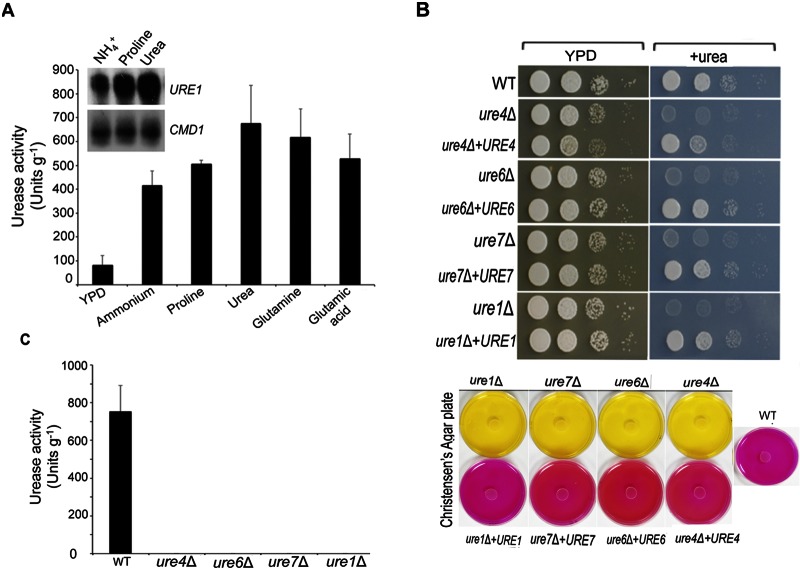
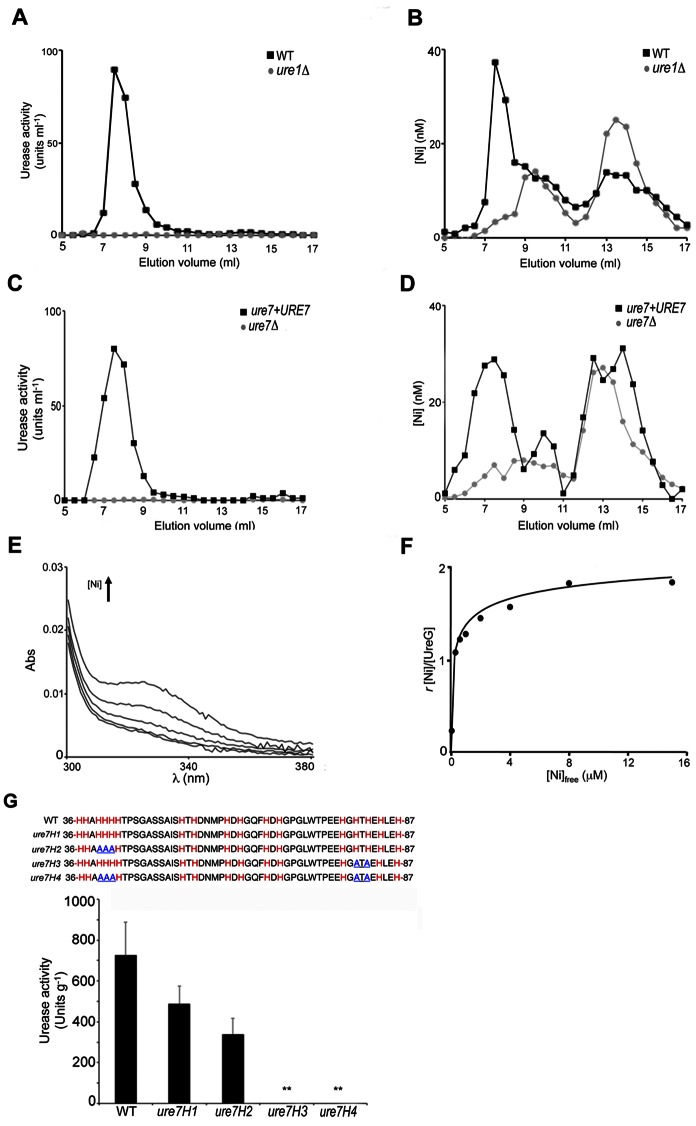
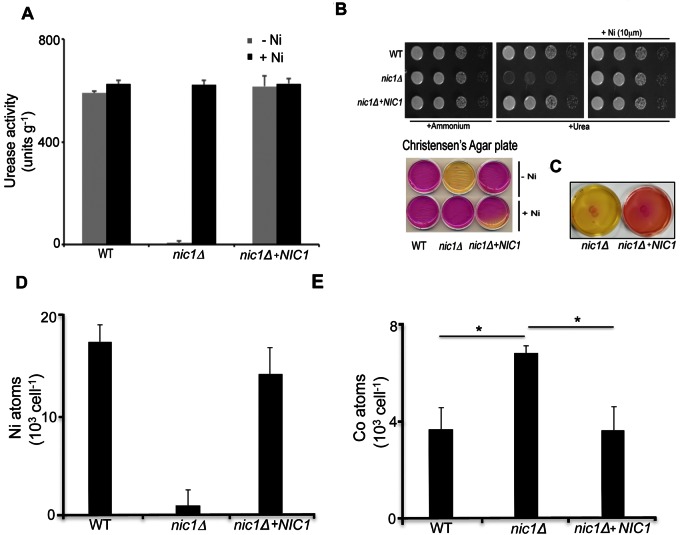
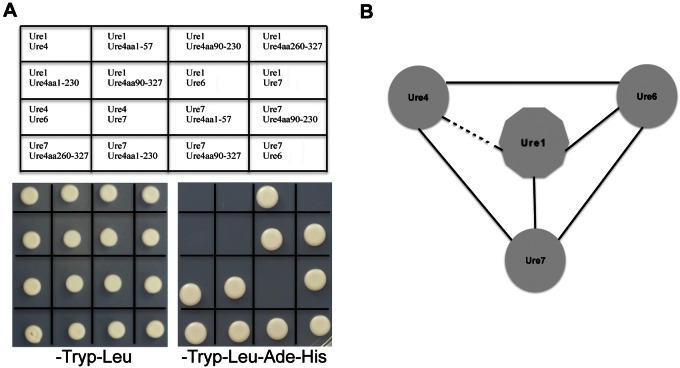
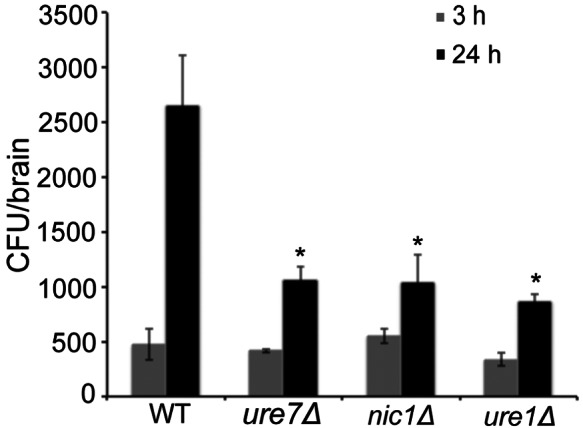
Urease in Cryptococcus neoformans plays an important role in fungal dissemination to the brain and causing meningoencephalitis. Although urea is not required for synthesis of apourease encoded by URE1 , the available nitrogen source affected the expression of URE1 as well as the level of the enzyme activity. Activation of the apoenzyme requires three accessory proteins, Ure4, Ure6, and Ure7, which are homologs of the bacterial urease accessory proteins UreD, UreF, and UreG, respectively. A yeast two-hybrid assay showed positive interaction of Ure1 with the three accessory proteins encoded by URE4 , URE6 , and URE7 . Metalloproteomic analysis of cryptococcal lysates using inductively coupled plasma mass spectrometry (ICP-MS) and a biochemical assay of urease activity showed that, as in many other organisms, urease is a metallocentric enzyme that requires nickel transported by Nic1 for its catalytic activity. The Ure7 accessory protein (bacterial UreG homolog) binds nickel likely via its conserved histidine-rich domain and appears to be responsible for the incorporation of Ni 2+ into the apourease. Although the cryptococcal genome lacks the bacterial UreE homolog, Ure7 appears to combine the functions of bacterial UreE and UreG, thus making this pathogen more similar to that seen with the plant system. Brain invasion by the ure1 , ure7 , and nic1 mutant strains that lack urease activity was significantly less effective in a mouse model. This indicated that an activated urease and not the Ure1 protein was responsible for enhancement of brain invasion and that the factors required for urease activation in C. neoformans resemble those of plants more than those of bacteria. IMPORTANCE Cryptococcus neoformans is the major fungal agent of meningoencephalitis in humans. Although urease is an important factor for cryptococcal brain invasion, the enzyme activation system has not been studied. We show that urease is a nickel-requiring enzyme whose activity level is influenced by the type of available nitrogen source. C. neoformans contains all the bacterial urease accessory protein homologs and nickel transporters except UreE, a nickel chaperone. Cryptococcal Ure7 (a homolog of UreG) apparently functions as both the bacterial UreG and UreE in activating the Ure1 apoenzyme. The cryptococcal urease accessory proteins Ure4, Ure6, and Ure7 interacted with Ure1 in a yeast two-hybrid assay, and deletion of any one of these not only inactivated the enzyme but also reduced the efficacy of brain invasion. This is the first study showing a holistic picture of urease in fungi, clarifying that urease activity, and not Ure1 protein, contributes to pathogenesis in C. neoformans
Overview
The claims and statistics of this paper haven’t been checked yet.
Free: it reads the open-access text and checks the first 5 claims that cite a source we can check. Create a free account to check every claim.
Integrity signals
Registry
Cites
Statistics
Figures
Verification
Claims the paper makes
The claims and statistics of this paper haven’t been checked yet.
Free: it reads the open-access text and checks the first 5 claims that cite a source we can check. Create a free account to check every claim.
Claims other papers make about this one
Each is checked against this paper’s own text: does it say what the citing paper says it does?
In the citing paper
“This is supported by the fact that urease-positive cryptococcal strains cause a reduction in levels of the tight junction protein ZO1 in HBMECs, while urease-deficient strains have no effect on monolayer integrity [156].”
From Mechanisms of fungal dissemination (2021) · cites this paper as [156]
Self-check
Percentages, sums and reported differences re-computed from the paper’s own numbers.
The self-check needs the paper’s full text.
Citations
Cites
A novel genetic system to detect protein–protein interactions
Fields, S., & Song, O.-K. (1989) · Nature · doi:10.1038/340245a0 · Cited by 6,114 · cited 1×
“We systematically studied pairwise interactions where a single “bait” test protein was individually assayed in a Y2H system against a “prey” test protein (33, 34).”
MethodMolecular biology of microbial ureases
Mobley, H. L. T., Island, M. D., & Hausinger, R. P. (1995) · Microbiological Reviews · doi:10.1128/mmbr.59.3.451-480.1995 · Cited by 1,469 · cited 3×
“To determine if C. neoformans cells affected the integrity of HBMEC tight junctions at all, we prolonged the incubation period to 24 h. Due to the absence of a true positive control, a pathogenic E. coli strain E44 (5) which is known to be an effective disrupter of the tight junctions was used as the positive control.”
BackgroundMethodInfluentialTHE ISOLATION AND CRYSTALLIZATION OF THE ENZYME UREASE
Sumner, J. B. (1926) · Journal of Biological Chemistry · doi:10.1016/s0021-9258(18)84560-4 · Cited by 898
The crystal structure of urease from Klebsiella aerogenes
Jabri, E., Carr, M., Hausinger, R., & Karplus, P. (1995) · Science · doi:10.1126/science.7754395 · Cited by 830 · cited 1×
“These form a trimer (UreAUreB-UreC)3 that contains a binuclear nickel (Ni) metallocenter per UreC (13, 14).”
BackgroundGenetic regulation of nitrogen metabolism in the fungi.
Marzluf, G. A. (1997) · Microbiology and molecular biology reviews : MMBR · doi:10.1128/.61.1.17-32.1997 · Cited by 720
Urease as a Virulence Factor in Experimental Cryptococcosis
Cox, G. M., Mukherjee, J., Cole, G. T., Casadevall, A., & Perfect, J. R. (2000) · Infection and Immunity · doi:10.1128/iai.68.2.443-448.2000 · Cited by 522 · cited 1×
“neoformans, the URE1 gene (CNAG_05540) encodes the urease apoenzyme, which has been deleted and studied for its role in virulence (2, 18).”
BackgroundGene transfer in Cryptococcus neoformans by use of biolistic delivery of DNA
Toffaletti, D. L., Rude, T. H., Johnston, S. A., Durack, D. T., & Perfect, J. R. (1993) · Journal of Bacteriology · doi:10.1128/jb.175.5.1405-1411.1993 · Cited by 488 · cited 1×
“transformed into the H99 cells as previously described (52).”
MethodAnderson, J. M., Stevenson, B. R., Jesaitis, L. A., Goodenough, D. A., & Mooseker, M. S. (1988) · The Journal of cell biology · doi:10.1083/jcb.106.4.1141 · Cited by 368 · cited 1×
“The protein is located on the cytoplasmic membrane surface of intercellular tight junctions (36).”
BackgroundEvidence of a Role for Monocytes in Dissemination and Brain Invasion by Cryptococcus neoformans
Charlier, C., Nielsen, K., Daou, S., Brigitte, M., Chretien, F., & Dromer, F. (2009) · Infection and Immunity · doi:10.1128/iai.01065-08 · Cited by 362
Protein-folding location can regulate manganese-binding versus copper- or zinc-binding
Tottey, S., Waldron, K. J., Firbank, S. J., Reale, B., Bessant, C., Sato, K., Cheek, T. R., Gray, J., Banfield, M. J., Dennison, C., et al. (2008) · Nature · doi:10.1038/nature07340 · Cited by 314
Self-citationA PCR-based strategy to generate integrative targeting alleles with large regions of homology
Davidson, R. C., Blankenship, J. R., Kraus, P. R., de Jesus Berrios, M., Hull, C. M., D’Souza, C., Wang, P., & Heitman, J. (2002) · Microbiology · doi:10.1099/00221287-148-8-2607 · Cited by 299 · cited 1×
“technique (51) or by vector cloning linked with G418 (NEO) resistance”
BackgroundOlszewski, M. A., Noverr, M. C., Chen, G.-H., Toews, G. B., Cox, G. M., Perfect, J. R., & Huffnagle, G. B. (2004) · The American Journal of Pathology · doi:10.1016/s0002-9440(10)63734-0 · Cited by 289 · cited 3×
“Earlier reports on histological analysis of the cryptococcal blood-to-brain invasion (46– 48) showed wedging of the yeasts in small capillaries, structural alteration of microvessel walls, and formation of mucoid cysts initiated in the proximity of damaged microcapillaries (18).”
BackgroundChang, Y. C., Stins, M. F., McCaffery, M. J., Miller, G. F., Pare, D. R., Dam, T., Paul-Satyasee, M., Kim, K. S., & Kwon-Chung, K. J. (2004) · Infection and Immunity · doi:10.1128/iai.72.9.4985-4995.2004 · Cited by 278 · cited 1×
“The brains of mice (3 mice/strain) were isolated after 3 and 24 h postinjection, and CFUs were analyzed (46).”
MethodSelf-citationAcquisition, Transport, and Storage of Iron by Pathogenic Fungi
Howard, D. H. (1999) · Clinical Microbiology Reviews · doi:10.1128/cmr.12.3.394 · Cited by 260
Shi, M., Li, S. S., Zheng, C., Jones, G. J., Kim, K. S., Zhou, H., Kubes, P., & Mody, C. H. (2010) · Journal of Clinical Investigation · doi:10.1172/jci41963 · Cited by 222 · cited 4×
“neoformans, fungal dissemination to the brain was significantly reduced, most probably due to reduction in the sites of transmigration (35).”
BackgroundInfluentialMulrooney, S. B., & Hausinger, R. P. (1990) · Journal of Bacteriology · doi:10.1128/jb.172.10.5837-5843.1990 · Cited by 208
Osterholzer, J. J., Surana, R., Milam, J. E., Montano, G. T., Chen, G.-H., Sonstein, J., Curtis, J. L., Huffnagle, G. B., Toews, G. B., & Olszewski, M. A. (2009) · American Journal Of Pathology · doi:10.2353/ajpath.2009.080673 · Cited by 180 · cited 1×
“In a mouse model of cryptococcosis, urease was reported to promote polarization of the immune system to a Th2 rather than the more effective Th1 response, possibly through pH-mediated changes to the adaptive immune system (45).”
BackgroundLee, M. H., Mulrooney, S. B., Renner, M. J., Markowicz, Y., & Hausinger, R. P. (1992) · Journal of Bacteriology · doi:10.1128/jb.174.13.4324-4330.1992 · Cited by 178
Insights into the role and structure of plant ureases
Follmer, C. (2008) · Phytochemistry · doi:10.1016/j.phytochem.2007.06.034 · Cited by 176 · cited 1×
“In plants (17) and fungi, the homolog of UreE protein has not yet been identified.”
BackgroundThe Effects of Mitochondrial Iron Homeostasis on Cofactor Specificity of Superoxide Dismutase 2
Yang, M., Cobine, P. A., Molik, S., Naranuntarat, A., Lill, R., Winge, D. R., & Culotta, V. C. (2006) · The EMBO Journal · doi:10.1038/sj.emboj.7601064 · Cited by 143
Defining Virulence Genes in the Dimorphic Fungi
Rappleye, C. A., & Goldman, W. E. (2006) · Annual Review of Microbiology · doi:10.1146/annurev.micro.59.030804.121055 · Cited by 138
Jong, A., Wu, C.-H., Shackleford, G. M., Kwon-Chung, K. J., Chang, Y. C., Chen, H.-M., Ouyang, Y., & Huang, S.-H. (2008) · Cellular Microbiology · doi:10.1111/j.1462-5822.2008.01128.x · Cited by 112
Self-citationMoncrief, M. B., & Hausinger, R. P. (1997) · Journal of Bacteriology · doi:10.1128/jb.179.13.4081-4086.1997 · Cited by 111 · cited 1×
“These form a trimer (UreAUreB-UreC)3 that contains a binuclear nickel (Ni) metallocenter per UreC (13, 14).”
BackgroundWitte, C., & Medina‐Escobar, N. (2001) · Analytical Biochemistry · doi:10.1006/abio.2000.4933 · Cited by 102
Modeling the interactions of particulates with epithelial lining fluid antioxidants
Zielinski, H., Mudway, I. S., Bérubé, K. A., Murphy, S., Richards, R., & Kelly, F. J. (1999) · American Journal of Physiology-Lung Cellular and Molecular Physiology · doi:10.1152/ajplung.1999.277.4.l719 · Cited by 102
Jong, A., Wu, C.-H., Gonzales-Gomez, I., Kwon-Chung, K. J., Chang, Y. C., Tseng, H.-K., Cho, W.-L., & Huang, S.-H. (2012) · Journal of Biological Chemistry · doi:10.1074/jbc.m112.353375 · Cited by 100 · cited 1×
“The trapping of the yeast in microvessels could occur due to its physical size (49) and/or biological force (50), e.”
BackgroundSelf-citationThe SMC family: Novel motor proteins for chromosome condensation?
Peterson, C. L. (1994) · Cell · doi:10.1016/0092-8674(94)90247-x · Cited by 99
Urease Produced by Coccidioides posadasii Contributes to the Virulence of This Respiratory Pathogen
Mirbod-Donovan, F., Schaller, R., Hung, C.-Y., Xue, J., Reichard, U., & Cole, G. T. (2006) · Infection and Immunity · doi:10.1128/iai.74.1.504-515.2006 · Cited by 97
Song, H. K., Mulrooney, S. B., Huber, R., & Hausinger, R. P. (2001) · Journal of Biological Chemistry · doi:10.1074/jbc.m108619200 · Cited by 94 · cited 1×
“neoformans lacks a homolog of the UreE bacterial nickel chaperone, but histidine residues are potential nickel binding sites (25, 26), which suggested that the Ure7 amino-terminal domain might also function as a nickel chaperone.”
BackgroundRonne-Engström, E., Cesarini, K. G., Enblad, P., Hesselager, G., Marklund, N., Nilsson, P., Salci, K., Persson, L., & Hillered, L. (2001) · Journal of Neurosurgery · doi:10.3171/jns.2001.94.3.0397 · Cited by 90
Eitinger, T., & Friedrich, B. (1991) · Journal of Biological Chemistry · doi:10.1016/s0021-9258(18)49977-2 · Cited by 90
Witte, C., Rosso, M. G., & Romeis, T. (2005) · PLANT PHYSIOLOGY · doi:10.1104/pp.105.070292 · Cited by 87
Iron-containing urease in a pathogenic bacterium
Carter, E. L., Tronrud, D. E., Taber, S. R., Karplus, P. A., & Hausinger, R. P. (2011) · Proceedings of the National Academy of Sciences · doi:10.1073/pnas.1106915108 · Cited by 81 · cited 1×
“Although an iron-containing urease has recently been reported in the bacterial pathogen Helicobacter mustelae (38, 39), urease in general is an exclusively nickeldependent enzyme.”
BackgroundNew insights on the pathogenesis of invasive Cryptococcus neoformans infection
Eisenman, H. C., Casadevall, A., & McClelland, E. E. (2007) · Current Infectious Disease Reports · doi:10.1007/s11908-007-0070-8 · Cited by 74
Park, I., & Hausinger, R. P. (1993) · Protein Science · doi:10.1002/pro.5560020616 · Cited by 73 · cited 1×
“neoformans lacks a homolog of the UreE bacterial nickel chaperone, but histidine residues are potential nickel binding sites (25, 26), which suggested that the Ure7 amino-terminal domain might also function as a nickel chaperone.”
BackgroundMolecular evolution of urea amidolyase and urea carboxylase in fungi
Strope, P. K., Nickerson, K. W., Harris, S. D., & Moriyama, E. N. (2011) · BMC Evolutionary Biology · doi:10.1186/1471-2148-11-80 · Cited by 69 · cited 1×
“Although urease has been identified in few fungal species (9, 10) and was purified and crystallized from Coccidioides immitis (11), the machinery involved in its activation has not been characterized.”
BackgroundProton Gradient-Driven Nickel Uptake by Vacuolar Membrane Vesicles of Saccharomyces cerevisiae
Nishimura, K., Igarashi, K., & Kakinuma, Y. (1998) · Journal of Bacteriology · doi:10.1128/jb.180.7.1962-1964.1998 · Cited by 65 · cited 1×
“Interestingly, the elution characteristics of a low-molecular-weight nickel pool increased in the mutant strain, which could have been due to the association of Ni with a low-molecular-weight ligand, possibly for vacuolar storage (23, 24).”
BackgroundEitinger, T., Wolfram, L., Degen, O., & Anthon, C. (1997) · Journal of Biological Chemistry · doi:10.1074/jbc.272.27.17139 · Cited by 62
Degen, O., & Eitinger, T. (2002) · Journal of Bacteriology · doi:10.1128/jb.184.13.3569-3577.2002 · Cited by 59
Holt, C. L., & May, G. S. (1996) · Genetics · doi:10.1093/genetics/142.3.777 · Cited by 57
Boer, J. L., Quiroz-Valenzuela, S., Anderson, K. L., & Hausinger, R. P. (2010) · Biochemistry · doi:10.1021/bi1004987 · Cited by 55 · cited 16×
“A similar study of the bacterial UreG from Klebsiella aerogenes (Ka) established that this protein binds one equivalent of nickel with a Kd of 16 3.1 M (28).”
BackgroundInfluentialPairwise Interactions of the Six Human MCM Protein Subunits
Yu, Z., Feng, D., & Liang, C. (2004) · Journal of Molecular Biology · doi:10.1016/j.jmb.2004.05.024 · Cited by 52 · cited 1×
“We systematically studied pairwise interactions where a single “bait” test protein was individually assayed in a Y2H system against a “prey” test protein (33, 34).”
MethodEitinger, T., Degen, O., Böhnke, U., & Müller, M. (2000) · Journal of Biological Chemistry · doi:10.1074/jbc.m001978200 · Cited by 50
Webster, J. A., & Oxley, D. (2005) · Methods in molecular biology · doi:10.1007/978-1-59259-948-6_16 · Cited by 50
Yu, J., Smithson, S. L., Thomas, P. W., Kirkland, T. N., & Cole, G. T. (1997) · Gene · doi:10.1016/s0378-1119(97)00342-9 · Cited by 45
Activation of the urease of SCHIZOSACCHAROMYCES POMBE by the UreF accessory protein from soybean
Bacanamwo, M., Witte, C., Lubbers, M. W., & Polacco, J. C. (2002) · Molecular Genetics and Genomics · doi:10.1007/s00438-002-0769-z · Cited by 39 · cited 1×
“Although urease has been identified in few fungal species (9, 10) and was purified and crystallized from Coccidioides immitis (11), the machinery involved in its activation has not been characterized.”
BackgroundStoof, J., Breijer, S., Pot, R. G. J., van der Neut, D., Kuipers, E. J., Kusters, J. G., & van Vliet, A. H. M. (2008) · Environmental Microbiology · doi:10.1111/j.1462-2920.2008.01681.x · Cited by 38
Functional characterisation of urease accessory protein G (ureG) from potato
Witte, C., Isidore, E., Tiller, S. A., Davies, H. V., & Taylor, M. A. (2001) · Plant Molecular Biology · doi:10.1023/a:1006429315851 · Cited by 35
Soybean Roots Retain the Seed Urease Isozyme Synthesized during Embryo Development
Torisky, R. S., & Polacco, J. C. (1990) · PLANT PHYSIOLOGY · doi:10.1104/pp.94.2.681 · Cited by 34
Serum urea concentration and the risk of hepatotoxicity after paracetamol overdose
Waring, W. S., Stephen, A. F., Robinson, O. D. G., Dow, M., & Pettie, J. M. (2008) · QJM · doi:10.1093/qjmed/hcn023 · Cited by 30
Continuous monitoring of the bronchial epithelial lining fluid by microdialysis
Tyvold, S. S., Solligård, E., Lyng, O., Steinshamn, S., Gunnes, S., & Aadahl, P. (2007) · Respiratory Research · doi:10.1186/1465-9921-8-78 · Cited by 29
Varma, A., Shaoxi, W., Ningru, G., Liao, W., Lu, G., Li, A., Hu, Y., Bulmer, G. S., & Kwon-Chung, K. J. (2006) · Microbiology · doi:10.1099/mic.0.2006/000133-0 · Cited by 13 · cited 6×
“neoformans strains have rarely been isolated from patients or the environment (1), and the enzyme is recognized as an important virulence factor in C.”
BackgroundSelf-citationChai, H. C., & Tay, S. T. (2008) · Mycoses · doi:10.1111/j.1439-0507.2008.01549.x · Cited by 10
Cited by
Cryptococcus neoformans and Cryptococcus gattii, the etiologic agents of cryptococcosis
Kwon-Chung, K. J., Fraser, J. A., Doering, T. L., Wang, Z. A., Janbon, G., Idnurm, A., & Bahn, Y.-S. (2014) · Cold Spring Harbor Perspectives in Medicine · doi:10.1101/cshperspect.a019760 · Cited by 531
“Like urease deficient strains, those impaired in nickel homeostasis have defects in dissemination after pulmonary infection (Olszewski et al. 2004; Singh et al. 2013).”
BackgroundInfluentialSelf-citationHeavy Metal Removal by Bioaccumulation Using Genetically Engineered Microorganisms
Diep, P., Mahadevan, R., & Yakunin, A. F. (2018) · Frontiers in Bioengineering and Biotechnology · doi:10.3389/fbioe.2018.00157 · Cited by 344
Gerwien, F., Skrahina, V., Kasper, L., Hube, B., & Brunke, S. (2018) · FEMS Microbiology Reviews · doi:10.1093/femsre/fux050 · Cited by 250
“For pathogens, ureases (and with them, most likely dedicated nickel permeases) often play important roles as virulence factors, for example, in Coccidioides immitis and in Cr. neoformans (Singh et al. 2013).”
BackgroundBasic principles of the virulence of Cryptococcus
Zaragoza, O. (2019) · Virulence · doi:10.1080/21505594.2019.1614383 · Cited by 249
Trojan Horse Transit Contributes to Blood-Brain Barrier Crossing of a Eukaryotic Pathogen
Santiago-Tirado, F. H., Onken, M. D., Cooper, J. A., Klein, R. S., & Doering, T. L. (2017) · mBio · doi:10.1128/mbio.02183-16 · Cited by 238
“4C), although only at late time points, consistent with previous in vivo results (39).”
Result
Metadata
- Authors
- Singh, A., Panting, R. J., Varma, A., Saijo, T., Waldron, K. J., Jong, A., Ngamskulrungroj, P., Chang, Y. C., Rutherford, J. C., & Kwon-Chung, K. J.
- Affiliations
- National Institutes of Health (US)
- Newcastle University (GB)
- University of Southern California (US)
- ORCID
- Venue
- mBio
- Publisher
- American Society for Microbiology
- Published
- 2013-07
- Volume
- 4
- Issue
- 3
- Pages
- e00220-13
- ISSN
- 2150-7511 (ISSN-L)
- 2161-2129
- PMC
- PMC3663189
- OpenAlex
- W2104180071
- Cited by
- 108
- References
- 53
- Citations by year
- 2026: 9 · 2025: 10 · 2024: 10 · 2023: 8 · 2022: 6 · 2021: 9 · 2020: 7 · 2019: 9 · 2018: 8 · 2017: 11 · 2015: 11 · 2014: 7 · 2013: 2
- FWCI
- 4.86
- Type
- journal article
- Language
- en
- Open access
- gold
- doi.org
- Licence
- cc-by-nc-sa
- creativecommons.org/licenses/by-nc-sa/3.0/ (vor)
- journals.asm.org/non-commercial-tdm-license (tdm)
- Locations
- mBio (publishedVersion, cc-by-nc-sa)
- Europe PMC (PubMed Central) (publishedVersion, cc-by-nc-sa)
- PubMed Central (publishedVersion, cc-by-nc-sa)
- PubMed (publishedVersion)
- DOAJ (DOAJ: Directory of Open Access Journals) (submittedVersion, cc-by-sa)
- Funders
- Royal Society
- Newcastle University
- Fakultet Medicinskih Nauka, Univerziteta U Kragujevcu
- National Institutes of Health
- Directorate for Biological Sciences
- Biotechnology and Biological Sciences Research Council (BB/H006605/1, 1369379)
- National Institute of Allergy and Infectious Diseases
- Topics
- Health Sciences › Medicine › Infectious Diseases › Fungal Infections and Studies
- Life Sciences › Biochemistry, Genetics and Molecular Biology › Molecular Biology › Fungal and yeast genetics research
- Life Sciences › Immunology and Microbiology › Microbiology › Bacterial Infections and Vaccines
- Keywords
- Cryptococcus neoformans, urease, nickel incorporation, nitrogen source, brain invasion, meningoencephalitis, virulence factors, fungal dispersal, histidine-rich domain, metalloproteomics, urease activity
- MeSH terms
- Animals, Brain, Cryptococcosis, Cryptococcus neoformans, Disease Models, Animal, Female, Fungal Proteins, Mice, Inbred C57BL, Nickel, Protein Binding, Urease, Two-Hybrid System Techniques, Protein Interaction Mapping, Virulence Factors, Mice
About these checks
Registry, retraction, Cites and statistics results are computed, not judged, with one exception: a printed reference that no index lists is read once by a model before it counts as a citation error. Claims are extracted by a model and kept only when their quote appears verbatim in the text; each cited source is then checked, with a model’s help, for whether it says what the claim relies on. Those verdicts can be wrong — read the claim’s quote and the cited source before relying on one.
Statistics and arithmetic are recomputed, not judged.
Confidence bands are shown only for fields calibrated on our annotated test set. None is calibrated yet, so no band is shown.
What counts as a claim ›How we measure confidence ›How we check this ›
Are you an author, or do you see a problem with this page? Request a review
Data sources
Bibliographic data: Semantic Scholar, OpenAlex, Crossref.
Contains information from the Semantic Scholar Academic Graph Datasets, made available under the ODC Attribution License (ODC-BY 1.0).
Semantic Scholar’s data is described in: Kinney, R., et al. (2023). The Semantic Scholar Open Data Platform. arXiv:2301.10140.
