

Deacetylation of Fungal Exopolysaccharide Mediates Adhesion and Biofilm Formation
Open accessThe DOI matches its Crossref record; 53 of the 53 references it cites were found in a registry or an index.
Abstract
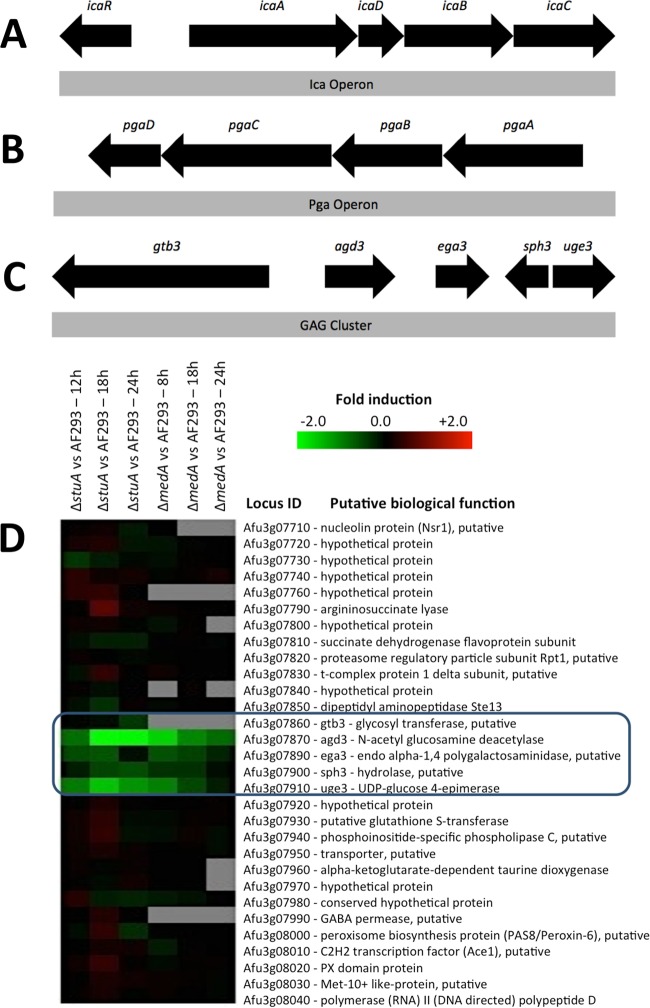
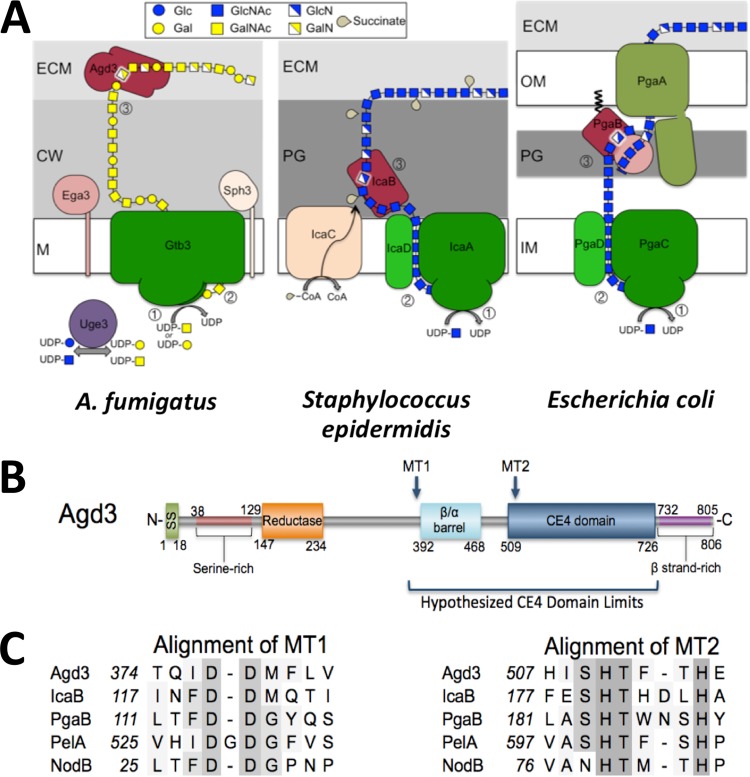
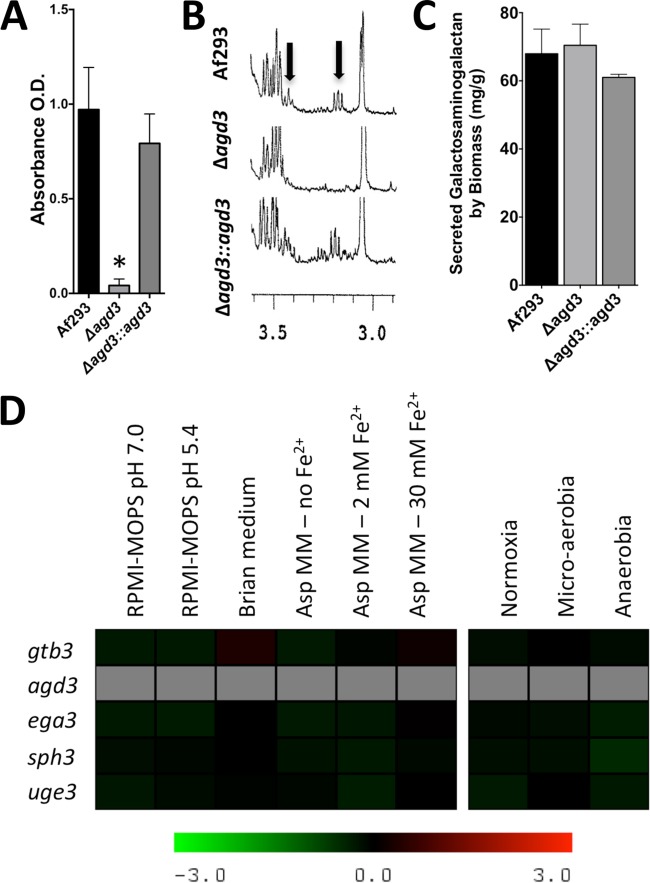
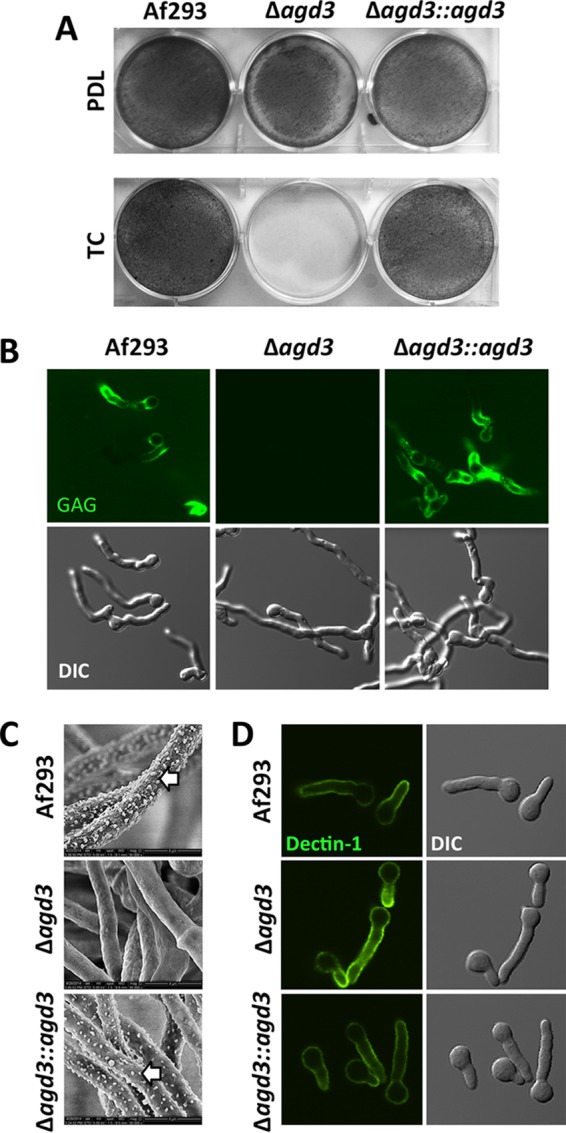
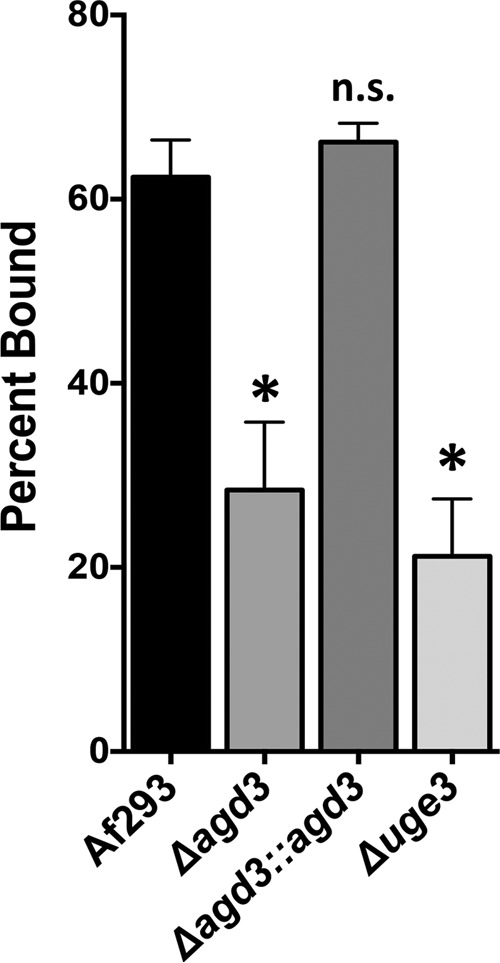
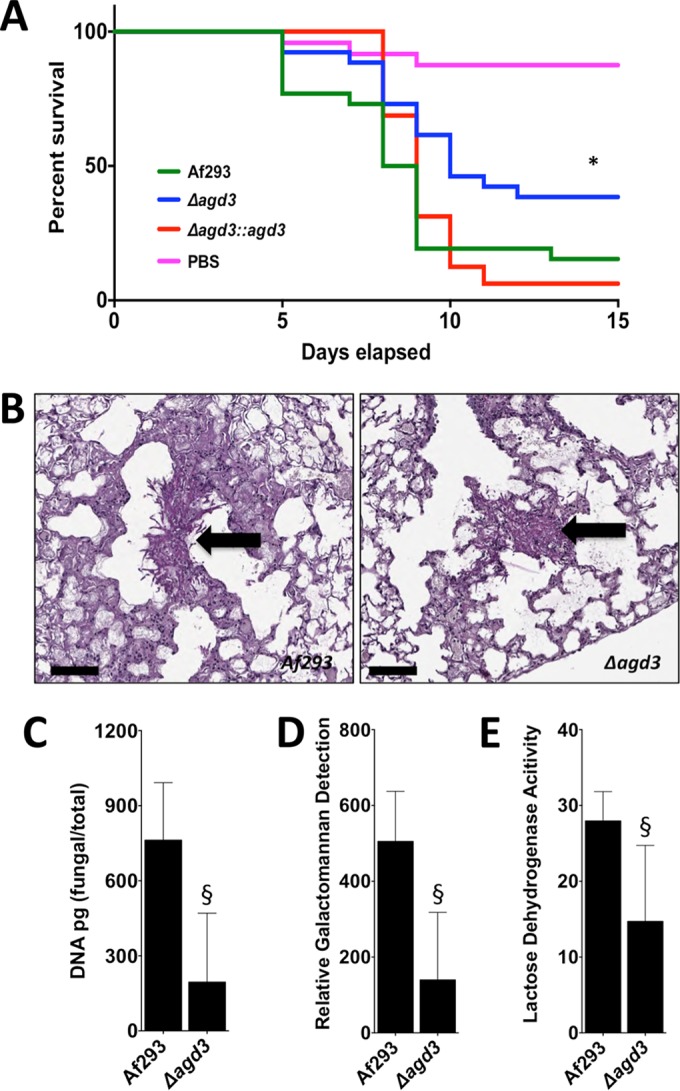
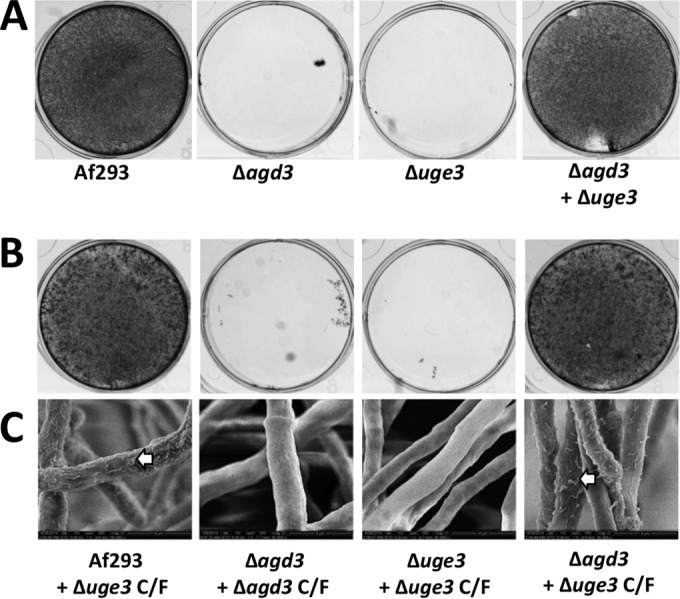
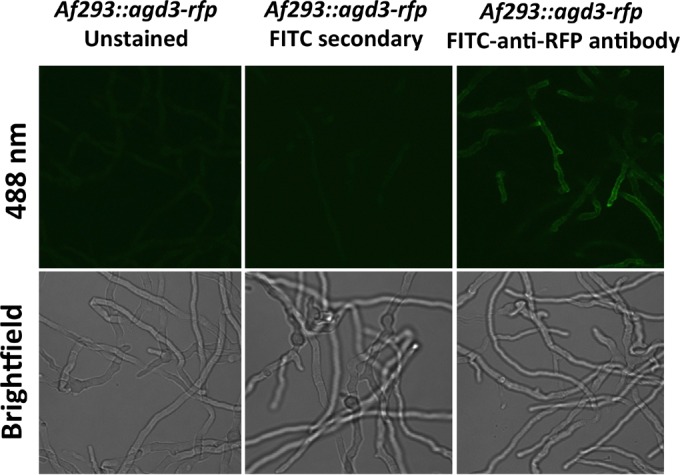
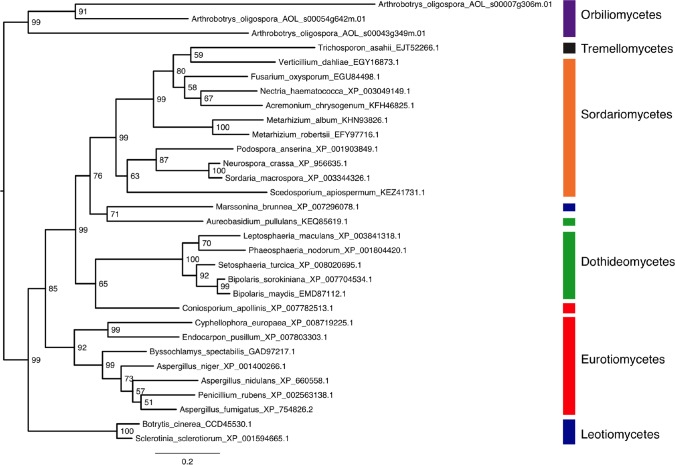
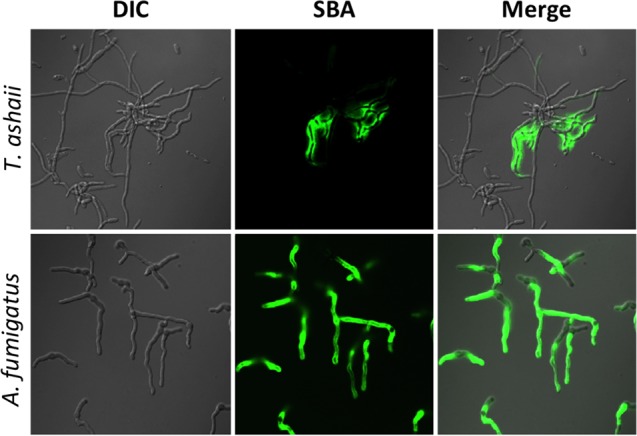
The mold Aspergillus fumigatus causes invasive infection in immunocompromised patients. Recently, galactosaminogalactan (GAG), an exopolysaccharide composed of galactose and N -acetylgalactosamine (GalNAc), was identified as a virulence factor required for biofilm formation. The molecular mechanisms underlying GAG biosynthesis and GAG-mediated biofilm formation were unknown. We identified a cluster of five coregulated genes that were dysregulated in GAG-deficient mutants and whose gene products share functional similarity with proteins that mediate the synthesis of the bacterial biofilm exopolysaccharide poly-(β1-6)- N -acetyl- d -glucosamine (PNAG). Bioinformatic analyses suggested that the GAG cluster gene agd3 encodes a protein containing a deacetylase domain. Because deacetylation of N -acetylglucosamine residues is critical for the function of PNAG, we investigated the role of GAG deacetylation in fungal biofilm formation. Agd3 was found to mediate deacetylation of GalNAc residues within GAG and render the polysaccharide polycationic. As with PNAG, deacetylation is required for the adherence of GAG to hyphae and for biofilm formation. Growth of the Δ agd3 mutant in the presence of culture supernatants of the GAG-deficient Δ uge3 mutant rescued the biofilm defect of the Δ agd3 mutant and restored the adhesive properties of GAG, suggesting that deacetylation is an extracellular process. The GAG biosynthetic gene cluster is present in the genomes of members of the Pezizomycotina subphylum of the Ascomycota including a number of plant-pathogenic fungi and a single basidiomycete species, Trichosporon asahii , likely a result of recent horizontal gene transfer. The current study demonstrates that the production of cationic, deacetylated exopolysaccharides is a strategy used by both fungi and bacteria for biofilm formation. IMPORTANCE This study sheds light on the biosynthetic pathways governing the synthesis of galactosaminogalactan (GAG), which plays a key role in A. fumigatus virulence and biofilm formation. We find that bacteria and fungi use similar strategies to synthesize adhesive biofilm exopolysaccharides. The presence of orthologs of the GAG biosynthetic gene clusters in multiple fungi suggests that this exopolysaccharide may also be important in the virulence of other fungal pathogens. Further, these studies establish a molecular mechanism of adhesion in which GAG interacts via charge-charge interactions to bind to both fungal hyphae and other substrates. Finally, the importance of deacetylation in the synthesis of functional GAG and the extracellular localization of this process suggest that inhibition of deacetylation may be an attractive target for the development of novel antifungal therapies.
Overview
The claims and statistics of this paper haven’t been checked yet.
Free: it reads the open-access text and checks the first 5 claims that cite a source we can check. Create a free account to check every claim.
Integrity signals
Registry
Cites
Statistics
Figures
Verification
Claims the paper makes
The claims and statistics of this paper haven’t been checked yet.
Free: it reads the open-access text and checks the first 5 claims that cite a source we can check. Create a free account to check every claim.
Claims other papers make about this one
Each is checked against this paper’s own text: does it say what the citing paper says it does?
The source backs part of the claim, not all of it — or backs it for a different population, condition or comparison.
In the citing paper
“Several enzymes associated with a putative GAG synthesis cluster in chromosome 3 have been identified recently (480, 482, 483).”
From Aspergillus fumigatus and Aspergillosis in 2019 (2019) · cites this paper as [483]
Experimental — accuracy not yet measured
Self-check
Percentages, sums and reported differences re-computed from the paper’s own numbers.
The self-check needs the paper’s full text.
Citations
Cites
RAxML version 8: a tool for phylogenetic analysis and post-analysis of large phylogenies
Stamatakis, A. (2014) · Bioinformatics · doi:10.1093/bioinformatics/btu033 · Cited by 32,291 · cited 1×
“cates and PROTGAMMA matrix with automatic model selection (52).”
trimAl: a tool for automated alignment trimming in large-scale phylogenetic analyses
Capella-Gutiérrez, S., Silla-Martínez, J. M., & Gabaldón, T. (2009) · Bioinformatics · doi:10.1093/bioinformatics/btp348 · Cited by 12,751 · cited 1×
“using T-Coffee (50), trimming the alignment with trimAl (51), followed”
MethodImproved tools for biological sequence comparison.
Pearson, W. R., & Lipman, D. J. (1988) · Proceedings of the National Academy of Sciences · doi:10.1073/pnas.85.8.2444 · Cited by 11,227 · cited 3×
“The GAG biosynthesis gene cluster is widespread in Ascomycetes but present only in Trichosporon asahii among Basidiomycetes.”
BackgroundInfluentialSignalP 4.0: discriminating signal peptides from transmembrane regions
Petersen, T. N., Brunak, S., von Heijne, G., & Nielsen, H. (2011) · Nature Methods · doi:10.1038/nmeth.1701 · Cited by 8,847 · cited 3×
“Bioinformatic analysis of Agd3 suggests that it is a multidomain extracellular protein including a predicted signal peptide with a cleavage site between Cys18 and Thr19 (19, 20), suggesting that Agd3 is secreted as an extracellular protein (Fig.”
BackgroundMethodT-coffee: a novel method for fast and accurate multiple sequence alignment 1 1Edited by J. Thornton
Notredame, C., Higgins, D. G., & Heringa, J. (2000) · Journal of Molecular Biology · doi:10.1006/jmbi.2000.4042 · Cited by 6,852
Protein structure prediction on the Web: a case study using the Phyre server
Kelley, L. A., & Sternberg, M. J. E. (2009) · Nature Protocols · doi:10.1038/nprot.2009.2 · Cited by 4,175 · cited 1×
“Structure prediction server Phyre2 analysis of Agd3 predicted several distinct domains and extended regions of low complexity (21).”
BackgroundSMART, a simple modular architecture research tool: Identification of signaling domains
Schultz, J., Milpetz, F., Bork, P., & Ponting, C. P. (1998) · Proceedings of the National Academy of Sciences · doi:10.1073/pnas.95.11.5857 · Cited by 3,599 · cited 11×
“the CE 4 domain, for the deacetylation of substrate (20).”
BackgroundMethodInfluentialReconstructing the early evolution of Fungi using a six-gene phylogeny
James, T. Y., Kauff, F., Schoch, C. L., Matheny, P. B., Hofstetter, V., Cox, C. J., Celio, G., Gueidan, C., Fraker, E., Miadlikowska, J., et al. (2006) · Nature · doi:10.1038/nature05110 · Cited by 1,815 · cited 1×
“While the relationship among the orthologs of Agd3 largely mirrors the evolutionary relationship of the respective species as established by the fungal tree of life (33, 34), we found that the T.”
BackgroundSelf-citationCramton, S. E., Gerke, C., Schnell, N. F., Nichols, W. W., & Götz, F. (1999) · Infection and Immunity · doi:10.1128/iai.67.10.5427-5433.1999 · Cited by 1,124 · cited 1×
“This exopolysaccharide, known as polysaccharide intercellular adhesion (PIA) in Staphylococcus aureus (7) or poly-( 1-6)-N-acetyl-D-glucosamine (PNAG) in Escherichia coli (8), mediates many of the same virulence properties as GAG does, including adherence of the organism to both biotic and abiotic surfaces, resistance…”
BackgroundO'Gara, J. P. (2007) · FEMS Microbiology Letters · doi:10.1111/j.1574-6968.2007.00688.x · Cited by 621
Cited by
The Fungal Cell Wall: Structure, Biosynthesis, and Function
Gow, N. A. R., Latge, J.-P., & Munro, C. A. (2017) · Microbiology Spectrum · doi:10.1128/microbiolspec.funk-0035-2016 · Cited by 1,423
“The extracellular matrix of A. fumigatus contains α-(1,3) glucan, GM, and GAG, like the outer cell wall layer (32), and in contrast to other species, lacks β-(1,3) glucan and chitin.”
BackgroundInfluentialAspergillus fumigatus and Aspergillosis in 2019
Latgé, J.-P., & Chamilos, G. (2019) · Clinical Microbiology Reviews · doi:10.1128/cmr.00140-18 · Cited by 1,400
Threats Posed by the Fungal Kingdom to Humans, Wildlife, and Agriculture
Fisher, M. C., Gurr, S. J., Cuomo, C. A., Blehert, D. S., Jin, H., Stukenbrock, E. H., Stajich, J. E., Kahmann, R., Boone, C., Denning, D. W., et al. (2020) · mBio · doi:10.1128/mbio.00449-20 · Cited by 536
“Advances in gene editing represent a novel and potentially transformative tool for management of disease in free-ranging wildlife, providing possible avenues to augment host immune responses to, or attenuate virulence of, fungal pathogens (101, 113).”
BackgroundSelf-citationCOVID-19-associated fungal infections
Hoenigl, M., Seidel, D., Sprute, R., Cunha, C., Oliverio, M., Goldman, G. H., Ibrahim, A. S., & Carvalho, A. (2022) · Nature Microbiology · doi:10.1038/s41564-022-01172-2 · Cited by 482
Strategy to combat biofilms: a focus on biofilm dispersal enzymes
Wang, S., Zhao, Y., Breslawec, A. P., Liang, T., Deng, Z., Kuperman, L. L., & Yu, Q. (2023) · npj Biofilms and Microbiomes · doi:10.1038/s41522-023-00427-y · Cited by 240
Metadata
- Authors
- Lee, M. J., Geller, A. M., Bamford, N. C., Liu, H., Gravelat, F. N., Snarr, B. D., Le Mauff, F., Chabot, J., Ralph, B., Ostapska, H., Lehoux, M., Cerone, R. P., Baptista, S. D., Vinogradov, E., Stajich, J. E., Filler, S. G., Howell, P. L., & Sheppard, D. C.
- Affiliations
- McGill University (CA)
- University of Toronto (CA)
- University of California, Los Angeles (US)
- Research Institute of the McGill University Health Centre (CA)
- Departments of Medicine and of Microbiology and Immunology, McGill University, Montréal, Canada
- National Research Council Canada (CA)
- University of California, Riverside (US)
- Corresponding author
- Sheppard, Donald C.
- ORCID
- Venue
- mBio
- Publisher
- American Society for Microbiology
- Published
- 2016-05-04
- Volume
- 7
- Issue
- 2
- Pages
- e00252-16
- ISSN
- 2150-7511 (ISSN-L)
- 2161-2129
- PMC
- PMC4817252
- OpenAlex
- W2321349864
- Cited by
- 122
- References
- 53
- Citations by year
- 2026: 8 · 2025: 13 · 2024: 11 · 2023: 13 · 2022: 15 · 2021: 18 · 2020: 16 · 2019: 9 · 2018: 8 · 2017: 5 · 2016: 6
- FWCI
- 4.85
- Type
- journal article
- Language
- en
- Open access
- gold
- doi.org
- Licence
- cc-by
- creativecommons.org/licenses/by/4.0/ (vor)
- journals.asm.org/non-commercial-tdm-license (tdm)
- Locations
- mBio (publishedVersion, cc-by)
- PubMed Central (publishedVersion, cc-by)
- PubMed (publishedVersion)
- NPARC (submittedVersion)
- DOAJ (DOAJ: Directory of Open Access Journals) (submittedVersion)
- DOAJ (DOAJ: Directory of Open Access Journals) (submittedVersion, cc-by-sa)
- eScholarship (California Digital Library) (submittedVersion)
- Funders
- HHS | National Institutes of Health (R01AI073829)
- Canada Research Chairs
- Cystic Fibrosis Canada (3019)
- Gouvernement du Canada | Natural Sciences and Engineering Research Council of Canada
- Gouvernement du Canada | Canadian Institutes of Health Research (81361, 236182)
- Fonds de Recherche du Québec - Santé
- The Hospital for Sick Children Foundation Student Scholarship Program
- Mary H. Beatty, and Dr. James A. and Connie P. Dickson Scholarships, University of Toronto
- Topics
- Life Sciences › Biochemistry, Genetics and Molecular Biology › Molecular Biology › Fungal and yeast genetics research
- Health Sciences › Medicine › Infectious Diseases › Antifungal resistance and susceptibility
- Life Sciences › Biochemistry, Genetics and Molecular Biology › Molecular Biology › Bacterial biofilms and quorum sensing
- Keywords
- galactosaminogalactan, Aspergillus fumigatus, N-acetylgalactosamine, biofilm formation, fungal adhesion, poly-N-acetylglucosamine, cationic polysaccharides, horizontal gene transfer, Trichosporon asahii, fungal virulence, Pezizomycotina
- MeSH terms
- Acetylation, Aspergillosis, Aspergillus fumigatus, Fungal Proteins, Humans, Polysaccharides, Biofilms
About these checks
Registry, retraction, Cites and statistics results are computed, not judged, with one exception: a printed reference that no index lists is read once by a model before it counts as a citation error. Claims are extracted by a model and kept only when their quote appears verbatim in the text; each cited source is then checked, with a model’s help, for whether it says what the claim relies on. Those verdicts can be wrong — read the claim’s quote and the cited source before relying on one.
Statistics and arithmetic are recomputed, not judged.
Confidence bands are shown only for fields calibrated on our annotated test set. None is calibrated yet, so no band is shown.
What counts as a claim ›How we measure confidence ›How we check this ›
Are you an author, or do you see a problem with this page? Request a review
How to cite
Cite CoChat for the checks on this page, and the paper for its own findings.
- This page
- CoChat. (2026). Citation check: Deacetylation of Fungal Exopolysaccharide Mediates Adhesion and Biofilm Formation. https://app.cochat.ai/papers/10.1128/mbio.00252-16
- The paper
- Lee, M. J., Geller, A. M., Bamford, N. C., Liu, H., Gravelat, F. N., Snarr, B. D., Le Mauff, F., Chabot, J., Ralph, B., Ostapska, H., Lehoux, M., Cerone, R. P., Baptista, S. D., Vinogradov, E., Stajich, J. E., Filler, S. G., Howell, P. L., & Sheppard, D. C. (2016). Deacetylation of Fungal Exopolysaccharide Mediates Adhesion and Biofilm Formation. mBio. https://doi.org/10.1128/mbio.00252-16
Data sources
Bibliographic data: Semantic Scholar, OpenAlex, Crossref.
Contains information from the Semantic Scholar Academic Graph Datasets, made available under the ODC Attribution License (ODC-BY 1.0).
Semantic Scholar’s data is described in: Kinney, R., et al. (2023). The Semantic Scholar Open Data Platform. arXiv:2301.10140.
