

Deacetylation of Fungal Exopolysaccharide Mediates Adhesion and Biofilm Formation
Open accessThe DOI matches its Crossref record; 53 of the 53 references it cites were found in a registry or an index.
Abstract
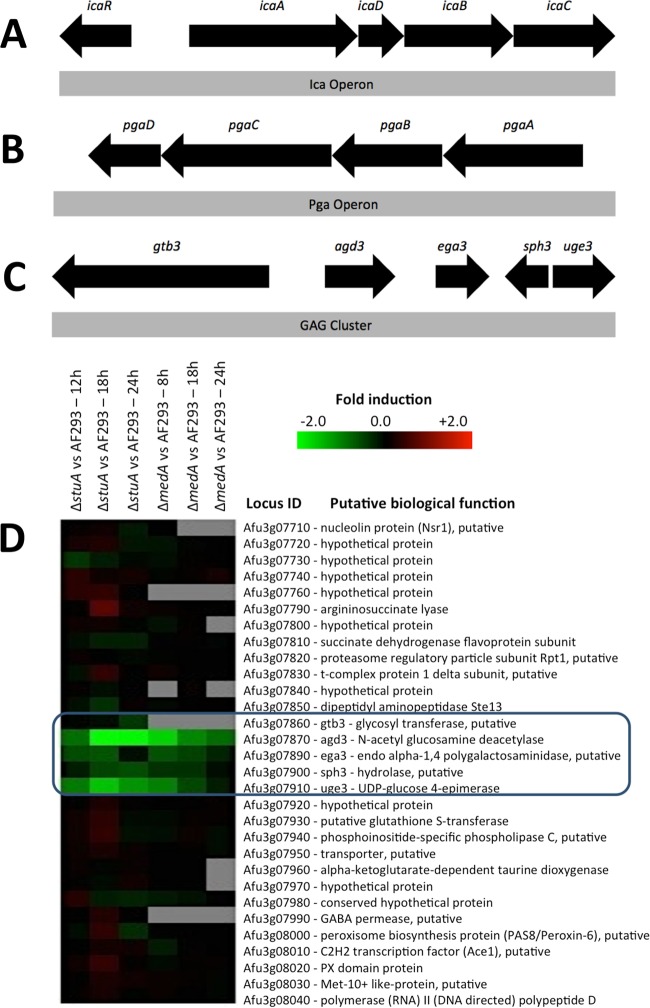
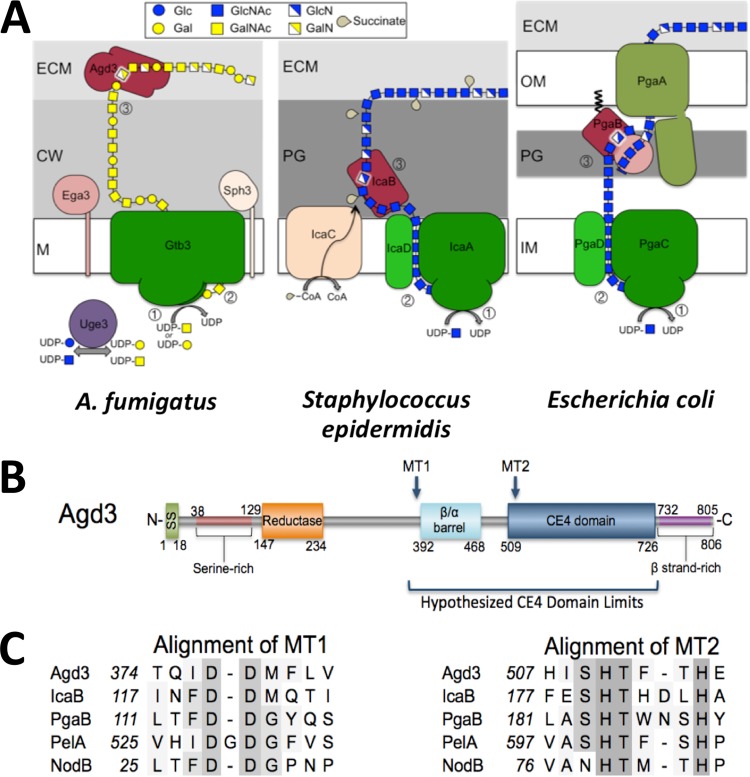
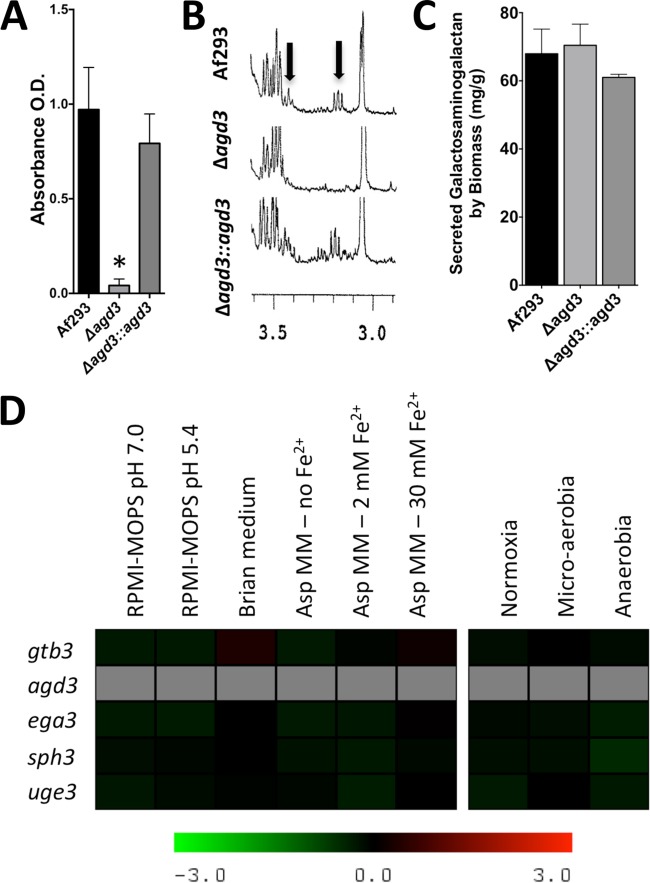
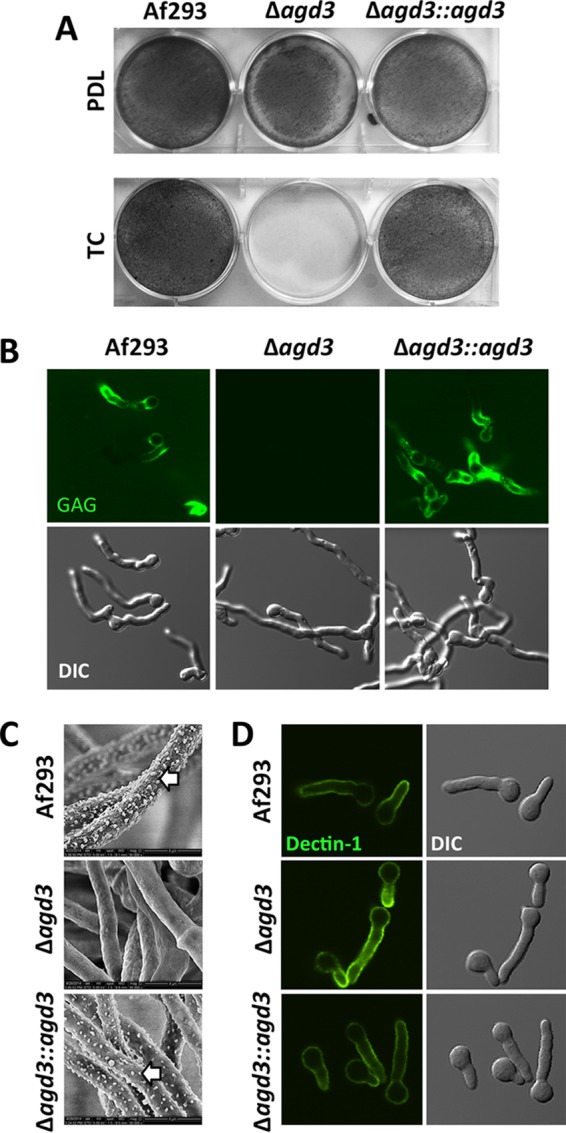
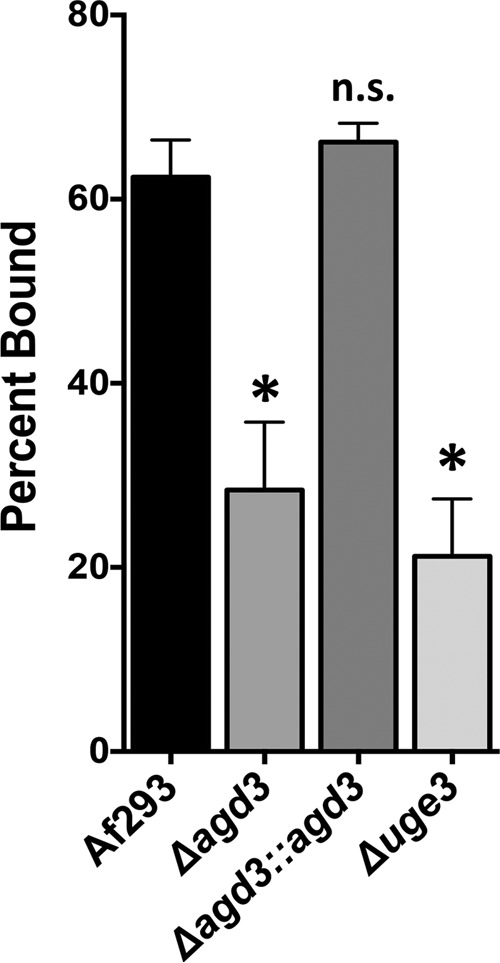
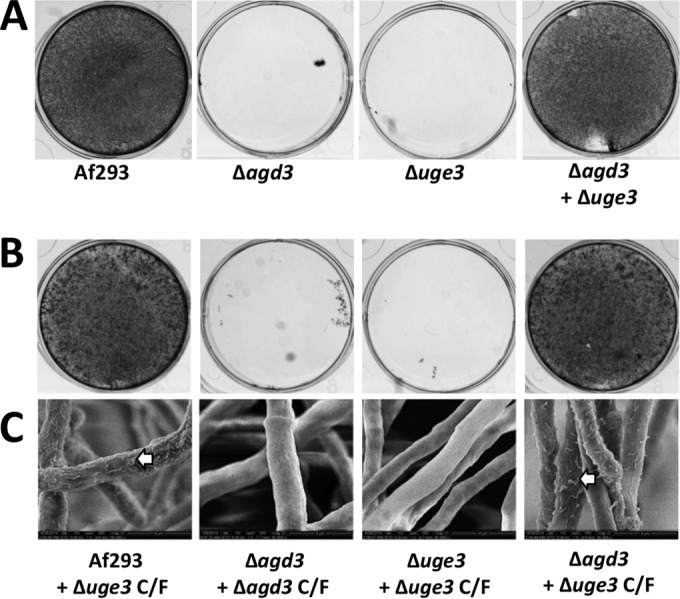
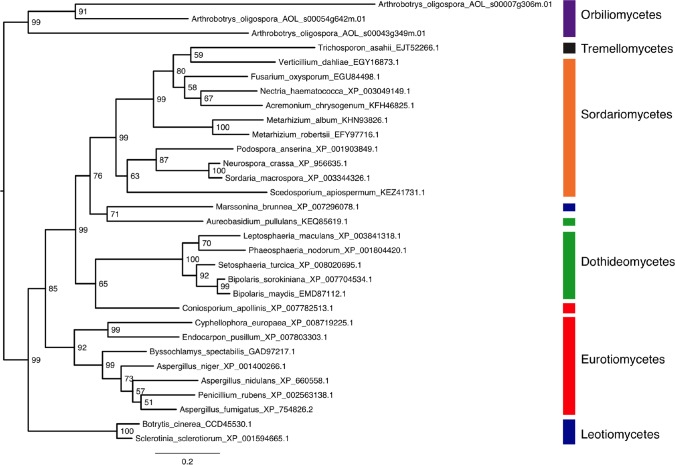
The mold Aspergillus fumigatus causes invasive infection in immunocompromised patients. Recently, galactosaminogalactan (GAG), an exopolysaccharide composed of galactose and N -acetylgalactosamine (GalNAc), was identified as a virulence factor required for biofilm formation. The molecular mechanisms underlying GAG biosynthesis and GAG-mediated biofilm formation were unknown. We identified a cluster of five coregulated genes that were dysregulated in GAG-deficient mutants and whose gene products share functional similarity with proteins that mediate the synthesis of the bacterial biofilm exopolysaccharide poly-(β1-6)- N -acetyl- d -glucosamine (PNAG). Bioinformatic analyses suggested that the GAG cluster gene agd3 encodes a protein containing a deacetylase domain. Because deacetylation of N -acetylglucosamine residues is critical for the function of PNAG, we investigated the role of GAG deacetylation in fungal biofilm formation. Agd3 was found to mediate deacetylation of GalNAc residues within GAG and render the polysaccharide polycationic. As with PNAG, deacetylation is required for the adherence of GAG to hyphae and for biofilm formation. Growth of the Δ agd3 mutant in the presence of culture supernatants of the GAG-deficient Δ uge3 mutant rescued the biofilm defect of the Δ agd3 mutant and restored the adhesive properties of GAG, suggesting that deacetylation is an extracellular process. The GAG biosynthetic gene cluster is present in the genomes of members of the Pezizomycotina subphylum of the Ascomycota including a number of plant-pathogenic fungi and a single basidiomycete species, Trichosporon asahii , likely a result of recent horizontal gene transfer. The current study demonstrates that the production of cationic, deacetylated exopolysaccharides is a strategy used by both fungi and bacteria for biofilm formation. IMPORTANCE This study sheds light on the biosynthetic pathways governing the synthesis of galactosaminogalactan (GAG), which plays a key role in A. fumigatus virulence and biofilm formation. We find that bacteria and fungi use similar strategies to synthesize adhesive biofilm exopolysaccharides. The presence of orthologs of the GAG biosynthetic gene clusters in multiple fungi suggests that this exopolysaccharide may also be important in the virulence of other fungal pathogens. Further, these studies establish a molecular mechanism of adhesion in which GAG interacts via charge-charge interactions to bind to both fungal hyphae and other substrates. Finally, the importance of deacetylation in the synthesis of functional GAG and the extracellular localization of this process suggest that inhibition of deacetylation may be an attractive target for the development of novel antifungal therapies.
Overview
The claims and statistics of this paper haven’t been checked yet.
Free: it reads the open-access text and checks the first 5 claims that cite a source we can check. Create a free account to check every claim.
Integrity signals
Registry
Cites
Statistics
Figures
Verification
Claims the paper makes
The claims and statistics of this paper haven’t been checked yet.
Free: it reads the open-access text and checks the first 5 claims that cite a source we can check. Create a free account to check every claim.
Claims other papers make about this one
Each is checked against this paper’s own text: does it say what the citing paper says it does?
The source backs part of the claim, not all of it — or backs it for a different population, condition or comparison.
In the citing paper
“Several enzymes associated with a putative GAG synthesis cluster in chromosome 3 have been identified recently (480, 482, 483).”
From Aspergillus fumigatus and Aspergillosis in 2019 (2019) · cites this paper as [483]
Experimental — accuracy not yet measured
Self-check
Percentages, sums and reported differences re-computed from the paper’s own numbers.
The self-check needs the paper’s full text.
Citations
Cites
RAxML version 8: a tool for phylogenetic analysis and post-analysis of large phylogenies
Stamatakis, A. (2014) · Bioinformatics · doi:10.1093/bioinformatics/btu033 · Cited by 32,291 · cited 1×
“cates and PROTGAMMA matrix with automatic model selection (52).”
trimAl: a tool for automated alignment trimming in large-scale phylogenetic analyses
Capella-Gutiérrez, S., Silla-Martínez, J. M., & Gabaldón, T. (2009) · Bioinformatics · doi:10.1093/bioinformatics/btp348 · Cited by 12,751 · cited 1×
“using T-Coffee (50), trimming the alignment with trimAl (51), followed”
MethodImproved tools for biological sequence comparison.
Pearson, W. R., & Lipman, D. J. (1988) · Proceedings of the National Academy of Sciences · doi:10.1073/pnas.85.8.2444 · Cited by 11,227 · cited 3×
“The GAG biosynthesis gene cluster is widespread in Ascomycetes but present only in Trichosporon asahii among Basidiomycetes.”
BackgroundInfluentialSignalP 4.0: discriminating signal peptides from transmembrane regions
Petersen, T. N., Brunak, S., von Heijne, G., & Nielsen, H. (2011) · Nature Methods · doi:10.1038/nmeth.1701 · Cited by 8,847 · cited 3×
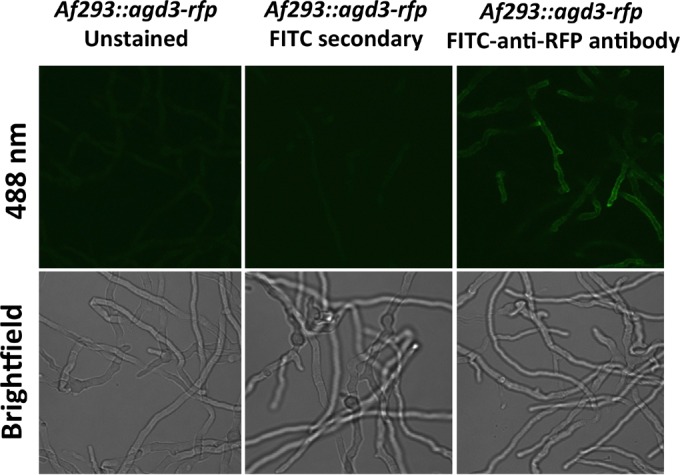
“Bioinformatic analysis of Agd3 suggests that it is a multidomain extracellular protein including a predicted signal peptide with a cleavage site between Cys18 and Thr19 (19, 20), suggesting that Agd3 is secreted as an extracellular protein (Fig.”
BackgroundMethodT-coffee: a novel method for fast and accurate multiple sequence alignment 1 1Edited by J. Thornton
Notredame, C., Higgins, D. G., & Heringa, J. (2000) · Journal of Molecular Biology · doi:10.1006/jmbi.2000.4042 · Cited by 6,852
Protein structure prediction on the Web: a case study using the Phyre server
Kelley, L. A., & Sternberg, M. J. E. (2009) · Nature Protocols · doi:10.1038/nprot.2009.2 · Cited by 4,175 · cited 1×
“Structure prediction server Phyre2 analysis of Agd3 predicted several distinct domains and extended regions of low complexity (21).”
BackgroundSMART, a simple modular architecture research tool: Identification of signaling domains
Schultz, J., Milpetz, F., Bork, P., & Ponting, C. P. (1998) · Proceedings of the National Academy of Sciences · doi:10.1073/pnas.95.11.5857 · Cited by 3,599 · cited 11×
“the CE 4 domain, for the deacetylation of substrate (20).”
BackgroundMethodInfluentialReconstructing the early evolution of Fungi using a six-gene phylogeny
James, T. Y., Kauff, F., Schoch, C. L., Matheny, P. B., Hofstetter, V., Cox, C. J., Celio, G., Gueidan, C., Fraker, E., Miadlikowska, J., et al. (2006) · Nature · doi:10.1038/nature05110 · Cited by 1,815 · cited 1×
“While the relationship among the orthologs of Agd3 largely mirrors the evolutionary relationship of the respective species as established by the fungal tree of life (33, 34), we found that the T.”
BackgroundSelf-citationCramton, S. E., Gerke, C., Schnell, N. F., Nichols, W. W., & Götz, F. (1999) · Infection and Immunity · doi:10.1128/iai.67.10.5427-5433.1999 · Cited by 1,124 · cited 1×
“This exopolysaccharide, known as polysaccharide intercellular adhesion (PIA) in Staphylococcus aureus (7) or poly-( 1-6)-N-acetyl-D-glucosamine (PNAG) in Escherichia coli (8), mediates many of the same virulence properties as GAG does, including adherence of the organism to both biotic and abiotic surfaces, resistance…”
BackgroundO'Gara, J. P. (2007) · FEMS Microbiology Letters · doi:10.1111/j.1574-6968.2007.00688.x · Cited by 621
Cited by
The Fungal Cell Wall: Structure, Biosynthesis, and Function
Gow, N. A. R., Latge, J.-P., & Munro, C. A. (2017) · Microbiology Spectrum · doi:10.1128/microbiolspec.funk-0035-2016 · Cited by 1,423
“The extracellular matrix of A. fumigatus contains α-(1,3) glucan, GM, and GAG, like the outer cell wall layer (32), and in contrast to other species, lacks β-(1,3) glucan and chitin.”
BackgroundInfluentialAspergillus fumigatus and Aspergillosis in 2019
Latgé, J.-P., & Chamilos, G. (2019) · Clinical Microbiology Reviews · doi:10.1128/cmr.00140-18 · Cited by 1,400
Threats Posed by the Fungal Kingdom to Humans, Wildlife, and Agriculture
Fisher, M. C., Gurr, S. J., Cuomo, C. A., Blehert, D. S., Jin, H., Stukenbrock, E. H., Stajich, J. E., Kahmann, R., Boone, C., Denning, D. W., et al. (2020) · mBio · doi:10.1128/mbio.00449-20 · Cited by 536
“Advances in gene editing represent a novel and potentially transformative tool for management of disease in free-ranging wildlife, providing possible avenues to augment host immune responses to, or attenuate virulence of, fungal pathogens (101, 113).”
BackgroundSelf-citationCOVID-19-associated fungal infections
Hoenigl, M., Seidel, D., Sprute, R., Cunha, C., Oliverio, M., Goldman, G. H., Ibrahim, A. S., & Carvalho, A. (2022) · Nature Microbiology · doi:10.1038/s41564-022-01172-2 · Cited by 482
Strategy to combat biofilms: a focus on biofilm dispersal enzymes
Wang, S., Zhao, Y., Breslawec, A. P., Liang, T., Deng, Z., Kuperman, L. L., & Yu, Q. (2023) · npj Biofilms and Microbiomes · doi:10.1038/s41522-023-00427-y · Cited by 240
Balducci, E., Papi, F., Capialbi, D. E., & Bino, L. D. (2023) · International Journal of Molecular Sciences · doi:10.3390/ijms24044030 · Cited by 194
The Interface between Fungal Biofilms and Innate Immunity
Kernien, J. F., Snarr, B. D., Sheppard, D. C., & Nett, J. E. (2018) · Frontiers in Immunology · doi:10.3389/fimmu.2017.01968 · Cited by 142
“org January 2018 | Volume 8 | Article 1968 virulence (47, 113), and treatment with recombinant glycoside hydrolases that degrade GAG reduces fungal growth in a murine model of aspergillosis (127).”
BackgroundSelf-citationGalactosaminogalactan activates the inflammasome to provide host protection
Briard, B., Fontaine, T., Samir, P., Place, D. E., Muszkieta, L., Malireddi, R. K. S., Karki, R., Christgen, S., Bomme, P., Vogel, P., et al. (2020) · Nature · doi:10.1038/s41586-020-2996-z · Cited by 127
Biofilm Exopolysaccharides of Pathogenic Fungi: Lessons from Bacteria
Sheppard, D. C., & Howell, P. L. (2016) · Journal of Biological Chemistry · doi:10.1074/jbc.r116.720995 · Cited by 123
“fumigatus, as well as mediates adherence to other anionic surfaces including host cells and plastics (11).”
BackgroundInfluentialSelf-citationNeutrophil extracellular traps in fungal infection
Urban, C. F., & Nett, J. E. (2019) · Seminars in Cell & Developmental Biology · doi:10.1016/j.semcdb.2018.03.020 · Cited by 120
Pathophysiological aspects of Aspergillus colonization in disease
Gago, S., Denning, D. W., & Bowyer, P. (2018) · Medical Mycology · doi:10.1093/mmy/myy076 · Cited by 135
Pathogenicity and virulence of Aspergillus fumigatus
Earle, K., Valero, C., Conn, D. P., Vere, G., Cook, P. C., Bromley, M., Bowyer, P., & Gago, S. (2023) · Virulence · doi:10.1080/21505594.2023.2172264 · Cited by 132
“GAG requires deacetylation mediated by Agd3 for fungal adhesion and full virulence [156].”
Microbial Biofilms in Pulmonary and Critical Care Diseases
Boisvert, A.-A., Cheng, M. P., Sheppard, D. C., & Nguyen, D. M. (2016) · Annals of the American Thoracic Society · doi:10.1513/annalsats.201603-194fr · Cited by 126
Self-citationFungal biofilm morphology impacts hypoxia fitness and disease progression
Kowalski, C. H., Kerkaert, J. D., Liu, K.-W., Bond, M. C., Hartmann, R., Nadell, C. D., Stajich, J., & Cramer, R. A. (2019) · Nature Microbiology · doi:10.1038/s41564-019-0558-7 · Cited by 101
Self-citationWhat We Do Not Know about Fungal Cell Adhesion Molecules
Lipke, P. N. (2018) · Journal of Fungi · doi:10.3390/jof4020059 · Cited by 109
“In addition to their roles in fungal glues [6] and as ligands for lectin adhesins [72], they are also necessary for biofilm cohesion [92–94], fungal cell binding to surfaces [95], and aggregation of adhesins [96].”
BackgroundMicrobial glycoside hydrolases as antibiofilm agents with cross-kingdom activity
Snarr, B. D., Baker, P., Bamford, N. C., Sato, Y., Liu, H., Lehoux, M., Gravelat, F. N., Ostapska, H., Baistrocchi, S. R., Cerone, R. P., et al. (2017) · Proceedings of the National Academy of Sciences · doi:10.1073/pnas.1702798114 · Cited by 95
Self-citationGalactosaminogalactan (GAG) and its multiple roles in Aspergillus pathogenesis
Speth, C., Rambach, G., Lass-Flörl, C., Howell, P. L., & Sheppard, D. C. (2019) · Virulence · doi:10.1080/21505594.2019.1568174 · Cited by 89
Self-citationThe Fungal Cell Wall: Structure, Biosynthesis, and Function
Gow, N. A. R., Latge, J.-P., & Munro, C. A. (2017) · The Fungal Kingdom · doi:10.1128/9781555819583.ch12 · Cited by 86
The Cell Biology of the Trichosporon-Host Interaction
Duarte‐Oliveira, C., Rodrigues, F. J. S., Gonçalves, S. M., Goldman, G. H., Carvalho, A., & Cunha, C. (2017) · Frontiers in Cellular and Infection Microbiology · doi:10.3389/fcimb.2017.00118 · Cited by 89
“Indeed, the fungal cell wall of T. asahii contains galactosaminogalactan (GAG) (Lee et al., 2016), an immunosuppressive polysaccharide able to inhibit neutrophil infiltration and promote fungal development (Fontaine et al., 2011), in part by masking β-glucans from recognition by dectin-1 (Gravelat…”
BackgroundInfluentialLiu, S., Le Mauff, F., Sheppard, D. C., & Zhang, S. (2022) · npj Biofilms and Microbiomes · doi:10.1038/s41522-022-00347-3 · Cited by 72
Self-citationUnraveling the sugar code: the role of microbial extracellular glycans in plant–microbe interactions
Wanke, A., Malisic, M., Wawra, S., & Zuccaro, A. (2021) · Journal of Experimental Botany · doi:10.1093/jxb/eraa414 · Cited by 68
Combination Therapy to Treat Fungal Biofilm-Based Infections
Tits, J., Cammue, B. P. A., & Thevissen, K. (2020) · International Journal of Molecular Sciences · doi:10.3390/ijms21228873 · Cited by 69
Anti-Aspergillus Activities of the Respiratory Epithelium in Health and Disease
Bertuzzi, M., Hayes, G., Icheoku, U., Van Rhijn, N., Denning, D., Osherov, N., & Bignell, E. (2018) · Journal of Fungi · doi:10.3390/jof4010008 · Cited by 64
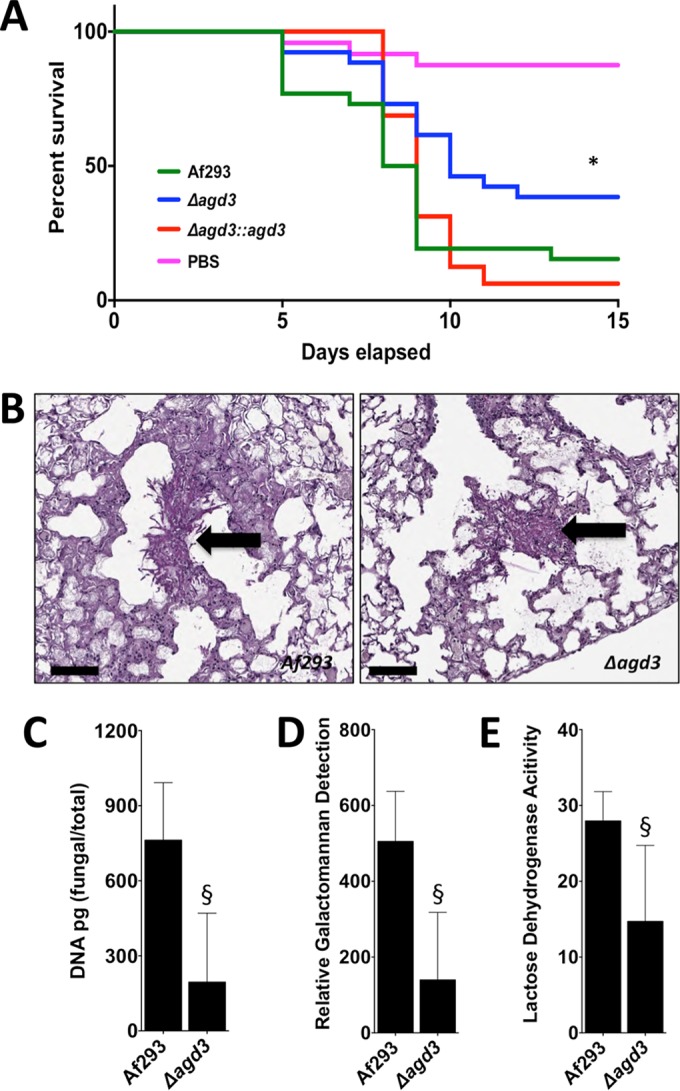
“Deletion of agd3 attenuates A. fumigatus virulence in a leukopenic mouse model of invasive aspergillosis, demonstrating that deacetylation of GAG is required for full virulence of A. fumigatus [54].”
BackgroundInfluentialMauff, F. L., Bamford, N. C., Alnabelseya, N., Zhang, Y., Baker, P., Robinson, H. H., Codée, J. D. C., Howell, P. L., & Sheppard, D. C. (2019) · Journal of Biological Chemistry · doi:10.1074/jbc.ra119.008511 · Cited by 71
“These sugars are then linked and exported through the action of the predicted glycosyltransferase Gtb3, and the resulting polymer is partially deacetylated in the extracellular space by secreted Agd3 (13).”
BackgroundMethodSelf-citationBamford, N. C., Mauff, F. L., Loon, J. C. V., Ostapska, H., Snarr, B. D., Zhang, Y., Kitova, E. N., Klassen, J. S., Codée, J. D. C., Sheppard, D. C., et al. (2020) · Nature Communications · doi:10.1038/s41467-020-16144-5 · Cited by 65
Self-citationMiyazawa, K., Yoshimi, A., Sano, M., Tabata, F., Sugahara, A., Kasahara, S., Koizumi, A., Yano, S., Nakajima, T., & Abe, K. (2019) · Frontiers in Microbiology · doi:10.3389/fmicb.2019.02090 · Cited by 61
What Are the Functions of Chitin Deacetylases in Aspergillus fumigatus?
Mouyna, I., Dellière, S., Beauvais, A., Gravelat, F. N., Snarr, B. D., Lehoux, M., Zacharias, C. A., Sun, Y., Carrion, S. D. J., Pearlman, E. M., et al. (2020) · Frontiers in Cellular and Infection Microbiology · doi:10.3389/fcimb.2020.00028 · Cited by 61
“Deacetylation of chitin in A. fumigatus conidial cell wall could be mediated by other A. fumigatus CE-4 family deacetylases such as Agd3, already known to deacetylate GalNac residues within GAG (Lee et al., 2016).”
BackgroundInfluentialSelf-citationBamford, N. C., Mauff, F. L., Subramanian, A. S., Yip, P., Millán, C., Zhang, Y., Zacharias, C. A., Forman, A., Nitz, M., Codée, J. D. C., et al. (2019) · Journal of Biological Chemistry · doi:10.1074/jbc.ra119.009910 · Cited by 59
“fumigatus regulatory mutants deficient in GAG production identified a cluster of genes on chromosome 3 linked to biofilm formation and GAG synthesis (6).”
BackgroundMethodInfluentialSelf-citationAspergillus fumigatus biology, immunopathogenicity and drug resistance
van de Veerdonk, F. L., Carvalho, A., Wauters, J., Chamilos, G., & Verweij, P. E. (2025) · Nature Reviews Microbiology · doi:10.1038/s41579-025-01180-z · Cited by 70
“Deacetylation of GAG mediated by Agd3 is also required for its adhesive properties and biofilm formation 40 , whereas GAG digestion by the endo-α-1,4-galactosaminidase Ega3 disrupts biofilm formation 41 .”
A Fragile Balance: Does Neutrophil Extracellular Trap Formation Drive Pulmonary Disease Progression?
Block, H., & Zarbock, A. (2021) · Cells · doi:10.3390/cells10081932 · Cited by 51
“Disruption of GAG attenuates both biofilm formation and virulence [208,209].”
BackgroundYu, M., Meng, T., He, W., Huang, H. Y., Liu, C., Fu, X., He, J., Yin, Y., & Xiao, D. (2021) · Journal of Agricultural and Food Chemistry · doi:10.1021/acs.jafc.1c06029 · Cited by 47
The emerging role of neutrophil extracellular traps in fungal infection
Liang, C.-T., Lian, N., & Li, M. (2022) · Frontiers in Cellular and Infection Microbiology · doi:10.3389/fcimb.2022.900895 · Cited by 51
“This process may be due to the deacetylation of GalNAc, which leads to a positively charged GAG, thereby inhibiting the positively charged antimicrobial peptides and histones in NETs from coming into contact with fungi (Lee et al., 2016).”
BackgroundMiyazawa, K., Yoshimi, A., & Abe, K. (2020) · Fungal Biology and Biotechnology · doi:10.1186/s40694-020-00101-4 · Cited by 50
Mei, L., Wang, X., Yin, Y., Tang, G., & Wang, C. (2021) · PLoS Pathogens · doi:10.1371/journal.ppat.1009656 · Cited by 45
“fumigatus [11,48], we found that the GAG produced by M.”
BackgroundMethodResultInfluentialDeacetylated microbial biofilm exopolysaccharides: It pays to be positive
Ostapska, H., Howell, P. L., & Sheppard, D. C. (2018) · PLoS Pathogens · doi:10.1371/journal.ppat.1007411 · Cited by 49
Self-citationBiofilm formation in clinically relevant filamentous fungi: a therapeutic challenge
Roudbary, M., Vahedi‐Shahandashti, R., dos Santos, A. L. S., Mohammadi, S. R., Aslani, P., Lass‐Flörl, C., & Rodrigues, C. F. (2021) · Critical Reviews in Microbiology · doi:10.1080/1040841x.2021.1950121 · Cited by 51
“This adhesion activity demands deacetylation by the carbohydrate esterase type 4 Agd3, which has a crucial role in virulence and extracellular localisation, proposing Agd3 to be a promising therapeutic target (Lee et al. 2016).”
BackgroundInfluentialFungal cell wall components modulate our immune system
Briard, B., Fontaine, T., Kanneganti, T.-D., Gow, N. A. R., & Papon, N. (2021) · The Cell Surface · doi:10.1016/j.tcsw.2021.100067 · Cited by 42
Johns, L. E., Goldman, G. H., Ries, L. N. A., & Brown, N. A. (2021) · Fungal Biology Reviews · doi:10.1016/j.fbr.2021.01.002 · Cited by 45
de Assis, L. J., Manfiolli, A., Mattos, E., Fabri, J. H. T. M., Malavazi, I., Jacobsen, I. D., Brock, M., Cramer, R. A., Thammahong, A., Hagiwara, D., et al. (2018) · mBio · doi:10.1128/mbio.01952-18 · Cited by 38
“Therefore, we were specifically interested in the connection between the activation of intracellular glycogen and trehalose storage compounds and CWI pathways, since the large majority of cell wall polysaccharides are biosynthesized from the monosaccharide glucose, which can be derived from intracellular glycogen and…”
Cell Wall Integrity and Its Industrial Applications in Filamentous Fungi
Yoshimi, A., Miyazawa, K., Kawauchi, M., & Abe, K. (2022) · Journal of Fungi · doi:10.3390/jof8050435 · Cited by 48
Chen, Y., Mauff, F. L., Wang, Y., Lu, R., Sheppard, D. C., Lü, L., & Zhang, S. (2020) · mBio · doi:10.1128/mbio.02329-20 · Cited by 41
“fumigatus lacks Flo11 homologous adhesins, and adherence and biofilm formation of this filamentous fungus are mediated by the production of the exopolysaccharide GAG, which is absent in yeast (10).”
BackgroundInfluentialSelf-citationFungal Biofilm Composition and Opportunities in Drug Discovery
Reichhardt, C., Stevens, D. A., & Cegelski, L. (2016) · Future Medicinal Chemistry · doi:10.4155/fmc-2016-0049 · Cited by 36
Plant-associated fungal biofilms—knowns and unknowns
Motaung, T. E., Peremore, C., Wingfield, B. D., & Steenkamp, E. T. (2020) · FEMS Microbiology Ecology · doi:10.1093/femsec/fiaa224 · Cited by 35
Zhang, S., Chen, Y., Ma, Z., Chen, Q., Ostapska, H., Gravelat, F. N., Lü, L., & Sheppard, D. C. (2017) · Cellular Microbiology · doi:10.1111/cmi.12799 · Cited by 29
“…formation and export of the growing polymer, a secreted polysaccharide deacetylase (agd3) required for partial deacetylation of the emerging polymer (Lee et al., 2016), and two glycoside hydrolases (ega3 and sph3) that likely play a role in control of polymer size and localisation (Bamford et al.,…”
BackgroundInfluentialSelf-citationReducing Aspergillus fumigatus Virulence through Targeted Dysregulation of the Conidiation Pathway
Stewart, J. I. P., Fava, V. M., Kerkaert, J. D., Subramanian, A. S., Gravelat, F. N., Lehoux, M., Howell, P. L., Cramer, R. A., & Sheppard, D. C. (2020) · mBio · doi:10.1128/mbio.03202-19 · Cited by 28
Self-citationGressler, M., Heddergott, C., N'Go, I. C., Renga, G., Oikonomou, V., Moretti, S., Coddeville, B., Gaifem, J., Silvestre, R., Romani, L., et al. (2019) · Frontiers in Cellular and Infection Microbiology · doi:10.3389/fcimb.2019.00365 · Cited by 27
“Monosaccharides are randomly distributed along the chain (Fontaine et al., 2011; Lee et al., 2016).”
BackgroundResultRecent developments in Aspergillus fumigatus research: diversity, drugs, and disease
Kordana, N. E., Johnson, A., Quinn, K., Obar, J. J., & Cramer, R. A. (2025) · Microbiology and Molecular Biology Reviews · doi:10.1128/mmbr.00011-23 · Cited by 29
“The deacetylase Agd3 carries out the partial and selective deacetylation of the synthesized GAG polymer (87).”
Guida, R. D., Casillo, A., Stellavato, A., Kawai, S., Ogawa, T., Meo, C. D., Kawamoto, J., Kurihara, T., Schiraldi, C., & Corsaro, M. M. (2021) · Carbohydrate Polymers · doi:10.1016/j.carbpol.2021.118908 · Cited by 28
Zhang, Y., Wang, Y., Fan, J., Zhu, G., & Lü, L. (2022) · PLoS Pathogens · doi:10.1371/journal.ppat.1010976 · Cited by 27
“Of note, among the differentially expressed genes dependent on Elp3, we noticed that the expression of a gene cluster in the exopolysaccharide galactosaminogalactan (GAG) biosynthesis pathway (uge3, ega3, agd3, gtb3, and sph3) [26], which is required for biofilm formation, was significantly downregulated, and these re…”
BackgroundResultIchikawa, H., Miyazawa, K., Komeiji, K., Susukida, S., Zhang, S., Muto, K., Orita, R., Takeuchi, A., Kamachi, Y., Hitosugi, M., et al. (2021) · Journal of Bioscience and Bioengineering · doi:10.1016/j.jbiosc.2021.09.010 · Cited by 28
Neutrophil extracellular traps: Modulation mechanisms by pathogens
Gonzalez-Contreras, F. D. J., & Zárate, X. (2022) · Cellular Immunology · doi:10.1016/j.cellimm.2022.104640 · Cited by 29
Aspergillus fumigatus Can Display Persistence to the Fungicidal Drug Voriconazole
Scott, J., Valero, C., Mato-López, Á., Donaldson, I. J., Roldán, A., Chown, H., Van Rhijn, N., Lobo-Vega, R., Gago, S., Furukawa, T., et al. (2023) · Microbiology Spectrum · doi:10.1128/spectrum.04770-22 · Cited by 24
Host immune response against fungal biofilms
Mannan, M. A., Nabeela, S., Mishra, R., & Uppuluri, P. (2024) · Current Opinion in Microbiology · doi:10.1016/j.mib.2024.102520 · Cited by 29
How to invade a susceptible host: cellular aspects of aspergillosis
Krappmann, S. (2016) · Current Opinion in Microbiology · doi:10.1016/j.mib.2016.10.002 · Cited by 27
Miyazawa, K., Umeyama, T., Hoshino, Y., Abe, K., & Miyazaki, Y. (2022) · Microbiology Spectrum · doi:10.1128/spectrum.00063-21 · Cited by 30
Monoclonal Antibodies and Invasive Aspergillosis: Diagnostic and Therapeutic Perspectives
Lian, X., Scott-Thomas, A., Lewis, J. G., Bhatia, M., MacPherson, S. A., Zeng, Y., & Chambers, S. T. (2022) · International Journal of Molecular Sciences · doi:10.3390/ijms23105563 · Cited by 27
“Galactosaminogalactan (GAG), a soluble molecule secreted by the hyphae, mediates the fungal attachment to the host pulmonary epithelial cells [35,36].”
BackgroundKashyap, V. H., Mishra, A., Bordoloi, S., Varma, A. K., & Joshi, N. C. (2023) · Mycoses · doi:10.1111/myc.13619 · Cited by 24
Kerkaert, J. D., Mauff, F. L., Wucher, B. R., Beattie, S. R., Vesely, E. M., Sheppard, D. C., Nadell, C. D., & Cramer, R. A. (2022) · mBio · doi:10.1128/mbio.02933-21 · Cited by 22
“To do this, we utilized a strain lacking the UDP-glucose-4-epimerase required to produce GAG (Af293Duge3) and a strain lacking the deacetylase required for the maturation of GAG (Af293Dagd3) in combination with b-chloro-L-alanine treatment (19, 23).”
BackgroundMethodResultInfluentialSelf-citationAlarmin(g) the innate immune system to invasive fungal infections
Caffrey, A. K., & Obar, J. J. (2016) · Current Opinion in Microbiology · doi:10.1016/j.mib.2016.06.002 · Cited by 22
“GAG also exists in both acetylated and deacetylated forms in the cell wall [66].”
Aspergillosis and stem cell transplantation: An overview of experimental pathogenesis studies
Al-Bader, N., & Sheppard, D. C. (2016) · Virulence · doi:10.1080/21505594.2016.1231278 · Cited by 29
Self-citationCarbohydrate de-N-acetylases acting on structural polysaccharides and glycoconjugates
Pascual, S., & Planas, A. (2020) · Current Opinion in Chemical Biology · doi:10.1016/j.cbpa.2020.09.003 · Cited by 22
Ostapska, H., Mauff, F. L., Gravelat, F. N., Snarr, B. D., Bamford, N. C., Loon, J. C. V., McKay, G. A., Nguyen, D. M., Howell, P. L., & Sheppard, D. C. (2022) · Journal of Fungi · doi:10.3390/jof8040336 · Cited by 22
“fumigatus mutant, which produces only fully N-acetylated GAG [24].”
BackgroundInfluentialSelf-citationDietschmann, A., Schruefer, S., Westermann, S., Henkel, F. D. R., Castiglione, K., Willebrand, R., Adam, J., Ruland, J., Lang, R., Sheppard, D. C., et al. (2022) · mBio · doi:10.1128/mbio.01239-22 · Cited by 20
“As an exception, the Af293 WT was used as a control for the galactosaminogalactan (GAG)-deficient strains Dagd3 and Duge3, which have been generated in this background (64, 73).”
MethodSelf-citationGening, M. L., Pier, G. B., & Nifantiev, N. E. (2020) · Drug Discovery Today Technologies · doi:10.1016/j.ddtec.2020.09.002 · Cited by 20
Mao, S., Zhang, X., Yang, M., Duan, J., & Xiao, P. (2025) · International Journal of Biological Macromolecules · doi:10.1016/j.ijbiomac.2025.145355 · Cited by 21
Deshmukh, H., Rambach, G., Sheppard, D. C., Lee, M., Hagleitner, M., Hermann, M., Würzner, R., Lass‐Flörl, C., & Speth, C. (2020) · Microbes and Infection · doi:10.1016/j.micinf.2019.12.004 · Cited by 16
Self-citationFungi—A Component of the Oral Microbiome Involved in Periodontal Diseases
Karkowska‐Kuleta, J., Satała, D., Smolarz, M., Zawrotniak, M., & Rąpała‐Kozik, M. (2022) · Advances in experimental medicine and biology · doi:10.1007/978-3-030-96881-6_6 · Cited by 16
Ostapska, H., Raju, D., Corsini, R., Lehoux, M., Lacdao, I., Gilbert, S., Sivarajah, P., Bamford, N. C., Baker, P., Gravelat, F. N., et al. (2022) · Antimicrobial Agents and Chemotherapy · doi:10.1128/aac.00052-22 · Cited by 15
Self-citationBiofilms 2018: a Diversity of Microbes and Mechanisms
Fuqua, C., Filloux, A., Ghigo, J., & Visick, K. L. (2019) · Journal of Bacteriology · doi:10.1128/jb.00118-19 · Cited by 14
Sun, W., Liu, L., Yu, Y., Yu, B., Liang, C., Ying, H., Liu, D., & Chen, Y. (2020) · ACS Omega · doi:10.1021/acsomega.0c02501 · Cited by 14
Heilig, L., Natasha, F., Trinks, N., Aimanianda, V., Wong, S. S. W., Fontaine, T., Terpitz, U., Strobel, L., Mauff, F. L., Sheppard, D. C., et al. (2024) · PLoS Pathogens · doi:10.1371/journal.ppat.1012315 · Cited by 16
Self-citationTemme, J. S., Tan, Z., Li, M., Yang, M., Wlodawer, A., Huang, X., Schneekloth, J. S., & Gildersleeve, J. C. (2024) · Cell chemical biology · doi:10.1016/j.chembiol.2024.11.005 · Cited by 12
Ostapska, H., Raju, D., Lehoux, M., Lacdao, I., Gilbert, S., Sivarajah, P., Bamford, N. C., Baker, P., Nguyen, T. T. M., Zacharias, C. A., et al. (2021) · mBio · doi:10.1128/mbio.02446-21 · Cited by 14
“Mice were rendered leukopenic by cortisone acetate (Sigma) and cyclophosphamide (Baxter) as previously described (6).”
BackgroundMethodInfluentialSelf-citationLiu, P., Yang, Z.-Q., Jin, C., Li, T., Jin, F., Lee, H., Lee, C., & Jin, L. (2024) · LWT · doi:10.1016/j.lwt.2024.116545 · Cited by 14
Moe, G. R., Steirer, L. M., Lee, J. A., Shivakumar, A., & Bolanos, A. D. (2021) · Journal of Experimental & Clinical Cancer Research · doi:10.1186/s13046-021-02099-y · Cited by 10
Biology and Function of Exo-Polysaccharides from Human Fungal Pathogens
Chung, K. Y., & Brown, J. C. S. (2020) · Current Clinical Microbiology Reports · doi:10.1007/s40588-020-00137-5 · Cited by 10
Curtis, A., Ryan, M., & Kavanagh, K. A. (2023) · Journal of Fungi · doi:10.3390/jof9020222 · Cited by 10
“9 fold) and is associated with adherence as proteins with similar domains, such as Agd3, are part of a group of metal-dependent polysaccharide deacetylases, which have been shown to remove N- or O-linked acetate groups from chitin, peptidoglycan, acetylxylan, and poly-β-1,6-N-acetylglucosamine, deletion of agd3 was as…”
BackgroundChen, Y.-Y., Gao, F., Chen, X., Tao, S., Chen, P., & Lin, W. (2024) · mSphere · doi:10.1128/msphere.00619-23 · Cited by 8
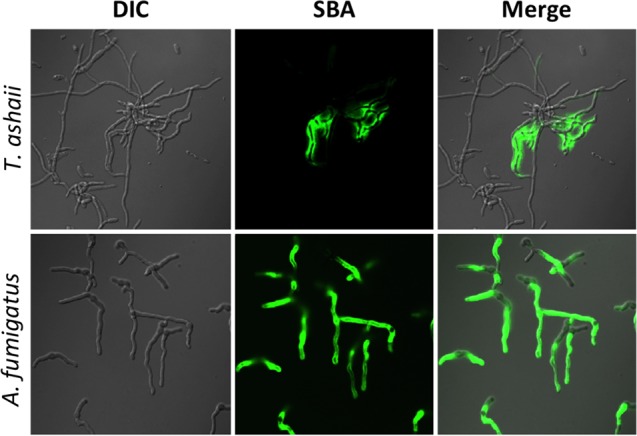
“The hypha surface galactosaminogalactan polysaccharide was charactered by immu nofluorescence staining using GAG-specific fluorescein-labeled soybean agglutinin (SBA-FITC) (Vector Labs, USA) (23).”
MethodSun, C., Zhu, L., Yang, L., Tian, Z., Jiao, Z., Huang, M., Peng, J., & Guo, G. (2024) · Frontiers in Microbiology · doi:10.3389/fmicb.2024.1480808 · Cited by 10
“Carbohydrate, the basis of exopolysaccharide secreted by biofilms, plays an essential role in biofilm establishment, colonization, and penetration of hyphal cells deep into tissue (Lee et al., 2016).”
Seegers, C., Lee, D. J., Zarnovican, P., Kirsch, S. H., Müller, R., Haselhorst, T., & Routier, F. H. (2023) · International Journal of Molecular Sciences · doi:10.3390/ijms24031851 · Cited by 10
Debourgogne, A., Monpierre, L., Sy, K. A., Valsecchi, I., Decousser, J., & Botterel, F. (2023) · Journal of Fungi · doi:10.3390/jof9090900 · Cited by 7
Liu, S., Lu, X., Dai, M., & Zhang, S. (2023) · Molecular Microbiology · doi:10.1111/mmi.15179 · Cited by 8
“The exopolysaccharide GAG mediates adhesion, biofilm formation, and virulence in the pathogenic fungus A. fumigatus (Gravelat et al., 2013; Lee, Geller, et al., 2016).”
BackgroundKadooka, C., Yakabe, S., Hira, D., Futagami, T., Goto, M., & Oka, T. (2025) · Fungal Genetics and Biology · doi:10.1016/j.fgb.2025.103972 · Cited by 6
The Extracellular Matrix of Yeasts: A Key Player in the Microbial Biology Change of Paradigm
Lucas, C., & da Silva, C. F. (2023) · Frontiers in Bioscience-Elite · doi:10.31083/j.fbe1502013 · Cited by 6
“In biofilms formed by the filamentous fungus Aspergillus fumigatus, polysaccharides GAGs are deacetylated in order to turn them cationic, a property that was found to be required for adherence and biofilm onset [140].”
BackgroundManipulation of fungal cell wall integrity to improve production of fungal natural products
Liu, H., Luo, Z., & Rao, Y. (2023) · Advances in applied microbiology · doi:10.1016/bs.aambs.2023.07.005 · Cited by 6
Self-citationRebaza-Cardenas, T. D., Ludeña, Y., Samolski, I., & Villena, G. K. (2020) · Journal of Fungi · doi:10.3390/jof6040376 · Cited by 6
“agd3 Deacetylation of galactosaminogalactan (GAG) Induces biofilms formation [32,33]”
The Effects of Mycovirus BmPV36 on the Cell Structure and Transcription of Bipolaris maydis
Wang, Y., Li, Q., Wu, Y., Han, S., Xiao, Y., & Kong, L. (2024) · Journal of Fungi · doi:10.3390/jof10020133 · Cited by 5
Huang, J., Ma, Z., Zhong, G., Sheppard, D. C., Lü, L., & Zhang, S. (2019) · Virulence · doi:10.1080/21505594.2019.1596505 · Cited by 6
“galactomannan content as previously described [41].”
Self-citationSnarr, B. D., Howell, P. L., & Sheppard, D. C. (2018) · Future Microbiology · doi:10.2217/fmb-2017-0243 · Cited by 7
Self-citationChen, Y., Stewart, J. I. P., Liu, S., Sheppard, D. C., Lu, L., & Zhang, S. (2022) · Applied and Environmental Microbiology · doi:10.1128/aem.01535-21 · Cited by 14
“A cluster of five genes has been predicted to encode enzymes with carbohydrate-synthetic or -modifying capacity of GAG (12).”
BackgroundSelf-citationD’Amico, R., Casillo, A., Olimpo, D., Gallucci, N., D’Angelo, C., Tutino, M. L., Paduano, L., Parrilli, E., & Corsaro, M. M. (2025) · Carbohydrate Polymers · doi:10.1016/j.carbpol.2025.124484 · Cited by 4
Evaluating the Potential of Galactosaminogalactan as a Diagnostic Target for Invasive Aspergillosis
Takazono, T., Machida, K., Mauff, F. L., Sheppard, D. C., Koga, S., Namie, H., Hishigaki, H., Amata, J., Ito, Y., Nakada, N., et al. (2025) · Mycoses · doi:10.1111/myc.70125 · Cited by 4
Self-citationLoon, J. C. V., Mauff, F. L., Vargas, M. A., Gilbert, S., Pfoh, R., Morrison, Z. A., Razvi, E., Nitz, M., Sheppard, D. C., & Howell, P. L. (2025) · Journal of Biological Chemistry · doi:10.1016/j.jbc.2025.108432 · Cited by 7
“This article contains supporting information (18, 20, 21, 43, 44, 78).”
Self-citationAspergillus fumigatus can display persistence to the fungicidal drug voriconazolePreprint
Scott, J., Valero, C., Mato-López, Á., Donaldson, I. J., Roldán, A., Chown, H., van Rhijn, N., Lobo-Vega, R., Gago, S., Furukawa, T., et al. (2022) · bioRxiv (Cold Spring Harbor Laboratory) · doi:10.1101/2022.05.16.491816 · Cited by 4
Aspergillus Cell Surface Structural Analysis and Its Applications to Industrial and Medical Use
Miyazawa, K., Umeyama, T., Yoshimi, A., Abe, K., & Miyazaki, Y. (2024) · Medical Mycology Journal · doi:10.3314/mmj.24.007 · Cited by 3
Characterization of the Neurospora crassa Galactosaminogalactan Biosynthetic Pathway
Chatrath, A., Dey, P., Greeley, K., Maciel, G., Huang, L., Heiß, C., Black, I. M., Azadi, P., & Free, S. J. (2024) · Microorganisms · doi:10.3390/microorganisms12081509 · Cited by 3
“Since GAG biosynthetic clusters are common in the ascomycetes [5,6], including many fungi that are nonpathogenic fungi (saprophytes) and plant pathogens, the question of what advantages GAGs offer to these fungi remains to be determined.”
BackgroundResultInfluentialXisto, M. I. D. D. S., Rollin‐Pinheiro, R., da Rosa, P. C. M., Santos, J. D. S., Irmão, N. F. D. S., Abib, J. A. A., Rochetti, V. P., de Castro-Almeida, Y., Freitas, G. M. P. D. S., Cypriano, J. B. S., et al. (2026) · Microbiology Spectrum · doi:10.1128/spectrum.03356-25 · Cited by 2
“It is already known that A. fumigatus presents galactosaminogalactan on the cell surface, which is important for fungal virulence, adherence, and biofilm formation (47–49).”
Wong, S. S. W., Dellière, S., Lafont, E., & Aimanianda, V. (2021) · Elsevier eBooks · doi:10.1016/b978-0-12-818731-9.00045-8 · Cited by 2
The Cell Wall of Medically Relevant Yeasts and Molds
Gómez-Gaviria, M., García-Carnero, L. C., Tamez-Castrellón, A. K., & Mora-Montes, H. M. (2021) · Elsevier eBooks · doi:10.1016/b978-0-12-819990-9.00040-8 · Cited by 3
Li, B., Zhang, Z., Zhang, L., He, X., Guan, H., Wang, N., Dong, Y., Rong, M., Jia, J., Chen, T., et al. (2024) · Food Science and Human Wellness · doi:10.26599/fshw.2024.9250268 · Cited by 1
Metadata
- Authors
- Lee, M. J., Geller, A. M., Bamford, N. C., Liu, H., Gravelat, F. N., Snarr, B. D., Le Mauff, F., Chabot, J., Ralph, B., Ostapska, H., Lehoux, M., Cerone, R. P., Baptista, S. D., Vinogradov, E., Stajich, J. E., Filler, S. G., Howell, P. L., & Sheppard, D. C.
- Affiliations
- McGill University (CA)
- University of Toronto (CA)
- University of California, Los Angeles (US)
- Research Institute of the McGill University Health Centre (CA)
- Departments of Medicine and of Microbiology and Immunology, McGill University, Montréal, Canada
- National Research Council Canada (CA)
- University of California, Riverside (US)
- Corresponding author
- Sheppard, Donald C.
- ORCID
- Venue
- mBio
- Publisher
- American Society for Microbiology
- Published
- 2016-05-04
- Volume
- 7
- Issue
- 2
- Pages
- e00252-16
- ISSN
- 2150-7511 (ISSN-L)
- 2161-2129
- PMC
- PMC4817252
- OpenAlex
- W2321349864
- Cited by
- 122
- References
- 53
- Citations by year
- 2026: 8 · 2025: 13 · 2024: 11 · 2023: 13 · 2022: 15 · 2021: 18 · 2020: 16 · 2019: 9 · 2018: 8 · 2017: 5 · 2016: 6
- FWCI
- 4.85
- Type
- journal article
- Language
- en
- Open access
- gold
- doi.org
- Licence
- cc-by
- creativecommons.org/licenses/by/4.0/ (vor)
- journals.asm.org/non-commercial-tdm-license (tdm)
- Locations
- mBio (publishedVersion, cc-by)
- PubMed Central (publishedVersion, cc-by)
- PubMed (publishedVersion)
- NPARC (submittedVersion)
- DOAJ (DOAJ: Directory of Open Access Journals) (submittedVersion)
- DOAJ (DOAJ: Directory of Open Access Journals) (submittedVersion, cc-by-sa)
- eScholarship (California Digital Library) (submittedVersion)
- Funders
- HHS | National Institutes of Health (R01AI073829)
- Canada Research Chairs
- Cystic Fibrosis Canada (3019)
- Gouvernement du Canada | Natural Sciences and Engineering Research Council of Canada
- Gouvernement du Canada | Canadian Institutes of Health Research (81361, 236182)
- Fonds de Recherche du Québec - Santé
- The Hospital for Sick Children Foundation Student Scholarship Program
- Mary H. Beatty, and Dr. James A. and Connie P. Dickson Scholarships, University of Toronto
- Topics
- Life Sciences › Biochemistry, Genetics and Molecular Biology › Molecular Biology › Fungal and yeast genetics research
- Health Sciences › Medicine › Infectious Diseases › Antifungal resistance and susceptibility
- Life Sciences › Biochemistry, Genetics and Molecular Biology › Molecular Biology › Bacterial biofilms and quorum sensing
- Keywords
- galactosaminogalactan, Aspergillus fumigatus, N-acetylgalactosamine, biofilm formation, fungal adhesion, poly-N-acetylglucosamine, cationic polysaccharides, horizontal gene transfer, Trichosporon asahii, fungal virulence, Pezizomycotina
- MeSH terms
- Acetylation, Aspergillosis, Aspergillus fumigatus, Fungal Proteins, Humans, Polysaccharides, Biofilms
About these checks
Registry, retraction, Cites and statistics results are computed, not judged, with one exception: a printed reference that no index lists is read once by a model before it counts as a citation error. Claims are extracted by a model and kept only when their quote appears verbatim in the text; each cited source is then checked, with a model’s help, for whether it says what the claim relies on. Those verdicts can be wrong — read the claim’s quote and the cited source before relying on one.
Statistics and arithmetic are recomputed, not judged.
Confidence bands are shown only for fields calibrated on our annotated test set. None is calibrated yet, so no band is shown.
What counts as a claim ›How we measure confidence ›How we check this ›
Are you an author, or do you see a problem with this page? Request a review
Data sources
Bibliographic data: Semantic Scholar, OpenAlex, Crossref.
Contains information from the Semantic Scholar Academic Graph Datasets, made available under the ODC Attribution License (ODC-BY 1.0).
Semantic Scholar’s data is described in: Kinney, R., et al. (2023). The Semantic Scholar Open Data Platform. arXiv:2301.10140.
