

The DOI matches its Crossref record; 65 of the 66 references it cites were found in a registry or an index.
Extracellular Enzymes Facilitate Electron Uptake in Biocorrosion and Bioelectrosynthesis
Open accessAbstract
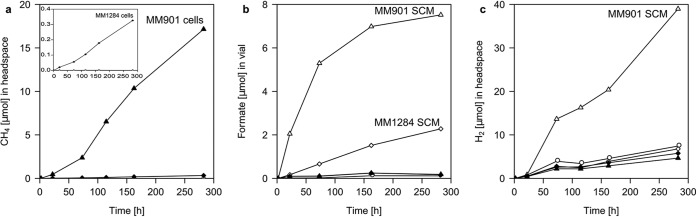
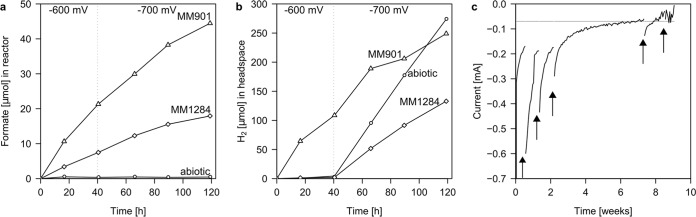
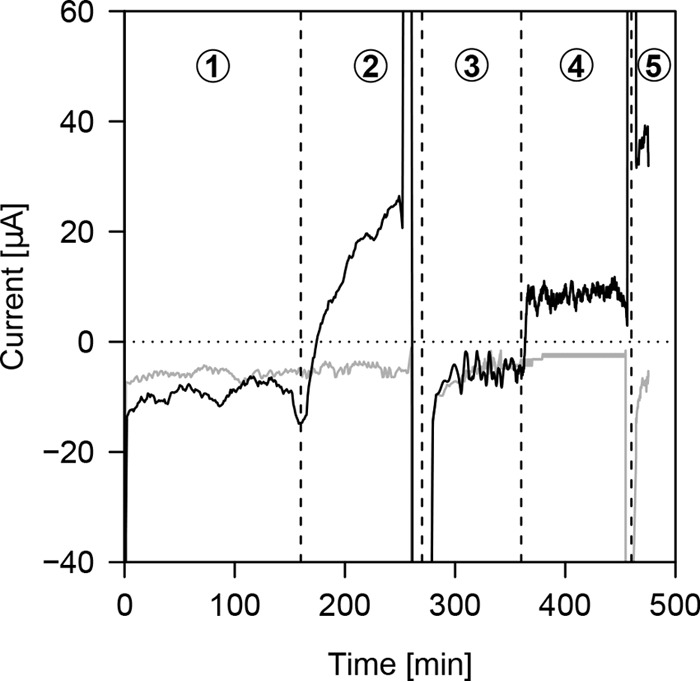
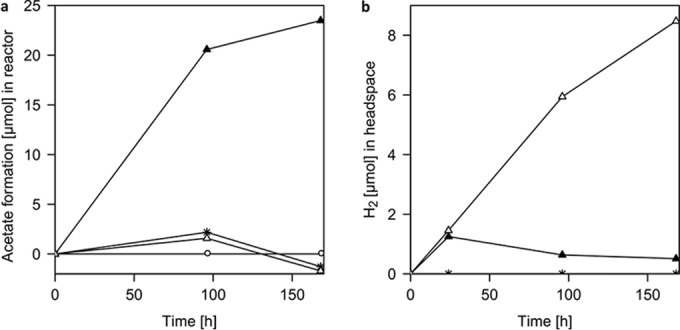
UNLABELLED: Direct, mediator-free transfer of electrons between a microbial cell and a solid phase in its surrounding environment has been suggested to be a widespread and ecologically significant process. The high rates of microbial electron uptake observed during microbially influenced corrosion of iron [Fe(0)] and during microbial electrosynthesis have been considered support for a direct electron uptake in these microbial processes. However, the underlying molecular mechanisms of direct electron uptake are unknown. We investigated the electron uptake characteristics of the Fe(0)-corroding and electromethanogenic archaeon Methanococcus maripaludis and discovered that free, surface-associated redox enzymes, such as hydrogenases and presumably formate dehydrogenases, are sufficient to mediate an apparent direct electron uptake. In genetic and biochemical experiments, we showed that these enzymes, which are released from cells during routine culturing, catalyze the formation of H2 or formate when sorbed to an appropriate redox-active surface. These low-molecular-weight products are rapidly consumed by M. maripaludis cells when present, thereby preventing their accumulation to any appreciable or even detectable level. Rates of H2 and formate formation by cell-free spent culture medium were sufficient to explain the observed rates of methane formation from Fe(0) and cathode-derived electrons by wild-type M. maripaludis as well as by a mutant strain carrying deletions in all catabolic hydrogenases. Our data collectively show that cell-derived free enzymes can mimic direct extracellular electron transfer during Fe(0) corrosion and microbial electrosynthesis and may represent an ecologically important but so far overlooked mechanism in biological electron transfer. IMPORTANCE: The intriguing trait of some microbial organisms to engage in direct electron transfer is thought to be widespread in nature. Consequently, direct uptake of electrons into microbial cells from solid surfaces is assumed to have a significant impact not only on fundamental microbial and biogeochemical processes but also on applied bioelectrochemical systems, such as microbial electrosynthesis and biocorrosion. This study provides a simple mechanistic explanation for frequently observed fast electron uptake kinetics in microbiological systems without a direct transfer: free, cell-derived enzymes can interact with cathodic surfaces and catalyze the formation of intermediates that are rapidly consumed by microbial cells. This electron transfer mechanism likely plays a significant role in various microbial electron transfer reactions in the environment.
Overview
The claims and statistics of this paper haven’t been checked yet.
Run the check — free, no account needed. It reads the open-access text and checks the sources it cites.
Integrity signals
Registry
Cites
Statistics
Figures
Verification
Claims the paper makes
The claims and statistics of this paper haven’t been checked yet.
Run the check — free, no account needed. It reads the open-access text and checks the sources it cites.
Claims other papers make about this one
Each is checked against this paper’s own text: does it say what the citing paper says it does?
The cited source says what the claim attributes to it.
In the citing paper
“Studies of microbes that grow on native iron and on electrodes suggest that side activities of extracellular enzymes might be able to substitute for hydrogenases (Deutzmann et al., 2015).”
From Serpentinization as the source of energy, electrons, organics, catalysts, nutrients and pH gradients for the origin of LUCA and life (2023) · cites this paper as Deutzmann et al., 2015
Self-check
Percentages, sums and reported differences re-computed from the paper’s own numbers.
The self-check needs the paper’s full text.
Citations
Cites
Extracellular electron transfer via microbial nanowires
Reguera, G., McCarthy, K. D., Mehta, T., Nicoll, J. S., Tuominen, M. T., & Lovley, D. R. (2005) · Nature · doi:10.1038/nature03661 · Cited by 2,645
Electricity Production by Geobacter sulfurreducens Attached to Electrodes
Bond, D. R., & Lovley, D. R. (2003) · Applied and Environmental Microbiology · doi:10.1128/aem.69.3.1548-1555.2003 · Cited by 2,261
Gorby, Y. A., Yanina, S., McLean, J. S., Rosso, K. M., Moyles, D., Dohnalkova, A., Beveridge, T. J., Chang, I. S., Kim, B. H., Kim, K. S., et al. (2006) · Proceedings of the National Academy of Sciences · doi:10.1073/pnas.0604517103 · Cited by 1,749
Microbial electrosynthesis — revisiting the electrical route for microbial production
Rabaey, K., & Rozendal, R. A. (2010) · Nature Reviews Microbiology · doi:10.1038/nrmicro2422 · Cited by 1,676
Rotaru, A., Shrestha, P. M., Liu, F., Shrestha, M., Shrestha, D., Embree, M., Zengler, K., Wardman, C., Nevin, K. P., & Lovley, D. R. (2013) · Energy & Environmental Science · doi:10.1039/c3ee42189a · Cited by 1,411
Direct Biological Conversion of Electrical Current into Methane by Electromethanogenesis
Cheng, S., Xing, D., Call, D. F., & Logan, B. E. (2009) · Environmental Science & Technology · doi:10.1021/es803531g · Cited by 1,193
Nevin, K. P., Woodard, T. L., Franks, A. E., Summers, Z. M., & Lovley, D. R. (2010) · mBio · doi:10.1128/mbio.00103-10 · Cited by 1,068
Summers, Z. M., Fogarty, H. E., Leang, C., Franks, A. E., Malvankar, N. S., & Lovley, D. R. (2010) · Science · doi:10.1126/science.1196526 · Cited by 1,019
Direct Interspecies Electron Transfer between Geobacter metallireducens and Methanosarcina barkeri
Rotaru, A., Shrestha, P. M., Liu, F., Markovaite, B., Chen, S., Nevin, K. P., & Lovley, D. R. (2014) · Applied and Environmental Microbiology · doi:10.1128/aem.00895-14 · Cited by 943
Corrosion of Iron by Sulfate-Reducing Bacteria: New Views of an Old Problem
Enning, D., & Garrelfs, J. (2013) · Applied and Environmental Microbiology · doi:10.1128/aem.02848-13 · Cited by 921
Research works printed but not linked: 1
- Tate R, III. 2002. Microbiology and enzymology of carbon and nitrogen cycling, p 227–248. In Burns RG, Dick RP (ed), Enzymes in the environment. Marcel Dekker, New York, NY.
Cited by
Sorted by citations
Items 101–200 of 380
Photoferrotrophs Produce a PioAB Electron Conduit for Extracellular Electron Uptake
Gupta, D. K., Sutherland, M. C., Rengasamy, K., Meacham, J. M., Kranz, R. G., & Bose, A. (2019) · mBio · doi:10.1128/mbio.02668-19 · Cited by 68
Rational Scale-Up of a methane producing bioelectrochemical reactor to 50 L pilot scale
Enzmann, F., & Holtmann, D. (2019) · Chemical Engineering Science · doi:10.1016/j.ces.2019.07.051 · Cited by 67
Microbial bioelectrosynthesis of hydrogen: Current challenges and scale-up
Kitching, M., Butler, R., & Marsili, E. (2016) · Enzyme and Microbial Technology · doi:10.1016/j.enzmictec.2016.09.002 · Cited by 67
Baltic Sea methanogens compete with acetogens for electrons from metallic iron
Palacios, P. A., Snoeyenbos-West, O., Löscher, C. R., Thamdrup, B., & Rotaru, A. (2019) · The ISME Journal · doi:10.1038/s41396-019-0490-0 · Cited by 66
Angenent, L. T., Usack, J. G., Xu, J., Hafenbradl, D., Posmanik, R., & Tester, J. W. (2017) · Bioresource Technology · doi:10.1016/j.biortech.2017.09.104 · Cited by 69
Xia, X., Zhang, J., Song, T., & Lu, Y. (2019) · Environmental Microbiology Reports · doi:10.1111/1758-2229.12737 · Cited by 66
Schwander, L., Brabender, M., Mrnjavac, N., Wimmer, J. L. E., Preiner, M., & Martin, W. F. (2023) · Frontiers in Microbiology · doi:10.3389/fmicb.2023.1257597 · Cited by 65
“Studies of microbes that grow on native iron and on electrodes suggest that side activities of extracellular enzymes might be able to substitute for hydrogenases (Deutzmann et al., 2015).”
BackgroundSharma, M., Liu, H., Chen, S., Cheng, F., Voordouw, G., & Gieg, L. M. (2018) · Scientific Reports · doi:10.1038/s41598-018-34789-7 · Cited by 65
Templeton, A. S., & Ellison, E. (2020) · Philosophical Transactions of the Royal Society A · doi:10.1098/rsta.2018.0423 · Cited by 60
Xiang, Y., Liu, G., Zhang, R., Lu, Y., & Luo, H. (2017) · Bioresource Technology · doi:10.1016/j.biortech.2017.06.017 · Cited by 65
Mateos, R., Sotres, A., Alonso, R. M., Morán, A., & Escapa, A. (2019) · Energies · doi:10.3390/en12173297 · Cited by 65
Bacteria coated cathodes as an in-situ hydrogen evolving platform for microbial electrosynthesis
Perona-Vico, E., Feliu-Paradeda, L., Puig, S., & Bañeras, L. (2020) · Scientific Reports · doi:10.1038/s41598-020-76694-y · Cited by 63
Putative Extracellular Electron Transfer in Methanogenic Archaea
Gao, K., & Lu, Y. (2021) · Frontiers in Microbiology · doi:10.3389/fmicb.2021.611739 · Cited by 64
Treatment of acid rock drainage using a sulfate-reducing bioreactor with zero-valent iron
Ayala‐Parra, P., Sierra‐Álvarez, R., & Field, J. A. (2016) · Journal of Hazardous Materials · doi:10.1016/j.jhazmat.2016.01.029 · Cited by 63
Sulfate-Reducing ElectroAutotrophs and Their Applications in Bioelectrochemical Systems
Agostino, V., & Rosenbaum, M. A. (2018) · Frontiers in Energy Research · doi:10.3389/fenrg.2018.00055 · Cited by 64
Eddie, B. J., Wang, Z., Hervey, W. J., Leary, D. H., Malanoski, A. P., Tender, L. M., Lin, B., & Glaven, S. M. (2017) · mSystems · doi:10.1128/msystems.00002-17 · Cited by 62
Gupta, D. K., Guzman, M. S., & Bose, A. (2020) · Journal of Industrial Microbiology & Biotechnology · doi:10.1007/s10295-020-02309-0 · Cited by 63
Izadi, P., Fontmorin, J., Virdis, B., Head, I. M., & Yu, E. H. (2020) · Applied Energy · doi:10.1016/j.apenergy.2020.116310 · Cited by 60
Microbial electrochemical approaches of carbon dioxide utilization for biogas upgrading
Aryal, N., Zhang, Y., Bajracharya, S., Pant, D., & Chen, X. (2021) · Chemosphere · doi:10.1016/j.chemosphere.2021.132843 · Cited by 60
Enhancement of Butanol Production: From Biocatalysis to Bioelectrocatalysis
Liu, X., & Yu, X. (2020) · ACS Energy Letters · doi:10.1021/acsenergylett.9b02596 · Cited by 58
Liu, Z., Xue, X., Cai, W., Cui, K., Patil, S. A., & Guo, K. (2022) · Biochemical Engineering Journal · doi:10.1016/j.bej.2022.108745 · Cited by 57
Liang, B., Kong, D., Ma, J., Wen, C., Yuan, T., Lee, D., Zhou, J. Z., & Wang, A. (2016) · Water Research · doi:10.1016/j.watres.2016.05.028 · Cited by 57
Vyrides, I., Ανδρονίκου, Μ., Kyprianou, A., Modic, A., Filippeti, A., Yiakoumis, C., & Samanides, C. G. (2018) · Journal of CO2 Utilization · doi:10.1016/j.jcou.2018.08.023 · Cited by 57
Madjarov, J., Soares, R., Paquete, C. M., & Louro, R. O. (2022) · Frontiers in Microbiology · doi:10.3389/fmicb.2022.913311 · Cited by 57
Recent Enzymatic Electrochemistry for Reductive Reactions
Cadoux, C., & Milton, R. D. (2020) · ChemElectroChem · doi:10.1002/celc.202000282 · Cited by 56
Charalambous, P., & Vyrides, I. (2020) · Journal of Environmental Management · doi:10.1016/j.jenvman.2020.111651 · Cited by 55
Electron transfer mechanisms in biofilms
Philips, J., Verbeeck, K., Rabaey, K., & Arends, J. (2016) · Elsevier eBooks · doi:10.1016/b978-1-78242-375-1.00003-4 · Cited by 55
A genetic approach for microbial electrosynthesis system as biocommodities production platform
Shin, H. J., Jung, K. A., Nam, C. W., & Park, J. M. (2017) · Bioresource Technology · doi:10.1016/j.biortech.2017.05.077 · Cited by 55
Enhanced Anaerobic Digestion by Stimulating DIET Reaction
Mostafa, A., Im, S., Song, Y., Ahn, Y., & Kim, D. (2020) · Processes · doi:10.3390/pr8040424 · Cited by 56
Salgar-Chaparro, S. J., Lepková, K., Pojtanabuntoeng, T., Darwin, A., & Machuca, L. L. (2020) · Corrosion Science · doi:10.1016/j.corsci.2020.108595 · Cited by 53
Cytochrome‐mediated direct electron uptake from metallic iron by Methanosarcina acetivorans
Holmes, D. E., Tang, H., Woodard, T. L., Liang, D., Zhou, J., Liu, X., & Lovley, D. R. (2022) · mLife · doi:10.1002/mlf2.12044 · Cited by 53
H 2 Is a Major Intermediate in Desulfovibrio vulgaris Corrosion of Iron
Woodard, T. L., Ueki, T., & Lovley, D. R. (2023) · mBio · doi:10.1128/mbio.00076-23 · Cited by 53
Life Electric—Nature as a Blueprint for the Development of Microbial Electrochemical Technologies
Schröder, U., & Harnisch, F. (2017) · Joule · doi:10.1016/j.joule.2017.07.010 · Cited by 54
Transferring bioelectrochemical processes from H-cells to a scalable bubble column reactor
Enzmann, F., Mayer, F., Stöckl, M., Mangold, K., Hommel, R. K., & Holtmann, D. (2018) · Chemical Engineering Science · doi:10.1016/j.ces.2018.08.056 · Cited by 53
Methanogens predominate in natural corrosion protective layers on metal sheet piles
Kip, N., Jansen, S., Leite, M. F. A., de Hollander, M., Afanasyev, M., Kuramae, E. E., & van Veen, J. A. (2017) · Scientific Reports · doi:10.1038/s41598-017-11244-7 · Cited by 52
Metagenomic insights into the ecology and physiology of microbes in bioelectrochemical systems
Kouzuma, A., Ishii, S., & Watanabe, K. (2018) · Bioresource Technology · doi:10.1016/j.biortech.2018.01.125 · Cited by 53
Li, M., Feng, M. H., Sun, J., Wang, R., Qu, F., Yang, C., & Guo, W. (2022) · Bioresource Technology · doi:10.1016/j.biortech.2022.127151 · Cited by 51
A Gibbs Free Energy-Based Assessment of Microbial Electrocatalysis
Gildemyn, S., Rozendal, R. A., & Rabaey, K. (2017) · Trends in biotechnology · doi:10.1016/j.tibtech.2017.02.005 · Cited by 52
Philips, J., Monballyu, E., Georg, S., Paepe, K. D., Prévoteau, A., Rabaey, K., & Arends, J. (2018) · FEMS Microbiology Ecology · doi:10.1093/femsec/fiy222 · Cited by 51
Xu, L., Zhao, Y., Owusu, K. A., Zhuang, Z., Liu, Q., Wang, Z., Li, Z., & Mai, L. (2018) · Chem · doi:10.1016/j.chempr.2018.04.004 · Cited by 50
Effect of Start-Up Strategies and Electrode Materials on Carbon Dioxide Reduction on Biocathodes
Alam, S. S., Singh, A., Hermansson, M., Persson, F., Schnürer, A., Wilén, B., & Modin, O. (2017) · Applied and Environmental Microbiology · doi:10.1128/aem.02242-17 · Cited by 51
Solar-driven carbon dioxide fixation using photosynthetic semiconductor bio-hybrids
Cestellos-Blanco, S., Zhang, H., & Yang, P. (2019) · Faraday Discussions · doi:10.1039/c8fd00187a · Cited by 49
Engineered living conductive biofilms as functional materials
Bird, L. J., Onderko, E. L., Phillips, D. A., Mickol, R. L., Malanoski, A. P., Yates, M. D., Eddie, B., & Glaven, S. M. (2019) · MRS Communications · doi:10.1557/mrc.2019.27 · Cited by 48
Single-cell multimodal imaging uncovers energy conversion pathways in biohybrids
Fu, B., Mao, X., Park, Y., Zhao, Z., Yan, T., Jung, W. J., Francis, D. H., Li, W., Pian, B., Salimijazi, F., et al. (2023) · Nature Chemistry · doi:10.1038/s41557-023-01285-z · Cited by 47
Yang, G., Xia, X., Nie, W., Qin, B., Hou, T., Lin, A., Yao, S., & Li, Z. (2023) · Environmental Research · doi:10.1016/j.envres.2023.118038 · Cited by 47
Hybrid photosynthesis-powering biocatalysts with solar energy captured by inorganic devices
Zhang, T., & Tremblay, P. (2017) · Biotechnology for Biofuels · doi:10.1186/s13068-017-0943-5 · Cited by 47
Making the connections: physical and electric interactions in biohybrid photosynthetic systems
Yang, Y., Liu, L., Tian, H., Cooper, A. I., & Sprick, R. S. (2023) · Energy & Environmental Science · doi:10.1039/d3ee01265d · Cited by 46
Accelerated H2 Evolution during Microbial Electrosynthesis with Sporomusa ovata
Tremblay, P., Faraghiparapari, N., & Zhang, T. (2019) · Catalysts · doi:10.3390/catal9020166 · Cited by 46
Nandy, A., Farkas, D., Pepió‐Tárrega, B., Martı́nez, S., Borràs, E., Avignone-Rossa, C. A., & Lorenzo, M. D. (2023) · Environmental Science and Ecotechnology · doi:10.1016/j.ese.2023.100276 · Cited by 44
Microbial Electroactive Biofilms
Kiran, R., & Patil, S. A. (2019) · ACS symposium series · doi:10.1021/bk-2019-1323.ch008 · Cited by 45
Fontmorin, J., Izadi, P., Li, D., Lim, S. S., Farooq, S., Bilal, S., Cheng, S., & Yu, E. H. (2021) · Electrochimica Acta · doi:10.1016/j.electacta.2021.137853 · Cited by 43
Yates, M. D., Ma, L., Sack, J., Golden, J. P., Glaven, S. M., Yates, S. R., & Tender, L. M. (2017) · Environmental Science & Technology Letters · doi:10.1021/acs.estlett.7b00335 · Cited by 42
Song, H.-J., Choi, O., Pandey, A., Kim, Y. G., Joo, J. S., & Sang, B. (2019) · Bioresource Technology · doi:10.1016/j.biortech.2019.02.115 · Cited by 43
Igarashi, K., & Kato, S. (2017) · Applied Microbiology and Biotechnology · doi:10.1007/s00253-017-8421-3 · Cited by 42
Redox conduction in biofilms: From respiration to living electronics
Zacharoff, L. A., & El‐Naggar, M. Y. (2017) · Current Opinion in Electrochemistry · doi:10.1016/j.coelec.2017.09.003 · Cited by 41
Muñoz‐Duarte, L., & Philips, J. (2023) · Environmental Microbiology · doi:10.1111/1462-2920.16429 · Cited by 41
Angenent, L. T., Casini, I., Schröder, U., Harnisch, F., & Molitor, B. (2024) · Energy & Environmental Science · doi:10.1039/d3ee01091k · Cited by 40
Native metals, electron bifurcation, and CO2 reduction in early biochemical evolution
Sousa, F. L., Preiner, M., & Martin, W. F. (2018) · Current Opinion in Microbiology · doi:10.1016/j.mib.2017.12.010 · Cited by 44
Xiu, S., Yao, J., Wu, G., Huang, Y., Yang, B., Huang, Y., Lei, L., Li, Z., & Hou, Y. (2019) · Energy Technology · doi:10.1002/ente.201800987 · Cited by 40
Alqahtani, M., Bajracharya, S., Katuri, K. P., Ali, M., Ragab, A., Michoud, G., Daffonchio, D. G., & Saikaly, P. E. (2019) · Frontiers in Microbiology · doi:10.3389/fmicb.2019.02563 · Cited by 40
The role of microbiome in carbon sequestration and environment security during wastewater treatment
Zhu, X., Lei, C., Qi, J., Zhen, G., Lü, X., Xu, S., Zhang, J., Liu, H., Zhang, X., & Wu, Z. (2022) · The Science of The Total Environment · doi:10.1016/j.scitotenv.2022.155793 · Cited by 40
Rengasamy, K., Ranaivoarisoa, T. O., Singh, R. R., & Bose, A. (2017) · Bioelectrochemistry · doi:10.1016/j.bioelechem.2018.03.015 · Cited by 39
Alqahtani, M., Bajracharya, S., Katuri, K. P., Ali, M., Xu, J., Alarawi, M. S., & Saikaly, P. E. (2020) · The Science of The Total Environment · doi:10.1016/j.scitotenv.2020.142668 · Cited by 39
Chen, G., Wang, R., Sun, M., Chen, J., Eheneden, I., & Zhao, J. (2023) · Chemosphere · doi:10.1016/j.chemosphere.2023.140251 · Cited by 38
Reiner, J. E., Geiger, K., Hackbarth, M., Fink, M., Lapp, C. J., Jung, T., Dötsch, A., Hügler, M., Wagner, M., Hille‐Reichel, A., et al. (2020) · The ISME Journal · doi:10.1038/s41396-020-0595-5 · Cited by 39
Ueki, T., & Lovley, D. R. (2022) · mLife · doi:10.1002/mlf2.12018 · Cited by 40
Tan, J., Goh, P. C., & Blackwood, D. J. (2017) · Corrosion Science · doi:10.1016/j.corsci.2017.02.014 · Cited by 38
Microbiologically Influenced Corrosion Mechanism of Ferrous Alloys in Marine Environment
Khan, M. S., Liang, T., Liu, Y., Shi, Y., Zhang, H., Li, H., Guo, S., Pan, H., Yang, K., & Zhao, Y. (2022) · Metals · doi:10.3390/met12091458 · Cited by 36
Methanobacterium enables high rate electricity-driven autotrophic sulfate reduction
Pozo, G., Jourdin, L., Lü, Y., Ledezma, P., Keller, J., & Freguia, S. (2015) · RSC Advances · doi:10.1039/c5ra18444d · Cited by 36
Zhou, X., Huang, S., Chen, X., Zeng, R. J., Zhou, S., & Chen, M. (2023) · Chemical Engineering Journal · doi:10.1016/j.cej.2023.143667 · Cited by 35
Karbelkar, A. A., Rowe, A. R., & El‐Naggar, M. Y. (2019) · Electrochimica Acta · doi:10.1016/j.electacta.2019.134838 · Cited by 36
Chung, T. H., Dhillon, S. K., Shin, C., Pant, D., & Dhar, B. R. (2024) · Biotechnology Advances · doi:10.1016/j.biotechadv.2024.108474 · Cited by 34
Enhanced electrosynthesis performance of Moorella thermoautotrophica by improving cell permeability
Chen, S., Fang, Y., Jing, X., Luo, H., Chen, J., & Zhou, S. (2018) · Bioelectrochemistry · doi:10.1016/j.bioelechem.2018.02.003 · Cited by 34
Zhang, W., Zhang, J., & Lu, Y. (2018) · Scientific Reports · doi:10.1038/s41598-018-30745-7 · Cited by 34
Ragab, A., Shaw, D. R., Katuri, K. P., & Saikaly, P. E. (2020) · Scientific Reports · doi:10.1038/s41598-020-76229-5 · Cited by 35
Microbial electrosynthesis of acetate from CO2 under hypersaline conditions
Zhang, X., Arbour, T. J., Zhang, D., Wei, S., & Rabaey, K. (2022) · Environmental Science and Ecotechnology · doi:10.1016/j.ese.2022.100211 · Cited by 33
Cathodic biofilm activates electrode surface and achieves efficient autotrophic sulfate reduction
Pozo, G., Jourdin, L., Lü, Y., Keller, J., Ledezma, P., & Freguia, S. (2016) · Electrochimica Acta · doi:10.1016/j.electacta.2016.07.100 · Cited by 33
Enhanced Electrosynthetic Hydrogen Evolution by Hydrogenases Embedded in a Redox‐Active Hydrogel
Ruth, J. C., Milton, R. D., Gu, W., & Spormann, A. M. (2020) · Chemistry - A European Journal · doi:10.1002/chem.202000750 · Cited by 33
Self-citationMcCully, A. L., & Spormann, A. M. (2020) · Environmental Microbiology · doi:10.1111/1462-2920.15235 · Cited by 33
Self-citationEngineering microbial metabolic energy homeostasis for improved bioproduction
Tong, T., Chen, X., Hu, G., Wang, X., Liu, G., & Liu, L. (2021) · Biotechnology Advances · doi:10.1016/j.biotechadv.2021.107841 · Cited by 33
Investigating Abiotic and Biotic Mechanisms of Pyrite Reduction
Spietz, R. L., Payne, D., Kulkarni, G., Metcalf, W. W., Roden, E., & Boyd, E. S. (2022) · Frontiers in Microbiology · doi:10.3389/fmicb.2022.878387 · Cited by 34
Reductive biomining of pyrite by methanogens
Spietz, R. L., Payne, D., Szilagyi, R. K., & Boyd, E. S. (2022) · Trends in Microbiology · doi:10.1016/j.tim.2022.05.005 · Cited by 33
Im, C., Valgepea, K., Modin, O., & Nygård, Y. (2022) · Bioresource Technology Reports · doi:10.1016/j.biteb.2022.101156 · Cited by 33
Al-Mamun, A., Ahmed, W., Jafary, T., Nayak, J. K., Alnuaimi, A., & Sana, A. (2023) · Biochemical Engineering Journal · doi:10.1016/j.bej.2023.108928 · Cited by 32
Wang, Y., Zhao, Y., Wang, S., Xiao, G., Jin, Y., Wang, Z., & Su, H. (2022) · ACS Sustainable Chemistry & Engineering · doi:10.1021/acssuschemeng.2c05516 · Cited by 31
Suarez, E. M., Lepková, K., Kinsella, B., & Machuca, L. L. (2018) · International Biodeterioration & Biodegradation · doi:10.1016/j.ibiod.2018.12.003 · Cited by 31
An, B. A., Deland, E., Sobol, O., Yao, J., Skovhus, T. L., & Koerdt, A. (2020) · Corrosion Science · doi:10.1016/j.corsci.2020.109179 · Cited by 31
Butler, C. S., & Lovley, D. R. (2016) · Frontiers in Microbiology · doi:10.3389/fmicb.2016.01879 · Cited by 31
Zaybak, Z., Logan, B. E., & Pisciotta, J. M. (2018) · Bioelectrochemistry · doi:10.1016/j.bioelechem.2018.04.019 · Cited by 30
Sharma, D., Mahajan, R., & Goel, G. (2018) · International Journal of Environmental Science and Technology · doi:10.1007/s13762-018-2065-4 · Cited by 30
Rajala, P., Huttunen‐Saarivirta, E., Bomberg, M., & Carpén, L. I. (2019) · Corrosion Science · doi:10.1016/j.corsci.2019.108148 · Cited by 30
Samanides, C. G., Koutsokeras, L. E., Constantinides, G., & Vyrides, I. (2020) · Frontiers in Energy Research · doi:10.3389/fenrg.2020.00037 · Cited by 30
Gupta, D. K., Guzman, M. S., Rengasamy, K., Stoica, A., Singh, R. R., Ranaivoarisoa, T. O., Davenport, E. J., Bai, W., McGinley, B., Meacham, J. M., et al. (2021) · The ISME Journal · doi:10.1038/s41396-021-01015-8 · Cited by 30
Zhang, Z., Lü, X., Niu, C., Cai, T., Wang, N., Han, Y., Zhang, R., Song, Y., & Zhen, G. (2021) · Fuel · doi:10.1016/j.fuel.2021.122450 · Cited by 30
Mixed Culture Biocathodes for Production of Hydrogen, Methane, and Carboxylates
ter Heijne, A., Geppert, F., Sleutels, T. H. J. A., Batlle‐Vilanova, P., Liu, D., & Puig, S. (2017) · Advances in biochemical engineering, biotechnology · doi:10.1007/10_2017_15 · Cited by 30
Jia, B., Liu, T., Wan, J., Ivanets, A. I., Xiang, Y., Zhang, L., & Su, X. (2022) · Environmental Research · doi:10.1016/j.envres.2022.114914 · Cited by 29
Lam, B. R., Barr, C. R., Rowe, A. R., & Nealson, K. H. (2019) · Frontiers in Microbiology · doi:10.3389/fmicb.2019.01979 · Cited by 28
Oil field microorganisms cause highly localized corrosion on chemically inhibited carbon steel
Mand, J., & Enning, D. (2020) · Microbial Biotechnology · doi:10.1111/1751-7915.13644 · Cited by 28
Enzyme Electrochemistry for Industrial Energy Applications—A Perspective on Future Areas of Focus
Ruth, J. C., & Spormann, A. M. (2021) · ACS Catalysis · doi:10.1021/acscatal.1c00708 · Cited by 28
Self-citationHirano, S.-I., Ihara, S., Wakai, S., Dotsuta, Y., Otani, K., Kitagaki, T., Ueno, F., & Okamoto, A. (2022) · Microorganisms · doi:10.3390/microorganisms10020270 · Cited by 28
Metadata
- Authors
- Deutzmann, J. S., Sahin, M., & Spormann, A. M.
- Affiliations
- Stanford University (US)
- Department of Civil and Environmental Engineering, Stanford University, Stanford, California, USA
- Corresponding author
- Spormann, Alfred M.
- Venue
- mBio
- Publisher
- American Society for Microbiology
- Published
- 2015-05
- Volume
- 6
- Issue
- 2
- ISSN
- 2150-7511 (ISSN-L)
- 2161-2129
- PMC
- PMC4453541
- OpenAlex
- W2141860790
- Cited by
- 379
- References
- 66
- Citations by year
- 2026: 18 · 2025: 21 · 2024: 29 · 2023: 31 · 2022: 39 · 2021: 29 · 2020: 47 · 2019: 43 · 2018: 41 · 2017: 40 · 2016: 31 · 2015: 10
- FWCI
- 29.27
- Type
- journal article
- Language
- en
- Open access
- gold
- doi.org
- Licence
- Locations
- mBio (publishedVersion, cc-by-nc-sa)
- Europe PMC (PubMed Central) (publishedVersion, cc-by-nc-sa)
- PubMed Central (publishedVersion, cc-by-nc-sa)
- PubMed (publishedVersion)
- DOAJ (DOAJ: Directory of Open Access Journals) (submittedVersion, cc-by-sa)
- Topics
- Physical Sciences › Environmental Science › Environmental Engineering › Microbial Fuel Cells and Bioremediation
- Physical Sciences › Materials Science › Materials Chemistry › Corrosion Behavior and Inhibition
- Life Sciences › Biochemistry, Genetics and Molecular Biology › Molecular Biology › Microbial metabolism and enzyme function
- Keywords
- extracellular enzymes, direct electron transfer, microbiologically influenced corrosion, microbial electrosynthesis, Methanococcus maripaludis, iron corrosion, hydrogenase, formate dehydrogenase, hydrogen production, methane production, bioelectrochemical systems
- MeSH terms
- Corrosion, Electron Transport, Formates, Hydrogen, Iron, Methane, Oxidoreductases, Methanococcus
About these checks
Registry, retraction, Cites and statistics results are computed, not judged, with one exception: a printed reference that no index lists is read once by a model before it counts as a citation error. Claims are extracted by a model and kept only when their quote appears verbatim in the text; each cited source is then checked, with a model’s help, for whether it says what the claim relies on. Those verdicts can be wrong — read the claim’s quote and the cited source before relying on one.
Statistics and arithmetic are recomputed, not judged.
Confidence bands are shown only for fields calibrated on our annotated test set. None is calibrated yet, so no band is shown.
What counts as a claim ›How we measure confidence ›How we check this ›
Are you an author, or do you see a problem with this page? Request a review
