

The DOI matches its Crossref record; 65 of the 66 references it cites were found in a registry or an index.
Extracellular Enzymes Facilitate Electron Uptake in Biocorrosion and Bioelectrosynthesis
Open accessAbstract
UNLABELLED: Direct, mediator-free transfer of electrons between a microbial cell and a solid phase in its surrounding environment has been suggested to be a widespread and ecologically significant process. The high rates of microbial electron uptake observed during microbially influenced corrosion of iron [Fe(0)] and during microbial electrosynthesis have been considered support for a direct electron uptake in these microbial processes. However, the underlying molecular mechanisms of direct electron uptake are unknown. We investigated the electron uptake characteristics of the Fe(0)-corroding and electromethanogenic archaeon Methanococcus maripaludis and discovered that free, surface-associated redox enzymes, such as hydrogenases and presumably formate dehydrogenases, are sufficient to mediate an apparent direct electron uptake. In genetic and biochemical experiments, we showed that these enzymes, which are released from cells during routine culturing, catalyze the formation of H2 or formate when sorbed to an appropriate redox-active surface. These low-molecular-weight products are rapidly consumed by M. maripaludis cells when present, thereby preventing their accumulation to any appreciable or even detectable level. Rates of H2 and formate formation by cell-free spent culture medium were sufficient to explain the observed rates of methane formation from Fe(0) and cathode-derived electrons by wild-type M. maripaludis as well as by a mutant strain carrying deletions in all catabolic hydrogenases. Our data collectively show that cell-derived free enzymes can mimic direct extracellular electron transfer during Fe(0) corrosion and microbial electrosynthesis and may represent an ecologically important but so far overlooked mechanism in biological electron transfer. IMPORTANCE: The intriguing trait of some microbial organisms to engage in direct electron transfer is thought to be widespread in nature. Consequently, direct uptake of electrons into microbial cells from solid surfaces is assumed to have a significant impact not only on fundamental microbial and biogeochemical processes but also on applied bioelectrochemical systems, such as microbial electrosynthesis and biocorrosion. This study provides a simple mechanistic explanation for frequently observed fast electron uptake kinetics in microbiological systems without a direct transfer: free, cell-derived enzymes can interact with cathodic surfaces and catalyze the formation of intermediates that are rapidly consumed by microbial cells. This electron transfer mechanism likely plays a significant role in various microbial electron transfer reactions in the environment.
Overview
The claims and statistics of this paper haven’t been checked yet.
Run the check — free, no account needed. It reads the open-access text and checks the sources it cites.
Integrity signals
Registry
Cites
Statistics
Figures
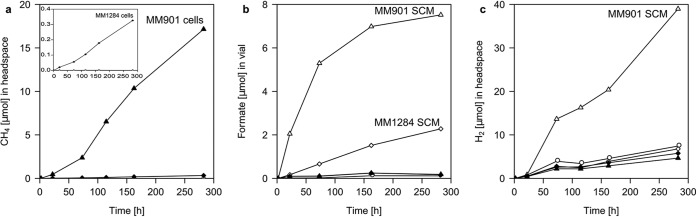
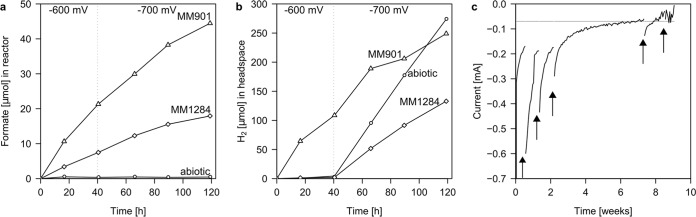
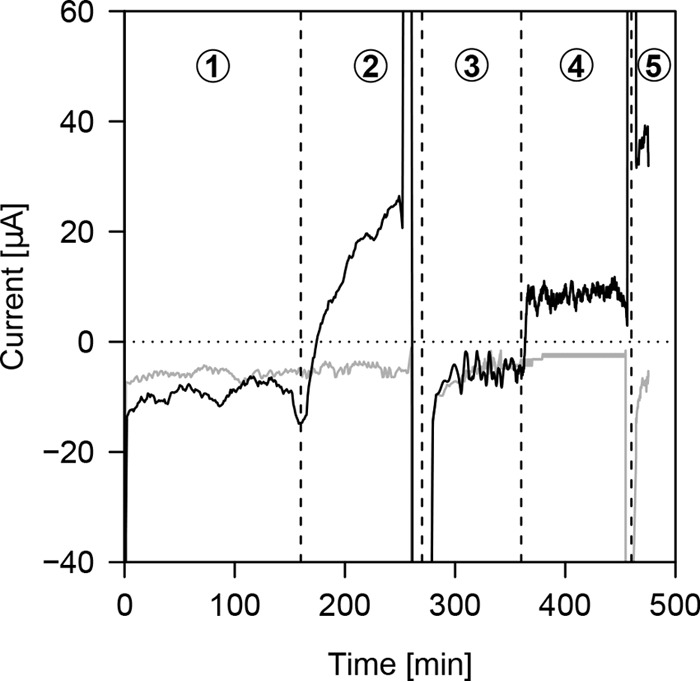
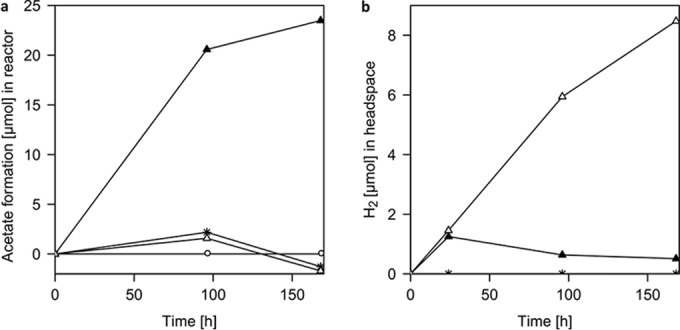
Verification
Claims the paper makes
The claims and statistics of this paper haven’t been checked yet.
Run the check — free, no account needed. It reads the open-access text and checks the sources it cites.
Claims other papers make about this one
Each is checked against this paper’s own text: does it say what the citing paper says it does?
The cited source says what the claim attributes to it.
In the citing paper
“Studies of microbes that grow on native iron and on electrodes suggest that side activities of extracellular enzymes might be able to substitute for hydrogenases (Deutzmann et al., 2015).”
From Serpentinization as the source of energy, electrons, organics, catalysts, nutrients and pH gradients for the origin of LUCA and life (2023) · cites this paper as Deutzmann et al., 2015
Self-check
Percentages, sums and reported differences re-computed from the paper’s own numbers.
The self-check needs the paper’s full text.
Citations
Cites
Extracellular electron transfer via microbial nanowires
Reguera, G., McCarthy, K. D., Mehta, T., Nicoll, J. S., Tuominen, M. T., & Lovley, D. R. (2005) · Nature · doi:10.1038/nature03661 · Cited by 2,645
Electricity Production by Geobacter sulfurreducens Attached to Electrodes
Bond, D. R., & Lovley, D. R. (2003) · Applied and Environmental Microbiology · doi:10.1128/aem.69.3.1548-1555.2003 · Cited by 2,261
Gorby, Y. A., Yanina, S., McLean, J. S., Rosso, K. M., Moyles, D., Dohnalkova, A., Beveridge, T. J., Chang, I. S., Kim, B. H., Kim, K. S., et al. (2006) · Proceedings of the National Academy of Sciences · doi:10.1073/pnas.0604517103 · Cited by 1,749
Microbial electrosynthesis — revisiting the electrical route for microbial production
Rabaey, K., & Rozendal, R. A. (2010) · Nature Reviews Microbiology · doi:10.1038/nrmicro2422 · Cited by 1,676
Rotaru, A., Shrestha, P. M., Liu, F., Shrestha, M., Shrestha, D., Embree, M., Zengler, K., Wardman, C., Nevin, K. P., & Lovley, D. R. (2013) · Energy & Environmental Science · doi:10.1039/c3ee42189a · Cited by 1,411
Direct Biological Conversion of Electrical Current into Methane by Electromethanogenesis
Cheng, S., Xing, D., Call, D. F., & Logan, B. E. (2009) · Environmental Science & Technology · doi:10.1021/es803531g · Cited by 1,193
Nevin, K. P., Woodard, T. L., Franks, A. E., Summers, Z. M., & Lovley, D. R. (2010) · mBio · doi:10.1128/mbio.00103-10 · Cited by 1,068
Summers, Z. M., Fogarty, H. E., Leang, C., Franks, A. E., Malvankar, N. S., & Lovley, D. R. (2010) · Science · doi:10.1126/science.1196526 · Cited by 1,019
Direct Interspecies Electron Transfer between Geobacter metallireducens and Methanosarcina barkeri
Rotaru, A., Shrestha, P. M., Liu, F., Markovaite, B., Chen, S., Nevin, K. P., & Lovley, D. R. (2014) · Applied and Environmental Microbiology · doi:10.1128/aem.00895-14 · Cited by 943
Corrosion of Iron by Sulfate-Reducing Bacteria: New Views of an Old Problem
Enning, D., & Garrelfs, J. (2013) · Applied and Environmental Microbiology · doi:10.1128/aem.02848-13 · Cited by 921
Research works printed but not linked: 1
- Tate R, III. 2002. Microbiology and enzymology of carbon and nitrogen cycling, p 227–248. In Burns RG, Dick RP (ed), Enzymes in the environment. Marcel Dekker, New York, NY.
Cited by
Sorted by citations
Items 301–380 of 380
From genes to Black Rust: genomic insights into corrosive methanogens
Kleinbub, S., Braymer, J. J., Pfeiffer, F., Dyall‐Smith, M., Spirgath, K. S., Alfaro‐Espinoza, G., & Koerdt, A. (2025) · FEMS Microbes · doi:10.1093/femsmc/xtaf018 · Cited by 4
Effects of CO 2 and H 2 limitations on Methanococcus maripaludis
Xue, J., Deutzmann, J. S., Matis, N., Kracke, F., Spormann, A. M., & Gu, W. (2025) · Microbiology Spectrum · doi:10.1128/spectrum.00359-25 · Cited by 4
Self-citationWired and Wireless Photosynthetic Biohybrids: Design, Materials, and Mechanisms
Jayasinghe, L., Lee, W., Liu, A., Lineberry, E., Wei, J., & Yang, P. (2026) · Chemical Reviews · doi:10.1021/acs.chemrev.6c00116 · Cited by 4
Gao, K., Wang, X., Huang, J., Xia, X., & Lu, Y. (2021) · Applied and Environmental Microbiology · doi:10.1128/aem.01488-21 · Cited by 4
Biofilms and their role in corrosion in marine environments
Brown, D. C., Okpala, G. N., Gieg, L. M., & Turner, R. J. (2023) · Elsevier eBooks · doi:10.1016/b978-0-323-99977-9.00036-3 · Cited by 4
Electroactive (Micro)organisms
Noordam, S. J., Madjarov, J., Louro, R. O., & Paquete, C. M. (2024) · Springer eBooks · doi:10.1007/978-3-031-54306-7_4 · Cited by 4
Electron Flow Rate in Microbiologically Influenced Corrosion and Its Applications
Wakai, S. (2020) · Springer eBooks · doi:10.1007/978-981-15-4763-8_14 · Cited by 4
Morya, R., Sharma, A., Pandey, A., Thakur, I. S., & Pant, D. (2022) · Elsevier eBooks · doi:10.1016/b978-0-12-823500-3.00004-2 · Cited by 4
Mand, J., Longwell, J., & Enning, D. (2019) · NACE CORROSION Conference · doi:10.5006/c2019-13103 · Cited by 4
Sedláková-Kaduková, J., & Pristaš, P. (2018) · Elsevier eBooks · doi:10.1016/b978-0-12-409547-2.13500-0 · Cited by 4
Strategies for improving methane production from CO2 and electricity in bioelectrochemical systems
Liu, D. (2018) · doi:10.18174/443010 · Cited by 4
Electrochemistry Analytical Techniques and Interpretation of the Results
Haque, S. U., Yasir, M., & Duţeanu, N. (2023) · Wiley eBooks · doi:10.1002/9783527839001.ch2 · Cited by 4
Role of Vht hydrogenase in electron uptake by Methanosarcina barkeri from a cathode
Dong, H., Gu, Y., Liu, X., Li, H., Liu, C., Sun, D., Qiu, B., Li, P., Xu, H., Wu, H., et al. (2025) · Cell Reports Physical Science · doi:10.1016/j.xcrp.2025.102667 · Cited by 3
Biohybrids for sustainable chemical synthesis
Jiang, Y. G., Ren, G., Zhang, Y., Liang, P., & Zhou, S. (2025) · Energy & Environment Nexus · doi:10.48130/een-0025-0002 · Cited by 3
Dhillon, S. K., Chung, T. H., & Dhar, B. R. (2026) · Sustainable Energy & Fuels · doi:10.1039/d5se01460c · Cited by 3
Wu, J., Zhang, W., Xie, S., Wang, Z., & Wang, Y. (2025) · Journal of environmental chemical engineering · doi:10.1016/j.jece.2025.115769 · Cited by 3
Jack, J., Weber, A., Bolzman, S., & McCord, S. (2024) · Environmental Science Nano · doi:10.1039/d3en00912b · Cited by 3
Biofuel Production from Bioelectrochemical Systems
Li, Z., Fu, Q., Kobayashi, H., & Xiao, S. (2018) · Green energy and technology · doi:10.1007/978-981-10-7677-0_11 · Cited by 3
Belkaid, S., Mansour, D., Salah, F. L., & Amrane, A. (2023) · Regional Studies in Marine Science · doi:10.1016/j.rsma.2023.103307 · Cited by 3
Hirano, S.-I., & Matsumoto, N. (2017) · Bioscience Biotechnology and Biochemistry · doi:10.1080/09168451.2017.1329618 · Cited by 3
Microbial Interconversion of Alkanes to Electricity
Scheller, S. (2018) · Frontiers in Energy Research · doi:10.3389/fenrg.2018.00117 · Cited by 3
Sharma, M., Handy, J., An, D., Voordouw, G., & Gieg, L. M. (2019) · NACE CORROSION Conference · doi:10.5006/c2019-13198 · Cited by 3
Extracellular Electron Transport of Electroactive Biofilm
Zhang, X. (2020) · Wiley eBooks · doi:10.1002/9783527343829.ch12 · Cited by 3
Electron-Transferring Metalloenzymes and their Potential Biotechnological Applications
Milton, R. D. (2024) · CHIMIA International Journal for Chemistry · doi:10.2533/chimia.2024.13 · Cited by 2
Screening of pure cultures for their efficiency to convert electricity and CO2 into methane
Roessler, B., Off, S., Arendt, O., & Gescher, J. (2024) · Bioresource Technology Reports · doi:10.1016/j.biteb.2024.101875 · Cited by 2
Bioelectrochemically assisted constructed wetlands: the METland concept
Esteve‐Núñez, A. (2024) · Elsevier eBooks · doi:10.1016/b978-0-443-14078-5.00011-8 · Cited by 2
Identifying local gradients in methane-producing biocathodes
Lavender, M. B., Groot, J. P., ter Heijne, A., & de Smit, S. M. (2025) · Trends in biotechnology · doi:10.1016/j.tibtech.2025.07.022 · Cited by 2
Cobo, M. F.-A., Rezaei, B., Keller, S. S., & Zhang, Y. (2025) · Chemical Engineering Journal · doi:10.1016/j.cej.2025.168495 · Cited by 2
Cheng, Q., Jin, Y., Holmes, D. E., Xu, D., & Lovley, D. R. (2026) · Corrosion Science · doi:10.1016/j.corsci.2026.114178 · Cited by 2
The pursuits of solar application for biofuel generation
Sahay, S. (2021) · Elsevier eBooks · doi:10.1016/b978-0-12-822810-4.00034-8 · Cited by 2
Will biohybrid or tandem CO2 electrolysis prevail?
Young, K., Kochanek, S., Silveira, G., & Jack, J. (2025) · Chem Catalysis · doi:10.1016/j.checat.2025.101322 · Cited by 2
Microorganisms Inducing Microbiologically Influenced Corrosion
Iino, T. (2020) · Springer eBooks · doi:10.1007/978-981-15-4763-8_13 · Cited by 2
Tang, W., Lin, S., Deng, Y., Guo, G., Chen, G., & Hao, T. (2025) · Water Research X · doi:10.1016/j.wroa.2025.100379 · Cited by 2
Paepatung, N., Songkasiri, W., Yasui, H., & Phalakornkule, C. (2022) · AIP conference proceedings · doi:10.1063/5.0104249 · Cited by 2
The development of cathode materials for boosting CO2 conversion in microbial electrosynthesis cells
Li, D., Noori, M. T., Ng, K. S., Liu, G., & Yu, E. H. (2023) · Elsevier eBooks · doi:10.1016/b978-0-323-95124-1.00005-x · Cited by 2
Yates, M. D., Mickol, R. L., Vignola, A., Baldwin, J. W., Glaven, S. M., & Tender, L. M. (2024) · Biotechnology Letters · doi:10.1007/s10529-023-03450-3 · Cited by 2
Microbial Conversion of Carbon Dioxide to Electrofuels
Shin, J., Song, Y., Jin, S., Cho, S., & Cho, B. (2016) · Springer eBooks · doi:10.1007/978-3-319-31421-1_366-1 · Cited by 2
Enzmann, F. (2020) · Repository KITopen (Karlsruhe Institute of Technology) · doi:10.5445/ir/1000104835 · Cited by 2
Biofuel Production by Electro-Fermentation
Sujeeth, N. K., Annadurai, A. M., Sathyanarayanan, H., Murugan, B. M., & Gnanadesigan, M. (2025) · Springer eBooks · doi:10.1007/978-981-96-6358-3_4 · Cited by 1
Amin, N. A. A. M., & Zaid, H. F. M. (2025) · ACS Applied Polymer Materials · doi:10.1021/acsapm.5c01752 · Cited by 1
Mechanisms utilized by Methanobacterium sp. YSL for growth on zero-valent iron
Zheng, S., Li, X., Liu, F., Lovley, D. R., & Holmes, D. E. (2025) · The Innovation Geoscience · doi:10.59717/j.xinn-geo.2025.100166 · Cited by 1
Zielenkiewicz, U., Salamaga, H., Walter, T., Klim, J., & Szewczyk, M. (2025) · Chemical Engineering Journal Advances · doi:10.1016/j.ceja.2025.100971 · Cited by 1
Potentials and kinetics in electron uptake by Sporomusa ovata in microbial electrosynthesis
Noel, J., Morgante, M., Maye, S., Maggio, L. D., & Fischer, F. (2026) · Chemical Engineering Journal · doi:10.1016/j.cej.2026.175531 · Cited by 1
Electron flow mechanisms in the coupled photocatalytic-microbial systems
Zeng, J., Pan, Y., Zhang, X., Huang, X., Li, T., Wang, Y., Cao, R., Duan, X., & Liu, Z. (2026) · Biotechnology Advances · doi:10.1016/j.biotechadv.2026.108897 · Cited by 1
Lai, Y., Wang, J., Ren, G., Yuan, Y., & Zhou, S. (2026) · Nature Communications · doi:10.1038/s41467-026-74030-y · Cited by 1
Biocatalysts in Electrofermentation Systems
Mancílio, L. B. K., de Almeida, É. J. R., Ribeiro, G. A., de Andrade, A. R., & Reginatto, V. (2020) · Springer eBooks · doi:10.1007/978-981-15-6872-5_11 · Cited by 1
Electrochemically Active Microorganisms
Rowe, A. R., & Furst, A. L. (2026) · ACS in focus · doi:10.1021/acsinfocus.7ea001 · Cited by 1
Extracellular electron uptake by Geobacter from solid donors: Biocorrosion and biohybrid systems
Li, Z., Ji, Z., Lu, S., Wu, X., Dai, Y., Su, Y., Tremblay, P., & Zhang, T. (2026) · Biotechnology Advances · doi:10.1016/j.biotechadv.2026.108944 · Cited by 1
Microbial electrosynthesis: CO2 fixation driven by electricity
ZHANG, Y., Yin, L. I., & Zhu, H. (2016) · Scientia Sinica Vitae · doi:10.1360/n052016-00226 · Cited by 1
Iqbal, K., Sharma, N., Takkar, S., Shukla, S., Shukla, K., Varma, A. K., & Mishra, A. (2022) · Elsevier eBooks · doi:10.1016/b978-0-323-91180-1.00027-2 · Cited by 1
Microbial Conversion of Carbon Dioxide to Electrofuels
Shin, J., Song, Y., Jin, S., Cho, S., & Cho, B. (2017) · Springer eBooks · doi:10.1007/978-3-319-50436-0_366 · Cited by 1
Sackett, J., Tonucci, G. P., & Rowe, A. R. (2025) · Bioelectrochemistry · doi:10.1016/j.bioelechem.2025.108976 · Cited by 1
Why microbiologically influenced corrosion is issue?
Wakai, S. (2021) · Corrosion engineering digest · doi:10.3323/jcorr.70.3 · Cited by 1
Applications of Microbes for Energy
de Souza, F. M., Ingsel, T., & Gupta, R. K. (2022) · Environmental and microbial biotechnology · doi:10.1007/978-981-16-2225-0_5 · Cited by 1
Bioelectrochemical technologies for wastewater treatment
Won, S., Nguyen, T. H., & Kang, H. Y. (2022) · Elsevier eBooks · doi:10.1016/b978-0-323-99874-1.00011-7 · Cited by 1
Bio-Electrochemical process for Metal and Sulfur Recovery from Acid Mine Drainage
Pozo, G. (2017) · The University of Queensland · doi:10.14264/uql.2017.896 · Cited by 1
Extracellular electron uptake in Methanosarcinales is independent of multiheme c -type cytochromesPreprint
Yee, M. O., & Rotaru, A. (2019) · bioRxiv (Cold Spring Harbor Laboratory) · doi:10.1101/747485 · Cited by 1
Huang, C., Nan, J., & Wang, A. (2020) · Wiley eBooks · doi:10.1002/9783527343829.ch11 · Cited by 1
External Electron Transfer and Electrode Material Promotion
Liu, F., Xu, H., & Li, J. (2020) · Wiley eBooks · doi:10.1002/9783527343829.ch10 · Cited by 1
Barber, R. D. (2016) · Encyclopedia of Life Sciences · doi:10.1002/9780470015902.a0000475.pub3 · Cited by 1
Novel Electron Donors for Anaerobic Remediation of Acid Rock Drainage
Ayala‐Parra, P. (2016) · UA Campus Repository (The University of Arizona)
Anaerobic microbial processes for energy conservation and biotransformation of pollutants
Paulo, L. D. L. F. M. (2017) · doi:10.18174/407476
Inorganic-Biological Hybrids for Solar-to-Chemical Production
Sakimoto, K. K. (2016) · eScholarship (California Digital Library)
Strąpoć, D. (2018) · Encyclopedia of earth sciences series/Encyclopedia of earth sciences · doi:10.1007/978-3-319-39312-4_166
Gunturu, B., Hameed, A. S., & Renganathan, S. (2022) · Elsevier eBooks · doi:10.1016/b978-0-323-90040-9.00009-6
Photo-Driven Biocatalytic Seawater Splitting
Geng, W., Yi, Z.-Q., & Yang, X. (2023) · Springer eBooks · doi:10.1007/978-981-99-0510-2_6
Microbial electrochemical cells for CO2 utilization from alternative CO2 sources
Masoudi, M., Salvian, A., Afsharian, Y. P., Rahimnejad, M., & Gadkari, S. (2024) · Elsevier eBooks · doi:10.1016/b978-0-323-95668-0.00010-2
Application of Microbial Electrosynthesis Using Bioelectrochemical Systems
Chhatbar, M., Surti, P. V., Arkatkar, A., Kailasa, S. K., Mungray, A. A., & Mungray, A. K. (2025) · Springer eBooks · doi:10.1007/978-981-96-6358-3_12
Hirano, S.-I. (2025) · 鐵と鋼 : 日本鐡鋼協會々誌 · doi:10.2355/tetsutohagane.tetsu-2025-053
健全性崩壊をもたらす微生物による視認不可腐食の分子生物・電気化学的診断及び抑制技術の開発(委託研究); 令和2年度英知を結集した原子力科学技術・人材育成推進事業
Science, C. L. F. A. D., & National Institute for Materials Science (2022) · Institutional Repositories DataBase (IRDB)
A Reproducible Plasmid Platform for Sporomusa sphaeroides to Support Bioelectrochemical Studies
Iwasaki, Y., Yuto, M. I. N. E., & Kimura, Z. (2026) · Fermentation · doi:10.3390/fermentation12040196
He, J., Liu, P., Dong, Y., Wang, Z., Li, J., Yang, L., Fan, Y., Wang, F., & Xu, D. (2026) · Corrosion Science · doi:10.1016/j.corsci.2026.114062
Single-cell adhesion force predicts electrobiocorrosion rates of stainless steel
Yu, Y., Zhang, M., Ding, Y., Song, H., Xu, D., & Lovley, D. R. (2026) · Corrosion Science · doi:10.1016/j.corsci.2026.114160
Microbial Conversion of Carbon Dioxide to Electrofuels
Bae, J., Jung, H.-W., Shin, J., Song, Y., Jin, S., Cho, S., & Cho, B.-K. (2026) · Springer eBooks · doi:10.1007/978-3-319-31421-1_366-2
健全性崩壊をもたらす微生物による視認不可腐食の分子生物・電気化学的診断及び抑制技術の開発(委託研究); 令和3年度英知を結集した原子力科学技術・人材育成推進事業
Science, C. L. F. A. D., & National Institute for Materials Science (2023) · Institutional Repositories DataBase (IRDB)
Electrochemical-biological hybrid conversion of captured carbon dioxide to bioproducts
Junyeob, K., Dayoon, L., Kim, H. J., Lim, E. S., Gong, G., Ko, J. K., Um, Y., Seo, S. W., Han, S. O., Oh, H., et al. (2026) · Bioresource Technology · doi:10.1016/j.biortech.2026.135863
Resitano, M., Pous, N., Ceballos‐Escalera, A., Bañeras, L., Alosta, E., Kumari, P., Balakrishnan, H. K., Aulenta, F., Dumée, L. F., & Puig, S. (2026) · Journal of Hazardous Materials Advances · doi:10.1016/j.hazadv.2026.101574
Reddy, L. R., Jehmlich, N., Fiskal, A., Fischer, C. B., Ternes, T. A., Meier, J., & Wick, A. (2026) · Frontiers in Microbiology · doi:10.3389/fmicb.2026.1944645
Bioconversion of carbon dioxide into biofuels and value-added chemicals
Mamimin, C., In-chan, S., Chaikitkaew, S., Reungsang, A., & O‐Thong, S. (2026) · Elsevier eBooks · doi:10.1016/b978-0-443-40457-3.00010-x
Metadata
- Authors
- Deutzmann, J. S., Sahin, M., & Spormann, A. M.
- Affiliations
- Stanford University (US)
- Department of Civil and Environmental Engineering, Stanford University, Stanford, California, USA
- Corresponding author
- Spormann, Alfred M.
- Venue
- mBio
- Publisher
- American Society for Microbiology
- Published
- 2015-05
- Volume
- 6
- Issue
- 2
- ISSN
- 2150-7511 (ISSN-L)
- 2161-2129
- PMC
- PMC4453541
- OpenAlex
- W2141860790
- Cited by
- 379
- References
- 66
- Citations by year
- 2026: 18 · 2025: 21 · 2024: 29 · 2023: 31 · 2022: 39 · 2021: 29 · 2020: 47 · 2019: 43 · 2018: 41 · 2017: 40 · 2016: 31 · 2015: 10
- FWCI
- 29.27
- Type
- journal article
- Language
- en
- Open access
- gold
- doi.org
- Licence
- Locations
- mBio (publishedVersion, cc-by-nc-sa)
- Europe PMC (PubMed Central) (publishedVersion, cc-by-nc-sa)
- PubMed Central (publishedVersion, cc-by-nc-sa)
- PubMed (publishedVersion)
- DOAJ (DOAJ: Directory of Open Access Journals) (submittedVersion, cc-by-sa)
- Topics
- Physical Sciences › Environmental Science › Environmental Engineering › Microbial Fuel Cells and Bioremediation
- Physical Sciences › Materials Science › Materials Chemistry › Corrosion Behavior and Inhibition
- Life Sciences › Biochemistry, Genetics and Molecular Biology › Molecular Biology › Microbial metabolism and enzyme function
- Keywords
- extracellular enzymes, direct electron transfer, microbiologically influenced corrosion, microbial electrosynthesis, Methanococcus maripaludis, iron corrosion, hydrogenase, formate dehydrogenase, hydrogen production, methane production, bioelectrochemical systems
- MeSH terms
- Corrosion, Electron Transport, Formates, Hydrogen, Iron, Methane, Oxidoreductases, Methanococcus
About these checks
Registry, retraction, Cites and statistics results are computed, not judged, with one exception: a printed reference that no index lists is read once by a model before it counts as a citation error. Claims are extracted by a model and kept only when their quote appears verbatim in the text; each cited source is then checked, with a model’s help, for whether it says what the claim relies on. Those verdicts can be wrong — read the claim’s quote and the cited source before relying on one.
Statistics and arithmetic are recomputed, not judged.
Confidence bands are shown only for fields calibrated on our annotated test set. None is calibrated yet, so no band is shown.
What counts as a claim ›How we measure confidence ›How we check this ›
Are you an author, or do you see a problem with this page? Request a review
