

The DOI matches its Crossref record; 65 of the 66 references it cites were found in a registry or an index.
Extracellular Enzymes Facilitate Electron Uptake in Biocorrosion and Bioelectrosynthesis
Open accessAbstract
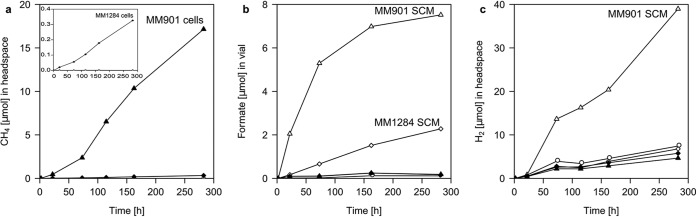
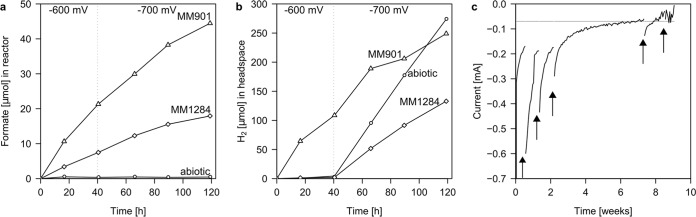
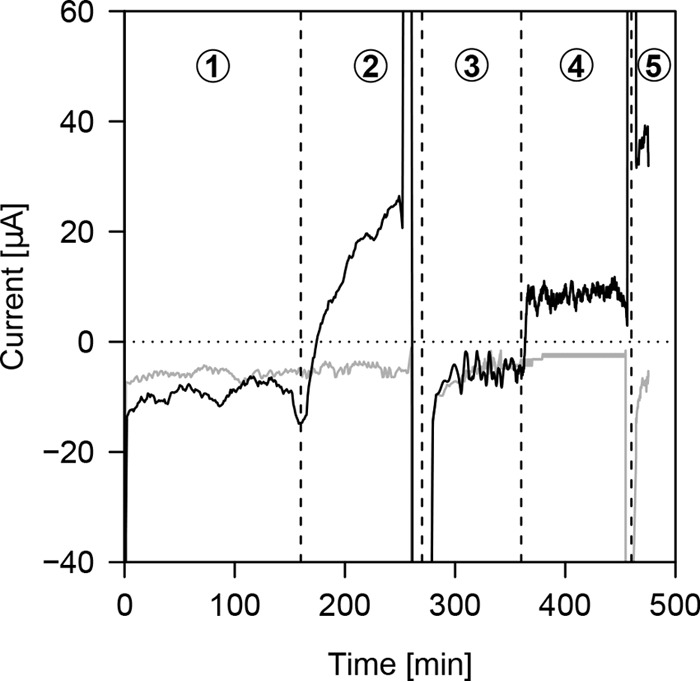
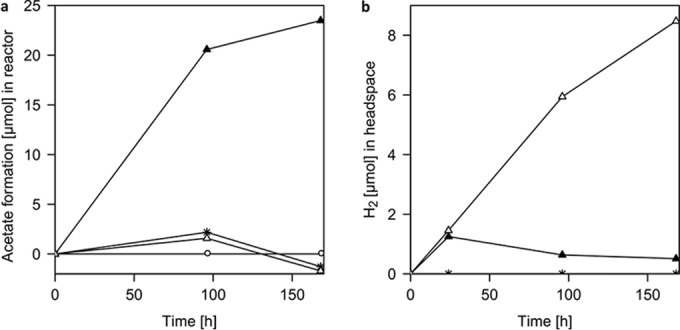
UNLABELLED: Direct, mediator-free transfer of electrons between a microbial cell and a solid phase in its surrounding environment has been suggested to be a widespread and ecologically significant process. The high rates of microbial electron uptake observed during microbially influenced corrosion of iron [Fe(0)] and during microbial electrosynthesis have been considered support for a direct electron uptake in these microbial processes. However, the underlying molecular mechanisms of direct electron uptake are unknown. We investigated the electron uptake characteristics of the Fe(0)-corroding and electromethanogenic archaeon Methanococcus maripaludis and discovered that free, surface-associated redox enzymes, such as hydrogenases and presumably formate dehydrogenases, are sufficient to mediate an apparent direct electron uptake. In genetic and biochemical experiments, we showed that these enzymes, which are released from cells during routine culturing, catalyze the formation of H2 or formate when sorbed to an appropriate redox-active surface. These low-molecular-weight products are rapidly consumed by M. maripaludis cells when present, thereby preventing their accumulation to any appreciable or even detectable level. Rates of H2 and formate formation by cell-free spent culture medium were sufficient to explain the observed rates of methane formation from Fe(0) and cathode-derived electrons by wild-type M. maripaludis as well as by a mutant strain carrying deletions in all catabolic hydrogenases. Our data collectively show that cell-derived free enzymes can mimic direct extracellular electron transfer during Fe(0) corrosion and microbial electrosynthesis and may represent an ecologically important but so far overlooked mechanism in biological electron transfer. IMPORTANCE: The intriguing trait of some microbial organisms to engage in direct electron transfer is thought to be widespread in nature. Consequently, direct uptake of electrons into microbial cells from solid surfaces is assumed to have a significant impact not only on fundamental microbial and biogeochemical processes but also on applied bioelectrochemical systems, such as microbial electrosynthesis and biocorrosion. This study provides a simple mechanistic explanation for frequently observed fast electron uptake kinetics in microbiological systems without a direct transfer: free, cell-derived enzymes can interact with cathodic surfaces and catalyze the formation of intermediates that are rapidly consumed by microbial cells. This electron transfer mechanism likely plays a significant role in various microbial electron transfer reactions in the environment.
Overview
The claims and statistics of this paper haven’t been checked yet.
Run the check — free, no account needed. It reads the open-access text and checks the sources it cites.
Integrity signals
Registry
Cites
Statistics
Figures
Verification
Claims the paper makes
The claims and statistics of this paper haven’t been checked yet.
Run the check — free, no account needed. It reads the open-access text and checks the sources it cites.
Claims other papers make about this one
Each is checked against this paper’s own text: does it say what the citing paper says it does?
The cited source says what the claim attributes to it.
In the citing paper
“Studies of microbes that grow on native iron and on electrodes suggest that side activities of extracellular enzymes might be able to substitute for hydrogenases (Deutzmann et al., 2015).”
From Serpentinization as the source of energy, electrons, organics, catalysts, nutrients and pH gradients for the origin of LUCA and life (2023) · cites this paper as Deutzmann et al., 2015
Self-check
Percentages, sums and reported differences re-computed from the paper’s own numbers.
The self-check needs the paper’s full text.
Citations
Cites
Extracellular electron transfer via microbial nanowires
Reguera, G., McCarthy, K. D., Mehta, T., Nicoll, J. S., Tuominen, M. T., & Lovley, D. R. (2005) · Nature · doi:10.1038/nature03661 · Cited by 2,645
Electricity Production by Geobacter sulfurreducens Attached to Electrodes
Bond, D. R., & Lovley, D. R. (2003) · Applied and Environmental Microbiology · doi:10.1128/aem.69.3.1548-1555.2003 · Cited by 2,261
Gorby, Y. A., Yanina, S., McLean, J. S., Rosso, K. M., Moyles, D., Dohnalkova, A., Beveridge, T. J., Chang, I. S., Kim, B. H., Kim, K. S., et al. (2006) · Proceedings of the National Academy of Sciences · doi:10.1073/pnas.0604517103 · Cited by 1,749
Microbial electrosynthesis — revisiting the electrical route for microbial production
Rabaey, K., & Rozendal, R. A. (2010) · Nature Reviews Microbiology · doi:10.1038/nrmicro2422 · Cited by 1,676
Rotaru, A., Shrestha, P. M., Liu, F., Shrestha, M., Shrestha, D., Embree, M., Zengler, K., Wardman, C., Nevin, K. P., & Lovley, D. R. (2013) · Energy & Environmental Science · doi:10.1039/c3ee42189a · Cited by 1,411
Direct Biological Conversion of Electrical Current into Methane by Electromethanogenesis
Cheng, S., Xing, D., Call, D. F., & Logan, B. E. (2009) · Environmental Science & Technology · doi:10.1021/es803531g · Cited by 1,193
Nevin, K. P., Woodard, T. L., Franks, A. E., Summers, Z. M., & Lovley, D. R. (2010) · mBio · doi:10.1128/mbio.00103-10 · Cited by 1,068
Summers, Z. M., Fogarty, H. E., Leang, C., Franks, A. E., Malvankar, N. S., & Lovley, D. R. (2010) · Science · doi:10.1126/science.1196526 · Cited by 1,019
Direct Interspecies Electron Transfer between Geobacter metallireducens and Methanosarcina barkeri
Rotaru, A., Shrestha, P. M., Liu, F., Markovaite, B., Chen, S., Nevin, K. P., & Lovley, D. R. (2014) · Applied and Environmental Microbiology · doi:10.1128/aem.00895-14 · Cited by 943
Corrosion of Iron by Sulfate-Reducing Bacteria: New Views of an Old Problem
Enning, D., & Garrelfs, J. (2013) · Applied and Environmental Microbiology · doi:10.1128/aem.02848-13 · Cited by 921
Research works printed but not linked: 1
- Tate R, III. 2002. Microbiology and enzymology of carbon and nitrogen cycling, p 227–248. In Burns RG, Dick RP (ed), Enzymes in the environment. Marcel Dekker, New York, NY.
Cited by
Sorted by citations
Items 201–300 of 380
Hou, R., Lu, S., Chen, S., Dou, W., & Liu, G. (2022) · Bioelectrochemistry · doi:10.1016/j.bioelechem.2022.108310 · Cited by 28
Hou, L., Cortez, R., Hagerman, M. E., Hu, Z., & Majumder, E. L. ‐. (2024) · Microbiology Spectrum · doi:10.1128/spectrum.01226-24 · Cited by 27
Darvishi, F., & Hiligsmann, S. (2017) · CRC Press eBooks · doi:10.1201/9781351246101 · Cited by 27
Li, S., Kim, M., Kong, D. S., Min, K., Wu, G., Cui, M., Kim, C., Oh, Y., Kim, S., Lee, S. Y., et al. (2023) · Chemical Engineering Journal · doi:10.1016/j.cej.2023.143785 · Cited by 26
Varnava, C. K., Persianis, P., Ieropoulos, I. A., & Tsipa, A. (2024) · Bioprocess and Biosystems Engineering · doi:10.1007/s00449-024-03016-1 · Cited by 26
Electrobiocorrosion by microbes without outer‐surface cytochromes
Holmes, D. E., Woodard, T. L., Smith, J. A., Musat, F., & Lovley, D. R. (2024) · mLife · doi:10.1002/mlf2.12111 · Cited by 26
Jin, Y., Li, J., Ueki, T., Zheng, B., Fan, Y., Yang, C., Li, Z., Wang, D., Xu, D., Gu, T., et al. (2023) · Journal of Material Science and Technology · doi:10.1016/j.jmst.2023.06.021 · Cited by 25
Xu, B., Li, Z., Jiang, Y., Chen, M., Chen, B., Xin, F., Dong, W., & Jiang, M. (2021) · Biotechnology Advances · doi:10.1016/j.biotechadv.2021.107810 · Cited by 24
Zhao, T. K., Xie, B., Yi, Y., Zang, Y., & Liu, H. (2022) · The Science of The Total Environment · doi:10.1016/j.scitotenv.2022.159185 · Cited by 24
Dominant factors analyses and challenges of anaerobic digestion under cold environments
Wang, H., & Zhou, Q. (2023) · Journal of Environmental Management · doi:10.1016/j.jenvman.2023.119378 · Cited by 26
Dubrawski, K. L., Shao, X., Milton, R. D., Deutzmann, J. S., Spormann, A. M., & Criddle, C. S. (2019) · ACS Energy Letters · doi:10.1021/acsenergylett.9b02203 · Cited by 23
Self-citationModeling Microbial Electrosynthesis
Korth, B., & Harnisch, F. (2017) · Advances in biochemical engineering, biotechnology · doi:10.1007/10_2017_35 · Cited by 23
Carbon–Metal Bonds: Rare and Primordial in Metabolism
Martin, W. F. (2019) · Trends in Biochemical Sciences · doi:10.1016/j.tibs.2019.04.010 · Cited by 23
Tejedor‐Sanz, S., Fernández-Labrador, P., Manchón, C., & Esteve‐Núñez, A. (2020) · Electrochemistry Communications · doi:10.1016/j.elecom.2020.106759 · Cited by 23
Xu, Z., Wang, W., Liu, Y., Zhao, Y., Zhang, X., & Ban, Y. (2023) · Bioresource Technology · doi:10.1016/j.biortech.2023.129516 · Cited by 22
Microbial electromethanogenesis powered by curtailed renewable electricity
Deutzmann, J. S., Kracke, F., & Spormann, A. M. (2023) · Cell Reports Physical Science · doi:10.1016/j.xcrp.2023.101515 · Cited by 22
Self-citationYang, Z.-C., Cheng, Y.-Y., Zhang, F., Li, B., Mu, Y., Li, W., & Yu, H. (2016) · Environmental Science & Technology Letters · doi:10.1021/acs.estlett.6b00112 · Cited by 23
Membrane permeabilization by conjugated oligoelectrolytes accelerates whole-cell catalysis
Catania, C., Ajo-Franklin, C. M., & Bazan, G. C. (2016) · RSC Advances · doi:10.1039/c6ra23083k · Cited by 22
Electrophysiology of the Facultative Autotrophic Bacterium Desulfosporosinus orientis
Agostino, V., Lenić, A., Bardl, B., Rizzotto, V., An, P. N. T., Blank, L. M., & Rosenbaum, M. A. (2020) · Frontiers in Bioengineering and Biotechnology · doi:10.3389/fbioe.2020.00457 · Cited by 22
Solid electron acceptor effect on biocatalyst activity in treating azo dye based wastewater
Sreelatha, S., Velvizhi, G., Reddy, C. N., Modestra, J. A., & Mohan, S. V. (2015) · RSC Advances · doi:10.1039/c5ra15648c · Cited by 21
Tejedor‐Sanz, S., Li, S., Kundu, B. B., & Ajo-Franklin, C. M. (2023) · Frontiers in Microbiology · doi:10.3389/fmicb.2023.1298023 · Cited by 21
Menikea, K. K., Kyprianou, A., Samanides, C. G., Georgiou, S. G., Koutsokeras, L. E., Constantinides, G., & Vyrides, I. (2020) · Journal of Cleaner Production · doi:10.1016/j.jclepro.2020.121860 · Cited by 21
Hou, J., Huang, L., Zhou, P., Qian, Y., & Li, N. (2019) · Chemosphere · doi:10.1016/j.chemosphere.2019.125317 · Cited by 20
Perona-Vico, E., Blasco-Gómez, R., Colprim, J., Puig, S., & Bañeras, L. (2019) · PLoS ONE · doi:10.1371/journal.pone.0215029 · Cited by 20
El-Meihy, R. M., Shi, X., Tremblay, P., & Zhang, T. (2020) · Chemosphere · doi:10.1016/j.chemosphere.2020.128281 · Cited by 20
A Win–Loss Interaction on Fe0 Between Methanogens and Acetogens From a Climate Lake
Palacios, P. A., Francis, W. R., & Rotaru, A. (2021) · Frontiers in Microbiology · doi:10.3389/fmicb.2021.638282 · Cited by 21
EAB—Electroactive Biofilm: A Biotechnological Resource
Pentassuglia, S., Agostino, V., & Tommasi, T. (2017) · Elsevier eBooks · doi:10.1016/b978-0-12-409547-2.13461-4 · Cited by 20
Electrochemistry of R. palustris Azul during phototrophic growth
Guardia, A. E., Beligni, M. V., Cortez, N., & Busalmen, J. P. (2020) · Electrochimica Acta · doi:10.1016/j.electacta.2020.136757 · Cited by 19
Electron transfer of extremophiles in bioelectrochemical systems
Edel, M., Philipp, L.-A., Lapp, C. J., Reiner, J. E., & Gescher, J. (2022) · Extremophiles · doi:10.1007/s00792-022-01279-8 · Cited by 19
Wang, D., Ueki, T., Ma, P., Xu, D., & Lovley, D. R. (2024) · mLife · doi:10.1002/mlf2.12133 · Cited by 19
Ткачук, Н. В., Zelena, L. B., Mazur, P., Лукаш, О. В., & Лукаш, О. В. (2020) · Ecological Questions · doi:10.12775/eq.2020.016 · Cited by 19
Iron corrosion by methanogenic archaea characterized by stable isotope effects and crust mineralogy
Tamisier, M., Schmidt, M., Vogt, C., Kümmel, S., Stryhanyuk, H., Musat, N., Richnow, H. H., & Musat, F. (2021) · Environmental Microbiology · doi:10.1111/1462-2920.15658 · Cited by 19
Microbial Electrosynthesis I: Pure and Defined Mixed Culture Engineering
Rosenbaum, M. A., Berger, C., Schmitz, S., & Uhlig, R. (2017) · Advances in biochemical engineering, biotechnology · doi:10.1007/10_2017_17 · Cited by 19
Liu, L., & Pant, D. (2023) · Sustainable Energy & Fuels · doi:10.1039/d3se00876b · Cited by 18
Jangir, Y., Karbelkar, A. A., Beedle, N. M., Zinke, L., Wanger, G., Anderson, C. M., Reese, B. K., Amend, J. P., & El‐Naggar, M. Y. (2019) · Frontiers in Energy Research · doi:10.3389/fenrg.2019.00121 · Cited by 19
Coupling of microbial electrosynthesis with anaerobic digestion for waste valorization
Aryal, N., Ghimire, N., & Bajracharya, S. (2020) · Advances in bioenergy · doi:10.1016/bs.aibe.2020.04.003 · Cited by 18
Krohn, I., Bergmann, L., Qi, M., Indenbirken, D., Han, Y., Pérez-García, P., Katzowitsch, E., Hägele, B., Lübcke, T., Siry, C. W., et al. (2021) · Frontiers in Microbiology · doi:10.3389/fmicb.2021.722259 · Cited by 17
Chu, X., Ren, Y., Qu, G., Ren, N., Xie, R., Cheng, M., Chen, X., Wang, Z., & Yuan, Y. (2024) · Journal of environmental chemical engineering · doi:10.1016/j.jece.2024.112088 · Cited by 17
Li, H., Xu, Y., Dong, H., Min, J., Xu, H., Sun, D., Liu, X., Dang, Y., Qiu, B., Mennella, T., et al. (2024) · Chemical Engineering Journal · doi:10.1016/j.cej.2024.153389 · Cited by 17
Dai, H., Yang, H., Liu, X., Song, X., & Liang, Z. (2018) · Acta Metallurgica Sinica (English Letters) · doi:10.1007/s40195-018-0785-6 · Cited by 17
Genetic and metabolic engineering of Methanococcus spp
Li, J., Akinyemi, T. S., Shao, N., Chen, C., Dong, X., Liu, Y., & Whitman, W. B. (2022) · Current Research in Biotechnology · doi:10.1016/j.crbiot.2022.11.002 · Cited by 17
Sreelatha, S., Velvizhi, G., Kumar, A. N., & Mohan, S. V. (2016) · Bioresource Technology · doi:10.1016/j.biortech.2016.03.087 · Cited by 16
Baek, G., & Logan, B. E. (2023) · Water Research · doi:10.1016/j.watres.2023.120657 · Cited by 16
Llorente, M. V., Tejedor‐Sanz, S., Berná, A., Manchón, C., & Esteve‐Núñez, A. (2024) · Microbial Biotechnology · doi:10.1111/1751-7915.14383 · Cited by 16
Mei, N., Tremblay, P., Wu, Y., & Zhang, T. (2024) · The Science of The Total Environment · doi:10.1016/j.scitotenv.2024.171384 · Cited by 16
A variety of hydrogenotrophic enrichment cultures catalyse cathodic reactions
Alam, S. S., Persson, F., Wilén, B., Hermansson, M., & Modin, O. (2019) · Scientific Reports · doi:10.1038/s41598-018-38006-3 · Cited by 16
Abadikhah, M., de Celis, M., Persson, F., Wilén, B., Farewell, A., & Modin, O. (2022) · Frontiers in Microbiology · doi:10.3389/fmicb.2022.959211 · Cited by 17
Wired for energy: Electromethanogenesis redefining anaerobic digestion
Pandit, S., Pandit, C., Mathuriya, A. S., Chatterjee, S., Jadhav, D. A., Yadav, K. K., & Khalid, M. (2024) · Process Safety and Environmental Protection · doi:10.1016/j.psep.2024.03.021 · Cited by 15
Rouvre, I., & Basseguy, R. (2016) · Corrosion Science · doi:10.1016/j.corsci.2016.05.005 · Cited by 15
The roles of biomolecules in corrosion induction and inhibition of corrosion: a possible insight
Karn, S. K., Bhambri, A., Jenkinson, I. R., Duan, J., & Kumar, A. (2020) · Corrosion Reviews · doi:10.1515/corrrev-2019-0111 · Cited by 15
Li, K., Hu, N., Wang, L., Zhang, A., Bai, Y., Lu, S., Tao, Q., & Feng, F. (2025) · International Journal of Hydrogen Energy · doi:10.1016/j.ijhydene.2025.01.226 · Cited by 14
Brown, R. K., Schmidt, U. C., Harnisch, F., & Schröder, U. (2017) · Journal of Power Sources · doi:10.1016/j.jpowsour.2017.01.076 · Cited by 14
Chatzipanagiotou, K., Soekhoe, V., Jourdin, L., Buisman, C. J. N., Bitter, J. H., & Strik, D. P. B. T. B. (2021) · ChemPlusChem · doi:10.1002/cplu.202100119 · Cited by 14
The microbiology of Power-to-X applications
Logroño, W., Kleinsteuber, S., Kretzschmar, J., Harnisch, F., Vrieze, J. D., & Nikolausz, M. (2023) · FEMS Microbiology Reviews · doi:10.1093/femsre/fuad013 · Cited by 18
Moghiseh, Z., Xiao, Y., Kalantar, M., Barati, B., & Ghahrchi, M. (2023) · 3 Biotech · doi:10.1007/s13205-023-03539-6 · Cited by 14
Impact of Antibiotics Pretreatment on Bioelectrochemical CH4 Production
Xu, H., Giwa, A. S., Wang, C., Chang, F., Yuan, Q., Wang, K., & Holmes, D. E. (2017) · ACS Sustainable Chemistry & Engineering · doi:10.1021/acssuschemeng.7b00923 · Cited by 15
de Smit, S. M., van Mameren, T. D., van Zwet, K., van Veelen, H. P. J., Gagliano, M. C., Strik, D. P. B. T. B., & Bitter, J. H. (2024) · Bioelectrochemistry · doi:10.1016/j.bioelechem.2024.108724 · Cited by 14
Ali, O. A., Aragon, E., Fahs, A., Davidson, S., Ollivier, B., & Hirschler‐Réa, A. (2020) · International Biodeterioration & Biodegradation · doi:10.1016/j.ibiod.2020.105056 · Cited by 13
Relevance of extracellular electron uptake mechanisms for electromethanogenesis applications
Palacios, P. A., Philips, J., Bentien, A., & Kofoed, M. V. W. (2024) · Biotechnology Advances · doi:10.1016/j.biotechadv.2024.108369 · Cited by 14
Cai, Z., Wei, B., Xu, J., Yu, C., & Sun, C. (2024) · Corrosion Science · doi:10.1016/j.corsci.2024.112341 · Cited by 12
Mayer, F., Sabel-Becker, B., & Holtmann, D. (2022) · Microorganisms · doi:10.3390/microorganisms10112237 · Cited by 12
Microbially influenced corrosion and rust tubercle formation on sheet piles in freshwater systems
Fiskal, A., Shuster, J., Fischer, S., Joshi, P., Reddy, L. R., Wulf, S., Kappler, A. A., Fischer, H., Herrig, I., & Meier, J. (2023) · Environmental Microbiology · doi:10.1111/1462-2920.16393 · Cited by 12
Pillot, G., Ali, O. A., Davidson, S., Shintu, L., Godfroy, A., Combet-Blanc, Y., Bonin, P., & Liebgott, P.-P. (2021) · Scientific Reports · doi:10.1038/s41598-021-94135-2 · Cited by 14
Wu, J., Zhuang, X., Zhao, R., & Wang, Y. (2024) · Environmental Research · doi:10.1016/j.envres.2024.119765 · Cited by 11
Adaptation of a methanogen to Fe0 corrosion via direct contact
Kawaichi, S., Kotoky, R., Fiutowski, J., & Rotaru, A. (2024) · npj Biofilms and Microbiomes · doi:10.1038/s41522-024-00574-w · Cited by 11
Insights into the various mechanisms by which Shewanella spp. induce and inhibit steel corrosion
Philips, J., Procópio, L., & Marshall, I. P. G. (2023) · npj Materials Degradation · doi:10.1038/s41529-023-00416-8 · Cited by 10
Kobayashi, H., Fu, Q., Maeda, H., & Satô, K. (2017) · Genome Announcements · doi:10.1128/genomea.00022-17 · Cited by 10
Pillot, G., Davidson, S., Shintu, L., Tanet, L., Combet-Blanc, Y., Godfroy, A., Bonin, P., & Liebgott, P.-P. (2021) · Microorganisms · doi:10.3390/microorganisms9122475 · Cited by 10
Bañeras, L., Sánchez, Á. C., Perona-Vico, E., Lopez-Abelarias, M., Puig, S., & Wever, H. D. (2024) · Bioresource Technology Reports · doi:10.1016/j.biteb.2024.101766 · Cited by 9
Das, S., Das, S., Ghangrekar, M. M., & Min, B. (2025) · Journal of environmental chemical engineering · doi:10.1016/j.jece.2025.119221 · Cited by 9
Cecchi, G., Ceci, A., Marescotti, P., Persiani, A. M., Piazza, S. D., Ballirano, P., Mariotti, M. G., & Zotti, M. (2018) · Geomicrobiology Journal · doi:10.1080/01490451.2018.1429507 · Cited by 9
Kong, D. S., Kim, M., Li, S., Mutyala, S., Jang, M., Kim, C., & Kim, J. R. (2023) · Fermentation · doi:10.3390/fermentation9030233 · Cited by 9
Gao, Y., Trueman, B. F., Stoddart, A. K., & Gagnon, G. A. (2018) · ACS Omega · doi:10.1021/acsomega.8b02363 · Cited by 8
Kobayashi, H., Toyoda, R., Miyamoto, H., Nakasugi, Y., Momoi, Y., Nakamura, K., Fu, Q., Maeda, H., Goda, T., & Satô, K. (2021) · Archaea · doi:10.1155/2021/8865133 · Cited by 8
Jack, T. R. (2021) · Failure Analysis and Prevention · doi:10.31399/asm.hb.v11.a0006788 · Cited by 8
Mehanna, M., Rouvre, I., Délia, M.-L., Féron, D., Bergel, A., & Basseguy, R. (2016) · Bioelectrochemistry · doi:10.1016/j.bioelechem.2016.04.005 · Cited by 8
Enzmann, F., Mayer, F., & Holtmann, D. (2019) · International Journal of Hydrogen Energy · doi:10.1016/j.ijhydene.2019.07.039 · Cited by 8
Yang, X., Xu, X., & Hu, D. (2020) · Ecological Modelling · doi:10.1016/j.ecolmodel.2020.109270 · Cited by 8
Zhang, J., Liu, H., Cao, Q., Zhang, C., Zhang, M., Cui, M.-H., Zhang, Y., Fu, B., & Liu, H. (2025) · Advanced Science · doi:10.1002/advs.202513340 · Cited by 7
Redox chemistry of early Earth and the origin of life
Moldogazieva, N. T., Terentiev, A. A., Mokhosoev, I. M., & Astakhov, D. V. (2026) · Communications Chemistry · doi:10.1038/s42004-026-01969-w · Cited by 9
Corrosion monitoring in microbial environments
Cristiani, P., & Perboni, G. (2021) · Elsevier eBooks · doi:10.1016/b978-0-08-103003-5.00015-1 · Cited by 7
Zhen, G., Zhang, Z., Wang, J., Cai, T., Wang, N., Zhuo, G., & Lü, X. (2024) · Process Safety and Environmental Protection · doi:10.1016/j.psep.2024.06.102 · Cited by 7
Kuruvinashetti, K., & Kornienko, N. (2021) · iScience · doi:10.1016/j.isci.2021.103049 · Cited by 7
Microbial Bioelectricity Generation and Product Electrosynthesis
Pisciotta, J. M., & Blessing, S. (2022) · Springer eBooks · doi:10.1007/978-981-16-5214-1_18 · Cited by 7
A comparative study of bioelectrochemical systems with established anaerobic/aerobic processes
Dey, R., Maarisetty, D., & Baral, S. S. (2022) · Biomass Conversion and Biorefinery · doi:10.1007/s13399-021-02258-3 · Cited by 7
Electroactive haloalkaliphiles exhibit exceptional tolerance to free ammonia
Ledezma, P., Lü, Y., & Freguia, S. (2017) · FEMS Microbiology Letters · doi:10.1093/femsle/fnx260 · Cited by 7
Strąpoć, D. (2017) · Encyclopedia of earth sciences series/Encyclopedia of earth sciences · doi:10.1007/978-3-319-39193-9_166-1 · Cited by 7
Gu, J., Cui, Z., Wu, Y., Sun, J., Zheng, X., Long, M., & Chen, Y. (2025) · Chemical Engineering Journal · doi:10.1016/j.cej.2025.167282 · Cited by 6
Extracellular electron transfer: From early life to modern biogeochemistry and applications
Lovley, D. R. (2026) · Advances in microbial physiology/Advances in Microbial Physiology · doi:10.1016/bs.ampbs.2026.02.004 · Cited by 6
Detection and Monitoring of Corrosive Oilfield Microorganisms via Novel Biomarker Technologies
Lahme, S., Mand, J., Oparaodu, K. O., & Enning, D. (2022) · Abu Dhabi International Petroleum Exhibition & Conference (ADIPEC) · doi:10.2118/211238-ms · Cited by 6
Prediction of bacterial functional diversity in clay microcosms
Grigoryan, A. A., Jalique, D. R., Stroes-Gascoyne, S., Wolfaardt, G. M., Keech, P. G., & Korber, D. R. (2021) · Heliyon · doi:10.1016/j.heliyon.2021.e08131 · Cited by 6
Role of electroactive biofilms in governing the performance of microbial electrochemical system
Surti, P. V., Arkatkar, A., Kailasa, S. K., & Mungray, A. K. (2022) · Elsevier eBooks · doi:10.1016/b978-0-323-90765-1.00004-6 · Cited by 6
Power to Gas Systems Integrated with Anaerobic Digesters and Gasification Systems
Leonzio, G. (2019) · Waste and Biomass Valorization · doi:10.1007/s12649-019-00914-4 · Cited by 6
Electroactive biofilm and electron transfer in MES
Lahiri, D., Nag, M., Ghosh, S., Dey, A., & Ray, R. R. (2022) · Elsevier eBooks · doi:10.1016/b978-0-323-90765-1.00006-x · Cited by 6
Methane Production at Biocathodes
Liu, D., Zeppilli, M., Villano, M., Buisman, C. J. N., & ter Heijne, A. (2020) · Wiley eBooks · doi:10.1002/9783527343829.ch5 · Cited by 6
Das, S., Chaitanya, N. K., Noori, M., Hellgardt, K., & Min, B. (2025) · Renewable and Sustainable Energy Reviews · doi:10.1016/j.rser.2025.116674 · Cited by 5
Li, Y., & Dong, R. (2024) · Journal of environmental chemical engineering · doi:10.1016/j.jece.2024.114920 · Cited by 5
Sandfeld, T., Grøn, L. V., Munoz, L., Meyer, R. L., Koren, K., & Philips, J. (2024) · PLoS ONE · doi:10.1371/journal.pone.0293734 · Cited by 5
Chandrasatheesh, C., & Jayapriya, J. (2019) · Wiley eBooks · doi:10.1002/9781119611103.ch5 · Cited by 5
Metadata
- Authors
- Deutzmann, J. S., Sahin, M., & Spormann, A. M.
- Affiliations
- Stanford University (US)
- Department of Civil and Environmental Engineering, Stanford University, Stanford, California, USA
- Corresponding author
- Spormann, Alfred M.
- Venue
- mBio
- Publisher
- American Society for Microbiology
- Published
- 2015-05
- Volume
- 6
- Issue
- 2
- ISSN
- 2150-7511 (ISSN-L)
- 2161-2129
- PMC
- PMC4453541
- OpenAlex
- W2141860790
- Cited by
- 379
- References
- 66
- Citations by year
- 2026: 18 · 2025: 21 · 2024: 29 · 2023: 31 · 2022: 39 · 2021: 29 · 2020: 47 · 2019: 43 · 2018: 41 · 2017: 40 · 2016: 31 · 2015: 10
- FWCI
- 29.27
- Type
- journal article
- Language
- en
- Open access
- gold
- doi.org
- Licence
- Locations
- mBio (publishedVersion, cc-by-nc-sa)
- Europe PMC (PubMed Central) (publishedVersion, cc-by-nc-sa)
- PubMed Central (publishedVersion, cc-by-nc-sa)
- PubMed (publishedVersion)
- DOAJ (DOAJ: Directory of Open Access Journals) (submittedVersion, cc-by-sa)
- Topics
- Physical Sciences › Environmental Science › Environmental Engineering › Microbial Fuel Cells and Bioremediation
- Physical Sciences › Materials Science › Materials Chemistry › Corrosion Behavior and Inhibition
- Life Sciences › Biochemistry, Genetics and Molecular Biology › Molecular Biology › Microbial metabolism and enzyme function
- Keywords
- extracellular enzymes, direct electron transfer, microbiologically influenced corrosion, microbial electrosynthesis, Methanococcus maripaludis, iron corrosion, hydrogenase, formate dehydrogenase, hydrogen production, methane production, bioelectrochemical systems
- MeSH terms
- Corrosion, Electron Transport, Formates, Hydrogen, Iron, Methane, Oxidoreductases, Methanococcus
About these checks
Registry, retraction, Cites and statistics results are computed, not judged, with one exception: a printed reference that no index lists is read once by a model before it counts as a citation error. Claims are extracted by a model and kept only when their quote appears verbatim in the text; each cited source is then checked, with a model’s help, for whether it says what the claim relies on. Those verdicts can be wrong — read the claim’s quote and the cited source before relying on one.
Statistics and arithmetic are recomputed, not judged.
Confidence bands are shown only for fields calibrated on our annotated test set. None is calibrated yet, so no band is shown.
What counts as a claim ›How we measure confidence ›How we check this ›
Are you an author, or do you see a problem with this page? Request a review
