

The DOI matches its Crossref record; 57 of the 58 references it cites were found in a registry or an index.
RNAs Containing Modified Nucleotides Fail To Trigger RIG-I Conformational Changes for Innate Immune Signaling
Open accessAbstract
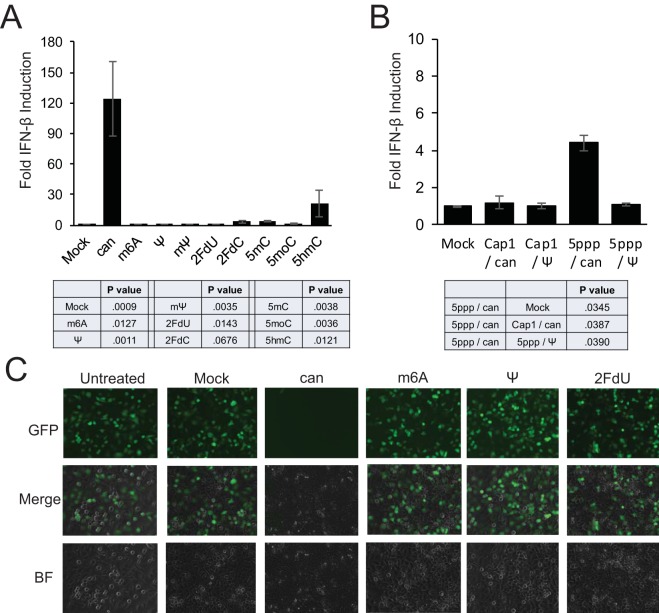
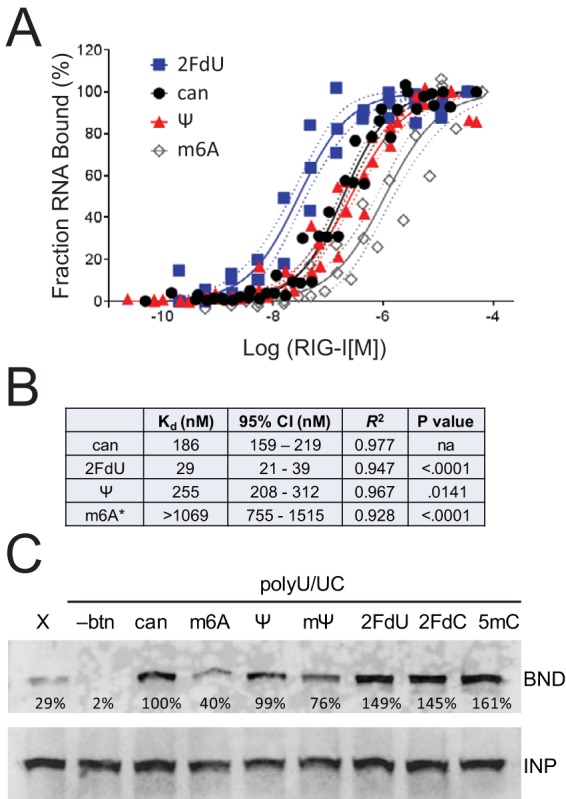
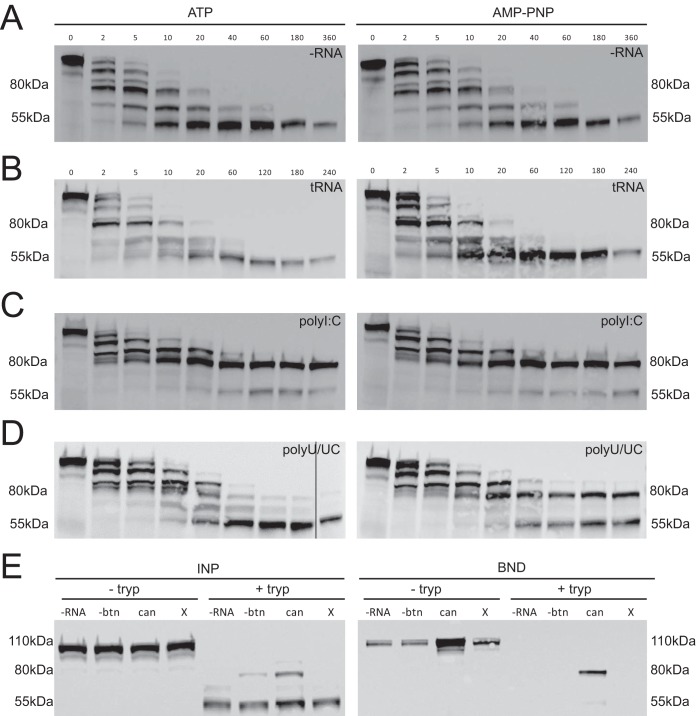
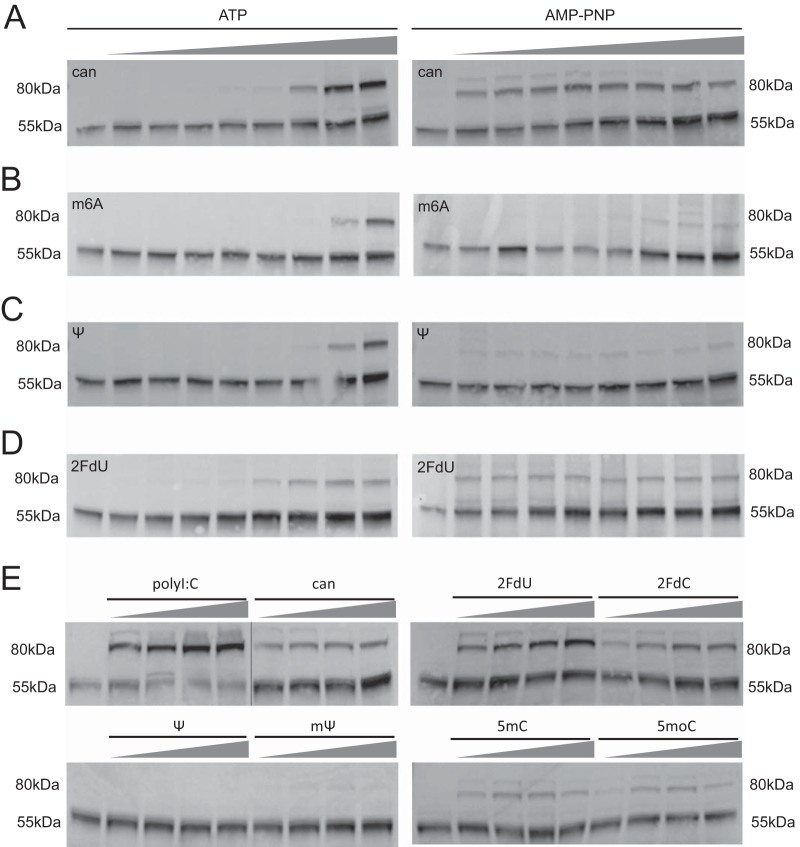
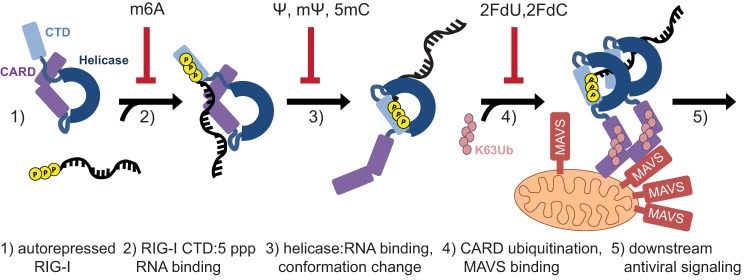
UNLABELLED: Invading pathogen nucleic acids are recognized and bound by cytoplasmic (retinoic acid-inducible gene I [RIG-I]-like) and membrane-bound (Toll-like) pattern recognition receptors to activate innate immune signaling. Modified nucleotides, when present in RNA molecules, diminish the magnitude of these signaling responses. However, mechanisms explaining the blunted signaling have not been elucidated. In this study, we used several independent biological assays, including inhibition of virus replication, RIG-I:RNA binding assays, and limited trypsin digestion of RIG-I:RNA complexes, to begin to understand how RNAs containing modified nucleotides avoid or suppress innate immune signaling. The experiments were based on a model innate immune activating RNA molecule, the polyU/UC RNA domain of hepatitis C virus, which was transcribed in vitro with canonical nucleotides or with one of eight modified nucleotides. The approach revealed signature assay responses associated with individual modified nucleotides or classes of modified nucleotides. For example, while both N-6-methyladenosine (m6A) and pseudouridine nucleotides correlate with diminished signaling, RNA containing m6A modifications bound RIG-I poorly, while RNA containing pseudouridine bound RIG-I with high affinity but failed to trigger the canonical RIG-I conformational changes associated with robust signaling. These data advance understanding of RNA-mediated innate immune signaling, with additional relevance for applying nucleotide modifications to RNA therapeutics. IMPORTANCE: The innate immune system provides the first response to virus infections and must distinguish between host and pathogen nucleic acids to mount a protective immune response without activating autoimmune responses. While the presence of nucleotide modifications in RNA is known to correlate with diminished innate immune signaling, the underlying mechanisms have not been explored. The data reported here are important for defining mechanistic details to explain signaling suppression by RNAs containing modified nucleotides. The results suggest that RNAs containing modified nucleotides interrupt signaling at early steps of the RIG-I-like innate immune activation pathway and also that nucleotide modifications with similar chemical structures can be organized into classes that suppress or evade innate immune signaling steps. These data contribute to defining the molecular basis for innate immune signaling suppression by RNAs containing modified nucleotides. The results have important implications for designing therapeutic RNAs that evade innate immune detection.
Overview
The claims and statistics of this paper haven’t been checked yet.
Run the check — free, no account needed. It reads the open-access text and checks the sources it cites.
Integrity signals
Registry
Cites
Statistics
Figures
Verification
Claims the paper makes
The claims and statistics of this paper haven’t been checked yet.
Run the check — free, no account needed. It reads the open-access text and checks the sources it cites.
Claims other papers make about this one
Each is checked against this paper’s own text: does it say what the citing paper says it does?
In the citing paper
“by incorporating naturally occurring modified nucleotides into the IVT mRNA, its innate immune activity could be drastically reduced [6,7]”
From The dawn of mRNA vaccines: the COVID-19 case (2021) · cites this paper as [7]
Self-check
Percentages, sums and reported differences re-computed from the paper’s own numbers.
The self-check needs the paper’s full text.
Citations
Cites
Karikó, K., Buckstein, M., Ni, H., & Weissman, D. (2005) · Immunity · doi:10.1016/j.immuni.2005.06.008 · Cited by 2,728
Warren, L., Manos, P. D., Ahfeldt, T., Loh, Y.-H., Li, H., Lau, F., Ebina, W., Mandal, P. K., Smith, Z. D., Meissner, A., et al. (2010) · Cell Stem Cell · doi:10.1016/j.stem.2010.08.012 · Cited by 2,662
5'-Triphosphate RNA Is the Ligand for RIG-I
Hornung, V., Ellegast, J., Kim, S., Brzózka, K., Jung, A., Kato, H., Poeck, H., Akira, S., Conzelmann, K.-K., Schlee, M., et al. (2006) · Science · doi:10.1126/science.1132505 · Cited by 2,474
RIG-I-mediated antiviral responses to single-stranded RNA bearing 5’-phosphates
Pichlmair, A., Schulz, O., Tan, C. P., Näslund, T. I., Liljeström, P., Weber, F., & Reis e Sousa, C. (2006) · Science · doi:10.1126/science.1132998 · Cited by 2,210
TRIM25 RING-finger E3 ubiquitin ligase is essential for RIG-I-mediated antiviral activity
Gack, M. U., Shin, Y. C., Joo, C.-H., Urano, T., Liang, C., Sun, L., Takeuchi, O., Akira, S., Chen, Z. J., Inoue, S., et al. (2007) · Nature · doi:10.1038/nature05732 · Cited by 1,683
Widespread occurrence of 5-methylcytosine in human coding and non-coding RNA
Squires, J. E., Patel, H. R., Nousch, M., Sibbritt, T., Humphreys, D. T., Parker, B. J., Suter, C. M., & Preiß, T. (2012) · Nucleic Acids Research · doi:10.1093/nar/gks144 · Cited by 1,033
MODOMICS: a database of RNA modification pathways—2013 update
Machnicka, M. A., Milanowska, K., Oglou, O. O., Purta, E., Kurkowska, M., Olchowik, A., Januszewski, W., Kalinowski, S., Dunin-Horkawicz, S., Rother, K. M., et al. (2012) · Nucleic Acids Research · doi:10.1093/nar/gks1007 · Cited by 1,003
2′-O methylation of the viral mRNA cap evades host restriction by IFIT family members
Daffis, S., Szretter, K. J., Schriewer, J. M., Li, J., Youn, S., Errett, J. S., Lin, T., Schneller, S. W., Züst, R., Dong, H., et al. (2010) · Nature · doi:10.1038/nature09489 · Cited by 910
Sumpter, R., Loo, Y., Foy, E. M., Li, K., Yoneyama, M., Fujita, T., Lemon, S. M., & Gale, M. (2005) · Journal of Virology · doi:10.1128/jvi.79.5.2689-2699.2005 · Cited by 900
Karikó, K., Muramatsu, H., Ludwig, J., & Weissman, D. (2011) · Nucleic Acids Research · doi:10.1093/nar/gkr695 · Cited by 898
Züst, R., Cervantes-Barragan, L., Habjan, M., Maier, R., Neuman, B. W., Ziebuhr, J., Szretter, K. J., Baker, S. C., Barchet, W., Diamond, M. S., et al. (2011) · Nature Immunology · doi:10.1038/ni.1979 · Cited by 811
Innate immunity induced by composition-dependent RIG-I recognition of hepatitis C virus RNA
Saito, T., Owen, D. M., Jiang, F., Marcotrigiano, J., & Gale, M. (2008) · Nature · doi:10.1038/nature07106 · Cited by 737
Self-citationStructural Basis for the Activation of Innate Immune Pattern-Recognition Receptor RIG-I by Viral RNA
Kowalinski, E., Lunardi, T., McCarthy, A. A., Louber, J., Brunel, J., Grigorov, B., Gerlier, D., & Cusack, S. (2011) · Cell · doi:10.1016/j.cell.2011.09.039 · Cited by 707
Phosphorothioates, Essential Components of Therapeutic Oligonucleotides
Eckstein, F. (2014) · Nucleic Acid Therapeutics · doi:10.1089/nat.2014.0506 · Cited by 684
Zeng, W., Sun, L., Jiang, X., Chen, X., Hou, F., Adhikari, A., Xu, M., & Chen, Z. J. (2010) · Cell · doi:10.1016/j.cell.2010.03.029 · Cited by 613
Antiviral immunity via RIG-I-mediated recognition of RNA bearing 5'-diphosphates
Goubau, D., Schlee, M., Deddouche, S., Pruijssers, A. J., Zillinger, T., Goldeck, M., Schuberth, C., Van der Veen, A. G., Fujimura, T., Rehwinkel, J., et al. (2014) · Nature · doi:10.1038/nature13590 · Cited by 557
Nonself RNA-Sensing Mechanism of RIG-I Helicase and Activation of Antiviral Immune Responses
Takahasi, K., Yoneyama, M., Nishihori, T., Hirai, R., Kumeta, H., Narita, R., Gale, M., Inagaki, F., & Fujita, T. (2008) · Molecular Cell · doi:10.1016/j.molcel.2007.11.028 · Cited by 474
Structural basis of RNA recognition and activation by innate immune receptor RIG-I
Jiang, F., Ramanathan, A., Miller, M. T., Tang, G., Gale, M., Patel, S. S., & Marcotrigiano, J. (2011) · Nature · doi:10.1038/nature10537 · Cited by 439
Self-citation5′-triphosphate RNA requires base-paired structures to activate antiviral signaling via RIG-I
Schmidt, A., Schwerd, T., Hamm, W., Hellmuth, J. C., Cui, S., Wenzel, M., Hoffmann, F. S., Michallet, M.-C., Besch, R., Hopfner, K.-P., et al. (2009) · Proceedings of the National Academy of Sciences · doi:10.1073/pnas.0900971106 · Cited by 398
RNA Interference (RNAi)-Based Therapeutics: Delivering on the Promise?
Bobbin, M. L., & Rossi, J. J. (2016) · The Annual Review of Pharmacology and Toxicology · doi:10.1146/annurev-pharmtox-010715-103633 · Cited by 359
Devarkar, S. C., Wang, C., Miller, M. T., Ramanathan, A., Jiang, F., Khan, A. G., Patel, S. S., & Marcotrigiano, J. (2016) · Proceedings of the National Academy of Sciences · doi:10.1073/pnas.1515152113 · Cited by 357
Self-citationSchuberth-Wagner, C., Ludwig, J., Bruder, A. K., Herzner, A., Zillinger, T., Goldeck, M., Schmidt, T., Schmid-Burgk, J. L., Kerber, R., Wolter, S., et al. (2015) · Immunity · doi:10.1016/j.immuni.2015.06.015 · Cited by 311
Schonborn, J., Oberstraβ, J., Breyel, E., Tittgen, J., Schumacher, J., & Lukacs, N. (1991) · Nucleic Acids Research · doi:10.1093/nar/19.11.2993 · Cited by 303
Krug, R. M., Morgan, M. A., & Shatkin, A. J. (1976) · Journal of Virology · doi:10.1128/jvi.20.1.45-53.1976 · Cited by 289
A mutant T7 RNA polymerase as a DNA polymerase.
Sousa, R., & Padilla, R. M. (1995) · The EMBO Journal · doi:10.1002/j.1460-2075.1995.tb00140.x · Cited by 288
RIG-I Forms Signaling-Competent Filaments in an ATP-Dependent, Ubiquitin-Independent Manner
Peisley, A., Wu, B., Yao, H., Walz, T., & Hur, S. (2013) · Molecular Cell · doi:10.1016/j.molcel.2013.07.024 · Cited by 236
N6-methyl-adenosine modification in messenger and long non-coding RNA
Pan, T. (2013) · Trends in Biochemical Sciences · doi:10.1016/j.tibs.2012.12.006 · Cited by 208
Localization of N6-methyladenosine in the Rous sarcoma virus genome
BEEMON, K. L., & Keith, J. M. (1977) · Journal of Molecular Biology · doi:10.1016/0022-2836(77)90047-x · Cited by 179
Kinetic mechanism for viral dsRNA length discrimination by MDA5 filaments
Peisley, A., Jo, M. H., Lin, C., Wu, B., Orme-Johnson, M., Walz, T., Hohng, S., & Hur, S. (2012) · Proceedings of the National Academy of Sciences · doi:10.1073/pnas.1208618109 · Cited by 170
Nucleotide Sequences and Modifications That Determine RIG-I/RNA Binding and Signaling Activities
Uzri, D., & Gehrke, L. (2009) · Journal of Virology · doi:10.1128/jvi.02449-08 · Cited by 155
Self-citationBartlett, D. W., & Davis, M. E. (2006) · Biotechnology and Bioengineering · doi:10.1002/bit.21285 · Cited by 154
2′-O Methylation of Internal Adenosine by Flavivirus NS5 Methyltransferase
Dong, H., Chang, D. C.-H., Hua, M. H. C., Lim, S. P., Chionh, Y. H., Hia, F., Lee, Y. H., Kukkaro, P., Lok, S., Dedon, P. C., et al. (2012) · PLoS Pathogens · doi:10.1371/journal.ppat.1002642 · Cited by 154
Suppression of immunostimulatory siRNA-driven innate immune activation by 2′-modified RNAs
Sioud, M., Furset, G., & Cekaite, L. (2007) · Biochemical and Biophysical Research Communications · doi:10.1016/j.bbrc.2007.06.177 · Cited by 151
Flow Cytometry-Based Assay for Titrating Dengue Virus
Lambeth, C., White, L., Johnston, R. E., & de Silva, A. M. (2005) · Journal of Clinical Microbiology · doi:10.1128/jcm.43.7.3267-3272.2005 · Cited by 149
Nallagatla, S. R., & Bevilacqua, P. C. (2008) · RNA · doi:10.1261/rna.1007408 · Cited by 143
In Vivo Ligands of MDA5 and RIG-I in Measles Virus-Infected Cells
Runge, S., Sparrer, K. M. J., Lässig, C., Hembach, K., Baum, A., García‐Sastre, A., Söding, J., Conzelmann, K., & Hopfner, K. (2014) · PLoS Pathogens · doi:10.1371/journal.ppat.1004081 · Cited by 142
A structure-based model of RIG-I activation
Kolakofsky, D., Kowalinski, E., & Cusack, S. (2012) · RNA · doi:10.1261/rna.035949.112 · Cited by 142
Biological Activity and Biotechnological Aspects of Locked Nucleic Acids
Lundin, K. E., Højland, T., Hansen, B. R., Persson, R., Bramsen, J. B., Kjems, J., Koch, T., Wengel, J., & Smith, C. I. E. (2013) · Advances in genetics · doi:10.1016/b978-0-12-407676-1.00002-0 · Cited by 114
Uridine Composition of the Poly-U/UC Tract of HCV RNA Defines Non-Self Recognition by RIG-I
Schnell, G., Loo, Y., Marcotrigiano, J., & Gale, M. (2012) · PLoS Pathogens · doi:10.1371/journal.ppat.1002839 · Cited by 102
Self-citationATP hydrolysis by the viral RNA sensor RIG-I prevents unintentional recognition of self-RNA
Lässig, C., Matheisl, S., Sparrer, K. M. J., Mann, C. C. D. O., Moldt, M., Patel, J. R., Goldeck, M., Hartmann, G., García‐Sastre, A., Hornung, V., et al. (2015) · eLife · doi:10.7554/elife.10859 · Cited by 96
RIG-I-like receptors and autoimmune diseases
Kato, H., & Fujita, T. (2015) · Current Opinion in Immunology · doi:10.1016/j.coi.2015.10.002 · Cited by 87
Interaction of R17 Coat Protein With Its RNA Binding Site For Translational Repression
Uhlenbeck, O. C., Carey, J., Romaniuk, P. J., Lowary, P. T., & Beckett, D. (1983) · Journal of Biomolecular Structure and Dynamics · doi:10.1080/07391102.1983.10507460 · Cited by 68
The Epitranscriptome and Innate Immunity
O’Connell, M. A., Mannion, N., & Keegan, L. P. (2015) · PLoS Genetics · doi:10.1371/journal.pgen.1005687 · Cited by 65
Establishing the role of ATP for the function of the RIG-I innate immune sensor
Rawling, D., Fitzgerald, M. E., & Pyle, A. M. (2015) · eLife · doi:10.7554/elife.09391 · Cited by 63
Kinetic discrimination of self/non-self RNA by the ATPase activity of RIG-I and MDA5
Louber, J., Brunel, J., Uchikawa, E., Cusack, S., & Gerlier, D. (2015) · BMC Biology · doi:10.1186/s12915-015-0166-9 · Cited by 54
RIG-I ATPase Activity and Discrimination of Self-RNA versus Non-Self-RNA
Anchisi, S., Guerra, J., & Garcin, D. (2015) · mBio · doi:10.1128/mbio.02349-14 · Cited by 52
An expanding universe of mRNA modifications
Jaffrey, S. R. (2014) · Nature Structural & Molecular Biology · doi:10.1038/nsmb.2911 · Cited by 43
Uzri, D., & Greenberg, H. B. (2013) · PLoS ONE · doi:10.1371/journal.pone.0069825 · Cited by 37
Kell, A. M., Stoddard, M. B., Li, H., Marcotrigiano, J., Shaw, G. M., & Gale, M. (2015) · Journal of Virology · doi:10.1128/jvi.01964-15 · Cited by 34
Self-citationBase Modification Strategies to Modulate Immune Stimulation by an siRNA
Valenzuela, R., Suter, S. R., Ball‐Jones, A. A., Ibarra‐Soza, J. M., Zheng, Y., & Beal, P. A. (2014) · ChemBioChem · doi:10.1002/cbic.201402551 · Cited by 33
Structural insights into the activation of RIG‐I, a nanosensor for viral RNAs
Jiang, Q., & Chen, Z. J. (2011) · EMBO Reports · doi:10.1038/embor.2011.239 · Cited by 32
Nallagatla, S. R., Jones, C. N., Ghosh, S., Sharma, S. D., Cameron, C. E., Spremulli, L. L., & Bevilacqua, P. C. (2013) · PLoS ONE · doi:10.1371/journal.pone.0057905 · Cited by 30
N6-Methylated Adenosine in RNA: From Bacteria to Humans
Владимирович, С. П., Golovina, A. Y., Osterman, I. А., Nesterchuk, M. V., Sergeeva, O. V., Chugunova, A. A., Evfratov, S. A., Andreyanova, E. S., Pletnev, P. I., Laptev, I. G., et al. (2015) · Journal of Molecular Biology · doi:10.1016/j.jmb.2015.12.013 · Cited by 30
Conformational rearrangements of RIG-I receptor on formation of a multiprotein:dsRNA assembly
Beckham, S. A., Brouwer, J. M., Roth, A., Wang, D., Sadler, A. J., John, M., Jahn‐Hofmann, K., Williams, B. R. G., Wilce, J. A., & Wilce, M. C. J. (2013) · Nucleic Acids Research · doi:10.1093/nar/gks1477 · Cited by 27
Segmented negative-strand RNA viruses and RIG-I: divide (your genome) and rule
Weber, M., & Weber, F. (2014) · Current Opinion in Microbiology · doi:10.1016/j.mib.2014.05.002 · Cited by 24
Weber, M., & Weber, F. (2014) · Journal of Visualized Experiments · doi:10.3791/51415 · Cited by 12
Kowolinski, E. (2010) · Europe PMC (PubMed Central) · Cited by 1
Research works printed but not linked: 1
- 10.3791/51415:e51415 · DOI
Cited by
Sorted by citations
N6-Methyladenosine Modification Controls Circular RNA Immunity
Chen, Y. G., Chen, R., Ahmad, S., Verma, R., Kasturi, S. P., Amaya, L., Broughton, J. P., Kim, J., Cadena, C., Pulendran, B., et al. (2019) · Molecular Cell · doi:10.1016/j.molcel.2019.07.016 · Cited by 578
Innate immune mechanisms of mRNA vaccines
Verbeke, R., Hogan, M. J., Loré, K., & Pardi, N. (2022) · Immunity · doi:10.1016/j.immuni.2022.10.014 · Cited by 535
The dawn of mRNA vaccines: the COVID-19 case
Verbeke, R., Lentacker, I., De Smedt, S. C., & Dewitte, H. (2021) · Journal of Controlled Release · doi:10.1016/j.jconrel.2021.03.043 · Cited by 504
Mettl3-mediated mRNA m6A methylation promotes dendritic cell activation
Wang, H., Hu, X., Huang, M., Liu, J., Gu, Y. H., Ma, L., Zhou, Q., & Cao, X. (2019) · Nature Communications · doi:10.1038/s41467-019-09903-6 · Cited by 507
RNA Circularization Diminishes Immunogenicity and Can Extend Translation Duration In Vivo
Wesselhoeft, R. A., Kowalski, P. S., Parker-Hale, F. C., Huang, Y., Bisaria, N., & Anderson, D. G. (2019) · Molecular Cell · doi:10.1016/j.molcel.2019.02.015 · Cited by 482
Metadata
- Authors
- Durbin, A. F., Wang, C., Marcotrigiano, J., & Gehrke, L.
- Affiliations
- Harvard University (US)
- Rutgers, The State University of New Jersey (US)
- Corresponding author
- Gehrke, Lee
- Venue
- mBio
- Publisher
- American Society for Microbiology
- Published
- 2016-11-02
- Volume
- 7
- Issue
- 5
- ISSN
- 2150-7511 (ISSN-L)
- 2161-2129
- PMC
- PMC5030355
- OpenAlex
- W2522303658
- Cited by
- 238
- References
- 58
- Citations by year
- 2026: 13 · 2025: 22 · 2024: 25 · 2023: 27 · 2022: 28 · 2021: 49 · 2020: 30 · 2019: 23 · 2018: 13 · 2017: 8
- FWCI
- 8.88
- Type
- journal article
- Language
- en
- Open access
- gold
- doi.org
- Licence
- Locations
- mBio (publishedVersion, cc-by)
- Europe PMC (PubMed Central) (publishedVersion, cc-by)
- PubMed Central (publishedVersion, cc-by)
- PubMed (publishedVersion)
- Digital Access to Scholarship at Harvard (DASH) (Harvard University) (submittedVersion, cc-by)
- DOAJ (DOAJ: Directory of Open Access Journals) (submittedVersion, cc-by-sa)
- DOAJ (DOAJ: Directory of Open Access Journals) (submittedVersion)
- DSpace@MIT (Massachusetts Institute of Technology) (submittedVersion, cc-by-nc)
- Funders
- HHS | U.S. Public Health Service (CA159132, AI100190)
- Topics
- Life Sciences › Immunology and Microbiology › Immunology › interferon and immune responses
- Life Sciences › Immunology and Microbiology › Immunology › Immune Response and Inflammation
- Life Sciences › Biochemistry, Genetics and Molecular Biology › Molecular Biology › RNA regulation and disease
- Keywords
- RIG-I, modified nucleotides, innate immune signaling, pseudouridine, RNA conformational change, RNA therapeutics, immune evasion, viral RNA recognition
- MeSH terms
- DEAD Box Protein 58, Cell Line, Humans, Immunity, Innate, Models, Molecular, Ribonucleosides, RNA, Viral, Signal Transduction, Hepacivirus, Interferon-beta
About these checks
Registry, retraction, Cites and statistics results are computed, not judged, with one exception: a printed reference that no index lists is read once by a model before it counts as a citation error. Claims are extracted by a model and kept only when their quote appears verbatim in the text; each cited source is then checked, with a model’s help, for whether it says what the claim relies on. Those verdicts can be wrong — read the claim’s quote and the cited source before relying on one.
Statistics and arithmetic are recomputed, not judged.
Confidence bands are shown only for fields calibrated on our annotated test set. None is calibrated yet, so no band is shown.
What counts as a claim ›How we measure confidence ›How we check this ›
Are you an author, or do you see a problem with this page? Request a review
