

The DOI matches its Crossref record; 57 of the 58 references it cites were found in a registry or an index.
RNAs Containing Modified Nucleotides Fail To Trigger RIG-I Conformational Changes for Innate Immune Signaling
Open accessAbstract
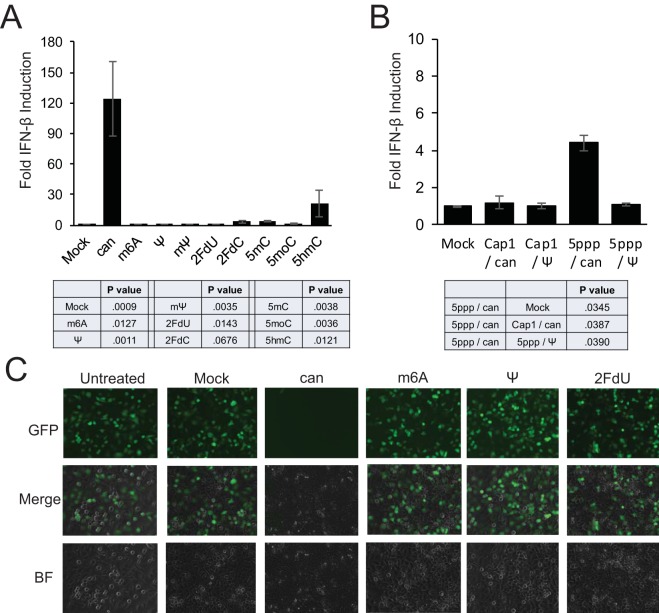
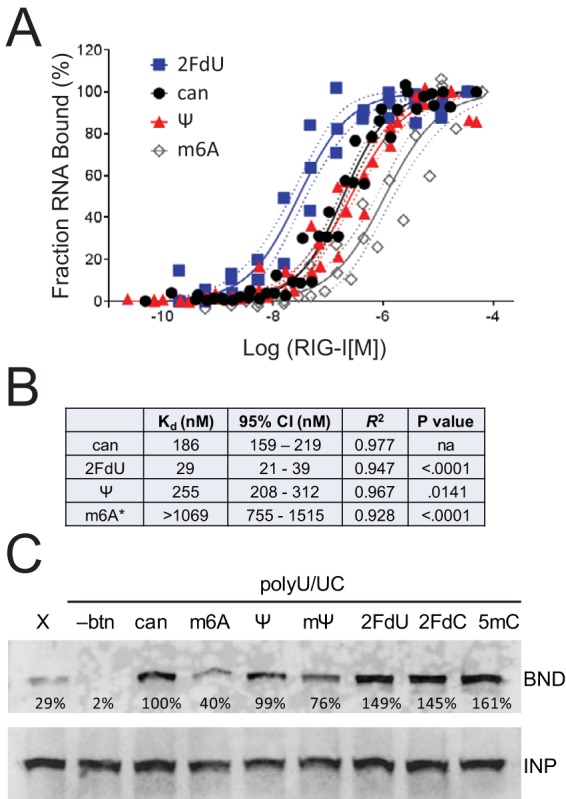
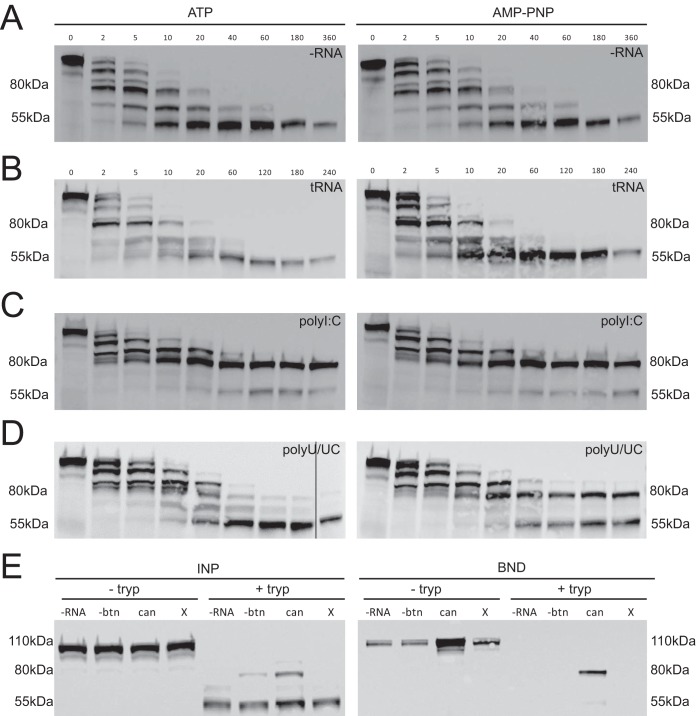
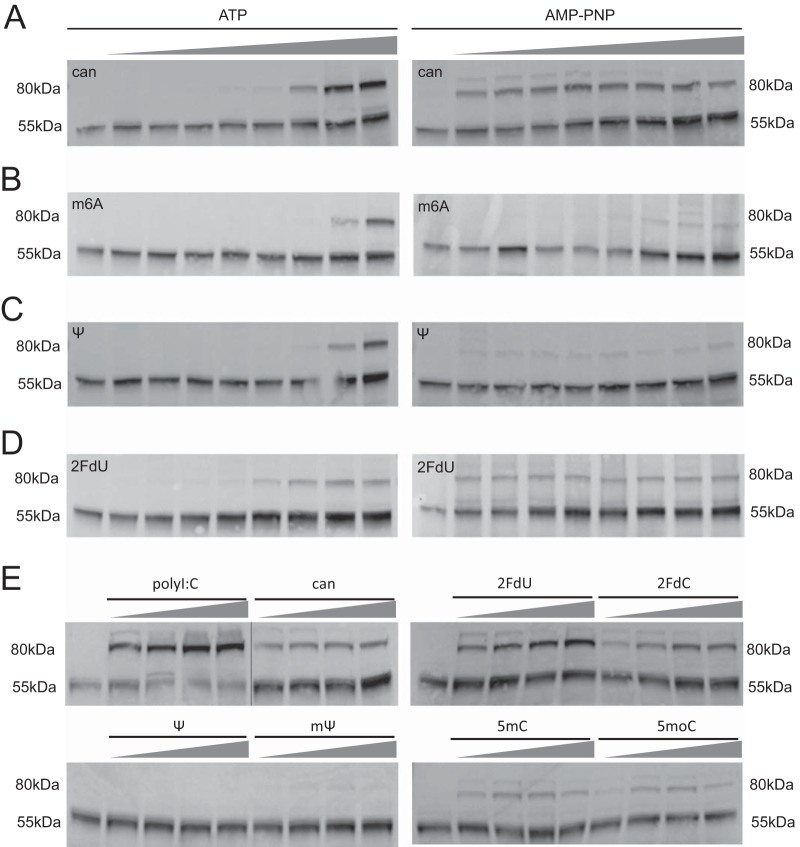
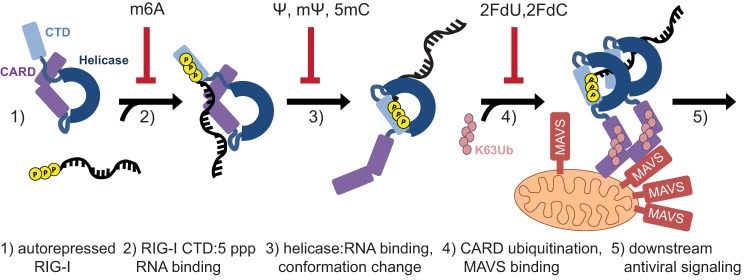
UNLABELLED: Invading pathogen nucleic acids are recognized and bound by cytoplasmic (retinoic acid-inducible gene I [RIG-I]-like) and membrane-bound (Toll-like) pattern recognition receptors to activate innate immune signaling. Modified nucleotides, when present in RNA molecules, diminish the magnitude of these signaling responses. However, mechanisms explaining the blunted signaling have not been elucidated. In this study, we used several independent biological assays, including inhibition of virus replication, RIG-I:RNA binding assays, and limited trypsin digestion of RIG-I:RNA complexes, to begin to understand how RNAs containing modified nucleotides avoid or suppress innate immune signaling. The experiments were based on a model innate immune activating RNA molecule, the polyU/UC RNA domain of hepatitis C virus, which was transcribed in vitro with canonical nucleotides or with one of eight modified nucleotides. The approach revealed signature assay responses associated with individual modified nucleotides or classes of modified nucleotides. For example, while both N-6-methyladenosine (m6A) and pseudouridine nucleotides correlate with diminished signaling, RNA containing m6A modifications bound RIG-I poorly, while RNA containing pseudouridine bound RIG-I with high affinity but failed to trigger the canonical RIG-I conformational changes associated with robust signaling. These data advance understanding of RNA-mediated innate immune signaling, with additional relevance for applying nucleotide modifications to RNA therapeutics. IMPORTANCE: The innate immune system provides the first response to virus infections and must distinguish between host and pathogen nucleic acids to mount a protective immune response without activating autoimmune responses. While the presence of nucleotide modifications in RNA is known to correlate with diminished innate immune signaling, the underlying mechanisms have not been explored. The data reported here are important for defining mechanistic details to explain signaling suppression by RNAs containing modified nucleotides. The results suggest that RNAs containing modified nucleotides interrupt signaling at early steps of the RIG-I-like innate immune activation pathway and also that nucleotide modifications with similar chemical structures can be organized into classes that suppress or evade innate immune signaling steps. These data contribute to defining the molecular basis for innate immune signaling suppression by RNAs containing modified nucleotides. The results have important implications for designing therapeutic RNAs that evade innate immune detection.
Overview
The claims and statistics of this paper haven’t been checked yet.
Run the check — free, no account needed. It reads the open-access text and checks the sources it cites.
Integrity signals
Registry
Cites
Statistics
Figures
Verification
Claims the paper makes
The claims and statistics of this paper haven’t been checked yet.
Run the check — free, no account needed. It reads the open-access text and checks the sources it cites.
Claims other papers make about this one
Each is checked against this paper’s own text: does it say what the citing paper says it does?
In the citing paper
“by incorporating naturally occurring modified nucleotides into the IVT mRNA, its innate immune activity could be drastically reduced [6,7]”
From The dawn of mRNA vaccines: the COVID-19 case (2021) · cites this paper as [7]
Self-check
Percentages, sums and reported differences re-computed from the paper’s own numbers.
The self-check needs the paper’s full text.
Citations
Cites
Karikó, K., Buckstein, M., Ni, H., & Weissman, D. (2005) · Immunity · doi:10.1016/j.immuni.2005.06.008 · Cited by 2,728
Warren, L., Manos, P. D., Ahfeldt, T., Loh, Y.-H., Li, H., Lau, F., Ebina, W., Mandal, P. K., Smith, Z. D., Meissner, A., et al. (2010) · Cell Stem Cell · doi:10.1016/j.stem.2010.08.012 · Cited by 2,662
5'-Triphosphate RNA Is the Ligand for RIG-I
Hornung, V., Ellegast, J., Kim, S., Brzózka, K., Jung, A., Kato, H., Poeck, H., Akira, S., Conzelmann, K.-K., Schlee, M., et al. (2006) · Science · doi:10.1126/science.1132505 · Cited by 2,474
RIG-I-mediated antiviral responses to single-stranded RNA bearing 5’-phosphates
Pichlmair, A., Schulz, O., Tan, C. P., Näslund, T. I., Liljeström, P., Weber, F., & Reis e Sousa, C. (2006) · Science · doi:10.1126/science.1132998 · Cited by 2,210
TRIM25 RING-finger E3 ubiquitin ligase is essential for RIG-I-mediated antiviral activity
Gack, M. U., Shin, Y. C., Joo, C.-H., Urano, T., Liang, C., Sun, L., Takeuchi, O., Akira, S., Chen, Z. J., Inoue, S., et al. (2007) · Nature · doi:10.1038/nature05732 · Cited by 1,683
Widespread occurrence of 5-methylcytosine in human coding and non-coding RNA
Squires, J. E., Patel, H. R., Nousch, M., Sibbritt, T., Humphreys, D. T., Parker, B. J., Suter, C. M., & Preiß, T. (2012) · Nucleic Acids Research · doi:10.1093/nar/gks144 · Cited by 1,033
MODOMICS: a database of RNA modification pathways—2013 update
Machnicka, M. A., Milanowska, K., Oglou, O. O., Purta, E., Kurkowska, M., Olchowik, A., Januszewski, W., Kalinowski, S., Dunin-Horkawicz, S., Rother, K. M., et al. (2012) · Nucleic Acids Research · doi:10.1093/nar/gks1007 · Cited by 1,003
2′-O methylation of the viral mRNA cap evades host restriction by IFIT family members
Daffis, S., Szretter, K. J., Schriewer, J. M., Li, J., Youn, S., Errett, J. S., Lin, T., Schneller, S. W., Züst, R., Dong, H., et al. (2010) · Nature · doi:10.1038/nature09489 · Cited by 910
Sumpter, R., Loo, Y., Foy, E. M., Li, K., Yoneyama, M., Fujita, T., Lemon, S. M., & Gale, M. (2005) · Journal of Virology · doi:10.1128/jvi.79.5.2689-2699.2005 · Cited by 900
Karikó, K., Muramatsu, H., Ludwig, J., & Weissman, D. (2011) · Nucleic Acids Research · doi:10.1093/nar/gkr695 · Cited by 898
Research works printed but not linked: 1
- 10.3791/51415:e51415 · DOI
Cited by
Sorted by citations
N6-Methyladenosine Modification Controls Circular RNA Immunity
Chen, Y. G., Chen, R., Ahmad, S., Verma, R., Kasturi, S. P., Amaya, L., Broughton, J. P., Kim, J., Cadena, C., Pulendran, B., et al. (2019) · Molecular Cell · doi:10.1016/j.molcel.2019.07.016 · Cited by 578
Innate immune mechanisms of mRNA vaccines
Verbeke, R., Hogan, M. J., Loré, K., & Pardi, N. (2022) · Immunity · doi:10.1016/j.immuni.2022.10.014 · Cited by 535
The dawn of mRNA vaccines: the COVID-19 case
Verbeke, R., Lentacker, I., De Smedt, S. C., & Dewitte, H. (2021) · Journal of Controlled Release · doi:10.1016/j.jconrel.2021.03.043 · Cited by 504
Mettl3-mediated mRNA m6A methylation promotes dendritic cell activation
Wang, H., Hu, X., Huang, M., Liu, J., Gu, Y. H., Ma, L., Zhou, Q., & Cao, X. (2019) · Nature Communications · doi:10.1038/s41467-019-09903-6 · Cited by 507
RNA Circularization Diminishes Immunogenicity and Can Extend Translation Duration In Vivo
Wesselhoeft, R. A., Kowalski, P. S., Parker-Hale, F. C., Huang, Y., Bisaria, N., & Anderson, D. G. (2019) · Molecular Cell · doi:10.1016/j.molcel.2019.02.015 · Cited by 482
Modifications in an Emergency: The Role of N1-Methylpseudouridine in COVID-19 Vaccines
Nance, K. D., & Meier, J. L. (2021) · ACS Central Science · doi:10.1021/acscentsci.1c00197 · Cited by 466
m6A modification controls the innate immune response to infection by targeting type I interferons
Winkler, R., Gillis, E., Lasman, L., Safra, M., Geula, S., Soyris, C., Nachshon, A., Tai-Schmiedel, J., Friedman, N., Le‐Trilling, V. T. K., et al. (2018) · Nature Immunology · doi:10.1038/s41590-018-0275-z · Cited by 459
RIG-I and Other RNA Sensors in Antiviral Immunity
Chow, K. T., Gale, M., & Loo, Y. (2018) · Annual Review of Immunology · doi:10.1146/annurev-immunol-042617-053309 · Cited by 432
The RNA modification N6-methyladenosine as a novel regulator of the immune system
Shulman, Z., & Stern‐Ginossar, N. (2020) · Nature Immunology · doi:10.1038/s41590-020-0650-4 · Cited by 417
Tailoring mRNA Vaccine to Balance Innate/Adaptive Immune Response
Linares-Fernández, S., Lacroix, C., Exposito, J.-Y., & Verrier, B. (2020) · Trends in Molecular Medicine · doi:10.1016/j.molmed.2019.10.002 · Cited by 376
Comparative Structure and Function Analysis of the RIG-I-Like Receptors: RIG-I and MDA5
Brisse, M. E., & Ly, H. (2019) · Frontiers in Immunology · doi:10.3389/fimmu.2019.01586 · Cited by 379
Impact of mRNA chemistry and manufacturing process on innate immune activation
Nelson, J., Sorensen, E. W., Mintri, S., Rabideau, A. E., Zheng, W., Besin, G., Khatwani, N., Su, S. V., Miracco, E. J., Issa, W. J., et al. (2020) · Science Advances · doi:10.1126/sciadv.aaz6893 · Cited by 354
Freyn, A. W., Ramos da Silva, J., Rosado, V. C., Bliss, C. M., Pine, M., Mui, B. L., Tam, Y. K., Madden, T. D., de Souza Ferreira, L. C., Weissman, D., et al. (2020) · Molecular Therapy · doi:10.1016/j.ymthe.2020.04.018 · Cited by 299
A Review in Research Progress Concerning m6A Methylation and Immunoregulation
Zhang, C., Fu, J., & Zhou, Y. (2019) · Frontiers in Immunology · doi:10.3389/fimmu.2019.00922 · Cited by 285
N6-methyladenosine modification enables viral RNA to escape recognition by RNA sensor RIG-I
Lu, M., Zhang, Z. S., Xue, M., Zhao, B. S., Harder, O. E., Li, A., Liang, X., Gao, T. Z., Xu, Y., Zhou, J., et al. (2020) · Nature Microbiology · doi:10.1038/s41564-019-0653-9 · Cited by 277
Li, N., Hui, H., Bray, B., Gonzalez, G. M., Zeller, M., Anderson, K. G., Knight, R. D., Smith, D. M., Wang, Y., Carlin, A. F., et al. (2021) · Cell Reports · doi:10.1016/j.celrep.2021.109091 · Cited by 283
Vaidyanathan, S., Azizian, K. T., Haque, A. K. M. A., Henderson, J. M., Hendel, A., Shore, S., Antony, J. S., Hogrefe, R. I., Kormann, M. S. D., Porteus, M. H., et al. (2018) · Molecular Therapy Nucleic Acids · doi:10.1016/j.omtn.2018.06.010 · Cited by 262
“Based on this work, many first-generation mRNAs were modified with 5meC and J.46 They showed that chemical modification of mRNA limited TLR signaling,43 decreased activation of 20-50-oligoadenylate synthetase,45 and decreased binding to PKR.44 Durbin et al.47 showed that RNAs modified with m6A bind RIG-I with reduced…”
BackgroundInfluentialRegulation and Function of RNA Pseudouridylation in Human Cells
Borchardt, E. K., Martínez, N. M., & Gilbert, W. V. (2020) · Annual Review of Genetics · doi:10.1146/annurev-genet-112618-043830 · Cited by 242
An engineered T7 RNA polymerase that produces mRNA free of immunostimulatory byproducts
Dousis, A. D., Ravichandran, K. R., Hobert, E. M., Moore, M. J., & Rabideau, A. E. (2022) · Nature Biotechnology · doi:10.1038/s41587-022-01525-6 · Cited by 259
Epitranscriptomic Enhancement of Influenza A Virus Gene Expression and Replication
Courtney, D., Kennedy, E. M., Dumm, R. E., Bogerd, H. P., Tsai, K., Heaton, N. S., & Cullen, B. R. (2017) · Cell Host & Microbe · doi:10.1016/j.chom.2017.08.004 · Cited by 229
The role of m6A modification in physiology and disease
Yang, C., Hu, Y., Zhou, B., Bao, Y., Li, Z., Gong, C., Yang, H., Wang, S., & Xiao, Y. (2020) · Cell Death & Disease · doi:10.1038/s41419-020-03143-z · Cited by 200
Hesser, C. R., Karijolich, J. J., Dominissini, D., He, C., & Glaunsinger, B. A. (2018) · PLoS Pathogens · doi:10.1371/journal.ppat.1006995 · Cited by 193
Circular RNAs as Therapeutic Agents and Targets
Holdt, L. M., Kohlmaier, A., & Teupser, D. (2018) · Frontiers in Physiology · doi:10.3389/fphys.2018.01262 · Cited by 189
Zhang, Y., Wang, X., Zhang, X., Wang, J., Ma, Y., Zhang, L., & Cao, X. (2018) · Proceedings of the National Academy of Sciences · doi:10.1073/pnas.1812536116 · Cited by 186
Epigenetic and epitranscriptomic regulation of viral replication
Tsai, K., & Cullen, B. R. (2020) · Nature Reviews Microbiology · doi:10.1038/s41579-020-0382-3 · Cited by 171
Roles of RNA Methylation on Tumor Immunity and Clinical Implications
Zhang, M., Song, J., Yuan, W., Zhang, W., & Sun, Z. (2021) · Frontiers in Immunology · doi:10.3389/fimmu.2021.641507 · Cited by 162
Regulation of Viral Infection by the RNA Modification N6 -Methyladenosine
Williams, G. D., Gokhale, N. S., & Horner, S. M. (2019) · Annual Review of Virology · doi:10.1146/annurev-virology-092818-015559 · Cited by 165
McIntyre, W., Netzband, R., Bonenfant, G., Biegel, J. M., Miller, C. M., Fuchs, G., Henderson, E., Arra, M., Canki, M., Fabris, D., et al. (2018) · Nucleic Acids Research · doi:10.1093/nar/gky029 · Cited by 152
Granot-Matok, Y., & Peer, D. (2017) · Seminars in Immunology · doi:10.1016/j.smim.2017.08.015 · Cited by 160
Kim, G., Imam, H., Khan, M. A., & Siddiqui, A. (2020) · Journal of Biological Chemistry · doi:10.1074/jbc.ra120.014260 · Cited by 147
Exploiting RIG-I-like receptor pathway for cancer immunotherapy
Jiang, Y., Zhang, H., Wang, J., Chen, J., Guo, Z., Liu, Y., & Hua, H. M. (2023) · Journal of Hematology & Oncology · doi:10.1186/s13045-023-01405-9 · Cited by 151
Immunogenicity of In Vitro -Transcribed RNA
Mu, X. N., & Hur, S. (2021) · Accounts of Chemical Research · doi:10.1021/acs.accounts.1c00521 · Cited by 143
Synthesis of low immunogenicity RNA with high-temperature in vitro transcription
Wu, M. Z., Asahara, H., Tzertzinis, G., & Roy, B. (2020) · RNA · doi:10.1261/rna.073858.119 · Cited by 135
Guirguis, A. A., Ofir-Rosenfeld, Y., Knezevic, K., Blackaby, W., HARDICK, D. J., Chan, Y.-C., Motazedian, A., Gillespie, A., Vassiliadis, D., Lam, E. Y. N., et al. (2023) · Cancer Discovery · doi:10.1158/2159-8290.cd-23-0007 · Cited by 140
RNA Modifications Modulate Activation of Innate Toll-Like Receptors
Freund, I., Eigenbrod, T., Helm, M., & Dalpke, A. H. (2019) · Genes · doi:10.3390/genes10020092 · Cited by 123
N6-Methyladenosine RNA Modification in Inflammation: Roles, Mechanisms, and Applications
Luo, J., Xu, T., & Sun, K. (2021) · Frontiers in Cell and Developmental Biology · doi:10.3389/fcell.2021.670711 · Cited by 117
Xue, M., Zhao, B. S., Zhang, Z. S., Lu, M., Harder, O. E., Chen, P., Lu, Z., Li, A., Ma, Y., Xu, Y., et al. (2019) · Nature Communications · doi:10.1038/s41467-019-12504-y · Cited by 111
Circular RNAs in Immune Response and Viral Infection
Yan, L., & Chen, Y. G. (2020) · Trends in Biochemical Sciences · doi:10.1016/j.tibs.2020.08.006 · Cited by 110
Exosomes for mRNA delivery: a novel biotherapeutic strategy with hurdles and hope
Aslan, C., Kiaie, S. H., Zolbanin, N. M., Lotfinejad, P., Ramezani, R., Kashanchi, F., & Jafari, R. (2021) · BMC Biotechnology · doi:10.1186/s12896-021-00683-w · Cited by 113
m6A RNA methylation, a new hallmark in virus-host interactions
Brocard, M., Ruggieri, A., & Locker, N. (2017) · Journal of General Virology · doi:10.1099/jgv.0.000910 · Cited by 107
Recent Developments in mRNA-Based Protein Supplementation Therapy to Target Lung Diseases
Sahu, I., Haque, A. K. M. A., Weidensee, B., Weinmann, P., & Kormann, M. S. D. (2019) · Molecular Therapy · doi:10.1016/j.ymthe.2019.02.019 · Cited by 104
Zhao, Y., Chen, Y., JIN, M. L., & Wang, J. (2021) · Theranostics · doi:10.7150/thno.54967 · Cited by 106
Guide RNA modification as a way to improve CRISPR/Cas9-based genome-editing systems
Filippova, J. A., Matveeva, A. M., Zhuravlev, E. S., & Stepanov, G. A. (2019) · Biochimie · doi:10.1016/j.biochi.2019.09.003 · Cited by 98
Chen, S., Kumar, S., Tirumuru, N., Welch, J. L., Hu, L., He, C., Stapleton, J. T., & Wu, L. J. (2021) · PLoS Pathogens · doi:10.1371/journal.ppat.1009421 · Cited by 92
Host-cell interactions in HBV infection and pathogenesis: the emerging role of m6A modification
Kostyusheva, A., Brezgin, S., Glebe, D., Kostyushev, D. S., & Chulanov, V. (2021) · Emerging Microbes & Infections · doi:10.1080/22221751.2021.2006580 · Cited by 90
Synthetic modified messenger RNA for therapeutic applications
Gao, M., Zhang, Q., Feng, X.-H., & Liu, J. (2021) · Acta Biomaterialia · doi:10.1016/j.actbio.2021.06.020 · Cited by 89
Gokhale, N. S., & Horner, S. M. (2017) · PLoS Pathogens · doi:10.1371/journal.ppat.1006188 · Cited by 85
Emerging role of RNA modification N6-methyladenosine in immune evasion
Lou, X., Wang, J.-J., Wei, Y., & Sun, J. (2021) · Cell Death and Disease · doi:10.1038/s41419-021-03585-z · Cited by 80
mRNA in cancer immunotherapy: beyond a source of antigen
Hoecke, L. V., Verbeke, R., Dewitte, H., Lentacker, I., Vermaelen, K. Y., Breckpot, K., & Lint, S. V. (2021) · Molecular Cancer · doi:10.1186/s12943-021-01329-3 · Cited by 85
Post-transcriptional regulation of antiviral gene expression by N6-methyladenosine
McFadden, M. J., McIntyre, A. B. R., Mourelatos, H. A., Abell, N. S., Gokhale, N. S., Ipas, H., Xhemalçe, B., Mason, C. E., & Horner, S. M. (2021) · Cell Reports · doi:10.1016/j.celrep.2021.108798 · Cited by 80
From Antisense RNA to RNA Modification: Therapeutic Potential of RNA-Based Technologies
Adachi, H., Hengesbach, M., Yu, Y., & Morais, P. (2021) · Biomedicines · doi:10.3390/biomedicines9050550 · Cited by 84
mRNA vaccines: the most recent clinical applications of synthetic mRNA
Kwon, S., Kwon, M., Im, S., Lee, K., & Lee, H. (2022) · Archives of Pharmacal Research · doi:10.1007/s12272-022-01381-7 · Cited by 85
Kennedy, E. M., Courtney, D., Tsai, K., & Cullen, B. R. (2017) · Journal of Virology · doi:10.1128/jvi.02263-16 · Cited by 84
Potentialities and Challenges of mRNA Vaccine in Cancer Immunotherapy
Duan, L.-J., Wang, Q., Zhang, C., Yang, D.-X., & Zhang, X. (2022) · Frontiers in Immunology · doi:10.3389/fimmu.2022.923647 · Cited by 83
Moradian, H., Roch, T., Anthofer, L., Lendlein, A., & Gossen, M. (2022) · Molecular Therapy — Nucleic Acids · doi:10.1016/j.omtn.2022.01.004 · Cited by 77
Rivière, L., Bergez, M., Mönch, S., Qu, B., Rieß, M., Vondran, F. W. R., Liese, J., Hornung, V., Urban, S., & König, R. (2020) · Viruses · doi:10.3390/v12060592 · Cited by 68
Epitranscriptomic(N6-methyladenosine) Modification of Viral RNA and Virus-Host Interactions
Imam, H., Kim, G., & Siddiqui, A. (2020) · Frontiers in Cellular and Infection Microbiology · doi:10.3389/fcimb.2020.584283 · Cited by 68
Why U matters: detection and functions of pseudouridine modifications in mRNAs
Rodell, R., Robalin, N., & Martínez, N. M. (2023) · Trends in Biochemical Sciences · doi:10.1016/j.tibs.2023.10.008 · Cited by 65
Review of machine learning for lipid nanoparticle formulation and process development
Dorsey, P. J., Lau, C. L., Chang, T., Doerschuk, P. C., & D’Addio, S. M. (2024) · Journal of Pharmaceutical Sciences · doi:10.1016/j.xphs.2024.09.015 · Cited by 74
Bernard, M., Bazin, E., Petiot, N., Lemdani, K., Commandeur, S., Verdelet, C., Margot, S., Perkov, V., Ripoll, M., Garinot, M., et al. (2023) · Molecular Therapy — Nucleic Acids · doi:10.1016/j.omtn.2023.05.004 · Cited by 63
Enabling mRNA Therapeutics: Current Landscape and Challenges in Manufacturing
Youssef, M., Hitti, C., Fulber, J. P. C., & Kamen, A. (2023) · Biomolecules · doi:10.3390/biom13101497 · Cited by 63
Understanding the impact of in vitro transcription byproducts and contaminants
Lenk, R., Kleindienst, W., Szabó, G. T., Baiersdörfer, M., Boros, G., Keller, J. M., Mahiny, A. J., & Vlatkovic, I. (2024) · Frontiers in Molecular Biosciences · doi:10.3389/fmolb.2024.1426129 · Cited by 63
Host cell-intrinsic innate immune recognition of SARS-CoV-2
Madden, E. A., & Diamond, M. S. (2021) · Current Opinion in Virology · doi:10.1016/j.coviro.2021.11.002 · Cited by 60
Advances of mRNA vaccine in tumor: a maze of opportunities and challenges
Yuan, Y., Gao, F., Chang, Y., Zhao, Q., & He, X. (2023) · Biomarker Research · doi:10.1186/s40364-023-00449-w · Cited by 60
Therapeutic Targeting of RIG-I and MDA5 Might Not Lead to the Same Rome
Kasumba, D. M., & Grandvaux, N. (2018) · Trends in Pharmacological Sciences · doi:10.1016/j.tips.2018.12.003 · Cited by 56
TDP-43 knockdown causes innate immune activation via protein kinase R in astrocytes
LaRocca, T. J., Mariani, A., Watkins, L. R., & Link, C. D. (2019) · Neurobiology of Disease · doi:10.1016/j.nbd.2019.104514 · Cited by 61
N6-Methyladenosine Regulates Host Responses to Viral Infection
McFadden, M. J., & Horner, S. M. (2020) · Trends in Biochemical Sciences · doi:10.1016/j.tibs.2020.11.008 · Cited by 55
van Dülmen, M., Muthmann, N., & Rentmeister, A. (2021) · Angewandte Chemie International Edition · doi:10.1002/anie.202100352 · Cited by 56
Lu, M., Xue, M., Wang, H.-T., Kairis, E. L., Ahmad, S., Wei, J., Zhang, Z. S., Liu, Q., Zhang, Y., Gao, Y., et al. (2021) · Journal of Virology · doi:10.1128/jvi.01939-20 · Cited by 53
m6A: Widespread regulatory control in virus replication
Manners, O., Baquero-Pérez, B., & Whitehouse, A. (2018) · Biochimica et Biophysica Acta (BBA) - Gene Regulatory Mechanisms · doi:10.1016/j.bbagrm.2018.10.015 · Cited by 55
Therapeutic mRNA Engineering from Head to Tail
Jia, L., & Qian, S. (2021) · Accounts of Chemical Research · doi:10.1021/acs.accounts.1c00541 · Cited by 51
An Update on mRNA-Based Viral Vaccines
Jeeva, S., Kim, K., Shin, C. H., Wang, B., & Kang, S. (2021) · Vaccines · doi:10.3390/vaccines9090965 · Cited by 49
Post-Transcriptional Regulation of Viral RNA through Epitranscriptional Modification
Courtney, D. (2021) · Cells · doi:10.3390/cells10051129 · Cited by 49
Furuse, Y. (2021) · International Journal of Molecular Sciences · doi:10.3390/ijms22179127 · Cited by 48
Regulation of antiviral innate immunity by chemical modification of viral RNA
Li, N., & Rana, T. M. (2022) · Wiley Interdisciplinary Reviews - RNA · doi:10.1002/wrna.1720 · Cited by 46
Functional sequencing read annotation for high precision microbiome analysis
Zhu, C., Miller, M. J., Marpaka, S., Vaysberg, P., Rühlemann, M. C., Wu, G. G., Heinsen, F., Tempel, M., Zhao, L., Lieb, W., et al. (2017) · Nucleic Acids Research · doi:10.1093/nar/gkx1209 · Cited by 48
Potential health risks of mRNA-based vaccine therapy: A hypothesis
Acevedo‐Whitehouse, K. A., & Bruno, R. (2023) · Medical Hypotheses · doi:10.1016/j.mehy.2023.111015 · Cited by 56
Ding, S., Liu, H., Liu, L., Ma, L., Chen, Z., Zhu, M., Liu, L., Zhang, X., Hao, H., Zuo, L., et al. (2024) · Cell Death and Disease · doi:10.1038/s41419-023-06412-9 · Cited by 46
Dávalos, A., Henriques, R., Latasa, M. J., Laparra, M., & Coca, M. A. (2019) · EFSA Supporting Publications · doi:10.2903/sp.efsa.2019.en-1688 · Cited by 50
Ferro, A., Saccu, G., Mattivi, S., Gaido, A., Sanchez, M. B. H., Haque, S., Silengo, L., Altruda, F., Durazzo, M., & Fagoonee, S. (2024) · Biomolecules · doi:10.3390/biom14030277 · Cited by 47
Xue, M., Zhang, Y., Wang, H., Kairis, E. L., Lu, M., Ahmad, S., Attia, Z., Harder, O. E., Zhang, Z. S., Wei, J., et al. (2021) · PLoS Pathogens · doi:10.1371/journal.ppat.1010142 · Cited by 44
RNA regulatory processes in RNA virus biology
Cross, S. T., Michalski, D., Miller, M. R., & Wilusz, J. (2019) · Wiley Interdisciplinary Reviews - RNA · doi:10.1002/wrna.1536 · Cited by 40
Rajan, K. S., Doniger, T., Cohen‐Chalamish, S., Chen, D., Semo, O., Aryal, S., Saar, E. G., Chikne, V., Gerber, D., Unger, R., et al. (2019) · Nucleic Acids Research · doi:10.1093/nar/gkz477 · Cited by 41
Self RNA Sensing by RIG-I–like Receptors in Viral Infection and Sterile Inflammation
Stok, J. E., Quiroz, M. E. V., & van der Veen, A. G. (2020) · The Journal of Immunology · doi:10.4049/jimmunol.2000488 · Cited by 41
Advances in nucleic acid-based cancer vaccines
Liao, H., & Liu, S. (2025) · Journal of Biomedical Science · doi:10.1186/s12929-024-01102-w · Cited by 46
Stepanov, G. A., Zhuravlev, E. S., Shender, V. О., Nushtaeva, A. A., Balakhonova, E., Mozhaeva, E., Kasakin, M. F., Koval, V. V., Lomzov, A. A., Pavlyukov, M. S., et al. (2018) · Genes · doi:10.3390/genes9110531 · Cited by 40
Emerging gene therapies for cystic fibrosis
Miah, K. M., Hyde, S. C., & Gill, D. R. (2019) · Expert Review of Respiratory Medicine · doi:10.1080/17476348.2019.1634547 · Cited by 39
In Vitro Transcribed RNA-Based Platform Vaccines: Past, Present, and Future
Perenkov, A. D., Sergeeva, A. D., Vedunova, M. V., & Krysko, D. V. (2023) · Vaccines · doi:10.3390/vaccines11101600 · Cited by 40
Chen, J., Wang, C., Fei, W., Fang, X., & Hu, X. (2019) · PubMed Central · Cited by 39
Self-citationThe Emerging Role of RNA Modifications in the Regulation of Antiviral Innate Immunity
Tong, J., Zhang, W., Chen, Y., Yuan, Q., Qin, N.-N., & Qu, G. (2022) · Frontiers in Microbiology · doi:10.3389/fmicb.2022.845625 · Cited by 37
How RNA modifications regulate the antiviral response
Thompson, M. G., Sacco, M. T., & Horner, S. M. (2021) · Immunological Reviews · doi:10.1111/imr.13020 · Cited by 37
Tang, L., Wei, X., Li, T., Chen, Y., Dai, Z., Lu, C., & Zheng, G. (2021) · Frontiers in Immunology · doi:10.3389/fimmu.2021.630358 · Cited by 37
Synthetic circRNA therapeutics: innovations, strategies, and future horizons
Cai, J., Qiu, Z., Cho, W. C. S., Liu, Z., Chen, S., Li, H., Chen, K., Li, Y., Zuo, C., & Qiu, M. (2024) · MedComm · doi:10.1002/mco2.720 · Cited by 42
Kim, G., & Siddiqui, A. (2021) · Experimental & Molecular Medicine · doi:10.1038/s12276-021-00581-3 · Cited by 38
Nanoformulations targeting immune cells for cancer therapy: mRNA therapeutics
Yang, W., Cao, J., Cheng, H., Chen, L., Yu, M., Chen, Y., & Cui, X. (2022) · Bioactive Materials · doi:10.1016/j.bioactmat.2022.11.014 · Cited by 36
RNA Binding Proteins as Pioneer Determinants of Infection: Protective, Proviral, or Both?
Lisy, S. M., Rothamel, K. L., & Ascano, M. (2021) · Viruses · doi:10.3390/v13112172 · Cited by 35
Cytidine Acetylation Yields a Noninflammatory Synthetic Messenger RNA
Nance, K. D., Gamage, S. T., Alam, M. M., Yang, A., Levy, M. J., Link, C. N., Florens, L. A., Washburn, M. P., Gu, S., Oppenheim, J. J., et al. (2021) · Cell chemical biology · doi:10.1016/j.chembiol.2021.07.003 · Cited by 35
m6A reader proteins: the executive factors in modulating viral replication and host immune response
Yang, D., Zhao, G., & Zhang, H. M. (2023) · Frontiers in Cellular and Infection Microbiology · doi:10.3389/fcimb.2023.1151069 · Cited by 35
RNA regulatory mechanisms that control antiviral innate immunity
Gokhale, N. S., Smith, J. R., Gelder, R. D. V., & Savan, R. (2021) · Immunological Reviews · doi:10.1111/imr.13019 · Cited by 34
The RNA polymerase III–RIG-I axis in antiviral immunity and inflammation
Naesens, L., Haerynck, F., & Gack, M. U. (2023) · Trends in Immunology · doi:10.1016/j.it.2023.04.002 · Cited by 33
Metadata
- Authors
- Durbin, A. F., Wang, C., Marcotrigiano, J., & Gehrke, L.
- Affiliations
- Harvard University (US)
- Rutgers, The State University of New Jersey (US)
- Corresponding author
- Gehrke, Lee
- Venue
- mBio
- Publisher
- American Society for Microbiology
- Published
- 2016-11-02
- Volume
- 7
- Issue
- 5
- ISSN
- 2150-7511 (ISSN-L)
- 2161-2129
- PMC
- PMC5030355
- OpenAlex
- W2522303658
- Cited by
- 238
- References
- 58
- Citations by year
- 2026: 13 · 2025: 22 · 2024: 25 · 2023: 27 · 2022: 28 · 2021: 49 · 2020: 30 · 2019: 23 · 2018: 13 · 2017: 8
- FWCI
- 8.88
- Type
- journal article
- Language
- en
- Open access
- gold
- doi.org
- Licence
- Locations
- mBio (publishedVersion, cc-by)
- Europe PMC (PubMed Central) (publishedVersion, cc-by)
- PubMed Central (publishedVersion, cc-by)
- PubMed (publishedVersion)
- Digital Access to Scholarship at Harvard (DASH) (Harvard University) (submittedVersion, cc-by)
- DOAJ (DOAJ: Directory of Open Access Journals) (submittedVersion, cc-by-sa)
- DOAJ (DOAJ: Directory of Open Access Journals) (submittedVersion)
- DSpace@MIT (Massachusetts Institute of Technology) (submittedVersion, cc-by-nc)
- Funders
- HHS | U.S. Public Health Service (CA159132, AI100190)
- Topics
- Life Sciences › Immunology and Microbiology › Immunology › interferon and immune responses
- Life Sciences › Immunology and Microbiology › Immunology › Immune Response and Inflammation
- Life Sciences › Biochemistry, Genetics and Molecular Biology › Molecular Biology › RNA regulation and disease
- Keywords
- RIG-I, modified nucleotides, innate immune signaling, pseudouridine, RNA conformational change, RNA therapeutics, immune evasion, viral RNA recognition
- MeSH terms
- DEAD Box Protein 58, Cell Line, Humans, Immunity, Innate, Models, Molecular, Ribonucleosides, RNA, Viral, Signal Transduction, Hepacivirus, Interferon-beta
About these checks
Registry, retraction, Cites and statistics results are computed, not judged, with one exception: a printed reference that no index lists is read once by a model before it counts as a citation error. Claims are extracted by a model and kept only when their quote appears verbatim in the text; each cited source is then checked, with a model’s help, for whether it says what the claim relies on. Those verdicts can be wrong — read the claim’s quote and the cited source before relying on one.
Statistics and arithmetic are recomputed, not judged.
Confidence bands are shown only for fields calibrated on our annotated test set. None is calibrated yet, so no band is shown.
What counts as a claim ›How we measure confidence ›How we check this ›
Are you an author, or do you see a problem with this page? Request a review
