

Making the Leap from Research Laboratory to Clinic: Challenges and Opportunities for Next-Generation Sequencing in Infectious Disease Diagnostics
Open accessThe DOI matches its Crossref record; 30 of the 30 references it cites were found in a registry or an index.
Abstract
Next-generation DNA sequencing (NGS) has progressed enormously over the past decade, transforming genomic analysis and opening up many new opportunities for applications in clinical microbiology laboratories. The impact of NGS on microbiology has been revolutionary, with new microbial genomic sequences being generated daily, leading to the development of large databases of genomes and gene sequences. The ability to analyze microbial communities without culturing organisms has created the ever-growing field of metagenomics and microbiome analysis and has generated significant new insights into the relation between host and microbe. The medical literature contains many examples of how this new technology can be used for infectious disease diagnostics and pathogen analysis. The implementation of NGS in medical practice has been a slow process due to various challenges such as clinical trials, lack of applicable regulatory guidelines, and the adaptation of the technology to the clinical environment. In April 2015, the American Academy of Microbiology (AAM) convened a colloquium to begin to define these issues, and in this document, we present some of the concepts that were generated from these discussions.
Overview
The claims and statistics of this paper haven’t been checked yet.
Free: it reads the open-access text and checks the first 5 claims that cite a source we can check. Create a free account to check every claim.
Integrity signals
Registry
Cites
Statistics
Figures
Verification
Claims the paper makes
The claims and statistics of this paper haven’t been checked yet.
Free: it reads the open-access text and checks the first 5 claims that cite a source we can check. Create a free account to check every claim.
Claims other papers make about this one
Each is checked against this paper’s own text: does it say what the citing paper says it does?
In the citing paper
“Larger and more complete databases containing publicly deposited sequences such as the National Center for Biotechnology Information (NCBI) Nucleotide database are more comprehensive but also contain more errors than curated, more limited databases such as FDA-ARGOS91,113 or the FDA Reference Viral Database (RVDB)114.”
From Clinical metagenomics (2019) · cites this paper as [113]
Self-check
Percentages, sums and reported differences re-computed from the paper’s own numbers.
The self-check needs the paper’s full text.
Citations
Cites
A human gut microbial gene catalogue established by metagenomic sequencing
MetaHIT Consortium, Qin, J., Li, R., Raes, J., Arumugam, M., Burgdorf, K. S., Manichanh, C., Nielsen, T., Pons, N., Levenez, F., et al. (2010) · Nature · doi:10.1038/nature08821 · Cited by 11,624
Genome sequencing in microfabricated high-density picolitre reactors
Margulies, M., Egholm, M., Altman, W. E., Attiya, S., Bader, J. S., Bemben, L. A., Berka, J., Braverman, M. S., Chen, Y.-J., Chen, Z., et al. (2005) · Nature · doi:10.1038/nature03959 · Cited by 7,693
Obesity alters gut microbial ecology
Ley, R. E., Bäckhed, F., Turnbaugh, P., Lozupone, C. A., Knight, R. D., & Gordon, J. I. (2005) · Proceedings of the National Academy of Sciences · doi:10.1073/pnas.0504978102 · Cited by 6,176
Gut flora metabolism of phosphatidylcholine promotes cardiovascular disease
Wang, Z., Klipfell, E., Bennett, B. J., Koeth, R., Levison, B. S., DuGar, B., Feldstein, A. E., Britt, E. B., Fu, X., Chung, Y.-M., et al. (2011) · Nature · doi:10.1038/nature09922 · Cited by 5,597
Comparison of Next-Generation Sequencing Systems
Liu, L., Li, Y., Li, S., Hu, N., He, Y., Pong, R., Lin, D., Lu, L., & Law, M. (2012) · Journal of Biomedicine and Biotechnology · doi:10.1155/2012/251364 · Cited by 1,533 · cited 1×
“The first commercial NGS platform, the GS20 sequencer from 454 Life Sciences, which was originally released in 2005 (1, 2), resulted in a more than 100-fold increase in the amount of microbial genomic sequence data produced in a day compared to preceding instruments.”
Hybrid error correction and de novo assembly of single-molecule sequencing reads
Koren, S., Schatz, M. C., Walenz, B. P., Martin, J., Howard, J. T., Ganapathy, G., Wang, Z., Rasko, D. A., McCombie, W. R., Jarvis, E. D., et al. (2012) · Nature Biotechnology · doi:10.1038/nbt.2280 · Cited by 1,011 · cited 1×
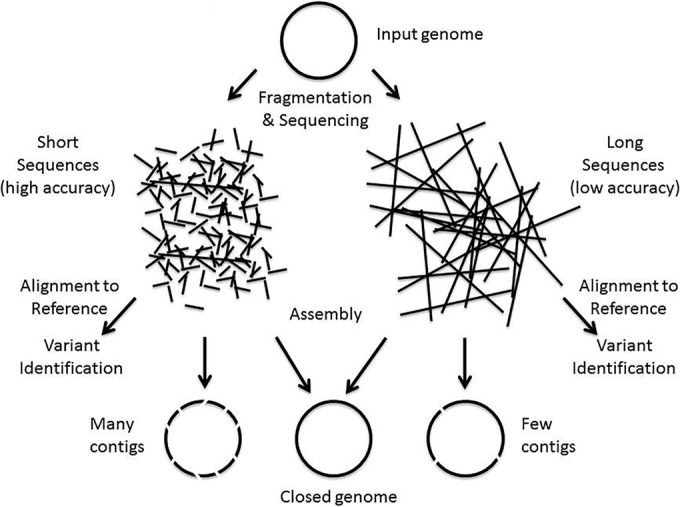
“To obtain a complete sequence without gaps, one often uses both short and long reads to combine the strengths of these various sequencing approaches (24).”
BackgroundActionable Diagnosis of Neuroleptospirosis by Next-Generation Sequencing
Wilson, M. R., Naccache, S. N., Samayoa, E., Biagtan, M., Bashir, H., Yu, G., Salamat, S. M., Somasekar, S., Federman, S., Miller, S., et al. (2014) · New England Journal of Medicine · doi:10.1056/nejmoa1401268 · Cited by 977 · cited 2×
“In one case, 38 different diagnostic tests had been conducted and failed to yield an actionable answer before a single NGS assay was performed, which identified the pathogen (4).”
BackgroundACMG clinical laboratory standards for next-generation sequencing
Rehm, H. L., Bale, S. J., Bayrak-Toydemir, P., Berg, J. S., Brown, K. K., Deignan, J. L., Friez, M. J., Funke, B. H., Hegde, M. R., & Lyon, E. (2013) · Genetics in Medicine · doi:10.1038/gim.2013.92 · Cited by 907
Snitkin, E. S., Zelazny, A. M., Thomas, P. J., Stock, F., Program, N. C. S., Henderson, D. K., Palmore, T. N., & Segre, J. A. (2012) · Science Translational Medicine · doi:10.1126/scitranslmed.3004129 · Cited by 863 · cited 1×
“siella pneumoniae infections (13), among many others.”
Origins of the E. coli Strain Causing an Outbreak of Hemolytic–Uremic Syndrome in Germany
Rasko, D. A., Webster, D. R., Sahl, J. W., Bashir, A., Boisen, N., Scheutz, F., Paxinos, E. E., Sebra, R., Chin, C.-S., Iliopoulos, D., et al. (2011) · New England Journal of Medicine · doi:10.1056/nejmoa1106920 · Cited by 823 · cited 2×
“For example, WGS using NGS technology was applied to investigate an outbreak of hemolytic-uremic syndrome caused by an unusual strain of Escherichia coli in Germany (10), the origins of the 2010 Haitian Vibrio cholerae epidemic (11), a series of methicillin-resistant Staphylococcus aureus infections in a neonatal inte…”
Background
Research works printed but not linked: 4
- GenomeWeb 7 8 2015 CDC earmarks $2.3 million for NGS, bioinformatic approaches to combat infectious disease. GenomeWeb, New York, NY https://www.genomeweb.com/research-funding/cdc-earmarks-23m-ngs-bioinformatic-approaches-combat-infectious-disease.
- US Food and Drug Administration 11 7 2014 Public workshop—advancing regulatory science for high throughput sequencing devices for microbial identification and detection of antimicrobial resistance markers, April 1, 2014. US Food and Drug Administration, Silver Spring, MD http://www.fda.gov/MedicalDevices/NewsEvents/WorkshopsConferences/ucm386967.htm.
- US Food and Drug Administration 11 12 2013 FDA database for regulatory grade microbial sequences (FDA-ARGOS): supporting development and validation of infectious disease Dx tests. National Center for Biotechnology Information, Bethesda, MD http://www.ncbi.nlm.nih.gov/bioproject/231221.
- Sichtig H 2014 High-throughput sequencing technologies for microbial identification and detection of antimicrobial resistance markers, p 1– 21. In FDA Public Workshop on High Throughput Sequencing Devices in Microbial Diagnostics. US Food and Drug Administration, Silver Spring, MD.
Cited by
Items 201–300 of 382
Ji, J., Wang, W., Xiang, S., Wei, X., Pang, G., Shi, H., Dong, J., & Pang, J. (2023) · BMC Infectious Diseases · doi:10.1186/s12879-023-08793-w · Cited by 12
“Numerous studies have demonstrated the efficacy of mNGS in diagnosing various pathogens, including bacteria, mycoplasma, chlamydia, spirochetes, rickettsia, fungi, viruses, and parasites [3–5]. mNGS has found widespread use in clinical settings to enhance diagnostic accuracy for clinicians [6].”
BackgroundStramer, S. L., Yu, G., Herron, R., Espinoza, N., Foster, G. A., Naccache, S. N., Brodsky, J. P., Ong, E., Linnen, J. M., Dyer, N., et al. (2016) · Transfusion · doi:10.1111/trf.13600 · Cited by 8
New Technologies for the Diagnosis of Infection
Pecora, N., & Milner, D. A. (2017) · Elsevier eBooks · doi:10.1016/b978-0-323-44585-6.00006-0 · Cited by 9
Tian, Y., Xia, H., Zhang, L., & Zhou, J. (2022) · Frontiers in Public Health · doi:10.3389/fpubh.2022.1028920 · Cited by 8
Du, R., Feng, Y., Wang, Y., Huang, J., Tao, Y., & Mao, H. Z. (2023) · Frontiers in Public Health · doi:10.3389/fpubh.2023.1145733 · Cited by 8
RVFScan predicts virulence factor genes and hypervirulence of the clinical metagenome
Jiang, Y., Hu, X. L., Shu, F., Liu, W., Chen, J., Wang, L., Deng, Q., Yang, J., Yang, A., Lou, Z., et al. (2023) · Briefings in Bioinformatics · doi:10.1093/bib/bbad403 · Cited by 8
“…the clinical diagnosis of infectious diseases [11, 12] by allowing for the accurate identification of virtually all potential pathogens in clinical samples, including viruses, bacteria, fungi and parasites [13, 14]. mNGS can also provide information on antibiotic resistance genes (ARGs) and VFGs.”
BackgroundYuan, H., Ma, X., Xu, J., Han, P., Rao, G., Chen, G., Zhang, K., Yang, R., Han, C., & Jiang, M. (2024) · BMC Infectious Diseases · doi:10.1186/s12879-024-09153-y · Cited by 8
“However, there may be a low sensitivity because some pathogens cannot be cultured or have harsh culture conditions, or the pathogens have been inhibited by previously given antibiotics [7, 8], especially in immunocompromised patients [3, 9].”
BackgroundNguyen, Q. H., Ngo, H. H., Nguyen‐Vo, T., Do, T. T. T., Rahardja, S., & Nguyen, B. P. (2022) · Computational and Structural Biotechnology Journal · doi:10.1016/j.csbj.2022.12.041 · Cited by 9
“To identify antimicrobial resistance (AMR) phenotypes, several gene-based methods, including polymerase chain reaction, whole-genome sequencing (WGS), and microarrays, are frequently employed [14–16].”
Chai, S., Wang, C., Liu, Y., Xia, J., Wang, X., & Shi, J. (2023) · Infection and Drug Resistance · doi:10.2147/idr.s421383 · Cited by 9
Wu, S., Hu, W., Xiao, W., Li, Y., Huang, Y., & Zhang, X. (2021) · Infection and Drug Resistance · doi:10.2147/idr.s337248 · Cited by 8
Toward Rapid Sequenced-Based Detection and Characterization of Causative Agents of BacteremiaPreprint
Hewitt, F. C., Guertin, S. L., Ternus, K. L., Schulte, K. Q., & Kadavy, D. R. (2017) · bioRxiv (Cold Spring Harbor Laboratory) · doi:10.1101/162735 · Cited by 8
High-throughput, low-cost and rapid DNA sequencing using surface-coating techniquesPreprint
Qin, Y., Koehler, S. A., Zhao, S., Mai, R., Liu, Z., Lü, H., & Xing, C. (2020) · bioRxiv (Cold Spring Harbor Laboratory) · doi:10.1101/2020.12.10.418962 · Cited by 8
Fever of unknown origin: Clinical significance of the etiology and common inflammatory parameters
Xie, N., Zhang, W., Tian, F., Sun, W., Xing, M., Ruan, Q., & Song, J. (2025) · Diagnostic Microbiology and Infectious Disease · doi:10.1016/j.diagmicrobio.2025.116801 · Cited by 7
Sun, S., Ning, Z., Xu, H., Peng, S., Gao, C., & Hu, X. (2026) · Annals of Medicine · doi:10.1080/07853890.2025.2608531 · Cited by 7
“Metagenomic next-generation sequencing (mNGS) has been widely studied in a variety of infectious diseases. mNGS does not rely on culture and can detect all DNA without bias, making it particularly useful for rare and atypical etiologies of complicated infectious diseases [4,9].”
Rapid detection of pulmonary nocardiosis by metagenomic next generation sequencing
Gao, L., Yang, T., Zhang, X., Lei, W., & Huang, J. (2023) · Diagnostic Microbiology and Infectious Disease · doi:10.1016/j.diagmicrobio.2023.115928 · Cited by 8
Liu, Z., Zhu, X., Zhang, S., Li, D., Wang, D., Wang, Y., Tang, Y., Tong, F., Xu, W., Li, G., et al. (2024) · BMC Infectious Diseases · doi:10.1186/s12879-024-10037-4 · Cited by 7
“…was not possible) were considered highly indicative of TBM, those with a score of 6–11 or 6–9 (when imaging examination was not possible) were considered possibly diagnostic for TBM, and those with a score of less than 6 were considered indicative of a non-TBM-infected patient [18, 19, 21].”
BackgroundMethodTrivett, H., Darby, A. C., & Oyebode, O. O. (2025) · BMC Infectious Diseases · doi:10.1186/s12879-025-10820-x · Cited by 7
Huang, J., Liu, C., Zhou, Z., Xia, H., Zhu, Z., Lu, J., Lin, J., Chen, Z., Ye, Q., & Zuo, L. (2023) · Infection and Drug Resistance · doi:10.2147/idr.s411331 · Cited by 7
“mNGS is an unbiased method that can theoretically detect all pathogens of clinical samples and is especially suitable for novel, rare and atypical etiologies of complicated infectious diseases.(16) Additionally, it is characterized by fast detection speed and its results are less affected by prior antibiotic exposure.”
MethodAbdelrazek, S., Salamanca, L. R., & Vinatzer, B. A. (2025) · Phytopathology · doi:10.1094/phyto-09-24-0279-r · Cited by 8
den Wijngaert, S. V., Bossuyt, N., Ferns, R. B., Busson, L., Serrano, G., Wautier, M., Thomas, I., Byott, M., Dupont, Y., Nastouli, E., et al. (2019) · Frontiers in Public Health · doi:10.3389/fpubh.2019.00150 · Cited by 7
“These approaches are high-throughput and data-rich and create systematic stresses in the collection, analyses and safe handling of the generated data (31).”
BackgroundThe Use of Whole Genome and Next-Generation Sequencing in the Diagnosis of Invasive Fungal Disease
El-Kamand, S., Papanicolaou, A., & Morton, C. O. (2019) · Current Fungal Infection Reports · doi:10.1007/s12281-019-00363-5 · Cited by 9
Prasad, A., Bhargava, H., Gupta, A., Shukla, N., Rajagopal, S. P., Gupta, S., Sharma, A., Valadi, J. K., Nigam, V. K., & Suravajhala, P. (2021) · Springer eBooks · doi:10.1007/978-981-33-6191-1_14 · Cited by 10
Hazan, S., Dave, S., Papoutsis, A. J., Barrows, B. D., & Borody, T. J. (2021) · Gastroenterology Research · doi:10.14740/gr1434 · Cited by 6
Clinical characteristics of Pneumocystis jirovecii pneumonia in 20 non-HIV-infected patients
Wang, W., Mo, Q., Yu, Q., & Ding, X. (2025) · Journal of Thoracic Disease · doi:10.21037/jtd-2025-499 · Cited by 6
“Its advantages include unbiased, high-sensitivity detection of Pneumocystis jirovecii even at low loads, simultaneous identification of co-pathogens (common in immunocompromised hosts), and faster turnaround times compared to culture (9,10) .”
Sukpanichyingyong, S., Sae-Jung, S., Stubbs, D. A., & Luengpailin, S. (2025) · Scientific Reports · doi:10.1038/s41598-025-91990-1 · Cited by 6
Zhang, X., Qin, Y., Lei, W., & Huang, J.-A. (2023) · Experimental and Therapeutic Medicine · doi:10.3892/etm.2023.11877 · Cited by 6
Buultjens, A. H., Vandelannoote, K., Mercoulia, K., Ballard, S. A., Sloggett, C., Howden, B. P., Seemann, T., & Stinear, T. P. (2024) · Applied and Environmental Microbiology · doi:10.1128/aem.01292-23 · Cited by 9
Ye, D., Li, Y., Yan, K., & Peng, W. (2024) · Infection and Drug Resistance · doi:10.2147/idr.s469837 · Cited by 6
Asghar, M. U., Zhai, Y., Liu, T., Fan, P. F., Ain, N. U., Zaidi, A., Tariq, M., Jaime, R. C. M., & Jeong, K. C. (2025) · Journal of Hazardous Materials · doi:10.1016/j.jhazmat.2025.139384 · Cited by 8
Chen, Z., Tian, Y., Wang, Y., Zhao, H., Chen, C., & Zhang, F. (2022) · Frontiers in Microbiology · doi:10.3389/fmicb.2022.888996 · Cited by 6
Metagenomic next-generation sequencing for pulmonary infections diagnosis in patients with diabetes
Zhang, S., Ou, J., Tan, Y., Yang, B., Wu, Y., & Liu, L. (2023) · BMC Pulmonary Medicine · doi:10.1186/s12890-023-02441-4 · Cited by 7
“Metagenomic next-generation sequencing (mNGS) is a novel and promising pathogen detection method that uses high-throughput sequencing and bioinformatics analysis to detect non-targeted pathogens, including bacteria, fungi, viruses and parasites [9, 10].”
Interstitial pneumonia combined with nocardia cyriacigeorgica infection: A case report
Qi, D.-D., Zhuang, Y., Chen, Y., Guo, J.-J., Zhang, Z., & Gu, Y. (2023) · World Journal of Clinical Cases · doi:10.12998/wjcc.v11.i32.7920 · Cited by 6
The Journey of Cultures Taken During Revision Joint Arthroplasty: Preanalytical Phase
Blevins, K. M., Goswami, K., & Parvizi, J. (2019) · Journal of Bone and Joint Infection · doi:10.7150/jbji.32975 · Cited by 6
“Perhaps it is because of the limitations of culture, especially in orthopedics, that has prompted the American Association of Microbiologists to state that promising molecular techniques, such as next generation sequencing, are likely to replace culture by providing a single all-encompassing method for streamlined and…”
BackgroundLi, H., Ge, T., Huang, M., Zhang, W., Li, Z., Xiao, M., & Gao, L. (2023) · Journal of Infection · doi:10.1016/j.jinf.2023.02.008 · Cited by 6
Zhou, Y., Shen, N., Luo, L., Liu, Y., & Cao, Q. (2024) · Pediatric Research · doi:10.1038/s41390-024-03187-3 · Cited by 6
“14 Therefore, we compared differences between different kinds of diseases to identify clinical clues aiding in diagnosis.”
BackgroundZhang, Q., Feng, Y., Xia, Y., Shao, Q., Zhao, M., Xu, P., Tang, T., Liu, J., Jin, B., Liu, S., et al. (2025) · European journal of medical research · doi:10.1186/s40001-025-02322-y · Cited by 5
“…the early administration of precise antibiotics, thereby reducing the risk of secondary infections and other side effects caused by prolonged broad-spectrum antibiotics use. mNGS provides a wide range of microbial profiles and can detect many potential infectious agents in a single assay [15].”
Chen, S., Hou, C., Kang, Y., Li, D., Rong, J., & Li, Z. (2023) · Journal of Applied Microbiology · doi:10.1093/jambio/lxad102 · Cited by 6
Severe community-acquired pneumonia caused by Chlamydia abortus in China: a case report
Yang, Q.-F., & Shu, C.-M. (2024) · Frontiers in Medicine · doi:10.3389/fmed.2024.1426577 · Cited by 5
Li, D., & Li, H. (2023) · Infection and Drug Resistance · doi:10.2147/idr.s423568 · Cited by 6
Distribution of bacteria infected by metagenomic sequencing technology in maxillofacial space.
Chen, Y., Zheng, H., Li, Z., Wu, Y., Niu, Z.-X., Peng, Y., Zhao, J., & Sun, Q. (2021) · PubMed Central · doi:10.7518/hxkq.2021.04.016 · Cited by 6
Wang, Z., Zhang, J. C., Hao, Z., Li, M., Han, Z., & Hong, Z. (2022) · Medicine · doi:10.1097/md.0000000000030283 · Cited by 5
“of pathogenic microbes (including viruses, bacteria, fungi, parasites) in a single assay, which makes it suitable for the diagnosis of acute, severe and intractable infection.[6,7] Here we present a case of TB related HLH diagnosed by mNGS in adult patient with GZMB mutation.”
BackgroundMalik, A., Suthar, M., Tailor, S., Jain, K., Gaur, R. K., Meena, M., & Marwal, A. (2025) · Discover Plants. · doi:10.1007/s44372-025-00460-5 · Cited by 5
“Next-Generation Sequencing enables parallel sequencing of millions or billions of nucleotides without the need for prior viral sequence knowledge [52].”
Han, S., Yang, S., Wang, Y., & Xu, Y. (2024) · Infection and Drug Resistance · doi:10.2147/idr.s450693 · Cited by 4
“The patient expressed satisfaction with the treatment effectiveness of the department.”
BackgroundDisseminated nocardiosis caused by Nocardia otitidiscaviarum–A case report
Huang, L., & Jia, L. (2024) · Diagnostic Microbiology and Infectious Disease · doi:10.1016/j.diagmicrobio.2024.116347 · Cited by 4
Diagnosis of Aquatic Animal Viral Diseases
Kibenge, F. S. B., Godoy, M., & Kibenge, M. (2016) · Elsevier eBooks · doi:10.1016/b978-0-12-801573-5.00004-8 · Cited by 7
Pratique de la pathologie infectieuse en France en 2015. Résultats d’un questionnaire national
Tauziède‐Espariat, A., Chrétien, F., Jouvion, G., Adle‐Biassette, H., & Hofman, P. M. (2018) · Annales de Pathologie · doi:10.1016/j.annpat.2017.12.002 · Cited by 5
Hou, J., Liu, H., Tan, Q., Cao, F., Wang, S.-L., Yao, M., & Zhao, Y. (2022) · Frontiers in Cellular and Infection Microbiology · doi:10.3389/fcimb.2022.994175 · Cited by 4
“02 next-generation sequencing (mNGS) is a widely used molecular technology for clinical nucleic acid sequencing that allows unbiased detection of pathogens in a single test and is considered a promising technique for microbial identification in infectious diseases (Goldberg et al., 2015; Chiu and Miller, 2019; Han et…”
MethodEmerging Technologies in Diagnosing Periprosthetic Joint Infections
Alrayes, M. M., & Sukeik, M. (2023) · Indian Journal of Orthopaedics · doi:10.1007/s43465-023-00891-w · Cited by 4
Molecular diagnostics: past, present, and future
Suar, M., Misra, N., & Bhanjadeo, M. M. (2024) · Elsevier eBooks · doi:10.1016/b978-0-323-99316-6.00012-3 · Cited by 4
Scedosporium apiospermum invasive rhinosinusitis in an elderly patient: diagnosis and treatment
Liang, Y., Xiong, X., Zhang, C., Wang, W., & Zhang, G. (2022) · Heliyon · doi:10.1016/j.heliyon.2022.e12476 · Cited by 3
“Since mNGS ensures the detailed sequencing of the total DNA or RNA content of the microbiome [12].”
BackgroundGuo, Q., & Zhang, S. (2024) · Journal of Laboratory Medicine · doi:10.1515/labmed-2023-0158 · Cited by 3
Automation and Molecular Diagnostics: A New Era in Clinical Microbiology
Evans, J. V. (2019) · American Society for Clinical Laboratory Science · doi:10.29074/ascls.119.001883 · Cited by 3
“There is also the obstacle of how laboratories can implement and validate an instrument that can pick up any and all known pathogens, whereas current molecular testing utilizes preestablished groups of target organisms.(60) As technologies improve and become more”
BackgroundNext Generation Sequencing and its Role in Clinical Microbiology and Molecular Epidemiology
Zeeshan, F., & Razzak, S. (2020) · ANNALS of JINNAH SINDH MEDICAL UNIVERSITY · doi:10.46663/ajsmu.v6i1.31-32 · Cited by 3
Lai, S., Liu, F., Li, C., Che, G., Yang, Q., Jiang, Y., & Teng, J. (2022) · Laboratory Medicine · doi:10.1093/labmed/lmab123 · Cited by 3
Shen, D., Zhou, B., Shan, M., Li, X., Chu, M., Shen, Y., Zhan, Y., Xu, J., Wu, D., & Xu, Y. (2023) · Transplantation and Cellular Therapy · doi:10.1016/j.jtct.2023.01.024 · Cited by 3
Dennis, J., Massey, C., Muisyo, T., Moraru, G. M., & Akande, M. Y. (2023) · Journal of Pediatric Health Care · doi:10.1016/j.pedhc.2023.09.009 · Cited by 3
Li, C.-X., Chen, H.-D., Kashif, S. M., Xie, B., Luo, J., & Li, T. (2025) · World Journal of Gastroenterology · doi:10.3748/wjg.v31.i9.102059 · Cited by 3
“An expert consensus in China also highlighted the high clinical value of mNGS for diagnosing critical and challenging infections[20].”
Ali, K. A., He, L., Gao, F., Xia, Z.-A., Huang, H. S., Zeng, H., & Hu, W. (2025) · Current Medical Science · doi:10.1007/s11596-025-00040-4 · Cited by 3
“This technique has the potential to revolutionize clinical microbiology by replacing labor-intensive culture techniques with a single diagnostic test [9–13].”
Yuan, L., Chen, Y., Xie, M., Wang, J., Zheng, J., Zhou, J., Li, B., Zhang, D., & Han, D. (2025) · Diagnostic Microbiology and Infectious Disease · doi:10.1016/j.diagmicrobio.2025.116895 · Cited by 3
NGS-based molecular diagnosis of hereditary ataxia is cost-efficient: an illustrative family:
Stubbe, C., Bogdanova‐Mihaylova, P., Austin, N., Murphy, S. M., & Walsh, R. A. (2016) · QJM · doi:10.1093/qjmed/hcw066 · Cited by 3
Clinical metagenomics for infection diagnosis
Schlaberg, R., & Filkins, L. (2019) · Elsevier eBooks · doi:10.1016/b978-0-12-801496-7.00004-6 · Cited by 5
Presence of Human Hepegivirus-1 in a Cohort of People Who Inject Drugs
Kandathil, A. J., Thomas, D. L., & Balagopal, A. (2018) · Annals of Internal Medicine · doi:10.7326/l17-0527 · Cited by 3
Developing an in silico minimum inhibitory concentration panel test for Klebsiella pneumoniaePreprint
Nguyen, M., Brettin, T. S., Long, S. W., Olsen, R. J., Musser, J. M., Olson, R., Shukla, M. P., Stevens, R. L., Xia, F., Yoo, H., et al. (2017) · bioRxiv (Cold Spring Harbor Laboratory) · doi:10.1101/193797 · Cited by 3
Li, Z., Wu, C., Tang, L.-A., Liang, Y., Ruhan, A., Huang, D., Ning, C., Wang, W., & Tan, W. (2023) · Biosafety and Health · doi:10.1016/j.bsheal.2023.04.004 · Cited by 3
“As a revolutionary diagnostic tool, mNGS can rapidly and accurately identify a wide variety of pathogenic bacteria, viruses, fungi, and parasites with high sensitivity [12,13].”
Leveraging innovative diagnostics as a tool to contain superbugs
Anyaegbunam, N. J., Emenike, O. K., Bello, A. B., Ajanaobionye, T. I., Mgboji, C. C., Olonade, A., Anyaegbunam, Z. K. G., & Mba, I. E. (2025) · Antonie van Leeuwenhoek · doi:10.1007/s10482-025-02075-y · Cited by 3
“…its high sensitivity, rapid detection capabilities, culture-independent approach, and unbiased pathogen identification make it a powerful method (Goldberg et al. 2015). mNGS has been utilized for species-and strain-level identification of pathogenic bacteria (Dunne et al. 2012; Sun et al.…”
Rectal swabs: a diagnostic alternative in paediatric gastroenteritis?
Wine, E. (2017) · The Lancet. Gastroenterology & hepatology · doi:10.1016/s2468-1253(17)30214-5 · Cited by 2
Genomics in Infectious Diseases
Shetty, M. (2021) · Pediatric Infectious Disease · doi:10.5005/jp-journals-10081-1296 · Cited by 3
Popper, H. (2016) · Springer eBooks · doi:10.1007/978-3-662-50491-8_8 · Cited by 2
Genomic analysis of microbial infections
Thwe, P. M., Ren, P., & Loeffelholz, M. J. (2024) · Elsevier eBooks · doi:10.1016/b978-0-12-818619-0.00063-0 · Cited by 3
Perichondritis of the auricle: bacterial or fungal? (A case series)
Hu, M., & Cheng, Y. (2024) · European Archives of Oto-Rhino-Laryngology · doi:10.1007/s00405-024-08792-w · Cited by 2
Severe pneumonia caused by Chlamydia abortus complicated by hemophagocytic syndrome: a case report
Xu, J., Zeng, H., Li, H., Lin, X., & Lin, T. (2025) · Frontiers in Medicine · doi:10.3389/fmed.2025.1547766 · Cited by 2
Pichler, I., Krischer, E., Obenhuber, T., Hirsch, B. L., Reinhold, I., Wiedmer, C. V., Ziltener, G., Weller, D., Roth, P., Weiß, T., et al. (2025) · Diagnostic Microbiology and Infectious Disease · doi:10.1016/j.diagmicrobio.2025.117140 · Cited by 2
Molecular Diagnosis of Drug Resistance in Mycobacterium tuberculosis
Kambli, P., & Rodrigues, C. S. (2020) · Advances in Molecular Pathology · doi:10.1016/j.yamp.2020.07.008 · Cited by 3
Metagenomic Applications for Infectious Disease Testing in Clinical Laboratories
Filkins, L., & Schlaberg, R. (2021) · Springer eBooks · doi:10.1007/978-3-030-62155-1_7 · Cited by 3
Next-generation sequencing in clinical virology: A review of its applications
Khan, S. (2020) · Pure and Applied Biology · doi:10.19045/bspab.2020.90250 · Cited by 1
“and the understanding of the evolving viruses and possibly making better the predictive value of the drug resistance testing [21].”
BackgroundDiagnosis of aquatic animal viral diseases
Kibenge, F. S. B., Godoy, M., & Kibenge, M. (2024) · Elsevier eBooks · doi:10.1016/b978-0-323-91169-6.00024-8 · Cited by 1
The clinic application of mNGS and ENA-78 assays to identify intra-amniotic infection/inflammation
Shen, D., Ju, H., Wang, H., Wang, X., & Li, G. (2025) · Frontiers in Cellular and Infection Microbiology · doi:10.3389/fcimb.2025.1510671 · Cited by 1
Chanchalani, G., Sawale, M., Raj, R., & Bhide, M. (2025) · Indian Journal of Critical Care Medicine · doi:10.5005/jp-journals-10071-24987 · Cited by 1
Sayad, R., Elsaeidy, A. S., Hawash, E. A., Ali, A. M., Mohamed, A. M., & Khalil, I. (2025) · Archives of Virology · doi:10.1007/s00705-025-06359-6 · Cited by 1
“On the other hand, mNGS offers broad pathogen detection capabilities but is gener - ally less sensitive than PCR for low-abundance targets [86], resulting in under-detection of coinfections compared to targeted PCR assays [87 ].”
Li, D., Pan, J., Yang, M., Zhong, J., Ding, H., Chen, W., Zhang, J., & Liao, G. (2025) · Infection and Drug Resistance · doi:10.2147/idr.s541861 · Cited by 1
“15,16 However, there is no detailed study and analysis on the correlation between the results of pathogen detection by mNGS during the perioperative period of recipients and DGF.”
Wang, W., Mo, Q., Ding, X., & Pan, J. (2025) · Infection and Drug Resistance · doi:10.2147/idr.s542032 · Cited by 1
“27,28 Compared to conventional culture methods, mNGS demonstrates superior diagnostic sensitivity, particularly for challenging pathogens including Mycobacterium tuberculosis , viral agents, anaerobic bacteria, and fungi.”
Wang, H., Sheng, J., Zhang, Y., Lan, H., Lu, X., Li, X., & Zhao, X. (2025) · Journal of Global Antimicrobial Resistance · doi:10.1016/j.jgar.2025.09.015 · Cited by 2
Hong-bin, W., Xu, J., Xianwei, W., Hui, G., & Fan, X. (2025) · Clinical Case Reports · doi:10.1002/ccr3.71531 · Cited by 1
“This diagnostic challenge is highlighted in the present case, where the initial blood culture returned negative. mNGS, a culture-independent and unbiased pathogen detection method, has demonstrated significant advantages in diagnosing challenging infectious diseases [12, 13].”
Trovão, N. S., Lucaci, A. G., Pradeep, N., Sethi, M., Bono, L. M., Singh, R. S., Clark, K. B., Zaksas, V., Burke, M., Caicedo, A., et al. (2025) · Elsevier eBooks · doi:10.1016/b978-0-443-32904-3.00009-1 · Cited by 3
Li, Z., Wu, C., Huang, D., Liang, Y., Zhai, Y., Mai, C., Han, Y., Tang, L.-A., Wang, W., Ning, C., et al. (2026) · BMC Infectious Diseases · doi:10.1186/s12879-026-13107-x · Cited by 1
Kumari, P., Sudheesh, N., Kumar, B. K., Afrough, B., & Jagadesh, A. (2026) · Virology Journal · doi:10.1186/s12985-026-03269-0 · Cited by 1
Next Generation Sequencing: Opportunities and Challenges in Tuberculosis Research
Ahmad, F., Alam, A., Kumari, I., Singh, S., Rani, A., Ehtram, A., Suhasini, S., Samal, J., & Ehtesham, N. Z. (2021) · Springer eBooks · doi:10.1007/978-981-16-0691-5_2 · Cited by 1
Baugher, D., Larsen, A. W., Chen, Y., Icenhour, C. R., & Valencia, C. A. (2021) · Microbiology & Infectious Diseases · doi:10.33425/2639-9458.1126 · Cited by 2
“Due to its sensitivity, speed, and cost-effectiveness, metagenomics may soon become a part of the standard diagnostic testing, thus replacing less comprehensive techniques such as culture and PCR-based methods [8].”
Shan, Z., Liu, Y., Luo, H.-Y., Yang, M., Yang, L.-C., & Deng, W.-J. (2022) · PubMed · doi:10.7499/j.issn.1008-8830.2204038 · Cited by 1
Popper, H. (2021) · Springer eBooks · doi:10.1007/978-3-030-55743-0_8 · Cited by 1
Farnia, P., Ghanavi, J., Aghajani, J., Ayoubi, S., Besharati, S., Farnia, P., & Velayati, A. A. (2024) · Elsevier eBooks · doi:10.1016/b978-0-443-21712-8.00018-1 · Cited by 1
Mahmoud, S. H., & Khalil, A. A. (2024) · Elsevier eBooks · doi:10.1016/b978-0-443-18866-4.00002-x · Cited by 2
Guo, B.-F., Ding, M.-X., Xue, J.-R., Yan, D.-N., & Sun, S. (2021) · Research Square · doi:10.21203/rs.3.rs-275456/v1 · Cited by 1
“mNGS is a promising microbial detection technology for the diagnosis of infectious disease [11], because a wide-ranging spectrum of potential causes —bacterial, viral, fungal, and parasitic — can be independent identi ed by a single assay [12, 13].”
BackgroundHigh-throughput low-cost DNA sequencing using surface-coating technologyPreprint
Qin, Y., Koehler, S. A., Zhao, S., Mai, R., Liu, Z., Lü, H., & Xing, C. (2021) · Research Square · doi:10.21203/rs.3.rs-130381/v1 · Cited by 1
Koch’s time for COVID-19 and the other major epidemics of the 21st centuryPreprint
Chen, L., Zhong, Y., Sheng, G., & Zou, L. (2020) · OSF Preprints (OSF Preprints) · doi:10.31219/osf.io/wsqcf · Cited by 1
Yang, S., Kozyreva, V. K., Timme, R., & Hemarajata, P. (2024) · Frontiers in Public Health · doi:10.3389/fpubh.2024.1357098 · Cited by 1
Faron, M. L., & Ledeboer, N. A. (2017) · doi:10.1128/9781555819811.ch11
Self-citationThe inputs of metagenomics in the diagnostic of infectious diseases
Durand, G. (2017) · Journal des Anti-infectieux · doi:10.1016/j.antinf.2017.10.003
Ma, X., Chen, S., Zhang, L., Hong, D., Li, L., Yang, F., Yang, P., Yan, P., & Hu, K. (2017) · International Conference on Computational Intelligence and Applications (ICCIA) · doi:10.1109/ciapp.2017.8167246
“The application of metagenomics to identify pathogens and diagnose infectious disease has become feasible where traditional diagnostic methods have failed [1].”
BackgroundDiallo, K., & Maiden, M. C. J. (2018) · Population genomics · doi:10.1007/13836_2018_37
Metadata
- Authors
- Goldberg, B., Sichtig, H., Geyer, C., Ledeboer, N., & Weinstock, G. M.
- Affiliations
- Children's National (US)
- United States Food and Drug Administration (US)
- American Society for Microbiology (US)
- Medical College of Wisconsin (US)
- The Jackson Laboratory for Genomic Medicine (US)
- Corresponding author
- Weinstock, George M.
- Venue
- mBio
- Publisher
- American Society for Microbiology
- Published
- 2015-12-31
- Volume
- 6
- Issue
- 6
- Pages
- e01888-15
- ISSN
- 2150-7511 (ISSN-L)
- 2161-2129
- PMC
- PMC4669390
- OpenAlex
- W2239037555
- Cited by
- 360
- References
- 30
- Citations by year
- 2026: 19 · 2025: 38 · 2024: 38 · 2023: 47 · 2022: 56 · 2021: 42 · 2020: 34 · 2019: 27 · 2018: 17 · 2017: 26 · 2016: 16
- FWCI
- 1.95
- Type
- journal article
- Language
- en
- Open access
- gold
- doi.org
- Licence
- cc-by-nc-sa
- creativecommons.org/licenses/by-nc-sa/3.0/ (vor)
- journals.asm.org/non-commercial-tdm-license (tdm)
- Locations
- mBio (publishedVersion, cc-by-nc-sa)
- Europe PMC (PubMed Central) (publishedVersion, cc-by-nc-sa)
- PubMed Central (publishedVersion, cc-by-nc-sa)
- PubMed (publishedVersion)
- DOAJ (DOAJ: Directory of Open Access Journals) (submittedVersion, cc-by-sa)
- The Mouseion at the JAXlibrary (Jackson Laboratory) (submittedVersion)
- Topics
- Health Sciences › Medicine › Microbiology (medical) › Bacterial Identification and Susceptibility Testing
- Life Sciences › Biochemistry, Genetics and Molecular Biology › Molecular Biology › Genomics and Phylogenetic Studies
- Life Sciences › Biochemistry, Genetics and Molecular Biology › Genetics › Genomics and Rare Diseases
- Keywords
- next-generation sequencing, infectious disease diagnostics, clinical microbiology, metagenomics, microbiome analysis, pathogen genomics, clinical implementation, regulatory guidelines, clinical trials, host-microbe interactions
- MeSH terms
- Communicable Diseases, Microbiological Techniques, Societies, Scientific, United States, Molecular Diagnostic Techniques, High-Throughput Nucleotide Sequencing
About these checks
Registry, retraction, Cites and statistics results are computed, not judged, with one exception: a printed reference that no index lists is read once by a model before it counts as a citation error. Claims are extracted by a model and kept only when their quote appears verbatim in the text; each cited source is then checked, with a model’s help, for whether it says what the claim relies on. Those verdicts can be wrong — read the claim’s quote and the cited source before relying on one.
Statistics and arithmetic are recomputed, not judged.
Confidence bands are shown only for fields calibrated on our annotated test set. None is calibrated yet, so no band is shown.
What counts as a claim ›How we measure confidence ›How we check this ›
Are you an author, or do you see a problem with this page? Request a review
Data sources
Bibliographic data: Semantic Scholar, OpenAlex, Crossref.
Contains information from the Semantic Scholar Academic Graph Datasets, made available under the ODC Attribution License (ODC-BY 1.0).
Semantic Scholar’s data is described in: Kinney, R., et al. (2023). The Semantic Scholar Open Data Platform. arXiv:2301.10140.
