

Making the Leap from Research Laboratory to Clinic: Challenges and Opportunities for Next-Generation Sequencing in Infectious Disease Diagnostics
Open accessThe DOI matches its Crossref record; 30 of the 30 references it cites were found in a registry or an index.
Abstract
Next-generation DNA sequencing (NGS) has progressed enormously over the past decade, transforming genomic analysis and opening up many new opportunities for applications in clinical microbiology laboratories. The impact of NGS on microbiology has been revolutionary, with new microbial genomic sequences being generated daily, leading to the development of large databases of genomes and gene sequences. The ability to analyze microbial communities without culturing organisms has created the ever-growing field of metagenomics and microbiome analysis and has generated significant new insights into the relation between host and microbe. The medical literature contains many examples of how this new technology can be used for infectious disease diagnostics and pathogen analysis. The implementation of NGS in medical practice has been a slow process due to various challenges such as clinical trials, lack of applicable regulatory guidelines, and the adaptation of the technology to the clinical environment. In April 2015, the American Academy of Microbiology (AAM) convened a colloquium to begin to define these issues, and in this document, we present some of the concepts that were generated from these discussions.
Overview
The claims and statistics of this paper haven’t been checked yet.
Free: it reads the open-access text and checks the first 5 claims that cite a source we can check. Create a free account to check every claim.
Integrity signals
Registry
Cites
Statistics
Figures
Verification
Claims the paper makes
The claims and statistics of this paper haven’t been checked yet.
Free: it reads the open-access text and checks the first 5 claims that cite a source we can check. Create a free account to check every claim.
Claims other papers make about this one
Each is checked against this paper’s own text: does it say what the citing paper says it does?
In the citing paper
“Larger and more complete databases containing publicly deposited sequences such as the National Center for Biotechnology Information (NCBI) Nucleotide database are more comprehensive but also contain more errors than curated, more limited databases such as FDA-ARGOS91,113 or the FDA Reference Viral Database (RVDB)114.”
From Clinical metagenomics (2019) · cites this paper as [113]
Self-check
Percentages, sums and reported differences re-computed from the paper’s own numbers.
The self-check needs the paper’s full text.
Citations
Cites
A human gut microbial gene catalogue established by metagenomic sequencing
MetaHIT Consortium, Qin, J., Li, R., Raes, J., Arumugam, M., Burgdorf, K. S., Manichanh, C., Nielsen, T., Pons, N., Levenez, F., et al. (2010) · Nature · doi:10.1038/nature08821 · Cited by 11,624
Genome sequencing in microfabricated high-density picolitre reactors
Margulies, M., Egholm, M., Altman, W. E., Attiya, S., Bader, J. S., Bemben, L. A., Berka, J., Braverman, M. S., Chen, Y.-J., Chen, Z., et al. (2005) · Nature · doi:10.1038/nature03959 · Cited by 7,693
Obesity alters gut microbial ecology
Ley, R. E., Bäckhed, F., Turnbaugh, P., Lozupone, C. A., Knight, R. D., & Gordon, J. I. (2005) · Proceedings of the National Academy of Sciences · doi:10.1073/pnas.0504978102 · Cited by 6,176
Gut flora metabolism of phosphatidylcholine promotes cardiovascular disease
Wang, Z., Klipfell, E., Bennett, B. J., Koeth, R., Levison, B. S., DuGar, B., Feldstein, A. E., Britt, E. B., Fu, X., Chung, Y.-M., et al. (2011) · Nature · doi:10.1038/nature09922 · Cited by 5,597
Comparison of Next-Generation Sequencing Systems
Liu, L., Li, Y., Li, S., Hu, N., He, Y., Pong, R., Lin, D., Lu, L., & Law, M. (2012) · Journal of Biomedicine and Biotechnology · doi:10.1155/2012/251364 · Cited by 1,533 · cited 1×
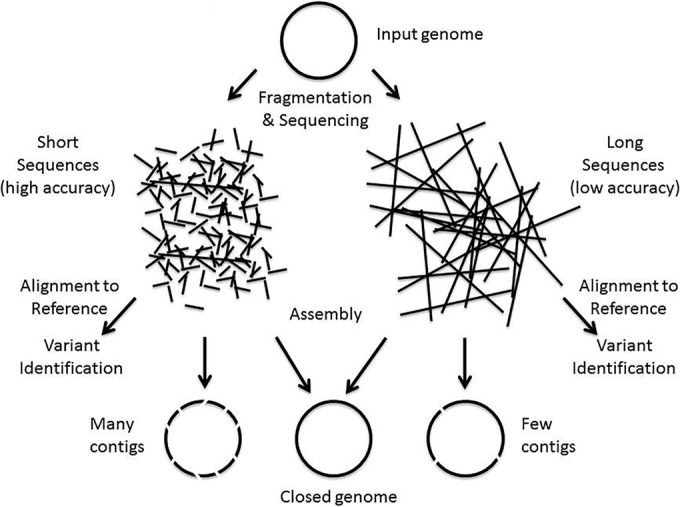
“The first commercial NGS platform, the GS20 sequencer from 454 Life Sciences, which was originally released in 2005 (1, 2), resulted in a more than 100-fold increase in the amount of microbial genomic sequence data produced in a day compared to preceding instruments.”
Hybrid error correction and de novo assembly of single-molecule sequencing reads
Koren, S., Schatz, M. C., Walenz, B. P., Martin, J., Howard, J. T., Ganapathy, G., Wang, Z., Rasko, D. A., McCombie, W. R., Jarvis, E. D., et al. (2012) · Nature Biotechnology · doi:10.1038/nbt.2280 · Cited by 1,011 · cited 1×
“To obtain a complete sequence without gaps, one often uses both short and long reads to combine the strengths of these various sequencing approaches (24).”
BackgroundActionable Diagnosis of Neuroleptospirosis by Next-Generation Sequencing
Wilson, M. R., Naccache, S. N., Samayoa, E., Biagtan, M., Bashir, H., Yu, G., Salamat, S. M., Somasekar, S., Federman, S., Miller, S., et al. (2014) · New England Journal of Medicine · doi:10.1056/nejmoa1401268 · Cited by 977 · cited 2×
“In one case, 38 different diagnostic tests had been conducted and failed to yield an actionable answer before a single NGS assay was performed, which identified the pathogen (4).”
BackgroundACMG clinical laboratory standards for next-generation sequencing
Rehm, H. L., Bale, S. J., Bayrak-Toydemir, P., Berg, J. S., Brown, K. K., Deignan, J. L., Friez, M. J., Funke, B. H., Hegde, M. R., & Lyon, E. (2013) · Genetics in Medicine · doi:10.1038/gim.2013.92 · Cited by 907
Snitkin, E. S., Zelazny, A. M., Thomas, P. J., Stock, F., Program, N. C. S., Henderson, D. K., Palmore, T. N., & Segre, J. A. (2012) · Science Translational Medicine · doi:10.1126/scitranslmed.3004129 · Cited by 863 · cited 1×
“siella pneumoniae infections (13), among many others.”
Origins of the E. coli Strain Causing an Outbreak of Hemolytic–Uremic Syndrome in Germany
Rasko, D. A., Webster, D. R., Sahl, J. W., Bashir, A., Boisen, N., Scheutz, F., Paxinos, E. E., Sebra, R., Chin, C.-S., Iliopoulos, D., et al. (2011) · New England Journal of Medicine · doi:10.1056/nejmoa1106920 · Cited by 823 · cited 2×
“For example, WGS using NGS technology was applied to investigate an outbreak of hemolytic-uremic syndrome caused by an unusual strain of Escherichia coli in Germany (10), the origins of the 2010 Haitian Vibrio cholerae epidemic (11), a series of methicillin-resistant Staphylococcus aureus infections in a neonatal inte…”
Background
Research works printed but not linked: 4
- GenomeWeb 7 8 2015 CDC earmarks $2.3 million for NGS, bioinformatic approaches to combat infectious disease. GenomeWeb, New York, NY https://www.genomeweb.com/research-funding/cdc-earmarks-23m-ngs-bioinformatic-approaches-combat-infectious-disease.
- US Food and Drug Administration 11 7 2014 Public workshop—advancing regulatory science for high throughput sequencing devices for microbial identification and detection of antimicrobial resistance markers, April 1, 2014. US Food and Drug Administration, Silver Spring, MD http://www.fda.gov/MedicalDevices/NewsEvents/WorkshopsConferences/ucm386967.htm.
- US Food and Drug Administration 11 12 2013 FDA database for regulatory grade microbial sequences (FDA-ARGOS): supporting development and validation of infectious disease Dx tests. National Center for Biotechnology Information, Bethesda, MD http://www.ncbi.nlm.nih.gov/bioproject/231221.
- Sichtig H 2014 High-throughput sequencing technologies for microbial identification and detection of antimicrobial resistance markers, p 1– 21. In FDA Public Workshop on High Throughput Sequencing Devices in Microbial Diagnostics. US Food and Drug Administration, Silver Spring, MD.
Cited by
Items 301–382 of 382
Caracterização molecular do microbioma hospitalar por sequenciamento de alto desempenho
Rampelotto, P. H. (2019) · Americanae (AECID Library)
Metagenomics in One Health — from standardization to targeted application
Hallmaier–Wacker, L. K. (2020) · eDiss (Georg-August-Universität Göttingen) · doi:10.53846/goediss-7952
Metagenomics for clinical diagnostics: technologies and informaticsPreprint
Loeffler, C., Gibson, K. M., Martin, L. S., Chang, L., Rotman, J., Toma, I., Mason, C. E., Eskin, E., Zackular, J. P., Crandall, K. A., et al. (2019) · arXiv (Cornell University) · doi:10.48550/arxiv.1911.11304 · Cited by 2
Kheir, M. M. (2020) · Clinical Orthopaedics and Related Research · doi:10.1097/corr.0000000000001426
“Next-generation sequencing comprehensively explores all genes in all organisms present in a sample and has promising results for detecting organisms in up to 82% of culture-negative PJIs [4, 14, 15].”
BackgroundMetagenomic Next-generation Nequencing Aids the Diagnosis of Co-infection In HIV-infected PatientsPreprint
Chen, J., Deng, G., Zhong, R., Zhu, H., Li, X., Xia, J., & Liu, X. (2020) · doi:10.21203/rs.3.rs-40254/v1
“mNGS, with its non-targeted identi cation of microbes, through deep sequencing of biological samples, data mining, and identi cation of pathogen sequences in the absence of a priori assumption, constitutes a paradigm shift in microbiological [21, 22], which might contribute greatly to HIV-infected patients with suspec…”
BackgroundHuang, X., Du, N., He, J., & Du, Y. (2021) · Research Square · doi:10.21203/rs.3.rs-139943/v1
“Because it takes less time and less priori knowledge of the type of microbial to come to an conclusion, there are many promising applications on epidemiology including: infectious disease diagnostics, hospital infection microbial surveillance programs, community outbreak investigations and antimicrobial resistance[38].”
BackgroundWang, Q., Wu, B., Yang, D., Yang, C., Jin, Z., Cao, J., & Feng, J. (2020) · doi:10.22541/au.158514382.24460279
Assessment Of Presumed Sterility Of The Human Placenta And Maternal Bladder
Alhousseini, A. (2019) · Human Biology
A Piece of the Puzzle: The Role of Molecular Testing in Antimicrobial Stewardship
Willis, Z., & Maurice, A. D. S. (2021) · Journal of the Pediatric Infectious Diseases Society · doi:10.1093/jpids/piab037
RVFScan Predicts Virulence Factor Genes and Hypervirulence of Clinical MetagenomePreprint
Jiang, Y., Hu, X., Fan, S., Chen, J., Deng, Q., Yang, A., Liu, W., Ling, Y., Zhao, Y., Yang, J., et al. (2022) · SSRN Electronic Journal · doi:10.2139/ssrn.4031583
Zhang, R., Zhu, M., Zhang, M., Shan, C., Ji, L., Zhang, W., & Chen, B. (2022) · Research Square · doi:10.21203/rs.3.rs-1377767/v1
Eley, B. (2019) · Faculty Opinions – Post-Publication Peer Review of the Biomedical Literature · doi:10.3410/f.735971642.793562219
Knieendoprothetik: Periprothetische Infektion
Friesecke, C., Gravius, S., Hischebeth, G. T. R., & Wirtz, D. C. (2022) · Springer Reference Medizin · doi:10.1007/978-3-662-55485-2_41-1
Wee, S. K. (2022) · DR-NTU (Nanyang Technological University) · doi:10.32657/10356/162155
Knieendoprothetik: Periprothetische Infektion
Friesecke, C., Gravius, S., Hischebeth, G. T. R., & Wirtz, D. C. (2022) · Springer Reference Medizin · doi:10.1007/978-3-662-55485-2_41-2
Role of gene sequencing for the diagnosis, tracking and prevention of ocular infections
Karthikeyan, R. S. G., Rameshkumar, G., & Lalitha, P. (2022) · Journal of The Academy of Clinical Microbiologists · doi:10.4103/jacm.jacm_17_22
Future of genome sequencing in clinical microbiology
Choure, A. C. (2022) · IP International Journal of Medical Microbiology and Tropical Diseases · doi:10.18231/j.ijmmtd.2022.054
Knieendoprothetik: Periprothetische Infektion
Friesecke, C., Gravius, S., Hischebeth, G. T. R., & Wirtz, D. C. (2023) · Springer eBooks · doi:10.1007/978-3-662-65175-9_17
Soto, R. A., Paul, L., Porucznik, C. A., Xie, H., Stinnett, R. C., Briggs, B., Biggerstaff, M., Stanford, J. B., & Schlaberg, R. (2023) · JMIR Formative Research · doi:10.2196/32848 · Cited by 1
“Reliable detection of respiratory viruses requires robust methods for sample collection and preservation of viral RNA during transport because poor sample quality can lead to missed identification of significant pathogenic viruses [10].”
BackgroundChen, Y., Wang, J., & Niu, T. (2023) · Research Square · doi:10.21203/rs.3.rs-3193455/v1
Study on the Application Value of BALFmNGS in Lung Infectious Diseases
梁, 宏. (2024) · Advances in Clinical Medicine · doi:10.12677/acm.2024.141293
Pandrangi, S. L., Kishore, G., Nikhilesh, G. S. S., & Lanka, S. (2024) · Springer eBooks · doi:10.1007/978-981-99-8799-3_5
Obermeier, P. (2021) · theses.fr (ABES) · doi:10.70675/d1122423zb691z4eb4zbfdazc44559729dff · Cited by 1
Wang, Y., Chen, T., Zhang, S., Zhang, L., Li, Q., Lv, Q., Kong, D., Jiang, H., Ren, Y., Jiang, Y., et al. (2023) · Figshare · doi:10.6084/m9.figshare.24452441
Wang, J., Ye, J., Yang, L., Chen, X., Fang, H., Liu, Z., Xia, G., Zhang, Y., & Zhang, Z. (2022) · Figshare · doi:10.6084/m9.figshare.21256857
Wang, J., Ye, J., Yang, L., Chen, X., Fang, H., Liu, Z., Xia, G., Zhang, Y., & Zhang, Z. (2022) · Figshare · doi:10.6084/m9.figshare.21256854
Li, N., Zhang, L., Gao, Y., Lai, Q.-Q., Tang, Y.-J., Du, X., Chen, P., Yue, C.-S., Zhao, M., Yu, K., et al. (2024) · Journal of International Medical Research · doi:10.1177/03000605241238134
“35 The problem of how to obtain accurate blood culture results as early as possible using common clinical parameters and inflammatory markers must be urgently solved.”
BackgroundImplementation, Optimization, and Stewardship of Advanced Molecular Testing for Infectious Diseases
Azimi, V., & Dumm, R. E. (2024) · Advances in Molecular Pathology · doi:10.1016/j.yamp.2024.07.004
Wang, C., Hu, Z., Li, Z., Zhao, M., Little, M. A., & Chen, M. (2024) · BMC Pulmonary Medicine · doi:10.1186/s12890-024-03301-5
“In addition to conventional microbiological tests (CMTs) of BALF, metagenomic next-generation sequencing (mNGS) is a nucleic acid sequencing technique with a high-throughput capacity and an approach that can theoretically detect any microorganism in the bio-sample, including BALF [14, 15].”
BackgroundSequence‐Based Identification and Typing
She, R. C., Fisher, M. A., Kozyreva, V. K., & Yang, S. (2023) · Wiley eBooks · doi:10.1002/9781683670438.cmph0156
Al-Wathiqi, F., Gago, S., Frazer, L. N., Rautemaa‐Richardson, R., & Bowyer, P. (2025) · bioRxiv (Cold Spring Harbor Laboratory) · doi:10.1101/2025.02.17.635002 · Cited by 1
Genomics in infectious disease
Olymon, K., Kumari, A., & Kumar, A. (2025) · Elsevier eBooks · doi:10.1016/b978-0-443-31554-1.00013-3
Encephalitis and Meningoencephalitis
Bronstein, D. E., & Glaser, C. A. (2025) · Elsevier eBooks · doi:10.1016/b978-0-323-82763-8.00036-4
Aamot, H. V., Moran‐Gilad, J., & Rossen, J. W. A. (2025) · Wiley eBooks · doi:10.1002/9781683674597.ch17
Liu, C., Long, J., Li, Y., Leng, X., Zhang, J., Chen, S., Fu, J., Li, C., Zhou, Y., Feng, C., et al. (2025) · Global Spine Journal · doi:10.1177/21925682251375446
“17,18 Unlike traditional microbial culture, it rapidly identi fi es microorganisms independent of culture via high-throughput sequencing of clinical samples and enables a hypothesis-free and unbiased aetiological diagnosis.”
Cai, Z., Zeng, D., Lei, L.-W., & Xiao, S. (2025) · Frontiers in Medicine · doi:10.3389/fmed.2025.1601953
Yang, Y. M., Guo, J. R., & Dang, N. (2025) · Frontiers in Medicine · doi:10.3389/fmed.2025.1626685
Zhao, W., Zou, Y. S., Li, P., Gao, Y., He, L., Zeng, Y., & Tang, B. (2025) · Research Square · doi:10.21203/rs.3.rs-7209424/v1
Wang, J.-M., Pan, Y., Hong, J.-C., Jiang, Z.-J., Zhang, S., Fan, R.-J., Yang, B., Wang, Z.-Q., Zhu, J., & Yao, X.-P. (2025) · Infection and Drug Resistance · doi:10.2147/idr.s552138
“6–8 Additionally, mNGS is less impacted by prior antibiotic exposure.”
Popper, H. (2025) · Springer eBooks · doi:10.1007/978-3-031-91697-7_8
Wang, Y., Chen, T., Zhang, S., Zhang, L., Li, Q., Lv, Q., Kong, D., Jiang, H., Ren, Y., Jiang, Y., et al. (2024) · Figshare · doi:10.6084/m9.figshare.26633376
Pallerla, S. R., Van Dong, D., Linh, L. T. K., Van Son, T., Quyen, D. T., Hoan, P. Q., Trung, N. T., The, N. T., Rüter, J., Boutin, S., et al. (2022) · Figshare · doi:10.6084/m9.figshare.20968323
Wang, Y., Chen, T., Zhang, S., Zhang, L., Li, Q., Lv, Q., Kong, D., Jiang, H., Ren, Y., Jiang, Y., et al. (2024) · Figshare · doi:10.6084/m9.figshare.26633373
Lian, Q.-Y., Chen, A., Zhang, J.-H., Guan, W.-J., Xu, X., Wei, B., Huang, D.-X., He, J.-X., & Ju, C. (2021) · Figshare · doi:10.6084/m9.figshare.16944461
Wang, Y., Chen, T., Zhang, S., Zhang, L., Li, Q., Lv, Q., Kong, D., Jiang, H., Ren, Y., Jiang, Y., et al. (2024) · Figshare · doi:10.6084/m9.figshare.26633370
Wang, Y., Chen, T., Zhang, S., Zhang, L., Li, Q., Lv, Q., Kong, D., Jiang, H., Ren, Y., Jiang, Y., et al. (2024) · Figshare · doi:10.6084/m9.figshare.26633367
Wang, C., Hu, Z.-W., Li, Z.-Y., Zhao, M.-H., & Chen, M. (2022) · Research Square · doi:10.21203/rs.3.rs-2407918/v1
Wang, Y., Chen, T., Zhang, S., Zhang, L., Li, Q., Lv, Q., Kong, D., Jiang, H., Ren, Y., Jiang, Y., et al. (2024) · Figshare · doi:10.6084/m9.figshare.26633379
Wang, Q., Wu, B., Yang, D., Yang, C., Jin, Z., Cao, J., & Feng, J. (2020) · Figshare · doi:10.6084/m9.figshare.13100998
Zhang, Z., Liu, T., Ming, M., Shen, M., Zhang, Y., Chen, H., Chen, W., 陶金好, Wang, Y., Liu, J., et al. (2024) · Figshare · doi:10.6084/m9.figshare.26289205
Wang, Y., Chen, T., Zhang, S., Zhang, L., Li, Q., Lv, Q., Kong, D., Jiang, H., Ren, Y., Jiang, Y., et al. (2024) · Figshare · doi:10.6084/m9.figshare.24452636
Ji, J., Wang, W., Xiang, S., Wei, X., Pang, G., Shi, H., Dong, J., & Pang, J. (2024) · Figshare · doi:10.6084/m9.figshare.26639190
Ji, J., Wang, W., Xiang, S., Wei, X., Pang, G., Shi, H., Dong, J., & Pang, J. (2024) · Figshare · doi:10.6084/m9.figshare.26639196
Ji, J., Wang, W., Xiang, S., Wei, X., Pang, G., Shi, H., Dong, J., & Pang, J. (2024) · Figshare · doi:10.6084/m9.figshare.26639193
Next-Generation Sequence (NGS) Analysis: Current Trends, Techniques, and Applications
Narayanasamy, S., Kumar, U. V., Lakshmanan, S., & Uthandi, S. (2025) · Springer handbooks · doi:10.1007/978-3-031-81728-1_35 · Cited by 2
吴, 婉., 喻, 鑫., 王, 苗., 谢, 沈., 刘, 学., 赵, 鹏., 杨, 励., 郑, 艺., 蔡, 霈., 潘, 文., et al. (2025) · 环球医学进展 · doi:10.58244/glmedp.253417
Wang, W., Qiao, H., Zhao, Z., & Yan, T. (2026) · Cancers · doi:10.3390/cancers18020230
“The utility of NGS in culture-negative scenarios is an area of active investigation [28,29].”
Meningitis diagnosis, treatment, and outcomes in rural, northern Uganda: 2015–2024
Link, A., Okwir, M., Nabongo, B., Okello, F., Alal, J., Meya, D. B., & Bohjanen, P. R. (2026) · PLOS Global Public Health · doi:10.1371/journal.pgph.0005800
Hu, H., Cai, D., Li, J., & Wang, K. (2026) · Frontiers in Cellular and Infection Microbiology · doi:10.3389/fcimb.2026.1765925
Wang, C., Min, M., Dai, Z., Wang, G., Wang, Y., Hu, T., Ma, Y., Zhang, S., Wu, C., & Zhou, R. (2026) · Frontiers in Cellular and Infection Microbiology · doi:10.3389/fcimb.2026.1715563
Bioethical challenges in the era of precision medicine
Khan, H. R., Faheem, H. M., Qamar, U., Asim, I., Afzal, I., & Yasmeen, H. (2026) · Elsevier eBooks · doi:10.1016/b978-0-443-40483-2.00043-1
Mustafa, G., Tahir, A., Abbas, R. Z., & Javed, K. (2026) · Elsevier eBooks · doi:10.1016/b978-0-443-40483-2.00001-7
Challenges and barriers to implementing microbiome analysis in clinical practice
Sahoo, G. C., Topno, R. K., Kumar, M., Bhoi, B., Rana, S., & Pandey, K. K. (2026) · Elsevier eBooks · doi:10.1016/b978-0-443-40483-2.00041-8
Miho, E., Marquez, S., Stervbo, U., Mertz, K. D., Kruta, J., Schkommodau, E., & Meysman, P. (2026) · Journal of Translational Medicine · doi:10.1186/s12967-026-07693-2
“Furthermore, regulatory hurdles in translating research in the clinical laboratory [149] are well known, while new challenges related to the integration of AI are emerging [150, 151].”
Benchmarking nanopore-based strategies for antimicrobial resistance prediction
Ring, N., Low, A. S., Evans, R., Keith, M., Paterson, G. K., Gally, D. L., Nuttall, T. J., Clements, D. N., & Fitzgerald, J. R. (2026) · Microbial Genomics · doi:10.1099/mgen.0.001885
Li, X. Q., Chen, D., Xiao, Y., Lei, Z., Yang, X., 张业琼, Li, L., Zheng, Y., Zhang, Y., 黄湛镰, et al. (2026) · Frontiers in Medicine · doi:10.3389/fmed.2026.1800314
“However, since specimen submission for mNGS testing was initiated later than CTM in clinical practice, no significant difference was observed in confirmation time (from hospital admission to definitive diagnosis) between the two methods (median: 4 days [IQR 2–8] vs. 5 days [IQR 4–7]; p = 0.315).”
InfluentialLiu, L., Pan, S., Gong, F., Wang, A., Wang, X., Yang, L., Mo, W., & Jiang, T. (2026) · BMC Infectious Diseases · doi:10.1186/s12879-026-13691-y
“These core strengths make mNGS particularly suitable for diagnosing novel, rare, mixed, or refractory infections in patients who have already received empirical antimicrobial therapy [12, 13].”
Zhu, C., Wang, T., Zhang, W., Guo, A., Ji, S., Liu, C., Ma, R., Song, L., Wang, Y., Yao, P., et al. (2026) · BMC Biotechnology · doi:10.1186/s12896-026-01182-6
“This technological advancement has yielded valuable insights into the dynamics of microorganisms in both healthy and diseased states [1, 2].”
IMPACT OF 16S RRNA-BASED MOLECULAR IDENTIFICATION OF BACTERIA ON INFECTIOUS DISEASE DIAGNOSIS
Bhamoliya, R., & Sinha, D. K. (2026) · International Journal of Multidisciplinary Research & Reviews · doi:10.56815/ijmrr.v5i6.2026.331-349
Ghiasi, N. M., Mustafa, H., Güloglu, T., Nadig, R., Koliogeorgi, K., Ruiz, S. R., Rautmann, M., Eris, F., Sadrosadati, M., Park, J., et al. (2026) · Proceedings - International Symposium on Computer Architecture/Proceedings · doi:10.1109/isca66397.2026.00066 · Cited by 5
Xu, Z., Wang, Y., Zhang, X., Guo, F., Chen, J., Geng, H., Li, Y., & Gao, Y. (2026) · Frontiers in Cellular and Infection Microbiology · doi:10.3389/fcimb.2026.1868295
Imeneo, A., Capone, A., Antonelli, V., Perri, V., Petriccione, I., Lodi, A., Fontana, C., & Cicalini, S. (2026) · Frontiers in Microbiology · doi:10.3389/fmicb.2026.1924442
“Furthermore, cost, infrastructure, turnaround time and bioinformatic expertise still limit routine implementation in many clinical laboratories (Goldberg et al., 2015; Ellington et al., 2017; Hassall et al., 2024).”
Dirican, N., & Yardibi, F. (2026) · Medicine · doi:10.1097/md.0000000000050602
“[41,42] Keyword cluster analysis identified sCAP, atypical pathogens, antibiotic resistance, COPD, and β -lactam monotherapy as current research hotspots, reflecting the growing emphasis on precision diagnosis, antimicrobial stewardship, and management of high-risk patient populations.”
Elmetwalli, A., Algehainy, N. A., Altemani, F. H., Alanazi, M. A., Alharbi, Z. M., & Alzahrani, O. R. (2026) · Chemical Engineering Journal · doi:10.1016/j.cej.2026.182165
Ma, X., Wu, H., Li, H., Wang, B., Huang, G., Ren, Z., Tang, J., Han, P., & Shen, H. (2026) · Research Square · doi:10.21203/rs.3.rs-11060592/v1
Naderi, M., Sadidi, R., Besharati, R., Kebriae, A., & Azimian, A. (2026) · Diagnostic Microbiology and Infectious Disease · doi:10.1016/j.diagmicrobio.2026.117721
Digital Microbiology in Clinical Diagnostics and Pathogen Surveillance
Izah, S. C., Kari, A., & Ogwu, M. C. (2026) · Advances in computational intelligence and robotics book series · doi:10.4018/979-8-3373-8929-5.ch011
Metadata
- Authors
- Goldberg, B., Sichtig, H., Geyer, C., Ledeboer, N., & Weinstock, G. M.
- Affiliations
- Children's National (US)
- United States Food and Drug Administration (US)
- American Society for Microbiology (US)
- Medical College of Wisconsin (US)
- The Jackson Laboratory for Genomic Medicine (US)
- Corresponding author
- Weinstock, George M.
- Venue
- mBio
- Publisher
- American Society for Microbiology
- Published
- 2015-12-31
- Volume
- 6
- Issue
- 6
- Pages
- e01888-15
- ISSN
- 2150-7511 (ISSN-L)
- 2161-2129
- PMC
- PMC4669390
- OpenAlex
- W2239037555
- Cited by
- 360
- References
- 30
- Citations by year
- 2026: 19 · 2025: 38 · 2024: 38 · 2023: 47 · 2022: 56 · 2021: 42 · 2020: 34 · 2019: 27 · 2018: 17 · 2017: 26 · 2016: 16
- FWCI
- 1.95
- Type
- journal article
- Language
- en
- Open access
- gold
- doi.org
- Licence
- cc-by-nc-sa
- creativecommons.org/licenses/by-nc-sa/3.0/ (vor)
- journals.asm.org/non-commercial-tdm-license (tdm)
- Locations
- mBio (publishedVersion, cc-by-nc-sa)
- Europe PMC (PubMed Central) (publishedVersion, cc-by-nc-sa)
- PubMed Central (publishedVersion, cc-by-nc-sa)
- PubMed (publishedVersion)
- DOAJ (DOAJ: Directory of Open Access Journals) (submittedVersion, cc-by-sa)
- The Mouseion at the JAXlibrary (Jackson Laboratory) (submittedVersion)
- Topics
- Health Sciences › Medicine › Microbiology (medical) › Bacterial Identification and Susceptibility Testing
- Life Sciences › Biochemistry, Genetics and Molecular Biology › Molecular Biology › Genomics and Phylogenetic Studies
- Life Sciences › Biochemistry, Genetics and Molecular Biology › Genetics › Genomics and Rare Diseases
- Keywords
- next-generation sequencing, infectious disease diagnostics, clinical microbiology, metagenomics, microbiome analysis, pathogen genomics, clinical implementation, regulatory guidelines, clinical trials, host-microbe interactions
- MeSH terms
- Communicable Diseases, Microbiological Techniques, Societies, Scientific, United States, Molecular Diagnostic Techniques, High-Throughput Nucleotide Sequencing
About these checks
Registry, retraction, Cites and statistics results are computed, not judged, with one exception: a printed reference that no index lists is read once by a model before it counts as a citation error. Claims are extracted by a model and kept only when their quote appears verbatim in the text; each cited source is then checked, with a model’s help, for whether it says what the claim relies on. Those verdicts can be wrong — read the claim’s quote and the cited source before relying on one.
Statistics and arithmetic are recomputed, not judged.
Confidence bands are shown only for fields calibrated on our annotated test set. None is calibrated yet, so no band is shown.
What counts as a claim ›How we measure confidence ›How we check this ›
Are you an author, or do you see a problem with this page? Request a review
Data sources
Bibliographic data: Semantic Scholar, OpenAlex, Crossref.
Contains information from the Semantic Scholar Academic Graph Datasets, made available under the ODC Attribution License (ODC-BY 1.0).
Semantic Scholar’s data is described in: Kinney, R., et al. (2023). The Semantic Scholar Open Data Platform. arXiv:2301.10140.
