

The DOI matches its Crossref record; 71 of the 71 references it cites were found in a registry or an index.
ATP-Dependent Persister Formation in Escherichia coli
Open accessAbstract
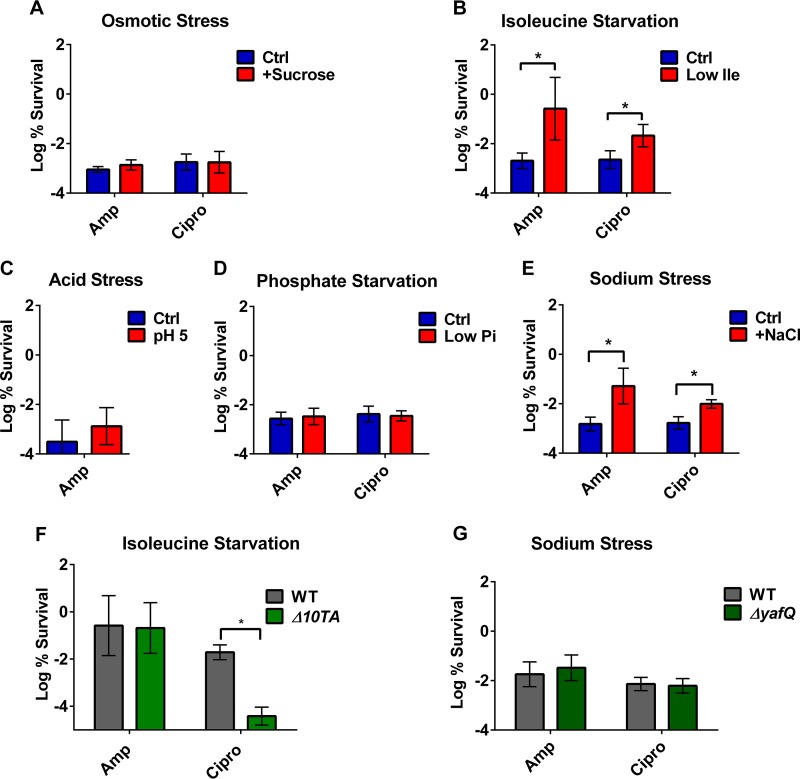
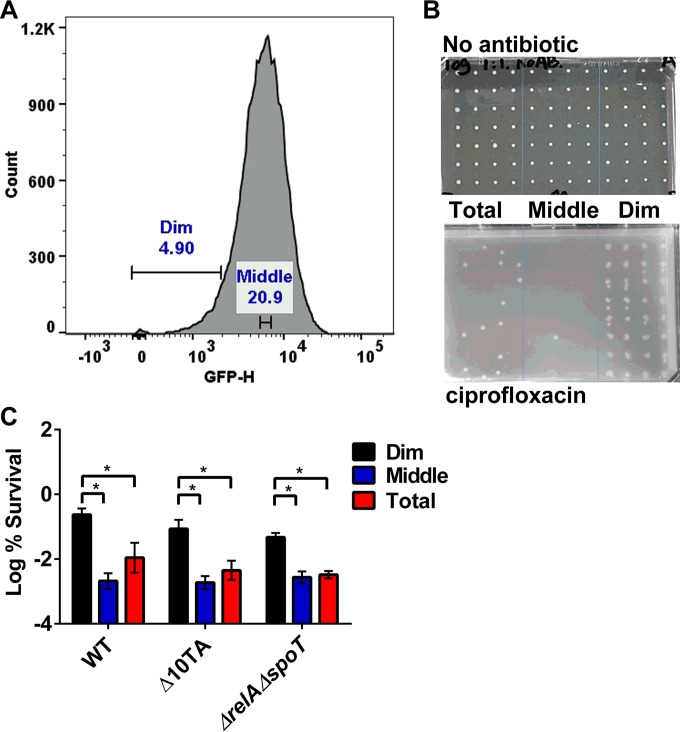
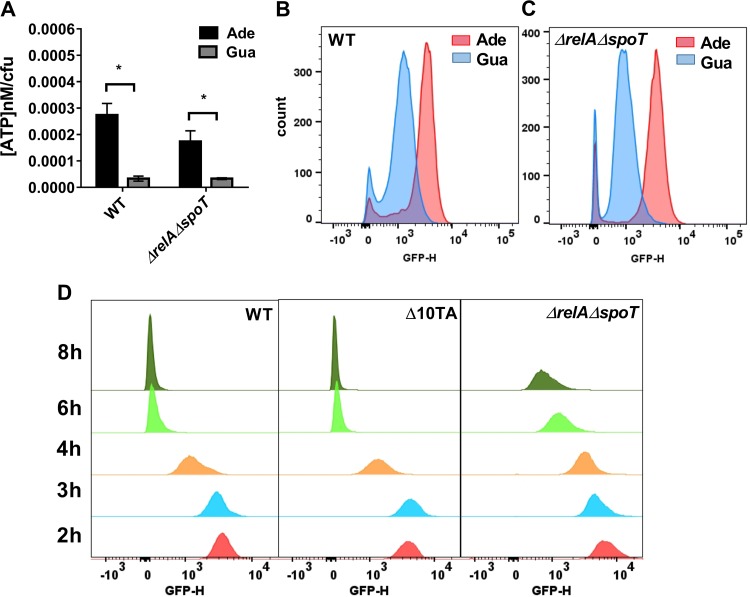
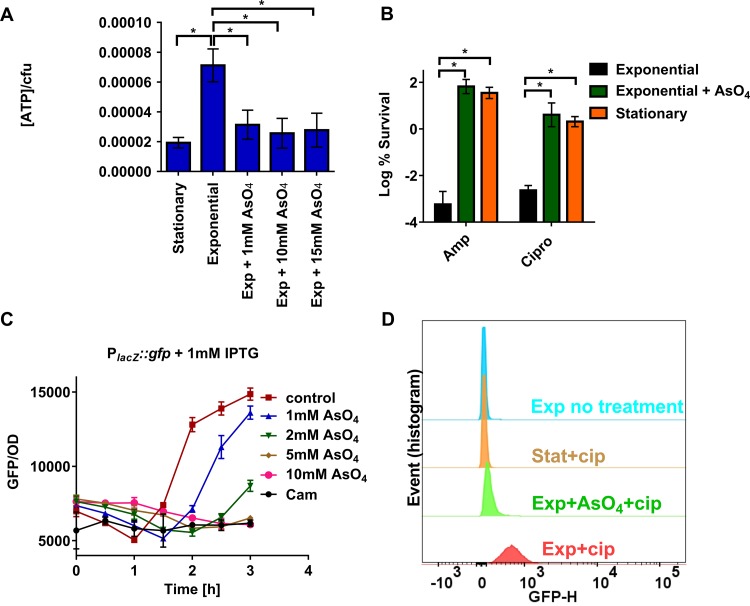
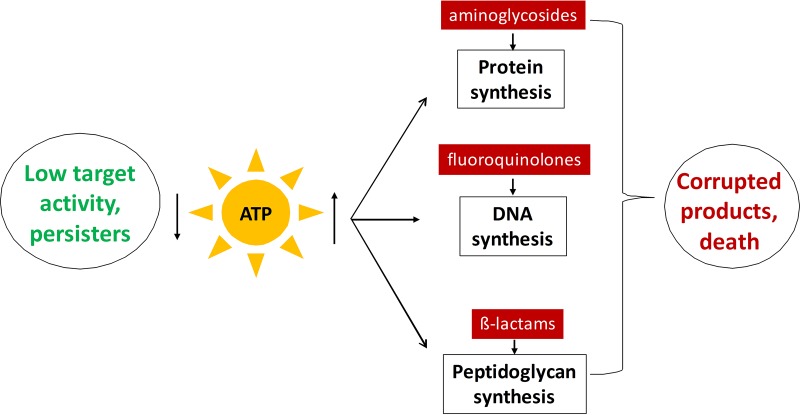
Persisters are dormant variants that form a subpopulation of cells tolerant to antibiotics. Persisters are largely responsible for the recalcitrance of chronic infections to therapy. In Escherichia coli , one widely accepted model of persister formation holds that stochastic accumulation of ppGpp causes activation of the Lon protease that degrades antitoxins; active toxins then inhibit translation, resulting in dormant, drug-tolerant persisters. We found that various stresses induce toxin-antitoxin (TA) expression but that induction of TAs does not necessarily increase persisters. The 16S rRNA promoter rrnB P1 was proposed to be a persister reporter and an indicator of toxin activation regulated by ppGpp. Using fluorescence-activated cell sorting (FACS), we confirmed the enrichment for persisters in the fraction of rrnB P1 -gfp dim cells; however, this is independent of toxin-antitoxins. rrnB P1 is coregulated by ppGpp and ATP. We show that rrnB P1 can report persisters in a relA / spoT deletion background, suggesting that rrnB P1 is a persister marker responding to ATP. Consistent with this finding, decreasing the level of ATP by arsenate treatment causes drug tolerance. Lowering ATP slows translation and prevents the formation of DNA double-strand breaks upon fluoroquinolone treatment. We conclude that variation in ATP levels leads to persister formation by decreasing the activity of antibiotic targets. IMPORTANCE Persisters are a subpopulation of antibiotic-tolerant cells responsible for the recalcitrance of chronic infections. Our current understanding of persister formation is primarily based on studies of E. coli . The activation of toxin-antitoxin systems by ppGpp has become a widely accepted model for persister formation. In this study, we found that stress-induced activation of mRNA interferase-type toxins does not necessarily cause persister formation. We also found that the persister marker rrnB P1 reports persister cells because it detects a drop in cellular ATP levels. Consistent with this, lowering the ATP level decreases antibiotic target activity and, thus, leads to persister formation. We conclude that stochastic variation in ATP is the main mechanism of persister formation. A decrease in ATP provides a satisfactory explanation for the drug tolerance of persisters, since bactericidal antibiotics act by corrupting energy-dependent targets.
Overview
The claims and statistics of this paper haven’t been checked yet.
Run the check — free, no account needed. It reads the open-access text and checks the sources it cites.
Integrity signals
Registry
Cites
Statistics
Figures
Verification
Claims the paper makes
The claims and statistics of this paper haven’t been checked yet.
Run the check — free, no account needed. It reads the open-access text and checks the sources it cites.
Claims other papers make about this one
Each is checked against this paper’s own text: does it say what the citing paper says it does?
The source backs part of the claim, not all of it — or backs it for a different population, condition or comparison.
In the citing paper
“It has been well studied that dormant state reduces the exposure of antibiotic targets and helps bacterial cells tolerate a variety of antibiotics, a process linked to the toxin-antitoxin system [18,54].”
From Antifungal persistence: Clinical relevance and mechanisms (2025) · cites this paper as [54]
Experimental — accuracy not yet measured
Self-check
Percentages, sums and reported differences re-computed from the paper’s own numbers.
The self-check needs the paper’s full text.
Citations
Cites
2 retracted
RETRACTED: Bacterial persistence by RNA endonucleases
Maisonneuve, E., Shakespeare, L. J., Jørgensen, M. G., & Gerdes, K. (2011) · Proceedings of the National Academy of Sciences · doi:10.1073/pnas.1100186108 · Cited by 473
RetractedMaisonneuve, E., Castro-Camargo, M., & Gerdes, K. (2013) · Cell · doi:10.1016/j.cell.2013.07.048 · Cited by 439
RetractedBacterial Persistence as a Phenotypic Switch
Balaban, N. Q., Merrin, J., Chait, R., Kowalik, L., & Leibler, S. (2004) · Science · doi:10.1126/science.1099390 · Cited by 2,952
Lewis, K. (2010) · Annual Review of Microbiology · doi:10.1146/annurev.micro.112408.134306 · Cited by 1,858
Self-citationIntracellular Bacterial Biofilm-Like Pods in Urinary Tract Infections
Anderson, G. G., Palermo, J. J., Schilling, J. D., Roth, R. A., Heuser, J., & Hultgren, S. J. (2003) · Science · doi:10.1126/science.1084550 · Cited by 1,175
Persister cells and tolerance to antimicrobials
Keren, I., Kaldalu, N., Spoering, A. L., Wang, Y., & Lewis, K. (2003) · FEMS Microbiology Letters · doi:10.1016/s0378-1097(03)00856-5 · Cited by 1,094
Self-citationProkaryotic toxin–antitoxin stress response loci
Gerdes, K., Christensen, S. K., & Løbner‐Olesen, A. (2005) · Nature Reviews Microbiology · doi:10.1038/nrmicro1147 · Cited by 1,033
Active Starvation Responses Mediate Antibiotic Tolerance in Biofilms and Nutrient-Limited Bacteria
Nguyen, D. M., Joshi-Datar, A., Lepine, F. L., Bauerle, E., Olakanmi, O., Beer, K. D., McKay, G. A., Siehnel, R., Schafhauser, J., Wang, Y., et al. (2011) · Science · doi:10.1126/science.1211037 · Cited by 1,008
The RpoS-Mediated General Stress Response in Escherichia coli
Battesti, A., Majdalani, N., & Gottesman, S. (2010) · Annual Review of Microbiology · doi:10.1146/annurev-micro-090110-102946 · Cited by 922
Specialized Persister Cells and the Mechanism of Multidrug Tolerance in Escherichia coli
Keren, I., Shah, D., Spoering, A. L., Kaldalu, N., & Lewis, K. (2004) · Journal of Bacteriology · doi:10.1128/jb.186.24.8172-8180.2004 · Cited by 848
Self-citation
Research works printed but not linked: 1
- 10.1016/j.cell.2013.07.048 · DOI
Cited by
Sorted by citations
Molecular mechanisms of antibiotic resistance revisited
Darby, E. M., Trampari, E., Siasat, P., Gaya, M. S., Alav, I., Webber, M. A., & Blair, J. M. A. (2023) · Nature Reviews Microbiology · doi:10.1038/s41579-022-00820-y · Cited by 1,398
Persistent bacterial infections and persister cells
Fisher, R. A., Gollan, B., & Helaine, S. (2017) · Nature Reviews Microbiology · doi:10.1038/nrmicro.2017.42 · Cited by 1,243
The value of antimicrobial peptides in the age of resistance
Magana, M., Muthuirulan, P., Santos, A. L., Leanse, L. G., Fernández, M., Ioannidis, A., Giulianotti, M. A., Apidianakis, Y., Bradfute, S. B., Ferguson, A. L., et al. (2020) · The Lancet Infectious Diseases · doi:10.1016/s1473-3099(20)30327-3 · Cited by 1,193
Antibiotic resistance and persistence—implications for human health and treatment perspectives
Huemer, M., Mairpady Shambat, S., Brugger, S. D., & Zinkernagel, A. S. (2020) · The EMBO Reports · doi:10.15252/embr.202051034 · Cited by 850
The Science of Antibiotic Discovery
Lewis, K. (2020) · Cell · doi:10.1016/j.cell.2020.02.056 · Cited by 848
Self-citation
Metadata
- Authors
- Shan, Y., Brown Gandt, A., Rowe, S. E., Deisinger, J. P., Conlon, B. P., & Lewis, K.
- Affiliations
- Northeastern University (US)
- Department of Biology, Antimicrobial Discovery Center, Northeastern University, Boston, Massachusetts, USA
- Corresponding author
- Lewis, Kim
- Venue
- mBio
- Publisher
- American Society for Microbiology
- Published
- 2017-03-08
- Volume
- 8
- Issue
- 1
- ISSN
- 2150-7511 (ISSN-L)
- 2161-2129
- PMC
- PMC5296605
- OpenAlex
- W2586386056
- Cited by
- 508
- References
- 71
- Citations by year
- 2026: 55 · 2025: 61 · 2024: 47 · 2023: 42 · 2022: 54 · 2021: 61 · 2020: 56 · 2019: 69 · 2018: 37 · 2017: 26
- FWCI
- 34.04
- Type
- journal article
- Language
- en
- Open access
- gold
- doi.org
- Licence
- Locations
- mBio (publishedVersion, cc-by)
- Europe PMC (PubMed Central) (publishedVersion, cc-by)
- PubMed Central (publishedVersion, cc-by)
- PubMed (publishedVersion)
- Carolina Digital Repository (University of North Carolina at Chapel Hill) (submittedVersion)
- DOAJ (DOAJ: Directory of Open Access Journals) (submittedVersion, cc-by-sa)
- DOAJ (DOAJ: Directory of Open Access Journals) (submittedVersion)
- UNC Libraries
- Funders
- DH | National Institute for Health Research (R01AI110578)
- Charles A. King Trust (Fellowship)
- Topics
- Life Sciences › Biochemistry, Genetics and Molecular Biology › Genetics › Bacterial Genetics and Biotechnology
- Health Sciences › Medicine › Infectious Diseases › Antimicrobial Resistance in Staphylococcus
- Life Sciences › Biochemistry, Genetics and Molecular Biology › Molecular Biology › Bacterial biofilms and quorum sensing
- Keywords
- persister cells, antibiotic tolerance, Escherichia coli, ATP levels, toxin-antitoxin systems, ppGpp, Lon protease, arsenate, protein synthesis inhibition, DNA double-strand breaks, fluoroquinolones, chronic infection
- MeSH terms
- Adenosine Triphosphate, Drug Tolerance, Escherichia coli, Gene Expression Regulation, Bacterial, Microbial Viability
About these checks
Registry, retraction, Cites and statistics results are computed, not judged, with one exception: a printed reference that no index lists is read once by a model before it counts as a citation error. Claims are extracted by a model and kept only when their quote appears verbatim in the text; each cited source is then checked, with a model’s help, for whether it says what the claim relies on. Those verdicts can be wrong — read the claim’s quote and the cited source before relying on one.
Statistics and arithmetic are recomputed, not judged.
Confidence bands are shown only for fields calibrated on our annotated test set. None is calibrated yet, so no band is shown.
What counts as a claim ›How we measure confidence ›How we check this ›
Are you an author, or do you see a problem with this page? Request a review
