

Application of a Neutral Community Model To Assess Structuring of the Human Lung Microbiome
Open accessThe DOI matches its Crossref record; 49 of the 50 references it cites were found in a registry or an index.
Abstract
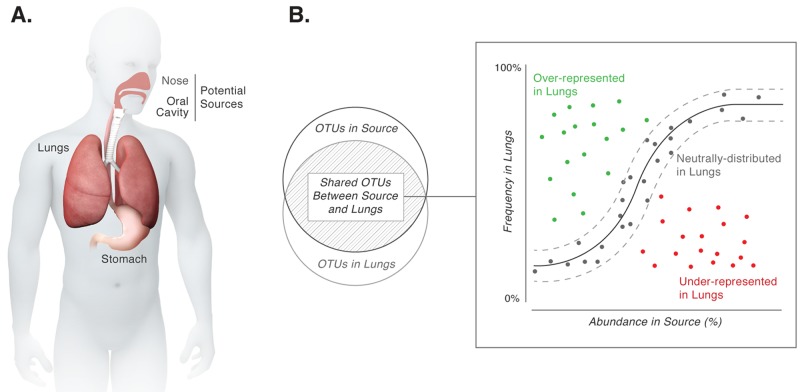
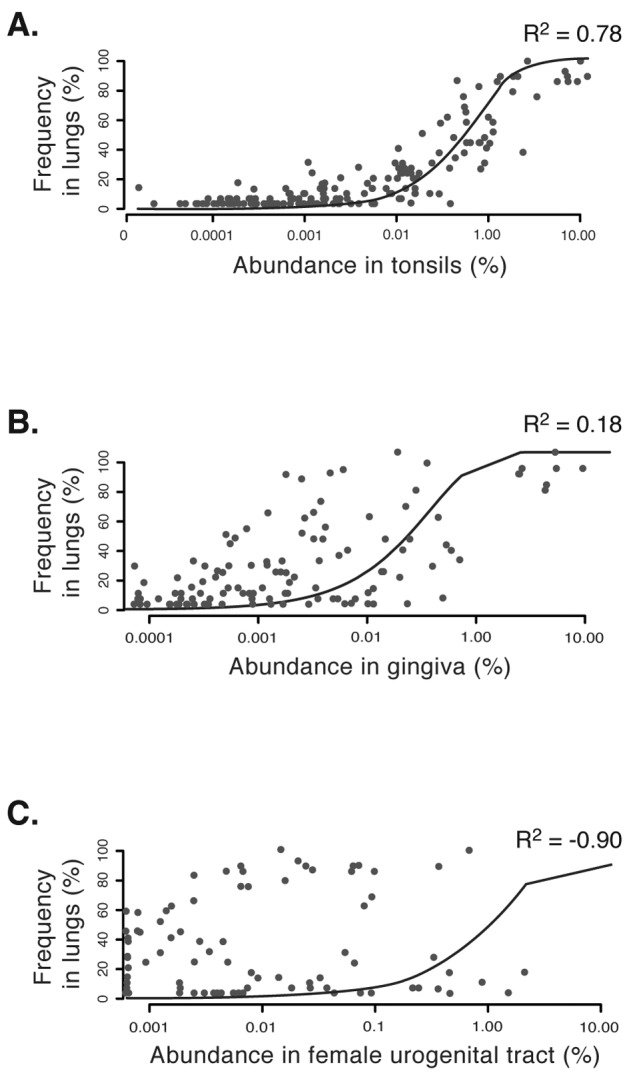
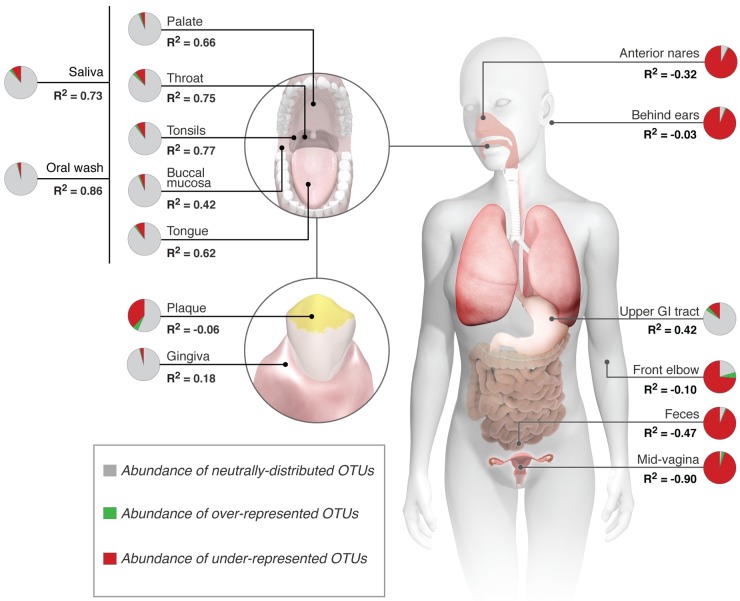
DNA from phylogenetically diverse microbes is routinely recovered from healthy human lungs and used to define the lung microbiome. The proportion of this DNA originating from microbes adapted to the lungs, as opposed to microbes dispersing to the lungs from other body sites and the atmosphere, is not known. We use a neutral model of community ecology to distinguish members of the lung microbiome whose presence is consistent with dispersal from other body sites and those that deviate from the model, suggesting a competitive advantage to these microbes in the lungs. We find that the composition of the healthy lung microbiome is consistent with predictions of the neutral model, reflecting the overriding role of dispersal of microbes from the oral cavity in shaping the microbial community in healthy lungs. In contrast, the microbiome of diseased lungs was readily distinguished as being under active selection. We also assessed the viability of microbes from lung samples by cultivation with a variety of media and incubation conditions. Bacteria recovered by cultivation from healthy lungs represented species that comprised 61% of the 16S rRNA-encoding gene sequences derived from bronchoalveolar lavage samples. IMPORTANCE Neutral distribution of microbes is a distinguishing feature of the microbiome in healthy lungs, wherein constant dispersal of bacteria from the oral cavity overrides differential growth of bacteria. No bacterial species consistently deviated from the model predictions in healthy lungs, although representatives of many of the dispersed species were readily cultivated. In contrast, bacterial populations in diseased lungs were identified as being under active selection. Quantification of the relative importance of selection and neutral processes such as dispersal in shaping the healthy lung microbiome is a first step toward understanding its impacts on host health.
Overview
The claims and statistics of this paper haven’t been checked yet.
Free: it reads the open-access text and checks the first 5 claims that cite a source we can check. Create a free account to check every claim.
Integrity signals
Registry
Cites
Statistics
Figures
Verification
Claims the paper makes
The claims and statistics of this paper haven’t been checked yet.
Free: it reads the open-access text and checks the first 5 claims that cite a source we can check. Create a free account to check every claim.
Claims other papers make about this one
Each is checked against this paper’s own text: does it say what the citing paper says it does?
The source backs part of the claim, not all of it — or backs it for a different population, condition or comparison.
In the citing paper
“This supports the hypothesis that, in health, the lung microbiota is a community of transiently present microorganisms that are derived from the URT, rather than a thriving, resident community as is commonly found in chronic respiratory diseases80,87,88.”
From The microbiota of the respiratory tract: gatekeeper to respiratory health (2017) · cites this paper as [87]
Experimental — accuracy not yet measuredThe check wasn’t confident either way, so it gives no verdict — never disputed.
In the citing paper
“Individuals with chronic airway diseases (e.g., cystic fibrosis, COPD) have increased bacterial populations in the lungs (77) and differences in the relative abundance of certain species”
From Respiratory viral infection-induced microbiome alterations and secondary bacterial pneumonia. (2018) · cites this paper as [77]
Experimental — accuracy not yet measuredIn the citing paper
“Multiple studies have shown that lung microbiota are more similar to those in the oropharynx, than those in the air, nasopharynx or lower digestive tract (Segal et al., 2013; Venkataraman et al., 2015).”
From Oral Microbiome and SARS-CoV-2: Beware of Lung Co-infection (2020) · cites this paper as Venkataraman et al., 2015
In the citing paper
“Contrary to dogma that normal healthy lungs are a sterile environment, a distinct, and somewhat dynamic lung microbiome can be identified using sequencing technology, with microaspiration serving as the primary route of microbial immigration from the URT to the LRT”
From Respiratory viral infection-induced microbiome alterations and secondary bacterial pneumonia. (2018) · cites this paper as [77]
In the citing paper
“the alveolar space is an ecologically unfavourable environment for most bacteria and reproduction is minimal.”
From The microbiome and critical illness (2016) · cites this paper as [112]
Self-check
Percentages, sums and reported differences re-computed from the paper’s own numbers.
The self-check needs the paper’s full text.
Citations
Cites
Schloss, P. D., Westcott, S. L., Ryabin, T., Hall, J. R., Hartmann, M., Hollister, E. B., Lesniewski, R. A., Oakley, B. B., Parks, D. H., Robinson, C. J., et al. (2009) · Applied and Environmental Microbiology · doi:10.1128/aem.01541-09 · Cited by 19,549
Structure, function and diversity of the healthy human microbiome
The Human Microbiome Project Consortium (2012) · Nature · doi:10.1038/nature11234 · Cited by 11,726
The Unified Neutral Theory of Biodiversity and Biogeography
Jetschke, G. (2002) · Ecology · doi:10.1890/0012-9658(2002)083[1771:tuntob]2.0.co;2 · Cited by 6,993
Hutchinson, G. E. (1957) · Cold Spring Harbor Symposia on Quantitative Biology · doi:10.1101/sqb.1957.022.01.039 · Cited by 6,228
Probable Inference, the Law of Succession, and Statistical Inference
Wilson, E. B. (1927) · Journal of the American Statistical Association · doi:10.1080/01621459.1927.10502953 · Cited by 4,476 · cited 1×
“Finally, the variability around this expected detection frequency was calculated using 95% binomial proportion confidence intervals (Wilson method [46]) with the HMisc package in R.”
MethodHomage to Santa Rosalia or Why Are There So Many Kinds of Animals?
Hutchinson, G. E. (1959) · The American Naturalist · doi:10.1086/282070 · Cited by 4,138
Quantifying the roles of immigration and chance in shaping prokaryote community structure
Sloan, W. T., Lunn, M., Woodcock, S., Head, I. M., Nee, S., & Curtis, T. P. (2006) · Environmental Microbiology · doi:10.1111/j.1462-2920.2005.00956.x · Cited by 1,887 · cited 1×
“Next, for each OTU shared between the lung and the source community, a beta probability distribution was used to calculate the expected frequency of detection in the lungs if it was present via dispersal and ecological drift (18).”
MethodWadsworth anaerobic bacteriology manual
Sutter, V. L., Citron, D. M., & Finegold, S. M. (1980) · Medical Entomology and Zoology · Cited by 1,388
Ecological Niches: Linking Classical and Contemporary Approaches
Chase, J. M., & Leibold, M. A. (2003) · Cited by 1,321
Recent findings on the viable but nonculturable state in pathogenic bacteria
Oliver, J. D. (2010) · FEMS Microbiology Reviews · doi:10.1111/j.1574-6976.2009.00200.x · Cited by 1,203 · cited 1×
“, Pneumocystis jirovecii in lungs) (41, 42).”
Cited by
Items 101–200 of 428
Wang, L., Wu, G., Qin, X., Ma, Q., Zhou, Y., Liu, S., & Tan, Y. (2015) · Cellular Physiology and Biochemistry · doi:10.1159/000438561 · Cited by 56
Scales of persistence: transmission and the microbiome
Robinson, C. D., Bohannan, B. J., & Britton, R. A. (2019) · Current Opinion in Microbiology · doi:10.1016/j.mib.2019.09.009 · Cited by 56
Lung Microbiota and Its Impact on the Mucosal Immune Phenotype
Wu, B. G., & Segal, L. N. (2017) · Microbiology Spectrum · doi:10.1128/microbiolspec.bad-0005-2016 · Cited by 61
“Neutral modeling is a technique that can be utilized to identify taxa preferentially enriched in one sample type (68).”
MethodNeutral and selective dynamics in a synthetic microbial community
Cira, N., Pearce, M. T., & Quake, S. R. (2018) · Proceedings of the National Academy of Sciences · doi:10.1073/pnas.1808118115 · Cited by 52
Neutral Processes Drive Seasonal Assembly of the Skin Mycobiome
Tong, X., Leung, M. H. Y., Wilkins, D. E., Cheung, H. H. L., & Lee, P. K. H. (2019) · mSystems · doi:10.1128/msystems.00004-19 · Cited by 57
“This approach has been successfully applied to model microbial communities in ecosystems, including the human lung (32, 33) and skin (34), animals (35, 36), and wastewater (37).”
MethodRebolleda‐Gómez, M., & Ashman, T. (2019) · Molecular Ecology · doi:10.1111/mec.15280 · Cited by 57
Hassani, M. A., Özkurt, E., Franzenburg, S., & Stukenbrock, E. H. (2020) · Phytobiomes Journal · doi:10.1094/pbiomes-01-20-0001-sc · Cited by 52
Baker, J. M., Hinkle, K. J., McDonald, R. A., Brown, C. A., Falkowski, N. R., Huffnagle, G. B., & Dickson, R. P. (2021) · Microbiome · doi:10.1186/s40168-021-01055-4 · Cited by 58
“Strategies used to detect, interpret, and, in some cases, eliminate contamination have included exclusion of taxa detected in negative controls through statistical packages [66, 67] or unbiased subtraction [7], extraction and sequencing technical replicates [51], calculation of abundance ratios [68], correlation analy…”
MethodSelf-citationZemenick, A. T., Vannette, R. L., & Rosenheim, J. A. (2021) · Oikos · doi:10.1111/oik.06818 · Cited by 59
How low can we go? The implications of low bacterial load in respiratory microbiota studies
Marsh, R. L., Nelson, M. T., Pope, C. E., Leach, A. J., Hoffman, L. R., Chang, A. B., & Smith‐Vaughan, H. (2018) · Pneumonia · doi:10.1186/s41479-018-0051-8 · Cited by 56
“[64] used a neutral model to identify probable background contamination reads in microbiota data from respiratory specimens with low bacterial load; reads that were identified by the neutral model as likely to have originated from background contamination were excluded prior to OTU clustering.”
BackgroundMethodSpecies-level evaluation of the human respiratory microbiome
Ibironke, O. A., McGuinness, L. R., Lu, S., Wang, Y., Hussain, S., Weisel, C. P., & Kerkhof, L. J. (2020) · GigaScience · doi:10.1093/gigascience/giaa038 · Cited by 49
“The study concluded that the neutral distribution of microbes dispersed from the mouth is consistent with the composition of the healthy lung microbiome [32].”
Dong, P., Guo, H., Huang, L., Zhang, D., & Wang, K. (2023) · Aquaculture · doi:10.1016/j.aquaculture.2023.739254 · Cited by 48
Association of sputum microbiota profiles with severity of community-acquired pneumonia in children
Pettigrew, M. M., Gent, J. F., Kong, Y., Wade, M., Gansebom, S., Bramley, A. M., Jain, S., Arnold, S. L. R., & McCullers, J. A. (2016) · BMC Infectious Diseases · doi:10.1186/s12879-016-1670-4 · Cited by 52
“and complex ecosystem; 2) there is erosion of the zones of demarcation that differentiate microbiota niches in diseased compared to healthy states; and 3) non-native resident taxa frequently and transiently invade interconnected body sites within the respiratory tract [5, 23, 42, 43].”
BackgroundMicrobiota assembly, structure, and dynamics among Tsimane horticulturalists of the Bolivian Amazon
Sprockett, D. D., Martin, M. A., Costello, E. K., Burns, A. R., Holmes, S., Gurven, M., & Relman, D. A. (2020) · Nature Communications · doi:10.1038/s41467-020-17541-6 · Cited by 50
Insights into the role of the respiratory tract microbiome in defense against bacterial pneumonia
Drigot, Z., & Clark, S. E. (2024) · Current Opinion in Microbiology · doi:10.1016/j.mib.2024.102428 · Cited by 55
The microbiome of the human lower airways: a next generation sequencing perspective
Aho, V. T. E., Pereira, P. A. B., Haahtela, T., Pawankar, R., Auvinen, P., & Koskinen, K. (2015) · World Allergy Organization Journal · doi:10.1186/s40413-015-0074-z · Cited by 47
“[51] showed evidence that 61% of 16S rRNA gene sequences recovered from healthy lung BAL could be matched to species recovered by a diverse assortment of culturing techniques.”
BackgroundRespiratory microbiota and lower respiratory tract disease
Lanaspa, M., Bassat, Q., Medeiros, M. M., & Muñoz‐Almagro, C. (2017) · Expert Review of Anti-infective Therapy · doi:10.1080/14787210.2017.1349609 · Cited by 54
“bacterial dispersal from upper respiratory niches, particularly the oral cavity, explained lung microbial communities[36].”
BackgroundPotential Role of the Lung Microbiome in Shaping Asthma Phenotypes
Chung, K. F. (2017) · Annals of the American Thoracic Society · doi:10.1513/annalsats.201702-138aw · Cited by 51
Age-related differences in the respiratory microbiota of chickens
Glendinning, L., McLachlan, G., & Vervelde, L. (2017) · PLoS ONE · doi:10.1371/journal.pone.0188455 · Cited by 50
“Interestingly, while in humans the lung microbiota is often highly similar to the oral microbiota [30,31] this is not the case in our chickens as the types of bacteria found in BAL fluids were significantly different from those found in both buccal and nasal swabs.”
Novak, N., & Cabanillas, B. (2020) · Immunology · doi:10.1111/imm.13240 · Cited by 50
Zhang, Y., Shen, F., Yang, Y., Niu, M., Chen, D., Chen, L., Wang, S., Zheng, Y., Sun, Y., Zhou, F., et al. (2022) · Environmental Science & Technology · doi:10.1021/acs.est.2c00688 · Cited by 49
Protected sampling is preferable in bronchoscopic studies of the airway microbiome
Grønseth, R., Drengenes, C., Wiker, H. G., Tangedal, S., Xue, Y., Husebø, G. R., Svanes, Ø., Lehmann, S., Aardal, M. E., Hoang, T., et al. (2017) · ERJ Open Research · doi:10.1183/23120541.00019-2017 · Cited by 48
Mendes, E., Acetturi, B. G., Thomas, A. M., Martins, F. D. S., Crisma, A. R., Murata, G., Braga, T. T., Camâra, N. O. S., Franco, A. L. D. S., Setubal, J. C., et al. (2017) · Frontiers in Microbiology · doi:10.3389/fmicb.2017.01732 · Cited by 46
“Besides this interaction between pulmonary and gut immunity happen due to the production of SCFAs by the gut microbiota, the oral microbiota serves as an inoculum for the intestine (Arimatsu et al., 2014), and possible lungs (Venkataraman et al., 2015; Wu and Segal, 2017).”
BackgroundCystic fibrosis respiratory microbiota: unraveling complexity to inform clinical practice
Caverly, L. J., & LiPuma, J. J. (2018) · Expert Review of Respiratory Medicine · doi:10.1080/17476348.2018.1513331 · Cited by 55
Bernard, L., Colom, A., Monard, S., Namouchi, A., Cescato, M., Garnier, H., Leon‐Icaza, S. A., Métais, A., Dumas, A., Corral, D., et al. (2021) · The Journal of Immunology · doi:10.4049/jimmunol.2001044 · Cited by 54
Host-microbiome interactions in acute and chronic respiratory infections
Taylor, S., Wesselingh, S. L., & Rogers, G. B. (2016) · Cellular Microbiology · doi:10.1111/cmi.12589 · Cited by 50
“under altered selective conditions is absent in the latter (Venkataraman et al., 2015).”
BackgroundDoes lung microbiome play a causal or casual role in asthma?
Cicco, M. D., Pistello, M., Jacinto, T., Ragazzo, V., Piras, M., Freer, G., Pifferi, M., & Peroni, D. G. (2018) · Pediatric Pulmonology · doi:10.1002/ppul.24086 · Cited by 57
“In children, microaspirations also involve secretions from the nasopharynx,(14) that are facilitated by the peculiar anatomy of upper airways and increased production of nasal secretions during childhood.(9,15) Any bias related to the risk of contamination by medical procedures was excluded, demonstrating that the pas…”
BackgroundKotlyarov, S. N., & Котлярова, А. А. (2021) · International Journal of Molecular Sciences · doi:10.3390/ijms22147634 · Cited by 57
The role of anaerobic bacteria in the cystic fibrosis airway
Sherrard, L. J., Bell, S. C., & Tunney, M. M. (2016) · Current Opinion in Pulmonary Medicine · doi:10.1097/mcp.0000000000000299 · Cited by 52
Poor Oral Health in the Etiology and Prevention of Aspiration Pneumonia
Scannapieco, F. A. (2021) · Dental Clinics of North America · doi:10.1016/j.cden.2020.11.006 · Cited by 52
Alternate life history phases of a common seaweed have distinct microbial surface communities
Lemay, M. A., Martone, P. T., Hind, K. R., Lindstrom, S. C., & Parfrey, L. W. (2018) · Molecular Ecology · doi:10.1111/mec.14815 · Cited by 45
Battaglini, D., Robba, C., Fedele, A., Trancă, S., Sukkar, S. G., Pilato, V. D., Bassetti, M., Giacobbe, D. R., Vena, A., Patroniti, N. A., et al. (2021) · Frontiers in Medicine · doi:10.3389/fmed.2021.671714 · Cited by 44
“In contrast, the lung microbiota is enriched in pharyngeal microbes (60, 61), as demonstrated in numerous studies (62, 63).”
BackgroundPetrolli, R., Vieira, C. A., Jąkalski, M., Bocayuva, M. F., Vallé, C., Cruz, E. D. S., Selosse, M., Martos, F., & Kasuya, M. C. M. (2021) · New Phytologist · doi:10.1111/nph.17459 · Cited by 50
Zhou, Y., Lai, Y., Tong, X., Leung, M. H. Y., Tong, J. C. K., Ridley, I. A., & Lee, P. K. H. (2020) · Environmental Science & Technology · doi:10.1021/acs.est.9b07623 · Cited by 42
How human microbiome talks to health and disease
Cong, J., & Zhang, X. (2018) · European Journal of Clinical Microbiology & Infectious Diseases · doi:10.1007/s10096-018-3263-1 · Cited by 52
Community Assembly in Wastewater-Fed Pilot-Scale Microbial Electrolysis Cells
Cotterill, S. E., Dolfing, J., Curtis, T. P., & Heidrich, E. S. (2018) · Frontiers in Energy Research · doi:10.3389/fenrg.2018.00098 · Cited by 40
Acquisition and adaptation of the airway microbiota in the early life of cystic fibrosis patients
Boutin, S., & Dalpke, A. H. (2017) · Molecular and Cellular Pediatrics · doi:10.1186/s40348-016-0067-1 · Cited by 47
“Only then, some pathogens adapt and grow in the lower airways as evidenced by their higher abundancy in the lower airways as compared to the source (nose or throat) [21].”
BackgroundComparing microbiotas in the upper aerodigestive and lower respiratory tracts of lambs
Glendinning, L., Collie, D., Wright, S. H., Rutherford, K., & McLachlan, G. (2017) · Microbiome · doi:10.1186/s40168-017-0364-5 · Cited by 49
“The healthy human lung microbiota is thought to be formed predominantly from the neutral dispersal of these upper aerodigestive tract microbes into the lungs rather than by the differential growth of lungadapted microbial communities [35].”
BackgroundThe Lung Microbiome: A Central Mediator of Host Inflammation and Metabolism in Lung Cancer Patients?
Weinberg, F. D., Dickson, R. P., Nagrath, D., & Ramnath, N. (2020) · Cancers · doi:10.3390/cancers13010013 · Cited by 44
“In healthy lungs, the microbial composition is determined by the balance between immigration and elimination of bacteria [2,5].”
BackgroundShen, D., Guo, Z., Huang, K., Dai, P., Jin, X., Li, Y., & Li, C. (2021) · Journal of Hazardous Materials · doi:10.1016/j.jhazmat.2021.126710 · Cited by 39
Nguyen, M. T., Sharma, A., Wu, W., Gomi, R., Sung, B., Hospodsky, D., Angenent, L. T., & Worgall, S. (2016) · The ISME Journal · doi:10.1038/ismej.2016.76 · Cited by 42
“An improved characterization of the human lung microbiome will be instrumental to delineate these interactions (Dickson and Huffnagle, 2015; Venkataraman et al., 2015).”
BackgroundWhat is the future of Periodontal Medicine?
Fischer, R. G., Gomes‐Filho, I. S., da Cruz, S. S., Oliveira, V. B., Lira‐Junior, R., Scannapieco, F. A., & Rêgo, R. O. (2021) · Brazilian Oral Research · doi:10.1590/1807-3107bor-2021.vol35.0102 · Cited by 51
Oral health status and the etiology and prevention of nonventilator hospital‐associated pneumonia
Scannapieco, F. A., Giuliano, K. K., & Baker, D. L. (2022) · Periodontology 2000 · doi:10.1111/prd.12423 · Cited by 38
Lu, J., Carmody, L. A., Opron, K., Simon, R. H., Kalikin, L. M., Caverly, L. J., & LiPuma, J. J. (2020) · mSystems · doi:10.1128/msystems.00296-20 · Cited by 41
“of migration, colonization/infection, and extinction (26, 29).”
Microbial dysbiosis and epigenetics modulation in cancer development – A chemopreventive approach
Haque, S., Raina, R., Afroze, N., Hussain, A., Alsulimani, A., Singh, V., Mishra, B. N., Kaul, S., & Kharwar, R. N. (2021) · Seminars in Cancer Biology · doi:10.1016/j.semcancer.2021.06.024 · Cited by 38
Inhalation Injury: Unmet Clinical Needs and Future Research
Dyamenahalli, K. U., Garg, G., Shupp, J. W., Kuprys, P. V., Choudhry, M. A., & Kovacs, E. J. (2019) · Journal of Burn Care & Research · doi:10.1093/jbcr/irz055 · Cited by 44
Santiago, G. L. D. S., Brusselle, G., Dauwe, K., Deschaght, P., Verhofstede, C., Vaneechoutte, D., Deschepper, E., Jordens, P., Joos, G., & Vaneechoutte, M. (2017) · BMC Microbiology · doi:10.1186/s12866-017-1022-6 · Cited by 37
“Discussion The oral microbiome has been shown to be the primary source of the healthy lung microbiome [18, 19] and indeed culture-independent studies have confirmed that the microbiome of the lungs more closely resembles that of the oropharynx than it does for instance that of other possible source communities, such a…”
BackgroundPrecision respiratory medicine and the microbiome
Rogers, G. B., & Wesselingh, S. L. (2015) · The Lancet Respiratory Medicine · doi:10.1016/s2213-2600(15)00476-2 · Cited by 36
Lung Microbiome Analysis in Steroid-Naїve Asthma Patients by Using Whole Sputum
Jung, J., Choi, J. C., Shin, J.-W., Kim, J.-Y., Park, I., Choi, B. W., Park, H., Cho, S., Kim, K., & Kang, H. (2016) · Tuberculosis & respiratory diseases · doi:10.4046/trd.2016.79.3.165 · Cited by 36
Metabolic Activity of Intestinal Microflora in Patients with Bronchial Asthma
Ivashkin, V. T., Zolnikova, O. Y., Potskhverashvili, N. D., Трухманов, А. С., Kokina, N., Dzhakhaya, N., Sedova, A., & Леонидовна, Б. Е. (2019) · Clinics and Practice · doi:10.4081/cp.2019.1126 · Cited by 37
Hussain, S., Liu, H., Liu, S., Yin, Y., Yuan, Z., Zhao, Y.-G., & Cao, H. (2021) · Journal of Fungi · doi:10.3390/jof7121082 · Cited by 33
“, selective growth/attachment) contribute to community assembly [62,63].”
BackgroundThe microbiome-metabolome crosstalk in the pathogenesis of respiratory fungal diseases
Gonçalves, S. M., Lagrou, K., Duarte-Oliveira, C., Maertens, J. A., Cunha, C., & Carvalho, A. (2017) · Virulence · doi:10.1080/21505594.2016.1257458 · Cited by 32
Wu, D., Xie, J., Liu, Y., Jin, L. N., Li, G., & An, T. (2023) · Environmental Science & Technology · doi:10.1021/acs.est.3c02593 · Cited by 32
Keravec, M., Mounier, J., Prestat, E., Vallet, S., Jansson, J. K., Burgaud, G., Rosec, S., Gouriou, S., Rault, G., Coton, E., et al. (2015) · SpringerPlus · doi:10.1186/s40064-015-1207-0 · Cited by 39
Drengenes, C., Eagan, T., Haaland, I., Wiker, H. G., & Nielsen, R. (2021) · BMC Genomics · doi:10.1186/s12864-020-07252-z · Cited by 38
Poor Oral Health in the Etiology and Prevention of Aspiration Pneumonia
Scannapieco, F. A. (2023) · Clinics in Geriatric Medicine · doi:10.1016/j.cger.2023.01.010 · Cited by 43
Christian Martin, H., Guzior, D. V., Gonzalez, C. T., Okros, M., Mielke, J., Padillo, L., Querido, G., Gil, M., Thomas, R. G., McClelland, M., et al. (2023) · Respiratory Research · doi:10.1186/s12931-023-02630-z · Cited by 42
“It has been reported that the healthy lung microbiota displayed neutral community dynamics, i.e., microbial abundances were explained by immigration from adjacent body sites and local replacement [39, 40].”
BackgroundRazak, S. A., & Scribner, K. T. (2020) · Applied and Environmental Microbiology · doi:10.1128/aem.02662-19 · Cited by 36
“May 2020 Volume 86 Issue 10 e02662-19 aem.asm.org 5 on F ebruary 4, 2021 by guest http://aem .asm .org/ D ow nloaded from The abundance of two OTUs (OTU82, Alphaproteobacteria genus Devosia; OTU29, Gammaproteobacteria genus Vibrio) at 1 week after feeding was different from that at the other two stages.”
BackgroundMethodInfluentialSchmitt, F. C. F., Lipinski, A. L., Hofer, S., Uhle, F., Nußhag, C., Hackert, T., Dalpke, A. H., Weigand, M. A., Brenner, T., & Boutin, S. (2020) · Journal of Hospital Infection · doi:10.1016/j.jhin.2020.04.028 · Cited by 36
Leveraging 3D Model Systems to Understand Viral Interactions with the Respiratory Mucosa
Iverson, E., Kaler, L., Agostino, E. L., Song, D., Duncan, G. A., & Scull, M. A. (2020) · Viruses · doi:10.3390/v12121425 · Cited by 30
Taylor, K. J. M., Ngunjiri, J. M., Abundo, M. C., Jang, H., Elaish, M., Ghorbani, A., Mahesh, K. C., Weber, B., Johnson, T. J., & Lee, C. W. (2020) · Applied and Environmental Microbiology · doi:10.1128/aem.00431-20 · Cited by 32
Pérez‐Cobas, A. E., Ginévra, C., Rusniok, C., Jarraud, S., & Buchrieser, C. (2023) · Cell Reports Medicine · doi:10.1016/j.xcrm.2023.101167 · Cited by 33
Alsayed, A. R., Abed, A. I., Khader, H. A., Al-Shdifat, L., Hasoun, L., Al‐Rshaidat, M. M. D., Alkhatib, M., & Zihlif, M. A. (2023) · International Journal of Molecular Sciences · doi:10.3390/ijms24044086 · Cited by 39
Role of gut-lung microbiome crosstalk in COVID-19
Srinath, B. S., Shastry, R. P., & Bajire, S. K. (2020) · Research on Biomedical Engineering · doi:10.1007/s42600-020-00113-4 · Cited by 30
“Several studies reported that the lungs of healthy individuals are most abundant with the phyla Proteobacteria (Acinetobacter sp.), Actinobacteria (Corynebacterium sp.), and Firmicutes (Streptococcus sp.) (Bassis et al. 2015; Venkataraman et al. 2015; Aarnoutse et al. 2019).”
BackgroundAssessing saliva microbiome collection and processing methods
Armstrong, A. J. S., Parmar, V., & Blaser, M. J. (2021) · npj Biofilms and Microbiomes · doi:10.1038/s41522-021-00254-z · Cited by 31
Sharma, N., Wille, K. M., Athira, S. S., Zhi, D., Hough, K. P., Diaz‐Guzman, E., Zhang, K., Kumar, R., Rangarajan, S., Eipers, P. G., et al. (2017) · The Journal of Heart and Lung Transplantation · doi:10.1016/j.healun.2017.07.007 · Cited by 31
Total bacterial load, inflammation, and structural lung disease in paediatric cystic fibrosis
Taylor, S., Leong, L. E. X., Ivey, K. L., Wesselingh, S. L., Grimwood, K., Wainwright, C. E., & Rogers, G. B. (2020) · Journal of Cystic Fibrosis · doi:10.1016/j.jcf.2020.03.008 · Cited by 31
Saliva and Lung Microbiome Associations with Electronic Cigarette Use and Smoking
Ying, K. L., Brasky, T. M., Freudenheim, J. L., McElroy, J., Nickerson, Q. A., Song, M., Weng, D. Y., Wewers, M. D., Whiteman, N. B., Mathé, E. A., et al. (2022) · Cancer Prevention Research · doi:10.1158/1940-6207.capr-21-0601 · Cited by 32
Yu, Y., Xie, X., Luo, R., Deng, Y., Gao, Y., Zhang, Y., Li, H., Luo, J., Luo, Z., & Liu, E. (2019) · Scientific Reports · doi:10.1038/s41598-019-40088-6 · Cited by 31
Gosens, R., Hiemstra, P. S., Adcock, I. M., Bracke, K. R., Dickson, R. P., Hansbro, P. M., Krauss‐Etschmann, S., Smits, H. H., Stassen, F. R. M., & Bartel, S. (2020) · European Respiratory Journal · doi:10.1183/13993003.02320-2019 · Cited by 31
Millares, L., Bermudo, G., Pérez‐Brocal, V., Domingo, C., García-Núñez, M., Pomares, X., Moyá, A., & Monsó, E. (2017) · BMC Microbiology · doi:10.1186/s12866-017-0933-6 · Cited by 30
“functional changes in the microenvironment conditions of the respiratory tract lead to a modification of their bacterial composition [41].”
BackgroundNguyen, L. D. N., Deschaght, P., Merlin, S., Loywick, A., Audebert, C., daele, S. V., Viscogliosi, É., Vaneechoutte, M., & Delhaès, L. (2016) · PLoS ONE · doi:10.1371/journal.pone.0168860 · Cited by 32
Widder, S., Carmody, L. A., Opron, K., Kalikin, L. M., Caverly, L. J., & LiPuma, J. J. (2024) · Nature Communications · doi:10.1038/s41467-024-49150-y · Cited by 25
“In healthy lungs, the pulmonary microbiome shows neutral community dynamics 50 – 52 .”
Flores, C., Millard, S., & Seekatz, A. M. (2025) · Current Clinical Microbiology Reports · doi:10.1007/s40588-025-00246-z · Cited by 37
“However, this model was inapplicable in diseased states, where host selective pressures drastically altered composition [36].”
Altered Ecology of the Respiratory Tract Microbiome and Nosocomial Pneumonia
Pérez‐Cobas, A. E., Baquero, F., de Pablo, R., Soriano, C., & Coque, T. M. (2022) · Frontiers in Microbiology · doi:10.3389/fmicb.2021.709421 · Cited by 34
“The primary source of microorganisms of the RTM is the oropharynx, eventually migrating to the LRT by microaspiration and mucosal dispersion (Bassis et al., 2015; Venkataraman et al., 2015; Dickson et al., 2017).”
BackgroundZorea, A., Pellow, D., Levin, L., Pilosof, S., Friedman, J., Shamir, R., & Mizrahi, I. (2024) · Nature Communications · doi:10.1038/s41467-024-47272-x · Cited by 29
“Several studies on microbial environments have found that both selective and neutral forces shape microbial communities in various environments, such as hot springs, wastewater treatment plants, and human microbial environments 18 – 20 .”
BackgroundMethodFrankel‐Bricker, J., Buerki, S., Feris, K. P., & White, M. M. (2019) · Applied and Environmental Microbiology · doi:10.1128/aem.02334-19 · Cited by 23
Vientós‐Plotts, A. I., Ericsson, A. C., & Reinero, C. R. (2023) · Journal of Veterinary Internal Medicine · doi:10.1111/jvim.16824 · Cited by 30
Hussain, S., Chen, M., Liu, Y., Mustafa, G., Wang, X., Liu, J., Sheikh, T. M. M., Bano, H., & Yasoob, T. B. (2023) · The Science of The Total Environment · doi:10.1016/j.scitotenv.2023.166190 · Cited by 25
The pulmonary microbiome: challenges of a new paradigm
Costa, A. N., da Costa, F. M., Campos, S. V., Salles, R. K., & Athanazio, R. A. (2018) · Jornal Brasileiro de Pneumologia · doi:10.1590/s1806-37562017000000209 · Cited by 40
“(22) Microaspiration appears to play a key role in shaping the lung microbiome, although other bacteria that are present in the lower respiratory tract, such as those of the genera Prevotella, Veillonella, and Streptococcus, have their origin attributable to inhalation through the upper airways.(23,24) The interrelati…”
BackgroundThe Complex Role of the Microbiome in Non-Small Cell Lung Cancer Development and Progression
Souza, V. G. P., Forder, A., Pewarchuk, M. E., Telkar, N., de Araújo, R. P., Stewart, G. L., Vieira, J., Reis, P. P., & Lam, W. L. (2023) · Cells · doi:10.3390/cells12242801 · Cited by 31
“It may also be that lung microbiome composition in healthy individuals could be best attributed to the neutral dispersal of microbes from the oropharynx rather than active local bacterial selection in the lungs [48].”
BackgroundThe microbiome of lung cancer tissue and its association with pathological and clinical parameters.
Kim, O., Choi, B.-Y., Kim, D. K., Kim, N. H., Rho, J. K., Sul, W. J., & Lee, S. W. (2022) · PubMed Central · Cited by 36
Geography, niches, and transportation influence bovine respiratory microbiome and health
Chai, J., Liu, X., Usdrowski, H. M., Deng, F., Li, Y., & Zhao, J. (2022) · Frontiers in Cellular and Infection Microbiology · doi:10.3389/fcimb.2022.961644 · Cited by 32
“Although a recent theory that suggests microbiota colonize in the upper respiratory tracts firstly and then disperse to the lungs was reported in humans (Venkataraman et al., 2015), it has not been confirmed in cattle.”
BackgroundKim, J., Hwangbo, M., Shih, C.-H., & Chu, K. (2023) · Water Research X · doi:10.1016/j.wroa.2023.100187 · Cited by 30
“ical functions within engineering and natural systems (Hugerth and Andersson, 2017; Venkataraman et al., 2015; Wang et al., 2013, 2009), the linkages between the structure and their function were challenging and difficult (Aitchison, 1982; Gloor et al.”
BackgroundDissimilarity‐overlap analysis of community dynamics: Opportunities and pitfalls
Kalyuzhny, M., & Shnerb, N. M. (2017) · Methods in Ecology and Evolution · doi:10.1111/2041-210x.12809 · Cited by 25
“In particular, the neutrality of the human microbiome has been debated in recent studies (e.g. Li & Ma, 2016; Venkataraman et al., 2015), and the DOC results of (Bashan et al., 2016) provide support for non- neutral processes acting in the gut and mouth.”
BackgroundBano, Y., Shrivastava, A., Shukla, P. K., Chaudhary, A. A., Khan, S.-U.-D., & Khan, S. (2024) · Critical Reviews in Microbiology · doi:10.1080/1040841x.2024.2324864 · Cited by 23
“…, Pseudomonas, Veillonella , Sphingomonas and Streptococcus and specific bacterial species like Enterobacteriaceae , Haemophilus , Methylobacterium , Ralstonia and Tropheryma (Morris et al. 2013; Bassis et al. 2015; Dickson et al. 2015; Marsh et al. 2016; enaud et al. 2020) in healthy individuals.”
Ma, Z. S. (2020) · Evolutionary Applications · doi:10.1111/eva.13116 · Cited by 22
“…relatively few applications of neutral theory in microbial communities (e.g., Curtis & Sloan, 2004, Sloan et al., 2006; Sloan et al., 2007, Woodcock et al., 2007, Zhang et al., 2010, Costello et al., 2012, Venkataraman et al., 2015, Li & Ma, 2016, Chen et al., 2017, Dai et al., 2017, Ma, 2020).”
BackgroundMicrobiota-Dependent Regulation of Antimicrobial Immunity in the Lung
Maschirow, L., Suttorp, N., & Opitz, B. (2019) · American Journal of Respiratory Cell and Molecular Biology · doi:10.1165/rcmb.2019-0101tr · Cited by 25
Which Current and Novel Diagnostic Avenues for Bacterial Respiratory Diseases?
Rytter, H., Jamet, A., Coureuil, M., Charbit, A., & Ramond, E. (2020) · Frontiers in Microbiology · doi:10.3389/fmicb.2020.616971 · Cited by 29
“, described in Figure 1) and impacted by antibiotic treatments, anti-inflammatory compounds or underlying diseases (Venkataraman et al., 2015; Rali et al., 2016).”
BackgroundSuccession, sources, and assembly of bacterial community in the developing crab larval microbiome
Lu, Z., Ren, Z., Lin, W., Shi, C., Mu, C., Wang, C., Wu, Q., & Ye, Y. (2021) · Aquaculture · doi:10.1016/j.aquaculture.2021.737600 · Cited by 23
Tian, Z., Enqi, W., You, J., Ma, G., Jiang, S., Liu, Y., Hou, J., Hou, S., Ling, Y., Pei, L., et al. (2022) · Scientific Reports · doi:10.1038/s41598-022-08831-8 · Cited by 23
The human microbiome: A promising target for lung cancer treatment
Sun, Y. H., Wen, M., Liu, Y., Wang, Y., Jing, P., Gu, Z., Jiang, T., & Wang, W. (2023) · Frontiers in Immunology · doi:10.3389/fimmu.2023.1091165 · Cited by 30
Chen, L., Li, X., Medema, G. J., van der Meer, W., & Liu, G. (2023) · Nature Water · doi:10.1038/s44221-023-00149-7 · Cited by 21
“The Sloan NCM was used to explore the role of neutral processes (that is, dispersal and random growths/deaths) in the assembly of microbial communities 41–43 .”
MethodZeineldin, M. M., Elolimy, A. A., & Barakat, R. (2020) · FEMS Microbiology Ecology · doi:10.1093/femsec/fiaa127 · Cited by 26
Lung Microbiome in Human Health and Diseases
Chauhan, N. S. (2021) · Elsevier eBooks · doi:10.1016/b978-0-12-819265-8.00077-2 · Cited by 26
Dynamics of Microbial Community and Potential Microbial Pollutants in Shopping Malls
An, X., Xu, J., Xu, M., Zhao, C.-X., Li, H., Zhu, Y., & Su, J. (2023) · mSystems · doi:10.1128/msystems.00576-22 · Cited by 22
“passive dispersal (for example, sampling individuals from a source pool of available species) to ecological drift (random births and deaths of individuals) as a neutral process (45).”
BackgroundDuvallet, C., Larson, K., Snapper, S. B., Iosim, S., Lee, A., Freer, K., May, K. E., Alm, E. J., & Rosen, R. (2019) · PLoS ONE · doi:10.1371/journal.pone.0216453 · Cited by 20
“However, there is little consensus on whether there exists a distinct or ”core” 52 lung microbiome that is consistent across people [9, 11, 12, 13].”
BackgroundThe microbiota plays a critical role in the reactivity of lung immune components to innate ligands
Marquant, Q., Laubreton, D., Drajac, C., Mathieu, E., Bouguyon, E., Noordine, M.-L., Rémot, A., Riffault, S., Thomas, M., & Descamps, D. (2021) · The FASEB Journal · doi:10.1096/fj.202002338r · Cited by 21
“proposed 94 that the lower airway microbiota is the result of bacterial migration through a transition process of 95 oropharyngeal secretions, micro-aspiration, and direct dispersal of mucosa from the upper respiratory 96 tract to the lower compartment (6-8).”
BackgroundYang, K., Wang, S. L., Ding, Z., Zhang, K., Zhu, W., Wang, H., Pan, M., Li, X., Wang, H., & Yu, Z. (2024) · Frontiers in Cellular and Infection Microbiology · doi:10.3389/fcimb.2024.1397989 · Cited by 23
“However, the cultivation of these microorganisms remains a challenge, with less than 20% currently amenable to laboratory cultivation (Venkataraman et al., 2015).”
Li, L., & Ma, Z. S. (2020) · Frontiers in Bioengineering and Biotechnology · doi:10.3389/fbioe.2020.00464 · Cited by 21
“Hubbell’s Neutral Theory of Biodiversity There have been quite a few applications of Hubbell’s (2001) neutral theory to microbial communities in recent years (Sloan et al., 2006, 2007; Woodcock et al., 2007; Holmes et al., 2012; Jeraldo et al., 2012; Levy and Borenstein, 2013; Morris et al., 2013; Nemergut et al., 201…”
Background
Metadata
- Authors
- Venkataraman, A., Bassis, C. M., Beck, J. M., Young, V. B., Curtis, J. L., Huffnagle, G. B., & Schmidt, T. M.
- Affiliations
- University of Michigan (US)
- VA Eastern Colorado Health Care System (US)
- Corresponding author
- Schmidt, Thomas M.
- ORCID
- Venue
- mBio
- Publisher
- American Society for Microbiology
- Published
- 2015-02-27
- Volume
- 6
- Issue
- 1
- ISSN
- 2150-7511 (ISSN-L)
- 2161-2129
- PMC
- PMC4324308
- OpenAlex
- W2105751172
- Cited by
- 428
- References
- 50
- Citations by year
- 2026: 22 · 2025: 27 · 2024: 39 · 2023: 50 · 2022: 37 · 2021: 47 · 2020: 46 · 2019: 37 · 2018: 39 · 2017: 38 · 2016: 26 · 2015: 20
- FWCI
- 37.17
- Type
- journal article
- Language
- en
- Open access
- gold
- doi.org
- Licence
- cc-by-nc-sa
- creativecommons.org/licenses/by-nc-sa/3.0/ (vor)
- journals.asm.org/non-commercial-tdm-license (tdm)
- Locations
- mBio (publishedVersion, cc-by-nc-sa)
- Europe PMC (PubMed Central) (publishedVersion, cc-by-nc-sa)
- PubMed Central (publishedVersion, cc-by-nc-sa)
- PubMed (publishedVersion)
- DOAJ (DOAJ: Directory of Open Access Journals) (submittedVersion, cc-by-sa)
- Funders
- U.S. Public Health Service (R01 0099549)
- National Heart, Lung, and Blood Institute (U01HL098961, R01HL114447, T32HL007749)
- National Institute of Diabetes and Digestive and Kidney Diseases (P30DK034933)
- Topics
- Physical Sciences › Environmental Science › Ecology › Microbial Community Ecology and Physiology
- Life Sciences › Biochemistry, Genetics and Molecular Biology › Molecular Biology › Gut microbiota and health
- Health Sciences › Dentistry › Periodontics › Oral microbiology and periodontitis research
- Keywords
- lung microbiome, neutral community model, microbial dispersal, oral cavity, bronchoalveolar lavage, bacterial culture, 16S rRNA gene sequences, microbial community structure
- MeSH terms
- Bacteria, Bronchoalveolar Lavage Fluid, DNA, Bacterial, Humans, Lung, Mouth, RNA, Ribosomal, 16S, Neural Networks, Computer, Microbiota
About these checks
Registry, retraction, Cites and statistics results are computed, not judged, with one exception: a printed reference that no index lists is read once by a model before it counts as a citation error. Claims are extracted by a model and kept only when their quote appears verbatim in the text; each cited source is then checked, with a model’s help, for whether it says what the claim relies on. Those verdicts can be wrong — read the claim’s quote and the cited source before relying on one.
Statistics and arithmetic are recomputed, not judged.
Confidence bands are shown only for fields calibrated on our annotated test set. None is calibrated yet, so no band is shown.
What counts as a claim ›How we measure confidence ›How we check this ›
Are you an author, or do you see a problem with this page? Request a review
Data sources
Bibliographic data: Semantic Scholar, OpenAlex, Crossref.
Contains information from the Semantic Scholar Academic Graph Datasets, made available under the ODC Attribution License (ODC-BY 1.0).
Semantic Scholar’s data is described in: Kinney, R., et al. (2023). The Semantic Scholar Open Data Platform. arXiv:2301.10140.
