

Application of a Neutral Community Model To Assess Structuring of the Human Lung Microbiome
Open accessThe DOI matches its Crossref record; 49 of the 50 references it cites were found in a registry or an index.
Abstract
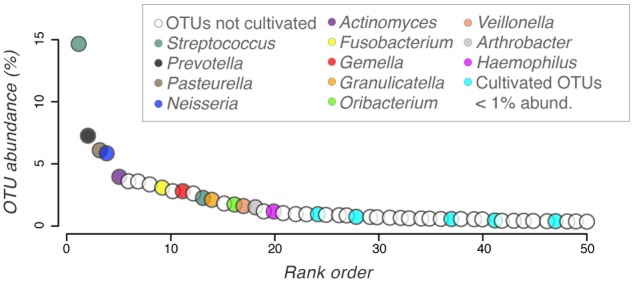
DNA from phylogenetically diverse microbes is routinely recovered from healthy human lungs and used to define the lung microbiome. The proportion of this DNA originating from microbes adapted to the lungs, as opposed to microbes dispersing to the lungs from other body sites and the atmosphere, is not known. We use a neutral model of community ecology to distinguish members of the lung microbiome whose presence is consistent with dispersal from other body sites and those that deviate from the model, suggesting a competitive advantage to these microbes in the lungs. We find that the composition of the healthy lung microbiome is consistent with predictions of the neutral model, reflecting the overriding role of dispersal of microbes from the oral cavity in shaping the microbial community in healthy lungs. In contrast, the microbiome of diseased lungs was readily distinguished as being under active selection. We also assessed the viability of microbes from lung samples by cultivation with a variety of media and incubation conditions. Bacteria recovered by cultivation from healthy lungs represented species that comprised 61% of the 16S rRNA-encoding gene sequences derived from bronchoalveolar lavage samples. IMPORTANCE Neutral distribution of microbes is a distinguishing feature of the microbiome in healthy lungs, wherein constant dispersal of bacteria from the oral cavity overrides differential growth of bacteria. No bacterial species consistently deviated from the model predictions in healthy lungs, although representatives of many of the dispersed species were readily cultivated. In contrast, bacterial populations in diseased lungs were identified as being under active selection. Quantification of the relative importance of selection and neutral processes such as dispersal in shaping the healthy lung microbiome is a first step toward understanding its impacts on host health.
Overview
The claims and statistics of this paper haven’t been checked yet.
Free: it reads the open-access text and checks the first 5 claims that cite a source we can check. Create a free account to check every claim.
Integrity signals
Registry
Cites
Statistics
Figures
Verification
Claims the paper makes
The claims and statistics of this paper haven’t been checked yet.
Free: it reads the open-access text and checks the first 5 claims that cite a source we can check. Create a free account to check every claim.
Claims other papers make about this one
Each is checked against this paper’s own text: does it say what the citing paper says it does?
The source backs part of the claim, not all of it — or backs it for a different population, condition or comparison.
In the citing paper
“This supports the hypothesis that, in health, the lung microbiota is a community of transiently present microorganisms that are derived from the URT, rather than a thriving, resident community as is commonly found in chronic respiratory diseases80,87,88.”
From The microbiota of the respiratory tract: gatekeeper to respiratory health (2017) · cites this paper as [87]
Experimental — accuracy not yet measuredThe check wasn’t confident either way, so it gives no verdict — never disputed.
In the citing paper
“Individuals with chronic airway diseases (e.g., cystic fibrosis, COPD) have increased bacterial populations in the lungs (77) and differences in the relative abundance of certain species”
From Respiratory viral infection-induced microbiome alterations and secondary bacterial pneumonia. (2018) · cites this paper as [77]
Experimental — accuracy not yet measuredIn the citing paper
“Multiple studies have shown that lung microbiota are more similar to those in the oropharynx, than those in the air, nasopharynx or lower digestive tract (Segal et al., 2013; Venkataraman et al., 2015).”
From Oral Microbiome and SARS-CoV-2: Beware of Lung Co-infection (2020) · cites this paper as Venkataraman et al., 2015
In the citing paper
“Contrary to dogma that normal healthy lungs are a sterile environment, a distinct, and somewhat dynamic lung microbiome can be identified using sequencing technology, with microaspiration serving as the primary route of microbial immigration from the URT to the LRT”
From Respiratory viral infection-induced microbiome alterations and secondary bacterial pneumonia. (2018) · cites this paper as [77]
In the citing paper
“the alveolar space is an ecologically unfavourable environment for most bacteria and reproduction is minimal.”
From The microbiome and critical illness (2016) · cites this paper as [112]
Self-check
Percentages, sums and reported differences re-computed from the paper’s own numbers.
The self-check needs the paper’s full text.
Citations
Cites
Schloss, P. D., Westcott, S. L., Ryabin, T., Hall, J. R., Hartmann, M., Hollister, E. B., Lesniewski, R. A., Oakley, B. B., Parks, D. H., Robinson, C. J., et al. (2009) · Applied and Environmental Microbiology · doi:10.1128/aem.01541-09 · Cited by 19,549
Structure, function and diversity of the healthy human microbiome
The Human Microbiome Project Consortium (2012) · Nature · doi:10.1038/nature11234 · Cited by 11,726
The Unified Neutral Theory of Biodiversity and Biogeography
Jetschke, G. (2002) · Ecology · doi:10.1890/0012-9658(2002)083[1771:tuntob]2.0.co;2 · Cited by 6,993
Hutchinson, G. E. (1957) · Cold Spring Harbor Symposia on Quantitative Biology · doi:10.1101/sqb.1957.022.01.039 · Cited by 6,228
Probable Inference, the Law of Succession, and Statistical Inference
Wilson, E. B. (1927) · Journal of the American Statistical Association · doi:10.1080/01621459.1927.10502953 · Cited by 4,476 · cited 1×
“Finally, the variability around this expected detection frequency was calculated using 95% binomial proportion confidence intervals (Wilson method [46]) with the HMisc package in R.”
MethodHomage to Santa Rosalia or Why Are There So Many Kinds of Animals?
Hutchinson, G. E. (1959) · The American Naturalist · doi:10.1086/282070 · Cited by 4,138
Quantifying the roles of immigration and chance in shaping prokaryote community structure
Sloan, W. T., Lunn, M., Woodcock, S., Head, I. M., Nee, S., & Curtis, T. P. (2006) · Environmental Microbiology · doi:10.1111/j.1462-2920.2005.00956.x · Cited by 1,887 · cited 1×
“Next, for each OTU shared between the lung and the source community, a beta probability distribution was used to calculate the expected frequency of detection in the lungs if it was present via dispersal and ecological drift (18).”
MethodWadsworth anaerobic bacteriology manual
Sutter, V. L., Citron, D. M., & Finegold, S. M. (1980) · Medical Entomology and Zoology · Cited by 1,388
Ecological Niches: Linking Classical and Contemporary Approaches
Chase, J. M., & Leibold, M. A. (2003) · Cited by 1,321
Recent findings on the viable but nonculturable state in pathogenic bacteria
Oliver, J. D. (2010) · FEMS Microbiology Reviews · doi:10.1111/j.1574-6976.2009.00200.x · Cited by 1,203 · cited 1×
“, Pneumocystis jirovecii in lungs) (41, 42).”
Cited by
Items 301–400 of 428
The Development of the Gut Microbiota in Childhood and Its Distortion by Lifestyle Changes
Penders, J., & van Best, N. (2022) · Progress in inflammation research · doi:10.1007/978-3-030-91051-8_7 · Cited by 5
Ray, A., Kale, S. L., & Ramonell, R. P. (2023) · American Journal of Respiratory Cell and Molecular Biology · doi:10.1165/rcmb.2023-0057ws · Cited by 4
Exploring slope spatial heterogeneity by nitrogen transfer and arbuscular mycorrhizal community
Yu, Y., Zhao, L., Cui, M., Xiao, Y., Wang, C., Miao, Y., Chen, Z., Cao, Y., Zheng, J., & Han, S. (2020) · Journal of Soils and Sediments · doi:10.1007/s11368-020-02690-4 · Cited by 4
Is the lung microbiome alive? Lessons from Antarctic soil
Baker, J. M., & Dickson, R. P. (2021) · European Respiratory Journal · doi:10.1183/13993003.00321-2021 · Cited by 4
Christian Martin, H., Guzior, D. V., Gonzalez, C. T., Okros, M., Mielke, J., Padillo, L., Querido, G., Gil, M., Thomas, R. G., McClelland, M., et al. (2023) · Research Square · doi:10.21203/rs.3.rs-3356170/v1 · Cited by 4
“It has been reported that the healthy lung microbiota displayed neutral community dynamics, i.e., microbial abundances were explained by immigration from adjacent body sites and local replacement [38, 39].”
BackgroundThe Human Microbiome—A Physiologic Perspective
Yang, X. J., Louwies, T., Mars, R. A. T., & Kashyap, P. (2024) · Comprehensive physiology · doi:10.1002/cphy.c230013 · Cited by 15
Magne, F., Ruiz‐Ruiz, S., Pérez‐Brocal, V., Ponce, C. A., Bustamante, R. I., Martin, V. S., Gutierrez, M., Gatti, G., Vargas, S. L., & Moyá, A. (2025) · Communications Biology · doi:10.1038/s42003-025-07810-9 · Cited by 4
“However, our study revealed that a healthy lung microbiome is also composed of a common set of stable microorganisms, as commonly observed in chronic respiratory diseases 4,28,29,32 .”
Lung microbiome dynamics in health and lung cancer
Kanteres, T., Angelakopoulou, I. M., Angelakopoulou, E. A., Tsolaki, F., Tagarakis, G. I., Manika, Κ., Exindari, M., & Gioula, G. (2025) · Microbial Genomics · doi:10.1099/mgen.0.001509 · Cited by 5
Goryachok, M., Fairbanks-Mahnke, A., Fulte, S., Tamkin, E., McCarty, A., Larson, E. D., Planet, P. J., & Clark, S. E. (2025) · Journal of Cystic Fibrosis · doi:10.1016/j.jcf.2025.11.002 · Cited by 5
Mu, Z., Zhou, R., Hao, W., Chen, Y., Zhu, X., Gu, L., & Lin, Q. (2026) · Frontiers in Immunology · doi:10.3389/fimmu.2026.1883855 · Cited by 3
“In terms of origin, multiple studies have suggested that the healthy pulmonary bacterial community is more similar to the oropharyngeal microbiota, with subclinical microaspiration and mucociliary clearance shaping its homeostasis (113 – 116).”
Le poumon est sensible aux effets locaux et à distance des microbiotes
Mathieu, E., Marquant, Q., Descamps, D., Riffault, S., Saint‐Criq, V., & Thomas, M. (2021) · Nutrition Clinique et Métabolisme · doi:10.1016/j.nupar.2021.04.002 · Cited by 6
Zhang, Z., Yu, W., Li, G., He, Y., Shi, Z., Wu, J., Ma, X., Zhu, Y., Zhao, L., Liu, S., et al. (2022) · BMC Oral Health · doi:10.1186/s12903-022-02501-x · Cited by 6
“Hence, exploring the extent of the oral microbiome through non-invasive operations may reflect more internal respiratory tract characterizations [18, 19].”
Asthma Phenotypes and the Microbiome
Ndum, O. S., & Huang, Y. J. (2016) · EMJ Allergy & Immunology · doi:10.33590/emjallergyimmunol/10310151 · Cited by 3
Towards a unified medical microbiome ecology of the OMU for metagenomes and the OTU for microbes
Ma, Z. S. (2024) · BMC Bioinformatics · doi:10.1186/s12859-023-05591-8 · Cited by 3
“Examples of applying Sloan models to 16s-rRNA sequencing reads from amplicon sequencing (i.e., for studying neutrality of microbial communities) include Venkatara-man et al.[44], Burns et al. [45], Li et al.[46], Sieber et al. [47].”
MethodIdentification of a dynamic middle ear microbiome in healthy adultsPreprint
Lee, J., Kashefi, K., & Reguera, G. (2020) · doi:10.21203/rs.2.24429/v1 · Cited by 3
Chronic exposure to diesel engine exhaust and alteration of the airway bacteriome
Jiang, M., Yan, Y., Wang, T., Han, J., Wang, B., Li, Y., Tang, J., & Zheng, Y. (2025) · Ecotoxicology and Environmental Safety · doi:10.1016/j.ecoenv.2025.117857 · Cited by 3
Respiratory infections and aspiration pneumonia
Almirall, J., Yoshimatsu, Y., & Scannapieco, F. A. (2024) · Elsevier eBooks · doi:10.1016/b978-0-323-91686-8.00046-x · Cited by 2
Brauer, V. S., Voskuhl, L., Mohammadian, S., Pannekens, M., Haque, S., & Meckenstock, R. U. (2024) · FEMS Microbiology Ecology · doi:10.1093/femsec/fiae074 · Cited by 2
Hospital-acquired bacterial pneumonia in critically ill patients: from research to clinical practice
Kouroupis, P. C., O’Rourke, N., Kelly, S., McKittrick, M., Noppè, E., Reyes, L. F., Rodríguez, A. H., & Martín‐Loeches, I. (2024) · Expert Review of Anti-infective Therapy · doi:10.1080/14787210.2024.2354828 · Cited by 3
Gupta, S., Mohindra, R., Ramola, M., Kanta, P., Singla, M., Malhotra, M., Mehta, N., Goyal, A., & Singh, M. P. (2024) · Journal of Indian Society of Periodontology · doi:10.4103/jisp.jisp_508_23 · Cited by 3
“[9] Venkataraman et al ., in their study on the composition of a healthy lung microbiome, found it to be highly consistent with the microbial distribution in the oral cavity further adding on to the evidence of the intricate connection between the oral cavity and the respiratory system.”
Structure and assembly process of skin fungal communities among bat species in northern China
Wang, D., Wang, F., Huang, Z., Li, A., Dai, W., Leng, H., Jin, L., Li, Z., Sun, K., & Feng, J. (2024) · Frontiers in Microbiology · doi:10.3389/fmicb.2024.1458258 · Cited by 2
“…the composition of skin fungal communities on bat species, with similar results found in the assembly of microbial communities in diseased lungs (Venkataraman et al., 2015), possibly on account of differences in dormancy strategies between bacteria and fungi, thereby affecting the breadth and…”
BackgroundLeng, H., Li, A., Li, Z., Hoyt, J. R., Dai, W., Xiao, Y., Feng, J., & Sun, K. (2025) · Microbiology Spectrum · doi:10.1128/spectrum.02233-24 · Cited by 2
“ASVs that diverge from the neutral community model may represent species undergoing environmental selection or microbes with distinct dispersal capabilities compared to those in the surrounding environments (39).”
InfluentialEukaryotic Virus Interactions with Bacteria: Implications for Pathogenesis and Control
Jones, M. K., Almand, E. A., Soorneedi, A., & Moore, M. D. (2022) · Advances in environmental microbiology · doi:10.1007/978-3-030-85395-2_10 · Cited by 2
The Upper Airway Microbiome and Lung Injury in COVID-19
McGinniss, J. E., & Collman, R. G. (2021) · American Journal of Respiratory and Critical Care Medicine · doi:10.1164/rccm.202109-2226ed · Cited by 2
“In disease, this relationship becomes more variable with changing local conditions in the lung (9), and the upper respiratory tract importantly contributes to lung immune tone (10).”
BackgroundThe Evolution of Microbiome-Mediated TraitsPreprint
Week, B., Morris, A. H., & Bohannan, B. J. M. (2024) · bioRxiv (Cold Spring Harbor Laboratory) · doi:10.1101/2024.03.29.587374 · Cited by 2
“This is the simplest approach to modeling microbiome dynamics; in addition, neutral models have been shown to capture important aspects of microbiome dynamics in a number of host species (Burns et al. 2015; Venkataraman et al. 2015; Heys et al. 2020; Henry and Ayroles 2022).”
BackgroundMicrobiomes Through the Looking GlassPreprint
Pasqualini, J., Maritan, A., Rinaldo, A., Facchin, S., Savarino, E. V., Altieri, A., & Suweis, S. S. (2025) · eLife · doi:10.7554/elife.105948.1 · Cited by 3
“Recently, stochastic non-interacting neutral Zeng et al. [2015], Venkataraman et al. [2015], Sala et al. [2016], Sieber et al. [2019] and logistic models Descheemaeker and De Buyl [2020], Grilli [2020], Zaoli and Grilli [2022], have been applied to give a satisfactory description of empirical…”
Quispe-Medina, K. M., Pacheco-Aranibar, J., Ruelas, A. S. M., Gamez-Bernabé, C., Zapana-Begazo, R., Aliaga, I. P., Villanueva-Salas, J. A., & Bernabé-Ortiz, J. C. (2023) · Current Issues in Molecular Biology · doi:10.3390/cimb45120627 · Cited by 1
“Therefore, the main determinant of lung microbiome health is the balance between immigration and clearance [12,13].”
BackgroundExploring the human microbiome: Its role and impact on overall health and disease prevention
Alotaibi, F. M., Almazam, A. A., Alenezi, S. Z., Alanazi, M. H., Lamfon, N. A., Albalawi, A. E. A., Al-Nasser, N. S., & Altheyab, S. A. (2018) · International Journal of Health Sciences · doi:10.53730/ijhs.v2ns1.15085 · Cited by 1
“However, recent studies employing culture-independent methods have revealed that both the upper and lower respiratory tracts are inhabited by a low biomass of diverse microbes (99, 100).”
ResultYu, J., Che, L., Zhu, Q., Xu, L., Fu, J., Zhang, Y., You, M., Zheng, X., Liu, C., Huang, L., et al. (2025) · BMJ Open · doi:10.1136/bmjopen-2024-092068 · Cited by 1
“7 Endotracheal tubes have also been found to be colonised with microbes from the oral cavity, subsequently forming a biofilm and promoting ventilator-associated pneumonia.”
Experimental Immigration Mediates Ecological Selection and Drift in Monarch Microbiome Assembly
Catano, C. P., DuBose, J. G., Fuller‐Hall, L., Chavez, J., & de Roode, J. C. (2025) · Ecology Letters · doi:10.1111/ele.70252 · Cited by 3
“While studies are beginning to recognize the role of drift (Venkataraman et al. 2015; Burns et al. 2016), it remains unclear why the relative importance of niche selection and drift varies across individuals or through ontogeny.”
Guccione, C., Sfiligoi, I., Gonzalez, A., Shaffer, J. P., Kazachkova, M., Weng, Y., McDonald, D., Shah, S. C., Minot, S. S., Paulson, T. G., et al. (2026) · BMC Genomics · doi:10.1186/s12864-026-12545-w · Cited by 1
“They have also been applied to data on microbial communities within the human body such as comparing healthy versus diseased lung [24] and comparing human skin from differing geographical locations which found microbiomes from urbanized cities likely evolve through niche-based processes [25, 26].”
Gschwendtner, S., Kovacevic, D., Gaede, K. I., Herzmann, C., Overmann, J., Schloter, M., & Krauss‐Etschmann, S. (2026) · Respiratory Research · doi:10.1186/s12931-026-03644-z · Cited by 2
“Community composition of the RT reflects a dynamic balance between immigration (from the oral cavity and URT), elimination (via mucociliary clearance, cough, and immunity), and differential growth [2, 3].”
CDEMI: Characterizing differences in microbial composition and function in microbiome data
Wang, L., Xiao, L., Chen, H., Cao, L., Liu, L., Zhu, F., Ding, Y., Tang, J., & Xie, Y. (2023) · Computational and Structural Biotechnology Journal · doi:10.1016/j.csbj.2023.03.044 · Cited by 2
Rhizosphere Mycobiome: Roles, Diversity, and Dynamics
Moussa, T. A. A., Mohamed, A. H., & Zaky, M. S. (2023) · Springer eBooks · doi:10.1007/978-3-031-28307-9_3 · Cited by 1
Plastisphere: Marine Microbial Assemblages for Biodegradation of Microplastics
Wani, A. K., Naqash, N., Akhtar, N., Mir, T. U. G., Mir, B. A., & Singh, R. (2024) · Springer eBooks · doi:10.1007/978-981-97-0676-1_6 · Cited by 2
Yang, P., Song, Y., & Li, M. (2025) · Frontiers in Immunology · doi:10.3389/fimmu.2025.1530753 · Cited by 4
Barnig, C., & Martin, C. (2018) · Revue des Maladies Respiratoires · doi:10.1016/j.rmr.2017.03.039 · Cited by 3
Testing the neutral theory of biodiversity with the microbiome dataset from cystic fibrosis patients
Huang, Q., Wang, Y., Yao, X. Y., Li, L., Luo, J., Xia, S., Sun, Y., Miao, Y., Wang, K., & Chen, Y. (2018) · Medicine · doi:10.1097/md.0000000000012248 · Cited by 3
“[36] However, in CF patients, especially those who have pulmonary exacerbation, the lung microbial community could be totally different due to altered microenvironment.”
BackgroundInfluentialFoesel, B. U., Pfeiffer, S., Raj, A. C. D., Krauss‐Etschmann, S., & Schloter, M. (2019) · European Respiratory Society eBooks · doi:10.1183/2312508x.10015718 · Cited by 2
Immune Suppression in Lung Disease: Lung Transplantation and HIV
McGinniss, J. E., Bernasconi, E., Twigg, H. L., & Morris, A. (2022) · Respiratory medicine · doi:10.1007/978-3-030-87104-8_10 · Cited by 1
Microbiome in Pulmonary Tuberculosis
Rakshit, A., Verma, A., Verma, S., Bhatti, G. K., Khurana, A., Bhatti, J. S., Jawalekar, S. S., & Navik, U. (2022) · Springer eBooks · doi:10.1007/978-981-16-8957-4_11 · Cited by 1
Lung Microbiota and Its Impact on the Mucosal Immune Phenotype
Wu, B. G., & Segal, L. N. (2018) · ASM Press eBooks · doi:10.1128/9781555819705.ch7 · Cited by 3
Stochastic Assembly Produces Heterogeneous Communities in the C. elegans IntestinePreprint
Vega, N. M., & Gore, J. (2016) · bioRxiv (Cold Spring Harbor Laboratory) · doi:10.1101/067173 · Cited by 1
“heterogeneity between individual worm-associated communities formed under more natural conditions from a rich, realistic metacommunity and to evaluate the effects of stochastic colonization under these conditions [9,16].”
Background“Neutral and niche dynamics in a synthetic microbial community”Preprint
Cira, N., Pearce, M. T., & Quake, S. R. (2017) · bioRxiv (Cold Spring Harbor Laboratory) · doi:10.1101/107896 · Cited by 1
Huang, Y. J., Arron, J. R., & Boushey, H. A. (2015) · Journal of Allergy and Clinical Immunology · doi:10.1016/j.jaci.2015.09.044 · Cited by 1
Kanungo, S., Bonilla‐Rosso, G., Sarton-Lohéac, G., Küffer, M., Hilty, M., Geiser, T., Engel, P., & Das, S. (2023) · bioRxiv (Cold Spring Harbor Laboratory) · doi:10.1101/2023.12.22.572891 · Cited by 3
Pasqualini, J., Maritan, A., Rinaldo, A., Facchin, S., Savarino, E. V., Altieri, A., & Suweis, S. S. (2025) · eLife · doi:10.7554/elife.105948.2 · Cited by 1
Impact de souches commensales et probiotiques d'Escherichia coli sur la physiopathologie de l'hôte
Escribano-Vázquez, U. (2018) · theses.fr (ABES) · doi:10.70675/ae439ff5z4d13z4af2za21az2572e5749b15 · Cited by 1
Bernard, L. (2020) · theses.fr (ABES) · doi:10.70675/589a776dz18d9z4813z9d6fzd73632aa4df7 · Cited by 1
Assembly of microbial communities associated with the developing zebrafish intestine
Burns, A. R. (2016) · Scholars' Bank (University of Oregon)
Quantitative Inferences from the Lung Microbiome
Tipton, L. (2017) · D-Scholarship@Pitt (University of Pittsburgh)
Host specificity of bacterial communities : natural history, ecology, and conservation
Loudon, A. H. (2019) · cIRcle (University of British Columbia) · doi:10.14288/1.0380660
THE MICROBIOTA OF LOWER AIRWAYS IN PATIENTS WITH CHRONIC OBSTRUCTIVE LUNG DISEASES
Александровна, М. С., Danilina, G. А., Smirnova, M. Y., Osipova, G. L., Gervazieva, V. B., Konischeva, A. Y., & Оspelnikova, Т. P. (2018) · Journal of microbiology epidemiology immunobiology · doi:10.36233/0372-9311-2018-5-53-60
Should We Fiddle with Gut Microbiome in Critically Ill?
Venkatachalam, B., & Abraham, B. K. (2020) · Indian Journal of Critical Care Medicine · doi:10.5005/jp-journals-10071-23627
Rogers, G. B. (2018) · European Respiratory Society eBooks · doi:10.1183/2312508x.10015617
Optimized Analysis of the Lung Allograft Microbiota from Bronchoalveolar Lavage Fluid
Prescod, J. (2018) · TSpace (University of Toronto)
Portezan, C. N., & Capel, L. M. M. (2021) · Brazilian Journal of Development · doi:10.34117/bjdv7n8-597 · Cited by 1
Schmitt, F. C. F., Lipinski, A. L., Hofer, S., Uhle, F., Nußhag, C., Hackert, T., Dalpke, A. H., Weigand, M. A., Brenner, T., & Boutin, S. (2019) · Research Square · doi:10.21203/rs.2.16928/v1
Kolla, H. B., Reddy, P. N., & Bramhachari, P. V. (2021) · Springer eBooks · doi:10.1007/978-981-16-3156-6_7
The Respiratory Microbiome in Health and Disease
Invernizzi, R., & Molyneaux, P. L. (2021) · Elsevier eBooks · doi:10.1016/b978-0-08-102723-3.00196-7
Unlocking the Mysteries of the Human Microbiome to Combat COVID-19
Muthuirulan, P., Bandyopadhyay, M., Mamillapalli, S., & Sharma, P. (2022) · Springer eBooks · doi:10.1007/978-981-16-7672-7_11
Lung Diseases: Chronic Respiratory Infections
Blasi, F. (2018) · MDPI eBooks · doi:10.3390/books978-3-03897-339-3 · Cited by 2
(2016) · Journal of Allergy and Clinical Immunology · doi:10.1016/j.jaci.2015.12.001
Segal, L. N. (2018) · Faculty Opinions – Post-Publication Peer Review of the Biomedical Literature · doi:10.3410/f.732838335.793545757
(2020) · Phytobiomes Journal · doi:10.1094/pbiomes-4-3
Dickson, R. P. (2017) · Springer eBooks · doi:10.1007/978-3-319-43341-7_24
Meyer, K. (2018) · Faculty Opinions – Post-Publication Peer Review of the Biomedical Literature · doi:10.3410/f.727835771.793551709
Chanderraj, R., & Dickson, R. P. (2020) · Springer eBooks · doi:10.1007/978-3-030-26710-0_24
Cotter, P. D., & Barton, W. (2019) · Faculty Opinions – Post-Publication Peer Review of the Biomedical Literature · doi:10.3410/f.727307658.793567408
Vientós‐Plotts, A. I. (2022) · MOspace Institutional Repository (University of Missouri) · doi:10.32469/10355/91692
Gijs, P.-J., Daccord, C., Bernasconi, E., Brutsche, M. H., Clarenbach, C. F., Hostettler, K., Guler, S. A., Mercier, L., Ubags, N. D. J., Funke-Chambour, M., et al. (2022) · medRxiv · doi:10.1101/2022.09.14.22279909
The Microbiome in Critically Ill Patients
Tulli, G., & Zuanetti, G. (2022) · Springer eBooks · doi:10.1007/978-3-031-14612-1_7
Association between asthma and changes in the microbiota
Iancu, M. A., Chirila, S. I., & Busneag, I.-C. (2022) · Medic ro · doi:10.26416/med.150.6.2022.7360
Gut microbes predominantly act as symbiotic partners rather than raw nutrientsPreprint
Soares, N. F. D. S., Quagliariello, A., Yigitturk, S., & Martino, M. E. (2023) · bioRxiv (Cold Spring Harbor Laboratory) · doi:10.1101/2023.02.08.527620
The Human Microbiome and Respiratory Diseases
Zolnikova, O. Y., & Ivashkin, V. T. (2023) · Springer eBooks · doi:10.1007/978-981-99-1463-0_14
Chronic infection: as an ecological model for emergence of the chronic obstructive pulmonary disease
Alekseev, D. V., Lyamin, A. V., & Kaiumov, K. A. (2023) · Novel Research in Microbiology Journal · doi:10.21608/nrmj.2023.319451
Complex ecological approach to cystic fibrosis respiratory infections
Alekseev, D. V., Lyamin, A. V., & Kaiumov, K. A. (2023) · Novel Research in Microbiology Journal · doi:10.21608/nrmj.2023.327188
Cooperation destabilizes communities, but competition pays the price
Bhat, A. S., Nag, S., & Dey, S. (2026) · Journal of Biosciences · doi:10.1007/s12038-025-00574-8
Drapkina, O. M., Блохина, А. В., Borisova, A. L., Bukaeva, A. A., Voshev, D. V., Garbuzova, E. V., Dzhioeva, O. N., Drozdova, L. Y., Олеговна, Е. С., Ershova, A. I., et al. (2023) · doi:10.15829/ropniz-d95-2023
Multi-Site Microbiome Composition in Atopic Dermatitis: A Case-Control Study
Pitlick, M. M., Johnson, S. P., Mullakary, R. M., Taneja, V., & Joshi, A. Y. (2024) · Annals of Dermatology · doi:10.5021/ad.22.117
“Previous studies have shown that the microbiome of healthy lungs is primarily composed of microbes from the oral cavity 8,9 .”
BackgroundLung Microbiome and Toxicology
Daniel, S., & Lund, A. K. (2024) · Elsevier eBooks · doi:10.1016/b978-0-323-95488-4.00117-0
Gattoni, K. M., Gendron, E. M. S., McQueen, J. P., Powers, K. S., Powers, T. O., Harner, M. J., Corman, J. R., & Porazinska, D. L. (2024) · Community Ecology · doi:10.1007/s42974-024-00206-5 · Cited by 1
“A modified Hubbard’s neutral model further examined how individual taxa within communities were affected by neutral dispersal and drift or selection (Hubbell, 2001; Sloan et al., 2006; Venkataraman et al., 2015) (see Supplemental Methods for details).”
Anwar, H., Mukhtar, I., Muzaffar, H., Irfan, S., Saleem, S., & Ijaz, F. (2024) · Springer eBooks · doi:10.1007/978-981-97-3790-1_2 · Cited by 1
Li, Y., Luo, J., Guo, Z., Qiu, H., Zhang, Y., & Zheng, Z. (2024) · Ecological Frontiers · doi:10.1016/j.ecofro.2024.08.008
Jeong, C., Sung, Y.-S., Park, J.-S., Na, E., Chae, S.-B., Sim, S., Kim, S.-Y., Kim, Y., & Oem, J. (2024) · Korean Journal of Veterinary Service · doi:10.7853/kjvs.2024.47.3.149
Gut Microbiome in the Critically Ill
Cotoia, A., Zimotti, T., & Battaglini, D. (2024) · Springer eBooks · doi:10.1007/978-3-031-66541-7_5
Baker, J. M., Flott, T. L., McLellan, L. A., Bustos, I. G., Guerrero, J. L., Méndez, L., Petouhoff, A., Ranjan, P., Metcalf, J. D., McDonald, R. A., et al. (2025) · bioRxiv (Cold Spring Harbor Laboratory) · doi:10.1101/2024.12.18.629020 · Cited by 1
Self-citationVirion stripping: A new role for bacterial proteasesPreprint
Hernandez, C. J. R., Terekhova, M., Chen, P., Perpich, J. D., Potempa, B. A., Carey, K., Peeples, M. E., Grayson, M. H., Potempa, J., Artyomov, M. N., et al. (2025) · bioRxiv (Cold Spring Harbor Laboratory) · doi:10.1101/2025.05.03.652018
“…that even in healthy individuals, the lung microbiome is dominated by immigrating oral bacteria ( Prevotella sp; Fusobacterium sp; Streptococcus sp; Corneybacterium sp; Porphyromonas sp; ) that colonize the anatomically contiguous upper and lower airways via subclinical micro-aspiration (17-19).”
Jin, S., Li, J., Wu, C., Wang, Y., Ren, Y., Lin, Q., Liu, J., Lin, Q., Ma, X., & Wang, J. (2025) · SSRN Electronic Journal · doi:10.2139/ssrn.5346491
Shinde, T., Kumpitsch, C., Zhang, Y., Franzosa, E. A., Mohammadzadeh, R., Weinberger, V., Eagan, T., Huttenhower, C., Foris, V., & Moissl‐Eichinger, C. (2025) · bioRxiv (Cold Spring Harbor Laboratory) · doi:10.1101/2025.09.04.674177
Assembly of skin microbiomes is more neutral than gut microbiomes in multiple animal species
Campbell, K. D., Bohannan, B. J. M., & Adair, K. L. (2025) · Microbiology Spectrum · doi:10.1128/spectrum.02223-25
“For nearly all the data sets considered in this study, the majority of the “non-neutral” ASVs fell into the “above partition,” suggesting that these taxa are particularly host-adapted (Fig.”
Hu, X., Huang, Y., Gu, G., Hu, H., Yan, H., Zhang, H., Zhang, R., Zhang, D., & Wang, K. (2024) · Figshare · doi:10.6084/m9.figshare.26624494
Drengenes, C., Eagan, T., Haaland, I., Wiker, H. G., & Nielsen, R. (2021) · Figshare · doi:10.6084/m9.figshare.13520725
Drengenes, C., Eagan, T., Haaland, I., Wiker, H. G., & Nielsen, R. (2021) · Figshare · doi:10.6084/m9.figshare.13520710
Drengenes, C., Eagan, T., Haaland, I., Wiker, H. G., & Nielsen, R. (2021) · Figshare · doi:10.6084/m9.figshare.13520728
Drengenes, C., Eagan, T., Haaland, I., Wiker, H. G., & Nielsen, R. (2021) · Figshare · doi:10.6084/m9.figshare.13520734
Lim, T. W., Li, K. Y., Burrow, M. F., & McGrath, C. P. J. (2024) · Figshare · doi:10.6084/m9.figshare.27000816
Yan, H., Lin, D., Gu, G., Huang, Y., Hu, X., Yu, Z., Hou, D., Zhang, D., Campbell, B. J., & Wang, K. (2024) · Figshare · doi:10.6084/m9.figshare.26670510
Drengenes, C., Eagan, T., Haaland, I., Wiker, H. G., & Nielsen, R. (2021) · Figshare · doi:10.6084/m9.figshare.13520731
Metadata
- Authors
- Venkataraman, A., Bassis, C. M., Beck, J. M., Young, V. B., Curtis, J. L., Huffnagle, G. B., & Schmidt, T. M.
- Affiliations
- University of Michigan (US)
- VA Eastern Colorado Health Care System (US)
- Corresponding author
- Schmidt, Thomas M.
- ORCID
- Venue
- mBio
- Publisher
- American Society for Microbiology
- Published
- 2015-02-27
- Volume
- 6
- Issue
- 1
- ISSN
- 2150-7511 (ISSN-L)
- 2161-2129
- PMC
- PMC4324308
- OpenAlex
- W2105751172
- Cited by
- 428
- References
- 50
- Citations by year
- 2026: 22 · 2025: 27 · 2024: 39 · 2023: 50 · 2022: 37 · 2021: 47 · 2020: 46 · 2019: 37 · 2018: 39 · 2017: 38 · 2016: 26 · 2015: 20
- FWCI
- 37.17
- Type
- journal article
- Language
- en
- Open access
- gold
- doi.org
- Licence
- cc-by-nc-sa
- creativecommons.org/licenses/by-nc-sa/3.0/ (vor)
- journals.asm.org/non-commercial-tdm-license (tdm)
- Locations
- mBio (publishedVersion, cc-by-nc-sa)
- Europe PMC (PubMed Central) (publishedVersion, cc-by-nc-sa)
- PubMed Central (publishedVersion, cc-by-nc-sa)
- PubMed (publishedVersion)
- DOAJ (DOAJ: Directory of Open Access Journals) (submittedVersion, cc-by-sa)
- Funders
- U.S. Public Health Service (R01 0099549)
- National Heart, Lung, and Blood Institute (U01HL098961, R01HL114447, T32HL007749)
- National Institute of Diabetes and Digestive and Kidney Diseases (P30DK034933)
- Topics
- Physical Sciences › Environmental Science › Ecology › Microbial Community Ecology and Physiology
- Life Sciences › Biochemistry, Genetics and Molecular Biology › Molecular Biology › Gut microbiota and health
- Health Sciences › Dentistry › Periodontics › Oral microbiology and periodontitis research
- Keywords
- lung microbiome, neutral community model, microbial dispersal, oral cavity, bronchoalveolar lavage, bacterial culture, 16S rRNA gene sequences, microbial community structure
- MeSH terms
- Bacteria, Bronchoalveolar Lavage Fluid, DNA, Bacterial, Humans, Lung, Mouth, RNA, Ribosomal, 16S, Neural Networks, Computer, Microbiota
About these checks
Registry, retraction, Cites and statistics results are computed, not judged, with one exception: a printed reference that no index lists is read once by a model before it counts as a citation error. Claims are extracted by a model and kept only when their quote appears verbatim in the text; each cited source is then checked, with a model’s help, for whether it says what the claim relies on. Those verdicts can be wrong — read the claim’s quote and the cited source before relying on one.
Statistics and arithmetic are recomputed, not judged.
Confidence bands are shown only for fields calibrated on our annotated test set. None is calibrated yet, so no band is shown.
What counts as a claim ›How we measure confidence ›How we check this ›
Are you an author, or do you see a problem with this page? Request a review
Data sources
Bibliographic data: Semantic Scholar, OpenAlex, Crossref.
Contains information from the Semantic Scholar Academic Graph Datasets, made available under the ODC Attribution License (ODC-BY 1.0).
Semantic Scholar’s data is described in: Kinney, R., et al. (2023). The Semantic Scholar Open Data Platform. arXiv:2301.10140.
