

Application of a Neutral Community Model To Assess Structuring of the Human Lung Microbiome
Open accessThe DOI matches its Crossref record; 49 of the 50 references it cites were found in a registry or an index.
Abstract
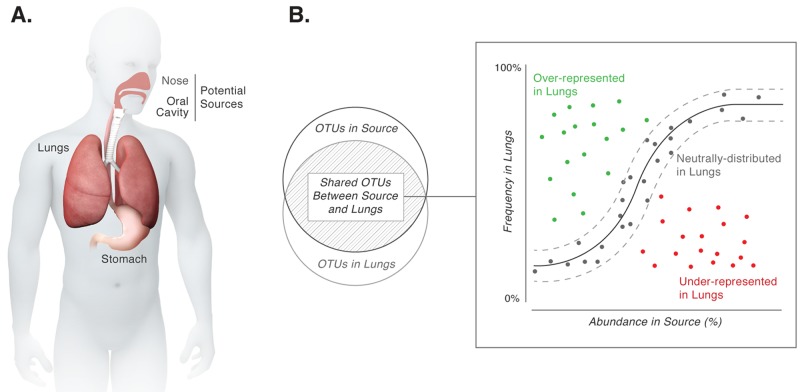
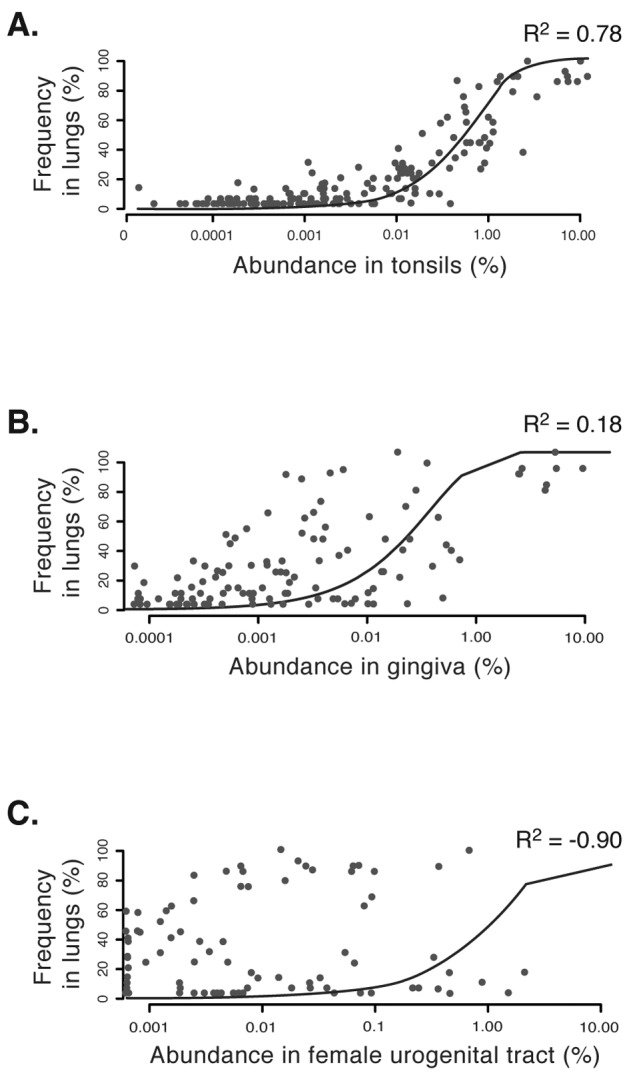
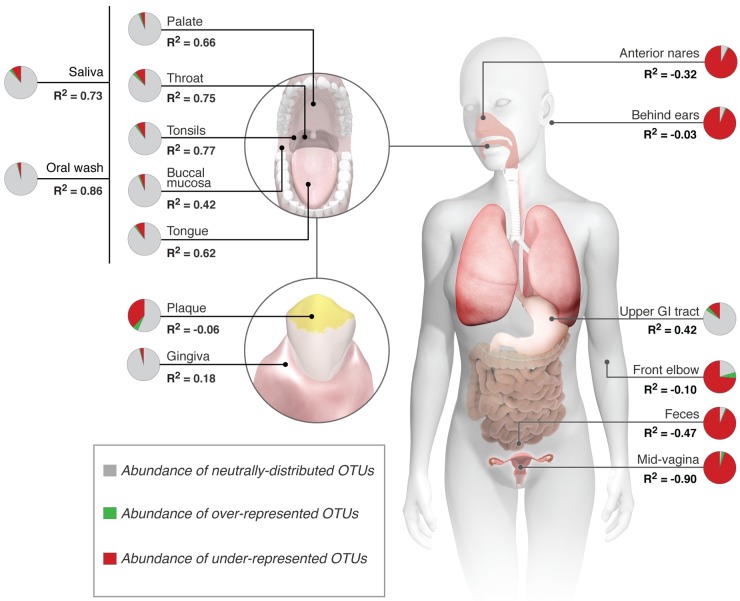
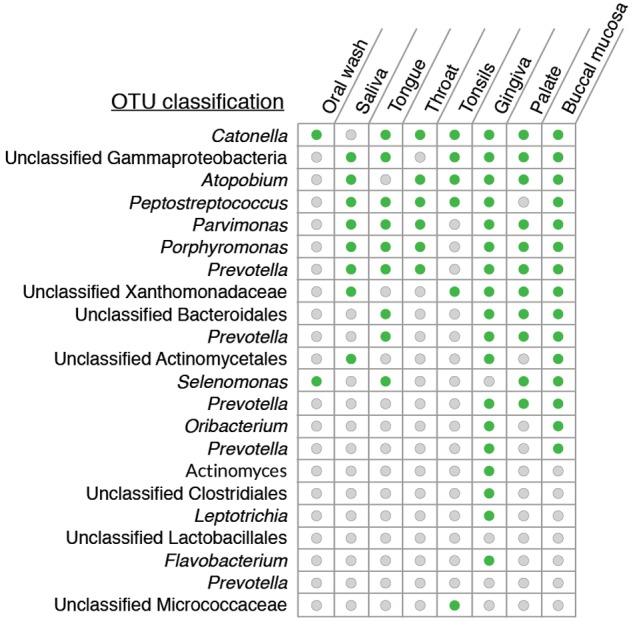
DNA from phylogenetically diverse microbes is routinely recovered from healthy human lungs and used to define the lung microbiome. The proportion of this DNA originating from microbes adapted to the lungs, as opposed to microbes dispersing to the lungs from other body sites and the atmosphere, is not known. We use a neutral model of community ecology to distinguish members of the lung microbiome whose presence is consistent with dispersal from other body sites and those that deviate from the model, suggesting a competitive advantage to these microbes in the lungs. We find that the composition of the healthy lung microbiome is consistent with predictions of the neutral model, reflecting the overriding role of dispersal of microbes from the oral cavity in shaping the microbial community in healthy lungs. In contrast, the microbiome of diseased lungs was readily distinguished as being under active selection. We also assessed the viability of microbes from lung samples by cultivation with a variety of media and incubation conditions. Bacteria recovered by cultivation from healthy lungs represented species that comprised 61% of the 16S rRNA-encoding gene sequences derived from bronchoalveolar lavage samples. IMPORTANCE Neutral distribution of microbes is a distinguishing feature of the microbiome in healthy lungs, wherein constant dispersal of bacteria from the oral cavity overrides differential growth of bacteria. No bacterial species consistently deviated from the model predictions in healthy lungs, although representatives of many of the dispersed species were readily cultivated. In contrast, bacterial populations in diseased lungs were identified as being under active selection. Quantification of the relative importance of selection and neutral processes such as dispersal in shaping the healthy lung microbiome is a first step toward understanding its impacts on host health.
Overview
The claims and statistics of this paper haven’t been checked yet.
Free: it reads the open-access text and checks the first 5 claims that cite a source we can check. Create a free account to check every claim.
Integrity signals
Registry
Cites
Statistics
Figures
Verification
Claims the paper makes
The claims and statistics of this paper haven’t been checked yet.
Free: it reads the open-access text and checks the first 5 claims that cite a source we can check. Create a free account to check every claim.
Claims other papers make about this one
Each is checked against this paper’s own text: does it say what the citing paper says it does?
The source backs part of the claim, not all of it — or backs it for a different population, condition or comparison.
In the citing paper
“This supports the hypothesis that, in health, the lung microbiota is a community of transiently present microorganisms that are derived from the URT, rather than a thriving, resident community as is commonly found in chronic respiratory diseases80,87,88.”
From The microbiota of the respiratory tract: gatekeeper to respiratory health (2017) · cites this paper as [87]
Experimental — accuracy not yet measuredThe check wasn’t confident either way, so it gives no verdict — never disputed.
In the citing paper
“Individuals with chronic airway diseases (e.g., cystic fibrosis, COPD) have increased bacterial populations in the lungs (77) and differences in the relative abundance of certain species”
From Respiratory viral infection-induced microbiome alterations and secondary bacterial pneumonia. (2018) · cites this paper as [77]
Experimental — accuracy not yet measuredIn the citing paper
“Multiple studies have shown that lung microbiota are more similar to those in the oropharynx, than those in the air, nasopharynx or lower digestive tract (Segal et al., 2013; Venkataraman et al., 2015).”
From Oral Microbiome and SARS-CoV-2: Beware of Lung Co-infection (2020) · cites this paper as Venkataraman et al., 2015
In the citing paper
“Contrary to dogma that normal healthy lungs are a sterile environment, a distinct, and somewhat dynamic lung microbiome can be identified using sequencing technology, with microaspiration serving as the primary route of microbial immigration from the URT to the LRT”
From Respiratory viral infection-induced microbiome alterations and secondary bacterial pneumonia. (2018) · cites this paper as [77]
In the citing paper
“the alveolar space is an ecologically unfavourable environment for most bacteria and reproduction is minimal.”
From The microbiome and critical illness (2016) · cites this paper as [112]
Self-check
Percentages, sums and reported differences re-computed from the paper’s own numbers.
The self-check needs the paper’s full text.
Citations
Cites
Schloss, P. D., Westcott, S. L., Ryabin, T., Hall, J. R., Hartmann, M., Hollister, E. B., Lesniewski, R. A., Oakley, B. B., Parks, D. H., Robinson, C. J., et al. (2009) · Applied and Environmental Microbiology · doi:10.1128/aem.01541-09 · Cited by 19,549
Structure, function and diversity of the healthy human microbiome
The Human Microbiome Project Consortium (2012) · Nature · doi:10.1038/nature11234 · Cited by 11,726
The Unified Neutral Theory of Biodiversity and Biogeography
Jetschke, G. (2002) · Ecology · doi:10.1890/0012-9658(2002)083[1771:tuntob]2.0.co;2 · Cited by 6,993
Hutchinson, G. E. (1957) · Cold Spring Harbor Symposia on Quantitative Biology · doi:10.1101/sqb.1957.022.01.039 · Cited by 6,228
Probable Inference, the Law of Succession, and Statistical Inference
Wilson, E. B. (1927) · Journal of the American Statistical Association · doi:10.1080/01621459.1927.10502953 · Cited by 4,476 · cited 1×
“Finally, the variability around this expected detection frequency was calculated using 95% binomial proportion confidence intervals (Wilson method [46]) with the HMisc package in R.”
MethodHomage to Santa Rosalia or Why Are There So Many Kinds of Animals?
Hutchinson, G. E. (1959) · The American Naturalist · doi:10.1086/282070 · Cited by 4,138
Quantifying the roles of immigration and chance in shaping prokaryote community structure
Sloan, W. T., Lunn, M., Woodcock, S., Head, I. M., Nee, S., & Curtis, T. P. (2006) · Environmental Microbiology · doi:10.1111/j.1462-2920.2005.00956.x · Cited by 1,887 · cited 1×
“Next, for each OTU shared between the lung and the source community, a beta probability distribution was used to calculate the expected frequency of detection in the lungs if it was present via dispersal and ecological drift (18).”
MethodWadsworth anaerobic bacteriology manual
Sutter, V. L., Citron, D. M., & Finegold, S. M. (1980) · Medical Entomology and Zoology · Cited by 1,388
Ecological Niches: Linking Classical and Contemporary Approaches
Chase, J. M., & Leibold, M. A. (2003) · Cited by 1,321
Recent findings on the viable but nonculturable state in pathogenic bacteria
Oliver, J. D. (2010) · FEMS Microbiology Reviews · doi:10.1111/j.1574-6976.2009.00200.x · Cited by 1,203 · cited 1×
“, Pneumocystis jirovecii in lungs) (41, 42).”
Cited by
Items 201–300 of 428
Parfenov, A., Petrova, M. V., Пичугина, И. М., & Luginina, E. V. (2020) · General Reanimatology · doi:10.15360/1813-9779-2020-4-72-89 · Cited by 21
The Role of Microbiome and Virome in Idiopathic Pulmonary Fibrosis
Ntolios, P., Tzilas, V., Bouros, E., Avdoula, E., Karakasiliοtis, I., Bouros, D. E., & Steiropoulos, P. (2021) · Biomedicines · doi:10.3390/biomedicines9040442 · Cited by 22
“In healthy subjects, the lung bacterial burden is twofold to fourfold lower compared to the oropharyngeal, but of similar composition [19].”
BackgroundWang, R., Chen, H., Zhu, Y., Al‐Masqari, Z. A., Yan, M., Wang, G., Dong, P., Gao, F., Lu, T., Zhang, D., et al. (2022) · Aquaculture · doi:10.1016/j.aquaculture.2022.738398 · Cited by 20
Drakopanagiotakis, F., Stavropoulou, E., Tsigalou, C., Nena, E., & Steiropoulos, P. (2022) · Biomedicines · doi:10.3390/biomedicines10123195 · Cited by 21
“The lung bacterial burden in healthy subjects is two-fold to four-fold lower compared to the oropharyngeal but of similar composition [16].”
BackgroundThe Fungal and Bacterial Interface in the Respiratory Mycobiome with a Focus on Aspergillus spp.
Rozaliyani, A., Antariksa, B., Nurwidya, F., Zaini, J., Setianingrum, F., Hasan, F. N., Nugrahapraja, H., Yusva, H., Wibowo, H., Bowolaksono, A., et al. (2023) · Life · doi:10.3390/life13041017 · Cited by 22
“This paradigm revealed several niches of interaction, including microorganism colonies which are determined by ambient resources or inter-species relationships [40].”
BackgroundLim, T. W., Huang, S. W., Jiang, Y., Zhang, Y., Burrow, M. F., & McGrath, C. P. J. (2024) · Journal of Oral Microbiology · doi:10.1080/20002297.2024.2317059 · Cited by 19
“Venkataraman et al. [26] identified that the microbes residing intraorally are the primary driver of the lung microbiome.”
She, Z., Wang, J., Wang, S., He, C., Jiang, Z., Pan, X., Shi, Q., & Yue, Z. (2023) · Environmental Science & Technology · doi:10.1021/acs.est.3c07046 · Cited by 16
Lim, T. W., Li, K. Y., Burrow, M. F., & McGrath, C. P. J. (2023) · Journal of Prosthodontics · doi:10.1111/jopr.13802 · Cited by 21
The neonate respiratory microbiome
Pirr, S. M., Willers, M., & Viemann, D. (2025) · Acta Physiologica · doi:10.1111/apha.14266 · Cited by 18
Ritchie, N. D., Ijaz, U. Z., & Evans, T. J. (2017) · BMC Genomics · doi:10.1186/s12864-017-4215-3 · Cited by 19
“Studies have shown that the microbiome at this site resembles the skin microbiome [1] and is distinct from the lung microbiome, which would appear to be derived from the oral bacterial communities [26, 27].”
Agard, M., Ozer, E. A., Morris, A. R., Aillon, R. P., & Hauser, A. R. (2019) · Infection and Immunity · doi:10.1128/iai.00871-18 · Cited by 18
“Primers used for aac(3)IV integration are listed in Table 2, and plasmids used were pIJ773 [ori(T) FRT Aprar], pACBSR-Hyg [pACBSR ori(p15A) araC Hygr], and pFLP-Hyg [pFLP ori(p15A) flp Hygr] (63).”
MethodCheng, H. M., Zhou, J., & Hong, P. (2021) · Environmental Research · doi:10.1016/j.envres.2021.111272 · Cited by 16
The microbiota influences the Drosophila melanogaster life history strategyPreprint
Walters, A. W., Matthews, M. K., Hughes, R. C., Malcolm, J., Rudman, S. M., Newell, P. D., Douglas, A. E., SCHMIDT, P. S., & Chaston, J. M. (2018) · bioRxiv (Cold Spring Harbor Laboratory) · doi:10.1101/471540 · Cited by 16
Hundreds of viral families in the healthy infant gutPreprint
Shah, S. A., Deng, L., Thorsen, J., Pedersen, A. G., Dion, M. B., Castro-Mejía, J. L., Silins, R., Romme, F. O., Sausset, R., Ndela, É. O., et al. (2021) · bioRxiv (Cold Spring Harbor Laboratory) · doi:10.1101/2021.07.02.450849 · Cited by 16
Yan, H., Lin, D., Gu, G., Huang, Y., Hu, X., Yu, Z., Hou, D., Zhang, D., Campbell, B. J., & Wang, K. (2024) · Ecological Processes · doi:10.1186/s13717-023-00480-7 · Cited by 15
“The ZOTUs that fall within the 95% confidence intervals of the neutral model are considered as neutrally distributed, which are likely assembled into local communities by stochastic dispersal from the metacom-munity and ecological drift (Venkataraman et al. 2015).”
InfluentialSystems Biology and Bile Acid Signalling in Microbiome-Host Interactions in the Cystic Fibrosis Lung
Woods, D. F., Flynn, S., Caparros-Martin, J. A., Stick, S. M., Reen, F. J., & O’Gara, F. (2021) · Antibiotics · doi:10.3390/antibiotics10070766 · Cited by 17
“The nascent microbial sources of the lung microbiota can be of environmental, gut, skin, oral and pharyngeal origin [43,51,52].”
BackgroundZhang, W., Zhu, Z., Chen, J., Qiu, Q., & Xiong, J. (2021) · Frontiers in Microbiology · doi:10.3389/fmicb.2021.752750 · Cited by 15
“Deterministic processes include abiotic/biotic selection and biological interaction, while stochastic processes (also known as neutral processes) include dispersal-related processes and ecological drift (Venkataraman et al., 2015; Zhou and Ning, 2017).”
BackgroundTurning the Lungs Inside Out: The Intersecting Microbiomes of the Lungs and the Built Environment
Combs, M. P., & Dickson, R. P. (2020) · American Journal of Respiratory and Critical Care Medicine · doi:10.1164/rccm.202007-2973ed · Cited by 15
“Whereas ecologic analysis has suggested that healthy lungs experience a relatively constant, low-level dynamic turnover of pharyngeal microbiota (4, 9), microbial communities in diseased lungs diverge from those of the pharynx, indicating differential rates of elimination and proliferation of microbes.”
BackgroundLower respiratory tract microbiome composition and community interactions in smokers
Campos, M., Cickovski, T., Fernandez, M., Jaric, M., Wanner, A., Holt, G. E., Donna, E., Mendes, E. S., Silva‐Herzog, E., Schneper, L. M., et al. (2023) · Access Microbiology · doi:10.1099/acmi.0.000497.v3 · Cited by 16
“A significant portion of the healthy lung microbiome is similar to that of the oral and nasopharyngeal cavities, most likely by microaspiration [13, 14].”
BackgroundKuthyar, S., Diaz, J., Avalos-Villatoro, F., Maltecca, C., Tiezzi, F., Dunn, R. R., & Reese, A. T. (2023) · Journal of Evolutionary Biology · doi:10.1111/jeb.14227 · Cited by 15
“Of course, these ties could also result from neutral filtering without any active selection (Burns et al., 2016; Venkataraman et al., 2015).”
BackgroundChen, T., Pei, Y., Zhang, L., & Zhang, Y. (2019) · The Science of The Total Environment · doi:10.1016/j.scitotenv.2019.136300 · Cited by 14
The economics of microbiodiversity
Han, K. Y., Kröger, L., Buchholz, F., Dewan, I., Quaas, M. F., Schulenburg, H., & Reusch, T. B. H. (2022) · Ecological Economics · doi:10.1016/j.ecolecon.2022.107664 · Cited by 13
Gendron, E. M. S., Darcy, J. L., Hell, K., & Schmidt, S. K. (2019) · The Journal of Microbiology · doi:10.1007/s12275-019-8668-8 · Cited by 14
Oriano, M., Zorzetto, L., Guagliano, G., Bertoglio, F., van Uden, S., Visai, L., & Petrini, P. (2020) · Frontiers in Bioengineering and Biotechnology · doi:10.3389/fbioe.2020.539319 · Cited by 13
Stochastic and deterministic processes shape bioenergy crop microbiomes along a vertical soil niche
Benucci, G. M. N., da Costa, P. B., Wang, X., & Bonito, G. M. (2022) · Environmental Microbiology · doi:10.1111/1462-2920.16269 · Cited by 11
Common Lung Microbiome Identified among Mechanically Ventilated Surgical Patients
Smith, A. D., Zhang, Y., Barber, R. C., Minshall, C. T., Huebinger, R. M., & Allen, M. S. (2016) · PLoS ONE · doi:10.1371/journal.pone.0166313 · Cited by 14
Yan, C., Chen, Y., Tian, Y., Hu, S., Wang, H., Zhang, X., Chu, Q., Huang, S., & Sun, W. (2025) · Cellular Oncology · doi:10.1007/s13402-025-01103-3 · Cited by 14
“Due to the high compositional similarity between the lung and oral microbiota, the oral cavity is considered the main source of healthy lung microbiota [40–43]and microaspiration is regarded as the predominant entry route [7, 39, 44–46].”
Zhou, M., Liu, Y., Yin, X., Gong, J., & Li, J. (2025) · Discover Oncology · doi:10.1007/s12672-025-03440-z · Cited by 16
“This overlap is attributed to micro-aspiration or mucosal migration, positioning the oral microbiome as a primary source of lung microbial colonization [9–11].”
Vendl, C., Nelson, T. M., Ferrari, B. C., Thomas, T., & Rogers, T. L. (2021) · BMC Microbiology · doi:10.1186/s12866-020-02076-z · Cited by 18
“(14) postulated that the bacterial communities in airways of healthy humans are relatively dynamic and transient with few site-specific taxa.”
BackgroundTian, H., Zhao, L., Koski, T., & Sun, J. (2022) · Microbiology Spectrum · doi:10.1128/spectrum.00783-22 · Cited by 11
“diseases may change the selectivity of tissues against or for specific microbiota taxa (54), future investigation of whether pinewood nematode invasion changes the selectivity of”
BackgroundMiao, Y., Zhao, X., Lei, J., Ding, J., Feng, H., Wu, K., Liu, J., Wang, C., Ye, D., Wang, X., et al. (2023) · Animals · doi:10.3390/ani13172763 · Cited by 13
“In humans, the upper respiratory tract microbiota is dispersed and colonizes the lung through respiration and microaspiration [40].”
BackgroundBiget, M., Mony, C., Wang, T., Ling, N., Miteul, A., Jambon, O., Causse‐Védrines, R., Michon-Coudouel, S., Hervé, M. R., Chable, V., et al. (2023) · Plant and Soil · doi:10.1007/s11104-023-06262-6 · Cited by 14
“This neutral model predicts the relationship between sequence cluster detection frequency and their relative abundance (Burns et al. 2016; Venkataraman et al. 2015).”
Lim, T. W., Huang, S. W., Zhang, Y., Burrow, M. F., & McGrath, C. P. J. (2024) · Journal of Dentistry · doi:10.1016/j.jdent.2024.104968 · Cited by 14
Zhang, L., Wang, B., Li, K., Su, Y., Wu, D., Zhan, M., & Xie, B. (2024) · Environment International · doi:10.1016/j.envint.2024.109143 · Cited by 12
Xiao, Y., Liu, X., Fang, J. Q., Liang, Y., Zhang, X., Meng, D., & Yin, H. (2017) · AMB Express · doi:10.1186/s13568-017-0491-1 · Cited by 12
Saliva microbiome in relation to SARS-CoV-2 infection in a prospective cohort of healthy US adults
Armstrong, A. J. S., Horton, D. B., Andrews, T., Greenberg, P. J., Roy, J., Gennaro, M. L., Carson, J. L., Panettieri, R. A., Barrett, E. S., & Blaser, M. J. (2023) · EBioMedicine · doi:10.1016/j.ebiom.2023.104731 · Cited by 12
“23,24 Oral microbiota also contribute to the lung microbiome, 25 – 27 and their presence has been associated with in fl ammation.”
BackgroundMethodGuccione, C., Yadlapati, R. H., Shah, S. C., Knight, R. D., & Curtius, K. (2021) · Microorganisms · doi:10.3390/microorganisms9102003 · Cited by 14
“Previous studies have found similar evidence for neutral evolution in the microbiomes of the urological tract [85], skin [86], and healthy lung tissue [87].”
Emerging cellular and molecular interactions between the lung microbiota and lung diseases
Li, X., & Meng, X. (2021) · Critical Reviews in Microbiology · doi:10.1080/1040841x.2021.1992345 · Cited by 11
“…is thought to be driven by the equilibrium between microbial immigration from URT and microbiome eradication by host defence systems, with comparatively minor contributions from local reproduction of the microbes themselves (Huxley et al. 1978; Dickson et al. 2015; Venkataraman et al. 2015).”
BackgroundHe, Y., Li, J., Yu, W., Zheng, Y., Yang, D., Xu, Y., Zhao, L., Ma, X., Gong, P., & Gao, Z. (2022) · Frontiers in Cellular and Infection Microbiology · doi:10.3389/fcimb.2022.943317 · Cited by 11
“02 potentially reflecting possible microbiome alterations happening in its source environment at the same time (Hubbell, 2010; Venkataraman et al., 2015).”
BackgroundVallianou, N. G., Skourtis, A., Kounatidis, D. C., Margellou, E., Panagopoulos, F., Geladari, E. V., Evangelopoulos, A. A., & Jahaj, E. (2023) · Antibiotics · doi:10.3390/antibiotics12010140 · Cited by 16
Li, A., Li, Z., Leng, H., Jin, L., Xiao, Y., Sun, K., & Feng, J. (2023) · Molecular Ecology · doi:10.1111/mec.17051 · Cited by 11
“…community assembly, including fish, horses, amphibians and humans, and has been increasingly recognized for its neutral processes in shaping bacterial community assembly (Fountain- Jones et al., 2020; Heys et al., 2020; Stothart et al., 2021; Venkataraman et al., 2015; Wilber et al., 2020).”
BackgroundAge-Related Variation in the Scent Pouch Bacterial Communities of Striped Hyenas (Hyaena hyaena)
Theis, K. R., Venkataraman, A., Wagner, A. P., Holekamp, K. E., & Schmidt, T. M. (2015) · Springer eBooks · doi:10.1007/978-3-319-22026-0_7 · Cited by 11
Self-citationDoes periodontitis influence the risk of COVID‐19? A scoping review
Ghosh, A., Joseph, B., & Anil, S. (2022) · Clinical and Experimental Dental Research · doi:10.1002/cre2.584 · Cited by 15
“…that populate the respiratory tract of healthy individuals asymptomatically, or predominating acellular bronchoalveolar lavage fluid of healthy individuals and patients with VAP, as identified by 16S rRNA gene sequencing (Bahrani‐Mougeot et al., 2007; Y. Li et al., 2019; Venkataraman et al., 2015).”
Liu, Y., Ding, C., Li, X., Su, D., & He, J. L. (2023) · Frontiers in Microbiology · doi:10.3389/fmicb.2023.1134440 · Cited by 20
“In contrast, the neutral theory holds that there is no difference in suitability or niche among species, and that dispersal processes or ecological drift are crucial in determining microbial community structure at various spatial and temporal scales (Chave, 2004; Venkataraman et al., 2015).”
BackgroundLung microbiota composition, respiratory mechanics, and outcomes in COVID-19-related ARDS
PASCALE, G. D., Posteraro, B., Maio, F. D., Pafundi, P. C., Tanzarella, E. S., Cutuli, S. L., Lombardi, G., Grieco, D. L., Franchini, E. O., Santarelli, G., et al. (2024) · Microbiology Spectrum · doi:10.1128/spectrum.03574-23 · Cited by 12
“It is likely that physicochemical (oxygen tension or pH) variations of the lung favored the predominance of Proteobacteria and Firmicutes over other species (14).”
BackgroundLiu, L., Zhao, W., Zhang, H., Shang, Y., Huang, W., & Cheng, Q. (2025) · Frontiers in Microbiology · doi:10.3389/fmicb.2025.1550783 · Cited by 14
Sputum quality affects assessment of airway microbiology in childhood asthma
Taylor, S., Brooks, C., Elms, L., Manning, S. K., Richard, A., Burmanje, J., Douwes, J. E., & Rogers, G. B. (2025) · Respiratory Research · doi:10.1186/s12931-025-03266-x · Cited by 11
“As many of the bacteria that are associated with chronic lung disease are common within the oropharynx [8], this presents considerable challenges for the analysis of the lower airway microbiology [9, 10].”
Development of a robust protocol for the characterization of the pulmonary microbiota
Dumont-Leblond, N., Veillette, M., Racine, C., Joubert, P., & Duchaine, C. (2021) · Communications Biology · doi:10.1038/s42003-021-01690-5 · Cited by 11
Razak, S. A., Bauman, J. M., Marsh, T. L., & Scribner, K. T. (2022) · Microorganisms · doi:10.3390/microorganisms10051005 · Cited by 10
He, J., Shen, X., Zhang, N., Sun, C., & Shao, Y. (2022) · Microbiology Spectrum · doi:10.1128/spectrum.01508-22 · Cited by 13
“To evaluate the degree of neutral or niche-based community assembly process, Sloan’s neutral model (68) analysis was performed based on species abundance distribution, as previously described (69, 70).”
MethodEricsson, A. C., Personett, A. R., Rindt, H., Grobman, M., & Reinero, C. R. (2020) · PLoS ONE · doi:10.1371/journal.pone.0228085 · Cited by 11
“These microbial communities are repeatedly seeded via subclinical micro-aspiration of oropharyngeal bacteria[13, 14], and in some situations refined for taxa selectively capable of colonizing the bronchial and alveolar tissues[15].”
BackgroundRespiratory Tract Oncobiome in Lung Carcinogenesis: Where Are We Now?
Czarnecka, K. H., Kordiak, J., Brzeziańska‐Lasota, E., & Pastuszak‐Lewandoska, D. (2023) · Cancers · doi:10.3390/cancers15204935 · Cited by 12
“…reflux and microaspiration); (2) microbial removal by mucociliary clearance and coughing; (3) host immune defense mechanisms (both adaptive and innate); and (4) pH, oxygen tension, temperature, and the concentration of nutrients, which may favor the growth of various microbes [25,26,28].”
BackgroundMathieu, E., Marquant, Q., Chain, F., Bouguyon, E., Saint‐Criq, V., Goffic, R. L., Descamps, D., Langella, P., Tompkins, T. A., Binda, S., et al. (2023) · Nutrients · doi:10.3390/nu15020263 · Cited by 9
Transient-rare Bacterial Taxa Are Assembled Neutrally across Temporal Scales
Lee, S., Kim, T., & Park, H. (2021) · Microbes and Environments · doi:10.1264/jsme2.me20110 · Cited by 9
“, 2015), human lungs (Venkataraman et al., 2015), trees (Woodcock”
BackgroundInfluentialGarcía, J. P., Hinkle, K. J., Falkowski, N. R., Evans, S. E., & Dickson, R. P. (2021) · American Journal of Respiratory and Critical Care Medicine · doi:10.1164/rccm.202104-0836le · Cited by 9
Li, S., Tang, R., Yi, H., Cao, Z., Sun, S., Liu, T., Zhang, S., & Jing, X. (2022) · Frontiers in Microbiology · doi:10.3389/fmicb.2022.849637 · Cited by 11
The Role of the Microbiome in Childhood Asthma
Pisi, G., Fainardi, V., Aiello, M., Bertorelli, G., Crisafulli, E., & Chetta, A. A. (2017) · Immunotherapy · doi:10.2217/imt-2017-0048 · Cited by 10
Intestinal Short-Chain Fatty Acids in Patients with Bronchial Asthma
Zolnikova, O. Y., Potskhverashvili, N. D., Kokina, N. I., Трухманов, А. С., & Ivashkin, V. T. (2019) · Russian Journal of Gastroenterology Hepatology Coloproctology · doi:10.22416/1382-4376-2019-29-2-53-59 · Cited by 11
Neutrality in the MetaorganismPreprint
Sieber, M., Pita, L., Weiland-Bräuer, N., Dirksen, P., Wang, J., Mortzfeld, B., Franzenburg, S., Schmitz, R. A., Baines, J. F., Fraune, S., et al. (2018) · bioRxiv (Cold Spring Harbor Laboratory) · doi:10.1101/367243 · Cited by 9
Zhou, Z., Shen, D., Wang, K., Liu, J., Li, M., Win‐Shwe, T., Nagaoka, K., & Li, C. (2023) · Journal of Animal Science · doi:10.1093/jas/skad207 · Cited by 10
Hu, X., Huang, Y., Gu, G., Hu, H., Yan, H., Zhang, H., Zhang, R., Zhang, D., & Wang, K. (2023) · Environmental Microbiome · doi:10.1186/s40793-023-00530-9 · Cited by 9
“The ZOTUs above the upper boundary of the confidence interval hold strong probability of preference for certain local conditions, thus being selected for, while the ZOTUs below the lower boundary of the confidence interval are underrepresented in certain local conditions compared to the model prediction by their abund…”
BackgroundXepapadaki, P. V., Megremis, S., Rovina, N., Wardzyńska, A., Pasioti, M., Kritikou, M., Papadopoulos, N. G., Kaltsas, G., Lebessi, E., Doudoulakakis, A., et al. (2024) · Pulmonary Therapy · doi:10.1007/s41030-024-00261-3 · Cited by 10
“Microbial composition of the asthmatic airways across the spectrum of disease severity differ significantly compared with healthy individuals [50, 51].”
Transitions in lung microbiota landscape associate with distinct patterns of pneumonia progression
Sumner, J. T., Huttelmaier, S., Pickens, C. I., Moghadam, A. A., Abdala‐Valencia, H., Shen, J., Peltekian, A., Misharin, A. V., Wolfe, A. R., Szabo, A. L., et al. (2025) · Cell Host & Microbe · doi:10.1016/j.chom.2025.11.011 · Cited by 11
Rogers, G. B. (2017) · Emerging Topics in Life Sciences · doi:10.1042/etls20170043 · Cited by 10
A theoretic approach to the mode of gut microbiome translocation in SIV-infected Asian macaques
Li, W., & Ma, Z. S. (2020) · FEMS Microbiology Ecology · doi:10.1093/femsec/fiaa134 · Cited by 9
“Previous neutral theory applications to human or animal microbiome have been limited to the microbiome distributed in or on the bodies (e.g. Harris et al 2017; Venkataraman et al. 2015; Zeng et al 2015; Li and Ma 2016; Li et al 2018), but not within tissues.”
BackgroundLower airway microbiome of children with recurrent wheezing: a clinical cohort study
Zhang, L., Ai, T., Xie, C., Xia, W., Zhang, Y., Liao, H., Jia, L., Fan, Y., & Xu, J. M. (2022) · Translational Pediatrics · doi:10.21037/tp-22-165 · Cited by 8
“This study demonstrated that the three dominant phyla routinely found in the lower airway of both healthy and wheezing children were Proteobacteria , Firmicutes , and Bacteroides , which are also the dominant phyla of the intestinal microbiome species (20).”
Xian, W.-D., Ding, J., Chen, J., Qu, W., Cao, P., Tang, C., Liu, X., Zhang, Y., Li, J., Wang, P., et al. (2024) · Microbial Ecology · doi:10.1007/s00248-024-02350-x · Cited by 8
“The neutral community model (NCM) was also fitted using the Hmisc package to assess the contributions of stochastic processes in shaping FL and PA communities [48].”
An, X., Xu, M., Pan, X.-F., Cai, G., Zhao, C.-X., Li, H., Ye, Z., Zhu, Y., & Su, J. (2023) · Environment International · doi:10.1016/j.envint.2023.108004 · Cited by 7
Zhang, Z., Zhang, C., Zhong, Y., Yang, S., Deng, F., Li, Y., & Chai, J. (2023) · Frontiers in Cellular and Infection Microbiology · doi:10.3389/fcimb.2023.1269726 · Cited by 9
“…niches of the bovine respiratory tract was observed (McMullen et al., 2020a), and oral microbiota being one of the main sources of lung community was reported in humans (Venkataraman et al., 2015) and determines two microbiota pneumo-types associated with health status (Zhang et al., 2022).”
BackgroundLim, T. W., Li, K. Y., Burrow, M. F., & McGrath, C. P. J. (2024) · BMC Oral Health · doi:10.1186/s12903-024-04814-5 · Cited by 10
“Venkataraman et al. [35] found that the microbes residing intraorally are the primary driver of the lung microbiome.”
BackgroundThe Lung Microbiome in Health and Respiratory Diseases
Marimón, J. M. (2018) · Clinical Pulmonary Medicine · doi:10.1097/cpm.0000000000000268 · Cited by 9
AlKhater, S. A. (2020) · Journal of Asthma and Allergy · doi:10.2147/jaa.s272705 · Cited by 8
Oral seeding and niche-adaptation of middle ear biofilms in health
Lee, J., Jacob, K. M., Kashefi, K., & Reguera, G. (2021) · Biofilm · doi:10.1016/j.bioflm.2020.100041 · Cited by 10
“Neutral models of community assembly suggest that the majority of microbial sequences recovered from the upper gastrointestinal tract and the lungs in healthy individuals disperse from oral reservoirs [76].”
BackgroundMethodUpper airway microbiota development in infants with cystic fibrosis diagnosed by newborn screen
Harris, J. K., Wagner, B. D., Robertson, C. E., Stevens, M. J., Lingard, C., Borowitz, D., Leung, D. H., Heltshe, S. L., Ramsey, B. W., & Zemanick, E. T. (2023) · Journal of Cystic Fibrosis · doi:10.1016/j.jcf.2023.04.017 · Cited by 7
Takayasu, L., Suda, W., Watanabe, E., Fukuda, S., Takanashi, K., Ohno, H., Takayasu, M., Takayasu, H., & Hattori, M. (2017) · PLoS ONE · doi:10.1371/journal.pone.0180863 · Cited by 7
The Microbiome and Pulmonary Immune Function
Baker, J. M., & Dickson, R. P. (2024) · Clinics in Chest Medicine · doi:10.1016/j.ccm.2024.10.006 · Cited by 6
Ding, P., Wang, X., Li, N., Yu, S., Zhang, Y., Yu, J., Tian, T., Chen, R., Luo, B., Ma, L., et al. (2025) · Frontiers in Microbiology · doi:10.3389/fmicb.2025.1615130 · Cited by 6
“However, recent studies have revealed a complex microbial ecosystem within the airways and lung tissues that serves as a “gatekeeper” of respiratory health (Morris et al., 2013; Venkataraman et al., 2015).”
The gut as a central hub for multi-organ crosstalk in aging
Zhang, X., Li, R., Gao, Y., Zhang, W., Ni, T., & Liu, Y. (2026) · Cellular and Molecular Life Sciences · doi:10.1007/s00018-026-06129-w · Cited by 9
Gijs, P.-J., Daccord, C., Bernasconi, E., Brutsche, M. H., Clarenbach, C. F., Hostettler, K., Guler, S. A., Mercier, L., Ubags, N. D. J., Funke-Chambour, M., et al. (2023) · ERJ Open Research · doi:10.1183/23120541.00720-2022 · Cited by 8
Gut microbes predominantly act as living beneficial partners rather than raw nutrients
Silva-Soares, N. F., Quagliariello, A., Yigitturk, S., & Martino, M. E. (2023) · Scientific Reports · doi:10.1038/s41598-023-38669-7 · Cited by 7
Ochoa‐Sánchez, M., Gómez, E. P. A., Moreno, L., Moraga, C. A., Gaete, K., Eguiarte, L. E., & Souza, V. (2023) · PeerJ · doi:10.7717/peerj.16290 · Cited by 9
“The Sloan neutral community model has become a valuable tool to explain the high compositional variability inherent to host-associated microbial communities ( Burns et al., 2016 ; Venkataraman et al., 2015 ; Chiarello et al., 2019 ; Tong et al., 2019 ).”
MethodThe lower airway microbiome in paediatric health and chronic disease
Campbell, S., Gerasimidis, K., Milling, S. W. F., Dicker, A., Hansen, R., & Langley, R. (2024) · Paediatric Respiratory Reviews · doi:10.1016/j.prrv.2024.02.001 · Cited by 11
The Oral–Lung Microbiome Axis in Connective Tissue Disease-Related Interstitial Lung Disease
Bongers, K. S., Massett, A., & O’Dwyer, D. N. (2024) · Seminars in Respiratory and Critical Care Medicine · doi:10.1055/s-0044-1785673 · Cited by 7
Techniques: culture, identification and 16S rRNA gene sequencing
Einarsson, G. G., & Boutin, S. (2019) · European Respiratory Society eBooks · doi:10.1183/2312508x.10000819 · Cited by 12
Moffatt, L. T., Madrzykowski, D. M., Gibson, A. L. F., Powell, H. M., Cancio, L. C., Wade, C. E., Choudhry, M. A., Kovacs, E. J., Finnerty, C. C., Majetschak, M., et al. (2020) · Journal of Burn Care & Research · doi:10.1093/jbcr/irz207 · Cited by 6
Mathieu, E., MacPherson, C. W., Belvis, J., Mathieu, O., Robert, V., Saint‐Criq, V., Langella, P., Tompkins, T. A., & Thomas, M. (2020) · Microorganisms · doi:10.3390/microorganisms8081094 · Cited by 6
Hughey, M. C., Sokol, E. R., Walke, J. B., Becker, M. H., & Belden, L. K. (2019) · Microbial Ecology · doi:10.1007/s00248-019-01372-0 · Cited by 8
Linking complex microbial interactions and dysbiosis through a disordered Lotka–Volterra model
Pasqualini, J., Maritan, A., Rinaldo, A., Facchin, S., Savarino, E. V., Altieri, A., & Suweis, S. S. (2026) · eLife · doi:10.7554/elife.105948 · Cited by 7
“Recently, stochastic non-interacting neutral ( Zeng et al., 2015 ; Venkataraman et al., 2015 ; Sala et al., 2016 ; Sieber et al., 2019 ; Descheemaeker and de Buyl, 2020 ; Grilli, 2020 ; Zaoli and Grilli, 2022 ), and logistic models have been successfully used to describe empirical patterns such as…”
Zhang, C., Li, H., Li, M., Zhang, Q., Su, S., Zhang, X., & Xiao, H. (2025) · Microorganisms · doi:10.3390/microorganisms13071611 · Cited by 5
“A low or non-significant R 2 ( 0) suggests a limited contribution from neutral (stochastic) processes, with deterministic factors likely playing a predominant role [47,48].”
Antarctic Environmental Resistomes Closely Associated with Human and Animal Waste Releases
Wu, D., Goethem, M. W. V., Graham, D. W., Zhang, X. L., Li, Z., & Shi, G. (2025) · Environmental Science & Technology · doi:10.1021/acs.est.5c06023 · Cited by 7
Bourdiol, A., & Roquilly, A. (2022) · Seminars in Respiratory and Critical Care Medicine · doi:10.1055/s-0041-1740606 · Cited by 6
Mock communities highlight the diversity of host‐associated eukaryotes
Parfrey, L. W. (2015) · Molecular Ecology · doi:10.1111/mec.13311 · Cited by 5
“…in future studies, such as (i) thorough surface sterilization, (ii) separate processing of the gut, cuticle and other body parts of interest and (iii) inclusion of replicate host and environmental samples to enable detection of specifically associated taxa in silico (Venkataraman et al. 2015).”
BackgroundDickson, R. P., & Cox, M. J. (2019) · European Respiratory Society eBooks · doi:10.1183/2312508x.10015418 · Cited by 8
The Lung Microbiome in Carcinogenesis and Immunotherapy Treatment
Kennedy, K. J., Khaddour, K., Ramnath, N., & Weinberg, F. D. (2023) · The Cancer Journal · doi:10.1097/ppo.0000000000000644 · Cited by 5
“The composition of the lung microbiome is determined largely by the dynamic balance of microbial immigration and elimination.(19,20) Microbial immigration is mediated by microaspiration and direct inhalation from the air, although microaspiration is thought to be a prevailing mechanism given similarities between the c…”
BackgroundExploring Human Bacterial Diversity Toward Prevention of Infectious Disease and Health Promotion
Yousuf, B., & Mishra, A. (2018) · Elsevier eBooks · doi:10.1016/b978-0-12-814849-5.00029-0 · Cited by 7
Tökölyi, J., Miklós, M., Bathia, J., & Fraune, S. (2026) · Limnology and Oceanography · doi:10.1002/lno.70302 · Cited by 4
“…the altered host microbiome could re fl ect neutral processes of microbial dispersal, as described by neutral ecological models (Sloan et al. 2006; Venkataraman et al. 2015; Huang et al. 2021), whereby bacteria from environmental reservoirs stochastically colonize host-associated microbial…”
Ye, H.-L., Meng, X.-Q., Li, H., Sun, X., Lin, W.-Z., Zhou, L.-J., Zhang, J., Hou, C., Xu, S., Chen, B., et al. (2025) · Frontiers in Cellular and Infection Microbiology · doi:10.3389/fcimb.2025.1595500 · Cited by 7
“The oral microbiota is acknowledged as the primary source of the lung microbiota, and the lung microbiota resembles the oral microbiota more than microbiota of other body sites (Venkataraman et al., 2015; Dickson et al., 2016).”
Dehwah, A. H. A., Cheng, H. M., Missimer, T. M., & Hong, P. (2019) · Desalination and Water Treatment · doi:10.5004/dwt.2019.24783 · Cited by 4
“, selective growth/attachment) contributing to the community assembly [34,35].”
Background[The Relationship Between Oral Microbiota and Chronic Obstructive Pulmonary Disease].
Yang, H., Zhang, Z., & Wang, Z. (2023) · 四川大学学报:医学版 · doi:10.12182/20230160502 · Cited by 5
Approaches to Sampling the Respiratory Microbiome
Dickson, R. P. (2022) · Respiratory medicine · doi:10.1007/978-3-030-87104-8_1 · Cited by 7
Metadata
- Authors
- Venkataraman, A., Bassis, C. M., Beck, J. M., Young, V. B., Curtis, J. L., Huffnagle, G. B., & Schmidt, T. M.
- Affiliations
- University of Michigan (US)
- VA Eastern Colorado Health Care System (US)
- Corresponding author
- Schmidt, Thomas M.
- ORCID
- Venue
- mBio
- Publisher
- American Society for Microbiology
- Published
- 2015-02-27
- Volume
- 6
- Issue
- 1
- ISSN
- 2150-7511 (ISSN-L)
- 2161-2129
- PMC
- PMC4324308
- OpenAlex
- W2105751172
- Cited by
- 428
- References
- 50
- Citations by year
- 2026: 22 · 2025: 27 · 2024: 39 · 2023: 50 · 2022: 37 · 2021: 47 · 2020: 46 · 2019: 37 · 2018: 39 · 2017: 38 · 2016: 26 · 2015: 20
- FWCI
- 37.17
- Type
- journal article
- Language
- en
- Open access
- gold
- doi.org
- Licence
- cc-by-nc-sa
- creativecommons.org/licenses/by-nc-sa/3.0/ (vor)
- journals.asm.org/non-commercial-tdm-license (tdm)
- Locations
- mBio (publishedVersion, cc-by-nc-sa)
- Europe PMC (PubMed Central) (publishedVersion, cc-by-nc-sa)
- PubMed Central (publishedVersion, cc-by-nc-sa)
- PubMed (publishedVersion)
- DOAJ (DOAJ: Directory of Open Access Journals) (submittedVersion, cc-by-sa)
- Funders
- U.S. Public Health Service (R01 0099549)
- National Heart, Lung, and Blood Institute (U01HL098961, R01HL114447, T32HL007749)
- National Institute of Diabetes and Digestive and Kidney Diseases (P30DK034933)
- Topics
- Physical Sciences › Environmental Science › Ecology › Microbial Community Ecology and Physiology
- Life Sciences › Biochemistry, Genetics and Molecular Biology › Molecular Biology › Gut microbiota and health
- Health Sciences › Dentistry › Periodontics › Oral microbiology and periodontitis research
- Keywords
- lung microbiome, neutral community model, microbial dispersal, oral cavity, bronchoalveolar lavage, bacterial culture, 16S rRNA gene sequences, microbial community structure
- MeSH terms
- Bacteria, Bronchoalveolar Lavage Fluid, DNA, Bacterial, Humans, Lung, Mouth, RNA, Ribosomal, 16S, Neural Networks, Computer, Microbiota
About these checks
Registry, retraction, Cites and statistics results are computed, not judged, with one exception: a printed reference that no index lists is read once by a model before it counts as a citation error. Claims are extracted by a model and kept only when their quote appears verbatim in the text; each cited source is then checked, with a model’s help, for whether it says what the claim relies on. Those verdicts can be wrong — read the claim’s quote and the cited source before relying on one.
Statistics and arithmetic are recomputed, not judged.
Confidence bands are shown only for fields calibrated on our annotated test set. None is calibrated yet, so no band is shown.
What counts as a claim ›How we measure confidence ›How we check this ›
Are you an author, or do you see a problem with this page? Request a review
Data sources
Bibliographic data: Semantic Scholar, OpenAlex, Crossref.
Contains information from the Semantic Scholar Academic Graph Datasets, made available under the ODC Attribution License (ODC-BY 1.0).
Semantic Scholar’s data is described in: Kinney, R., et al. (2023). The Semantic Scholar Open Data Platform. arXiv:2301.10140.
