

Magnesium Sensing Regulates Intestinal Colonization of Enterohemorrhagic Escherichia coli O157:H7
Open accessThe DOI matches its Crossref record; 46 of the 46 references it cites were found in a registry or an index.
Abstract
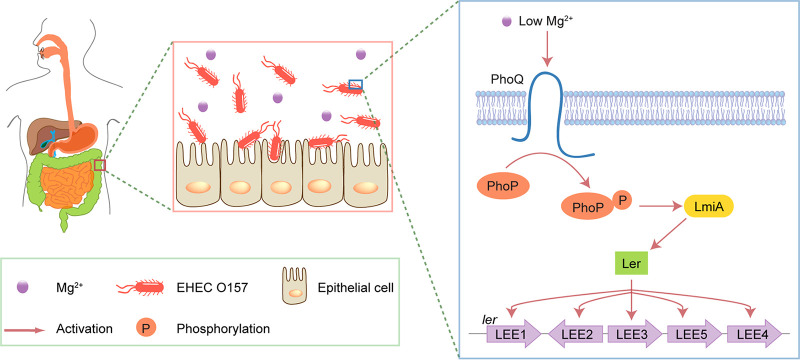
Sensing specific gut metabolites is an important strategy for inducing crucial virulence programs by enterohemorrhagic Escherichia coli (EHEC) O157:H7 during colonization and infection. Here, we identified a virulence-regulating pathway wherein the PhoQ/PhoP two-component regulatory system signals to the O island 119-encoded low magnesium-induced regulator A (LmiA), which, in turn, activates locus of enterocyte effacement (LEE) genes to promote EHEC O157:H7 adherence in the low-magnesium conditions of the large intestine. This regulatory pathway is widely present in a range of EHEC and enteropathogenic E. coli (EPEC) serotypes. Disruption of this pathway significantly decreased EHEC O157:H7 adherence in the mouse intestinal tract. Moreover, mice fed a magnesium-rich diet showed significantly reduced EHEC O157:H7 adherence in vivo , indicating that magnesium may help in preventing EHEC and EPEC infection in humans.
Overview
The claims and statistics of this paper haven’t been checked yet.
Free: it reads the open-access text and checks the first 5 claims that cite a source we can check. Create a free account to check every claim.
Integrity signals
Registry
Cites
Statistics
Figures
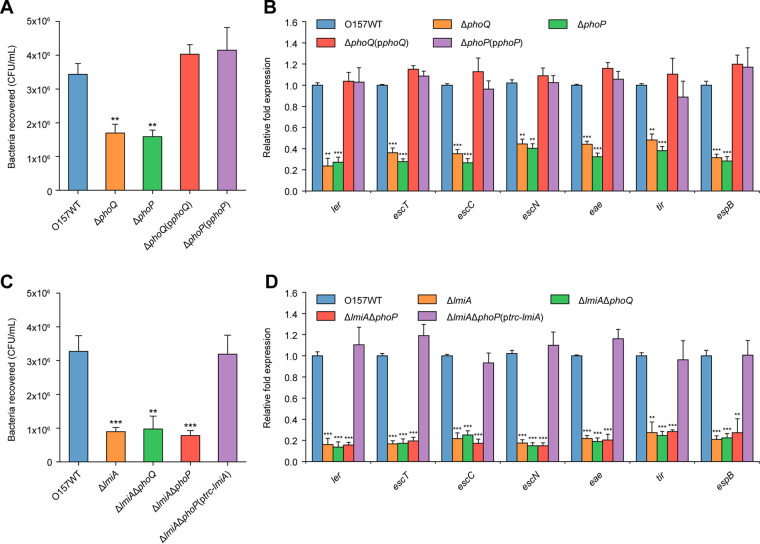
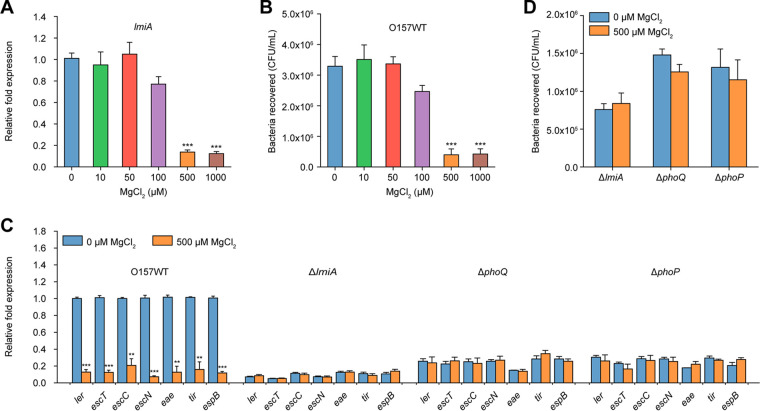
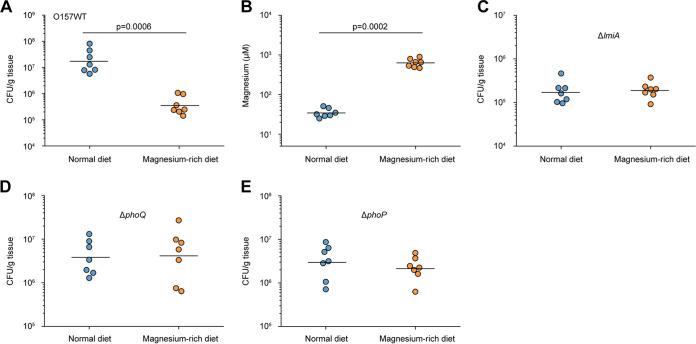
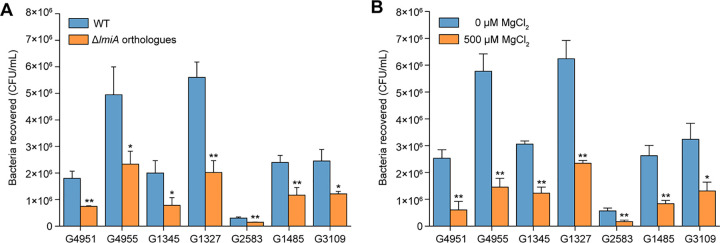
Verification
Claims the paper makes
The claims and statistics of this paper haven’t been checked yet.
Free: it reads the open-access text and checks the first 5 claims that cite a source we can check. Create a free account to check every claim.
Self-check
Percentages, sums and reported differences re-computed from the paper’s own numbers.
The self-check needs the paper’s full text.
Citations
Cites
Analysis of Relative Gene Expression Data Using Real-Time Quantitative PCR and the 2−ΔΔCT Method
Livak, K. J., & Schmittgen, T. D. (2001) · Methods · doi:10.1006/meth.2001.1262 · Cited by 180,860 · cited 2×
“Relative enrichment was calculated as fold change using the ΔΔCT method (40).”
MethodOne-step inactivation of chromosomal genes in Escherichia coli K-12 using PCR products
Datsenko, K. A., & Wanner, B. L. (2000) · Proceedings of the National Academy of Sciences · doi:10.1073/pnas.120163297 · Cited by 14,782 · cited 1×
“Mutant strains were generated by the Red recombinase system (38).”
MethodFood-Related Illness and Death in the United States
Mead, P. S., Slutsker, L., Dietz, V., McCaig, L. F., Bresee, J. S., Shapiro, C., Griffin, P. M., & Tauxe, R. V. (1999) · Emerging Infectious Diseases · doi:10.3201/eid0505.990502 · Cited by 7,235 · cited 2×
“Outbreak surveillance data from the CDC reported that EHEC O157 alone results in more than 73,000 illnesses, 2,200 hospitalizations, and 60 deaths annually in the United States (37).”
BackgroundDefensins: antimicrobial peptides of innate immunity
Ganz, T. (2003) · Nature Reviews Immunology · doi:10.1038/nri1180 · Cited by 3,066 · cited 1×
“In addition, cationic antimicrobial peptides are mainly produced and secreted by Paneth cells within the crypts of the small intestine, and only a limited number of antimicrobial peptides exist in the large intestine (35, 36).”
BackgroundGenome sequence of enterohaemorrhagic Escherichia coli O157:H7
Perna, N. T., Plunkett, G., Burland, V., Mau, B., Glasner, J. D., Rose, D. J., Mayhew, G. F., Evans, P. S., Gregor, J., Kirkpatrick, H. A., et al. (2001) · Nature · doi:10.1038/35054089 · Cited by 2,055
Epidemiology of Escherichia coli O157:H7 Outbreaks, United States, 1982–2002
Rangel, J. M., Sparling, P. H., Crowe, C., Griffin, P. M., & Swerdlow, D. L. (2005) · Emerging Infectious Diseases · doi:10.3201/eid1104.040739 · Cited by 1,263
Paneth cells, antimicrobial peptides and maintenance of intestinal homeostasis
Bevins, C. L., & Salzman, N. H. (2011) · Nature Reviews Microbiology · doi:10.1038/nrmicro2546 · Cited by 1,238 · cited 1×
“In addition, cationic antimicrobial peptides are mainly produced and secreted by Paneth cells within the crypts of the small intestine, and only a limited number of antimicrobial peptides exist in the large intestine (35, 36).”
BackgroundMg2+ as an Extracellular Signal: Environmental Regulation of Salmonella Virulence
Véscovi, E. G., Soncini, F. C., & Groisman, E. A. (1996) · Cell · doi:10.1016/s0092-8674(00)81003-x · Cited by 841
Enterohaemorrhagic Escherichia coli: emerging issues on virulence and modes of transmission
Caprioli, A., Morabito, S., Brug�re, H., & Oswald, E. (2005) · Veterinary Research · doi:10.1051/vetres:2005002 · Cited by 668 · cited 1×
“One important characteristic of EHEC O157 virulence is its ability to form attaching and effacing (A/E) lesions on epithelial cells (2, 3).”
BackgroundA Brief Overview of Escherichia coli O157:H7 and Its Plasmid O157
Lim, J. Y., Yoon, J., & Hovde, C. J. (2010) · Journal of Microbiology and Biotechnology · doi:10.4014/jmb.0908.08007 · Cited by 597 · cited 3×
“One important characteristic of EHEC O157 virulence is its ability to form attaching and effacing (A/E) lesions on epithelial cells (2, 3).”
BackgroundH-NS Mediates the Silencing of Laterally Acquired Genes in Bacteria
Lucchini, S., Rowley, G., Goldberg, M. D., Hurd, D., Harrison, M., & Hinton, J. C. D. (2006) · PLoS Pathogens · doi:10.1371/journal.ppat.0020081 · Cited by 554 · cited 1×
“ChIP was performed as previously described (45, 46) with some modifications.”
MethodKarmali, M. A., Mascarenhas, M., Shen, S., Ziebell, K., Johnson, S., Reid-Smith, R., Isaac-Renton, J., Clark, C., Rahn, K., & Kaper, J. B. (2003) · Journal of Clinical Microbiology · doi:10.1128/jcm.41.11.4930-4940.2003 · Cited by 490 · cited 1×
“OI-122 carries the virulence gene efa1-lifA encoding the EHEC adherence/lymphocyte inhibitory factor, which is required for in vitro adhesion of EHEC O157 to epithelial cells and inhibition of the host immune response (22).”
BackgroundGarmendia, J., Frankel, G., & Crepin, V. F. (2005) · Infection and Immunity · doi:10.1128/iai.73.5.2573-2585.2005 · Cited by 407 · cited 1×
“LEE genes are mainly organized in five polycistronic operons (LEE1 to LEE5), where LEE1, LEE2, and LEE3 encode a type III secretion system (TTSS) that exports effecter molecules, LEE5 encodes intimin and its receptor Tir, which are necessary for intimate adherence to the host epithelial cells, and LEE4 encodes additio…”
BackgroundBacterial Mg2+Homeostasis, Transport, and Virulence
Groisman, E. A., Hollands, K., Kriner, M. A., Lee, E.-J., Park, S.-Y., & Pontes, M. H. (2013) · Annual Review of Genetics · doi:10.1146/annurev-genet-051313-051025 · Cited by 262
Regulation of Salmonella typhimurium virulence gene expression by cationic antimicrobial peptides
Bader, M. W., Navarre, W. W., Shiau, W., Nikaido, H., Frye, J. G., McClelland, M., Fang, F. C., & Miller, S. I. (2003) · Molecular Microbiology · doi:10.1046/j.1365-2958.2003.03675.x · Cited by 260 · cited 1×
“Besides low magnesium levels, mild acidic pH and cationic antimicrobial peptides are also direct activating signals for the PhoQ/PhoP two-component system (32, 33).”
BackgroundGruenheid, S., Sekirov, I., Thomas, N. A., Deng, W., O'Donnell, P., Goode, D., Li, Y., Frey, E. A., Brown, N. F., Metalnikov, P., et al. (2004) · Molecular Microbiology · doi:10.1046/j.1365-2958.2003.03911.x · Cited by 224 · cited 1×
“OI-57 harbors the putative virulence gene adfO, which encodes a factor that enhances the adherence capacity of EHEC O157 (20), and OI-71 encodes the non-LEEencoded T3SS effector, NleA (21).”
BackgroundOyston, P. C. F., Dorrell, N., Williams, K., Li, S.-R., Green, M., Titball, R. W., & Wren, B. W. (2000) · Infection and Immunity · doi:10.1128/iai.68.6.3419-3425.2000 · Cited by 214 · cited 1×
“The PhoQ/PhoP two-component regulatory system is also required for the virulence of a variety of bacterial pathogens, including Salmonella enterica serovar Typhimurium (13), Yersinia pestis (14), Shigella”
BackgroundDissecting the PhoP regulatory network of Escherichia coli and Salmonella enterica
Zwir, I., Shin, D., Kato, A., Nishino, K., Latifi, T., Solomon, F., Hare, J. M., Huang, H., & Groisman, E. A. (2005) · Proceedings of the National Academy of Sciences · doi:10.1073/pnas.0408238102 · Cited by 211 · cited 1×
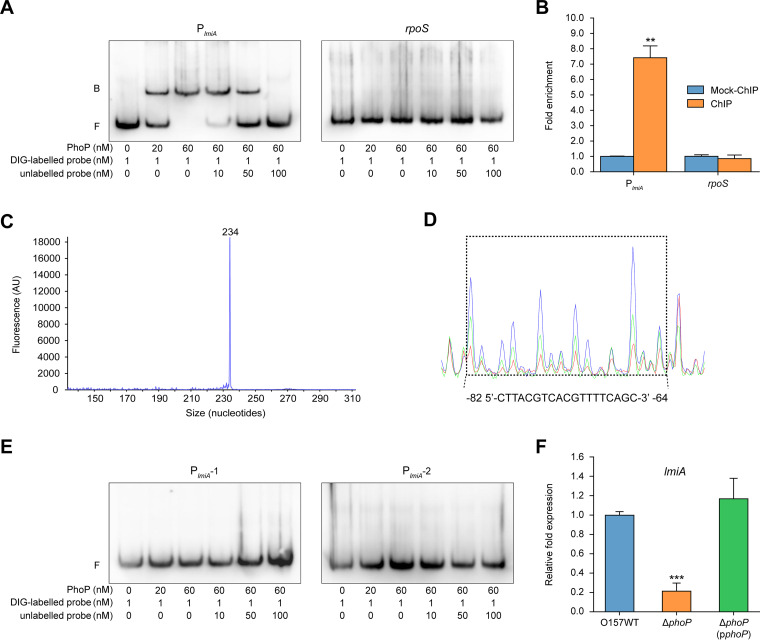
“Furthermore, both the ugd and mgtC promoters harbor a PhoP box that is located much farther upstream from the 35 region (29).”
BackgroundEnteropathogenic and Enterohemorrhagic Escherichia coli Virulence Gene Regulation
Mellies, J. L., Barron, A. M. S., & Carmona, A. M. (2007) · Infection and Immunity · doi:10.1128/iai.01927-06 · Cited by 210 · cited 2×
“LEE genes are subjected to strict regulation that ensures expression only under optimal environmental conditions while also avoiding intense metabolic cost and/or alerting the host immune system to ensure successful colonization (6).”
BackgroundTwo-component regulatory systems can interact to process multiple environmental signals
Soncini, F. C., & Groisman, E. A. (1996) · Journal of Bacteriology · doi:10.1128/jb.178.23.6796-6801.1996 · Cited by 209 · cited 1×
“Besides low magnesium levels, mild acidic pH and cationic antimicrobial peptides are also direct activating signals for the PhoQ/PhoP two-component system (32, 33).”
BackgroundIdentification and Molecular Characterization of the Mg 2+ Stimulon of Escherichia coli
Minagawa, S., Ogasawara, H., Kato, A., Yamamoto, K., Eguchi, Y., Oshima, T., Mori, H., Ishihama, A., & Utsumi, R. (2003) · Journal of Bacteriology · doi:10.1128/jb.185.13.3696-3702.2003 · Cited by 192 · cited 1×
“coli share a conserved motif termed the PhoP box at their 35 region with a maximum mismatch of two nucleotides (24).”
BackgroundA PhoQ/P‐regulated small RNA regulates sensitivity of Escherichia coli to antimicrobial peptides
Moon, K., & Gottesman, S. (2009) · Molecular Microbiology · doi:10.1111/j.1365-2958.2009.06944.x · Cited by 178 · cited 1×
“Previous studies revealed that the PhoP/PhoQ two-component regulatory system activates MgrR, which, in turn, stimulates GrlA to enhance LEE1 expression (30, 31).”
BackgroundFranzin, F. M., & Sircili, M. P. (2015) · BioMed Research International · doi:10.1155/2015/534738 · Cited by 142 · cited 1×
“EHEC O157 regulation of LEE is very complex and is governed by at least four different kinds of regulatory influences (6, 26), including (i) environmental factors such as pH, butyrate, ethanolamine, fucose, and biotin; (ii) regulators encoded within LEE, including the master LEE regulator Ler and the GrlR-GrlA regulat…”
BackgroundA Positive Feedback Loop Promotes Transcription Surge That Jump-Starts Salmonella Virulence Circuit
Shin, D., Lee, E.-J., Huang, H., & Groisman, E. A. (2006) · Science · doi:10.1126/science.1134930 · Cited by 138
Identification of Novel DNA‐Binding Proteins Using DNA‐Affinity Chromatography/Pull Down
Jutras, B. L., Verma, A., & Stevenson, B. (2012) · Current Protocols in Microbiology · doi:10.1002/9780471729259.mc01f01s24 · Cited by 110
Magnesium transport in the gastrointestinal tract
Schweigel, M. (2000) · Frontiers in Bioscience · doi:10.2741/schweigel · Cited by 107 · cited 2×
“Humans can only obtain magnesium from external sources through gastrointestinal absorption (9).”
BackgroundThe role of the PhoP/PhoQ regulon in Salmonella virulence
Véscovi, E. G., Soncini, F. C., & Groisman, E. A. (1994) · Research in Microbiology · doi:10.1016/0923-2508(94)90096-5 · Cited by 105 · cited 2×
“The PhoQ/PhoP two-component regulatory system is also required for the virulence of a variety of bacterial pathogens, including Salmonella enterica serovar Typhimurium (13), Yersinia pestis (14), Shigella”
BackgroundYang, B., Feng, L., Wang, F., & Wang, L. (2015) · Nature Communications · doi:10.1038/ncomms7592 · Cited by 103 · cited 1×
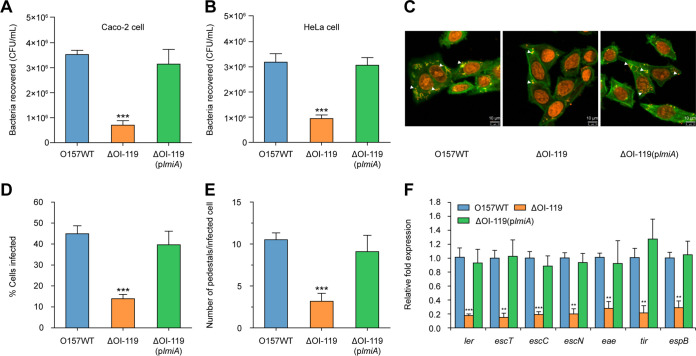
“Our preliminary comparative transcriptome analysis indicated that genes within OI-119 and the LEE pathogenicity island were significantly downregulated 3 h after incubation of HeLa cells with EHEC O157 (23), which was further confirmed with quantitative reverse transcription PCR (qRT-PCR) in this study (Table S1).”
ResultSelf-citationHorizontal gene transfer of virulence determinants in selected bacterial foodborne pathogens
Kelly, B. G., Vespermann, A., & Bolton, D. (2008) · Food and Chemical Toxicology · doi:10.1016/j.fct.2008.02.007 · Cited by 94 · cited 2×
“The core genome of pathogenic bacteria is enhanced with novel genetic islands and small clusters of genes often associated with increased virulence (25).”
BackgroundConnolly, J. P. R., Finlay, B. B., & Roe, A. J. (2015) · Frontiers in Microbiology · doi:10.3389/fmicb.2015.00568 · Cited by 88
Clarke, M. B., & Sperandio, V. (2005) · Molecular Microbiology · doi:10.1111/j.1365-2958.2005.04819.x · Cited by 83 · cited 1×
“1 M acetyl phosphate was added to the binding buffer for generating phosphorylated, active PhoP (44).”
BackgroundMoss, J. E., Fisher, P. E., Vick, B., Groisman, E. A., & Zychlinsky, A. (2000) · Cellular Microbiology · doi:10.1046/j.1462-5822.2000.00065.x · Cited by 82 · cited 1×
“flexneri (15), and Pseudomonas aeruginosa (16).”
Eguchi, Y., Okada, T., Minagawa, S., Oshima, T., Mori, H., Yamamoto, K., Ishihama, A., & Utsumi, R. (2004) · Journal of Bacteriology · doi:10.1128/jb.186.10.3006-3014.2004 · Cited by 79 · cited 1×
“In agreement, a previous study also found that PhoP box present in the promoter region of crcA exhibits a three-base difference from the consensus PhoP box sequence (28).”
Dibb-Fuller, M. P., Best, A., Stagg, D. A., Cooley, W. A., & Woodward, M. J. (2001) · Journal of Medical Microbiology · doi:10.1099/0022-1317-50-9-759 · Cited by 74 · cited 1×
“Adherence assays were performed using a previously described method (39).”
MethodDavies, B. W., Bogard, R. W., & Mekalanos, J. J. (2011) · Proceedings of the National Academy of Sciences · doi:10.1073/pnas.1107894108 · Cited by 69 · cited 1×
“ChIP was performed as previously described (45, 46) with some modifications.”
MethodGellatly, S. L., Needham, B., Madera, L., Trent, M. S., & Hancock, R. E. W. (2012) · Infection and Immunity · doi:10.1128/iai.00382-12 · Cited by 69 · cited 1×
“flexneri (15), and Pseudomonas aeruginosa (16).”
QseA Directly Activates Transcription of LEE1 in Enterohemorrhagic Escherichia coli
Sharp, F. C., & Sperandio, V. (2007) · Infection and Immunity · doi:10.1128/iai.02003-06 · Cited by 69 · cited 1×
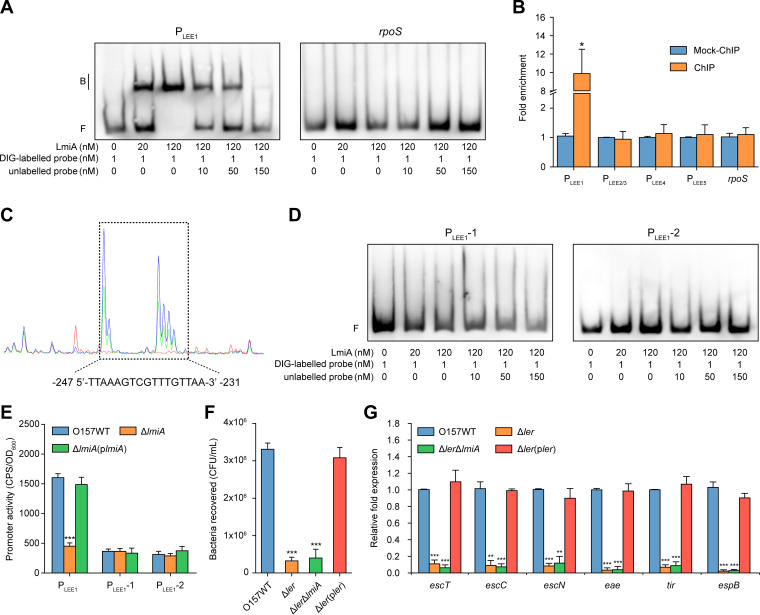
“The LEE1 operon has two promoters, a distal promoter (P1) and a proximal promoter (P2) (27).”
BackgroundSegmental transport of Ca2+and Mg2+along the gastrointestinal tract
Lameris, A. L. L., Nevalainen, P. I., Reijnen, D., Simons, E., Eygensteyn, J., Monnens, L. A. H., Bindels, R. J. M., & Hoenderop, J. G. J. (2014) · American Journal of Physiology-Gastrointestinal and Liver Physiology · doi:10.1152/ajpgi.00093.2014 · Cited by 68
Vallance, B. A., Chan, C., Robertson, M. L., & Finlay, B. B. (2002) · Canadian Journal of Gastroenterology · doi:10.1155/2002/410980 · Cited by 64 · cited 1×
“LEE genes are mainly organized in five polycistronic operons (LEE1 to LEE5), where LEE1, LEE2, and LEE3 encode a type III secretion system (TTSS) that exports effecter molecules, LEE5 encodes intimin and its receptor Tir, which are necessary for intimate adherence to the host epithelial cells, and LEE4 encodes additio…”
BackgroundBranchu, P., Matrat, S., Vareille, M., Garrivier, A., Durand, A., Crépin, S., Harel, J., Jubelin, G., & Gobert, A. P. (2014) · PLoS Pathogens · doi:10.1371/journal.ppat.1003874 · Cited by 56
McDougall, C. J., Wong, R., Scudera, P., Lesser, M., & DeCosse, J. J. (1993) · Digestive Diseases and Sciences · doi:10.1007/bf01316512 · Cited by 55
Yin, X., Wheatcroft, R., Chambers, J. R., Liu, B., Zhu, J., & Gyles, C. L. (2009) · Applied and Environmental Microbiology · doi:10.1128/aem.00507-09 · Cited by 49
Imamovic, L., Tozzoli, R., Michelacci, V., Minelli, F., Marziano, M. L., Caprioli, A., & Morabito, S. (2010) · Infection and Immunity · doi:10.1128/iai.00512-10 · Cited by 40 · cited 1×
“OI-57 harbors the putative virulence gene adfO, which encodes a factor that enhances the adherence capacity of EHEC O157 (20), and OI-71 encodes the non-LEEencoded T3SS effector, NleA (21).”
BackgroundKendall, M. M., Rasko, D. A., & Sperandio, V. (2010) · Molecular Microbiology · doi:10.1111/j.1365-2958.2010.07174.x · Cited by 37
Bhatt, S., Egan, M. S., Ramirez, J., Xander, C. J., Jenkins, V., Muche, S., El-Fenej, J., Palmer, J. L., Mason, E., Storm, E., et al. (2016) · Pathogens and Disease · doi:10.1093/femspd/ftw113 · Cited by 32 · cited 1×
“Previous studies revealed that the PhoP/PhoQ two-component regulatory system activates MgrR, which, in turn, stimulates GrlA to enhance LEE1 expression (30, 31).”
BackgroundAdherence of Escherichia coli O157:H7 Mutants In Vitro and in Ligated Pig Intestines
Yin, X., Chambers, J. R., Wheatcroft, R., Johnson, R. P., Zhu, J., Liu, B., & Gyles, C. L. (2009) · Applied and Environmental Microbiology · doi:10.1128/aem.00297-09 · Cited by 31 · cited 1×
“OI-15 contains the AidA15 adhesin gene, which promotes EHEC O157 adherence both in vitro and in vivo (18).”
Background
Cited by
Nutritional immunity: the battle for nutrient metals at the host–pathogen interface
Murdoch, C. C., & Skaar, E. P. (2022) · Nature Reviews Microbiology · doi:10.1038/s41579-022-00745-6 · Cited by 701
Groisman, E. A., Duprey, A., & Choi, J. (2021) · Microbiology and Molecular Biology Reviews · doi:10.1128/mmbr.00176-20 · Cited by 165
Oral magnesium prevents acetaminophen-induced acute liver injury by modulating microbial metabolism
Li, D., Chen, Y., Wan, M., Mei, F., Wang, F., Gu, P., Zhang, X., Wei, R., Zeng, Y., Zheng, H., et al. (2023) · Cell Host & Microbe · doi:10.1016/j.chom.2023.11.006 · Cited by 86
Self-citationRegulation of flagellar motility and biosynthesis in enterohemorrhagic Escherichia coli O157:H7
Sun, H., Wang, M., Liu, Y., Wu, P., Yao, T., Yang, W., Yang, Q., Yan, J., & Yang, B. (2022) · Gut Microbes · doi:10.1080/19490976.2022.2110822 · Cited by 80
Self-citationChowdhury, R., Bitar, P. D. P., Keresztes, I., Condo, A. M., & Altier, C. (2021) · PLoS Pathogens · doi:10.1371/journal.ppat.1009357 · Cited by 38
Metadata
- Authors
- Liu, Y., Han, R., Wang, J., Yang, P., Wang, F., & Yang, B.
- Affiliations
- Nankai University (CN)
- TEDA Institute of Biological Sciences and Biotechnology, Nankai University, TEDA, Tianjin, People’s Republic of China
- Corresponding author
- Yang, Bin
- Venue
- mBio
- Publisher
- American Society for Microbiology
- Published
- 2020-12-22
- Volume
- 11
- Issue
- 6
- ISSN
- 2150-7511 (ISSN-L)
- 2161-2129
- PMC
- PMC7667037
- OpenAlex
- W3101715380
- Cited by
- 40
- References
- 46
- Citations by year
- 2026: 2 · 2025: 6 · 2024: 7 · 2023: 9 · 2022: 8 · 2021: 8
- FWCI
- 3.85
- Type
- journal article
- Language
- en
- Open access
- gold
- doi.org
- Licence
- cc-by
- creativecommons.org/licenses/by/4.0/ (vor)
- journals.asm.org/non-commercial-tdm-license (tdm)
- Locations
- mBio (publishedVersion, cc-by)
- PubMed Central (publishedVersion, cc-by)
- PubMed (publishedVersion)
- DOAJ (DOAJ: Directory of Open Access Journals) (submittedVersion, cc-by-sa)
- Funders
- Natural Science Foundation of Tianjin City (20JCQNJC11700, 17JCQNJC09300)
- National Natural Science Foundation of China (31800125, 31530083)
- Topics
- Life Sciences › Immunology and Microbiology › Microbiology › Escherichia coli research studies
- Life Sciences › Biochemistry, Genetics and Molecular Biology › Genetics › Bacterial Genetics and Biotechnology
- Life Sciences › Immunology and Microbiology › Microbiology › Enterobacteriaceae and Cronobacter Research
- Keywords
- Escherichia coli O157:H7, magnesium sensing, locus of enterocyte effacement, bacterial adhesion, intestinal colonization, enteropathogenic Escherichia coli, gut microbiota metabolites, virulence regulation
- MeSH terms
- Animals, Bacterial Adhesion, Escherichia coli Infections, Female, Humans, Intestines, Magnesium, Virulence, Gene Expression Regulation, Bacterial, Escherichia coli O157, Escherichia coli Proteins, Mice
About these checks
Registry, retraction, Cites and statistics results are computed, not judged, with one exception: a printed reference that no index lists is read once by a model before it counts as a citation error. Claims are extracted by a model and kept only when their quote appears verbatim in the text; each cited source is then checked, with a model’s help, for whether it says what the claim relies on. Those verdicts can be wrong — read the claim’s quote and the cited source before relying on one.
Statistics and arithmetic are recomputed, not judged.
Confidence bands are shown only for fields calibrated on our annotated test set. None is calibrated yet, so no band is shown.
What counts as a claim ›How we measure confidence ›How we check this ›
Are you an author, or do you see a problem with this page? Request a review
Data sources
Bibliographic data: Semantic Scholar, OpenAlex, Crossref.
Contains information from the Semantic Scholar Academic Graph Datasets, made available under the ODC Attribution License (ODC-BY 1.0).
Semantic Scholar’s data is described in: Kinney, R., et al. (2023). The Semantic Scholar Open Data Platform. arXiv:2301.10140.
