

Global Role of Cyclic AMP Signaling in pH-Dependent Responses in Candida albicans
Open accessThe DOI matches its Crossref record; 63 of the 63 references it cites were found in a registry or an index.
Abstract
Candida albicans is a human commensal and the causative agent of candidiasis, a potentially invasive and life-threatening infection. C. albicans experiences wide changes in pH during both benign commensalism (a common condition) and pathogenesis, and its morphology changes in response to this stimulus. Neutral pH is considered an activator of hyphal growth through Rim101, but the effect of low pH on other morphology-related pathways has not been extensively studied. We sought to determine the role of cyclic AMP signaling, a central regulator of morphology, in the sensing of pH. In addition, we asked broadly what cellular processes were altered by pH in both the presence and absence of this important signal integration system. We concluded that cAMP signaling is impacted by pH and that cAMP broadly impacts C. albicans physiology in both pH-dependent and -independent ways.
Overview
The claims and statistics of this paper haven’t been checked yet.
Free: it reads the open-access text and checks the first 5 claims that cite a source we can check. Create a free account to check every claim.
Integrity signals
Registry
Cites
Statistics
Figures
Verification
Claims the paper makes
The claims and statistics of this paper haven’t been checked yet.
Free: it reads the open-access text and checks the first 5 claims that cite a source we can check. Create a free account to check every claim.
Claims other papers make about this one
Each is checked against this paper’s own text: does it say what the citing paper says it does?
The source backs part of the claim, not all of it — or backs it for a different population, condition or comparison.
In the citing paper
“Acidic pH downregulates Cyr1 activity by decreasing the intracellular bicarbonate pool, which in turn decreases cAMP production to inhibit filamentation [31].”
From The F 1 F o -ATP synthase α subunit of Candida albicans induces inflammatory responses by controlling amino acid catabolism (2023) · cites this paper as [31]
Experimental — accuracy not yet measuredThe cited source says what the claim attributes to it.
In the citing paper
“pH is one of the upstream signalling molecules of this pathway [31].”
From The F 1 F o -ATP synthase α subunit of Candida albicans induces inflammatory responses by controlling amino acid catabolism (2023) · cites this paper as [31]
The cited source says what the claim attributes to it.
In the citing paper
“pH is one of the extracellular signalling factors acting upstream of the cAMP/PKA signalling pathway [31].”
From The F 1 F o -ATP synthase α subunit of Candida albicans induces inflammatory responses by controlling amino acid catabolism (2023) · cites this paper as [31]
The cited source says what the claim attributes to it.
In the citing paper
“This pathway is controlled by many signalling molecules [30] and one of them is pH [31].”
From The F 1 F o -ATP synthase α subunit of Candida albicans induces inflammatory responses by controlling amino acid catabolism (2023) · cites this paper as [31]
Self-check
Percentages, sums and reported differences re-computed from the paper’s own numbers.
The self-check needs the paper’s full text.
Citations
Cites
Sobel, J. D. (2007) · The Lancet · doi:10.1016/s0140-6736(07)60917-9 · Cited by 1,270
Rapid Hypothesis Testing with Candida albicans through Gene Disruption with Short Homology Regions
Wilson, R. B., Davis, D., & Mitchell, A. P. (1999) · Journal of Bacteriology · doi:10.1128/jb.181.6.1868-1874.1999 · Cited by 762 · cited 2×
“The BWP17 rim101 / strain and BWP17 rim101 / strain were constructed as previously described, using deletion amplicons amplified from pGEM-HIS1 and pRS-ARG4 with flanking homology to the RIM101 open reading frame (52, 59).”
BackgroundMethodKoziolek, M., Grimm, M., Becker, D., Iordanov, V., Zou, H., Shimizu, J., Wanke, C., Garbacz, G., & Weitschies, W. (2015) · Journal of Pharmaceutical Sciences · doi:10.1002/jps.24274 · Cited by 464
Fungal Adenylyl Cyclase Integrates CO2 Sensing with cAMP Signaling and Virulence
Klengel, T., Liang, W.-J., Chaloupka, J., Ruoff, C., Schröppel, K., Naglik, J. R., Eckert, S. E., Mogensen, E. G., Haynes, K., Tuite, M. F., et al. (2005) · Current Biology · doi:10.1016/j.cub.2005.10.040 · Cited by 409
The Fungal Pathogen Candida albicans Autoinduces Hyphal Morphogenesis by Raising Extracellular pH
Vylkova, S., Carman, A. J., Danhof, H. A., Collette, J. R., Zhou, H., & Lorenz, M. C. (2011) · mBio · doi:10.1128/mbio.00055-11 · Cited by 365 · cited 3×
“ATO1 is an ammonium exporter that participates in medium alkalinization and autoinduction of hyphal growth (35, 36).”
BackgroundA Candida albicans CRISPR system permits genetic engineering of essential genes and gene families
Vyas, V. K., Barrasa, M. I., & Fink, G. R. (2015) · Science Advances · doi:10.1126/sciadv.1500248 · Cited by 362 · cited 2×
“(2015) to generate the deletion mutant: AGCAAAAGCTGCTGGCTTGG (62).”
BackgroundMethodRas Signaling Is Required for Serum-Induced Hyphal Differentiation in Candida albicans
Feng, Q., Summers, E., Guo, B., & Fink, G. (1999) · Journal of Bacteriology · doi:10.1128/jb.181.20.6339-6346.1999 · Cited by 346
Rocha, C. R. C., Schröppel, K., Harcus, D., Marcil, A., Dignard, D., Taylor, B. N., Thomas, D. Y., Whiteway, M., & Leberer, E. (2001) · Molecular Biology of the Cell · doi:10.1091/mbc.12.11.3631 · Cited by 344 · cited 3×
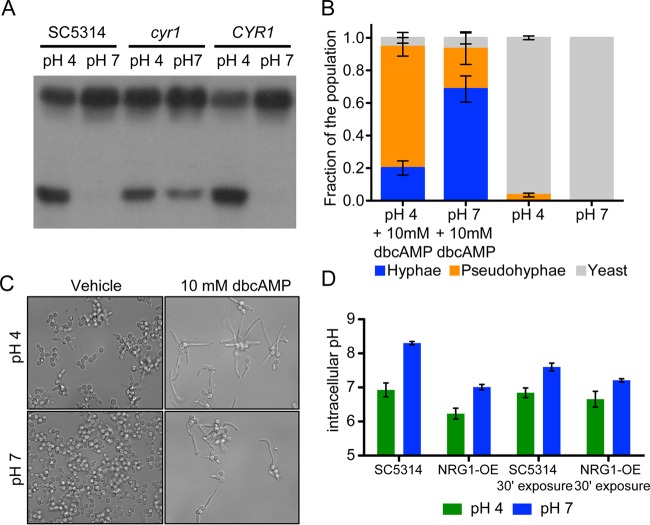
“We and others have observed that the nonhydrolyzable, cell-permeable cAMP analog dbcAMP is able to rescue the phenotypic effects of reduced cyclic AMP signaling, and we hypothesized that addition of dbcAMP would suppress the effect of pH on morphology under our conditions (12, 13, 22, 24).”
BackgroundHsp90 Orchestrates Temperature-Dependent Candida albicans Morphogenesis via Ras1-PKA Signaling
Shapiro, R. S., Uppuluri, P., Zaas, A. K., Collins, C., Senn, H., Perfect, J. R., Heitman, J., & Cowen, L. E. (2009) · Current Biology · doi:10.1016/j.cub.2009.03.017 · Cited by 311
Leberer, E., Harcus, D., Dignard, D., Johnson, L., Ushinsky, S., Thomas, D. Y., & Schröppel, K. (2001) · Molecular Microbiology · doi:10.1046/j.1365-2958.2001.02672.x · Cited by 295 · cited 4×
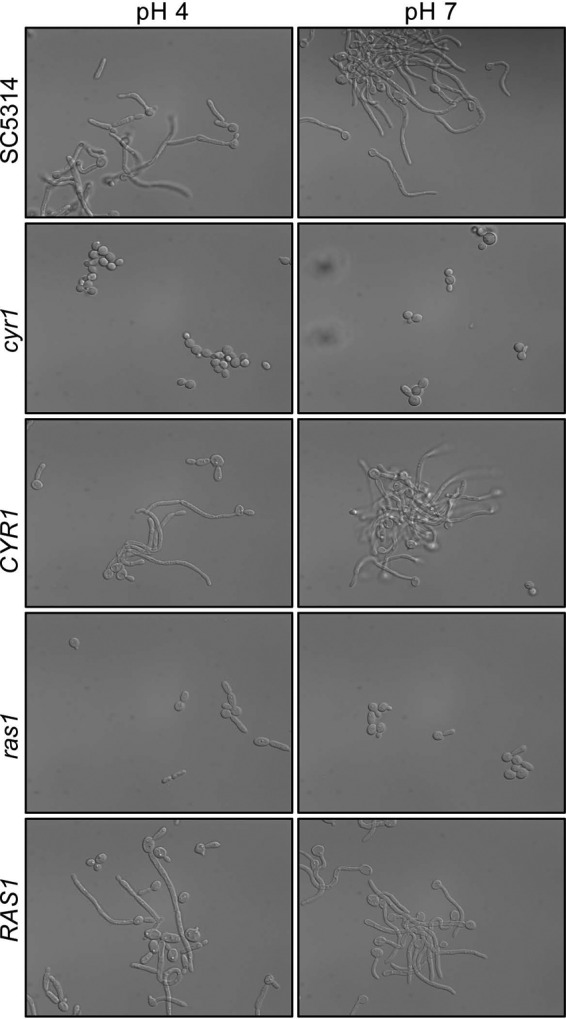
“has also been reported to result in pseudohyphae in place of hyphae under filamentation-inducing conditions (12, 28).”
BackgroundInfluentialXu, X.-L., Lee, R. T. H., Fang, H.-M., Wang, Y.-M., Li, R., Zou, H., Zhu, Y., & Wang, Y. (2008) · Cell Host & Microbe · doi:10.1016/j.chom.2008.05.014 · Cited by 289
Cytosolic pH is a second messenger for glucose and regulates the PKA pathway through V‐ATPase
Dechant, R., Binda, M., Lee, S. S., Pelet, S., Winderickx, J., & Peter, M. (2010) · The EMBO Journal · doi:10.1038/emboj.2010.138 · Cited by 289
RIM101-Dependent and -Independent Pathways Govern pH Responses in Candida albicans
Davis, D., Wilson, R. B., & Mitchell, A. P. (2000) · Molecular and Cellular Biology · doi:10.1128/mcb.20.3.971-978.2000 · Cited by 285
Candida albicans RIM101 pH Response Pathway Is Required for Host-Pathogen Interactions
Davis, D., Edwards, J. E., Mitchell, A. P., & Ibrahim, A. S. (2000) · Infection and Immunity · doi:10.1128/iai.68.10.5953-5959.2000 · Cited by 274
A characterization of pH-regulated dimorphism in Candida albicans
Buffo, J., Herman, M. A., & Soll, D. R. (1984) · Mycopathologia · doi:10.1007/bf00436698 · Cited by 256 · cited 2×
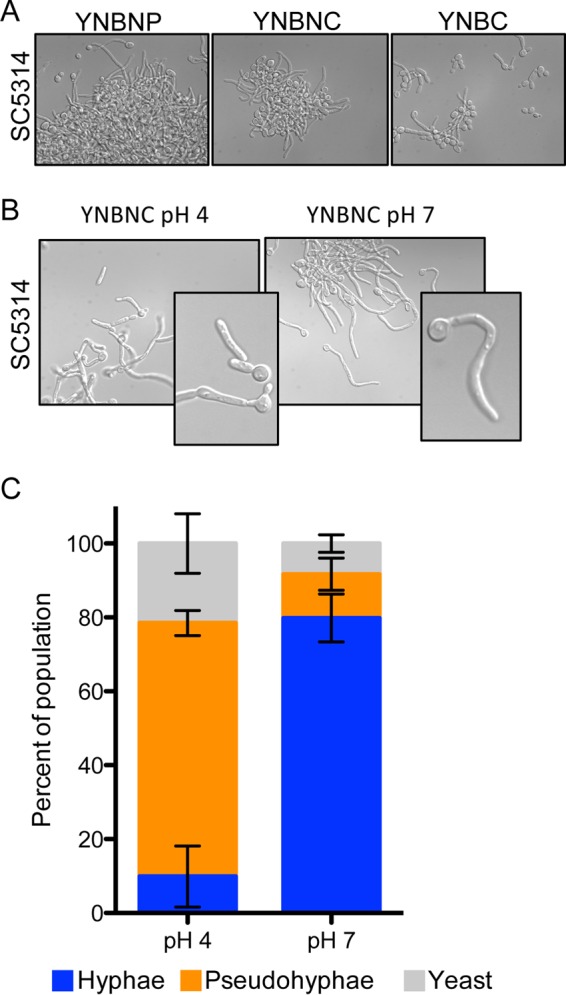
“Filamentous growth, a pathogenesis-related trait, is pH sensitive in vitro, with the number of hyphae in the population increasing over the pH range from 5 to 7 (5).”
BackgroundBensen, E. S., Martin, S. J., Li, M., Berman, J., & Davis, D. A. (2004) · Molecular Microbiology · doi:10.1111/j.1365-2958.2004.04350.x · Cited by 250
Davis‐Hanna, A., Piispanen, A. E., Stateva, L. I., & Hogan, D. A. (2008) · Molecular Microbiology · doi:10.1111/j.1365-2958.2007.06013.x · Cited by 250
Self-citationCandida albicans Gene Deletion with a Transient CRISPR-Cas9 System
Min, K., Ichikawa, Y., Woolford, C. A., & Mitchell, A. P. (2016) · mSphere · doi:10.1128/msphere.00130-16 · Cited by 247 · cited 1×
“The SC5314 rim101 / mutant was generated with the transient CRISPR-Cas9 system (60).”
Intracellular pH is a tightly controlled signal in yeast
Orij, R., Brul, S., & Smits, G. J. (2011) · Biochimica et Biophysica Acta (BBA) - General Subjects · doi:10.1016/j.bbagen.2011.03.011 · Cited by 243 · cited 1×
“Cytosolic pH is the cumulative result of buffering by a large number of different molecules (charged amino acid side chains, free amino acids, glycolytic intermediates, and others), and the activity of plasma membrane and vacuolar ATPases (V-ATPases) and proton pumps (38).”
BackgroundControl of Candida albicans Metabolism and Biofilm Formation by Pseudomonas aeruginosa Phenazines
Morales, D. K., Grahl, N., Okegbe, C., Dietrich, L. E. P., Jacobs, N. J., & Hogan, D. A. (2013) · mBio · doi:10.1128/mbio.00526-12 · Cited by 242 · cited 1×
“We and others have shown that endogenous fermentative metabolism can substantially reduce the extracellular pH in sugar-rich environments, particularly in situations where respiratory metabolism is limited (3, 4).”
BackgroundSelf-citationCritical role of germ tube formation in the pathogenesis of candidal vaginitis
Sobel, J. D., Muller, G., & Buckley, H. R. (1984) · Infection and Immunity · doi:10.1128/iai.44.3.576-580.1984 · Cited by 242 · cited 3×
“Vaginal pH in the context of health is low ( 4.5); however, unlike other forms of vaginitis, VVC is not associated with alkalization of the vagina, and diagnostically, an acidic vaginal pH is consistent with VVC (2).”
BackgroundInfluentialSoluble adenylyl cyclase (sAC) is indispensable for sperm function and fertilization
Xie, F., Garcia, M. A., Carlson, A. E., Schuh, S. M., Babcock, D. F., Jaiswal, B. S., Gossen, J. A., Esposito, G., van Duin, M., & Conti, M. (2006) · Developmental Biology · doi:10.1016/j.ydbio.2006.05.038 · Cited by 231
Bruno, V. M., Wang, Z., Marjani, S. L., Euskirchen, G. M., Martin, J., Sherlock, G., & Snyder, M. (2010) · Genome Research · doi:10.1101/gr.109553.110 · Cited by 211
An improved transformation protocol for the human fungal pathogen Candida albicans
Walther, A., & Wendland, J. (2003) · Current Genetics · doi:10.1007/s00294-002-0349-0 · Cited by 209 · cited 1×
“Briefly, strain SC5314 was cotransformed with the RIM101-NAT deletion construct (3 g), the CaCAS9 cassette (1 g), and the sgRNA cassette (1 g) by using the lithium acetate transformation method (61).”
MethodA Single-Transformation Gene Function Test in Diploid Candida albicans
Enloe, B., Diamond, A., & Mitchell, A. P. (2000) · Journal of Bacteriology · doi:10.1128/jb.182.20.5730-5736.2000 · Cited by 204 · cited 1×
“The BWP17 rim101 / strain and BWP17 rim101 / strain were constructed as previously described, using deletion amplicons amplified from pGEM-HIS1 and pRS-ARG4 with flanking homology to the RIM101 open reading frame (52, 59).”
MethodBockmühl, D. P., Krishnamurthy, S., Gerads, M., Sonneborn, A., & Ernst, J. F. (2001) · Molecular Microbiology · doi:10.1046/j.1365-2958.2001.02688.x · Cited by 193
CO2 Regulates White-to-Opaque Switching in Candida albicans
Huang, G., Srikantha, T., Sahni, N., Yi, S., & Soll, D. R. (2009) · Current Biology · doi:10.1016/j.cub.2009.01.018 · Cited by 180
Wang, D., Hu, J., Bobulescu, I. A., Quill, T. A., McLeroy, P., Moe, O. W., & Garbers, D. L. (2007) · Proceedings of the National Academy of Sciences · doi:10.1073/pnas.0611296104 · Cited by 176
Vylkova, S., & Lorenz, M. C. (2014) · PLoS Pathogens · doi:10.1371/journal.ppat.1003995 · Cited by 174 · cited 1×
“albicans metabolism is thought to facilitate survival of the fungus through the autoinduction of hyphal growth (35, 36, 55).”
BackgroundRamon, A. M., Porta, A., & Fonzi, W. A. (1999) · Journal of Bacteriology · doi:10.1128/jb.181.24.7524-7530.1999 · Cited by 174
Peters, B. M., Palmer, G. E., Nash, A. K., Lilly, E. A., Fidel, P. L., & Noverr, M. C. (2014) · Infection and Immunity · doi:10.1128/iai.01417-13 · Cited by 165
Transcription Profiling of Cyclic AMP Signaling in Candida albicans
Harcus, D., Nantel, A., Marcil, A., Rigby, T., & Whiteway, M. (2004) · Molecular Biology of the Cell · doi:10.1091/mbc.e04-02-0144 · Cited by 153 · cited 4×
“in 2004 (31) found 196 transcripts (88 positively regulated and 108 negatively regulated by Cyr1) that were differentially expressed in both data sets (Table S3), and they included transcripts associated with hyphal growth, including ECE1, HWP1, HYR1, SAP4, and SAP6.”
BackgroundResultInfluentialNobile, C. J., Solis, N., Myers, C. L., Fay, A. J., Deneault, J.-S., Nantel, A., Mitchell, A. P., & Filler, S. G. (2008) · Cellular Microbiology · doi:10.1111/j.1462-5822.2008.01198.x · Cited by 150
CO2 Acts as a Signalling Molecule in Populations of the Fungal Pathogen Candida albicans
Hall, R. A., De Sordi, L., MacCallum, D. M., Topal, H., Eaton, R., Bloor, J. W., Robinson, G. K., Levin, L. R., Buck, J., Wang, Y., et al. (2010) · PLoS Pathogens · doi:10.1371/journal.ppat.1001193 · Cited by 126
Grahl, N., Demers, E. G., Lindsay, A. K., Harty, C. E., Willger, S. D., Piispanen, A. E., & Hogan, D. A. (2015) · PLOS Pathogens · doi:10.1371/journal.ppat.1005133 · Cited by 111 · cited 5×
“Thus, we propose that low pH downregulates Cyr1 activity, and this is consistent with the observation that dibutyryl cyclic AMP restores hyphal growth in a cyr1Δ/Δ mutant strain at both pH 4 and pH 7 (22, 23).”
BackgroundResultInfluentialSelf-citationValli, M., Sauer, M., Branduardi, P., Borth, N., Porro, D., & Mattanovich, D. (2005) · Applied and Environmental Microbiology · doi:10.1128/aem.71.3.1515-1521.2005 · Cited by 103 · cited 1×
“albicans, growth in medium favoring yeast growth due to low-pH medium has been described to result in cytosolic acidification compared to an otherwise identical neutral hyphainducing medium, and the dynamics of changes in intracellular pH are different between cells growing as hyphae and those growing as yeast (42, 43…”
BackgroundEl Barkani, A., Kurzai, O., Fonzi, W. A., Ramon, A., Porta, A., Frosch, M., & Mühlschlegel, F. A. (2000) · Molecular and Cellular Biology · doi:10.1128/mcb.20.13.4635-4647.2000 · Cited by 96 · cited 2×
“hyphal growth in response to high pH as a stimulus (7, 25, 52, 53).”
BackgroundKlein, C. (1976) · FEBS Letters · doi:10.1016/0014-5793(76)80419-x · Cited by 94 · cited 1×
“se from the availability of bicarbonate (49, 50).”
BackgroundBond, S., & Forgac, M. (2008) · Journal of Biological Chemistry · doi:10.1074/jbc.m805232200 · Cited by 87
Fang, H., & Wang, Y. (2006) · Molecular Microbiology · doi:10.1111/j.1365-2958.2006.05248.x · Cited by 83 · cited 1×
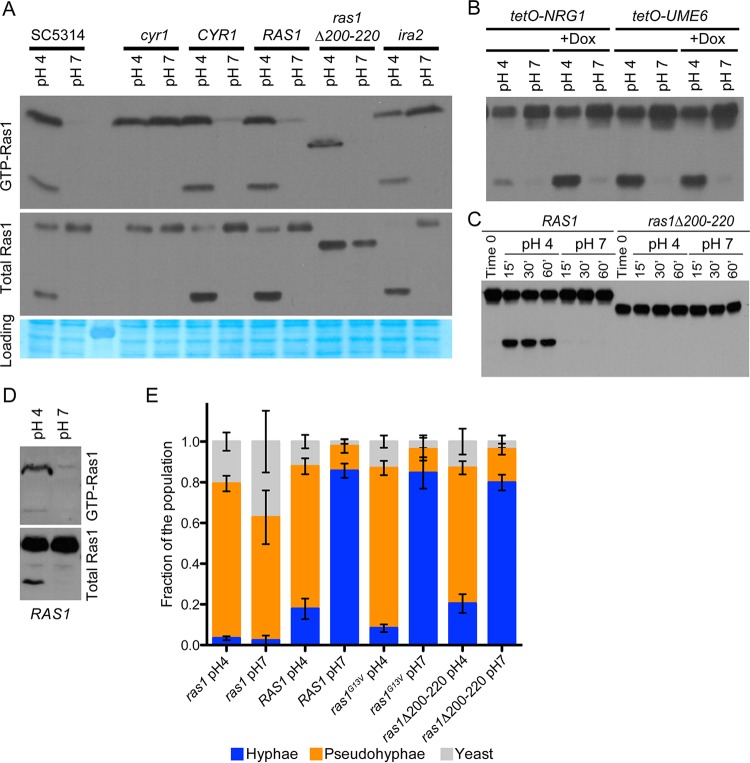
“Ras1 is a soluble small GTPase which, in its GTPbound conformation, activates the adenylate cyclase Cyr1 (also referred to as Cdc35 in the literature) (14).”
BackgroundJain, P., Akula, I., & Edlind, T. (2003) · Antimicrobial Agents and Chemotherapy · doi:10.1128/aac.47.10.3195-3201.2003 · Cited by 82
Castilla, R., Passeron, S., & Cantore, M. L. (1998) · Cellular Signalling · doi:10.1016/s0898-6568(98)00015-1 · Cited by 81 · cited 1×
“the genes encoding either of these proteins are impaired in hyphal growth (12, 19, 21).”
BackgroundCassola, A., Parrot, M., Silberstein, S., Magee, B. B., Passeron, S., Giasson, L., & Cantore, M. L. (2004) · Eukaryotic Cell · doi:10.1128/ec.3.1.190-199.2004 · Cited by 75
Cloutier, M. (2003) · Fungal Genetics and Biology · doi:10.1016/s1087-1845(02)00520-0 · Cited by 72
The cAMP phosphodiesterase encoded by CaPDE2 is required for hyphal development in Candida albicans
Jung, W. H., & Stateva, L. I. (2003) · Microbiology · doi:10.1099/mic.0.26517-0 · Cited by 72 · cited 1×
“has also been reported to result in pseudohyphae in place of hyphae under filamentation-inducing conditions (12, 28).”
BackgroundPhosphatase Mutants in Aspergillus nidulans
Dorn, G. L. (1965) · Science · doi:10.1126/science.150.3700.1183 · Cited by 67 · cited 1×
“albicans pH sensing and its morphological response to pH are in part controlled by the PacC ortholog Rim101, a transcription factor that is posttranslationally activated in response to elevated pH (6).”
BackgroundRas Signaling Gets Fine-Tuned: Regulation of Multiple Pathogenic Traits of Candida albicans
Inglis, D. O., & Sherlock, G. (2013) · Eukaryotic Cell · doi:10.1128/ec.00094-13 · Cited by 66
Vieira, N., Casal, M., Johansson, B., MacCallum, D. M., Brown, A. J. P., & Paiva, S. (2010) · Molecular Microbiology · doi:10.1111/j.1365-2958.2009.07003.x · Cited by 63 · cited 2×
“Notably, two transcripts that we saw prominently induced by low pH, JEN1 and JEN2, have been shown to be induced upon phagocytosis by neutrophils (32).”
BackgroundLindsay, A. K., Morales, D. K., Liu, Z., Grahl, N., Zhang, A., Willger, S. D., Myers, L. C., & Hogan, D. A. (2014) · PLoS Genetics · doi:10.1371/journal.pgen.1004567 · Cited by 58 · cited 1×
“We and others have shown that endogenous fermentative metabolism can substantially reduce the extracellular pH in sugar-rich environments, particularly in situations where respiratory metabolism is limited (3, 4).”
BackgroundSelf-citationParra, K. J., Chan, C.-Y., & Chen, J. (2014) · Eukaryotic Cell · doi:10.1128/ec.00050-14 · Cited by 57
The Candida albicans ATO Gene Family Promotes Neutralization of the Macrophage Phagolysosome
Danhof, H. A., & Lorenz, M. C. (2015) · Infection and Immunity · doi:10.1128/iai.00984-15 · Cited by 57 · cited 3×
“ATO1 is an ammonium exporter that participates in medium alkalinization and autoinduction of hyphal growth (35, 36).”
BackgroundWilson, D., Tutulan‐Cunita, A., Jung, W., Hauser, N. C., Hernandez, R., Williamson, T., Piekarska, K., Rupp, S., Young, T., & Stateva, L. (2007) · Molecular Microbiology · doi:10.1111/j.1365-2958.2007.05788.x · Cited by 55 · cited 1×
“There is precedent for inappropriate activation of cAMP signaling preventing the adaptation to a low-pH environment; Wilson and colleagues (56) previously described cAMP hyperactivation, due to the loss of the major cAMP phosphodiesterase, rendered C.”
BackgroundA genome-wide transcriptional analysis of morphology determination in Candida albicans
Carlisle, P. L., & Kadosh, D. (2013) · Molecular Biology of the Cell · doi:10.1091/mbc.e12-01-0065 · Cited by 49
Role of the bicarbonate-responsive soluble adenylyl cyclase in pH sensing and metabolic regulation
Chang, J.-C., & Oude-Elferink, R. P. J. (2014) · Frontiers in Physiology · doi:10.3389/fphys.2014.00042 · Cited by 47
Wang, Y. (2013) · PLoS Pathogens · doi:10.1371/journal.ppat.1003612 · Cited by 43
Binkley, J., Arnaud, M. B., Inglis, D. O., Skrzypek, M. S., Shah, P., Wymore, F., Binkley, G., Miyasato, S. R., Simison, M., & Sherlock, G. (2014) · Nucleic Acids Research · doi:10.1093/nar/gkt1046 · Cited by 42
Dimorphism-associated changes in intracellular pH of Candida albicans
Kaur, S., Mishra, P., & Prasad, R. (1988) · Biochimica et Biophysica Acta (BBA) - Molecular Cell Research · doi:10.1016/0167-4889(88)90202-9 · Cited by 39 · cited 2×
“These findings mirror observations by Kaur and colleagues (43), who saw a lower pHi in cells in pH 4.”
BackgroundResultPiispanen, A. E., Grahl, N., Hollomon, J. M., & Hogan, D. A. (2013) · Molecular Microbiology · doi:10.1111/mmi.12268 · Cited by 32 · cited 10×
“produces a Ras1 protein that is not cleaved, and it supports robust hyphal growth (22).”
BackgroundMethodResultInfluentialSelf-citationYuan, X., Mitchell, B. M., Hua, X., Davis, D. A., & Wilhelmus, K. R. (2010) · Investigative Opthalmology & Visual Science · doi:10.1167/iovs.09-4726 · Cited by 30
Antagonism of Fluconazole and a Proton Pump Inhibitor against Candida albicans
Liu, N.-N., & Köhler, J. R. (2016) · Antimicrobial Agents and Chemotherapy · doi:10.1128/aac.02043-15 · Cited by 29 · cited 1×
“To test the hypothesis that the pH of the medium alters the cytosolic pH under our conditions, we employed a Candida optimized, pH-sensitive ratiometric green fluorescent protein (GFP; pHluorin) (30), which is predictably altered in its fluorescence emission wavelength by pH.”
MethodDimorphism-associated changes in intracellular pH of Candida albicans
Kaur, S., Mishra, P., & Prasad, R. (1988) · Biochimica et Biophysica Acta (BBA) - Bioenergetics · doi:10.1016/s0005-2728(88)80058-6 · Cited by 16
Amerongen, A. V. N., Roukema, P. A., & Vreugdenhil, A. (1978) · The Journal of Physiology · doi:10.1113/jphysiol.1978.sp012497 · Cited by 11 · cited 1×
“se from the availability of bicarbonate (49, 50).”
BackgroundManczinger, M., Bocsik, A., Kocsis, G. F., Vörös, A., Hegedüs, Z., Ördögh, L., Kondorosi, É., Marton, A., Vízler, C., Tubak, V., et al. (2015) · BioMed Research International · doi:10.1155/2015/398045 · Cited by 5 · cited 1×
“Growth of wild-type Candida in association with vaginal epithelial cells produced transcriptional changes in many of the same pathways we observed in our transcriptional analysis (glucose and GlcNAc metabolism, Efg1), suggesting that cAMP plays a role in this environment (58).”
Background
Cited by
Transcriptional control of hyphal morphogenesis in Candida albicans
Villa, S., Hamideh, M., Weinstock, A., Qasim, M. N., Hazbun, T. R., Sellam, A., Hernday, A. D., & Thangamani, S. (2020) · FEMS Yeast Research · doi:10.1093/femsyr/foaa005 · Cited by 117
“…primarily regulated though a signaling pathway that converges upon the transcriptional regulator Rim101p, which is activated via C-terminal proteolytic processing in response to elevated pH (Dorn 1965; Orejas et al. 1995; Li and Mitchell 1997; Davis, Wilson and Mitchell 2000; Hollomon et al. 2016).”
BackgroundCao, C., Wu, M., Bing, J., Tao, L., Ding, X., Liu, X., & Huang, G. (2017) · Molecular Microbiology · doi:10.1111/mmi.13681 · Cited by 70
“Consistent with previous studies (Harcus et al., 2004; Hollomon et al., 2016), genes that are differentially expressed between WT and cAMP-related mutants are involved in many basic cellular processes including general metabolism, signaling, transcriptional regulation, stress response, and…”
MethodResultCottier, F., Sherrington, S., Cockerill, S., del Olmo Toledo, V., Kissane, S., Tournu, H., Orsini, L., Palmer, G. E., Pérez, J. C., & Hall, R. A. (2019) · mBio · doi:10.1128/mbio.02347-19 · Cited by 63
“Recently, growth at acidic pH has been shown to reduce cytoplasmic pH and modulate cAMP signaling through activation of Cyr1 (34), and activation of the cAMP pathway has been linked to glucan masking in response to other environmental stimuli.”
BackgroundA Multimodal Strategy Used by a Large c-di-GMP Network
Dahlstrom, K. M., Collins, A. J., Doing, G., Taroni, J. N., Gauvin, T. J., Greene, C. S., Hogan, D. A., & O'Toole, G. A. (2018) · Journal of Bacteriology · doi:10.1128/jb.00703-17 · Cited by 64
“aeruginosa (34), and we have adopted it here for the purposes of comparing transcripts across many conditions.”
MethodSelf-citationCRISPR-Based Genetic Manipulation of Candida Species: Historical Perspectives and Current Approaches
Uthayakumar, D., Sharma, J., Wensing, L. F., & Shapiro, R. S. (2021) · Frontiers in Genome Editing · doi:10.3389/fgeed.2020.606281 · Cited by 57
Metadata
- Authors
- Hollomon, J. M., Grahl, N., Willger, S. D., Koeppen, K., & Hogan, D. A.
- Affiliations
- Dartmouth College (US)
- Corresponding author
- Hogan, Deborah A.
- Venue
- mSphere
- Publisher
- American Society for Microbiology
- Published
- 2016-12-28
- Volume
- 1
- Issue
- 6
- ISSN
- 2379-5042 (ISSN-L)
- PMC
- PMC5137381
- OpenAlex
- W2558512265
- Cited by
- 22
- References
- 63
- Citations by year
- 2026: 2 · 2024: 4 · 2023: 1 · 2022: 3 · 2021: 2 · 2020: 2 · 2019: 1 · 2018: 5 · 2017: 2
- FWCI
- 1.39
- Type
- journal article
- Language
- en
- Open access
- gold
- doi.org
- Licence
- cc-by
- creativecommons.org/licenses/by/4.0/ (vor)
- journals.asm.org/non-commercial-tdm-license (tdm)
- Locations
- mSphere (publishedVersion, cc-by)
- Europe PMC (PubMed Central) (publishedVersion, cc-by)
- PubMed Central (publishedVersion, cc-by)
- PubMed (publishedVersion)
- DOAJ (DOAJ: Directory of Open Access Journals) (submittedVersion, cc-by-sa)
- DOAJ (DOAJ: Directory of Open Access Journals) (submittedVersion)
- Funders
- HHS | NIH | National Institute of Allergy and Infectious Diseases (T32AI007519)
- HHS | NIH | National Institute of General Medical Sciences (R01GM108492)
- Howard Hughes Medical Institute
- HHS | NIH | National Heart, Lung, and Blood Institute (R01HL074175)
- Cystic Fibrosis Foundation (STANTO19R0, STANTO15R0)
- Topics
- Life Sciences › Biochemistry, Genetics and Molecular Biology › Molecular Biology › Fungal and yeast genetics research
- Health Sciences › Medicine › Infectious Diseases › Antifungal resistance and susceptibility
- Life Sciences › Biochemistry, Genetics and Molecular Biology › Genetics › Bacterial Genetics and Biotechnology
- Keywords
- Candida albicans, cAMP signaling, pH sensing, low pH, hyphal growth, Rim101, yeast-to-mycelium transition, fungal morphology, candidiasis, commensalism, signal transduction
About these checks
Registry, retraction, Cites and statistics results are computed, not judged, with one exception: a printed reference that no index lists is read once by a model before it counts as a citation error. Claims are extracted by a model and kept only when their quote appears verbatim in the text; each cited source is then checked, with a model’s help, for whether it says what the claim relies on. Those verdicts can be wrong — read the claim’s quote and the cited source before relying on one.
Statistics and arithmetic are recomputed, not judged.
Confidence bands are shown only for fields calibrated on our annotated test set. None is calibrated yet, so no band is shown.
What counts as a claim ›How we measure confidence ›How we check this ›
Are you an author, or do you see a problem with this page? Request a review
Data sources
Bibliographic data: Semantic Scholar, OpenAlex, Crossref.
Contains information from the Semantic Scholar Academic Graph Datasets, made available under the ODC Attribution License (ODC-BY 1.0).
Semantic Scholar’s data is described in: Kinney, R., et al. (2023). The Semantic Scholar Open Data Platform. arXiv:2301.10140.
