

Selective Metal Chelation by a Thiosemicarbazone Derivative Interferes with Mitochondrial Respiration and Ribosome Biogenesis in Candida albicans
Open accessThe DOI matches its Crossref record; 61 of the 62 references it cites were found in a registry or an index; 3 of the 9 sources its claims cite were checked for support.
Abstract
The increasing incidence of fungal infections and resistance to existing antifungals call for the development of broad-spectrum antifungals with novel mechanisms of action. In this study, we demonstrate that a thiosemicarbazone derivative 19ak selectively inhibits mitochondrial respiration mainly by retarding mitochondrial respiratory chain complex I activity through iron chelation and inhibits ribosome biogenesis mainly by disrupting intracellular zinc homeostasis in C. albicans .
Overview
CoChat Summary
TL;DR
A screen of 89 thiosemicarbazone derivatives identified 19ak as a potent, low-cytotoxicity antifungal that chelates fungal iron and zinc. In *Candida albicans*, 19ak inhibits mitochondrial respiration via complex I and ribosome biogenesis via zinc disruption, causing reductive stress and in vivo efficacy in a *Galleria mellonella* model.
Key findings
- Thirteen of 89 thiosemicarbazones had anti-*C. albicans* SC5314 MICs of 0.125–2 μg/mL, comparable or superior to fluconazole; 19ak, 19t, and 19k were active against *Candida*, *Cryptococcus*, and *Aspergillus*, including azole-resistant strains (MICs 0.125–4 μg/mL).
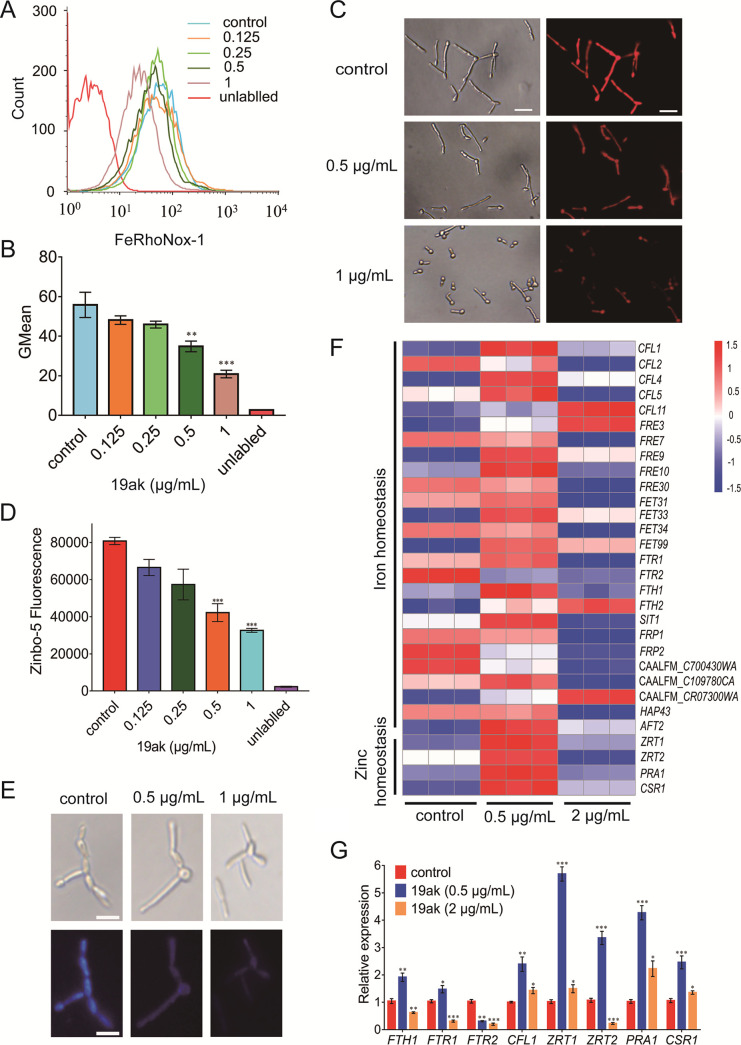
- 19ak had low cytotoxicity in HK2 cells (IC50 26.79 μg/mL; selectivity index 214.32) and chelated fungal iron and zinc; at 1 μg/mL it reduced intracellular labile zinc by approximately 59.6%, and exogenous ZnSO4 raised its MIC from 0.125 to 4 μg/mL.
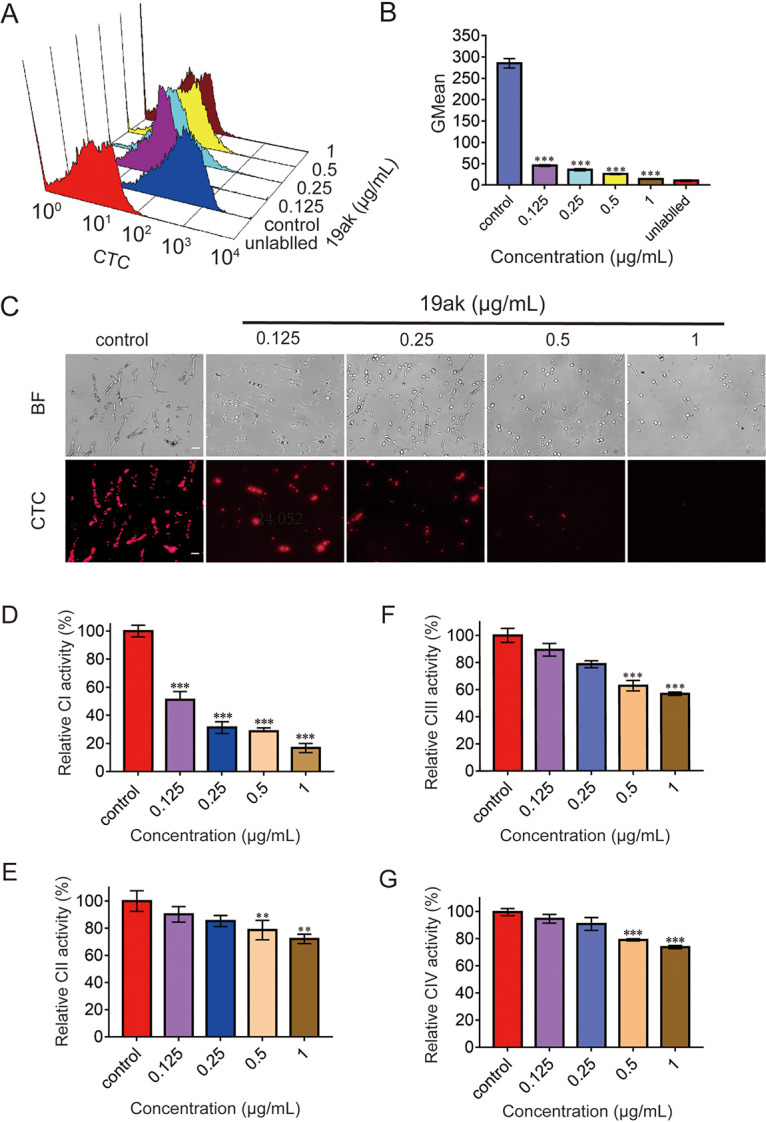
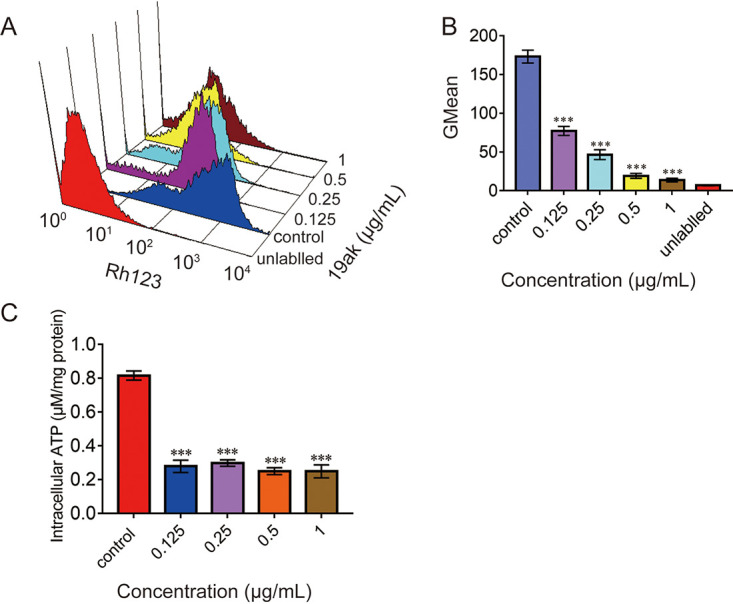
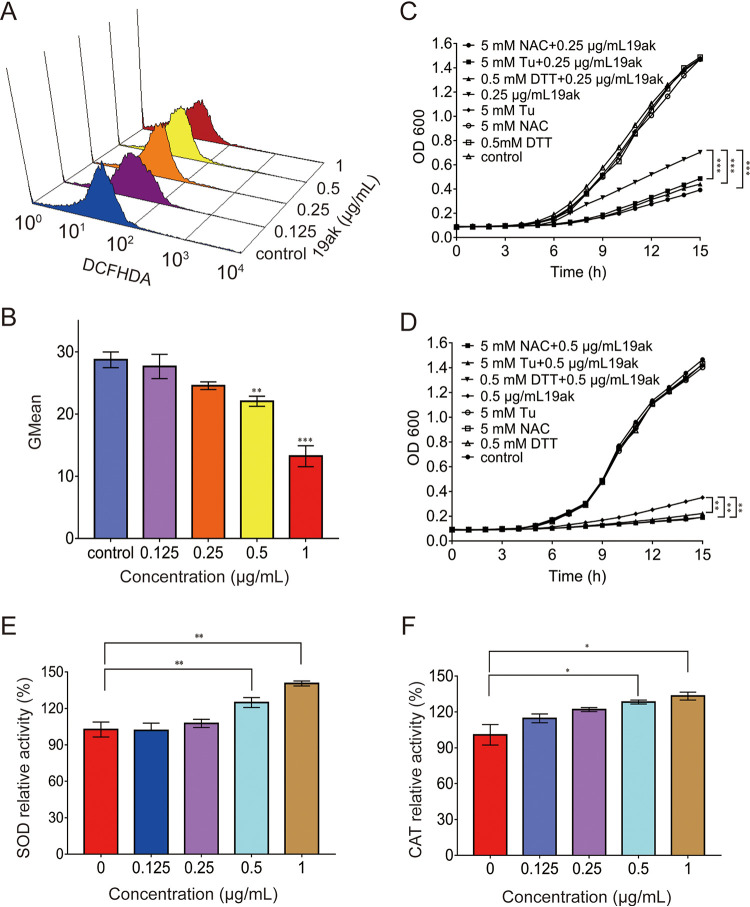
- 19ak inhibited mitochondrial respiration mainly by reducing complex I activity, decreased mitochondrial membrane potential, and lowered intracellular ATP by approximately 65.8% at 0.125 μg/mL; it also reduced ROS and increased CAT/SOD activity, producing reductive stress.
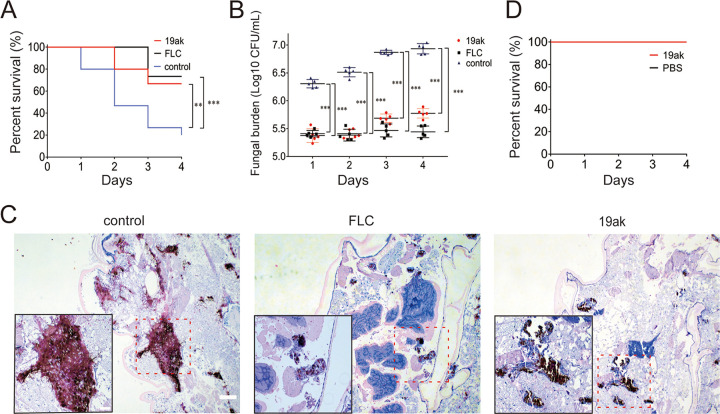
- In a *G. mellonella* infection model, 19ak (0.4 μg/larva) improved 4-day survival to 67% versus 20% in controls, similar to fluconazole (2 μg/larva), and repeated exposure over 40 days did not increase the 19ak MIC.
Methods
- Antifungal screening: 89 thiosemicarbazone derivatives tested against *C. albicans* SC5314, *C. neoformans* H99, and *A. fumigatus* AF293, with MIC/MFC testing against additional *Candida* species and azole-resistant strains; cytotoxicity measured in HK2, 16HBE, and HepG2 cells.
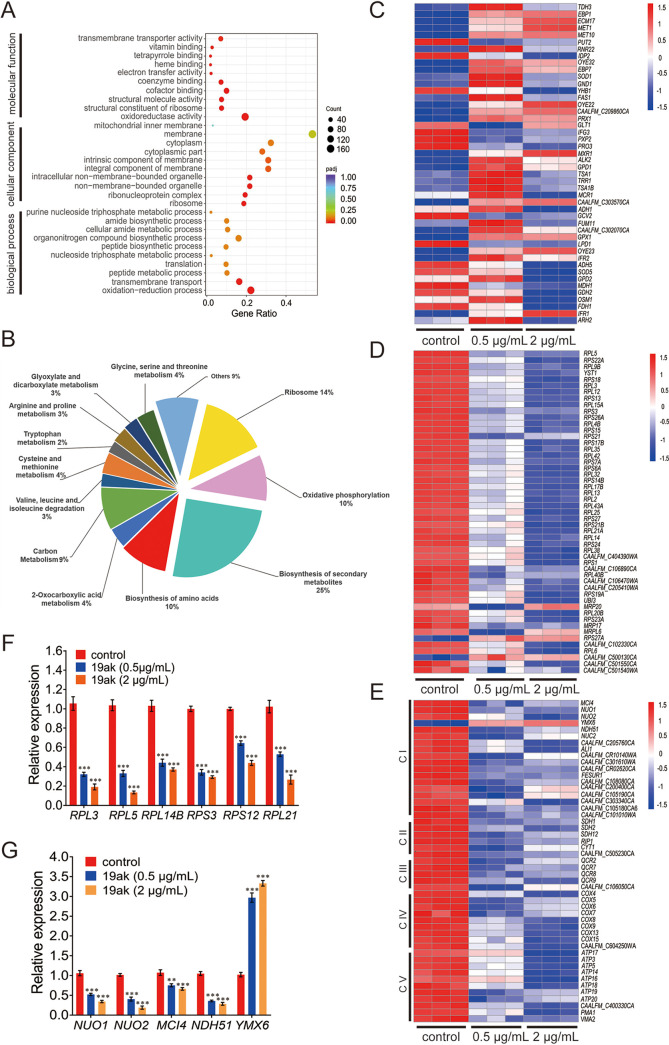
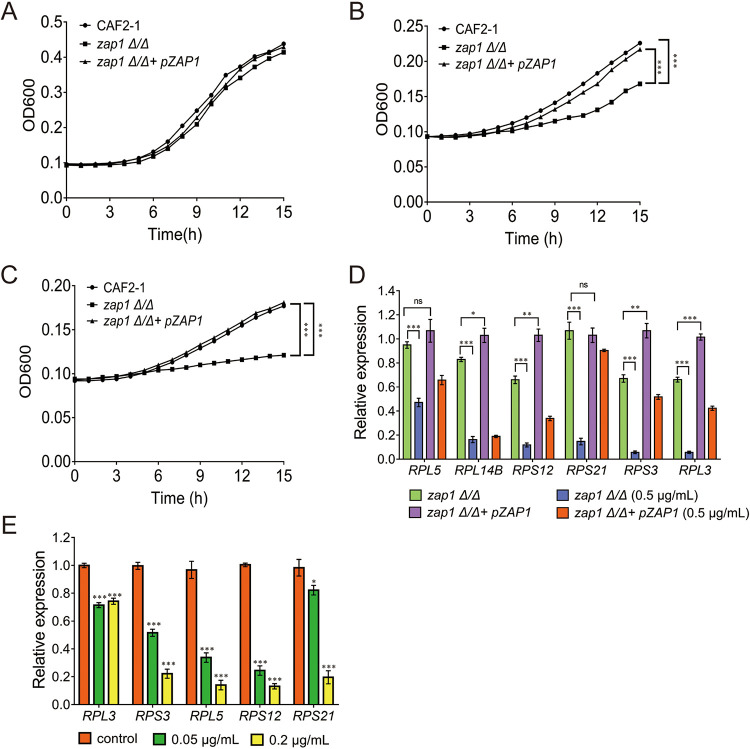
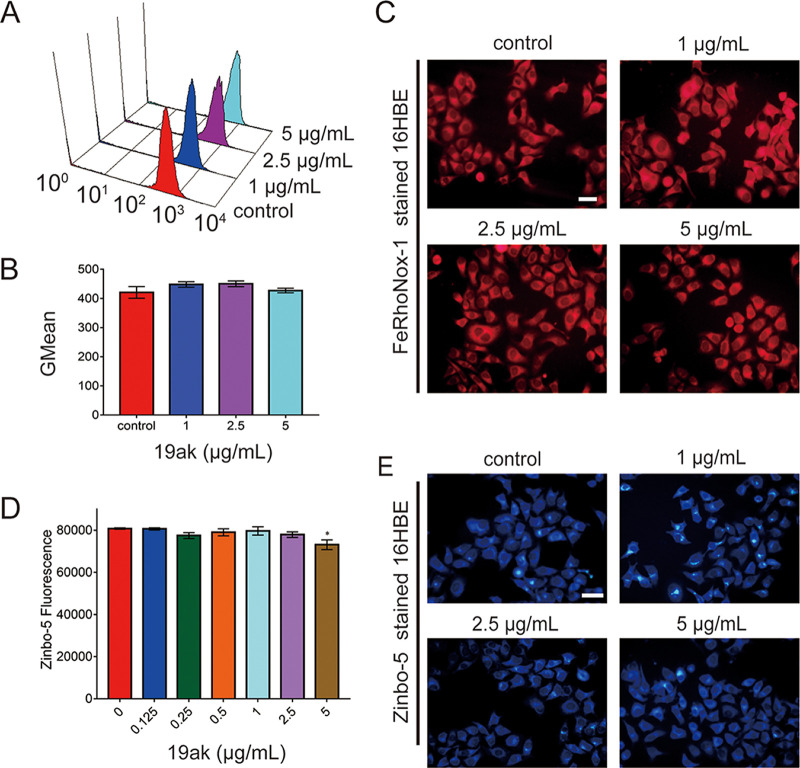
- Mechanism assays: intracellular iron and zinc measured with FeRhoNox-1 and Zinbo-5; RNA-seq and qPCR at 0.5 and 2 μg/mL 19ak; mitochondrial function assessed by CTC, Rh123, ATP, and respiratory chain complex activity assays; ribosome biogenesis tested in a *zap1* mutant and with TPEN.
- In vivo and resistance: *G. mellonella* larvae infected with *C. albicans* SC5314 and treated with 19ak, fluconazole, or PBS, with survival, fungal burden, and histopathology; resistance induction assessed by repeated 19ak or fluconazole exposure over 40 days.
Limitations
- Stated in the paper: the authors could not evaluate 19ak binding to ferric ions or protein-bound iron because commercial probes were lacking.
- Evident from the text: in vivo efficacy was tested only in the *G. mellonella* larval model, not in a mammalian infection model, and mammalian selectivity was assessed only in cell lines.
- Evident from the text: the mechanistic link between metal chelation and downstream respiration/ribosome effects is inferred from transcriptional, mutant, and inhibitor data; RNA-seq was limited to *C. albicans* SC5314 at 6 h, and the resistance assay covered 40 days.
Model-written summary. Check it against the paper before relying on it.
Integrity signals
Registry
Cites
Statistics
Figures
Verification
Claims the paper makes
3 Valid · 0 Not valid · 6 Not checked · 78 Own results and interpretations
The cited sources support only part of this claim — read each source’s verdict below.
In the paper
“TPEN also exhibits growth inhibition rather than killing activity against Candida species (21), as does the zinc chelator pyrvinium pamoate (58).”
§ Selective Metal Chelation by a Thiosemicarbazone Derivative Interferes with Mitochondrial Respiration and Ribosome Biogenesis in Candida albicans > DISCUSSION
What the sources say
- Partly supportedcites [21] Cohrt KAO, Marín L, Kjellerup L, Clausen JD, Dalby-Brown W, Calera JA, Winther AL. 2018. Novel zinc-attenuating compounds as potent broad-spectrum antifungal agents with in vitro and in vivo efficacy. Antimicrob Agents Chemother 62: e02024. doi: 10.1128/AAC.02024-17. 29439980 PMC5923171 sourceExperimental — accuracy not yet measured
The Results (section 'ZACs are potent broad-spectrum fungistatic yeast inhibitors...', Fig. 4A) state that TPEN, like EDTA, exhibited a fungistatic effect within the first 24 h — but this was measured only in C. albicans SC5314 (Materials and Methods, 'Time-kill assay'; Fig. 3B likewise shows C. albicans growth inhibition by TPEN), so the extension to 'Candida species' generally is not supported by our copy. Moreover, the same passage limits the point in time: fungal cells exposed to TPEN above 2 μg/ml showed poor recovery after 5 days, which the authors attribute to zinc extraction from essential enzymes 'leading to fungal cell death after prolonged exposure' (Fig. 4C). Thus the source supports growth inhibition rather than killing only over the first 24 h and only for C. albicans. (LLM, conf=0.78)
plainstates a cause- Asserted: passes — The authors put it forward as true.
- Checkable: passes — It can be checked against evidence.
- Load-bearing: passes — The paper’s conclusions depend on it.
- Based: passes — The paper gives a reason why it holds.
- Partly supported
The cited sources support only part of this claim — read each source’s verdict below.
In the paper
“TPEN also exhibits growth inhibition rather than killing activity against Candida species (21), as does the zinc chelator pyrvinium pamoate (58).”
§ Selective Metal Chelation by a Thiosemicarbazone Derivative Interferes with Mitochondrial Respiration and Ribosome Biogenesis in Candida albicans > DISCUSSION
What the sources say
- Partly supportedcites [58] Simm C, May RC. 2019. Zinc and iron homeostasis: target-based drug screening as new route for antifungal drug development. Front Cell Infect Microbiol 9: 181. doi: 10.3389/fcimb.2019.00181. 31192169 PMC6548825 sourceExperimental — accuracy not yet measured
The Discussion of our copy states the mode-of-action half of the claim directly: 'Both artemisinin and pyrvinium pamoate show fungistatic rather than fungicidal properties [Supplementary Table 1, (Siles et al., 2013)]' — so growth inhibition rather than killing is supported, though the source credits this partly to Siles et al. (2013) and its own Supplementary Table 1, and all of its own experiments (Results, Figures 4–7; Methods) were done in Candida albicans, not multiple Candida species. The 'zinc chelator' descriptor is not supported: the Discussion (pyrvinium pamoate paragraph) says 'No reference to metal binding or interfering with metal regulatory processes could be found but our data strongly suggest its involvement in zinc and iron homeostasis,' and the Results compare its effect to that of the actual chelators TPEN and EDTA rather than calling the compound one. The citing sentence therefore extends the source's C. albicans-based, non-chelator framing to a zinc chelator active against Candida species generally. (LLM, conf=0.72)
plainstates a cause- Asserted: passes — The authors put it forward as true.
- Checkable: passes — It can be checked against evidence.
- Load-bearing: unclear — It is unclear whether the paper’s conclusions depend on it.
- Based: passes — The paper gives a reason why it holds.
- Partly supported
A result the paper reports from its own data — it cites no other source for it, so there is none to check. The quote shows it is in the paper.
In the paper
“Mechanism investigations reveal that 19ak inhibits mitochondrial respiration mainly by retarding mitochondrial respiratory chain complex I activity through iron chelation, and further reduces mitochondrial membrane potential and ATP synthesis in Candida albicans.”
- Also stated in: § 19ak disrupts mitochondrial function in C. albicans. · hedged
“19ak reduced the fluorescence intensity of Rh123 (Fig. 4A and B), indicating a decrease in mtΔψ.”
§ Selective Metal Chelation by a Thiosemicarbazone Derivative Interferes with Mitochondrial Respiration and Ribosome Biogenesis in Candida albicans > Abstract
plainstates a cause- Asserted: passes — The authors put it forward as true.
- Checkable: passes — It can be checked against evidence.
- Load-bearing: passes — The paper’s conclusions depend on it.
- Based: passes — The paper gives a reason why it holds.
- Also stated in: § 19ak disrupts mitochondrial function in C. albicans. · hedged
A result the paper reports from its own data — it cites no other source for it, so there is none to check. The quote shows it is in the paper.
In the paper
“Among the hits, 19ak exhibits minimal cytotoxicity and potent activity against either azole-sensitive or azole-resistant fungal pathogens.”
- Also stated in: § Thiosemicarbazone derivatives are potent broad-spectrum antifungal agents. · plain
“The results showed that 19ak, 19t, and 19k were highly active against all tested C. albicans strains and one representative strain of Candida krusei, Candida parapsilosis, Candida tropicalis, C. neoformans, and A. fumigatus, with MICs ranging from 0.125 to 4 μg/mL (Table 2).”
§ Selective Metal Chelation by a Thiosemicarbazone Derivative Interferes with Mitochondrial Respiration and Ribosome Biogenesis in Candida albicans > Abstract
plain- Asserted: passes — The authors put it forward as true.
- Checkable: passes — It can be checked against evidence.
- Load-bearing: passes — The paper’s conclusions depend on it.
- Based: passes — The paper gives a reason why it holds.
- Also stated in: § Thiosemicarbazone derivatives are potent broad-spectrum antifungal agents. · plain
A result the paper reports from its own data — it cites no other source for it, so there is none to check. The quote shows it is in the paper.
In the paper
“Here, we identify 13 thiosemicarbazone derivatives that exert broad-spectrum antifungal activity with potency comparable or superior to that of fluconazole in vitro by screening a small compound library comprising 89 thiosemicarbazone derivatives as iron chelators.”
- Also stated in: § Thiosemicarbazone derivatives are potent broad-spectrum antifungal agents. · plain
“Thirteen hits possessed potent activity against C. albicans SC5314 with MIC values ranging from 0.125 to 2 μg/mL, comparable or superior to that of the antifungal drug FLC (Table 1).”
§ Selective Metal Chelation by a Thiosemicarbazone Derivative Interferes with Mitochondrial Respiration and Ribosome Biogenesis in Candida albicans > Abstract
plainstates a cause- Asserted: passes — The authors put it forward as true.
- Checkable: passes — It can be checked against evidence.
- Load-bearing: passes — The paper’s conclusions depend on it.
- Based: passes — The paper gives a reason why it holds.
- Also stated in: § Thiosemicarbazone derivatives are potent broad-spectrum antifungal agents. · plain
67 more claims
Create a free account to see all 87 claims and to verify the 6 references still open.
- Probably not a substantial claim. 10
- It may state two separate claims as one. 9
Claims other papers make about this one
Each is checked against this paper’s own text: does it say what the citing paper says it does?
The source backs part of the claim, not all of it — or backs it for a different population, condition or comparison.
In the citing paper
“19ak exhibits potent antifungal activity against C. albicans (MIC, 0.125 μg/mL), C. neoformans (MIC, 0.5 μg/mL), and A. fumigatus (MIC, 0.5 μg/mL).”
From Recent Progress in Research on Mitochondrion-Targeted Antifungal Drugs: a Review (2023) · cites this paper as [49]
Experimental — accuracy not yet measuredThe source backs part of the claim, not all of it — or backs it for a different population, condition or comparison.
In the citing paper
“In vivo experiments conducted in Galleria mellonella infection model have shown that 19ak exerted considerable therapeutic antifungal efficacy with fluconazole.”
From Recent Progress in Research on Mitochondrion-Targeted Antifungal Drugs: a Review (2023) · cites this paper as [49]
Experimental — accuracy not yet measuredThe source backs part of the claim, not all of it — or backs it for a different population, condition or comparison.
In the citing paper
“19ak also has low cytotoxicity (IC50, 26.79 mg/mL in the HK2 cell line) and a high selectivity index (214.32), indicating its potential for further study.”
From Recent Progress in Research on Mitochondrion-Targeted Antifungal Drugs: a Review (2023) · cites this paper as [49]
Experimental — accuracy not yet measuredThe cited source says what the claim attributes to it.
In the citing paper
“As a thiosemicarbazone derivative, 19ak is a potent agent for fungal infection treatment, as it acts by inhibiting mitochondrial respiration by retarding mitochondrial respiratory chain CI activity (49).”
From Recent Progress in Research on Mitochondrion-Targeted Antifungal Drugs: a Review (2023) · cites this paper as [49]
Self-check
Percentages, sums and reported differences re-computed from the paper’s own numbers.
Each contradiction between two passages listed here was confirmed by an independent check.
Rated minor: it would not touch a result — a value no result rests on, a p-value that stays on the same side of the significance level, or a conflict that is clerical, resolved elsewhere in the paper, or outside its own findings.
In the paper
§ Selective Metal Chelation by a Thiosemicarbazone Derivative Interferes with Mitochondrial Respiration and Ribosome Biogenesis in Candida albicans > RESULTS > Thiosemicarbazone derivatives are potent broad-spectrum antifungal agents.
“The results showed that 19ak, 19t, and 19k were highly active against all tested C. albicans strains and one representative strain of Candida krusei, Candida parapsilosis, Candida tropicalis, C. neoformans, and A. fumigatus, with MICs ranging from 0.125 to 4 μg/mL (Table 2).”
§ Selective Metal Chelation by a Thiosemicarbazone Derivative Interferes with Mitochondrial Respiration and Ribosome Biogenesis in Candida albicans > RESULTS > Thiosemicarbazone derivatives are potent broad-spectrum antifungal agents.
“| C. neoformans | 108 | 0.25 | 0.031 | 0.031 | 2 | nd |”
Citations
Cites
Mitochondrial membrane potential
Zorova, L. D., Popkov, V. A., Plotnikov, E. Y., Silachev, D. N., Pevzner, I. B., Jankauskas, S. S., Babenko, V. A., Zorov, S. D., Balakireva, A. V., Juhaszova, M., et al. (2018) · Analytical Biochemistry · doi:10.1016/j.ab.2017.07.009 · Cited by 2,006 · cited 1×
“Mitochondrial membrane potential (mtDc ) is an indicator of the energy status of mitochondria and can be used to evaluate the activity of proton pumps and electrogenic transport systems (38).”
BackgroundFluorescence probes used for detection of reactive oxygen species
Gomes, A., Fernandes, E., & Lima, J. L. F. C. (2005) · Journal of Biochemical and Biophysical Methods · doi:10.1016/j.jbbm.2005.10.003 · Cited by 1,844
Regulation of Ergosterol Biosynthesis in Saccharomyces cerevisiae
Jordá, T., & Puig, S. (2020) · Genes · doi:10.3390/genes11070795 · Cited by 489 · cited 1×
“thesis likely reflect their iron-chelating abilities, as iron homeostasis is closely associated with ergosterol synthesis (53).”
BackgroundMetabolic Responses to Reductive Stress
Xiao, W., & Loscalzo, J. (2020) · Antioxidants & Redox Signaling · doi:10.1089/ars.2019.7803 · Cited by 462 · cited 2×
“The excessive accumulation of reducing equivalents or increased activity of antioxidant enzymes is considered reducing pressure and can overwhelm endogenous oxidoreductase activity (40).”
BackgroundEstimation of Direct Healthcare Costs of Fungal Diseases in the United States
Benedict, K., Jackson, B. R., Chiller, T., & Beer, K. D. (2019) · Clinical Infectious Diseases · doi:10.1093/cid/ciy776 · Cited by 438
Zhao, H., & Eide, D. J. (1997) · Molecular and Cellular Biology · doi:10.1128/mcb.17.9.5044 · Cited by 276 · cited 1×
“In yeast, the transcription factor Zap1 regulates adaptive responses to zinc deficiency and is considered a central player in zinc homeostasis (46).”
BackgroundGerwien, F., Skrahina, V., Kasper, L., Hube, B., & Brunke, S. (2018) · FEMS Microbiology Reviews · doi:10.1093/femsre/fux050 · Cited by 250 · cited 1×
“zinc, which is termed as nutritional immunity (6).”
BackgroundCandida albicans Scavenges Host Zinc via Pra1 during Endothelial Invasion
Citiulo, F., Jacobsen, I. D., Miramón, P., Schild, L., Brunke, S., Zipfel, P., Brock, M., Hube, B., & Wilson, D. (2012) · PLoS Pathogens · doi:10.1371/journal.ppat.1002777 · Cited by 242 · cited 1×
“albicans results in growth defects in zinc-restricted medium (17).”
BackgroundDevelopment of an insect model for the in vivo pathogenicity testing of yeasts
Cotter, G. (2000) · FEMS Immunology and Medical Microbiology · doi:10.1016/s0928-8244(99)00185-6 · Cited by 233 · cited 1×
“mellonella is a mini-host for Candida species (47).”
BackgroundHeffeter, P., Pape, V. F. S., Enyedy, É. A., Keppler, B. K., Szakacs, G., & Kowol, C. R. (2019) · Antioxidants & Redox Signaling · doi:10.1089/ars.2017.7487 · Cited by 202
The Mechanistic Targets of Antifungal Agents: An Overview
K. Mazu, T., A. Bricker, B., Flores-Rozas, H., & Y. Ablordeppey, S. (2016) · Mini-Reviews in Medicinal Chemistry · doi:10.2174/1389557516666160118112103 · Cited by 199
LeibundGut-Landmann, S., Wüthrich, M., & Hohl, T. M. (2012) · Current Opinion in Immunology · doi:10.1016/j.coi.2012.04.007 · Cited by 185
(2017) · Nature Microbiology · doi:10.1038/nmicrobiol.2017.120 · Cited by 185
Ciclopirox: Recent Nonclinical and Clinical Data Relevant to its Use as a Topical Antimycotic Agent
Subissi, A., Monti, D., Togni, G., & Mailland, F. (2010) · Drugs · doi:10.2165/11538110-000000000-00000 · Cited by 164
Iron acquisition in fungal pathogens of humans
Bairwa, G., Hee Jung, W., & Kronstad, J. W. (2017) · Metallomics · doi:10.1039/c6mt00301j · Cited by 151
Prasad, T., Chandra, A., Mukhopadhyay, C. K., & Prasad, R. (2006) · Antimicrobial Agents and Chemotherapy · doi:10.1128/aac.00653-06 · Cited by 149
Responses to reductive stress in the cardiovascular system
Handy, D. E., & Loscalzo, J. (2017) · Free Radical Biology and Medicine · doi:10.1016/j.freeradbiomed.2016.12.006 · Cited by 147 · cited 1×
“Similar to oxidative stress, reductive stress impairs cellular functions such as endoplasmic reticulum (ER) stress (41).”
BackgroundNiewerth, M., Kunze, D., Seibold, M., Schaller, M., Korting, H. C., & Hube, B. (2003) · Antimicrobial Agents and Chemotherapy · doi:10.1128/aac.47.6.1805-1817.2003 · Cited by 144 · cited 1×
“potently inhibits fungal cell growth (12).”
Contributions of Zur-Controlled Ribosomal Proteins to Growth under Zinc Starvation Conditions
Gabriel, S. E., & Helmann, J. D. (2009) · Journal of Bacteriology · doi:10.1128/jb.00802-09 · Cited by 130
Antifungal activity of thiosemicarbazones, bis(thiosemicarbazones), and their metal complexes
Bajaj, K., Buchanan, R. M., & Grapperhaus, C. A. (2021) · Journal of Inorganic Biochemistry · doi:10.1016/j.jinorgbio.2021.111620 · Cited by 122 · cited 1×
“, fungistatic activity, but the activity of an individual compound often varies widely among fungal species (49).”
BackgroundFeun, L. G., Modiano, M., Lee, K. C., Mao, J., Marini, A., Savaraj, N., Plezia, P. M., Almassian, B., Colacino, E., Fischer, J., et al. (2002) · Cancer Chemotherapy and Pharmacology · doi:10.1007/s00280-002-0480-0 · Cited by 120 · cited 1×
“ganic and medicinal chemistry due to their promising biological activities, which include antiparasitic (22), anticancer (23, 24), anticonvulsant (25), antiviral (26), antimicrobial (27, 28),”
BackgroundShin, J.-H., Oh, S.-Y., Kim, S.-J., & Roe, J.-H. (2007) · Journal of Bacteriology · doi:10.1128/jb.01851-06 · Cited by 118
Fungal zinc metabolism and its connections to virulence
Staats, C. C., Kmetzsch, L., Schrank, A., & Vainstein, M. H. (2013) · Frontiers in Cellular and Infection Microbiology · doi:10.3389/fcimb.2013.00065 · Cited by 117 · cited 1×
“ide dismutases (SODs), alcohol dehydrogenase, and ribosomal proteins (14), which are”
BackgroundNew 1-indanone thiosemicarbazone derivatives active against BVDV
Finkielsztein, L. M., Castro, E. F., Fabián, L., Moltrasio, G. Y., Campos, R. H., Cavallaro, L. V., & Moglioni, A. G. (2007) · European Journal of Medicinal Chemistry · doi:10.1016/j.ejmech.2007.10.023 · Cited by 100 · cited 1×
“ganic and medicinal chemistry due to their promising biological activities, which include antiparasitic (22), anticancer (23, 24), anticonvulsant (25), antiviral (26), antimicrobial (27, 28),”
BackgroundLocking loop movement in the ubiquinone pocket of complex I disengages the proton pumps
Cabrera‐Orefice, A., Yoga, E. G., Wirth, C., Siegmund, K., Zwicker, K., Guerrero‐Castillo, S., Zickermann, V., Hunte, C., & Brandt, U. (2018) · Nature Communications · doi:10.1038/s41467-018-06955-y · Cited by 93 · cited 1×
“I (CI) is the largest enzyme complex containing iron-sulfur centers (10).”
BackgroundJemel, S., Guillot, J., Kallel, K., Botterel, F., & Dannaoui, E. (2020) · Microorganisms · doi:10.3390/microorganisms8030390 · Cited by 93
Synthesis and in vitro antibacterial activity of new steroidal thiosemicarbazone derivatives
Khan, S. A., Kumar, P., Joshi, R., Iqbal, P. F., & Saleem, K. (2007) · European Journal of Medicinal Chemistry · doi:10.1016/j.ejmech.2007.12.004 · Cited by 90 · cited 1×
“ganic and medicinal chemistry due to their promising biological activities, which include antiparasitic (22), anticancer (23, 24), anticonvulsant (25), antiviral (26), antimicrobial (27, 28),”
BackgroundOpletalová, V., Kalinowski, D. S., Vejsová, M., Kuneš, J., Pour, M., Jampílek, J., Buchta, V., & Richardson, D. R. (2008) · Chemical Research in Toxicology · doi:10.1021/tx800182k · Cited by 88 · cited 1×
“Thiosemicarbazone derivatives have been reported to chelate iron and zinc (34).”
BackgroundBharti, N., Husain, K., Garza, M., Cruz‐Vega, D. E., Castro‐Garza, J., Mata‐Cárdenas, B. D., Naqvi, F., & Azam, A. (2002) · Bioorganic & Medicinal Chemistry Letters · doi:10.1016/s0960-894x(02)00703-5 · Cited by 85 · cited 1×
“ganic and medicinal chemistry due to their promising biological activities, which include antiparasitic (22), anticancer (23, 24), anticonvulsant (25), antiviral (26), antimicrobial (27, 28),”
BackgroundPromising Antifungal Targets Against Candida albicans Based on Ion Homeostasis
Li, Y., Sun, L., Lu, C., Gong, Y., Li, M., & Sun, S. (2018) · Frontiers in Cellular and Infection Microbiology · doi:10.3389/fcimb.2018.00286 · Cited by 85 · cited 1×
“Iron is the most abundant trace metal and an essential nutrient for eukaryotic cells (7, 8).”
BackgroundFungal susceptibility to zinc deprivation
Lulloff, S. J., Hahn, B. L., & Sohnle, P. G. (2004) · Journal of Laboratory and Clinical Medicine · doi:10.1016/j.lab.2004.07.007 · Cited by 82 · cited 1×
“ered to be essential for fungal growth and pathogenicity (15, 16).”
Backgroundde Oliveira, J. F., Lima, T. S., Costa, D. B. V., Pedrosa, S. C. B. D. L., Lafayette, E. A., da Silva, R. M. F., de Almeida, S. M. V., de Moura, R. O., Ruiz, A. L. T. G., de Carvalho, J. E., et al. (2017) · European Journal of Medicinal Chemistry · doi:10.1016/j.ejmech.2017.05.023 · Cited by 78 · cited 1×
“ganic and medicinal chemistry due to their promising biological activities, which include antiparasitic (22), anticancer (23, 24), anticonvulsant (25), antiviral (26), antimicrobial (27, 28),”
BackgroundAltıntop, M. D., Atlı, Ö., Ilgın, S., Demirel, R., Özdemır, A., & Kaplancıklı, Z. A. (2015) · European Journal of Medicinal Chemistry · doi:10.1016/j.ejmech.2015.11.041 · Cited by 76
Jin, X., Zhang, M., Lu, J., Duan, X., Chen, J., Liu, Y., Chang, W., & Lou, H. (2021) · Journal of Advanced Research · doi:10.1016/j.jare.2021.06.016 · Cited by 75 · cited 1×
“chondrial respiratory chain CI and CII activity (55).”
BackgroundSelf-citationDisulphide-reduced psoriasin is a human apoptosis-inducing broad-spectrum fungicide
Hein, K. Z., Takahashi, H., Tsumori, T., Yasui, Y., Nanjoh, Y., Toga, T., Wu, Z., Grötzinger, J., Jung, S., Wehkamp, J., et al. (2015) · Proceedings of the National Academy of Sciences · doi:10.1073/pnas.1511197112 · Cited by 74
Zhao, B. Q., Zhang, X., Yu, T., Liu, Y., Zhang, X., Yao, Y., Feng, X., Liu, H., Yu, D., Ma, L., et al. (2020) · Acta Pharmaceutica Sinica B · doi:10.1016/j.apsb.2020.07.005 · Cited by 70 · cited 2×
“ganic and medicinal chemistry due to their promising biological activities, which include antiparasitic (22), anticancer (23, 24), anticonvulsant (25), antiviral (26), antimicrobial (27, 28),”
BackgroundSelf-citationReductive Stress-Induced Mitochondrial Dysfunction and Cardiomyopathy
Ma, W.-X., Li, C.-Y., Tao, R., Wang, X.-P., & Yan, L.-J. (2020) · Oxidative Medicine and Cellular Longevity · doi:10.1155/2020/5136957 · Cited by 68 · cited 1×
“For example, a persistent lack of ROS results in reductive stress and causes cardiomyopathy, obesity, or diabetes (60, 61).”
BackgroundHe, Z., Qiao, H., Yang, F., Zhou, W., Gong, Y., Zhang, X., Wang, H., Zhao, B. Q., Ma, L., Liu, H., et al. (2019) · European Journal of Medicinal Chemistry · doi:10.1016/j.ejmech.2019.111764 · Cited by 67 · cited 1×
“in New Delhi metallo-b-lactamase-1-positive bacteria (28, 33).”
Self-citationKrezdorn, J., Adams, S., & Coote, P. J. (2014) · Journal of Medical Microbiology · doi:10.1099/jmm.0.074245-0 · Cited by 63 · cited 1×
“The homogenate was serially diluted with sterile PBS, and 5 mL was spread on a yeast-peptone-dextrose solid plate (62).”
MethodMukaide, T., Hattori, Y., Misawa, N., Funahashi, S., Jiang, L., Hirayama, T., Nagasawa, H., & Toyokuni, S. (2014) · Free Radical Research · doi:10.3109/10715762.2014.898844 · Cited by 62 · cited 1×
“albicans cells exposed to 19ak by using fluorescent probes FeRhoNox-1 and Zinbo-5, which specifically bind free ferrous ions and zinc, respectively (21, 35).”
MethodSynthesis, cytotoxicity and antifungal activity of 5-nitro-thiophene-thiosemicarbazones derivatives
de Araújo Neto, L. N., do Carmo Alves de Lima, M., de Oliveira, J. F., de Souza, E. R., Buonafina, M. D. S., Vitor Anjos, M. N., Brayner, F. A., Alves, L. C., Neves, R. P., & Mendonça-Junior, F. J. B. (2017) · Chemico-Biological Interactions · doi:10.1016/j.cbi.2017.05.005 · Cited by 57
The potential of respiration inhibition as a new approach to combat human fungal pathogens
Duvenage, L., Munro, C. A., & Gourlay, C. W. (2019) · Current Genetics · doi:10.1007/s00294-019-01001-w · Cited by 52 · cited 1×
“nits of CI exhibit deficiencies in respiration and fungal pathogenesis (11).”
BackgroundThe antimicrobial activity of lapachol and its thiosemicarbazone and semicarbazone derivatives
Souza, M. A., Johann, S., Lima, L. A. R. D. S., Campos, F. F., Mendes, I. C., Beraldo, H., Souza-Fagundes, E. M. D., Cisalpino, P. S., Rosa, C. A., Alves, T. M. D. A., et al. (2013) · Memórias do Instituto Oswaldo Cruz · doi:10.1590/s0074-02762013000300013 · Cited by 49 · cited 1×
“liensis but was ineffective against Candida species at the tested concentrations (50).”
BackgroundDegola, F., Morcia, C., Bisceglie, F., Mussi, F., Tumino, G., Ghizzoni, R., Pelosi, G., Terzi, V., Buschini, A., Restivo, F. M., et al. (2015) · International Journal of Food Microbiology · doi:10.1016/j.ijfoodmicro.2015.02.009 · Cited by 46
Rotenone induces reductive stress and triacylglycerol deposition in C2C12 cells
He, Q., Wang, M., Petucci, C., Gardell, S. J., & Han, X. (2013) · The International Journal of Biochemistry & Cell Biology · doi:10.1016/j.biocel.2013.09.011 · Cited by 44 · cited 1×
“For example, a persistent lack of ROS results in reductive stress and causes cardiomyopathy, obesity, or diabetes (60, 61).”
BackgroundIron Chelation in Local Infection
Scott, C., Arora, G., Dickson, K., & Lehmann, C. (2021) · Molecules · doi:10.3390/molecules26010189 · Cited by 43 · cited 1×
“Iron is the most abundant trace metal and an essential nutrient for eukaryotic cells (7, 8).”
BackgroundLeonardelli, F., Macedo, D., Dudiuk, C., Theill, L., Cabeza, M. S., Gamarra, S. P., & García‐Effrón, G. (2019) · Antimicrobial Agents and Chemotherapy · doi:10.1128/aac.00266-19 · Cited by 38
Laskaris, P., Atrouni, A., Calera, J. A., d'Enfert, C., Munier-Lehmann, H., Cavaillon, J.-M., Latgé, J.-P., & Ibrahim-Granet, O. (2016) · Antimicrobial Agents and Chemotherapy · doi:10.1128/aac.00324-16 · Cited by 37
Repurposing an inhibitor of ribosomal biogenesis with broad anti-fungal activity
Sun, N., Li, D., Zhang, Y., Killeen, K., Groutas, W., & Calderone, R. (2017) · Scientific Reports · doi:10.1038/s41598-017-17147-x · Cited by 36
Diverse relationships between metal ions and the ribosome
Akanuma, G. (2021) · Bioscience, Biotechnology, and Biochemistry · doi:10.1093/bbb/zbab070 · Cited by 34
Cohrt, K. A. O., Marín, L., Kjellerup, L., Clausen, J. D., Dalby-Brown, W., Calera, J. A., & Winther, A.-M. L. (2018) · Antimicrobial Agents and Chemotherapy · doi:10.1128/aac.02024-17 · Cited by 32 · cited 3×
“albicans cells exposed to 19ak by using fluorescent probes FeRhoNox-1 and Zinbo-5, which specifically bind free ferrous ions and zinc, respectively (21, 35).”
BackgroundMethodGilleran, J., Yu, X., Blayney, A. J., Bencivenga, A. F., Na, B., Augeri, D. J., Blanden, A. R., Kimball, S. D., Loh, S. N., Roberge, J. Y., et al. (2021) · Journal of Medicinal Chemistry · doi:10.1021/acs.jmedchem.0c01360 · Cited by 29
Zinc and Iron Homeostasis: Target-Based Drug Screening as New Route for Antifungal Drug Development
Simm, C., & May, R. C. (2019) · Frontiers in Cellular and Infection Microbiology · doi:10.3389/fcimb.2019.00181 · Cited by 26 · cited 1×
“than killing activity against Candida species (21), as does the zinc chelator pyrvinium pamoate (58).”
BackgroundCutting in-line with iron: ribosomal function and non-oxidative RNA cleavage
Guth-Metzler, R., Bray, M. S., Frenkel‐Pinter, M., Suttapitugsakul, S., Montllor-Albalate, C., Bowman, J. C., Wu, R., Reddi, A. R., Okafor, C. D., Glass, J. B., et al. (2020) · Nucleic Acids Research · doi:10.1093/nar/gkaa586 · Cited by 26 · cited 1×
“Fe21 is a ribosomal cofactor and is required for normal ribosome function (42).”
BackgroundSalim, K., Vareki, S. M., Danter, W. R., & Koropatnick, J. D. (2016) · European Journal of Cancer · doi:10.1016/s0959-8049(16)32638-7 · Cited by 24
Targeting Unconventional Pathways in Pursuit of Novel Antifungals
Nguyen, S. A., Truong, J. Q., & Bruning, J. B. (2021) · Frontiers in Molecular Biosciences · doi:10.3389/fmolb.2020.621366 · Cited by 23
Zinc, an unexpected integrator of metabolism?
Danchin, A. (2020) · Microbial Biotechnology · doi:10.1111/1751-7915.13549 · Cited by 20
Kobayashi, T., Mito, T., Watanabe, N., Suzuki, T., Shiraishi, A., & Ohashi, Y. (2012) · Journal of Clinical Microbiology · doi:10.1128/jcm.06461-11 · Cited by 19 · cited 1×
“lates in cells and emits red fluorescence upon excitation (36).”
BackgroundCulture conditions for zinc- and pH-regulated gene expression studies in Aspergillus fumigatus.
Moreno, M., Amich, J., Vicentefranqueira, R., Leal, F., & Calera, J. A. (2007) · PubMed · doi:10.2436/20.1501.01.26 · Cited by 15 · cited 1×
“ered to be essential for fungal growth and pathogenicity (15, 16).”
BackgroundKarki, S. S., Bahaduria, V. S., Rana, V., Kumar, S., Subbaro, P. G., Das, U., Balzarini, J. M., Clercq, E. D., & Dimmock, J. R. (2008) · Journal of Enzyme Inhibition and Medicinal Chemistry · doi:10.1080/14756360802234885 · Cited by 15 · cited 1×
“ganic and medicinal chemistry due to their promising biological activities, which include antiparasitic (22), anticancer (23, 24), anticonvulsant (25), antiviral (26), antimicrobial (27, 28),”
BackgroundKurakado, S., Chiba, R., Sato, C., Matsumoto, Y., & Sugita, T. (2020) · BMC Research Notes · doi:10.1186/s13104-020-04990-x · Cited by 8
Research works printed but not linked: 1
- Miah AB, Harrington KJ, Nutting CM. 2010. Triapine in clinical practice. Eur J Clin Med Oncol 2: 87– 88.
Cited by
Feng, Y., Lu, H., Whiteway, M., & Jiang, Y. (2023) · Journal of Global Antimicrobial Resistance · doi:10.1016/j.jgar.2023.10.019 · Cited by 40
Recent Progress in Research on Mitochondrion-Targeted Antifungal Drugs: a Review
Qin, Y., Wang, J., Lv, Q., & Han, B. (2023) · Antimicrobial Agents and Chemotherapy · doi:10.1128/aac.00003-23 · Cited by 38
“As a thiosemicarbazone derivative, 19ak is a potent agent for fungal infection treatment, as it acts by inhibiting mitochondrial respiration by retarding mitochondrial respiratory chain CI activity (49).”
BackgroundZhang, L., Huang, Y., Duan, X., Si, H., Luo, H., Chen, S., Liu, L., He, H., Wang, Z., & Liao, S. (2024) · Journal of Agricultural and Food Chemistry · doi:10.1021/acs.jafc.4c02865 · Cited by 29
Self-citationRedox signaling and homeostasis
Li, X., Cao, Z., Chen, M., & Wang, S. (2025) · Oral Science and Homeostatic Medicine · doi:10.26599/oshm.2025.9610003 · Cited by 27
Zheng, Y., An, H., Qi, J., & Li, J. (2024) · Frontiers in Chemistry · doi:10.3389/fchem.2024.1424022 · Cited by 14
Metadata
- Authors
- Duan, X., Xie, Z., Ma, L., Jin, X., Zhang, M., Xu, Y., Liu, Y., Lou, H., & Chang, W.
- Affiliations
- Shandong University (CN)
- Xuchang University (CN)
- Zhengzhou University (CN)
- Department of Natural Product Chemistry, Key Laboratory of Chemical Biology (Ministry of Education), School of Pharmaceutical Sciences, Cheeloo College of Medicine, Shandong University, Jinan, Shandong Province, China
- Corresponding author
- Chang, Wenqiang
- Venue
- Microbiology Spectrum
- Publisher
- American Society for Microbiology
- Published
- 2022-06-29
- Volume
- 10
- Issue
- 3
- Pages
- e0195121-e0195121
- ISSN
- 2165-0497 (ISSN-L)
- PMC
- PMC9241695
- OpenAlex
- W4223527831
- Semantic Scholar
- 70fc55fb96d3a1c18fd7053dc60d1adff8d0d75a
- Cited by
- 31
- References
- 62
- Citations by year
- 2026: 6 · 2025: 10 · 2024: 5 · 2023: 9 · 2022: 1
- FWCI
- 3.05
- Type
- journal article
- Language
- en
- Open access
- gold
- doi.org
- Licence
- cc-by
- creativecommons.org/licenses/by/4.0/ (vor)
- journals.asm.org/non-commercial-tdm-license (tdm)
- Locations
- Microbiology Spectrum (publishedVersion, cc-by)
- PubMed Central (publishedVersion, cc-by)
- PubMed (publishedVersion)
- DOAJ (DOAJ: Directory of Open Access Journals) (submittedVersion, cc-by-sa)
- Funders
- Natural Science Fund for Excellent Young Scholars of Shandong province of China (ZR2020YQ63)
- Young Scholars program of Shandong University (2017WLJH41)
- Scientific and Technological Projects of Henan Province (No. 212102310311)
- National Natural Science Foundation of China (Nos. 81773786, Nos. 81630093)
- Topics
- Health Sciences › Medicine › Infectious Diseases › Antifungal resistance and susceptibility
- Life Sciences › Biochemistry, Genetics and Molecular Biology › Molecular Biology › Mitochondrial Function and Pathology
- Life Sciences › Agricultural and Biological Sciences › Plant Science › Fungal Plant Pathogen Control
- Keywords
- Candida albicans, antifungal agents, metal chelation, iron chelation, zinc homeostasis, mitochondrial respiration, respiratory chain complex I, ribosome biogenesis, fungal infection, antifungal resistance
- MeSH terms
- Animals, Antifungal Agents, Azoles, Candida albicans, Iron, Iron Chelating Agents, Mammals, Microbial Sensitivity Tests, Mycoses, Respiration, Ribosomes, Thiosemicarbazones, Zinc, Drug Resistance, Fungal
About these checks
Registry, retraction, Cites and statistics results are computed, not judged, with one exception: a printed reference that no index lists is read once by a model before it counts as a citation error. Claims are extracted by a model and kept only when their quote appears verbatim in the text; each cited source is then checked, with a model’s help, for whether it says what the claim relies on. Those verdicts can be wrong — read the claim’s quote and the cited source before relying on one.
The claim verdicts this report counts are experimental: their accuracy is not yet measured.
A language model drew the claims from the paper on 2026-10-08, under version 3 of the claim definition (model deepseek-v4.1-flash, prompt extract-v3).
A second model labelled each claim on 2026-10-08 (model jev-1.13-20260917, definition revision gold-guideline-v0.2).
Cited sources are checked with a language model’s help (qwen3.8-omni-flash).
Statistics and arithmetic are recomputed, not judged.
Confidence bands are shown only for fields calibrated on our annotated test set. None is calibrated yet, so no band is shown.
What counts as a claim ›How we measure confidence ›How we check this ›
Are you an author, or do you see a problem with this page? Request a review
Data sources
Bibliographic data: Semantic Scholar, OpenAlex, Crossref.
Contains information from the Semantic Scholar Academic Graph Datasets, made available under the ODC Attribution License (ODC-BY 1.0).
Semantic Scholar’s data is described in: Kinney, R., et al. (2023). The Semantic Scholar Open Data Platform. arXiv:2301.10140.
