

Effects and dose–response relationships of resistance training on physical performance in youth athletes: a systematic review and meta-analysis
Open accessThe DOI matches its Crossref record; 89 of the 90 references it cites were found in a registry or an index.
Abstract
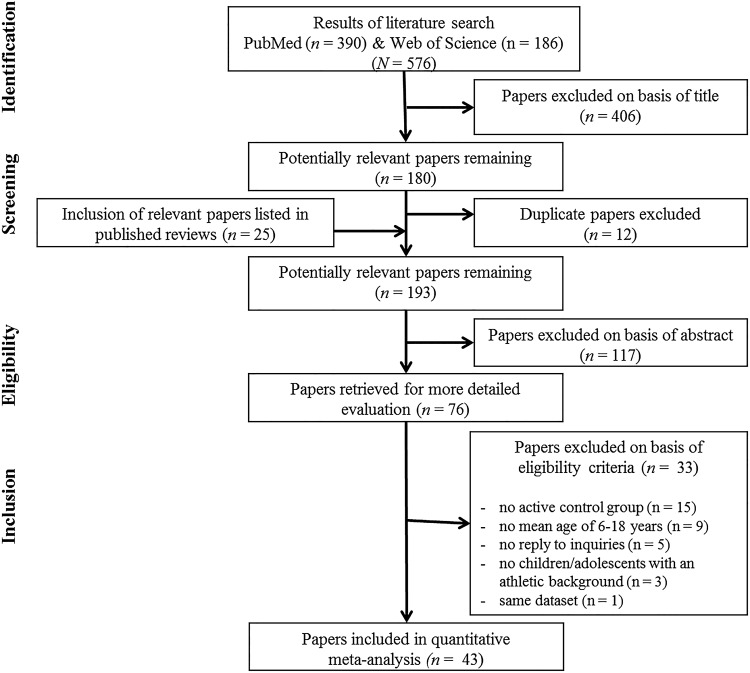
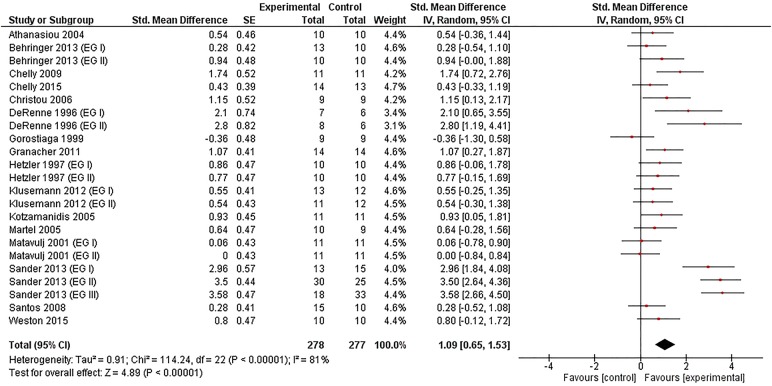
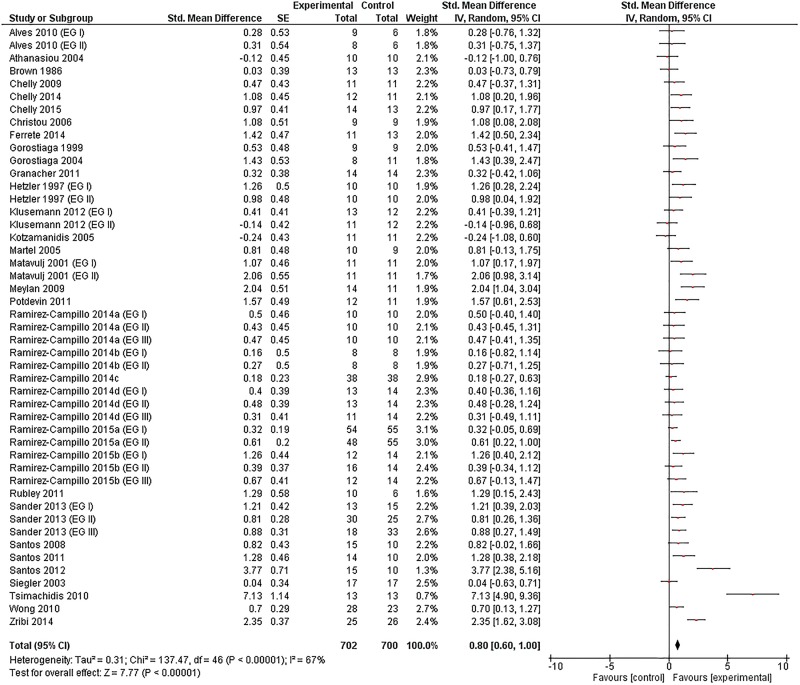
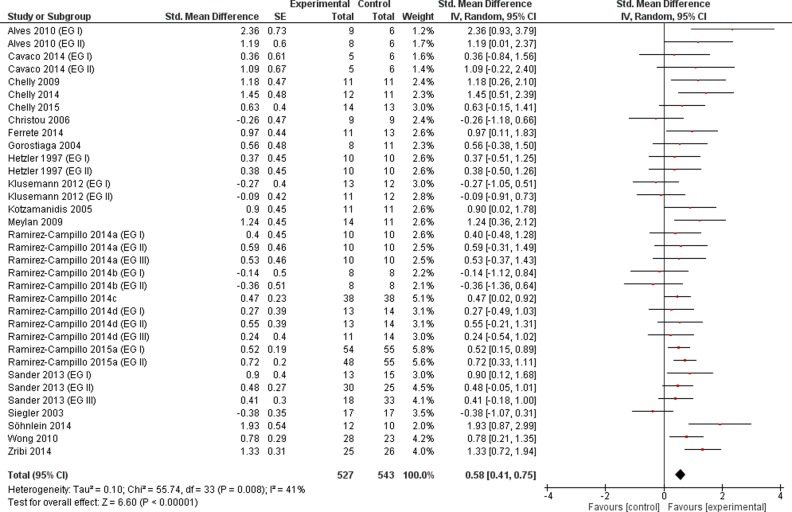
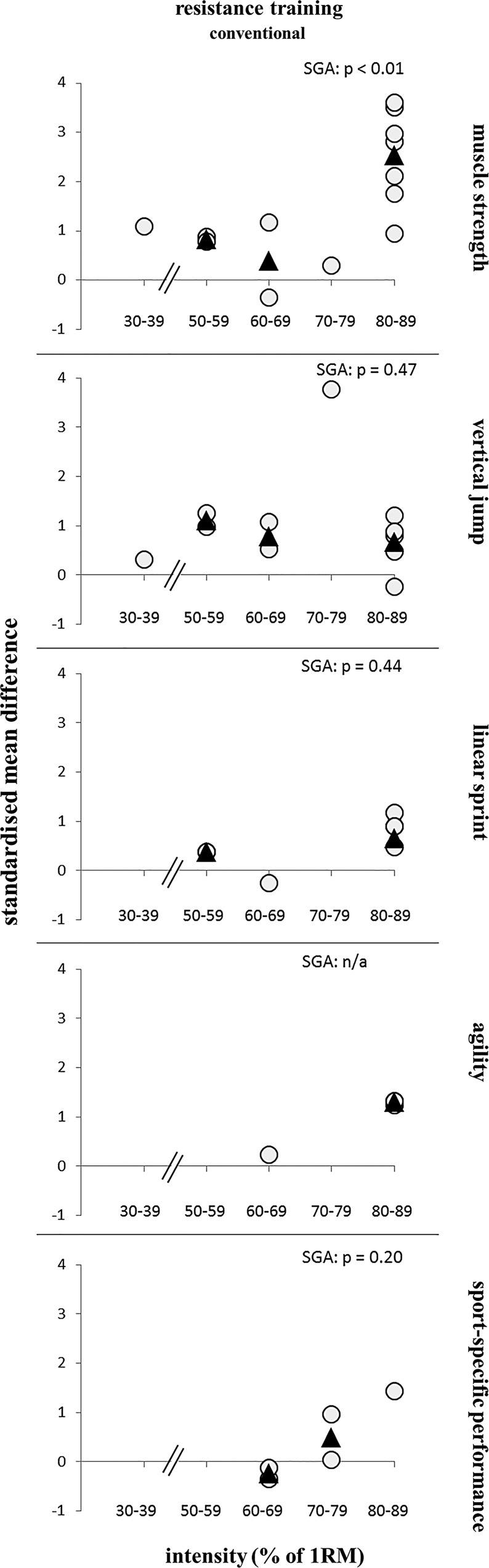
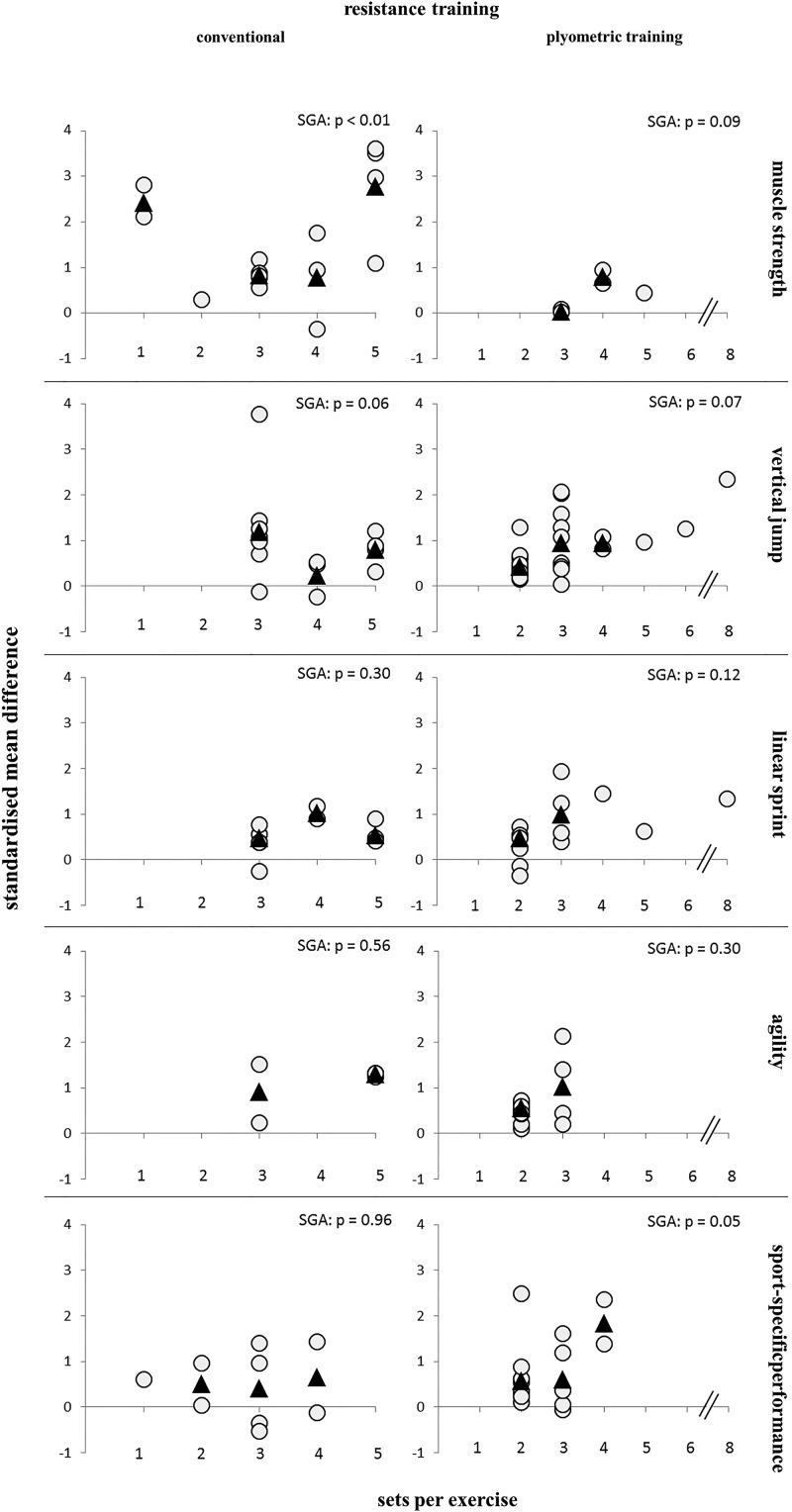
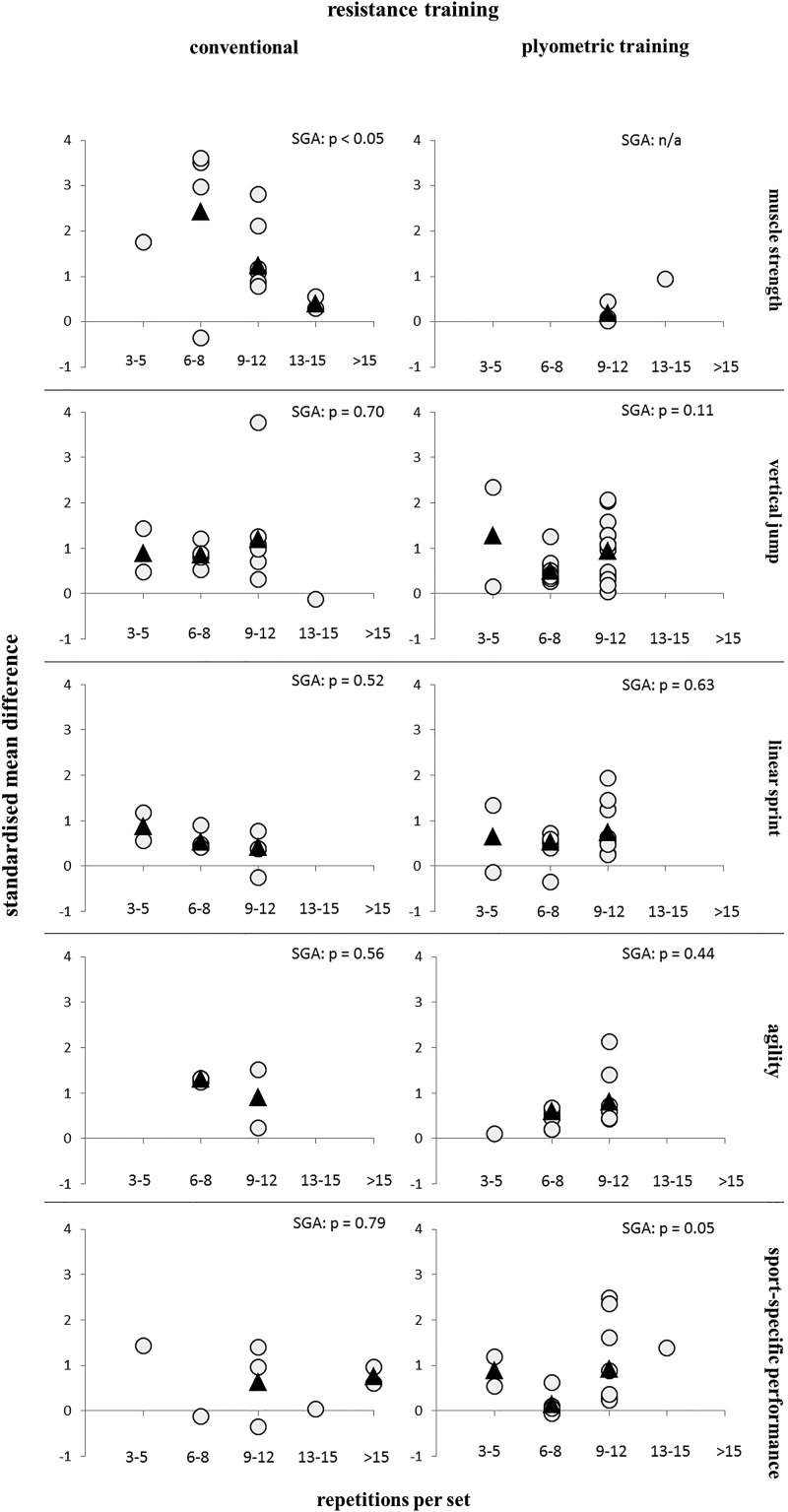
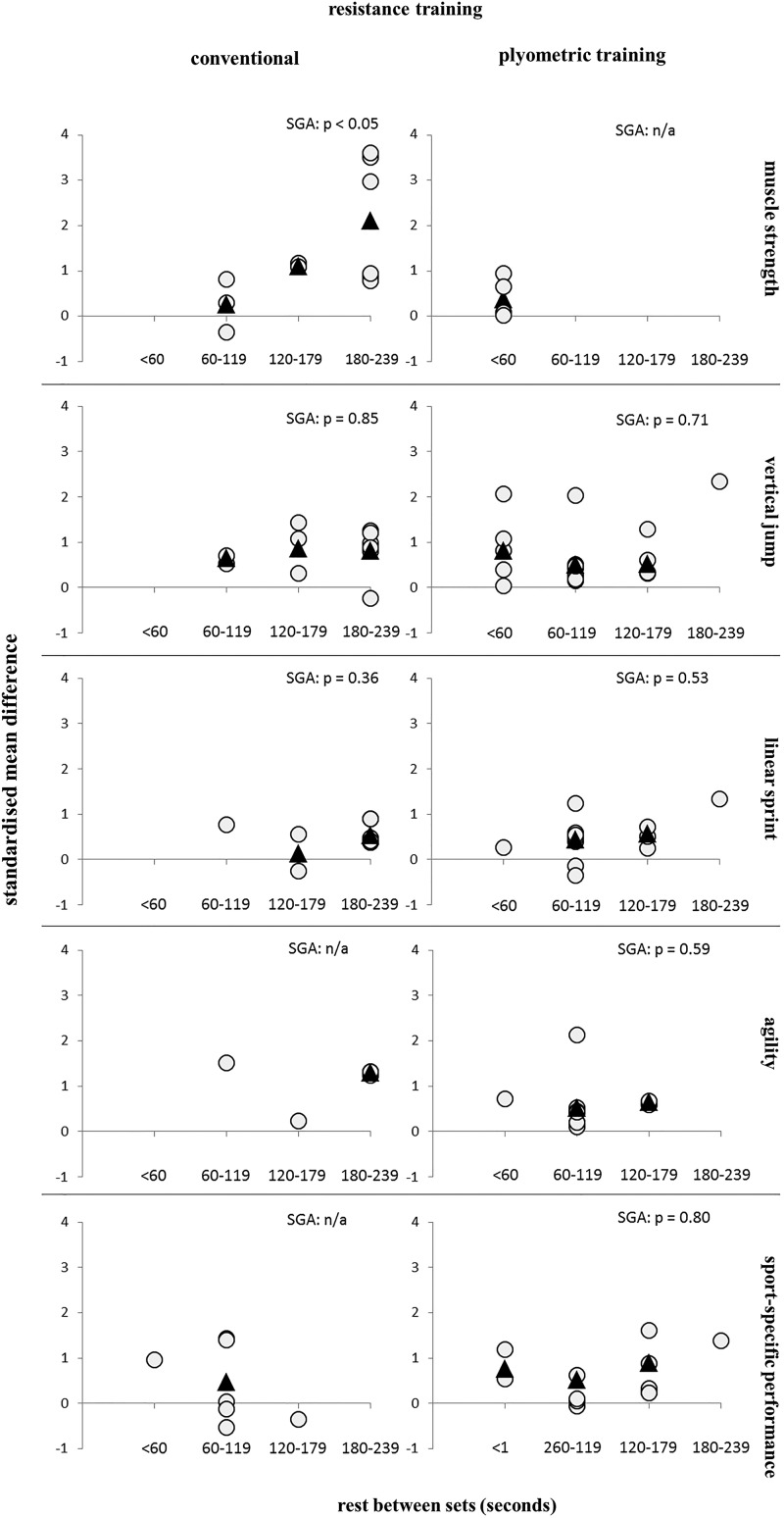
Objectives: To quantify age, sex, sport and training type-specific effects of resistance training on physical performance, and to characterise dose–response relationships of resistance training parameters that could maximise gains in physical performance in youth athletes. Design: Systematic review and meta-analysis of intervention studies. Data sources: Studies were identified by systematic literature search in the databases PubMed and Web of Science (1985–2015). Weighted mean standardised mean differences (SMD wm) were calculated using random-effects models. Eligibility criteria for selecting studies: Only studies with an active control group were included if these investigated the effects of resistance training in youth athletes (6–18 years) and tested at least one physical performance measure. Results: 43 studies met the inclusion criteria. Our analyses revealed moderate effects of resistance training on muscle strength and vertical jump performance (SMD wm 0.8–1.09), and small effects on linear sprint, agility and sport-specific performance (SMD wm 0.58–0.75). Effects were moderated by sex and resistance training type. Independently computed dose–response relationships for resistance training parameters revealed that a training period of >23 weeks, 5 sets/exercise, 6–8 repetitions/set, a training intensity of 80–89% of 1 repetition maximum (RM), and 3–4 min rest between sets were most effective to improve muscle strength (SMD wm 2.09–3.40). Summary/conclusions: Resistance training is an effective method to enhance muscle strength and jump performance in youth athletes, moderated by sex and resistance training type. Dose–response relationships for key training parameters indicate that youth coaches should primarily implement resistance training programmes with fewer repetitions and higher intensities to improve physical performance measures of youth athletes.
Overview
The claims and statistics of this paper haven’t been checked yet.
Free: it reads the open-access text and checks the first 5 claims that cite a source we can check. Create a free account to check every claim.
Integrity signals
Registry
Cites
Statistics
Figures
Verification
Claims the paper makes
The claims and statistics of this paper haven’t been checked yet.
Free: it reads the open-access text and checks the first 5 claims that cite a source we can check. Create a free account to check every claim.
Claims other papers make about this one
Each is checked against this paper’s own text: does it say what the citing paper says it does?
In the citing paper
“The increased training exposure would have allowed for a longer period for training adaptations to manifest [89, 90], ultimately leading to greater training improvements in strength, power and speed.”
From Comparison of weightlifting, traditional resistance training and plyometrics on strength, power and speed: a systematic review with meta-analysis. (2022) · cites this paper as [90]
In the citing paper
“In addition, the participants in the study were adolescent boys”
From Comparison of weightlifting, traditional resistance training and plyometrics on strength, power and speed: a systematic review with meta-analysis. (2022) · cites this paper as [90]
In the citing paper
“The training intervention duration employed in the study was 28 weeks [59], which may have resulted in more pronounced improvements in measures of power compared with the other studies included in the WLT versus TRT analysis that implemented shorter training durations (median training duration: 8 weeks, range 6–28) [90].”
From Comparison of weightlifting, traditional resistance training and plyometrics on strength, power and speed: a systematic review with meta-analysis. (2022) · cites this paper as [90]
Self-check
Percentages, sums and reported differences re-computed from the paper’s own numbers.
The self-check needs the paper’s full text.
Citations
Cites
Liberati, A., Altman, D. G., Tetzlaff, J., Mulrow, C., Gøtzsche, P. C., Ioannidis, J. P. A., Clarke, M., Devereaux, P. J., Kleijnen, J., & Moher, D. (2009) · PLoS Medicine · doi:10.1371/journal.pmed.1000100 · Cited by 28,164
Liberati, A., Altman, D. G., Tetzlaff, J., Mulrow, C., Gotzsche, P. C., Ioannidis, J. P. A., Clarke, M., Devereaux, P. J., Kleijnen, J., & Moher, D. (2009) · BMJ · doi:10.1136/bmj.b2700 · Cited by 17,648
Statistical Methods for Meta-Analysis
Wasserman, S., Hedges, L. V., & Olkin, I. (1988) · Journal of Educational Statistics · doi:10.2307/1164953 · Cited by 10,326
Reliability of the PEDro Scale for Rating Quality of Randomized Controlled Trials
Maher, C. G., Sherrington, C., Herbert, R. D., Moseley, A. M., & Elkins, M. (2003) · Physical Therapy · doi:10.1093/ptj/83.8.713 · Cited by 4,808 · cited 1×
“28”
Progression Models in Resistance Training for Healthy Adults
(2009) · Medicine & Science in Sports & Exercise · doi:10.1249/mss.0b013e3181915670 · Cited by 4,332
Progression Models in Resistance Training for Healthy Adults
(2002) · Medicine and Science in Sports and Exercise · doi:10.1097/00005768-200202000-00027 · Cited by 2,979
Fundamentals of Resistance Training: Progression and Exercise Prescription
KRAEMER, W. J., & RATAMESS, N. A. (2004) · Medicine & Science in Sports & Exercise · doi:10.1249/01.mss.0000121945.36635.61 · Cited by 1,992
Faigenbaum, A. D., Kraemer, W. J., Blimkie, C. J. R., Jeffreys, I., Micheli, L. J., Nitka, M., & Rowland, T. W. (2009) · Journal of Strength and Conditioning Research · doi:10.1519/jsc.0b013e31819df407 · Cited by 1,209
RHEA, M. R. (2004) · Journal of Strength and Conditioning Research · doi:10.1519/00124278-200411000-00040 · Cited by 1,069 · cited 1×
“30 According to a scale for determining the magnitude of effect sizes in strength training research for individuals who have been consistently training for 1 – 5 years, 32 we interpreted SMD wm as: trivial (<0.35); small (0.35 – 0.79); moderate (0.80 – 1.50); large ( ≥ 1.50).”
BackgroundInfluentialInternational Olympic Committee consensus statement on youth athletic development
Bergeron, M. F., Mountjoy, M., Armstrong, N., Chia, M., Côté, J., Emery, C. A., Faigenbaum, A., Hall, G., Kriemler, S., Léglise, M., et al. (2015) · British Journal of Sports Medicine · doi:10.1136/bjsports-2015-094962 · Cited by 881
Research works printed but not linked: 6
- Higgings JPT, Green S Cochrane handbook for systematic review of interventions version 5.1.0. Collaboration SMGoTC, 2010: 1– 11.
- Deeks JJ, Higgings JPT Statistical algorithms in Review Manager 5. 2010.
- Athanasiou N, Tsamourtzis E, Salonikidis K Entwicklung und Trainierbarkeit der Kraft bei Basketballspielern im vorpubertären Alter. Leistungssport 2006; 1: 48– 52.
- Buskies W, Boeckh-Behrens W-U Probleme bei der Steuerung der Trainingsintensität im Krafttraining auf der Basis von Maximalkrafttests. Leistungssport 1999; 3: 4– 8.
- Karp JR Muscle fibre types and training. Track Coach 2001; 155: 4943– 6.
- Marschall F, Fröhlich M Überprüfung des Zusammenhangs von Maximalkraft und maximaler Wiederholungszahl bei deduzierten submaximalen Intensitäten. Deutsche Zeit Sportmed 1999; 50: 311– 15.
Cited by
Items 301–400 of 411
Mohammed, S. M. (2024) · Jurnal Simki Pedagogia · doi:10.29407/jsp.v7i1.581 · Cited by 1
“…or clearing a dangerous ball from the goal, and the importance of this skill increases in the penalty area due to the numerical presence of defenders and attackers and the large number of balls raised in this area where they must be followed up and played with the head (Lesinski et al., 2017).”
Backgroundde Carvalho, N. M., Pernambuco, A. P., Soares, B. M., Vilela, D. L., Faria, E. C., de Lacerda, I. G., & Sales, I. D. (2024) · Conexão Ciência (Online) · doi:10.24862/cco.v19i2.1521 · Cited by 2
Dabbs, N. C., Binkley, H. M., Bott, C., Fragala, M. R., Herda, A. A., Moeskops, S., Moore, E. W. G., Smith‐Ryan, A. E., & Triplett, N. T. (2026) · The Journal of Strength and Conditioning Research · doi:10.1519/jsc.0000000000005544 · Cited by 1
Effects of sound level on postural stability Ses seviyesinin denge performansına etkisi
Hazar, S. (2017) · Journal of Human Sciences · doi:10.14687/jhs.v14i1.4414 · Cited by 1
Pichardo, A. W. (2019) · Tuwhera (Auckland University of Technology) · doi:10.13140/rg.2.2.17489.45927 · Cited by 1
Vårbakken, K., Lorås, H. W., Nilsson, K. G., Engdal, M., & Stensdotter, A. (2020) · Research Square · doi:10.21203/rs.3.rs-114877/v1 · Cited by 1
“(13, 145, 150, 156) that a session’s dose of strength (training/loading) is defined as 760 resistance×reps×sets/muscle group.”
BackgroundEditor's Message: “AI”: No Guarantee of Accuracy or Integrity
(2023) · Journal of Geriatric Physical Therapy · doi:10.1519/jpt.0000000000000389 · Cited by 1
“24 In addition, previous research by Goulart et al 91 showed that delayed muscle soreness after RT had the best perceptual response with an interval of 72 hours between each session, which may be the reason why patients with twice-weekly RT sessions showed the best improvement in symptoms and…”
MethodFaigenbaum, A. D. (2023) · Elsevier eBooks · doi:10.1016/b978-0-323-99992-2.00068-2 · Cited by 2
Muscle Strength and Size Relationships with Unilateral Progressive Resistance TrainingPreprint
Deiwert, D. D., Ma, S., Carey, C., Greenwell, D., Gordish‐Dressman, H., Thompson, P. D., Price, T. B., Angelopoulos, T. J., Clarkson, P. M., Gordon, P. M., et al. (2025) · bioRxiv (Cold Spring Harbor Laboratory) · doi:10.1101/2025.01.13.632853 · Cited by 1
Iacono, A. D., Jukić, I., & Swinton, P. A. (2026) · Research Square · doi:10.21203/rs.3.rs-9970394/v1 · Cited by 1
Beyer, K. S. (2017) · STARS (University of Central Florida)
Physiology of Training Plan: Periodization
Radak, Z. O. (2018) · Elsevier eBooks · doi:10.1016/b978-0-12-815137-2.00012-7
Castro, T. S. S. (2017) · Lume (Universidade Federal do Rio Grande do Sul)
An Intervention Program Designed to Improve Balance and Power in U14 Alpine Ski-Racers
Kashluba, K. A. (2018) · Libraries and Cultural Resources (University of Calgary) · doi:10.11575/prism/33063 · Cited by 1
Self care Part 1. Athletic Development: Youth Considerations
Duncan, F., Rodriguez, N., & Liebenson, C. (2019) · Journal of Bodywork and Movement Therapies · doi:10.1016/j.jbmt.2019.06.010
Rognlien, M. (2019) · NVA (Nasjonalt vitenarkiv)
The impact of physical preparation on clubhead speed in youth golf
Coughlan, D. (2019) · Open Access at Essex (University of Essex)
Ferlito, J. V., Leal‐Junior, E. C. P., Salvador, M. M., & Marchi, T. D. (2021) · Manual Therapy Posturology & Rehabilitation Journal · doi:10.17784/mtprehabjournal.2021.19.1218
“The voluntaries with the following characteristics will be excluded from the study, (1) history of musculoskeletal injury to the upper limb, (2) history of surgical, (3) history of cardiovascular pathology, (4) history of venous thrombosis and (5) use of pharmacological agents or nutritional supplements.”
BackgroundMethodInfluentialPržulj, R., Čokorilo, N., Đorđević, D., Trajković, N., & Popović, M. (2022) · Facta Universitatis Series Physical Education and Sport · doi:10.22190/fupes211220001p
A school-integrated physical exercise program improves motor performance of children and adolescentsPreprint
Homeyer, D., Memaran, N., Kück, M., Grams, L., von der Born, J., Bauer, E., Schwalba, M., Kerling, A., von Maltzahn, N., Albrecht, A. A., et al. (2022) · Research Square · doi:10.21203/rs.3.rs-1854498/v1
A school-integrated physical exercise program improves motor performance of children and adolescentsPreprint
Homeyer, D., Memaran, N., Kück, M., Grams, L., von der Born, J., Bauer, E., Schwalba, M., Kerling, A., von Maltzahn, N., Albrecht, A. A., et al. (2022) · Research Square · doi:10.21203/rs.3.rs-1854498/v2
Khairul, E. E., Teh, L. K., Salleh, M. Z., Azidin, R. M. F. R., & Yusof, S. M. (2022) · Malaysian Journal of Sport Science and Recreation · doi:10.24191/mjssr.v18i2.19578
Khairul, E. E., Wahab, W. A. A., Teh, L. K., Salleh, M. Z., Rofiee, M. S., Azidin, R. M. F. R., & Yusof, S. M. (2023) · Pertanika journal of science & technology · doi:10.47836/pjst.31.2.23
Aerobic and anaerobic responses to training
McNarry, M. A., & Armstrong, N. (2023) · Oxford University Press eBooks · doi:10.1093/med/9780192843968.003.0032 · Cited by 2
Kombiniertes Ausdauer- und Krafttraining für Kinder und Jugendliche
Gäbler, M., & Granacher, U. (2023) · Springer eBooks · doi:10.1007/978-3-031-36310-8_17
Self-citationZoffoli, L., Biscarini, A., & Zanuso, S. (2023) · bioRxiv (Cold Spring Harbor Laboratory) · doi:10.1101/2023.12.16.572002
“…types of resistances investigated [1], the commercial availability of free-weights, weight-stack and plate-loaded [2] machines allowed the large application of gravitational and isotonic-like resistances in sport [3] and fitness [4], with a huge potential also for rehabilitation purposes [5].”
BackgroundTan, K., Janep, M., Marsal, M. Z., Malek, N. F. A., Ghazali, N., Jahizi, A. A. M., & Nadzalan, A. M. (2023) · AIP conference proceedings · doi:10.1063/5.0148592
Mit Krafttraining zum Fußballstar – ein systematischer Aufbau für Kinder und Jugendliche
Hartmann, P. (2024) · Sportphysio · doi:10.1055/a-2242-4874
Kuvvet Antrenmanına Güncel Yaklaşımlar
Şerifoğlu, H., & Bozkurt, Ç. (2024) · Özgür Yayınları eBooks · doi:10.58830/ozgur.pub491.c2046
Gürses, V. V., Bostancı, S., Başkaya, G., Altunsoy, M., & Pekel, H. A. (2025) · Sportive · doi:10.53025/sportive.1635203
Grygus, I. M., Гриньова, М. В., Gamma, T., Годлевський, П. М., & Żukow, W. (2025) · Medicni perspektivi · doi:10.26641/2307-0404.2025.2.333676 · Cited by 2
Soeyanto, R., Tinduh, D., Wardani, N. K., & Mahmudah (2025) · Journal of Physical Education and Sport · doi:10.7752/jpes.2025.06140
Асмара, М., Prasetyo, Y., Suhartini, B., Pamungkas, G., & Shodiq, B. (2025) · Physical Education Theory and Methodology · doi:10.17309/tmfv.2025.4.10 · Cited by 2
Maheswari, D. S., Afifah, H. M., & Sembada, R. (2025) · Journal of Physical Education Health and Sport · doi:10.15294/jpehs.v12i1.29140
“In addition to improving performance, resistance trainin ghas a role in maintaining long-term health and has tehepotential to reduce injury risk in youth athletes(Lesinski et al., 2016).”
InfluentialGranacher, U., & Büsch, D. (2025) · Sports Orthopaedics and Traumatology · doi:10.1016/j.orthtr.2025.06.009
Self-citationYu, J., Jin, Y., Zhao, L., & Yang, Y. (2025) · Frontiers in Physiology · doi:10.3389/fphys.2025.1678604
Akgül, F., Kurtoğlu, A., Çiftçi, R., Eken, Ö., Çar, B., ŞANAL, A., & Aldhahi, M. I. (2025) · Children · doi:10.3390/children12101391
“Thus, the link between 2D:4D and agility may not mirror relationships observed in purely power-based or endurance-based tasks [32,33].”
Educação física em discussão - Volume 8
(2025) · Editora Pascal LTDA eBooks · doi:10.29327/5694828
Amrullah, R., Suhairi, M., Arifin, Z., Asmutiar, & Aji, T. (2025) · JOURNAL SPORT AREA · doi:10.25299/sportarea.2025.vol10(3).18760 · Cited by 2
Ageberg, E., Bunke, S., Linnéll, J., & Moesch, K. (2024) · Figshare · doi:10.6084/m9.figshare.24965899
Sprungkrafttraining im Volleyball – Trainingsmethoden zur Steigerung der Sprunghöhe
Hopf, L.-M. (2023) · Dokumentenrepositorium der RUB (Ruhr University Bochum) · doi:10.13154/294-9775
Tagawa, R., Watanabe, D., Ito, K., Otsuyama, T., Nakayama, K., Sanbongi, C., & Miyachi, M. (2022) · Figshare · doi:10.6084/m9.figshare.20921197
Donti, Ο., Konrad, A., Panidi, I., Dinas, P. C., & Bogdanis, G. C. (2022) · Figshare · doi:10.6084/m9.figshare.20252692
Tagawa, R., Watanabe, D., Ito, K., Otsuyama, T., Nakayama, K., Sanbongi, C., & Miyachi, M. (2022) · Figshare · doi:10.6084/m9.figshare.20921200
Tagawa, R., Watanabe, D., Ito, K., Otsuyama, T., Nakayama, K., Sanbongi, C., & Miyachi, M. (2022) · Figshare · doi:10.6084/m9.figshare.20921191
Govindasamy, K., Gogoi, H., Jebabli, N., Bediri, S. M., Aljahni, M. A., Parpa, K., Clark, C. C. T., Granacher, U., & Zouhal, H. (2024) · Figshare · doi:10.6084/m9.figshare.26717280
Self-citationTagawa, R., Watanabe, D., Ito, K., Otsuyama, T., Nakayama, K., Sanbongi, C., & Miyachi, M. (2022) · Figshare · doi:10.6084/m9.figshare.20921188
Ruiz-Orellana, L. (2024) · Institutional Repository of the University of Granada (University of Granada)
Mota, M. A. D. A. (2023) · LA Referencia (Red Federada de Repositorios Institucionales de Publicaciones Científicas)
Vicens‐Bordas, J. (2021) · DUGiDocs (Universitat de Girona) · Cited by 1
Mullins, D. (2025) · Scholars Crossing (Liberty University)
Murphy, A. N. (2025) · Open Access Institutional Repository at Robert Gordon University (Robert Gordon University) · doi:10.48526/rgu-wt-2989520 · Cited by 1
Cardinale, M., Boccia, G., Brustio, P. R., Baker, J., & Wik, E. H. (2025) · Elsevier eBooks · doi:10.1016/b978-0-443-31638-8.00024-x
Training im Kindes- und Jugendalter
Ferrauti, A., Stadtmann, T., Ulbricht, A., & Kappenstein, J. (2025) · Springer eBooks · doi:10.1007/978-3-662-69524-1_10
planeamento, treino e considerações sobre o ciclo menstrual
Lopes, D. M. C. (2025) · Portuguese National Funding Agency for Science, Research and Technology (RCAAP Project by FCT)
Šarko, P. (2024) · Repository of the University of Primorsk (University of Primorska)
Akkuş, E. (2025) · Özgür Yayınları eBooks · doi:10.58830/ozgur.pub1151.c4814
Marvianissa, E., Ridwan, M., & Ardha, M. A. A. (2025) · Indonesian Journal of Physical Education and Sport Science · doi:10.52188/ijpess.v5i4.1738
“In a meta-analysis of strength training in young athletes, (Lesinski et al., 2016) found in other studies that, although athletes' strength and agility improved, the impact on linear speed was smaller and more influenced by the athletes' initial fitness levels.”
Syamdev, M., & Rajavelu, M. (2026) · International Journal of Sports Health and Physical Education · doi:10.33545/26647559.2026.v8.i1b.330
Pereira, J. C. D. (2022) · Portuguese National Funding Agency for Science, Research and Technology (RCAAP Project by FCT)
Adgeh, A. G., BELAY, A., Bekele, B. A., & Sentie, W. A. (2026) · Retos · doi:10.47197/retos.v79.118391
Effects of a repetition-based rest adjustment strategy on superset training performance and fatigue
Zhang, X., Chen, Z., Li, H., Weakley, J. J. S., Li, Z., Guarino, A. J. S., & García‐Ramos, A. (2026) · International Journal of Sports Science & Coaching · doi:10.1177/17479541261437701
Pydi, V., Eswaran, T. P. M., Varthala, C., & Chandrasekaran, B. (2026) · BMC Public Health · doi:10.1186/s12889-026-27511-0
“Additionally, improvements in muscular endurance often require longer intervention durations (> 23 weeks) or more targeted modalities, such as gym-based resistance protocols involving one-repetition maximum assessments as demonstrated by previous reviews [27].”
The Effect of Sepak Sila Training on Ball Control In The Game of Sepak Takraw
Nursandi, Saparia, A., Agusman, M., & Sardiman (2026) · COMPETITOR Jurnal Pendidikan Kepelatihan Olahraga · doi:10.26858/cpjok.v18i1.641
Pangestu, G. P., Arifin, Z., Sonjaya, A. R., Kosasih, A. H., Hidayat, & Putri, V. N. E. (2026) · COMPETITOR Jurnal Pendidikan Kepelatihan Olahraga · doi:10.26858/cpjok.v18i1.541
Qu, H., Wang, H., Zhao, L., & Sun, R. (2026) · Frontiers in Physiology · doi:10.3389/fphys.2026.1822610
LATIHAN BOUNCE KICK BALL DAN JUGGLING MENINGKATKAN SEPAK SILA SEPAK TAKRAW
Pratama, W., Subakti, S., & Nurdin, N. (2026) · STRATEGY Jurnal Inovasi Strategi dan Model Pembelajaran · doi:10.51878/strategi.v5i4.10990
Hazan, U. H. H. M., Mazaulan, M., Mohamed, M. N., Adnan, M. A., Radzi, N. A. A. M., & Hussain, R. N. J. R. (2025) · UiTM Institutional Repositories (Universiti Teknologi MARA)
Li, Z., Sun, J., Muszali, R., & Li, L. (2026) · PLoS ONE · doi:10.1371/journal.pone.0349164
“Integrative Neuromuscular Training (INT) typically enhances vertical jump performance by improving leg muscle strength [41,42].”
Sundar, M., Amutha, V., Nithya, G., & Niraipandiyan, M. (2026) · Iconic Research and Engineering Journals · doi:10.64388/irev9i11-1718405
Effects of prolonged physical training on skeletal muscle mass accrual throughout the life span
Ledergerber, R., Kotikangas, J., Cadore, E. L., Feuerbacher, J. F., & Schumann, M. (2026) · Best Practice & Research Clinical Endocrinology & Metabolism · doi:10.1016/j.beem.2026.102132
Allisto, E., & Kuusela, J. (2026) · Theseus (Ammattikorkeakoulujen)
Ivanov, D. G. (2026) · Journal of Physical Education and Sport · doi:10.7752/jpes.2026.05086
Dabbs, N. C., Binkley, H. M., Bott, C., Fragala, M. R., Herda, A. A., Moeskops, S., Moore, E. W. G., Smith‐Ryan, A. E., & Triplett, N. T. (2026) · The Journal of Strength and Conditioning Research · doi:10.1519/jsc.0000000000005493
Li, G., Shen, Y., Lin, J., & Li, W. (2026) · BMC Sports Science Medicine and Rehabilitation · doi:10.1186/s13102-026-01567-2
“Although short-term resistance training interventions ( 24 weeks) are effective for improving muscle strength, strength gains typically plateau within approximately 9–12 weeks of training [54].”
Overtraining Dan Cedera Non-Kontak Pada Atlet Basket Remaja Indonesia
Sutarza, E. F., Sucipto, S., Mulyana, M., Rohmat, D., Adha, Z., & Pangestu, B. P. (2026) · Sporta Saintika · doi:10.24036/sporta.v11i1.555
Xue, Y., Tongdecharoen, W., & Wattanapayungkul, Y. (2026) · Interdisciplinary Academic and Research Journal · doi:10.60027/iarj.2026.e293980
Hussein, A. A. (2026) · مجلة دراسات وبحوث التربية الرياضية · doi:10.55998/jsrse.v36i4.1488
Liang, Q., Ghani, D. Z. A., Ismail, M. H. B., & Guo, M. (2026) · German Journal of Sports Medicine · doi:10.5960/dzsm.2026.666
Pengaruh Metode Complex Training Terhadap Peningkatan Power Tungkai Atlet Futsal Putra Kota Bandung
Fakhriansyah, M., Rosdiana, F., & Cahyadi, R. I. (2026) · Gelanggang Olahraga Jurnal Pendidikan Jasmani dan Olahraga (JPJO) · doi:10.31539/948y8t44
“Berbagai kajian memperlihatkan efektivitas complex training dalam mengembangkan power tungkai pada berbagai cabang olahraga (Lesinski et al., 2016; Slimani et al., 2019; Kilduff et al., 2016).”
Xie, P., Gu, J., & Huang, J. (2026) · PLoS ONE · doi:10.1371/journal.pone.0355297
“This pattern may indicate that age-related differences are not uniform across outcomes, but this interpretation remains exploratory [51].”
The lifespan of a training load in resistance exercise
Barrero, C. V. (2024) · RIO (Universidad Pablo de Olavide)
Mullican, K. (2025) · ScholarWorks@BGSU (Bowling Green State University)
Karavelioğlu, M. B., Aydın, S., & Hadi, G. (2026) · Turkish Journal of Sport and Exercise · doi:10.15314/tsed.1743497
Huang, D., Hu, Y., Cao, Z., & Gao, B. (2026) · Research Square · doi:10.21203/rs.3.rs-10306922/v1
Athletic Performance after Complex Training Compared with Traditional Strength Training
Xie, Y., Han, Y., Du, Q., Ramírez‐Campillo, R., & Xu, K. (2026) · International Journal of Sports Medicine · doi:10.1055/a-2959-1427
Fitness Levels of Physical Conditions of Futsal Players
Wafidturrohman, Himawan, A., & Widodo, H. M. (2026) · COMPETITOR Jurnal Pendidikan Kepelatihan Olahraga · doi:10.67322/cpjok.v18i2.1178
Planning Extracurricular Training Programs Based On Periodization In Schools
Hasbullah, A. A., Husna, F. E. E., & Ulum, M. B. (2026) · COMPETITOR Jurnal Pendidikan Kepelatihan Olahraga · doi:10.67322/cpjok.v18i3.779
Baharizki, T. M., & Wahyudi, A. (2026) · COMPETITOR Jurnal Pendidikan Kepelatihan Olahraga · doi:10.67322/cpjok.v18i3.1078
“…than substantial muscle hypertrophy (Moran et al., 2018; Peitz et Effect of Plyometric Skipping and Knee Tuck Jump Training On The Vertical Jump Ability in the Volleyball Tangguh Maulana Baharizki 1A-E* , Agung Wahyudi 2B-D baharizki99@students.unnes.ac.id 1* 1019 al., 2018; Lesinski et al., 2016).”
Matjiur, R., Thongchai, P., Kernluea, S., Chainok, P., & Zacca, R. (2026) · Journal of Functional Morphology and Kinesiology · doi:10.3390/jfmk11030374
Nguyen, T., Nguyen, V. T., & Thuc, D. C. (2026) · Polish Journal of Sport and Tourism · doi:10.2478/pjst-2026-0015
Wang, X., Yu, Y., Cui, J., Lin, S., Sun, Q., & Guo, B. (2026) · Frontiers in Physiology · doi:10.3389/fphys.2026.1932866 · Cited by 1
“It typically combines a high - load (HL) resistance exercise (80 – 90%1RM), followed by a plyometric training that has similar biomechanical characteristics (Robbins, 2005; Khamoui et al., 2009; Lesinski et al., 2016).”
Pryce, R., O'Brien, R., Dillon, J., & Fleming, N. (2026) · The Journal of Strength and Conditioning Research · doi:10.1519/jsc.0000000000005667
Entrenamiento de fuerza gamificado en Secundaria: una adaptación del programa RETRAGAM
Burgos, P. G., Vanaclocha-Amat, P., Sanz, C. S., Villa‐González, E., Molina‐García, J., & García, C. M. (2026) · Sportis Scientific Journal of School Sport Physical Education and Psychomotricity · doi:10.55040/emj35a89
Rezeki, F. A., & Wiyaka, I. (2026) · Jurnal Segar · doi:10.21009/segar/1402.03
Hubungan Kekuatan Otot Lengan dengan Hasil Servis Bawah Bola Voli Siswa SMPN 3 Batang Gansal
Rosinah, R., Antoni, P., & Hamzah, H. (2026) · Indo Green Journal
El entrenamiento de la fuerza con pesas en niños futbolistas de 8 a 10 años
Ceja, D. A. Z. –., & Heredia-Guilarte, D. (2025) · CDEFIS REVISTA CIENTÍFICA
Metadata
- Authors
- Lesinski, M., Prieske, O., & Granacher, U.
- Affiliations
- University of Potsdam (DE)
- Corresponding author
- Lesinski, Melanie
- Venue
- British Journal of Sports Medicine
- Publisher
- BMJ
- Published
- 2016-02-05
- Volume
- 50
- Issue
- 13
- Pages
- 781-795
- ISSN
- 0306-3674 (ISSN-L)
- 1473-0480
- PMC
- PMC4941165
- OpenAlex
- W2264859628
- Semantic Scholar
- 31c76a70ee724cb1f0f3872c3230c72447031fd5
- Cited by
- 364
- References
- 90
- Citations by year
- 2026: 42 · 2025: 46 · 2024: 37 · 2023: 38 · 2022: 41 · 2021: 41 · 2020: 38 · 2019: 22 · 2018: 28 · 2017: 22 · 2016: 9
- FWCI
- 4.30
- Type
- journal article
- Language
- en
- Open access
- hybrid
- doi.org
- Licence
- cc-by-nc
- Locations
- British Journal of Sports Medicine (publishedVersion, cc-by-nc)
- PubMed Central (publishedVersion, cc-by-nc)
- PubMed (publishedVersion)
- publish.UP (University of Potsdam) (submittedVersion)
- HighWire Press Open Archive (submittedVersion)
- Funders
- Bundesinstitut für Sportwissenschaft (ZMVI1‐081901 14‐18)
- Topics
- Health Sciences › Medicine › Orthopedics and Sports Medicine › Sports Performance and Training
- Health Sciences › Health Professions › Physical Therapy, Sports Therapy and Rehabilitation › Physical Education and Training Studies
- Social Sciences › Psychology › Developmental and Educational Psychology › Sport Psychology and Performance
- Keywords
- resistance training, youth athletes, physical performance, muscle strength, vertical jump, sprint performance, agility, dose-response relationship, training parameters, sex differences, exercise intensity, training duration
- MeSH terms
- Adolescent, Child, Female, Humans, Male, Muscle Strength, Athletic Performance, Resistance Training, Athletes
About these checks
Registry, retraction, Cites and statistics results are computed, not judged, with one exception: a printed reference that no index lists is read once by a model before it counts as a citation error. Claims are extracted by a model and kept only when their quote appears verbatim in the text; each cited source is then checked, with a model’s help, for whether it says what the claim relies on. Those verdicts can be wrong — read the claim’s quote and the cited source before relying on one.
Statistics and arithmetic are recomputed, not judged.
Confidence bands are shown only for fields calibrated on our annotated test set. None is calibrated yet, so no band is shown.
What counts as a claim ›How we measure confidence ›How we check this ›
Are you an author, or do you see a problem with this page? Request a review
Data sources
Bibliographic data: Semantic Scholar, OpenAlex, Crossref.
Contains information from the Semantic Scholar Academic Graph Datasets, made available under the ODC Attribution License (ODC-BY 1.0).
Semantic Scholar’s data is described in: Kinney, R., et al. (2023). The Semantic Scholar Open Data Platform. arXiv:2301.10140.
