

Reallocation of time between device-measured movement behaviours and risk of incident cardiovascular disease
Open accessThe DOI matches its Crossref record; 48 of the 48 references it cites were found in a registry or an index.
Abstract
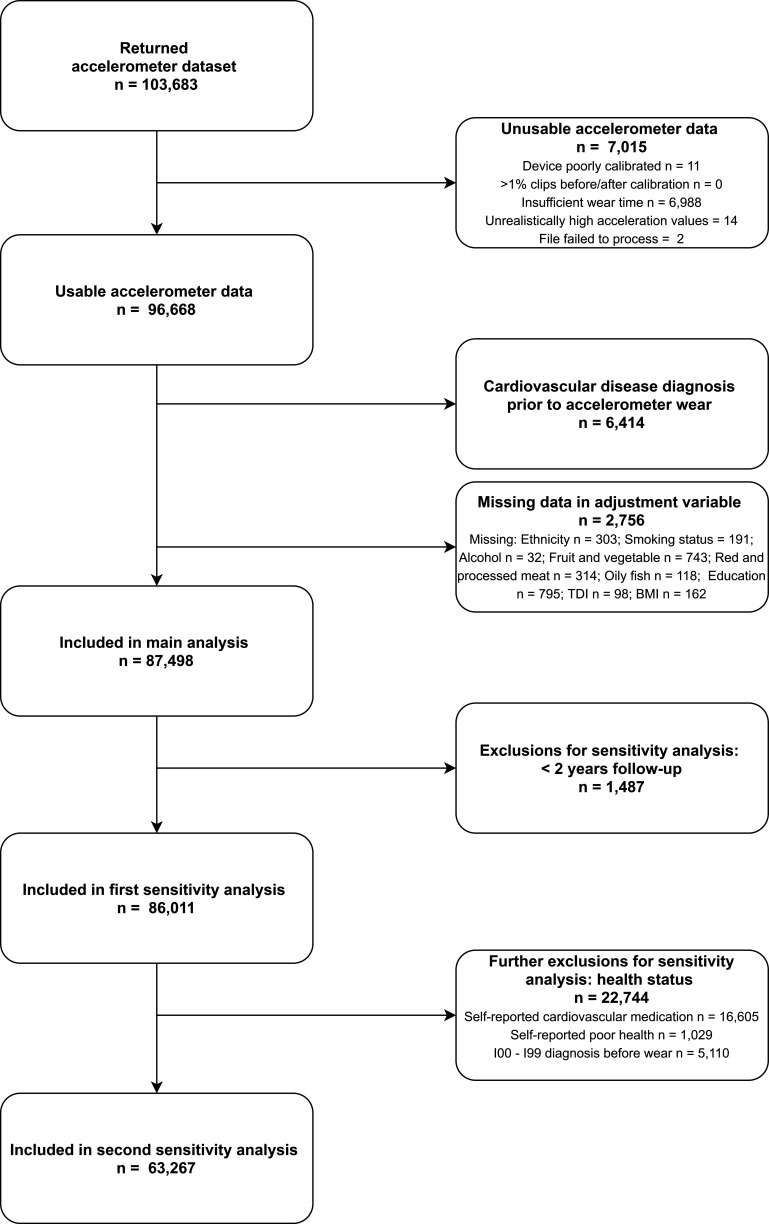
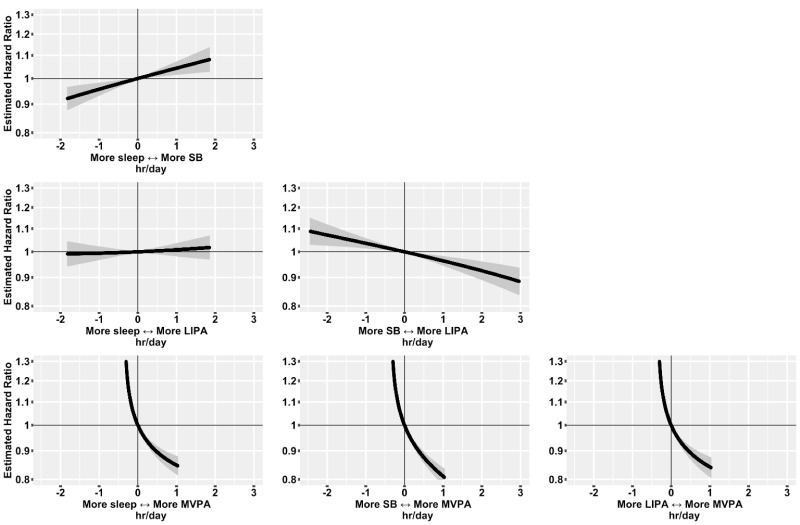
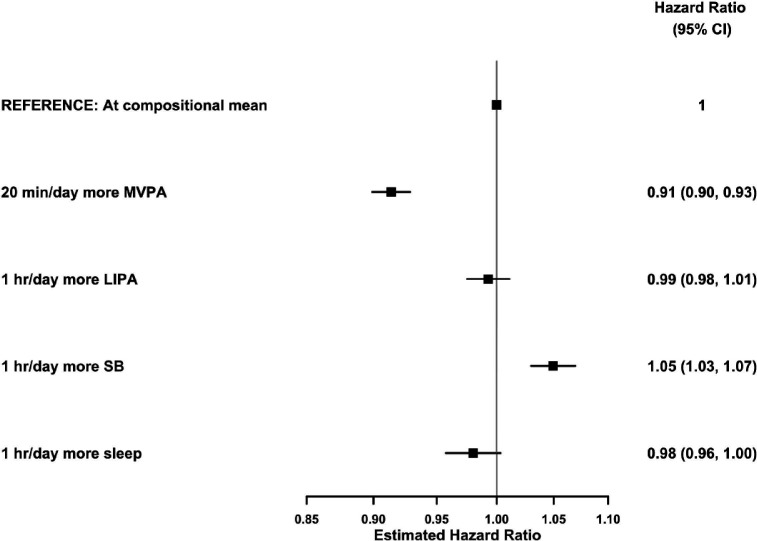
Objective: To improve classification of movement behaviours in free-living accelerometer data using machine-learning methods, and to investigate the association between machine-learned movement behaviours and risk of incident cardiovascular disease (CVD) in adults. Methods: Using free-living data from 152 participants, we developed a machine-learning model to classify movement behaviours (moderate-to-vigorous physical activity behaviours (MVPA), light physical activity behaviours, sedentary behaviour, sleep) in wrist-worn accelerometer data. Participants in UK Biobank, a prospective cohort, were asked to wear an accelerometer for 7 days, and we applied our machine-learning model to classify their movement behaviours. Using compositional data analysis Cox regression, we investigated how reallocating time between movement behaviours was associated with CVD incidence. Results: In leave-one-participant-out analysis, our machine-learning method classified free-living movement behaviours with mean accuracy 88% (95% CI 87% to 89%) and Cohen’s kappa 0.80 (95% CI 0.79 to 0.82). Among 87 498 UK Biobank participants, there were 4105 incident CVD events. Reallocating time from any behaviour to MVPA, or reallocating time from sedentary behaviour to any behaviour, was associated with lower CVD risk. For an average individual, reallocating 20 min/day to MVPA from all other behaviours proportionally was associated with 9% (95% CI 7% to 10%) lower risk, while reallocating 1 hour/day to sedentary behaviour from all other behaviours proportionally was associated with 5% (95% CI 3% to 7%) higher risk. Conclusion: Machine-learning methods classified movement behaviours accurately in free-living accelerometer data. Reallocating time from other behaviours to MVPA, and from sedentary behaviour to other behaviours, was associated with lower risk of incident CVD, and should be promoted by interventions and guidelines.
Overview
The claims and statistics of this paper haven’t been checked yet.
Free: it reads the open-access text and checks the first 5 claims that cite a source we can check. Create a free account to check every claim.
Integrity signals
Registry
Cites
Statistics
Figures
Verification
Claims the paper makes
The claims and statistics of this paper haven’t been checked yet.
Free: it reads the open-access text and checks the first 5 claims that cite a source we can check. Create a free account to check every claim.
Claims other papers make about this one
Each is checked against this paper’s own text: does it say what the citing paper says it does?
In the citing paper
“The random forest model achieved 90%+ precision and recall for detecting sleep windows in 152 free-living participants with sleep diaries that asked two questions: ‘What time did you first fall asleep last night?’ and ‘What time did you wake up (eyes open, ready to get up)?’30.”
From Self-supervised learning of accelerometer data provides new insights for sleep and its association with mortality (2024) · cites this paper as [30]
Self-check
Percentages, sums and reported differences re-computed from the paper’s own numbers.
The self-check needs the paper’s full text.
Citations
Cites
von Elm, E., Altman, D. G., Egger, M., Pocock, S. J., Gøtzsche, P. C., Vandenbroucke, J. P., & Initiative, F. T. S. (2007) · PLoS Medicine · doi:10.1371/journal.pmed.0040296 · Cited by 23,020
von Elm, E., Altman, D. G., Egger, M., Pocock, S. J., Gøtzsche, P. C., & Vandenbroucke, J. P. (2007) · The Lancet · doi:10.1016/s0140-6736(07)61602-x · Cited by 21,320
The Physical Activity Guidelines for Americans
Piercy, K. L., Troiano, R. P., Ballard, R. M., Carlson, S. A., Fulton, J. E., Galuska, D. A., George, S. M., & Olson, R. D. (2018) · JAMA · doi:10.1001/jama.2018.14854 · Cited by 9,755
Lee, I.-M., Shiroma, E. J., Lobelo, F., Puska, P., Blair, S. N., & Katzmarzyk, P. T. (2012) · The Lancet · doi:10.1016/s0140-6736(12)61031-9 · Cited by 8,215
Sensitivity analysis in observational research: Introducing the E-value
VanderWeele, T. J., & Ding, P. (2017) · Annals of Internal Medicine · doi:10.7326/m16-2607 · Cited by 6,350
2011 Compendium of Physical Activities: A Second Update of Codes and MET Values
AINSWORTH, B. E., HASKELL, W. L., HERRMANN, S. D., MECKES, N., BASSETT, D. R., TUDOR-LOCKE, C., GREER, J. L., VEZINA, J., WHITT-GLOVER, M. C., & LEON, A. S. (2011) · Medicine & Science in Sports & Exercise · doi:10.1249/mss.0b013e31821ece12 · Cited by 6,317
Forney, G. D. (1973) · Proceedings of the IEEE · doi:10.1109/proc.1973.9030 · Cited by 5,647
Fry, A., Littlejohns, T. J., Sudlow, C., Doherty, N., Adamska, L., Sprosen, T., Collins, R., & Allen, N. E. (2017) · American Journal of Epidemiology · doi:10.1093/aje/kwx246 · Cited by 3,979 · cited 1×
“…Biobank is not representative of the UK population 23 (eg, low socioeconomic status individuals are under-represented compared with the national population 42 ), though a previous study showed exposure–outcome associations found in UK Biobank were similar to results in more representative samples.”
Sedentary Behavior Research Network (SBRN)—Terminology Consensus Project process and outcome
on behalf of SBRN Terminology Consensus Project Participants, Tremblay, M. S., Aubert, S., Barnes, J. D., Saunders, T. J., Carson, V., Latimer-Cheung, A. E., Chastin, S. F. M., Altenburg, T. M., & Chinapaw, M. J. M. (2017) · International Journal of Behavioral Nutrition and Physical Activity · doi:10.1186/s12966-017-0525-8 · Cited by 3,793
Fit Yourself and Take Your Lungs to Heart
Palange, P., & Bonini, M. (2013) · Respiration · doi:10.1159/000350831 · Cited by 2,779
Research works printed but not linked: 2
- 10.1186/S12966-020-01042-2/TABLES/2 · doi:10.1186/s12966-020-01042-2/tables/2
- World Health Organization. Who guidelines on physical activity and sedentary behaviour. Geneva, 2020. 33369898
Cited by
Items 101–200 of 242
Machine Learning Analysis of Physical Activity Data to Classify Postural Dysfunction
Vanstrum, E. B., Choi, J. S., Bensoussan, Y. E., Bassett, A. M., Crowson, M. G., & Chiarelli, P. A. (2023) · The Laryngoscope · doi:10.1002/lary.30698 · Cited by 5
Wei, L., Ahmadi, M. N., Hamer, M., Blodgett, J. M., Small, S., Trost, S. G., & Stamatakis, E. (2024) · Journal of science and medicine in sport · doi:10.1016/j.jsams.2024.05.002 · Cited by 4
The hare and the tortoise: physical activity intensity and scientific translation
Matthews, C. E., & Saint‐Maurice, P. F. (2022) · European Heart Journal · doi:10.1093/eurheartj/ehac626 · Cited by 4
Arani, G., Arora, A., Yang, S., Wu, J., Kraszewski, J. N., Martins, A., Miller, A., Zeba, Z., Jafri, A., Hu, C., et al. (2025) · medRxiv · doi:10.1101/2025.01.16.25320290 · Cited by 3
Kasimu, A., Zhou, W., Meng, Q., Wang, Y., Wang, Z., Zhang, Q., & Peng, Y. K. (2025) · Alexandria Engineering Journal · doi:10.1016/j.aej.2025.01.007 · Cited by 5
van der Sluijs, K. M., Vloet, J. I. A., Thijssen, D. H. J., Eijsvogels, T. M. H., & Bakker, E. A. (2025) · Medicine & Science in Sports & Exercise · doi:10.1249/mss.0000000000003705 · Cited by 4
Accelerometer‐derived “weekend warrior” and regularly active physical activity and incident diabetes
Lei, L., Li, J., Wang, W., Zhang, L., Meng, X., Xia, C., Li, Y., Zhao, Y., Yuan, X., Wang, X., et al. (2025) · Obesity · doi:10.1002/oby.24278 · Cited by 4
“We then applied a validated machine-learning model to identify the percentage of MVPA (e.g., cycling, running) in each day ’ s wear time and calculated it into minutes of MVPA [15].”
Yang, H., Qiao, Y., Lin, R., Yu, Y., Zhao, M., Magnussen, C. G., & Xi, B. (2025) · Diabetes Research and Clinical Practice · doi:10.1016/j.diabres.2025.112948 · Cited by 3
Song, Y., Qin, Q., Zhang, L., Liu, X., Zhang, Y., Ying, M., & Yin, P. (2025) · Osteoporosis International · doi:10.1007/s00198-025-07747-z · Cited by 3
Wang, L., Qiao, Y., Yu, Y., Zhao, M., Yang, L., & Xi, B. (2026) · European Journal of Preventive Cardiology · doi:10.1093/eurjpc/zwag131 · Cited by 3
Luo, M., Clare, P. J., Tarp, J., Dalene, K. E., Sánchez-Lastra, M. A., Nguyen, B., Owen, K., Nau, T., Chen, L., Ekelund, U., et al. (2026) · British Journal of Sports Medicine · doi:10.1136/bjsports-2025-110782 · Cited by 4
“18 22 Individuals who wore the device for less than 72 hours, had data that could not be calibrated, or had implausibly high overall average acceleration values (>100 m g ) were excluded.”
Huang, H., Liu, J., Li, P., Huang, Z., Yang, C., Qi, L., & Zhou, T. (2026) · Journal of Bone and Mineral Research · doi:10.1093/jbmr/zjag067 · Cited by 4
Zhao, B., Zhou, S., Chang, J., Li, A., Geng, C., Wei, T., Zhao, Y., Gao, P., Wang, Z., & Tang, Y. (2025) · Journal of Neurology · doi:10.1007/s00415-025-13363-y · Cited by 4
Yuan, H., Plekhanova, T., Walmsley, R., Reynolds, A. C., Maddison, K. J., Bucan, M., Gehrman, P., Rowlands, A., Ray, D. W., Bennett, D., et al. (2023) · doi:10.1101/2023.07.07.23292251 · Cited by 3
Self-citationChronic inflammation mediates the relationship between physical activity and telomere length
Nanda, A., Aslan, D. H., Sayre, M. K., Bharadwaj, P. K., Ally, M., Song, H., Arora, A., Maltagliati, S., Lai, M. H. C., Wilcox, R. R., et al. (2025) · GeroScience · doi:10.1007/s11357-025-01818-z · Cited by 4
“Moderate-to-vigorous physical activity (MVPA) was identified from raw accelerometer data using a previously published machine learning algorithm developed and validated for use with the UK Biobank [27].”
Zi, Y., van de Ven, S. R. B., de Geus, E. J. C., & Chen, P. (2026) · Interactive Journal of Medical Research · doi:10.2196/76601 · Cited by 5
“…stage, participant movements were categorized into activity type (eg, sedentary, standing utilitarian tasks, walking, and running) using recordings [28,38,50,51,60,62,65,67,78] and time-stamped images from wearable cameras (eg, combining the usage of a diary in Capture-24) [31,33,53,57,75,76].”
InfluentialPhysical Activity and Cardiovascular Outcomes in Phenotype-Negative Cardiomyopathy Variant Carriers
Ajufo, E. C., Kany, S., Jurgens, S. J., Churchill, T. W., Guseh, J. S., Aragam, K. G., Nauffal, V., Pirruccello, J. P., Choi, S. H., Lakdawala, N. K., et al. (2025) · JAMA Cardiology · doi:10.1001/jamacardio.2025.4466 · Cited by 3
Lu, X., Yuan, Z., Tang, S., Huang, H., Ling, Y., Li, Y., Li, J., Ruan, H., Zhang, W., Deng, J., et al. (2025) · Lipids in Health and Disease · doi:10.1186/s12944-025-02770-9 · Cited by 3
“…of sensor noise and gravitational interference, and recognition of wear and non-wear intervals, four patterns of PA (sleep, sedentary, light PA, and MVPA) were derived using a machine learning method for behavior classification, which was previously validated in UK Biobank participants [16].”
Jin, A., Zhang, R., Fan, X., Li, F., Feng, Y., Zeng, L., Wang, J., Liu, D., Chi, W., & Fan, N. (2026) · BMC Public Health · doi:10.1186/s12889-026-26795-6 · Cited by 2
“…behavior at ≥ 3 metabolic equivalent of task [37] and was classified using a published machine-learning method developed to categorize a broad range of activities (including walking, jogging, stationary cycling, elliptical training, and others), which has been validated in a UK-based sample [38].”
Every step counts and intensity matters: scaling physical activity intensity across chronic diseases
Schwendinger, F., Schmidt-Trucksäss, A., & Hanssen, H. (2026) · European Heart Journal · doi:10.1093/eurheartj/ehag288 · Cited by 2
Prince, S. A., Chaput, J., Colley, R. C., Dempsey, P. C., Ekelund, U., Janssen, I., Lang, J. J., Stamatakis, E., Tarp, J., Tremblay, M. S., et al. (2026) · British Journal of Sports Medicine · doi:10.1136/bjsports-2025-111179 · Cited by 6
Zhide, L., Du, S., Zhao, S., Wang, X., Yan, Q., Xu, B., Ng, S., & Ning, Z. (2026) · British Journal of Sports Medicine · doi:10.1136/bjsports-2025-111351 · Cited by 4
“29 Because these behaviours share a fixed 24-hour time budget with MVPA, including them as conventional covariates risks inducing collin-earity and overadjustment within the compositional time-use structure.”
Yuan, Y., Hu, W., Zhang, X., Borchert, G., Wang, W., Zhu, Z., & He, M. (2022) · Asia-Pacific Journal of Ophthalmology · doi:10.1097/apo.0000000000000578 · Cited by 2
Schell, R. C., Dow, W. H., Fernald, L. C. H., Bradshaw, P. T., & Rehkopf, D. H. (2024) · PLoS ONE · doi:10.1371/journal.pone.0304653 · Cited by 4
Chung, H.-G., Yang, P., Jang, E., Kim, J., Kim, M. H., Kim, D., Yu, H. T., Kim, T., Uhm, J., Sung, J., et al. (2025) · Heart Rhythm · doi:10.1016/j.hrthm.2025.01.005 · Cited by 2
Maltagliati, S., Aslan, D. H., Sayre, M. K., Bharadwaj, P. K., Ally, M., Lai, M. H. C., Wilcox, R. R., Klimentidis, Y. C., Alexander, G. E., & Raichlen, D. A. (2025) · The Journals of Gerontology Series B · doi:10.1093/geronb/gbaf071 · Cited by 3
Zhang, Q., Fu, L., Zhao, J. H., Chen, K., Tse, G., Lip, G. Y. H., & Liu, T. (2025) · European Journal of Preventive Cardiology · doi:10.1093/eurjpc/zwaf604 · Cited by 3
Reducing annotation burden in physical activity research using vision language models
Schönfeldt, A., Maylor, B. D., Chen, X., Clark, R., & Doherty, A. (2025) · Scientific Reports · doi:10.1038/s41598-025-21350-6 · Cited by 7
“…setting for validating behaviour measurement approaches and developing novel machine learning approaches (Logacjov et al., 2024; Yuan et al., 2024; Walmsley et al., 2022; Willetts et al., 2018; Doherty et al., 2017) is in diverse populations of people living their everyday lives, highlighting the…”
InfluentialSelf-citationDevice-measured moderate-to-vigorous physical activity and prognosis of inflammatory bowel diseasePreprint
He, Z., Sun, Y., Huang, H., Liu, Y., Dan, L., Ruan, X., Fu, T., Li, Z., Wang, X., Chen, J., et al. (2024) · medRxiv · doi:10.1101/2024.10.30.24316417 · Cited by 2
Dong, X., Zhang, Q., Wei, J., Zhou, Q., Yang, F., Liu, Y.-J., Li, Y., & Sun, C. (2024) · Nature and Science of Sleep · doi:10.2147/nss.s482276 · Cited by 3
Jung, J., Lee, S.-Y., Lee, J. H., & Lee, D. (2025) · BJPsych Open · doi:10.1192/bjo.2024.845 · Cited by 2
Fan, T., Xie, Q., Chen, J., Zeng, M., Chen, S., Yang, H., Ruan, G., Yang, Q., Zhang, Y., Li, Y., et al. (2026) · Rheumatology · doi:10.1093/rheumatology/keag179 · Cited by 4
TremTrack: Mobile Classification of Parkinsonian Hand Tremors Using Accelerometer Data
Davay, S., Muppa, A., & Liotta, L. A. (2024) · IEEE MIT Undergraduate Research Technology Conference (URTC) · doi:10.1109/urtc65039.2024.10937599 · Cited by 1
Xu, C., Zhang, Q., Xu, S., Xiao, Y., Zhao, L., Li, T.-J., Guo, W.-J., Zhong, Y., & Chen, H.-T. (2025) · BMJ Open Sport & Exercise Medicine · doi:10.1136/bmjsem-2025-002547 · Cited by 1
“Further investigation is needed to validate these findings.”
Metabolic Status and Atrioventricular Block Risk: The Role of Physical Activity
Chung, H.-G., Yang, P., Jang, E., Joung, D., Kim, D., Yu, H. T., Kim, T., Uhm, J., Sung, J., Pak, H., et al. (2025) · Reviews in Cardiovascular Medicine · doi:10.31083/rcm37291 · Cited by 1
“[20] to differentiate accelerometer data as MVPA or non-MVPA.”
Hoepel, S. J. W., Ikram, M. K., Ikram, M. A., Voortman, T., & Luik, A. I. (2025) · Journal of Sleep Research · doi:10.1111/jsr.70166 · Cited by 2
“…et al. 2023) estimates of PA. Studies of 24-h activity composition also reported decreased risks of cardiovascular disease when moderate- to-vigorous PA substituted other behaviors (Yerramalla et al. 2021; Niemelä et al. 2023; Walmsley et al. 2021), but stroke was not studied separately.”
InfluentialJiang, Y., Su, Z., Liu, S., Di, H., Wu, Q., Hu, W., Qin, T., Zhou, S., Yin, J., Chen, Y., et al. (2025) · Diabetes Research and Clinical Practice · doi:10.1016/j.diabres.2025.112420 · Cited by 1
Lawlis, N., Cherbuin, N., Ambikairajah, A., Speer, H., D'Cunha, N. M., Rattray, B., & Northey, J. M. (2025) · Journal of Alzheimer s Disease · doi:10.1177/13872877251374261 · Cited by 2
“23 Processed data was provided to the UK Biobank as a supplementary dataset, 30 which contained the variables used within this study.”
Shi, Q., Jang, H., Collings, P. J., Wang, M., Chen, Z., Luo, S., Yeung, S. L. A., Wan, E. Y. F., Griffin, S. J., Sharp, S. J., et al. (2025) · Mayo Clinic Proceedings · doi:10.1016/j.mayocp.2025.04.033 · Cited by 1
Moebus, M., & Holz, C. (2025) · BMC Public Health · doi:10.1186/s12889-025-24794-7 · Cited by 3
“…corresponds to an E-value of 1.83, indicating the necessary strength of a hidden confounder on both sleep behavior and mental disorder risk to explain the 2D sleep routine effect [50], which exceeds similar survival studies also conducted on large-scale observational studies such as the UKB [54].”
InfluentialLuo, Y., Jiang, Y., Tan, S., Yang, H., Xie, Y., Cui, X., Ju, W., Lyu, H., & Zhang, L. (2025) · International Journal of Surgery · doi:10.1097/js9.0000000000004055 · Cited by 3
Kim, M. S., Kim, J., Jang, E., Kim, D., Yang, P., & Joung, B. (2025) · Korean Circulation Journal · doi:10.4070/kcj.2025.0242 · Cited by 1
“18)22) To account for the relative impact of one behavior on the others, we provide the coefficients of the first ILR pivot coordinates.”
InfluentialWang, Q., Liu, Y., & Zhu, B. (2025) · Arthritis Research & Therapy · doi:10.1186/s13075-025-03716-3 · Cited by 1
“To operationalize MVPA episodes, a validated two-stage machine-learning architecture was employed [19].”
Maylor, B. D., Small, S. R., Plekhanova, T., Brocklebank, L. A., van Duijvenboden, S., Sharman, R. L., Hill, E. A., Karpe, F., Kyle, S. D., & Doherty, A. (2025) · JMIR Research Protocols · doi:10.2196/78779 · Cited by 1
“For example, some validation studies have collected wrist-based accelerometer data paired with first-person camera images for behavior classification [6,7], and these methods have subsequently been adopted in large epidemiological studies for health research [8,9].”
Self-citationYang, Y., Chen, M., Hu, W., Fu, Y., Li, X., Liao, Z., Feng, H., Zhao, Y., Pei, L., Mi, B., et al. (2026) · Journal of Medical Internet Research · doi:10.2196/78492 · Cited by 1
“Light PA (LPA) and moderate to vigorous physical activity (MVPA) were categorized via a published ML-driven approach specifically designed for classifying a wide spectrum of activities [19].”
Yun, J., Brocklebank, L. A., Harper, C., & Doherty, A. (2026) · EClinicalMedicine · doi:10.1016/j.eclinm.2026.103769 · Cited by 4
“16,17 PA was assessed using step count—a clinically interpretable and widely adopted metric 20 —enhancing the applicability of our findings to health promotion strategies.”
InfluentialSelf-citationMu, K., Qiao, Y., Lin, R., Yu, Y., Zhao, M., Magnussen, C. G., & Xi, B. (2026) · BMC Medicine · doi:10.1186/s12916-026-04701-6 · Cited by 1
“Time spent in different movement behaviors was estimated using a machine-learning algorithm trained on an independent free-living cohort of 152 individuals [19].”
InfluentialTiming of physical activity and risk of future cardiovascular disease
Ajufo, E. C., Kany, S., Churchill, T. W., Guseh, J. S., Ellinor, P. T., & Khurshid, S. S. (2026) · European Journal of Preventive Cardiology · doi:10.1093/eurjpc/zwag127 · Cited by 1
Le, F., Dumuid, D., D'Elia, O., Haussmann, A., Stamatakis, E., Doherty, A., Liao, Y., & Wiley, J. F. (2026) · Journal of Epidemiology & Community Health · doi:10.1136/jech-2025-225231 · Cited by 2
Self-citationProteomic Signatures Related to Physical Activity Are Associated with Risks of Future Disease
Huang, S., Long, G., Li, G. X., Dai, S., Li, G., HE, Z., Chen, Y., LU, Q., Huang, H., ZHANG, A., et al. (2026) · Medicine & Science in Sports & Exercise · doi:10.1249/mss.0000000000003909 · Cited by 1
Franssen, W. M. A., Nieste, I., Koppo, K., Joris, P. J., Vandereyt, F., Savelberg, H. H. C. M., & Eijnde, B. O. (2026) · BMJ Open Sport & Exercise Medicine · doi:10.1136/bmjsem-2025-002759 · Cited by 1
Andersen, L. L., Calatayud, J., Núñez-Cortés, R., Polo‐López, A., Suso‐Martí, L., López-Bueno, L., & López‐Bueno, R. (2026) · Mechanisms of Ageing and Development · doi:10.1016/j.mad.2026.112181 · Cited by 2
Lapointe, Y., Kapur, A., Sharma, A., Panter, J., Fuller, D., & Mamiya, H. (2026) · Preventive Medicine · doi:10.1016/j.ypmed.2026.108603 · Cited by 1
The PhasED Framework: A Measurement Theory-Based Approach to Algorithm Development and Evaluation
Keadle, S. K., Strath, S. J., Giurgiu, M., Fuller, D., Martinez, J., Doherty, A., Ahmadi, M., Hyde, E. T., Troiano, R. P., & Matthews, C. E. (2026) · Journal for the Measurement of Physical Behaviour · doi:10.1123/jmpb.2025-0074 · Cited by 3
Self-citationMusbahi, O., Sousi, S., Al-Saadawi, A., Glynou, S. P., Bottle, A., Jones, G. G., & Cobb, J. P. (2026) · Bone and Joint Research · doi:10.1302/2046-3758.156.bjr-2025-0684.r1 · Cited by 1
Sustained Reduction in Cardiopulmonary Fitness in Long COVID
Vogel, J. M., Jenkins, T. L., Cerda, M., Chen, H., Goldman, J. D., Katz, S. D., Patterson, T. F., Ashktorab, H., Bartram, L., Barua, S., et al. (2026) · JACC Advances · doi:10.1016/j.jacadv.2026.102923 · Cited by 2
“32 33-35 Further validation of these cardiopulmonary fitness estimates by wearables may have clinical treatment implications, as each 1 MET increase in peak exercise capacity is associated with a 13% reduction in mortality and 15% reduction in cardio-vascular disease risk.”
Stamatakis, E., Koemel, N. A., Mitchell, J. J., Atkin, A. J., Pulsford, R., Chong, K. H., Rangul, V., Blodgett, J. M., Biswas, R. K., Celis-Morales, C. A., et al. (2026) · British Journal of Sports Medicine · doi:10.1136/bjsports-2025-111283 · Cited by 3
“…have enabled compositional analyses demonstrating that the health impact of increasing physical activity depends critically on which behaviour (sleep, sedentary time or light activity) is displaced, 11 information that is not possible to obtain from questionnaires assessing behaviours in isolation.”
Kumar, N., & Krishnamurthy, S. (2026) · Journal of Internal Medicine · doi:10.1111/joim.70133 · Cited by 2
“Such tools provide an opportunity to more accurately evaluate how habitual circadian disruption contributes to long-term disease risk and are increasingly recognized as important components of digital medicine and population health research [16, 17].”
Xie, H., Xue, F., & Wang, X. (2026) · Lifetime Data Analysis · doi:10.1007/s10985-026-09721-1 · Cited by 1
Ong, J. L., Qin, S., Martin, T. H., Chua, X. Y., Soon, C. S., Yılmaz, G., Ling, L. H., Müller‐Riemenschneider, F., Koh, W., & Chee, M. W. L. (2026) · BMC Medicine · doi:10.1186/s12916-026-05192-1 · Cited by 1
“Analyses were conducted in R (version 4.4.2), with compositional data analyses performed using the epicoda package [30].”
InfluentialCosta, T. G., Ramos-Urrea, C., Santos, D. D. A. T., Ostolin, T. L. V. D. P., & de Lira, C. A. B. (2022) · Research Society and Development · doi:10.33448/rsd-v11i6.28689 · Cited by 2
Kuroda, H., Yeung, S. L. A., Fujii, R., Iwagami, M., & Goto, A. (2025) · Journal of Diabetes Investigation · doi:10.1111/jdi.70039 · Cited by 4
“Accelerometer-derived sleep duration was estimated using a previously developed and validated machine learning-based method 25, 26 .”
Dempsey, P., Rowlands, A., Strain, T., Zaccardi, F., Dawkins, N., Razieh, C., Davies, M., Khunti, K., Edwardson, C., Wijndaele, K., et al. (2022) · medRxiv · doi:10.1101/2022.02.23.22271386 · Cited by 1
Device-Measured Physical Activity in 3,511 Individuals with Knee or Hip ArthroplastyPreprint
Small, S. R., Khalid, S., Price, A. J., & Doherty, A. (2023) · medRxiv · doi:10.1101/2023.05.26.23290524 · Cited by 1
Self-citationGuest Editorial Pervasive Computing in Healthcare
Tsanas, A., Triantafyllidis, A. K., & Tsiknakis, M. (2024) · IEEE Journal of Biomedical and Health Informatics · doi:10.1109/jbhi.2024.3384718 · Cited by 2
Acquah, A., Creagh, A. P., Hamy, V., Shreves, A. H., Zisou, C., Harper, C., van Duijvenboden, S., Antoniades, C. A., Bennett, D., Clifton, D. A., et al. (2024) · medRxiv · doi:10.1101/2024.08.13.24311539 · Cited by 1
Self-citationGenetics of Cardiac Aging Implicate Organ-Specific VariationPreprint
Brundage, J., Barrios, J. P., Tison, G. H., & Pirruccello, J. P. (2024) · medRxiv · doi:10.1101/2024.08.02.24310874 · Cited by 2
Wong, A. T., Floud, S., REEVES, G. K., Holmes, M. V., Travis, R. C., van Duijn, C. M., Doherty, A., & Smith‐Byrne, K. (2026) · Frontiers in Dementia · doi:10.3389/frdem.2026.1843867
Self-citationDoherty, A., Yuan, H., Plekhanova, T., Walmsley, R., Reynolds, A., Maddison, K., Bucan, M., Gehrman, P., Rowlands, A., Ray, D., et al. (2023) · doi:10.21203/rs.3.rs-3275989/v1
Self-citationDong, X., Zhang, Q., Wei, J., Zhou, Q., Yangfan, J., Liu, Y., Li, Y., & Sun, C. (2024) · SSRN Electronic Journal · doi:10.2139/ssrn.4796043
Jung, J., Lee, S.-Y., Lee, J. H., & Lee, D. (2024) · medRxiv · doi:10.1101/2024.05.10.24307087
Kianersi, S., Wang, H., Sofer, T., Noordam, R., Phillips, A. J. K., Rutter, M. K., Redline, S. S., & Huang, T. (2024) · doi:10.2337/figshare.26083861.v1
Wearable-oriented Support for Interpretation of Behavioural Effects on Sleep
Siebra, C., Quintino, J. P., Santos, A. L. M., & da Silva, F. Q. B. (2024) · Annual International Conference of the IEEE Engineering in Medicine and Biology Society (EMBC) · doi:10.1109/embc53108.2024.10781768
“For example, we have conducted some experiments using the Doherty et al. [8], Willetts et al. [9], and Walmsley et al. [10] algorithms for a Ω = 30s (samples frequency = 100 Hz).”
Suorsa, K., Leskinen, T., Pasanen, J., Pentti, J., Vahtera, J., & Stenholm, S. (2025) · Scandinavian Journal of Medicine and Science in Sports · doi:10.1111/sms.70030 · Cited by 1
“…studies have also found that increase in MVPA in relation to the remaining behaviors (either all or only wake-time behaviors) associates with lower incidence of CVD [20–22], but knowledge of how 24-h movement behaviors are associated with the incidence of cardiovascular risk factors is scarce.”
Jang, H., Shi, Q., Collings, P. J., Wang, M., Luo, S., Yeung, S. L. A., Tian, L., Cowling, B. J., & Kim, Y. (2025) · SSRN Electronic Journal · doi:10.2139/ssrn.5167959
Yu, L., Sun, G., Liu, Y., Zhang, D., Li, X., Zhang, Q., Xing, X., Zhang, X., & Yang, X. (2025) · Diabetes Research and Clinical Practice · doi:10.1016/j.diabres.2025.112203
Yang, Z., Liang, Y., Liu, H., Zhou, L., Peng, X., Lai, Y., Yuan, C., Liu, X., Zhou, N., Zhang, W., et al. (2025) · International Journal of Cardiology Cardiovascular Risk and Prevention · doi:10.1016/j.ijcrp.2025.200452 · Cited by 3
Künstliche Intelligenz zur Förderung von körperlicher Aktivität
Farrahi, V., Sánchez-Trigo, H., Schmidt, M., & Jaitner, T. (2025) · Springer eBooks · doi:10.1007/978-3-662-68950-9_18 · Cited by 1
Zheng, Y., Bao, J., Hu, T., Wang, J., Liu, J., Chang, H., He, Y., Huang, S., Zhu, Z., & Wu, J. (2025) · Journal of Affective Disorders · doi:10.1016/j.jad.2025.119779 · Cited by 1
Artificial Intelligence to Promote Physical Activity
Farrahi, V., Sánchez-Trigo, H., Schmidt, M., & Jaitner, T. (2025) · Springer eBooks · doi:10.1007/978-3-662-70155-3_18 · Cited by 1
Ko, B., Ko, Y. E., Jung, C., Kang, D. H., Park, C. H., Koh, H. B., Heo, G. Y., Kim, H. W., Park, J. T., Yoo, T., et al. (2025) · Journal of Nephrology · doi:10.1007/s40620-025-02345-y · Cited by 1
The 24-Hour Movement Behavior Composition and the Risk of Dementia
Liubetskaya, M., Lopes, M. V. V., & Janssen, I. (2025) · Sage Open Aging · doi:10.1177/30495334251361293 · Cited by 1
Zhang, W., Pan, Y., Dai, Y., Liang, J., Ma, J., Liu, Y., Gao, D., Zhang, Y., Ji, M., Xie, W., et al. (2025) · International Journal of Behavioral Nutrition and Physical Activity · doi:10.1186/s12966-025-01814-8 · Cited by 1
“As described above, movement behaviors were recorded via a wrist-worn triaxial accelerometer, including sleep, SB, LIPA, and MVPA, and they were classified based on a published machine-learning model [31].”
InfluentialWang, Q., Liu, Y., & Zhu, B. (2025) · medRxiv · doi:10.1101/2025.08.24.25334337
Editorial: coming of age—wearable-measured movement patterns and cardiovascular disease
Schwendinger, F., Schmidt‐Trucksäss, A., & Hanssen, H. (2025) · European Journal of Preventive Cardiology · doi:10.1093/eurjpc/zwaf659
Wang, Z., Huang, Y., Xu, J., Lawrence, W. R., Chen, J., Cai, Y., Zhang, T., Mo, Q., Gao, Y., & Lin, Z. (2025) · Journal of Physical Activity and Health · doi:10.1123/jpah.2025-0467
Yu, L., Liu, Y., Xing, X., Wang, M., Zhang, B., Tong, Z., Sun, G., Zhang, Q., Zhao, J. V., Zhang, X., et al. (2025) · Journal of Physical Activity and Health · doi:10.1123/jpah.2025-0195
Lu, Z., Guo, J., Bao, Y., Zhao, C., Zhang, H., Chen, W., Chang, J., Wang, S., Guan, H., Ni, Y., et al. (2025) · International Journal of Obesity · doi:10.1038/s41366-025-01939-7
Boidin, M., Buckley, B. J. R., Lip, G. Y. H., & Thijssen, D. H. J. (2025) · American Journal of Preventive Cardiology · doi:10.1016/j.ajpc.2025.101362
“That is, machine-learning-based methods may provide more procise estimates and further research should leverage these updated metrics [44].”
Tsanas, A. (2025) · IEEE World Forum on Internet of Things (WF-IoT) · doi:10.1109/wf-iot64238.2025.11270790
“Major nation-wide studies (e.g. UK Biobank) have collected a week’s worth of data using smartwatches from about 100,000 people, later used to explore the association of PA patterns with chronic healthcare conditions [9], and identifying prodromal conditions prior to clinical diagnosis [10].”
Accelerometer‐measured weekend catch‐up sleep and incident dementia: A prospective cohort study
Chen, H., Shen, T., Zhao, M., Tong, L., Lu, G., Yang, W., Li, F., Feng, C., Zong, G., Tan, X., et al. (2025) · Alzheimer s & Dementia · doi:10.1002/alz.71001
Chen, Y., Chan, S., Bennett, D., Chen, X., Wu, X., Ke, Y., Lv, J., Sun, D., Pan, L., Pei, P., et al. (2023) · Figshare · doi:10.6084/m9.figshare.24633280
Self-citationRezende, L. F. M., Ahmadi, M., Ferrari, G., del Pozo Cruz, B., Lee, I.-M. M., Ekelund, U., & Stamatakis, E. (2024) · Figshare · doi:10.6084/m9.figshare.26170679
Zink, J., Booker, R., Wolff‐Hughes, D. L., Allen, N. B., Carnethon, M. R., Alexandria, S. J., & Berrigan, D. A. (2024) · Figshare · doi:10.6084/m9.figshare.25530232
Rezende, L. F. M., Ahmadi, M., Ferrari, G., del Pozo Cruz, B., Lee, I.-M. M., Ekelund, U., & Stamatakis, E. (2024) · Figshare · doi:10.6084/m9.figshare.26170522
Collings, P. J., Backes, A., Aguayo, G. A., Fagherazzi, G., & Malisoux, L. (2024) · Figshare · doi:10.6084/m9.figshare.26580233
Brocklebank, L. A., Steptoe, A., Zhao, Y., Bloomberg, M., Acquah, A., Yuan, H., Chan, S., Wang, Y., Maylor, B. D., Plekhanova, T., et al. (2025) · Journal for the Measurement of Physical Behaviour · doi:10.1123/jmpb.2025-0011 · Cited by 2
Self-citationBackes, A., Zhang, L., Aguayo, G., Fagherazzi, G., & Malisoux, L. (2026) · Journal of Physical Activity and Health · doi:10.1123/jpah.2025-0587
Xi, Y., Wang, Q., & Zhu, B. (2026) · medRxiv · doi:10.64898/2026.01.13.26344014
The Relationship Between Moderate-to-Vigorous Physical Activity and Hearing Health in the UK BiobankPreprint
Carey, B. N., Morris, T. P., Northey, J. M., Hillman, C. H., & Peelle, J. E. (2026) · medRxiv · doi:10.64898/2026.01.14.26343944
Metadata
- Authors
- Walmsley, R., Chan, S., Smith-Byrne, K., Ramakrishnan, R., Woodward, M., Rahimi, K., Dwyer, T., Bennett, D., & Doherty, A.
- Affiliations
- University of Oxford (GB)
- Centre international de recherche sur le cancer (FR)
- Johns Hopkins University (US)
- Corresponding author
- Bennett, Derrick
- ORCID
- Venue
- British Journal of Sports Medicine
- Publisher
- BMJ
- Published
- 2021-09-06
- Volume
- 56
- Issue
- 18
- Pages
- 1008-1017
- ISSN
- 0306-3674 (ISSN-L)
- 1473-0480
- PMC
- PMC9484395
- OpenAlex
- W3196953909
- Semantic Scholar
- 06d7fbd400521a6bdfb6f2c52690e9943ada74f5
- Cited by
- 238
- References
- 48
- Citations by year
- 2026: 75 · 2025: 78 · 2024: 42 · 2023: 32 · 2022: 10 · 2021: 1
- FWCI
- 13.49
- Type
- journal article
- Language
- en
- Open access
- hybrid
- doi.org
- Locations
- British Journal of Sports Medicine (publishedVersion, cc-by)
- PubMed Central (publishedVersion, cc-by)
- PubMed (publishedVersion)
- UNSWorks (University of New South Wales, Sydney, Australia) (submittedVersion, cc-by-nc-nd)
- Minerva Access (University of Melbourne) (submittedVersion, cc-by)
- Funders
- Alan Turing Institute (SP/18/4/33803)
- National Health and Medical Research Foundation of Australia (1080206, 1149987)
- British Heart Foundation (PG/18/65/33872, SP/18/4/33803)
- Oxford Martin School, University of Oxford
- UK Research and Innovation (ES/L011662/1, ES/P011055/, MR/S502509/1)
- National Institute for Health Research Oxford Biomedical Research Centre
- Health Data Research UK
- Topics
- Health Sciences › Medicine › Public Health, Environmental and Occupational Health › Physical Activity and Health
- Physical Sciences › Computer Science › Computer Vision and Pattern Recognition › Context-Aware Activity Recognition Systems
- Health Sciences › Medicine › Cardiology and Cardiovascular Medicine › Cardiovascular Health and Risk Factors
- Keywords
- cardiovascular risk, moderate-to-vigorous physical activity, sedentary behavior, light physical activity, sleep, compositional data analysis, time reallocation, accelerometer data, machine learning classification, UK Biobank
About these checks
Registry, retraction, Cites and statistics results are computed, not judged, with one exception: a printed reference that no index lists is read once by a model before it counts as a citation error. Claims are extracted by a model and kept only when their quote appears verbatim in the text; each cited source is then checked, with a model’s help, for whether it says what the claim relies on. Those verdicts can be wrong — read the claim’s quote and the cited source before relying on one.
Statistics and arithmetic are recomputed, not judged.
Confidence bands are shown only for fields calibrated on our annotated test set. None is calibrated yet, so no band is shown.
What counts as a claim ›How we measure confidence ›How we check this ›
Are you an author, or do you see a problem with this page? Request a review
Data sources
Bibliographic data: Semantic Scholar, OpenAlex, Crossref.
Contains information from the Semantic Scholar Academic Graph Datasets, made available under the ODC Attribution License (ODC-BY 1.0).
Semantic Scholar’s data is described in: Kinney, R., et al. (2023). The Semantic Scholar Open Data Platform. arXiv:2301.10140.
