

Reallocation of time between device-measured movement behaviours and risk of incident cardiovascular disease
Open accessThe DOI matches its Crossref record; 48 of the 48 references it cites were found in a registry or an index.
Abstract
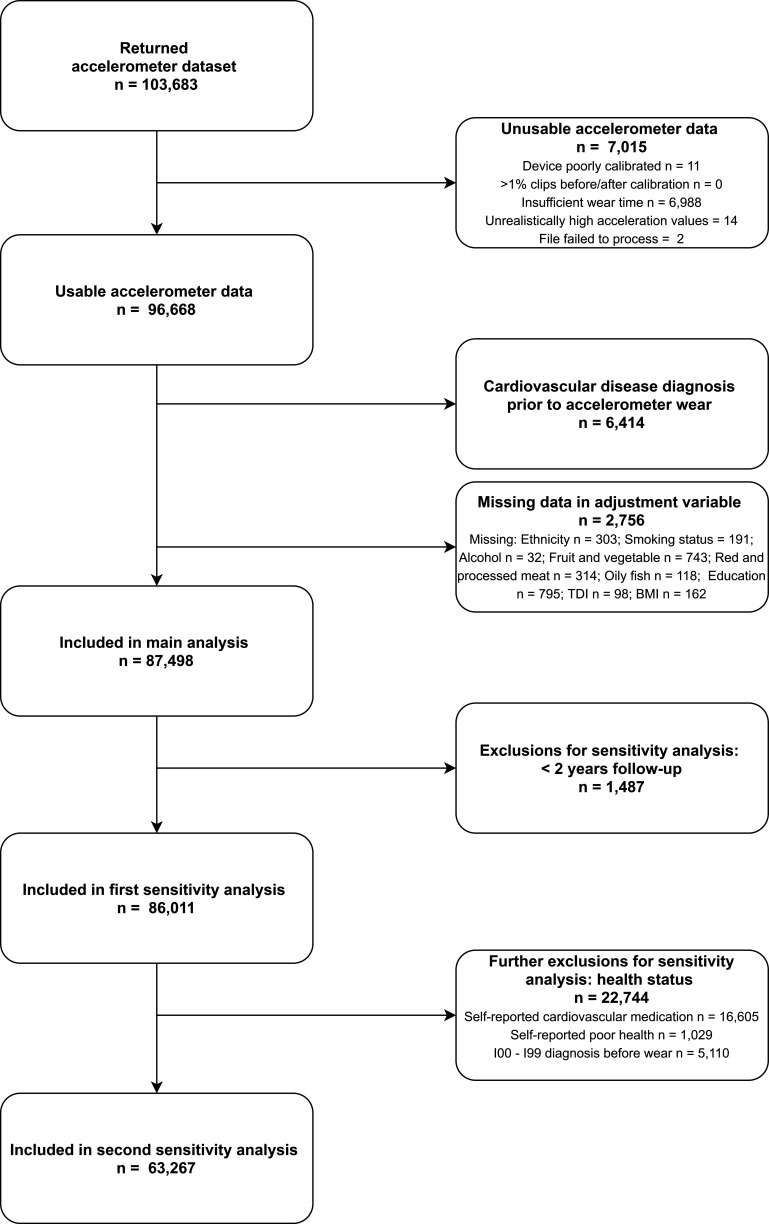
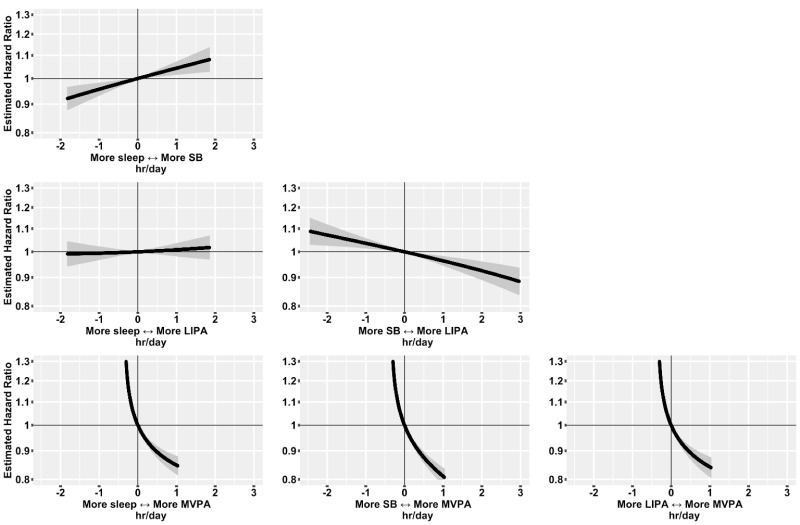
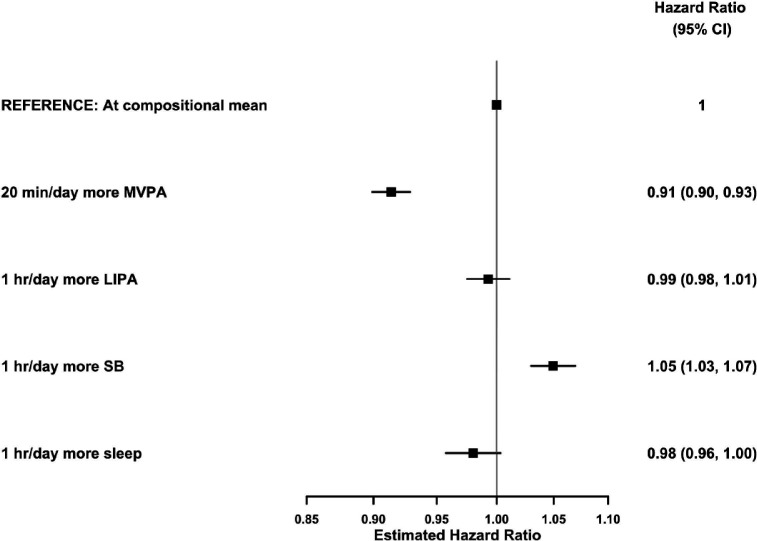
Objective: To improve classification of movement behaviours in free-living accelerometer data using machine-learning methods, and to investigate the association between machine-learned movement behaviours and risk of incident cardiovascular disease (CVD) in adults. Methods: Using free-living data from 152 participants, we developed a machine-learning model to classify movement behaviours (moderate-to-vigorous physical activity behaviours (MVPA), light physical activity behaviours, sedentary behaviour, sleep) in wrist-worn accelerometer data. Participants in UK Biobank, a prospective cohort, were asked to wear an accelerometer for 7 days, and we applied our machine-learning model to classify their movement behaviours. Using compositional data analysis Cox regression, we investigated how reallocating time between movement behaviours was associated with CVD incidence. Results: In leave-one-participant-out analysis, our machine-learning method classified free-living movement behaviours with mean accuracy 88% (95% CI 87% to 89%) and Cohen’s kappa 0.80 (95% CI 0.79 to 0.82). Among 87 498 UK Biobank participants, there were 4105 incident CVD events. Reallocating time from any behaviour to MVPA, or reallocating time from sedentary behaviour to any behaviour, was associated with lower CVD risk. For an average individual, reallocating 20 min/day to MVPA from all other behaviours proportionally was associated with 9% (95% CI 7% to 10%) lower risk, while reallocating 1 hour/day to sedentary behaviour from all other behaviours proportionally was associated with 5% (95% CI 3% to 7%) higher risk. Conclusion: Machine-learning methods classified movement behaviours accurately in free-living accelerometer data. Reallocating time from other behaviours to MVPA, and from sedentary behaviour to other behaviours, was associated with lower risk of incident CVD, and should be promoted by interventions and guidelines.
Overview
The claims and statistics of this paper haven’t been checked yet.
Free: it reads the open-access text and checks the first 5 claims that cite a source we can check. Create a free account to check every claim.
Integrity signals
Registry
Cites
Statistics
Figures
Verification
Claims the paper makes
The claims and statistics of this paper haven’t been checked yet.
Free: it reads the open-access text and checks the first 5 claims that cite a source we can check. Create a free account to check every claim.
Claims other papers make about this one
Each is checked against this paper’s own text: does it say what the citing paper says it does?
In the citing paper
“The random forest model achieved 90%+ precision and recall for detecting sleep windows in 152 free-living participants with sleep diaries that asked two questions: ‘What time did you first fall asleep last night?’ and ‘What time did you wake up (eyes open, ready to get up)?’30.”
From Self-supervised learning of accelerometer data provides new insights for sleep and its association with mortality (2024) · cites this paper as [30]
Self-check
Percentages, sums and reported differences re-computed from the paper’s own numbers.
The self-check needs the paper’s full text.
Citations
Cites
von Elm, E., Altman, D. G., Egger, M., Pocock, S. J., Gøtzsche, P. C., Vandenbroucke, J. P., & Initiative, F. T. S. (2007) · PLoS Medicine · doi:10.1371/journal.pmed.0040296 · Cited by 23,020
von Elm, E., Altman, D. G., Egger, M., Pocock, S. J., Gøtzsche, P. C., & Vandenbroucke, J. P. (2007) · The Lancet · doi:10.1016/s0140-6736(07)61602-x · Cited by 21,320
The Physical Activity Guidelines for Americans
Piercy, K. L., Troiano, R. P., Ballard, R. M., Carlson, S. A., Fulton, J. E., Galuska, D. A., George, S. M., & Olson, R. D. (2018) · JAMA · doi:10.1001/jama.2018.14854 · Cited by 9,755
Lee, I.-M., Shiroma, E. J., Lobelo, F., Puska, P., Blair, S. N., & Katzmarzyk, P. T. (2012) · The Lancet · doi:10.1016/s0140-6736(12)61031-9 · Cited by 8,215
Sensitivity analysis in observational research: Introducing the E-value
VanderWeele, T. J., & Ding, P. (2017) · Annals of Internal Medicine · doi:10.7326/m16-2607 · Cited by 6,350
2011 Compendium of Physical Activities: A Second Update of Codes and MET Values
AINSWORTH, B. E., HASKELL, W. L., HERRMANN, S. D., MECKES, N., BASSETT, D. R., TUDOR-LOCKE, C., GREER, J. L., VEZINA, J., WHITT-GLOVER, M. C., & LEON, A. S. (2011) · Medicine & Science in Sports & Exercise · doi:10.1249/mss.0b013e31821ece12 · Cited by 6,317
Forney, G. D. (1973) · Proceedings of the IEEE · doi:10.1109/proc.1973.9030 · Cited by 5,647
Fry, A., Littlejohns, T. J., Sudlow, C., Doherty, N., Adamska, L., Sprosen, T., Collins, R., & Allen, N. E. (2017) · American Journal of Epidemiology · doi:10.1093/aje/kwx246 · Cited by 3,979 · cited 1×
“…Biobank is not representative of the UK population 23 (eg, low socioeconomic status individuals are under-represented compared with the national population 42 ), though a previous study showed exposure–outcome associations found in UK Biobank were similar to results in more representative samples.”
Sedentary Behavior Research Network (SBRN)—Terminology Consensus Project process and outcome
on behalf of SBRN Terminology Consensus Project Participants, Tremblay, M. S., Aubert, S., Barnes, J. D., Saunders, T. J., Carson, V., Latimer-Cheung, A. E., Chastin, S. F. M., Altenburg, T. M., & Chinapaw, M. J. M. (2017) · International Journal of Behavioral Nutrition and Physical Activity · doi:10.1186/s12966-017-0525-8 · Cited by 3,793
Fit Yourself and Take Your Lungs to Heart
Palange, P., & Bonini, M. (2013) · Respiration · doi:10.1159/000350831 · Cited by 2,779
Research works printed but not linked: 2
- 10.1186/S12966-020-01042-2/TABLES/2 · doi:10.1186/s12966-020-01042-2/tables/2
- World Health Organization. Who guidelines on physical activity and sedentary behaviour. Geneva, 2020. 33369898
Cited by
Stamatakis, E., Ahmadi, M. N., Gill, J. M. R., Thøgersen-Ntoumani, C., Gibala, M. J., Doherty, A., & Hamer, M. (2022) · Nature Medicine · doi:10.1038/s41591-022-02100-x · Cited by 336
“Such potential is greatly enhanced by the recent application of machine learning 32–34 in studies using wearable devices to understand the health effects of movement.”
Self-citationAccelerometer-derived "weekend warrior" physical activity and incident cardiovascular disease
Khurshid, S., Al-Alusi, M. A., Churchill, T. W., Guseh, J. S., & Ellinor, P. T. (2023) · JAMA · doi:10.1001/jama.2023.10875 · Cited by 204
Cao, Z., Xu, C., Zhang, P., & Wang, Y. (2022) · eClinicalMedicine · doi:10.1016/j.eclinm.2022.101424 · Cited by 188
Physical activity volume, intensity, and incident cardiovascular disease
Dempsey, P. C., Rowlands, A. V., Strain, T., Zaccardi, F., Dawkins, N., Razieh, C., Davies, M. J., Khunti, K. K., Edwardson, C. L., Wijndaele, K., et al. (2022) · European Heart Journal · doi:10.1093/eurheartj/ehac613 · Cited by 174
Wearable movement-tracking data identify Parkinson’s disease years before clinical diagnosis
Schalkamp, A.-K., Peall, K. J., Harrison, N. A., & Sandor, C. (2023) · Nature Medicine · doi:10.1038/s41591-023-02440-2 · Cited by 168
“The models demonstrating high class imbalance, i.e. those trained with all unaffected controls and the general population, showed poor calibration as they overestimated the prevalence (Extended Figure 9, Supplementary Figure 19).”
Sedentary Behavior and Incident Dementia Among Older Adults
Raichlen, D. A., Aslan, D. H., Sayre, M. K., Bharadwaj, P. K., Ally, M., Maltagliati, S., Lai, M. H. C., Wilcox, R. R., Klimentidis, Y. C., & Alexander, G. E. (2023) · JAMA · doi:10.1001/jama.2023.15231 · Cited by 156
Blodgett, J. M., Ahmadi, M. N., Atkin, A. J., CHASTIN, S. F. M., Chan, H., Suorsa, K., Bakker, E. A., Hettiarcachchi, P., Johansson, P. J., Sherar, L. B., et al. (2023) · European Heart Journal · doi:10.1093/eurheartj/ehad717 · Cited by 172
Paudel, S., Ahmadi, M. N., Phongsavan, P., Hamer, M., & Stamatakis, E. (2023) · British Journal of Sports Medicine · doi:10.1136/bjsports-2022-105435 · Cited by 104
Miatke, A., Olds, T., Maher, C. A., Fraysse, F., Mellow, M. L., Smith, A. E., Pedišić, Ž., Grgić, J., & Dumuid, D. (2023) · International Journal of Behavioral Nutrition and Physical Activity · doi:10.1186/s12966-023-01526-x · Cited by 95
Associations of “Weekend Warrior” Physical Activity With Incident Disease and Cardiometabolic Health
Kany, S., Al‐Alusi, M. A., Rämö, J. T., Pirruccello, J. P., Churchill, T. W., Lubitz, S. A., Maddah, M., Guseh, J. S., Ellinor, P. T., & Khurshid, S. S. (2024) · Circulation · doi:10.1161/circulationaha.124.068669 · Cited by 93
Accelerometer-Measured Sedentary Behavior and Risk of Future Cardiovascular Disease
Ajufo, E. C., Kany, S., Rämö, J. T., Churchill, T. W., Guseh, J. S., Aragam, K. G., Ellinor, P. T., & Khurshid, S. S. (2024) · Journal of the American College of Cardiology · doi:10.1016/j.jacc.2024.10.065 · Cited by 277
Accelerometer-derived ‘weekend warrior’ physical activity pattern and brain health
Min, J., Cao, Z., Duan, T., Wang, Y., & Xu, C. (2024) · Nature Aging · doi:10.1038/s43587-024-00688-y · Cited by 80
“The analysis used a previously published machine learning algorithm to accurately classify MVPA from other movement behaviors (including light-intensity PA, sedentary behaviors and sleep) based on data collected from wrist-worn accelerometers 32 .”
Creagh, A. P., Hamy, V., Yuan, H., Mertes, G., Tomlinson, R., Chen, W.-H., Williams, R., Llop, C., Yee, C., Duh, M. S., et al. (2022) · doi:10.1101/2022.11.18.22282305 · Cited by 64
Self-citationCreagh, A. P., Hamy, V., Yuan, H., Mertes, G., Tomlinson, R., Chen, W.-H., Williams, R., Llop, C., Yee, C., Duh, M. S., et al. (2024) · npj Digital Medicine · doi:10.1038/s41746-024-01013-y · Cited by 64
Self-citationChan, S., Hang, Y., Tong, C., Acquah, A., Schonfeldt, A., Gershuny, J., & Doherty, A. (2024) · Scientific Data · doi:10.1038/s41597-024-03960-3 · Cited by 61
Self-citationDiurnal rhythms of wrist temperature are associated with future disease risk in the UK Biobank
Brooks, T. G., Lahens, N. F., Grant, G. R., Sheline, Y. I., FitzGerald, G. A., & Skarke, C. (2023) · Nature Communications · doi:10.1038/s41467-023-40977-5 · Cited by 57
“The data were calibrated and processed using an existing pipeline 20,63 – 65 modi fi ed slightly to better accommodate daylight savings time changes and to output light and temperature readings from an on-device thermometer.”
Ekelund, U., Tarp, J., Ding, D., Sánchez-Lastra, M. A., Dalene, K. E., Anderssen, S. A., Steene‐Johannessen, J., Hansen, B., Morseth, B., Hopstock, L. A., et al. (2026) · The Lancet · doi:10.1016/s0140-6736(25)02219-6 · Cited by 90
Palmerini, L., Reggi, L., Bonci, T., Del Din, S., Micó-Amigo, M. E., Salis, F., Bertuletti, S., Caruso, M., Cereatti, A., Gazit, E., et al. (2023) · Scientific Data · doi:10.1038/s41597-023-01930-9 · Cited by 52
Shreves, A. H., Small, S. R., Walmsley, R., Chan, S., Saint‐Maurice, P. F., Moore, S. C., Papier, K., Gaitskell, K. L., Travis, R. C., Matthews, C. E., et al. (2025) · British Journal of Sports Medicine · doi:10.1136/bjsports-2024-109360 · Cited by 59
“10 36 Similarly, we found that daily step volume may be more important for cancer risk than stepping intensity (peak 30-minute cadence).”
Self-citationGill, J. M., Chico, T. J., Doherty, A., Dunn, J., Ekelund, U., Katzmarzyk, P. T., Milton, K., Murphy, M. H., & Stamatakis, E. (2023) · British Journal of Sports Medicine · doi:10.1136/bjsports-2023-106822 · Cited by 49
Self-citationSánchez-Lastra, M. A., Ding, D., Cruz, B. D. P., Dalene, K. E., Pérez, C. A., Ekelund, U., & Tarp, J. (2023) · British Journal of Sports Medicine · doi:10.1136/bjsports-2023-107252 · Cited by 47
Watts, E., Saint-Maurice, P., Doherty, A., Fensom, G., Freeman, J. R., Gorzelitz, J., Jin, D., McClain, K., Papier, K., Patel, S., et al. (2023) · JAMA Network Open · doi:10.1001/jamanetworkopen.2022.56186 · Cited by 32
Self-citationYuan, H., Plekhanova, T., Walmsley, R., Reynolds, A. C., Maddison, K. J., Bucan, M., Gehrman, P., Rowlands, A., Ray, D. W., Bennett, D., et al. (2024) · npj Digital Medicine · doi:10.1038/s41746-024-01065-0 · Cited by 40
Self-citationZink, J., Booker, R., Wolff‐Hughes, D. L., Allen, N. B., Carnethon, M. R., Alexandria, S. J., & Berrigan, D. A. (2024) · International Journal of Behavioral Nutrition and Physical Activity · doi:10.1186/s12966-024-01587-6 · Cited by 53
“These analyses were conducted in R using the ‘survey’ package [53, 54].”
Shim, J., Fleisch, E., & Barata, F. (2024) · npj Digital Medicine · doi:10.1038/s41746-024-01111-x · Cited by 54
Diffusion tensor imaging analysis along the perivascular space in the UK biobank
Clark, O. J., Delgado-Sánchez, A., Cullell, N., Corrêa, S. A. L., Krupiński, J., & Ray, N. J. (2024) · Sleep Medicine · doi:10.1016/j.sleep.2024.05.007 · Cited by 37
Li, Z., Cheng, S., Guo, B., Ding, L., Liang, Y., Shen, Y., Li, J., Hu, Y., Long, T., Guo, X., et al. (2024) · European Heart Journal · doi:10.1093/eurheartj/ehae406 · Cited by 41
“19 Finally, missing covariate values were imputed using multiple imputation by chained equations (see Supplementary data online, Methods and Tables S7 – S9 ).”
Symptom tracking in endometriosis using digital technologies: Knowns, unknowns, and future prospects
Edgley, K., Horne, A. W., Saunders, P. T. K., & Tsanas, A. (2023) · Cell Reports Medicine · doi:10.1016/j.xcrm.2023.101192 · Cited by 39
Rezende, L. F. M., Ahmadi, M. N., Ferrari, G., Cruz, B. D. P., Lee, I.-M. M., Ekelund, U., & Stamatakis, E. (2024) · International Journal of Behavioral Nutrition and Physical Activity · doi:10.1186/s12966-024-01615-5 · Cited by 44
“Joint analyses, although distinctively different from compositional data analysis (CODA), [19, 20] also take into account most components of 24-hour physical behaviour.”
BackgroundSmall, S. R., Chan, S., Walmsley, R., von Fritsch, L., Acquah, A., Mertes, G., Feakins, B., Creagh, A. P., Strange, A., Matthews, C., et al. (2024) · Medicine & Science in Sports & Exercise · doi:10.1249/mss.0000000000003478 · Cited by 22
Self-citationFeter, N., de Paula, D., dos Reis, R. C. P., Matos, S. M. A., Barreto, S. M., Duncan, B. B., & Schmidt, M. I. (2023) · Innovation in Aging · doi:10.1093/geroni/igad030 · Cited by 34
Liu, M., Ye, Z., Zhang, Y., He, P., Zhou, C., Yang, S., Zhang, Y., Gan, X., & Qin, X. (2024) · BMC Medicine · doi:10.1186/s12916-024-03618-2 · Cited by 30
“To test the actual association of MVPA in relation to other movement behaviors, a compositional data analysis (CODA) approach was used [16].”
MethodDose/Exposure Relationship of Exercise and Distant Recurrence in Primary Breast Cancer
Soldato, D., Michiels, S., Havas, J., Meglio, A. D., Pagliuca, M., Franzoi, M. A., Pistilli, B., Iyengar, N. M., Cottu, P. H., Lerebours, F., et al. (2024) · Journal of Clinical Oncology · doi:10.1200/jco.23.01959 · Cited by 30
Liu, M., Gan, X., Ye, Z., Zhang, Y., He, P., Zhou, C., Yang, S., Zhang, Y., & Qin, X. (2023) · npj Digital Medicine · doi:10.1038/s41746-023-00969-7 · Cited by 27
“…before or after calibration, if the wear-time was insuf fi cient (de fi ned as the unavailability of at least 72 h of data or did not have data in each 1-hour period of the 24-hour cycle), if the average acceleration was implausibly high (>100 milli-gravity), or if the fi le failed to process 39,40 .”
BackgroundMethodSmall, S. R., Chan, S., Walmsley, R., Fritsch, L. V., Acquah, A., Mertes, G., Feakins, B. G., Creagh, A., Strange, A., Matthews, C. E., et al. (2023) · doi:10.1101/2023.02.20.23285750 · Cited by 22
“Weighted cross entropy loss was used, with the class weights set in such a way that the balance of walking and non-walking segments was 10% to 90%, respectively, bringing the class balance in line with 24-hour direct observation during free living in a previously collected dataset 23 .”
Self-citationDevice-measured movement behaviours in over 20,000 China Kadoorie Biobank participants
Chen, Y., Chan, S., Bennett, D., Chen, X., Wu, X., Ke, Y., Lv, J., Sun, D., Pan, L., Pei, P., et al. (2023) · International Journal of Behavioral Nutrition and Physical Activity · doi:10.1186/s12966-023-01537-8 · Cited by 35
“Fine-grained labels were mapped to sleep, sedentary behaviour (e.g., sitting working at a computer, watching television), light physical activity behaviours (e.g., cooking, self-care) and moderate-to-vigorous physical activity behaviours (MVPA; e.g., walking the dog, cycling) [23].”
InfluentialSelf-citationBrown, D. M. Y., Burkart, S. A., Groves, C. I., Balbim, G. M., Pfledderer, C. D., Porter, C. D., Laurent, C. W. S., Johnson, E. K., & Kracht, C. L. (2024) · Journal of Activity Sedentary and Sleep Behaviors · doi:10.1186/s44167-024-00062-8 · Cited by 35
Tsanas, A. (2022) · Sensors · doi:10.3390/s22166152 · Cited by 19
Clustering Accelerometer Activity Patterns from the UK Biobank Cohort
Clark, S., Lomax, N., Morris, M. A., Pontin, F. L., & Birkin, M. H. (2021) · Sensors · doi:10.3390/s21248220 · Cited by 21
Farrahi, V., Muhammad, U., Rostami, M., & Oussalah, M. (2023) · International Journal of Medical Informatics · doi:10.1016/j.ijmedinf.2023.105004 · Cited by 21
Ning, Y., Chen, M., An, J., Tang, M., Tse, G., Chan, J. S. K., Zhao, C., Liu, Y., Lei, X., Qiang, H., et al. (2024) · Neurotherapeutics · doi:10.1016/j.neurot.2024.e00430 · Cited by 19
“They were estimated using machine learning models that were trained using wearable cameras and time-use diaries among 152 individuals in free-living conditions [15].”
Accelerometer-derived “weekend warrior” physical activity pattern and incident type 2 diabetes
Cao, Z., Min, J., & Xu, C. (2025) · Cardiovascular Diabetology · doi:10.1186/s12933-025-02676-x · Cited by 18
“The accuracy of this machine learning method has been validated in a UK-based sample with an average accuracy of 88% and Cohen’s kappa coefficient of 0.80 [14].”
InfluentialLu, Z., Guo, J., Liu, C., Wu, J., Zhao, C., Wang, F., Bao, Y., Zhang, H., Li, X., Li, X., et al. (2024) · BMC Public Health · doi:10.1186/s12889-024-20290-6 · Cited by 19
Campos-Garzón, P., Saucedo‐Araujo, R. G., Sevil‐Serrano, J., Migueles, J. H., Barranco-Ruíz, Y., & Chillón, P. (2023) · Transport Reviews · doi:10.1080/01441647.2023.2175276 · Cited by 17
Collings, P. J., Backes, A., Aguayo, G., Fagherazzi, G., Malisoux, L., & the ORISCAV-LUX study group (2023) · Diabetology & Metabolic Syndrome · doi:10.1186/s13098-023-01040-x · Cited by 15
Kim, Y., Jang, H., Wang, M., Shi, Q., Strain, T., Sharp, S. J., Yeung, S. L. A., Luo, S., Griffin, S. J., Wareham, N. J., et al. (2023) · Journal of Internal Medicine · doi:10.1111/joim.13715 · Cited by 13
“A recent study using data from UK Biobank has also provided mixed findings that there was no evidence of association between incident CVD and light PA replaced proportionally by all other behaviors, but lower CVD incidence when replacing ST with light PA [60].”
BackgroundResultYe, Z., Liu, M., Yang, S., Zhang, Y., Zhang, Y., He, P., Zhou, C., Gan, X., Xiang, H., Huang, Y., et al. (2024) · Preventive Medicine · doi:10.1016/j.ypmed.2024.108120 · Cited by 15
Qiao, Y., Yang, H., Lin, R., Yu, Y., Zhao, M., & Xi, B. (2025) · BMC Medicine · doi:10.1186/s12916-025-04344-z · Cited by 16
“Proportions of time spent in various movement behaviors (i.e., light intensity PA, MVPA, sedentary behavior, and sleep) were derived using a machine learning algorithm trained on an external independent cohort of 152 individuals in free-living conditions [24].”
InfluentialBeyer, K. B., Weber, K. S., Cornish, B. F., Vert, A., Thai, V., Godkin, F. E., McIlroy, W. E., & Ooteghem, K. V. (2024) · BMC Digital Health · doi:10.1186/s44247-024-00062-3 · Cited by 17
Yu, K., Yang, Q., Wang, J., & Zeng, B. (2024) · American Journal of Geriatric Psychiatry · doi:10.1016/j.jagp.2024.10.015 · Cited by 14
de Paula, D., Crochemore‐Silva, I., Griep, R. H., Duncan, B. B., & Schmidt, M. I. (2023) · Journal of Physical Activity and Health · doi:10.1123/jpah.2023-0106 · Cited by 15
Liao, D., Li, H., Chen, H., Lai, S., Tang, X., Qiu, C., Du, L., Huang, H.-X., Xiong, Z., Kuang, L., et al. (2025) · Journal of the American Heart Association · doi:10.1161/jaha.124.039225 · Cited by 16
“21,23 This method was previously validated in a UK-based sample.”
InfluentialA longitudinal study of sleep in university freshmen: facilitating and impeding factors
Soon, C. S., Chua, X. Y., Leong, R. L. F., Ong, J. L., Massar, S. A. A., Qin, S., Chong, K. H. M., Onnela, J.-P. “., & Chee, M. W. L. (2025) · SLEEP · doi:10.1093/sleep/zsaf156 · Cited by 19
“Time-use behaviors in the 4-h period preceding individual weekday bedtimes were modeled using a compositional data analysis (CoDA) framework (R package “epicoda” [31]).”
Work/household, transport, and leisure domains account for the sex gap in physical activity in Chile
Suárez‐Reyes, M., & Fernández‐Verdejo, R. (2022) · Frontiers in Public Health · doi:10.3389/fpubh.2022.1011790 · Cited by 13
Physical activity levels may impact on the risk of premature mortality in people with epilepsy
Fan, L.-J., Liu, S.-Y., Zhao, J.-H., Wang, X.-Y., Nie, Y.-Y., Qaderi, F., Su, Q.-B., He, Z.-H., Yang, S., Yi, T., et al. (2025) · Nature Communications · doi:10.1038/s41467-025-64805-0 · Cited by 13
Fully Automated Detection of Isolated Rapid-Eye-Movement Sleep Behavior Disorder Using Actigraphy
Brink-Kjær, A., Winer, J. R., Zeitzer, J. M., Sørensen, H. B. D., Jennum, P., Mignot, E. J.-M., & During, E. (2023) · Annual International Conference of the IEEE Engineering in Medicine and Biology Society (EMBC) · doi:10.1109/embc40787.2023.10341133 · Cited by 17
“Moreover, our method was compared to a set of commonly used methods [16]–[19].”
MethodBohmann, P., Stein, M. J., Amadou, A., Baurecht, H., Fervers, B., Fontvieille, E., Freisling, H., Friedenreich, C. M., Konzok, J., Peruchet‐Noray, L., et al. (2025) · British Journal of Sports Medicine · doi:10.1136/bjsports-2024-108708 · Cited by 22
Accelerometer‐measured physical activity timing with incident dementia
Ning, Y., Chen, M., Yang, H., & Jia, J. (2025) · Alzheimer s & Dementia · doi:10.1002/alz.14452 · Cited by 13
Passive sensing at scale to transform understanding of poor mental health
Doherty, A., Bucci, S., Kenny, A., Kotov, R., Lipinska, G., Ospina‐Pinillos, L., & Schultebraucks, K. (2025) · The Lancet Digital Health · doi:10.1016/j.landig.2025.01.002 · Cited by 13
“…Biobank is one of the most important medical resources worldwide 3 and contains a wearable assessment of physical activity and sleep in 100,000 participants 4 ; the study population (median age at baseline of 62 years, IQR 54–68 years) is not ideal to examine the causes of mental health problems.”
Self-citationRen, R., Wang, W.-X., Liu, Q., Ye, X., Li, X., Zhang, R., Wang, L., Zhang, Y., Ma, Y., & Wang, D. (2025) · Journal of the American Heart Association · doi:10.1161/jaha.124.039852 · Cited by 13
Popham, S. F., Burq, M., Rainaldi, E., Shin, S., Dunn, J., & Kapur, R. (2023) · JMIR Biomedical Engineering · doi:10.2196/43726 · Cited by 10
“When interpreting our results in the context of existing literature, it is worth noting that most validation studies for this type of algorithm have used step counts as the metric of interest [31,36,41-53], while ambulatory time (or a related metric) is the focus of a minority of reports [54,55].”
MethodEkblom‐Bak, E., Börjesson, M., Ekblom, Ö. B., Angerås, O., Bergman, F., Berntsson, C., Carlhäll, C., Engström, G., Engvall, J. E., Fagman, E., et al. (2023) · BMJ Open · doi:10.1136/bmjopen-2023-073380 · Cited by 14
Accelerometer-derived “weekend warrior” physical activity, sedentary behavior, and risk of dementia
Ning, Y., Chen, M., Yang, H., & Jia, J. (2025) · Alzheimer s Research & Therapy · doi:10.1186/s13195-024-01657-8 · Cited by 14
“We utilized a machine learning-based MVPA classification method that was previously developed and validated [16].”
InfluentialGong, X., Eminson, K., Atilola, G. O., Jephcote, C., Adams, K., Captur, G., Hall, A. P., Blangiardo, M., Gulliver, J., Rowlands, A. V., et al. (2024) · Environmental Health Perspectives · doi:10.1289/ehp14156 · Cited by 15
Liao, D., Chen, H.-J., Li, H., Gao, J., Tang, X.-L., Du, L., Lai, S., Zhong, W.-F., Huang, H.-X., Xiong, Z.-Y., et al. (2025) · International Journal of Behavioral Nutrition and Physical Activity · doi:10.1186/s12966-025-01734-7 · Cited by 12
“MVPA were determined using a classification method based on machine learning, developed to analyse a wide range of activities and validated as part of the UK Biobank study [25].”
Tomova, G. D., Walmsley, R., Berrie, L., Morris, M. A., & Tennant, P. W. G. (2025) · BMC Medical Research Methodology · doi:10.1186/s12874-025-02509-1 · Cited by 9
Self-citationDevice-Measured Physical Activity in 3506 Individuals with Knee or Hip Arthroplasty
Small, S. R., Khalid, S., Price, A. J., & Doherty, A. (2023) · Medicine & Science in Sports & Exercise · doi:10.1249/mss.0000000000003365 · Cited by 12
Self-citationZhu, J.-H., Shen, Z., Liu, B.-P., & Jia, C.-X. (2024) · Social Psychiatry and Psychiatric Epidemiology · doi:10.1007/s00127-024-02708-z · Cited by 11
Graham, B., & Farrell, M. (2024) · Expert Systems with Applications · doi:10.1016/j.eswa.2024.126195 · Cited by 11
Wang, L., Luo, Z., & Zhang, T. (2025) · BMC Biomedical Engineering · doi:10.1186/s42490-025-00088-2 · Cited by 8
Booker, R., Holmes, M. E., Newton, R. L., Norris, K. C., Thorpe, R. J., & Carnethon, M. R. (2022) · Annals of Epidemiology · doi:10.1016/j.annepidem.2022.09.009 · Cited by 9
Wang, L., Luo, Z., & Zhang, T. (2024) · doi:10.21203/rs.3.rs-4696057/v1 · Cited by 8
Anaya, G., Gabriel, K. P., St‐Onge, M., Horn, L. V., Alfini, A. J., Badon, S. E., Boushey, C. J., Brown, A. G. M., Depner, C. M., Diaz, K. M., et al. (2024) · Journal of the American Heart Association · doi:10.1161/jaha.124.035818 · Cited by 10
Self-citationWearable device-measured physical activity and incident cardiovascular disease in cancer survivors
Jiang, C., Li, Z., Guo, B., Chen, L., Zhu, L., Liang, Y., Shen, Y., Long, T., Zhai, M., Shi, J., et al. (2025) · British Journal of Sports Medicine · doi:10.1136/bjsports-2024-108734 · Cited by 8
Zisou, C., Calvin, C. M., Taylor, H., Lacey, B., Hammami, I., Walmsley, R., Strain, T., Wijndaele, K., Wareham, N. J., Brage, S., et al. (2026) · International Journal of Epidemiology · doi:10.1093/ije/dyag014 · Cited by 20
Self-citationQuantified Canine: Inferring Dog Personality From Wearables
Meegahapola, L., Constantinides, M., Radivojević, Z., Li, H., Quercia, D., & Eggleston, M. S. (2023) · CHI Conference on Human Factors in Computing Systems · doi:10.1145/3544548.3581088 · Cited by 13
Zawada, S., Ganjizadeh, A., Conte, G., Demaerschalk, B., & Erickson, B. (2024) · Journal of the American Heart Association : Cardiovascular and Cerebrovascular Disease · doi:10.1161/jaha.123.032965 · Cited by 5
Yu, P., Liu, F., Wang, P., Gong, J., Zhou, H., Gu, J., Qin, A., Chen, L., & Song, F. (2025) · Alimentary Pharmacology & Therapeutics · doi:10.1111/apt.70169 · Cited by 7
On convex decision regions in deep network representations
Tětková, L., Brüsch, T., Dorszewski, T., Mager, F. M., Aagaard, R. Ø., Foldager, J., Alstrøm, T. S., & Hansen, L. K. (2025) · Nature Communications · doi:10.1038/s41467-025-60809-y · Cited by 18
“In Walmsley et al. (2022), the original 213 labels were divided into 4 coarse labels, namely; sleeping, sedentary behaviour, light physical activity behaviours and moderate-to-vigorous physical activity behaviours based on the MET scores.”
Proteomic Signatures Underlying Sleep, Circadian Activity Patterns, and Major Chronic Diseases
Wei, J., Wu, H., Zheng, Y., Weng, B., Xiao, Y., Benedict, C., Wang, N., Luo, X., & Tan, X. W. (2025) · Journal of Pineal Research · doi:10.1111/jpi.70067 · Cited by 8
“We also included irregular sleep duration, estimated by the SD of sleep duration over 7 days [12].”
Sun, J., Qiao, Y., Li, F., Lin, R., Yu, Y., Wang, M., Zhao, M., & Xi, B. (2025) · Journal of sport and health science/Journal of Sport and Health Science · doi:10.1016/j.jshs.2025.101099 · Cited by 8
“12,13,17,57 Sixth, although we adjusted for a wide range of covariates, residual confounding from unmea-sured factors cannot be entirely eliminated, which complicates causal interpretation.”
InfluentialLiu, H.-Y., Liu, Y.-Y., Li, Q.-M., Liu, L., Wen, T.-J., Gong, T.-T., Wu, Q., & Gao, S. (2026) · Age and Ageing · doi:10.1093/ageing/afaf370 · Cited by 6
Mutation-dependent responses to sleep and exercise in clonal haematopoiesis
Gerhardt, T., Jacob, W., Gaebel, L., Heiser, M., Wolfram, C., Huynh, P., Nakao, T., dos Santos, B. G., Toh, P., Douglas, A., et al. (2026) · Nature · doi:10.1038/s41586-026-10634-0 · Cited by 11
Wang, Y., Zhang, P., Wang, M., Gong, Q., Yu, C., Wang, H., Hebestreit, A., Lau, W. C., Wang, H., & Li, L. (2024) · Nutrients · doi:10.3390/nu16162788 · Cited by 6
Raichlen, D. A., Ally, M., Aslan, D. H., Sayre, M. K., Bharadwaj, P. K., Maltagliati, S., Lai, M. H. C., Wilcox, R. R., Habeck, C. G., Klimentidis, Y. C., et al. (2024) · Alzheimer s & Dementia Diagnosis Assessment & Disease Monitoring · doi:10.1002/dad2.70001 · Cited by 7
Kianersi, S., Potts, K. S., Wang, H., Sofer, T., Noordam, R., Rutter, M. K., Redline, S. S., & Huang, T. (2025) · International Journal of Obesity · doi:10.1038/s41366-025-01768-8 · Cited by 7
“In model 3, we added sleep apnea, insomnia, average sleep duration, chronotype, and daytime sleepiness, to account for other aspects of sleep.”
Assessment of physical activity patterns in patients with rheumatoid arthritis using the UK Biobank
Hamy, V., Creagh, A. P., & Garcia‐Gancedo, L. (2025) · PLoS ONE · doi:10.1371/journal.pone.0319908 · Cited by 5
“The pre-processed acceleration magnitude data were segmented into categories of intensity of activity such as periods of sleep, sedentary, light intensity activity, and MVPA [40].”
Shi, H., Han, Z., Qu, Q., Huang, J., Pan, R., Yu, J., Hu, C., Chi, Q., Zhao, S. G., Wang, J., et al. (2025) · JNCI Journal of the National Cancer Institute · doi:10.1093/jnci/djaf146 · Cited by 6
Ringin, E., Dunstan, D. W., Meyer, D., McIntyre, R. S., Owen, N. G., Berk, M., Rossell, S. L., Hallgren, M. Å., & Rheenen, T. E. V. (2025) · Acta Psychiatrica Scandinavica · doi:10.1111/acps.70011 · Cited by 6
“The average proportion of time spent being sedentary and in light physical activity, MVPA and sleep per hour across all days were calculated using a machine learning method by Walmsley et al. [40].”
Sedentary Behaviour and Cardiovascular Disease
Stamatakis, E., Rezende, L. F. M., & Rey-López, J. P. (2023) · Springer series on epidemiology and public health · doi:10.1007/978-3-031-41881-5_8 · Cited by 8
de Paula, D., Evenson, K. R., Feter, N., Griep, R. H., Queiroz, C. O., dos Reis, R. C. P., Duncan, B. B., & Schmidt, M. I. (2025) · Preventive Medicine · doi:10.1016/j.ypmed.2025.108241 · Cited by 7
Zhou, W., Veliz, P. T., Pu, J., Luo, W., Shang, S., & Larson, J. L. (2025) · BMC Pulmonary Medicine · doi:10.1186/s12890-025-03969-3 · Cited by 8
“Time spent in MVPA, LPA and sedentary behaviors were derived from raw accelerometer data using a previously published machine learning algorithm developed and validated for use with the UK Biobank [15].”
InfluentialAcquah, A., Creagh, A. P., Hamy, V., Shreves, A. H., Zisou, C., Harper, C., van Duijvenboden, S., Antoniades, C. A., Bennett, D., Clifton, D. A., et al. (2025) · npj Parkinson's Disease · doi:10.1038/s41531-025-01214-6 · Cited by 6
Self-citationZhu, R., Chen, C., Kuang, M., Tai, Y., Qin, Y., & Wu, C. (2026) · Hypertension · doi:10.1161/hypertensionaha.125.25444 · Cited by 6
The role of sleep in cardiovascular health and disease risk
Bian, W., Cistulli, P. A., Chaput, J., Biswas, R. K., Koemel, N. A., Ahmadi, M., & Stamatakis, E. (2026) · Trends in Cardiovascular Medicine · doi:10.1016/j.tcm.2026.07.001 · Cited by 6
“Weekend Warrior” Physical Activity and Adipose Tissue Deposition
Kany, S., Al-Alusi, M., Rämö, J., Pirruccello, J., Ajufo, E., Churchill, T., Lubitz, S., Maddah, M., Guseh, J., Ellinor, P., et al. (2025) · JACC: Advances · doi:10.1016/j.jacadv.2025.101603 · Cited by 5
Matthews, C. E., Saint‐Maurice, P. F., Freeman, J. R., Hayes, H. A., Shreves, A. H., Doherty, A., Hyde, E. T., Ylarregui, K., Jones, R. R., & Keadle, S. K. (2025) · Journal for the Measurement of Physical Behaviour · doi:10.1123/jmpb.2024-0051 · Cited by 7
Self-citationSánchez-Lastra, M. A., Strain, T., Ding, D., Dalene, K. E., Cruz, B. D. P., Ekelund, U., & Tarp, J. (2024) · Journal of sport and health science/Journal of Sport and Health Science · doi:10.1016/j.jshs.2024.101018 · Cited by 7
“16,17 Due to limited VPA in the validation sample, an effective characterization pattern was not identified.”
Tsanas, A. (2025) · IEEE Access · doi:10.1109/access.2025.3539278 · Cited by 4
Associations between the 24-h Activity Daily Cycle and Incident Dementia
Raichlen, D. A., Aslan, D. H., Sayre, M. K., Nanda, A., Bharadwaj, P. K., Ally, M., Maltagliati, S., Lai, M. H. C., Wilcox, R. R., Klimentidis, Y. C., et al. (2025) · Medicine & Science in Sports & Exercise · doi:10.1249/mss.0000000000003745 · Cited by 5
Metadata
- Authors
- Walmsley, R., Chan, S., Smith-Byrne, K., Ramakrishnan, R., Woodward, M., Rahimi, K., Dwyer, T., Bennett, D., & Doherty, A.
- Affiliations
- University of Oxford (GB)
- Centre international de recherche sur le cancer (FR)
- Johns Hopkins University (US)
- Corresponding author
- Bennett, Derrick
- ORCID
- Venue
- British Journal of Sports Medicine
- Publisher
- BMJ
- Published
- 2021-09-06
- Volume
- 56
- Issue
- 18
- Pages
- 1008-1017
- ISSN
- 0306-3674 (ISSN-L)
- 1473-0480
- PMC
- PMC9484395
- OpenAlex
- W3196953909
- Semantic Scholar
- 06d7fbd400521a6bdfb6f2c52690e9943ada74f5
- Cited by
- 238
- References
- 48
- Citations by year
- 2026: 75 · 2025: 78 · 2024: 42 · 2023: 32 · 2022: 10 · 2021: 1
- FWCI
- 13.49
- Type
- journal article
- Language
- en
- Open access
- hybrid
- doi.org
- Locations
- British Journal of Sports Medicine (publishedVersion, cc-by)
- PubMed Central (publishedVersion, cc-by)
- PubMed (publishedVersion)
- UNSWorks (University of New South Wales, Sydney, Australia) (submittedVersion, cc-by-nc-nd)
- Minerva Access (University of Melbourne) (submittedVersion, cc-by)
- Funders
- Alan Turing Institute (SP/18/4/33803)
- National Health and Medical Research Foundation of Australia (1080206, 1149987)
- British Heart Foundation (PG/18/65/33872, SP/18/4/33803)
- Oxford Martin School, University of Oxford
- UK Research and Innovation (ES/L011662/1, ES/P011055/, MR/S502509/1)
- National Institute for Health Research Oxford Biomedical Research Centre
- Health Data Research UK
- Topics
- Health Sciences › Medicine › Public Health, Environmental and Occupational Health › Physical Activity and Health
- Physical Sciences › Computer Science › Computer Vision and Pattern Recognition › Context-Aware Activity Recognition Systems
- Health Sciences › Medicine › Cardiology and Cardiovascular Medicine › Cardiovascular Health and Risk Factors
- Keywords
- cardiovascular risk, moderate-to-vigorous physical activity, sedentary behavior, light physical activity, sleep, compositional data analysis, time reallocation, accelerometer data, machine learning classification, UK Biobank
About these checks
Registry, retraction, Cites and statistics results are computed, not judged, with one exception: a printed reference that no index lists is read once by a model before it counts as a citation error. Claims are extracted by a model and kept only when their quote appears verbatim in the text; each cited source is then checked, with a model’s help, for whether it says what the claim relies on. Those verdicts can be wrong — read the claim’s quote and the cited source before relying on one.
Statistics and arithmetic are recomputed, not judged.
Confidence bands are shown only for fields calibrated on our annotated test set. None is calibrated yet, so no band is shown.
What counts as a claim ›How we measure confidence ›How we check this ›
Are you an author, or do you see a problem with this page? Request a review
Data sources
Bibliographic data: Semantic Scholar, OpenAlex, Crossref.
Contains information from the Semantic Scholar Academic Graph Datasets, made available under the ODC Attribution License (ODC-BY 1.0).
Semantic Scholar’s data is described in: Kinney, R., et al. (2023). The Semantic Scholar Open Data Platform. arXiv:2301.10140.
