

Resistance training prescription for muscle strength and hypertrophy in healthy adults: a systematic review and Bayesian network meta-analysis.
Open accessThe DOI matches its Crossref record; 82 of the 86 references it cites were found in a registry or an index, and 2 are not checked yet.
Abstract
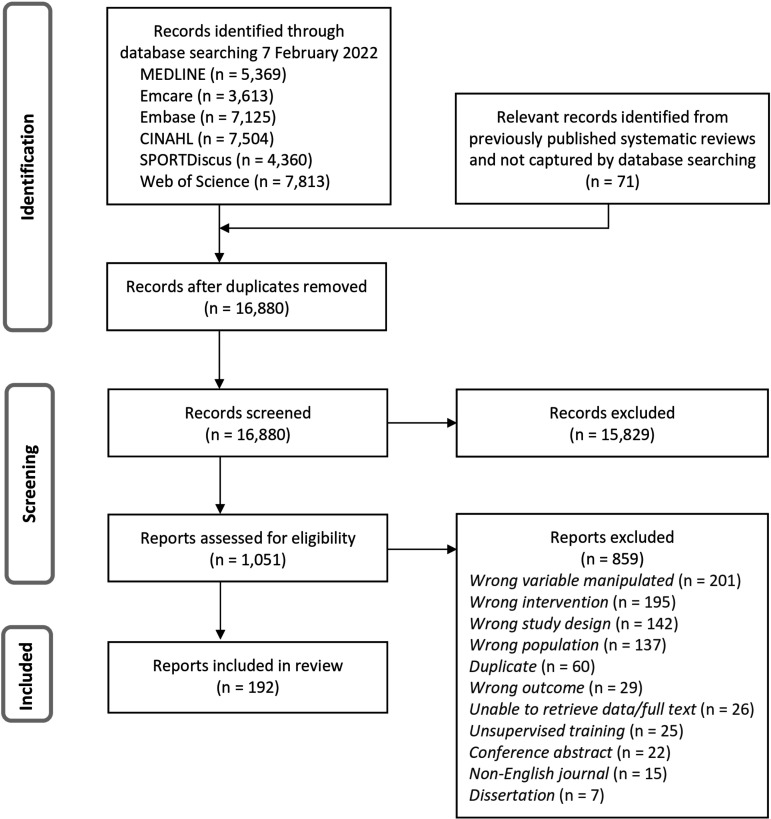
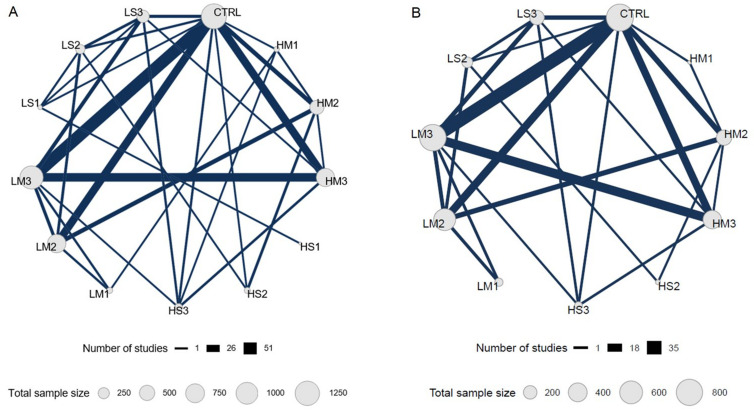
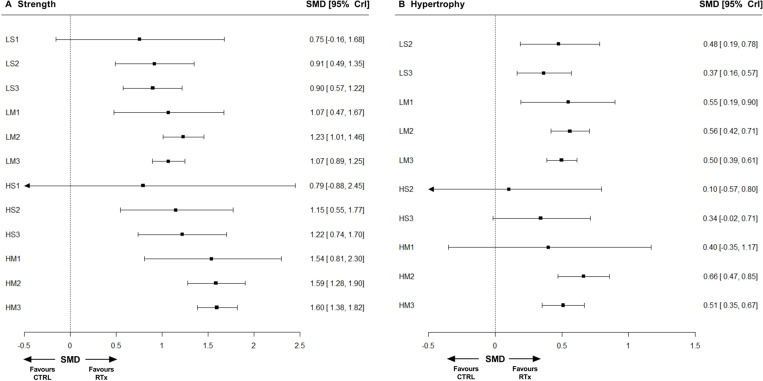
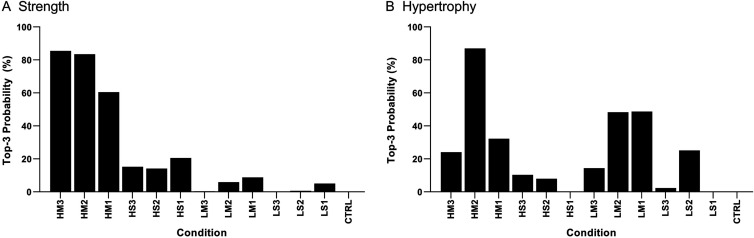
Objective: To determine how distinct combinations of resistance training prescription (RTx) variables (load, sets and frequency) affect muscle strength and hypertrophy. Data sources: MEDLINE, Embase, Emcare, SPORTDiscus, CINAHL, and Web of Science were searched until February 2022. Eligibility criteria: Randomised trials that included healthy adults, compared at least 2 predefined conditions (non-exercise control (CTRL) and 12 RTx, differentiated by load, sets and/or weekly frequency), and reported muscle strength and/or hypertrophy were included. Analyses: Systematic review and Bayesian network meta-analysis methodology was used to compare RTxs and CTRL. Surface under the cumulative ranking curve values were used to rank conditions. Confidence was assessed with threshold analysis. Results: The strength network included 178 studies (n=5097; women=45%). The hypertrophy network included 119 studies (n=3364; women=47%). All RTxs were superior to CTRL for muscle strength and hypertrophy. Higher-load (>80% of single repetition maximum) prescriptions maximised strength gains, and all prescriptions comparably promoted muscle hypertrophy. While the calculated effects of many prescriptions were similar, higher-load, multiset, thrice-weekly training (standardised mean difference (95% credible interval); 1.60 (1.38 to 1.82) vs CTRL) was the highest-ranked RTx for strength, and higher-load, multiset, twice-weekly training (0.66 (0.47 to 0.85) vs CTRL) was the highest-ranked RTx for hypertrophy. Threshold analysis demonstrated these results were extremely robust. Conclusion: All RTx promoted strength and hypertrophy compared with no exercise. The highest-ranked prescriptions for strength involved higher loads, whereas the highest-ranked prescriptions for hypertrophy included multiple sets. PROSPERO registration number: CRD42021259663 and CRD42021258902.
Overview
The claims and statistics of this paper haven’t been checked yet.
Free: it reads the open-access text and checks the first 5 claims that cite a source we can check. Create a free account to check every claim.
Integrity signals
Registry
Cites
Statistics
Figures
Verification
Claims the paper makes
The claims and statistics of this paper haven’t been checked yet.
Free: it reads the open-access text and checks the first 5 claims that cite a source we can check. Create a free account to check every claim.
Claims other papers make about this one
Each is checked against this paper’s own text: does it say what the citing paper says it does?
The source backs part of the claim, not all of it — or backs it for a different population, condition or comparison.
In the citing paper
“Clearly, one set is superior to zero sets (CTRL), and two sets are superior to one set (17,24,88–93,128,131–133), but the exact number of sets required to optimize adaptations cannot be ascertained.”
From American College of Sports Medicine Position Stand. Resistance Training Prescription for Muscle Function, Hypertrophy, and Physical Performance in Healthy Adults: An Overview of Reviews (2026) · cites this paper as [17]
Experimental — accuracy not yet measuredThe source backs part of the claim, not all of it — or backs it for a different population, condition or comparison.
In the citing paper
“Load (often used synonymously with intensity) has repeatedly been shown to impact strength more than other RT adaptations (17,83,184).”
From American College of Sports Medicine Position Stand. Resistance Training Prescription for Muscle Function, Hypertrophy, and Physical Performance in Healthy Adults: An Overview of Reviews (2026) · cites this paper as [17]
Experimental — accuracy not yet measuredThe source backs part of the claim, not all of it — or backs it for a different population, condition or comparison.
In the citing paper
“Research into resistance training variables shows that load, volume, frequency, and rest intervals, influence the amount of skeletal muscle hypertrophy induced [33–35].”
From Effects of Skeletal Muscle Hypertrophy on Fat Mass and Glucose Homeostasis in Humans and Animals: A Narrative Review with Systematic Literature Search (2025) · cites this paper as [35]
Experimental — accuracy not yet measuredThe cited source says what the claim attributes to it.
In the citing paper
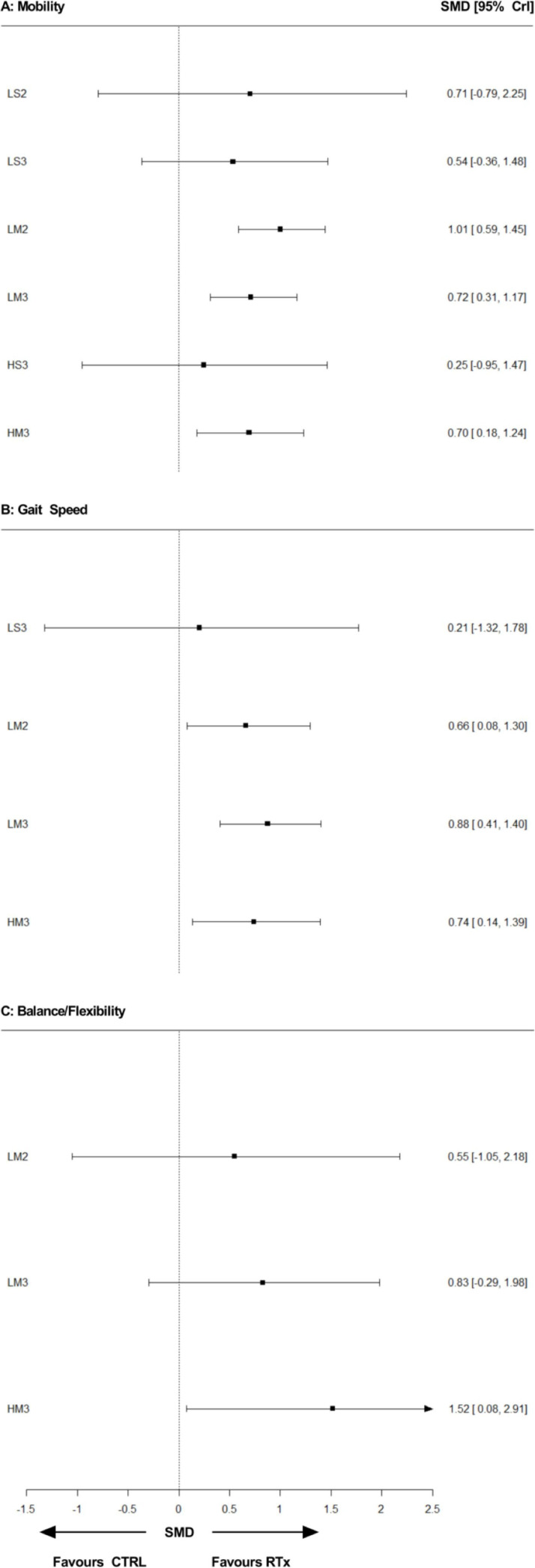
“Compared with no exercise (control), RT significantly improved muscle strength, size (hypertrophy), power, endurance, contraction velocity, gait speed, balance, and multiple physical function outcomes.”
The cited source says what the claim attributes to it.
In the citing paper
“Compared with CTRL, muscle hypertrophy was positively affected by standard RT (17,24,30,32,33,37,38,40,42–47,50,127), circuit RT (57,58), and elastic band RT (60,62).”
7 more claims about this paper
Create a free account to see every claim other papers make about this one.
Self-check
Percentages, sums and reported differences re-computed from the paper’s own numbers.
The self-check needs the paper’s full text.
Citations
Cites
RoB 2: a revised tool for assessing risk of bias in randomised trials
Sterne, J. A. C., Savović, J., Page, M. J., Elbers, R. G., Blencowe, N. S., Boutron, I., Cates, C. J., Cheng, H.-Y., Corbett, M. S., Eldridge, S. M., et al. (2019) · BMJ · doi:10.1136/bmj.l4898 · Cited by 34,787 · cited 1×
“All records underwent title/abstract screening by two independent reviewers, with discrepancies resolved by a third reviewer.”
Conducting Meta-Analyses in R with the metafor Package
Viechtbauer, W. (2010) · Journal of Statistical Software · doi:10.18637/jss.v036.i03 · Cited by 20,464
mice: Multivariate Imputation by Chained Equations in R
Buuren, S. V., & Groothuis-Oudshoorn, K. (2011) · Journal of Statistical Software · doi:10.18637/jss.v045.i03 · Cited by 13,870
Hutton, B., Salanti, G., Caldwell, D. M., Chaimani, A., Schmid, C. H., Cameron, C., Ioannidis, J. P. A., Straus, S., Thorlund, K., Jansen, J. P., et al. (2015) · Annals of Internal Medicine · doi:10.7326/m14-2385 · Cited by 8,269
How to perform a meta-analysis with R: a practical tutorial
Balduzzi, S., Rücker, G., & Schwarzer, G. (2019) · Evidence Based Mental Health · doi:10.1136/ebmental-2019-300117 · Cited by 5,827 · cited 1×
“40 44 To account for within-trial correlations in multi-arm trials (≥3 conditions), the SE in the base/reference arm was calculated as the square root of the covariance between calculated effects, 45 assuming a correlation of 0.5 between effect sizes.”
InfluentialExercise and Physical Activity for Older Adults
Chodzko-Zajko, W. J., Proctor, D. N., Fiatarone Singh, M. A., Minson, C. T., Nigg, C. R., Salem, G. J., & Skinner, J. S. (2009) · Medicine & Science in Sports & Exercise · doi:10.1249/mss.0b013e3181a0c95c · Cited by 5,153
Progression Models in Resistance Training for Healthy Adults
(2009) · Medicine & Science in Sports & Exercise · doi:10.1249/mss.0b013e3181915670 · Cited by 4,332 · cited 1×
“Any disagreement was resolved by consensus (BSC and JCM).”
Wickham, H. (2011) · WIREs Computational Statistics · doi:10.1002/wics.147 · Cited by 4,304 · cited 1×
“Figures were created with multinma , 47 metafor 60 ggplot2 , 61 and GraphPad Prism (V.9.1.0 for Windows, GraphPad Software, San Diego, California, USA, www.graphpad.com).”
InfluentialChecking consistency in mixed treatment comparison meta-analysis
Dias, S., Welton, N. J., Caldwell, D. M., & Ades, A. E. (2010) · Statistics in Medicine · doi:10.1002/sim.3767 · Cited by 2,521 · cited 1×
“51 Local inconsistency was assessed with the node-splitting method, 52 and inconsistency was considered to be detected when the Bayesian p value 0.05.”
InfluentialSelf-citationCombination of direct and indirect evidence in mixed treatment comparisons
Lu, G., & Ades, A. E. (2004) · Statistics in Medicine · doi:10.1002/sim.1875 · Cited by 2,166 · cited 1×
“30 Additionally, NMA permits the rank-ordering of all included treatments and the incorporation of data from multi-arm trials.”
Cited by
Items 101–181 of 181
Siqueira, V. A. A. A., Wilhelm, E. N., & Sebastião, É. (2024) · British Journal of Sports Medicine · doi:10.1136/bjsports-2024-109204 · Cited by 1
Pinto, M. D., Ughini, C. C., Nunes, J. P., Cadore, E. L., & Pinto, R. S. (2025) · The Journal of Strength and Conditioning Research · doi:10.1519/jsc.0000000000005045 · Cited by 1
“Although such comparisons have been published previously (13,38,40), some limitations exist.”
Molecular mechanisms of exercise-induced neuroprotection against Parkinson's disease
Lee, Y., Ju, B., Cheon, Y., Mishra, N., Fletcher, E., Koutakis, P., Javan, G. T., & Jang, Y. C. (2025) · Sports Medicine and Health Science · doi:10.1016/j.smhs.2025.05.004 · Cited by 3
Henderson, Z. J., Wang, S., Cornish, S. M., & Scribbans, T. D. (2025) · Applied Physiology, Nutrition, and Metabolism · doi:10.1139/apnm-2025-0039 · Cited by 3
Garrido-Osorio, V., Fuentes-Barría, H., Aguilera-Eguía, R. A., Roco-Videla, Á., Quidel, M., Romero-Vera, L., Leschot-Gatica, J., Sanhueza-González, S., Ñancupil‐Andrade, A. A., Pérez‐Castilla, A., et al. (2025) · Applied Sciences · doi:10.3390/app152312409 · Cited by 1
Hammert, W. B., Kataoka, R., Yamada, Y., Sallberg, R. W., Kang, A., Buckner, S., & Loenneke, J. (2025) · Sports Medicine · doi:10.1007/s40279-025-02370-8 · Cited by 1
“The effectiveness of high-load resistance training for increasing task-specific strength has been extensively documented [5, 11, 13, 35], and is likely explained by adaptations underlying the principle of training specificity.”
Attarieh, P., Nunes, J. P., Negahdar, S., Khani, S., Goli, A., Fallah, M. H., Nazarirad, H., Nazarirad, S., Mojtahedi, S., & Soori, R. (2026) · Sport Sciences for Health · doi:10.1007/s11332-025-01605-5 · Cited by 1
Lim, C., Lixandrão, M. E., Trivedi, D., Xu, Y., Prokopidis, K., Roschel, H., Phillips, S. M., Muhamadali, H., & Isanejad, M. (2026) · GeroScience · doi:10.1007/s11357-025-02074-x · Cited by 4
“For this study, only the multiset condition (4 sets) was analysed, as it is most strongly associated with hypertrophy [18].”
Self-citationZhao, C., Zhu, Y., & Zhang, Y. L. (2026) · BMC Sports Science Medicine and Rehabilitation · doi:10.1186/s13102-026-01531-0 · Cited by 3
Hammert, W. B., Moreno, E. N., Sallberg, R. W., Yamada, Y., Metcalf, E. E., Young, E. W., Kataoka, R., & Loenneke, J. P. (2026) · European Journal of Applied Physiology · doi:10.1007/s00421-026-06129-5 · Cited by 2
“Regular engagement in resistance exercise has been shown to be an effective strategy for increasing skeletal muscle size (Currier et al. 2023).”
Hinman, R. S., Lawford, B. J., Campbell, P. K., McManus, F. J., Metcalf, B., Lamb, K. E., Maly, M. R., & Bennell, K. L. (2026) · Osteoarthritis and Cartilage Open · doi:10.1016/j.ocarto.2026.100754 · Cited by 1
“However a network meta-analysis evaluating prescription parameters showed all resistance training prescriptions were better than no exercise for strength and hypertrophy in healthy adults [12], suggesting any dosage of exercise may be sufficient for muscle benefits.”
Tao, M., Yin, M., Zhong, Y., Xu, K., Zhu, C., Deng, J., Song, Y., Lyu, M., Chen, Z., Nassis, G. P., et al. (2026) · International Journal of Sports Science & Coaching · doi:10.1177/17479541261428779 · Cited by 1
“The mean difference ( M change ) and SD of the change (SD change ) were calculated using the following formulae, 32 – 34 the fi rst step involved calculating the difference in means: where M change is the raw mean difference, M post is the reported mean post-intervention, and M pre is the reported…”
de Pablos, R., Valenzuela, P. L., Martínez-Cava, A., Alejo, L. B., Revuelta, C., Sánchez-Redondo, I. R., Barranco‐Gil, D., & Pallarés, J. G. (2026) · Scandinavian Journal of Medicine and Science in Sports · doi:10.1111/sms.70294 · Cited by 1
Tons of Resistance Exercise Research, But Does it Apply to Highly Trained Athletes?
Fry, A. C., Schechter, E. G. K., Johnson, Q. R., & Cabarkapa, D. (2026) · The Journal of Strength and Conditioning Research · doi:10.1519/jsc.0000000000005603 · Cited by 1
da Silva, L. S. L., Gonçalves, L. D. S., Júnior, M. F. T., Benjamim, C. J. R., Sousa, Y. B. A., Guimarães, C. S., do Carmo, G. H., Alves, C. P. D. L., & Júnior, C. R. B. (2024) · Sport Sciences for Health · doi:10.1007/s11332-024-01170-3 · Cited by 3
Yue, Y., Shen, H., Li, H., Zhang, Y., Zhao, Y., Zhang, R., & Xue, X. (2025) · Frontiers in Public Health · doi:10.3389/fpubh.2025.1608511 · Cited by 1
Hui, S. S., Chin, E. C., Jacky Ka-Wai, C. H. A. N., Chan, P. S., James Ho-pong, W. A. N., & Wong, S. W. S. (2025) · BMC Public Health · doi:10.1186/s12889-025-24711-y · Cited by 2
Muscles in Motion: Wearables for Sports and Fitness
Upadhyay, P., Mittal, V., & Dass, R. (2025) · Smart Textiles and Wearables for Health and Fitness · doi:10.1002/9781394302895.ch12 · Cited by 1
Qi, K., Wang, Q., Xu, D., Kawczyński, A., & Chen, A. (2026) · Frontiers in Nutrition · doi:10.3389/fnut.2026.1883923 · Cited by 1
“Significant improvements in muscle mass typically depend on high-intensity strength training, whereas low-intensity aerobic exercise has limited effects on muscle mass improvement, especially in the early stages (65).”
Hanania, R., Marina, N., Cucchiaro, B., & Slee, A. (2024) · JCSM Communications · doi:10.1002/rco2.104
Research on the Localization Method of Meter Box Leakage Current Combining Data Fusion Technology
Li, L., Jun, S., & Ning, J. (2024) · IEEE International Conference on Data Science and Computer Application (ICDSCA) · doi:10.1109/icdsca63855.2024.10859606
The Importance of Exercise and Nutrition in Sarcopenia Prevention and Management
(2025) · The Singapore Family Physician · doi:10.33591/sfp.51.3.u3
Montemurro, A., Ruiz-Cárdenas, J. D., Gruet, M., & Souron, R. (2025) · European Journal of Applied Physiology · doi:10.1007/s00421-025-06010-x · Cited by 1
Arı, U., Ulupınar, S., & Özbay, S. (2025) · BMC Sports Science Medicine and Rehabilitation · doi:10.1186/s13102-025-01256-6
“Consequently, both fitness enthusiasts and healthcare professionals are dedicating substantial efforts to developing and refining training protocols that effectively promote muscle hypertrophy and fat reduction [7, 8].”
Heo, E. S., Han, S.-M., Yoon, S.-Y., & So, W.-Y. (2025) · The Asian Journal of Kinesiology · doi:10.15758/ajk.2025.27.4.95
Resistance training volume and nutrient intake on lean mass and strength in young women
Strey, B. M., Martini, G. L., Schemes, M. B., Irigoyen, A., de Souza, C. G., & Pinto, R. S. (2025) · Revista Brasileira de Atividade Física & Saúde · doi:10.12820/rbafs.30e0419 · Cited by 1
Li, Y., Ren, L., Bao, S., & Yang, D. (2025) · Frontiers in Public Health · doi:10.3389/fpubh.2025.1677284
Puppyn, N. F. T., Hofmeyr, S., Brughelli, M., & Amdi, C. H. (2025) · International Journal of Sports Science & Coaching · doi:10.1177/17479541251391967 · Cited by 3
Iglesias‐Soler, E., Fariñas, J., Rúa-Alonso, M., Rial-Vázquez, J., Nine, I., & Revuelta-Lera, B. (2025) · The Journal of Strength and Conditioning Research · doi:10.1519/jsc.0000000000005301 · Cited by 1
“When designing an RT program, several variables must be considered, such as volume, intensity, exercise type, and mode of muscle activation (11,12,14).”
Chen, J., Zhang, X., Kabachkova, A. V., Yuan, Q., & Xiao, W. (2025) · Neurological Sciences · doi:10.1007/s10072-025-08731-5
Mengl, A., & Bakodi, R. (2025) · MSK – Muskuloskelettale Physiotherapie · doi:10.1055/a-2595-4542
Warneke, K., Lohmann, L. H., Behm, D. G., Wirth, K., Keiner, M., Schiemann, S., & Wilke, J. (2024) · Figshare · doi:10.6084/m9.figshare.25649341
Hohenauer, E., Bianchi, G., Wellauer, V., Taube, W., & Clijsen, R. (2024) · Figshare · doi:10.6084/m9.figshare.26696694
Hohenauer, E., Bianchi, G., Wellauer, V., Taube, W., & Clijsen, R. (2024) · Figshare · doi:10.6084/m9.figshare.25464981
Hohenauer, E., Bianchi, G., Wellauer, V., Taube, W., & Clijsen, R. (2024) · Figshare · doi:10.6084/m9.figshare.25464882
Training Practices Among Spanish Natural Elite Bodybuilders in the Pre-Contest Phase
Baz-Valle, E., Martínez-Gómez, S., Gené‐Morales, J., Jiménez‐Martínez, P., Alix‐Fages, C., & Santos‐Concejero, J. (2026) · Sports · doi:10.3390/sports14010020
“These values are consistent with evidence suggesting that frequencies above once per week can be more effective for hypertrophy, while benefits plateau beyond two weekly sessions [22,23].”
How low can you go (and still build muscle)? Why strength training matters at any age
Janssen, T. A. H., & Lees, M. J. (2026) · The Conversation · doi:10.64628/aam.f6d9nkydk
Martins, R. J. C., Rosa, M., Padovan, R., Sá, M., Antunes, J. P., Afonso, J. M. S., & García‐Ramos, A. (2026) · International Journal of Sports Physiology and Performance · doi:10.1123/ijspp.2025-0296
Sarcopenia: Current evidence, advances in assessment, clinical implementation and future directions
Tan, L. F., Koh, F. H.-X., Lim, W. S., Wang, Y., Woo, J., Arai, H., & Merchant, R. A. (2026) · Annals of the Academy of Medicine Singapore · doi:10.47102/annals-acadmedsg.2025287 · Cited by 1
Ma, B., & Tian, X. (2026) · Proceedings of the Institution of Mechanical Engineers Part F Journal of Rail and Rapid Transit · doi:10.1177/09544097261418621
“…12,13 Less subjective arbitrariness, softening the extremes of subjective judgment Relying on experts to judge quality Bayesian network (BN) 14,15 Quantify uncertainty through probability models, with a clear structure Strong data dependency and high computational complexity Entropy weight…”
Trends in research combining resistance training and nutrition: a bibliometric analysis (2010–2024)
Bassami, M., Karimi, M., Poorhabibi, H., Sadeghi, A., & Amini, M. A. (2026) · Sport Sciences for Health · doi:10.1007/s11332-026-01653-5
“Recent studies, such as Currier et al. (2023), reinforce the centrality of hypertrophy in RT research, corroborating our findings and highlighting the field’s emphasis on optimizing training outcomes across diverse groups [1].”
GASPAR, A., Húth, B., Kopper, B., & Murlasits, Z. (2026) · The Journal of Sports Medicine and Physical Fitness · doi:10.23736/s0022-4707.25.17392-1
Pancar, Z., Ilhan, M.-J., Darendeli, M. K., Karaca, B., İkidağ, M. A., Taşdoğan, A. M., Ulema, M. S., Alkhamees, N. H., Al-Mhanna, S. B., & Batrakoulis, A. (2026) · Scientific Reports · doi:10.1038/s41598-026-40612-5
Muscle growth mediates the increases in muscle strength in untrained older women
Kassiano, W., Stavinski, N. G. D. L., Costa, B., Kunevaliki, G., Lisboa, F., Santos-Melo, V., Francsuel, J., Rodrigues, R. J., RIBEIRO, A. S., & Cyrino, E. S. (2026) · Applied Physiology, Nutrition, and Metabolism · doi:10.1139/apnm-2025-0140
Ahmed, K., Kirschmann, J. M., Herder, E. S., Memon, R. F., Shah, S. S., Kukkar, K. K., Walsh, D., Johnston, C. A., & Parikh, P. J. (2026) · Research Square · doi:10.21203/rs.3.rs-9089033/v1
Lu, J., Lei, T., Zamri, E. N., & Shaharudin, S. (2026) · BMC Sports Science Medicine and Rehabilitation · doi:10.1186/s13102-026-01656-2
“Muscle strength represents the capacity of skeletal muscle to generate force and serves as a foundational physical quality underpinning power production, movement control, and mechanical load tolerance in athletic performance [1, 2].”
Luedeka, D., Strick, K., Roche, N., & Williams, C. (2026) · Journal of Functional Morphology and Kinesiology · doi:10.3390/jfmk11020131 · Cited by 3
“While traditional resistance training approaches at heavy loads are effective to maximize strength gains [65], they may not be optimal to protect joint integrity.”
Larsen, J. B., Skou, S. T., Laursen, M. B., Bruun, N. H., Bandholm, T., Arendt‐Nielsen, L., & Madeleine, P. (2026) · Osteoarthritis and Cartilage Open · doi:10.1016/j.ocarto.2026.100786
“Future studies could consider progressive resistance training which has been shown to be effective in improving muscle strength and decrease pain [47,48].”
Li, L., Cui, S., Chow, J., Wu, Y., Yu, Q., Zhong, Y., Wang, Z., Liu, H., Ali, S. S. A., Hu, X., et al. (2026) · Journal of Evidence-Based Medicine · doi:10.1111/jebm.70128 · Cited by 1
Zhang, M., Granacher, U., Yan, R., Falch, H. N., Ramírez‐Campillo, R., Xu, K., Zhang, X., Li, J., Xu, S., Luo, Y., et al. (2026) · Journal of sport and health science/Journal of Sport and Health Science · doi:10.1016/j.jshs.2026.101141 · Cited by 1
“91 To investigate the potential influence of the turning angle on training adaptations, we performed multilevel meta-regression analyses.”
The effect of repeated-sprint training on performance outcomes in youth athletes: a meta-analysis
Yan, C., & Shu, L. (2026) · PeerJ · doi:10.7717/peerj.21074
Nieto, Á. A. V., Díaz, A. H., Millán, M. H., & Sagredo, D. (2026) · Sports Health A Multidisciplinary Approach · doi:10.1177/19417381261438760
“20 At the same time, it has been shown that, while strength can be gained equally through a wide range of repetitions in reserve (RIR before failure), muscle hypertrophy is maximized when reaching failure or near proximity to it (RIR 1-2).”
Arti, W., Sari, G. M., Qorib, M. F., Putra, H. L., -, S., Nugroho, P. S., & Abdillah, O. Z. (2026) · Balneo and PRM Research Journal · doi:10.12680/balneo.2026.1005
MoTrPAC Study Group, Brandt, A. R., Fleg, J., Goodpaster, B. H., Jaeger, B. C., Jin, C. A., Johannsen, N. M., Katz, D. H., Keshishian, H., Kohrt, W. M., et al. (2026) · bioRxiv (Cold Spring Harbor Laboratory) · doi:10.64898/2026.03.02.705347 · Cited by 3
Körner, S., & Staller, M. S. (2026) · Springer eBooks · doi:10.1007/978-3-658-49902-0_4
Kim, D., Woo, J., 이승렬, Jung, J., Lee, D., Hong, J., Yu, J., Kim, J., 남연교, & Jeon, J. (2026) · Journal of Clinical Medicine · doi:10.3390/jcm15103925
Giangregorio, L. (2026) · Journal of Cardiopulmonary Rehabilitation and Prevention · doi:10.1097/hcr.0000000000001044 · Cited by 1
Yang, J., Nagatani, T., Comfort, P., Kendall, K. L., & Haff, G. G. (2026) · Sports Medicine - Open · doi:10.1186/s40798-026-01031-y · Cited by 1
“Muscular strength is one of the most critical factors contributing to sports performance [1, 2], and resistance training is the primary approach to improve it [3, 4].”
Losciale, J. M., Trinity, J. D., Drummond, M. J., Campian, M., Battistone, M. J., Thorpe, A. V., Scaff, K., & Christensen, J. C. (2026) · Journal of Military Veteran and Family Health · doi:10.3138/jmvfh-2025-0025
Zhang, M., Wang, S., Wutichat, S., Tanphanich, T., Li, H., & Zhang, X. (2026) · Frontiers in Nutrition · doi:10.3389/fnut.2026.1879031
“…driven primarily by the RT stimulus itself, including training specificity, progressive overload, sufficient loading, and accumulated training volume, whereas meal timing may exert only a modest additional influence when total daily energy and protein intake are reasonably adequate (1, 2, 18, 45).”
Riebe, D. A., Magal, M., Kaminsky, L. A., Ross, R. R., Phillips, S. M., Alhassan, S., Arena, R. A., Behm, D. G., Camhi, S. M., Church, T. S., et al. (2026) · Medicine & Science in Sports & Exercise · doi:10.1249/mss.0000000000003997 · Cited by 5
Self-citationSugano, T., Nomura, T., Yoshie, Y., Fujita, K., Hayashi, K., & Hayashi, S. (2026) · European Journal of Applied Physiology · doi:10.1007/s00421-026-06302-w
“Recent systematic reviews and network meta-analyses, along with the updated ACSM guidelines, report high-load (HL) training (> 80% one-repetition maximum [1RM]) as the most effec - tive strategy for maximizing strength (Currier et al. 2023, 2026 ).”
Omar Váldes, T., Chalchat, É., Rehbein, C. O., Nuñez, O., García-Vicencio, S., Martin, V., Ramírez‐Campillo, R., & Peñailillo, L. (2026) · Sports Medicine · doi:10.1007/s40279-026-02476-7
“…resistance training is an effective method to increase force production [3, 4] during voluntary movements involved in analytic (i.e. isometric and dynamic isolated contractions) or functional (i.e. lifting or moving a box with both arms) tasks [5] in healthy [6] and clinical populations [7, 8].”
Brummer, J., Herbolsheimer, F., Fyfe, J. J., & Steindorf, K. (2026) · Frontiers in Public Health · doi:10.3389/fpubh.2026.1872337 · Cited by 1
Zhang, Z., Tomicka, M., Guo, X., Li, M., & Aschenbrenner, P. (2026) · Frontiers in Sports and Active Living · doi:10.3389/fspor.2026.1841049
“Resistance-training prescription can influence strength and hypertrophy adaptations, although responses depend on loading strategy, task demands, and athlete status (11, 12).”
Ulas, S. T., Liu, F., Joseph, G. B., Majumdar, S., Hoyer, G., Nevitt, M. C., McCulloch, C. E., Lane, N. E., Link, T. M., & Gersing, A. S. (2026) · Osteoarthritis and Cartilage Open · doi:10.1016/j.ocarto.2026.100858
“Consequently, interventions aimed at preserving or increasing muscle volume, such as resistance training and physical activity programs, may be beneficial, consistent with current recommendations for KOA management [35].”
Methods and Systems of Resistance Training: A Narrative Review Based on Contemporary Recommendations
Rios, M. J., Ferreira, F. A., Chapman, D. W., Fernandes, R. J., & Reis, V. M. (2026) · Sports · doi:10.3390/sports14080348
Wang, Y., Lin, R., Wang, M., Zhang, X., Zhang, S., Zhou, K., & Shuai, Z. (2026) · Complementary Therapies in Medicine · doi:10.1016/j.ctim.2026.103423
Analytical approaches to account for muscle size when evaluating strength
Chatlaong, M. A., Bentley, J. P., Wohlgemuth, K. J., Dankel, S. J., Loenneke, J. P., & Jessee, M. B. (2026) · European Journal of Applied Physiology · doi:10.1007/s00421-026-06376-6
Devorski, L., Skibski, A., Brignola, G., & VanWert, E. (2026) · Journal of Bodywork and Movement Therapies · doi:10.1016/j.jbmt.2026.08.028
Yuan, S., Liu, J., Lin, L., Liu, Y., Xu, S., & Qiu, L. (2026) · Biomolecules · doi:10.3390/biom16091275
Self-citationMorouço, P. (2026) · Journal of Functional Morphology and Kinesiology · doi:10.3390/jfmk11030368
“Resistance training is prescribed through variables that are readily observable and controllable, including external load, repetition number, movement velocity, range of motion, exercise selection, rest intervals, and training frequency [1–3].”
Komm, Y., Zeiler, L., Held, S., Comfort, P., Faigenbaum, A. D., Geisler, S., & Augste, C. (2026) · Sports Medicine · doi:10.1007/s40279-026-02499-0
High-load resistance training and FSHD: harmful mixture or a silver bullet combination?
Meinhold, M., & Hornberger, T. A. (2026) · Journal of Neurology · doi:10.1007/s00415-026-14148-7
Santiago, M. P., Miranda, R. C. B., Mercedes, F. J. S., Gomez, R. M., & Rosabales, N. R. (2026) · Cureus · doi:10.7759/cureus.117480
Can Resistance Training-Induced Skeletal Muscle Growth Improve Local Muscular Endurance?
Chatlaong, M. A., Hammert, W. B., Wohlgemuth, K. J., Loenneke, J. P., & Jessee, M. B. (2026) · Sports Medicine · doi:10.1007/s40279-026-02539-9
Longman, D. P., Debevec, T., & Bourgois, J. (2026) · European Journal of Applied Physiology · doi:10.1007/s00421-026-06457-6
Zhang, C., Wang, Y., & Huang, W. (2026) · Frontiers in Nutrition · doi:10.3389/fnut.2026.1946052
Vojdanifar, N., Safi, S., & Forushani, A. R. (2026) · Archives of Razi Institute · doi:10.66224/ari.81.3.4073
Madeira, R., Esteves, D., Neiva, H. P., Pinto, N., Nunes, C., Maia, A., Vercelli, A., & Pato, M. V. (2026) · Healthcare · doi:10.3390/healthcare14203539
Trindade, L. K. S., de Vasconcelos, L. C. C. L., & de Fontes, P. A. D. S. (2026) · South American Sciences · doi:10.63330/sasciencesv6n2-262
Metadata
- Authors
- Currier, B. S., Mcleod, J. C., Banfield, L., Beyene, J., Welton, N. J., D'Souza, A. C., Keogh, J. A. J., Lin, L., Coletta, G., Yang, A., Colenso-Semple, L., Lau, K. J., Verboom, A., & Phillips, S. M.
- Affiliations
- McMaster University (CA)
- University of Bristol (GB)
- Corresponding author
- Phillips, Stuart M
- ORCID
- Venue
- British Journal of Sports Medicine
- Publisher
- BMJ
- Published
- 2023-07-06
- Volume
- 57
- Issue
- 18
- Pages
- 1211-1220
- ISSN
- 0306-3674 (ISSN-L)
- 1473-0480
- PMC
- PMC10579494
- OpenAlex
- W4383337711
- Semantic Scholar
- a0b93fc7fb7bfe615dbadc02c40116c09c908405
- Cited by
- 179
- References
- 82
- Citations by year
- 2026: 72 · 2025: 59 · 2024: 42 · 2023: 6
- FWCI
- 9.89
- Type
- journal article
- Language
- en
- Open access
- hybrid
- doi.org
- Licence
- Locations
- British Journal of Sports Medicine (publishedVersion, cc-by-nc)
- PubMed Central (publishedVersion, cc-by-nc)
- PubMed (publishedVersion)
- Bristol Research (University of Bristol) (publishedVersion, cc-by-nc)
- HighWire Press Open Archive (submittedVersion)
- Explore Bristol Research (submittedVersion, cc-by-nc)
- Funders
- Canada Research Chairs
- NHS Foundation Trust
- Natural Sciences and Engineering Research Council (RGPIN-2020-06346)
- NIHR Bristol Biomedical Research Centre
- Topics
- Health Sciences › Medicine › Orthopedics and Sports Medicine › Sports Performance and Training
- Health Sciences › Medicine › Physiology (medical) › Cardiovascular and exercise physiology
- Health Sciences › Nursing › Nutrition and Dietetics › Muscle metabolism and nutrition
- Keywords
- resistance training prescription, muscle strength, muscle hypertrophy, training load, sets, exercise frequency, healthy adults
- MeSH terms
- Network Meta-Analysis, Adult, Bayes Theorem, Female, Humans, Hypertrophy, Muscle, Skeletal, Muscle Strength, Resistance Training, Prescriptions
About these checks
Registry, retraction, Cites and statistics results are computed, not judged, with one exception: a printed reference that no index lists is read once by a model before it counts as a citation error. Claims are extracted by a model and kept only when their quote appears verbatim in the text; each cited source is then checked, with a model’s help, for whether it says what the claim relies on. Those verdicts can be wrong — read the claim’s quote and the cited source before relying on one.
Statistics and arithmetic are recomputed, not judged.
Confidence bands are shown only for fields calibrated on our annotated test set. None is calibrated yet, so no band is shown.
What counts as a claim ›How we measure confidence ›How we check this ›
Are you an author, or do you see a problem with this page? Request a review
Data sources
Bibliographic data: Semantic Scholar, OpenAlex, Crossref.
Contains information from the Semantic Scholar Academic Graph Datasets, made available under the ODC Attribution License (ODC-BY 1.0).
Semantic Scholar’s data is described in: Kinney, R., et al. (2023). The Semantic Scholar Open Data Platform. arXiv:2301.10140.
