

Resistance training prescription for muscle strength and hypertrophy in healthy adults: a systematic review and Bayesian network meta-analysis.
Open accessThe DOI matches its Crossref record; 82 of the 86 references it cites were found in a registry or an index, and 2 are not checked yet.
Abstract
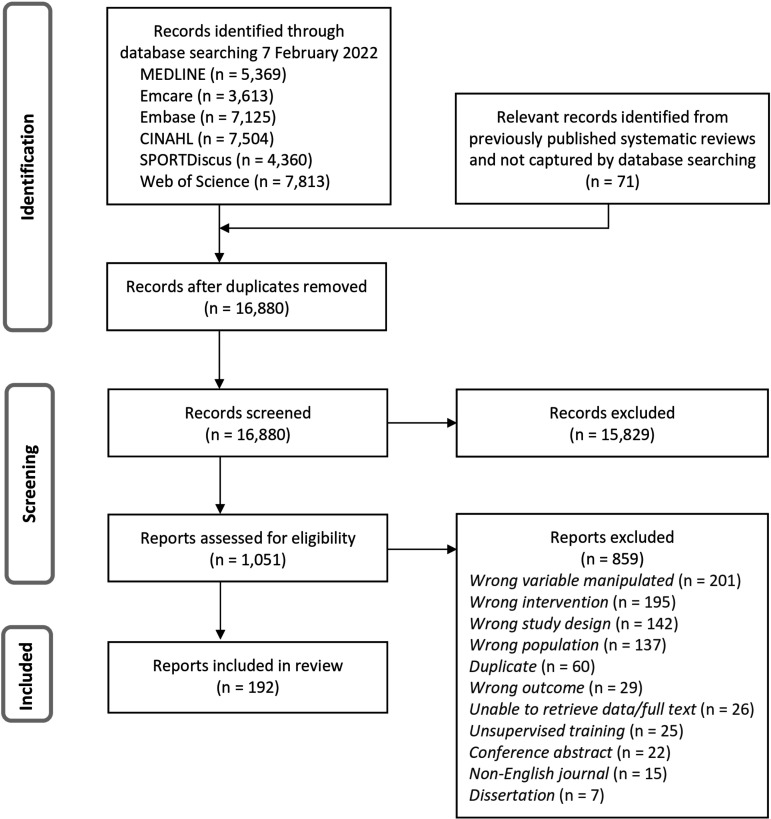
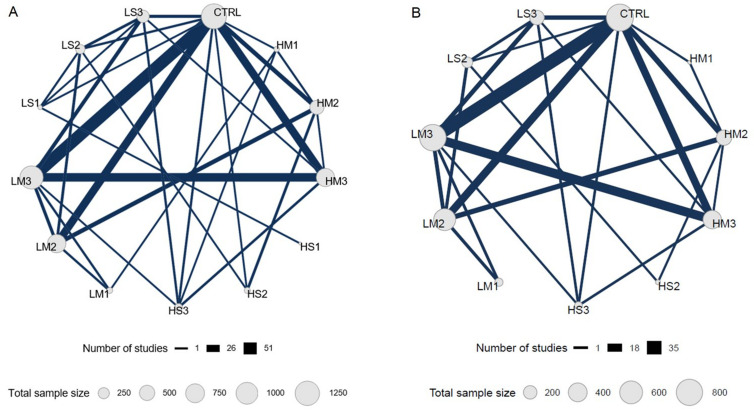
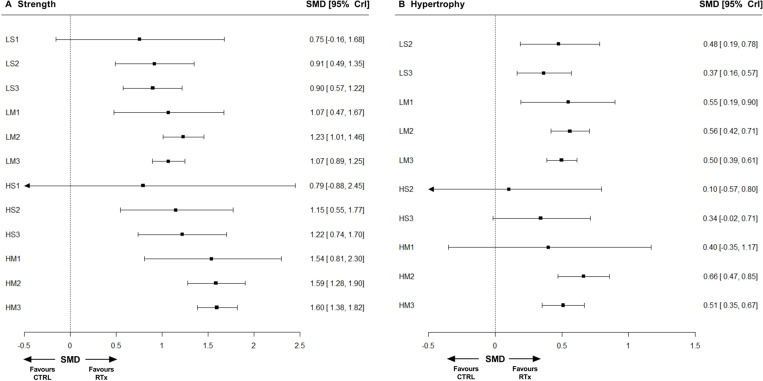
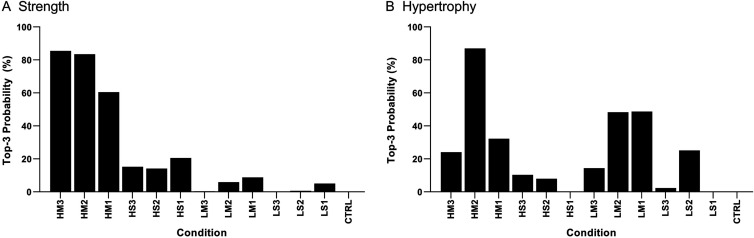
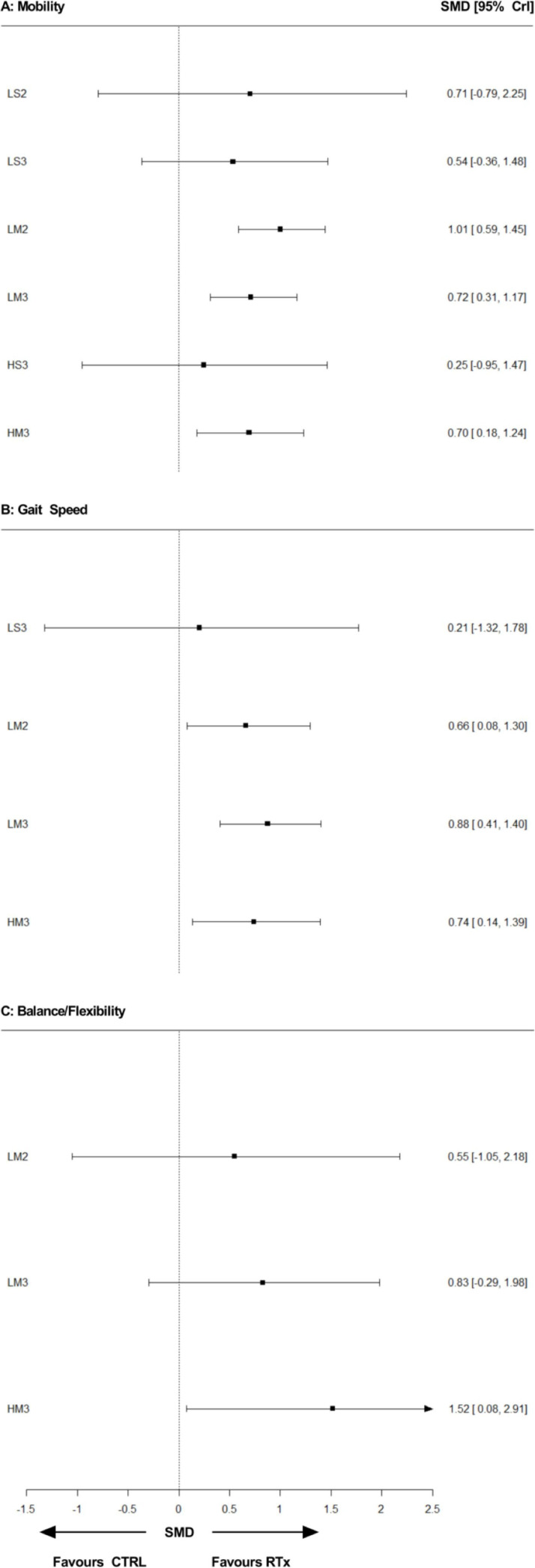
Objective: To determine how distinct combinations of resistance training prescription (RTx) variables (load, sets and frequency) affect muscle strength and hypertrophy. Data sources: MEDLINE, Embase, Emcare, SPORTDiscus, CINAHL, and Web of Science were searched until February 2022. Eligibility criteria: Randomised trials that included healthy adults, compared at least 2 predefined conditions (non-exercise control (CTRL) and 12 RTx, differentiated by load, sets and/or weekly frequency), and reported muscle strength and/or hypertrophy were included. Analyses: Systematic review and Bayesian network meta-analysis methodology was used to compare RTxs and CTRL. Surface under the cumulative ranking curve values were used to rank conditions. Confidence was assessed with threshold analysis. Results: The strength network included 178 studies (n=5097; women=45%). The hypertrophy network included 119 studies (n=3364; women=47%). All RTxs were superior to CTRL for muscle strength and hypertrophy. Higher-load (>80% of single repetition maximum) prescriptions maximised strength gains, and all prescriptions comparably promoted muscle hypertrophy. While the calculated effects of many prescriptions were similar, higher-load, multiset, thrice-weekly training (standardised mean difference (95% credible interval); 1.60 (1.38 to 1.82) vs CTRL) was the highest-ranked RTx for strength, and higher-load, multiset, twice-weekly training (0.66 (0.47 to 0.85) vs CTRL) was the highest-ranked RTx for hypertrophy. Threshold analysis demonstrated these results were extremely robust. Conclusion: All RTx promoted strength and hypertrophy compared with no exercise. The highest-ranked prescriptions for strength involved higher loads, whereas the highest-ranked prescriptions for hypertrophy included multiple sets. PROSPERO registration number: CRD42021259663 and CRD42021258902.
Overview
The claims and statistics of this paper haven’t been checked yet.
Free: it reads the open-access text and checks the first 5 claims that cite a source we can check. Create a free account to check every claim.
Integrity signals
Registry
Cites
Statistics
Figures
Verification
Claims the paper makes
The claims and statistics of this paper haven’t been checked yet.
Free: it reads the open-access text and checks the first 5 claims that cite a source we can check. Create a free account to check every claim.
Claims other papers make about this one
Each is checked against this paper’s own text: does it say what the citing paper says it does?
The source backs part of the claim, not all of it — or backs it for a different population, condition or comparison.
In the citing paper
“Clearly, one set is superior to zero sets (CTRL), and two sets are superior to one set (17,24,88–93,128,131–133), but the exact number of sets required to optimize adaptations cannot be ascertained.”
From American College of Sports Medicine Position Stand. Resistance Training Prescription for Muscle Function, Hypertrophy, and Physical Performance in Healthy Adults: An Overview of Reviews (2026) · cites this paper as [17]
Experimental — accuracy not yet measuredThe source backs part of the claim, not all of it — or backs it for a different population, condition or comparison.
In the citing paper
“Load (often used synonymously with intensity) has repeatedly been shown to impact strength more than other RT adaptations (17,83,184).”
From American College of Sports Medicine Position Stand. Resistance Training Prescription for Muscle Function, Hypertrophy, and Physical Performance in Healthy Adults: An Overview of Reviews (2026) · cites this paper as [17]
Experimental — accuracy not yet measuredThe source backs part of the claim, not all of it — or backs it for a different population, condition or comparison.
In the citing paper
“Research into resistance training variables shows that load, volume, frequency, and rest intervals, influence the amount of skeletal muscle hypertrophy induced [33–35].”
From Effects of Skeletal Muscle Hypertrophy on Fat Mass and Glucose Homeostasis in Humans and Animals: A Narrative Review with Systematic Literature Search (2025) · cites this paper as [35]
Experimental — accuracy not yet measuredThe cited source says what the claim attributes to it.
In the citing paper
“Compared with no exercise (control), RT significantly improved muscle strength, size (hypertrophy), power, endurance, contraction velocity, gait speed, balance, and multiple physical function outcomes.”
The cited source says what the claim attributes to it.
In the citing paper
“Compared with CTRL, muscle hypertrophy was positively affected by standard RT (17,24,30,32,33,37,38,40,42–47,50,127), circuit RT (57,58), and elastic band RT (60,62).”
7 more claims about this paper
Create a free account to see every claim other papers make about this one.
Self-check
Percentages, sums and reported differences re-computed from the paper’s own numbers.
The self-check needs the paper’s full text.
Citations
Cites
RoB 2: a revised tool for assessing risk of bias in randomised trials
Sterne, J. A. C., Savović, J., Page, M. J., Elbers, R. G., Blencowe, N. S., Boutron, I., Cates, C. J., Cheng, H.-Y., Corbett, M. S., Eldridge, S. M., et al. (2019) · BMJ · doi:10.1136/bmj.l4898 · Cited by 34,787 · cited 1×
“All records underwent title/abstract screening by two independent reviewers, with discrepancies resolved by a third reviewer.”
Conducting Meta-Analyses in R with the metafor Package
Viechtbauer, W. (2010) · Journal of Statistical Software · doi:10.18637/jss.v036.i03 · Cited by 20,464
mice: Multivariate Imputation by Chained Equations in R
Buuren, S. V., & Groothuis-Oudshoorn, K. (2011) · Journal of Statistical Software · doi:10.18637/jss.v045.i03 · Cited by 13,870
Hutton, B., Salanti, G., Caldwell, D. M., Chaimani, A., Schmid, C. H., Cameron, C., Ioannidis, J. P. A., Straus, S., Thorlund, K., Jansen, J. P., et al. (2015) · Annals of Internal Medicine · doi:10.7326/m14-2385 · Cited by 8,269
How to perform a meta-analysis with R: a practical tutorial
Balduzzi, S., Rücker, G., & Schwarzer, G. (2019) · Evidence Based Mental Health · doi:10.1136/ebmental-2019-300117 · Cited by 5,827 · cited 1×
“40 44 To account for within-trial correlations in multi-arm trials (≥3 conditions), the SE in the base/reference arm was calculated as the square root of the covariance between calculated effects, 45 assuming a correlation of 0.5 between effect sizes.”
InfluentialExercise and Physical Activity for Older Adults
Chodzko-Zajko, W. J., Proctor, D. N., Fiatarone Singh, M. A., Minson, C. T., Nigg, C. R., Salem, G. J., & Skinner, J. S. (2009) · Medicine & Science in Sports & Exercise · doi:10.1249/mss.0b013e3181a0c95c · Cited by 5,153
Progression Models in Resistance Training for Healthy Adults
(2009) · Medicine & Science in Sports & Exercise · doi:10.1249/mss.0b013e3181915670 · Cited by 4,332 · cited 1×
“Any disagreement was resolved by consensus (BSC and JCM).”
Wickham, H. (2011) · WIREs Computational Statistics · doi:10.1002/wics.147 · Cited by 4,304 · cited 1×
“Figures were created with multinma , 47 metafor 60 ggplot2 , 61 and GraphPad Prism (V.9.1.0 for Windows, GraphPad Software, San Diego, California, USA, www.graphpad.com).”
InfluentialChecking consistency in mixed treatment comparison meta-analysis
Dias, S., Welton, N. J., Caldwell, D. M., & Ades, A. E. (2010) · Statistics in Medicine · doi:10.1002/sim.3767 · Cited by 2,521 · cited 1×
“51 Local inconsistency was assessed with the node-splitting method, 52 and inconsistency was considered to be detected when the Bayesian p value 0.05.”
InfluentialSelf-citationCombination of direct and indirect evidence in mixed treatment comparisons
Lu, G., & Ades, A. E. (2004) · Statistics in Medicine · doi:10.1002/sim.1875 · Cited by 2,166 · cited 1×
“30 Additionally, NMA permits the rank-ordering of all included treatments and the incorporation of data from multi-arm trials.”
Cited by
Neuromuscular adaptations to resistance training in elite versus recreational athletes
Aslam, S., Habyarimana, J. D. D., & Bin, S. Y. (2025) · Frontiers in Physiology · doi:10.3389/fphys.2025.1598149 · Cited by 122
CURRIER, B. S., D’SOUZA, A. C., SINGH, M. A. F., LOWISZ, C. V., RAWSON, E. S., SCHOENFELD, B. J., SMITH-RYAN, A. E., STEEN, J. P., THOMAS, G. A., TRIPLETT, N. T., et al. (2026) · Medicine & Science in Sports & Exercise · doi:10.1249/mss.0000000000003897 · Cited by 105
“Compared with CTRL, multicomponent function was impacted by standard RT (17,24,42,45,159), elastic band RT (60,61), and home-based RT (64).”
InfluentialSelf-citationBiomarkers of aging: from molecules and surrogates to physiology and function
Furrer, R., & Handschin, C. (2025) · Physiological Reviews · doi:10.1152/physrev.00045.2024 · Cited by 74
Marzuca-Nassr, G. N., Alegría-Molina, A., SanMartín-Calísto, Y., Artigas-Arias, M., Huard, N., SAPUNAR, J., Salazar, L. A., Verdijk, L. B., & van Loon, L. J. C. (2023) · International Journal of Sport Nutrition and Exercise Metabolism · doi:10.1123/ijsnem.2023-0087 · Cited by 75
Thomas, A. C. Q., Stead, C. A., Burniston, J. G., & Phillips, S. M. (2024) · Free Radical Biology and Medicine · doi:10.1016/j.freeradbiomed.2024.08.010 · Cited by 62
Self-citationMcKendry, J., Coletta, G., Nunes, E. A., Lim, C., & Phillips, S. M. (2024) · Experimental Physiology · doi:10.1113/ep091937 · Cited by 52
“Low(er)-load RT activates MPS, stimulates hypertrophy similarly to higher-load RT (Currier et al., 2023) and brings about adaptations typically obtained in aerobic exercise (Lim et al., 2019).”
BackgroundSelf-citationLecce, E., Amoruso, P., Felici, F., & Bazzucchi, I. (2025) · The Journal of Physiology · doi:10.1113/jp289716 · Cited by 63
de Beukelaar, T. T., & Mantini, D. (2023) · Bioengineering · doi:10.3390/bioengineering10091085 · Cited by 58
“This can be achieved by mediating different training variables based on the frequency, intensity, type, and time (FITT) principles [11].”
BackgroundChen, J.-W., Du, W.-Q., & Zhu, K. (2024) · European Child & Adolescent Psychiatry · doi:10.1007/s00787-024-02507-6 · Cited by 37
Warneke, K., Lohmann, L. H., Behm, D. G., WIRTH, K. J., Keiner, M., Schiemann, S., & Wilke, J. (2024) · Sports Medicine - Open · doi:10.1186/s40798-024-00706-8 · Cited by 34
“While Currier et al. [117] showed moderate to large magnitude maximal strength and muscle size increases of ES = 0.51 and ES = 1.60, respectively, when using resistance training, the present study’s small magnitude effect sizes of ES = 0.28 and ES = 0.45, respectively, showed that even long…”
ResultInfluentialRadaelli, R., Rech, A., Molinari, T., Markarian, A. M., Πετροπούλου, Μ., Granacher, U., Hortobágyi, T., & López, P. (2024) · Sports Medicine · doi:10.1007/s40279-024-02123-z · Cited by 46
“In contrast, our results concur and extend the findings from our previous network meta-analysis [217] and the study by Cur-rier et al. [218].”
From molecular to physical function: The aging trajectory
Janssen, T., Lowisz, C. V., & Phillips, S. M. (2024) · Current Research in Physiology · doi:10.1016/j.crphys.2024.100138 · Cited by 35
Self-citationZaki, S., Alam, M. F., Sharma, S., El‐Ashker, S., Ahsan, M., & Nuhmani, S. (2024) · Journal of Clinical Medicine · doi:10.3390/jcm13133910 · Cited by 36
“Resistance training, aimed at muscle strengthening and hypertrophy, has been demonstrated to improve insulin action and metabolic regulation through muscle growth and increased muscle capacity for glucose uptake [8,9].”
BackgroundSepúlveda-Lara, A., Sepúlveda, P., & Marzuca-Nassr, G. N. (2024) · International Journal of Molecular Sciences · doi:10.3390/ijms25137084 · Cited by 25
“Based on the current evidence, the most advisable exercise prescription is a workload of 70–80% of one-repetition maximum (1RM), with 8–12 repetitions, 3–5 sets per muscle group, rest for at least 2 min between sets, and training 2–3 times per week on non-consecutive days [120,121].”
BackgroundBlood flow restriction augments the cross-education effect of isometric handgrip training
Wong, V. H. Y., Spitz, R. W., Song, J. S., Yamada, Y., Kataoka, R., Hammert, W. B., Kang, A., Seffrin, A., Bell, Z. W., & Loenneke, J. P. (2024) · European Journal of Applied Physiology · doi:10.1007/s00421-023-05386-y · Cited by 30
“However, in line with the literature, maximal strength in the trained limb was increased the most when training was completed with higher loads/intensities (Lixandrão et al. 2018; Currier et al. 2023).”
Chew, S. T. H., Nguyen, H. T. T., Joshi, S., Kamaruzzaman, S. B., Landi, F., Manuel, M. V., Moral, P. G., Muangpaisan, W., Nangia, V., Setiati, S., et al. (2023) · Archives of Gerontology and Geriatrics · doi:10.1016/j.archger.2023.105275 · Cited by 22
Pelland, J. C., Remmert, J. F., Robinson, Z. P., Hinson, S. R., & Zourdos, M. C. (2026) · Sports Medicine · doi:10.1007/s40279-025-02344-w · Cited by 18
“These results align with previous meta-analyses (19,111) and are most comparable to a 2019 meta-analysis by Schoenfeld et al. (14) reporting no significant effect of frequency in volume-equated studies utilizing direct hypertrophy measures (ES = 0.07 [95% CI: -0.08, 0.21]).”
InfluentialHavers, T., Held, S., Schönfelder, M., Geisler, S., & Wackerhage, H. (2025) · Sports Medicine · doi:10.1007/s40279-025-02263-w · Cited by 19
“Research into resistance training variables shows that load, volume, frequency, and rest intervals, influence the amount of skeletal muscle hypertrophy induced [33–35].”
Lohmann, L. H., Zech, A., Plöschberger, G., Oraže, M., Jochum, D., & Warneke, K. (2024) · Frontiers in Medicine · doi:10.3389/fmed.2024.1451180 · Cited by 21
The Importance of Recovery in Resistance Training Microcycle Construction
Sousa, C. A., Zourdos, M. C., Storey, A. G., & Helms, E. R. (2024) · Journal of Human Kinetics · doi:10.5114/jhk/186659 · Cited by 27
“Training volume also plays a significant role in training outcomes, particularly for hypertrophy (Currier et al., 2023); however, more may not always be better and may come at a cost.”
BackgroundRobinson, Z. P., Helms, E. R., Trexler, E. T., Steele, J., Hall, M. E., Huang, C.-J., & Zourdos, M. C. (2024) · Sports Medicine · doi:10.1007/s40279-024-02050-z · Cited by 24
“It is well established that, at the group level, resistance training (RT) leads to robust increases in mean muscle size and strength [1].”
Chen, X., Li, Z., & Zhang, J. (2025) · International Journal of Surgery · doi:10.1097/js9.0000000000002323 · Cited by 23
“The main objective is to induce muscle contraction through repetitive resistance against external forces (such as weights, resistance bands, etc.), resulting in enhanced muscle growth, strength, and functionality [ 41 ] .”
Keogh, J. A. J., Keng, I., Dhillon, D., Bourgeault‐Gagnon, Y., Simunovic, N., & Ayeni, O. R. (2025) · Journal of Orthopaedic and Sports Physical Therapy · doi:10.2519/jospt.2025.13075 · Cited by 19
Self-citationNoguchi, K. S., Moncion, K., Wiley, E., Morgan, A. R., Huynh, E., Balbim, G. M., Elliott, B., Harris-Blake, C., Krysa, B., Koetsier, B., et al. (2024) · British Journal of Sports Medicine · doi:10.1136/bjsports-2024-108476 · Cited by 26
“…ongoing uncertainty about the evidence on ST. 15 This is surprising, considering the known benefits of ST on mobility and neuro-plasticity in older adults 16 and other neurological populations, 17 as well as the established associations between muscle strength and physical function after stroke.”
Self-citationLoad-induced human skeletal muscle hypertrophy: Mechanisms, myths, and misconceptions
Every, D. W. V., Lees, M. J., Wilson, B., Nippard, J., & Phillips, S. M. (2025) · Journal of sport and health science/Journal of Sport and Health Science · doi:10.1016/j.jshs.2025.101104 · Cited by 30
“141 RET programming should emphasize a personalized, goal-dependent approach with relatively high effort, aiming to achieve a proximity to failure (i.e., » 2 reps in reserve), suffi-cient volume, and progressive overload (i.e., an increase in load, reps, and volume) to maintain a sufficient…”
Self-citationSterczala, A. J., Rodriguez‐Ortiz, N., Feigel, E. D., Krajewski, K. T., Martin, B. J., Sekel, N. M., Lovalekar, M. T., Kargl, C. K., Koltun, K. J., van Eck, C. F., et al. (2024) · Physiological Reports · doi:10.14814/phy2.15953 · Cited by 13
“The muscle fiber and whole muscle hypertrophy may have been limited by the relatively low volume of the training program (Currier et al., 2023); however, optimizing hypertrophy must be weighed against the risks of overuse injury when programming the volume included in a training program intended…”
BackgroundMcleod, J. C., Lim, C., Stokes, T., Sharif, J.-A., Zeynalli, V., Wiens, L., D’Souza, A. C., Colenso‐Semple, L. M., McKendry, J., Morton, R. W., et al. (2024) · NAR Molecular Medicine · doi:10.1093/narmme/ugae016 · Cited by 12
Self-citationZhou, R. J., Chen, J., Tang, Y., Wei, C., Yu, P., Ding, X., Zhu, L., Yao, J., Ouyang, Z., Qiao, J., et al. (2025) · Genome Medicine · doi:10.1186/s13073-025-01434-8 · Cited by 14
Prevett, C., & Moore, R. (2024) · Journal of Pelvic Obstetric and Gynaecological Physiotherapy · doi:10.62399/yxrs8863 · Cited by 12
Zaki, S., Alam, M. F., Sharma, S., Naqvi, I. H., & Nuhmani, S. (2024) · Clinical Epidemiology and Global Health · doi:10.1016/j.cegh.2024.101747 · Cited by 8
Ivanic, B., Cronström, A., Johansson, K. M., & Ageberg, E. (2024) · British Journal of Sports Medicine · doi:10.1136/bjsports-2024-108260 · Cited by 11
Lawford, B. J., Hinman, R. S., Spiers, L., Kimp, A. J., Dell’Isola, A., Harmer, A. R., van der Esch, M., Hall, M., & Bennell, K. L. (2024) · Arthritis Care & Research · doi:10.1002/acr.25451 · Cited by 11
“…of 178 trials in healthy adults found that all types of resistance exercise prescription (in terms of loads, sets, and frequency) were better than no exercise for improving muscle strength and hypertrophy, 144 suggesting any dosage of resistance exercise may be suf fi cient for muscle bene fi ts.”
Narvaez, G. A., Apaflo, J. N., Wagler, A. E., McAinch, A. J., & Bajpeyi, S. (2025) · European Journal of Applied Physiology · doi:10.1007/s00421-024-05700-2 · Cited by 10
“…been shown to improve body composition (Can-dow and Burke 2007; Fyfe et al. 2022; Grgic et al. 2022), increase muscular strength (Fyfe et al. 2022; Currier et al. 2023; Grgic et al. 2022) and is recommended for all ages (Grgic et al. 2020; Stricker et al. 2020; Fragala et al. 2019; McQuilliam et…”
Guo, X., Zhou, Y., Li, X., & Mu, J. (2025) · BMC Musculoskeletal Disorders · doi:10.1186/s12891-025-08384-7 · Cited by 9
“Conversely, utilizing higher loads with a reduced number of repetitions is more effective in augmenting muscular strength in health people [47].”
Lees, M. J., Mcleod, J. C., Morton, R. W., Currier, B. S., Fliss, M. D., McKellar, S. R., Sidhu, R., Stansfield, B. N., Webb, E. K., McGlory, C., et al. (2025) · The Journal of Physiology · doi:10.1113/jp289684 · Cited by 10
Self-citationOsborne, J. W. A., Menz, H. B., Whittaker, G. A., & Landorf, K. B. (2023) · Journal of Foot and Ankle Research · doi:10.1186/s13047-023-00668-2 · Cited by 8
“However, a recent network meta-analysis suggests higher-load (> 80% of single repetition maximum) prescriptions maximise strength gains, and all prescriptions included in the analysis promote muscle hypertrophy [34].”
BackgroundKnowledge of gym goers on myths and truths in resistance training
Unger, A., Mosgan, C., Wolte, C., Pettauer, S., & Wilke, J. (2025) · Scientific Reports · doi:10.1038/s41598-025-87485-8 · Cited by 10
Franke, R. D. A., Rodrigues, R., López, P., Nakamura, F. Y., & Baroni, B. M. (2025) · The Journal of Strength and Conditioning Research · doi:10.1519/jsc.0000000000005184 · Cited by 8
What is resistance exercise? A review of current uses and potential ways forward
Lohmann, L. H., Afonso, J. R., Behm, D. G., Siegel, S., Keiner, M., WIRTH, K. J., Blazevich, A. J., Helms, E. R., Spence, A., & Warneke, K. (2026) · European Journal of Applied Physiology · doi:10.1007/s00421-026-06148-2 · Cited by 9
“This was already discussed in the 1970s by Norman and Komi who acknowledged that within a stretch-shortening cycle (SSC) “[…] a against external weight” (Currier et al. 2023, p. 1) or “mus-cle contraction against external resistance” (Mcleod et al. 2024, p. 47).”
Xu, M., & Liu, X. (2026) · Biomolecules · doi:10.3390/biom16030406 · Cited by 6
“We further discuss emerging concepts such as ribosome heterogeneity and ribosome–mitochondria crosstalk, and highlight translational implications for exercise, nutritional, and pharmacological strategies relevant to muscle-wasting disorders [12,13,40–44].”
Physical Fitness, Biological Aging, and Healthy Longevity
Chen, Z., Collings, P. J., Wang, M., Shi, Q., Luo, S., Yeung, S. L. A., Brage, S., Gonzales, T. I., & Kim, Y. (2025) · Journal of the American Medical Directors Association · doi:10.1016/j.jamda.2025.105792 · Cited by 7
Soendenbroe, C., Andersen, J. L., Heisterberg, M. F., Kjær, M., & Mackey, A. L. (2026) · PLoS ONE · doi:10.1371/journal.pone.0338775 · Cited by 8
“Heavy resistance exercise training (HReT) is widely recognized as the most effective intervention for increasing muscle strength and muscle mass (i.e., hypertrophy) [1].”
Chen, S., Du, L., Gao, Y., Li, H., Zheng, Y., Xie, L., & Zhong, Z. (2024) · Frontiers in Public Health · doi:10.3389/fpubh.2024.1441790 · Cited by 7
Cheng, Y., Yi, Y., Bo, S., Jun, M., & Ma, J. (2025) · Frontiers in Physiology · doi:10.3389/fphys.2025.1589200 · Cited by 7
Effect weight training on muscular hypertrophy: a systematic review
Ihsan, F., Nasrulloh, A., Nugroho, S., & Yuniana, R. (2023) · Pedagogy of Physical Culture and Sports · doi:10.15561/26649837.2023.0601 · Cited by 11
“However, Currier et al. [35] found that women tend to experience more moderate muscle hypertrophy even with intense weight training.”
BackgroundMinimum Intensity of Daily Six Eccentric Contractions to Increase Muscle Strength and Size
Yoshida, R., Murakami, Y., Kasahara, K., Sato, S., Nosaka, K., & Nakamura, M. (2024) · Scandinavian Journal of Medicine and Science in Sports · doi:10.1111/sms.14683 · Cited by 6
Apples to apples? Discordant definitions still hinder evidence‐based treatments for sarcopenia
Coletta, G., Currier, B. S., & Phillips, S. M. (2023) · Journal of Cachexia Sarcopenia and Muscle · doi:10.1002/jcsm.13339 · Cited by 6
“Two alternative solutions to the sarcopenia de fi nition dilemma are including all adults over a prede fi ned biological age 11 or employing and specifying an existing sarcopenia framework.”
MethodSelf-citationTan, R., Lincoln, I. G., Paniagua, K. K., Foster, J. M., Wideen, L. E., Gerardo, R. T., Ornelas, N. J., Tchaprazian, I., Li, J., Egiazarian, M., et al. (2025) · European Journal of Applied Physiology · doi:10.1007/s00421-025-05779-1 · Cited by 9
“Resistance exercise is foundational to training programs in numerous sports to increase strength and power (Currier et al. 2023).”
Amdi, C. H., & King, A. (2025) · Journal of Sports Sciences · doi:10.1080/02640414.2025.2535198 · Cited by 7
“Resistance training (RT) induces robust strength, power and hypertrophy adaptations (Currier et al., 2023; Swinton et al., 2024).”
InfluentialXu, M., & Liu, X. (2025) · Biomolecules · doi:10.3390/biom15111495 · Cited by 9
“Resistance exercise is the most effective stimulus for promoting muscle hypertrophy and maintaining lean mass [167–170].”
Machado, F. V. C., Coninx, K., Neunhäeuserer, D., Tonoli, C., Niebauer, J., Piepoli, M. F., Pedretti, R. F. E., Kouidi, E. J., Ambrosetti, M., Dendale, P., et al. (2025) · Sports Medicine · doi:10.1007/s40279-025-02353-9 · Cited by 7
“In adults aged ≥ 18 years, various resistance training prescriptions demonstrated consistent improvements in both skeletal muscle strength and mass as compared with no exercise intervention [100, 101].”
Li, J., Chen, Z., Xu, K., Wang, Y., & Gong, M. (2025) · The Journal of Strength and Conditioning Research · doi:10.1519/jsc.0000000000005369 · Cited by 7
Off- and On-Bike Resistance Training in Cyclists: A Randomized Controlled Trial
Barranco‐Gil, D., Hernández‐Belmonte, A., Rodríguez-Rielves, V., Iriberri, J., Martínez-Cava, A., Buendía‐Romero, Á., Alejo, L. B., Franco‐López, F., Sánchez-Redondo, I. R., de Pablos, R., et al. (2024) · Medicine & Science in Sports & Exercise · doi:10.1249/mss.0000000000003556 · Cited by 6
“…muscle force demands associated with these sprints are also low (12), which must be also taken into account because heavy RT loads have been recommended to improve cycling performance (2), and moderate to high relative loads are needed to maximize muscle strength gains with RT in general (15 – 17).”
Bigger Calves from Doing Higher Resistance Training Volume?
Kassiano, W., Costa, B. D. D. V., Kunevaliki, G., Lisboa, F., Tricoli, I., Francsuel, J., Lima, L., Stavinski, N. G. D. L., & Cyrino, E. S. (2024) · International Journal of Sports Medicine · doi:10.1055/a-2316-7885 · Cited by 5
“Our findings add to the evidence suggesting greater volumes may re - sult in greater muscle hypertrophy [3, 6].”
BackgroundResultOsborne, J. W. A., Menz, H. B., Whittaker, G. A., Cotchett, M., & Landorf, K. B. (2025) · Journal of Foot and Ankle Research · doi:10.1002/jfa2.70040 · Cited by 14
“Regarding load intensity, higher loads are needed to achieve optimal strength gains compared to hypertrophy or muscular endurance [8, 11].”
Measuring up: Is frequency enough for assessing adherence to muscle-strengthening guidelines?
Brummer, J., Herbolsheimer, F., Hoffmann, E., Stang, P., Steindorf, K., & Köllner, M. G. (2025) · Journal of Public Health · doi:10.1007/s10389-025-02596-w · Cited by 5
Cassaroti, V. S. S., Lopes, M. R., Palma, G. H. D., Cella, P. S., Godinho, L. C., Azevedo, T., Nunes, J. H. C., Borges, M. B. S., & Deminice, R. (2026) · Sports Medicine · doi:10.1007/s40279-025-02390-4 · Cited by 6
“Interestingly, though longer, higher frequency programs yield better results, studies on healthy individuals have shown that gains in muscle mass can be achieved after only 6 weeks of resistance exercise performed twice weekly [99–102].”
Synthesising a network of evidence on a seabird bycatch mitigation measure
Gilman, E. L., Chaloupka, M. Y., Debski, I., Kim, M. A., Kingma, E., & Ochi, D. (2024) · Fish and Fisheries · doi:10.1111/faf.12864 · Cited by 5
Miras‐Moreno, S., Weakley, J. J. S., Martínez-Zafra, L. M., & Pérez‐Castilla, A. (2025) · Sports Health A Multidisciplinary Approach · doi:10.1177/19417381251316216 · Cited by 6
“9,24 In fact, training at maximum intended velocity has been shown to significantly enhance athletic performance and neuromuscular adaptations (eg, selective and greater recruitment of fast-twitch muscle fibers and higher motor unit firing frequency).”
Jansson, A. K., Beacroft, S., Mattern, V., & Plotnikoff, R. C. (2025) · Journal of Physical Activity and Health · doi:10.1123/jpah.2025-0021 · Cited by 4
Effects of Different Weekly Set Volumes on Strength and Perceptual Responses in Athletes
Enes, A. A. N., Spiess, B., Oneda, G., Leonel, D. F., Bernardo, M. F., Macedo, A. C. G., Alves, R. C., Souza, E. O. D., & de Souza, T. P. (2024) · International Journal of Sports Medicine · doi:10.1055/a-2312-5103 · Cited by 6
Symptom management and lifestyle interventions for people with fibromyalgia
Brown, C. E., & Nelson, A. R. (2024) · Advanced Exercise and Health Science · doi:10.1016/j.aehs.2024.09.004 · Cited by 5
Vervloet, G., Fregosi, L., Gauthier, A., Grenot, P., & Balestra, C. (2024) · Journal of Functional Morphology and Kinesiology · doi:10.3390/jfmk9040258 · Cited by 5
“Following recommendations from After the eighth session, we re-evaluated MVC to adjust the load and prevent plateauing [35,36], acknowledging that untrained individuals may struggle to reach full MVC without progressive training [37]. the literature, we maintained the intensity of the…”
Li, G., Chen, J.-W., & Wang, F. (2025) · Geriatric Nursing · doi:10.1016/j.gerinurse.2025.103394 · Cited by 4
Zheng, C. (2025) · Journal of Computational Methods in Sciences and Engineering · doi:10.1177/14727978251318809 · Cited by 5
“25,26 By incorporating prior information, these networks can also quantitatively reveal these relationships.”
Lim, J., & Kim, B.-G. (2025) · Journal of Clinical Medicine · doi:10.3390/jcm14144979 · Cited by 3
Duan, X.-L., Xiong, Q., & Chen, J.-W. (2025) · Geriatric Nursing · doi:10.1016/j.gerinurse.2025.103599 · Cited by 6
Cousins, S. D., Kucewicz, S. T. C., Wundersitz, D. W. T., Collins, B. E. G., Cooke, M. B., McKeown, N., Galvão, H. B. F., Resciniti, S. M., Lyristakis, P., Gordon, B. A., et al. (2025) · Scientific Reports · doi:10.1038/s41598-025-24066-9 · Cited by 3
Ledergerber, R., Ritsche, P., Lichtenstein, E., Prechtl, L. M., Faude, O., & Keller, M. B. (2026) · Scandinavian Journal of Medicine and Science in Sports · doi:10.1111/sms.70203 · Cited by 4
Don’t Sweat the Swelling: Exercise Volume’s Transient Effects in Trained Men
Alvarez, M., Enes, A. A. N., Wadhi, T., Barakat, C., Rauch, J. T., Barsuhn, A., Aube, D., Miller, N., Cheesman, N., Bou-Sliman, A., et al. (2026) · International Journal of Sports Medicine · doi:10.1055/a-2791-5145 · Cited by 5
Effects of resistance training on obstructive sleep apnea severity: a randomized controlled trial
de Almeida, J. R. V., Farah, B. Q., Aguiar, J. L. P., dos Santos, E. C. F., Lima, V. D. D. A., dos Santos, E. N. N., Silva, N. S. D. S. D. O., Germano-Soares, A. H., Saavedra, J. M., Pedrosa, R. P., et al. (2026) · Sleep Medicine · doi:10.1016/j.sleep.2026.108879 · Cited by 4
Faria, I. A., da Mata, D. L., Lima, A. C. D. S., Belo, M. C. P. E., de Almeida, G. C., & Brasil, A. R. D. C. (2026) · Revista Multidisciplinar do Nordeste Mineiro · doi:10.66104/0p39n076 · Cited by 5
Cowley, N., Nicholson, V., Timmins, R. G., Munteanu, G., & Weakley, J. J. S. (2026) · Sports Medicine · doi:10.1007/s40279-026-02428-1 · Cited by 5
“When resistance training loads were reported as an RM, they were converted into a percentage of 1RM (%1RM) by using the equation %1RM = 100 − (RM(2.5)) [24].”
InfluentialRan, G., Zhu, Y., Jin, H., Liu, Y., & Xie, X. (2026) · ACS Applied Materials & Interfaces · doi:10.1021/acsami.6c04453 · Cited by 3
Relative pedaling forces are low during cycling
Barranco‐Gil, D., Hernández‐Belmonte, A., Iriberri, J., Martínez-Cava, A., Buendía‐Romero, Á., Alejo, L. B., Rodríguez-Rielves, V., Sánchez-Redondo, I. R., de Pablos, R., Lucia, A., et al. (2024) · Journal of science and medicine in sport · doi:10.1016/j.jsams.2024.05.009 · Cited by 5
The impact of physical exercise on the endocrine system in men: A review
Berkovskaya, M. A., Elmurzaeva, A. A., Edaev, A. L.-A., Selakhov, T. Y., Tokaev, H. M., & Дмитриевна, Г. И. (2024) · Consilium Medicum · doi:10.26442/20751753.2024.4.202697 · Cited by 3
Distinct muscle growth and strength adaptations after preacher and incline biceps curls
Kassiano, W., Costa, B. D. D. V., Kunevaliki, G., Lisboa, F., Stavinski, N. G. D. L., Prado, A., Tricoli, I., Francsuel, J., Lima, L., Nunes, J. P., et al. (2025) · International Journal of Sports Medicine · doi:10.1055/a-2517-0509 · Cited by 6
Zhang, J., Chang, H., Cui, H., & Chen, B. (2025) · Frontiers in Physiology · doi:10.3389/fphys.2025.1568616 · Cited by 5
Amdi, C. H., Cleather, D. J., & Tallent, J. (2025) · International Journal of Sports Science & Coaching · doi:10.1177/17479541251371308 · Cited by 4
Garrido-Osorio, V., Fuentes-Barría, H., Sanhueza-González, S., Sandoval-Jelves, C., Aguilera-Eguía, R. A., Rojas-Gómez, D. M., Roco-Videla, Á., & Caviedes-Olmos, M. (2025) · Applied Sciences · doi:10.3390/app152111457 · Cited by 4
Lyristakis, P., Wundersitz, D. W. T., Cousins, S. D., Huynh, M., Zadow, E. K., & Gordon, B. A. (2026) · Sports Medicine · doi:10.1007/s40279-026-02432-5 · Cited by 3
“Although studies have attempted to ascertain a dose–response function between RT variables and muscle strength, this has not yet been attained [9–15].”
Korotych, V. (2024) · Bulletin Of Medical And Biological Research · doi:10.61751/bmbr/2.2024.25 · Cited by 8
“A systematic review by B.S. Currier et al. [26] includ - ed 192 studies evaluating the effects of various resistance training protocols on muscle strength and hypertrophy.”
Background24-hour Movement Questionnaire (QMov24h) for adults: development process and measurement properties
Rodrigues, B., Júdice, P. B., Marques, A., Carraça, E. V., Lopes, L., Sousa‐Sá, E., Encantado, J., Videira‐Silva, A., Cliff, D. P., Mendes, R., et al. (2024) · International Journal of Behavioral Nutrition and Physical Activity · doi:10.1186/s12966-024-01667-7 · Cited by 5
Effects of Instability Resistance Training on Physical and Cognitive Function in Adults
Cavalcante, B. R., Falck, R. S., da Silva, D. T., Campos, I. R. A., Silva, M. S., Eckardt, N., Batista, G. A., Ferreira, F. M., Pirauá, A. L. T., de Souza, M. F., et al. (2025) · International Journal of Sports Medicine · doi:10.1055/a-2674-4030 · Cited by 5
Santos, J. M. B., Furtado, G. E., Sousa, E. C. D., Brandão-Rangel, M. A. R., Oliveira‐Junior, M. C., Cardoso, K. R. D. S., de Souza, M. A., Rodrigues, F., COELHO, P. M. D. S. C., de Oliveira, L. V. F., et al. (2025) · European Journal of Applied Physiology · doi:10.1007/s00421-025-05920-0 · Cited by 4
Cox, E. R., Beacroft, S., Jansson, A. K., Wade, L., Duncan, M., Lubans, D. R., Robards, S. L., Leitner, M., Gutberlet, N., & Plotnikoff, R. C. (2025) · International Journal of Behavioral Nutrition and Physical Activity · doi:10.1186/s12966-025-01868-8 · Cited by 4
“Resistance training is independently associated with multiple health outcomes, including reduced risk of all-cause mortality [1, 2], improved prevention and management of diabetes [3, 4], and improved cardiometabolic [5, 6], musculoskeletal [6–9] and mental health [10, 11] outcomes.”
Bozkurt, Ö., Erdağ, D., Tınazcı, C., Burgul, N., & Bekiroğulları, H. (2026) · Frontiers in Physiology · doi:10.3389/fphys.2025.1727141 · Cited by 3
Ward, K., Kavanagh, R., O’Connor, S., & Cooper, D. (2026) · Physical Activity and Health · doi:10.5334/paah.504 · Cited by 2
Pratt, J., Kaiser, A., Henthorn, L., Mundell, O. J., From, E., Kennerley, A. J., & Sale, C. (2026) · The FASEB Journal · doi:10.1096/fj.202504543r · Cited by 2
Drummond, M. D. M., da Silva, R. Â. D., Carvas, N., de Melo, M. S., & Ferreira, M. H. L. (2026) · Translational Sports Medicine · doi:10.1155/tsm2/5557511 · Cited by 4
“Just as Currier et al. [16] developed structured evidence-based rankings for training variables, the present NMA ofers an analogous framework for considering protein supplement options.”
Tsartsapakis, I., Zafeiroudi, A., & Kouthouris, C. (2026) · Journal of Functional Morphology and Kinesiology · doi:10.3390/jfmk11010080 · Cited by 3
The Effect of Carbohydrate Intake on Muscle Hypertrophy: A Systematic Review and Meta-analysis
Henselmans, M., Vårvik, F. T., & Izquierdo, M. (2026) · Sports Medicine · doi:10.1007/s40279-025-02341-z · Cited by 2
“…set by the ‘small’ and ‘moderate’ effect sizes of 0.16 and 0.47, respectively, from Currier et al.’s large-scale meta-analysis of RT interventions [53], the 90% CI of our SMD (− 0.06 to 0.36) falls entirely within the region of practical equivalence of a moderate effect, but the upper end of our…”
InfluentialProgressive Overload Affects the Magnitude of Muscle Hypertrophy
Kassiano, W., Santos-Melo, V., Manske, I., LISBOA, F., Miguel, A., Gomes, F., Prado, A., Stavinski, N. G. D. L., Costa, B., & Cyrino, E. S. (2026) · Medicine & Science in Sports & Exercise · doi:10.1249/mss.0000000000003968 · Cited by 3
What are patients' perspectives on the value of physical therapy? A prospective cohort study
Barrett, D. R., Nielsen, L. M., Rhon, D. I., & Young, J. L. (2024) · Musculoskeletal Care · doi:10.1002/msc.1871 · Cited by 2
Hohenauer, E., Bianchi, G., Wellauer, V., Taube, W., & Clijsen, R. (2024) · BMC Sports Science Medicine and Rehabilitation · doi:10.1186/s13102-024-00861-1 · Cited by 4
“It has been documented, that the adaptive effects of resistance training for hypertrophy and strength are highly dependent on applied loads and sets [12].”
BackgroundDias, N. F., Bergamasco, J. G. A., Scarpelli, M. C., da Silva, D. G., Chaves, T. S., Bittencourt, D., Medalha, R. A., Filho, P. C. C., Souza, E. O. D., Ugrinowitsch, C., et al. (2024) · Applied Physiology, Nutrition, and Metabolism · doi:10.1139/apnm-2024-0004 · Cited by 4
Vorbeugen ist besser als heilen: Präventionsstrategien für Arthrose
Bacher, S. F., & Whittaker, J. L. (2025) · MSK – Muskuloskelettale Physiotherapie · doi:10.1055/a-2452-1533 · Cited by 2
Shah, K. M., Safford, D. W., Madara, K. C., Cooper, J. L., Sweitzer, B. A., Karduna, A. R., & McClure, P. W. (2025) · Journal of Shoulder and Elbow Surgery · doi:10.1016/j.jse.2025.01.020 · Cited by 4
ROGERS, L. M., Quinlan, J. I., Lau, K. M., BELFIELD, A. E., Korzepa, M., Hannaian, S. J., Gritsas, A., Churchward‐Venne, T. A., Wallis, G. A., & Breen, L. (2025) · Medicine & Science in Sports & Exercise · doi:10.1249/mss.0000000000003756 · Cited by 3
Self-citationWei, R., Deng, S., Yan, X., Peng, M., Ke, K., Wang, L., Hu, Z., Yang, K., Huo, B., & Cao, L. (2025) · Processes · doi:10.3390/pr13061873 · Cited by 4
Metadata
- Authors
- Currier, B. S., Mcleod, J. C., Banfield, L., Beyene, J., Welton, N. J., D'Souza, A. C., Keogh, J. A. J., Lin, L., Coletta, G., Yang, A., Colenso-Semple, L., Lau, K. J., Verboom, A., & Phillips, S. M.
- Affiliations
- McMaster University (CA)
- University of Bristol (GB)
- Corresponding author
- Phillips, Stuart M
- ORCID
- Venue
- British Journal of Sports Medicine
- Publisher
- BMJ
- Published
- 2023-07-06
- Volume
- 57
- Issue
- 18
- Pages
- 1211-1220
- ISSN
- 0306-3674 (ISSN-L)
- 1473-0480
- PMC
- PMC10579494
- OpenAlex
- W4383337711
- Semantic Scholar
- a0b93fc7fb7bfe615dbadc02c40116c09c908405
- Cited by
- 179
- References
- 82
- Citations by year
- 2026: 72 · 2025: 59 · 2024: 42 · 2023: 6
- FWCI
- 9.89
- Type
- journal article
- Language
- en
- Open access
- hybrid
- doi.org
- Licence
- Locations
- British Journal of Sports Medicine (publishedVersion, cc-by-nc)
- PubMed Central (publishedVersion, cc-by-nc)
- PubMed (publishedVersion)
- Bristol Research (University of Bristol) (publishedVersion, cc-by-nc)
- HighWire Press Open Archive (submittedVersion)
- Explore Bristol Research (submittedVersion, cc-by-nc)
- Funders
- Canada Research Chairs
- NHS Foundation Trust
- Natural Sciences and Engineering Research Council (RGPIN-2020-06346)
- NIHR Bristol Biomedical Research Centre
- Topics
- Health Sciences › Medicine › Orthopedics and Sports Medicine › Sports Performance and Training
- Health Sciences › Medicine › Physiology (medical) › Cardiovascular and exercise physiology
- Health Sciences › Nursing › Nutrition and Dietetics › Muscle metabolism and nutrition
- Keywords
- resistance training prescription, muscle strength, muscle hypertrophy, training load, sets, exercise frequency, healthy adults
- MeSH terms
- Network Meta-Analysis, Adult, Bayes Theorem, Female, Humans, Hypertrophy, Muscle, Skeletal, Muscle Strength, Resistance Training, Prescriptions
About these checks
Registry, retraction, Cites and statistics results are computed, not judged, with one exception: a printed reference that no index lists is read once by a model before it counts as a citation error. Claims are extracted by a model and kept only when their quote appears verbatim in the text; each cited source is then checked, with a model’s help, for whether it says what the claim relies on. Those verdicts can be wrong — read the claim’s quote and the cited source before relying on one.
Statistics and arithmetic are recomputed, not judged.
Confidence bands are shown only for fields calibrated on our annotated test set. None is calibrated yet, so no band is shown.
What counts as a claim ›How we measure confidence ›How we check this ›
Are you an author, or do you see a problem with this page? Request a review
Data sources
Bibliographic data: Semantic Scholar, OpenAlex, Crossref.
Contains information from the Semantic Scholar Academic Graph Datasets, made available under the ODC Attribution License (ODC-BY 1.0).
Semantic Scholar’s data is described in: Kinney, R., et al. (2023). The Semantic Scholar Open Data Platform. arXiv:2301.10140.
