

The DOI matches its Crossref record; 86 of the 87 references it cites were found in a registry or an index.
The prevalence of loneliness across 113 countries: systematic review and meta-analysis
Open accessAbstract
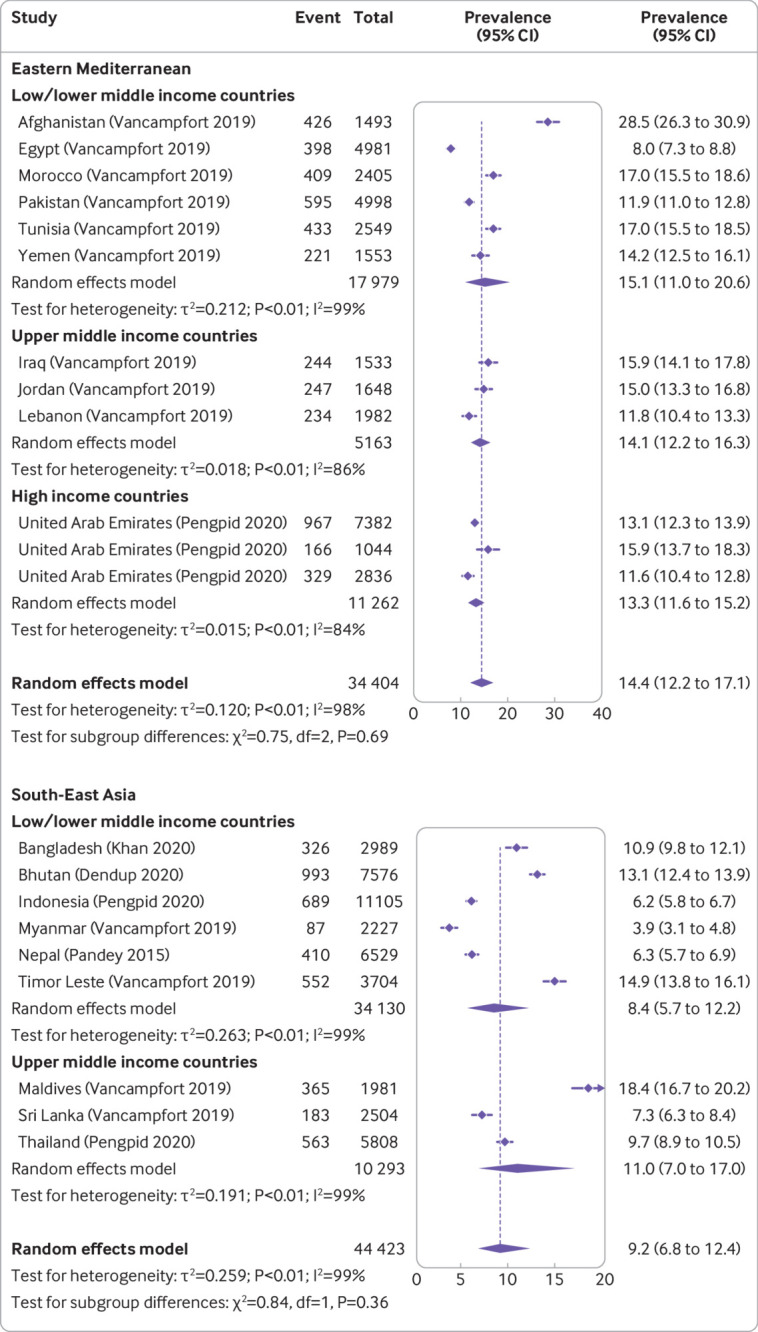
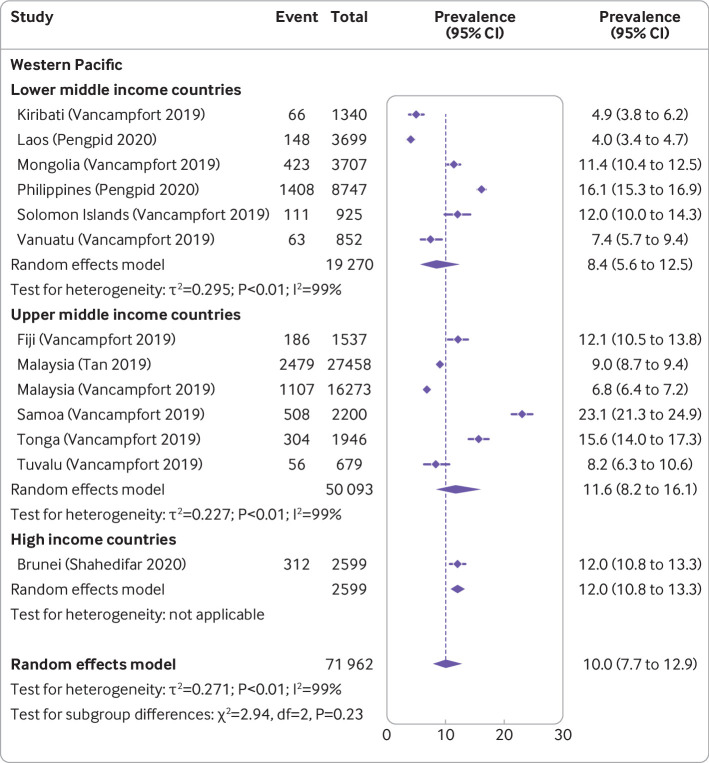
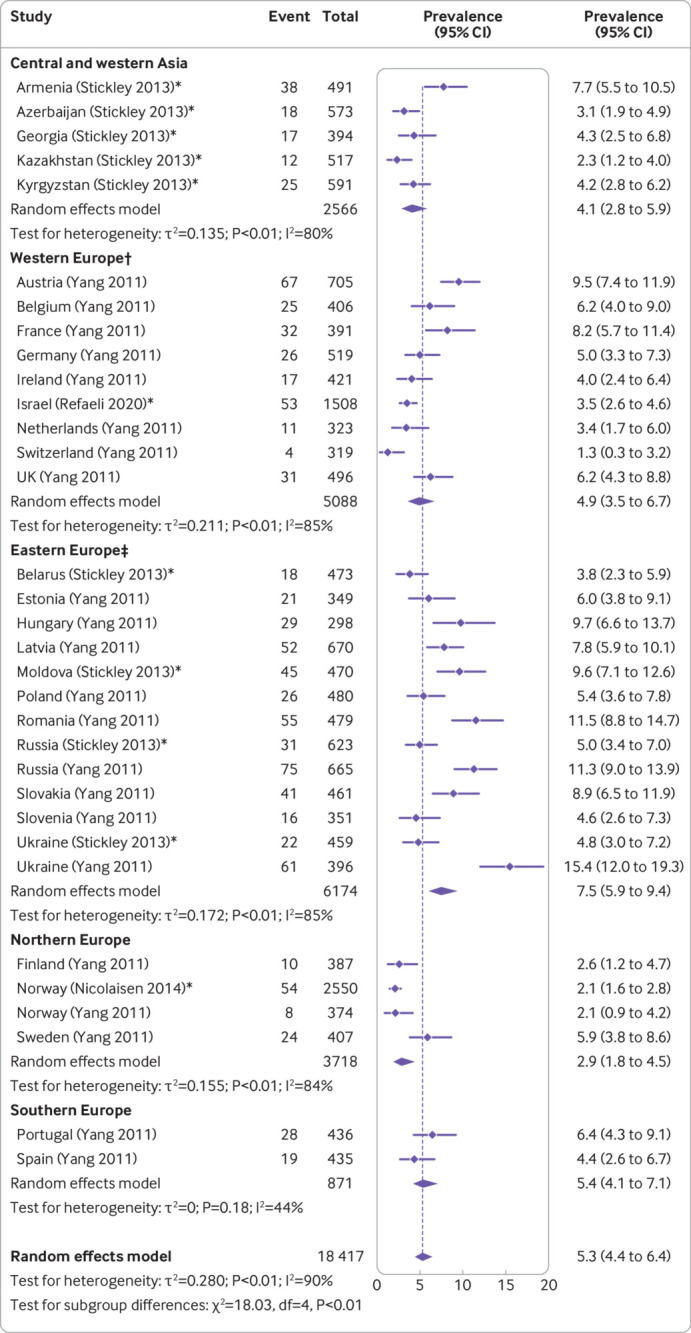
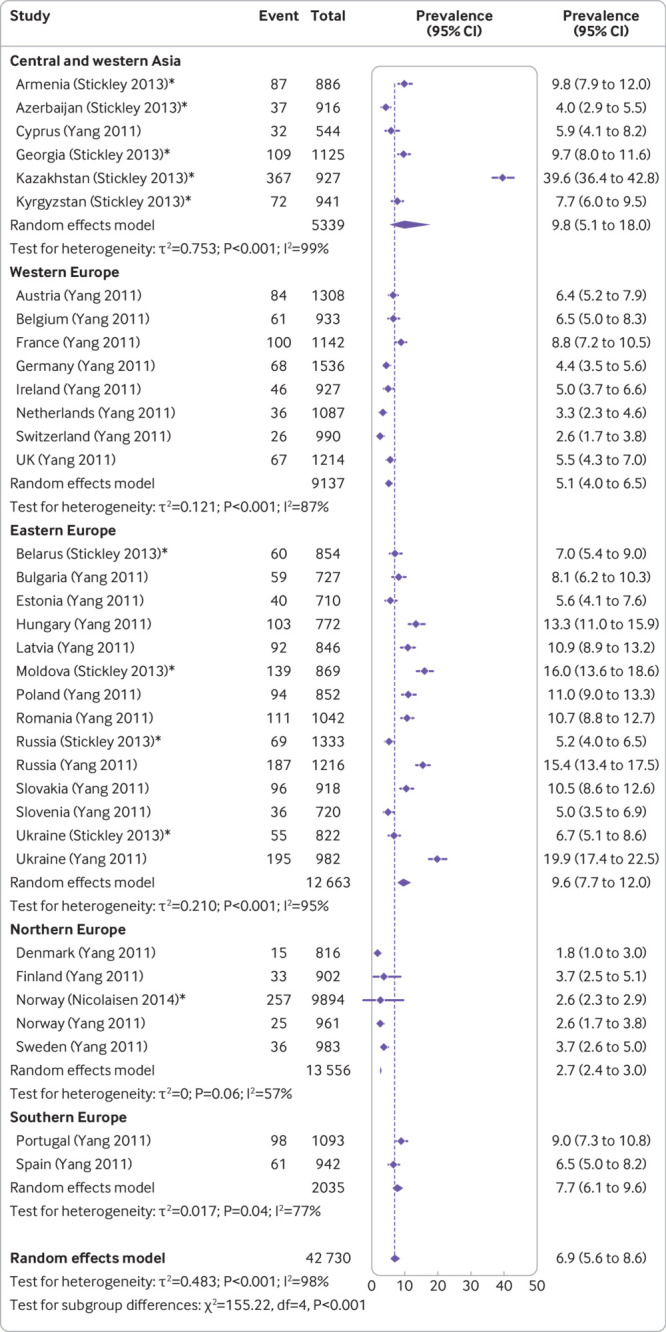
Objectives: To identify data availability, gaps, and patterns for population level prevalence of loneliness globally, to summarise prevalence estimates within World Health Organization regions when feasible through meta-analysis, and to examine temporal trends of loneliness in countries where data exist. Design: Systematic review and meta-analysis. Data sources: Embase, Medline, PsycINFO, and Scopus for peer reviewed literature, and Google Scholar and Open Grey for grey literature, supplemented by backward reference searching (to 1 September 2021) Eligibility criteria for selecting studies: Observational studies based on nationally representative samples (n≥292), validated instruments, and prevalence data for 2000-19. Two researchers independently extracted data and assessed the risk of bias using the Joanna Briggs Institute checklist. Random effects meta-analysis was conducted in the subset of studies with relatively homogeneous research methods by measurement instrument, age group, and WHO region. Results: Prevalence data were available for 113 countries or territories, according to official WHO nomenclature for regions, from 57 studies. Data were available for adolescents (12-17 years) in 77 countries or territories, young adults (18-29 years) in 30 countries, middle aged adults (30-59 years) in 32 countries, and older adults (≥60 years) in 40 countries. Data for all age groups except adolescents were lacking outside of Europe. Overall, 212 estimates for 106 countries from 24 studies were included in meta-analyses. The pooled prevalence of loneliness for adolescents ranged from 9.2% (95% confidence interval 6.8% to 12.4%) in South-East Asia to 14.4% (12.2% to 17.1%) in the Eastern Mediterranean region. For adults, meta-analysis was conducted for the European region only, and a consistent geographical pattern was shown for all adult age groups. The lowest prevalence of loneliness was consistently observed in northern European countries (2.9%, 1.8% to 4.5% for young adults; 2.7%, 2.4% to 3.0% for middle aged adults; and 5.2%, 4.2% to 6.5% for older adults) and the highest in eastern European countries (7.5%, 5.9% to 9.4% for young adults; 9.6%, 7.7% to 12.0% for middle aged adults; and 21.3%, 18.7% to 24.2% for older adults). Conclusion: Problematic levels of loneliness are experienced by a substantial proportion of the population in many countries. The substantial difference in data coverage between high income countries (particularly Europe) and low and middle income countries raised an important equity issue. Evidence on the temporal trends of loneliness is insufficient. The findings of this meta-analysis are limited by data scarcity and methodological heterogeneity. Loneliness should be incorporated into general health surveillance with broader geographical and age coverage, using standardised and validated measurement tools. Systematic review registration: PROSPERO CRD42019131448.
Overview
The claims and statistics of this paper haven’t been checked yet.
Run the check — free, no account needed. It reads the open-access text and checks the sources it cites.
Integrity signals
Registry
Cites
Statistics
Figures
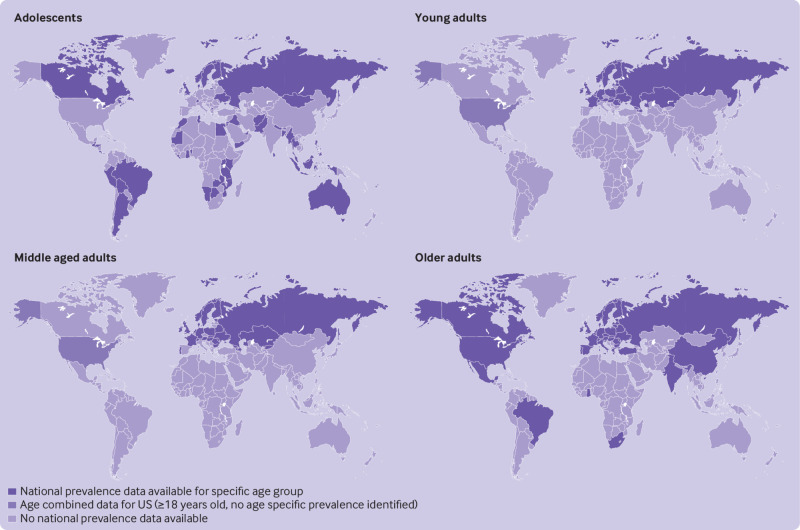
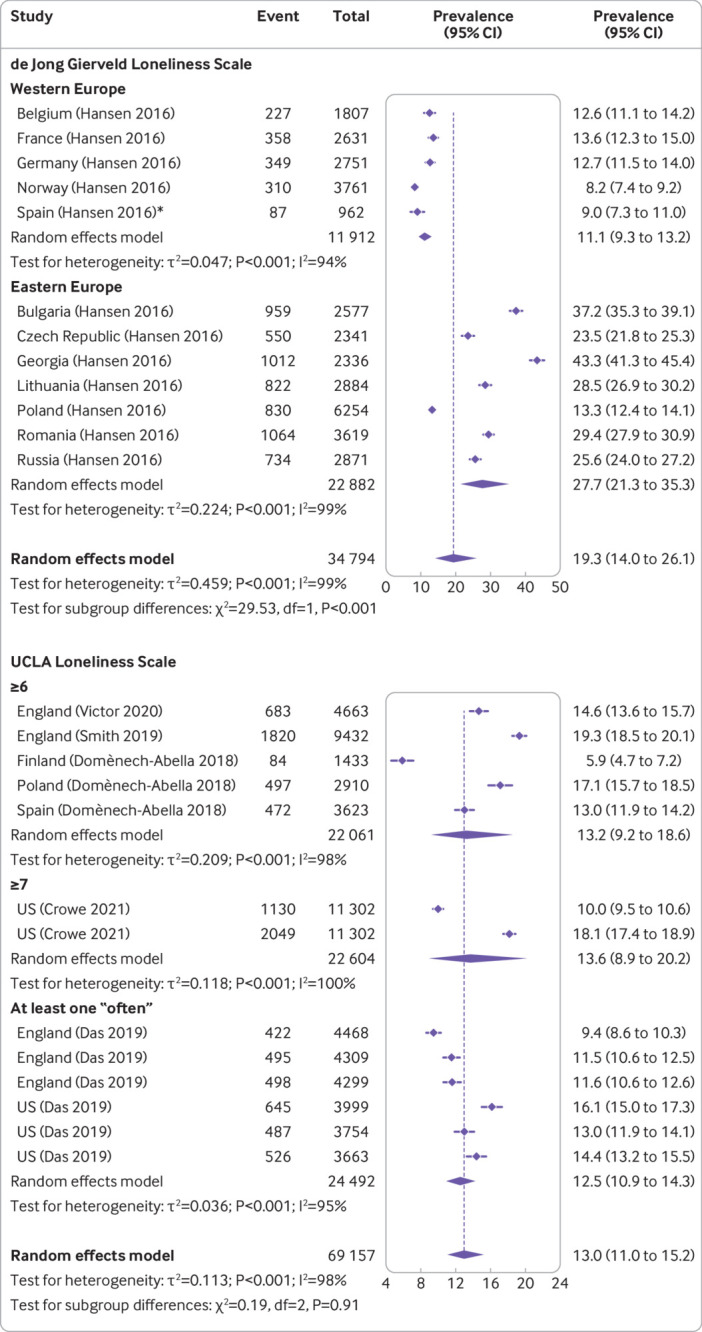
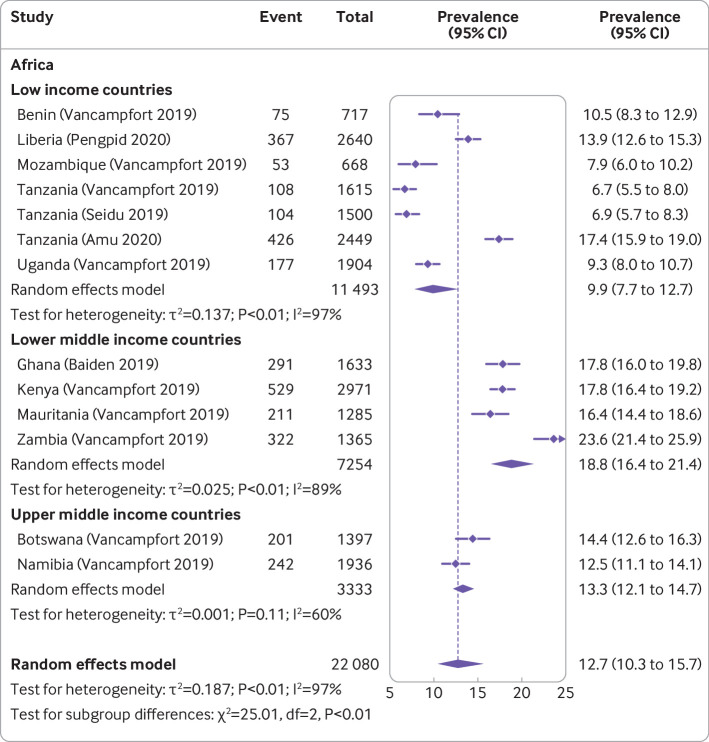
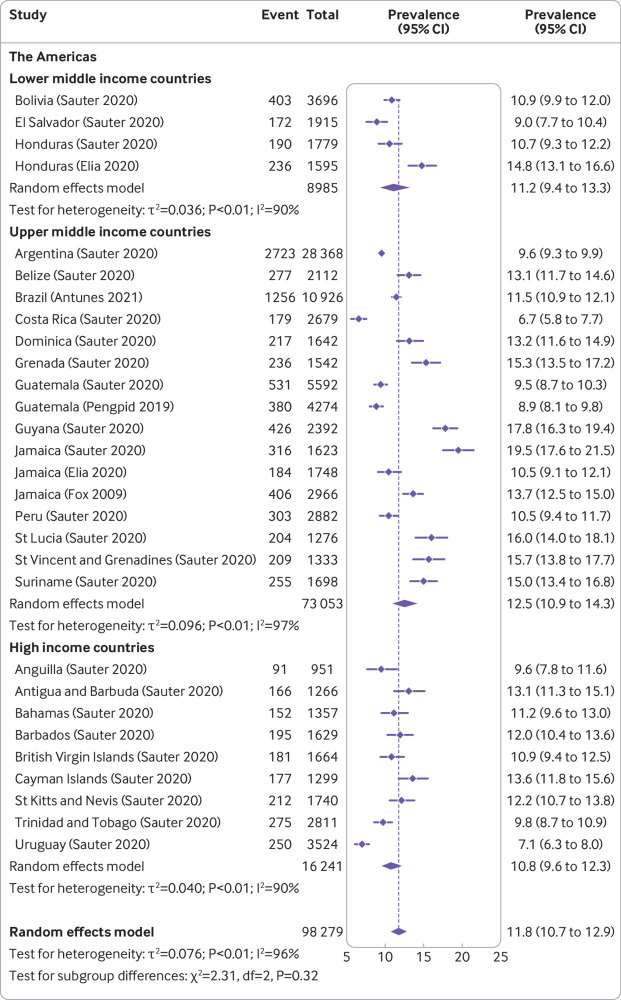
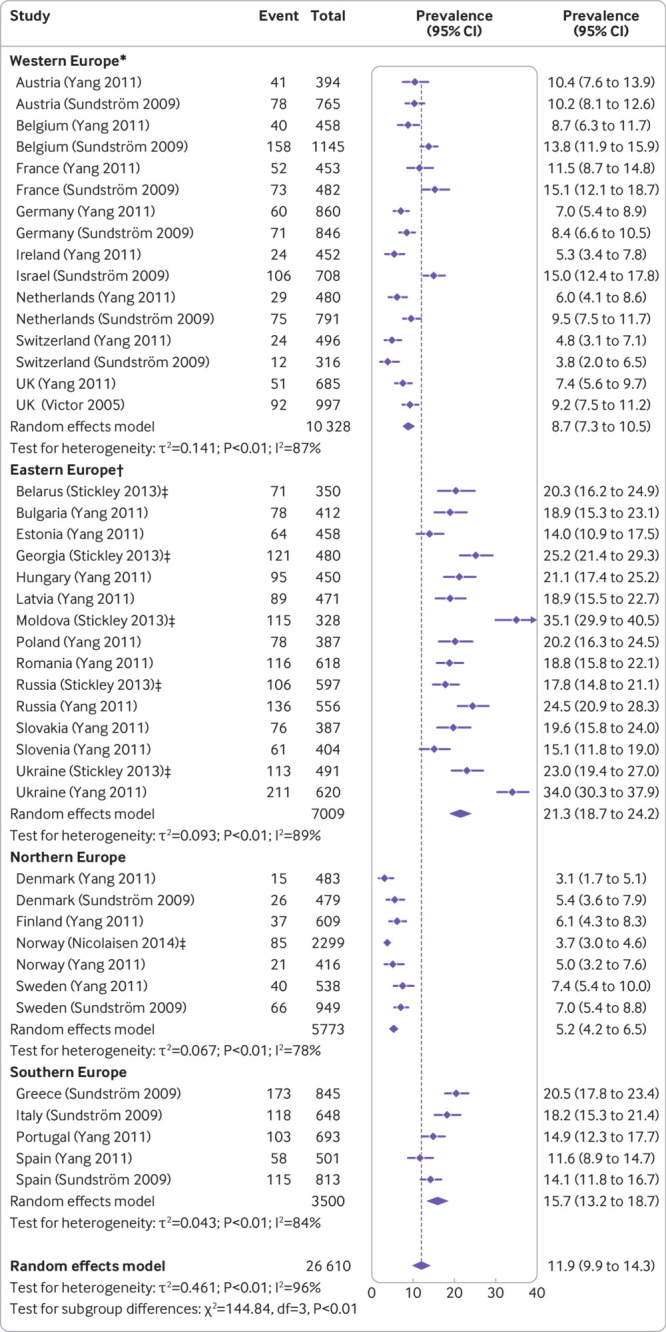
Verification
Claims the paper makes
The claims and statistics of this paper haven’t been checked yet.
Run the check — free, no account needed. It reads the open-access text and checks the sources it cites.
Claims other papers make about this one
Each is checked against this paper’s own text: does it say what the citing paper says it does?
The cited source says what the claim attributes to it.
In the citing paper
“Data based on nationally representative samples within World Health Organization regions pre-COVID-19 suggest that only 9.2% to 14.4% of adolescents experienced loneliness.16”
From A Longitudinal Study of Loneliness Before the End of the COVID-19 Pandemic: Trajectories, Predictors, and Impact on Chinese Adolescent Mental Health (2024) · cites this paper as [16]
Self-check
Percentages, sums and reported differences re-computed from the paper’s own numbers.
The self-check needs the paper’s full text.
Citations
Cites
Preferred Reporting Items for Systematic Reviews and Meta-Analyses: the PRISMA statement
Moher, D., Liberati, A., Tetzlaff, J., Altman, D. G., & for the PRISMA Group (2009) · BMJ · doi:10.1136/bmj.b2535 · Cited by 83,823
Measuring inconsistency in meta-analyses
Higgins, J. P. T., Thompson, S. G., Deeks, J. J., & Altman, D. G. (2003) · BMJ · doi:10.1136/bmj.327.7414.557 · Cited by 63,139
Preferred reporting items for systematic reviews and meta-analyses: the PRISMA Statement.
(2009) · PubMed Central · Cited by 44,859
The need to belong: Desire for interpersonal attachments as a fundamental human motivation.
Baumeister, R. F., & Leary, M. R. (1995) · Psychological Bulletin · doi:10.1037//0033-2909.117.3.497 · Cited by 23,245
The metabolic phenotype in obesity: Fat mass, body fat distribution, and adipose tissue function
Goossens, G. H. (2017) · Obesity Facts · doi:10.1159/000471488 · Cited by 8,481
Lee, I.-M., Shiroma, E. J., Lobelo, F., Puska, P., Blair, S. N., & Katzmarzyk, P. T. (2012) · The Lancet · doi:10.1016/s0140-6736(12)61031-9 · Cited by 8,215
Loneliness and Social Isolation as Risk Factors for Mortality: A Meta-Analytic Review
Holt-Lunstad, J., Smith, T. B., Baker, M., Harris, T., & Stephenson, D. (2015) · Perspectives on Psychological Science · doi:10.1177/1745691614568352 · Cited by 6,043
UCLA loneliness scale (version 3): reliability, validity, and factor structure
Russell, D. W. (1996) · Journal of Personality Assessment · doi:10.1207/s15327752jpa6601_2 · Cited by 5,800
A Short Scale for Measuring Loneliness in Large Surveys: Results From Two Population-Based Studies
Hughes, M. E., Waite, L. J., Hawkley, L. C., & Cacioppo, J. T. (2004) · Research on Aging · doi:10.1177/0164027504268574 · Cited by 4,781
Munn, Z., Moola, S., Lisy, K., Riitano, D., & Tufanaru, C. (2015) · International Journal of Evidence-Based Healthcare · doi:10.1097/xeb.0000000000000054 · Cited by 3,131
Interpretation of random effects meta-analyses
Riley, R. D., Higgins, J. P. T., & Deeks, J. J. (2011) · BMJ · doi:10.1136/bmj.d549 · Cited by 2,884
Di Angelantonio, E., Bhupathiraju, S. N., Wormser, D., Gao, P., Kaptoge, S., de Gonzalez, A. B., Cairns, B. J., Huxley, R., Jackson, C. L., Joshy, G., et al. (2016) · The Lancet · doi:10.1016/s0140-6736(16)30175-1 · Cited by 2,821
Fit Yourself and Take Your Lungs to Heart
Palange, P., & Bonini, M. (2013) · Respiration · doi:10.1159/000350831 · Cited by 2,780
The arcsine is asinine: the analysis of proportions in ecology
Warton, D. I., & Hui, F. K. C. (2010) · Ecology · doi:10.1890/10-0340.1 · Cited by 2,298
Barendregt, J. J., Doi, S. A., Lee, Y. Y., Norman, R. E., & Vos, T. (2013) · Journal of Epidemiology and Community Health · doi:10.1136/jech-2013-203104 · Cited by 2,169
Leigh-Hunt, N., Bagguley, D., Bash, K., Turner, V., Turnbull, S., Valtorta, N., & Caan, W. (2017) · Public Health · doi:10.1016/j.puhe.2017.07.035 · Cited by 2,158
A Meta-Analysis of Interventions to Reduce Loneliness
Masi, C. M., Chen, H.-Y., Hawkley, L. C., & Cacioppo, J. T. (2011) · Personality and Social Psychology Review · doi:10.1177/1088868310377394 · Cited by 1,995
Valtorta, N. K., Kanaan, M., Gilbody, S., Ronzi, S., & Hanratty, B. (2016) · Heart · doi:10.1136/heartjnl-2015-308790 · Cited by 1,971
Wang, J., Mann, F., Lloyd-Evans, B., Ma, R., & Johnson, S. (2018) · BMC Psychiatry · doi:10.1186/s12888-018-1736-5 · Cited by 1,494
A 6-Item Scale for Overall, Emotional, and Social Loneliness: Confirmatory Tests on Survey Data
Gierveld, J. D. J., & Tilburg, T. V. (2006) · Research on Aging · doi:10.1177/0164027506289723 · Cited by 1,467
Practical Issues in Calculating the Sample Size for Prevalence Studies
Naing, L., & Winn, T. (2006) · Cited by 1,381
Undue reliance on I 2 in assessing heterogeneity may mislead
Rücker, G., Schwarzer, G., Carpenter, J. R., & Schumacher, M. (2008) · BMC Medical Research Methodology · doi:10.1186/1471-2288-8-79 · Cited by 1,287
Influences on Loneliness in Older Adults: A Meta-Analysis
Pinquart, M., & Sorensen, S. (2001) · Basic and Applied Social Psychology · doi:10.1207/s15324834basp2304_2 · Cited by 1,036
The growing problem of loneliness
Cacioppo, J. T., & Cacioppo, S. (2018) · The Lancet · doi:10.1016/s0140-6736(18)30142-9 · Cited by 897
Loneliness around the world: age, gender, and cultural differences in loneliness
Barreto, M., Victor, C., Hammond, C., Eccles, A., Richins, M. T., & Qualter, P. (2021) · Personality and Individual Differences · doi:10.1016/j.paid.2020.110066 · Cited by 828
Depression as a disease of modernity: explanations for increasing prevalence
Hidaka, B. H. (2012) · Journal of Affective Disorders · doi:10.1016/j.jad.2011.12.036 · Cited by 769
Stijnen, T., Hamza, T. H., & Özdemir, P. (2010) · Statistics in Medicine · doi:10.1002/sim.4040 · Cited by 757
The Prevalence of Loneliness Among Adults: A Case Study of the United Kingdom
Victor, C. R., & Yang, K. (2012) · The Journal of Psychology · doi:10.1080/00223980.2011.613875 · Cited by 746
MOOSE Reporting Guidelines for Meta-analyses of Observational Studies
Brooke, B. S., Schwartz, T. A., & Pawlik, T. M. (2021) · JAMA Surgery · doi:10.1001/jamasurg.2021.0522 · Cited by 742
VICTOR, C. R., SCAMBLER, S. J., BOWLING, A., & BOND, J. (2005) · Ageing and Society · doi:10.1017/s0144686x04003332 · Cited by 572
Interpretation of subgroup analyses in systematic reviews: A tutorial
Richardson, M., Garner, P., & Donegan, S. (2018) · Clinical Epidemiology and Global Health · doi:10.1016/j.cegh.2018.05.005 · Cited by 559
Age and loneliness in 25 European nations
YANG, K., & VICTOR, C. (2011) · Ageing and Society · doi:10.1017/s0144686x1000139x · Cited by 540
McClelland, H., Evans, J. J., Nowland, R., Ferguson, E., & O'Connor, R. C. (2020) · Journal of Affective Disorders · doi:10.1016/j.jad.2020.05.004 · Cited by 466
Lim, M. H., Eres, R., & Vasan, S. (2020) · Social Psychiatry and Psychiatric Epidemiology · doi:10.1007/s00127-020-01889-7 · Cited by 438
Self-citationCross-National Differences in Older Adult Loneliness
Fokkema, T., Gierveld, J. D. J., & Dykstra, P. A. (2011) · The Journal of Psychology · doi:10.1080/00223980.2011.631612 · Cited by 389
Kasar, K. S., & Karaman, E. (2021) · Geriatric Nursing · doi:10.1016/j.gerinurse.2021.03.010 · Cited by 368
Lykes, V. A., & Kemmelmeier, M. (2013) · Journal of Cross-Cultural Psychology · doi:10.1177/0022022113509881 · Cited by 367
How are systematic reviews of prevalence conducted? A methodological study
on behalf of the Prevalence Estimates Reviews – Systematic Review Methodology Group (PERSyst), Borges Migliavaca, C., Stein, C., Colpani, V., Barker, T. H., Munn, Z., & Falavigna, M. (2020) · BMC Medical Research Methodology · doi:10.1186/s12874-020-00975-3 · Cited by 359
Lara, E., Martín-María, N., De la Torre-Luque, A., Koyanagi, A., Vancampfort, D., Izquierdo, A., & Miret, M. (2019) · Ageing Research Reviews · doi:10.1016/j.arr.2019.03.002 · Cited by 351
(2018) · Acta bio-medica dell'Ateneo parmense/Acta biomedica · doi:10.23750/abm.v89i2.7404 · Cited by 329
Loneliness among older Europeans
Sundström, G., Fransson, E. I., Malmberg, B., & Davey, A. (2009) · European Journal of Ageing · doi:10.1007/s10433-009-0134-8 · Cited by 303
Nicolaisen, M., & Thorsen, K. (2014) · The International Journal of Aging and Human Development · doi:10.2190/ag.78.3.b · Cited by 277
van Oostrom, S. H., Gijsen, R., Stirbu, I., Korevaar, J. C., Schellevis, F., Picavet, H. S. J., & Hoeymans, N. (2016) · PLoS ONE · doi:10.1371/journal.pone.0160264 · Cited by 277
Quality assessment of prevalence studies: a systematic review
Migliavaca, C. B., Stein, C., Colpani, V., Munn, Z., & Falavigna, M. (2020) · Journal of Clinical Epidemiology · doi:10.1016/j.jclinepi.2020.06.039 · Cited by 253
Late-Life Loneliness in 11 European Countries: Results from the Generations and Gender Survey
Hansen, T., & Slagsvold, B. (2016) · Social Indicators Research · doi:10.1007/s11205-015-1111-6 · Cited by 251 · cited 1×
“J Child Adolesc Ment Health 2020; 32(2-3): 67-76.”
Lonelier than ever? Loneliness of older people over two decades
Dahlberg, L., Agahi, N., & Lennartsson, C. (2017) · Archives of Gerontology and Geriatrics · doi:10.1016/j.archger.2017.11.004 · Cited by 247
Chawla, K., Kunonga, P., Stow, D., Barker, R., Craig, D., & Hanratty, B. (2021) · PLoS ONE · doi:10.1371/journal.pone.0255088 · Cited by 245
Loneliness and sleep: A systematic review and meta-analysis
Griffin, S. C., Williams, A. B., Ravyts, S. G., Mladen, S. N., & Rybarczyk, B. D. (2020) · Health Psychology Open · doi:10.1177/2055102920913235 · Cited by 212
Consensus statement: loneliness in older adults, the 21st century social determinant of health?
PROHASKA, T. R., Burholt, V., Burns, A., Golden, J., Hawkley, L. C., LAWLOR, B. A., Leavey, G., Lubben, J., O’Sullivan, R., Perissinotto, C. M., et al. (2020) · BMJ Open · doi:10.1136/bmjopen-2019-034967 · Cited by 211
Hodgson, S., Watts, I. V. C., Fraser, S. D., Roderick, P., & Dambha‐Miller, H. (2020) · Journal of the Royal Society of Medicine · doi:10.1177/0141076820918236 · Cited by 200
Heu, L. C., van Zomeren, M., & Hansen, N. (2018) · Personality and Social Psychology Bulletin · doi:10.1177/0146167218796793 · Cited by 188
Penning, M. J., Liu, G., & Chou, P. H. B. (2013) · Social Indicators Research · doi:10.1007/s11205-013-0461-1 · Cited by 181
Crowe, C. L., Domingue, B. W., Graf, G. H., Keyes, K. M., Kwon, D., & Belsky, D. W. (2021) · The Journals of Gerontology: Series A · doi:10.1093/gerona/glab128 · Cited by 153
Victor, C. R., & Pikhartova, J. (2020) · BMC Public Health · doi:10.1186/s12889-020-08703-8 · Cited by 148 · cited 3×
“Aging Ment Health 2015; 19(5): 409-17.”
InfluentialStickley, A., Koyanagi, A., Roberts, B., Richardson, E., Abbott, P., Tumanov, S., & McKee, M. (2013) · PLoS ONE · doi:10.1371/journal.pone.0067978 · Cited by 146
Pandey, A. R., Bista, B., Dhungana, R. R., Aryal, K. K., Chalise, B., & Dhimal, M. (2019) · PLoS ONE · doi:10.1371/journal.pone.0210383 · Cited by 137
Smith, T. O., Dainty, J. R., Williamson, E. M., & Martin, K. R. (2018) · British Journal of Pain · doi:10.1177/2049463718802868 · Cited by 134 · cited 2×
“Psychiatry Psychiatr Epidemiol 2017; 52(4): 381-90.”
COVID-19 and loneliness: A rapid systematic review
Pai, N. B., & Vella, S. (2021) · Australian & New Zealand Journal of Psychiatry · doi:10.1177/00048674211031489 · Cited by 133
Domènech‐Abella, J., Mundó, J., Leonardi, M., Chatterji, S., Tobiasz‐Adamczyk, B., Koskinen, S. V. P., Ayuso‐Mateos, J. L., & Haro, J. M. (2018) · Journal of Affective Disorders · doi:10.1016/j.jad.2018.08.077 · Cited by 119 · cited 1×
“Eur J Public Health 2019; 29(6): 1096-102.”
Trends in social inequality in loneliness among adolescents 1991–2014
Madsen, K. R., Holstein, B. E., Damsgaard, M. T., Rayce, S. B., Jespersen, L. N., & Due, P. (2019) · Journal of Public Health · doi:10.1093/pubmed/fdy133 · Cited by 96
Khan, M. M. A., Rahman, M. M., Islam, M. R., Karim, M., Hasan, M., & Jesmin, S. S. (2020) · Social Psychiatry and Psychiatric Epidemiology · doi:10.1007/s00127-020-01867-z · Cited by 92
Baiden, P., Kuuire, V. Z., Shrestha, N., Tonui, B. C., Dako‐Gyeke, M., & Peters, K. E. (2018) · Journal of School Violence · doi:10.1080/15388220.2018.1486200 · Cited by 82 · cited 1×
“Int J Environ Res Public Health 2021; 18(14): 7405.”
BackgroundUysal‐Bozkir, Ö., Parlevliet, J. L., & de Rooij, S. E. (2013) · Journal of Clinical Epidemiology · doi:10.1016/j.jclinepi.2012.12.004 · Cited by 74
Vancampfort, D., Ashdown‐Franks, G., Smith, L., Firth, J., Damme, T. V., Christiaansen, L., Stubbs, B., & Koyanagi, A. (2019) · Journal of Affective Disorders · doi:10.1016/j.jad.2019.03.076 · Cited by 67 · cited 1×
“Int J Geriatr Psychiatry 2019; 34(12): 1855-64.”
Loneliness and friendlessness among adolescents in 25 countries in Latin America and the Caribbean
Sauter, S. R., Kim, L. P., & Jacobsen, K. H. (2020) · Child and Adolescent Mental Health · doi:10.1111/camh.12358 · Cited by 48
Yang, K. (2019) · Routledge eBooks · doi:10.4324/9781315148410 · Cited by 47
Suicide Attempt and Associated Factors Among Adolescents in Five Southeast Asian Countries in 2015
Pengpid, S., & Peltzer, K. (2020) · Crisis · doi:10.1027/0227-5910/a000642 · Cited by 45
Myhr, A., Anthun, K. S., Lillefjell, M., & Sund, E. R. (2020) · Frontiers in Psychology · doi:10.3389/fpsyg.2020.01472 · Cited by 43
Refaeli, T., & Achdut, N. (2020) · Health & Social Care in the Community · doi:10.1111/hsc.13177 · Cited by 39
Das, A. (2018) · Social Science & Medicine · doi:10.1016/j.socscimed.2018.10.021 · Cited by 38 · cited 9×
“…P<0.001; I2=98% ≥7 US (Crowe 2021) US (Crowe 2021) Random effects model Test for heterogeneity: τ2=0.118; P<0.001; I2=100% At least one “oen” England (Das 2019) England (Das 2019) England (Das 2019) US (Das 2019) US (Das 2019) US (Das 2019) Random effects model Test for heterogeneity:…”
InfluentialBullying Victimization Among School-Going Adolescents in Malaysia: Prevalence and Associated Factors
Tan, L., Ganapathy, S. S., Sooryanarayana, R., Hasim, M. H., Saminathan, T. A., Anuar, M. F. M., Ahmad, F. H., Razak, M. A. A., & Rosman, A. (2019) · Asia Pacific Journal of Public Health · doi:10.1177/1010539519870665 · Cited by 38
Elia, C., Karamanos, A., Dregan, A., O'Keeffe, M. M., Wolfe, I., Sandall, J., Morgan, C., Cruickshank, J. K., Gobin, R., Wilks, R., et al. (2020) · PLoS Medicine · doi:10.1371/journal.pmed.1003443 · Cited by 38
Pengpid, S., & Peltzer, K. (2020) · BMC Pediatrics · doi:10.1186/s12887-020-02252-0 · Cited by 30
(2015) · Psychology Press eBooks · doi:10.4324/9781315774374 · Cited by 28
Antunes, J. T., Machado, Í. E., & Malta, D. C. (2021) · Jornal de Pediatria · doi:10.1016/j.jped.2021.04.004 · Cited by 27
In Practice: Loneliness: a public health issue
Hunter, D. (2012) · Perspectives in Public Health · doi:10.1177/1757913912449564 · Cited by 21
The Elderly in a Period of Transition
Petrov, I. (2007) · Annals of the New York Academy of Sciences · doi:10.1196/annals.1396.041 · Cited by 16
Prevalence and correlates of past 12-month suicide attempt among in-school adolescents in Guatemala
Pengpid, S., & Peltzer, K. (2019) · Psychology Research and Behavior Management · doi:10.2147/prbm.s212648 · Cited by 16
Amu, H., Seidu, A., Agbemavi, W., Ahinkorah, B. O., Ameyaw, E. K., Amoah, A., Dadzie, L. K., & Kissah-Korsah, K. (2020) · Psychological Studies · doi:10.1007/s12646-020-00580-w · Cited by 16
Pengpid, S., & Peltzer, K. (2020) · Psychology Research and Behavior Management · doi:10.2147/prbm.s277844 · Cited by 13
Health related social exclusion in Europe: a multilevel study of the role of welfare generosity
Saltkjel, T., Dahl, E. S., & van der Wel, K. A. (2013) · International Journal for Equity in Health · doi:10.1186/1475-9276-12-81 · Cited by 12
Simpson, I. C., Dumitrache, C. G., & Calet, N. (2018) · Aging & Mental Health · doi:10.1080/13607863.2018.1448969 · Cited by 11
Seidu, A., Dadzie, L. K., & Ahinkorah, B. O. (2019) · Journal of Public Health · doi:10.1007/s10389-019-01165-2 · Cited by 9
Shahedifar, N., Shaikh, M. A., Oporia, F., & Wilson, M. L. (2020) · Journal of Injury and Violence Research · doi:10.5249/jivr.v12i3.1371 · Cited by 9 · cited 3×
“In contrast, eastern European countries tend to have poorer health outcomes, healthcare services, and state welfare.41 Other demographic characteristics, such as large gaps in life expectancy between men and women (hence a high proportion of widows) and increasing emigration among young people, might have contributed.…”
InfluentialDendup, T., Putra, I. G. N. E., Dorji, T., Tobgay, T., Dorji, G., Phuntsho, S., & Tshering, P. (2020) · Children and Youth Services Review · doi:10.1016/j.childyouth.2020.105520 · Cited by 9
Jamaican youth health status 2005.
Fox, K., Gordon-Strachan, G. M., Johnson, A. C., & Ashley, D. (2009) · PubMed · Cited by 7
Research works printed but not linked: 4
- Peplau LA Perlman D . Perspective on loneliness. Loneliness: A sourcebook of current theory, research and therapy. John Wiley and Sons, 1982: 1-18.
- 10.1037/0033-2909.117.3.497 · DOI · Paper page
- 10.1097/XEB.0000000000000054 · DOI · Paper page
- Russell D . The measurement of loneliness. In: Peplau L Perlman D , eds. Loneliness: A Sourcebook of Current Theory, Research and Theory. John Wiley & Sons, 1982: 81-104.
Cited by
Sorted by citations
The social determinants of mental health and disorder: evidence, prevention and recommendations
Kirkbride, J. B., Anglin, D. M., Colman, I., Dykxhoorn, J. L., Jones, P. B., Patalay, P., Pitman, A., Soneson, E., Steare, T., Wright, T., et al. (2024) · World Psychiatry · doi:10.1002/wps.21160 · Cited by 1,619
“Estimates of the prevalence of loneliness internationally range from 9 to 14% in adolescents, falling to 310% in middle age, and rising again to 521% in older adults 220 .”
BackgroundHolt‐Lunstad, J. (2024) · World Psychiatry · doi:10.1002/wps.21224 · Cited by 541
“Furthermore, a meta analysis of data from 113 countries concluded that a sub stantial proportion of the population in many countries experi ences problematic levels of loneliness 85 .”
Risk factors for loneliness: A literature review
Barjaková, M., Garnero, A., & d’Hombres, B. (2023) · Social Science & Medicine · doi:10.1016/j.socscimed.2023.116163 · Cited by 296
Loneliness and suicide mitigation for students using GPT3-enabled chatbots
Maples, B., Cerit, M., Vishwanath, A., & Pea, R. (2024) · npj Mental Health Research · doi:10.1038/s44184-023-00047-6 · Cited by 250
Social participation and risk of developing dementia
Sommerlad, A., Kivimäki, M., Larson, E. B., Röhr, S., Shirai, K., Singh-Manoux, A., & Livingston, G. (2023) · Nature Aging · doi:10.1038/s43587-023-00387-0 · Cited by 207
“Furthermore, longstanding societal changes and those related to the COVID-19 pandemic have increased the focus on social isolation and loneliness 17,18 .”
Metadata
- Authors
- Surkalim, D. L., Luo, M., Eres, R., Gebel, K., van Buskirk, J., Bauman, A., & Ding, D.
- Affiliations
- The University of Sydney (AU)
- Royal Children's Hospital (AU)
- University of Technology Sydney (AU)
- Sydney School of Public Health, Faculty of Medicine and Health, The University of Sydney, Camperdown, NSW, Australia
- Corresponding author
- Ding, Ding
- ORCID
- Venue
- BMJ
- Publisher
- BMJ
- Published
- 2022-02-09
- Volume
- 376
- Pages
- e067068
- ISSN
- 1756-1833 (ISSN-L)
- PMC
- PMC8826180
- OpenAlex
- W4211106541
- Cited by
- 821
- References
- 87
- Citations by year
- 2026: 220 · 2025: 236 · 2024: 183 · 2023: 138 · 2022: 44
- FWCI
- 20.76
- Type
- journal article
- Language
- en
- Open access
- hybrid
- doi.org
- Licence
- Locations
- BMJ (publishedVersion, cc-by-nc)
- PubMed Central (publishedVersion, cc-by-nc)
- PubMed (publishedVersion)
- RMIT Research Repository (RMIT University Library) (acceptedVersion, other-oa)
- Figshare (submittedVersion, cc-by-nc)
- Minerva Access (University of Melbourne) (submittedVersion, cc-by-nc)
- Topics
- Social Sciences › Health › Health disparities and outcomes
- Health Sciences › Medicine › Psychiatry and Mental health › Mental Health Treatment and Access
- Social Sciences › Psychology › Clinical Psychology › COVID-19 and Mental Health
- Keywords
- loneliness, prevalence of loneliness, cross-national comparison, adolescents, young adults, middle-aged adults, older adults, temporal trends, WHO regions, loneliness and isolation
- MeSH terms
- Demography, Humans, Loneliness, Global Health, Prevalence
About these checks
Registry, retraction, Cites and statistics results are computed, not judged, with one exception: a printed reference that no index lists is read once by a model before it counts as a citation error. Claims are extracted by a model and kept only when their quote appears verbatim in the text; each cited source is then checked, with a model’s help, for whether it says what the claim relies on. Those verdicts can be wrong — read the claim’s quote and the cited source before relying on one.
Statistics and arithmetic are recomputed, not judged.
Confidence bands are shown only for fields calibrated on our annotated test set. None is calibrated yet, so no band is shown.
What counts as a claim ›How we measure confidence ›How we check this ›
Are you an author, or do you see a problem with this page? Request a review
