

Perinatal depression and risk of mortality: Nationwide, register-based study in Sweden
Open accessThe DOI matches its Crossref record; 38 of the 38 references it cites were found in a registry or an index.
Abstract
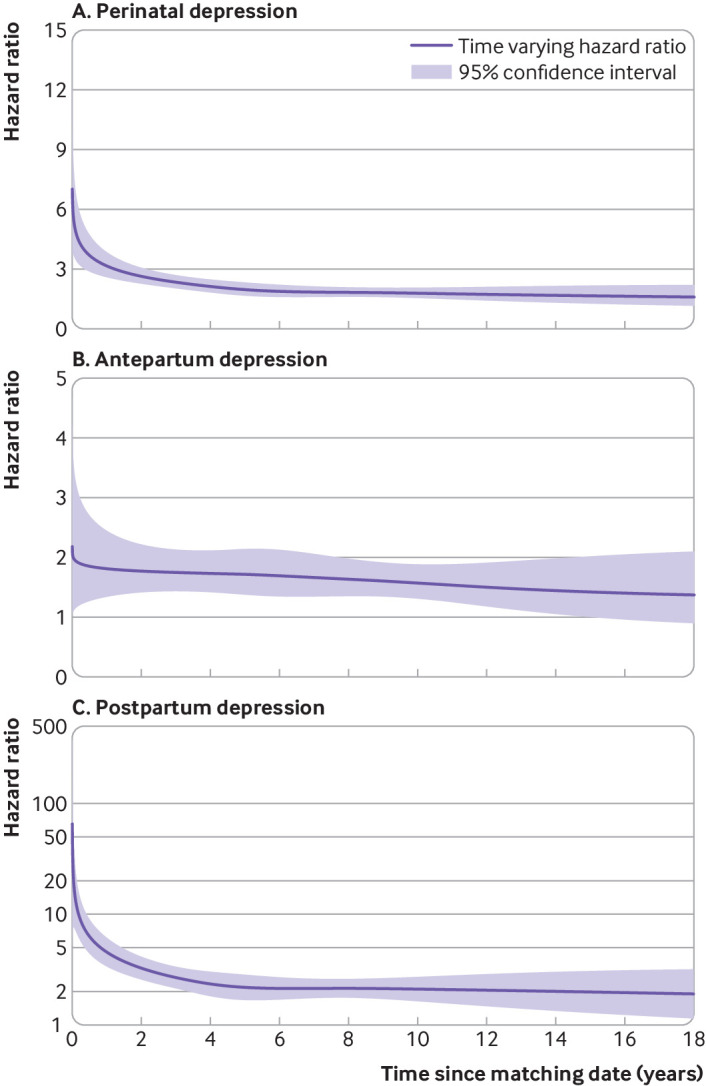
Objective: To determine whether women with perinatal depression are at an increased risk of death compared with women who did not develop the disorder, and compared with full sisters. Design: Nationwide, register based study. Setting: Swedish national registers, 1 January 2001 to 31 December 2018. Participants: 86 551 women with a first ever diagnosis of perinatal depression ascertained through specialised care and use of antidepressants, and 865 510 women who did not have perinatal depression were identified and matched based on age and calendar year at delivery. To address familial confounding factors, comparisons were made between 270 586 full sisters (women with perinatal depression (n=24 473) and full sisters who did not have this disorder (n=246 113)), who gave at least one singleton birth during the study period. Main outcome measures: Primary outcome was death due to any cause. Secondary outcome was cause specific deaths (ie, unnatural and natural causes). Multivariable Cox regression was used to estimate hazard ratios of mortality comparing women with perinatal depression to unaffected women and sisters, taking into account several confounders. The temporal patterns of perinatal depression and differences between antepartum and postpartum onset of perinatal depression were also studied. Results: 522 deaths (0.82 per 1000 person years) were reported among women with perinatal depression diagnosed at a median age of 31.0 years (interquartile range 27.0 to 35.0) over up to 18 years of follow-up. Compared with women who did not have perinatal depression, women with perinatal depression were associated with an increased risk of death (adjusted hazard ratio 2.11 (95% confidence interval 1.86 to 2.40)); similar associations were reported among women who had and did not have pre-existing psychiatric disorder. Risk of death seemed to be increased for postpartum than for antepartum depression (hazard ratio 2.71 (95% confidence interval 2.26 to 3.26) v 1.62 (1.34 to 1.94)). A similar association was noted for perinatal depression in the sibling comparison (2.12 (1.16 to 3.88)). The association was most pronounced within the first year after perinatal depression but remained up to 18 years after start of follow up. An increased risk was associated with both unnatural and natural causes of death among women with perinatal depression (4.28 (3.44 to 5.32) v (1.38 (1.16 to 1.64)), with the strongest association noted for suicide (6.34 (4.62 to 8.71)), although suicide was rare (0.23 per 1000 person years). Conclusions: Even when accounting for familial factors, women with clinically diagnosed perinatal depression were associated with an increased risk of death, particularly during the first year after diagnosis and because of suicide. Women who are affected, their families, and health professionals should be aware of these severe health hazards after perinatal depression.
Overview
The claims and statistics of this paper haven’t been checked yet.
Free: it reads the open-access text and checks the first 5 claims that cite a source we can check. Create a free account to check every claim.
Integrity signals
Registry
Cites
Statistics
Figures
Verification
Claims the paper makes
The claims and statistics of this paper haven’t been checked yet.
Free: it reads the open-access text and checks the first 5 claims that cite a source we can check. Create a free account to check every claim.
Self-check
Percentages, sums and reported differences re-computed from the paper’s own numbers.
The self-check needs the paper’s full text.
Citations
Cites
External review and validation of the Swedish national inpatient register
Ludvigsson, J. F., Andersson, E., Ekbom, A., Feychting, M., Kim, J.-L., Reuterwall, C., Heurgren, M., & Olausson, P. O. (2011) · BMC Public Health · doi:10.1186/1471-2458-11-450 · Cited by 5,055
Perinatal Depression: A Systematic Review of Prevalence and Incidence
Gavin, N. I., Gaynes, B. N., Lohr, K. N., Meltzer-Brody, S., Gartlehner, G., & Swinson, T. (2005) · Obstetrics & Gynecology · doi:10.1097/01.aog.0000183597.31630.db · Cited by 3,282
Walker, E. R., McGee, R. E., & Druss, B. G. (2015) · JAMA Psychiatry · doi:10.1001/jamapsychiatry.2014.2502 · Cited by 2,976
Wettermark, B., Hammar, N., MichaelFored, C., Leimanis, A., Otterblad Olausson, P., Bergman, U., Persson, I., Sundström, A., Westerholm, B., & Rosén, M. (2007) · Pharmacoepidemiology and Drug Safety · doi:10.1002/pds.1294 · Cited by 1,887
The Swedish cause of death register
Brooke, H. L., Talbäck, M., Hörnblad, J., Johansson, L. A., Ludvigsson, J. F., Druid, H., Feychting, M., & Ljung, R. (2017) · European Journal of Epidemiology · doi:10.1007/s10654-017-0316-1 · Cited by 1,280 · cited 1×
“19 Additionally, the hazard ratio derived from Cox regression is an average estimate over time since perinatal depression.”
MethodRisk factors for depressive symptoms during pregnancy: a systematic review
Lancaster, C. A., Gold, K. J., Flynn, H. A., Yoo, H., Marcus, S. M., & Davis, M. M. (2010) · American Journal of Obstetrics and Gynecology · doi:10.1016/j.ajog.2009.09.007 · Cited by 1,208 · cited 1×
“2526 Some characteristics specific to pregnancy, and pre-existing psychiatric disorders (any time before pregnancy) are putative risk factors for both perinatal depression and mortality, 27-29 and were extracted from the medical birth register and national patient register.”
Depression and cancer mortality: a meta-analysis
Pinquart, M., & Duberstein, P. R. (2010) · Psychological Medicine · doi:10.1017/s0033291709992285 · Cited by 1,083 · cited 1×
“Cancer mortality has been linked to depression occurring at any time in life 37 and to postpartum psychiatric disorders.”
BackgroundPerinatal mental illness: Definition, description and aetiology
O'Hara, M. W., & Wisner, K. L. (2014) · Best Practice & Research Clinical Obstetrics & Gynaecology · doi:10.1016/j.bpobgyn.2013.09.002 · Cited by 986
A quality study of a medical birth registry
Cnattingius, S., Ericson, A., Gunnarskog, J., & Källén, B. (1990) · Scandinavian Journal of Social Medicine · doi:10.1177/140349489001800209 · Cited by 972
Further Development of Flexible Parametric Models for Survival Analysis
Lambert, P. C., & Royston, P. (2009) · The Stata Journal: Promoting communications on statistics and Stata · doi:10.1177/1536867x0900900206 · Cited by 814 · cited 1×
“32 The models were adjusted for matching variables (maternal age and calendar year at delivery) and the aforementioned covariates.”
Cited by
Perinatal Depression and Risk of Suicidal Behavior
Yu, H., Shen, Q., Bränn, E., Yang, Y., Öberg, A. S., Valdimarsdóttir, U. A., & Lu, D. (2024) · JAMA Network Open · doi:10.1001/jamanetworkopen.2023.50897 · Cited by 91
Self-citationYang, Q., Bränn, E., Johnson, E., Sjölander, A., Fang, F., Öberg, A. S., Valdimarsdóttir, U. A., & Lu, D. (2024) · PLoS Medicine · doi:10.1371/journal.pmed.1004363 · Cited by 23
Self-citationPerinatal depression and its health impact
Bränn, E., Shen, Q., & Lu, D. (2024) · BMJ · doi:10.1136/bmj.p2777 · Cited by 19
Self-citationStratifying Risk for Postpartum Depression at Time of Hospital Discharge
Clapp, M. A., Castro, V. M., Verhaak, P., McCoy, T. H., Shook, L. L., Edlow, A. G., & Perlis, R. H. (2025) · American Journal of Psychiatry · doi:10.1176/appi.ajp.20240381 · Cited by 16
Association of General Anesthesia for Cesarean Delivery with Postpartum Depression and Suicidality
Guglielminotti, J. R., Monk, C. E., Russell, M. T., & Li, G. (2024) · Anesthesia & Analgesia · doi:10.1213/ane.0000000000007314 · Cited by 22
Anaduaka, U. S., Oladosu, A. O., Katsande, S., Frempong, C. S., & Awuku-Amador, S. (2025) · BMJ Mental Health · doi:10.1136/bmjment-2024-301445 · Cited by 24
“8 Also, perinatal depression and anxiety (PDA) has been found to impact child development from birth to early childhood.”
Xie, K., Jiang, S., Wang, Y., Chen, H., Wu, X., & Xu, B. (2025) · Brain Behavior and Immunity · doi:10.1016/j.bbi.2025.05.014 · Cited by 17
Zhang, C., Duan, C.-C., Liu, H., Xu, H., Li, C., Fan, J., Li, H., Li, X., Guo, Y., Wang, Y., et al. (2025) · 中国科学通报:英文版 · doi:10.1016/j.scib.2025.06.031 · Cited by 15
Depression Treatment in Pregnancy: Is It Safe, or Is It Not?
Gallitelli, V., Franco, R., Guidi, S., Puri, L., Parasiliti, M., Vidiri, A., Eleftheriou, G., Perelli, F., & Cavaliere, A. F. (2024) · International Journal of Environmental Research and Public Health · doi:10.3390/ijerph21040404 · Cited by 18
“Nevertheless, achieving this goal demands an interdisciplinary and cooperative approach [120–122].”
BackgroundCosta, B., & Vale, N. (2024) · Journal of Clinical Medicine · doi:10.3390/jcm13154398 · Cited by 22
Zhou, J., Bränn, E., Hysaj, E., Seitz, C., Hou, Y., Song, H., Bergstedt, J., Chang, Z., Fang, F., Pedersen, N. L., et al. (2024) · Journal of Affective Disorders · doi:10.1016/j.jad.2024.09.126 · Cited by 11
Self-citationLi, B., Liu, T., Ma, D., Sun, J., & Liu, J. (2025) · BMC Pregnancy and Childbirth · doi:10.1186/s12884-025-07332-6 · Cited by 12
“Women with PPD have an increased risk of natural death [17], and suicidal behavior [18], especially in the first year after diagnosis, and the risk continues to rise throughout the entire eighteen years follow-up.”
Žutić, M., Matijaš, M., Štefulj, J., Brekalo, M., & Radoš, S. N. (2024) · BMC Pregnancy and Childbirth · doi:10.1186/s12884-024-07046-1 · Cited by 13
Zhu, C., Lian, Z., Arndt, V., & Thong, M. S. Y. (2024) · Journal of Cancer Survivorship · doi:10.1007/s11764-024-01705-0 · Cited by 12
Suthar, H., Tanghal, R. B., Chatzi, L., Goodrich, J. A., Morello-Frosch, R. A., & Aung, M. T. (2024) · Current Environmental Health Reports · doi:10.1007/s40572-024-00451-w · Cited by 8
“Perinatal depression can increase the risk of other adverse maternal health outcomes, including all-cause mortality and suicide [4], cardio-vascular conditions [5], and autoimmune disease – although evidence suggests bidirectional relationships [6].”
BackgroundHuang, J., Lin, Y., Xu, Z., Xu, Z., Hong, H., Arbing, R. H. A., Chen, W., Wang, A., & Huang, F. (2024) · Midwifery · doi:10.1016/j.midw.2024.104187 · Cited by 8
Hölzle, L., Schöch, P., Hörtnagl, C., Buchheim, A., Lampe, A., Zechmeister‐Koss, I., & Paul, J. L. (2024) · Frontiers in Psychiatry · doi:10.3389/fpsyt.2024.1389545 · Cited by 12
“PMI in woman may lead to lower self-esteem, poor interpersonal relationships, higher levels of anger, an increased risk of mental illness in partners (14, 15), or suicidal behavior in severe cases (16, 17).”
BackgroundSingla, D. R., Lawson, A., Dennis, C., Kaliush, P. R., Walsh, K., Patel, V., & Schiller, C. E. (2025) · Nature Reviews Psychology · doi:10.1038/s44159-025-00505-2 · Cited by 12
“Women with perinatal depression were twice as likely to die from both natu-ral and unnatural causes, with the risk peaking in the first month after diagnosis 56 .”
Giouleka, S., Tsiona, E., Kapetanios, G., Zerva, C., Papazisis, G., Mamopoulos, A. M., Dagklis, T., & Tsakiridis, I. G. (2025) · Obstetrical & Gynecological Survey · doi:10.1097/ogx.0000000000001384 · Cited by 6
Hua, G., Yue, K., Zhu, Y., Yang, F., & Zhou, M. (2025) · BMC Psychiatry · doi:10.1186/s12888-025-07462-3 · Cited by 10
“Additionally, women diagnosed with perinatal depression show an increased risk of death [3], especially from unnatural causes such as suicide, with the highest risk occurring within the first year after diagnosis.”
Fu, B., Zhang, S., Xiang, L., Cai, M., Ou, M., Tang, G., Huang, R., Lei, J., & Lu, X. (2026) · Frontiers in Public Health · doi:10.3389/fpubh.2025.1692231 · Cited by 7
“This lack of recognition has contributed to persistent shortcomings in care and has amplified its profound effect for maternal wellbeing, infant development, and family health (26, 27).”
Al-Shamali, H. F., Dong, R., Jackson, M., Burback, L., Wong, G., Cao, B., Li, X., Greenshaw, A. J., & Zhang, Y. (2025) · PLoS ONE · doi:10.1371/journal.pone.0321813 · Cited by 5
Zhao, Y., Chen, M., Ye, Z., Wang, J., Qu, L., Xie, Z., Zhang, D., Bai, A., Qu, Y., & Jiang, Y. (2025) · Journal of Affective Disorders · doi:10.1016/j.jad.2025.119478 · Cited by 5
Campos-Marin, Á., García‐Muñoz, C., Matias-Soto, J., & Martínez-Calderón, J. (2025) · Healthcare · doi:10.3390/healthcare13121419 · Cited by 3
Bränn, E., Guintivano, J., Yang, Y., Lundborg, L., Opatowski, M., Fang, F., Valdimarsdóttir, U. A., Fransson, E., Skalkidou, A., Lu, Y., et al. (2025) · Molecular Psychiatry · doi:10.1038/s41380-025-03212-9 · Cited by 7
“For example, depression during or after pregnancy has been associated with increased risks of maternal autoimmune disorders [3], cardiovascular disorders [4], premenstrual disorders [5], suicidal behavior [6], and premature death [7].”
Self-citationZhang, B., Men, K., Li, C., Xu, K., Mi, B., Cai, J., Pei, L., Zhang, S., Ma, Y., Li, Y., et al. (2025) · Nutrients · doi:10.3390/nu17172823 · Cited by 3
“…a threshold on a screening measure, such as the Edinburgh Postnatal Depression Scale [6], is associated with a range of adverse maternal health [7,8] and pregnancy outcomes [9,10], intergenerational negative impacts such as psychotic experiences in adults [11], behavioral disturbances later in…”
Orui, M., Obara, T., Ishikuro, M., Noda, A., Shinoda, G., Murakami, K., Iwama, N., Chiba, I., Nakaya, K., Hatanaka, R., et al. (2024) · Psychiatry and Clinical Neurosciences Reports · doi:10.1002/pcn5.70025 · Cited by 5
“4,5 Furthermore, the suicide rate of postpartum women in Tokyo, Japan, at 8.7 per 100,000 births, is higher than that in Sweden and the United Kingdom.”
BackgroundInfluentialGao, Y., Liu, X., & Gu, Y. (2025) · Journal of Medical Biochemistry · doi:10.5937/jomb0-53387 · Cited by 3
Perinatal Depression: Etiology, Risk Factors, and Biomarkers
Bränn, E., Yu, H., Zhou, J., Chen, Y., & Lu, D. (2024) · Springer eBooks · doi:10.1007/978-3-031-32035-4_151-1 · Cited by 3
Self-citationShah, L., Aayisha, Goh, Y. S., Choolani, M. A., Eriksson, J. G., Chee, C. Y. I., Chong, S. C., Mathews, J., Lim, L. H. K., Mörelius, E., et al. (2025) · Journal of Advanced Nursing · doi:10.1111/jan.70292 · Cited by 2
Risk factors for treatment resistance among women with postpartum depression in a nationwide study
Chen, Y., Bränn, E., Bendix, M., Joyce, E. E., Fransson, E., Lu, Y., Skalkidou, A., & Lu, D. (2026) · Nature Mental Health · doi:10.1038/s44220-026-00587-8 · Cited by 4
“Given the high disease burden of PPD 3,4 and the occurrence of treatment resistance, which potentially leads to worse prognosis, it is critical to identify risk factors that influence the treatment response.”
Self-citationTime-varying restless legs syndrome and risk of incident perinatal depression
Tezuka, K., Ito, Y., Sasaki, N., & Nishi, D. (2026) · Journal of Clinical Sleep Medicine · doi:10.1007/s44470-026-00168-7 · Cited by 2
“It is associated with serious adverse outcomes, including preterm birth [2], low birth weight [2], maternal suicidal behavior [3], and mortality [4].”
Perinatal and infant mental health care in Austria
Zechmeister‐Koss, I., Hoertnagl, C. M., Lampe, A., & Paul, J. L. (2024) · Neuropsychiatrie · doi:10.1007/s40211-024-00516-0 · Cited by 1
Qi, S.-F., Sun, H., & Zhao, J. (2025) · World Journal of Psychiatry · doi:10.5498/wjp.v15.i7.103684 · Cited by 1
Epidemiology of Use of Psychotropic Drugs in Pregnant and Nursing Women
Alwan, S. S., & Bérard, A. (2025) · Springer eBooks · doi:10.1007/978-3-031-99720-4_1 · Cited by 1
Putri, R. D., Kartasurya, M. I., Nugraheni, S. A., & Widjanarko, B. (2025) · BIO Web of Conferences · doi:10.1051/bioconf/202519300077 · Cited by 1
Patient perspectives on barriers to rTMS for peripartum depression
Al-Shamali, H. F., Dong, R., Jackson, M., Burback, L., Wong, G., Cao, B., Li, X.-M., Greenshaw, A. J., & Zhang, Y. (2026) · BMC Psychiatry · doi:10.1186/s12888-026-08234-3 · Cited by 1
“This is concerning given the connection between PPD and a heightened risk of maternal suicide, especially within the first year postpartum, indicating a need for enhanced screening and treat-ment initiatives to address this issue [12].”
Unger, A., Rosenberg, N., Kautzky‐Willer, A., & Kautzky, A. (2026) · Journal of Clinical Medicine · doi:10.3390/jcm15124559 · Cited by 1
Bartoszewicz, K., Sowa, E., Szurowska, E., & Robakowska, M. (2026) · European Journal of Midwifery · doi:10.18332/ejm/225591 · Cited by 1
“PND is also associated with an increased risk of maternal mortality 6 .”
Gabellini, E., Greco, T., Ferrari, R., Rolli, F., Casazza, S., & Russo, A. G. (2026) · Archives of Women s Mental Health · doi:10.1007/s00737-026-01766-3 · Cited by 1
“Maternal mortality audits also identify suicide as a leading cause of direct deaths up to one year after birth (Hagatulah et al. 2024).”
Preventing Perinatal Suicide and Overdose
Nagle-Yang, S. M., Miles, A. G., Gores, A. M., & Moses‐Kolko, E. L. (2025) · Advances in Psychiatry and Behavioral Health · doi:10.1016/j.ypsc.2025.02.010 · Cited by 1
McCrossin, R. (2025) · Preprints.org · doi:10.20944/preprints202504.1047.v1
Lin, H., Hu, C.-L. J., Hu, S., Ying, Y., Shang, L., Qiu, X., Luo, Q., & Xu, H. (2025) · Research Square · doi:10.21203/rs.3.rs-7079798/v1 · Cited by 3
He, X., Sailike, B., Wang, X., Shalayiding, S., Meng, W., & Jiang, T. (2025) · Research Square · doi:10.21203/rs.3.rs-7282695/v1 · Cited by 2
Stone, B., Amiri, A., Zhao, S., Hamidi, S., Johnson, P., & Bruns, D. (2025) · Healthcare · doi:10.3390/healthcare13192407
“Hagatulah et al. [14] found an association between postpartum depression (PPD) and an increased risk of death of both natural and unnatural causes compared to women who did not have PPD. Postpartum women with severe psychiatric disorders had an increased risk of maternal mortality [15,16].”
2024: A year to reinterpret medicine’s maladies
Abbasi, K. A. (2024) · BMJ · doi:10.1136/bmj.q49
Perinatal depresjon gir økt risiko for å dø
Andrup, S. (2024) · Tidsskrift for Den norske legeforening · doi:10.4045/tidsskr.24.0109
Erhöhtes Sterberisiko nach peripartaler Depression
(2024) · Zeitschrift für Geburtshilfe und Neonatologie · doi:10.1055/a-2261-7037
Peri- und postnatale Depression und ihre Behandlungsmöglichkeiten
Yildiz, T., Zeiss, R., Kammer, T., & Malejko, K. (2024) · Nervenheilkunde · doi:10.1055/a-2375-5725
Hot Topics in Postpartum: Why the Six-week Visit is Outdated
Feldman, P., & Hagshi, J. (2024) · Canadian Women s Health Today · doi:10.58931/cwht.2024.1319
Tjandraprawira, K. D., Santoso, D. P. J., Bayuaji, H., Nugrahani, A. D., & Susandi, D. (2025) · International Medical Case Reports Journal · doi:10.2147/imcrj.s491180 · Cited by 1
“32 Postpartum depression may also lead to untimely deaths in the mother if not treated appropriately.”
ADVANCES IN TREATING DEPRESSION
Director of Pharmacy (retd.), S. J. C. M. H. S., & Tutupalli, L. V. (2025) · INDIAN DRUGS · doi:10.53879/id.62.06.15334
Zhou, J., Wu, Z., Feng, Z., Li, J., Wen, Y., Jiang, M., & Feng, S. (2025) · Physiology & Behavior · doi:10.1016/j.physbeh.2025.115033 · Cited by 1
Perinatal Depression: Etiology, Risk Factors, and Biomarkers
Bränn, E., Yu, H., Zhou, J., Chen, Y., & Lu, D. (2025) · Springer eBooks · doi:10.1007/978-3-031-73368-0_151
Self-citationZarchev, M. G., Wei, D., Valdimarsdóttir, U. A., László, K. D., Mil, N. H. G., Mulder, C. L., Bränn, E., Fang, F., Kamperman, A. M., & Lu, D. (2025) · European Journal of Psychotraumatology · doi:10.1080/20008066.2025.2545661 · Cited by 1
Self-citationHukou status and perinatal depression: a longitudinal cohort study in China
Zhou, T., Sun, Y., Chen, F., Yang, X., Jiang, C. W., & Gu, X. (2025) · Frontiers in Public Health · doi:10.3389/fpubh.2025.1711901
“Depressed mothers face increased risks of obstetric complications, including preeclampsia (4) and gestational diabetes (5), with particularly heightened suicide risk (6, 7).”
Peripartum Depression in Europe: Knowledge, Gaps, and Implications
Christoforou, A., & Ganho-Ávila, A. (2026) · Springer eBooks · doi:10.1007/978-3-030-68127-2_877-1
Santé mentale en période périnatale : comment améliorer la formation des sages-femmes ?
Dubreucq, M. (2024) · theses.fr (ABES) · doi:10.70675/6ea7911dze01dz4c07z8bbaz5970126227bf
Real world pharmacovigilance assessment of drug related perinatal depression risks
Chen, J.-H., Luo, Q.-M., & Tu, Y.-Y. (2026) · Frontiers in Pharmacology · doi:10.3389/fphar.2026.1820606 · Cited by 1
“During the study period, our study observed the median age of drug-related PND patients was 30 years (IQR 26–34 years), which aligns broadly with findings from prior Swedish nationwide investigations of PND. Hagatulah et al. (Hagatulah et al., 2024)reported a median age of 31 years (IQR 27–37 years) among 86,551 patie…”
Hu, Y., Yang, T., Eckel, S. P., Chen, X., Niu, Z., Toledo‐Corral, C. M., Pavlovic, N., LURMANN, F., Grubbs, B. H., Al-Marayati, L. A., et al. (2026) · Environmental Health · doi:10.1186/s12940-026-01314-7
Advances in Perinatal Depression: A Focus on Screening and Treatment
Shui, H., Cao, X., & 张雪梅 (2026) · Journal of Clinical Medicine · doi:10.3390/jcm15124465
Verberne, N. E., Yan, J., Bränn, E., Yang, Y., Zhou, J., Skalkidou, A., Bertone‐Johnson, E. R., Kamperman, A. M., & Lu, D. (2026) · BMJ Open · doi:10.1136/bmjopen-2026-116361
Self-citationHell, A., Hébert, S., Mulzer, L., Hanslik, G., Woefle, J., Schneider, M. O., Beckmann, M. W., Reutter, H. M., & Morhart, P. (2026) · Geburtshilfe und Frauenheilkunde · doi:10.1055/a-2900-2594
Bidnurmath, A. S., Kumar, S., & Sampaio, F. (2026) · Applied Health Economics and Health Policy · doi:10.1007/s40258-026-01059-x
Qu, S., Hu, K., Guintivano, J., Hysaj, E., Jahołkowski, P., Shadrin, A. A., Nevriana, A., Keijser, R., Lu, Y., Meijsen, J. J., et al. (2026) · Research Square · doi:10.21203/rs.3.rs-10380518/v1
Self-citationGuidance for antidepressant use during pregnancy: A commentary in response to the 2025 FDA panel
Lanier, C., & Melton, T. C. (2026) · American Journal of Health-System Pharmacy · doi:10.1093/ajhp/zxag283
Dragomir, C., Mituletu, M., Muntean, I., Muntean, C., Seropian, P., Cobec, I. M., & Popescu, R. (2026) · Antioxidants · doi:10.3390/antiox15091176
Om Bhavani Shankar, T., Prathiba, R., Vasan, K., V, Sivakumar, T., Kanagaraj, K., & Sudhakar, K. (2026) · International Research Journal of Multidisciplinary Technovation · doi:10.54392/irjmt26518
“…study found roughly forty percent of cases unexplained by predictor set alone, matching the unexplained High-category misclassification reported here, and a separate Swedish study linked perinatal depression to increased all-cause mortality, extending the stakes beyond suicide alone [27].”
The Role of Resiliency Education in Prenatal Classes on Maternal Mental Health
Choi, H., Arellano, F., Dudovitz, R., Moini, M., Jackson, A., Jackson, N., Schickedanz, A., & Saleeby, E. (2026) · Journal of Women s Health · doi:10.1177/15409996261495721
Perceptions of a Community-Based Perinatal Mental Health Intervention
Ahlers‐Schmidt, C. R., Provines, J., Young, M., & Hervey, A. M. (2026) · Health Education & Behavior · doi:10.1177/10901981261491342
Yang, L., Ruan, L., Lou, Z., Liu, Z., Huang, Y., Zhang, L., & 季蕴辛 (2026) · Brain and Behavior · doi:10.1002/brb3.71802
Foreldres psykiske helse: kartlegging og oppfølging ved norske helsestasjoner
Bortoli, M. M. D., Lervold, T., Ringås, H. S., Bjørnsen, H. N., Riiser, K., & Pape, K. (2026) · Sykepleien Forskning · doi:10.4220/sykepleienf.2026.110048
Metadata
- Authors
- Hagatulah, N., Bränn, E., Oberg, A. S., Valdimarsdóttir, U. A., Shen, Q., & Lu, D.
- Affiliations
- Karolinska Institutet (SE)
- Harvard University (US)
- Tongji University (CN)
- Corresponding author
- Shen, Qing
- Venue
- BMJ
- Publisher
- BMJ
- Published
- 2024-01-10
- Volume
- 384
- Pages
- e075462
- ISSN
- 1756-1833 (ISSN-L)
- PMC
- PMC10777893
- OpenAlex
- W4390719251
- Cited by
- 72
- References
- 38
- Citations by year
- 2026: 22 · 2025: 29 · 2024: 21
- FWCI
- 29.70
- Type
- journal article
- Language
- en
- Open access
- hybrid
- doi.org
- Licence
- Locations
- BMJ (publishedVersion, cc-by-nc)
- PubMed Central (publishedVersion, cc-by)
- PubMed (publishedVersion)
- HighWire Press Open Archive (submittedVersion)
- Funders
- Fundamental Research Funds for the Central Universities
- Topics
- Health Sciences › Medicine › Public Health, Environmental and Occupational Health › Maternal Mental Health During Pregnancy and Postpartum
- Health Sciences › Medicine › Pediatrics, Perinatology and Child Health › Maternal and Neonatal Healthcare
- Social Sciences › Sociology and Political Science › Homicide, Infanticide, and Child Abuse
- Keywords
- perinatal depression, maternal mortality, postpartum depression, antenatal depression, cause-specific mortality, sibling comparison, familial confounding, antidepressant use, psychiatric comorbidity, maternal mental health, Sweden, national registry, cohort studies, hazard ratio, postpartum period
- MeSH terms
- Adult, Awareness, Depression, Depressive Disorder, Female, Humans, Pregnancy, Suicide, Sweden
About these checks
Registry, retraction, Cites and statistics results are computed, not judged, with one exception: a printed reference that no index lists is read once by a model before it counts as a citation error. Claims are extracted by a model and kept only when their quote appears verbatim in the text; each cited source is then checked, with a model’s help, for whether it says what the claim relies on. Those verdicts can be wrong — read the claim’s quote and the cited source before relying on one.
Statistics and arithmetic are recomputed, not judged.
Confidence bands are shown only for fields calibrated on our annotated test set. None is calibrated yet, so no band is shown.
What counts as a claim ›How we measure confidence ›How we check this ›
Are you an author, or do you see a problem with this page? Request a review
Data sources
Bibliographic data: Semantic Scholar, OpenAlex, Crossref.
Contains information from the Semantic Scholar Academic Graph Datasets, made available under the ODC Attribution License (ODC-BY 1.0).
Semantic Scholar’s data is described in: Kinney, R., et al. (2023). The Semantic Scholar Open Data Platform. arXiv:2301.10140.
