

FUTURE-AI: international consensus guideline for trustworthy and deployable artificial intelligence in healthcare
Open accessThe DOI matches its Crossref record, with a small difference in title or year; 191 of the 193 references it cites were found in a registry or an index; 11 of the 23 sources its claims cite were checked for support.
Abstract
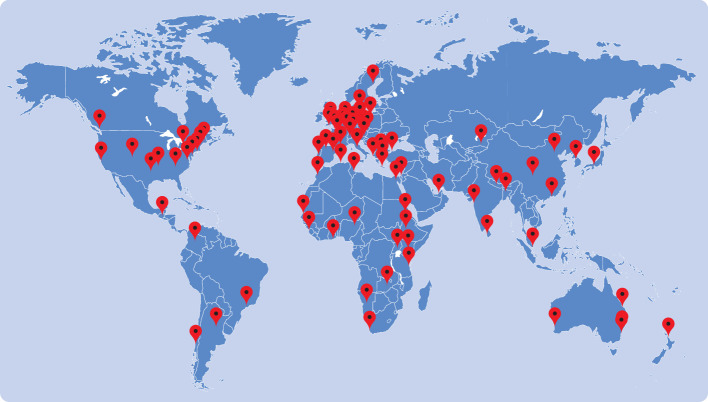
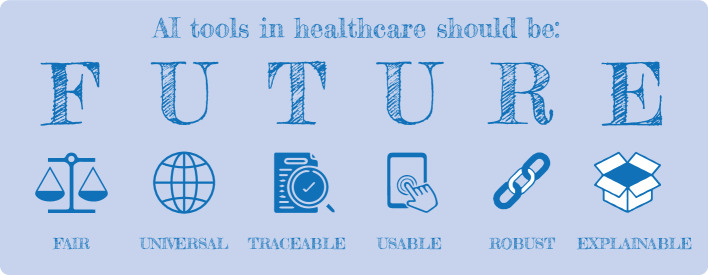
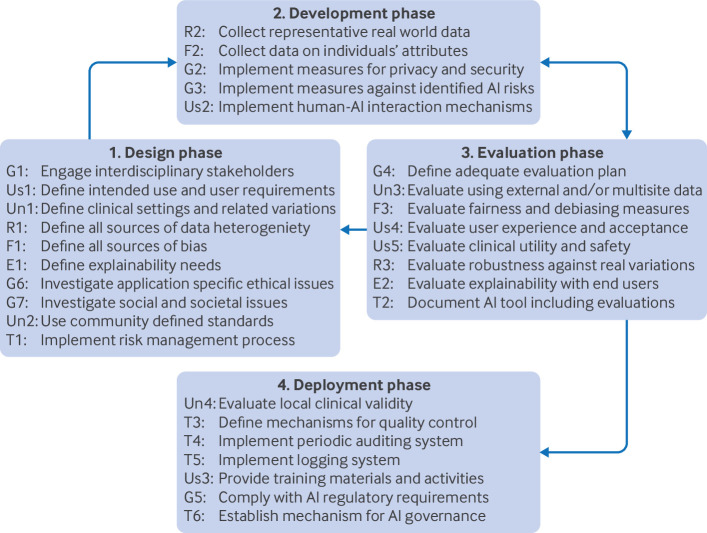
Despite major advances in artificial intelligence (AI) research for healthcare, the deployment and adoption of AI technologies remain limited in clinical practice. This paper describes the FUTURE-AI framework, which provides guidance for the development and deployment of trustworthy AI tools in healthcare. The FUTURE-AI Consortium was founded in 2021 and comprises 117 interdisciplinary experts from 50 countries representing all continents, including AI scientists, clinical researchers, biomedical ethicists, and social scientists. Over a two year period, the FUTURE-AI guideline was established through consensus based on six guiding principles—fairness, universality, traceability, usability, robustness, and explainability. To operationalise trustworthy AI in healthcare, a set of 30 best practices were defined, addressing technical, clinical, socioethical, and legal dimensions. The recommendations cover the entire lifecycle of healthcare AI, from design, development, and validation to regulation, deployment, and monitoring.
Overview
CoChat Summary
TL;DR
FUTURE-AI is an international consensus guideline for trustworthy and deployable healthcare AI, developed by 117 experts from 50 countries over 24 months. It defines six guiding principles—fairness, universality, traceability, usability, robustness, and explainability—and 30 best practices covering the full AI lifecycle.
Key findings
- The FUTURE-AI Consortium comprised 117 interdisciplinary experts from 50 countries representing all continents, including AI scientists, clinical researchers, biomedical ethicists, and social scientists.
- The guideline was established through a modified Delphi process over 24 months, with eight rounds of feedback and iterative discussion, resulting in 30 best practices across six guiding principles plus a “general” category.
- All final recommendations were approved with less than 5% disagreement among FUTURE-AI members; remaining disagreement mostly concerned whether recommendations should be “recommended” or “highly recommended” for research versus deployable tools.
- The framework distinguishes compliance levels for research/proof-of-concept AI tools versus deployable clinical AI tools, with higher expected compliance for deployable tools on many recommendations.
Methods
- International consensus guideline developed using a modified Delphi approach over 24 months, beginning with six core guiding principles and an initial set of recommendations.
- Eight rounds included working groups, an online survey, iterative written feedback, external feedback from 44 additional experts, online consensus meetings, and a final consensus vote.
- Results were aggregated quantitatively by analysing expert voting patterns and qualitatively by synthesising feedback and recurring themes; the final consortium consisted of 117 experts.
Limitations
- The paper states that implementation may involve substantial costs, potentially exacerbating disparities in AI adoption, especially for smaller developers and resource-limited health systems.
- The paper states that liability remains unaddressed, including who should perform audits and who should be accountable for errors, and that current regulations prevent post-release modifications because they would invalidate initial validation.
- The paper states that for some recommendations no clear standard yet exists, and that FUTURE-AI is proposed as a dynamic, living framework requiring future refinement and domain-specific operationalisation.
Model-written summary. Check it against the paper before relying on it.
Integrity signals
Registry
Cites
Statistics
Figures
Verification
Claims the paper makes
11 Valid · 0 Not valid · 10 Not checked · 42 Own results and interpretations
Every source the paper cites for this claim was checked and supports it.
In the paper
“Existing research has shown that even small, imperceptible variations in the input data might lead AI models into incorrect decisions.60”
§ FUTURE-AI: international consensus guideline for trustworthy and deployable artificial intelligence in healthcare > FUTURE-AI guideline > Robustness
What the sources say
- Supportedcites [60] Finlayson SG Bowers JD Ito J Zittrain JL Beam AL Kohane IS. Adversarial attacks on medical machine learning. Science 2019; 363: 1287- 9. 10.1126/science.aaw4399 30898923 PMC7657648 source
The opening passage says a small, carefully designed change to an input can cause a machine-learning system to reach a wrong conclusion. In “DEEP VULNERABILITIES,” the paper gives an example: a visually imperceptible image perturbation makes a classifier label a benign mole as malignant. The claim's tentative wording is consistent with this account of deliberately crafted changes. (LLM, conf=0.94)
hedgedstates a possible cause- Asserted: passes — The authors put it forward as true.
- Checkable: passes — It can be checked against evidence.
- Load-bearing: passes — The paper’s conclusions depend on it.
- Based: passes — The paper gives a reason why it holds.
- Supported
The cited sources support only part of this claim — read each source’s verdict below.
In the paper
“Bias in healthcare AI is application specific.32”
§ FUTURE-AI: international consensus guideline for trustworthy and deployable artificial intelligence in healthcare > FUTURE-AI guideline > Fairness
What the sources say
- Partly supportedcites [32] Ferryman K, Pitcan M. Fairness in Precision Medicine. Data & Society Research Institute. 2018. https://datasociety.net/library/fairness-in-precision-medicine/ sourceExperimental — accuracy not yet measured
The “Fairness in Precision Medicine” section says that bias can arise from human assumptions, automation, and different phases of data handling. That supports the idea that bias depends on how a system is developed and used, but the paper discusses precision medicine rather than establishing the claim for healthcare AI applications generally. No page number is available in our copy. (LLM, conf=0.75)
plain- Asserted: passes — The authors put it forward as true.
- Checkable: passes — It can be checked against evidence.
- Load-bearing: passes — The paper’s conclusions depend on it.
- Based: passes — The paper gives a reason why it holds.
- Partly supported
In the paper
“In particular, existing research has shown that AI tools in healthcare can be prone to errors and patient harm, biases and increased health inequalities, lack of transparency and accountability, as well as data privacy and security breaches.4 5 6 7 8”
§ FUTURE-AI: international consensus guideline for trustworthy and deployable artificial intelligence in healthcare > Introduction
What the sources say
- Not matchedcites 4 5 6 7 8
This doesn’t read as a citation we can look up.
plainstates a possible cause- Asserted: passes — The authors put it forward as true.
- Checkable: passes — It can be checked against evidence.
- Load-bearing: passes — The paper’s conclusions depend on it.
- Based: passes — The paper gives a reason why it holds.
- Not matched
In the paper
“However, there is an absence of clear, widely accepted guidelines on how healthcare AI tools should be designed, developed, evaluated, and deployed to be trustworthy—that is, technically robust, clinically safe, ethically sound, and legally compliant (see glossary in appendix table 1).9”
§ FUTURE-AI: international consensus guideline for trustworthy and deployable artificial intelligence in healthcare > Introduction
What the sources say
- Not matchedcites [9] High-Level Expert Group on AI, EU Commission. Ethics Guidelines For Trustworthy AI. 2019. https://www.europarl.europa.eu/cmsdata/196377/AI%20HLEG_Ethics%20Guidelines%20for%20Trustworthy%20AI.pdf
We searched by its title and found no matching paper.
plain- Asserted: passes — The authors put it forward as true.
- Checkable: passes — It can be checked against evidence.
- Load-bearing: passes — The paper’s conclusions depend on it.
- Based: passes — The paper gives a reason why it holds.
- Not matched
In the paper
“In particular, existing research has shown that AI tools in healthcare can be prone to errors and patient harm, biases and increased health inequalities, lack of transparency and accountability, as well as data privacy and security breaches.4 5 6 7 8”
§ FUTURE-AI: international consensus guideline for trustworthy and deployable artificial intelligence in healthcare > Introduction
What the sources say
- Not matchedcites 4 5 6 7 8
This doesn’t read as a citation we can look up.
plainstates a possible cause- Asserted: passes — The authors put it forward as true.
- Checkable: passes — It can be checked against evidence.
- Load-bearing: passes — The paper’s conclusions depend on it.
- Based: passes — The paper gives a reason why it holds.
- Not matched
3 more claims
Create a free account to see all 63 claims and to verify the 1 reference still open.
- Probably not a substantial claim. 48
- It may state two separate claims as one. 24
Claims other papers make about this one
Each is checked against this paper’s own text: does it say what the citing paper says it does?
The source backs part of the claim, not all of it — or backs it for a different population, condition or comparison.
In the citing paper
“First, many dimensions of trustworthiness-such as clinical appropriateness, fairness, and the usefulness of explanations-still rely heavily on human expert judgment (Lekadir et al., 2025).”
From Trustworthy Medical Question Answering: An Evaluation-Centric Survey (2025) · cites this paper as Lekadir et al., 2025
Experimental — accuracy not yet measuredThe check wasn’t confident either way, so it gives no verdict — never disputed.
In the citing paper
“Cancer-related mutations and chemical modifications can also alter these shapes.”
From Artificial Intelligence in Clinical Oncology: From Productivity Enhancement to Creative Discovery (2025) · cites this paper as [107]
Experimental — accuracy not yet measuredThe check wasn’t confident either way, so it gives no verdict — never disputed.
In the citing paper
“Drug binding often depends on motion, such as small shifts when a compound binds, long-range effects within the protein, hidden pockets that open and close, or changes when proteins form complexes.”
From Artificial Intelligence in Clinical Oncology: From Productivity Enhancement to Creative Discovery (2025) · cites this paper as [107]
Experimental — accuracy not yet measuredThe check wasn’t confident either way, so it gives no verdict — never disputed.
In the citing paper
“AlphaFold has been a breakthrough for drug discovery, including cancer therapeutics, but its limitations are well recognized [105,106,107,108].”
From Artificial Intelligence in Clinical Oncology: From Productivity Enhancement to Creative Discovery (2025) · cites this paper as [107]
Experimental — accuracy not yet measuredIn the citing paper
“It predicts a protein’s most stable shape; however, it does not model how the protein moves.”
From Artificial Intelligence in Clinical Oncology: From Productivity Enhancement to Creative Discovery (2025) · cites this paper as [107]
Citations
Cites
The FAIR Guiding Principles for scientific data management and stewardship
Wilkinson, M. D., Dumontier, M., Aalbersberg, I. J., Appleton, G., Axton, M., Baak, A., Blomberg, N., Boiten, J.-W., da Silva Santos, L. B., Bourne, P. E., et al. (2016) · Scientific Data · doi:10.1038/sdata.2016.18 · Cited by 18,423 · cited 1×
“AI in healthcare has unique properties compared with other domains, such as the special trust relation between doctors and patients, because patients themselves generally do not have the opportunity to objectively assess the diagnosis and treatment decisions of doctors.”
Sudlow, C., Gallacher, J., Allen, N., Beral, V., Burton, P., Danesh, J., Downey, P., Elliott, P., Green, J., Landray, M., et al. (2015) · PLOS Medicine · doi:10.1371/journal.pmed.1001779 · Cited by 12,728
High-performance medicine: the convergence of human and artificial intelligence
Topol, E. J. (2019) · Nature Medicine · doi:10.1038/s41591-018-0300-7 · Cited by 10,450
Heidenreich, P. A., Bozkurt, B., Aguilar, D., Allen, L. A., Byun, J. J., Colvin, M. M., Deswal, A., Drazner, M. H., Dunlay, S. M., Evers, L. R., et al. (2022) · Circulation · doi:10.1161/cir.0000000000001063 · Cited by 4,922
Collins, G. S., Moons, K. G. M., Dhiman, P., Riley, R. D., Beam, A. L., Van Calster, B., Ghassemi, M., Liu, X., Reitsma, J. B., van Smeden, M., et al. (2024) · BMJ · doi:10.1136/bmj-2023-078378 · Cited by 4,718
Self-citationThe Cancer Imaging Archive (TCIA): Maintaining and Operating a Public Information Repository
Clark, K., Vendt, B., Smith, K., Freymann, J., Kirby, J., Koppel, P., Moore, S., Phillips, S., Maffitt, D., Pringle, M., et al. (2013) · Journal of Digital Imaging · doi:10.1007/s10278-013-9622-7 · Cited by 4,599
Self-citationThe future of digital health with federated learning
Rieke, N., Hancox, J., Li, W., Milletarì, F., Roth, H. R., Albarqouni, S., Bakas, S., Galtier, M. N., Landman, B. A., Maier-Hein, K., et al. (2020) · npj Digital Medicine · doi:10.1038/s41746-020-00323-1 · Cited by 4,015
Self-citationThe Future of Digital Health with Federated Learning
Rieke, N., Hancox, J., Li, W., Milletari, F., Roth, H., Albarqouni, S., Bakas, S., Galtier, M. N., Landman, B., Maier-Hein, K., et al. (2020) · arXiv · doi:10.48550/arxiv.2003.08119 · Cited by 3,495
Self-citationKey challenges for delivering clinical impact with artificial intelligence
Kelly, C. J., Karthikesalingam, A., Suleyman, M., Corrado, G., & King, D. (2019) · BMC Medicine · doi:10.1186/s12916-019-1426-2 · Cited by 3,136
Explainable AI: a review of machine learning interpretability methods
Linardatos, P., Papastefanopoulos, V., & Kotsiantis, S. (2020) · Entropy · doi:10.3390/e23010018 · Cited by 2,922
Research works printed but not linked: 3
- IEEE Standards Association. IEEE Recommended Practice for the quality management of datasets for Medical Artificial Intelligence. https://standards.ieee.org/ieee/2801/7459/
- Cheatham B, Javanmardian K, Samandari H. Confronting the risks of artificial intelligence. 2019. https://www.semanticscholar.org/paper/Confronting-the-risks-of-artificial-intelligence-Cheatham-Javanmardian/2022830bf9f896d99c1d7ff228e3adca08efe352
- Quarta A, Bruno P, Calimeri F. Continual learning for medical image classification. 2022. http://ceur-ws.org
Cited by
Items 101–200 of 656
From black box to clear box: explainable AI for next-gen pharmacovigilance
Suryadevara, N., Priya, V., & Sharma, S. (2026) · Expert Opinion on Drug Safety · doi:10.1080/14740338.2026.2628822 · Cited by 10
“The National Strategy for Artificial Intelligence (NSAI) implicitly identified PV as an area where AI can reinforce health security, noting structural issues such as fragmented data environments, underreporting of ADR, and weak privacy frameworks [61].”
Operationalizing trustworthy artificial intelligence in clinical and operational workflows
Khashu, K. (2026) · Frontiers in Digital Health · doi:10.3389/fdgth.2026.1779041 · Cited by 4
Singh, A., Qureshy, F. A., Kurtz, A. P., Bhattacharya, M., Prasanna, P., & Singh, G. (2026) · Radiology Imaging Cancer · doi:10.1148/rycan.250567 · Cited by 7
Ji, Q., & Wang, M. (2026) · Frontiers in Public Health · doi:10.3389/fpubh.2026.1752484 · Cited by 5
“This last step matters because when an algorithm-endorsed pathway is perceived as the only “safe” option, declining or negotiating recommendations can feel morally risky, shifting shared decision-making toward compliance and eroding perceived autonomy (41, 43, 45).”
InfluentialDu, J., Zhu, L., Min, X., Chang, X., Qi, W., Wei, T., Wei, S., Zhang, X., Huang, J., Tao, X., et al. (2026) · Frontiers in Public Health · doi:10.3389/fpubh.2026.1747362 · Cited by 8
de Matos, J. C. R. G., CALSTER, B. V., Celi, L. A., Dhiman, P., Gichoya, J. W., Riley, R. D., Russell, C., Khalid, S., & Collins, G. S. (2026) · The Lancet Digital Health · doi:10.1016/j.landig.2026.101001 · Cited by 27
“…12 the Fairness, Universality, Traceability, Usability, Robustness, and Explainability-AI (FUTURE-AI) consensus guideline for trustworthy and deployable AI in health care, 46 and the Standards for Data Diversity, Inclusivity, and Generalisability (STANDING Together) consensus recommendations.”
Self-citationHardacre, C., Hibbs, T., Fok, M., Wiles, R., Bashar, N., Ahmed, S., Mascarenhas, M., Zheng, Y., & Javed, M. A. (2025) · Cancers · doi:10.3390/cancers17050812 · Cited by 7
“…further work must aim to expand on high-performing initial models into prospective, larger, multi-centre trials with close adherence to relevant AI in medical research reporting standards and emerging guidelines such as SPIRIT-AI, CONSORT-AI, or DECIDE-AI [77] and the new FUTURE-AI guidelines [78].”
Dias, R. J. D. L. (2025) · World Journal of Neuroscience · doi:10.4236/wjns.2025.152010 · Cited by 5
Optimizing Healthcare Delivery: Strategies for Workforce Retention and Resource Allocation
Stolarchuk, C., Anshu, Kumar, P., Lionis, C. D., Anastasaki, M., Conde, M. G., Chowdhury, M., Andoko, D., Gauchan, B., & Ateghang-Awankem, B. (2025) · Journal of Surgical Specialties and Rural Practice · doi:10.4103/jssrp.jssrp_7_25 · Cited by 6
AI in the doctor-patient encounter
Reddy, S., Padmanabhan, S., & Overgaard, S. M. (2025) · BMJ · doi:10.1136/bmj.r2344 · Cited by 4
Qazi, I. A., Ali, A., Khawaja, A. U., Akhtar, M. J., Sheikh, A. Z., & Alizai, M. H. (2025) · medRxiv · doi:10.1101/2025.06.06.25329104 · Cited by 8
“14,16 This underscores the urgent need for rigorous, context-specific evaluations integrating LLM deployment with structured clinician training, especially in LMIC settings, before widespread adoption can be justified.”
Amaya-Santos, S., Vargas, C., & Bermúdez-Tamayo, C. (2026) · Public Health in Practice · doi:10.1016/j.puhip.2025.100713 · Cited by 4
Bracher‐Smith, M., & Escott‐Price, V. (2025) · Molecular Psychiatry · doi:10.1038/s41380-025-03330-4 · Cited by 7
Aykaç, K., Cubuk, O., Demir, O. O., Choe, Y. J., Aydin, M., & Özsürekçi, Y. (2025) · Scientific Reports · doi:10.1038/s41598-025-27722-2 · Cited by 6
Next Generation Smart Agricultural Technologies and Precision Farming with Industry 6.0 Innovations
Majeed, H., & Iftikhar, T. (2026) · Springer eBooks · doi:10.1007/978-3-032-07278-8_13 · Cited by 4
Giarletta, L., Zhou, B., Marano, R., Cecco, C. N. D., & van Assen, M. (2026) · Journal of Thoracic Imaging · doi:10.1097/rti.0000000000000873 · Cited by 5
Muda, N. B., & Sulaiman, M. A. (2026) · Scientific Reports · doi:10.1038/s41598-026-36550-x · Cited by 7
“This study adapts each HOQ component to accommodate the unique characteristics of healthcare AI development, integrating HCAI principles to ensure holistic consideration of ethical and practical dimensions 6 .”
Fair Foundation Models for Medical Image Analysis: Challenges and Perspectives
Queiroz, D., Carlos, A., Anjos, A., & Berton, L. (2026) · ACM Transactions on Computing for Healthcare · doi:10.1145/3793542 · Cited by 15
Martínez-Lozano, A., Bernal, A. B., Roy, L., Vicente-Samper, J. M., & Juan, C. G. (2026) · Biosensors · doi:10.3390/bios16010067 · Cited by 7
“Agencies require robust evidence of safety, efficacy, and algorithmic transparency [204].”
InfluentialArtificial intelligence and the future of evidence-based medicine
Car, L. T., Wong, T. Y., Majeed, A., & Collins, G. S. (2026) · Nature Health · doi:10.1038/s44360-025-00002-z · Cited by 7
Self-citationCalibration-informed metrics for instance-level predictive reliability in medical AI
Cabitza, F. (2026) · Artificial Intelligence in Medicine · doi:10.1016/j.artmed.2026.103366 · Cited by 6
AI adoption in healthcare organizations: Spheres of development and the virtue of visible value
Duus, R., Cooray, M., & Lilley, S. (2026) · Technological Forecasting and Social Change · doi:10.1016/j.techfore.2026.124541 · Cited by 3
Montero, A. M. B., Huet‐Dastarac, M., Herranz-Hernández, S. M., Tengler, B., Buhl, E. S., Galapon, A., Cárdenas, C. E. S., Fusella, M., Herbin, G., de Hond, Y. J. M., et al. (2026) · Physics and Imaging in Radiation Oncology · doi:10.1016/j.phro.2026.100940 · Cited by 7
“Documents such as FUTURE-AI [29], CHAI-ARC [30], and the recent joint AAPM/ESTRO guidelines [31] offer valuable guidance on the full model lifecycle.”
Metrics for Artificial Intelligence in Medicine: A Reference Resource
Gonzales, R. A., Takahashi, M. S., Retson, T., Banerjee, I., Park, S. H., & Kahn, C. E. (2026) · Radiology Artificial Intelligence · doi:10.1148/ryai.260070 · Cited by 3
Steijlen, O. F. M., Rentroia‐Pacheco, B., Mooyaart, A. L., Chia, C. M., Louwman, M. W. J., Voorham, Q. J. M., Bruggink, A. H., Nijsten, T. E. C., Wakkee, M., & Hollestein, L. M. (2026) · European Journal of Epidemiology · doi:10.1007/s10654-026-01384-4 · Cited by 3
“Impor - tantly, they rarely combine high-quality hematoxylin and eosin–stained whole slide images with comprehensive clini - cal data, which is essential for robust model development and validation [ 47 , 48].”
Teng, X., Ma, J., Zhang, J., Zhao, M., Meng, X., Yin, Y., Xiao, H., Lai, Q., Zhang, X., Jiang, Y., et al. (2026) · Radiology Artificial Intelligence · doi:10.1148/ryai.250734 · Cited by 5
Al-Shayea, E. I. (2026) · Frontiers in Materials · doi:10.3389/fmats.2026.1782319 · Cited by 6
Artificial intelligence–based retinal imaging for brain health assessment: a scoping review
Ran, A. R., Zhu, Z., Cheng, K. H. L., Ng, C. F., Choi, O. Y. M., He, Q., Zheng, C., Hu, W., Hu, X., Chan, V. T. T., et al. (2026) · The Lancet Digital Health · doi:10.1016/j.landig.2026.101020 · Cited by 5
Wójcik, S., Rulkiewicz, A., & Domienik‐Karłowicz, J. (2026) · Healthcare · doi:10.3390/healthcare14162519 · Cited by 3
“Consistent with lifecycle-oriented guidance for trustworthy AI [18], the framework spans three phases: a pre-deployment phase (intended use, maturity, risk classification, AI-ready data, local validation and vendor qualification); a deployment phase (human oversight, SOPs, workflow integration and…”
Yung, A., Shaw, T. J., Kay, J., & Janssen, A. L. (2025) · JMIR Cancer · doi:10.2196/70827 · Cited by 5
“Therefore, frameworks and guidelines have been suggested to tackle the issues related to the reliability of AI-powered health care systems, such as the FUTURE-AI framework, which defines 6 requirements for trustworthy AI [50].”
Biswas, D., Aminorroaya, A., Croon, P. M., Batinica, B., Pedroso, A. F., & Khera, R. (2025) · Current Atherosclerosis Reports · doi:10.1007/s11883-025-01337-4 · Cited by 5
Systematic literature review of the use of generative AI in health economic evaluationPreprint
Sharp, S., Lokuge, K., Elvidge, J., Hudson, T., & Dawoud, D. (2025) · medRxiv · doi:10.1101/2025.04.25.25326412 · Cited by 7
Cabrita, M., Dantas, C., den Akker, H. O., Bobowicz, M., Navarro, S., Ribas, G., Kessler, D. A., Osuala, R. O., Díaz, O., Lekadir, K., et al. (2025) · Springer eBooks · doi:10.1007/978-3-031-89963-8_3 · Cited by 2
Self-citationFontaine, J., Suszko, M., di Franco, F., Leroux, A., Bonnet, É., Bosset, M., Langrand-Escure, J., Clippe, S., Fleury, B., & Guy, J. (2025) · Physica Medica · doi:10.1016/j.ejmp.2025.105065 · Cited by 2
Kwong, J. C. C., Nguyen, D., Khondker, A., Li, T., & Kulkarni, G. S. (2025) · BMJ Oncology · doi:10.1136/bmjonc-2025-000891 · Cited by 3
Komasawa, N. (2025) · Journal of Anesthesia · doi:10.1007/s00540-025-03575-x · Cited by 6
Exploring learning transferability in deep segmentation of colorectal cancer liver metastases
Abbas, M., Badic, B., Andrade-Miranda, G. X., Bourbonne, V., Jaouen, V., Visvikis, D., & Conze, P.-H. (2025) · Computers in Biology and Medicine · doi:10.1016/j.compbiomed.2025.111076 · Cited by 3
Özkök, S. (2025) · Pediatric Radiology · doi:10.1007/s00247-025-06487-w · Cited by 4
Berne, J. V., that, M. T., & Jacobs, R. (2025) · Dentomaxillofacial Radiology · doi:10.1093/dmfr/twaf086 · Cited by 2
Ethical Horizons in Robotic Rehabilitation: Ensuring Safe AI Use Under the EU AI Act
Calabrò, R. S. (2025) · Medical Sciences · doi:10.3390/medsci13040317 · Cited by 2
“…styles of transparency, with clinicians needing interpretable performance metrics and documentation of failure modes and patients benefiting more from plain-language explanations of system purpose, limitations and circumstances in which clinicians might override recommendations [16,17,20].”
Kumar, A., Varsha, P. S., Joshi, M., Samara, G., Narayanasamy, A., & Edacherian, S. (2026) · Journal of Open Innovation Technology Market and Complexity · doi:10.1016/j.joitmc.2026.100732 · Cited by 4
Oettl, F. C., Samuelsson, K., & Pruneski, J. A. (2026) · Springer eBooks · doi:10.1007/978-981-96-7448-0_40-1 · Cited by 4
Transforming Public Health Practice with Artificial Intelligence: A Framework-Driven Approach
Oleribe, O. O., Uzoaru, F., Tarfa, A., Olaniran, O. H., & Taylor-Robinson, S. D. (2026) · Healthcare · doi:10.3390/healthcare14030385 · Cited by 4
“…in healthcare [99], the FUTURE-AI initiative international consensus guidelines to ensure the trustworthiness of AI in clinical practice [100], the United States Food and Drug Administration (FDA) AI/ML-Based Software as a Medical Device (SaMD) Action Plan [101], and the European…”
Alharbi, B. S., Aljabri, M. M., & Ali, E. A. (2026) · Healthcare · doi:10.3390/healthcare14040506 · Cited by 10
“Higher levels of institutional adoption, characterized by ethical governance, clinical integration, regulatory oversight, and accountability, have been shown to signal legitimacy and foster public trust in AI in healthcare settings [15].”
AI and Personalized Medicine in Wound Care
Gurler, N., Yaakov, R. A., Bulbul, H. S., Cheng, P., Wu, K., & Güler, Ö. (2026) · Stem cell biology and regenerative medicine · doi:10.1007/978-3-032-12442-5_32 · Cited by 3
Müller, D., Bellenberg, B., & Lukas, C. (2026) · RöFo - Fortschritte auf dem Gebiet der Röntgenstrahlen und der bildgebenden Verfahren · doi:10.1055/a-2808-0083 · Cited by 2
TRIAGE: Trustworthy Reporting and Assessment for Clinical Gain and Effectiveness of AI Models
Fazilati, F., Rajabi, M. T., Alihosseini, N., Farsani, M. E., Sandid, S. H., Zamani, S., Farahani, M. A., Biriaei, F., Sadeghipour, F., Mirshamsi, M. T., et al. (2026) · Diagnostics · doi:10.3390/diagnostics16050666 · Cited by 7
The Ethics and Epistemology of Clinician-AI Disagreement in Medicine: Beyond Opposition
Pozzi, G., Sand, M., & Jongsma, K. R. (2026) · The American Journal of Bioethics · doi:10.1080/15265161.2026.2632008 · Cited by 22
Soares, M. Q., & Filho, A. D. P. C. (2026) · Revista Brasileira de Epidemiologia · doi:10.1590/1980-549720260006 · Cited by 17
Oleribe, O. O., Brash, M., Tarfa, A., Izurieta, R., & Taylor-Robinson, S. D. (2026) · Healthcare · doi:10.3390/healthcare14060775 · Cited by 4
Ferdowsi, M., Moustafa, N., Keshk, M., & Turnbull, B. (2026) · Electronics · doi:10.3390/electronics15071519 · Cited by 4
Fontaine, G., Michie, S., Beidas, R. S., Geng, E. H., Fahim, C., Powell, B. J., Welch, V. N., Thomas, J., Chan, J., Abbasgholizadeh-Rahimi, S., et al. (2026) · Implementation Science · doi:10.1186/s13012-026-01503-5 · Cited by 7
Empowering Patients and Clinicians: LLMs in Hypertension Care, A Scoping Review
Pariente, B., Varennes, O., Burgun, A., Azizi, M., Amar, L., & Tsopra, R. (2026) · Hypertension · doi:10.1161/hypertensionaha.126.27004 · Cited by 2
Hsiao, Y.-C., Hung, K.-H., Yeh, C., Chen, Y., Ko, T., Lai, C.-F., Lin, L. Y., Chang, W., Tsao, Y., Lin, M. M.-W., et al. (2026) · Heart · doi:10.1136/heartjnl-2025-327462 · Cited by 2
“33 Our novel approach paves the way for reducing model bias in AI-ECG and enhancing its generalisability.”
The EU AI Act: implications and compliance guidance for healthcare facilities
Dennstädt, F., Hastings, J., Windisch, P., Jovanovic, A., Marić, T. Ž., Brüningk, S. C., Aebersold, D. M., Knopf, A. C., & Cihoric, N. (2026) · Frontiers in Digital Health · doi:10.3389/fdgth.2026.1808373 · Cited by 7
Wu, D., Yu, Q., Wu, Q., Wang, X., Wei, H., Li, F., Li, G., Wang, X., & Wang, X. (2026) · Frontiers in Immunology · doi:10.3389/fimmu.2026.1854718 · Cited by 8
“FUTURE-AI further emphasizes fairness, universality, traceability, usability, robustness and explainability as core principles for trustworthy health AI deployment (197).”
Touati, A., Boufahja, F., Hamadi, N. B., Touaitia, R., & Idres, T. (2026) · Microbial Drug Resistance · doi:10.1177/10766294261467803 · Cited by 2
Fuglkjær, A. D., Kılıç, D. K., Eskesen, M. H., Simonsen, M. R., Poulsen, L. Ø., Niemann, C. U., Jensen, P., Søgaard, K. K., Werling, M., Christensen, F., et al. (2025) · European Journal Of Haematology · doi:10.1111/ejh.70012 · Cited by 2
Cabrita, M., Machado, N. T., den Akker, H. O., Cinà, I., Llussà, J. P., Haitjema, S., Triantafyllidis, A. K., Buijsman, S., & Dantas, C. (2025) · International Digital Public Health Conference (DPH) · doi:10.1109/dph66411.2025.11198049 · Cited by 2
“Multiple frameworks for developing trustworthy AI have emerged for general AI (e.g., [24], [25]), as well as specifically for the healthcare domain [26].”
Bioelectronic medicine in the rehabilitation of diseases: Opportunities and challenges
Zhang, S., Liu, M., & Wang, X. (2026) · EngMedicine · doi:10.1016/j.engmed.2025.100119 · Cited by 3
Johnson, D. S. (2025) · arXiv · doi:10.48550/arxiv.2503.03529 · Cited by 2
Johnson, D. S. (2026) · Proceedings of the 34th ACM Conference on User Modeling, Adaptation and Personalization · doi:10.1145/3774935.3806657 · Cited by 2
Building trust in artificial intelligence for healthcare
Ozkan, J. (2025) · European Heart Journal · doi:10.1093/eurheartj/ehaf432 · Cited by 1
Advocating for trust in and trustworthy AI to transform evidence synthesis
Fletcher, I. (2025) · Environmental Evidence · doi:10.1186/s13750-025-00369-2 · Cited by 3
“In response to the slow adoption of AI in healthcare, the FUTURE-AI framework was developed with inter-disciplinary experts, producing six guiding principles to operationalise trustworthy AI: fairness, universality, traceability, usability, robustness, and explainability [36].”
Said-Criado, I., Pietrantonio, F., Montagna, M., Rosiello, F., Missikoff, O., Drago, C., Leung, T. I., Vinci, A., Signorini, A., & Gómez‐Huelgas, R. (2025) · Clinics and Practice · doi:10.3390/clinpract15110200 · Cited by 1
“As a result, GAI applications must strictly comply with government regulations and established frameworks to protect privacy and data ownership issues and guarantee transparency and accountability in patient care [36,37].”
U-GRKAN: An Efficient and Interpretable Architecture for Medical Image Segmentation
Wu, X., Ji, S., Tao, J., et al. (2025) · Journal of Imaging Informatics in Medicine · doi:10.1007/s10278-025-01733-x · Cited by 1
Aydin, O. U., Koch, A., Hilbert, A., Rieger, J., Lohrke, F., Ishida, F., Tanioka, S., & Frey, D. (2025) · Neuroinformatics · doi:10.1007/s12021-025-09745-2 · Cited by 3
Kachnowski, S., Khan, A. H., Floquet, S., Whitlock, K. K., Wisnivesky, J. P., Neill, D. B., Dankwa‐Mullan, I., Ortega, G., Daoud, M., Zaheer, R., et al. (2025) · Frontiers in Big Data · doi:10.3389/fdata.2025.1621526 · Cited by 1
AI ‐Assisted Decision‐Making for End‐Stage Organ Failure: Opportunities and Ethical Concerns
Haller, J., Brazhnik, O., & Fenton, K. N. (2025) · Artificial Organs · doi:10.1111/aor.70027 · Cited by 2
Zwetsloot, S. L. M., Rijken, L., Tomić, I., Bera, K. D., Jongkind, V., Yeung, K. K., Wolterink, J. M., Išgum, I., Marquering, H. A., Ploem, M. C., et al. (2025) · European Journal of Vascular and Endovascular Surgery · doi:10.1016/j.ejvs.2025.12.002 · Cited by 2
Chen, Y., Xu, Y., Li, W., Peng, Y., Zhang, S., Xu, W., & Wu, Q. (2025) · Frontiers in Medicine · doi:10.3389/fmed.2025.1716768 · Cited by 2
AI: Need for Comparative Studies in Complex Neurologic Diagnosis
Finelli, P. F. (2025) · Annals of Neurology · doi:10.1002/ana.78068 · Cited by 1
A practical guide to the implementation of AI in orthopaedic research—Part 5: Data management
Zsidai, B., Oettl, F. C., Pruneski, J. A., Pánics, G., Winkler, P. W., Senorski, E. H., Hirschmann, M. T., Yu, Y., FELDT, R. H., Samuelsson, K., et al. (2025) · Journal of Experimental Orthopaedics · doi:10.1002/jeo2.70581 · Cited by 1
“From the perspective of data management, the FUTURE ‐ AI guidelines emphasize clearly de fi ning sources of data variation, data representativeness and data ‐ related risk management in the context of the research project [22].”
Artificial Intelligence in UK Hospital Medicine: From Innovation to Implementation
Carroll, D., Boodhoo, V., Lowe, D. J., & Carlin, C. M. (2025) · British Journal of Hospital Medicine · doi:10.12968/hmed.2025.0468 · Cited by 1
Artificial intelligence in MRI clinical practice: From historical innovation to emerging trends
Aldahery, S. T. (2026) · Journal of Radiation Research and Applied Sciences · doi:10.1016/j.jrras.2026.102158 · Cited by 2
Trustworthy Data-driven Chronological Age Estimation from Panoramic Dental Images
Couso, A. V., Vila-Blanco, N., Mb, P. C., Bugarín, A., Tomás, I., & Alonso, J. M. (2026) · Information Systems Frontiers · doi:10.1007/s10796-025-10682-3 · Cited by 3
“Therefore, there is international consensus that trustworthy and deployable AI in healthcare should be fair, universal, traceable, usable, robust, and explainable (Lekadir et al., 2025).”
Cochrane, J. A., Roberts, O. L., Ribbons, K., Clark, R., Pua, Y. H., Tan, T. L., Thwin, L., Leung, Y. Y., Liow, M. H. L., Tan, B. Y., et al. (2026) · Therapeutic Advances in Musculoskeletal Disease · doi:10.1177/1759720x251407070 · Cited by 1
“42 However, only two articles cited adherence to the International Patient Decision Aid Standards (IPDAS).”
Ethics, equality and artificial intelligence
Nunes, S. B., & Nunes, R. (2025) · Revista Bioética · doi:10.1590/1983-803420253981en · Cited by 1
Miron, G., Terziev, R., Schöls, M., McLaren, J. R., Loddenkemper, T., Wellmer, J., Mues, S., & Meisel, C. (2026) · Epilepsia · doi:10.1002/epi.70134 · Cited by 3
Kuo, R. Y. L., O’Hanlon, C., Smith, J. H., Hill, R., Papież, B. W., Collins, G. S., Furniss, D., & Tutton, E. (2026) · BMJ Digital Health & AI · doi:10.1136/bmjdhai-2025-000239 · Cited by 4
“30 The framework outlines six domains: fairness, universality, traceability, usability, robustness and explainability, intended to guide development and post-market monitoring.”
Self-citationLarge Language Models in the Assessment and Care of Internet Gaming Disorder
Kranas, A., & Verykios, V. S. (2026) · AI in Medicine · doi:10.3390/aimed1010006 · Cited by 1
“…the FUTURE-AI international consensus guideline—six principles that emphasize fairness, universality, traceability, usability, robustness, and explainability—and draw on its thirty best practices spanning development, validation, deployment, and post-market monitoring in healthcare contexts [57].”
Duranteau, O., & Popoff, B. (2026) · Current Opinion in Anaesthesiology · doi:10.1097/aco.0000000000001625 · Cited by 2
Cabaço, G. D., & Rodrigues, L. (2026) · Children · doi:10.3390/children13020260 · Cited by 5
Towards Ethical Artificial Intelligence: A Review of XAI Methods in Healthcare
Martínez, M., Cardona, M., & Vásquez-Pineda, B. (2025) · IEEE International Conference on Machine Learning and Applied Network Technologies (ICMLANT) · doi:10.1109/icmlant68509.2025.11394865 · Cited by 1
Physician-centered monitoring of AI-enabled medical devices
Siontis, G. C. M., Ren, Y., Caiani, E. G., & Fraser, A. G. (2026) · The American Journal of Medicine · doi:10.1016/j.amjmed.2026.02.024 · Cited by 1
Knauer, R., Kalmring, M., & Rodner, E. (2026) · Frontiers in Digital Health · doi:10.3389/fdgth.2026.1789412 · Cited by 1
“However, free-text evaluations require a multidimensional assessment of textual outputs to capture the quality of clinical reasoning processes (55–57).”
Boppana, S. H., Chandrashekar, A., Maddineni, G., Chakinala, R. C., Raj, R., Shivaprakash, R. B., Yarra, P., Sunkesula, V. C. K., & Mintz, C. D. (2026) · Journal of Clinical Medicine · doi:10.3390/jcm15072484 · Cited by 3
“…and test AI as an intervention that changes clinician behavior or patient management, protocols and trial reports should follow SPIRIT-AI, CONSORT-AI, and FUTURE-AI, which require explicit reporting of the clinical setting, human-AI interaction, input-output handling, and error analysis [7,8,75].”
Advances in Closed-Loop Artificial Intelligence for Healthcare
Das, D., Adams, S. D., Corva, D. M., Bucknall, T. K., & Kouzani, A. Z. (2026) · Electronics · doi:10.3390/electronics15071396 · Cited by 3
Wan, L., Lin, N., Wang, W., Liang, Z., Dong, Y., He, H., Chen, J., Fan, Y., Liu, T., Wang, H., et al. (2026) · Epilepsia · doi:10.1002/epi.70194 · Cited by 1
“41 There were two studies that performed external validation.”
Armas, R. E. D., & Singh, J. P. (2026) · Current Cardiology Reports · doi:10.1007/s11886-026-02358-4 · Cited by 2
Demir, A., Aydın, F., & Demirel, G. Y. (2026) · Frontiers in Immunology · doi:10.3389/fimmu.2026.1778853 · Cited by 2
Vienna International Centre, 100, P. B., Vienna, A.-1., Austria, 2600-0, T. +. (., & 2600-7, F. +. (. (2026) · IAEA human health series · doi:10.61092/iaea.9olq-aqa9 · Cited by 3
A review of application of Artificial Intelligence in breast cancer detection and treatment
Siddiqui, A., Khobragade, K., Kautish, P., Siddiqui, M., & Marak, Z. R. (2026) · Discover Oncology · doi:10.1007/s12672-026-05010-3 · Cited by 1
Lipskiy, N., & Flowerday, S. (2026) · Future Internet · doi:10.3390/fi18050232 · Cited by 2
Deep Learning for Cardiac Image Analysis
van der Zande, J. L., Alvarez-Florez, L., Volleberg, R. H. J. A., Brás, C., Karkalousos, D., Nijveldt, R., van Royen, N., Leiner, T., Khalili, N., Litjens, G., et al. (2026) · JACC. Cardiovascular imaging · doi:10.1016/j.jcmg.2026.03.007 · Cited by 2
Naib, P., Park, J., Abedin, P., King, C., & Gurupur, V. P. (2026) · Information · doi:10.3390/info17050438 · Cited by 1
Shaikh, K., Thanki, R., & Shah, S. (2026) · Synthesis lectures on engineering, science, and technology · doi:10.1007/978-3-032-25486-3_4
Dantas, C., Cabrita, M., Bobowicz, M., den Akker, H. O., Rafael-Palou, X., Hakkarainen, T., Haavisto, I., Strand, F., Martí‐Bonmatí, L., Divjak, E., et al. (2026) · Journal of Medical Internet Research · doi:10.2196/87984 · Cited by 3
“Furthermore, as part of the structured requirements gathering process, the medigan library was designed to align with the FUTURE-AI guidelines [10], particularly the principle of traceability, emphasizing model transparency and reproducibility.”
InfluentialSelf-citationHayes, J. (2026) · Journal of Medical Radiation Sciences · doi:10.1002/jmrs.70099 · Cited by 1
An Artificial Intelligence–Enabled Cardiopulmonary Resuscitation Instructor
Desai, N., Majhail, N. K., Dredze, M., Hogarth, M., Smith, D., Callaway, C. W., Dezfulian, C., Padman, R., Kochanek, P. M., Ayers, J. W., et al. (2026) · JAMA Internal Medicine · doi:10.1001/jamainternmed.2026.1552 · Cited by 2
Metadata
- Authors
- Lekadir, K., Frangi, A. F., Porras, A. R., Glocker, B., Cintas, C., Langlotz, C. P., Weicken, E., Asselbergs, F. W., Prior, F., Collins, G. S., Kaissis, G., Tsakou, G., Buvat, I., Kalpathy-Cramer, J., Mongan, J., Schnabel, J. A., Kushibar, K., Riklund, K., Marias, K., Amugongo, L. M., Fromont, L. A., Maier-Hein, L., Cerdá-Alberich, L., Martí-Bonmatí, L., Cardoso, M. J., Bobowicz, M., Shabani, M., Tsiknakis, M., Zuluaga, M. A., Fritzsche, M.-C., Camacho, M., Linguraru, M. G., Wenzel, M., De Bruijne, M., Tolsgaard, M. G., Goisauf, M., Cano Abadía, M., Papanikolaou, N., Lazrak, N., Pujol, O., Osuala, R., Napel, S., Colantonio, S., Joshi, S., Klein, S., Aussó, S., Rogers, W. A., Salahuddin, Z., & Starmans, M. P. A.
- Affiliations
- Institució Catalana de Recerca i Estudis Avançats (ES)
- University of Leeds (GB)
- Colorado School of Public Health (US)
- Imperial College London (GB)
- IBM (United States) (US)
- Stanford Medicine (US)
- Fraunhofer Institute for Telecommunications, Heinrich Hertz Institute (DE)
- Health Data Research UK (GB)
- University of Arkansas for Medical Sciences (US)
- Centre for Statistics in Medicine, University of Oxford, Oxford, UK
- TUM Klinikum (DE)
- Gruppo Maggioli, Research and Development Lab, Athens, Greece
- Inserm (FR)
- Massachusetts General Hospital, Harvard Medical School, Boston, MA, USA
- University of California, San Francisco (US)
- Helmholtz Munich (DE)
- Universitat de Barcelona (ES)
- Umeå University (SE)
- Foundation for Research and Technology—Hellas (FORTH), Crete, Greece
- Namibia University of Science and Technology (NA)
- Barcelona Institute of Science and Technology (ES)
- German Cancer Research Center (DE)
- Instituto de Investigación Sanitaria La Fe (ES)
- Medical Imaging Department, Hospital Universitario y Politécnico La Fe, Valencia, Spain
- King's College London (GB)
- Gdańsk Medical University (PL)
- Ghent University (BE)
- Foundation for Research and Technology Hellas (GR)
- Data Science Department, EURECOM, Sophia Antipolis, France
- Technical University of Munich (DE)
- Children's National (US)
- Department of Radiology & Nuclear Medicine, Erasmus MC University Medical Centre, Rotterdam, Netherlands
- University of Copenhagen (DK)
- Biobanking and Biomolecular Resources Research Infrastructure Consortium (AT)
- BBMRI-ERIC, ELSI Services & Research, Graz, Austria
- Champalimaud Foundation (PT)
- Istituto di Scienza e Tecnologie dell'Informazione "Alessandro Faedo" (IT)
- Erasmus MC (NL)
- Artificial Intelligence in Healthcare Program, TIC Salut Social Foundation, Barcelona, Spain
- Macquarie University (AU)
- Maastricht University (NL)
- Corresponding author
- Lekadir, Karim
- ORCID
- Lekadir, Karim
- Frangi, Alejandro F
- Porras, Antonio R
- Glocker, Ben
- Cintas, Celia
- Langlotz, Curtis P
- Weicken, Eva
- Asselbergs, Folkert W
- Prior, Fred
- Kaissis, Georgios
- Tsakou, Gianna
- Buvat, Irène
- Mongan, John
- Schnabel, Julia A
- Kushibar, Kaisar
- Riklund, Katrine
- Amugongo, Lameck M
- Fromont, Lauren A
- Cerdá-Alberich, Leonor
- Cardoso, M Jorge
- Bobowicz, Maciej
- Shabani, Mahsa
- Tsiknakis, Manolis
- Fritzsche, Marie-Christine
- Camacho, Marina
- Linguraru, Marius George
- Wenzel, Markus
- Tolsgaard, Martin G
- Goisauf, Melanie
- Lazrak, Noussair
- Pujol, Oriol
- Osuala, Richard
- Napel, Sandy
- Colantonio, Sara
- Joshi, Smriti
- Klein, Stefan
- Aussó, Susanna
- Rogers, Wendy A
- Salahuddin, Zohaib
- Starmans, Martijn P A
- Venue
- BMJ
- Publisher
- BMJ
- Published
- 2025-02-05
- Volume
- 388
- Pages
- e081554
- ISSN
- 1756-1833 (ISSN-L)
- PMC
- PMC11795397
- OpenAlex
- W4407173730
- Cited by
- 957
- References
- 179
- Citations by year
- 2026: 732 · 2025: 207
- FWCI
- 192.91
- Type
- journal article
- Language
- en
- Update notices
- correction (2025-02-17)
- Open access
- hybrid
- doi.org
- Licence
- Locations
- BMJ (publishedVersion, cc-by-nc)
- PubMed Central (publishedVersion, cc-by-nc)
- PubMed (publishedVersion)
- Oxford University Research Archive (ORA) (University of Oxford) (publishedVersion)
- Pure Amsterdam UMC (publishedVersion, other-oa)
- University of Birmingham Research Portal (University of Birmingham) (publishedVersion, cc-by-nc)
- Research at the University of Copenhagen (University of Copenhagen) (publishedVersion, cc-by-nc)
- EUR Research Repository (Erasmus University Rotterdam) (publishedVersion, cc-by-nc)
- Repositori digital de la UPF (Universitat Pompeu Fabra) (publishedVersion, cc-by-nc)
- arXiv (Cornell University) (submittedVersion, other-oa)
- DiVA at Umeå University (Umeå University) (submittedVersion, other-oa)
- HAL (submittedVersion, cc-by)
- Ghent University Academic Bibliography (Ghent University) (submittedVersion, cc-by-nc)
- Lirias (submittedVersion, other-oa)
- City Research Online (City University London) (submittedVersion, other-oa)
- Research Explorer (The University of Manchester) (submittedVersion)
- Queen Mary Research Online (Queen Mary University of London) (submittedVersion, cc-by-nc)
- Research Publications (Maastricht University) (submittedVersion, cc-by-nc)
- Research Portal (King's College London) (submittedVersion, cc-by-nc)
- mediaTUM – the media and publications repository of the Technical University Munich (Technical University Munich) (submittedVersion)
- Fraunhofer-Publica (Fraunhofer-Gesellschaft) (submittedVersion)
- Research Explorer (The University of Manchester) (submittedVersion, cc-by-nc)
- EUR Research Repository (Erasmus University Rotterdam) (submittedVersion, other-oa)
- Griffith Research Online (submittedVersion, cc-by-nc)
- arXiv (Cornell University)
- Funders
- H2020 Health
- Topics
- Health Sciences › Medicine › Health Informatics › Artificial Intelligence in Healthcare and Education
- Physical Sciences › Computer Science › Artificial Intelligence › Ethics and Social Impacts of AI
- Physical Sciences › Computer Science › Artificial Intelligence › Explainable Artificial Intelligence (XAI)
- Keywords
- trustworthy AI, artificial intelligence in healthcare, consensus recommendations, AI ethics, fairness, explainability, robustness, traceability, usability, AI regulation, AI lifecycle
About these checks
Registry, retraction, Cites and statistics results are computed, not judged, with one exception: a printed reference that no index lists is read once by a model before it counts as a citation error. Claims are extracted by a model and kept only when their quote appears verbatim in the text; each cited source is then checked, with a model’s help, for whether it says what the claim relies on. Those verdicts can be wrong — read the claim’s quote and the cited source before relying on one.
The claim verdicts this report counts are experimental: their accuracy is not yet measured.
A language model drew the claims from the paper on 2026-10-05, under version 3 of the claim definition (model deepseek-v4.1-flash, prompt extract-v3).
A second model labelled each claim on 2026-10-05 (model jev-1.13-20260917, definition revision gold-guideline-v0.2).
Cited sources are checked with a language model’s help (gpt-6-sol).
Statistics and arithmetic are recomputed, not judged.
Confidence bands are shown only for fields calibrated on our annotated test set. None is calibrated yet, so no band is shown.
What counts as a claim ›How we measure confidence ›How we check this ›
Are you an author, or do you see a problem with this page? Request a review
Data sources
Bibliographic data: Semantic Scholar, OpenAlex, Crossref.
Contains information from the Semantic Scholar Academic Graph Datasets, made available under the ODC Attribution License (ODC-BY 1.0).
Semantic Scholar’s data is described in: Kinney, R., et al. (2023). The Semantic Scholar Open Data Platform. arXiv:2301.10140.
