

FUTURE-AI: international consensus guideline for trustworthy and deployable artificial intelligence in healthcare
Open accessThe DOI matches its Crossref record, with a small difference in title or year; 191 of the 193 references it cites were found in a registry or an index; 11 of the 23 sources its claims cite were checked for support.
Abstract
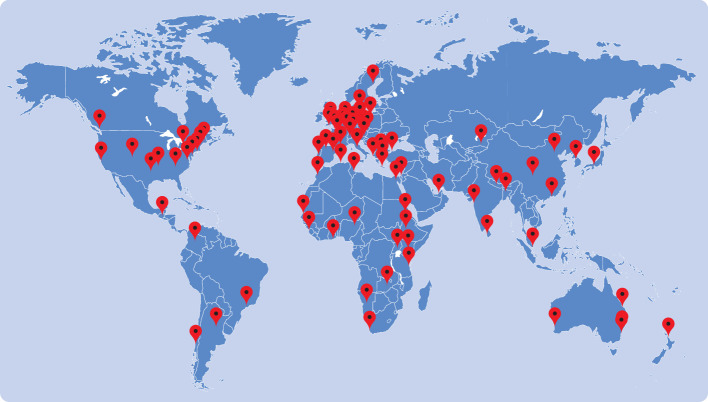
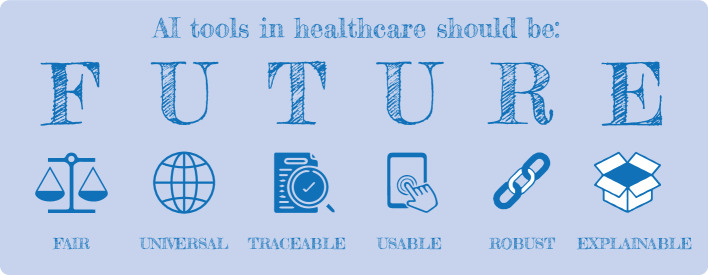
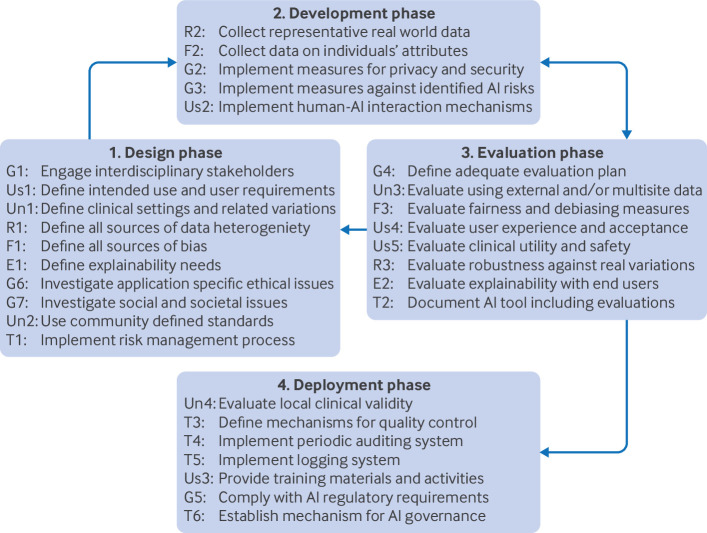
Despite major advances in artificial intelligence (AI) research for healthcare, the deployment and adoption of AI technologies remain limited in clinical practice. This paper describes the FUTURE-AI framework, which provides guidance for the development and deployment of trustworthy AI tools in healthcare. The FUTURE-AI Consortium was founded in 2021 and comprises 117 interdisciplinary experts from 50 countries representing all continents, including AI scientists, clinical researchers, biomedical ethicists, and social scientists. Over a two year period, the FUTURE-AI guideline was established through consensus based on six guiding principles—fairness, universality, traceability, usability, robustness, and explainability. To operationalise trustworthy AI in healthcare, a set of 30 best practices were defined, addressing technical, clinical, socioethical, and legal dimensions. The recommendations cover the entire lifecycle of healthcare AI, from design, development, and validation to regulation, deployment, and monitoring.
Overview
CoChat Summary
TL;DR
FUTURE-AI is an international consensus guideline for trustworthy and deployable healthcare AI, developed by 117 experts from 50 countries over 24 months. It defines six guiding principles—fairness, universality, traceability, usability, robustness, and explainability—and 30 best practices covering the full AI lifecycle.
Key findings
- The FUTURE-AI Consortium comprised 117 interdisciplinary experts from 50 countries representing all continents, including AI scientists, clinical researchers, biomedical ethicists, and social scientists.
- The guideline was established through a modified Delphi process over 24 months, with eight rounds of feedback and iterative discussion, resulting in 30 best practices across six guiding principles plus a “general” category.
- All final recommendations were approved with less than 5% disagreement among FUTURE-AI members; remaining disagreement mostly concerned whether recommendations should be “recommended” or “highly recommended” for research versus deployable tools.
- The framework distinguishes compliance levels for research/proof-of-concept AI tools versus deployable clinical AI tools, with higher expected compliance for deployable tools on many recommendations.
Methods
- International consensus guideline developed using a modified Delphi approach over 24 months, beginning with six core guiding principles and an initial set of recommendations.
- Eight rounds included working groups, an online survey, iterative written feedback, external feedback from 44 additional experts, online consensus meetings, and a final consensus vote.
- Results were aggregated quantitatively by analysing expert voting patterns and qualitatively by synthesising feedback and recurring themes; the final consortium consisted of 117 experts.
Limitations
- The paper states that implementation may involve substantial costs, potentially exacerbating disparities in AI adoption, especially for smaller developers and resource-limited health systems.
- The paper states that liability remains unaddressed, including who should perform audits and who should be accountable for errors, and that current regulations prevent post-release modifications because they would invalidate initial validation.
- The paper states that for some recommendations no clear standard yet exists, and that FUTURE-AI is proposed as a dynamic, living framework requiring future refinement and domain-specific operationalisation.
Model-written summary. Check it against the paper before relying on it.
Integrity signals
Registry
Cites
Statistics
Figures
Verification
Claims the paper makes
11 Valid · 0 Not valid · 10 Not checked · 42 Own results and interpretations
Every source the paper cites for this claim was checked and supports it.
In the paper
“Existing research has shown that even small, imperceptible variations in the input data might lead AI models into incorrect decisions.60”
§ FUTURE-AI: international consensus guideline for trustworthy and deployable artificial intelligence in healthcare > FUTURE-AI guideline > Robustness
What the sources say
- Supportedcites [60] Finlayson SG Bowers JD Ito J Zittrain JL Beam AL Kohane IS. Adversarial attacks on medical machine learning. Science 2019; 363: 1287- 9. 10.1126/science.aaw4399 30898923 PMC7657648 source
The opening passage says a small, carefully designed change to an input can cause a machine-learning system to reach a wrong conclusion. In “DEEP VULNERABILITIES,” the paper gives an example: a visually imperceptible image perturbation makes a classifier label a benign mole as malignant. The claim's tentative wording is consistent with this account of deliberately crafted changes. (LLM, conf=0.94)
hedgedstates a possible cause- Asserted: passes — The authors put it forward as true.
- Checkable: passes — It can be checked against evidence.
- Load-bearing: passes — The paper’s conclusions depend on it.
- Based: passes — The paper gives a reason why it holds.
- Supported
The cited sources support only part of this claim — read each source’s verdict below.
In the paper
“Bias in healthcare AI is application specific.32”
§ FUTURE-AI: international consensus guideline for trustworthy and deployable artificial intelligence in healthcare > FUTURE-AI guideline > Fairness
What the sources say
- Partly supportedcites [32] Ferryman K, Pitcan M. Fairness in Precision Medicine. Data & Society Research Institute. 2018. https://datasociety.net/library/fairness-in-precision-medicine/ sourceExperimental — accuracy not yet measured
The “Fairness in Precision Medicine” section says that bias can arise from human assumptions, automation, and different phases of data handling. That supports the idea that bias depends on how a system is developed and used, but the paper discusses precision medicine rather than establishing the claim for healthcare AI applications generally. No page number is available in our copy. (LLM, conf=0.75)
plain- Asserted: passes — The authors put it forward as true.
- Checkable: passes — It can be checked against evidence.
- Load-bearing: passes — The paper’s conclusions depend on it.
- Based: passes — The paper gives a reason why it holds.
- Partly supported
In the paper
“In particular, existing research has shown that AI tools in healthcare can be prone to errors and patient harm, biases and increased health inequalities, lack of transparency and accountability, as well as data privacy and security breaches.4 5 6 7 8”
§ FUTURE-AI: international consensus guideline for trustworthy and deployable artificial intelligence in healthcare > Introduction
What the sources say
- Not matchedcites 4 5 6 7 8
This doesn’t read as a citation we can look up.
plainstates a possible cause- Asserted: passes — The authors put it forward as true.
- Checkable: passes — It can be checked against evidence.
- Load-bearing: passes — The paper’s conclusions depend on it.
- Based: passes — The paper gives a reason why it holds.
- Not matched
In the paper
“However, there is an absence of clear, widely accepted guidelines on how healthcare AI tools should be designed, developed, evaluated, and deployed to be trustworthy—that is, technically robust, clinically safe, ethically sound, and legally compliant (see glossary in appendix table 1).9”
§ FUTURE-AI: international consensus guideline for trustworthy and deployable artificial intelligence in healthcare > Introduction
What the sources say
- Not matchedcites [9] High-Level Expert Group on AI, EU Commission. Ethics Guidelines For Trustworthy AI. 2019. https://www.europarl.europa.eu/cmsdata/196377/AI%20HLEG_Ethics%20Guidelines%20for%20Trustworthy%20AI.pdf
We searched by its title and found no matching paper.
plain- Asserted: passes — The authors put it forward as true.
- Checkable: passes — It can be checked against evidence.
- Load-bearing: passes — The paper’s conclusions depend on it.
- Based: passes — The paper gives a reason why it holds.
- Not matched
In the paper
“In particular, existing research has shown that AI tools in healthcare can be prone to errors and patient harm, biases and increased health inequalities, lack of transparency and accountability, as well as data privacy and security breaches.4 5 6 7 8”
§ FUTURE-AI: international consensus guideline for trustworthy and deployable artificial intelligence in healthcare > Introduction
What the sources say
- Not matchedcites 4 5 6 7 8
This doesn’t read as a citation we can look up.
plainstates a possible cause- Asserted: passes — The authors put it forward as true.
- Checkable: passes — It can be checked against evidence.
- Load-bearing: passes — The paper’s conclusions depend on it.
- Based: passes — The paper gives a reason why it holds.
- Not matched
3 more claims
Create a free account to see all 63 claims and to verify the 1 reference still open.
- Probably not a substantial claim. 48
- It may state two separate claims as one. 24
Claims other papers make about this one
Each is checked against this paper’s own text: does it say what the citing paper says it does?
The source backs part of the claim, not all of it — or backs it for a different population, condition or comparison.
In the citing paper
“First, many dimensions of trustworthiness-such as clinical appropriateness, fairness, and the usefulness of explanations-still rely heavily on human expert judgment (Lekadir et al., 2025).”
From Trustworthy Medical Question Answering: An Evaluation-Centric Survey (2025) · cites this paper as Lekadir et al., 2025
Experimental — accuracy not yet measuredThe check wasn’t confident either way, so it gives no verdict — never disputed.
In the citing paper
“Cancer-related mutations and chemical modifications can also alter these shapes.”
From Artificial Intelligence in Clinical Oncology: From Productivity Enhancement to Creative Discovery (2025) · cites this paper as [107]
Experimental — accuracy not yet measuredThe check wasn’t confident either way, so it gives no verdict — never disputed.
In the citing paper
“Drug binding often depends on motion, such as small shifts when a compound binds, long-range effects within the protein, hidden pockets that open and close, or changes when proteins form complexes.”
From Artificial Intelligence in Clinical Oncology: From Productivity Enhancement to Creative Discovery (2025) · cites this paper as [107]
Experimental — accuracy not yet measuredThe check wasn’t confident either way, so it gives no verdict — never disputed.
In the citing paper
“AlphaFold has been a breakthrough for drug discovery, including cancer therapeutics, but its limitations are well recognized [105,106,107,108].”
From Artificial Intelligence in Clinical Oncology: From Productivity Enhancement to Creative Discovery (2025) · cites this paper as [107]
Experimental — accuracy not yet measuredIn the citing paper
“It predicts a protein’s most stable shape; however, it does not model how the protein moves.”
From Artificial Intelligence in Clinical Oncology: From Productivity Enhancement to Creative Discovery (2025) · cites this paper as [107]
Citations
Cites
The FAIR Guiding Principles for scientific data management and stewardship
Wilkinson, M. D., Dumontier, M., Aalbersberg, I. J., Appleton, G., Axton, M., Baak, A., Blomberg, N., Boiten, J.-W., da Silva Santos, L. B., Bourne, P. E., et al. (2016) · Scientific Data · doi:10.1038/sdata.2016.18 · Cited by 18,423 · cited 1×
“AI in healthcare has unique properties compared with other domains, such as the special trust relation between doctors and patients, because patients themselves generally do not have the opportunity to objectively assess the diagnosis and treatment decisions of doctors.”
Sudlow, C., Gallacher, J., Allen, N., Beral, V., Burton, P., Danesh, J., Downey, P., Elliott, P., Green, J., Landray, M., et al. (2015) · PLOS Medicine · doi:10.1371/journal.pmed.1001779 · Cited by 12,728
High-performance medicine: the convergence of human and artificial intelligence
Topol, E. J. (2019) · Nature Medicine · doi:10.1038/s41591-018-0300-7 · Cited by 10,450
Heidenreich, P. A., Bozkurt, B., Aguilar, D., Allen, L. A., Byun, J. J., Colvin, M. M., Deswal, A., Drazner, M. H., Dunlay, S. M., Evers, L. R., et al. (2022) · Circulation · doi:10.1161/cir.0000000000001063 · Cited by 4,922
Collins, G. S., Moons, K. G. M., Dhiman, P., Riley, R. D., Beam, A. L., Van Calster, B., Ghassemi, M., Liu, X., Reitsma, J. B., van Smeden, M., et al. (2024) · BMJ · doi:10.1136/bmj-2023-078378 · Cited by 4,718
Self-citationThe Cancer Imaging Archive (TCIA): Maintaining and Operating a Public Information Repository
Clark, K., Vendt, B., Smith, K., Freymann, J., Kirby, J., Koppel, P., Moore, S., Phillips, S., Maffitt, D., Pringle, M., et al. (2013) · Journal of Digital Imaging · doi:10.1007/s10278-013-9622-7 · Cited by 4,599
Self-citationThe future of digital health with federated learning
Rieke, N., Hancox, J., Li, W., Milletarì, F., Roth, H. R., Albarqouni, S., Bakas, S., Galtier, M. N., Landman, B. A., Maier-Hein, K., et al. (2020) · npj Digital Medicine · doi:10.1038/s41746-020-00323-1 · Cited by 4,015
Self-citationThe Future of Digital Health with Federated Learning
Rieke, N., Hancox, J., Li, W., Milletari, F., Roth, H., Albarqouni, S., Bakas, S., Galtier, M. N., Landman, B., Maier-Hein, K., et al. (2020) · arXiv · doi:10.48550/arxiv.2003.08119 · Cited by 3,495
Self-citationKey challenges for delivering clinical impact with artificial intelligence
Kelly, C. J., Karthikesalingam, A., Suleyman, M., Corrado, G., & King, D. (2019) · BMC Medicine · doi:10.1186/s12916-019-1426-2 · Cited by 3,136
Explainable AI: a review of machine learning interpretability methods
Linardatos, P., Papastefanopoulos, V., & Kotsiantis, S. (2020) · Entropy · doi:10.3390/e23010018 · Cited by 2,922
Research works printed but not linked: 3
- IEEE Standards Association. IEEE Recommended Practice for the quality management of datasets for Medical Artificial Intelligence. https://standards.ieee.org/ieee/2801/7459/
- Cheatham B, Javanmardian K, Samandari H. Confronting the risks of artificial intelligence. 2019. https://www.semanticscholar.org/paper/Confronting-the-risks-of-artificial-intelligence-Cheatham-Javanmardian/2022830bf9f896d99c1d7ff228e3adca08efe352
- Quarta A, Bruno P, Calimeri F. Continual learning for medical image classification. 2022. http://ceur-ws.org
Cited by
Items 401–500 of 656
The accuracy of artificial intelligence in identifying cephalometric landmarks: A scoping review
Lin, Y. M., Auta, A., Brown, J., Cure, R., & Ireland, R. (2026) · International Orthodontics · doi:10.1016/j.ortho.2026.101205 · Cited by 2
KILINÇ, M. (2026) · Opus uluslararası toplum araştırmaları dergisi · doi:10.26466/opusjsr.1922808
Wei, Q., Cui, M., Qi, Y., Zhang, Q., Liu, Z., Yu, C., Hobbs, F. D. R., Christiani, D. C., Li, Y., Zhang, R., et al. (2026) · The Innovation Medicine · doi:10.59717/j.xinn-med.2026.100229
Kim, Y., Choe, S., Jeong, S., Ding, J., Wang, X., Lee�, H., & Kim, B. (2026) · Journal of Clinical Neurology · doi:10.3988/jcn.2026.0312 · Cited by 1
“use, training population, exclusion criteria, 32,44,69 calibration, 21 known failure modes, subgroup performance, 22,32 uncertainty handling, 61 update policy, and limitations of saliency maps or other post-hoc explanations.”
InfluentialAlkhnbashi, O. S., Mohammad, R., Khyriem, C., Hauns, S., Singh, A., Khan, I., Gomez, R. L., Ramachandran, R., Albedwawi, M. H., AbdulRahim, M. M., et al. (2026) · Artificial Intelligence Review · doi:10.1007/s10462-026-11634-2
Malingumu, E. E., Kisendi, D. D., Kabore, R. W., Yeremon, O. G., Mugerwa, M., & He, Q. (2026) · Frontiers in Public Health · doi:10.3389/fpubh.2026.1834330
Chen, F., Fu, Q., Li, L., et al. (2026) · Frontiers in Cardiovascular Medicine · doi:10.3389/fcvm.2026.1886992
Tan, Y. Y., Janíčková, I., & Langs, G. (2026) · PLOS Digital Health · doi:10.1371/journal.pdig.0001548
“…is not the aggregation of more data or the use of more sophisticated prediction, but the creation of a continuously updated, interpretable computational representation that supports clinician-in-the-loop reasoning, counterfactual simulation and decision-making across the cancer journey [9,12,13].”
Umasugi, M. T., Fitriasari, E., & Tuharea, A. (2026) · Legal Medicine · doi:10.1016/j.legalmed.2026.102913
Woodford, R. G., Lord, S., Lin, F. P. Y., Papenfuss, A. T., Marschner, I., Thomas, D., Friedlander, M. L., Scott, C. L., Simes, R. J., & Lee, C. K. (2026) · JCO Clinical Cancer Informatics · doi:10.1200/cci-26-00014 · Cited by 1
Context-dependent immune regulation: a mechanistic and AI-enabled integrative framework
Chen, Q. W., Zhu, Y., He, Y., Wang, Y., Xu, Q., Wang, Z., & Hu, F. (2026) · Frontiers in Immunology · doi:10.3389/fimmu.2026.1850490
Liao, L., Li, Y., He, T., Xiao, Z., Shu, X., Wang, P., Qiu, L., Li, P., Guo, Q., Yuan, Q., et al. (2026) · doi:10.2196/preprints.106359
XBoundNet++: Uncertainty-Aware Segmentation of Kidney Ablation Zones
Arbel-Wood, O., Rastegarpoor, M., & Fenster, A. (2026) · Lecture notes in computer science · doi:10.1007/978-3-032-24182-5_11
Nordic AI-Health: a unique opportunity for discovery and clinical impact
Andreassen, O. A., Heimer, H., Brunak, S., et al. (2026) · The Lancet Regional Health - Europe · doi:10.1016/j.lanepe.2026.101769
Towards integration of healthspan strategies into the Italian National Health Service
Marino, N., Fiore, M., Stingi, A., Cipriano, A., Chadha, A. S., Ricordi, C., Della-Morte, D., di Fagagna, F. D., Demaria, M., Quarta, M., et al. (2026) · Aging · doi:10.18632/aging.206402
“Develop privacy-preserving, explainable AI models to predict risks, with mandatory bias audits and documentation standards aligned with international best practice [75].”
ETD-XAI: An explainable two-stage EEG–biochemical framework for pediatric tic disorders
Li, L., Wang, J., Zhou, K., et al. (2026) · Computer Methods and Programs in Biomedicine · doi:10.1016/j.cmpb.2026.109553
Alshreef, B. S. (2026) · Discover Oncology · doi:10.1007/s12672-026-05573-1
“FUTURE-AI emphasizes trustworthy healthcare AI across development, validation, deployment and monitoring, while FDA and IMDRF materials on AI/ML-enabled medical devices emphasize lifecycle oversight and good machine learning practice [16–18].”
Elayan, H., Sperrin, M., Martin, G. P., Braunschweig, F., Faxén, J., Alfredsson, J., & Jenkins, D. A. (2026) · Biometrical Journal · doi:10.1002/bimj.70166
Imani, M. H., & Imani, A. H. (2026) · doi:10.2196/preprints.107535
Noninvasive malaria detection beyond blood sampling
Hong, S. G., Leem, J. W., Sakthivel, H., Kwon, S., Park, S. M., Dewan, A., Botana, D. J., & Kim, Y. L. (2026) · Sensors & Diagnostics · doi:10.1039/d6sd00085a
Wei, J. (2026) · Scientific Journal of Technology · doi:10.54691/85dt0r63
“[32-37 32-37] A foundation segmentation paper prepared for journal submission should therefore include a clear intended use, transparent dataset description, external validation, baseline comparison against strong non-foundation models, prompt and user-interaction protocol, subgroup analysis,…”
Human-AI Synergy in Clinical Decision-Making: Balancing Innovation, Safety and Patient-Centric Care
Eskandar, K. (2026) · Artificial intelligence · doi:10.5772/intechopen.1014561
Artificial intelligence in psychiatry: clinical applications, limitations, and ethical challenges
Morgado, P. F. (2026) · Frontiers in Behavioral Neuroscience · doi:10.3389/fnbeh.2026.1864429 · Cited by 1
Sokhanvar, M. (2026) · International Journal of Health Governance · doi:10.1108/ijhg-08-2025-0145
Fitriasari, E., & Umasugi, M. T. (2026) · Health Policy and Technology · doi:10.1016/j.hlpt.2026.101289
Building Trust in Radiology AI: Challenges in Data, Bias, and Accountability
Pal, R., Devnani, M., Nag, B., & Sureka, B. (2026) · Indian journal of radiology and imaging - new series/Indian journal of radiology and imaging/Indian Journal of Radiology & Imaging · doi:10.1055/s-0046-1825829
Amirrajab, S., Vehof, V., Bietenbeck, M., Akyol, N., Bouras, R., Isgandarova, K., Zlibut, A., Stalling, P., & Yılmaz, A. (2026) · Research Square · doi:10.21203/rs.3.rs-10456929/v1
Regression to the mean inflates accuracy in machine learning prediction of symptom change
Raduà, J., Oliva, V., Vieta, E., & Prisco, M. D. (2026) · Nature Mental Health · doi:10.1038/s44220-026-00686-6
AI-Powered Synthetic Biology: Current Situation, Challenges, and Future Perspectives
Şahin, İ. O., Gökçe, N., Yildirim, D. T., Yildirim, A. B., Akalin, H., Martin, D. K., Beccari, T., Vicente, O., Radecka, I., Tchuenbou-Magaia, F. L., et al. (2026) · The EuroBiotech Journal · doi:10.2478/ebtj-2026-0015 · Cited by 1
“An international consensus is forming around the principles of equity, universality, traceability, availability, robustness, and explainability regarding the use of AI in health-care through initiatives such as the FUTURE-AI consortium (Lekadir et al., 2025).”
Toward Autonomous Clinics: Human–Robot Collaboration in Clinical Care
Wu, X., Zhang, J., Xu, M., Chu, H. K., Chen, X., Zhong, P., Liu, B., He, M., & Shi, D. (2026) · MedComm · doi:10.1002/mco2.70885 · Cited by 2
Oladapo, Y. O., Nasir, M. O., Oladapo, O. A., & Onifade, F. A. (2026) · InfoScience Trends · doi:10.66224/ist.202603.13.05
PRACTALL 2025: Artificial intelligence—application of allergy and immunology to patient care
Shamji, M. H., Rider, N. L., Adcock, I. M., Pongdee, T., Giacco, S. D., Chang, C., Jaen, M. T., & Williams, P. V. (2026) · Journal of Allergy and Clinical Immunology · doi:10.1016/j.jaci.2026.04.031 · Cited by 1
Kessler, D. A., Bobowicz, M., Kosno, M., Joshi, S., Marias, K., Díaz, O., & Lekadir, K. (2026) · European Journal of Radiology · doi:10.1016/j.ejrad.2026.113101 · Cited by 1
Self-citationFrom Code to Clinic: Bridging the Implementation Gap in AI-Based Clinical Decision Support
Savadkoohi, E. G., Asadi, F., & Emami, H. (2026) · International Interdisciplinary Conference on Artificial Intelligence: Engineering, Health, Finance and Humanities (IICAI) · doi:10.1109/iicai70155.2026.11620638 · Cited by 1
“Recent healthcare AI governance literature similarly emphasizes algorithmic oversight, risk assessment, equity monitoring, transparency, and operational accountability as core conditions for responsible deployment [25], [26].”
Governing Clinical Readiness Claims Derived from Medical AI Benchmark Results
Dong, Y., Cheng, J., Ding, C., & Lu, R. (2026) · Journal of Medical Systems · doi:10.1007/s10916-026-02445-7 · Cited by 3
Stańska, A., Karolak, W., & Wojarski, J. (2026) · Journal of Clinical Medicine · doi:10.3390/jcm15155899
“More broadly, the FUTURE-AI consensus guideline identifies fairness, universality, traceability, usability, robustness, and explainability as core requirements for trustworthy healthcare artificial intelligence [29].”
Angioni, D., & Bello, F. D. (2026) · AboutOpen · doi:10.33393/ao.2026.3940 · Cited by 1
Precision Detection of Gastric Cancer Using MCSCN
Chen, S., Liu, Q.-S., Lin, R., et al. (2026) · 2026 7th International Conference on Big Data & Artificial Intelligence & Software Engineering (ICBASE) · doi:10.1109/icbase70763.2026.11619364
“In addition, broader external validation and deployment-oriented assessment remain necessary before clinical application [12] , while improved model interpretability is also important for enhancing clinical trust [13] .”
Deep Learning-Enabled Cross-Device Calibration for Smartphone-Based Optical Biosensing: A Review
Zuo, H.-M., Geng, Q., Li, H.-Y., Tao, M.-X., Feng, Y.-X., & Geng, Z.-X. (2026) · IEEE Sensors Journal · doi:10.1109/jsen.2026.3716330
“…rejection rules, uncertainty thresholds, user-facing reacquisition instructions, and conditions that trigger targeted revalidation [104], [105], [107], [111]. such a system, model updates, adapter updates, camera-app changes, device allowlist changes, operating-system changes, or newly…”
InfluentialCresswell, K. M., & Williams, R. (2026) · BMJ Digital Health & AI · doi:10.1136/bmjdh-2026-000104 · Cited by 1
“11 Our proposed framework complements these approaches by focusing more explicitly on the longitudinal, context-sensitive and practice-embedded evaluation activities BMJ Digital Health & AI needed to support ongoing adaptation, organisational learning and coordination of AI-enabled care across…”
Shen, S., Cui, X., Yuan, Z., Li, L., Xiaotong, S., Wang, Y., He, G., Zheng, X., & Gou, X. (2026) · doi:10.2196/preprints.97475
Service quality in AI versus human healthcare: a dual-path model driving patient outcomes
Zhang, G., Liu, Y., Ma, L., & Hao, F. (2026) · Total Quality Management & Business Excellence · doi:10.1080/14783363.2026.2710205
“…competence and integrity through perceived diagnostic accuracy and perceived decision transparency: the ‘black box’ nature of AI reduces transparency perceptions (Lekadir et al., 2025), while stereotypes regarding AI’s lack of clinical intuition undermine accuracy evaluations (Bean et al., 2026).”
Galiana-Bordera, A., Aquerreta-Escribano, J., Martínez-Gironés, P. M., Lozano, P., Ribas, G., Jimenez-Gomez, P., Segrelles, J. D., Alberich, L. C., Blanquer, I., & Martí‐Bonmatí, L. (2026) · European Radiology Experimental · doi:10.1186/s41747-026-00770-7
Self-citationDashti, M., Khosraviani, F., Ghadimi, N., Kalantari, S., Amirzade-Iranaq, M. H., Hemmati, G., Arzani, S., Pirayesh, Z., & Motie, P. (2026) · Imaging Science in Dentistry · doi:10.5624/isd.20250325
AI: a new king of bias? Or the saviour of constrained healthcare?
Ollivere, B. (2026) · Bone and Joint 360 · doi:10.1302/2048-0105.154.360354
AI-Augmented Teach-Back in Dentistry: From Patient Education to Verified Clinical Understanding
Thakkar, A., Bhattu, B. K., & Desai, C. (2026) · Cureus · doi:10.7759/cureus.113774
“WHO, in its 2024 guidance, requires health-care AI systems to maintain transparency while obtaining explicit consent, reducing data collection, and maintaining human control at all stages of data management [87].”
InfluentialSchoenhof, R., Haiber, T., Blumenstock, G., Tilsen, F., Häfner, J., Schoenhof, R., Lethaus, B., & Hoefert, S. (2026) · Journal of Cranio-Maxillofacial Surgery · doi:10.1016/j.jcms.2026.109852
Pavan, K., Asahara, S., Ganapathy, N., et al. (2026) · Applied Sciences · doi:10.3390/app16157630
Vallée, A. (2026) · Frontiers in Digital Health · doi:10.3389/fdgth.2026.1908794 · Cited by 1
Seven Pillars for a Community-Led AI-POCUS Future – A WINFOCUS Manifesto
Wong, A. V.-K., Noor, J. M., Corradi, F., et al. (2026) · The Ultrasound Journal · doi:10.5826/tuj.2026.18454
“Too often, we see systems promoted based on internal data or marketing enthusiasm rather than the rigorous, independent, multi-center prospective validation the medical profession demands (6).”
The Scale for AI Literacy in Health Care Workers: Development and Validation
Ang, C., Ito, S., Bajaj, S., Chow, M., Cleland, J., & Heaversedge, J. (2026) · Journal of Medical Internet Research · doi:10.2196/92373 · Cited by 3
“Much of the existing literature focuses on conceptual frameworks, position statements, or policy guidance, with limited attention to measurable competencies in practice [4,18,19].”
Trustworthy artificial intelligence for rural health care
Kirkpatrick, E. R., Johnson, S. L., & Nevin, M. (2026) · Internal Medicine Journal · doi:10.1111/imj.70585
Khan, A., Bhat, S. A., Wolff, A., & Islam, A. K. M. N. (2026) · Engineering Applications of Artificial Intelligence · doi:10.1016/j.engappai.2026.115824
Tharayil, A. S., Budhewar, A. S., Andy, A., et al. (2026) · Advances in computational intelligence and robotics book series · doi:10.4018/979-8-3373-9033-8.ch006
A multi-stage stacking framework for accurate and interpretable life expectancy modeling
Chinthaginjala, R., Tera, S. P., Natha, P., Srinivasulu, A., Al-Turjman, F. M., & Mohammad, F. (2026) · PLoS ONE · doi:10.1371/journal.pone.0353849
Alzoubi, A. E., Wahed, M. K. Y. A., & Wahed, S. A. (2026) · Advances in computational intelligence and robotics book series · doi:10.4018/979-8-3373-8904-2.ch004
Zhang, C., Mao, W., Chen, H., Dai, Z., Pan, A., & Lin, Z. (2026) · International Journal of Medical Informatics · doi:10.1016/j.ijmedinf.2026.106651
AI-based augmentation of oncology clinical trials
Villa, A., Eadie, A. L., Synnott, D., Romanò, R., Piffoux, M., Wong, E. Y. T., Scheinerman, N., Tan, D. S. W., de Braud, F., Koopman, M., et al. (2026) · Nature Reviews Clinical Oncology · doi:10.1038/s41571-026-01189-0 · Cited by 3
Praschk, A., Fischill-Neudeck, V., Caspari, T., & Wiesinger, H. (2026) · Journal of Medical Systems · doi:10.1007/s10916-026-02449-3
Zhang, S., Liang, D., Lei, Y., Luo, Y., & Shi, R. (2026) · Frontiers in Bioengineering and Biotechnology · doi:10.3389/fbioe.2026.1898243 · Cited by 2
“…and AI-assisted decisions may require traceable documentation, fit-for-purpose validation, lifecycle oversight, and evidence linking model outputs to quality and safety (Perin et al., 2026; Lekadir et al., 2025; U.S. Food and Drug Administration, 2025; U.S. Food and Drug Administration, 2026).”
Liu, S., & Liang, R. (2026) · Digital Health · doi:10.1177/20552076251404503
Wu, G., Liu, H., Li, D., Fan, C., 杜国瑞, & Tian, J. (2026) · Journal of Robotic Surgery · doi:10.1007/s11701-026-03791-x · Cited by 1
Lynch, N. S. J., Hugh, M. M., Loughran, R., McCaffery, F., & Kowalski, D. (2026) · Communications in computer and information science · doi:10.1007/978-3-032-25809-0_7
The Intersection Between Neuropathology and Artificial Intelligence: A Review
Frassetto, F. P. (2026) · Sage Open Pathology · doi:10.1177/30502098261472442
“67 It seems evident, from what we have seen, that there is still a lot to be done in this area, but the evolution has been vertiginous and at an unprecedented speed.”
Kwolek, K., Laskowska, W., Pilarek, M., Ożga, S., Roszkowska, M., Furtak, M., Janczarski, S., Sarna, D., Wąs, L., & Tryczyński, P. (2026) · International Journal of Innovative Technologies in Social Science · doi:10.31435/ijitss.3(51).2026.6076
Recker, F. (2026) · Geburtshilfe und Frauenheilkunde · doi:10.1055/a-2920-1072
Chiu, H.-Y., Chuang, Y.-T., Zaami, S., & Chen, T.-A. (2026) · Healthcare · doi:10.3390/healthcare14162538
“Managing predictive uncertainty involves honest dialogue about the limits of AI predictions and their implications for patient care [37,38,63].”
InfluentialHan, Y., Ouyang, W., Qiao, Z., & Du, H. (2026) · Displays · doi:10.1016/j.displa.2026.103668
Where Should Automation Stop in Community Pharmacy? A Boundary Model for Delegating Medication Tasks
Müller, H., Schmidt, A., & Weber, T. (2025) · Archives of Pharmacy Practice · doi:10.51847/lgc8j2bcwu
Eschweiler, D., Merodio, E. C., Ordonez, F. B., Lichev, A., Ignatova, N., von der Stück, M. S., Kuhl, C. K., Truhn, D., & Nebelung, S. (2026) · European Radiology · doi:10.1007/s00330-026-12785-0
Pape, J., Pfäffle, R. W., Hirsch, W., Rosołowski, M., & Gräfe, D. (2026) · Diagnostics · doi:10.3390/diagnostics16162568
“In the context of AI-based BA assessment, such independent external validation is essential because performance estimates derived from internal or vendor-curated datasets may not generalize to routine clinical populations and may be affected by spectrum bias or overfitting [12].”
Agard, G., & HRAIECH, S. (2026) · CHEST Critical Care · doi:10.1016/j.chstcc.2026.100315
O'Connor, P., Murphy, G., & Walsh, N. (2026) · Archives of Pharmacy Practice · doi:10.51847/9r2qj1nnzc
Continual Learning without Silent Change in Medication-Support Systems
Kim, D., Park, J., Kang, M.-S., & Jung, H.-W. (2026) · Archives of Pharmacy Practice · doi:10.51847/65q1pxmaoe
A Pharmacy Gatekeeping System for Admitting, Restricting, and Withdrawing Clinical Algorithms
Schneider, N., Frank, T., Müller, A., & Meier, C. (2026) · Archives of Pharmacy Practice · doi:10.51847/u7rohuc21i
A Practice Maturity Model for Moving from Digital Tools to Intelligence-Augmented Pharmacy
Mendoza, R., Cruz, I., & Lopez, C. (2025) · Archives of Pharmacy Practice · doi:10.51847/cfwu1qml8w
Blixt, F. F., & Bjällmark, A. (2026) · Cardiovascular Ultrasound · doi:10.1186/s12947-026-00380-8 · Cited by 1
“FUTURE-AI is an example of a guideline that goes beyond the technical aspects of artificial intelligence, highlighting values such as fairness, equity, and transparency [37].”
Designing Large Language Models That Refuse Unsafe Medication Questions Well
Costa, G., Ribeiro, L., Alves, R., & Lopes, M. (2026) · Archives of Pharmacy Practice · doi:10.51847/msrqginb22
Representing the Why, When, and Source of Medication Advice in a Pharmacy Knowledge Graph
Alvarez, M., Herrera, S., Cruz, D., & Castro, A. (2026) · Archives of Pharmacy Practice · doi:10.51847/v5z0lhhafi
The Digital Pharmacist Proxy and the Clinical Acts That Must Remain Human
Petrova, E., Georgiev, I., Stoyanov, N., & Kolev, P. (2026) · Archives of Pharmacy Practice · doi:10.51847/pn0idcypwh
Detecting Workflow Drift before Pharmacy Algorithms Learn the Wrong Practice
Dupuis, C., Perrin, H., Morel, E., & Martin, T. (2026) · Archives of Pharmacy Practice · doi:10.51847/78i64l2m3e
From predictive signal to deployable value: EHR measurement-process features in ICU AKI prediction
Zou, J., Wang, H., Xin, Z., Zhou, Q., Chen, J., & Huang, J. (2026) · International Journal of Medical Informatics · doi:10.1016/j.ijmedinf.2026.106668
Ethical and Public Health Dimensions of Emerging Prenatal Diagnostic Technologies
Değer, V. B. (2026) · IntechOpen eBooks · doi:10.5772/intechopen.1017167
Plasmonic Nanoarray Biosensors for Non-Invasive Cancer Diagnostics
Kim, S. E., Choi, H. K., & Choi, J. (2026) · Biosensors · doi:10.3390/bios16080449
“Models require external validation, calibration, subgroup analysis, failure-case reporting, and defined deployment limits [101,102,122].”
Babu, A. M., Nehemiah, A. J., Jagadeep, V., Suji, R. A., & Nallusamy, P. (2026) · Frontiers in Digital Health · doi:10.3389/fdgth.2026.1890072
“Uncertainty quantification methods (Bayesian deep learning, conformal prediction, temperature scaling) should be standard and enable clinicians to act on calibrated outputs (24) following the FUTURE-AI explainability and robustness principles (71).”
Kızılkurtlu, A. A., & Akpek, A. (2026) · Biosensors · doi:10.3390/bios16080448 · Cited by 1
Large-scale AI-guided liver malignancy diagnosis: multicenter study and a single-arm trial
Zhang, X., Li, C., Han, X., Yin, X., Zhang, C., Zhou, J., Cao, K., Liu, Q., Hong, Y., Gao, Y., et al. (2026) · Nature Medicine · doi:10.1038/s41591-026-04589-y · Cited by 3
Self-citationDlamini, N., Zulu, S., Nkosi, T., & Molefe, L. (2026) · International Journal Of Pharmaceutical Research And Allied Sciences · doi:10.51847/kowndomzzk
Saleh, R. A. A., Saeed, S. F. S., Al-Ariqi, M. A. H., Ahmed, M. E. T., Yahya, M. M. A., & Ghaleb, M. (2026) · International Conference on Emerging Smart Technologies and Applications (eSmarTA) · doi:10.1109/esmarta70636.2026.11652200
Pan, Z., & Luo, J. (2026) · Proceedings of the Institution of Mechanical Engineers Part H Journal of Engineering in Medicine · doi:10.1177/09544119261477934
“16,17 51 The resulting uncertainty has several sources.”
Kumar, A. R., Saldanha, A. J., Palm, E., Fernando, M., Sarabu, C. R., Ravi, V., Suarez, M., McCaffrey, P., Kulkarni, C. V., Frost, B. G., et al. (2026) · doi:10.2196/preprints.108547
Germani, É., Zeineddine, F., Mourad, C. J., & Albarqouni, S. (2026) · Medical Image Analysis · doi:10.1016/j.media.2026.104258 · Cited by 3
Alshreef, B. S. (2026) · International Journal of Medical Informatics · doi:10.1016/j.ijmedinf.2026.106666 · Cited by 1
The AI Adaptation Paradox: Navigating Professional Relevance and Sustainable Integration in Nursing
Silva, A. (2026) · Nursing Inquiry · doi:10.1111/nin.70158
“Artificial intelligence (AI) has moved rapidly from speculative future to present reality across healthcare systems (Lekadir et al. 2025).”
Souza, C. D. (2026) · Journal of Veterinary Diagnostic Investigation · doi:10.1177/10406387261480635
“6,10,17,19 They are offered as practical questions that a laboratory director and the diagnostician who signs the report can include in an SOP before an AI output is used in service.”
Large language models in ophthalmology: from classroom to clinic — a critical appraisal
Ran, A. R., & Zhou, Y. (2026) · AJO International · doi:10.1016/j.ajoint.2026.100303
From data silos to integrated diagnosis: multimodal machine learning in glioblastoma
Shirazi, A. Z., Day, B. W., Gan, H. K., & Gomez, G. A. (2026) · Frontiers in Oncology · doi:10.3389/fonc.2026.1912365
Closing Editorial: Toward Safe, Equitable, and Intelligent Healthcare
Tang, D., & Lam, T. Y. T. (2026) · Healthcare · doi:10.3390/healthcare14172703
“Today, in 2026, AI is no longer just a trending topic and is now starting to be integrated into real-world clinical workflows [3,4].”
Vasquez-Cevallos, L., Rodriguez, P. E. D. S., & Salazar, P. (2026) · Applied Sciences · doi:10.3390/app16178391 · Cited by 1
Open-H Acquisition Pipeline and Surgical Robotics Dataset Evaluation
Lukács, E., Takács, K., & Haidegger, T. (2026) · IEEE International Conference on Intelligent Engineering Systems (INES) · doi:10.1109/ines69513.2026.11661245
Metadata
- Authors
- Lekadir, K., Frangi, A. F., Porras, A. R., Glocker, B., Cintas, C., Langlotz, C. P., Weicken, E., Asselbergs, F. W., Prior, F., Collins, G. S., Kaissis, G., Tsakou, G., Buvat, I., Kalpathy-Cramer, J., Mongan, J., Schnabel, J. A., Kushibar, K., Riklund, K., Marias, K., Amugongo, L. M., Fromont, L. A., Maier-Hein, L., Cerdá-Alberich, L., Martí-Bonmatí, L., Cardoso, M. J., Bobowicz, M., Shabani, M., Tsiknakis, M., Zuluaga, M. A., Fritzsche, M.-C., Camacho, M., Linguraru, M. G., Wenzel, M., De Bruijne, M., Tolsgaard, M. G., Goisauf, M., Cano Abadía, M., Papanikolaou, N., Lazrak, N., Pujol, O., Osuala, R., Napel, S., Colantonio, S., Joshi, S., Klein, S., Aussó, S., Rogers, W. A., Salahuddin, Z., & Starmans, M. P. A.
- Affiliations
- Institució Catalana de Recerca i Estudis Avançats (ES)
- University of Leeds (GB)
- Colorado School of Public Health (US)
- Imperial College London (GB)
- IBM (United States) (US)
- Stanford Medicine (US)
- Fraunhofer Institute for Telecommunications, Heinrich Hertz Institute (DE)
- Health Data Research UK (GB)
- University of Arkansas for Medical Sciences (US)
- Centre for Statistics in Medicine, University of Oxford, Oxford, UK
- TUM Klinikum (DE)
- Gruppo Maggioli, Research and Development Lab, Athens, Greece
- Inserm (FR)
- Massachusetts General Hospital, Harvard Medical School, Boston, MA, USA
- University of California, San Francisco (US)
- Helmholtz Munich (DE)
- Universitat de Barcelona (ES)
- Umeå University (SE)
- Foundation for Research and Technology—Hellas (FORTH), Crete, Greece
- Namibia University of Science and Technology (NA)
- Barcelona Institute of Science and Technology (ES)
- German Cancer Research Center (DE)
- Instituto de Investigación Sanitaria La Fe (ES)
- Medical Imaging Department, Hospital Universitario y Politécnico La Fe, Valencia, Spain
- King's College London (GB)
- Gdańsk Medical University (PL)
- Ghent University (BE)
- Foundation for Research and Technology Hellas (GR)
- Data Science Department, EURECOM, Sophia Antipolis, France
- Technical University of Munich (DE)
- Children's National (US)
- Department of Radiology & Nuclear Medicine, Erasmus MC University Medical Centre, Rotterdam, Netherlands
- University of Copenhagen (DK)
- Biobanking and Biomolecular Resources Research Infrastructure Consortium (AT)
- BBMRI-ERIC, ELSI Services & Research, Graz, Austria
- Champalimaud Foundation (PT)
- Istituto di Scienza e Tecnologie dell'Informazione "Alessandro Faedo" (IT)
- Erasmus MC (NL)
- Artificial Intelligence in Healthcare Program, TIC Salut Social Foundation, Barcelona, Spain
- Macquarie University (AU)
- Maastricht University (NL)
- Corresponding author
- Lekadir, Karim
- ORCID
- Lekadir, Karim
- Frangi, Alejandro F
- Porras, Antonio R
- Glocker, Ben
- Cintas, Celia
- Langlotz, Curtis P
- Weicken, Eva
- Asselbergs, Folkert W
- Prior, Fred
- Kaissis, Georgios
- Tsakou, Gianna
- Buvat, Irène
- Mongan, John
- Schnabel, Julia A
- Kushibar, Kaisar
- Riklund, Katrine
- Amugongo, Lameck M
- Fromont, Lauren A
- Cerdá-Alberich, Leonor
- Cardoso, M Jorge
- Bobowicz, Maciej
- Shabani, Mahsa
- Tsiknakis, Manolis
- Fritzsche, Marie-Christine
- Camacho, Marina
- Linguraru, Marius George
- Wenzel, Markus
- Tolsgaard, Martin G
- Goisauf, Melanie
- Lazrak, Noussair
- Pujol, Oriol
- Osuala, Richard
- Napel, Sandy
- Colantonio, Sara
- Joshi, Smriti
- Klein, Stefan
- Aussó, Susanna
- Rogers, Wendy A
- Salahuddin, Zohaib
- Starmans, Martijn P A
- Venue
- BMJ
- Publisher
- BMJ
- Published
- 2025-02-05
- Volume
- 388
- Pages
- e081554
- ISSN
- 1756-1833 (ISSN-L)
- PMC
- PMC11795397
- OpenAlex
- W4407173730
- Cited by
- 957
- References
- 179
- Citations by year
- 2026: 732 · 2025: 207
- FWCI
- 192.91
- Type
- journal article
- Language
- en
- Update notices
- correction (2025-02-17)
- Open access
- hybrid
- doi.org
- Licence
- Locations
- BMJ (publishedVersion, cc-by-nc)
- PubMed Central (publishedVersion, cc-by-nc)
- PubMed (publishedVersion)
- Oxford University Research Archive (ORA) (University of Oxford) (publishedVersion)
- Pure Amsterdam UMC (publishedVersion, other-oa)
- University of Birmingham Research Portal (University of Birmingham) (publishedVersion, cc-by-nc)
- Research at the University of Copenhagen (University of Copenhagen) (publishedVersion, cc-by-nc)
- EUR Research Repository (Erasmus University Rotterdam) (publishedVersion, cc-by-nc)
- Repositori digital de la UPF (Universitat Pompeu Fabra) (publishedVersion, cc-by-nc)
- arXiv (Cornell University) (submittedVersion, other-oa)
- DiVA at Umeå University (Umeå University) (submittedVersion, other-oa)
- HAL (submittedVersion, cc-by)
- Ghent University Academic Bibliography (Ghent University) (submittedVersion, cc-by-nc)
- Lirias (submittedVersion, other-oa)
- City Research Online (City University London) (submittedVersion, other-oa)
- Research Explorer (The University of Manchester) (submittedVersion)
- Queen Mary Research Online (Queen Mary University of London) (submittedVersion, cc-by-nc)
- Research Publications (Maastricht University) (submittedVersion, cc-by-nc)
- Research Portal (King's College London) (submittedVersion, cc-by-nc)
- mediaTUM – the media and publications repository of the Technical University Munich (Technical University Munich) (submittedVersion)
- Fraunhofer-Publica (Fraunhofer-Gesellschaft) (submittedVersion)
- Research Explorer (The University of Manchester) (submittedVersion, cc-by-nc)
- EUR Research Repository (Erasmus University Rotterdam) (submittedVersion, other-oa)
- Griffith Research Online (submittedVersion, cc-by-nc)
- arXiv (Cornell University)
- Funders
- H2020 Health
- Topics
- Health Sciences › Medicine › Health Informatics › Artificial Intelligence in Healthcare and Education
- Physical Sciences › Computer Science › Artificial Intelligence › Ethics and Social Impacts of AI
- Physical Sciences › Computer Science › Artificial Intelligence › Explainable Artificial Intelligence (XAI)
- Keywords
- trustworthy AI, artificial intelligence in healthcare, consensus recommendations, AI ethics, fairness, explainability, robustness, traceability, usability, AI regulation, AI lifecycle
About these checks
Registry, retraction, Cites and statistics results are computed, not judged, with one exception: a printed reference that no index lists is read once by a model before it counts as a citation error. Claims are extracted by a model and kept only when their quote appears verbatim in the text; each cited source is then checked, with a model’s help, for whether it says what the claim relies on. Those verdicts can be wrong — read the claim’s quote and the cited source before relying on one.
The claim verdicts this report counts are experimental: their accuracy is not yet measured.
A language model drew the claims from the paper on 2026-10-05, under version 3 of the claim definition (model deepseek-v4.1-flash, prompt extract-v3).
A second model labelled each claim on 2026-10-05 (model jev-1.13-20260917, definition revision gold-guideline-v0.2).
Cited sources are checked with a language model’s help (gpt-6-sol).
Statistics and arithmetic are recomputed, not judged.
Confidence bands are shown only for fields calibrated on our annotated test set. None is calibrated yet, so no band is shown.
What counts as a claim ›How we measure confidence ›How we check this ›
Are you an author, or do you see a problem with this page? Request a review
Data sources
Bibliographic data: Semantic Scholar, OpenAlex, Crossref.
Contains information from the Semantic Scholar Academic Graph Datasets, made available under the ODC Attribution License (ODC-BY 1.0).
Semantic Scholar’s data is described in: Kinney, R., et al. (2023). The Semantic Scholar Open Data Platform. arXiv:2301.10140.
