

FUTURE-AI: international consensus guideline for trustworthy and deployable artificial intelligence in healthcare
Open accessThe DOI matches its Crossref record, with a small difference in title or year; 191 of the 193 references it cites were found in a registry or an index; 11 of the 23 sources its claims cite were checked for support.
Abstract
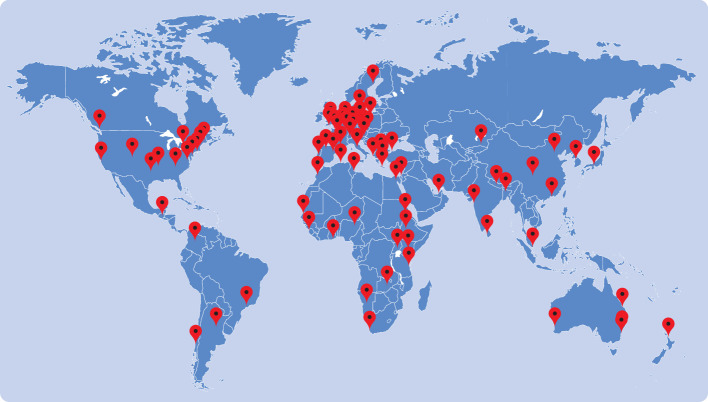
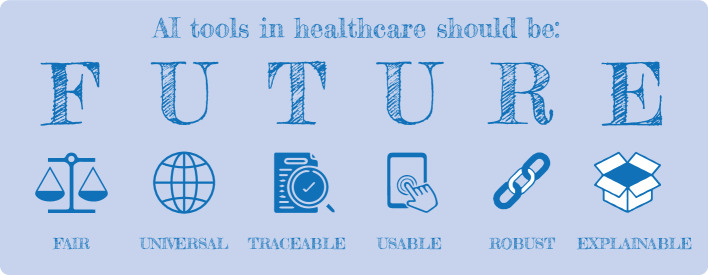
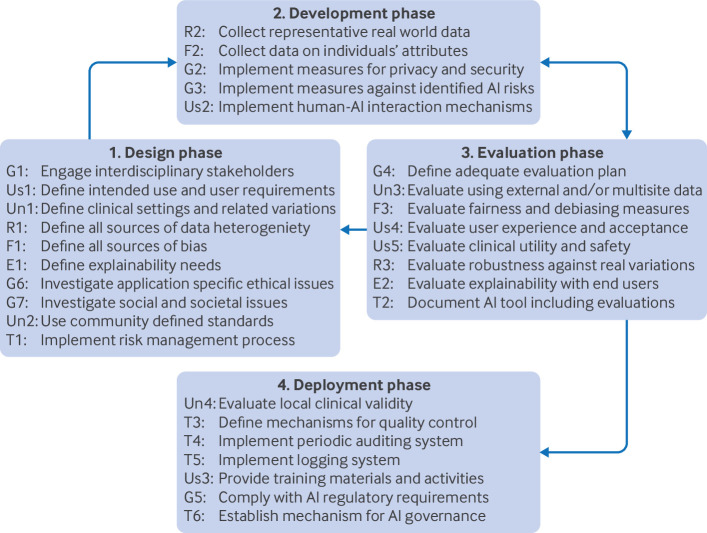
Despite major advances in artificial intelligence (AI) research for healthcare, the deployment and adoption of AI technologies remain limited in clinical practice. This paper describes the FUTURE-AI framework, which provides guidance for the development and deployment of trustworthy AI tools in healthcare. The FUTURE-AI Consortium was founded in 2021 and comprises 117 interdisciplinary experts from 50 countries representing all continents, including AI scientists, clinical researchers, biomedical ethicists, and social scientists. Over a two year period, the FUTURE-AI guideline was established through consensus based on six guiding principles—fairness, universality, traceability, usability, robustness, and explainability. To operationalise trustworthy AI in healthcare, a set of 30 best practices were defined, addressing technical, clinical, socioethical, and legal dimensions. The recommendations cover the entire lifecycle of healthcare AI, from design, development, and validation to regulation, deployment, and monitoring.
Overview
CoChat Summary
TL;DR
FUTURE-AI is an international consensus guideline for trustworthy and deployable healthcare AI, developed by 117 experts from 50 countries over 24 months. It defines six guiding principles—fairness, universality, traceability, usability, robustness, and explainability—and 30 best practices covering the full AI lifecycle.
Key findings
- The FUTURE-AI Consortium comprised 117 interdisciplinary experts from 50 countries representing all continents, including AI scientists, clinical researchers, biomedical ethicists, and social scientists.
- The guideline was established through a modified Delphi process over 24 months, with eight rounds of feedback and iterative discussion, resulting in 30 best practices across six guiding principles plus a “general” category.
- All final recommendations were approved with less than 5% disagreement among FUTURE-AI members; remaining disagreement mostly concerned whether recommendations should be “recommended” or “highly recommended” for research versus deployable tools.
- The framework distinguishes compliance levels for research/proof-of-concept AI tools versus deployable clinical AI tools, with higher expected compliance for deployable tools on many recommendations.
Methods
- International consensus guideline developed using a modified Delphi approach over 24 months, beginning with six core guiding principles and an initial set of recommendations.
- Eight rounds included working groups, an online survey, iterative written feedback, external feedback from 44 additional experts, online consensus meetings, and a final consensus vote.
- Results were aggregated quantitatively by analysing expert voting patterns and qualitatively by synthesising feedback and recurring themes; the final consortium consisted of 117 experts.
Limitations
- The paper states that implementation may involve substantial costs, potentially exacerbating disparities in AI adoption, especially for smaller developers and resource-limited health systems.
- The paper states that liability remains unaddressed, including who should perform audits and who should be accountable for errors, and that current regulations prevent post-release modifications because they would invalidate initial validation.
- The paper states that for some recommendations no clear standard yet exists, and that FUTURE-AI is proposed as a dynamic, living framework requiring future refinement and domain-specific operationalisation.
Model-written summary. Check it against the paper before relying on it.
Integrity signals
Registry
Cites
Statistics
Figures
Verification
Claims the paper makes
11 Valid · 0 Not valid · 10 Not checked · 42 Own results and interpretations
Every source the paper cites for this claim was checked and supports it.
In the paper
“Existing research has shown that even small, imperceptible variations in the input data might lead AI models into incorrect decisions.60”
§ FUTURE-AI: international consensus guideline for trustworthy and deployable artificial intelligence in healthcare > FUTURE-AI guideline > Robustness
What the sources say
- Supportedcites [60] Finlayson SG Bowers JD Ito J Zittrain JL Beam AL Kohane IS. Adversarial attacks on medical machine learning. Science 2019; 363: 1287- 9. 10.1126/science.aaw4399 30898923 PMC7657648 source
The opening passage says a small, carefully designed change to an input can cause a machine-learning system to reach a wrong conclusion. In “DEEP VULNERABILITIES,” the paper gives an example: a visually imperceptible image perturbation makes a classifier label a benign mole as malignant. The claim's tentative wording is consistent with this account of deliberately crafted changes. (LLM, conf=0.94)
hedgedstates a possible cause- Asserted: passes — The authors put it forward as true.
- Checkable: passes — It can be checked against evidence.
- Load-bearing: passes — The paper’s conclusions depend on it.
- Based: passes — The paper gives a reason why it holds.
- Supported
The cited sources support only part of this claim — read each source’s verdict below.
In the paper
“Bias in healthcare AI is application specific.32”
§ FUTURE-AI: international consensus guideline for trustworthy and deployable artificial intelligence in healthcare > FUTURE-AI guideline > Fairness
What the sources say
- Partly supportedcites [32] Ferryman K, Pitcan M. Fairness in Precision Medicine. Data & Society Research Institute. 2018. https://datasociety.net/library/fairness-in-precision-medicine/ sourceExperimental — accuracy not yet measured
The “Fairness in Precision Medicine” section says that bias can arise from human assumptions, automation, and different phases of data handling. That supports the idea that bias depends on how a system is developed and used, but the paper discusses precision medicine rather than establishing the claim for healthcare AI applications generally. No page number is available in our copy. (LLM, conf=0.75)
plain- Asserted: passes — The authors put it forward as true.
- Checkable: passes — It can be checked against evidence.
- Load-bearing: passes — The paper’s conclusions depend on it.
- Based: passes — The paper gives a reason why it holds.
- Partly supported
In the paper
“In particular, existing research has shown that AI tools in healthcare can be prone to errors and patient harm, biases and increased health inequalities, lack of transparency and accountability, as well as data privacy and security breaches.4 5 6 7 8”
§ FUTURE-AI: international consensus guideline for trustworthy and deployable artificial intelligence in healthcare > Introduction
What the sources say
- Not matchedcites 4 5 6 7 8
This doesn’t read as a citation we can look up.
plainstates a possible cause- Asserted: passes — The authors put it forward as true.
- Checkable: passes — It can be checked against evidence.
- Load-bearing: passes — The paper’s conclusions depend on it.
- Based: passes — The paper gives a reason why it holds.
- Not matched
In the paper
“However, there is an absence of clear, widely accepted guidelines on how healthcare AI tools should be designed, developed, evaluated, and deployed to be trustworthy—that is, technically robust, clinically safe, ethically sound, and legally compliant (see glossary in appendix table 1).9”
§ FUTURE-AI: international consensus guideline for trustworthy and deployable artificial intelligence in healthcare > Introduction
What the sources say
- Not matchedcites [9] High-Level Expert Group on AI, EU Commission. Ethics Guidelines For Trustworthy AI. 2019. https://www.europarl.europa.eu/cmsdata/196377/AI%20HLEG_Ethics%20Guidelines%20for%20Trustworthy%20AI.pdf
We searched by its title and found no matching paper.
plain- Asserted: passes — The authors put it forward as true.
- Checkable: passes — It can be checked against evidence.
- Load-bearing: passes — The paper’s conclusions depend on it.
- Based: passes — The paper gives a reason why it holds.
- Not matched
In the paper
“In particular, existing research has shown that AI tools in healthcare can be prone to errors and patient harm, biases and increased health inequalities, lack of transparency and accountability, as well as data privacy and security breaches.4 5 6 7 8”
§ FUTURE-AI: international consensus guideline for trustworthy and deployable artificial intelligence in healthcare > Introduction
What the sources say
- Not matchedcites 4 5 6 7 8
This doesn’t read as a citation we can look up.
plainstates a possible cause- Asserted: passes — The authors put it forward as true.
- Checkable: passes — It can be checked against evidence.
- Load-bearing: passes — The paper’s conclusions depend on it.
- Based: passes — The paper gives a reason why it holds.
- Not matched
3 more claims
Create a free account to see all 63 claims and to verify the 1 reference still open.
- Probably not a substantial claim. 48
- It may state two separate claims as one. 24
Claims other papers make about this one
Each is checked against this paper’s own text: does it say what the citing paper says it does?
The source backs part of the claim, not all of it — or backs it for a different population, condition or comparison.
In the citing paper
“First, many dimensions of trustworthiness-such as clinical appropriateness, fairness, and the usefulness of explanations-still rely heavily on human expert judgment (Lekadir et al., 2025).”
From Trustworthy Medical Question Answering: An Evaluation-Centric Survey (2025) · cites this paper as Lekadir et al., 2025
Experimental — accuracy not yet measuredThe check wasn’t confident either way, so it gives no verdict — never disputed.
In the citing paper
“Cancer-related mutations and chemical modifications can also alter these shapes.”
From Artificial Intelligence in Clinical Oncology: From Productivity Enhancement to Creative Discovery (2025) · cites this paper as [107]
Experimental — accuracy not yet measuredThe check wasn’t confident either way, so it gives no verdict — never disputed.
In the citing paper
“Drug binding often depends on motion, such as small shifts when a compound binds, long-range effects within the protein, hidden pockets that open and close, or changes when proteins form complexes.”
From Artificial Intelligence in Clinical Oncology: From Productivity Enhancement to Creative Discovery (2025) · cites this paper as [107]
Experimental — accuracy not yet measuredThe check wasn’t confident either way, so it gives no verdict — never disputed.
In the citing paper
“AlphaFold has been a breakthrough for drug discovery, including cancer therapeutics, but its limitations are well recognized [105,106,107,108].”
From Artificial Intelligence in Clinical Oncology: From Productivity Enhancement to Creative Discovery (2025) · cites this paper as [107]
Experimental — accuracy not yet measuredIn the citing paper
“It predicts a protein’s most stable shape; however, it does not model how the protein moves.”
From Artificial Intelligence in Clinical Oncology: From Productivity Enhancement to Creative Discovery (2025) · cites this paper as [107]
Citations
Cites
The FAIR Guiding Principles for scientific data management and stewardship
Wilkinson, M. D., Dumontier, M., Aalbersberg, I. J., Appleton, G., Axton, M., Baak, A., Blomberg, N., Boiten, J.-W., da Silva Santos, L. B., Bourne, P. E., et al. (2016) · Scientific Data · doi:10.1038/sdata.2016.18 · Cited by 18,423 · cited 1×
“AI in healthcare has unique properties compared with other domains, such as the special trust relation between doctors and patients, because patients themselves generally do not have the opportunity to objectively assess the diagnosis and treatment decisions of doctors.”
Sudlow, C., Gallacher, J., Allen, N., Beral, V., Burton, P., Danesh, J., Downey, P., Elliott, P., Green, J., Landray, M., et al. (2015) · PLOS Medicine · doi:10.1371/journal.pmed.1001779 · Cited by 12,728
High-performance medicine: the convergence of human and artificial intelligence
Topol, E. J. (2019) · Nature Medicine · doi:10.1038/s41591-018-0300-7 · Cited by 10,450
Heidenreich, P. A., Bozkurt, B., Aguilar, D., Allen, L. A., Byun, J. J., Colvin, M. M., Deswal, A., Drazner, M. H., Dunlay, S. M., Evers, L. R., et al. (2022) · Circulation · doi:10.1161/cir.0000000000001063 · Cited by 4,922
Collins, G. S., Moons, K. G. M., Dhiman, P., Riley, R. D., Beam, A. L., Van Calster, B., Ghassemi, M., Liu, X., Reitsma, J. B., van Smeden, M., et al. (2024) · BMJ · doi:10.1136/bmj-2023-078378 · Cited by 4,718
Self-citationThe Cancer Imaging Archive (TCIA): Maintaining and Operating a Public Information Repository
Clark, K., Vendt, B., Smith, K., Freymann, J., Kirby, J., Koppel, P., Moore, S., Phillips, S., Maffitt, D., Pringle, M., et al. (2013) · Journal of Digital Imaging · doi:10.1007/s10278-013-9622-7 · Cited by 4,599
Self-citationThe future of digital health with federated learning
Rieke, N., Hancox, J., Li, W., Milletarì, F., Roth, H. R., Albarqouni, S., Bakas, S., Galtier, M. N., Landman, B. A., Maier-Hein, K., et al. (2020) · npj Digital Medicine · doi:10.1038/s41746-020-00323-1 · Cited by 4,015
Self-citationThe Future of Digital Health with Federated Learning
Rieke, N., Hancox, J., Li, W., Milletari, F., Roth, H., Albarqouni, S., Bakas, S., Galtier, M. N., Landman, B., Maier-Hein, K., et al. (2020) · arXiv · doi:10.48550/arxiv.2003.08119 · Cited by 3,495
Self-citationKey challenges for delivering clinical impact with artificial intelligence
Kelly, C. J., Karthikesalingam, A., Suleyman, M., Corrado, G., & King, D. (2019) · BMC Medicine · doi:10.1186/s12916-019-1426-2 · Cited by 3,136
Explainable AI: a review of machine learning interpretability methods
Linardatos, P., Papastefanopoulos, V., & Kotsiantis, S. (2020) · Entropy · doi:10.3390/e23010018 · Cited by 2,922
Research works printed but not linked: 3
- IEEE Standards Association. IEEE Recommended Practice for the quality management of datasets for Medical Artificial Intelligence. https://standards.ieee.org/ieee/2801/7459/
- Cheatham B, Javanmardian K, Samandari H. Confronting the risks of artificial intelligence. 2019. https://www.semanticscholar.org/paper/Confronting-the-risks-of-artificial-intelligence-Cheatham-Javanmardian/2022830bf9f896d99c1d7ff228e3adca08efe352
- Quarta A, Bruno P, Calimeri F. Continual learning for medical image classification. 2022. http://ceur-ws.org
Cited by
Items 301–400 of 656
Lee, Y.-C., Hsu, Y.-N., Lee, J. T., & Chen, C.-S. (2026) · Endoscopy · doi:10.1055/a-2771-3155
Ojo, A., Osborne, A., Soladoye, A. A., Matope, E. M., Bamidele, D. B., & Olawade, D. B. (2026) · Intelligent Hospital · doi:10.1016/j.inhs.2026.100053
Schilder, M. B., Keyser, A., van Hees, S., Sbrizzi, A., & Boon, W. (2026) · Journal of Medical Internet Research · doi:10.2196/83407 · Cited by 3
“The inclusion of varied perspectives, especially those of patients [25,26], has been widely advocated as essential to shaping relevant research agendas and outcomes [15,16, 27,28].”
AI in School Health: Is It Appropriate for Mental Health Help?
Pontz, M. M., & Helbing, M.-L. C. (2026) · NASN School Nurse · doi:10.1177/1942602x261423916 · Cited by 1
“…changing highlights the need for programs to be not only technologically capable, but safe for patients while adhering to ethical parameters that are considered hallmarks in health care, including ensuring patient–provider trust, while delivering the best care possible (Lekadir et al., 2025).”
Equity at the point of care: auditing AI-supported resource allocation in obstetric emergencies
Gao, F., & Xie, D. (2026) · Frontiers in Public Health · doi:10.3389/fpubh.2026.1774367 · Cited by 1
Kayali, S., Golkari, A., & Mathur, M. (2025) · F1000Research · doi:10.12688/f1000research.172671.2 · Cited by 6
“55,56 In parallel, broader methodological guidance, including recommendations from the FUTURE-AI Consortium, 49 highlights that transparent reporting and rigorous external and multicentre validation are essential prerequisites for safe and effective clinical implementation.”
Artificial intelligence in European healthcare: risk perceptions and regulatory challenges
Fernández-Prados, J. S., Díaz, A. L., Latorre, R., & Haro, M. J. T. (2026) · Health Risk & Society · doi:10.1080/13698575.2026.2638173
“FUTURE-AI is structured around six core principles: Fairness, Universality, Traceability, Usability, Robustness, and Explainability, collectively aiming to foster stakeholder engagement throughout the design, development, validation, and deployment phases of AI tools (Lekadir et al., 2025).”
Artificial Intelligence in Dentistry and Oral Medicine: Ethical Issues and Challenges
Harte, M., Feng, Q. J., Carey, B., Addison, O., Tan, Z. Q., Li, Y., & Albuquerque, R. (2026) · Springer eBooks · doi:10.1007/978-981-96-7448-0_22-2
Artificial Intelligence and Digital Twins: Revolutionizing Orthopedics Surgery
Oettl, F. C., Samuelsson, K., & Pruneski, J. A. (2026) · Springer eBooks · doi:10.1007/978-981-96-7448-0_40-2
Artificial Intelligence in Radiology: Unlocking New Dimensions of Value
Bamberg, F., Adam, G., Antoch, G., Barkhausen, J., Bäuerle, T., Bley, T. A., Borggrefe, J., Bücker, A., Denecke, T., Hoffmann, R., et al. (2026) · RöFo - Fortschritte auf dem Gebiet der Röntgenstrahlen und der bildgebenden Verfahren · doi:10.1055/a-2794-9496 · Cited by 2
Guideline-Aware XAI for Imaging: Closing the Trust Gap in Clinical AI
Ghantasala, K. K. (2026) · International Conference on Communication, Computing and Electronics Systems (ICCCES) · doi:10.1109/iccces62661.2026.11436892
“Frameworks such as CLAIM, TRIPOD-AI, and FUTURE-AI provide structured checklists for reporting key methodological details, validation approaches, and ethical considerations [6], [7].”
Between map and maze: reframing trust in healthcare AI
Piehl, H., Janssen, R., Penders, B., & Fijten, R. (2026) · AI & Society · doi:10.1007/s00146-026-02997-9 · Cited by 2
“AI systems are developed and implemented under the (implicit) assumption that trust must be established for these technologies to function effectively (Bareis 2024; Lekadir et al. 2025).”
Ha, J., Park, H., Shinn, J., & Kim, H. (2026) · Journal of Korean Medical Association · doi:10.5124/jkma.26.0013
“Because medical AI can directly affect patient health and survival, it requires a higher level of validation and broader social consensus than AI applications in other industries [6,7].”
AI Trustworthiness Index for Healthcare (AITI-H): conceptualization, structure, and development
Rahman, H. A., Noraidi, A. A., & Tun, H. M. (2026) · AI and Ethics · doi:10.1007/s43681-026-01102-6
Lefebvre, O., Lemyre, F. C., Éthier, J., Chikouche, L. H., Amriou, L., Poenaru, D., & Vallières, M. (2026) · Journal of the American Medical Informatics Association · doi:10.1093/jamia/ocag034 · Cited by 1
“This example shows how MED3pa highlights model limitations, supports nuanced decisions, and promotes reliable deployment.”
Incubating artificial intelligence initiatives and careers in dermatology
Wongvibulsin, S., Primiero, C., Adamson, A. S., Barata, C., Betz‐Stablein, B., Celebi, M. E., Dawant, B. M., Guitera, P., Kelly, K. M., Kittler, H., et al. (2026) · Journal of Investigative Dermatology · doi:10.1016/j.jid.2026.03.023
Jia, H., Liu, S., & Ma, J. (2026) · Frontiers in Oncology · doi:10.3389/fonc.2026.1800254
“In immunoradiotherapy, modest adjustments to exposure structure may yield disproportionate bene fi t in patients whose systemic in fl ammatory “ gain ” is predicted to be high (64).”
Finelli, P. F. (2026) · Diagnosis · doi:10.1515/dx-2026-0028
Rodríguez-Belenguer, P., Marfil-Trujillo, M., Vraka, A., Tsiknakis, M., Papanikolaou, N., Regge, D., Kostas Marias, A., Alberich, L. C., & Martí‐Bonmatí, L. (2026) · Computer Methods and Programs in Biomedicine · doi:10.1016/j.cmpb.2026.109375
Self-citationEvaluating the environmental impact of AI in healthcare is essential for planetary health
Foley, C., Bonnici, T., Calderwood, P., Reyburn, M., & Pearson, S. (2026) · BMJ · doi:10.1136/bmj.s677
Boone, E., Loban, K., Daskalo, C., et al. (2026) · doi:10.2196/preprints.96901
Kaczmarek‐Majer, K., Daňková, M., Marcin, O., Sokół-Szawłowska, M., Hyner, P., Alijani, Z., Gędek, A., Sochacka, M., Antosik-Wójcińska, A. Z., Wichrowski, F., et al. (2026) · Information Systems Frontiers · doi:10.1007/s10796-026-10712-8 · Cited by 1
Context Aware Differential Diagnosis System Using Medical Knowledge Base
Bedi, A., Singh, B., Gupta, S., & Dwivedi, R. (2025) · IEEE International Conference on Distributed Ledger Technologies (ICDLT) · doi:10.1109/icdlt66400.2025.11466914
Sarchosoglou, A., Genitsarios, I., Silvis-Cividjian, N., Papavasileiou, P., Bakas, A., Papanikolaou, N., & Pappas, E. (2026) · Technical Innovations & Patient Support in Radiation Oncology · doi:10.1016/j.tipsro.2026.100404 · Cited by 2
“In its current configuration, outputs are informational and non-prescriptive and are intended to support discussion, brainstorming and training rather than clinical decision-making, consistent with published guidance on the ethical use of AI in healthcare [37,38].”
Self-citationInteligência artificial na medicina
Nunes, S. B., & Nunes, R. (2026) · Revista Bioética · doi:10.1590/1983-803420263982pt · Cited by 1
Artificial intelligence in medicine
Nunes, S. B., & Nunes, R. (2026) · Revista Bioética · doi:10.1590/1983-803420263982en
Kaftan, A. N. (2026) · Accreditation and Quality Assurance · doi:10.1007/s00769-026-01707-8
Beyond the algorithm: embedding ethics for trustworthy AI in radiology and oncology
Abadía, M. C., & Goisauf, M. (2026) · Frontiers in Digital Health · doi:10.3389/fdgth.2026.1756256
“Bias appears also considered as linked to dataset heterogeneity and demographic representativeness (15, 17, 18) which can limit generalization (33) and trust (3).”
InfluentialSelf-citationLa inteligencia artificial en la medicina
Nunes, S. B., & Nunes, R. (2026) · Revista Bioética · doi:10.1590/1983-803420263982es
Assessment of Stage Two Hypertension Treatment Plans Written by Generative AI
Metzger, T., Hossain, Z., Park, K., Vu, S., Dixon, S., & Taylor, T. A. H. (2026) · Journal of Clinical Medicine · doi:10.3390/jcm15083103
“The creation and adoption of consensus guidelines, such as the FUTURE-AI framework, offer structured pathways to ensure AI systems meet rigorous ethical, regulatory, and performance standards in medical decision-making [25].”
Jóźwiak, R., Gonet, M., Mycka, J., Mykhalevych, I., Radomski, D. S., Tupikowski, K., Lorenc, T., Dołowy, J., & Zacharzewska-Gondek, A. (2026) · Applied Sciences · doi:10.3390/app16083932
Train2explain: Training Optimization for Explanation Improvement
Morasso, C., Groussard, T., Dolci, G., Brusini, L., Biardeau, T., Helbert, D., Fernández-Maloigne, C., & Menegaz, G. (2026) · IEEE International Conference on Acoustics Speech and Signal Processing · doi:10.1109/icassp55912.2026.11463140
Shen, S., Yang, G., & Qiu, X. (2026) · Gut · doi:10.1136/gutjnl-2026-338921
Schnitzler, T. (2026) · Radiology Artificial Intelligence · doi:10.1148/ryai.260266
Management and Prediction of Acute Pancreatitis Severity Using AI: A Surgical Perspective
Dumitrascu, I., Zărnescu, N. O., Marchegiani, G., Ilie, A., Zarnescu, E. C., & Costea, R. (2026) · Diagnostics · doi:10.3390/diagnostics16091350
“In practice, an AI model is only safe when its predictions remain reliable, explainable, and clinically relevant [67].”
Large language surgery in the era of AI and digital standards
Guni, A., Collins, G. S., Darzi, A. W., & Ashrafian, H. (2026) · International Journal of Surgery · doi:10.1097/js9.0000000000005360
Self-citationAndreassen, O. A., Heimer, H., Aarsland, D., et al. (2026) · Nature Medicine · doi:10.1038/s41591-026-04575-4
Systems Governance for Trustworthy AI: A Framework for Environmental Accountability
Zeleti, F. A. (2026) · Systems · doi:10.3390/systems14050485
Ethical challenges of artificial intelligence in critical care
Saida, I. B., Gaddas, M., & Saad, H. B. (2026) · Elsevier eBooks · doi:10.1016/b978-0-443-36554-6.00023-4
How Autonomy and Trust Influence Patient Satisfaction Under Dynamic Dependencies
Stella, F., Sapienza, A., & Falcone, R. (2026) · Sci · doi:10.3390/sci8050101
Budin‐Ljøsne, I., Boni, A., Boussemart, L., Fattal, A.-K., Frantzi, M., Gemenick, L., Koinis, F., Kotsakis, A. P., Östman, F., Roret, T., et al. (2026) · Journal of Cancer Policy · doi:10.1016/j.jcpo.2026.100803 · Cited by 1
Kim, J. Y., Hasan, A., Ahmed, R., Vladimirova, A., Prakash, A., Alwakeel, M., Jha, V., Patel, M. R., Mitchley, M., Theiler, E., et al. (2026) · SSRN Electronic Journal · doi:10.2139/ssrn.6647418
Brar, K., Chattha, I., Gobraeil, S., Mocanu, V., Corcelles, R., Kroh, M., Shin, T. H., Dang, J. T., & Lee, Y. (2026) · Surgery for Obesity and Related Diseases · doi:10.1016/j.soard.2026.05.002
Kunze, K. N., & Barad, A. V. (2026) · Arthroscopy The Journal of Arthroscopic and Related Surgery · doi:10.1002/arj.70231 · Cited by 2
Adapa, K., Metta, M., Kotte, S., Sathuluri, A., Mithal, V., Sethi, R., Kabaniha, G. A., & Mazur, L. M. (2026) · Asia-Pacific Journal of Oncology Nursing · doi:10.1016/j.apjon.2026.100972 · Cited by 2
“1,11,16,17,20 Sixth, empirical evidence generation and iterative validation are themselves core functions of AI auditing.”
InfluentialGürses, K. M., Tezcan, H., Tunçez, A., Özen, Y., & Yalçın, M. U. (2026) · Frontiers in Cardiovascular Medicine · doi:10.3389/fcvm.2026.1808572
Enzendorfer, M. L., Reiter, G. S., Bogunović, H., Riedl, S., Mai, J., Schrittwieser, J., Stapf, C., Mares, V., Mihelčič, M., Little, J., et al. (2026) · Eye · doi:10.1038/s41433-026-04487-0
“Extension of AI-secured diagnostic tools will not only broaden care to communities not reaching clinical care, but also substantially reduce healthcare costs in one of the most prevalent diseases of modern times, i.e. AMD.”
Lou, P., Zhu, Y., Chia, N., Kumari, R., Yang, W., Wang, Y., Novotny, B. C., Winham, S. J., Guo, R., Goode, E. L., et al. (2026) · npj Digital Medicine · doi:10.1038/s41746-026-02741-z · Cited by 3
Vijayasimha, M., Dubey, A. K., Yaqoob, S. I., & Charan, L. S. (2026) · Forensic Science Medicine and Pathology · doi:10.1007/s12024-026-01256-z · Cited by 1
Learning from Drops: AI-Guided Integration of Liquid Biopsy Features in Cancer StudiesPreprint
Andueza, M., Villoslada-Blanco, P., Dreuille, B. D., Alonso, L., Sabroso‐Lasa, S., Pantel, K., Alix‐Panabières, C., de Maturana, E. L., & Malats, N. (2026) · bioRxiv (Cold Spring Harbor Laboratory) · doi:10.64898/2026.05.12.724535
Wright, D. M., Trifonov, I., Shahar-Gonen, M., Loewenstein, A., Zur, D., & Pető, T. (2026) · Ophthalmology Science · doi:10.1016/j.xops.2026.101238
“38 These tools may be particularly valuable in a highly prevalent condition, such as nAMD, where the clinical and economic burden is expected to increase with population aging.”
Maliagkani, E., Georgalas, I., Datseris, I., Papageorgiou, E. I., & Apostolopoulos, I. D. (2026) · Journal of Imaging · doi:10.3390/jimaging12050211
“These directions align with current reporting and evaluation frameworks for medical AI, including MI-CLAIM [29], CLAIM [30,31], DECIDE-AI [32], SPIRIT-AI [33], CONSORT-AI [33], and FUTURE-AI [34], which emphasize transparency, clinical plausibility, and human-centered evaluation.”
Liu, W. T., Xie, Q., Liu, C., Chen, B., Yang, X., Yang, L., & Yu, H. (2026) · Frontiers in Oncology · doi:10.3389/fonc.2026.1795852
Reimagining Continuous Professional Development for Physicians in the Age of Artificial Intelligence
Barry, J. S., & McAdams, R. M. (2026) · Journal of Continuing Education in the Health Professions · doi:10.1097/ceh.0000000000000644 · Cited by 2
Croon, P. M., Dhingra, L. S., Pedroso, A. F., & Khera, R. (2026) · Current Heart Failure Reports · doi:10.1007/s11897-026-00764-x · Cited by 4
“Beyond data harmonization, LLMs can perform direct inference from clinical narratives, enabling scalable identification of diagnoses, care gaps, and quality metrics that are inconsistently coded or otherwise inaccessible to traditional interoperability frameworks [69, 70, 100, 101].”
TrainTracks - federated learning for reproducible research on sensitive medical data
Elwes, M. R., Jaberansary, M., Tang, F.-S. K.-B., Aswendt, M., Beyan, O., & Kutafina, E. (2026) · BMC Medical Informatics and Decision Making · doi:10.1186/s12911-026-03553-7 · Cited by 1
“The Fairness, Universality, Traceability, Usability, Robust-ness, and Explainability (FUTURE)-AI act [8], published in 2025, focuses on providing technical documentation of the AI models’ training and testing data for improved traceability.”
Hanna, J. J., Dennis, C. R., Johnson, A. O., Cooper, L. N., Evans, C. S., Lehmann, C. U., & Medford, R. J. (2026) · Applied Clinical Informatics · doi:10.1055/a-2876-1059 · Cited by 1
Pradhan, V., Shekhar, H., Munda, P. K., Tiwari, A., Jha, S., & Rai, P. (2026) · Cureus · doi:10.7759/cureus.109459 · Cited by 3
“Similarly, frameworks such as CONSORT-AI, SPIRIT-AI, and FUTURE-AI emphasize standardized reporting, prospective validation, and clinical evaluation, which are essential for improving reproducibility and facilitating the safe translation of AI systems into clinical practice [36-38].”
Liu, Q., Tang, J., Shen, J., Cai, Y. Y., Huang, Y. L., & Lu, N. (2026) · IEEE Transactions on Consumer Electronics · doi:10.1109/tce.2026.3695954
“The non-interpretable nature of Neural Network classifiers creates a lack of trust and undermines the developing regulatory requirements that mandate the use of explainable, trustworthy AI-based systems in medicine [9].”
Winarno, E., Nur, I. M., Karim, A., Amri, S., Wirdati, I. E., & Adi, P. W. (2026) · Journal of Computing Theories and Applications · doi:10.62411/jcta.16023 · Cited by 3
“In clinical AI settings, robustness, traceability, explanation quality, and label validity are often as important as predictive accuracy itself [27].”
Schatzkästchen oder Büchse der Pandora? – Klinische Ethik und Künstliche Intelligenz
Beil, M., Janssens, U., & Fuest, K. (2026) · Springer eBooks · doi:10.1007/978-3-662-72378-4_16
Planner–Executor Architecture for Teledermatology Triage with Safety Guardrails
Saxena, T., Reddy, B. H., Bansal, H., Mudgal, I., Devendiran, R., & Puralkar, H. (2026) · International Conference on Computing for Sustainable Global Development · doi:10.23919/indiacom70271.2026.11526130 · Cited by 1
“As highlighted in international consensus and regulatory frameworks [16],[17] and [18] medical AI systems should focus on transparency, accountability, and human supervision alongside with technical accuracy.”
Zhao, Y., Miao, Y., Luo, Y., Guo, R., Wang, H., & Wu, Y. N. (2026) · International Journal of Medical Informatics · doi:10.1016/j.ijmedinf.2026.106513 · Cited by 3
Sibilio, S., Grootven, B. V., Mettler, A. C., Cattin, P. C., Feuz, U., Simon, M., Zúñiga, F., & Nickel, C. H. (2026) · JMIR Research Protocols · doi:10.2196/92264
“International guidelines for trustworthy and deployable AI in health care [45] will be followed to avoid bias and ensure fairness and explainability.”
Drift isn’t a bug, it’s the work: post-deployment surveillance for clinical artificial intelligence
Syailendra, E. A. (2026) · BMJ Digital Health & AI · doi:10.1136/bmjdh-2026-000111
Hübner, H., Seitz, K., & Leutheuser, H. (2026) · Senologie - Zeitschrift für Mammadiagnostik und -therapie · doi:10.1055/a-2848-2642
Mancin, S., Ferrara, G., Lopane, D., Petrelli, F., Palomares, S. M., Sguanci, M. E., & Cangelosi, G. (2026) · Clinical Nutrition ESPEN · doi:10.1016/j.clnesp.2026.103372
WenYuan, W. U., Shi, F., Hu, Y., Shi, J., Yan, Z., Yang, J., & Yu, D. (2026) · Frontiers in Medicine · doi:10.3389/fmed.2026.1836121
Ardila, C. M., Pineda‐Vélez, E., Vivares‐Builes, A. M., et al. (2026) · Immuno · doi:10.3390/immuno6020038
“Multicenter and prospective studies, including trial-embedded biomarker analyses, are needed to determine whether these signatures can predict response or resistance to immune checkpoint blockade and whether transcriptomic immune states correspond to scalable AI-derived tissue features [44–46].”
Khalil, M. A. M., Sadagah, N. M., Tan, J., & Al-Qurashi, S. H. (2026) · World Journal of Nephrology · doi:10.5527/wjn.120300
Paul, B. M., Kannan, G., & Thangaraj, P. (2026) · ACS Applied Engineering Materials · doi:10.1021/acsaenm.6c00314
The Challenges of AI Applications in Health Care: Qualitative Study
Qiu, L., Li, S., Liang, Y., Lu, S., & Tao, P. (2026) · Journal of Medical Internet Research · doi:10.2196/92979 · Cited by 1
Toward personalised cancer care: AI in precision and molecular oncology
Sinha, A., Anzar, D., Owusu-Boampong, A. B., Nkrumah-Boateng, P. A., Mannan, K. M., Ali, S. H., Roy, S., & Wireko, A. A. (2026) · European journal of medical research · doi:10.1186/s40001-026-04670-9
“Complementary design frameworks, such as the FUTURE-AI guideline and the stakeholder-centred trustworthy AI model, translate these regulatory and ethical principles into practical technical and organisational requirements for developers and healthcare providers [182].”
Bobadilla, A. R., Ocampo, S. A. B., & Ocampo, I. C. B. (2026) · Cureus · doi:10.7759/cureus.110205
Jayaswal, R. P., CHANU, T. Z., Kapani, V., Pankaj, P. P., & Kant, R. (2026) · International Journal of Diabetes in Developing Countries · doi:10.1007/s13410-026-01690-3
Andres, M. P., Rufino, C. D. C., Krishnan, R. A., Jain, S., Gomes, B. D., & Abrão, M. S. (2026) · European Journal of Obstetrics & Gynecology and Reproductive Biology · doi:10.1016/j.ejogrb.2026.115237 · Cited by 1
Gedik, B., Çankaya, A. B., Erdem, M. A., Hassan, M. M., Ali, R., & Khurshid, Z. (2026) · European Journal of General Dentistry · doi:10.1055/s-0046-1822827
“46 Another important aspect of translational readiness is the choice of evaluation endpoints.”
Edge computing for biomedical imaging
Lee, K. C. M., Ding, T., Sugimura, T., Nitta, N., & Goda, K. (2026) · Applied Physics Express · doi:10.35848/1882-0786/ae7add
Iglesias, V. S., Modi, N. J., Purackal, R. S., Shoukat, K., Koyun, A., Nangolo, M. N., & Park, K. (2026) · Westcliff International Journal of Applied Research · doi:10.47670/wuwijar20262vnrkamk
Localized AI for stroke care in LMICs: a framework to overcome structural and diagnostic barriers
Liu, Q., Jia, X., He, Y., Hou, Y., Deng, Y., & Yan, Z. (2026) · Frontiers in Public Health · doi:10.3389/fpubh.2026.1859276
Clinical artificial intelligence applications of vision-language foundation models
Thirunavukarasu, A. J., Li, S. Y., Qin, P., Nie, D., Sanghera, R., Lim, E., Yu, J., & Zhang, L. (2026) · PLOS Digital Health · doi:10.1371/journal.pdig.0001453
Walston, S. L., Takita, H., Mitsuyama, Y., Sato, J., & Ueda, D. (2026) · European Radiology · doi:10.1007/s00330-026-12652-y · Cited by 1
“Regardless of the funding source, future validation studies should use the most up-to-date reporting standards, such as FUTURE-AI [41], MAIC-10 [42], TRIPOD-AI [43], and the anticipated PROBAST-AI [44] to improve transparency, reporting quality, and bias assessment.”
Survey evidence demands professional guidance on large language model use in medical physics
Norris, S. A., Kron, T., Douglass, M. J. J., & Badawy, M. K. (2026) · Physica Medica · doi:10.1016/j.ejmp.2026.105835
Nona, P. J., Firos, J. R. B., Zografos, C., Schuuring, M. J., Bhatt, A., & Andrikopoulou, E. (2026) · Current Heart Failure Reports · doi:10.1007/s11897-026-00766-9 · Cited by 1
“Such variability requires extensive data preprocessing and curation before AI algorithms can be applied effectively, which may inadvertently introduce biases and reduce model reliability [ 5, 54, 74].”
Hübner, H., Seitz, K., & Leutheuser, H. (2026) · Onkologische Welt · doi:10.1055/a-2858-2734
Designing AI Algorithms to Suit Local Context
Muhammed, Y. G., Matiza, T., & Delahunt, C. B. (2026) · Lecture notes in computer science · doi:10.1007/978-3-032-13654-1_17
Abosabie, S. A., & Chapiro, J. (2026) · American Journal of Roentgenology · doi:10.2214/ajr.26.35398
AI for mental disorders and diabetes comorbidity management: A scoping review
Kaburu, F. M., Zhu, P., Kudiza, A., McDonnell, D., da Veiga, C. P., Nie, J.-B., Xiang, Y., & Su, Z. (2026) · General Hospital Psychiatry · doi:10.1016/j.genhosppsych.2026.06.009 · Cited by 1
Virtual histological staining: toward standardization and clinical translation
Misra, S., Yoon, C., Park, E., Misra, S., Kim, C., & Park, B. (2026) · Biomedical Engineering Letters · doi:10.1007/s13534-026-00597-6 · Cited by 1
“In practice, clinical translation of virtual staining depends on how it fits into routine pathologi - cal workflows and on the level of evidence required for each intended use [146].”
Yost, C. D., Callas, B., Halligan, P., Palumbo, P., Rawal, S. C., Leyfman, Y., & Nguyen, R. H.-T. (2026) · Cancers · doi:10.3390/cancers18121981 · Cited by 2
“…tools require lifecycle evaluation, including defined intended use, attention to human factors, update governance, transparency, drift monitoring, and plans for local recalibration or retraining where appropriate [25–27], with scheduled hallucination audits and version control for LLM-based tools.”
Lesion feature enhancement and boundary-aware fusion for pulmonary embolism recognition on CT images
Li, J. (2026) · Frontiers in Medicine · doi:10.3389/fmed.2026.1846588
Keikhosrokiani, P. (2026) · Results in Engineering · doi:10.1016/j.rineng.2026.111664 · Cited by 2
Artificial Intelligence for Weight Management in Children: A Narrative Review
Calcaterra, V., Marin, L., Cena, H., Vandoni, M., Conti, M. V., Guardamagna, L., Patanè, P., Rossi, V., Pellino, V. C., Silvestri, D., et al. (2026) · Healthcare · doi:10.3390/healthcare14131821 · Cited by 1
“As research in this field moves beyond early feasibility studies, increasing attention should be directed toward the creation of AI models that are not only accurate but also transparent, interpretable, and tailored to the specific characteristics of children and adolescents [121,123].”
Shirgaonkar, Y., & Gokhale, D. (2026) · Eating and Weight Disorders - Studies on Anorexia Bulimia and Obesity · doi:10.1007/s40519-026-01882-0
Haas, S., Hammer, J., Hettler, F. M., Rodrigues, P. K., Teuteberg, F., & Thomas, O. (2026) · Frontiers in Artificial Intelligence · doi:10.3389/frai.2026.1850272
“However, AI-based telemonitoring in health-care additionally requires explicit consideration of clinical and real-world implementation constraints (Lekadir et al., 2025), ML-specific validation, risk assessment, and lifecycle governance (Arnaout et al., 2024; Lekadir et al., 2025), as well as…”
Hussein, M. A., Mokhtar, M. M., Salim, J., Abdelsalam, L., Soliman, R. W., Mohamed, S. K., Tharwat, R., & Abdelnaser, A. (2026) · Metallomics · doi:10.1093/mtomcs/mfag024
Artificial intelligence in headache care
Stubberud, A. (2026) · Nature Reviews Neurology · doi:10.1038/s41582-026-01226-7
Grubinskienė, A., & Katkevičius, A. (2026) · IEEE Workshop on Advances in Information, Electronic and Electrical Engineering (AIEEE) · doi:10.1109/aieee71113.2026.11576907
“Edge-ready processing becomes especially valuable when meaningful quality control, window selection, compression, or primary inference is performed locally, while more demanding analysis is transferred to the phone or cloud [36]-[42].”
InfluentialAgreement between ChatGPT and emergency physicians in laceration management: A prospective study
Gürmen, E. S., Yorgancıoğlu, M., & Oral, A. (2026) · Injury · doi:10.1016/j.injury.2026.113478
Metadata
- Authors
- Lekadir, K., Frangi, A. F., Porras, A. R., Glocker, B., Cintas, C., Langlotz, C. P., Weicken, E., Asselbergs, F. W., Prior, F., Collins, G. S., Kaissis, G., Tsakou, G., Buvat, I., Kalpathy-Cramer, J., Mongan, J., Schnabel, J. A., Kushibar, K., Riklund, K., Marias, K., Amugongo, L. M., Fromont, L. A., Maier-Hein, L., Cerdá-Alberich, L., Martí-Bonmatí, L., Cardoso, M. J., Bobowicz, M., Shabani, M., Tsiknakis, M., Zuluaga, M. A., Fritzsche, M.-C., Camacho, M., Linguraru, M. G., Wenzel, M., De Bruijne, M., Tolsgaard, M. G., Goisauf, M., Cano Abadía, M., Papanikolaou, N., Lazrak, N., Pujol, O., Osuala, R., Napel, S., Colantonio, S., Joshi, S., Klein, S., Aussó, S., Rogers, W. A., Salahuddin, Z., & Starmans, M. P. A.
- Affiliations
- Institució Catalana de Recerca i Estudis Avançats (ES)
- University of Leeds (GB)
- Colorado School of Public Health (US)
- Imperial College London (GB)
- IBM (United States) (US)
- Stanford Medicine (US)
- Fraunhofer Institute for Telecommunications, Heinrich Hertz Institute (DE)
- Health Data Research UK (GB)
- University of Arkansas for Medical Sciences (US)
- Centre for Statistics in Medicine, University of Oxford, Oxford, UK
- TUM Klinikum (DE)
- Gruppo Maggioli, Research and Development Lab, Athens, Greece
- Inserm (FR)
- Massachusetts General Hospital, Harvard Medical School, Boston, MA, USA
- University of California, San Francisco (US)
- Helmholtz Munich (DE)
- Universitat de Barcelona (ES)
- Umeå University (SE)
- Foundation for Research and Technology—Hellas (FORTH), Crete, Greece
- Namibia University of Science and Technology (NA)
- Barcelona Institute of Science and Technology (ES)
- German Cancer Research Center (DE)
- Instituto de Investigación Sanitaria La Fe (ES)
- Medical Imaging Department, Hospital Universitario y Politécnico La Fe, Valencia, Spain
- King's College London (GB)
- Gdańsk Medical University (PL)
- Ghent University (BE)
- Foundation for Research and Technology Hellas (GR)
- Data Science Department, EURECOM, Sophia Antipolis, France
- Technical University of Munich (DE)
- Children's National (US)
- Department of Radiology & Nuclear Medicine, Erasmus MC University Medical Centre, Rotterdam, Netherlands
- University of Copenhagen (DK)
- Biobanking and Biomolecular Resources Research Infrastructure Consortium (AT)
- BBMRI-ERIC, ELSI Services & Research, Graz, Austria
- Champalimaud Foundation (PT)
- Istituto di Scienza e Tecnologie dell'Informazione "Alessandro Faedo" (IT)
- Erasmus MC (NL)
- Artificial Intelligence in Healthcare Program, TIC Salut Social Foundation, Barcelona, Spain
- Macquarie University (AU)
- Maastricht University (NL)
- Corresponding author
- Lekadir, Karim
- ORCID
- Lekadir, Karim
- Frangi, Alejandro F
- Porras, Antonio R
- Glocker, Ben
- Cintas, Celia
- Langlotz, Curtis P
- Weicken, Eva
- Asselbergs, Folkert W
- Prior, Fred
- Kaissis, Georgios
- Tsakou, Gianna
- Buvat, Irène
- Mongan, John
- Schnabel, Julia A
- Kushibar, Kaisar
- Riklund, Katrine
- Amugongo, Lameck M
- Fromont, Lauren A
- Cerdá-Alberich, Leonor
- Cardoso, M Jorge
- Bobowicz, Maciej
- Shabani, Mahsa
- Tsiknakis, Manolis
- Fritzsche, Marie-Christine
- Camacho, Marina
- Linguraru, Marius George
- Wenzel, Markus
- Tolsgaard, Martin G
- Goisauf, Melanie
- Lazrak, Noussair
- Pujol, Oriol
- Osuala, Richard
- Napel, Sandy
- Colantonio, Sara
- Joshi, Smriti
- Klein, Stefan
- Aussó, Susanna
- Rogers, Wendy A
- Salahuddin, Zohaib
- Starmans, Martijn P A
- Venue
- BMJ
- Publisher
- BMJ
- Published
- 2025-02-05
- Volume
- 388
- Pages
- e081554
- ISSN
- 1756-1833 (ISSN-L)
- PMC
- PMC11795397
- OpenAlex
- W4407173730
- Cited by
- 957
- References
- 179
- Citations by year
- 2026: 732 · 2025: 207
- FWCI
- 192.91
- Type
- journal article
- Language
- en
- Update notices
- correction (2025-02-17)
- Open access
- hybrid
- doi.org
- Licence
- Locations
- BMJ (publishedVersion, cc-by-nc)
- PubMed Central (publishedVersion, cc-by-nc)
- PubMed (publishedVersion)
- Oxford University Research Archive (ORA) (University of Oxford) (publishedVersion)
- Pure Amsterdam UMC (publishedVersion, other-oa)
- University of Birmingham Research Portal (University of Birmingham) (publishedVersion, cc-by-nc)
- Research at the University of Copenhagen (University of Copenhagen) (publishedVersion, cc-by-nc)
- EUR Research Repository (Erasmus University Rotterdam) (publishedVersion, cc-by-nc)
- Repositori digital de la UPF (Universitat Pompeu Fabra) (publishedVersion, cc-by-nc)
- arXiv (Cornell University) (submittedVersion, other-oa)
- DiVA at Umeå University (Umeå University) (submittedVersion, other-oa)
- HAL (submittedVersion, cc-by)
- Ghent University Academic Bibliography (Ghent University) (submittedVersion, cc-by-nc)
- Lirias (submittedVersion, other-oa)
- City Research Online (City University London) (submittedVersion, other-oa)
- Research Explorer (The University of Manchester) (submittedVersion)
- Queen Mary Research Online (Queen Mary University of London) (submittedVersion, cc-by-nc)
- Research Publications (Maastricht University) (submittedVersion, cc-by-nc)
- Research Portal (King's College London) (submittedVersion, cc-by-nc)
- mediaTUM – the media and publications repository of the Technical University Munich (Technical University Munich) (submittedVersion)
- Fraunhofer-Publica (Fraunhofer-Gesellschaft) (submittedVersion)
- Research Explorer (The University of Manchester) (submittedVersion, cc-by-nc)
- EUR Research Repository (Erasmus University Rotterdam) (submittedVersion, other-oa)
- Griffith Research Online (submittedVersion, cc-by-nc)
- arXiv (Cornell University)
- Funders
- H2020 Health
- Topics
- Health Sciences › Medicine › Health Informatics › Artificial Intelligence in Healthcare and Education
- Physical Sciences › Computer Science › Artificial Intelligence › Ethics and Social Impacts of AI
- Physical Sciences › Computer Science › Artificial Intelligence › Explainable Artificial Intelligence (XAI)
- Keywords
- trustworthy AI, artificial intelligence in healthcare, consensus recommendations, AI ethics, fairness, explainability, robustness, traceability, usability, AI regulation, AI lifecycle
About these checks
Registry, retraction, Cites and statistics results are computed, not judged, with one exception: a printed reference that no index lists is read once by a model before it counts as a citation error. Claims are extracted by a model and kept only when their quote appears verbatim in the text; each cited source is then checked, with a model’s help, for whether it says what the claim relies on. Those verdicts can be wrong — read the claim’s quote and the cited source before relying on one.
The claim verdicts this report counts are experimental: their accuracy is not yet measured.
A language model drew the claims from the paper on 2026-10-05, under version 3 of the claim definition (model deepseek-v4.1-flash, prompt extract-v3).
A second model labelled each claim on 2026-10-05 (model jev-1.13-20260917, definition revision gold-guideline-v0.2).
Cited sources are checked with a language model’s help (gpt-6-sol).
Statistics and arithmetic are recomputed, not judged.
Confidence bands are shown only for fields calibrated on our annotated test set. None is calibrated yet, so no band is shown.
What counts as a claim ›How we measure confidence ›How we check this ›
Are you an author, or do you see a problem with this page? Request a review
Data sources
Bibliographic data: Semantic Scholar, OpenAlex, Crossref.
Contains information from the Semantic Scholar Academic Graph Datasets, made available under the ODC Attribution License (ODC-BY 1.0).
Semantic Scholar’s data is described in: Kinney, R., et al. (2023). The Semantic Scholar Open Data Platform. arXiv:2301.10140.
