

The DOI matches its Crossref record; 52 of the 52 references it cites were found in a registry or an index.
The effects of excluding patients from the analysis in randomised controlled trials: meta-epidemiological study
Open accessAbstract
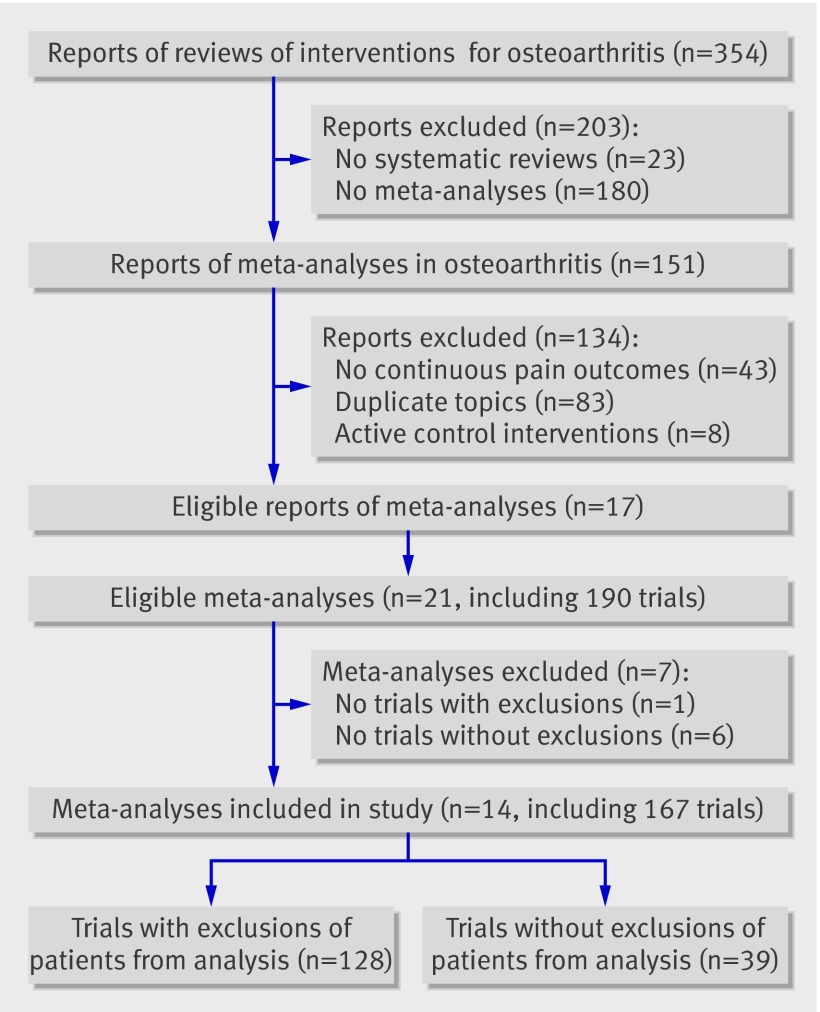
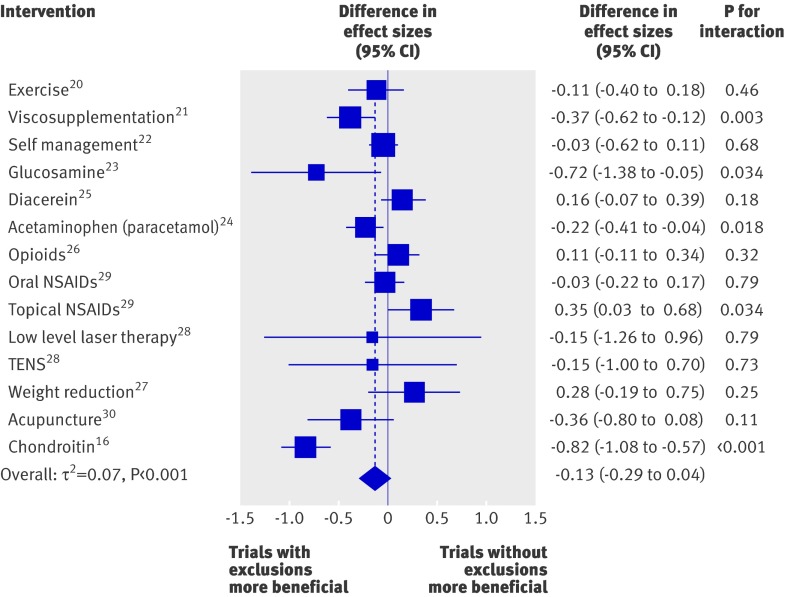
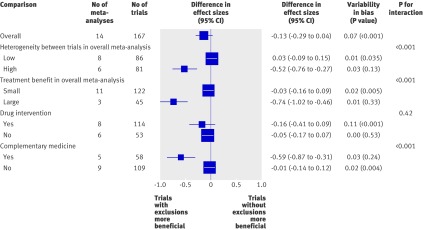
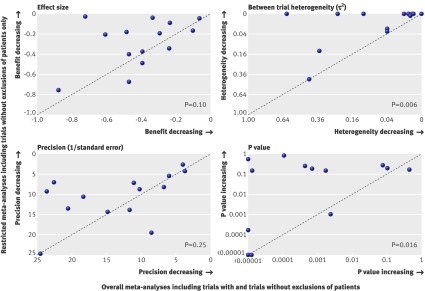
OBJECTIVE: To examine whether excluding patients from the analysis of randomised trials are associated with biased estimates of treatment effects and higher heterogeneity between trials. DESIGN: Meta-epidemiological study based on a collection of meta-analyses of randomised trials. DATA SOURCES: 14 meta-analyses including 167 trials that compared therapeutic interventions with placebo or non-intervention control in patients with osteoarthritis of the hip or knee and used patient reported pain as an outcome. METHODS: Effect sizes were calculated from differences in means of pain intensity between groups at the end of follow-up, divided by the pooled standard deviation. Trials were combined by using random effects meta-analysis. Estimates of treatment effects were compared between trials with and trials without exclusions from the analysis, and the impact of restricting meta-analyses to trials without exclusions was assessed. RESULTS: 39 trials (23%) had included all patients in the analysis. In 128 trials (77%) some patients were excluded from the analysis. Effect sizes from trials with exclusions tended to be more beneficial than those from trials without exclusions (difference -0.13, 95% confidence interval -0.29 to 0.04). However, estimates of bias between individual meta-analyses varied considerably (tau(2)=0.07). Tests of interaction between exclusions from the analysis and estimates of treatment effects were positive in five meta-analyses. Stratified analyses indicated that differences in effect sizes between trials with and trials without exclusions were more pronounced in meta-analyses with high between trial heterogeneity, in meta-analyses with large estimated treatment benefits, and in meta-analyses of complementary medicine. Restriction of meta-analyses to trials without exclusions resulted in smaller estimated treatment benefits, larger P values, and considerable decreases in between trial heterogeneity. CONCLUSION: Excluding patients from the analysis in randomised trials often results in biased estimates of treatment effects, but the extent and direction of bias is unpredictable. Results from intention to treat analyses should always be described in reports of randomised trials. In systematic reviews, the influence of exclusions from the analysis on estimated treatment effects should routinely be assessed.
Overview
The claims and statistics of this paper haven’t been checked yet.
Run the check — free, no account needed. It reads the open-access text and checks the sources it cites.
Integrity signals
Registry
Cites
Statistics
Figures
Verification
Claims the paper makes
The claims and statistics of this paper haven’t been checked yet.
Run the check — free, no account needed. It reads the open-access text and checks the sources it cites.
Claims other papers make about this one
Each is checked against this paper’s own text: does it say what the citing paper says it does?
The source backs part of the claim, not all of it — or backs it for a different population, condition or comparison.
In the citing paper
“Effect sizes from trials that excluded participants in their analysis or that used a modified ITT protocol tended to be more beneficial than those from trials without exclusions, demonstrating that the ITT principle is important to preserve the benefits of randomization and keep unbiased estimates when the objective of the trial is to investigate effectiveness.110”
From Effectiveness of Manual Therapy and Therapeutic Exercise for Temporomandibular Disorders: Systematic Review and Meta-Analysis (2016) · cites this paper as [110]
Experimental — accuracy not yet measuredThe check wasn’t confident either way, so it gives no verdict — never disputed.
In the citing paper
“We excluded studies with less than 20 participants at the end of treatment, because of the recognised risk of bias of small numbers (Ioannidis 2005; Nuesch 2009).”
From Psychological therapies for the management of chronic pain (excluding headache) in adults (2020) · cites this paper as Nuesch 2009
Experimental — accuracy not yet measuredIn the citing paper
“exclusion of participants from RCT analyses was shown to distort outcomes42,43”
From The effectiveness of virtual reality based interventions for symptoms of anxiety and depression: A meta-analysis (2018) · cites this paper as [43]
In the citing paper
“An intention-to-treat analysis population is defined by the inclusion of outcome data from all participants in their originally allocated group—this is widely recommended as the preferred analysis population.360 419 420”
From SPIRIT 2025 explanation and elaboration: updated guideline for protocols of randomised trials (2025) · cites this paper as [360]
In the citing paper
“Trials at high or unclear risk of bias tend to overestimate benefits and underestimate harms.”
From Should antidepressants be used for major depressive disorder? (2020) · cites this paper as [40]
In the citing paper
“This last criterion of N > 20 at post-treatment assessment is an improvement from the Eccleston 2009a review in which we used an entry of N > 10.We made this change because of the recognised risk of bias of small numbers (Ioannidis 2005;Nuesch 2009); raising the required N further would be desirable but would exclude too many studies.”
From Psychological therapies for the management of chronic pain (excluding headache) in adults (2012) · cites this paper as Nuesch 2009
In the citing paper
“the overall tendency for poorer quality trials to produce more positive results (Furlan 2001;Ioannidis 2005;Nuesch 2009).”
From Psychological therapies for the management of chronic pain (excluding headache) in adults (2012) · cites this paper as Nuesch 2009
In the citing paper
“given the demonstrated association between small numbers and bias (Ioannidis 2005; Moore 2010; Nuesch 2009).”
From Psychological therapies for the management of chronic pain (excluding headache) in adults (2012) · cites this paper as Nuesch 2009
Self-check
Percentages, sums and reported differences re-computed from the paper’s own numbers.
The self-check needs the paper’s full text.
Citations
Cites
Statistical Power Analysis for the Behavioral Sciences
Muller, K. E., & Cohen, J. (1989) · Technometrics · doi:10.2307/1270020 · Cited by 99,603
Statistical power analysis for the behavioral sciences
Cohen, J. (1990) · Computers Environment and Urban Systems · doi:10.1016/0198-9715(90)90050-4 · Cited by 65,417
Meta-analysis in clinical trials
DerSimonian, R., & Laird, N. (1986) · Controlled Clinical Trials · doi:10.1016/0197-2456(86)90046-2 · Cited by 39,552
Schulz (1995) · doi:10.1001/jama.1995.03520290060030 · Cited by 5,634
The Revised CONSORT Statement for Reporting Randomized Trials: Explanation and Elaboration
Altman, D. G., Schulz, K. F., Moher, D., Egger, M., Davidoff, F., Elbourne, D., Gøtzsche, P. C., Lang, T., & for the CONSORT Group (2001) · Annals of Internal Medicine · doi:10.7326/0003-4819-134-8-200104170-00012 · Cited by 3,835 · cited 1×
“In our study we did not rely on statements in the trial reports on whether an intention to treat analysis was done or not. Rather we required explicit information about the flow of patients through the study”
MethodSelf-citationAssessing the quality of controlled clinical trials
Jüni, P., Altman, D. G., & Egger, M. (2001) · BMJ · doi:10.1136/bmj.323.7303.42 · Cited by 3,309 · cited 1×
“In clinical trials, deviations from protocol and losses to follow-up often lead to the exclusion of some randomised patients from the analysis.”
BackgroundSelf-citationMoher, D., Schulz, K. F., & Altman, D. G. (2001) · BMC Medical Research Methodology · doi:10.1186/1471-2288-1-2 · Cited by 2,755
Self-citationWood, L., Egger, M., Gluud, L. L., Schulz, K. F., Jüni, P., Altman, D. G., Gluud, C., Martin, R. M., Wood, A. J. G., & Sterne, J. A. C. (2008) · BMJ · doi:10.1136/bmj.39465.451748.ad · Cited by 2,538
Self-citationMeta-analyses involving cross-over trials: methodological issues
Elbourne, D. R., Altman, D. G., Higgins, J. P., Curtin, F., Worthington, H. V., & Vail, A. (2002) · International Journal of Epidemiology · doi:10.1093/ije/31.1.140 · Cited by 2,305
Self-citationGluud, L. L., Villumsen, J., & Gluud, C. N. (2001) · Annals of Internal Medicine · doi:10.7326/0003-4819-135-11-200112040-00010 · Cited by 2,266
Cited by
Sorted by citations
SPIRIT 2013 explanation and elaboration: guidance for protocols of clinical trials
Chan, A.-W., Tetzlaff, J. M., Gotzsche, P. C., Altman, D. G., Mann, H., Berlin, J. A., Dickersin, K., Hrobjartsson, A., Schulz, K. F., Parulekar, W. R., et al. (2013) · BMJ · doi:10.1136/bmj.e7586 · Cited by 6,251
Self-citationPsychological therapies for the management of chronic pain (excluding headache) in adults
Williams, A. C. D. C., Eccleston, C., & Morley, S. (2012) · Cochrane Database of Systematic Reviews · doi:10.1002/14651858.cd007407.pub3 · Cited by 1,634
Savović, J., Jones, H. E., Altman, D. G., Harris, R. J., Jüni, P., Pildal, J., Als-Nielsen, B., Balk, E. M., Gluud, C., Gluud, L. L., et al. (2012) · Annals of Internal Medicine · doi:10.7326/0003-4819-157-6-201209180-00537 · Cited by 1,049
“There is recent empirical evidence of bias in the results of randomized, controlled trials due to attrition (26, 27) and selective outcome reporting (28, 29).”
BackgroundSelf-citationMeta‐Analysis in Medical Research
Haidich, A. (2005) · Wiley eBooks · doi:10.1002/9780470994894 · Cited by 692
Savović, J., Jones, H., Altman, D., Harris, R., Jűni, P., Pildal, J., Als-Nielsen, B., Balk, E., Gluud, C., Gluud, L., et al. (2012) · Health Technology Assessment · doi:10.3310/hta16350 · Cited by 668
“Blinding All 71 (36) 725 290 (40) 33 (17) 286 84 (29) Mortality 13 (5) 119 39 (33) 5 (3) 48 10 (21) Objective 20 (12) 208 81 (39) 9 (5) 63 23 (37) Subjective 38 (19) 398 170 (43) 19 (9) 175 51 (29)”
Self-citationSchool-based programmes for preventing smoking
Thomas, R. E., McLellan, J., & Perera, R. (2013) · Cochrane Database of Systematic Reviews · doi:10.1002/14651858.cd001293.pub3 · Cited by 656
Psychological therapies for the management of chronic pain (excluding headache) in adults
Williams, A. C. D. C., Fisher, E., Hearn, L., & Eccleston, C. (2020) · Cochrane Database of Systematic Reviews · doi:10.1002/14651858.cd007407.pub4 · Cited by 605
Wandel, S., Jüni, P., Tendal, B., Nüesch, E., Villiger, P. M., Welton, N. J., Reichenbach, S., & Trelle, S. (2010) · BMJ · doi:10.1136/bmj.c4675 · Cited by 592
Self-citationBarth, J., Munder, T., Gerger, H., Nüesch, E., Trelle, S., Znoj, H., Jüni, P., & Cuijpers, P. (2013) · PLoS Medicine · doi:10.1371/journal.pmed.1001454 · Cited by 569
“, if analysis is not intention-to-treat), and lack of blinding of outcome assessors [26–28] are known to have a biasing effect.”
BackgroundSelf-citationSmall study effects in meta-analyses of osteoarthritis trials: meta-epidemiological study
Nuesch, E., Trelle, S., Reichenbach, S., Rutjes, A. W. S., Tschannen, B., Altman, D. G., Egger, M., & Juni, P. (2010) · BMJ · doi:10.1136/bmj.c3515 · Cited by 559
Self-citationInfluence of trial sample size on treatment effect estimates: meta-epidemiological study
Dechartres, A., Trinquart, L., Boutron, I., & Ravaud, P. (2013) · BMJ · doi:10.1136/bmj.f2304 · Cited by 544
Burr, J. M., Mowatt, G., Hernández, R. A., Siddiqui, M. A. R., Cook, J. A., Lourenço, T., Ramsay, C. R., Vale, L. D., Fraser, C., Azuara‐Blanco, A., et al. (2007) · Health Technology Assessment · doi:10.3310/hta11410 · Cited by 554
Intra-articular corticosteroid for knee osteoarthritis
Jüni, P., Hari, R., Rutjes, A. W., Fischer, R., Silletta, M. G., Reichenbach, S., & da Costa, B. R. (2015) · Cochrane Database of Systematic Reviews · doi:10.1002/14651858.cd005328.pub3 · Cited by 548
Self-citationViscosupplementation for Osteoarthritis of the Knee: A Systematic Review and Meta-analysis
Rutjes, A. W. S., Jüni, P., da Costa, B. R., Trelle, S., Nüesch, E., & Reichenbach, S. (2012) · Annals of Internal Medicine · doi:10.7326/0003-4819-157-3-201208070-00473 · Cited by 717
“A major limitation is the poor methodological quality and reporting quality of many of the included trials, as previously described for a larger body of osteoarthritis trials (28, 124, 125).”
BackgroundSelf-citationHróbjartsson, A., Emanuelsson, F., Skou Thomsen, A. S., Hilden, J., & Brorson, S. (2014) · International Journal of Epidemiology · doi:10.1093/ije/dyu115 · Cited by 462
Armijo-Olivo, S., Pitance, L., Singh, V., Neto, F., Thie, N., & Michelotti, A. (2016) · Physical Therapy · doi:10.2522/ptj.20140548 · Cited by 413
Uthman, O. A., van der Windt, D., Jordan, J. L., Dziedzic, K., Healey, E. L., Peat, G., & Foster, N. E. (2013) · BMJ · doi:10.1136/bmj.f5555 · Cited by 379
Oral or transdermal opioids for osteoarthritis of the knee or hip
da Costa, B. R., Nüesch, E., Kasteler, R., Husni, M. E., Welch, V. A., Rutjes, A. W., & Jüni, P. (2014) · Cochrane Database of Systematic Reviews · doi:10.1002/14651858.cd003115.pub4 · Cited by 357
Self-citationDechartres, A., Boutron, I., Trinquart, L., Charles, P., & Ravaud, P. (2011) · Annals of Internal Medicine · doi:10.7326/0003-4819-155-1-201107050-00006 · Cited by 307
“Risk of bias Sequence generation High 5 (2) 0 (0) Low 75 (34) 90 (45) Unclear 143 (64) 108 (55) Allocation concealment High 8 (4) 1 (1) Low 32 (14) 68 (34) Unclear 183 (82) 129 (65) Blinding High 72 (32) 41 (21) Low 151 (68) 157 (79) Unclear 0 (0) 0 (0) Incomplete outcome data High 16 (7) 48 (24) Low 68 (31) 55 (28) U…”
Fodor, L. A., Coteț, C. D., Cuijpers, P., Szamoskozi, Ș., David, D., & Cristea, I. A. (2018) · Scientific Reports · doi:10.1038/s41598-018-28113-6 · Cited by 284
Page, M. J., Higgins, J. P. T., Clayton, G., Sterne, J. A. C., Hróbjartsson, A., & Savović, J. (2016) · PLOS ONE · doi:10.1371/journal.pone.0159267 · Cited by 284
Transcutaneous electrostimulation for osteoarthritis of the knee
Rutjes, A. W., Nüesch, E., Sterchi, R., Kalichman, L., Hendriks, E., Osiri, M., Brosseau, L., Reichenbach, S., & Jüni, P. (2009) · Cochrane Database of Systematic Reviews · doi:10.1002/14651858.cd002823.pub2 · Cited by 282
Self-citationModified intention to treat reporting in randomised controlled trials: systematic review
Abraha, I., & Montedori, A. (2010) · BMJ · doi:10.1136/bmj.c2697 · Cited by 259
Naci, H., Davis, C., Savović, J., Higgins, J. P. T., Sterne, J. A. C., Gyawali, B., Romo-Sandoval, X., Handley, N., & Booth, C. M. (2019) · BMJ · doi:10.1136/bmj.l5221 · Cited by 251
Association Between Analytic Strategy and Estimates of Treatment Outcomes in Meta-analyses
Dechartres, A., Altman, D. G., Trinquart, L., Boutron, I., & Ravaud, P. (2014) · JAMA · doi:10.1001/jama.2014.8166 · Cited by 233
Self-citationBehavioural activation delivered by the non-specialist: phase II randomised controlled trial
Ekers, D., Richards, D., McMillan, D., Bland, J. M., & Gilbody, S. (2011) · British Journal of Psychiatry · doi:10.1192/bjp.bp.110.079111 · Cited by 217
Therapeutic ultrasound for osteoarthritis of the knee or hip
Rutjes, A. W., Nüesch, E., Sterchi, R., & Jüni, P. (2010) · Cochrane Database of Systematic Reviews · doi:10.1002/14651858.cd003132.pub2 · Cited by 222
Self-citationPsychological treatments for post-traumatic stress disorder in adults: a network meta-analysis
Mavranezouli, I., Megnin-Viggars, O., Daly, C., Dias, S., Welton, N. J., Stockton, S., Bhutani, G., Grey, N., Leach, J., Greenberg, N., et al. (2020) · Psychological Medicine · doi:10.1017/s0033291720000070 · Cited by 212
“This strategy provides a conservative estimate of treatment effects compared with completer analysis (Nüesch et al., 2009), assuming that active interventions have a higher risk of drop-out compared with control conditions (this higher risk could be attributable to side effects, unacceptability of…”
CONSORT 2025 explanation and elaboration: updated guideline for reporting randomised trials
Hopewell, S., Chan, A.-W., Collins, G. S., Hróbjartsson, A., Moher, D., Schulz, K. F., Tunn, R., Aggarwal, R., Berkwits, M., Berlin, J. A., et al. (2025) · BMJ · doi:10.1136/bmj-2024-081124 · Cited by 205
Exercise interventions for cerebral palsy
Ryan, J. M., Cassidy, E. E., Noorduyn, S. G., & O'Connell, N. E. (2017) · Cochrane Database of Systematic Reviews · doi:10.1002/14651858.cd011660.pub2 · Cited by 223
Harøy, J., Clarsen, B. M., Wiger, E. G., Øyen, M. G., Serner, A., Thorborg, K., Hölmich, P., Andersen, T. E., & Bahr, R. (2018) · British Journal of Sports Medicine · doi:10.1136/bjsports-2017-098937 · Cited by 209
Porto, A. M. F., Coutinho, I., Correia, J. B., & Amorim, M. M. R. (2011) · BMJ · doi:10.1136/bmj.d1696 · Cited by 192
“La principal debilidad del estudio es la presencia de un número significativo de exclusiones pos randomización (43 embarazadas, correspondientes al 13% de las mujeres randomizadas) (5).”
Dechartres, A., Trinquart, L., Atal, I., Moher, D., Dickersin, K., Boutron, I., Perrodeau, E., Altman, D. G., & Ravaud, P. (2017) · BMJ · doi:10.1136/bmj.j2490 · Cited by 171
Self-citationConstraint-induced movement therapy in children with unilateral cerebral palsy
Hoare, B., Wallen, M. A., Thorley, M., Jackman, M., Carey, L. M., & Imms, C. (2019) · Cochrane Database of Systematic Reviews · doi:10.1002/14651858.cd004149.pub3 · Cited by 180
Abraha, I., Cherubini, A., Cozzolino, F., De Florio, R., Luchetta, M. L., Rimland, J. M., Folletti, I., Marchesi, M., Germani, A., Orso, M., et al. (2015) · BMJ · doi:10.1136/bmj.h2445 · Cited by 165
PEDro or Cochrane to Assess the Quality of Clinical Trials? A Meta-Epidemiological Study
Armijo-Olivo, S. L., da Costa, B. R., Cummings, G. G., Ha, C., Fuentes, J., Saltaji, H., & Egger, M. (2015) · PLoS ONE · doi:10.1371/journal.pone.0132634 · Cited by 181
Blinding in Physical Therapy Trials and Its Association with Treatment Effects
Armijo-Olivo, S. L., Fuentes, J., da Costa, B. R., Saltaji, H., Ha, C., & Cummings, G. G. (2016) · American Journal of Physical Medicine & Rehabilitation · doi:10.1097/phm.0000000000000521 · Cited by 166
“We used standard random-effects MAs to combine ES across trials and calculated the DerSimonian and Laird estimate of the variance to determine heterogeneity between trials.(5,34) Then, for each MA, we derived the difference between pooled ES estimates from trials with and”
MethodShould antidepressants be used for major depressive disorder?
Jakobsen, J. C., Gluud, C., & Kirsch, I. (2020) · BMJ Evidence-Based Medicine · doi:10.1136/bmjebm-2019-111238 · Cited by 162
Goto, Y., Maeda, T., & Goto, Y. N. (2014) · Journal of the American Heart Association · doi:10.1161/jaha.113.000499 · Cited by 156
Suzuki, Y., Tsuchikane, E., Katoh, O., Muramatsu, T., Muto, M., Kishi, K., Hamazaki, Y., Oikawa, Y., Kawasaki, T., & Okamura, A. (2017) · JACC: Cardiovascular Interventions · doi:10.1016/j.jcin.2017.06.024 · Cited by 156
“In this report, we describe the registry and present an initial investigation of clinical outcomes using “intentionto-treat” (ITT) analysis (15,16).”
MethodSPIRIT 2025 explanation and elaboration: updated guideline for protocols of randomised trials
Hróbjartsson, A., Boutron, I., Hopewell, S., Moher, D., Schulz, K. F., Collins, G. S., Tunn, R., Aggarwal, R., Berkwits, M., Berlin, J. A., et al. (2025) · BMJ · doi:10.1136/bmj-2024-081660 · Cited by 171
Avoidable waste of research related to inadequate methods in clinical trials
Yordanov, Y., Dechartres, A., Porcher, R., Boutron, I., Altman, D. G., & Ravaud, P. (2015) · BMJ · doi:10.1136/bmj.h809 · Cited by 161
Self-citationNüesch, E., Reichenbach, S., Trelle, S., Rutjes, A. W., Liewald, K., Sterchi, R., Altman, D. G., & Jüni, P. (2009) · Arthritis Care & Research · doi:10.1002/art.24894 · Cited by 150
Self-citationNeri, S. G. R., Cardoso, J. R., Cruz, L., Lima, R. M., de Oliveira, R. J., Iversen, M. D., & Carregaro, R. L. (2017) · Clinical Rehabilitation · doi:10.1177/0269215517694677 · Cited by 154
da Costa, B. R., Nüesch, E., Rutjes, A. W., Johnston, B. C., Reichenbach, S., Trelle, S., Guyatt, G. H., & Jüni, P. (2013) · Journal of Clinical Epidemiology · doi:10.1016/j.jclinepi.2013.03.009 · Cited by 148
Self-citationReducing eating disorder symptoms and risk factors using the internet: A meta‐analytic review
Melioli, T., Bauer, S., Franko, D. L., Moessner, M., Ozer, F., Chabrol, H., & Rodgers, R. F. (2016) · International Journal of Eating Disorders · doi:10.1002/eat.22477 · Cited by 147
“It has been argued that ITT analyses might decrease the attrition biases associated with dropout in randomized trials, and, therefore, limit bias in estimates of intervention effects.(76) Internet programs have high dropout rates(16) suggesting that intervention effects might differ depending on data analytic strategy…”
da Costa, B. R., Rutjes, A. W., Johnston, B. C., Reichenbach, S., Nüesch, E., Tonia, T., Gemperli, A., Guyatt, G. H., & Jüni, P. (2012) · International Journal of Epidemiology · doi:10.1093/ije/dys124 · Cited by 145
Self-citationKitterick, P. T., Smith, S., & Lucas, L. (2016) · Ear and Hearing · doi:10.1097/aud.0000000000000313 · Cited by 142
“The direction and statistical significance of the observed effects in each study were also tabulated.”
BackgroundSharing health data: good intentions are not enough
Pisani, E., & AbouZahr, C. (2010) · Bulletin of the World Health Organization · doi:10.2471/blt.09.074393 · Cited by 142
Bafeta, A., Dechartres, A., Trinquart, L., Yavchitz, A., Boutron, I., & Ravaud, P. (2012) · BMJ · doi:10.1136/bmj.e813 · Cited by 129
Barth, J., Münder, T., Gerger, H., Nüesch, E., Trelle, S., Znoj, H., Jüni, P., & Cuijpers, P. J. (2016) · FOCUS The Journal of Lifelong Learning in Psychiatry · doi:10.1176/appi.focus.140201 · Cited by 140
Self-citationArmijo-Olivo, S., Ospina, M., da Costa, B. R., Egger, M., Saltaji, H., Fuentes, J., Ha, C., & Cummings, G. G. (2014) · PLoS ONE · doi:10.1371/journal.pone.0096920 · Cited by 124
“[43,44] Similarly, effect sizes from trials that excluded dropouts in the analysis or considered a modified intention to treat (ITT) approach were more likely to show a beneficial effect than trials without exclusions, demonstrating that the ITT principle is important to preserve the benefits of randomization and keep…”
BackgroundSchool‐based programmes for preventing smoking
Thomas, R. E., McLellan, J., & Perera, R. (2013) · Evidence-Based Child Health: A Cochrane Review Journal · doi:10.1002/ebch.1937 · Cited by 120
Dai, W., Feng, W., Zhang, Y., Wang, X. S., Liu, Y., Pompili, C., Xu, W., Xie, S.-H., Wang, Y., Liao, J. X., et al. (2022) · Journal of Clinical Oncology · doi:10.1200/jco.21.01344 · Cited by 120
“Potential bias might have been generated in the analyses because of excluding patients after random assignment.(37) However, we did not find significant differences in demographic and clinical characteristics between patients included in and those excluded from the final analysis.”
BackgroundYoung, H. M. L., March, D. S., Graham-Brown, M. P. M., Jones, A. W., Curtis, F., Grantham, C. S., Churchward, D. R., HIGHTON, P. J., Smith, A. C., Singh, S., et al. (2018) · Nephrology Dialysis Transplantation · doi:10.1093/ndt/gfy045 · Cited by 118
Holman, C., Piper, S. K., Grittner, U., Diamantaras, A. A., Kimmelman, J., Siegerink, B., & Dirnagl, U. (2016) · PLOS Biology · doi:10.1371/journal.pbio.1002331 · Cited by 114
“Attrition is also a problem in clinical trials [11,13].”
BackgroundMontedori, A., Bonacini, I., Casazza, G., Luchetta, M. L., Duca, P., Cozzolino, F., & Abraha, I. (2011) · Trials · doi:10.1186/1745-6215-12-58 · Cited by 112
“A meta-epidemiological study that investigated 14 meta-analyses in osteoarthritis showed that the exclusion of patients from analysis resulted in a biased estimate of the treatment effect [14].”
BackgroundJoint lavage for osteoarthritis of the knee
Reichenbach, S., Rutjes, A. W., Nüesch, E., Trelle, S., & Jüni, P. (2010) · Cochrane Database of Systematic Reviews · doi:10.1002/14651858.cd007320.pub2 · Cited by 109
Self-citationBartels, E. M., Folmer, V. N., Bliddal, H., Altman, R. D., Juhl, C. B., Tarp, S., Zhang, W., & Christensen, R. (2014) · Osteoarthritis and Cartilage · doi:10.1016/j.joca.2014.09.024 · Cited by 107
Examining the evidence about psychological treatments for chronic pain: Time for a paradigm shift?
Morley, S., Williams, A., & Eccleston, C. (2013) · Pain · doi:10.1016/j.pain.2013.05.049 · Cited by 123
“Although the headline effect is positive, current analyses are limited to average results, and conclusions are typically confined to the general.”
Runhaar, J., Rozendaal, R. M., van Middelkoop, M., Bijlsma, H. W. J., Doherty, M., Dziedzic, K., Lohmander, S. L., McAlindon, T. E., Zhang, W., & Zeinstra, S. B. (2017) · Annals of the Rheumatic Diseases · doi:10.1136/annrheumdis-2017-211149 · Cited by 101
Trial Quality in Nephrology: How Are We Measuring Up?
Palmer, S. C., Sciancalepore, M., & Strippoli, G. F. (2011) · American Journal of Kidney Diseases · doi:10.1053/j.ajkd.2011.06.006 · Cited by 102
Quality of Reporting of Modern Randomized Controlled Trials in Medical Oncology: A Systematic Review
Péron, J., Pond, G. R., Gan, H. K., Chen, E. X., Al-Mufti, R., Maillet, D., & You, B. (2012) · JNCI Journal of the National Cancer Institute · doi:10.1093/jnci/djs259 · Cited by 97
“We did not assess whether ITT definition was concordant with standard criteria (17,33).”
BackgroundHuttner, B. D., Haustein, T., Uçkay, I., Renzi, G., Stewardson, A. J., Schaerrer, D., Agostinho, A., Andremont, A., Schrenzel, J., Pittet, D., et al. (2013) · Journal of Antimicrobial Chemotherapy · doi:10.1093/jac/dkt174 · Cited by 96
Gerger, H., Münder, T., Gemperli, A., Nüesch, E., Trelle, S., Jüni, P., & Barth, J. (2014) · Psychological Medicine · doi:10.1017/s0033291714000853 · Cited by 100
“2010b), we assessed the influence of study quality (Wood et al. 2008; Nüesch et al. 2009), sample size (Nüesch et al.”
BackgroundMethodInfluentialSelf-citationMeasurement Issues in Trials of Pediatric Acute Diarrheal Diseases: A Systematic Review
Johnston, B. C., Shamseer, L., da Costa, B. R., Tsuyuki, R. T., & Vohra, S. (2010) · PEDIATRICS · doi:10.1542/peds.2009-3667 · Cited by 95
Armijo-Olivo, S. L., Saltaji, H., da Costa, B. R., Fuentes, J., Ha, C., & Cummings, G. G. (2015) · BMJ Open · doi:10.1136/bmjopen-2015-008562 · Cited by 87
da Costa, B. R., Saadat, P., Basciani, R., Agarwal, A., Johnston, B. C., & Jüni, P. (2020) · Osteoarthritis and Cartilage · doi:10.1016/j.joca.2020.10.004 · Cited by 88
Empirical evaluation of which trial characteristics are associated with treatment effect estimates
Dechartres, A., Trinquart, L., Faber, T., & Ravaud, P. (2016) · Journal of Clinical Epidemiology · doi:10.1016/j.jclinepi.2016.04.005 · Cited by 85
“, 2009 [76] 14 MA (167 RCTs) -0.”
Intention to treat and per protocol analyses: differences and similarities
Calafell, J. M., Burón, A., Castells, X., & Porta, M. S. (2024) · Journal of Clinical Epidemiology · doi:10.1016/j.jclinepi.2024.111457 · Cited by 95
Moulis, G., Sommet, A., Béné, J., Montastruc, F., Sailler, L., Montastruc, J., & Lapeyre‐Mestre, M. (2012) · PLoS ONE · doi:10.1371/journal.pone.0048991 · Cited by 82
Doxycycline for osteoarthritis of the knee or hip
da Costa, B. R., Nüesch, E., Reichenbach, S., Jüni, P., & Rutjes, A. W. (2012) · Cochrane Database of Systematic Reviews · doi:10.1002/14651858.cd007323.pub3 · Cited by 83
Self-citationIntra-Articular Therapies in the Treatment of Hand Osteoarthritis: A Systematic Literature Review
Kroon, F. P. B., Rubio, R., Schoones, J. W., & Kloppenburg, M. (2015) · Drugs & Aging · doi:10.1007/s40266-015-0330-5 · Cited by 72
“This decision was made based on previous reports that different forms of bias can have a major impact on the estimates of treatment benefits in osteoarthritis trials [39–41].”
Results of Database Studies in Spine Surgery Can Be Influenced by Missing Data
Basques, B. A., McLynn, R. P., Fice, M. P., Samuel, A. M., Lukasiewicz, A. M., Bohl, D. D., Ahn, J. J., Singh, K., & Grauer, J. N. (2016) · Clinical Orthopaedics and Related Research · doi:10.1007/s11999-016-5175-7 · Cited by 70
“Missing data may increase the likelihood of making type I errors, because a metaepidemiologic study of pain relief in patients with osteoarthritis found that studies with more excluded cases and missing data found greater effect sizes and lower p values than studies without missing cases and with higher quality data […”
ResultZeng, C., Wei, J., Li, H., Wang, Y., Xie, D., Yang, T., Gao, S., Li, Y., Luo, W., & Lei, G. (2015) · Scientific Reports · doi:10.1038/srep16827 · Cited by 71
Chen, T., Li, C., Qin, R., Wang, Y., Yu, D., Dodd, J., Wang, D., & Cornelius, V. (2019) · JAMA Network Open · doi:10.1001/jamanetworkopen.2019.7242 · Cited by 68
Boutron, I., Créquit, P., Williams, H. C., Meerpohl, J. J., Craig, J. C., & Ravaud, P. (2020) · Journal of Clinical Epidemiology · doi:10.1016/j.jclinepi.2020.01.024 · Cited by 67
Gerger, H., Münder, T., & Barth, J. (2013) · Journal of Clinical Psychology · doi:10.1002/jclp.22059 · Cited by 65
Cognitive behavioural therapy in pain and psychological disorders: Towards a hybrid future
Tang, N. K. Y. (2017) · Progress in Neuro-Psychopharmacology and Biological Psychiatry · doi:10.1016/j.pnpbp.2017.02.023 · Cited by 68
“This decision was to minimise potential risk of bias associatedwith trials of small sample size and to address the overall tendency for smaller or poor-quality trials to produce more positive results (Ioannidis, 2005; Furlan et al., 2001; Nüesch et al., 2009).”
Modarresi, A., Chaibakhsh, S., Koulaeinejad, N., & Koupaei, S. R. (2019) · Psychiatry Research · doi:10.1016/j.psychres.2019.112602 · Cited by 63
Gauffin, H., Sonesson, S., Meunier, A., Magnusson, H., & Kvist, J. (2017) · The American Journal of Sports Medicine · doi:10.1177/0363546517701431 · Cited by 61
“This is important because excluding patients from the analysis in a randomized trial may bias the estimate of the treatment effect in an unpredictable way.(25) This study also had limitations.”
BackgroundSansai, K., Takuathung, M. N., Khatsri, R., Teekachunhatean, S., Hanprasertpong, N., & Koonrungsesomboon, N. (2020) · Osteoporosis International · doi:10.1007/s00198-020-05476-z · Cited by 60
Wang, Y., Parpia, S., Couban, R., Wang, Q., Armijo-Olivo, S., Bassler, D., Briel, M., Brignardello-Petersen, R., Gluud, L. L., Keitz, S. A., et al. (2024) · Journal of Clinical Epidemiology · doi:10.1016/j.jclinepi.2023.11.001 · Cited by 58
Reichenbach, S., Jüni, P., Hincapié, C. A., Schneider, C., Meli, D. N., Schürch, R., Streit, S., Lucas, C., Mebes, C. M., Rutjes, A. W., et al. (2021) · Osteoarthritis and Cartilage · doi:10.1016/j.joca.2021.10.015 · Cited by 55
Self-citationKelley, G. A., Kelley, K. S., Hootman, J. M., & Jones, D. L. (2010) · BMC Public Health · doi:10.1186/1471-2458-10-198 · Cited by 59
“This may be problematic given that recent meta-epidemiological research found that excluding participants from randomized controlled trials in systematic reviews often results in biased estimates of treatment effects [21].”
BackgroundResultInfluentialModified intention-to-treat analysis did not bias trial results
Døssing, A., Tarp, S., Furst, D. E., Gluud, C. N., Wells, G. A., Beyene, J., Hansen, B. B., Bliddal, H., & Christensen, R. (2015) · Journal of Clinical Epidemiology · doi:10.1016/j.jclinepi.2015.11.003 · Cited by 56
Patel, N., Kellezi, B., & Williams, A. C. D. C. (2014) · Cochrane Database of Systematic Reviews · doi:10.1002/14651858.cd009317.pub2 · Cited by 110
Cristea, I. A., Ștefan, S., Karyotaki, E., David, D., Hollon, S. D., & Cuijpers, P. J. (2017) · Psychological Bulletin · doi:10.1037/bul0000062 · Cited by 55
Evaluating the impact of imputations for missing participant outcome data in a network meta-analysis
Spineli, L. M., Higgins, J. P. T., Cipriani, A., Leucht, S., & Salanti, G. (2013) · Clinical Trials · doi:10.1177/1740774512470317 · Cited by 49
“Informative missing outcome data can lead to biased meta-analysis estimates as well as to high heterogeneity [1,2].”
BackgroundEffect of Biomechanical Footwear on Knee Pain in People With Knee Osteoarthritis
Reichenbach, S., Felson, D. T., Hincapié, C. A., Heldner, S., Bütikofer, L., Lenz, A., da Costa, B. R., Bonél, H., Jones, R. K., HAWKER, G. A., et al. (2020) · JAMA · doi:10.1001/jama.2020.3565 · Cited by 49
Self-citationMultilevel Surgery for Children With Cerebral Palsy: A Meta-analysis
Amirmudin, N. A., Lavelle, G., Theologis, T. N., Thompson, N., & Ryan, J. M. (2019) · PEDIATRICS · doi:10.1542/peds.2018-3390 · Cited by 47
Hammad, T. A., Pinheiro, S. P., & Neyarapally, G. A. (2011) · Clinical Trials · doi:10.1177/1740774511419165 · Cited by 47
“The intention-to-treat, which preserves the assigned drug treatment regardless of actual treatment received, is one of the current strategies for evaluating treatment efficacy [41].”
MethodEffects of Hibiscus sabdariffa L. on serum lipids: A systematic review and meta-analysis
Aziz, Z., Wong, S. Y., & Chong, N. J. (2013) · Journal of Ethnopharmacology · doi:10.1016/j.jep.2013.09.042 · Cited by 44
Ondeck, N. T., Fu, M. C., Skrip, L., McLynn, R. P., Su, E. P., & Grauer, J. N. (2017) · The Journal of Arthroplasty · doi:10.1016/j.arth.2017.10.034 · Cited by 39
Kyriacos, U., Jelsma, J. M., James, M. F., & Jordan, S. E. (2015) · Trials · doi:10.1186/s13063-015-0624-2 · Cited by 37
“A per protocol analysis was undertaken [27] as a secondary sensitivity analysis [28].”
MethodKahan, B. C., Forbes, G., & Cro, S. (2020) · BMC Medicine · doi:10.1186/s12916-020-01706-7 · Cited by 41
Evaluation of Electromyographic Biofeedback for the Quadriceps Femoris: A Systematic Review
Wasielewski, N. J., Parker, T. M., & Kotsko, K. M. (2011) · Journal of Athletic Training · doi:10.4085/1062-6050-46.5.543 · Cited by 36
Greenberg, L., Jairath, V., Pearse, R. M., & Kahan, B. C. (2018) · Journal of Clinical Epidemiology · doi:10.1016/j.jclinepi.2018.05.023 · Cited by 34
Martin, G. L., Trioux, T., Gaudry, S., Tubach, F., Hajage, D., & Dechartres, A. (2021) · Critical Care Medicine · doi:10.1097/ccm.0000000000005065 · Cited by 22
Metadata
- Authors
- Nuesch, E., Trelle, S., Reichenbach, S., Rutjes, A. W. S., Burgi, E., Scherer, M., Altman, D. G., & Juni, P.
- Affiliations
- University of Bern (CH)
- University of Göttingen (DE)
- University of Oxford (GB)
- Venue
- BMJ
- Publisher
- BMJ
- Published
- 2009-09-07
- Volume
- 339
- Issue
- sep07 1
- Pages
- b3244-b3244
- ISSN
- 0007-1447 (ISSN-L)
- 0959-8138
- 1468-5833
- PMC
- PMC2739282
- OpenAlex
- W2057810715
- Cited by
- 248
- References
- 52
- Citations by year
- 2026: 9 · 2025: 11 · 2024: 8 · 2023: 9 · 2022: 7 · 2021: 15 · 2020: 20 · 2019: 11 · 2018: 11 · 2017: 15 · 2016: 15 · 2015: 17 · 2014: 17 · 2013: 20 · 2012: 22
- FWCI
- 1.55
- Type
- journal article
- Language
- en
- Open access
- hybrid
- doi.org
- Licence
- cc-by-nc
- Locations
- BMJ (publishedVersion, cc-by-nc)
- Europe PMC (PubMed Central) (publishedVersion, cc-by-nc)
- PubMed Central (publishedVersion, cc-by-nc)
- PubMed (publishedVersion)
- LSHTM Research Online (London School of Hygiene and Tropical Medicine) (acceptedVersion)
- IRIS UNIMORE (University of Modena and Reggio Emilia) (submittedVersion, cc-by-nc)
- Bern Open Repository and Information System (University of Bern) (submittedVersion, cc-by-nc)
- GoeScholar The Publication Server of the Georg-August-Universität Göttingen (Georg-August-Universität Göttingen) (submittedVersion, cc-by)
- Open Access CRIS of the University of Bern
- Funders
- National Science Foundation
- Schweizerischer Nationalfonds zur Förderung der Wissenschaftlichen Forschung (115067, 104762, 66377, 066377, 66378)
- Topics
- Social Sciences › Decision Sciences › Statistics, Probability and Uncertainty › Meta-analysis and systematic reviews
- Physical Sciences › Mathematics › Statistics and Probability › Statistical Methods in Clinical Trials
- Health Sciences › Nursing › Issues, ethics and legal aspects › Pharmaceutical industry and healthcare
- Keywords
- randomized controlled trials, bias in treatment effect estimates, between-trial heterogeneity, intention-to-treat analysis, osteoarthritis, hip osteoarthritis, knee osteoarthritis, patient-reported pain, complementary therapy, meta-epidemiology
- MeSH terms
- Data Collection, Humans, Pain, Meta-Analysis as Topic, Osteoarthritis, Hip, Bias, Randomized Controlled Trials as Topic, Sample Size, Osteoarthritis, Knee
About these checks
Registry, retraction, Cites and statistics results are computed, not judged, with one exception: a printed reference that no index lists is read once by a model before it counts as a citation error. Claims are extracted by a model and kept only when their quote appears verbatim in the text; each cited source is then checked, with a model’s help, for whether it says what the claim relies on. Those verdicts can be wrong — read the claim’s quote and the cited source before relying on one.
Statistics and arithmetic are recomputed, not judged.
Confidence bands are shown only for fields calibrated on our annotated test set. None is calibrated yet, so no band is shown.
What counts as a claim ›How we measure confidence ›How we check this ›
Are you an author, or do you see a problem with this page? Request a review
