

Impact of pharmacological treatment of diabetes mellitus on dementia risk: systematic review and meta-analysis
Open accessThe DOI matches its Crossref record; 56 of the 57 references it cites were found in a registry or an index.
Abstract
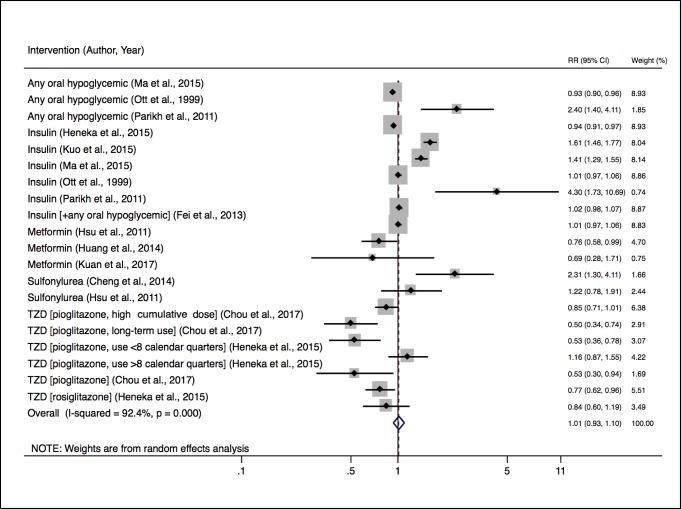
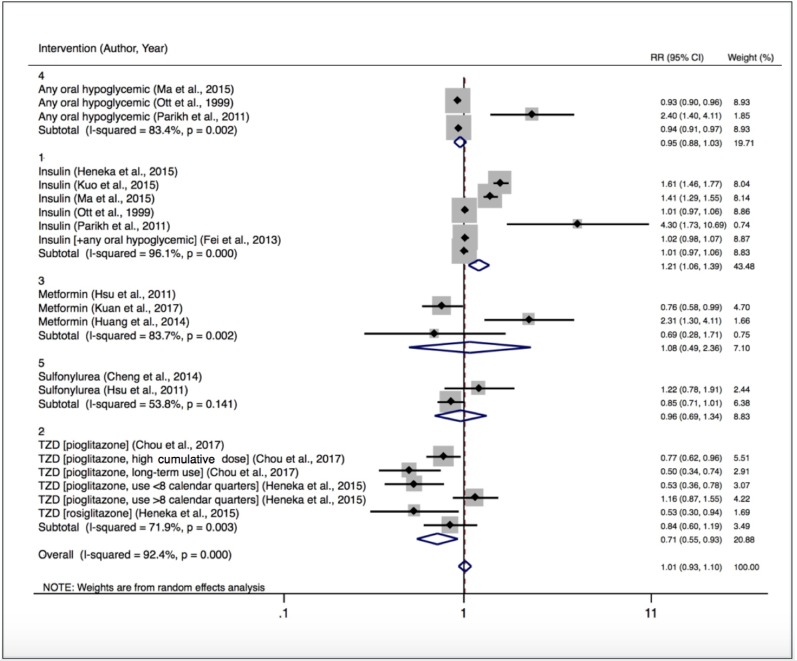
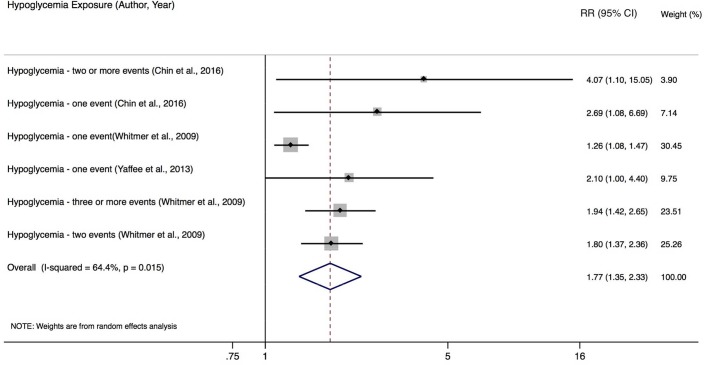
Background: The association between diabetes mellitus (DM) treatment and dementia is not well understood. Objective: To investigate the association between treatment of diabetes, hypoglycemia, and dementia risk. Research design and methods: We performed a systematic review and meta-analysis of pharmacological treatment of diabetes and incident or progressive cognitive impairment. We searched Ovid MEDLINE, Embase, Cochrane Central Registry of Controlled Trials, and PsychINFO from inception to 18 October 2017. We included cross-sectional, case–control, cohort, and randomized controlled studies. The study was registered with PROSPERO (ID CRD42017077953). Results: We included 37 studies into our systematic review and 13 into our meta-analysis. Ten studies investigated any antidiabetic treatment compared with no treatment or as add-on therapy to prior care. Treatment with an antidiabetic agent, in general, was not associated with incident dementia (risk ratio (RR) 1.01; 95% CI 0.93 to 1.10). However, we found differential effects across drug classes, with a signal of harm associated with insulin therapy (RR 1.21; 95% CI 1.06 to 1.39), but potentially protective effects with thiazolidinedione exposure (RR 0.71; 95% CI 0.55 to 0.93). Severe hypoglycemic episodes were associated with a nearly twofold increased likelihood of incident dementia (RR 1.77; 95% CI 1.35 to 2.33). Most studies did not account for DM duration or severity. Conclusions and limitations: The association between treatment for diabetes and dementia is differential according to drug class, which is potentially mediated by hypoglycemic risk. Not accounting for DM duration and/or severity is a major limitation in the available evidence base.
Overview
The claims and statistics of this paper haven’t been checked yet.
Free: it reads the open-access text and checks the first 5 claims that cite a source we can check. Create a free account to check every claim.
Integrity signals
Registry
Cites
Statistics
Figures
Verification
Claims the paper makes
The claims and statistics of this paper haven’t been checked yet.
Free: it reads the open-access text and checks the first 5 claims that cite a source we can check. Create a free account to check every claim.
Claims other papers make about this one
Each is checked against this paper’s own text: does it say what the citing paper says it does?
The cited source says what the claim attributes to it.
In the citing paper
“The effect of different diabetic medications on cognition or dementia outcomes remains unclear as few studies have investigated this area.”
From Dementia prevention, intervention, and care: 2020 report of the Lancet Commission (2020) · cites this paper as [99]
The cited source says what the claim attributes to it.
In the citing paper
“However another analysis did not find a protective effect of metformin for incident dementia (three studies, RR 1·1, 95% CI 0·5–2·4) with possible harm with insulin therapy (1·2, 1·1–1·4); but this did not account for severity of diabetes of those with type 2 diabetes on insulin.”
From Dementia prevention, intervention, and care: 2020 report of the Lancet Commission (2020) · cites this paper as [99]
Self-check
Percentages, sums and reported differences re-computed from the paper’s own numbers.
The self-check needs the paper’s full text.
Citations
Cites
Measuring inconsistency in meta-analyses
Higgins, J. P. T., Thompson, S. G., Deeks, J. J., & Altman, D. G. (2003) · BMJ · doi:10.1136/bmj.327.7414.557 · Cited by 63,139 · cited 1×
“Low, moderate, and high heterogeneity were defined as <25%, 25%–50%, and >50%, respectively.(12) Stratified analyses were performed to explore for”
BackgroundThe Cochrane Collaboration's tool for assessing risk of bias in randomised trials
Higgins, J. P. T., Altman, D. G., Gotzsche, P. C., Juni, P., Moher, D., Oxman, A. D., Savovic, J., Schulz, K. F., Weeks, L., Sterne, J. A. C., et al. (2011) · BMJ · doi:10.1136/bmj.d5928 · Cited by 33,817
PRISMA-P Group, Moher, D., Shamseer, L., Clarke, M., Ghersi, D., Liberati, A., Petticrew, M., Shekelle, P., & Stewart, L. A. (2015) · Systematic Reviews · doi:10.1186/2046-4053-4-1 · Cited by 26,223
Dermyshi, E., Wang, Y., Yan, C., Hong, W., Qiu, G., Gong, X., & Zhang, T. (2017) · Neonatology · doi:10.1159/000454668 · Cited by 24,451
(2014) · Medical Entomology and Zoology · Cited by 17,633
Hearing loss and cognitive decline in older adults
Lin, F. R., Yaffe, K., Xia, J., Xue, Q.-L., Harris, T. B., Purchase-Helzner, E., Satterfield, S., Ayonayon, H. N., Ferrucci, L., Simonsick, E. M., et al. (2013) · JAMA Internal Medicine · doi:10.1001/jamainternmed.2013.1868 · Cited by 4,017
Diabetes mellitus and the risk of dementia: The Rotterdam Study
Ott, A., Stolk, R. P., van Harskamp, F., Pols, H. A. P., Hofman, A., & Breteler, M. M. B. (1999) · Neurology · doi:10.1212/wnl.53.9.1937 · Cited by 2,175
Hypoglycemic episodes and risk of dementia in older patients with type 2 diabetes mellitus
Whitmer, R. A. (2009) · JAMA · doi:10.1001/jama.2009.460 · Cited by 1,128
Cheng, G., Huang, C., Deng, H., & Wang, H. (2012) · Internal Medicine Journal · doi:10.1111/j.1445-5994.2012.02758.x · Cited by 1,040 · cited 1×
“Diabetes is a risk factor for developing vascular dementia (VaD),(2) 3 mixed dementia, Alzheimer’s disease (AD), and mild cognitive impairment (MCI).(4) 5 Dementia in patients with DM occurs at a younger age and is more frequently vascular in etiology compared with individuals without DM.”
BackgroundDiabetes mellitus and risk of dementia: A meta‐analysis of prospective observational studies
Gudala, K., Bansal, D., Schifano, F., & Bhansali, A. (2013) · Journal of Diabetes Investigation · doi:10.1111/jdi.12087 · Cited by 727
Research works printed but not linked: 4
- Hsiao HW, Yang YS, YL L Risk for Alzheimer's disease in type 2 diabetic patients treated with metformin. Diabetes 2014; 63: A372.
- Naharci MI, Cintosun U, Ozturk A Association of metformin therapy with the risk of dementia in older adults with type 2 diabetes mellitus. European Geriatric Medicine 2016; 7: S62– S3.
- Zullo AR, Gutman R, Mor V The effect of dipeptidyl peptidase-4 inhibitors versus sulfonylureas on mental status, cognition, and physical functioning in older nursing home residents. J Am Geriatr Soc 2017; 65: S220– S1.
- KH H, Jeon JY, Kim HJ Severe hypoglycemia and risk of dementia in person with diabetes mellitus. Journal of Diabetes Investigation 2017; 8: 35.
Cited by
Dementia prevention, intervention, and care: 2020 report of the Lancet Commission
Livingston, G., Huntley, J., Sommerlad, A., Ames, D., Ballard, C., Banerjee, S., Brayne, C., Burns, A., Cohen-Mansfield, J., Cooper, C., et al. (2020) · The Lancet · doi:10.1016/s0140-6736(20)30367-6 · Cited by 10,430
RetractedType 2 diabetes and cognitive dysfunction–towards effective management of both comorbidities
Srikanth, V., Sinclair, A. J., Hill-Briggs, F., Moran, C., & Biessels, G. J. (2020) · The Lancet Diabetes & Endocrinology · doi:10.1016/s2213-8587(20)30118-2 · Cited by 465
Association between age at diabetes onset and subsequent risk of dementia
Barbiellini Amidei, C., Fayosse, A., Dumurgier, J., Machado-Fragua, M. D., Tabak, A. G., van Sloten, T., Kivimäki, M., Dugravot, A., Sabia, S., & Singh-Manoux, A. (2021) · JAMA · doi:10.1001/jama.2021.4001 · Cited by 355
Cognitive dysfunction in diabetes: how to implement emerging guidelines
Biessels, G. J., & Whitmer, R. A. (2020) · Diabetologia · doi:10.1007/s00125-019-04977-9 · Cited by 310
Diabetes and cognitive function: An evidence-based current perspective
Sebastian, M. J., Khan, S. K. A., Pappachan, J. M., & Jeeyavudeen, M. S. (2023) · World Journal of Diabetes · doi:10.4239/wjd.v14.i2.92 · Cited by 128
Tang, H., Shao, H., Shaaban, C. E., Yang, K., Brown, J., Anton, S., Wu, Y., Bress, A., Donahoo, W. T., DeKosky, S. T., et al. (2023) · Journal of the American Geriatrics Society · doi:10.1111/jgs.18306 · Cited by 106
“Two metaanalyses have been conducted to evaluate the association between GLDs and dementia risk.(26,27) However, the association between newer GLDs and risk dementia remains inconclusive because few studies assessing such association were included in both meta-analyses.”
BackgroundSluggett, J. K., Koponen, M., Bell, J. S., Taipale, H., Tanskanen, A., Tiihonen, J., Uusitupa, M., Tolppanen, A.-M., & Hartikainen, S. (2020) · The Journal of Clinical Endocrinology & Metabolism · doi:10.1210/clinem/dgz234 · Cited by 95
Type 2 diabetes mellitus and cognitive function: understanding the connections
Dao, L., CHOI, S. E., & Freeby, M. (2022) · Current Opinion in Endocrinology Diabetes and Obesity · doi:10.1097/med.0000000000000783 · Cited by 91
Zhang, J., Tam, W., Hounsri, K., Kusuyama, J., & Wu, X. V. (2023) · Archives of Physical Medicine and Rehabilitation · doi:10.1016/j.apmr.2023.10.005 · Cited by 94
Kuate Defo, A., Bakula, V., Pisaturo, A., Labos, C., Wing, S. S., & Daskalopoulou, S. S. (2024) · Diabetes, Obesity and Metabolism · doi:10.1111/dom.15331 · Cited by 75
“Previous meta-analyses on metformin yielded protective 15,98 or neutral 6,20,96,99 effects on risk of dementia.”
BackgroundYoun, Y. J., Kim, S. Y., Jeong, H., Ah, Y., & Yu, Y. M. (2024) · Frontiers in Neuroendocrinology · doi:10.1016/j.yfrne.2024.101131 · Cited by 76
Neurocognitive impairment in type 2 diabetes mellitus
Karvani, M., Simos, P. G., Stavrakaki, S., & Καπουκρανίδου, Δ. (2019) · HORMONES · doi:10.1007/s42000-019-00128-2 · Cited by 70
“Incretins could also be beneficial in reducing the hypoglycemic risk and its associated cognitive deficits [26].”
BackgroundDiabetes duration and the risk of dementia: a cohort study based on German health claims data
Reinke, C., Buchmann, N., Fink, A., Tegeler, C., Demuth, I., & Doblhammer, G. (2021) · Age and Ageing · doi:10.1093/ageing/afab231 · Cited by 69
“It was recently reported that distinct treatments of T2D result in different incident rates of dementia, with the lowest risk in oral antidiabetic medications (ADM), followed by diabetes patients without ADM and those dependent on insulin [7, 25].”
Rorbach-Dolata, A., & Piwowar, A. (2019) · BioMed Research International · doi:10.1155/2019/1435276 · Cited by 57
Dementia in Diabetes: The Role of Hypoglycemia
Husain, K. H., Sarhan, S. F., AlKhalifa, H. K. A. A., Buhasan, A., Moin, A. S. M., & Butler, A. E. (2023) · International Journal of Molecular Sciences · doi:10.3390/ijms24129846 · Cited by 59
“Moreover, it was found that a twofold increase in the risk of dementia was associated with severe hypoglycemic episodes [60].”
BackgroundLin, Y., Gong, Z., Ma, C., Wang, Z., & Wang, K. (2023) · Frontiers in Aging Neuroscience · doi:10.3389/fnagi.2023.1126183 · Cited by 52
“In McMillan’s review, only the incidence of dementia was analyzed, and the change in cognitive score which may compromise the potential cerebral protection of blood glucose control therapy was not evaluated (McMillan et al., 2018).”
BackgroundSim, A. Y., Choi, D. H., Kim, J. Y., Kim, E. R., Goh, A. R., Lee, Y., & Lee, J. E. (2023) · Biomedicine & Pharmacotherapy · doi:10.1016/j.biopha.2023.115755 · Cited by 50
Dysfunction of the neurovascular unit in diabetes-related neurodegeneration
Yan, C., Zhou, Y., Chen, Q., Luo, Y., Zhang, J. H., Huang, H., & Shao, A. (2020) · Biomedicine & Pharmacotherapy · doi:10.1016/j.biopha.2020.110656 · Cited by 49
Soldevila‐Domenech, N., Forcano, L., Vintró‐Alcaraz, C., Cuenca‐Royo, A., Pintó, X., Jiménez‐Múrcia, S., García-Gavilán, J. F., Nishi, S. K., Babió, N., Gomis‐González, M., et al. (2021) · Clinical Nutrition · doi:10.1016/j.clnu.2021.07.020 · Cited by 50
The Impact of Cognitive Impairment on Cardiovascular Disease
Jamil, Y., Krishnaswami, A., Orkaby, A. R., Stimmel, M. B., Brown, C. H., Mecca, A. P., Forman, D. E., Rich, M. W., Nanna, M. G., & Damluji, A. A. (2025) · Journal of the American College of Cardiology · doi:10.1016/j.jacc.2025.04.057 · Cited by 49
Hui, E. K., Mukadam, N., Kohl, G., & Livingston, G. (2025) · Journal of Alzheimer s Disease · doi:10.1177/13872877251319054 · Cited by 40
“15,16 As with metformin, the fi nding might be in fl u-enced by diabetes duration and severity, which was not accounted for in most studies.”
Bhole, R. P., Chikhale, R. V., & Rathi, K. M. (2023) · IBRO Neuroscience Reports · doi:10.1016/j.ibneur.2023.11.003 · Cited by 37
“A double knockout of PS1 and PS2 completely eradicates the creation of NICDs, and a PS1 deficiency significantly lowers the synthesis of NICDs (McMillan et al., 2018; Kontush, 2001).”
BackgroundNagar, S. D., Pemu, P. I., Qian, J., Boerwinkle, E., Cicek, M. S., Clark, C. R., Cohn, E., Gebo, K. A., Loperena, R., Mayo, K., et al. (2022) · Scientific Reports · doi:10.1038/s41598-022-23353-z · Cited by 38
Gong, J., Harris, K., Hackett, M. L., Peters, S. A. E., Brodaty, H., Cooper, M. E., Hamet, P., Harrap, S. B., Mancia, G., MacMahon, S. W., et al. (2021) · Diabetes Obesity and Metabolism · doi:10.1111/dom.14391 · Cited by 32
Sood, A., Fernandes, V., Preeti, K., Khot, M., Khatri, D. K., & Singh, S. B. (2022) · Molecular Neurobiology · doi:10.1007/s12035-022-03120-x · Cited by 31
Singh, A., & Bodakhe, S. H. (2022) · British Journal of Pharmacology · doi:10.1111/bph.15895 · Cited by 29
“control reduces learning and memory impairments (McMillan et al., 2018); thus, the recovery fromthe learning and the memory impairments in the T2DM rats in this study might be due to the ability of resveratrol to reduce hyperglycaemia, thereby improving insulin sensitivity.”
BackgroundTrajectories of Cognition and Daily Functioning Before and After Incident Diabetes
Ji, X., Gao, H., Sun, D., Zhuang, J., Fang, Y., Wang, K., & Ahmadizar, F. (2022) · Diabetes Care · doi:10.2337/dc22-1190 · Cited by 30
Tian, R., Liu, X., Xiao, Y., Jing, L., Tao, H., Yang, L., & Meng, X. (2023) · Journal of Ethnopharmacology · doi:10.1016/j.jep.2023.117686 · Cited by 27
Zhang, H., Zhu, W., Niu, T., Wang, Z., An, K., Cao, W., Shi, J., & Wang, S. (2021) · Lipids in Health and Disease · doi:10.1186/s12944-021-01534-5 · Cited by 26
“Scholars have focused on diabetic cognition decline [27, 28].”
BackgroundMachii, N., Kudo, A., Saito, H., Tanabe, H., Iwasaki, M., Hirai, H., Masuzaki, H., & Shimabukuro, M. (2020) · Journal of Clinical Medicine · doi:10.3390/jcm9072133 · Cited by 24
“The mechanism of cognitive dysfunction in patients with diabetes mellitus has been suggested to be related to: (1) insulin resistance in the local brain [7,33]; (2) chronic inflammation, deposition of advanced glycation end-products (AGEs), and mitochondrial dysfunction; (3) τ (tau) deposition; (4) low adiponectin lev…”
BackgroundGlucose-lowering drugs, cognition, and dementia: The clinical evidence
Wu, C., Shapiro, L. R., Ouk, M., MacIntosh, B. J., Black, S. E., Shah, B. R., & Swardfager, W. (2022) · Neuroscience & Biobehavioral Reviews · doi:10.1016/j.neubiorev.2022.104654 · Cited by 24
Ruthirakuhan, M. T., Swardfager, W., Xiong, L. Y., MacIntosh, B. J., Rabin, J. S., Lanctôt, K. L., Ottoy, J., Ramirez, J., Keith, J. L., & Black, S. E. (2024) · Alzheimer s & Dementia · doi:10.1002/alz.13717 · Cited by 23
Tang, C., Hao, J., Tao, F., Feng, Q., Song, Y., & Zeng, B. (2025) · Diabetes Obesity and Metabolism · doi:10.1111/dom.16192 · Cited by 22
“2,3,9 These inconsistent results mainly stem from differences in inclusion criteria and research methods.”
Grasset, L., Frison, É., Helmer, C., Catheline, G., Chêne, G., & Dufouil, C. (2024) · European Journal of Epidemiology · doi:10.1007/s10654-023-01080-7 · Cited by 22
“Type-2 diabetes (noted as diabetes in the following) can be prevented; however, clinical trials so far were not conclusive to demonstrate an effect of diabetes control or treatment on the course of cognitive decline or dementia risk [6, 7].”
InfluentialColca, J. R., & Finck, B. N. (2022) · Frontiers in Molecular Biosciences · doi:10.3389/fmolb.2022.929328 · Cited by 19
Metformin and Dementia Risk: A Systematic Review with Respect to Time Related Biases
Dai, J., Ports, K. D., Corrada, M. M., Odegaard, A., O’Connell, J., & Jiang, L. (2022) · Journal of Alzheimer s Disease Reports · doi:10.3233/adr-220002 · Cited by 19
“However, in a separate meta-analysis, which included only three studies that the authors deemed to be highly qualified, no significant association between metformin use and the risk for developing dementia was found [13].”
BackgroundHallam, B., Rees, J., Petersen, I., Cooper, C., Avgerinou, C., & Walters, K. R. (2021) · Family Practice · doi:10.1093/fampra/cmab014 · Cited by 18
“For example, insulin therapy has been associated with an increased risk of developing dementia, whereas thiazolidinedione exposure is associated with protective effects and reduces the risk of dementia (14).”
BackgroundZhu, W., Tang, H., Zhang, H., Rajamohan, H. R., Huang, S., Ma, X., Chaudhari, A., Madaan, D., Almahmoud, E., Chopra, S., et al. (2024) · medRxiv · doi:10.1101/2024.04.26.24306180 · Cited by 18
Hypoglycaemia and Cardiovascular Disease Risk in Patients with Diabetes
Katsiki, N., Kotsa, K., Stoian, A. P., & Mikhailidis, D. P. (2020) · Current Pharmaceutical Design · doi:10.2174/1381612826666200909142658 · Cited by 17
Nonesterified fatty acids, cognitive decline, and dementia
Mukamal, K. J. (2019) · Current Opinion in Lipidology · doi:10.1097/mol.0000000000000656 · Cited by 16
“One systemic review of a wide variety of studies suggested that systemic insulin therapy may increase cognitive decline by inducing hypoglycemia, but thiazolidinediones slow cognitive decline [97].”
BackgroundInsulin Use in Type 2 Diabetes and the Risk of Dementia: A Comparative Population-Based Cohort Study
Alkabbani, W., Maxwell, C. J., Marrie, R. A., Tyas, S. L., Lega, I. C., & Gamble, J. (2023) · Diabetes Care · doi:10.2337/dc23-0222 · Cited by 15
Impact of metabolic dysfunction on cognition in humans
Rasmussen, I. J., Thomassen, J. Q., & Frikke‐Schmidt, R. (2020) · Current Opinion in Lipidology · doi:10.1097/mol.0000000000000723 · Cited by 15
Vascular cognitive impairment in India: Challenges and opportunities for prevention and treatment
Arshad, F., Samim, M. M., Paplikar, A., Rajendran, S. P., Kalkonde, Y. V., & Alladi, S. (2021) · Cerebral Circulation - Cognition and Behavior · doi:10.1016/j.cccb.2021.100034 · Cited by 14
Sun, Z., Zeng, H., Liu, H., Hu, M., Tian, X., Mao, D., & Zhang, R. (2025) · PeerJ · doi:10.7717/peerj.20146 · Cited by 12
“While pharmacological treatments can manage hyperglycemia, their long-term effectiveness is limited ( Raveendran, Chacko & Pappachan, 2018 ), and improper usage may double the risk of dementia among T2DM patients ( Mcmillan et al., 2018 ).”
Metformin and Cognitive Performance in Patients With Type 2 Diabetes: An Umbrella Review
Enderami, A., Shariati, B., Zarghami, M., Aliasgharian, A., Ghazaiean, M., & Darvishi‐Khezri, H. (2025) · Neuropsychopharmacology Reports · doi:10.1002/npr2.12528 · Cited by 12
Extra-Glycemic Effects of Anti-Diabetic Medications: Two Birds with One Stone?
Rhee, E. (2022) · Endocrinology and Metabolism · doi:10.3803/enm.2022.304 · Cited by 12
Fan, D., Yang, S., Han, Y., Zhang, R., & Yang, L. (2020) · The Journal of Toxicological Sciences · doi:10.2131/jts.45.69 · Cited by 11
Triad of impairment in older people with diabetes-reciprocal relations and clinical implications
Abdelhafiz, A. H., Davies, P. C., & Sinclair, A. J. (2020) · Diabetes Research and Clinical Practice · doi:10.1016/j.diabres.2020.108065 · Cited by 11
Systemic medications and dementia risk: a systematic umbrella review
Belessiotis‐Richards, C., Hayes, J., Yap, Y. F., Talwar, S., Eskinazi, M., Li, W., Ward, H., Letrondo, P. A., Morelli‐Batters, M., Bruun, A., et al. (2025) · Molecular Psychiatry · doi:10.1038/s41380-025-03129-3 · Cited by 11
Giorda, C. B., Orsi, E., Cosmo, S. D., Bossi, A. C., Guerzoni, C., Cercone, S., Gilio, B., & Cavalot, F. L. (2020) · Diabetes Therapy · doi:10.1007/s13300-020-00871-5 · Cited by 9
Sui, H. X., Zhu, L., Zhan, L., Bi, T., & Zhang, B. (2022) · Journal of Ethnopharmacology · doi:10.1016/j.jep.2022.115947 · Cited by 8
Phuc, P. T., Nguyen, P., Nguyen, N. N., Hsu, M., Le, N. Q. K., Tran, Q., Huang, C., Yang, H., Chen, C., Le, T. A. H., et al. (2024) · Journal of Medical Internet Research · doi:10.2196/52107 · Cited by 8
“Some authors hypothesized that this deleterious impact was driven by severe hypoglycemia events, which were more often seen in patients treated with insulin than those treated with other therapies [49].”
Stephen, R. (2020) · UEF eRepo (University of Eastern Finland) · Cited by 7
Racsa, P. N., Booth, T. A., Chung, L. N., Dixon, S. W., & Poonawalla, I. B. (2023) · Journal of Family Medicine and Primary Care · doi:10.4103/jfmpc.jfmpc_935_23 · Cited by 6
“[24] Geifman et al .”
Cognitive impairments in cardiological patients: diagnosis and prevention
Shavarova, E. K., Анатольевич, Ш. А., Akhmetov, R., & Kobalava, Z. D. (2022) · Russian Journal of Cardiology and Cardiovascular Surgery · doi:10.17116/kardio202215061560 · Cited by 6
Ostroumova, O. D., Surkova, E. V., Васильевна, Г. И., Starodubova, A. V., Кочетков, А. И., Kiknadze, T. D., & Galstyan, G. R. (2020) · Diabetes Mellitus · doi:10.14341/dm10202 · Cited by 6
Lin, Y., Hung, Y., Chen, J., Sung, J., Hsu, M., Dinh, H. K., Chen, K., & Chen, C. (2025) · Diabetes Obesity and Metabolism · doi:10.1111/dom.16647 · Cited by 5
Wang, Q., Li, X., Teng, N., & Li, X. (2022) · Psychogeriatrics · doi:10.1111/psyg.12869 · Cited by 5
Взаимосвязь гипогликемии и когнитивных нарушений у пожилых пациентов с сахарным диабетом 2 типа
Bulgakova, S. V., Merzlova, P. Y., Kurmaev, D. P., & Treneva, E. V. (2024) · Russian Journal of Geriatric Medicine · doi:10.37586/2686-8636-2-2024-108-116 · Cited by 3
Wang, Y., Pan, M., Wei, B., Sun, H., & Huang, J. (2025) · Frontiers in Humanities and Social Sciences · doi:10.54691/7r1a1m23 · Cited by 2
“…in people with type 2 diabetes, but there may be some risks and limitations, for example, one study found that insulin treatment was associated with a 21% increased risk of dementia[11] and another found that metformin reduced the risk of dementia significantly only in Western populations[12] .”
Gwizdala, K. L., Bazzano, L., Newton, R. L., & Carmichael, O. T. (2023) · Frontiers in Public Health · doi:10.3389/fpubh.2023.1200415 · Cited by 2
Alkabbani, W., Maxwell, C. J., Marrie, R. A., Tyas, S. L., Lega, I. C., & Gamble, J. (2023) · Diabetes Obesity and Metabolism · doi:10.1111/dom.15385 · Cited by 2
Aloe Vera: Potential to Reduce Fasting Blood Sugar Levels in Prediabetes
Budiastutik, I., & Ningsih, N. S. (2023) · JURNAL INFO KESEHATAN · doi:10.31965/infokes.vol21.iss3.1361 · Cited by 2
“However, those medications may have dangerous long-term effects, including the risk of liver dysfunction and cardiovascular disease (McMillan et al., 2018; Tziomalos et al., 2011).”
BackgroundCuestiones procesales relativas a la investigación de los delitos telemáticos
Núñez, E. V. (2006) · Cuadernos de derecho judicial · Cited by 2
Förstl, H., & Förstl, S. (2020) · Springer Reference Pflege, Therapie, Gesundheit · doi:10.1007/978-3-662-55793-8_58-1 · Cited by 2
Diabetes e demência: como alguns fármacos para tratar diabetes reduzem o risco de demência
Santiago, P. R. D. S., Carvalho, L. F. C., & Rodrigues, F. D. A. A. (2023) · Cuadernos de Educación y Desarrollo · doi:10.55905/cuadv15n8-032 · Cited by 2
Pioglitazone and Lower Risk of Dementia: Will This Change Practice?
Maxwell, C. J., Alkabbani, W., & Yaşar, S. (2023) · Neurology · doi:10.1212/wnl.0000000000207182 · Cited by 2
“The protective effect for pioglitazone seems to be stronger at higher cumulative doses and for longer treatment periods.(5) However, most of these observational studies did not account for T2DM duration, severity, glycemic control, lipid-lowering and antihypertensive medication use, or genetic risk (e.”
BackgroundFrison, É. (2019) · theses.fr (ABES) · doi:10.70675/a527bd03zb814z44e5z8848z942b662a0847 · Cited by 2
Förstl, H., & Förstl, S. (2021) · Springer Reference Pflege, Therapie, Gesundheit · doi:10.1007/978-3-662-62426-5_58 · Cited by 1
โรจนาบุตร, ว., Hemrungrojn, S., Manasvanish, B.-A., & Assawawitoontip, S. (2021) · Journal of Primary Care and Family Medicine (PCFM) · Cited by 1
Why we age: the four process modelPreprint
Wordsworth, J., Nielsen, P. Y., Fielder, E., Chandrasegaran, S., & Shanley, D. P. (2026) · bioRxiv (Cold Spring Harbor Laboratory) · doi:10.64898/2026.01.30.701154 · Cited by 1
The Relationship between Multimorbidity and Incident Dementia in Ontario
Tessier, L. (2022) · TSpace (University of Toronto) · Cited by 1
Brain Changes in Diabetes and Cognitive Dysfunction
Biessels, G. J. (2023) · Contemporary diabetes · doi:10.1007/978-3-031-15613-7_21
Motoric Cognitive Risk Syndrome and Cognitive Frailty
Ciolek, C. H., & Ross, C. M. (2023) · Topics in Geriatric Rehabilitation · doi:10.1097/tgr.0000000000000392
“Severe hypoglycemic episodes were associated with a nearly 2-fold increase in the likelihood of dementia in 1 systematic review.(80) Additionally, metformin use in people with type 2 diabetes was associated with reduced dementia risk in a study conducted in Thailand.”
BackgroundDhungel, O., Sharma, P., & Sapkota, N. (2025) · American Journal of Alzheimer s Disease & Other Dementias® · doi:10.1177/15333175251328472
“23 The underlying pathophysiology are vascular mechanisms, toxic effects of hyperglycemia/hypoglycemia, insulin resistance of the brain, formation of advanced glycation end products, and competition for insulin-degrading enzyme resulting in reduced degradation of -amyloid, but none of these has…”
Impact of treatment modality on cognition in older adults with type 2 diabetes mellitus
Chutia, P., & Tripathi, S. M. (2025) · Journal of Family Medicine and Primary Care · doi:10.4103/jfmpc.jfmpc_1859_24
“[11] Recently, a decrease in the incidence of cognitive impairment was reported with long‑term use of GLP‑1 agonists.”
Insulin use in diabetes association with cognitive impairment and dementia incidence
Hajihosseini, S., Kurd, D. M., Nouroozi, F., Haghighi, S., Dini, N., Ghobadi, Y., Tehrani, N., Shahrokhi, M., Belbasi, M., Alizadeh, H., et al. (2025) · BMC Pharmacology and Toxicology · doi:10.1186/s40360-025-01042-7
“However, insulin therapy has shown conflicting associations: multiple observational studies link it to a higher dementia risk, though the exact role of insulin in dementia pathology remains unclear, with competing hypotheses about its biological effects [9, 10, 13].”
InfluentialASSOCIATION OF DIABETES MELLITUS WITH REACTION TIME, COGNITIVE FUNCTION AND PHYSICAL FITNESS
Kierepka, U., Bieńkowska, K., Rosiewicz, M., Drzymała, J., Janda, A., Bartolik, S., Durowicz, M., Górnicka, I., Pastuszek, A., & Pastuszek, R. (2025) · International Journal of Innovative Technologies in Social Science · doi:10.31435/ijitss.4(48).2025.4123
“A systematic review and meta-analysis concluded that pioglitazone, a thiazolidinedione, was associated with a 47% reduced risk of dementia among diabetic patients [76].”
Zhang, H., Zhu, W., Niu, T., Wang, Z., An, K., Cao, W., Shi, J., & Wang, S. (2021) · Figshare · doi:10.6084/m9.figshare.16608931
Dyson, S. (2023) · Open Research Exeter (University of Exeter)
Alkabbani, W. (2023) · UWSpace (University of Waterloo)
Vire, J. (2024) · UTUPub (University of Turku)
Research Progress of Natural Compounds in the Treatment of Diabetes and Its Complications
Wang, Y., & Liu, Z. (2026) · Phytotherapy Research · doi:10.1002/ptr.70340
“Studies have shown that better blood glucose control can improve learning and memory disorders (McMillan et al. 2018).”
Nasir, A. B., Kilani, Y., Aldiabat, M., Abdelghany, O., Hafez, Y., Desai, N., Madi, M. Y., Wade, F. G., Qureshi, K., Frey, L. J., et al. (2026) · PLoS ONE · doi:10.1371/journal.pone.0356138
“In contrast, insulin therapy, often associated with hypoglycemia and advanced disease, has been linked to greater risk of cognitive impairment [22–24].”
elaaty, T. A., Badrah, M., Elnily, D., & NAWAR, A. A. K. (2026) · The Egyptian Journal of Internal Medicine · doi:10.1186/s43162-026-00732-w
“Observational meta-analyses suggested differential effects across therapeutic classes, with potential adverse cognitive associations reported with insulin therapy and neuroprotective signals observed with metformin and other agents [20, 37].”
The Role of Diet in Type 2 Diabetes Comorbidities
Ferro, A. (n.d.) · Institutional Research Information System University of Turin (University of Turin)
Megari, K., & Keramida, M. M. (2026) · Applied Neuropsychology Adult · doi:10.1080/23279095.2026.2741894
Diabetes‐Associated Cognitive Impairment: Pathophysiology and Emerging Therapies
Corbali, O., Menon, P., Corbali, H. I., Jagannathan, R., & Levey, A. I. (2026) · Annals of Clinical and Translational Neurology · doi:10.1002/acn3.70487
Yen, Y., Wei, J. C.-C., Hung, Y.-M., Lin, S.-Y., Yen, F., Lin, H.-J., Huang, Y.-H., Cho, D., Hwu, C., & Hsu, C.-C. (2026) · The Journal of Prevention of Alzheimer s Disease · doi:10.1016/j.tjpad.2026.100691
Metadata
- Authors
- McMillan, J. M., Mele, B. S., Hogan, D. B., & Leung, A. A.
- Affiliations
- University of Calgary (CA)
- Corresponding author
- McMillan, Jacqueline M
- Venue
- BMJ Open Diabetes Research & Care
- Publisher
- BMJ
- Published
- 2018-11
- Volume
- 6
- Issue
- 1
- Pages
- e000563
- ISSN
- 2052-4897 (ISSN-L)
- PMC
- PMC6254737
- OpenAlex
- W2900724835
- Cited by
- 80
- References
- 57
- Citations by year
- 2026: 5 · 2025: 12 · 2024: 6 · 2023: 18 · 2022: 12 · 2021: 9 · 2020: 11 · 2019: 6
- FWCI
- 0.99
- Type
- journal article
- Language
- en
- Open access
- gold
- doi.org
- Licence
- cc-by-nc
- Locations
- BMJ Open Diabetes Research & Care (publishedVersion, cc-by-nc)
- Europe PMC (PubMed Central) (publishedVersion, other-oa)
- PubMed Central (publishedVersion, cc-by-nc)
- PubMed (publishedVersion)
- Funders
- Government of Alberta
- Hypertension Canada
- Topics
- Health Sciences › Medicine › Psychiatry and Mental health › Dementia and Cognitive Impairment Research
- Health Sciences › Medicine › Endocrinology, Diabetes and Metabolism › Diabetes Treatment and Management
- Health Sciences › Medicine › Endocrinology, Diabetes and Metabolism › Diabetes Management and Research
- Keywords
- diabetes mellitus, dementia risk, antidiabetic drugs, insulin therapy, thiazolidinediones, hypoglycemia, cognitive impairment, drug class effect, diabetes duration
About these checks
Registry, retraction, Cites and statistics results are computed, not judged, with one exception: a printed reference that no index lists is read once by a model before it counts as a citation error. Claims are extracted by a model and kept only when their quote appears verbatim in the text; each cited source is then checked, with a model’s help, for whether it says what the claim relies on. Those verdicts can be wrong — read the claim’s quote and the cited source before relying on one.
Statistics and arithmetic are recomputed, not judged.
Confidence bands are shown only for fields calibrated on our annotated test set. None is calibrated yet, so no band is shown.
What counts as a claim ›How we measure confidence ›How we check this ›
Are you an author, or do you see a problem with this page? Request a review
Data sources
Bibliographic data: Semantic Scholar, OpenAlex, Crossref.
Contains information from the Semantic Scholar Academic Graph Datasets, made available under the ODC Attribution License (ODC-BY 1.0).
Semantic Scholar’s data is described in: Kinney, R., et al. (2023). The Semantic Scholar Open Data Platform. arXiv:2301.10140.
