

Recommendations for management of diabetes during Ramadan: update 2020, applying the principles of the ADA/EASD consensus
Open accessThe DOI matches its Crossref record; 120 of the 120 references it cites were found in a registry or an index.
Abstract
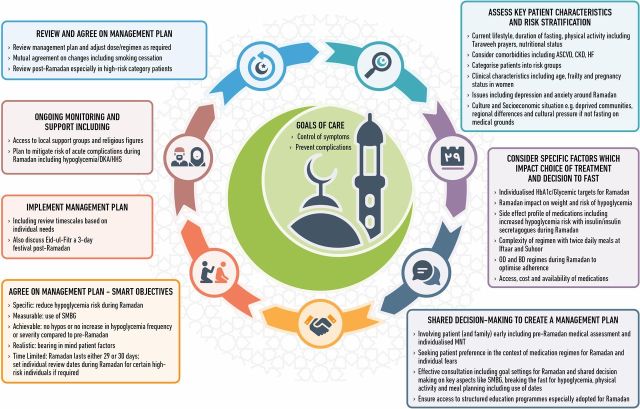
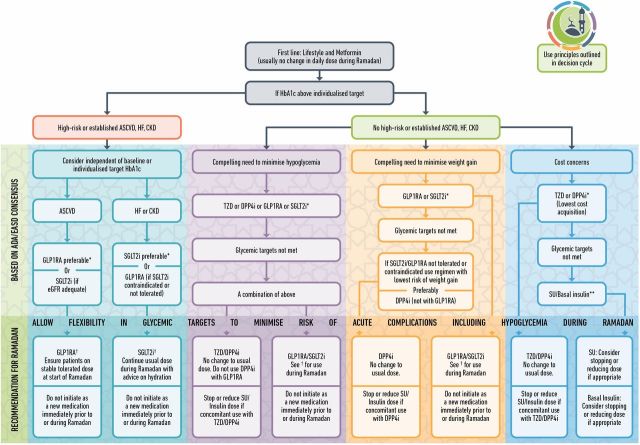
Fasting the Holy month of Ramadan constitutes one of the five pillars of the Muslim faith. Although there is some evidence that intermittent fasting during Ramadan may be of benefit in losing weight and cardiometabolic risk factors, there is no strong evidence these benefits apply to people with diabetes. The American Diabetes Association/European Association for the Study of Diabetes consensus recommendations emphasize the importance of patient factors and comorbidities when choosing diabetes medications including the presence of comorbidities, atherosclerotic cardiovascular disease, heart failure, chronic kidney disease, hypoglycemia risk, weight issues and costs. Structured education and pre-Ramadan counseing are key components to successful management of patients with diabetes. These should cover important aspects like glycemic targets, self-monitoring of blood glucose, diet, physical activity including Taraweeh prayers, medication and dose adjustment, side effects and when to break the fast. The decision cycle adapted for the specific situation of Ramadan provides an aid for such an assessment. Children with type 1 diabetes should strongly be advised not to fast due to the high risk of acute complications such as hypoglycemia and probably diabetic ketoacidosis (DKA), although there is very little evidence that DKA is increased in Ramadan. Pregnant women with diabetes or gestational diabetes should be advised to avoid fasting because of possible negative maternal and fetal outcomes. Hypoglycemia is a common concern during Ramadan fasting. To prevent hypoglycemic and hyperglycemic events, we recommend the adoption of diabetes self-management education and support principles. The use of the emerging technology and continuous glucose monitoring during Ramadan could help to recognize hypoglycemic and hyperglycemic complications related to omission and/or medication adjustment during fasting; however, the cost represents a significant barrier.
Overview
The claims and statistics of this paper haven’t been checked yet.
Free: it reads the open-access text and checks the first 5 claims that cite a source we can check. Create a free account to check every claim.
Integrity signals
Registry
Cites
Statistics
Figures
Verification
Claims the paper makes
The claims and statistics of this paper haven’t been checked yet.
Free: it reads the open-access text and checks the first 5 claims that cite a source we can check. Create a free account to check every claim.
Claims other papers make about this one
Each is checked against this paper’s own text: does it say what the citing paper says it does?
The cited source says what the claim attributes to it.
In the citing paper
“Fasting may increase the risk for hypoglycemia among individuals treated with insulin or insulin secretagogues if not properly planned for, so clinicians need to engage these individuals to codevelop a diabetes treatment plan that is safe and respectful of their traditions (123).”
From 6. Glycemic Goals, Hypoglycemia, and Hyperglycemic Crises: Standards of Care in Diabetes-2026. (2026) · cites this paper as [123]
Self-check
Percentages, sums and reported differences re-computed from the paper’s own numbers.
The self-check needs the paper’s full text.
Citations
Cites
International Diabetes Federation 2017
Carracher, A. M., Marathe, P. H., & Close, K. L. (2018) · Journal of Diabetes · doi:10.1111/1753-0407.12644 · Cited by 13,418
Empagliflozin, Cardiovascular Outcomes, and Mortality in Type 2 Diabetes
Zinman, B., Wanner, C., Lachin, J. M., Fitchett, D., Bluhmki, E., Hantel, S., Mattheus, M., Devins, T., Johansen, O. E., Woerle, H. J., et al. (2015) · New England Journal of Medicine · doi:10.1056/nejmoa1504720 · Cited by 12,315
Liraglutide and Cardiovascular Outcomes in Type 2 Diabetes
Marso, S. P., Daniels, G. H., Brown-Frandsen, K., Kristensen, P., Mann, J. F. E., Nauck, M. A., Nissen, S. E., Pocock, S., Poulter, N. R., Ravn, L. S., et al. (2016) · New England Journal of Medicine · doi:10.1056/nejmoa1603827 · Cited by 7,629
Dapagliflozin in Patients with Heart Failure and Reduced Ejection Fraction
McMurray, J. J. V., Solomon, S. D., Inzucchi, S. E., Køber, L., Kosiborod, M. N., Martinez, F. A., Ponikowski, P., Sabatine, M. S., Anand, I. S., Bělohlávek, J., et al. (2019) · New England Journal of Medicine · doi:10.1056/nejmoa1911303 · Cited by 7,140
Semaglutide and Cardiovascular Outcomes in Patients with Type 2 Diabetes
Marso, S. P., Bain, S. C., Consoli, A., Eliaschewitz, F. G., Jódar, E., Leiter, L. A., Lingvay, I., Rosenstock, J., Seufert, J., Warren, M. L., et al. (2016) · New England Journal of Medicine · doi:10.1056/nejmoa1607141 · Cited by 6,900
Dapagliflozin and Cardiovascular Outcomes in Type 2 Diabetes
Wiviott, S. D., Raz, I., Bonaca, M. P., Mosenzon, O., Kato, E. T., Cahn, A., Silverman, M. G., Zelniker, T. A., Kuder, J. F., Murphy, S. A., et al. (2019) · New England Journal of Medicine · doi:10.1056/nejmoa1812389 · Cited by 6,382
Canagliflozin and Renal Outcomes in Type 2 Diabetes and Nephropathy
Perkovic, V., Jardine, M. J., Neal, B., Bompoint, S., Heerspink, H. J. L., Charytan, D. M., Edwards, R., Agarwal, R., Bakris, G., Bull, S., et al. (2019) · New England Journal of Medicine · doi:10.1056/nejmoa1811744 · Cited by 6,189
Davies, M. J., D’Alessio, D. A., Fradkin, J., Kernan, W. N., Mathieu, C., Mingrone, G., Rossing, P., Tsapas, A., Wexler, D. J., & Buse, J. B. (2018) · Diabetes Care · doi:10.2337/dci18-0033 · Cited by 3,518
Self-citationGerstein, H. C., Colhoun, H. M., Dagenais, G. R., Diaz, R., Lakshmanan, M., Pais, P., Probstfield, J., Riesmeyer, J. S., Riddle, M. C., Rydén, L., et al. (2019) · The Lancet · doi:10.1016/s0140-6736(19)31149-3 · Cited by 3,163
Effects of once-weekly exenatide on cardiovascular outcomes in type 2 diabetes
Holman, R. R., Bethel, M. A., Mentz, R. J., Thompson, V. P., Lokhnygina, Y., Buse, J. B., Chan, J. C., Choi, J., Gustavson, S. M., Iqbal, N., et al. (2017) · New England Journal of Medicine · doi:10.1056/nejmoa1612917 · Cited by 2,162
Research works printed but not linked: 4
- International Diabetes Federation IDF diabetes atlas. 9th edition Brussels, 2019 http://www.diabetesatlas.org
- Handy O, Yusof BNM, Reda WH, et al Chapter 7: the Ramadan nutrition plan (RNP) for patients with diabetes, 2016 Available: http://www.daralliance.org/daralliance/
- Al-Mssallem MQ Consumption of dates among Saudi adults and its association with the prevalence of type 2 diabetes. Asian J. Clin. Nutr 2018; 10: 58– 64.
- Bencharif M, Fenaghra A, Boudaoud C, et al Impact of Ramadan fasting on energy intake and anthropometry of type 2 diabetics – study in 2 regions of the central highlands and southeastern Algeria. Journal of nutrition fasting & health 2017; 5: 31– 7.
Cited by
Ahmad, E., Lim, S., Lamptey, R., Webb, D. R., & Davies, M. J. (2022) · The Lancet · doi:10.1016/s0140-6736(22)01655-5 · Cited by 1,120
Self-citation6. Glycemic Goals and Hypoglycemia: Standards of Care in Diabetes—2024
American Diabetes Association Professional Practice Committee, ElSayed, N. A., Aleppo, G., Bannuru, R. R., Bruemmer, D., Collins, B. S., Ekhlaspour, L., Hilliard, M. E., Johnson, E. L., Khunti, K., et al. (2024) · Diabetes Care · doi:10.2337/dc24-s006 · Cited by 486
Self-citation6. Glycemic Goals and Hypoglycemia: Standards of Care in Diabetes—2025
American Diabetes Association Professional Practice Committee, ElSayed, N. A., McCoy, R. G., Aleppo, G., Balapattabi, K., Beverly, E. A., Briggs Early, K., Bruemmer, D., Echouffo-Tcheugui, J. B., Ekhlaspour, L., et al. (2025) · Diabetes Care · doi:10.2337/dc25-s006 · Cited by 440
Self-citation6. Glycemic Goals, Hypoglycemia, and Hyperglycemic Crises: Standards of Care in Diabetes-2026.
American Diabetes Association Professional Practice Committee for Diabetes*, Bajaj, M., McCoy, R. G., Balapattabi, K., Bannuru, R. R., Bellini, N. J., Bennett, A. K., Beverly, E. A., Briggs Early, K., ChallaSivaKanaka, S., et al. (2026) · Diabetes Care · doi:10.2337/dc26-s006 · Cited by 172
Self-citationRamadan and Diabetes: A Narrative Review and Practice Update
Ahmed, S. H., Chowdhury, T. A., Hussain, S., Syed, A., Karamat, A., Helmy, A., Waqar, S., Ali, S., Dabhad, A., Seal, S. T., et al. (2020) · Diabetes Therapy · doi:10.1007/s13300-020-00886-y · Cited by 92
“More recent updates from CREED have impacted on recent guidance [47, 48].”
BackgroundŞahin, İ., Bakıner, O., Demir, T., Sari, R., & Atmaca, A. A. (2024) · Diabetes Therapy · doi:10.1007/s13300-024-01612-8 · Cited by 79
“…beneficial during short than long treatment periods, as demonstrated by the EASYDia trial [weight loss of 0.9–2.2 kg by patients with a baseline body mass index (BMI) ≥ 25 kg/m 2 ) over a 6-month period] [81] and by the DIA-RAMADAN study (mean weight loss of 0.5 kg over a 14–18-week period) [113].”
BackgroundInfluentialKong, A. P. S., Lim, S. K., Yoo, S.-H., Ji, L., Chen, L., Bao, Y., Yeoh, E. C. K., Chan, S.-P., Wang, C., Mohan, V., et al. (2023) · Diabetes Research and Clinical Practice · doi:10.1016/j.diabres.2023.110718 · Cited by 49
Efficacy of Fasting in Type 1 and Type 2 Diabetes Mellitus: A Narrative Review
Herz, D., Haupt, S., Zimmer, R. T., Wachsmuth, N. B., Schierbauer, J., Zimmermann, P., Voit, T., Thurm, U., Khoramipour, K., RILSTONE, S. K., et al. (2023) · Nutrients · doi:10.3390/nu15163525 · Cited by 49
“Using technology, such as continuous glucose monitoring during Ramadan, could help people with T1DM identify hypoglycemic and hyperglycemic episodes complicated by medication adjustment or omission during fasting [68].”
BackgroundInfluentialShiju, R., Akhil, A., Thankachan, S., Tuomilehto, J. O., Arouj, M. A., & Bennakhi, A. (2022) · Journal of Diabetes Research · doi:10.1155/2022/3846253 · Cited by 40
“The information on the safety and e ffi cacy of glucose-lowering drugs during Ramadan fasting is still scanty [17 – 19].”
BackgroundSelf-citationElbarbary, N. S., & Ismail, E. A. R. (2022) · Diabetes Research and Clinical Practice · doi:10.1016/j.diabres.2022.110045 · Cited by 31
Bouchareb, S., Chrifou, R., Bourik, Z., Nijpels, G., Hassanein, M. M., Westerman, M. J., & Elders, P. J. M. (2022) · PLoS ONE · doi:10.1371/journal.pone.0263088 · Cited by 29
Al‐Saleh, Y., Sabico, S., Al-Furqani, A., Jayyousi, A., Alromaihi, D., Ba-Essa, E. M., Alawadi, F., Alkaabi, J., Hassanein, M. M., Alsifri, S. N., et al. (2021) · Diabetes Therapy · doi:10.1007/s13300-021-01059-1 · Cited by 37
“In this study involving 1244 T2D adults from 9 countries in the Middle East, the Indian subcontinent and Southeast Asia, the incidence of hypoglycemia while on gliclazide MR treatment was recorded for a 14- to 18-week period encompassing Ramadan.”
BackgroundInfluentialSelf-citationDeeb, A., Babiker, A. M. I., Sedaghat, S., Awwa, A. E., Gupta, K., Pulungan, A. B., Umar, U. I., Akanov, Z., Kalra, S., Zangen, D., et al. (2022) · Pediatric Diabetes · doi:10.1111/pedi.13447 · Cited by 25
Al‐Sofiani, M. E., Alharthi, S. K., Albunyan, S., Alzaman, N. S., Klonoff, D. C., & Alguwaihes, A. M. (2024) · Diabetes Care · doi:10.2337/dc23-1968 · Cited by 25
Advising patients with existing conditions about fasting during Ramadan
Mahmood, A., Dar, S., Dabhad, A., Aksi, B., & Chowdhury, T. A. (2022) · BMJ · doi:10.1136/bmj-2020-063613 · Cited by 24
Hadjiconstantinou, M., Quinn, L. M., Tippins, F., Schreder, S., Khunti, K., & Davies, M. J. (2021) · British Journal of Diabetes · doi:10.15277/bjd.2021.278 · Cited by 23
Self-citationAlfadhli, E. M., Alharbi, T., Alrotoie, A. M., Aljohani, A. A., Qari, A. S., Alsubhi, B., AlSaedi, A. H., & Aljohani, A. A. (2024) · Saudi Medical Journal · doi:10.15537/smj.2024.45.1.2023060 · Cited by 21
Type 1 diabetes and fasting in Ramadan: time to rethink classification of risk?
Hussain, S., Choudhary, P., & Hopkins, D. (2020) · The Lancet Diabetes & Endocrinology · doi:10.1016/s2213-8587(20)30219-9 · Cited by 20
Gad, H., Al‐Nassr, N., Mohammed, I., Khan, A., MacDonald, R. S., Mussleman, P., & Malik, R. A. (2021) · Journal of Diabetes Investigation · doi:10.1111/jdi.13741 · Cited by 20
Diabetes among Muslims during Ramadan: A narrative review
Ochani, R. K., Shaikh, A. J., Batra, S., Pikale, G. S., & Surani, S. (2023) · World Journal of Clinical Cases · doi:10.12998/wjcc.v11.i26.6031 · Cited by 20
Ibrahim, M. A., Ba-Essa, E. M., Ahmed, A., Ahmad, E., Annabi, F. A., Chaabane, H., Tuccinardi, D., Davies, M. J., Domenico, F. D., Eckel, R. H., et al. (2025) · Diabetes/Metabolism Research and Reviews · doi:10.1002/dmrr.70057 · Cited by 21
“Sosurce: Ibrahim et al. 2020 [9]. prolonged fasting.”
InfluentialSelf-citationTwigg, S. M., Lim, S. K., Yoo, S.-H., Chen, L., Bao, Y., Kong, A. P. S., Yeoh, E. C. K., Chan, S. P., Robles, J., Mohan, V., et al. (2023) · Journal of Diabetes Science and Technology · doi:10.1177/19322968231176533 · Cited by 17
“50 Owing to the potentially increased glycemic variability in this population cohort, CGM may be the preferred choice over SMBG for individuals with T1DM who are fasting during Ramadan.”
BackgroundShaltout, I., Abdelwahab, A. M., Meligi, A. A. H. E., Hammad, H., Abdelghaffar, S., Elbahry, A., Taha, N., Elsaid, N. H., Gad, A., Hammouda, L. M., et al. (2023) · Current Diabetes Reviews · doi:10.2174/0115733998249793231005105724 · Cited by 19
“Regarding hard-labour workers, they were considered in the high-risk category for Ramadan fasting in DAR 2017 [2] and the very high-risk category in ADA/EASD consensus 2020 [1].”
InfluentialBhatti, S., & Mindikoglu, A. L. (2021) · Metabolism Open · doi:10.1016/j.metop.2021.100162 · Cited by 15
“Patients with diabetes mellitus can be at risk for hypoglycemia if they fast long hours and the dose of their medications are not adjusted for mealtimes of dawn to sunset fasting [22,132,133].”
Hassanein, M. M., Ahmedani, M. Y., Shaltout, I., Alabbood, M., Büyükbeşe, M. A., Hafidh, K., Shaikh, S. S., Eltoony, L. F., Sahay, R. K., Batais, M. A., et al. (2024) · Diabetes Epidemiology and Management · doi:10.1016/j.deman.2024.100229 · Cited by 14
Sheikh, A., Das, B., Sattar, S., & Islam, N. (2022) · Endocrine · doi:10.1007/s12020-022-03290-7 · Cited by 14
Hassanein, M., Yousuf, S., Ahmedani, M. Y., Albashier, A., Shaltout, I., Yong, A. M. L., Hafidh, K., Hussein, Z. B., Kallash, M. A., Aljohani, N., et al. (2023) · Diabetes & Metabolic Syndrome Clinical Research & Reviews · doi:10.1016/j.dsx.2023.102799 · Cited by 14
“Frequent monitoring in these high-risk individuals with CKD is even more important especially in regions with longer fasting hours or warmer climates [18].”
BackgroundWannes, S., Gamal, G. M., Fredj, M. B., Qusayer, D. A., Abed, S. E., Sedky, Y., & Khalil, M. (2023) · Diabetes Research and Clinical Practice · doi:10.1016/j.diabres.2023.110867 · Cited by 14
Elbarbary, N. S., Alguwaihes, A. M., ZARIF, H. A., Hassanein, M., Deeb, A., Petrovski, G., Aldahash, R., Amoudi, R. A., Hussain, S., Ibrahim, M. A., et al. (2025) · Diabetes Technology & Therapeutics · doi:10.1089/dia.2024.0200 · Cited by 15
“1,7,34 Since the effectiveness of these systems, particularly MM780G, is evident and given that a substantial proportion of Muslims with T1D already use AID systems, we think it is opportune to include these AID systems in the guidelines.”
Self-citationOxytocin signal contributes to the adaptative growth of islets during gestation
Gu, P., Lin, Y., Wan, Q., Su, D., & Shu, Q. (2021) · Endocrine Connections · doi:10.1530/ec-21-0043 · Cited by 14
“Based on the guideline from ADA (15), pre-diabetes was diagnosed as a HbA1c of 5.7% to 6.5%, or a fasting plasma glucose (FPG) reading of 5.5 to 7.0 mM; diabetes was diagnosed as a HbA1c > 6.5% or FPG > 7.0 mM.”
MethodInfluentialJapar, S., Ong, S. L., Muhamed, Z., Fukunaga, K., Kobayashi, T., Imachi, H., Sato, S., Saheki, T., Ibata, T., Yoshimura, T., et al. (2022) · Diabetes & Metabolic Syndrome Clinical Research & Reviews · doi:10.1016/j.dsx.2022.102655 · Cited by 12
International survey on complications of religious fasting after metabolic and bariatric surgery
Kermansaravi, M., Husain, F. A., Bashir, A. A., Valizadeh, R., Abbas, S. I., Abouzeid, T., Amini, M., Jazi, A. H. D., ElFawal, M. H., Gado, W., et al. (2023) · Scientific Reports · doi:10.1038/s41598-023-47673-w · Cited by 12
Alqifari, S. F., Komi, O. A., Esmail, A., Alkhawami, K., Yousri, S., Muqresh, M. A., Alharbi, N., Khojah, A. A. A., Aljabri, A. M., Allahham, A., et al. (2024) · World Journal of Diabetes · doi:10.4239/wjd.v15.i3.331 · Cited by 11
Ahmed, M., Badi, S., Elidrisi, A., Husain, N. E., Zainudin, S. B., Mahmood, A., Abubaker, N. E., Alghamdi, A., & Ahmed, M. H. (2022) · Journal of Diabetes & Metabolic Disorders · doi:10.1007/s40200-022-01145-6 · Cited by 12
Diabetes Mellitus across the Arabo-Islamic World: A Revolution
Fleifel, M., Fleifel, B. M., & Alam, A. E. (2023) · International Journal of Endocrinology · doi:10.1155/2023/5541808 · Cited by 13
“Dr. Ibrahim et al.’s work would be updated to integrate the principles of the ADA/EASD (American Diabetes Association/European Association for the Study of Diabetes) consensus [80].”
BackgroundIntermittent Fasting as Possible Treatment for Heart Failure
Garza-González, S., Nieblas, B., Solbes-Gochicoa, M. M., Altamirano, J., & García, N. (2022) · Current Vascular Pharmacology · doi:10.2174/1570161120666220610151915 · Cited by 11
COVID-19 and diabetes from IDF MENA region
Belkhadir, J. (2020) · Diabetes Research and Clinical Practice · doi:10.1016/j.diabres.2020.108277 · Cited by 11
“Regarding fasting during Ramadan in diabetic patients [12], recommendations are supported by the IDF [13] and ADA/EASD [14].”
BackgroundAlper, A. T., Istanbul-Turkey, Akboğa, M. K., Özcan, K. S., Tengiz, İ., Türk, U. Ö., Yildiz, M., Yılmaz, M. B., Kayıkçıoğlu, M., Gazı, E., et al. (2021) · The Anatolian Journal of Cardiology · doi:10.5152/anatoljcardiol.2021.206 · Cited by 11
“Intermittent fasting has positive effects on insulin resistance and cardiovascular risk markers (7, 8).”
BackgroundIntermittent fasting in adrenal insufficiency patients: a review and guidelines for practice
Chihaoui, M., Yazidi, M., Oueslati, I., Khessairi, N., & Chaker, F. (2021) · Endocrine · doi:10.1007/s12020-021-02804-z · Cited by 10
Ramadan Fasting and NCDs-Example of the Diabetes
Bencharif, M., Sersar, I., Bentaleb, M., Boutata, F. Z., & Benabbas, Y. (2022) · Frontiers in Nutrition · doi:10.3389/fnut.2022.787571 · Cited by 10
Alguwaihes, A. M., Alyusuf, E. Y., Alrajeh, A., Alotaibi, M. S., & Al‐Sofiani, M. E. (2025) · Frontiers in Endocrinology · doi:10.3389/fendo.2025.1399990 · Cited by 9
Kieu, A., Iles, A. N., Khan, M. A., Östlundh, L., Boyd, D., & Faris, M. E. (2022) · Frontiers in Nutrition · doi:10.3389/fnut.2022.846600 · Cited by 9
Elbarbary, N. S., & Ismail, E. A. R. (2025) · Diabetes Research and Clinical Practice · doi:10.1016/j.diabres.2025.112042 · Cited by 8
Practical application of semaglutide: From evidence-based research to expert decisions
Салухов, В. В., Galstyan, G. R., Khalimov, Y. S., Бакулин, И. Г., Cherkashin, D. V., Shadrichev, F. E., & Sukhotskaia, N. A. (2025) · Meditsinskiy sovet = Medical Council · doi:10.21518/ms2025-185 · Cited by 8
Gameil, M. A., Marzouk, R. E., El-Sebaie, A. H., & Eldeeb, A. A. (2022) · Diabetes & Metabolic Syndrome Clinical Research & Reviews · doi:10.1016/j.dsx.2022.102606 · Cited by 8
Alwhaibi, A. M., Alenazi, M. A., Alwagh, F., Al‐Ghayhab, A., Alghadeer, S. M., Bablghaith, S. D., Syed, W., & Al-Arifi, M. N. (2021) · International Journal of Clinical Practice · doi:10.1111/ijcp.14796 · Cited by 8
Pathan, M. F., Akter, N., Mustari, M., Saifuddin, M., Sharifuzzaman, M., Rahman, M. M., Ripon, M., Mohiuddin, S. M., Kamrul-Hasan, A. B. M., Hannan, M. A., et al. (2025) · Frontiers in Endocrinology · doi:10.3389/fendo.2025.1542946 · Cited by 7
Evidence-based information about intermittent fasting in diabetes patients: useful or harmful?
Altay, M. (2022) · TURKISH JOURNAL OF MEDICAL SCIENCES · doi:10.55730/1300-0144.5386 · Cited by 7
“After individual evaluations, it has been reported in many studies that patients with diabetes can safely lose weight, improve their lipids and provide glucose control with Ramadan fasting under conditions when the diabetic patient is appropriately enrolled before Ramadan, with their medication adjusted and with regul…”
BackgroundResultNita, Y., Alfian, R., Libriansyah, L., Yuda, A., Erifiannisa, R. D., & Putri, S. I. (2025) · Patient Preference and Adherence · doi:10.2147/ppa.s526018 · Cited by 7
Almomani, H. Y., Taybeh, E. O., & Ali, T. B. (2025) · BMJ Open · doi:10.1136/bmjopen-2025-103170 · Cited by 6
Beshyah, S., Ali, K. F., Hajjaji, I. M., Hafidh, K., Raza, S. A., Ghour, N., & Khochtali, I. (2021) · Diabetes Research and Clinical Practice · doi:10.1016/j.diabres.2021.108923 · Cited by 6
Self-citationGlucagon-Like Peptide-1 (GLP-1) during Ramadan: Narrative Review of the Published Literature
Alayed, K. M. (2023) · Journal of Obesity · doi:10.1155/2023/8626081 · Cited by 6
“Te safety of lixisenatide, a glucagon-like peptide-1 (GLP-1) receptor agonist, and sulfonylurea, when combined with basal insulin therapy, was examined in the LixiRam trial on people with type 2 diabetes who prefer to fast throughout Ramadan [38].”
BackgroundKetogenic diet combined with intermittent fasting: an option for type 2 diabetes remission?
Zhou, X., Guo, K.-H., Huang, S.-F., Liu, R.-K., & Zeng, C. (2024) · Nutrition Reviews · doi:10.1093/nutrit/nuae014 · Cited by 6
Betesh-Abay, B., Shiyovich, A., Davidian, S., Gilutz, H., Shalata, W., & Plakht, Y. (2022) · Journal of Clinical Medicine · doi:10.3390/jcm11175145 · Cited by 6
Deniz, E. U., Ceylan, C., & Kaya, H. S. (2024) · Journal of the American Pharmacists Association · doi:10.1016/j.japh.2024.102303 · Cited by 6
Ramadan fasting and glycemic control in patients with type 2 diabetes: A real-world data analysis
Swan- Abu Salih, A., Chodick, G., Klein, P., & Eilat-Adar, S. (2025) · Primary care diabetes · doi:10.1016/j.pcd.2024.12.010 · Cited by 5
Rahman, M. H., Selim, S., Afsana, F., Hoque, M. A., Saifuddin, M., Alam, M. S., Sharifuzzaman, M., Tareq, M. A. H., Hasan, M. N., Kamrul-Hasan, A. B. M., et al. (2025) · Diabetes Obesity and Metabolism · doi:10.1111/dom.70343 · Cited by 5
Oqal, M. K., Hijazi, B. M., Momany, E. M. A., Alqudah, A. M., Almomani, B. A., Alrosan, A. Z., Alshweiat, A., Istaiteyeh, R., Alnajjar, R., Younes, Y. B., et al. (2023) · Saudi Pharmaceutical Journal · doi:10.1016/j.jsps.2023.101747 · Cited by 5
“…Jordan health authorities provided guidelines and recommendations which emphasizing on the importance of patients’ medication adjustments during the month of Ramadan; which led to increase the pharmacy personnel knowledge and reliance in this regard (Stankov et al., 2012, Ibrahim et al., 2020).”
Abdelwahid, H. A., Dahlan, H. M., Mojemamy, G. M., Alharbi, T., Indarkiri, N. Y., & Tourkmani, A. M. (2025) · Journal of the Egyptian Public Health Association · doi:10.1186/s42506-025-00183-1 · Cited by 6
“Structured education and support for safe fasting are useful in managing diabetes during Ramadan [32, 33].”
Insulin Management for Type 2 Diabetes During Ramadan: A Narrative Review for Clinicians
Kieu, A., & Iles, A. N. (2022) · Current Diabetes Reviews · doi:10.2174/1573399818666220517124752 · Cited by 5
Alsulami, S., & Ghamri, K. A. (2023) · Diabetes Metabolic Syndrome and Obesity · doi:10.2147/dmso.s429249 · Cited by 5
“The literature on this topic so far has mostly focused on GDM, and only one other study conducted in Iran has compared glycemic control between fasting pregnant women with GDM and type 2 DM. 17 However, the previous study only included patients on insulin treatment, while the present one included patient on other regi…”
BackgroundMethodInfluentialActualización en el uso de insulinas para el médico de familia
López‐Simarro, F., Cols-Sagarra, C., Bravo, J. J. M., Cañís-Olivé, J., Hernández-Teixidó, C., & Loro, M. B. G. M. (2021) · Medicina de Familia SEMERGEN · doi:10.1016/j.semerg.2021.04.011 · Cited by 7
Şat, S., Aydınkoç-Tuzcu, K., Berger, F., Barakat, A., Schindler, K., & Fasching, P. (2021) · Diabetologie und Stoffwechsel · doi:10.1055/a-1507-2545 · Cited by 4
Elmaoued, A. A., Radwan, R. M., Hassan, O. E., Zaed, M., & White, R. T. (2025) · Currents in Pharmacy Teaching and Learning · doi:10.1016/j.cptl.2024.102275 · Cited by 4
Motaib, I., Elamari, S., Khalis, M., Eloudghiri, M. D., Laidi, S., & Chadli, A. (2021) · Diabetes Metabolic Syndrome and Obesity · doi:10.2147/dmso.s318871 · Cited by 4
“Patients were classified into three risk categories: low to moderate risk, high risk and very high risk, according to the International guidelines for management of diabetes during Ramadan, as represented in Box 1.(2,6) We also adjusted treatment, if necessary, for patients allowed to fast in Ramadan.”
BackgroundMethodAbodahab, A., Khalil, H., Abdelal, S., El-Rawy, A., & Abodahab, A. (2025) · Journal of Diabetes Research · doi:10.1155/jdr/4321423 · Cited by 3
“Indeed, the majority of Muslims with diabetes continue to fast despite medical advice to the contrary [11, 16].”
Artificial Intelligence Use in Patients with Diabetes During Ramadan Fasting
Büyükbeşe, M. A. (2025) · Gaziantep Islam Science and Technology University · doi:10.46871/eams.1762008 · Cited by 3
Shaikh, S. S., Dhand, S., Bhattacharyya, S., Modi, K. D., Moazam, S. M. Z. H., Kolke, S., Kadam, Y., Ahmad, S. N., Sivagnanam, T., & Kundan, K. (2021) · Clinical Diabetology · doi:10.5603/dk.a2021.0041 · Cited by 3
“7 aging T2DM during Ramadan suggest adjusting the dose and/or timing of SU intake to reduce the risk of complications [3, 26].”
BackgroundŞat, S., Aydınkoç-Tuzcu, K., Berger, F., Barakat, A., Schindler, K., & Fasching, P. (2020) · Diabetologie und Stoffwechsel · doi:10.1055/a-1194-2974 · Cited by 4
Hassanein, M., Shaltout, I., Malek, R., Khalil, S. A., Ballout, H. A., Annabi, F. A., & Shereen, M. (2023) · Current Diabetes Reviews · doi:10.2174/1573399820666230811152520 · Cited by 3
“Insulin safety and efficacy during Ramadan depend on many factors, including the fasting period, patients’ education, lifestyle modifications (diet and regular exercise), dose adjustment, and insulin timing [28].”
Self-citationThe acceptance and commitment therapy (ACT) reduce stress in patients with type 2 diabetes mellitus
Bistara, D. N., Susanti, S., Pranata, S., & Mustamu, A. C. (2023) · Scripta Medica · doi:10.5937/scriptamed54-45794 · Cited by 5
Khan, S. Z., & Salman, A. (2024) · Elsevier eBooks · doi:10.1016/b978-0-443-22106-4.00017-6 · Cited by 5
Ekhzaimy, A. A., Alkatari, S., AlMaatouq, M., Alotaibi, D., Aljasser, S., Aseeri, A., Jammah, A., Mujammami, M., Fouda, M., Alfadda, A. A., et al. (2022) · International Journal of Women s Health · doi:10.2147/ijwh.s351654 · Cited by 3
“pregnant women against fasting as they are under high risk.(1,10) The major risk factor associated with fasting in patients with diabetes are hypoglycemia, hyperglycemia, diabetes ketoacidosis, dehydration, and thrombosis.”
BackgroundKaplan, W., Afandi, B. O., & Hassani, N. A. (2022) · Journal of Diabetes and Endocrine Practice · doi:10.1055/s-0042-1753496 · Cited by 3
Alabbood, M., Alameri, R., & Alsaffar, Y. (2022) · Diabetes Research and Clinical Practice · doi:10.1016/j.diabres.2022.110188 · Cited by 3
Saudi Consensus on Medical Nutrition Therapy for Type 2 Diabetes Mellitus
Alsheikh, A., Abulmeaty, M. M. A., Al-Othman, A. M., Bawazeer, N. M., Hamdy, O., Alsifri, S. N., & Issak, E. R. (2023) · Saudi Journal of Medicine · doi:10.36348/sjm.2023.v08i12.001 · Cited by 2
Unmasking Gastroparesis in Diabetes During Ramadan: Challenges and Management Strategies
Abdulrasak, M., Shaat, N., Someili, A. M., & Mohrag, M. (2025) · Journal of Clinical Medicine · doi:10.3390/jcm14061997 · Cited by 2
“Patients with well-controlled T2D without complications can fast if they wish to do so, while those with T1D or T2D with complications are advised against fasting [7].”
Wen, A., Wu, K., & Ji, M. (2025) · Journal of Clinical Nursing · doi:10.1111/jocn.17782 · Cited by 2
Giorno, A., Simone, C. D., Lopez, G., Pisaturo, M. L., Niccolini, L., Guida, M., Sarno, L., & Schettini, S. C. A. (2025) · Nutrients · doi:10.3390/nu17223546 · Cited by 3
“These adaptations may theoretically influence placental nutrient transport and also lead to changes in fetal metabolic programming [20,21].”
Kamrul-Hasan, A. B. M., Shaikh, S. S., Ashraf, H., Kuchay, M. S., Nagendra, L., Dutta, D., & Pappachan, J. M. (2026) · World Journal of Diabetes · doi:10.4239/wjd.v17.i2.115495 · Cited by 2
“The American Diabetes Association/European Association for the Study of Diabetes consensus recommends the use of SGLT2i with caution during Ramadan for fear of adverse drug effects[5].”
Thanabalasingham, G., Lumb, A. N., Murphy, H. R., Scanlon, P. H., Buckingham, J., Tesfaye, S. H., Pokrajac, A., Choudhary, P., Divilly, P., Dhatariya, K., et al. (2021) · Oxford University Press eBooks · doi:10.1093/med/9780198851899.003.0015 · Cited by 2
Şat, S., Aydınkoç-Tuzcu, K., Berger, F., Barakat, A., Danquah, I., Schindler, K., & Fasching, P. (2022) · Diabetologie und Stoffwechsel · doi:10.1055/a-1789-5460 · Cited by 2
Agustin, L. D., Istiqomah, I. N., & Mashuri, M. (2022) · Jurnal Kesehatan Komunitas Indonesia · doi:10.58545/jkki.v2i1.23 · Cited by 2
Dotan, I., Shochat, T., Diker‐Cohen, T., Akirov, A., & Gorshtein, A. (2024) · Canadian Journal of Diabetes · doi:10.1016/j.jcjd.2024.03.003 · Cited by 2
Ramazan Ayında Oruç Tutan Diyabetli Bireylerde Diyabetin Yönetimi
Aslı, O. N. U. R., Caferoğlu, Z., & Hatipoğlu, N. (2021) · Turkish Journal of Diabetes and Obesity · doi:10.25048/tudod.788391 · Cited by 2
Cryder, B. T., Lee, M. M., Workman, G. M., & Krumdick, N. D. (2021) · Currents in Pharmacy Teaching and Learning · doi:10.1016/j.cptl.2021.09.004 · Cited by 2
To, T., Taylor, S. E., Abdullah, A., Abdullah, N., Huang, K., Khan, N., Shirzad, S., Elmi, H., & Zayegh, I. (2022) · Australian Health Review · doi:10.1071/ah21392 · Cited by 2
Management of patients with cardiovascular diseases during Ramadan.
Zakhama, L., Hammami, R., Mzoughi, K., Halima, M. B., Antit, S., Chaker, F., Fatma, L. B., Jamoussi, H., Gribaa, R., Charfeddine, S., et al. (2022) · PubMed Central · Cited by 2
Rompas, M., Iswanti, D. I., & Utama, J. E. P. (2024) · JURNAL INFO KESEHATAN · doi:10.31965/infokes.vol22.iss4.1665 · Cited by 1
“…blood sugar levels under control, people with diabetes must follow five main pillars in managing their condition, namely education, diet management, physical activity, use of drugs, and self-monitoring of blood sugar levels (Ibrahim et al., 2020; Prabawati & Natalia, 2020; Soep & Agussalim, 2020).”
Can Mini-Dose Glucagon Prevent Fasting-Induced Hypoglycemia and Preserve Fasting?
Algeffari, M. (2025) · Cureus · doi:10.7759/cureus.98620 · Cited by 1
“Despite this, the current guidelines do not address the issue of strategies to maintain the fast while timely management of hypoglycemia [21].”
Kiran, Z., Fatima, N., Baloch, A. A., Shaikh, K. S., Hasan, S., & Khan, M. (2025) · BMC Endocrine Disorders · doi:10.1186/s12902-025-02134-5 · Cited by 1
Carrasco, M., Vlacho, B., Franch‐Nadal, J., Real, J., Monroy, G., Soldevila, B., Mauricio, D., & Hernández, M. (2026) · BMC Medicine · doi:10.1186/s12916-026-04638-w · Cited by 1
Dilfuza, Y., Turaev, K. K., Alikulov, R. V., Mukumova, G., Jumayeva, Z., Safarov, A., Rakhimova, K., Eshonkulov, S., Xamrayev, M., & Rajabova, B. (2026) · Textiles · doi:10.3390/textiles6030102 · Cited by 1
“Nevertheless, some antimicrobial treatments suffer from poor washing durability, high production costs, environmental concerns, or adverse effects on textile performance, necessitating the development of alternative functionalization strategies [4,5].”
Pre-Ramadan Consultation: Does a Physician's Religious Belief and Specialty Matter?
Leila, R. A., Kolaib, T., & Chreih, T. (2023) · Cureus · doi:10.7759/cureus.33209 · Cited by 1
“Our findings converge with previous findings that physicians have a low level of knowledge about managing chronic diseases during Ramadan [5,7].”
BackgroundResultNawaz, M. S., Rafique, H. S., Malik, T., Wahab, M. U., Chughtai, A. U. H., Nawaz, M. S., & Butt, M. D. (2023) · International Journal of Pharmacy & Integrated Health Sciences · doi:10.56536/ijpihs.v4i1.63 · Cited by 1
Şat, S., Aydınkoç-Tuzcu, K., Berger, F., Barakat, A., Danquah, I., Schindler, K., & Fasching, P. (2023) · Experimental and Clinical Endocrinology & Diabetes · doi:10.1055/a-1946-3878 · Cited by 1
Şat, S., Aydınkoç-Tuzcu, K., Berger, F., Barakat, A., Danquah, I., Schindler, K., & Fasching, P. (2023) · Diabetologie und Stoffwechsel · doi:10.1055/a-2076-0328 · Cited by 1
Şat, S., Aydınkoç-Tuzcu, K., Berger, F., Barakat, A., Danquah, I., Schindler, K., & Fasching, P. (2024) · Die Diabetologie · doi:10.1007/s11428-023-01131-3 · Cited by 1
“Ein wichtiger Faktor scheint die diskonti-nuierliche ärztliche Betreuung zu sein.”
Ramadan Fasting and Feasting Illustrated!
Aljanahi, M. H., & Afandi, B. O. (2024) · Journal of Diabetes and Endocrine Practice · doi:10.1055/s-0044-1787538 · Cited by 1
“Understanding the nature of medications 6 and the optimal timing for exercise is crucial for ensuring safety and ef fi cacy during fasting periods.”
BackgroundKeskin, A. Y., Şentürk, S., & Teke, Z. B. (2024) · Diabetes Research and Clinical Practice · doi:10.1016/j.diabres.2024.111802 · Cited by 1
Metadata
- Authors
- Ibrahim, M., Davies, M. J., Ahmad, E., Annabi, F. A., Eckel, R. H., Ba-Essa, E. M., El Sayed, N. A., Hess Fischl, A., Houeiss, P., Iraqi, H., Khochtali, I., Khunti, K., Masood, S. N., Mimouni-Zerguini, S., Shera, S., Tuomilehto, J., & Umpierrez, G. E.
- Affiliations
- EDC Center for Diabetes Education, McDonough, Georgia, USA
- University of Leicester (GB)
- Islamic Hospital (JO)
- University of Colorado Anschutz (US)
- Dammam Medical Complex, Dammam, Saudi Arabia
- Adult Diabetes, Joslin Diabetes Center, Boston, Massachusetts, USA
- Section of Adult and Pediatric Endocrinology, Diabetes and Metabolism, University of Chicago Medicine, Chicago, Illinois, USA
- American University of Beirut (LB)
- Mohammed V University (MA)
- Tunis University (TN)
- Obstetrics & Gynecology, ISRA Medical University, Karachi, Sindh, Pakistan
- Pierre & Marie Curie Center, University of Algiers, Algiers, Algeria
- Diabetic Association of Pakistan, Karachi, Pakistan
- Finnish Institute for Health and Welfare (FI)
- Emory University (US)
- Corresponding author
- Ibrahim, Mahmoud
- ORCID
- Venue
- BMJ Open Diabetes Research & Care
- Publisher
- BMJ
- Published
- 2020-05
- Volume
- 8
- Issue
- 1
- Pages
- e001248
- ISSN
- 2052-4897 (ISSN-L)
- PMC
- PMC7223028
- OpenAlex
- W3021583569
- Semantic Scholar
- f54851c216601f9fb3d7bf5936f8f4f149edf062
- Cited by
- 124
- References
- 120
- Citations by year
- 2026: 6 · 2025: 26 · 2024: 19 · 2023: 23 · 2022: 27 · 2021: 18 · 2020: 5
- FWCI
- 2.33
- Type
- journal article
- Language
- en
- Open access
- gold
- doi.org
- Licence
- Locations
- BMJ Open Diabetes Research & Care (publishedVersion, cc-by-nc)
- PubMed Central (publishedVersion, cc-by-nc)
- PubMed (publishedVersion)
- DOAJ (DOAJ: Directory of Open Access Journals) (submittedVersion, cc-by-sa)
- Figshare (submittedVersion, cc-by-nc)
- Minerva Access (University of Melbourne) (submittedVersion, cc-by-nc)
- STM:n Hallinnonalan avoin julkaisuarkisto (Julkari) (submittedVersion)
- Funders
- National Institute for Health and Care Research
- Department of Health and Social Care
- NIHR Leicester Biomedical Research Centre
- NIHR Leicester Clinical Research Facility
- Topics
- Health Sciences › Medicine › Physiology (medical) › Dietary Effects on Health
- Health Sciences › Medicine › Endocrinology, Diabetes and Metabolism › Diabetes Management and Research
- Health Sciences › Medicine › Endocrinology, Diabetes and Metabolism › Diabetes Treatment and Management
- Keywords
- Ramadan fasting, diabetes management, intermittent fasting, hypoglycemia, diabetes self-management education, continuous glucose monitoring, type 1 diabetes in children, gestational diabetes mellitus, medication dose adjustment, glycemic targets, self-monitoring of blood glucose, diabetic ketoacidosis, financial barriers to care
- MeSH terms
- Blood Glucose, Child, Consensus Statements as Topic, Diabetes Mellitus, Fasting, Female, Humans, Hypoglycemia, Pregnancy, Blood Glucose Self-Monitoring, Consensus
About these checks
Registry, retraction, Cites and statistics results are computed, not judged, with one exception: a printed reference that no index lists is read once by a model before it counts as a citation error. Claims are extracted by a model and kept only when their quote appears verbatim in the text; each cited source is then checked, with a model’s help, for whether it says what the claim relies on. Those verdicts can be wrong — read the claim’s quote and the cited source before relying on one.
Statistics and arithmetic are recomputed, not judged.
Confidence bands are shown only for fields calibrated on our annotated test set. None is calibrated yet, so no band is shown.
What counts as a claim ›How we measure confidence ›How we check this ›
Are you an author, or do you see a problem with this page? Request a review
Data sources
Bibliographic data: Semantic Scholar, OpenAlex, Crossref.
Contains information from the Semantic Scholar Academic Graph Datasets, made available under the ODC Attribution License (ODC-BY 1.0).
Semantic Scholar’s data is described in: Kinney, R., et al. (2023). The Semantic Scholar Open Data Platform. arXiv:2301.10140.
