

Alteration in the gastric microbiota and its restoration by probiotics in patients with functional dyspepsia
Open accessThe DOI matches its Crossref record; 24 of the 25 references it cites were found in a registry or an index.
Abstract
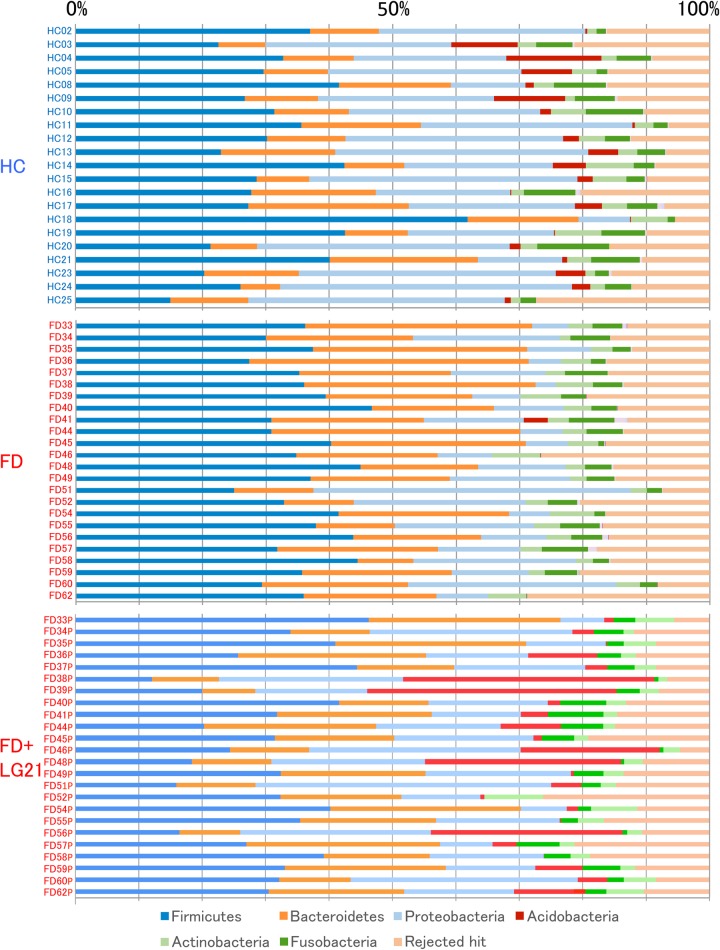
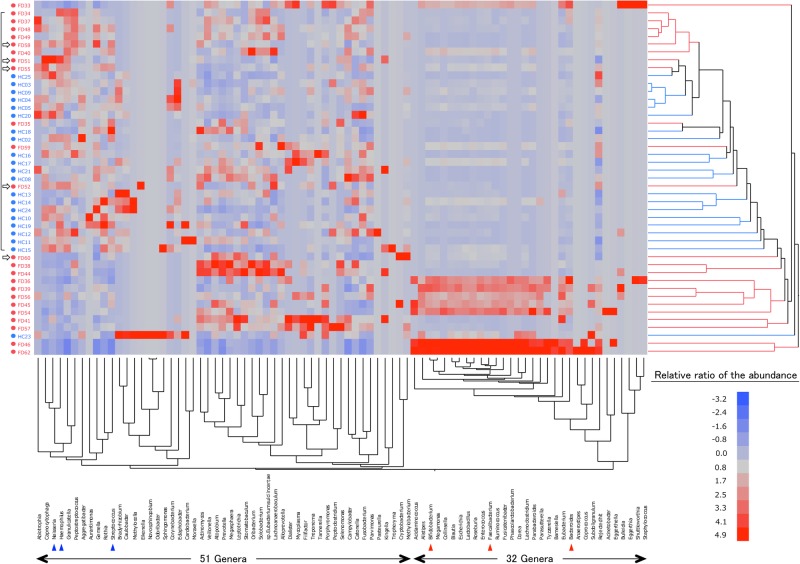
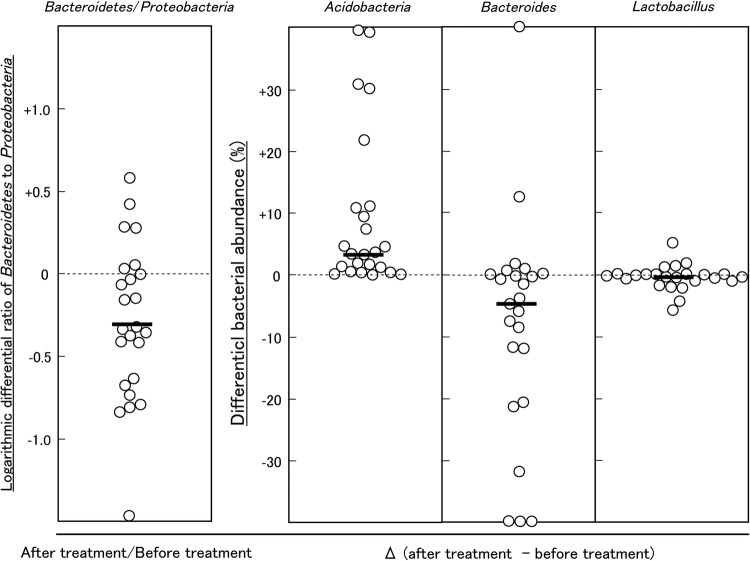
Objective: The objective of this study was to comparatively analyse the gastric fluid (GF) microbiota between patients with functional dyspepsia (FD) and healthy controls (HC), and to assess the effect of probiotics on the microbiota. Design: Twenty-four Japanese patients with FD who met the Rome III definition and 21 age-matched and gender-matched HC volunteers were enrolled. The patients with FD had been treated with LG21, a probiotic strain. The GF was sampled after an overnight fast using a nasogastric tube. The bile acids concentration was determined by ELISA. The V3-V4 region of 16S rRNA gene was amplified using bacterial DNA from the GF, and then about 30 000 high-quality amplicons per sample were grouped into operational taxonomic units for analyses. Results: The ratio of GF samples in which the bile acids were detectable was significantly greater in the FD than in the HC groups. In the bacterial composition analysis at the phylum level, the GF microbiota had a Bacteroidetes > Proteobacteria abundance and an absence of Acidobacteria in the FD group, in contrast, the GF microbiota had a Bacteroidetes < Proteobacteria abundance and the presence of Acidobacteria in the HC group. Probiotic therapy in patients with FD shifted the composition of the GF microbiota to that observed in the HC volunteers. Conclusions: Alteration in the GF microbiota was found in patients with FD compared with HC volunteers. Reflux of the small intestinal contents, including bile acid and intestinal bacteria, to the stomach was suggested to induce a bacterial composition change and be involved in the pathophysiology underlying FD. Probiotics appear effective in the treatment of FD through the normalisation of gastric microbiota. Trial registration number: UMINCTR 000022026; Results.
Overview
The claims and statistics of this paper haven’t been checked yet.
Free: it reads the open-access text and checks the first 5 claims that cite a source we can check. Create a free account to check every claim.
Integrity signals
Registry
Cites
Statistics
Figures
Verification
Claims the paper makes
The claims and statistics of this paper haven’t been checked yet.
Free: it reads the open-access text and checks the first 5 claims that cite a source we can check. Create a free account to check every claim.
Claims other papers make about this one
Each is checked against this paper’s own text: does it say what the citing paper says it does?
In the citing paper
“Igarashi et al145 found that gastric fluid samples from patients with FD were characterized by an increased Bacteroidetes to Proteobacteria ratio and absence of Acidobacteria. In contrast, healthy volunteers had a decreased Bacteroidetes to Proteobacteria ratio and presence of Acidobacteria.”
From The gut Microbiome in adult and pediatric functional gastrointestinal disorders (2019) · cites this paper as [145]
In the citing paper
“Non-blinded probiotic therapy with Lactobacillus gasseri OLL2716 was subsequently associated with shifts in gastric fluid microbial community composition similar to that found in healthy controls.”
From The gut Microbiome in adult and pediatric functional gastrointestinal disorders (2019) · cites this paper as [145]
Self-check
Percentages, sums and reported differences re-computed from the paper’s own numbers.
The self-check needs the paper’s full text.
Citations
Cites
QIIME allows analysis of high-throughput community sequencing data
Caporaso, J. G., Kuczynski, J., Stombaugh, J., Bittinger, K., Bushman, F. D., Costello, E. K., Fierer, N., Peña, A. G., Goodrich, J. K., Gordon, J. I., et al. (2010) · Nature Methods · doi:10.1038/nmeth.f.303 · Cited by 34,887
Search and clustering orders of magnitude faster than BLAST
Edgar, R. C. (2010) · Bioinformatics · doi:10.1093/bioinformatics/btq461 · Cited by 20,826
Muyzer, G., de Waal, E. C., & Uitterlinden, A. G. (1993) · Applied and Environmental Microbiology · doi:10.1128/aem.59.3.695-700.1993 · Cited by 11,429
Global patterns of 16S rRNA diversity at a depth of millions of sequences per sample
Caporaso, J. G., Lauber, C. L., Walters, W. A., Berg-Lyons, D., Lozupone, C. A., Turnbaugh, P. J., Fierer, N., & Knight, R. (2011) · Proceedings of the National Academy of Sciences · doi:10.1073/pnas.1000080107 · Cited by 9,711
Hill (2014) · doi:10.1038/nrgastro.2014.66 · Cited by 9,592
Functional Gastroduodenal Disorders
Tack, J., Talley, N. J., Camilleri, M., Holtmann, G., Hu, P., Malagelada, J.-R., & Stanghellini, V. (2006) · Gastroenterology · doi:10.1053/j.gastro.2005.11.059 · Cited by 2,418
Takahashi, S., Tomita, J., Nishioka, K., Hisada, T., & Nishijima, M. (2014) · PLoS ONE · doi:10.1371/journal.pone.0105592 · Cited by 1,506 · cited 1×
“PCR was performed in accordance with the method reported by Takahashi et al.(9) Sequencing was conducted using a paired-end and modified to 2×300 bp”
MethodSelf-citationComparison of Sequencing Utility Programs
Aronesty, E. (2013) · The Open Bioinformatics Journal · doi:10.2174/1875036201307010001 · Cited by 1,150
KUYKENDALL, L. D., ROY, M. A., O'NEILL, J. J., & DEVINE, T. E. (1988) · International Journal of Systematic Bacteriology · doi:10.1099/00207713-38-4-358 · Cited by 1,021
Small intestinal bacterial overgrowth syndrome
Bures, J. (2010) · World Journal of Gastroenterology · doi:10.3748/wjg.v16.i24.2978 · Cited by 620 · cited 1×
“Small intestinal bacterial overgrowth (SIBO) is broadly defined as an increase in the number of bacteria in the proximal small intestine.(18) More than 60% of Japanese patients with FD have been reported to have overlapping IBS, in which SIBO was considered a critical aetiological factor.”
Background
Cited by
Enck, P., Azpiroz, F., Boeckxstaens, G., Elsenbruch, S., Feinle-Bisset, C., Holtmann, G., Lackner, J. M., Ronkainen, J., Schemann, M., Stengel, A., et al. (2017) · Nature Reviews Disease Primers · doi:10.1038/nrdp.2017.81 · Cited by 321
Novel concepts in the pathophysiology and treatment of functional dyspepsia
Wauters, L., Talley, N. J., Walker, M. M., Tack, J., & Vanuytsel, T. (2020) · Gut · doi:10.1136/gutjnl-2019-318536 · Cited by 228
British Society of Gastroenterology guidelines on the management of functional dyspepsia
Black, C. J., Paine, P. A., Agrawal, A., Aziz, I., Eugenicos, M. P., Houghton, L. A., Hungin, P., Overshott, R., Vasant, D. H., Rudd, S., et al. (2022) · Gut · doi:10.1136/gutjnl-2022-327737 · Cited by 193
“There is growing evidence that oesophageal, 96 gastric 96–98 and duodenal dysbiosis associate with FD, 96 99–101 and that such alterations in the microbiome may lead to disturbed motility and visceral sensitivity, via alterations in mucosal integrity, neuronal activity and immunity.”
BackgroundSystematic review: gastric microbiota in health and disease
Rajilic‐Stojanovic, M., Figueiredo, C., Smet, A., Hansen, R., Kupcinskas, J., Rokkas, T., Andersen, L., Machado, J. C., Ianiro, G., Gasbarrini, A., et al. (2020) · Alimentary Pharmacology & Therapeutics · doi:10.1111/apt.15650 · Cited by 176
The gut Microbiome in adult and pediatric functional gastrointestinal disorders
Shin, A., Preidis, G. A., Shulman, R., & Kashyap, P. C. (2019) · Clinical Gastroenterology and Hepatology · doi:10.1016/j.cgh.2018.08.054 · Cited by 163
Psychological comorbidity in gastrointestinal diseases: Update on the brain-gut-microbiome axis
Person, H., & Keefer, L. (2021) · Progress in Neuro-Psychopharmacology and Biological Psychiatry · doi:10.1016/j.pnpbp.2020.110209 · Cited by 158
“They have shown promise in the management of both IBS and FD (Igarashi et al., 2017; J. R. Sun et al., 2020b).”
BackgroundEvidence-based clinical practice guidelines for functional dyspepsia 2021
Miwa, H., Nagahara, A., Asakawa, A., Arai, M., Oshima, T., Kasugai, K., Kamada, K., Suzuki, H., Tanaka, F., Tominaga, K., et al. (2022) · Journal of Gastroenterology · doi:10.1007/s00535-021-01843-7 · Cited by 167
Burns, G., Carroll, G., Mathe, A., Horvat, J., Foster, P., Walker, M. M., Talley, N. J., & Keely, S. (2019) · American Journal of Gastroenterology · doi:10.1038/s41395-018-0377-0 · Cited by 145
Wei, L., Singh, R., Ro, S., & Ghoshal, U. C. (2021) · JGH Open · doi:10.1002/jgh3.12528 · Cited by 146
Fukui, H., Xu, X., & Miwa, H. (2018) · Journal of Neurogastroenterology and Motility · doi:10.5056/jnm18071 · Cited by 128
Functional Dyspepsia: Diagnostic and Therapeutic Approaches
Sayuk, G. S., & Gyawali, C. P. (2020) · Drugs · doi:10.1007/s40265-020-01362-4 · Cited by 124
Oral Administration of Probiotics Increases Paneth Cells and Intestinal Antimicrobial Activity
Cazorla, S. I., Maldonado-Galdeano, C., Weill, R., De Paula, J., & Perdigón, G. D. V. (2018) · Frontiers in Microbiology · doi:10.3389/fmicb.2018.00736 · Cited by 112
“Most of these profits have been associated to the modulation that probiotics or fermented milk elicit in innate as well as the acquired immune system (Maldonado Galdeano et al., 2015; Igarashi et al., 2017).”
BackgroundNew developments in the treatment of gastroparesis and functional dyspepsia
Tack, J. F., & Camilleri, M. (2018) · Current Opinion in Pharmacology · doi:10.1016/j.coph.2018.08.015 · Cited by 122
Wauters, L. I., Slaets, H., Paepe, K. D., Ceulemans, M., Wetzels, S., Geboers, K., Tóth, J. G., Thys, W., Dybajlo, R., Walgraeve, D., et al. (2021) · The Lancet. Gastroenterology & hepatology · doi:10.1016/s2468-1253(21)00226-0 · Cited by 119
Bile Acid–Microbiome Interaction Promotes Gastric Carcinogenesis
Wang, S., Kuang, J., Zhang, H., Chen, W., Zheng, X., Wang, J., Huang, F., Ge, K., Li, M., Zhao, M., et al. (2022) · Advanced Science · doi:10.1002/advs.202200263 · Cited by 101
Microbiota: a novel regulator of pain
Defaye, M., Gervason, S., Altier, C., Berthon, J., Ardid, D., Filaire, E., & Carvalho, F. A. (2019) · Journal of Neural Transmission · doi:10.1007/s00702-019-02083-z · Cited by 88
Gut Microbiota Dysbiosis in Functional Dyspepsia
Tziatzios, G., Gkolfakis, P., Papanikolaou, I. S., Mathur, R., Pimentel, M., Giamarellos‐Bourboulis, E. J., & Τriantafyllou, Κ. (2020) · Microorganisms · doi:10.3390/microorganisms8050691 · Cited by 89
“[55] Adult 21/21 16S rRNA gene sequencing Higher Bacteroidetes > Proteobacteria abundance, absence of Acidobacteria in FD; lower Bacteroidetes < Proteobacteria abundance, presence of Acidobacteria in controls”
BackgroundRole of the Duodenum in the Pathogenesis of Functional Dyspepsia: A Paradigm Shift
Jung, H., & Talley, N. J. (2018) · Journal of Neurogastroenterology and Motility · doi:10.5056/jnm18060 · Cited by 80
He, C., Xie, Y., Zhu, Y., Zhuang, K., Huo, L., Yu, Y., Guo, Q., Shu, X., Xiong, Z., Zhang, Z., et al. (2022) · Frontiers in Immunology · doi:10.3389/fimmu.2022.1033063 · Cited by 78
“Consistently, several studies have demonstrated the modulation of probiotics on gastric microbiota (14, 26).”
BackgroundMicrobiota in the stomach and application of probiotics to gastroduodenal diseases
Koga, Y. (2022) · World Journal of Gastroenterology · doi:10.3748/wjg.v28.i47.6702 · Cited by 79
Self-citationMechanisms of Food-Induced Symptom Induction and Dietary Management in Functional Dyspepsia
Duncanson, K., Burns, G. L., Pryor, J., Keely, S., & Talley, N. J. (2021) · Nutrients · doi:10.3390/nu13041109 · Cited by 78
“In FD specifically, high Streptococcus and low Prevotella, Veillonella and Actinomyces have been reported, with Prevotella restoration associated with improved PDS symptoms [71].”
BackgroundResultFunctional Dyspepsia: A Narrative Review With a Focus on Sex-Gender Differences
Kim, Y., & Kim, N. (2020) · Journal of Neurogastroenterology and Motility · doi:10.5056/jnm20026 · Cited by 50
“In addition, randomized controlled trials of probiotics and selective antibiotics such as rifaximin showed improvement in symptoms and the microbiome of patients with FD,(100) and the bacterial composition and structure of gastric fluid in patients with FD differed from that of healthy controls.(102) Since studies are…”
BackgroundWang, Y., Wu, Y., Sailike, J., Sun, X., Abuduwaili, N., Tuoliuhan, H., MuLaTiAize, Y., & Nabi, X. (2020) · Pharmacological Research · doi:10.1016/j.phrs.2020.105150 · Cited by 67
Dhopatkar, N., Keeler, J. L., Mutwalli, H., Whelan, K., Treasure, J. L., & Himmerich, H. (2022) · Psychoneuroendocrinology · doi:10.1016/j.psyneuen.2022.105959 · Cited by 66
Zhang, S., Lin, L., Liu, W., Zou, B., Cai, Y., Liu, D., Xiao, D., Chen, J., Li, P., Zhong, Y., et al. (2019) · Nutrition Research · doi:10.1016/j.nutres.2019.10.001 · Cited by 62
Roles and action mechanisms of bile acid-induced gastric intestinal metaplasia: a review
He, Q., Liu, L., Wei, J., Jiang, J., Rong, Z., Chen, X., Zhao, J., & Jiang, K. (2022) · Cell Death Discovery · doi:10.1038/s41420-022-00962-1 · Cited by 64
“Reflux of alkaline substances from bile into the stomach can cause flora displacement, thus aggravating the inflammatory response of the gastric mucosa [26].”
BackgroundRole of the duodenal microbiota in functional dyspepsia
Brown, G., Hoedt, E. C., Keely, S., Shah, A., Walker, M. M., Holtmann, G., & Talley, N. J. (2022) · Neurogastroenterology & Motility · doi:10.1111/nmo.14372 · Cited by 63
Duodenal inflammation: an emerging target for functional dyspepsia?
Wauters, L. I., Burns, G. L., Ceulemans, M., Walker, M. M., Vanuytsel, T., Keely, S., & Talley, N. J. (2020) · Expert Opinion on Therapeutic Targets · doi:10.1080/14728222.2020.1752181 · Cited by 63
“Treatment with Lactobacillus gasseri OLL2716 (LG21) resulted in significantly higher elimination rates for PDS– but not EPS-like symptoms with a trend for an overall effect on gastric symptoms (p = 0.07) in a randomized placebo-controlled trial [123].”
BackgroundInfluentialWilder-Smith, C. H., Olesen, S. S., Materna, A., & Drewes, A. M. (2018) · Gastroenterology · doi:10.1053/j.gastro.2018.07.013 · Cited by 52
Animal Models for Functional Gastrointestinal Disorders
Accarie, A., & Vanuytsel, T. (2020) · Frontiers in Psychiatry · doi:10.3389/fpsyt.2020.509681 · Cited by 56
He, C., Peng, C., Xu, X., Li, N., Ouyang, Y., Zhu, Y., & Lü, N. (2022) · Helicobacter · doi:10.1111/hel.12898 · Cited by 51
Helicobacter pylori and nonmalignant upper gastrointestinal diseases
Jonaitis, L. V., Pellicano, R., & Kupčinskas, L. (2018) · Helicobacter · doi:10.1111/hel.12522 · Cited by 57
Zhang, J., Wu, H., Wang, X., Xie, J., Li, X., Ma, J., Wang, F., & Tang, X. (2020) · Medicine · doi:10.1097/md.0000000000019107 · Cited by 56
“prebiotics in individuals with FD, several randomized controlled trials (RCTs) have been conducted([12,17,18]); however, some studies have included very few patients, and the results are very”
ResultBrowne, P. D., Nagelkerke, S. C. J., van Etten‐Jamaludin, F. S., Benninga, M. A., & Tabbers, M. M. (2018) · Expert Review of Clinical Pharmacology · doi:10.1080/17512433.2018.1540298 · Cited by 46
Cuna, A. C., Yu, W., Menden, H. L., Feng, L., Pugazhendhi, S., Chávez‐Bueno, S., Ahmed, I., Umar, S., & Sampath, V. (2020) · Pediatric Research · doi:10.1038/s41390-020-0797-6 · Cited by 44
Sun, E., Zhang, X., Zhao, Y., Li, J., Sun, J. G., Mu, Z., & Wang, R. (2021) · Journal of Dairy Science · doi:10.3168/jds.2020-19882 · Cited by 40
“upper GI tract, as well as restoring the changes found in the gastric microbiota (Igarashi et al., 2017).”
BackgroundProbiotics and autoprobiotics for treatment of Helicobacter pylori infection
Baryshnikova, N. V., Ilina, A., Ермоленко, Е. И., Uspenskiy, Y. P., & Suvorov, A. N. (2023) · World Journal of Clinical Cases · doi:10.12998/wjcc.v11.i20.4740 · Cited by 36
Zhang, M., Zhong, J., Song, Z., Xu, Q., Chen, Y., & Zhang, Z. (2024) · Biomedicine & Pharmacotherapy · doi:10.1016/j.biopha.2024.117068 · Cited by 35
Cruz, B. C. D. S., Duarte, V. D. S., Giacomini, A., Corich, V., de Paula, S. O., Fialho, L. D. S., Guimarães, V. M., Ferreira, C. L. D. L. F., & Pelúzio, M. D. C. G. (2020) · Applied Microbiology and Biotechnology · doi:10.1007/s00253-020-10863-x · Cited by 35
“As a consequence, immune and intestinal cells begin to secrete cytokines to regulate the innate and adaptive immune response, with an increase in the anti-inflammatory response (Corthésy et al. 2007; Delcenserie et al. 2008; Maldonado Galdeano et al. 2015; Igarashi et al. 2017).”
BackgroundDiagnostic Principles for Chronic Gastritis Associated with Duodenogastric Reflux
Livzan, M. A., Mozgovoi, S. I., Gaus, O. V., Bordin, D. S., & Кононов, А. В. (2023) · Diagnostics · doi:10.3390/diagnostics13020186 · Cited by 39
“Recently, publications have appeared, demonstrating the modulation of the gastric microbiota against the background of a change in gastric pH caused by DGR [29].”
BackgroundAgah, S., Akbari, A., Heshmati, J., Sepidarkish, M., Morvaridzadeh, M., Adibi, P., Mazidi, M., Farsi, F., Ofori‐Asenso, R., Talley, N. J., et al. (2020) · Journal of Functional Foods · doi:10.1016/j.jff.2020.103902 · Cited by 38
“Lactobacillus gasseri also increased Acidobacteria (Igarashi et al., 2017).”
BackgroundInfluentialHigh Prevalence of Small Intestinal Bacterial Overgrowth among Functional Dyspepsia Patients
Tziatzios, G., Gkolfakis, P., Papanikolaou, I. S., Mathur, R., Pimentel, M., Damoraki, G., Giamarellos‐Bourboulis, E. J., Dimitriadis, G., & Τriantafyllou, Κ. (2020) · Digestive Diseases · doi:10.1159/000511944 · Cited by 36
He, Y., Yang, C. K., Wang, P., Liu, Y., Wu, H., Liu, H., Qi, M., Guo, Z., Li, J., Shi, H., et al. (2019) · Journal of Ethnopharmacology · doi:10.1016/j.jep.2019.111953 · Cited by 30
Rupp, S. K., & Stengel, A. (2022) · Frontiers in Neuroscience · doi:10.3389/fnins.2022.844564 · Cited by 33
The Potential Role of Hypochlorhydria in the Development of Duodenal Dysbiosis: A Preliminary Report
Filardo, S., Scalese, G., Virili, C., Pontone, S., Pietro, M. D., Covelli, A., Bedetti, G., Marinelli, P., Bruno, G., Stramazzo, I., et al. (2022) · Frontiers in Cellular and Infection Microbiology · doi:10.3389/fcimb.2022.854904 · Cited by 28
“…of the gastroduodenal microbiota may also be implicated in the pathogenesis of dyspepsia, one of the most prevalent upper gastrointestinal syndromes (Paroni Sterbini et al., 2016; Igarashi et al., 2017; Zhong et al., 2017; Fukui et al., 2020; Tziatzios et al., 2020; Cervantes et al., 2021).”
BackgroundCurrent and emerging therapeutic options for the management of functional dyspepsia
Vandenberghe, A., Schol, J., den Houte, K. V., Masuy, I., Carbone, F., & Tack, J. F. (2020) · Expert Opinion on Pharmacotherapy · doi:10.1080/14656566.2019.1707805 · Cited by 29
Gao, F., Sui, L., Mu, G., Qian, F., & Zhu, X. (2021) · Food Bioscience · doi:10.1016/j.fbio.2021.101045 · Cited by 27
Bonetto, S., Gruden, G., Beccuti, G., Ferro, A., Saracco, G. M., & Pellicano, R. (2021) · Journal of Clinical Medicine · doi:10.3390/jcm10061313 · Cited by 26
“As previously discussed, microbiota is receiving increasing attention in the context of FD and some authors have studied a potential effect of therapies targeting on gut microbiota, such as rifaximin [58] or supplementation with Lactobacillus strains [59], which act restoring the physiological microbiota.”
BackgroundPostprandial distress syndrome: stratification and management
den Houte, K. V., Carbone, F., & Tack, J. F. (2018) · Expert Review of Gastroenterology & Hepatology · doi:10.1080/17474124.2019.1543586 · Cited by 30
“Microbiota were studied in aspirated gastric fluid from 24 FD patients and 21 controls, and this study found increased levels of bile acids, Bacteroidetes, and absence of Acidobacteria in FD [45].”
BackgroundCervantes, J., Michael, M., Hong, B.-Y., Springer, A., Guo, H., Mendoza, B., Zeng, M., Sundin, O. H., & McCallum, R. W. (2021) · Journal of Investigative Medicine · doi:10.1136/jim-2020-001642 · Cited by 28
Gastroduodenal motility disorders
Tack, J. F., den Houte, K. V., & Carbone, F. (2018) · Current Opinion in Gastroenterology · doi:10.1097/mog.0000000000000473 · Cited by 28
Drago, L., Meroni, G., Pistone, D., Pasquale, L., Milazzo, G., Monica, F., Aragona, S. E., Ficano, L., Vassallo, R., & Gastrobiota Group (2021) · Journal of International Medical Research · doi:10.1177/0300060520982657 · Cited by 28
Singh, R., Zogg, H., & Ro, S. (2021) · Journal of Personalized Medicine · doi:10.3390/jpm11101021 · Cited by 29
Lee, K. J. (2021) · Journal of Neurogastroenterology and Motility · doi:10.5056/jnm21042 · Cited by 26
“Similarly, altered gastric microbiota was recently demonstrated in patients with FD.(64,65) Initially, dysbiosis in”
BackgroundInfluentialȘchiopu, C. G., Ștefănescu, C., Boloș, A., Diaconescu, S., Gîlcă-Blanariu, G.-E., & Ștefănescu, G. (2022) · Microorganisms · doi:10.3390/microorganisms10112199 · Cited by 31
“A recent meta-analysis has revealed that Lactobacillus can significantly reduce the crying periods via possible anti-inflammatory effects or competition with anaerobic bacteria but a clear connection between infant gut microbiome and infant colic has not yet been clearly established and further clinical studies are re…”
BackgroundDrugs under development for the treatment of functional dyspepsia and related disorders
Tack, J. F., Masuy, I., den Houte, K. V., Wauters, L. I., Schol, J., Vanuytsel, T., Vandenberghe, A., & Carbone, F. (2019) · Expert Opinion on Investigational Drugs · doi:10.1080/13543784.2019.1673365 · Cited by 29
Koga, Y., Ohtsu, T., Kimura, K., & Asami, Y. (2019) · BMJ Open Gastroenterology · doi:10.1136/bmjgast-2019-000314 · Cited by 23
“the reason mentioned in the ‘Possible involvement of dysbiotic gastric microbiota in FD’ section.(35)”
BackgroundSelf-citationDuodenal microbiota makes an important impact in functional dyspepsia
Zheng, Y., Liang, S.-P., Zhong, Z., Zhang, W., Wu, Y.-Y., Liu, J., & Huang, S. (2021) · Microbial Pathogenesis · doi:10.1016/j.micpath.2021.105297 · Cited by 27
The Association between Functional Dyspepsia and Metabolic Syndrome—The State of the Art
Volarić, M., Šojat, D., Majnarić, L. T., & Vučić, D. (2024) · International Journal of Environmental Research and Public Health · doi:10.3390/ijerph21020237 · Cited by 23
“In this context, there is a general difference in the bacterial composition of gastric contents between patients with FD and healthy individuals, suggesting that the reflux of intestinal contents and gut bacteria into the stomach may be the pathophysiologic basis of FD [38].”
BackgroundChanges in oral flora of patients with functional dyspepsia
Liu, X.-J., Xie, W.-R., Wu, L.-H., Ye, Z.-N., Zhang, X.-Y., Zhang, R., & He, X.-X. (2021) · Scientific Reports · doi:10.1038/s41598-021-87600-5 · Cited by 13
Probiotics in Functional Dyspepsia
Tziatzios, G., Gkolfakis, P., Leite, G., Mathur, R., Damoraki, G., Giamarellos‐Bourboulis, E. J., & Τriantafyllou, Κ. (2023) · Microorganisms · doi:10.3390/microorganisms11020351 · Cited by 21
“In a similar study, Igarashi and colleagues evaluated the gastric microbiota composition in FD patients compared to healthy controls and assessed the impact of probiotics consumption on the microbiota [30].”
BackgroundMethodSoman, R. J., & Swamy, M. V. (2019) · International Journal of Colorectal Disease · doi:10.1007/s00384-019-03416-w · Cited by 22
Ohtsu, T., Haruma, K., Ide, Y., & Takagi, A. (2021) · Nutrients · doi:10.3390/nu13061852 · Cited by 21
Cruz, B. C. D. S., Duarte, V. D. S., Dias, R. S., Bernardes, A. L., de Paula, S. O., Ferreira, C. L. D. L. F., & Pelúzio, M. D. C. G. (2022) · Food Research International · doi:10.1016/j.foodres.2022.111379 · Cited by 19
Mărginean, C. O., Meliţ, L. E., & Săsăran, M. O. (2021) · Journal of Clinical Medicine · doi:10.3390/jcm10153258 · Cited by 19
“Nevertheless, a study that assessed Lactobacillus gasseri OLL2716 in patients with functional dyspepsia and healthy controls underlined that this therapy has the ability to change gastric fluid microbiota composition in these patients resulting in similar composition to that of healthy volunteers [58].”
ResultZhang, T., Zhang, B., Ma, X., Zhang, J., Wei, Y., Wang, F., & Tang, X. (2023) · Frontiers in Neuroscience · doi:10.3389/fnins.2023.1109510 · Cited by 18
Egboh, S.-M. C., Duncanson, K., Potter, M. D. E., Keely, S., & Talley, N. J. (2025) · eGastroenterology · doi:10.1136/egastro-2024-100119 · Cited by 18
“29 Yet to be studied.”
InfluentialManagement of functional dyspepsia in 2020: a clinical point of view
Mosso, E., Bonetto, S., LONGOBARDI, G., Abenavoli, L., Ribaldone, D. G., Saracco, G. M., & Pellicano, R. (2021) · Minerva Gastroenterologica e Dietologica · doi:10.23736/s1121-421x.20.02732-4 · Cited by 20
Imai, Y., Lee, S., Sakaguchi, S., Kato‐Kogoe, N., Taniguchi, K., Omori, M., Tanaka, R., Honda, K., Osumi, W., Nakano, T., et al. (2022) · Scientific Reports · doi:10.1038/s41598-022-14886-4 · Cited by 16
Alteration of the gut microbiota after surgery in preterm infants with necrotizing enterocolitis
Lin, H.-J., Xu, C., Chen, J., Ma, X., Shi, L., Shi, W., Du, L., & Ni, Y. (2023) · Frontiers in Pediatrics · doi:10.3389/fped.2023.993759 · Cited by 15
“(34) reported that the presence of the microbiota in gastric fluid could be described as Bacteroidetes > Proteobacteria, but Acidobacteria were non-existent in functional dyspepsia patients.”
BackgroundEosinophils, Hypoxia-Inducible Factors, and Barrier Dysfunction in Functional Dyspepsia
Hari, S., Burns, G. L., Hoedt, E. C., Keely, S., & Talley, N. J. (2022) · Frontiers in Allergy · doi:10.3389/falgy.2022.851482 · Cited by 16
“not only reported alterations in the taxonomic profiles of FD patient gastric fluid, but also noted a “positive” shift in the gastric fluid microbial composition after probiotic treatment to that which was observed in healthy control volunteers (109).”
BackgroundMicrobiota and Digestive Metabolites Alterations in Functional Dyspepsia
Fărcaș, R. A., Grad, S., Grad, C., & Dumitrascu, D. L. (2024) · Journal of Gastrointestinal and Liver Diseases · doi:10.15403/jgld-5024 · Cited by 16
Ivashkin, V. T., Maev, I. V., Lapina, T. L., Kucheryavyy, Y. A., Abdulkhakov, S. R., Alekseeva, O. P., Alekseenko, S. A., Андреев, Д. Н., Бакулин, И. Г., Бакулина, Н. В., et al. (2024) · Russian Journal of Gastroenterology Hepatology Coloproctology · doi:10.22416/1382-4376-2024-34-3-7-23 · Cited by 16
Fan, M., Pan, X., & Liu, Y. (2025) · Drug Design Development and Therapy · doi:10.2147/dddt.s514042 · Cited by 15
Immunopathological and molecular basis of functional dyspepsia and current therapeutic approaches
Addula, M., Wilson, V. E. D., Reddymasu, S. C., & Agrawal, D. K. (2018) · Expert Review of Clinical Immunology · doi:10.1080/1744666x.2018.1524756 · Cited by 16
Huang, K., Wu, L., & Yang, Y. (2021) · JGH Open · doi:10.1002/jgh3.12659 · Cited by 15
Normal Gastrointestinal Tract Physiology
Shahsavari, D., & Parkman, H. P. (2022) · Springer eBooks · doi:10.1007/978-3-030-94953-2_1 · Cited by 15
Translating probiotic science into practice
Chambers, L., Avery, A., Dalrymple, J., Farrell, L., Gibson, G. R., Harrington, J. M., Rijkers, G. T., Rowland, I. R., Spiro, A., Varela‐Moreiras, G., et al. (2019) · Nutrition Bulletin · doi:10.1111/nbu.12385 · Cited by 12
Targeting the altered duodenal microenvironment in functional dyspepsia
Ceulemans, M., Wauters, L. I., & Vanuytsel, T. (2023) · Current Opinion in Pharmacology · doi:10.1016/j.coph.2023.102363 · Cited by 12
Bai, Y., Liu, F., Wan, Y., Wu, X., Luo, S., Zhang, L., Tang, H., Li, T., Tang, X., Qin, W., et al. (2024) · Journal of Ethnopharmacology · doi:10.1016/j.jep.2024.118553 · Cited by 11
Gut microbiota and functional dyspepsia: a two-sample Mendelian randomization study
Xv, Y., Chen, J., & Lin, J. (2024) · Frontiers in Microbiology · doi:10.3389/fmicb.2024.1377392 · Cited by 12
Talley, N. J., & Cook, D. R. (2019) · Springer eBooks · doi:10.1007/978-3-030-01117-8_8 · Cited by 11
Updates in functional dyspepsia and bloating
Lacy, B. E., & Cangemi, D. J. (2022) · Current Opinion in Gastroenterology · doi:10.1097/mog.0000000000000882 · Cited by 13
“Second, small intestinal bacterial overgrowthmay be present in some patients with functional dyspepsia [15,16].”
BackgroundOther Helicobacters and the gastric microbiome
Kupčinskas, J., & Hold, G. L. (2018) · Helicobacter · doi:10.1111/hel.12521 · Cited by 11
Emerging Noninfectious Indications for Live Biotherapeutic Products in Gastroenterology
Newman, K. L., & Allegretti, J. R. (2023) · The American Journal of Gastroenterology · doi:10.14309/ajg.0000000000002584 · Cited by 10
Impact of dairy food products on type 2 diabetes: Gut-pancreas axis for lower glucose level
Ağagündüz, D., Yılmaz, B., Cemali, Ö., Šimat, V., Akkuş, G., Kulawik, P., & Özoğul, F. (2024) · Trends in Food Science & Technology · doi:10.1016/j.tifs.2024.104741 · Cited by 7
Therapeutic Role of Probiotics for the Treatment of Dyspepsia: A Review of the Literature
Marasco, G., Fiocca, M., Cremon, C., Colecchia, L., Maida, M. F., Dajti, E., Barbaro, M. R., Stanghellini, V., & Barbara, G. (2025) · Neurogastroenterology & Motility · doi:10.1111/nmo.70057 · Cited by 9
Pryor, J. C., Nieva, C., Talley, N. J., Eslick, G. D., Duncanson, K., Burns, G. L., Hoedt, E. C., & Keely, S. (2025) · Gut Microbes · doi:10.1080/19490976.2025.2500063 · Cited by 7
“Cervantes et al., 44 and Fukui et al., 50 assessed the microbiota in gastric brush samples, whilst Igarashi et al., 53 and Nakae et al., 56 utilized gastric aspirate.”
Sano, M., Uchida, T., Igarashi, M., Matsuoka, T., Kimura, M., Koike, J., Fujisawa, M., Mizukami, H., Monma, M., Teramura, E., et al. (2020) · Clinical and Translational Gastroenterology · doi:10.14309/ctg.0000000000000190 · Cited by 7
“The high-quality reads were then sorted and grouped into operational taxonomic units (OTUs) at 97% identity using the quantitative insights into microbial ecology pipeline (11).”
MethodSelf-citationSoliman, N. S., Soliman, M. S., Elhossary, W., & El‐Kholy, A. (2025) · BMC Microbiology · doi:10.1186/s12866-025-04095-0 · Cited by 6
“…is required for those findings due to the study’s focus on the gastric fluid, which contains microbial populations that are less stable and more vulnerable to the impact of bile acid, gastric acid, and the enzymes of the pancreas compared to the microbiota associated with the mucosa [10, 23].”
InfluentialCorrelation between daily physical activity and intestinal microbiota in perimenopausal women
Zheng, Y., Ke, J., Song, J., Li, X., Kuang, R., Wang, H., Li, S., & Li, Y. (2024) · Sports Medicine and Health Science · doi:10.1016/j.smhs.2024.02.005 · Cited by 6
“18 While dominant bacteria such as Acidobacteria have been extensively studied, their physiological and pathological functions remain largely unknown.”
Alternative Treatments for Minor GI Ailments
Mohiuddin, A. K. (2019) · INNOVATIONS in pharmacy · doi:10.24926/iip.v10i3.1659 · Cited by 7
“IBS is present in patients with symptoms of chronic abdominal pain and altered bowel habits but no identifiable organic etiology [113].”
BackgroundRetractedThe Role of Gut Microbiota and Use of Probiotics in the Treatment of Upper Gastrointestinal Diseases
Lee, M. Y., Choi, S. C., & Kim, Y. S. (2019) · The Korean Journal of Helicobacter and Upper Gastrointestinal Research · doi:10.7704/kjhugr.2019.19.2.99 · Cited by 5
“흥미롭게 도 이러한 위 세균총의 이상은 Lactobacillus gasseri OLL2716 요거트를 투여하였을 때 정상인과 비슷하게 회복되었다.(39) 최근 기능성 소화불량 증상을 프로바이오틱스가 호전시킬 수 있는지 에 대하여 소규모 연구가 발표되었다.”
Novel insights in the pathophysiology and management of functional dyspepsia
Vanuytsel, T. (2023) · Acta gastro-enterologica belgica · doi:10.51821/86.1.11629 · Cited by 5
Huang, K., Qiu, H.-B., Liao, D.-P., Jiang, Y.-Y., Deng, Y., & Chen, H. (2025) · Frontiers in Microbiology · doi:10.3389/fmicb.2025.1614705 · Cited by 4
Zhou, H., Lu, R., Lv, Y., & Ding, Y. (2025) · European journal of medical research · doi:10.1186/s40001-025-03743-5 · Cited by 4
Lee, K., Kim, H. J., & Wang, J. (2026) · Biomedicines · doi:10.3390/biomedicines14020457 · Cited by 5
Gut Dysbiosis and Its Treatment in Patients with Functional Dyspepsia
Naito, Y., Fukui, A., Kashiwagi, S., & Takagi, T. (2018) · Springer eBooks · doi:10.1007/978-981-13-1074-4_14 · Cited by 5
Diabetic gastroparesis: a disease for which long-term therapeutic benefits are difficult to obtain
Zhou, J., Ran, S. L., & Zhao, Y. C. (2024) · Endokrynologia Polska · doi:10.5603/ep.97086 · Cited by 4
Wei, M., Chai, Y., Shen, H., Du, M., Zhou, X., Liu, T., Yang, X., Li, S., Sun, J., & Ge, Y. (2024) · Acta gastro-enterologica belgica · doi:10.51821/87.4.13488 · Cited by 3
Metadata
- Authors
- Igarashi, M., Nakae, H., Matsuoka, T., Takahashi, S., Hisada, T., Tomita, J., & Koga, Y.
- Affiliations
- Tokai University (JP)
- Technosuruga Laboratory Co., Ltd. (Japan) (JP)
- Corresponding author
- Koga, Yasuhiro
- Venue
- BMJ Open Gastroenterology
- Publisher
- BMJ
- Published
- 2017-05
- Volume
- 4
- Issue
- 1
- Pages
- e000144
- ISSN
- 2054-4774 (ISSN-L)
- PMC
- PMC5508964
- OpenAlex
- W2612600557
- Cited by
- 133
- References
- 25
- Citations by year
- 2026: 5 · 2025: 12 · 2024: 12 · 2023: 9 · 2022: 23 · 2021: 25 · 2020: 20 · 2019: 12 · 2018: 14 · 2017: 1
- FWCI
- 13.50
- Type
- journal article
- Language
- en
- Open access
- gold
- doi.org
- Licence
- cc-by-nc
- Locations
- BMJ Open Gastroenterology (publishedVersion, cc-by-nc)
- PubMed Central (publishedVersion, cc-by-nc)
- PubMed (publishedVersion)
- Topics
- Health Sciences › Medicine › Gastroenterology › Gastrointestinal motility and disorders
- Life Sciences › Biochemistry, Genetics and Molecular Biology › Molecular Biology › Gut microbiota and health
- Life Sciences › Agricultural and Biological Sciences › Food Science › Probiotics and Fermented Foods
- Keywords
- functional dyspepsia, gastric microbiota, probiotics, bile acids, bacterial community composition, Bacteroidetes, Proteobacteria, Acidobacteria, dysbiosis, 16S rRNA gene sequencing
About these checks
Registry, retraction, Cites and statistics results are computed, not judged, with one exception: a printed reference that no index lists is read once by a model before it counts as a citation error. Claims are extracted by a model and kept only when their quote appears verbatim in the text; each cited source is then checked, with a model’s help, for whether it says what the claim relies on. Those verdicts can be wrong — read the claim’s quote and the cited source before relying on one.
Statistics and arithmetic are recomputed, not judged.
Confidence bands are shown only for fields calibrated on our annotated test set. None is calibrated yet, so no band is shown.
What counts as a claim ›How we measure confidence ›How we check this ›
Are you an author, or do you see a problem with this page? Request a review
Data sources
Bibliographic data: Semantic Scholar, OpenAlex, Crossref.
Contains information from the Semantic Scholar Academic Graph Datasets, made available under the ODC Attribution License (ODC-BY 1.0).
Semantic Scholar’s data is described in: Kinney, R., et al. (2023). The Semantic Scholar Open Data Platform. arXiv:2301.10140.
