

Lifetime economic impact of the burden of childhood stunting attributable to maternal psychosocial risk factors in 137 low/middle-income countries
Open accessThe DOI matches its Crossref record; 40 of the 40 references it cites were found in a registry or an index.
Abstract
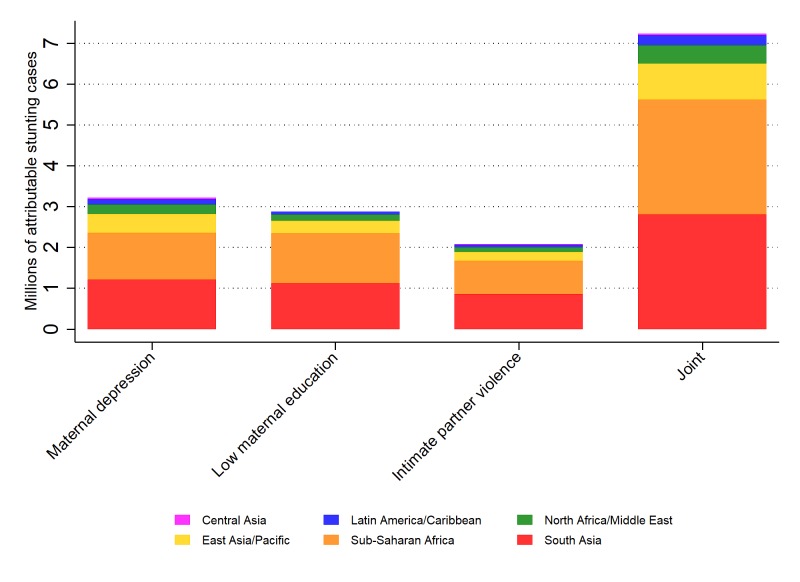
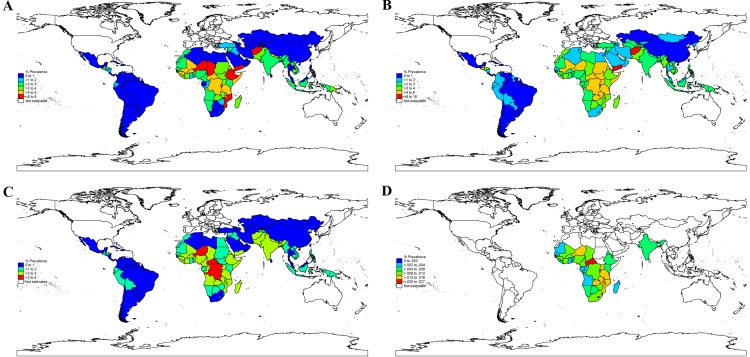
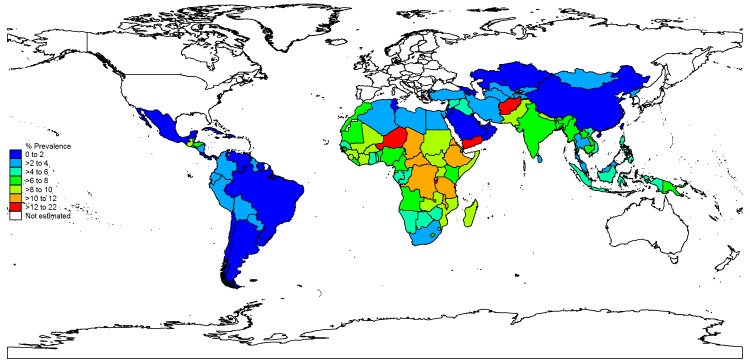
Introduction: The first 1000 days of life is a period of great potential and vulnerability. In particular, physical growth of children can be affected by the lack of access to basic needs as well as psychosocial factors, such as maternal depression. The objectives of the present study are to: (1) quantify the burden of childhood stunting in low/middle-income countries attributable to psychosocial risk factors; and (2) estimate the related lifetime economic costs. Methods: A comparative risk assessment analysis was performed with data from 137 low/middle-income countries throughout Asia, Latin America and the Caribbean, North Africa and the Middle East, and sub-Saharan Africa. The proportion of stunting prevalence, defined as <−2 SDs from the median height for age according to the WHO Child Growth Standards, and the number of cases attributable to low maternal education, intimate partner violence (IPV), maternal depression and orphanhood were calculated. The joint effect of psychosocial risk factors on stunting was estimated. The economic impact, as reflected in the total future income losses per birth cohort, was examined. Results: Approximately 7.2 million cases of stunting in low/middle-income countries were attributable to psychosocial factors. The leading risk factor was maternal depression with 3.2 million cases attributable. Maternal depression also demonstrated the greatest economic cost at $14.5 billion, followed by low maternal education ($10.0 billion) and IPV ($8.5 billion). The joint cost of these risk factors was $29.3 billion per birth cohort. Conclusion: The cost of neglecting these psychosocial risk factors is significant. Improving access to formal secondary school education for girls may offset the risk of maternal depression, IPV and orphanhood. Focusing on maternal depression may play a key role in reducing the burden of stunting. Overall, addressing psychosocial factors among perinatal women can have a significant impact on child growth and well-being in the developing world.
Overview
The claims and statistics of this paper haven’t been checked yet.
Free: it reads the open-access text and checks the first 5 claims that cite a source we can check. Create a free account to check every claim.
Integrity signals
Registry
Cites
Statistics
Figures
Verification
Claims the paper makes
The claims and statistics of this paper haven’t been checked yet.
Free: it reads the open-access text and checks the first 5 claims that cite a source we can check. Create a free account to check every claim.
Claims other papers make about this one
Each is checked against this paper’s own text: does it say what the citing paper says it does?
The source backs part of the claim, not all of it — or backs it for a different population, condition or comparison.
In the citing paper
“For children and families in developing countries, resource deprivation is often a driving force for increased interpersonal conflict, ultimately leaving women and children more vulnerable to violence exposure (Smith Fawzi et al., 2019).”
From The Intergenerational Transmission of Emotional Intimate Partner Violence: a Systematic Review and Meta-Analysis (2025) · cites this paper as Smith Fawzi et al., 2019
Experimental — accuracy not yet measured
Self-check
Percentages, sums and reported differences re-computed from the paper’s own numbers.
The self-check needs the paper’s full text.
Citations
Cites
Lim, S. S., Vos, T., Flaxman, A. D., Danaei, G., Shibuya, K., Adair-Rohani, H., AlMazroa, M. A., Amann, M., Anderson, H. R., Andrews, K. G., et al. (2012) · The Lancet · doi:10.1016/s0140-6736(12)61766-8 · Cited by 11,805 · cited 2×
“20 21 These methods are widely used for estimating the burden of disease attributable to risk factors independent from one another (holding other risk factors constant), as described elsewhere.”
BackgroundMethodSelf-citationWorld Population Prospects The 2006 Revision
Zlotnik, H. (2007) · United Nations eBooks · Cited by 7,971
The Lifelong Effects of Early Childhood Adversity and Toxic Stress
Shonkoff, J. P., Garner, A. S., THE COMMITTEE ON PSYCHOSOCIAL ASPECTS OF CHILD AND FAMILY HEALTH, C. O. E. C., Siegel, B. S., Dobbins, M. I., Earls, M. F., Garner, A. S., McGuinn, L., Pascoe, J., & Wood, D. L. (2012) · Pediatrics · doi:10.1542/peds.2011-2663 · Cited by 5,164
Developmental potential in the first 5 years for children in developing countries
Grantham-McGregor, S., Cheung, Y. B., Cueto, S., Glewwe, P., Richter, L., & Strupp, B. (2007) · The Lancet · doi:10.1016/s0140-6736(07)60032-4 · Cited by 3,630 · cited 2×
“With regard to psychological factors, maternal depression, parental alcohol/substance abuse, IPV and child abuse are factors that place a child at risk of toxic stress.(3) 11 The social context, such as being an orphan or suffering from economic insecurity related to low parental education, can also place young childr…”
BackgroundFerrari, A. J., Charlson, F. J., Norman, R. E., Patten, S. B., Freedman, G., Murray, C. J. L., Vos, T., & Whiteford, H. A. (2013) · PLoS Medicine · doi:10.1371/journal.pmed.1001547 · Cited by 3,115
Child development: risk factors for adverse outcomes in developing countries
Walker, S. P., Wachs, T. D., Meeks Gardner, J., Lozoff, B., Wasserman, G. A., Pollitt, E., & Carter, J. A. (2007) · The Lancet · doi:10.1016/s0140-6736(07)60076-2 · Cited by 2,133 · cited 2×
“Psychosocial risk encompasses a broad range of factors including parental depression and other mental health problems, intimate partner violence (IPV), child abuse, parental use of alcohol and/or other substances particularly during pregnancy, low maternal education and orphanhood, among other factors.(2) The combinat…”
BackgroundManuscripts Accepted for Publication
(2005) · Child Development · doi:10.1111/j.1467-8624.2005.00876.x · Cited by 2,047
Predictors of Postpartum Depression: An Update
Beck, C. T. (2001) · Nursing Research · doi:10.1097/00006199-200109000-00004 · Cited by 1,915
Inequality in early childhood: risk and protective factors for early child development
Walker, S. P., Wachs, T. D., Grantham-McGregor, S., Black, M. M., Nelson, C. A., Huffman, S. L., Baker-Henningham, H., Chang, S. M., Hamadani, J. D., Lozoff, B., et al. (2011) · The Lancet · doi:10.1016/s0140-6736(11)60555-2 · Cited by 1,756 · cited 1×
“There are also a number of other repercussions of untreated maternal depression, including reduced cognitive development of children possibly related to less stimulation provided by the mother.(5) If the woman’s income is needed for the household, the mother may not have the capacity”
BackgroundThe Global Prevalence of Intimate Partner Violence Against Women
Devries, K. M., Mak, J. Y. T., García-Moreno, C., Petzold, M., Child, J. C., Falder, G., Lim, S., Bacchus, L. J., Engell, R. E., Rosenfeld, L., et al. (2013) · Science · doi:10.1126/science.1240937 · Cited by 1,460
Cited by
Role of Maternal in Preventing Stunting: a Systematic Review
Saleh, A., Syahrul, S., Hadju, V., Andriani, I., & Restika, I. (2021) · Gaceta Sanitaria · doi:10.1016/j.gaceta.2021.10.087 · Cited by 324
McNab, S., Dryer, S., Fitzgerald, L., Gomez, P., Bhatti, A. M., Kenyi, E. E., Somji, A., Khadka, N., & Stalls, S. (2022) · BMC Pregnancy and Childbirth · doi:10.1186/s12884-022-04589-z · Cited by 113
“2 million cases of stunting in LMICs have been estimated to be attributable to psychosocial factors, which include CPMDs [30].”
BackgroundAdverse Childhood Experiences: Prevalence and Association With Adolescent Health in Malawi
Kidman, R. C., Piccolo, L. D. R., & Kohler, H. (2019) · American Journal of Preventive Medicine · doi:10.1016/j.amepre.2019.08.028 · Cited by 93
Prasetyo, A., Noviana, N., Rosdiana, W., Anwar, M. A., Hartiningsih, Hendrixon, Harwijayanti, B. P., & Fahlevi, M. (2023) · Sustainability · doi:10.3390/su15031821 · Cited by 87
Prevalence and risk predictors of childhood stunting in Bangladesh
Abdulla, F., Rahman, A., & Hossain, M. M. (2023) · PLoS ONE · doi:10.1371/journal.pone.0279901 · Cited by 81
Malnutrition and poverty in India: does the use of public distribution system matter?
Panda, B. K., Mohanty, S. K., Nayak, I., Shastri, V. D., & Subramanian, S. V. (2020) · BMC Nutrition · doi:10.1186/s40795-020-00369-0 · Cited by 59
Maternal depression is associated with child undernutrition: A cross‐sectional study in Ethiopia
Anato, A., Baye, K., Tafese, Z., & Stoecker, B. J. (2019) · Maternal and Child Nutrition · doi:10.1111/mcn.12934 · Cited by 59
Costs of common perinatal mental health problems in South Africa
Bauer, A., Garman, E. C., Besada, D., Field, S., Knapp, M. R. J., & Honikman, S. (2022) · Cambridge Prisms Global Mental Health · doi:10.1017/gmh.2022.48 · Cited by 43
Aryeetey, R., Atuobi‐Yeboah, A., Billings, L., Nisbett, N., van den Bold, M., & Touré, M. (2021) · Food Security · doi:10.1007/s12571-021-01232-1 · Cited by 43
The lifetime costs of perinatal depression and anxiety in Brazil
Bauer, A., Knapp, M. R. J., Matijasevich, A., Osório, A., & Paula, C. S. (2022) · Journal of Affective Disorders · doi:10.1016/j.jad.2022.09.102 · Cited by 34
Fentiana, N., Achadi, E. L., Besral, B., Kamiza, A. B., & Sudiarti, T. (2022) · Kesmas National Public Health Journal · doi:10.21109/kesmas.v17i3.5954 · Cited by 32
Mental Health Awareness and Promotion during the First 1000 Days of Life: An Expert Consensus
Wardoyo, H., Moeloek, N. F., Basrowi, R. W., Ekowati, M., Samah, K., Mustopo, W. I., Nurdjasmi, E., Widyahening, I. S., Medise, B. E., Darus, F., et al. (2023) · Healthcare · doi:10.3390/healthcare12010044 · Cited by 31
“The main risk factor is maternal depression, accounting for 3.2 million stunting cases [31].”
BackgroundInfluentialAtukunda, P., Muhoozi, G. K. M., Westerberg, A. C., & Iversen, P. O. (2019) · Nutrients · doi:10.3390/nu11071561 · Cited by 28
“Moreover, childhood morbidity has been associated with maternal depression symptoms in such settings [4].”
BackgroundMaternal depression is associated with less dietary diversity among rural Nepali children
Miller, L. C., Neupane, S., Sparling, T. M., Shrestha, M., Joshi, N., Lohani, M., & Thorne‐Lyman, A. (2021) · Maternal and Child Nutrition · doi:10.1111/mcn.13221 · Cited by 27
“…poor child growth and development (Atif et al., 2015; Bennett et al., 2016; Gelaye et al., 2016; Kingston & Tough, 2014; Ruel et al., 2013; Smith Fawzi et al., 2019; Surkan et al., 2011; Wachs et al., 2009), This is an open access article under the terms of the Creative Commons…”
BackgroundResultInfluentialKaaya, S., Siril, H. N., Fawzi, M. C. S., Aloyce, Z., Araya, R., Kaale, A., Kasmani, M. N., Komba, A., Minja, A., Mwimba, A., et al. (2022) · PLoS Medicine · doi:10.1371/journal.pmed.1004112 · Cited by 28
“Ignoring depression within prevention of maternal-to-child transmission (PMTCT) services in low- and middle-income countries (LMICs) is a missed opportunity with significant short- and long-term consequences for the psychological and physical health of PWLH and their infants [7].”
BackgroundSelf-citationEconomic costs of perinatal depression and anxiety in a lower middle income country: Pakistan
Bauer, A., Knapp, M. R. J., Alvi, M. H., Chaudhry, N., Grégoire, A., Malik, A., Sikander, S., Tayyaba, K., Waqas, A., & Husain, N. (2024) · Journal of Affective Disorders · doi:10.1016/j.jad.2024.04.061 · Cited by 27
Pitchik, H. O., Chung, E. O., & Fernald, L. C. H. (2020) · Current Opinion in Behavioral Sciences · doi:10.1016/j.cobeha.2020.07.013 · Cited by 25
Scott, S., Arrieta, A., Kumar, N., Menon, P., & Quisumbing, A. R. (2020) · PLoS ONE · doi:10.1371/journal.pone.0233418 · Cited by 24
“Depression is the leading cause of disability worldwide [1] and CMD have been linked to lost productivity [2], increased healthcare expenses [3], poor physical and cognitive development in children [4], and high long-term costs [5].”
BackgroundMokwena, K. E. (2021) · Children · doi:10.3390/children8070609 · Cited by 24
“It is during this time that attention should be given to afford the child the greatest support to enable him/her the best possible outcomes in various aspects of development [28].”
BackgroundLiu, E., Wang, D., Darling, A. M., Perumal, N., Wang, M., Ahmed, T., Christian, P. S., Dewey, K. G., Kac, G., Kennedy, S., et al. (2022) · American Journal of Clinical Nutrition · doi:10.1093/ajcn/nqac259 · Cited by 25
Self-citationBarnett, W., Nhapi, R. T., Zar, H. J., Halligan, S. L., Pellowski, J. A., Donald, K. A., & Stein, D. J. (2021) · Maternal and Child Nutrition · doi:10.1111/mcn.13281 · Cited by 23
The societal cost of modifiable risk factors in Singapore
Tan, V., Lim, J., Akksilp, K., Chow, W. L., Ma, S., & Chen, C. (2023) · BMC Public Health · doi:10.1186/s12889-023-16198-2 · Cited by 15
Xiong, X., Huo, Z., Zhou, Y., Bishai, D. M., Grépin, K. A., Clarke, P., Chen, C., Luo, L., & Quan, J. (2024) · BMC Medicine · doi:10.1186/s12916-024-03772-7 · Cited by 13
Saleh, A., Perumal, N., Muhihi, A. J., Duggan, C., Ulenga, N. K., Al‐beity, F. M. A., Aboud, S., Fawzi, W. W., Manji, K. P., & Sudfeld, C. R. (2023) · AIDS and Behavior · doi:10.1007/s10461-023-04073-5 · Cited by 11
“…the leading risk factors for poor child growth among the general population include unimproved sanitation, poor birth outcomes (preterm and small-for-gestational-age births), short maternal stature, use of biomass fuels for cooking, unimproved drinking water quality, and maternal depression [1, 4].”
BackgroundSelf-citationVerguet, S., Bolongaita, S., Morgan, A., Perumal, N., Sudfeld, C. R., Yousafzai, A. K., & Fink, G. (2022) · BMJ Global Health · doi:10.1136/bmjgh-2022-008926 · Cited by 11
Self-citationChild Stunting and Economic Outcomes in SAARC Countries: The Empirical EvidencePreprint
Seema, M., Baig, A., & Nasser, D. (2022) · Research Square · doi:10.21203/rs.3.rs-1314101/v1 · Cited by 12
“(75) did the study between psychological factors and stunting in 137 low/middle-income countries, including the SAARC region, and it was found in the study that approximately 7.”
BackgroundHarahap, N., Ali, R. S. M., & Hadi, A. J. (2023) · Media Publikasi Promosi Kesehatan Indonesia (MPPKI) · doi:10.56338/mppki.v6i11.4298 · Cited by 10
Yang, L., Nan, Y., Zhou, J., Sun, J., Huo, L., Liu, F., Wang, D., Rahman, A., & Li, X. (2025) · Psychiatry Research · doi:10.1016/j.psychres.2025.116639 · Cited by 9
Sumon, I. H., Akter, S., Sujon, M. S. H., Alam, M. K., Yasmin, S., Yeasmin, S., Kabir, M. A., & Hossain, M. M. (2024) · Child Care Health and Development · doi:10.1111/cch.13291 · Cited by 8
Osborne, K.-L., Munasinghe, S., & Page, A. (2025) · Journal of Family Violence · doi:10.1007/s10896-025-00871-8 · Cited by 7
Impact of laws prohibiting domestic violence on wasting in early childhood
Bhuwania, P., Raub, A., Sprague, A., Martín, A. H.-S., Bose, B., Kidman, R. C., Nandi, A., Behrman, J. R., & Heymann, J. S. (2024) · PLoS ONE · doi:10.1371/journal.pone.0301224 · Cited by 7
A Systematic Review of Maternal Dietary Intake and its Association with Childhood Stunting
Shukri, N. A. M., Nor, N. M., Mustafa, N., Azizan, A. F., Rostam, M. A., Seman, M. S. A., Hamid, M. R. A., & Romli, R. N. (2023) · IIUM Medical Journal Malaysia · doi:10.31436/imjm.v22i1.2141 · Cited by 7
Wahyuni, I. (2020) · Jurnal Kebidanan Mutiara Mahakam · doi:10.36998/jkmm.v8i1.82 · Cited by 7
Siswati, T., Waris, L., Paramashanti, B. A., Kusnanto, H., & Susilo, J. B. (2022) · Jurnal Gizi dan Dietetik Indonesia (Indonesian Journal of Nutrition and Dietetics) · doi:10.21927/ijnd.2022.10(3).87-99 · Cited by 6
Feasibility of a birth-cohort in Pakistan: evidence for better lives study
Anwer, Y., Abbasi, F., Dar, A., Hafeez, A., Valdebenito, S., Eisner, M., Sikander, S., & Hafeez, A. (2022) · Pilot and Feasibility Studies · doi:10.1186/s40814-022-00980-x · Cited by 5
Purwani, Y. D., Yuwono, T., Rimawati, E., Handayani, S. S., Wiwoho, S., & Kharisma, D. C. (2025) · Sage Open Pediatrics · doi:10.1177/30502225251401695 · Cited by 4
PERSPECTIVE: Implications of Recent Health Policies for Women's Reproductive Mental Health.
Zivin, K., & Courant, A. (2024) · PubMed · Cited by 4
HUBUNGAN KESEHATAN MENTAL IBU DAN STATUS GIZI ANAK DI NEGARA BERKEMBANG : TINJAUAN PUSTAKA
Lubis, F. J., Flora, R., Zulkarnain, M., Fajar, N. A., Sunarsi, E., & Rahmiwati, A. (2024) · PREPOTIF Jurnal Kesehatan Masyarakat · doi:10.31004/prepotif.v8i3.38259 · Cited by 4
FAKTOR PENENTU STUNTING PADA ANAK DI ERA PANDEMI COVID 19
Sunanto, S., & Hamim, N. (2022) · Judika (Jurnal Nusantara Medika) · doi:10.29407/judika.v6i1.17790 · Cited by 4
Wu, L., Wang, J., Lu, Y., Huang, Y., Zhang, X., Ma, D., Xiao, Y., & Cao, F. (2023) · Archives of Women s Mental Health · doi:10.1007/s00737-023-01387-0 · Cited by 4
“A recent study estimated that IPV was associated with 2.1 million global cases of stunting among children during the first 1000 days of life in 137 LMICs, resulting in an economic cost of $8.5 billion (Smith Fawzi et al. 2019).”
InfluentialSaronga, H. P., Kaaya, S., & Fawzi, M. C. S. (2024) · PLOS mental health. · doi:10.1371/journal.pmen.0000066 · Cited by 4
Self-citationWang, H., Li, R., Xu, F., Yan, F., Tang, S., & Sun, M. (2025) · BMJ Open · doi:10.1136/bmjopen-2024-096475 · Cited by 3
Arora, S., Nabi, T., Oberoi, S., & Awasthi, V. (2024) · The Indian Economic Journal · doi:10.1177/00194662241235598 · Cited by 3
“In addition to having many negative short-and long-term effects, malnutrition in children and women is positively correlated with poverty and increases the risk of developing non-communicable diseases in the long run (Fawzi et al., 2019; Ijarotimi, 2013; Oberoi et al., 2021; Perkins et al., 2017).”
BackgroundKesulitan Orang Tua dalam Identifikasi Awal Gejala Stunting
Halimatussa'diah, Hernida, A. Y., Sitompul, A. D. P., & ningsih, D. (2025) · Indonesian Journal of Early Childhood Jurnal Dunia Anak Usia Dini · doi:10.35473/ijec.v7i1.2852 · Cited by 3
“Temuan penelitian yang menegaskan bahwa pola asuh yang buruk memiliki dampak signifikan pada kejadian stunting memberikan kontribusi yang berharga pada pemahaman lintasan efek dari faktor-faktor sosial dan ekonomi hingga kesejahteraan anak (Fawzi et al., 2019).”
Understanding the interaction between stunting and women’s autonomy
Zaluchu, F. (2022) · Inovasi · doi:10.33626/inovasi.v19i2.646 · Cited by 2
Araújo, N. C. T., Costa, A. L. L., Gonçalves, A. V. D. R., Estrela, S. C. C. M. F., Paiva, A. L. F., Silva, Í. R. C., & da Conceição, H. N. (2024) · Revista Enfermagem Atual In Derme · doi:10.31011/reaid-2024-v.98-n.3-art.2246 · Cited by 2
Zahrah, S. N., & Damayanti, N. A. (2024) · African Journal of Reproductive Health · doi:10.29063/ajrh2024/v28i10s.29 · Cited by 2
Perspectives on perinatal depression and anxiety screening in primary care: a meta-synthesis
Pham, L., Collins, J. C., Moles, R. J., O’Reilly, C. L., & El‐Den, S. (2026) · Journal of Reproductive and Infant Psychology · doi:10.1080/02646838.2025.2609113 · Cited by 1
Nurcahyati, S., Cahyati, W. H., & Farida, E. (2026) · Media Publikasi Promosi Kesehatan Indonesia (MPPKI) · doi:10.56338/mppki.v9i6.9527 · Cited by 1
Maternal Depression and Its Association With Child Undernutrition in Urban Ethiopia
Gebremelak, S., & Delbiso, T. D. (2026) · International Journal of Pediatrics · doi:10.1155/ijpe/7491512 · Cited by 1
Thomas, R. R. (2021) · Ethics Medicine and Public Health · doi:10.1016/j.jemep.2021.100696 · Cited by 1
Barnett, W. (2021) · Open University of Cape Town (University of Cape Town) · Cited by 1
Beyleveld, J. (2020) · Nelson Mandela University Research Repository · Cited by 1
Kathree, T. (2020) · ResearchSpace (University of KwaZulu-Natal)
Harvey, C. M. (2020) · ePrints Soton (University of Southampton)
Within Group Earnings Inequality in Pakistan: The Role of EducationPreprint
Wu, G., Riaz, N., & Sarwar, G. (2023) · Research Square · doi:10.21203/rs.3.rs-2683265/v1
Febriani, Z., & Kinanthi, M. R. (2023) · Psympathic Jurnal ilmiah Psikologi · doi:10.15575/psy.v9i2.15612
“Fawzi et al. (2019) stated that treating maternal depression can also affect changes in nutritional status regarding food security.”
BackgroundInfluentialRahyani, N. K. Y., Rahayu, S., & Manurung, S. (2024) · Research Square · doi:10.21203/rs.3.rs-4679200/v1
Additional file 1 of The societal cost of modifiable risk factors in Singapore
Tan, V., Lim, J., Akksilp, K., Chow, W. L., Ma, S., & Chen, C. (2024) · Figshare · doi:10.6084/m9.figshare.26601916
Bauer, A. (2026) · Warwick Research Archive Portal (University of Warwick) · doi:10.82444/warw.33892630
The Role of AI in Improving Integrated Health Post Performance to Combat Stunting
Muntianah, M., Brata, J. T., Nashar, A., Arsalim, A., & Aswad, A. (2026) · STEAM-H: Science, Technology, Engineering, Agriculture, Mathematics & Health · doi:10.1007/978-3-032-19130-4_15
Miller, R. L., Haddock, S. A., Mosha, S. S., Lusasi, P., Gran, M., Krause, J. T., Mushi, T. B., & Prince, M. A. (2026) · Journal of Health Psychology · doi:10.1177/13591053261442341
Islam, S., Faruque, M. P. B., Khan, T., Afroz, M. S., Ahmed, T., Fahim, M. M., Kamruzzaman, M., Rahman, M. M., & Khalek, M. A. (2026) · IEEE International Conference on Quantum Photonics, Artificial Intelligence & Networking (QPAIN) · doi:10.1109/qpain69676.2026.11545516
“Moreover, it can be indicated that parental mental health, stress, and caregiving practices profoundly influence social-emotional development, which is commonly dominated by cognitive and language domains [16, 17].”
Association Between Maternal Height and Childhood Stunting in Indonesia: A Systematic Review
Pratama, Y. Y., & Adnan, M. L. (2026) · Epidemiology and Society Health Review (ESHR) · doi:10.26555/eshr.v8i2.16216
Faruque, M. P. B., Islam, S., Afroz, M. S., Islam, R., Khan, T., Khalek, M. A., Rahman, M. M., Hosain, M. S., & Kamruzzaman, M. (2026) · International Conference on Power, Electronics, Communications, Computing, and Intelligent Infrastructure (PECCII) · doi:10.1109/peccii70991.2026.11661818
“Previous studies have established that childhood malnutrition can be determined by several factors, which might include maternal nutritional status, birth weight, breastfeeding, household wealth, parental education, and environment [9], [10], [11], [12], [13].”
Fatima, K., Ilyas, U., & Saleem, M. Z. (2026) · Journal of Professional & Applied Psychology · doi:10.52053/jpap.v7i1.515
Images that speak: meaning-making in constructing a stunting module
Zaluchu, F., & Meher, C. (2026) · Arts & Health · doi:10.1080/17533015.2026.2756288
Saronga, H. P., Kaaya, S., & Fawzi, M. C. S. (2024) · doi:10.1371/journal.pmen.0000066.r001
Self-citation
Metadata
- Authors
- Smith Fawzi, M. C., Andrews, K. G., Fink, G., Danaei, G., McCoy, D. C., Sudfeld, C. R., Peet, E. D., Cho, J., Liu, Y., Finlay, J. E., Ezzati, M., Kaaya, S. F., & Fawzi, W. W.
- Affiliations
- Department of Global Health and Social Medicine, Harvard Medical School, Boston, Massachusetts, USA
- Harvard University (US)
- Swiss Tropical and Public Health Institute (CH)
- RAND Corporation (US)
- NYU Langone Health (US)
- The University of Texas Health Science Center at Houston (US)
- Imperial College London (GB)
- Muhimbili University of Health and Allied Sciences (TZ)
- ORCID
- Venue
- BMJ Global Health
- Publisher
- BMJ
- Published
- 2019-01
- Volume
- 4
- Issue
- 1
- Pages
- e001144
- ISSN
- 2059-7908 (ISSN-L)
- PMC
- PMC6340061
- OpenAlex
- W2910111954
- Cited by
- 55
- References
- 40
- Citations by year
- 2026: 7 · 2025: 5 · 2024: 9 · 2023: 10 · 2022: 12 · 2021: 5 · 2020: 4 · 2019: 3
- FWCI
- 4.57
- Type
- journal article
- Language
- en
- Open access
- gold
- doi.org
- Licence
- cc-by-nc
- Locations
- BMJ Global Health (publishedVersion, cc-by-nc)
- Europe PMC (PubMed Central) (publishedVersion, other-oa)
- PubMed Central (publishedVersion, cc-by-nc)
- PubMed (publishedVersion)
- edoc (University of Basel) (acceptedVersion)
- DOAJ (DOAJ: Directory of Open Access Journals) (submittedVersion)
- Spiral (Imperial College London) (submittedVersion, cc-by-nc)
- edoc (University of Basel)
- Funders
- Grand Challenges Canada (0073-03)
- Topics
- Health Sciences › Nursing › Nutrition and Dietetics › Child Nutrition and Water Access
- Health Sciences › Medicine › Pediatrics, Perinatology and Child Health › Public Health and Nutrition
- Health Sciences › Medicine › Pediatrics, Perinatology and Child Health › Global Maternal and Child Health
- Keywords
- child stunting, maternal depression, intimate partner violence, psychosocial risk factors, income loss, child growth, low-middle income countries, attributable burden, first 1000 days
About these checks
Registry, retraction, Cites and statistics results are computed, not judged, with one exception: a printed reference that no index lists is read once by a model before it counts as a citation error. Claims are extracted by a model and kept only when their quote appears verbatim in the text; each cited source is then checked, with a model’s help, for whether it says what the claim relies on. Those verdicts can be wrong — read the claim’s quote and the cited source before relying on one.
Statistics and arithmetic are recomputed, not judged.
Confidence bands are shown only for fields calibrated on our annotated test set. None is calibrated yet, so no band is shown.
What counts as a claim ›How we measure confidence ›How we check this ›
Are you an author, or do you see a problem with this page? Request a review
Data sources
Bibliographic data: Semantic Scholar, OpenAlex, Crossref.
Contains information from the Semantic Scholar Academic Graph Datasets, made available under the ODC Attribution License (ODC-BY 1.0).
Semantic Scholar’s data is described in: Kinney, R., et al. (2023). The Semantic Scholar Open Data Platform. arXiv:2301.10140.
